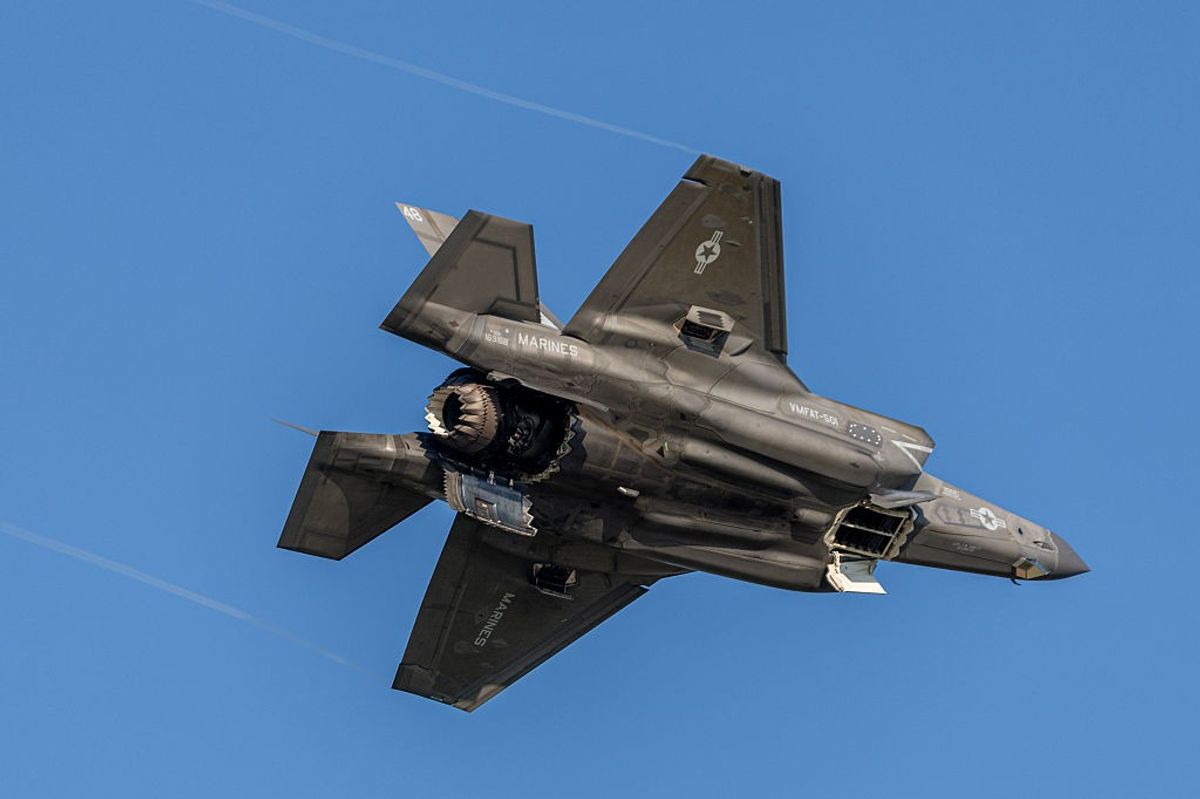
A bipartisan right-to-repair provision that would let the U.S. military fix its own equipment faces a serious threat from defense industry lobbyists who want to replace it with a pay-per-use model for accessing repair information. A source familiar with negotiations told The Verge that there are significant concerns that the language in the National Defense Authorization Act will be swapped out for a "data-as-a-service" alternative that would require the Department of Defense to pay contractors for access to technical repair data.
The provision, introduced by Sens. Elizabeth Warren (D-MA) and Tim Sheehy (R-MT) in their Warrior Right to Repair Act, passed the Senate in October and has support from Defense Secretary Pete Hegseth, the Army and the Navy. The National Defense Industrial Association published a white paper backing the data-as-a-service model, arguing it would protect contractors' intellectual property. Reps. Mike Rogers (R-AL) and Adam Smith (D-WA), who lead the House Armed Services Committee, outlined similar language in their SPEED Act. Rogers received more than $535,000 from the defense industry in 2024; Smith received over $310,550. The final NDAA is expected early next week.
A little more than a century ago, the US Army Air Service came up with a scheme for naming the military’s multiplying fleet of airplanes.
The 1924 aircraft designation code produced memorable names like the B-17, A-26, B-29, and P-51—B for bomber, A for attack, and P for pursuit—during World War II. The military later changed the prefix for pursuit aircraft to F for fighter, leading to recognizable modern names like the F-15 and F-16.
Now, the newest branch of the military is carving its own path with a new document outlining how the Space Force, which can trace its lineage back to the Army Air Service, will name and designate its “weapon systems” on the ground and in orbit. Ars obtained a copy of the document, first written in 2023 and amended in 2024.
DEEP DIVE – Ukraine’s President Volodymyr Zelensky calls it “our most successful missile.” One expert says it’s "Ukraine’s strongest security guarantee.” And former CIA Director and Cipher Brief expert Gen. David Petraeus says it has the potential to be “a game changer” in the war against Russia.
They are talking about the FP-5 Flamingo, a ground-launched, subsonic, made-in-Ukraine cruise missile, built to hit targets deep in Russian territory.
Not since the first salvos of Russia’s 2022 invasion has Ukraine’s defense industry sounded so enthusiastic about a weapon manufactured on its soil. The successes of Ukrainian defense technology are well known; as The Cipher Briefreported last month, the country is now widely believed to have the world’s most innovative defense sector. Its drone technology in particular continues to earn rave reviews from experts and western defense companies alike.
But the Flamingo is something different – a missile with a reported range of 1800 miles and the ability to carry more than 2,000 pounds of munitions, meaning that in one strike it could cause greater damage than even a swarm of drones. Compared to the top-class American Tomahawk cruise missile, the Flamingo is believed to be less accurate but with a similar range and a much heavier payload. And because it is manufactured in Ukraine, the Flamingo can be launched against Russian targets without Western-imposed restrictions.
“The Flamingo may actually be a game changer,” Gen. Petraeus said at the Cipher Brief’s annual Threat Conference last month. “You add that capability to what Ukraine has already done,” he said, referring to the recent drone campaign against Russia’s oil sector, “and [the Flamingo] will extend this dramatically.”
Zelensky said last month that the Flamingos had carried out their first missions, including a three-missile attack on a Russian security base in northern Crimea. Last week, Ukraine’s General Staff said it had used Flamingos as part of a strike that targeted “several dozen” military and infrastructure sites inside Russia and in occupied Crimea.
The Flamingo’s manufacturer, the Ukrainian firm Fire Point, claims to be producing between 1-2 missiles per day, with plans to scale to 7 per day by year’s end, for a 2026 projected total of more than 2,500. "By December we’ll have many more of them,” Zelensky told reporters in August. “And by the end of December or in January–February, mass production should begin."
Experts say every one of those missiles will dwarf the power of a drone weapon.
“With the drone-strike campaign, you have the challenge that they mostly carry fairly small warheads,” John Hardie,Deputy Director of the Russia program at the Foundation for Defense of Democracies (FDD), told The Cipher Brief. “The damage is far less than you could do with a one-time warhead that’s carried by the Flamingo.”
All of which raises the question: Might the Flamingo change the course of the war?
How the Flamingo was born
Even by the lofty standards of Ukraine’s recent defense-tech achievements, the Flamingo’s origin story is an inspiring one. And it dates to the last days of the Cold War.
In the wake of the Soviet Union’s collapse in 1991, Ukraine agreed to give up not only its nuclear weapons but also its considerable arsenal of Kh-55 cruise missiles. And after Russia’s 2022 invasion of Ukraine, while Zelensky and other Ukrainian leaders pressed constantly – and with mixed success – for western weaponry and security guarantees, they also began turbocharging their domestic defense industry.
“Ukrainians were authors of the Soviet space program and rocket program,” Oleksiy Goncharenko, a member of Ukraine’s Parliament, told The Cipher Brief. “When you have a lot of experience and when your people are smart enough, then the result is obvious. You have technologies which other countries respect.”
For more than three years, however, Ukraine remained largely dependent on Western countries for high-end, long-range strike capabilities. That led to the creation of a made-in-Ukraine cruise missile program.
The result is the FP-5 Flamingo, developed by Fire Point, a former casting agency that spun itself into a defense firm in the summer of 2022. In 2023, Fire Point produced its first FP-1 attack drones, ultimately turning out 200 FP-1s that year; this year the figure is expected to hit 20,000. Its cruise missile project has moved at a similar warp speed: in August, less than a year after it began work on the cruise missile, the company was showing off the prototype; soon after that, the first Flamingos were flying.
“We came up with it pretty fast,” Iryna Terekh, the company's 33-year-old Chief Technical Officer, told Politico. “It took less than nine months to develop it from an idea to its first successful tests on the battlefield.”
Terekh and other Ukrainian defense entrepreneurs speak often about how the Russian invasion has motivated their work – what Goncharenko calls “the unfortunate inspiration of war.”Terekh fled a Russian-occupied village near Kyiv in the early days of the war, and says her car still has a hole from a Russian bullet. She joined FirePoint as a partner in June 2023.
Ralph Goff, a former Senior Intelligence Executive at the CIA, calls the Flamingo production story “combat Darwinism at its best.”
“If the West isn't going to give them the long-range weaponry that they want to carry out their strategic attacks, they'll develop them themselves,” Goff told the October Cipher Brief conference. The Flamingo, he said, “is a serious piece of offensive weaponry.”
As for the missile’s unusual name, that traces to an in-house story at Fire Point, about the day when someone painted a solid rocket booster prototype pink, in a nod to the women involved in the male-dominated world of weapons production. Later, when the missiles were ready for testing, the company needed a bright color to help locate post-launch debris. Pink paint was available – and that led to the Flamingo moniker. The Pink has gone – missiles used in actual strikes are colored less conspicuously – but “Flamingo” stuck.
“You don’t need a scary name for a missile that can fly 3,000 kilometers," Terekh said. "The main goal is for a missile to be effective.”
Need a daily dose of reality on national and global security issues? Subscriber to The Cipher Brief’s Nightcap newsletter, delivering expert insights on today’s events – right to your inbox. Sign up for free today.
Reality check
If Fire Point’s claims are borne out, the Flamingo will have a reach and power on par with western cruise missiles, and an arsenal to match any European nation’s other than Russia.
Experts warn that behind that “If” lie multiple concerns – most of them due to the fact that there has been minimal independent verification of the company’s claims.
“In the defense industry, it’s easier to make statements than to actually implement them,” Ukrainian lawmaker Roman Kostenko said of the Flamingo’s potential, speaking to Radio NV last month.
One issue involves accuracy, which experts say Fire Point had to sacrifice to a degree in its push for a low-cost, fast-to-market weapon. In the Crimea strike, one missile reportedly landed some 100 meters from its target.
“Because it's low-cost, you kind of skimp on some of the more high-end features you might see in a more exquisite missile, guidance and accuracy being one of them,” Hardie said. “It's a relatively inaccurate missile at least by modern standards.” But he added that if the pace of manufacturing ultimately yields the high numbers Fire Point has promised, then “that tradeoff [high volume for accuracy] makes sense.”
Balazs Jarabik, a former European Union diplomat and analyst for RPolitik, has studied the Flamingo project since its early days. He doubts that Fire Point can reach its production goals.
“The Flamingo is real, but the production capacity is overstated, at least so far,” Jarabik told The Cipher Brief. He noted that an earlier Ukrainian-made missile, the Neptune, has yet to reach its promised scale, and that for all its defense-sector successes, Ukraine must contend with wartime supply-chain issues that would bedevil any weapons manufacturers. He and Hardie said that scaling to hundreds of Flamingos per month will require consistent supplies of everything from engines to warheads to electronics for guidance systems.
“I'm a little skeptical, but it's possible the Ukrainians will get there,” Hardie said, and Gen. Petraeus said that the Ukrainians “really need to double down” on the pace of the Flamingo manufacturing. “They're trying to get that into full production.”
Fire Point must do so while Russia targets Ukraine’s young defense companies as well as the country’s energy infrastructure. The latter is critical, given the defense sector’s high demand for energy. For one piece of the Flamingo supply chain, the company has already found a workaround: in September, Fire Point announced that Denmark had agreed to produce fuel for the Flamingo, effectively removing a key production facility from the war zone. The announcement provoked a warning from the Kremlin, which called the Danish plans “hostile.”
That response raises the question of Russian retaliation – a concern that has accompanied the delivery of virtually every new weapons system to the Ukrainian side. Some experts fear that any successful, high-impact Flamingo strike against Russia, carried out with help from Western intelligence – the destruction of a weapons factory deep in Russian territory, for example – would risk a NATO-Russia fight that the West has been desperate to avoid. Others doubt that Vladimir Putin has any interest – at least not in the current moment – in any escalation that might lead to conflict with the West.
“The Russians have been consistently more bark than bite,” Hardie said. “They know that attacking a NATO country in an overt military way – not the sort of gray-zone, below-the-threshold-of-war stuff they've been doing, but an overt military missile strike – that's an act of war. And Putin doesn't want any part of a direct conventional fight with the United States and NATO allies.”
Are you Subscribed to The Cipher Brief’s Digital Channel on YouTube? There is no better place to get clear perspectives from deeply experienced national security experts.
What to watch for
Even analysts who are skeptical about the Flamingo’s future note that it would take only a few successful strikes to inflict severe damage, and that if Fire Point can get anywhere close to its 2500-missile-per-year pledge for 2026, the battlefield impact could be profound. Beyond the Russian oil refineries and other energy facilities the Ukrainians have attacked lately, the Flamingo will put more military targets in range as well. The holy grail might be the joint Russia-Iran manufacturing facility in Tatarstan that is turning out the deadly Shahed drones, at a scale that the Ukrainians must envy.
Experts say that with hundreds of Flamingos at the ready, Ukraine might achieve what Jarabik refers to as “mass saturation,” an ability to bring a heavy and varied drone-and-missile threat to military and energy targets across all of European Russia.
“If you're Ukraine,” Hardie said, “you'd like to be able to combine these missiles and drones into a complex strike package much as the Russians are currently doing, and keep the Russian air defense on its toes.”
“The Flamingo is heavy, and it’s also relatively easy to shoot down,” Jarabik said. “And so they will need mass saturation – a lot of these missiles, but with drones or other weapons too, to get through to the targets. They're going to have to produce enough that they can have a sustained impact, …and I don't think we're going to be there anytime soon.”
Then Jarabik added: “All that said, you have to acknowledge Ukraine’s innovation and skill. And I think [the Flamingo] is a big thing. Absolutely.”
As for the accuracy concerns, Ukrainian officials noted that while one of the Flamingos fired at Crimea did miss its mark, the two others leveled a barracks and brought a “massive destructive power,” with craters measuring 15 meters in diameter.
No one is touting the Flamingo as a replacement for the array of Western missiles that have been delivered to Kyiv. The Ukrainians will still covet the German Taurus, and the British-French Storm Shadow/Scalp cruise missiles, which are more accurate, though they come with conditions attached to their use. The diversity and volume of weapons systems, experts say, are what could make a real difference. And the Flamingo adds a powerful new element to the Ukrainian arsenal.
“No one system or weapon is going to be the decisive game changer,” Hardie said. “I don't think there's any such thing as a wonder weapon. That being said, for a supporter of Ukraine, it's really encouraging to see Ukraine being able to move out on its own more in terms of long-range strike capabilities. They are taking these steps forward and really taking it to the Russians right now with this campaign against energy infrastructure. That's been impressive to see and I think it kind of augurs more to come. So if I were the Russians, I would be worried about that.”
Read more expert-driven national security insights, perspective and analysis in The Cipher Brief because National Security is Everyone’s Business.
DEEP DIVE — The Pentagon is waging war against its own acquisition bureaucracy. In a sweeping speech on Friday, Secretary of War Pete Hegseth described the “adversary”, not as a foreign power but as a process: decades-old requirements and procurement rules that reward paperwork over outcomes.
The core argument: if the U.S. wants to deter adversaries in today’s world of fast-moving threats that include gray-zone coercion, contested logistics and AI-enabled systems, it must accept more acquisition risk as a means to reduce operational risk later.
The Pentagon’s new plan pairs rhetorical urgency with specific structural changes. It proposes killing the legacy Joint Capabilities Integration and Development System (JCIDS) and replacing it with a tighter, more centralized alignment, pushing commercial-first solutions even if they deliver an “85% solution” initially and forcing a cultural shift across both DoD and industry toward speed, volume, and continuous iteration. The plan also signals tougher expectations for primes to invest private capital and for government to send longer demand signals. It’s a tall order.
Here’s a look at the key ideas:
“Increase acquisition risk to decrease operational risk”: field good-enough capabilities faster, iterate in production, and stop chasing perfect specs that arrive too late.
JCIDS → RRAB / MEIA / JAR: cancel the slow, document-heavy requirements process; stand up a Requirements & Resourcing Alignment Board (RRAB) to tie priorities to funds, a Mission Engineering & Integration Activity (MEIA) to co-design/experiment with industry early, and a Joint Acceleration Reserve (JAR) to bridge the “valley of death.”
War-fighting Acquisition System & PAEs: rebrand and reorganize acquisition around Portfolio Acquisition Executives (PAEs) who have end-to-end authority to trade cost/schedule/performance for time-to-field, with embedded contracting and fixed delivery cycles.
Modular Open Systems + multi-source: mandate modular architectures, maintain at least two qualified sources on critical components, and enable third-party integration to avoid vendor lock and accelerate upgrades.
Commercial-first, 85% solution: accept non-perfect bids that meet the mission faster, then iterate software and components continuously.
Wartime Production Unit (WPU): a deal-team model to negotiate across a contractor’s total DoD portfolio, create incentives for on-time delivery, and unlock surge capacity.
Workforce & Culture shift: convert the Defense Acquisition University (DAU) into a “Warfighting Acquisition University,” lengthen leader tenures, and evaluate contracting/program teams on mission outcomes rather than compliance metrics.
Foreign Military Sales realignment: move DSCA/DTSA under Acquisition & Sustainment to unify planning, contracting, and delivery so allies get kit faster without undercutting U.S. readiness.
Why this matters now
Adversaries are iterating faster, supply chains are brittle, and the U.S. military’s ability to produce and sustain at volume - will decide deterrence credibility. The proposal promises measurable gains in lead times, throughput, and availability, but it also raises hard questions about safety, governance, industry incentives, and the talent pipeline.
In the sections that follow, we pressure-test these claims with former commanders and acquisition leaders: how to set guardrails around “good-enough,” where the new risks are and the impact on the industry.
Cipher Brief Executive Editor Brad Christian spoke with General Phil Breedlove (Ret.), Lt. General Mike Groen (Ret) and Silicon Valley Entrepreneur and Stanford Professor Steve Blank, who has recently published a Department of War Program Executive Office directory to help companies better navigate the complicated system for selling to government.
Christian: What was your reaction to last week’s announcement that we heard from the secretary?
Gen. Breedlove retired as the Commander, Supreme Allied Command, Europe, SHAPE, Belgium and Headquarters, U.S. European Command, Stuttgart, Germany. He also served as Vice Chief of Staff of the U.S. Air Force, Senior Military Assistant to the Secretary of the Air Force; and Vice Director for Strategic Plans and Policy on the Joint Staff.
General Breedlove: There are things that I really am looking forward to, and there are some things that are a bit worrisome, the way they were rolled out. But you never really know what's going to happen until you start seeing it in action and the changes to the rules for how we do our acquisition.
But make no mistake, our acquisition system to date is moribund. It's horrible. We laugh now about this “Valley of Death” between when something is created in the laboratory and when it gets to the field, six, seven, eight years or more sometimes. And people who are at war and doing this very differently, they're doing it in weeks, sometimes days, but not years. So we definitely have to change.
Part of the reason our acquisition system is so slow is because in our past, maybe even decades and decades ago, people took advantage of the system and they made money in a bad or almost illegal way. And so lawmakers do what lawmakers do, and technocrats and bureaucrats do what they do, and they created layers and layers of oversight to try to protect against some of those bad acts that happened decades ago. And the result is an acquisition system that is completely unresponsive to the needs of the warfighter. And I'm glad that we're starting to change it.
Lt. Gen. Groen served over 36 years in the U.S. military, culminating his career as the senior executive for AI in the Department. Groen also served in the National Security Agency overseeing Computer Network Operations, and as the Director of Joint Staff Intelligence, working closely with the Chairman and Senior Leaders across the Department.
Lt. Gen. Groen:My immediate reaction, like everybody else, when somebody uses the word acquisition, you kind of cringe a little bit. And immediately you get the vent of, it takes too long, it's too expensive, the processes don't work, the people in the processes don't know what they're doing, the long litany of usual complaints. And most of them are actually true. What we have currently, I would articulate, is an unaccountable bureaucracy. It's a professional bureaucracy. They know the process. They build the process. They work the process. But the process doesn't necessarily meet our real war fighting objectives. And I think that is probably the most important thing here.
We'll talk about drones and technology and all these other things, but I think at its core, you actually do have to have a process for this. And just getting the credit cards out and buying stuff at Best Buy doesn't work either, right? So, I think it's a requirement for us. You can't just say, well, we're just gonna blow up all the rules and let people do whatever they want. Because as soon as you do that, you're gonna realize that if we didn't have a system, we wouldn't be able to do all these other things. How do you get to integration? How do you get to common standards? How do you get to the things that actually make weapon systems work effectively and with the caliber of ammunition that they use and the system that produces that and all of the other components? So it's easy, and I've done it probably more than anybody else, to just rant about the acquisition process.
But if you didn't have an acquisition process, you would need to invent one. So, our challenge really today is, okay, the one we have for a lot of reasons is not going to be the one that we will need tomorrow. It does okay on band-aids and making munitions for today. But it is certainly not a kind of process that enables war fighting flow. So I think we are very much at a transformation point, not just in the fact that the way we want to do acquisition must change, but more importantly, the way we do everything, the way we fight must change. And so naturally we have really an incredible opportunity. Let's build the system that enables the kind of fast moving, rapid innovation that we will want on the battlefield: AI driven, data driven. We know what the future looks like. Let's actually build to that and not let unaccountable bureaucracies get in the way.
Steve Blank is an adjunct professor at Stanford and co-founder of the Gordian Knot Center for National Security Innovation. His book, The Four Steps to the Epiphany is credited with launching the Lean Startup movement. He created the curriculum for the National Science Foundation Innovation Corps. At Stanford, he co-created the Department of Defense Hacking for Defense and Department of State Hacking for Diplomacy curriculums. He is co-author of The Startup Owner's Manual.
Blank: It was mind blowing - not because anything the Secretary said was new; they are things that people who are interested in acquisition reform have been asking for the last 10 years. But it was put in a single package and was clearly done by the infusion of people who have actually run large businesses and were used to all the language of organizations that already know how to deliver with speed and urgency.
The part that didn't get said is essentially the Department of War wants to adopt startup innovation techniques of lean iteration, pivots, incremental releases, good enough delivery, and that gets you what the Secretary asked for, which was speed of delivery. But all those are things that we lived with in Silicon Valley for the last 50 years, and it wasn't until we had people who worked outside of buildings with no windows inside the Pentagon to understand that those techniques could actually be applied. And it required blowing up the existing system. And they did that spectacularly well. Very few holes in those proposals.
Save your virtual seat now for The Cyber Initiatives Group Winter Summit on December 10 from 12p – 3p ET for more conversations on cyber, AI and the future of national security.
Christian: A central piece of the plan as it was explained on Friday is the idea of eliminating the Joint Capabilities Integration and Development System, which has long been criticized for some of the slow processes and the overly bureaucratic results that we have. The new approach seeks to centralize procurement and funding under the DOD senior leadership. Are you comfortable that this is the right approach?
General Breedlove: So this is one of those, like I opened up with, some good, some bad. There are elements of JCIDS that I think we should hold on to. We shouldn't throw the whole thing out with the bath water. But there are a lot of elements of JCIDS that we need to get rid of.
Much like the rules we just talked about that were created because of people and bad acts for acquisition, the same sort of thing has happened in the process of moving an idea from the lab to the field in that now there are layers and layers of people who can hold up the process or say no. And when they do that, it adds time, schedule delays, more testing, and much more money to the program. And these people bear zero responsibility for their actions. The people that end up getting blamed for the delays and increased costs are the services or the primes. And the people that have this authority now but hold no responsibility for what they do, we've got to get rid of them. We have to ensure that people who have decision authority are held accountable for what they do, to the point of maybe even not charging this off to primes or to the folks who are developing these things. If someone else is out there slowing things down and they don't have to worry about it because they're not accountable to it, we're not in a good place.
Lt. Gen. Groen: One issue is there isn’t a cadre of professionals in DOD leadership that will be able to take this mission on full time. If you consider a broad sweep of what we build and acquire and how we do that, how we innovate, they will just run out of hours in the day and minds to engage in order to build a replacement for what we have today.
The impulse to change the way we do things is the right impulse. Our impulse to be disciplined about the way we go about things, that's also correct. So it's not enough to say “let’s blow it all up, we don't need any rules”. We actually do need rules. Regulation actually is an enabler. It helps you flow. It lets you know how things can be done. That's a really powerful thing.
The problem is with humans involved, there is always a tendency to distort a process through petty bureaucracies, tribalism, ignorance and bad temper. It is really important for leaders to actually lead in this space and create accountability for the people that are actually working. What we have today is a derivative of it. We don't need too many history lessons here, but this is like General Motors in the 1960s, where we started to really do modern industrial design at scale. So if you understand where we’ve come from, you can see how important things like industrial processes and quality checks.
In a digital environment, a transformational environment that is driven by artificial intelligence and data availability, all the notes change. The music changes. And you still need a process for things like money so you can pay people to build things. But we're not building things on a conveyor belt anymore. We're building code. We're building code that changes by the hour. We're building code that builds its own code. This is where we are. So you can't do that in a completely undisciplined way, that says “have at it team and we'll see what we get at the end of the process”. What we’re doing here is too important.
Christian: Part of the new approach will involve increasing acquisition risk, to decrease operational risk with a focus on increased use of commercial solutions and of even fielding 85 % solutions. Where's the red line that you would want as a commander before fielding an 85% solution?
Gen. Breedlove: This is a concept which is extremely hard to criticize. But we have to be pretty serious here because you're saying increasing acquisition risk to decrease operational risk. Well, if the product isn't operational yet and we have increased the purchasing and acquisition risk, and in between that costs us the life of a soldier, sailor, airman, marine or guardian, we have messed it up. So the rules are there for a reason. I completely understand. I absolutely, 100% agree with the fact that we've got to start taking more risk, but we can't do that in a way that is reckless and puts the lives of our troops on the line.
And an example where I think this concept is working well is Ukraine. They get a new drone that is designed to get past a certain capability of the Russian defenses. And why should we do a two-year testing on that thing? If the testing is to fire it into Russia where it's not going to kill any friendlies and see what happens, let's fire it into Russia and get the testing done on the battlefield, where we're less concerned with what happens. So there are ways to shorten and to change the way that we do tests and other things on the acquisition side that gets us faster to the operational side. And if we can do that, again, without raising the risk to our troops, let's go for it. And we're seeing that done well by the Ukrainians, and to some degree by the Israelis.
Lt. Gen. Groen: The first thing that pops in my mind is- What does an 85 % solution look like? What is 85% of a truck? What is 85% of a battleship or a carrier? Pick your system. If you're just doing software, you can do a lot of things in software, but still, software that's 15 % buggy and doesn't work, because you've chosen 85%, that's almost like going right back to the industrial age process flow for code. And I think that the real magic here at its core is transforming the way we do our war fighting. We need new thinking about how to integrate capabilities and new thinking about how to build artificial intelligence modalities and then the systems.
Warfare is changing under our feet right now. Ukraine and drones, I accept that example, but it's so much more than that. We need a complete transformation in the way we understand the enemy, the way we understand our mission, the way we can use autonomy to integrate with humans, the way that we can build robotics, the way that we can now start what I like to call putting the mind of a commander on a pedestal by taking all the data environment and revealing that to a commander and everybody else who is working with the commander so that you have common situational awareness.
The opportunity here is enormous to transform our war fighting to the same degree we're transforming our industries. And you see the transformation every day when you drive through DC or Austin or San Francisco. Transformation is real and it's driving our economy today. What we haven't done is purposefully mapped out how we're going to drive our war fighting capability through this technology. And this is so important because we have to have a plan for how we build operational workflows. Where do we build those? Who builds those? And so I think moving from monitoring a process of manufacturing to really considering war fighting as the core element that the technology springs from.
Christian: Obviously the Pentagon procurement system that we have today is a product of decades of bureaucracy and rules. Are you hopeful that you're going to be able to see the kind of change in the rapid timeline that they've laid forth here?
Blank: Number one, this is a pretty extensive reorganization. Right now the Department of War is siloed between requirements and system centers for testing and prototyping and acquisition, which was the acquisition with a small A with the PEOs and program managers, and then it went to contracts and then it went to sustainment, et cetera. Those were silos. Now we're putting it all underneath a single portfolio acquisition executive. So, instead of making their offices 10,000 people, it's actually a matrix organization, much like a combatant command is. Most of those people will stay in their existing orgs but now be tasked to work on specific portfolios. And instead, the portfolios will no longer be arranged by weapon system. They're going to be arranged, for example, by war fighting concepts or technology concepts, et cetera.
That said, boy, try moving an elephant and making it dance. And at the same time, they recognized - this was one of the genius parts - people won't just get a memo and know what to do. Historically, they've depended on the Defense Acquisition University, which taught them, contracting officers and the rest, how to work with the 5,000 pages of the DFAR and FAR, Federal Acquisition, Defense Acquisition Regulations. One of the unnoticed things was they basically told the Defense Acquisition University, stop teaching that today. You now need to teach people this new methodology. That's not going to happen by telepathy. First of all, we need to train the trainers, then we need to train all the people who've grown up in their career following the paperwork.
So, I predict six months or a year of chaos and confusion. And probably, there's always in a large scale reorganization saboteurs who are angry that their cheese has been moved or worse, their authority has been diminished or the head count went somewhere else. This is going to be no different except maybe at a bigger scale.
In the end, if we pull this off, and I'll explain the only possible reason not to do this, the country will be much better for it. The other obstacle will be if you're on the board of directors and the exec staff of a prime, you're going to go through the 12 stages of denial and grief and whatever because I don't know how many times both Feinberg and Hegseth made it clear that the primes weren't delivering and they weren't investing in the things the country needed and they got used to the system and we were kind of mutually dependent on a broken system - and that's over. Well, you're not going to let your stockholders say you just went home and packed up. Obviously, it's pretty clear that appealing to the Pentagon isn't going to work, but Congress is “coin operated”. This is now going to be a race of lobbying cash from the primes versus lobbying cash for the first time from private equity and venture capital. So it's going to be, who has the biggest pile of cash to influence Congress and the executive branch to keep these rules in place or modify them?
Remember what a disaster this is if you're an existing large company selling to the DOD. It says number one, we're going to buy commercial off the shelf. Number two, we're going to buy commercial off the shelf and then modify it. If and only if either one and two work, we do some bespoke contracting with the existing organization. It's never happened before. Pretty clear, pretty direct. So, the easy thing would be for primes to change their business model. But my prediction is they're going to double and triple down the amount of lobbying and dollars spent.
Need a daily dose of reality on national and global security issues? Subscriber to The Cipher Brief’s Nightcap newsletter, delivering expert insights on today’s events – right to your inbox. Sign up for free today.
Christian: Secretary Hegseth also had some words of warning to the major U.S. defense contractors, the primes, to speed up weapons development and production, invest their own capital to increase capacity, or risk becoming obsolete. This is a relatively complicated issue for these companies. What are your thoughts on this?
General Breedlove: I think that our senior leaders, maybe to include the Secretary of War and others, have sort of allowed the verbiage around this topic to get a little loosey goosey. What happened in the past was that some primes used money out of existing contracts to create excess capacity that then saved them money the next time they had to build new equipment. And our government, Congress and others got tired of that and wrote laws that limit how much money you can spend out of existing contracts to create excess capacity. And the way I understand the laws, most of them are zero. If we pay you to build 100 B-21s and you create a line that could do 120, you're going to jail or you're going to court. And so I think that there's some imprecise language running around and we need to give some of this time to sort out when the dust settles to understand what they're really asking of the primes, because they are limited on one side, fiducially and fiscally, and they're limited on the other side by laws and sometimes regulations that have been created by the regulatory agencies to correct past [behaviors].
I applaud the ideas and the initiative that the Secretary laid out. But to the defense of the primes, they're going to need some regulatory or legal relief to be able to do most of the things being talked about under the new plan. They just can't snap their fingers and say, OK, we're going to do this because then they'll end up in court.
Christian: It's not going to be an overnight process to reboot the Pentagon's procurement system. The Department of Defense is the largest single organization within the US Government. The amount of products and services that flow through that system is enormous. You've clearly laid out the tremendous opportunity that exists to rebuild the system. What are you most worried about? What's the biggest risk that can impede progress as the Pentagon starts this journey?
Lt. Gen. Groen: Tribalism. Tribalism will sink us. We are so horrifically tribal that we can't think like an extended entity. We can't think like a singular organism that is really effective through data and our systems flowing together. Tribalism kills that. And I see it every day. I'm not in the Pentagon every day anymore, but I see it: the tribalism among services, the tribalism among components of services and the tribalism within the department. And all of that tribalism is an afterglow of our industrial might in the 1960s. Now is the time for thinkers that are wearing a uniform, it's not about buying stuff without asking. It's about thinking through the flow that you want to achieve and then building the capabilities that you need to do that. It's a mindset thing, but that’s all about what transformation is. The form changes. And so when we transform, we transform ourselves into this place where we leave that tribalism behind because we have integrated effectiveness.
Working with broad autonomy is gonna help us think that way. I think that there's a broader awareness of what the technology is able to do and how it will facilitate. We just have to be careful to make sure that that's not the end state. Technology is not the end state. It's humans, war fighters who are winning on the battlefield because they understand and they can make the right calls. That's what we're after. And so all of the stuff about acquisition and the rules and why people don't follow the rules and why is it so tribal that we can't get anything to be, I think all of that merits some dynamite, but it also merits some thinking about how do we better integrate our thinking and flows and how do we do that on the battlefield?
Christian: How much of a risk is the next administration coming in and potentially changing everything? And then in particular, if you're one of those big primes, are you baking that into your long-term planning that this might shift in a measurable way in the future? Or do you think these changes are going to be something that is so overwhelmingly positive that future administrations have to stick with it?
Blank: Well, if you were asking me this three years ago, I would have said, well, you should get all this done now because it's going to be flipped back in three years. What's changed now is the amount of capital available for startups, scale-ups, and private equity firms that can match or overpower the lobbying efforts of the primes. So as I said, both the executive branch and Congress are coin operated, even more so now than ever. And for the first time ever, the insurgents have as much or more coin than the incumbents. That's what's going to change this game.
So yes, of course, a Democratic administration or another Republican one might have a different opinion. But in this case, we're talking about piles of money flooding the streets in Washington to try to change the game. Think about who are now sitting in the cabinet. And other places have commercial experience for the first time ever at scale, inside the executive branch for sure and inside the Department of War which changes the nature of the conversation and as we're seeing the types of things they're recommending.
Again, it wasn't that people didn't recognize this before. It was kind of hard to explain this to people who had never run a business or who have been career successful. I've said for years, we had world class organizations, world class people for a world that no longer existed. And finally, we have people who understand what that world should be like because they've been operating in it. Secretary Feinberg has been writing checks of tens of billions of dollars- buying an aircraft carrier, okay, he’s written those kinds of checks before. Tell me who else ever had that position.
And again, it's not that the DOW should run like a corporation or startup, but having that experience sets a bar for what you know is possible for doing extraordinary things. It's what this country knew how to do in World War II and during the Cold War, and we just kind of lost it when Robert McNamara, an ex-chief financial officer of Ford, put in the first version of the Planning, Programming, Budgeting and Execution System (PPBE) in 1962. We've been operating on that system for 63 years, or some variance of it. Basically, he imposed a chief financial officer's kind of strategy on budgeting and planning, which made sense at the time. It stopped making sense about 15 years ago, but no one inside the building knew what to do differently. That's changed.
Read more expert-driven national security insights, perspective and analysis in The Cipher Brief because National Security is Everyone’s Business.
OPINION — The Russian invasion of Ukraine that began in January 2022 is now approaching its fourth year. The cost for Ukraine has been very high, but the cost for Russia has been astronomical. Russian forces have been pushed back nearly to the territory they controlled at the end of 2021. According toBritish Intelligence, by October 14, 2025, Russian casualties (killed and wounded) since January 2022 totaled 1,118,000 military personnel. This figure is only slightly lower than theUkrainian estimate made on the same day of 1,125,150 Russian casualties. Ukraine also estimates Russian losses over the same period of 11,256 tanks, 23,345 armored combat vehicles, and 33,628 artillery systems. The scale of these losses can be compared with Russia’s force structure (FS) at the start of the invasion, which included 900,000 active duty personnel, 3,417 active tanks, 11,000 armored combat vehicles, and 5,000 active artillery systems. In short, Russia has lost more than twice its entire 1992 army force structure since the invasion.
Yet the Russian army continues to engage in desperate efforts to regain limited territory to the west.British intelligence estimates that since the start of 2025 Russia has suffered 332,000 casualties, the highest loss rate since the invasion. Russia has made only marginal gains, which Putin trumpets as victories as he throws more men and equipment into the Ukraine meatgrinder.
Of course, Putin cannot afford to admit failure, but it nonetheless seems as if he actually believes his strategy is succeeding. Why?
The answer lies in the perverse incentives of Russian command and control (C2), which conceal the weaknesses of Russian FS. Russian C2 is concentrated in one civilian with no military training (Putin), and his small circle of advisers.
Putin’s leadership discourages innovation by field officers and welcomes blind obedience. Bad news from field officers of all ranks is punished with demotion or arrest. Good news is rewarded with promotion. As a result, field officers routinely lie about their failures in hopes of promotion and reassignment. There is almost no active search for information by headquarters to correct misinformation sent by field officers.
Russian force structures are notoriously corrupt—a corruption that is expected and tolerated, but also can be an excuse for punishment. Officers steal from their units by exaggerating the size of the unit and pocketing the unused pay. Hence, many Russian units are severely understaffed. Soldiers steal from their units by selling weapons, ammunition, and fuel, leaving their units under-equipped. The vast majority of battle-hardened soldiers are long gone, as are military trainers, who were all sent to the front lines. New Russian recruits are untrained and unaware of the risks they face.
Russia's C2 and FS Problems from the Start of the Invasion
A brief review makes it clear that C2 and FS problems have bedeviled the Russian invasion from the start of the 2022 invasion. Planning for the invasion ignored standard military doctrine, which emphasizes that successful invasions require sufficient scale, speed, and force. The considerable literature on the force differentials needed for an invasion, including Soviet doctrine, agrees on the classic rule that a frontal assault requires a3:1 force ratio to compensate for the higher casualties suffered by the invaders.
Effective command and control are also essential for the success of an invasion. This includes accurate intelligence about enemy forces, freedom for field officers to improvise as needed, rapid field intelligence upward to inform tactics and strategy as the invasion proceeds, and quick top-down decisions in response to field intelligence.
The 2022 invasion violated all these requirements. In order to conceal its intentions and achieve an operational surprise, the planning of the invasion was limited to a very small group led by Putin. Not even Russia’s Foreign Minister,Sergey Lavrov, was included in this group. The Russian field commanders on the ground in Belarus for military exercises had no idea that they would be leading an invasion. The success of this secrecy came at a high cost: there was no opportunity for critiquing the invasion plan and no consideration of fall-back strategies.
Russian intelligence about the Ukraine’s response was based entirely on faulty assumptions that a high-speed invasion would demoralize the Ukrainian military, the Russian military would easily defeat the Ukrainian military on the battlefield, the top Ukrainian leaders would be quickly captured and executed, and that the vast majority of Ukrainians would either welcome the Russian invaders or remain passive.
The 3:1 force differential rule should have required an invasion of 590,000 Russian, given that the Russians knew the Ukrainian military had 196,600 active-duty personnel. Instead, the Russians planned an invasion of 190,000 personnel, actually smaller than the combined Ukrainian armed forces. Even worse, instead of massing its invasion force at one point to achieve a breakthrough, the Russians decided to attack on six different axes: from the Black Sea in the southeast, from Crimea in the south, from Donbas in the east, from Belgorod in the northeast (towards Kharkiv), from Kursk in the northeast (towards Kyiv), and from Gomel, Belarus, in the north (towards Kyiv).
All the Russian invasion routes faced unexpected problems, but the flaws in Russian C2 and FS can be illustrated by the fate of Russia’s most promising attack, coming from Gomel, Belarus, and aimed at Kyiv. This included an airborne assault on Antonov airport, in the Kyiv suburb of Hostumel. The Ukrainians had not expected an attack from Belarus and were unprepared for both the land invasion and the airborne assault.
Why did these attacks fail? Russian secrecy about the invasion had left the Russian ground forces in Belarus completely unprepared. They were informed of their roles in the invasion only 24 hours before the invasion. As a result, they lacked ammunition, fuel, food, and communications. They did not anticipate heavy fighting. Mud forced their armor to use the few roads, causing traffic jams. They encountered entire towns that were not on their maps, requiring them to stop and ask civilians where they were. Residents reported the Russian positions to Ukrainian authorities.
The Ukrainians acted swiftly to confront the Russian assault from Gomel, which was approaching the outskirts of Kyiv. They committed most of their available special forces and special units of other security units, called up all their reserve units, and mobilized the cadets and staff of their military academies into new battalions, supported by two brigades of artillery and one mechanized brigade. Even so, the Russians had a 12:1 troop advantage on the Gomel axis. On 27 February, their advance units were able to capture the suburb of Bucha, just west of Kyiv.
However, the phone calls from residents from towns in the Russian path permitted Ukrainian artillery to target the Russian columns. The Ukrainian forces knew the territory well, giving them a huge tactical advantage, and they were able to assault the slow-moving Russian columns almost at will, causing panic, abandonment of equipment, and blockage of the roads. As the Russian columns stopped moving, their losses multiplied. The Russian advance units that had reached Bucha were short on fuel, ammunition, and manpower. They assumed defensive positions, waiting for reinforcements that never arrived.
In thebattle for Antonov airport on the edge of Kyiv, the Russians used helicopters and elite airborne troops. These troops were to capture and execute the Ukrainian leadership. But the Ukrainians surrounded the airport with heavy armor, pounding the Russians. They were able to capture the airport, driving the Russians into the surrounding woods. While the Russians were able to recapture the airport after a couple of days, the Ukrainians had time to destroy the runways, making impossible the landing of reinforcements and preventing the Russians from capturing the Ukrainian leadership.
On March 16th the Ukrainian government announced a counteroffensive in the Kyiv region, and by the end of March, Russian ground forces were retreating north from the Bucha area. By April 2nd the entire Kyiv oblast was back in Ukrainian hands, including the area bordering Belarus.
What was the Russian response to this humiliating defeat? Those Russian generals who were not killed, were mostly cashiered or arrested, as were many of the colonels. The disaster resulted largely from Putin’s leadership, but the defeated units took the blame. This added to the incentive for officers to lie about failure and pretend achievement.
The Cipher Brief brings expert-level context to national and global security stories. It’s never been more important to understand what’s happening in the world. Upgrade your access to exclusive content by becoming a subscriber.
The First Stalemate
The war has continued through various phases. The second phase, from early April through the end of August, 2022, was marked by active fighting along front lines, with heavy Russian losses, but was a relative stalemate in terms of territorial gains by either side.
The Second Ukrainian Offensive
The third phase began on September 6, 2022, when Ukrainian troops attacked the Kharkiv front near the Russian border. On September 9, Ukrainian mechanized units broke through. Ukrainian forces raced north and east. The cities of Kupiansk and Izium fell to the Ukrainians on 10 September. By the next day the Russian forces north of Kharkiv had retreated over the border, leaving all of the Kharkiv Oblast under Ukrainian control. Pressing on to the east, Ukrainian forces on 12 September crossed the Siverskyi Donets, and on 1 October the Ukrainians recaptured Lyman, a major railway hub, and took as prisoners an estimated 5,000 Russian troops.
As Russian forces rushed to the northeast front, Ukraine launched its counteroffensive in the Kherson region on October 2. By 9 October Ukrainian forces had retaken 1,170 square kilometers of territory, pressing on toward the Dnieper River and the city of Kherson. On 11 November, Kherson was occupied by the Ukrainians.
The Second Stalemate
The second period of stalemate dates from 12 November 2022 until the present. During this three-year period, the war has seen the introduction of drone warfare on a massive scale, first by Ukraine and then by Russia. As a result of the drone warfare, the entire conflict has changed in character. Drones have made assaults by armored vehicles so costly that the war has reverted to trench warfare reminiscent of World War I. Drones now account for two-thirds or more of front-line casualties in the war.
Ukraine’s government discarded Soviet-era regulations to provide tax breaks and profit incentives to independent Ukrainian drone producers, authorizing the Ukrainian military to contract with them. These independent companies have made good use of Ukraine’s large cadre of skilled aeronautical engineers and information technology specialists. About 200 of these companies are officially recognized to receive military contracts, and as many as 300 other groups manufacture drones and donate them directly to military units. However, financial resources remain a limiting factor.
Need a daily dose of reality on national and global security issues? Subscriber to The Cipher Brief’s Nightcap newsletter, delivering expert insights on today’s events – right to your inbox. Sign up for free today.
Russia has rapidly developed its own drone capacity. Moreover, Russia has the resources to outproduce Ukraine, even if its drones are less sophisticated. Russian drone production is limited less by finances than by the search for microchips, smuggled from the west or bought from China. Russia also has ballistic and airborne missile systems that are hard for Ukraine to bring down. Russia has been using massive barrages of drones and missiles to demoralize Ukraine. But this effort is counterproductive. Bombings anger enemy populations and stiffen resistance, as shown in WWII by theBlitz of London and Allied carpet bombings of Germany. Russian barrages may have strained Ukraine’s economy, but they have not lessened resistance.
While the drone/missile war is well known, Ukraine’s other defense industry growth is less known. Ukraine now produces more artillery shells than all of NATO’s 32 members and Europe. Since 2022, domestic production of armored personnel carriers has increased by 400 percent, artillery by 200 percent, ammunition by 150 percent, and anti-tank weapons by 100 percent. By 2025, a single Ukrainian factory was producing 20 Bohdana howitzers each month, similar in specifications to the French Caesar. Ukrainian defense companies deliver howitzers in 60 days for $2.5 million compared to a several-year wait and a cost of $4.3 million in the West.
Russia has had to develop a new tactical approach for the active fronts. Groups of two or three soldiers are forced (by firing squads) to run towards Ukrainian lines and if they live, conceal themselves to fight later. Specialized units such as snipers, artillery spotters, or drone operators try to identify and target the sources of firing at these individuals. Then larger assault units move forward to capture territory. However, these assault units are now poorly trained, and their equipment is obsolete armor or more often simply cars, vans, and motorcycles, often heavily camouflaged. Ukrainian spotter drones are waiting for these assaults, and once the Russian vehicles are in motion and supported by Russian artillery, Ukrainian drones blow up both the vehicles and the artillery. On a typical day in autumn 2025, the Russians were losing 1,000 soldiers, 10 armored units, 25 artillery barrels, and 100 vehicles. By offering increasingly high incentives, Russia was recruiting 30,000 soldiers a month, barely enough to cover losses.
Russian electronic warfare has improved dramatically, with a focus on disrupting Ukrainian drones. As a result, Ukrainian forces are now losing about 10,000 drones per month. Russian air defenses also have improved, reducing the ability of Ukrainian fighter jets to attack. Russian engineers have been effective in designing and building defensive trenchworks, minefields, and tank traps in areas they control.
However, Ukraine air defenses have also improved. Russian airplanes now must launch airborne missiles from Russian territory, with a considerable loss of accuracy. Russian ground to ground ballistic missiles are hard to bring down, but also lack accuracy.
Faced with the hardening of Russian front lines, Ukrainian forces are focused on inflicting high Russian casualties, rather than attacking themselves. The exception occurs when the Ukrainians decide to roll back a Russian salient to prevent it from being hardened. The massive Russian missile and drone attacks deep in Ukraine have required the Ukrainians to invest heavily in missile and drone defenses of all types, which have something like a 90% success rate. Nonetheless, Ukraine suffers considerable damage. This serves as a constant reminder to Ukrainians of what is at stake.
Conclusion
Putin’s war in Ukraine has provided him with a rationale for stifling dissent in Russia, redirecting vast resources to turn Russia’s economy to military production, sponsoring efforts to overturn governments that support Ukraine, and preparing for additional invasions that will re-establish the Russian empire and cement his legacy as a modern Stalin.
In spite of all this, Putin is still losing the war in Ukraine. That conflict is chewing up men and equipment at an unsustainable rate. Moreover, it has been a strategic disaster. The war strengthened Ukrainian nationalism. It energized the European members of NATO and caused Finland and Sweden to join NATO, which doubled the length of NATO’s frontier with Russia. It destroyed the myth of Russian military superiority. It ended Russian natural gas exports to the European Union, which had been carefully cultivated for decades. It led to the emigration of more than half a million of Russia’s best and brightest.
Most NATO countries are now rearming and expanding their militaries. The E.U. countries combined gross domestic incomeEU GDP of $19.4 trillion in 2024 added to theUK GDP of $3.6 trillion totaled over 23 trillion dollars, whereas the gross domestic income of the Russian FederationRF GDP in 2024 was 2.1 trillion. Over the long run, Russia cannot compete with Western Europe. Europe can afford to support Ukraine’s economy and war effort while European countries ramp up their defense industries and military infrastructure. Putin will eventually lose not only his Ukraine War, but also his dream of a new Russian empire.
The Cipher Brief is committed to publishing a range of perspectives on national security issues submitted by deeply experienced national security professionals.
Opinions expressed are those of the author and do not represent the views or opinions of The Cipher Brief.
Have a perspective to share based on your experience in the national security field? Send it to Editor@thecipherbrief.com for publication consideration.
Read more expert-driven national security insights, perspective and analysis in The Cipher Briefbecause National Security is everyone’s business.
DEEP DIVE – A drone weapon heads behind enemy lines, on a mission to kill troops and destroy equipment. To its left and right are a dozen other armed drones, and as the mission unfolds they compare notes – on enemy positions, the success or failure of their strikes, and their next tactical moves. There are no humans involved – other than the people who programmed the drones and launched them on their way.
It may sound like a wild premise, but swarms of drone weapons that use artificial intelligence to “think” for themselves are no longer a subject for science fiction; they are in the advanced stages of testing and in one instance at least – according to a recent report – they are already operational.
The Wall Street Journal reports that Ukraine has begun deploying AI–powered drone swarms in combat – using software developed by the Ukrainian company Swarmer. Battlefield units have used the system more than 100 times, according to the report, in deployments of between three to eight drones at a time against Russian positions.
“The technology is upon us,” Rear Admiral (Ret.) Mike Studeman, who served as Commander of the Office of Naval Intelligence, told The Cipher Brief. “There are many miles to go in terms of the most sophisticated swarm abilities, but there are plenty of reasons to fear even where we are today.”
Not long ago, the mere existence of drone weapons was a battlefield game-changer; this latest paradigm shift involves entire units of drones that carry out operations with humans almost entirely out of the loop.
“If there were a battle to go down today, some of the first engagements might be with unmanned systems,” Studeman said. “The most central engagements would involve a lot of them. The race is on.”
It’s a “race” both in terms of offensive “swarm” capabilities and the technologies to counter them.
“It's an absolute game-changer for any campaign,” Joey Gagnard, a former senior Army Chief Warrant Officer, told The Cipher Brief. “It’s a force multiplier for special operations forces or for any military element. Now it becomes incumbent on the defender to figure out a way to down all of those drones, while not also hurting his own capabilities.”
Save your virtual seat now for The Cyber Initiatives Group Winter Summit on December 10 from 12p – 3p ET for more conversations on cyber, AI and the future of national security.
What’s in a “swarm”?
Experts define drone swarms as coordinated systems of at least three drones that act autonomously and with “swarm intelligence,” mirroring the behavior of birds or insects when they travel in groups. An effective drone swarm will use artificial intelligence (AI) and machine learning to navigate obstacles and communicate changes in the environment to other drones in the group.
Experts draw a distinction between swarms in number only, and those with the ability to operate in dynamic conditions. A 2022 test in China, in which dozens of drones navigated their way through a bamboo forest, demonstrated the difference. The drones were able to move in and around the forest (you can watch the video here), but there was nothing more than the bamboo stalks to stop them – no defense systems, no one shooting at them.
“So we have the components in place such as microchips and microprocessors, we have battlefield experimentation and battlefield data that can enable these groups and swarms to operate,” Samuel Bendett, an adviser to the CNA’s Strategy, Policy, Plans and Programs Center, told The Cipher Brief. “But none of it has really come together yet to form a full picture from that mosaic that would spell a swarm.”
The biggest challenge lies in the dynamism of a battlefield. A static environment – say a military base or airfield, or a bamboo forest – will be easier for a drone swarm to navigate than a moving force. “If something changes, is the swarm intelligent enough to adapt and then attack?” Bendett asked. “How is it going to adapt and attack if there are changes?”
Even Ukraine’s complex June drone strike, dubbed "Spider Web", which deployed more than 100 first-person-view (FPV) drones against Russian air bases, still relied heavily on human direction.
For a swarm to operate successfully, Bendett said, “there needs to be secure communication between members; they need to pass data to each other about their state of being, about their flight to target, about the conditions that affect their flight to target, about any movements or changes on the ground or with a target, obviously communication with ground control stations and those that launched them and so on.”
Studeman noted that in a fluid combat situation, “you have all sorts of other challenges that exist, including somebody who wants to jam you, using a high-power laser or microwave weapons, and you're encountering all sorts of things that maybe were not planned for at launch, may not actually be in the software parameters of the drones.” For complex operational scenarios, he said that true swarms are “probably a bridge too far today,” but he and other experts stressed that the battlefield application is coming soon.
Dr. Stacie Pettyjohn, Director of the Defense Program at the Center for a New American Security, envisions scenarios in which drones in a swarm display “command and control” capabilities, “not only acting on their own, but coordinating their behavior, without any human involved, with a bunch of other drones.”
In such an operation, “the swarm as a whole makes decisions about how to modify its operations in the best way to achieve its objective,” Pettyjohn told The Cipher Brief. “Another drone might take its place, or the collective might decide that they realized there were air defenses in place and they needed to flush those out and actually send a wave of them to attack the air defenses, force them to engage a few of the targets, which would then create a gap that the others could exploit to hit their actual objective.”
Gagnard said that drone swarms will soon be doing the work of dozens – perhaps hundreds – of drone operators.
“Instead of one guy piloting one drone for a limited duration and being able to go through the entire targeting cycle, you would have a whole swarm of drones doing all of those mission functions simultaneously,” he said. “You’ll have drones conducting reconnaissance, tagging off to other drones that are going to conduct strikes or one-way attacks, tagging off to other drones that are going to do logistics. So they would make decisions on their own, and operate freely on their own, based on the stimulus and the feedback that they're getting in the environment.”
Sign up for the Cyber Initiatives Group Sunday newsletter, delivering expert-level insights on the cyber and tech stories of the day – directly to your inbox. Sign up for the CIG newsletter today.
Coming soon
Whether true AI-driven drone swarms hit the battlefield next month, next year, or three years from now, this much is clear: the technology is already part of the planning for nearly every advanced military, and as a result, it’s a booming business. Everyone, it seems, is training and experimenting with swarm technology – beginning on the battlefield where drone innovation is most apparent.
“Both Russians and Ukrainians are really busy trying to develop swarm technologies,” Bendett said, and both sides are benefiting from outside help – the Russian military from China, the Ukrainians from the U.S. and Europe – to obtain the microprocessors and microelectronics that enable their operations.
Other militaries and defense tech companies have watched the Ukraine theater and entered the drone-swarm “race.”
In the U.S., the Pentagon’s Replicator initiative to fast-track innovation includes multiple drone swarm projects. The Defense Innovation Unit (DIU) has awarded contracts to Anduril Industries, L3Harris Technologies, and Swarm Aero to produce prototype software for drone swarms. The contracts are part of the DoD’s “Autonomous Collaborative Teaming” (ACT) program, which seeks “automated coordination of swarms of hundreds or thousands of uncrewed assets,” according to the DIU. Meanwhile, the Defense Advanced Research Projects Agency (DARPA) has been testing swarms for years, and says that by 2027, the U.S. could deploy swarms of as many as 1,000 armed drones. The DoD has also mandated the creation of dedicated drone testing ranges to support live swarm exercises.
The U.S. hardly has a monopoly in the field, even in the West. One of NATO’s newest members, Sweden, is fast-tracking drone-swarm development, in what Defense Minister Pål Jonson said was a response to Russia's aggression in Ukraine. In January, the Swedish Armed Forces unveiled a drone swarm program, developed by defense giant Saab, that would allow soldiers to control 100 drone weapons simultaneously. Elsewhere in Europe, the German drone manufacturer Quantum Systems has conducted tests on AI-controlled drones with the German military; Britain’s Defence Science and Technology Laboratory (Dstl) has awarded contracts for “Mixed Multi-Domain Swarms”; the Dutch Research Council has funded an exploration of drone swarm technology; and Hungarian researchers reported the design of a 100‑drone swarm operating without a central controller—based on algorithms inspired by flocking behavior in animals.
Countering the swarms
Every military innovation – from gunpowder to the tank to the stealth bomber – prompts efforts to counter it, and AI-driven drone swarms are no exception.
“We're going to have to be as good on the defense as we are on the offense for how we use drones,” Studeman said. Asked about U.S. counter-drone efforts, he cited partnerships between the Pentagon and the private sector and said, “I think we're moving as fast as we can.”
If the world needed a reminder of the need for counter-drone capabilities, it got a stark one in July from Robert Brovdi, Ukraine’s newly appointed drone boss, who told NATO commanders that his crews could turn a NATO base into “another Pearl Harbor” in 15 minutes, without coming closer than 10km (6 miles). “I’m not saying this to scare anyone,” Brovdi said, “only to point out that these technologies are now so accessible and cheap.”
He went on to warn NATO: you are unprepared.
“I don’t know of a single NATO country capable of defending its cities if faced with 200-300 Shaheds (drones) every day, seven days a week,” Brovdi told the LANDEURO conference. “Your national security urgently requires a strategic reassessment.”
Bendett agreed, citing Brovdi’s warning as well as the damage Hamas inflicted with drones against Israeli forces in the early days of the 2023 Israel incursion into Gaza. “So the question,” Bendett said, “is what would it take for us to realize that we are facing the same threat and what would it take for our military to make these appropriate changes?”
As a starting point, he said that U.S. military facilities will need to guard against what he called the “Ukraine-type threat” of small groups using multiple drones to go after targets. “They only have to be used once, and you only have to be successful once,” Bendett said. “I know the U.S. military is learning, and internalizing these lessons, and people are trying to understand what kind of threats they're facing. Is it happening fast enough?”
The U.S. military has worked for at least three years on counter-swarm defense – mostly involving high-energy lasers and high-power microwave (HPM) systems.
Recently the head of the Army's Rapid Capabilities and Critical Technologies Office (RCCTO) announced a competition for high-energy laser weapon systems focused on countering drone swarms. The RCCTO has already built several directed energy prototypes; this would be a higher-level weapon, and hopefully one that would move from prototype to operational system.
“We have to continue to work harder,” Lt. Gen. Robert Rasch, the RCCTO director, said at the Space and Missile Defense Symposium in August. “We have to continue to work with industry to develop our directed-energy platforms and focus on the areas of reliability.”
Among other American swarm-defense projects: The Air Force’s THOR, an HPM directed energy weapon, and the Leonidas HPM system, developed by Epirus and fielded with the U.S. Army, both of which emit electromagnetic pulses capable of disabling multiple drones simultaneously.
On August 26, the Leonidas system defeated a swarm of 49 quadcopter drones in a test conducted at an Indiana National Guard base. Axios reported that “suddenly, all 49 — like a flock of stricken birds — crashed into a grassy field.” Their circuits had been overwhelmed by the system’s electromagnetic waves.
Epirus’s CEO, Andy Lowery, says Leonidas creates an “electronic dead zone” that disables anything that carries computer chips.
“It works for drones, which are like flying computers,” Lowery told Defense One. “It will stop a Tesla in its tracks, it’ll stop a boat motor in its tracks, anything with a computer inside of it.”
Other NATO members are working on counter-swarm technology as well. The German startup Alpine Eagle has developed a system known as Sentinel – a platform that deploys drone swarms against other drone swarms. Sentinel has been tested by the German Armed Forces and in Ukraine against FPV (first-person view) drone threats; Poland has deployed SKYctrl, which sends drones to collide in “non-explosive” fashion with other drones; and the British U.K. Ministry of Defense said recently that its “Radiofrequency Directed Energy Weapon,” mounted on a truck chassis, had successfully “defeated” swarms of drones. Far from Europe, India's Bhargavastra, developed by Solar Defence & Aerospace, used unguided rockets to eradicate swarms of drones at close range.
“The more sophisticated, latest versions are the ones that can actually interfere with the commands inside the unmanned drones,” Studeman said. “This smart neutralization, through a kind of electronic interference that goes after the actual logic and the commands of the UAS unmanned aerial system itself, shows you where this is going.”
All that said, some experts worry that the U.S. military isn’t adequately prepared for the drone-swarm threat.
“The U.S. is not ready,” Pettyjohn said. “It has begun to procure some defenses that were specifically made to counter small drones…and that's good. But you really need these layered defenses, where you have cost-effective interceptors.” She and other experts say that for all the tests and pledges, the U.S. has yet to show that it has an effective multi-layered defense against potential swarm attacks.
“High-powered microwaves are the one emerging technology that the U.S. Army has fielded a few prototypes that hold the promise of actually being able to knock out a true swarm,” she said. “The challenge is it requires a lot of energy. It's a very short-range weapon, so it's like your final force field. You need those longer layers of kinetic and EW interceptors to try to thin out the herd. And you have to figure out how to use the high-power microwave in a way that doesn't fry the electronics of US military equipment that it's trying to defend.”
Gagnard agrees that more work needs to be done.
“I'd say we have weapon systems that can defeat drones on a small scale,” he said, “but on a large scale, right now the aggressor is going to have the decisive advantage if they're incorporating this swarm technology into their repertoire.”
Need a daily dose of reality on national and global security issues? Subscriber to The Cipher Brief’s Nightcap newsletter, delivering expert insights on today’s events – right to your inbox. Sign up for free today.
China’s drone-swarm advantage
Military experts – including the head of the U.S. Indo-Pacific Command – have said that the opening salvos in any Pacific war would almost certainly involve cutting edge drone-swarm technologies. And last November, China unveiled a potentially devastating tool in the drone-swarm ecosystem. Experts called it a "drone mothership."
The Jiu Tian, introduced at the Zhuhai Air Show, China’s biggest aerospace trade fair, is an 11-ton aircraft billed as the world’s largest drone carrier. It is itself a drone, an enormous one, operating without a crew. According to several reports, the Jiu Tian can carry as many as 100 smaller UAVs more than 4,000 miles and unleash them against a target. Essentially, it’s a delivery vehicle for a drone swarm.
“China is going like gangbusters right now” in the drone space, Studeman said. “They have the manufacturing capability. They've built thousands of armed drones, and they’ve built the equivalent of motherships, where the intent is to throw lethal capability forward.”
As The Cipher Brief reported earlier this year, China’s military is in the throes of an innovation and manufacturing boom in drone weaponry to prepare Beijing for a potential war over Taiwan. China already produces some 70% of the world’s commercial drones – and is building a rapidly growing AI industry.
“They have the production, they have large inventory and now they also have the AI,” Dr. Michael Raska, a professor at the Military Transformation Programme at Singapore’s S. Rajaratnam School of International Studies, told The Cipher Brief. “With all these combined, they have been experiencing a leap forward in the quality and quantity of all the drones across the different domains.”
China also has more than 3,000 manufacturers producing anti-drone equipment. In 2024, Beijing issued 205 procurement notices related to counter-drone technology; the figure was 122 in 2023, and only 87 in 2022.
“Our manufacturing is weaker than the Chinese manufacturing in this regard, and scale matters,” Studeman said. “Even with simpler technology. If somebody puts more robots on the front lines, we've got a problem, Houston.”
”This is definitely one area where China has an upper hand with the numbers,” Bendett said. “If Ukraine and Russia can manufacture millions (of drone weapons), then China can manufacture tens of millions, maybe hundreds of millions of UAVs.”
It’s not a stretch, Bendett said, to imagine China launching, in the early hours or days of a conflict over Taiwan, “10,000 mid-range UAVs at a suspected American carrier battle group east of Taiwan. Do we have enough to defend against that group?” he asked. “What do we have in our arsenal?”
Are you Subscribed to The Cipher Brief’s Digital Channel on YouTube? There is no better place to get clear perspectives from deeply experienced national security experts.
The terror threat
Beyond the military applications for drone swarms, there are important civilian uses. Disaster relief, search and rescue missions, and fighting wildfires are often mentioned, given the ability of drone swarms to map affected areas and conduct support operations in dangerous conditions.
Then there are the nightmare applications – primarily, the fear that as the ease and accessibility of drone-swarm technology grows, so will the odds that it will land in the hands of terrorists.
In March 2025, the U.S. conducted a war game that envisioned multiple drone attacks against U.S. military facilities. The exercise, which involved more than 100 participants from 30 agencies, uncovered deficiencies in response and highlighted the need for coordination among federal, state, and local authorities. A lack of clear rules of engagement across nearly 500 U.S. military installations was identified as a major concern.
Experts also worry about attacks on non-military sites – which as a rule are far less well defended.
“They could be at different sporting events or other large gatherings,” Pettyjohn said. “Obviously, as with any form of terrorism, you're not going to be able to protect people everywhere, but there needs to be a lot more counter-drone defenses for the homeland to prevent terrorist attacks from succeeding in really critical locations, either in terms of infrastructure or where there are large numbers of people.”
“American infrastructure is very vulnerable,” Gagnard said. “We don't have solid defenses that are institutionalized, that are in use everywhere, and American infrastructure is a prime target for that type of attack.”
He added that drone technology – and lax U.S. laws – could allow a would-be terrorist to conduct reconnaissance on a target without being noticed. “In America, we have a relatively free sky,” he said. “You could fly drones all day long over certain things and never really raise anyone's radar.”
In the nightmare scenario for a drone-swarm terror attack, Gagnard said, the target would be assessed, the swarms well “briefed,” and – depending on the target – defenses might be porous.
“You wouldn't need very smart drones in order to do that,” he said. A drone swarm attack, he said, “could be very successful in America.”
Gagnard, who serves as a senior advisor at the Institute for Critical Infrastructure Technology, has argued for a “national counter-drone doctrine.”
“How are we going to counter drones? What's acceptable, what isn't acceptable? And then we need some sort of unified command. Someone needs to determine exactly how we're going to counter drones.”
Several experts cited Ukraine’s June Spider Web operation as a reason for concern – given how deeply it penetrated Russian territory, even without using the AI tools that might produce a “thinking” drone swarm.
“We should really, really worry” about a drone-swarm terror attack, Bendett said, “because if anything, the Spider Web operation showed that a well-organized effort that is enabled by commercial technologies can be devastating against an unprepared target.”
David Ochmanek, Senior International Defense Researcher at RAND, said that the U.S. has been “a little slow to recognize the magnitude of the threat” of drone attacks, in part because Americans are so far from Russia and Ukraine, where the drone-war realities play out on a daily basis.
“We've seen how clever adversaries can smuggle these kinds of capabilities,” Ochmanek told The Cipher Brief. “So we shouldn't be lulled into a false sense of security that our oceans will protect us, even from attacks by fairly short range. The Houthis have shown us that they can launch these things. One can imagine an enemy loading them onto ships off our coast that would be indistinguishable from merchant ships, and launching from there.”
While this year’s White House executive order for a “Golden Dome” mandated a defense against all air threats, the order specifically referenced sophisticated missiles – not swarms of inexpensive drones.
Pettyjohn and other experts said that for domestic drone-swarm defense, the preference will be for non-kinetic systems – microwaves, lasers and so forth – to avoid shoot-downs that result in explosions or damage from falling debris. “In the homeland, there are a lot more restrictions on how you can take down foreign objects in the sky,” she said. “The FAA gets involved, Homeland Security, local authorities – the U.S. needs to work through all of these issues and figure out bureaucratically how it would respond and what the policies and procedures are that are in place.”
Studeman raised another concern – that drone swarms would be particularly effective if tasked with pursuing an individual.
“You think about protection of senior principals in government – a president, prime minister and on down,” he said. “There could be a swarm of drones coming to simply do one thing: keep pounding until just one penetrates while one principal leader is exposed.”
It’s a collection of worrisome scenarios, few of which can be dealt with by even the most sophisticated “Golden Dome” defense – which of course is years if not decades away.
As Pettyjohn put it, “there is no easy fix to this challenge.”
Read more expert-driven national security insights, perspective and analysis in The Cipher Brief because National Security is Everyone’s Business.
OPINION — Last week’s Fourth Plenum of the Chinese Communist Party witnessed a purge of China’s senior military leaders, culminating in over two years of the removal of senior military officials once loyal to President Xi Jinping.
The last two defense ministers – Wei Feng he and Li Shangfu – were removed in October 2023 and June 2024. And now, He Wei Dong, Vice Chairman of the Central Military Commission (CMC) was expelled from the Party and Military for “serious violations of Party discipline.” Admiral Miao Hua, Director of the CMC’s Political Work Department (responsible for the political/ideological work in the military) was removed from the CMC in June 2025 and later officially expelled.
The list goes on and on: Lin Xiangyang, Former Commander of the Eastern Theatre Command; Wang Houbin, Former Commander of the PLA Rocket Force; Wang Chunning, Former Commander of the People’s Armed Police. These are just three of eight or nine senior military officers purged in October 2025.
Purges of senior officials are not new to China. On July 1, 1989, Zhao Ziyang was removed as the Party’s General Secretary -- and Vice Chairman of the CMC -- for supporting the students during the June 1989 Tiananmen Square demonstrations, and on July 1, 1987, Hu Yaobang was removed as the Party’s General Secretary for supporting the students who were demanding more democracy. Deng Xiaoping accused Mr. Hu, a former protégé of his, of “bourgeoise liberalization.”
And in 1971, Lin Biao, Vice Chairman of the Chinese Communist Party and his wife, Ye Qun, planned the assassination of Chairman Mao Zedong, to replace Mao as the supreme leader. The plot was discovered and Lin Biao died in an airplane crash as he was fleeing for his life.
Many of the recently purged generals, including He Weidong and Admiral Miao Hua, worked in the 31st Group Army stationed in Fujian Province during the 1970s and 80s. This region is the front line for any potential military operation against Taiwan. In fact, He Weidong later served as commander of the Eastern Theatre Command from 2019 to 2022, the unit responsible for operations concerning Taiwan.
General He was a member of the Communist Party’s Politburo and Vice Chairman of the CMC, the third highest-ranking military official in China. His professional prominence was also due to his association with Xi Jinping, but in October 2025, General He and eight others senior military officers were expelled from the Communist Party and the military. They in fact were referred for criminal prosecution on charges of corruption and “serious violations of discipline and law.”
General He and the other purged generals all had connections to Fujian and the former Eastern Theatre Command commander Lin Xiangyang and Navy Admiral Miao Hua. It would be fair to assume that these senior military officers disagreed with some of Mr. Xi’s policies toward Taiwan.
The Cipher Brief brings expert-level context to national and global security stories. It’s never been more important to understand what’s happening in the world. Upgrade your access to exclusive content by becoming a subscriber.
Given the importance of Taiwan for Mr. Xi and the Communist Party, a disagreement with seniors in the military over Taiwan could develop into an issue that affects the inner workings of the Party. Mr. Xi has consistently refused to renounce the use of force to bring Taiwan under its control and continues to conduct military exercises near Taiwan. Mr. Xi maintains, however, that “peaceful reunification” is preferable but reserves the option of using force, particularly in response to “external forces” or “separatist activities” in Taiwan.
Hopefully, Mr. Xi will pursue a policy of peaceful reunification with Taiwan and immediately halt military exercises and related activities to intimidate Taiwan.
This column by Cipher Brief Expert Ambassador Joseph DeTrani was first published in The Washington Times
Read more expert-driven national security insights, perspective and analysis in The Cipher Brief because National Security is Everyone’s Business.
DEEP DIVE – Often lost in the Trump administration's on-again, off-again offer to deliver Tomahawk missiles to Ukraine is the proposed deal that would see Kyiv supply military technology to Washington, rather than the other way around. It’s a potential military and political boon to Ukraine, and a reflection of the remarkable speed and quality of Ukraine’s defense-sector innovation.
“Ukraine now has technologies that have been proven to be effective against a peer adversary – namely Russia,” Samuel Bendett, a Russia expert at the Center for Naval Analyses Russia Studies Program, told The Cipher Brief. “These are not just concepts. These are not just prototypes. These are actual proven, battlefield-tested technologies. And they are in demand.”
President Volodymyr Zelensky first proposed what he called the “mega-drone deal” with the U.S. in July, calling it a “win-win” arrangement under which the U.S. would gain Ukraine’s battlefield‑tested drones and technology, and his country would get a new stream of American military aid. The Tomahawks were to have been part of the deal, but while the Oct. 17 Trump-Zelensky White House meeting appeared to close the door on that possibility, Zelensky said he had held talks on the broader deal with U.S. officials and leaders of Raytheon and Lockheed Martin.
Back in Kyiv, Zelensky said he had made the case that the war has provided an unparalleled testing ground for Ukraine’s arsenal of new drone weapons. “The U.S. has a large industry,” he said, “yet the industry itself says: ‘We don’t have your practice today, and undoubtedly your drones are the best today’.”
Defense tech and security experts have raved for years about the scope and speed of Ukraine's defense innovation. At last week’s Cipher Brief 2025 Threat Conference, former CIA Director Gen. David Petraeus spoke of the “staggering” scale of Ukraine’s drone production, and a gap between Ukraine’s pace of innovation and U.S. defense preparedness.
“We're not responding rapidly enough to that in the United States,” Gen. Petraeus said. “Keep in mind we're manufacturing maybe 300,000-400,000 drones in the United States. The Ukrainians alone are manufacturing 3.5 million.”
Zelensky’s challenge now is to leverage that success to get his “mega-drone deal” done – and to turn his country from a recipient of U.S. military aid to a defense industry trading partner of Washington’s.
The Ukrainian Edge
In the three and a half years since Russia’s full-scale invasion, Ukraine has vaulted to the top tiers of global defense technology innovation – a warp-speed evolution from what Ukrainian member of parliament Oleksiy Goncharenko called “garage-scale” to “battlefield-scale” production of sophisticated, cutting-edge weaponry. An October Jamestown Foundation report says Ukraine now has "the world's most innovative defense sector."
The country’s greatest successes have come with drone weaponry. In the immediate aftermath of Russia’s February 2022 invasion, Ukraine welcomed deliveries of Turkish Bayraktar drones – what some called the saviour of Ukraine’s initial resistance – but from the start, the country’s tech and defense sectors went to work to boost their own UAV production.
“Drone factories cropped up in every garage across Ukraine once people started realizing the utility of drones and how important they would be,” Retired Chief Warrant Officer Joey Gagnard told The Cipher Brief conference.
Today the made-in-Ukraine arsenal features the FPV (“first person view”) attack drones, long-range strike UAVs, and an array of interceptor and underwater drones. On Oct. 22, Ukraine’s Security Service unveiled a new generation of “Sea Baby” naval drones that can travel nearly 1,000 miles and carry 4,000 pounds of cargo.
Goncharenko believes it was the underwater drones that first captured broad attention in the West, following sea-drone attacks that damaged or destroyed nearly a dozen Russian ships.
“It was an absolutely new chapter in maritime warfare and there was a lot of interest,” Goncharenko told The Cipher Brief. “It was clear that no other nation has this, and when you have something new and really effective, others will be interested.”
Certainly the U.S. is interested. In June, the White House issued an Executive Order aimed at boosting the American drone sector, and Secretary of the Army Dan Driscoll has spoken often of the need for the U.S. to learn from the Ukrainian experience.
“When you look at Ukraine and how the battle is being fought, it is no longer sufficient to have a long procurement process that takes two and a half years to get the first prototype, two more years to get it at scale, and then four years to get it in the hands of soldiers,” Driscoll told The War On the Rocks podcast. “Those eight years, contrasted with the two weeks right now that drones are being updated in Ukraine, have made it an imperative that either we do this now or we do it in the first six months of a conflict when American soldiers are losing their lives.”
Driscoll and others have highlighted Ukraine’s June “Spider Web” operation in which 117 FPV drones damaged more than 40 fighter jets at five Russian bases. “At a cost of a mere tens of thousands of dollars,” Driscoll said, “Ukraine inflicted billions in damage, potentially setting back Russia’s bomber capabilities for years.”
Beyond the weapons themselves, Western defense officials have taken note of Ukraine’s “Brave1,” a platform that encourages innovation and includes a digital procurement system under which frontline commanders can offer feedback on weaponry, and order drones directly from manufacturers, with delivery in as little as a week. That would be a stunningly fast rate of response for any military.
“Ukraine has created a very fast innovation cycle and one which I think is different from the typical approach both in the U.S. and other NATO countries” Andrew Radin, a Senior Political Analyst at RAND, told The Cipher Brief. “That quick-turn, decentralized approach is quite different and one that I think U.S. leaders are learning from. There's clearly an idea to draw inspiration from Ukrainian practices.”
According to several reports, senior U.S. military officers in Europe have studied the Brave1 system, which lists hundreds of Ukrainian drone weapons for sale. Ukrainian repair shops also provide rapid emergency help, keeping battlefield systems operational — another capability U.S. officials are hoping to replicate.
“We’re going to have to be more agile,” Randy George, the Army Chief of Staff, said in June. “Drones are going to constantly change…We’re going to need a lot more agility in how we buy things.”
The Cipher Brief brings expert-level context to national and global security stories. It’s never been more important to understand what’s happening in the world. Upgrade your access to exclusive content by becoming a subscriber.
Anatomy of a deal
The essence of the proposed “mega-drone deal” is simple – an exchange that brings high-demand weapons and technology to both sides.
The U.S. would acquire a range of Ukrainian drone weaponry — low‑cost “attritable” systems (i.e. drones that are expendable without great financial loss); cutting-edge counter-drone technologies; and above all, systems that have been tested and proven in ways that cannot possibly be replicated in the U.S.
“Ukraine has resources and education that the U.S. and other partners have not had,” Radin said. “And Ukraine, because of its wartime incentives, is pursuing products for the immediate current technology and challenges that they're facing, whereas Western industry and Western MODs [ministries of defense] have been trying to think forward and predict how we operate.”
“All the technology and weaponry that Ukraine brings to the table is combat proven, and that’s not something that can be said for a lot of American systems,” Bendett said. “The U.S. defense sector is very adaptable, but we don’t have that sense of urgency. Our back is not against the wall.”
Among the benefits for Ukraine are help in scaling its drone production, greater profits for its growing defense industries, and a more reliable supply of American air-defense and long-range weaponry. And – perhaps as important as anything — the less tangible benefit of a long-term defense partnership with the U.S.
“This deal is not just military, it’s political, because Ukraine needs U.S. support,” Bendett said. “You’re not just buying a weapon or a system. You’re buying political will, you’re buying alliances.”
“Every piece of our cooperation with the United States is valuable because for us, cooperation with the United States means building a relationship,” Goncharenko said. “We need this cooperation. So for us it's absolutely win-win.”
Zelensky and other Ukrainian officials have put the potential value of the U.S.-Ukraine defense trade in the tens of billions of dollars. In early October, a delegation led by Ukraine’s Deputy Defense Minister Serhii Boyev traveled to the U.S. to work out “technical” implementation details, and by the time of Zelensky’s visit, the two sides were said to be “finalizing a framework.” But officials on both sides have said it may take several months to bring a deal across the finish line.
Among details and questions to settle: Whether the U.S. would buy existing weapons or license Ukrainian designs — and if the latter, would the drones be manufactured in a joint partnership with Ukrainians? There is precedent for such partnerships; on Oct. 20, AIRO and the Ukrainian defense company Bullet announced a joint venture for the production of high-speed interceptor drones. Any U.S. purchase of existing Ukrainian drones would require vetting for any Chinese‑origin components, to satisfy U.S. export‑control protocols.
Meanwhile, the overall relationship – and President Trump’s own vagaries – hang over any potential arrangement. In the last month alone, the administration has swung repeatedly from seemingly pro-Ukraine views (i.e., the proposed Tomahawk delivery) to greater sympathy for Moscow (the proposed Budapest summit between Trump and Vladimir Putin) and back again. Among the Ukrainian hopes is that the drone-tech-for weapons deal would offer some insulation, the next time the pendulum of U.S. policy swings back towards Moscow.
“The drones are one of the ‘cards’ we do have,” Goncharenko said, a reference to the disastrous Feb. 28 Oval Office meeting at which Trump castigated Zelensky and told him, “You don’t have any cards.” He added that while he never doubted the skill levels in his country’s high-tech sector, he also could never have fathomed that Ukraine might one day produce weaponry that the U.S. would wish to buy.
“I couldn't imagine that Ukrainian defense technologies will be one of the most prominent on the planet. All of this was quite unimaginable,” Goncharenko said. And then he added, with a smile, “I think now Trump would not say you don't have any cards. We don't have many cards, but we do have some.”
Read more expert-driven national security insights, perspective and analysis in The Cipher Brief
OPINION — “Currently, the administration is waging a secret war against a secret list of unnamed groups that they will not tell us about. There have been four lethal strikes against [alleged Venezuelan narco-trafficking] boats in the Caribbean. The administration wrote us [the U.S. Senate] a letter…about what they were doing in September. They said they considered themselves to be in a ‘non-international armed conflict’ -- that means a war -- against a secret list of ‘designated terrorist organizations.’ I received a briefing last week on the administration’s strikes in the Caribbean. During that briefing, Members of the Senate Armed Services Committee, from both sides of the aisle, asked a Senate-confirmed official whether the Department of Defense could produce a list of the organizations that are now considered terrorists by the United States. They said they could not provide that list.”
That was Sen. Elissa Slotkin (D-Mich.), speaking on the Senate floor last Wednesday during the debate on a War Powers resolution that would have blocked U.S. military strikes in the Caribbean. It lost 48-to-51.
Slotkin, a former CIA analyst who also served as Assistant Secretary of Defense for International Security Affairs, gave a clear analysis of the several steps the Trump administration has taken that could eventually lead this country to a situation which, as Slotkin put it, “creates an excuse [for President Trump] to unilaterally use the military inside our cities, similar to the way he used them in the Caribbean.”
Other Senators provided additional information about today’s current extraordinary situation, which I will discuss below, but it was Sen. Slotkin who put it in the clearest context.
First, she established her own credentials, saying, “I am a CIA officer. I am a former Pentagon official. I did three tours in Iraq – armed -- alongside the military. I participated in the targeting of terrorist groups. I actually have no real problem going against [drug] cartels, given what they have done in their inserting drugs in our community and with the death of so many Americans. But as a nation, I think we should have as a basic principle that you can’t have a secret list of terrorist organizations that the American public and, certainly, the U.S. Congress don’t get to even know the names of.”
She referred back to the 2001 Global War on Terror saying it was, “kind of my era,” and spoke about how new foreign terrorist organizations were declared to Congress and then “our intelligence community, the military, and law enforcement would spin up to go after information about that group and prosecute -- you know, target against that group.”
Slotkin went on to explain how the Trump administration had late last month expanded the terrorist threat to include individuals and groups in this country.
Speaking about Trump’s September 22, Executive Order, “Designating Antifa As A Domestic Terrorist Organization,” Slotkin said the administration was “going to, again, make secret lists of ‘terrorist groups’ inside the United States and send the full force of the U.S. Government against those terrorist organizations. They are not telling anyone the name of these organizations, but they are authorizing law enforcement and the intelligence community to double down and come up with that list.”
This is a problem, Sen. Slotkin said, “because the Trump administration in that document [the Executive Order] defined ‘terrorist organization’ or ‘domestic terrorism’ incredibly broadly. It suggests that any group that talks about anti-Christian values, views they don’t like on migration or race, differing views on the role of the family, religion, or morality could all be grounds for labeling an organization ‘domestic terrorists.’’’
In fact, the reference to anti-Christian values appeared in a little-publicized follow-up to the September 22 Executive Order -- a September 25, National Security Presidential Memorandum/NSPM-7. An NSPM is a presidential directive that specifies and communicates national security policy to executive departments and agencies.
Citing “the authority vested in me as President by the Constitution and the laws of the United States of America,” and signed by Donald J. Trump, NSPM-7 gives directions to the Secretaries of State, Treasury, and Homeland Security as well as the Attorney General on “Countering Domestic Terrorism and Organized Political Violence.”
Building on the assassination of Charlie Kirk and attempts against Trump and others, NSPM-7 unites “this pattern of violent and terroristic activities under the umbrella of self-described ‘anti-fascism,’” or Antifa. NSPM-7 goes on to say, “Common threads animating this violent conduct include anti-Americanism, anti-capitalism, and anti-Christianity; support for the overthrow of the United States Government; extremism on migration, race, and gender; and hostility towards those who hold traditional American views on family, religion, and morality.”
NSPM-7 gives responsibility to the National Joint Terrorism Task Force and its local offices (JTTFs) to “coordinate and supervise a comprehensive national strategy to investigate, prosecute, and disrupt entities and individuals engaged in acts of political violence and intimidation designed to suppress lawful political activity or obstruct the rule of law.” In addition, JTTFs are to investigate “institutional and individual funders, and officers and employees of organizations, that are responsible for, sponsor, or otherwise aid and abet the principal actors engaging in” the above criminal conduct.
In addition, NSPM-7 says that the Attorney General “may recommend that any group or entity whose members are engaged in activities meeting the definition of ‘domestic terrorism’…merits designation as a ‘domestic terrorist organization.’ The Attorney General shall submit a list of any such groups or entities to the President through the Assistant to the President and Homeland Security Advisor [Stephen Miller].”
The Cipher Brief brings expert-level context to national and global security stories. It’s never been more important to understand what’s happening in the world. Upgrade your access to exclusive content by becoming a subscriber.
In her Senate speech, Sen. Slotkin continued, “If this administration is not telling us who is on their secret designated terrorist list for groups in the Caribbean, they are definitely not going to tell us who is on their list of domestic terrorist organizations.”
Finally, Sen. Slotkin spoke out about her future fear -- that President Trump may claim in some American city “if the violence has gotten to a level of an insurrection, it means that the U.S. military can now be used [under the Insurrection Act] as law enforcement in our cities. It means the U.S. military can raid; they can arrest; they can detain. You can easily see a world where the President of the United States labels protest groups ‘terrorists,’ doesn’t tell anyone, and creates an excuse to unilaterally use the military inside our cities, similar to the way he used them in the Caribbean.”
I agree Trump is headed in that direction, and past and present members of the military must also be aware of what’s going on.
Meanwhile other Senators during last Wednesday’s debate raised other issues needing public consideration.
For example, Sen. Adam Schiff (D-Calif.) said, “There is no question that drug traffickers, criminal gangs, and other criminal enterprises engage in horrific and violent acts. Murder is murder, whether committed by a human trafficker, a drug trafficker, or a member of al Qaeda. But there are fundamental differences in their motivation, which legally distinguishes a drug trafficker from a terrorist. It is common knowledge that a drug trafficker’s purpose is financial enrichment, while the definition of a ‘terrorist’ is a person who uses violence or the threat of violence to instill widespread fear to achieve a political or ideological goal.’’
Schiff raised another point related to the current situation. He said, “Other governments are using the label ‘terrorist’ to defame and criminalize social activists, political opponents, and journalists who engage in peaceful dissent. This is common practice in Iran, Russia, Egypt, and Saudi Arabia, where dissidents are imprisoned and even executed for being so-called ‘terrorists.’’’
In a challenge to Republicans, Sen. Tim Kaine (D-Va.) said, “If my [GOP] colleagues, as they have stated, believe we should be at war in the Caribbean or at war with nations in the Americas or with the narco-traffickers, they have had the ability the entire time to bring a resolution before us and have that debate in front of the American public. I have a feeling that debate would produce some positive votes if it were limited enough, but to allow a President to do it by secret, without Congress having the guts to have the debate and vote about whether the war is worthwhile, is contrary to everything this country stands for.”
Need a daily dose of reality on national and global security issues? Subscriber to The Cipher Brief’s Nightcap newsletter, delivering expert insights on today’s events – right to your inbox. Sign up for free today.
Sen. Jack Reed (D-R.I.) raised a broader issue. “The notion that we can bomb our way out of a drug trafficking crisis is not a strategy,” Reed said, “it is wishful thinking. Using the U.S. military to conduct unchecked strikes in the Caribbean risks destabilizing the region, provoking confrontation with neighboring governments, and drawing our forces into yet another open-ended conflict without a clear mission or exit strategy.”
Reed continued, “Conflict in the Caribbean or with Venezuela is entirely avoidable, but the risk that we stumble into war because of one man’s impulsive decision-making has never been higher. Our troops deserve better—much better.”
President Trump has been after Venezuelan President Nicolas Maduro since 2018, including a failed, White House-driven, 2019 regime-change attempt to restore democracy in that country by replacing Maduro with opposition leader Juan Guaidó. John Bolton, National Security Advisor at the time, said in his book, The Room Where It Happened, that Trump assured Guaidó that he (Trump) would, in Bolton’s words, “pull off Maduro’s overthrow.”
Who knows what Trump is saying privately today about Maduro and planning for Venezuela?
But the Caribbean activities are but a sideshow to what the Trump administration has quietly underway in this country.
Again I refer to Sen. Slotkin’s words on the Senate floor last Wednesday: “The President is looking for an excuse to send the U.S. military into our streets, to deploy the U.S. military against his own people, to prompt confrontation, and to hope that confrontation justifies even more military force and military control. This is a well-worn authoritarian playbook. It is one that quite literally the United States of America was founded on rejecting -- the idea that British soldiers, when they occupied American cities, abused American citizens to the point where Americans turned against them.”
The Cipher Brief is committed to publishing a range of perspectives on national security issues submitted by deeply experienced national security professionals.
Opinions expressed are those of the author and do not represent the views or opinions of The Cipher Brief.
Have a perspective to share based on your experience in the national security field? Send it to Editor@thecipherbrief.com for publication consideration.
Read more expert-driven national security insights, perspective and analysis in The Cipher Brief
OPINION — “The [Defense] Department [DoD] will continue to defend the nation and conduct ongoing military operations. It will continue activities funded with any available budgetary resources that have not lapsed (e.g., funds made available in Pub. L. 119-21), as well as excepted activities such as those necessary for the safety of human life and the protection of property. Significant activities that will continue during a lapse are summarized in this planning guidance document. Activities that are determined not to be excepted, and which cannot be performed by utilizing military personnel in place of furloughed civilian personnel, will be suspended when appropriated funds are no longer available. The Secretary of War may, at any time, determine that additional activities shall be treated as excepted.”
This document, it states, “provides guidance for identifying those missions and functions of the Department of War (DoW) that may continue to be carried out in the absence of available appropriations.”
I must point out, because it’s the reason I’m writing this column, that the Public Law referred to above, Pub. L. 119-21, is none other than the so-called One Big Beautiful Bill Act (OBBBA), passed by Congress July 3, and signed by President Trump into law on July 4.
A bit of history: The OBBBA was designed by the Republicans to enact all of Trump’s second-term tax and spending policies in a giant, 1,100-page piece of legislation. The Congressional Budget Office said the measure would result in a decrease in direct spending of $1.1 trillion, but also a decrease in revenues of $4.5 trillion, increasing the U.S. deficit by $3.4 trillion over the 2025-to-2034 period.
To get the OBBBA passed, the Trump White House and Republicans in Congress used the fiscal 2025 budget reconciliation process, which allowed them to avoid the 60-vote Senate filibuster. With universal Democratic opposition, it passed the House by a 218-to-214 vote, and the Senate by a 51-to-50 margin, with Vice President J.D. Vance casting the tiebreaking vote.
As I wrote last June, the OBBBA was “extending Trump’s 2017 tax cuts and reducing Medicaid spending – [and] also contains authorization and appropriation for an additional $150 billion for fiscal 2025 defense spending.”
That additional $150 billion for defense spending, because it was considered part of 2025 appropriations, is available to be spent during the current shutdown and through 2029, according to the terms of the OBBBA.
Credit for anticipating the need to put that $150 billion in the 2025 reconciliation measure, and not in the fiscal 2026 budget request, must be shared by Director of the Office of Management and Budget Russell Vought, White House Deputy Chief of Staff Stephen Miller, and Republican members of the House and Senate Armed Services Committees. Late last April, without much publicity, the Hill Republicans added the $150 billion to the OBBBA reconciliation bill with White House support.
They also added another $170 billion for the Department of Homeland Security and other agencies that I will discuss below.
The Cipher Brief brings expert-level context to national and global security stories. It’s never been more important to understand what’s happening in the world. Upgrade your access to exclusive content by becoming a subscriber.
Back in June, I wrote that the Congress in the reconciliation bill called for the Defense Secretary “to deliver to the House and Senate Armed Services Committees within 60 days of the bill passing Congress” a plan detailing how the added $150 billion appropriated to DoD would be spent. Whether Defense Secretary Pete Hegseth did or not is unclear.
However, DoD’s September 2025 Contingency Plan Guidance said, “As of September 2025, the [Defense] Department considers efforts to the support the following among its highest priorities: Operations to secure the U.S. Southern Border; Middle East operations; Golden Dome for America; Depot Maintenance; Shipbuilding; Critical Munitions.”
No surprise, that section adds, “As in every case, efforts supporting these activities may occur during a lapse when resourced with funds that remain available -- to include those provided in Pub. L. 119-21,” the OBBBA.
It turns out, the OBBBA had a section entitled, “Improving Department of Defense Border Support and Counter-Drug Missions.” That section provided an additional $1 billion for fiscal 2025 to be used “for the deployment of military personnel in support of border operations, operations and maintenance activities in support of border operations, counter-narcotics and counter-transnational criminal organization mission support.”
The need for U.S. southern border money for DoD was obvious. But back in July, who publicly was thinking of using DoD assets for “counter-narcotics and counter-transnational criminal organization mission support?” It was not until late August that the public learned of a U.S. Navy buildup in the southern Caribbean to combat drug trafficking, and the first so-called Venezuelan narco-boat was destroyed September 2.
Yet back in early June, it appears, the Trump administration sought and got Congress to approve fiscal 2025 funds to finance what have become these current Caribbean counter-narcotics military operations in the OBBBA. And the same words, “counter-narcotic and counter-transnational criminal organization” were used to describe the targets in justification letters sent the Congress after narco-boat destructions.
Three other of the “highest priority” elements mentioned in the DoD’s September 2025 Contingency Plan Guidance were alsosingled out in the OBBBA for allocation of funds from the extra $150 billion added to fiscal 2025 defense spending.
A section entitled “Enhancement of Department of Defense Resources for Shipbuilding” was allocated $29 billion. This included $750 million for additional supplier development across the naval shipbuilding industrial base; $500 million for advanced manufacturing techniques in the shipbuilding industrial base; $500 million for additional dry-dock capability; and $450 million for additional maritime industrial workforce development programs.
Another section for Trump’s Golden Dome missile defense program entitled “Enhancement of Department of Defense Resources for Integrated Air and Missile Defense,” was allocated $25 billion. This included $7.2 billion for the development, procurement, and integration of military space-based sensors; $5.6 billion for development of space-based and boost phase intercept capabilities; $2.55 billion for the development, procurement, and integration of military missile defense capabilities; and $2.2 billion for acceleration of hypersonic defense systems.
A third section of the OBBBA entitled “Enhancement of Department of Defense Resources for Munitions and Defense Supply Chain Resiliency,” also got $25 billion. This included $5 billion for investments in critical minerals supply chains; another $2 billion for additional activities to improve the U.S. stockpile of critical minerals; $1 billion for the creation of next-generation automated munitions production factories; $688 million for the development, production, and integration of long-range multi-service cruise missiles; and $300 million for the production of Army medium-range ballistic missiles.
As I mentioned above, there was another $170 billion for the Department of Homeland Security added to OBBBA and it is money available to be spent during the shutdown.
For example, there was $46.5 billion for elements for the new border infrastructure and border wall system; $45 billion for single adult alien detention capacity and family residential center capacity; and $6.2 billion for procurement and integration of new inspection equipment to combat the entry or exit of illicit narcotics at ports of entry and along the southwest, northern, and maritime borders.
Need a daily dose of reality on national and global security issues? Subscriber to The Cipher Brief’s Nightcap newsletter, delivering expert insights on today’s events – right to your inbox. Sign up for free today.
On the personnel side, there was $4.1 billion to hire and train additional Border Patrol agents, Office of Field Operations officers, Air and Marine agents, rehired annuitants, and U.S. Customs and Border Protection field support personnel; and another $2.1 billion to provide recruitment bonuses, performance awards, or annual retention bonuses to eligible Border Patrol agents, Office of Field Operations officers, and Air and Marine agents.
Another OBBBA provision provided $10 billion “to remain available until September 30, 2029, for reimbursement of costs incurred in undertaking activities in support of the Department of Homeland Security’s mission to safeguard the borders of the United States.”
Three other items need no explanation.
In the OBBBA there was $625 million for security and other costs related to the 2026 FIFA [Soccer] World Cup, and $1 billion for security, planning, and other costs related to the 2028 Olympics.
Finally, there was $300 million included for theFederal Emergency Management Agency (FEMA) to reimburse state or local law enforcement personnel “for protection activities directly and demonstrably associated with any [non-governmental] residence of the President.” That would cover, at a minimum, Mar-A-Lago in Florida, Bedminster Golf Club in New Jersey and Trump Tower in New York. According to one news story, Trump during his first four years in office traveled to his properties nearly 550 times.
Under this OBBBA provision, the reimbursement would be available only for costs that a state or local agency incurred or incurs on or after July 1, 2024; demonstrated to the FEMA Administrator as being in excess of typical law enforcement operation costs; and was directly attributable to Presidential protection requested by the U.S. Secret Service.
One has to admit that Trump and key members of his staff clearly did some advance planning when they put together the OBBBA – maybe they even foresaw a government shutdown.
The Cipher Brief is committed to publishing a range of perspectives on national security issues submitted by deeply experienced national security professionals.
Opinions expressed are those of the author and do not represent the views or opinions of The Cipher Brief.
Have a perspective to share based on your experience in the national security field? Send it to Editor@thecipherbrief.com for publication consideration.
Read more expert-driven national security insights, perspective and analysis in The Cipher Brief
OPINION — Russian drones are forcing airports to close and fighter jets are breaching NATO airspace – clear signals of Moscow’s widening hybrid campaign. The cost imbalance is stark, with Europe spending hundreds of thousands to destroy drones worth a fraction of that. Emboldened by this asymmetry, Vladimir Putin is escalating with growing confidence, betting that the West will stop short of real retribution, like giving Ukraine long-range missiles to destroy his drone factories.
Russia began its escalation on Sept. 9 by sending drones into Polish airspace, followed by an incursion into Romania. Days later, a Russian fighter jet breached Estonian airspace. In recent weeks, drones have been shutting down airports in Denmark and Norway.
Moscow is intensifying its hybrid warfare campaign against Europe in the hope of pressuring governments into concessions. At the same time, Putin depends on a state of constant confrontation to sustain his regime.
Months of U.S. diplomacy with Moscow under the Trump administration have also achieved little. President Donald Trump insists he is always “two weeks” away from a decision, but the Kremlin calculates it can outlast Ukraine on the battlefield, fracture European unity, and sap American interest. Russia remains defiant, refusing meaningful negotiations.
As Le Mondeobserved, Russian diplomacy follows familiar Soviet patterns: table maximalist demands, stage symbolic talks, issue threats, then offer only token concessions. George Kennan, the American diplomat who defined early Cold War strategy, once noted that the Soviets “will ask for the moon, demand the moon, and accept nothing less.”
John Sullivan, U.S. ambassador to Moscow from 2020 to 2022, echoed the same view, describing Russian negotiations as “maximalist demands, surrender nothing, paranoia to the nth degree.” Europe must strip away all false illusions that the war will end anytime soon.
Any sort of peace agreement that resembles the Budapest Memorandum or Minsk agreements will surely bring a much bigger war to Europe in the future. And the Trump administration has shown itself to be an unreliable ally. But that’s not necessarily a bad thing, if Europe can take advantage and scale its own capabilities and European defense firms.
At the same time, Washington’s own priorities are shifting. According to POLITICO, The Pentagon’s new draft defense strategy places homeland and Western Hemisphere security above countering China or Russia.
To Trump’s credit, in just a few months he has pushed Europe to take the Russian threat more seriously than some capitals managed in three years of full-scale war. Germany, the continent’s largest economy, had announced sweeping ambitions to rebuild its military after the invasion. But once it became clear that Ukraine would not collapse, Berlin grew complacent, and much of its investment drive – including the much-touted €100 billion “special fund” – faltered.
However, Washington’s retreat also presents Europe with a chance to take greater ownership of its security and lessen its reliance on the United States. In our new Henry Jackson Society report, European Defence Autonomy: Identifying Key Companies and Projects to Replace U.S. Capabilities, my co-author Mykola Kuzmin and I argue that Europe now has a strategic opportunity to leverage its own European defense sector to prepare for a future war with Russia if it comes to that. It is better to be prepared than left scrambling when the moment of crisis arrives.
Europe cannot afford to rely on the U.S. for its core defense capabilities – nor on the whims of individuals like Elon Musk, shown by his restricting of Starlink access in Ukraine in Kherson and occupied-Crimea. Starlink’s unrivaled 8,000-satellite constellation highlights Europe’s dependence, with alternatives like Eutelsat OneWeb far smaller and prohibitively expensive. At the same time, Russia is developing a $5 billion satellite internet system called Rassvet, intended as an alternative to Starlink, with plans to launch nearly 300 satellites by 2030.
The Cipher Brief brings expert-level context to national and global security stories. It’s never been more important to understand what’s happening in the world. Upgrade your access to exclusive content by becoming a subscriber.
This technological push comes alongside its aggressive use of drones to overwhelm Ukrainian air defenses. Russia has been overwhelming Ukrainian cities with nightly drone attacks and has flown over 530 surveillance drones across Germany this year to monitor Western arms shipments, including near Bundeswehr bases. Yet German forces cannot shoot them down due to legal limits.
If Moscow is already doing this with its hybrid war, the scale of a full-scale war will be far greater. The economics of war are quickly being transformed in Ukraine. That is why Europe must invest in low-cost drone interceptors and other scalable technologies. Relying on million-dollar American Patriot interceptor missiles for every drone attack is simply unsustainable.
Russia and China have a booming drone-alliance and the Axis of Evil is helping one another grow technologically. Iran, North Korea, and Venezuela are all gaining technologically through cooperation with one another.
Deborah Fairlamb, co-founder of Green Flag Ventures, a venture capital fund for Ukrainian startups said, “Chinese components continue to be found in downed Russian drones, and a number of Chinese nationals have been documented alongside Russian troops – indicating that tactical and technological lessons are being shared between Russia, China, and North Korea.”
The continent also has a booming defense tech sector, and I have embedded with frontline units using European technologies like the Vector drone. As the Financial Timesnoted, “Europe now boasts three defence start-ups with a ‘unicorn’ valuation of more than €1bn: drone makers Helsing, Quantum Systems, and Tekever.”
Lyuba Shipovich, CEO of Dignitas Ukraine highlighted that Estonia has multiple companies now working on robotics. “We don’t have many of their systems here because they’re expensive, but some are comparable to Ukrainian designs,” said Shipovich.
Estonia-based Milrem Robotics has found success in Ukraine, and its THeMIS unmanned ground vehicle (UGV) is being used on the front. Milrem’s THeMIS UGVs are proving their worth in Ukraine – so much so that Russia offered a bounty for capturing them intact.
Need a daily dose of reality on national and global security issues? Subscriber to The Cipher Brief’s Nightcap newsletter, delivering expert insights on today’s events – right to your inbox. Sign up for free today.
Crucially, Europe has Ukraine on its side, which is now a global drone superpower. “What does carry undeniable value for the West, however, is the experience and insight of Ukrainian engineers,” said Vitaliy Goncharuk, CEO of A19Lab and former Chairman of the Artificial Intelligence Committee of Ukraine.
But Kyiv urgently needs more funding to scale weapons production, and Europe should focus on fully integrating Ukraine into its broader defense sector. The tempo of war is accelerating, with innovation cycles now measured in mere weeks and months. As one European diplomat put it: “The speed of innovation is so quick: It’s a six-week cycle and then it’s obsolete.”
The war is now a technological race and Ukrainian engineers are at the forefront. Oleksandra Ustinova, a Ukrainian member of parliament said, “Ukraine has developed technologies under real battlefield conditions that the rest of the world will want in the next five years.”
In fact, Kyiv has the capacity to produce millions of drones, but money remains the limiting factor. “Ukraine can produce 8–10 million FPVs annually but can only afford to buy about 4.5 million in 2025,” said Serhii Kuzan, chairman of the Ukrainian Security and Cooperation Center and former Ministry of Defense adviser. “Scaling requires European and international investment, via direct funding or joint ventures.”
Together with Ukraine, Europe can become an AI superpower and prepare for the future of automated warfare. It is Kyiv that is now educating the Europeans on how to build a “drone wall” to defend itself. But technology alone won’t decide the war, as will power is needed. The larger geopolitical stakes remain clear for the European alliance.
When Russia first invaded Ukraine in 2014 and the world failed to stop the seizure of Crimea, it fractured the international order that had held for decades. The longer Moscow wages its current war and if it secures any permanent gains, the more emboldened it will become. Russia sees itself as an empire, and empires expand. Europe must prepare accordingly, ready to fight alone if necessary.
The Cipher Brief is committed to publishing a range of perspectives on national security issues submitted by deeply experienced national security professionals.
Opinions expressed are those of the author and do not represent the views or opinions of The Cipher Brief.
Have a perspective to share based on your experience in the national security field? Send it to Editor@thecipherbrief.com for publication consideration.
Read more expert-driven national security insights, perspective and analysis in The Cipher Brief
OPINION — “In the 12-month period ending in October 2024 [Fiscal Year 2024], 84,076 Americans died from a drug overdose, according to the most recent available provisional statistics from the Centers for Disease Control and Prevention (CDC), underscoring the devastating effect these cartels have on our country.
Although these numbers show a 25 percent decline since the same 12-month period last year [Fiscal Year 2023] – when the country lost 112,910 people to drug poisonings – demonstrating positive momentum in the fight against these drugs and the organizations trafficking them, the threat remains grave. The trend is hopeful, however. October 2024 was the eleventh consecutive month in which the CDC reported a reduction, and the current statistics represent the largest 12-month reduction in drug overdose deaths ever recorded.”
The above was excerpted from the 2025 National Drug Threat Assessment, an annual report from the Drug Enforcement Administration (DEA), which was published May 12, 2025, by the Trump administration’s Department of Justice and the DEA.
I refer to that 84,076 American death-by-drug overdose figure because – although it is far higher than acceptable -- it is much lower than figures used recently by President Trump to justify his recently stepped up U.S. military operations against drug cartels and particularly alleged narco-traffickers off the Venezuelan coast.
Back on September 5, when President Trump was defending the September killing of 11 alleged Venezuelan narco-traffickers, he said, “We’re strong on drugs. We don’t want drugs killing our people. I believe we lost 300,000. You know, they always say 95[,000], 100,000. I believe they’ve been saying that for 20 years. I believe we lost 300,000 people last year.”
On September 15, during an Oval Office meeting, President Trump said of drug cartels, “They killed 300,000 people in our country last year and we're not letting it happen anymore.” Later that same day, at an impromptu airport press conference, President Trump mistakenly said, “the fact that 300 million people died last year from drugs, that’s what’s illegal.”
Only President Trump knows why he inflates the number of American drug deaths in this country that his own DEA officials have provided to the public. But to me, it shows he wants to justify this recent tactic of blowing up Venezuelan speedboats on the Caribbean Sea.
The September 2, September 15, and September 19 attacks reportedly have killed 17 individuals without the U.S. military first stopping any of the speedboats to determine whether they are narco-trafficking or not – as they did with a Venezuelan fishing boat on September 13.
However, for the three attacks, President Trump provided video tapes which he said showed the speed boats each being destroyed. In addition, both he and Department of War Secretary Pete Hegseth said with the first two, there are voice intercept tapes proving drugs were involved and that they were destined for the U.S. “We have recorded proof and evidence,” Trump told reporters on September15, “We know what time they were leaving, when they were leaving, what they had, and all of the other things that you'd like to have.”
But neither those voice tapes nor any other specific evidence has been made public.
In his September 4, letter to Congress, required by the War Powers Act after the September 2 attack, Trump wrote, “I directed these actions consistent with my responsibility to protect Americans and United States interests abroad and in furtherance of national security and foreign policy interests, pursuant to my constitutional authority as Commander in Chief and Chief Executive to conduct foreign relations.”
Meanwhile, many legal experts, including retired Pentagon lawyers, have questioned the legality under the law of wars, maritime law or human rights conventions for these U.S. attacks. Such attacks also contradict longtime U.S. military practice.
My further concern is that at his September 15, Oval Office exchange with reporters, President Trump mused that “there's no drugs coming by sea, but they do come by land. And you know what? We're telling the cartels right now, we're going to be stopping them, too. When they come by land, we're going to be stopping them the same way we stop the boats.”
The notion that Trump would order such an attack on another country’s land is not far-fetched.
Back in the summer of 2020, during his first term in office, Trump privately asked his then-Defense Secretary Mark Esper, about launching missiles into Mexico to destroy drug labs, according to Esper’s 2022 memoir A Sacred Oath.
Early last month, both NBC and The New York Times reported that Trump had reportedly sent a secret directive to the Pentagon asking for options to attack Latin American drug cartels after they had been named as terrorist organizations.
Last Friday, The New York Times published a story that said, “Draft legislation is circulating at the White House and on Capitol Hill that would hand President Trump sweeping power to wage war against drug cartels he deems to be “terrorists,” as well as against any nation he says has harbored or aided them, according to people familiar with the matter.”
That Trump and Republicans on Capitol Hill are contemplating legislation to justify what they are already doing shows they recognize some legal authority is needed. However, what’s also missing from much of the current media coverage is what the U.S. had initiated during the Biden administration to counter hemisphere drug cartels.
The Cipher Brief brings expert-level context to national and global security stories. It’s never been more important to understand what’s happening in the world. Upgrade your access to exclusive content by becoming a subscriber.
Back in February 2025, The New York Times disclosed that the CIA under the Biden administration had, as part of bilateral cooperation with Mexico, begun secret drone flights well into Mexico to hunt for fentanyl labs, and that the Trump administration was increasing them.
CIA officers in Mexico passed information collected by the drones to Mexican officials, according to the Times, but the Mexican government was slow to take action against the labs, although the Mexican authorities did use some of the CIA information to make arrests.
During a February 19, 2025, news conference, Mexican President Claudia Sheinbaum described the CIA drone program as part of Mexico’s longstanding cooperation with U.S. forces. However, on September 10, Reuters published a more extensive story about CIA’s counter-drug activities in Mexico, its reporters having spoken to more than 60 current and former U.S. and Mexican security sources, including former CIA officers and diplomats and military officers from both countries.
With the permission of the Mexican government, Reuters said, the CIA had, in a previously covert, years-old program, individually vetted, trained and equipped two Mexican military units – a Mexican Army group and a special Mexican Navy intelligence outfit. The Army outfit is comprised of hundreds of CIA-trained special forces and, Reuters said, “is seen as the military force in Mexico most capable of nabbing heavily armed drug lords holed up in fortified mountain hideouts.
For example, Reuters reported, “The CIA’s Mexican Army group in January 2023 nabbed Ovidio Guzmán López, the son of the imprisoned cartel kingpin Joaquín ‘El Chapo’ Guzmán.’”
More recently, CIA under the Trump administration, has created a new Americas and Counternarcotics Mission Center, Reuters has said, with top counterterrorism officials reassigned to work on Mexican cartels. The agency also has increased its already existent drone surveillance flights south of the border.
However, I join Washington Post Columnist David Ignatius when he questions: “Why has the [U.S.] military been so silent as the Trump administration has pushed the bounds of law by…attacking alleged Venezuelan drug-smuggling boats abroad?”
As I have noted in previous columns, on February 21, Hegseth, at a time when the top Navy Judge Advocate General (JAG) had just retired, fired the top Army and Air Force JAGs giving as his only stated reasons that he considered them not “well suited” for the job. Hegseth also said he wanted to avoid “roadblocks to orders that are given by a Commander-in-Chief.”
Ignatius pointed out, “The Trump team has gutted the JAGs — judge advocate generals — who are supposed to advise commanders on the rule of law, including whether presidential orders are legal. Without these independent military lawyers backing them up, commanders have no recourse other than to comply or resign.”
President Trump, who wanted to win a Peace Prize, it seems is now firmly on a war path.
The Cipher Brief is committed to publishing a range of perspectives on national security issues submitted by deeply experienced national security professionals.
Opinions expressed are those of the author and do not represent the views or opinions of The Cipher Brief.
Have a perspective to share based on your experience in the national security field? Send it to Editor@thecipherbrief.com for publication consideration.
Read more expert-driven national security insights, perspective and analysis in The Cipher Brief
DEEP DIVE – From large-scale military drills to increased defense spending to the continent’s easternmost nations fortifying their borders with Russia, Europe is preparing for war.
Under pressure from the U.S. and threats from Russia, most NATO member nations have pledged to spend 5% of their Gross Domestic Product (GDP) on defense and individual nations and smaller regional blocs are taking measures of their own: Estonia, Latvia, and Lithuania are building a network of physical barriers as part of a “Baltic Defense Line”; the Nordic nations are implementing a “total defense” strategy; and the European Union (EU) has launched a Black Sea strategy to bolster regional defense and infrastructure in Southern Europe.
It’s all part of a paradigm shift in European defense policy that Lt. Gen. Sean Clancy, head of the EU’s military committee, calls a “global reset” driven by the heightened threat from Russia, and a fear that Europe’s stalwart defender for eight decades – the United States – may pull away from the continent.
Recent actions, including Russia’s drone incursion into Poland in the early hours of September 10 have only accelerated the urgency. Polish and NATO forces shot down several of the 19 drones that entered Polish airspace, marking the first time since the launch of Russia’s now three-and-a-half-year war on Ukraine, that any NATO member has engaged militarily with Russia.
“Europe today is moving towards a war footing,” Lt. Gen. Ben Hodges, a former commander of U.S. Army forces in Europe, told The Cipher Brief. “Europe is not a single entity of course, but we're in a much different place than we were even a year ago, in terms of nations realizing the threat and realizing they have to do something about it.”
“The continent is on a rearmament footing,” Liana Fix, Senior Fellow for Europe at the Council on Foreign Relations, told The Cipher Brief. “It is not seeking or desiring war. But European leaders have recognized – especially with the fear of U.S. abandonment by [U.S. President] Donald Trump – that their core duty is to provide security to their citizens, and that they are currently unable to do so without the United States. That is a huge gap to fill, which is why defense efforts – new production lines, factories, and so on - are multiplying at such a rapid pace.”
That said, it’s a mixed picture, given European politics and geography. Spikes in defense spending and military preparedness are far more pronounced in countries that share a border with Russia, or have a history of enmity with Moscow.
“Let's face it, this is the region, and these are the countries – Norway, Finland, Sweden, Estonia, Latvia, Lithuania, and Poland – they're the countries in Europe that one way or another directly face Russia,” Toomas Ilves, a former President of Estonia, told The Cipher Brief. “And we have a history (with Russia). That's the whole point.”
And while that urgency is felt less in Western Europe, where increased defense expenditures are less politically palpable, the signs across much of the continent are unmistakable: to an extent not seen since the height of the Cold War – and in some places not since World War II – Europeans are girding for war.
Need a daily dose of reality on national and global security issues? Subscriber to The Cipher Brief’s Nightcap newsletter, delivering expert insights on today’s events – right to your inbox. Sign up for free today.
Last month, famously pacifist postwar Germany announced the opening of Europe’s largest ammunition factory, built by the defense giant Rheinmetall, that will produce 350,000 artillery shells annually, a sizable chunk of the continent’s plans to manufacture 2 million shells a year.
“This is remarkable,” Lt. Gen. Hodges said. “Number one, it's a new ammunition factory being built in Germany. Number two, even more remarkable, they just had the groundbreaking ceremony 15 months ago. That's lightning speed in Germany, to go from shovel to ready-to-produce ammunition.”
The “war footing” also means that Rheinmetall and other European defense companies now rank among the continent’s hottest investment properties. Seismic shifts have come to the Nordic countries as well. For years, Finland pushed for other nations to end their use of anti-personnel landmines, after it joined the Ottawa Treaty that banned their use or production. Now Finland is leading a group of countries – Poland, Latvia, Estonia, and Lithuania – in the opposite direction; all five are withdrawing from the Ottawa treaty, citing the Russia threat. Finland and Lithuania have actually announced plans to begin producing landmines in 2026.
The small Norwegian town of Kongsberg – population 27,000 – hasn’t been on anything like a war footing since the 1940s, when resistance fighters in the town blew up a munitions factory run by occupying Nazi German forces. Now Kongsberg is home to a weapons manufacturer, local breweries have taken to making Molotov cocktails, and the town has been busy refurbishing Cold War-era bomb shelters. “The lesson we learned from Ukraine is that everybody pitched in,” Odd John Resser, Kongsberg’s Emergency Planning Officer, told the AP.
Norway, which shares a border with Russia in the Arctic north, published its first national security strategy in May, warning that “after decades of peace, a new era has begun for Norway and for Europe.” The country stopped building bomb shelters three decades ago and earlier this year it announced plans to install bomb shelters in all new buildings.
Russia’s aggression in Ukraine should be a “wake-up call for all,” Norway’s Prime Minister Jonas Gahr Støre told the AP. “We must strengthen our defense to prevent anything like that from happening to us.”
While Poland and the Baltic nations are no strangers to threats from Moscow — their history has been marked by Russian invasions and occupations in the Soviet and Tsarist periods — they are perhaps on more of a war footing than any nations in Europe, save of course for Ukraine itself.
On September 1, Poland launched Iron Defender-25, its largest military exercise of the year, involving 30,000 Polish and allied troops. Poland has vowed to sharply boost the size of its army to 500,000, increase the pace of training, strengthen its borders, and spend more on military equipment.
In June, Estonia broke ground on its part of the Baltic Defense Line, which aims to build six hundred bunkers along each country’s border with Russia, part of a network of defenses including land mines, anti-tank ditches and so-called dragon's teeth, to run as deep as 30 miles from Russian frontiers.
“Certainly, Estonia and Poland are two of the leaders in Europe who are taking the threat seriously, who literally can look across their borders and see Russia and feel the threat,” Lt. Gen. Hodges said. “And Finland too, because of its geography and its very small population, has a tradition of comprehensive defense where the population is prepared and they have a pretty sober assessment of it, which is why they have more artillery than any other country in Europe. (These countries) are prepared.”
In the Netherlands, far from Russia, Rotterdam, Europe’s largest port, is reserving space for NATO military shipments and planning amphibious exercises. The port’s CEO, Boudewijn Siemons, has said there will be designated periods for “military cargo handling,” including the safe transfer of ammunition. Siemons has also urged stockpiling critical materials at Rotterdam and other key ports — including copper, lithium, and pharmaceuticals — to help ensure resilient supply chains in the event of war.
And with eyes to the south, the EU’s new strategy for the Black Sea calls for bolstered regional defense and infrastructure, again citing growing threats from Russia. The plan includes upgrades in transport systems—ports, railways, and airports—for military mobility, particularly in Romania and Bulgaria, and a new “Black Sea Maritime Security Hub” with the twin missions of enhancing situational awareness and protecting critical infrastructure.
Experts stress that the threat assessments and preparations look very different in different parts of Europe. The “war footing” in Tallinn or Warsaw looks nothing like it does in Paris or Madrid.
“The most fundamental observation here is that geography still counts,” Doug Lute, former U.S. Ambassador to NATO, told The Cipher Brief earlier this year. “The closer you are with a land border to Russia and now a newly aggressive, revanchist, neo-imperialist Putin's Russia, the more these hard defensive measures count.”
While Poland holds its military exercises, and the “Baltic Defense Line” takes shape, some countries in Western Europe appear far more relaxed about the threat. And their politicians face questions about why social welfare spending should drop in favor of defense and security.
Spain, which sits in southwest Europe, far from any Russian border, spent only 1.3 % on defense last year, and was the one NATO member that refused to sign on to the alliance’s 5% spending pledge earlier this year. Spain and other nations are facing a skeptical public, for whom the Russia threat, and thus the need to move to anything like a war footing, is a tough sell.
Ilves, the former Estonian President, said some of these countries are “a little recalcitrant.”
“Belgium really doesn't want to do this,” he said. “Spain is probably the least interested in doing anything. And then of course we have the usual slackers” – among whom he listed Slovakia, Hungary and Austria, which he says “have always been against anything that really might look bad to Russia.”
Ilves sees what he calls “a slow change” across Europe, “moving in the direction of taking defense far more seriously.” Fix believes that “the whole continent is changing, but some parts faster than others.”
“Now, Western European countries such as Germany are much closer to an Eastern European threat perception,” she said. “For example, Spain is now where Germany was in 2014, and Germany is now where Poland was in 2014. Europe is moving but starting from different positions.”
Ilves believes the differences have as much to do with history as with geography.
“The experiences that we have gone through, the brutality, the deportations – these are things that people know about,” Ilves said, speaking of the suffering of the Baltic nations during the Soviet period. “That makes a huge difference, as opposed to countries that have never had any experience with that. And this was all rekindled with (the Russian attacks against) Bucha in March of 2022, right after the war (against Ukraine) began, and the first pictures and the evidence started coming from there. My great-grandfather was shot with 140 other people in the courtyard of a medieval castle. The Russians still do this now.”
The Cipher Brief Threat Conference is happening October 19-22 in Sea Island, GA. The world's leading minds on national security from both the public and private sectors will be there. Will you?Apply for a seat at the table today.
War footing or not, there is a separate question: is the continent ready to counter the Russian threat? All the experts interviewed for this article – and others interviewed previously by The Cipher Brief — stressed the importance of a united European front, and the specific imperatives of air defense and military mobility. A “war footing” isn’t complete, they said, without the railways and bridges, airfields and ports ready to move troops and material.
“The major challenges that we have in Europe are air and missile defense,” Lt. Gen. Hodges said. “There's not nearly enough. All you’ve got to do is watch what Russia does to Ukraine every night. Imagine that slamming into Riga and Vilnius and Tallinn and Gdansk, and then all the major ports that Europe depends on. It's not only about protecting civilian populations, it's about protecting critical infrastructure.”
Hodges also cited shortfalls in Europe’s ammunition stocks, which have been made plain during the war in Ukraine – and which explain why he and others were heartened by the opening of the Rheinmetall ammunition facility. “These are areas where I think effort is being made,” he said. “We just have a long way to go.”
Hanging over the European security questions is the future of the U.S. military presence. The U.S. currently has between 90,000 and 100,000 troops deployed to Europe – 34,000 in Germany – and all are being looked at as part of a Pentagon-led Global Force Posture Review. Multiple reports have suggested that a 30% reduction of U.S. forces is on the table – though President Trump said recently that the 8,000 American forces in Poland were there to stay. “We’ll put more there if they want,” Trump told reporters at a meeting with Polish President Karol Nawrocki.
“This force posture review, it could mean anything,” Ilves said. “It could mean that U.S. troops pull out of here, which would be a big blow. And that's one thing that Europe has to prepare for in case that happens.” But he also noted that President Trump has vacillated between abandoning Europe and offering robust support.
“If the United States withdraws from Europe today, Europeans would not be able to defend themselves against Russian aggression,” Fix said. “This is why Europe’s defense efforts are being ramped up – not only because of Putin, but because of the unreliability of Trump.”
The International Institute for Strategic Studies published a report earlier this year estimating that it would take Europe 25 years and nearly $1 trillion to replace U.S. military support were Washington to withdraw completely from the continent. The report found that key gaps for NATO members would involve aircraft, naval forces, and command infrastructure.
“Where America is absolutely the key is all of the enablers, all of the things that make an army potent – long-range precise fires, deep technical intelligence, developing kill chains and target folders in order to strike,” Gen. Phillip Breedlove, a former NATO Supreme Allied Commander, told The Cipher Brief. While he doesn’t believe Russia poses an imminent threat to Europe, given the weakness of its military and economy, he said that the Europeans will ultimately need to manufacture or obtain a long list of high-end hardware on their own.
“There are a few things that really only America can do,” Gen. Breedlove said, listing rapid aerial transport, high-performing air defenses, and sophisticated intelligence systems. “They really don't have the kind of strategic lift that America brings.”
Lt. Gen. Hodges, who lives in Germany, said he was surprised this summer to see a mobile troop-recruiting site on the beaches of northern Germany, and plenty of people engaging with the recruiters.
“There was a big camouflage Bundeswehr truck with several NCOs, and there were people there all day long talking to them,” he said. “They were very positively received. Two or three years ago, I don't think that would've happened.”
Experts noted that while an act of raw military aggression beyond Ukraine may be years away, if it ever comes, the “gray-zone” war that can include cyberattacks and the cutting of undersea cables, is already well underway.
Europe’s leaders “need to recognize that Russia's at war with us, even if it doesn't look and feel like war in the traditional sense,” Lt. Gen. Hodges said, referring to those gray-zone actions. “And so, we should make that very clear to our populations and to the Russians that this is unacceptable.”
Nations far from Europe “should be concerned for the simple reason that only when it is united does Europe stand strong against Russia,” Fix said. She noted that it took two Russian invasions of Ukraine – 2014 and 2022 – and two elections of Donald Trump – for Europeans to finally and seriously reinvest in their own defense.
“Divided, each European country is too weak on its own,” Fix said. “If they think in terms of solidarity for the whole continent – what NATO Article 5 essentially says, an attack on one member is an attack on all members – then they cannot allow themselves to be foot-dragging.”
Are you Subscribed to The Cipher Brief’s Digital Channel on YouTube? There is no better place to get clear perspectives from deeply experienced national security experts.
Read more expert-driven national security insights, perspective and analysis in The Cipher Brief because National Security is Everyone’s Business.
Cipher Brief exclusive: Former six-time CIA station chief Ralph Goff details the status of the frontlines in Ukraine and where Kyiv needs the most help from its allies.
EXPERT Q&A — The Russian drone incursion into Polish airspace this week underscores how far Russia is from the negotiating table and agreeing to a just, sustainable peace in Ukraine. Ralph Goff, a former six-time CIA station chief, got an on-the-ground account of this reality in Ukraine, telling The Cipher Brief about the meat-grinder tactics of Russia, and how Ukraine is relying on technology to defend against this.
Cipher Brief CEO and Publisher Suzanne Kelly spoke with Goff live from Ukraine, for insights into how Ukraine is faring with the battlefield reality of today, and why increased Western support is desperately needed. Our conversation has been lightly edited for length and clarity.
The Cipher Brief: The Russian drone incursion into Poland activated NATO, with the EU responding as well. What’s your take on this through an intelligence filter?
Goff: The flight of anywhere between 19 and 23 Russian drones over Poland - which the Russians claim either didn't happen, or was some sort of mistake, or the Ukrainians jammed their drones so they wandered over Polish airspace, yada-yada-yada. Excuse after excuse - It was a test. This is Vladimir Putin testing the waters after the Alaska Summit, after the last two weeks of back and forth with the European allies about where to go from here in efforts to get Russia to the negotiating table. This is absolutely vintage Vladimir Putin who - like any two-year-old child - is testing his parents' forbearance.
In this one, at least in my opinion, he may have made a big mistake. This is a violation of NATO airspace so Article 5 applies. The Poles have already invoked Article 4, which isn't much but it does mean that NATO allies gather and discuss the issue. [Ed note: Right after our interview with Goff, NATO announced Operation Eastern Sentry].
But at the same time, Putin's made a mistake because he's given NATO a gift. He's also given a gift to the Trump administration where they can react by establishing a no-fly zone over all of Ukraine or maybe a no-fly zone over the approaches to Poland, including into the airspace of Belarus by saying, "Hey, because these drones are a threat to airspace, we're taking them out before they even get here." So we'll see. I think this is a real acid test of the will of the NATO allies and the will of the Trump administration to show Vladimir Putin that he can't always have his way.
The Cipher Brief: You've been traveling with a small group of folks to some of the areas along the front lines in Ukraine. What does ground truth look like there?
Goff: What it looks like is the Russians are making slow gains, but they're advancing slower than the Western powers advanced during World War I. So it’s nothing to brag about, but it is a steady advance and it's something that the Ukrainians are having a problem dealing with.
The challenge to the Ukrainians - because they lack the manpower - is to kind of protect their manpower, try to save lives and try to husband their resources in terms of manpower. Whereas the Russians are just throwing men into it. I mean, one of the most horrifying things I heard all week was from a commander out in one of the battalions who said they are capturing Russian soldiers who, from the time they left their house - to the time they were in Ukrainian captivity - was just 12 days. Twelve days from the time they left home to the time they were captured.
The Cipher Brief: So there's no training anymore. There's no training or organization, really?
Goff: There's no training. They're basically giving them uniforms, sticking them on a bus or a train, sending them out to the front, giving them a weapon and sending them out to fight. 12 days. However, technology is making a difference.
Unfortunately, the ratio of casualties which was always very highly in favor of the Ukrainians, is beginning to shift. The Russians are making adjustments. Putin is reckless, but he's not stupid. So, we're seeing a situation where the Russian casualty rate is diminishing a bit and the Ukrainian casualty rate is staying the same, but it's still a net loss for Kyiv. Ukraine just doesn’t have the manpower to match Russia.
One of the areas where they're having problems is in what we call the ‘mid-range’, anywhere from 40 to 70 miles from the front lines. The Russians are dominating that space right now. They're able to bring their forces in, distribute them for their assaults and trickle down, and the Ukrainians just haven't had the means to strike them in that zone to break these formations up before they get closer to the front, where the Russians will send 50 guys knowing that in the end, maybe only two of them will be alive. But if those two guys have advanced 50 meters, that's a gain.
The Cipher Brief Threat Conference is happening October 19-22 in Sea Island, GA. The world's leading minds on national security from both the public and private sectors will be there. Will you? Apply for a seat at the table today.
The Cipher Brief: The Cipher Brief was there with you just a couple of months ago in May and there was a lot of talk then about how there was a ‘no-man buffer zone’ that had formed along the front because of this ubiquitous use of drone technology. No one could actually go into that space without being targeted and killed by drones. Can you give us a sense of what day-to-day life is like on the front lines right now?
Goff: The day that we visited at battalion headquarters on the front, it was pretty quiet. We were watching 40 or 50 drone feeds at any given time, and there wasn't much going on there, but that said, there are times when the front becomes active. And yes, it is a death zone, but again, the difference now is that the Russians are willing to take casualties, so they will send men into that death zone, whereas the Ukrainians are forced to respond.
Let's say you have five Ukrainians in a position they successfully defend, and they hold off the Russians. Let's say they kill 10 or 20 Russians. But if they lose two guys, they're down to three. The next assault of 50 guys eventually comes and it just wears them out. So it is a numbers game. And the Putin administration, for some bizarre reason, continues to be able to recruit and mobilize. Mostly it's economic because they're recruiting soldiers from the poorest regions of the former Soviet Union, now the Russian Federation. These guys are being offered recruitment bonuses and money that is millions of rubles, which is thousands of U.S. dollars in comparison, but it's money they never would have dreamed of having. Then a couple of days later, they're either dead or in Ukrainian captivity. It's bizarre.
The Cipher Brief: You've spent a lot of time in that region professionally, and of course you're a retired senior CIA officer so you've got a lot of knowledge about what happens in these areas. If you were writing a report back today, what would you say are the top opportunities and challenges for the Ukrainian troops who are fighting along the front right now?
Goff: The top opportunities are that, if you're fighting guys who 12 days ago were sitting at home and you've been fighting a war for two or three years, you have a huge advantage in terms of your experience and your abilities, so they have that.
The challenge though, is keeping those guys alive. So for us in the West, for the United States, for NATO, I think the key here is to provide weapons, ammunition, and a non-ending supply. It can't be like last year when the bill before Congress to supporting Ukraine was frozen for months. Finally, it passed, but at the last moment, literally, and Ukrainians were hanging on by their fingertips then. Literally, it was like the cavalry coming over the hill to protect against the last charge of the enemy. So we can't allow that to happen again. We've got to enable the Ukrainians to be properly equipped and properly armed, and that includes helping them solve the problem of the mid-range distance with the types of weapons that can strike out 40, 50, 60, 70 miles from the front.
The Cipher Brief: The criticism has always been that the U.S. has given Ukraine just enough not to lose, but never enough to win. Is there anything in the places that you visited or from the leaders that you talked to that surprised you?
Goff: No real surprises other than it's just surprising that their morale is still so high. You go to these frontline units and their morale is high. There is no one sitting around morosely. And then you go to cities like one we visited on the Black Sea, it was a lovely place, and people were on the beach. It's a little weird at first to see people hanging out on the beach like a normal beach day, but then you think, "Hey, look, this is their daily reality," right? We're marking the anniversary of 9/11 in Ukraine where one could argue that every day is 9/11.
Are you Subscribed to The Cipher Brief’s Digital Channel on YouTube? There is no better place to get clear perspectives from deeply experienced national security experts.
Read more expert-driven national security insights, perspective and analysis in The Cipher Brief because National Security is Everyone’s Business.
Kristin Wood and Sarah Kneller are Co-Founders of August Interactive. They have spent much of the last two years speaking with the military and veteran community about the ongoing suicide epidemic.
OPINION — 10 September is World Suicide Prevention Day.
While all loss of life is tragic, we particularly want to draw attention to something not widely known outside of military circles: some 140,000 veterans have died by suicide since 2001, and suicide rates also have significantly increased in the active-duty population over the same period.
Each one leaves behind not just a grieving family, but a community forever altered. It's the kind of loss that cannot be contained. It reaches across dinner tables, classrooms, workplaces, and communities—sometimes without us even realizing it.
If you think this crisis doesn’t affect you—think again.
Every veteran and military service member is a thread in the tapestry of our society. When that thread is lost, the fabric weakens. The impact is more than emotional; it’s deeply practical and economic. Their absence means fewer experienced mentors in our workplaces, fewer volunteers in our neighborhoods, and fewer leaders in our communities. The loss of each veteran is also a loss to our economy—potential contributions, innovations, and wisdom that will never be realized.
Authors’ Note: Discussing the economic impact of veteran suicide is undeniably delicate—no number can ever reflect the true cost of a human life or the pain felt by loved ones left behind. Our intention is not to reduce this tragedy to dollars and cents, but to shed light on just how deeply these losses affect all of us, especially for those who may feel far removed from military life. By bringing this conversation into focus, we hope to inspire greater understanding, compassion, and action—because veteran mental health is a concern for every community, not just those in uniform.
The Ripple Effects—Seen and Unseen
The People We Lean On
Veterans and military service members often become the coaches, small business owners, first responders, and volunteers who make our communities strong. When we lose them, we all lose.
-When Vietnam veteran Harold Johnson passed away, hundreds in his neighborhood attended a memorial walk he started years earlier to support local charities. Former students, neighbors, and fellow veterans shared stories of how Harold’s mentorship and volunteerism shaped their lives. The event became an annual tradition, preserving his influence on the community.
Invisible Wounds, Visible Consequences
Each suicide sends ripples through families, units, and neighborhoods. Research tells us that every loss directly touches more than 100 people—friends, coworkers, neighbors—who carry the weight of grief, and sometimes, renewed risk.
-Retired Army sergeant Justin Anderson started offering free car snow plow services. His efforts strengthened trust and support among local residents, who later rallied to support him during his own health challenges. The story underscores the deep connections veterans can foster in their communities.
The Burden Carried by Families
Spouses, parents, and children often become caregivers long before a loss occurs, sometimes sacrificing their own dreams and financial security. When the worst happens, communities step in to help, but the support is rarely enough to fill the space left behind.
-Stacey Hawley, a 2024 Dole Caregiver Fellow, became the full-time caregiver for her son, a wounded veteran, and saw her savings dwindle to the point that she had to donate plasma to make ends meet. Her experience exemplifies the immense financial and emotional sacrifices made by more than 14 million military and veteran caregivers in the U.S., many of whom face poverty, food insecurity, and mental health challenges as they support their loved ones.
Diminished Voices in Our Democracy
Veterans vote, volunteer, and run for office at higher rates than most Americans. Their loss means quieter communities, with fewer voices willing to bridge divides or step up in times of need.
-A recent study by the Center for Effective Lawmaking suggests that veterans often foster unity and bipartisanship, bridging political divides and facilitating constructive dialogue on critical issues.
The Cipher Brief brings expert-level context to national and global security stories. It’s never been more important to understand what’s happening in the world. Upgrade your access to exclusive content by becoming a subscriber.
The Economic Impact Is Closer Than You Think
We can never put a true price on human life. Full stop. But thinking about the economic consequences for all of us show that they reach far beyond what we might initially see:
●Lost Productivity and Innovation: Each veteran or military member lost represents $1.4 to $2.1 million in potential economic contribution. Across 140,000 lives, this is nearly $200 billion in lost value—resources that would have supported families, started businesses, and built stronger communities.
●Healthcare and Social Costs: The costs of crisis care, medical treatment, and survivor support add up quickly—and are often borne by our shared healthcare and social service systems.
●Fewer Volunteers and Community Builders: Veterans give 25% more volunteer time than non-veterans. Their absence means millions of hours of community service and leadership never realized.
Why This Matters to All of Us
Military and veteran suicide are not just military issues or private tragedies—they are losses that quietly reshapes the communities we all share. When a veteran is lost, we lose a neighbor who might have coached Little League, a mentor who could have inspired a young entrepreneur, or a friend who would have stepped up in a crisis. We lose the unique perspectives and leadership that come from service and sacrifice.
This is why prevention matters—not just for those who served, but for all of us. Investing in mental health support, community connection, and honoring our national promise to veterans strengthens the very foundation of our society.
Moving Forward—Together
The numbers are sobering, but they only hint at the true cost. The empty seat at a community dinner, the missing voice in civic life, the innovation never born—these are losses we all feel, even if we never know the name or the story.
We all have a role to play. Reach out. Listen. Advocate for strong support systems. When we support veterans and their families, we are not only honoring their service—we are investing in the strength and resilience of our own communities.
Veteran suicide is a national crisis, but it is also deeply personal. It touches us all, whether we realize it or not.
And together, we can make a difference.
Statistics in this document are based on research and estimates from the CDC, Department of Veterans Affairs, and academic studies. While we strive for accuracy, the true human impact extends far beyond what any analysis can capture.
The Cipher Brief is committed to publishing a range of perspectives on national security issues submitted by deeply experienced national security professionals.
Opinions expressed are those of the author and do not represent the views or opinions of The Cipher Brief.
Have a perspective to share based on your experience in the national security field? Send it to Editor@thecipherbrief.com for publication consideration.
Read more expert-driven national security insights, perspective and analysis in The Cipher Brief
The stress of running a barbecue trailer is nothing compared with keeping the country’s nuclear arsenal safe. “It’s not work if you love what you’re doing,” Charles Carr, owner of Class-1 Barbecue, in Amarillo, told me when he explained why smoking meat became his retirement plan. He had been a facility manager at the Pantex plant, northeast of Amarillo, “where the U.S. arsenal for nuclear weapons is assembled and disassembled,” Carr explained. That position followed thirteen years of military service and three tours in the Army for Carr. “I got tired of running and gunning,” he said. He opened the trailer with his wife, Maria, last November.You could say he went from Class V (ammunition and explosives) to Class I (food and water), which are…
CIPHER BRIEF REPORTING — Turkish President Recep Tayyip Erdogan is signaling fresh optimism that his country could once again acquire U.S.-made F-35 fighter jets—an unexpected twist in a long-running defense dispute that once fractured NATO unity.
After meeting with former President Donald Trump at the NATO Summit in The Hague earlier this summer, Erdogan told reporters that “technical-level talks” between Turkish and U.S. officials were already underway.
“We discussed the F-35 issue. We made payments of $1.3 to $1.4 billion for the jets, and we saw that Mr. Trump was well-intentioned about delivering them,” Erdogan said. Notably, he added that Turkey’s Russian-made S-400 air defense system—at the center of the years-long impasse—“did not come up” during the talks.
That detail matters. In 2019, the United States formally expelled Turkey from the multinational F-35 Joint Strike Fighter program, citing the S-400 purchase as a direct threat to the aircraft’s stealth and intelligence safeguards. At the time, the decision was widely seen as a sharp rebuke to a NATO ally drifting closer to Moscow.
With a shifting geopolitical landscape and renewed U.S.-Turkey dialogue, the question returns: should Turkey be allowed back into the F-35 program?
Many national security experts argue that the risks of reintegration far outweigh the benefits—both technically and strategically.
“Turkey made its choice despite repeated warnings, advice, and pressure from allies. It went into this with eyes wide open and decided in 2019 to proceed with the S-400 missile defense system,” Sinan Ciddi, Associate Professor of Security Studies at the Marine Corps University and Senior Fellow for the Foundation for Defense of Democracies, tells The Cipher Brief. “Given that, there’s no real upside to letting Turkey back into the F-35 program. The associated dangers are significant.”
Others contend that the potential upsides are worth considering.
“Bringing Turkey back into the F-35 program could strengthen NATO’s southern flank, where Turkey’s strategic position bordering Syria, Iran, and Russia matters. Its air force, stuck with aging F-16s, would gain fifth-generation stealth with the F-35, boosting NATO interoperability and deterrence against adversaries like China and Russia,” John Thomas, Managing Director of strategic advocacy firm, Nestpoint Associates, tells The Cipher Brief. “The deal could allow Turkish firms to make parts which could lower costs, saving US taxpayers billions.”
Ankara had invested approximately $1.4 billion into the project before its removal. Turkish defense contractors played a key role in manufacturing over 900 parts for the aircraft, many of which had to be relocated to U.S. and European facilities at considerable cost and logistical strain.
Yet even among advocates, most agree that reentry would need to be conditional and tightly controlled.
There is also a compelling strategic case. Geographically, Turkey straddles Europe, Asia, and the Middle East, offering air base access near conflict zones from Syria to the Caucasus and eastern Mediterranean.
Beyond hardware and geography, some view Turkey’s reintegration as a means to draw Ankara back from its increasingly independent defense path and closer to the West. Erdogan has hedged against U.S. sanctions by ramping up cooperation with Russia and accelerating development of a homegrown fifth-generation fighter, the KAAN, which completed its first test flight in early 2024.
The Cipher Brief Threat Conference is happening October 19-22 in Sea Island, GA. The world's leading minds on national security from both the public and private sectors will be there. Can you afford to miss out? Apply for your seat at the table today.
The Risks That Haven’t Gone Away
Still, the concerns that led to Turkey’s original expulsion remain unresolved. Chief among them is the continued presence of the Russian S-400 system on Turkish soil.
“The S-400’s radars are a dealbreaker,” Thomas asserted. “Russian systems could collect data on the F-35’s stealth, risking leaks to Moscow, endangering American pilots and allies like Israel.”
Washington officials have repeatedly warned that operating both the S-400 and F-35s in the same environment poses an unacceptable risk to sensitive data and stealth technology.
“To restore trust, Turkey must fully decommission its S-400s—dismantling key components or transferring them to U.S. control at Incirlik. Legal guarantees, like a binding commitment not to procure Russian systems again, need to be non-negotiable,” Thomas continued.
While technical safeguards and legal commitments may help mitigate security risks, others caution that deeper strategic questions remain unresolved.
Jennifer Kavanagh, senior fellow and director of military analysis at Defense Priorities, tells The Cipher Brief that there are several questions Washington officials need to ask.
“How likely is it that Turkey would fight alongside the U.S. in a war or crisis with F-35s should they regain access to the program? In the past, they have even denied the U.S. even the ability to operate from Turkish bases, so there are reasons to be skeptical,” she said.
From her purview, Ankara should “give the S-400 system back to Russia if they are serious about reentering the F-35 program.”
“This is probably not feasible. Decommissioning the system might be sufficient, but in that case, Turkey’s access to the F-35’s classified technology should be limited,” Kavanagh said.
Although Turkish officials have hinted at a possible deactivation or sale of the S-400, no concrete steps have been taken.
Sign up for the Cyber Initiatives Group Sunday newsletter, delivering expert-level insights on the cyber and tech stories of the day – directly to your inbox. Sign up for the CIG newsletter today.
Congressional Red Lines and Executive Authority
Reintegrating Turkey wouldn’t just be a military or diplomatic decision—it would require navigating deep skepticism on Capitol Hill. Under the Countering America’s Adversaries Through Sanctions Act (CAATSA), the U.S. imposed sanctions on Turkey’s defense procurement agency in 2020. Lifting those sanctions would likely require congressional approval, and opposition remains strong.
Senator Jim Risch, a senior Republican on the Senate Foreign Relations Committee, has repeatedly stated that Turkey should not receive the F-35 as long as the S-400 is operational.
Moreover, in July, a bipartisan letter began circulating in the House, authored by Representatives Chris Pappas (D-NH), Gus Bilirakis (R-FL), Nicole Malliotakis (R-NY), and Dina Titus (D-NV). The lawmakers urged the administration to block any efforts they say would violate U.S. law and compromise national security policy. The State Department responded to the letter, saying: “We have expressed our displeasure with Ankara's acquisition of the S-400 system and have made clear the steps that should be taken as part of our ongoing assessment of the implementation of CAATSA sanctions.”
Ciddi pointed out, however, that there are ways to skirt Congress.
“The National Defense Authorization Act includes explicit language: as long as Turkey maintains the S-400 on its soil, it cannot receive the F-35. That’s been the case since 2019,” he explained. “Could that be bypassed? If the President were to invoke national emergency powers, there is a theoretical path around Congress.”
Beyond Congress, Ciddi continued, there are also “concerns from U.S. allies—Israel, Greece, Cyprus—who argue Turkey has repeatedly crossed red lines, not only by purchasing Russian missile systems but also by deepening strategic ties with Moscow and supporting groups like Hamas.”
“It’s not just about the S-400 anymore; it’s about a broader pattern,” he said. “Turkey isn’t just buying arms from Russia. It’s also building nuclear power plants with them, raising concerns about their eventual nuclear capability. And still, Erdogan hasn’t been held to account.”
There are also regional implications to consider. Israel, which relies heavily on its fleet of F-35s for maintaining its qualitative military edge, has historically been wary of advanced U.S. weapons flowing to rivals or unstable actors in the region. Although Turkey and Israel have recently taken cautious steps toward diplomatic normalization, tensions remain high over Ankara’s support for Hamas and its rhetoric against Israeli military operations.
At the same time, Turkey’s defense posture has shifted notably since its removal. It has forged stronger ties with Russia, expanded defense trade with Central Asian states, and emphasized sovereignty over strategic alignment. Erdogan’s government has leaned on nationalist rhetoric and positioned Turkey as a power broker, independent of both the U.S. and the EU. Analysts underscore that re-admitting Ankara without substantial guarantees risks validating this drift—and could erode the credibility of Western alliances.
A Conditional Path Back—If There Is One
Yet some analysts argue that the current geopolitical moment offers a narrow window for recalibration. The resurgence of great-power competition, coupled with Turkey’s economic strains and regional fatigue, may make Erdogan more inclined to engage in negotiations.
Yet, even limited reentry carries significant political and strategic risks. Whether Turkey is brought back in or kept at arm’s length, the decision will set a precedent not just for arms sales—but for how the U.S. manages defiant allies in an era of global fragmentation.
As the Defense Department emphasized in 2019, the F-35 program depends on mutual trust and alignment. The question now is whether those foundations can be restored—or whether reengagement without clear conditions will do more harm than good.
“Five U.S. administrations now have all sent the same message: that Turkey is too big to fail. No matter how Turkey undermines or acts against U.S. interests, it has barely ever faced any repercussions from Washington,” Blaise Misztal, Vice President for Policy at the Jewish Institute for National Security of America, tells The Cipher Brief.
“To allow Turkey to get the F-35 now, without real steps to demonstrate it is willing to be a better ally, will only further convince Turkey that it can do whatever it wants without fear of U.S. pushback. Countries surrounding Turkey, meanwhile, whether U.S. partners or not, will only have their fears confirmed that they must prepare themselves to confront Turkey’s rising power.”
Are you Subscribed to The Cipher Brief’s Digital Channel on YouTube? There is no better place to get clear perspectives from deeply experienced national security experts.
Read more expert-driven national security insights, perspective and analysis in The Cipher Brief because National Security is Everyone’s Business.

 Login
Login

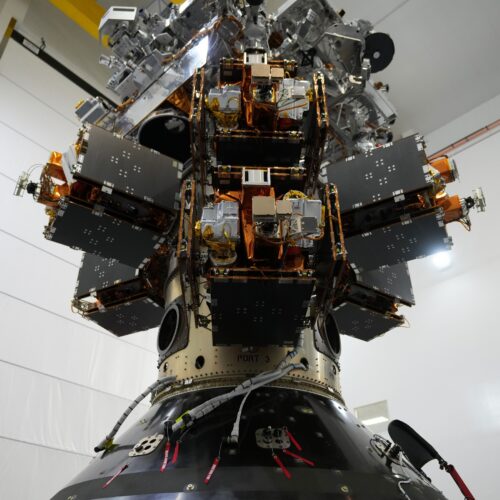

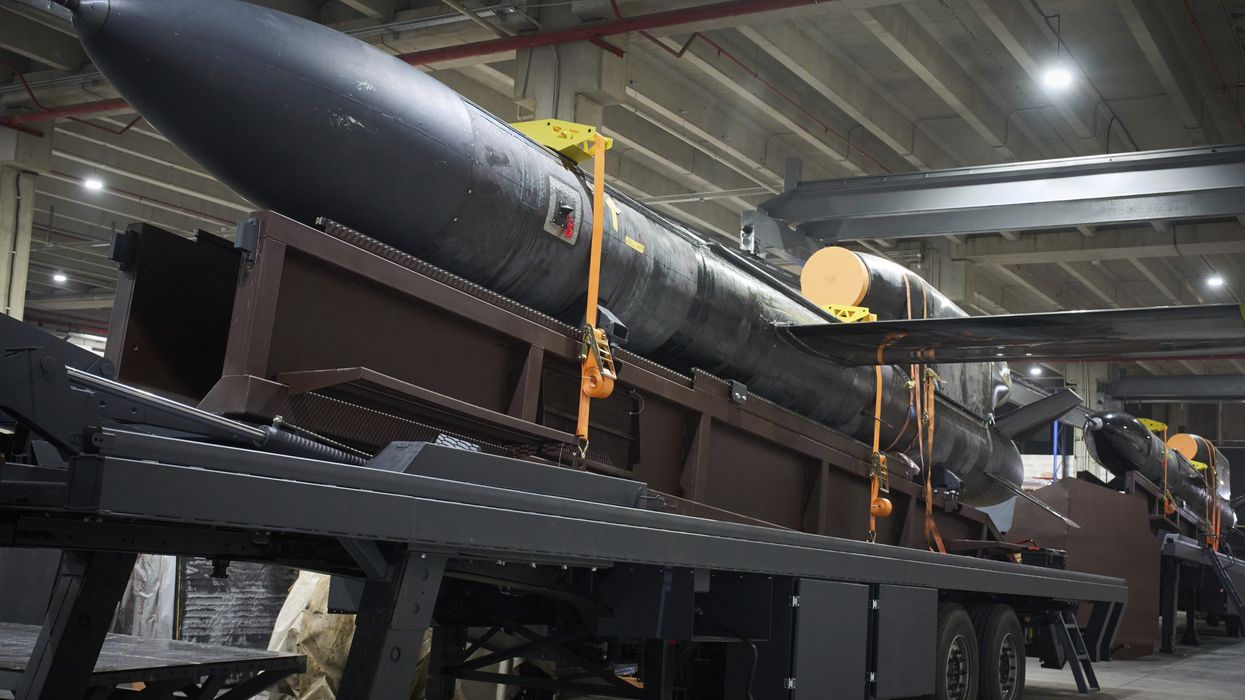
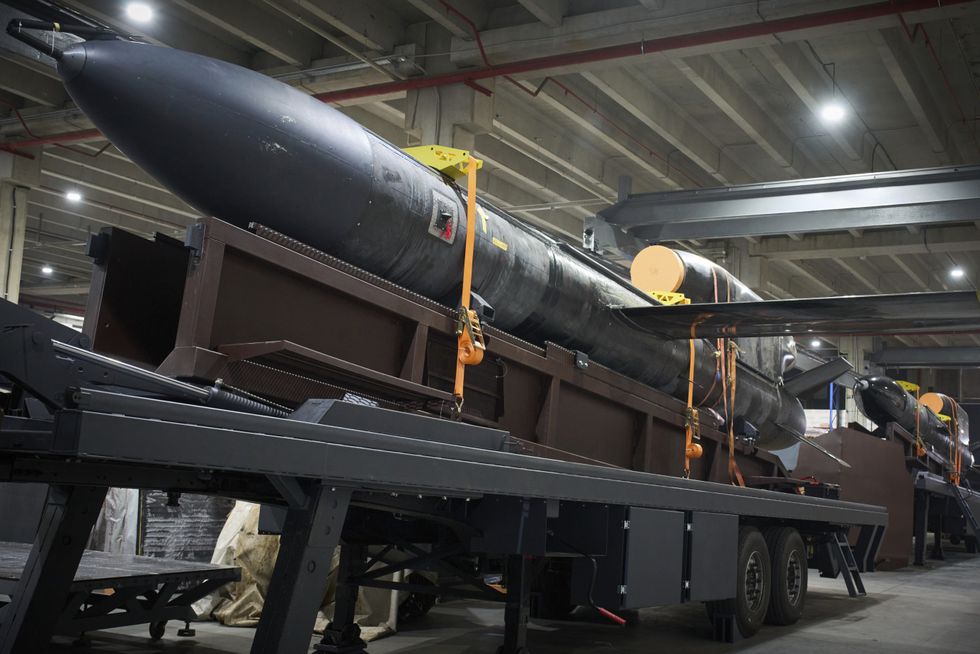





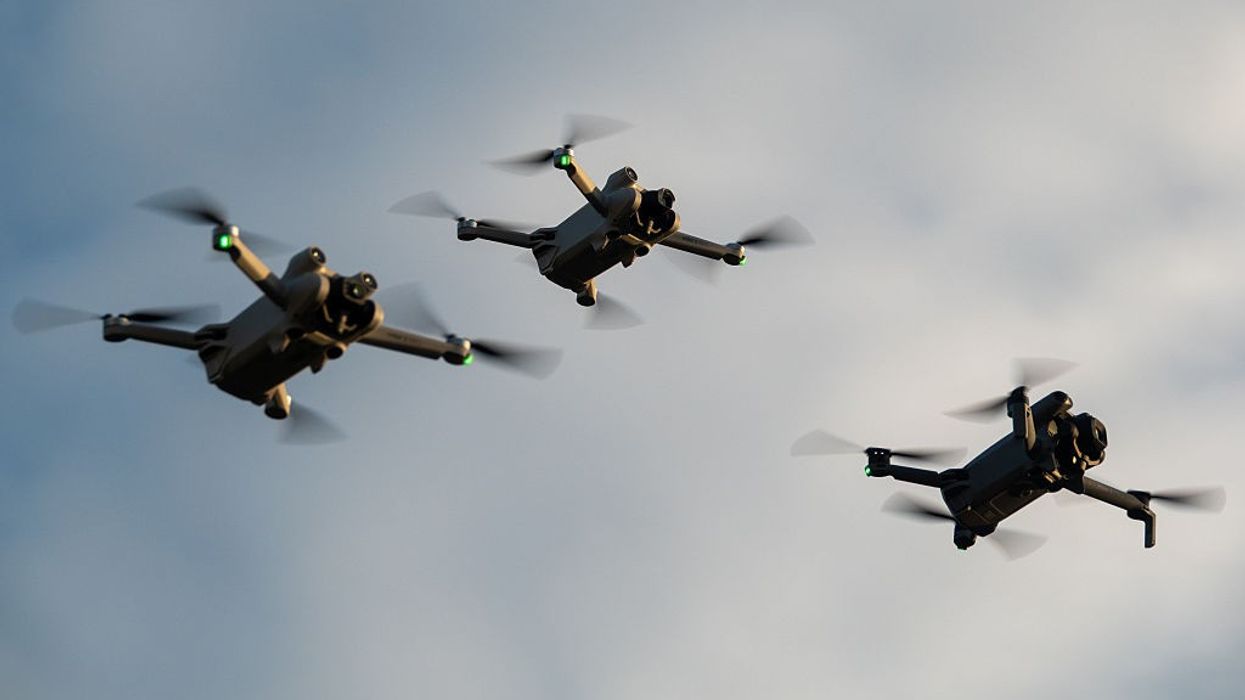
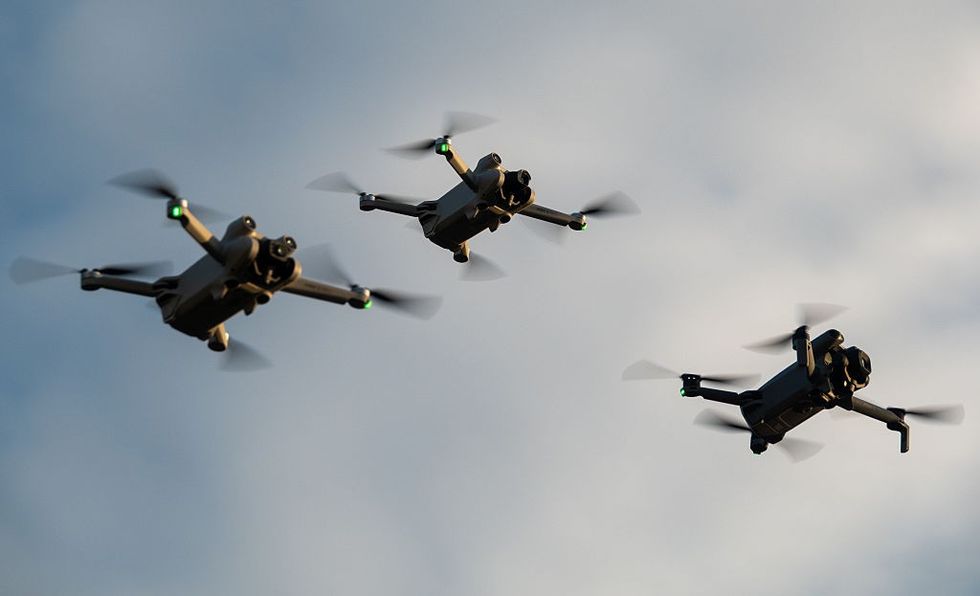
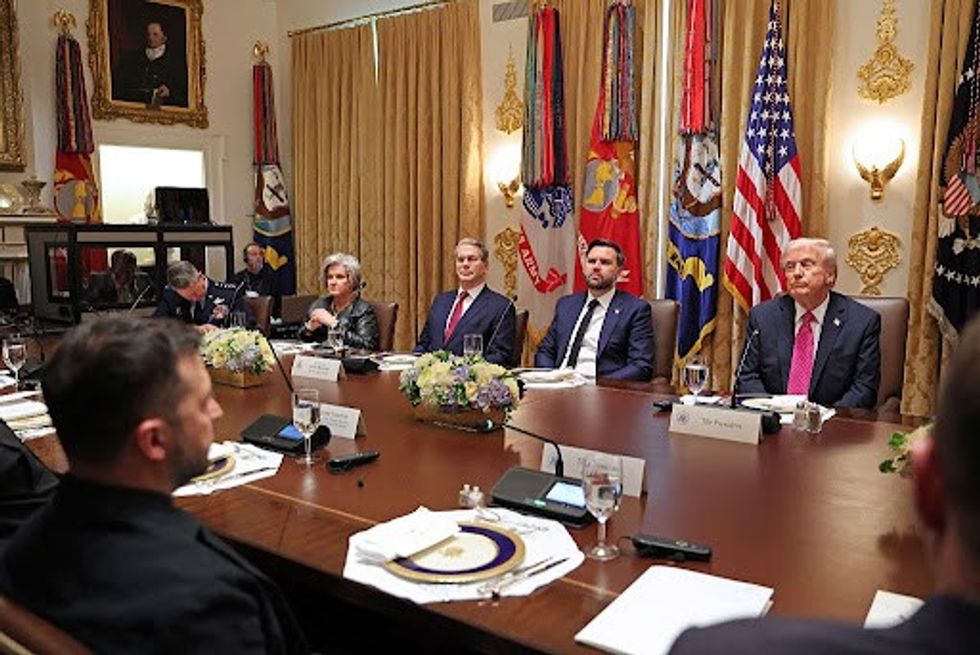
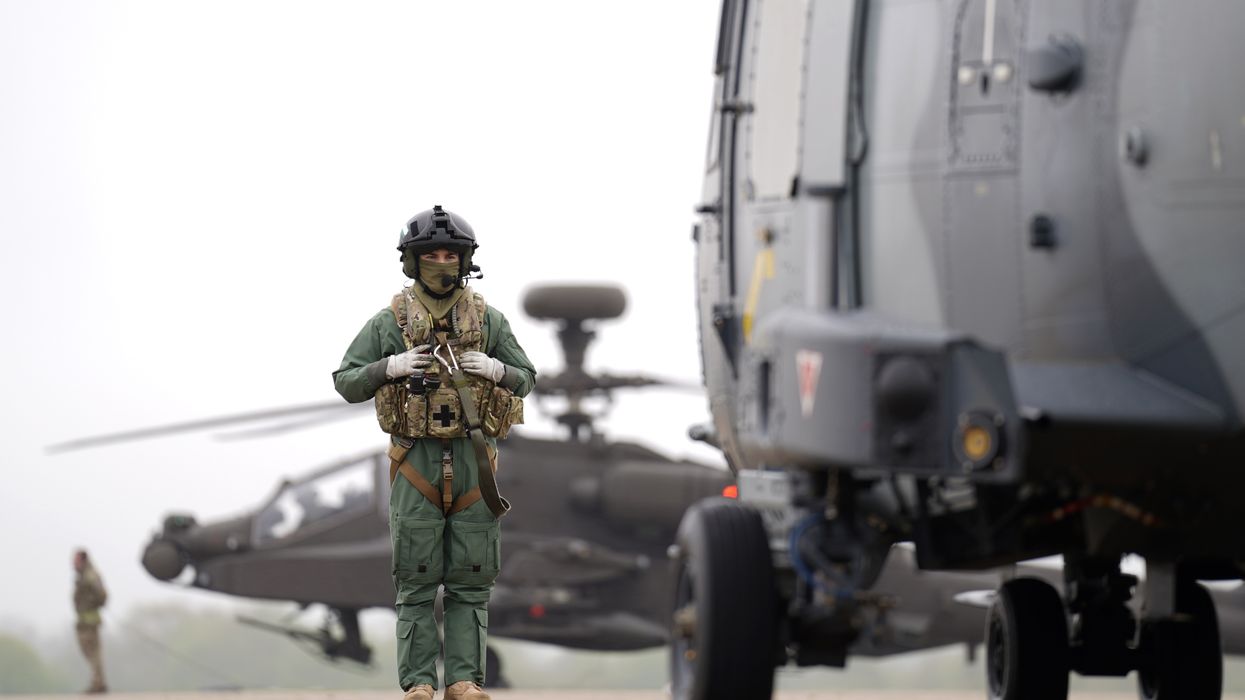
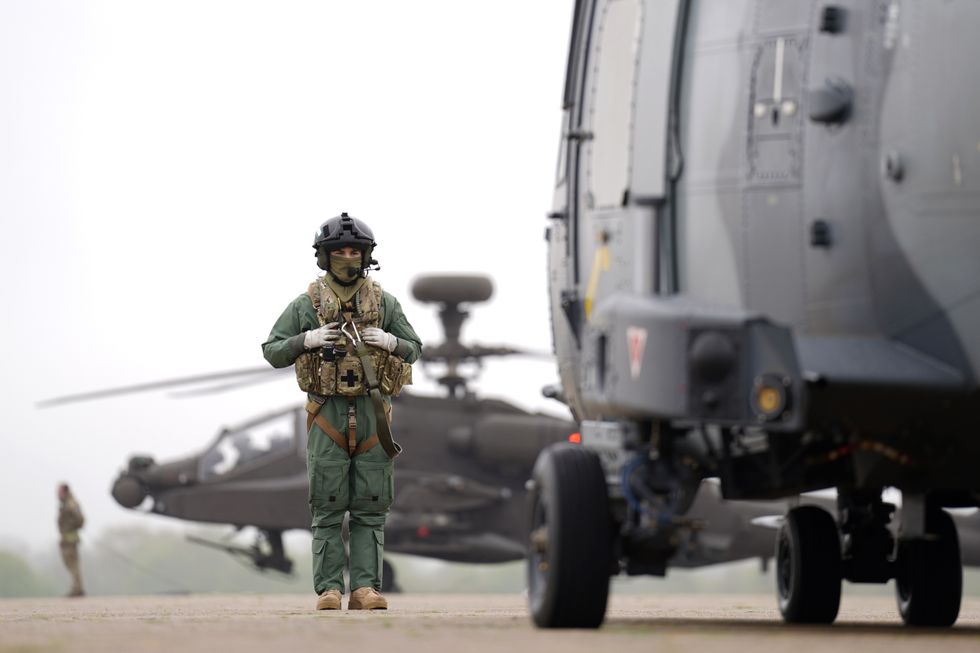
 The stress of running a barbecue trailer is nothing compared with keeping the country’s nuclear arsenal safe. “It’s not work if you love what you’re doing,” Charles Carr, owner of Class-1 Barbecue, in Amarillo, told me when he explained why smoking meat became his retirement plan. He had been a facility manager at the Pantex plant, northeast of Amarillo, “where the U.S. arsenal for nuclear weapons is assembled and disassembled,” Carr explained. That position followed thirteen years of military service and three tours in the Army for Carr. “I got tired of running and gunning,” he said. He opened the trailer with his wife, Maria, last November.You could say he went from Class V (ammunition and explosives) to Class I (food and water), which are…