Reading view

There are new articles available, click to refresh the page.

Elon Musk’s X first to be fined under EU’s Digital Services Act

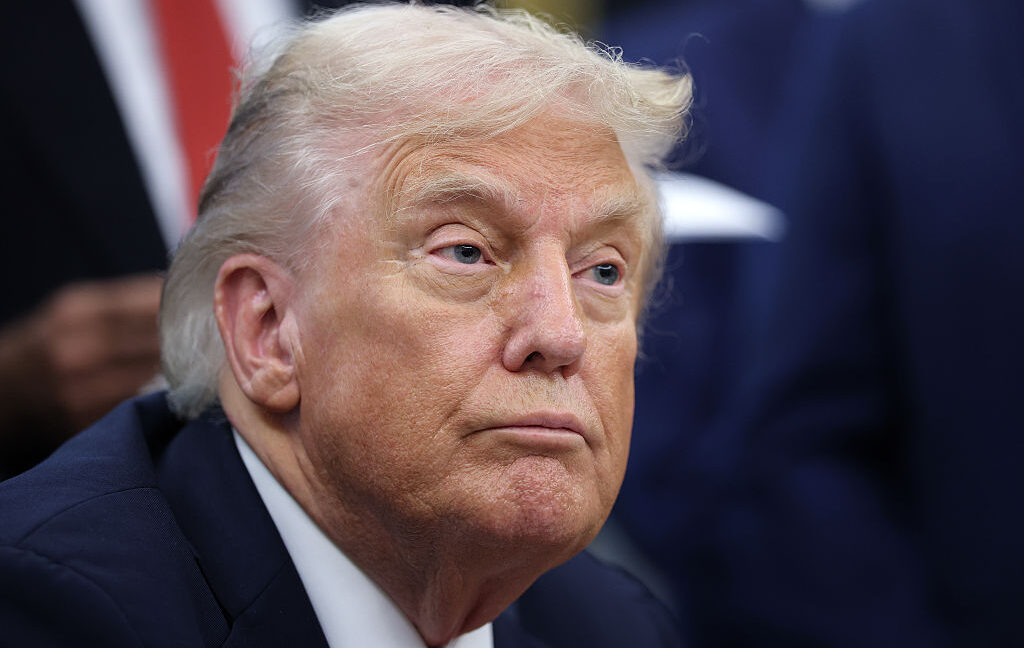
Elon Musk’s X became the first large online platform fined under the European Union’s Digital Services Act on Friday.

The European Commission announced that X would be fined nearly $140 million, with the potential to face “periodic penalty payments” if the platform fails to make corrections.

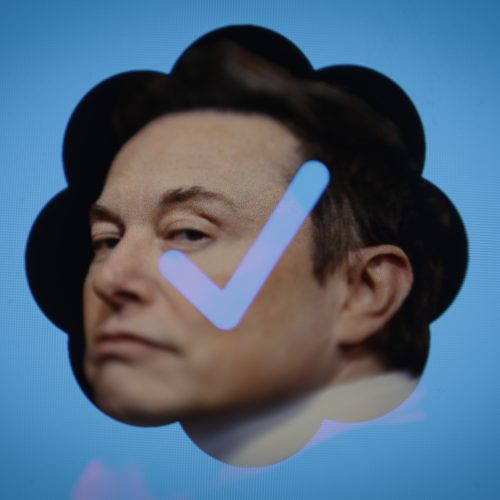
A third of the fine came from one of the first moves Musk made when taking over Twitter. In November 2022, he changed the platform’s historical use of a blue checkmark to verify the identities of notable users. Instead, Musk started selling blue checks for about $8 per month, immediately prompting a wave of imposter accounts pretending to be notable celebrities, officials, and brands.

Read full article

Comments

© NurPhoto / Contributor | NurPhoto
ChatGPT hyped up violent stalker who believed he was “God’s assassin,” DOJ says

ChatGPT allegedly validated the worst impulses of a wannabe influencer accused of stalking more than 10 women at boutique gyms, where the chatbot supposedly claimed he’d meet the “wife type.”

In a press release on Tuesday, the Department of Justice confirmed that 31-year-old Brett Michael Dadig currently remains in custody after being charged with cyberstalking, interstate stalking, and making interstate threats. He now faces a maximum sentence of up to 70 years in prison that could be coupled with “a fine of up to $3.5 million,” the DOJ said.

The podcaster—who primarily posted about “his desire to find a wife and his interactions with women”—allegedly harassed and sometimes even doxxed his victims through his videos on platforms including Instagram, Spotify, and TikTok. Over time, his videos and podcasts documented his intense desire to start a family, which was frustrated by his “anger towards women,” whom he claimed were “all the same from fucking 18 to fucking 40 to fucking 90” and “trash.”

Read full article

Comments

© Yurii Karvatskyi | iStock / Getty Images Plus

Republicans drop Trump-ordered block on state AI laws from defense bill

A Donald Trump-backed push has failed to wedge a federal measure that would block states from passing AI laws for a decade into the National Defense Authorization Act (NDAA).

House Majority Leader Steve Scalise (R-La.) told reporters Tuesday that a sect of Republicans is now “looking at other places” to potentially pass the measure. Other Republicans opposed including the AI preemption in the defense bill, The Hill reported, joining critics who see value in allowing states to quickly regulate AI risks as they arise.

For months, Trump has pressured the Republican-led Congress to block state AI laws that the president claims could bog down innovation as AI firms waste time and resources complying with a patchwork of state laws. But Republicans have continually failed to unite behind Trump’s command, first voting against including a similar measure in the “Big Beautiful” budget bill and then this week failing to negotiate a solution to pass the NDAA measure.

Read full article

Comments

© Win McNamee / Staff | Getty Images News

OpenAI desperate to avoid explaining why it deleted pirated book datasets

OpenAI may soon be forced to explain why it deleted a pair of controversial datasets composed of pirated books, and the stakes could not be higher.

At the heart of a class-action lawsuit from authors alleging that ChatGPT was illegally trained on their works, OpenAI’s decision to delete the datasets could end up being a deciding factor that gives the authors the win.

It’s undisputed that OpenAI deleted the datasets, known as “Books 1” and “Books 2,” prior to ChatGPT’s release in 2022. Created by former OpenAI employees in 2021, the datasets were built by scraping the open web and seizing the bulk of its data from a shadow library called Library Genesis (LibGen).

Read full article

Comments

© wenmei Zhou | DigitalVision Vectors

OpenAI says dead teen violated TOS when he used ChatGPT to plan suicide

Facing five lawsuits alleging wrongful deaths, OpenAI lobbed its first defense Tuesday, denying in a court filing that ChatGPT caused a teen’s suicide and instead arguing the teen violated terms that prohibit discussing suicide or self-harm with the chatbot.

The earliest look at OpenAI’s strategy to overcome the string of lawsuits came in a case where parents of 16-year-old Adam Raine accused OpenAI of relaxing safety guardrails that allowed ChatGPT to become the teen’s “suicide coach.” OpenAI deliberately designed the version their son used, ChatGPT 4o, to encourage and validate his suicidal ideation in its quest to build the world’s most engaging chatbot, parents argued.

But in a blog, OpenAI claimed that parents selectively chose disturbing chat logs while supposedly ignoring “the full picture” revealed by the teen’s chat history. Digging through the logs, OpenAI claimed the teen told ChatGPT that he’d begun experiencing suicidal ideation at age 11, long before he used the chatbot.

Read full article

Comments

© via Edelson PC

Landlords’ go-to tool to set rent prices to be gutted under RealPage settlement

RealPage has agreed to settle an antitrust lawsuit raised by the Department of Justice, alleging that landlords used its tools to coordinate efforts to artificially raise rental prices across the US.

In a press release, the DOJ promised the proposed settlement “would help restore free market competition in rental markets for millions of American renters.”

For years since the pandemic started, rental prices outpaced inflation, and the DOJ suspected that RealPage was the dominant force driving a market that never favored renters. Recent Bureau of Labor Statistics data covering a 12-month period ending this September showed rents are still rising by 3.5 percent amid an affordability crisis, leaving some US renters in fear of housing instability.

Read full article

Comments

© J Studios | DigitalVision

DOGE “cut muscle, not fat”; 26K experts rehired after brutal cuts

After Donald Trump curiously started referring to the Department of Government Efficiency exclusively in the past tense, an official finally confirmed Sunday that DOGE “doesn’t exist.”

Talking to Reuters, Office of Personnel Management (OPM) Director Scott Kupor confirmed that DOGE—a government agency notoriously created by Elon Musk to rapidly and dramatically slash government agencies—was terminated more than eight months early. This may have come as a surprise to whoever runs the DOGE account on X, which continued posting up until two days before the Reuters report was published.

As Kupor explained, a “centralized agency” was no longer necessary, since OPM had “taken over many of DOGE’s functions” after Musk left the agency last May. Around that time, DOGE staffers were embedded at various agencies, where they could ostensibly better coordinate with leadership on proposed cuts to staffing and funding.

Read full article

Comments

© SAUL LOEB / Contributor | AFP

Keep your receipts: Tech firms told to prepare for possible tariff refunds

For months, the Trump administration has warned that semiconductor tariffs are coming soon, leaving the tech industry on pins and needles after a chaotic year of unpredictable tariff regimes collectively cost firms billions.

The semiconductor tariffs are key to Donald Trump’s economic agenda, which is intended to force more manufacturing into the US by making it more expensive to import materials and products. He campaigned on axing the CHIPS Act—which provided subsidies to companies investing in manufacturing chips in the US—complaining that it was a “horrible, horrible thing” to “give hundreds of billions of dollars” away when the US could achieve the same objective by instead taxing companies and “use whatever is left over” of CHIPS funding to “reduce debt.” However, as 2025 winds down, the US president faces pressure on all sides to delay semiconductor tariffs, insiders told Reuters, and it appears that he is considering caving.

According to “two people with direct knowledge of the matter and a third person briefed on the conversations,” US officials have privately told industry and government stakeholders that semiconductor tariffs will likely be delayed.

Read full article

Comments

© William_Potter | iStock / Getty Images Plus

He got sued for sharing public YouTube videos; nightmare ended in settlement

Nobody expects to get sued for re-posting a YouTube video on social media by using the “share” button, but librarian Ian Linkletter spent the past five years embroiled in a copyright fight after doing just that.

Now that a settlement has been reached, Linkletter told Ars why he thinks his 2020 tweets sharing public YouTube videos put a target on his back.

Linkletter’s legal nightmare started in 2020 after an education technology company, Proctorio, began monitoring student backlash on Reddit over its AI tool used to remotely scan rooms, identify students, and prevent cheating on exams. On Reddit, students echoed serious concerns raised by researchers, warning of privacy issues, racist and sexist biases, and barriers to students with disabilities.

Read full article

Comments

© Ashley Linkletter

Meta wins monopoly trial, convinces judge that social networking is dead

After years of pushback from the Federal Trade Commission over Meta’s acquisitions of Instagram and WhatsApp, Meta has defeated the FTC’s monopoly claims.

In a Tuesday ruling, US District Judge James Boasberg said the FTC failed to show that Meta has a monopoly in a market dubbed “personal social networking.” In that narrowly defined market, the FTC unsuccessfully argued, Meta supposedly faces only two rivals, Snapchat and MeWe, which struggle to compete due to its alleged monopoly.

But the days of grouping apps into “separate markets of social networking and social media” are over, Boasberg wrote. He cited the Greek philosopher Heraclitus, who “posited that no man can ever step into the same river twice,” while telling the FTC they missed their chance to block Meta’s purchase.

Read full article

Comments

© Bloomberg / Contributor | Bloomberg

Widespread Cloudflare outage blamed on mysterious traffic spike

A Cloudflare outage caused large chunks of the Internet to go dark Tuesday morning, temporarily impacting big platforms like X and ChatGPT.

“A fix has been implemented and we believe the incident is now resolved. We are continuing to monitor for errors to ensure all services are back to normal,” Cloudflare’s status page said. “Some customers may be still experiencing issues logging into or using the Cloudflare dashboard.”

The company initially attributed the widespread outages to “an internal service degradation” and provided updates as it sought a fix over the past two hours.

Read full article

Comments

© NurPhoto / Contributor | NurPhoto
US may owe $1 trillion in refunds if SCOTUS cancels Trump tariffs

If Donald Trump loses his Supreme Court fight over tariffs, the US may be forced to return “tens of billions of dollars to companies that have paid import fees this year, plus interest,” The Atlantic reported. And the longer the verdict is delayed, the higher the refunds could go, possibly even hitting $1 trillion.

For tech companies both large and small, the stakes are particularly high. A Trump defeat would not just mean clawing back any duties paid on imports to the US that companies otherwise can use to invest in their competitiveness. But, more critically in the long term, it would also end tariff shocks that, as economics lecturer Matthew Allen emphasized in a report for The Conversation, risked harming “innovation itself” by destabilizing global partnerships and diverse supply chains in “tech-intensive, IP-led sectors like semiconductors and software.”

Currently, the Supreme Court is weighing two cases that argue that the US president does not have unilateral authority to impose tariffs under the International Emergency Economic Powers Act (IEEPA). Defending his regime of so-called “reciprocal tariffs,” Trump argued these taxes were necessary to correct the “emergency” of enduring trade imbalances that he alleged have unfairly enriched other countries while bringing the US “to the brink of catastrophic decline.”

Read full article

Comments

© REB Images | Tetra images

Google claims win for everyone as text scammers lost their cloud server

The day after Google filed a lawsuit to end text scams primarily targeting Americans, the criminal network behind the phishing scams was “disrupted,” a Google spokesperson told Ars.

According to messages that the “ringleader” of the so-called “Lighthouse enterprise” posted on his Telegram channel, the phishing gang’s cloud server was “blocked due to malicious complaints.”

“We will restore it as soon as possible!” the leader posted on the channel—which Google’s lawsuit noted helps over 2,500 members coordinate phishing attacks that have resulted in losses of “over a billion dollars.”

Read full article

Comments

© mathisworks | DigitalVision Vectors

❌