Reading view

There are new articles available, click to refresh the page.

Key Updates On The US Crypto Market Structure Bill: What You Need To Know

The anticipated crypto market structure bill, or namely the CLARITY Act, designed to provide essential regulatory clarity for digital assets in the United States, is approaching critical dates in the Senate. However, it faces significant complexities related to stablecoin yield, conflicts of interest, and decentralized finance (DeFi).

Senate Divided On Crypto Market Structure Bill

Legal expert and Chief Legal Officer of Variant Jake Chervinsky, reports that the Senate is divided into two committees: Banking, which is handling the securities law aspect, and Agriculture, responsible for the commodities law portion. 

Both committees have published drafts of their work this fall, with the next step being markup, a process where hearings will be held to vote on amendments before sending the bill to the Senate floor for a full vote.

However, both committees are cautious and are unlikely to proceed with markup until they resolve ongoing disputes. Among these, three significant issues stand out.

The first major concern involves stablecoin yield. In the GENIUS Act, banks lobbied for a prohibition on interest payments, meaning stablecoin issuers cannot offer holders any form of interest or yield. 

While the current prohibition prevents direct yield payments to holders, it does not address non-yield rewards or yield provided by third parties. Banks consider this gap a “loophole” and are advocating for broader restrictions to be included in the market structure bill. 

Conflicts Of Interest And DeFi Regulations Stall Progress

The second issue revolves around conflicts of interest. Some Democratic senators have indicated they would not support the market structure legislation unless it includes provisions that restrict the President’s family from conducting business in the crypto space. 

The third and perhaps most crucial issue pertains to DeFi. It is important to note that market structure legislation primarily addresses centralized platforms that exercise custody over user funds and transactions. 

Chervinsky believes the bill should primarily focus on protecting DeFi, but traditional finance (TradFi) stakeholders have been pushing Congress to categorize virtually all entities in the crypto sector—developers, validators, and others—as intermediaries. 

The expert emphasized that the success of any market structure bill hinges on ensuring robust protections for developers since the viability of the crypto industry relies on their contributions. 

Given the intricate nature of these issues and the swiftly approaching holiday break, Chervinsky noted that it is possible that discussions about market structure could extend into January. 

Senate Markup Set For December 17-18

Market analyst MartyParty provided another update on December 4, indicating that the bipartisan Digital Asset Market Structure Bill is gaining significant momentum in Congress, with a markup session in the Senate Banking Committee tentatively scheduled for December 17-18, just before the holiday recess

If successfully passed, he states that the bill could establish clearer pathways for tokenized real-world assets (RWAs) and mitigate “debanking” risks, paving the way for compliant exchanges and potentially stimulating market volumes following the Commodity Futures Trading Commission (CFTC) approvals for spot crypto trading. 

This “regulatory convergence” is seen as a catalyst that could drive liquidity and energize the next bull market, reinforcing President Trump’s vision for the US to emerge as the “crypto capital of the world.”

Crypto

Featured image from DALL-E, chart from TradingView.com 
Record $12M Crypto Donation to Reform Rocks UK Politics as Government Weighs Ban

Reform UK has landed its biggest donation yet, after receiving £9 million ($12 million) from crypto investor and aviation businessman Christopher Harborne, according to newly released figures from the Electoral Commission.

The sum is now the largest single political donation ever made by a living person to a UK political party.

Harborne, a British investor living in Thailand, has long been active in UK political donations. He donated heavily to the Conservatives during Boris Johnson’s time in office and also supported the Brexit Party, which later became Reform UK, in both 2019 and 2020.

Two companies tied to him, AML Global and Sherriff Group, operate in the private aviation sector.

Harborne’s £9M donation Reshapes UK as Crypto Money Enters UK Politics

Harborne’s donation comes at a time when, as the next general election is not due until 2029, but local elections are scheduled for May. It also comes as Reform UK has remained at the top of several national opinion polls since the spring.

Harborne’s £9 million donation breaks the previous record of £8 million, which was set in 2019 by supermarket heir Lord David Sainsbury in support of the Liberal Democrats.

Separately, Lord John Sainsbury left £10 million to the Conservatives through his will in 2022.

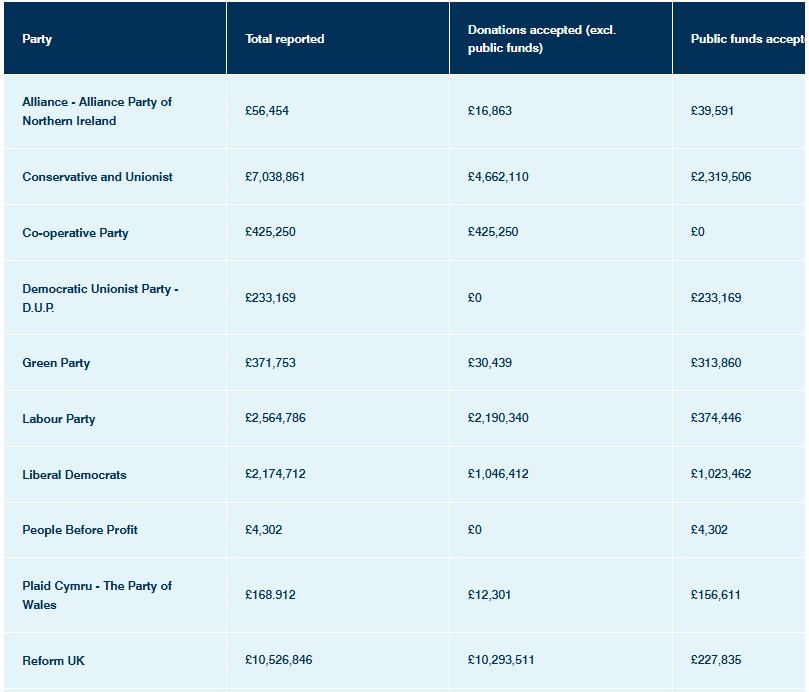
Figures released by the UK Electoral Commission show that Reform UK raised more than £10.2 million between July and September, over twice the amount collected by the Conservatives in the same period, which brought in £4.6 million.

Source: Electoral Commission UK

Labour brought in £2.1 million, and the Liberal Democrats reported £1 million. This makes it the first full quarter in which Reform will outpace Conservatives in fundraising since the general election in 2024.

Still, the longer-term numbers slightly favor the Conservatives, showing that since July 2024, they have raised around £14.4 million in total, compared with Reform’s £13.5 million.

Conservative leader Kemi Badenoch downplayed the impact of Harborne’s contribution, describing it as a “one-off” and insisting her party remains stronger when it comes to steady, repeat donors

Beyond fundraising, the donation has reignited debate around the role of cryptocurrency in UK politics.

In May, Reform leader Nigel Farage announced that the party would begin accepting Bitcoin donations, making it the first UK political party to do so.

The party later launched a dedicated digital donation portal and confirmed that it had already received a small number of crypto contributions, the first recorded instance of such donations in British political history.

Foreign Influence Fears Drive UK Review of Crypto Political Funding

That decision is now under increasing political scrutiny. The UK government says it’s now looking into whether cryptocurrency donations should be blocked entirely for political parties.

While no formal proposal has been confirmed, officials say discussions are underway across Whitehall about it, driven by rising concerns over transparency and the risk of foreign interference in British politics.

🚨 UK considers crypto political donation ban, threatening @Nifel_Farage Reform UK’s campaign and fundraising amid foreign interference and money-laundering concerns.#UKPolitics #ReformUK https://t.co/WBR07U05bb

— Cryptonews.com (@cryptonews) December 2, 2025

Additionally, security specialists caution that while blockchain records are public, the real origin of funds can still be obscured through layered wallets, intermediaries, and offshore structures.

The debate gained urgency after former Reform Wales leader Nathan Gill was convicted and sentenced to over 10 years in prison for accepting payments to push pro-Russian narratives while serving as a Member of the European Parliament.

The Ministry of Housing, Communities and Local Government, which is leading work on the Elections Bill, has also warned that existing rules leave the political system exposed to covert foreign influence.

Proposed changes are expected to focus on donations funneled through shell companies and to introduce stricter risk checks for politically sensitive contributions.

The discussion unfolds as the UK moves ahead with its wider digital asset rules. On December 3, Parliament passed a law recognizing cryptocurrencies and stablecoins as legal property for the first time under UK law.

The post Record $12M Crypto Donation to Reform Rocks UK Politics as Government Weighs Ban appeared first on Cryptonews.

Spot Crypto Assets Get Nod For Trading On CFTC-Registered Futures Exchanges

The US Commodity Futures Trading Commission (CFTC) announced on Thursday that spot crypto asset contracts will soon be available for trading on futures exchanges that are registered with the agency, aligning with the positive regulatory changes championed by President Donald Trump’s administration. 

Crypto Sprint Progress

The CFTC disclosed that this recent decision follows recommendations from the President’s Working Group on Digital Asset Markets and insights gathered from the CFTC’s Crypto Sprint initiative, as well as collaborative efforts with the Securities and Exchange Commission (SEC). 

Acting CFTC Chairman Caroline Pham highlighted the importance of providing Americans with access to safe and regulated markets, stating, “Recent events on offshore exchanges have shown us how essential it is for Americans to have more choice and access to safe, regulated US markets.”

In addition to the introduction of spot trading, the Crypto Sprint initiative includes measures to enable tokenized collateral—such as stablecoins—within derivatives markets. 

The CFTC also plans to implement regulatory updates to facilitate the use of blockchain technology in various operational areas, including collateral, margin, clearing, settlement, reporting, and recordkeeping.

Historic Shift In CFTC’s Digital Asset Trading Move

Market expert MartyParty on social media stated that this latest move is an historic decision that will empower retail and institutional traders to buy, sell, and leverage crypto assets directly on CFTC-registered exchanges. MartyParty further noted:

It’s the culmination of years of regulatory groundwork, including a joint SEC-CFTC statement clarifying that existing laws already permit such trading on registered venues.

Pham remarked on the collaborative efforts of the administration, stating that President Trump’s leadership has fostered a comprehensive plan for the US to reclaim its status as a global leader in digital asset markets. As she noted, “The CFTC has a central role to play” in this initiative.

Crypto

Featured image from DALL-E, chart from TradingView.com 
Taiwan Eyes First Stablecoin Debut In 2026 As Regulatory Framework Advances

As the sector continues to gain global momentum, Taiwanese authorities have announced that a locally issued stablecoin could be launched next year, pending the imminent approval of the country’s regulatory crypto framework and related legislation.

First Local Stablecoin To Debut Next Year

On Wednesday, Taiwan’s Financial Supervisory Commission (FSC) Chairman Peng Jin-long revealed that the island’s first regulated stablecoin could debut in the latter half of 2026, local news outlet Focus Taiwan reported.

The FSC chair affirmed that the Virtual Assets Service Act (VASA), which incorporates stablecoin regulation, could be passed during its third hearing in the next legislative session, scheduled for this week, after clearing initial reviews with a “high level of consensus.”

After the framework’s approval, stablecoin-centered regulations would be developed within six months, setting the launch of a locally issued token pegged to the New Taiwan Dollar (NTD) or the US Dollar (USD) to the second half of the year.

The VASA supports the efforts by Taiwanese authorities to establish a comprehensive crypto framework that promotes industry growth and safeguards investors. Last year, the FSC announced an overhaul of the Anti-Money Laundering (AML) framework to include crypto businesses, introducing stricter AML guidelines for Virtual Asset Service Providers (VASPs) and requiring all crypto firms to complete the AML registration by September 2025.

In January, Peng stated that investors could have a “convenient” entrance to crypto assets in the future through stablecoins, which could serve as a bridge between the country’s legal tender and virtual currency.

In March, the FSC published the finalized draft of its landmark crypto legislation, which the VASA’s draft proposed authorizing banks to issue stablecoins pegged to the New Taiwan Dollar or the US Dollar.

Meanwhile, Premier Cho Jung-tai and Central Bank Governor Yang Chin-long recently expressed support for a formal Bitcoin (BTC) policy, pledging to study the flagship cryptocurrency as a strategic reserve asset, accelerate pro-BTC rulemaking, and pilot treasury exposure through government-seized assets.

Taiwan Sets Financial Institutions’ Role

At the legislative hearing, the FSC’s chair highlighted that the bill’s draft draws from the European Union (EU)’s Markets in Crypto-Assets Regulation (MiCA). He explained that the Virtual Assets Service Act doesn’t require stablecoins to be issued exclusively by financial institutions, which has been a divisive topic in other jurisdictions.

As reported by Bitcoinist, South Korea’s long-awaited stablecoin legislation could be delayed until next year as the Korean Financial Services Commission clashes with the Bank of Korea (BOK) over the role of banks in the sector.

A local news media outlet recently noted that the BOK and regulators agree that financial institutions must be involved in the issuance of won-pegged tokens, but differ on the extent of their role.

The central bank is pushing for a consortium of banks owning at least 51% of any stablecoin issuer seeking regulatory approval. Meanwhile, regulators are concerned that giving a majority stake to banks could reduce participation from tech companies and limit the market’s innovation. Earlier this week, authorities set December 10 as the deadline for the government to deliver a draft bill.

Unlike South Korea’s financial authorities, Focus Taiwan reported that the regulator and the central bank have agreed that only financial institutions will be allowed to issue stablecoins in the initial stage to reduce risk management, suggesting that companies could join at a later stage of the project.

stablecoin, bitcoin, btc, btcusdt

Crypto Gets Legal Recognition: UK Enacts Property Act 2025 For Digital Assets

The United Kingdom (UK) has reached a significant milestone in its approach to digital assets with the recent passage of the Property Act 2025, which now officially categorizes cryptocurrencies as legal property. 

UK’s New Law Sets Criteria For Digital Assets

The creation of this dedicated legal category for digital assets followed recommendations from the Law Commission, which advocated for a framework that acknowledges assets not fitting traditional definitions of personal property.

This legal evolution is seen as part of a broader strategy to position the UK as a leading digital finance hub, responding to experts’ calls for the country to align its regulatory environment with that of the United States in order to promote growth in the digital asset market. 

According to law firm Clyde & Co, a key provision in the law states that “a thing (including a thing that is digital or electronic in nature) is not prevented from being the object of personal property rights merely because it is neither (a) a thing in possession, nor (b) a thing in action.” 

This phrase confirms that digital assets can now be recognized as a third category of personal property, distinct from the traditional classifications of tangible and intangible assets.

However, the Act does not guarantee that any specific type of asset qualifies as personal property; rather, it aims to “unlock” the common law’s ability to adapt to technological advancements and new asset types, as outlined in the Explanatory Notes from Parliament. 

The interpretation of existing digital assets—such as cryptocurrencies and non-fungible tokens (NFTs)—as well as any emerging forms will ultimately depend on future court rulings. 

The law firm also noted that, under this new law, a digital asset must meet certain criteria to qualify as personal property: it must be definable and identifiable by third parties and capable of being assumed by them, as well as possess a degree of permanence.

Additionally, digital assets will be included in bankruptcy and insolvency proceedings, allowing them to be treated as part of the overall asset pool available to creditors and heirs. 

Government Moves To Ban Crypto Donations

While momentum continues for digital asset recognition, the UK government is also addressing concerns surrounding cryptocurrency in the political sphere. 

Ministers are reportedly working on legislation aimed at banning political donations made through digital currencies, although this crackdown may not be ready in time for the upcoming elections bill in the new year. 

Officials have raised alarms that cryptocurrency donations pose risks to the integrity of the electoral process, primarily due to their difficult-to-trace nature, which could open the door to exploitation by foreign entities or criminal organizations.

Crypto

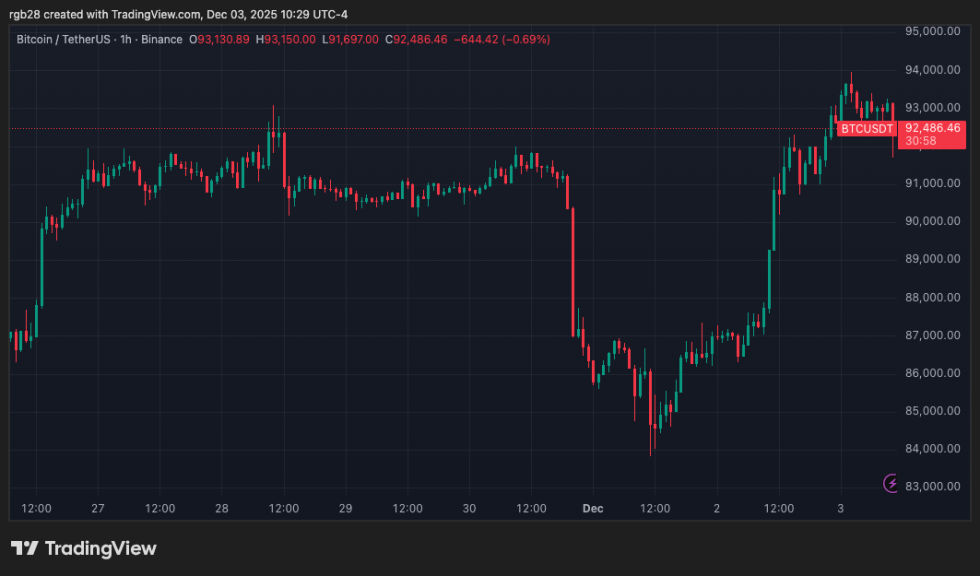
At the time of writing, the market’s leading cryptocurrency, Bitcoin, was trading at $92,180, surging 4% in the past 24 hours. 

Featured image from Shutterstock, chart from TradingView.com 

Rep. Steil Demands Regulators Fast-Track GENIUS Act as Stablecoin Law Deadline Looms

Regulators are facing growing pressure from Congress to accelerate implementation of the United States’ new stablecoin law, with Rep. Bryan Steil warning that the one-year rulemaking deadline is approaching.

During a House Financial Services Committee hearing on Tuesday, Steil urged agency heads to provide concrete updates on their progress in rolling out the Guiding and Establishing National Innovation for U.S. Stablecoins Act, which President Donald Trump signed into law on July 18.

FDIC to Publish First GENIUS Act Proposal This Month as Multi-Agency Effort Begins

The Genius Act, signed into law on July 18, 2025, is the first U.S. statute to impose a unified federal structure on stablecoin issuers.

The law gives regulators until July 18, 2026, to complete the full set of implementing rules, although the framework will not take effect until the earlier of two dates: January 18, 2027, or 120 days after final regulations are published.

That timeline pressurizes agencies preparing the first wave of proposals.

Steil said the committee has seen cases where Congress passes a bill but implementing regulations arrive late or stall.

🚨Breaking Crypto Update🚨
⁰NCUA Chair @kylehauptman confirms we are on track to implement the GENIUS Act by July 18. pic.twitter.com/Elvgme0f75

— Bryan Steil (@RepBryanSteil) December 2, 2025

He told regulators that delivering the GENIUS Act on schedule is essential, especially as stablecoins play an increasingly important role in global dollar liquidity and digital-asset markets.

During the exchange, NCUA Chairman Kyle Hauptman assured lawmakers that the credit union regulator expects its first GENIUS-related rulemaking to focus on the application process for issuers.

Hauptman said the agencies involved understand the July deadline and are working to meet it.

The hearing brought together leaders from the Federal Reserve, the Office of the Comptroller of the Currency, the National Credit Union Administration, and the Federal Deposit Insurance Corporation.

In prepared remarks released before the hearing, FDIC Acting Chair Travis Hill said his agency expects to publish its first proposal later this month, establishing the application process for stablecoin issuers supervised by the FDIC.

✅ The Federal Deposit Insurance Corporation will publish its first US stablecoin rule framework later this month.#Stablecoin #FDIChttps://t.co/yuIdMYcRek

— Cryptonews.com (@cryptonews) December 2, 2025

Hill said the FDIC’s responsibilities extend well beyond licensing, noting that the law tasks his agency with defining the capital, liquidity, and reserve standards that bank-issued stablecoins must meet.

He said a separate proposal detailing prudential standards is planned for early next year, setting up a two-step regulatory rollout.

GENIUS Act Moves Forward Alongside CLARITY Act and Anti-CBDC Proposals

The GENIUS Act would require stablecoin issuers to maintain one-to-one backing with U.S. dollars or high-quality liquid assets and introduce annual audits for firms whose tokens exceed a $50 billion market cap.

It also outlines the first federal standards for foreign-issued stablecoins, giving Washington a clearer framework for overseeing offshore projects.

Federal agencies have already begun laying groundwork for implementation.

The Treasury Department has opened multiple public consultations to gather industry input on stablecoin rule designed and how illicit-finance risks should be monitored.

🏦 The U.S. Treasury is calling on the public for feedback on how financial institutions can prevent crypto risks as part of the GENIUS Act. #Treasury #GENIUSActhttps://t.co/7Bu5ExndQt

— Cryptonews.com (@cryptonews) August 19, 2025

Treasury Secretary Scott Bessent said the feedback will shape ongoing research into compliance tools, including their effectiveness and privacy impact.

He called the GENIUS Act “essential” to maintaining U.S. leadership in the stablecoin market.

The legislative process, however, continues to feature political flashpoints.

During the latest hearing, Rep. Maxine Waters raised concerns about whether a sitting president should hold business interests in sectors they regulate, referencing President Trump’s link to the World Liberty Financial project.

She said the situation highlights unresolved conflict-of-interest questions that Congress must address.

Regulatory momentum is advancing in parallel with broader market-structure efforts on Capitol Hill.

The House passed its digital-asset package, the CLARITY Act, earlier this year, assigning oversight responsibilities between the Commodity Futures Trading Commission and the Securities and Exchange Commission based on token classifications.

🇺🇸 GENIUS Act, Anti-CBDC Act, and CLARITY Act pass crucial procedural vote 215-211 in Congress after Trump's decisive Oval Office intervention rescues stalled crypto agenda.#GeniusAct #Trumphttps://t.co/Lm2tCBbimp

— Cryptonews.com (@cryptonews) July 16, 2025

The bill still awaits Senate consideration, and analysts say its prospects remain unclear.

Another key proposal, the Anti-CBDC Surveillance State Act, is also pending in the Senate.

It would bar the Federal Reserve from issuing a retail central bank digital currency without explicit congressional authorization, a step supporters argue is necessary to safeguard financial privacy.

The post Rep. Steil Demands Regulators Fast-Track GENIUS Act as Stablecoin Law Deadline Looms appeared first on Cryptonews.

Polish President Vetoes Strict Crypto Regulation Bill, Citing Threat to Freedom

By: Amin Ayan

Poland’s president has blocked a sweeping set of rules for the country’s crypto sector, dealing a blow to the government’s push for tighter oversight.

Key Takeaways:

  • Polish President Karol Nawrocki vetoed a sweeping crypto law, saying it threatens property rights and personal freedoms.
  • The blocked bill would have imposed strict oversight, including powers to block crypto websites.
  • The decision has renewed debate over whether regulation protects users or pushes firms abroad.

Karol Nawrocki vetoed the Crypto-Asset Market Act on Monday, arguing that its provisions “genuinely threaten the freedoms of Poles, their property, and the stability of the state,” according to a statement from the presidential office.

The move immediately split opinion in Warsaw, with crypto supporters applauding the decision and senior officials accusing the president of opening the door to disorder.

Government Pushes Tough Oversight for Poland’s Crypto Market

Introduced in June, the bill sought to place Poland’s digital-asset industry under strict supervisory control.

Supporters inside government said the measures were needed to protect consumers from fraud and abusive practices.

However, critics, including opposition lawmaker Tomasz Mentzen, had predicted that the president would refuse to sign it after it cleared parliament, describing the draft as a blunt instrument that punished legitimate firms alongside bad actors.

The president’s office highlighted several flashpoints. One was a clause that would give authorities wide powers to block websites linked to crypto activity.

Prezydent RP @NawrockiKn odmówił podpisania ustawy o rynku kryptoaktywów.

‼ Zdaniem Prezydenta, zawetowane przepisy realnie zagrażają wolnościom Polaków, ich majątkowi i stabilności państwa. https://t.co/ZBXaZg5uQI pic.twitter.com/27n7gpAayF

— Kancelaria Prezydenta RP (@prezydentpl) December 1, 2025

“Domain-blocking laws are opaque and can lead to abuse,” the statement said, warning that such tools risk being used beyond their original purpose.

Nawrocki added that the legislation was so dense that it undermined transparency, particularly when set against leaner frameworks in neighboring Czechia, Slovakia and Hungary.

Overly tight rules, he added, would simply drive companies, and tax revenues, to more welcoming jurisdictions such as Lithuania and Malta.

The president also pointed to high oversight fees baked into the bill, arguing they would deter startups while favoring large foreign firms and banks.

“This is a reversal of logic, killing off a competitive market and a serious threat to innovation,” he said.

Polish Ministers Slam President’s Crypto Veto

Meanwhile, members of the government moved quickly to condemn the veto.

Finance Minister Andrzej Domański accused the president of having “chosen chaos,” while Foreign Minister Radosław Sikorski warned that the absence of new controls would leave savers exposed if markets turn.

Crypto advocates pushed back, saying the blame for scams and losses rests with enforcement failures, not with the rejection of a single statute.

Economist Krzysztof Piech argued that Poland is not operating in a regulatory vacuum, noting that the EU’s Markets in Crypto-Assets law will bring union-wide investor safeguards from July 2026.

Jakie dobre, konkretne wytłumaczenie, o co chodziło w tej ustawie…
Z dedykacją dla całej koalicji rządzącej, która krypto nie ogarnia, ale głosuje tak musi.
Od 1 lipca 2026 cały polski rynek będzie uregulowany i nadzorowany – nawet bez żadnej ustawy. Jesteśmy bowiem w UE. https://t.co/YCiLmut4xp

— Krzysztof Piech (@krzysztof_piech) December 1, 2025

In October, Sławomir Cenckiewicz, head of Poland’s National Security Bureau, said Russia is using cryptocurrencies to pay saboteurs carrying out hybrid attacks across the European Union.

The method, he said, allows Moscow to conceal financial flows and evade detection by Western intelligence services.

Cenckiewicz said the FT that Russia’s military intelligence agency, the GRU, has been using crypto to finance operations ranging from sabotage to cyberattacks on critical infrastructure.

The post Polish President Vetoes Strict Crypto Regulation Bill, Citing Threat to Freedom appeared first on Cryptonews.

War On Crypto, Now Targeting Trump’s AI And Crypto Czar, Expert Claims

Throughout the year, the crypto industry has undergone significant regulatory changes influenced by President Trump’s new policies, alongside a coalition of senators advocating for the adoption and growth of digital assets. 

However, tensions escalated when a group of Democratic senators began to challenge Trump’s policies, claiming that they reflect a significant conflict of interest, but this time, particularly concerning David Sacks, the White House’s AI and Crypto Czar.

White House Crypto Czar Denies Conflicts Of Interest

In a recent statement on social media site X (formerly Twitter), Sacks shared that five months ago, several reporters from The New York Times were assigned to investigate supposed conflicts of interest linked to his role. 

He described how the investigation persisted through numerous “fact checks,” during which they scrutinized various accusations against him. Despite presenting thorough rebuttals, Sacks noted that the published article only included fragments of their responses, while the foundation of the accusations remained largely speculative.

According to the White House’s Crypto Czar, the allegations ranged from a “fabricated dinner” with a notable tech CEO to unfounded claims of promising access to the President and exerting influence over defense contracts. He argued that each time an accusation was disproven, the Times simply shifted to another claim. 

Sacks expressed frustration that, in their pursuit of a “sensational story,” The New York Times overlooked the fact that he has no genuine conflicts of interest to uncover. He described the final article as a “nothing burger,” asserting that it merely pieced together anecdotes that do not substantiate its headline. 

To counter what he deemed a misrepresentation of the facts, Sacks ultimately hired a law firm specializing in defamation law, to assist in addressing these allegations. 

New Bills Could Dismantle Century-Old Banking Practices

Market expert Jack Sage later weighed in on these developments via social media, asserting that US bankers, including JPMorgan, are waging “TOTAL WAR” on Bitcoin. 

Sage pointed out several targets of this new onslaught, including Strategy (previously MicroStrategy), along with key figures such as Strike CEO Jack Mallers, and stablecoin issuer Tether (USDT). 

He indicated that David Sacks is now in the line of fire, characterizing this as a coordinated attack aimed at diminishing a crypto-friendly influence within Trump’s administration.

Sage suggested that the Trump administration seeks to leverage Bitcoin and stablecoins to challenge the banks’ “longstanding monopoly” over the money supply. 

He pointed to potential legislative initiatives such as the GENIUS Act, the upcoming CLARITY Act, and possibly the BITCOIN Act as transformative measures that could shift money creation away from traditional banks and the Federal Reserve (Fed).

These proposed bills, according to Sage, could dismantle the fractional reserve banking system that has existed for over a century. The response from traditional bankers and globalists, Sage noted, has been one of desperation as they confront a reality where they may lose control over monetary systems for the first time.

Crypto

Featured image from DALL-E, chart from TradingView.com 

Crypto Crackdown: House GOP Discovers 30 Firms Debanked In Operation Chokepoint 2.0

In a recent report, Republicans on the House Financial Services Committee unveiled alarming findings related to Operation Chokepoint 2.0, revealing that at least 30 crypto firms have been debanked over the past years. 

The investigation, which began in the 118th Congress, sought to uncover coordinated efforts by the Biden Administration to hinder digital asset businesses and individuals from accessing essential financial services.

Biden Administration’s Actions Against Crypto

The report details how regulators under the Biden Administration employed “vague rules” and excessive discretion to discourage banks from serving clients in the digital asset space. 

The Republicans further asserted that these regulators pressured financial institutions to distance themselves from digital asset clients through informal guidance, enforcement actions, and a lack of clear regulations, removing them from the financial system.

Chairman Hill commented on the implications of this approach, stating, “Targeting Americans over their political views erodes trust in the financial system and undermines the core freedoms our nation was founded on.” 

However, Hill voiced confidence in repairing the damage done by the Biden administration, citing the current era of advancement for digital assets under President Trump, who has already signed one crypto bill—the GENIUS Act—and may soon sign the CLARITY Act.

The report also highlighted that “informal communications,” such as interagency statements and interpretive letters, have specifically been used to discourage banks and other financial entities from working with digital asset firms.

Regulatory Bodies Criticized For Inaction

Key points raised in the report by Republicans include a failure by the Biden Administration to create a clear crypto regulatory regime, which has enabled federal financial regulators to effectively stifle innovation and limit activity within the sector. 

Rather than fostering a supportive environment for digital asset projects, Republicans claim that the administration’s approach leaned toward enforcement-based regulation, which further complicated matters for crypto firms. 

The report underscored the characterization of the digital asset ecosystem by the Biden Administration as prone to volatility and risk, particularly citing concerns over compliance with anti-money laundering (AML). However, Republicans argued that these concerns do not justify the aggressive tactics employed against the industry.

The report also highlighted the roles of key regulators such as the Federal Reserve, the Federal Deposit Insurance Corporation (FDIC), and the Office of the Comptroller of the Currency (OCC). 

These entities, according to the report, failed to establish a coherent regulatory framework for digital assets and have resorted to enforcement actions against companies engaged in this market.

Subcommittee Chair Meuser remarked, “This report documents how Obama-era practices were revived and expanded under President Biden—through pause letters, informal pressure campaigns, and regulation by enforcement that forced U.S. companies offshore.” 

He called attention to the leadership of individuals like President Trump, Secretary Bessent, Vice Chair Bowman, Comptroller Gould, and Acting Chair Hill, who are credited with restoring fairness and clarity in bank supervision

While the industry has seen major shifts under President Trump’s administration, Meuser stressed the need for Congress to codify protections against similar actions in the future, to prevent any resurgence of Operation Chokepoint.

Crypto

Featured image from DALL-E, chart from TradingView.com 

UK’s Crypto Crackdown Begins: Exchanges Required To Collect Transaction Records By 2026

The UK has declared a fresh crackdown on cryptocurrency holdings. The concept compels digital asset providers, including exchanges, to provide precise financial information about UK taxpayers. 

Major Shift In Crypto Trading Oversight

According to the Financial Times, cryptocurrency holders have been cautioned that, starting January 1, 2026, major cryptocurrency exchanges will be mandated to collect extensive transaction records from their UK customers. 

This includes crucial details such as purchase prices, selling amounts, and profits accrued from these transactions, as part of a broader initiative to combat tax avoidance.

His Majesty’s Revenue & Customs (HMRC) will gain further visibility into the financial activities of cryptocurrency holders as these exchanges are tasked with recording and eventually sharing this information directly with the tax authority. By 2027, HMRC will receive these detailed reports.

Experts have issued a warning to individuals trading in digital currencies—from Bitcoin (BTC) and Ethereum (ETH) to lesser-known tokens—to ensure they are accurately reporting their profits in their self-assessment tax returns. 

Seb Maley, CEO of tax insurance provider Qdos, emphasized that this development represents a fundamental shift in how digital asset trading is monitored from a tax perspective. “HMRC will soon know exactly who is making gains—and how much,” he stated. 

Maley noted that anyone involved in cryptocurrency must ensure that they are documenting their gains on their tax returns, as the new regulations will enable HMRC to cross-check this information against the records received from platforms.

Turkmenistan’s New Law on Digital Assets

In Asia, Turkmenistan has officially moved towards embracing digital assets by enacting a new law that legalizes and regulates cryptocurrencies, including provisions for licensing digital asset exchanges and mining entities. 

This significant development was reported by the state media on Friday, following the signing of the law by President Serdar Berdymukhamedov. The legislation is set to take effect on January 1, 2026.

One of the alleged reasons behind this move is Turkmenistan’s desire to diversify its economy, which has long relied heavily on exporting natural gas, primarily to China. 

A government spokesperson told Reuters on Friday that the newly implemented law aims to attract investment and foster digitalization within the country, aligning with global trends in the digital economy.

The legislation outlines regulations governing the creation, storage, placement, utilization, and circulation of virtual assets in Turkmenistan. It also clarifies the legal and economic status of these assets, marking a significant step toward establishing a structured framework for the digital asset industry.

Crypto

Featured image from DALL-E, chart from TradingView.com 

Weekly Crypto Regulation Roundup: SEC Clears Solana’s Fuse Token and Trump Eyes Crypto-Friendly Fed Chair

It’s been another consequential week in Washington and beyond, with U.S. regulators sending mixed but meaningful signs across crypto, AI, and financial policy. From the SEC greenlighting a Solana-based token to the prospect of a crypto-friendly Federal Reserve chair, the regulatory climate is shifting fast—particularly as policymakers grapple with emerging technologies that are outpacing existing frameworks.

SEC Grants Fuse a Rare No-Action Letter

The big headline came from the U.S. Securities and Exchange Commission, which issued a no-action letter to Solana-based DePIN project Fuse—an unusual step for a blockchain project looking for clarity around token sales.

👨🏻‍⚖️ The SEC granted @fuseenergy a no-action letter, confirming it will not recommend enforcement if the FUSE token is sold as described.#SEC #Cryptohttps://t.co/crv9LwdICN

— Cryptonews.com (@cryptonews) November 25, 2025

Fuse asked the SEC’s Division of Corporation Finance on Nov. 19 to confirm it would not recommend enforcement action over the offer and sale of its FUSE token. The project emphasized that FUSE isn’t pitched as a speculative asset: it’s strictly a network participation token, distributed as a reward to users who maintain the protocol’s decentralized infrastructure. The SEC agreed.

In a letter signed by deputy chief counsel Jonathan Ingram, the regulator stated it would not pursue enforcement “based on the facts presented” if Fuse adheres to the guardrails it outlined.

Additionally, the token can only be redeemed through third-party venues at market rates, showing the SEC’s focus on removing any investment-like characteristics.

This marks the second DePIN-related no-action letter in recent months. While not precedent-setting, the decision is a useful datapoint: when tokens are tightly scoped to utility and distribution is controlled, the SEC appears more open to relief. For projects building real-world infrastructure on-chain, it’s one of the clearest regulatory signs we’ve seen in months.

Trump’s Top Fed Pick Has Deep Crypto Ties

Crypto markets may soon have a sympathetic voice at the very top of U.S. monetary policy. Kevin Hassett—director of the White House National Economic Council and longtime Trump ally—has emerged as the leading candidate to replace Jerome Powell as Federal Reserve chair.

🏛 Kevin Hassett, director of the National Economic Council, has emerged as Trump’s top Fed chair contender, putting a crypto-linked ally within reach of leading the central bank.#KevinHassett #FedChair https://t.co/Oa59lRry11
— Cryptonews.com (@cryptonews) November 26, 2025

What’s striking is Hassett’s history with digital assets. He has publicly engaged with the crypto sector, consulted with policy groups connected to the space, and indicated openness to digital-asset innovation.

Trump’s advisers describe him as someone whom the president trusts deeply on interest-rate policy—particularly on the question of cutting more aggressively than Powell. Hassett has also reportedly indicated he would accept the role if selected.

If appointed, this would be the most crypto-friendly Fed chair in U.S. history. While the Fed is not a crypto regulator, its stance on dollar liquidity, stablecoins, and payment systems has enormous downstream effects. A pro-innovation chair could spur greater openness across other agencies—or at the very least, reduce friction.

Bipartisan Bill Targets Rising AI-Powered Fraud

AI-generated scams are surging, and Congress is taking notice. This week, lawmakers introduced the AI Fraud Deterrence Act, a bipartisan proposal from Rep. Ted Lieu (D-CA) and Rep. Neal Dunn (R-FL). The bill seeks to impose tougher penalties on crimes committed using artificial intelligence—particularly impersonation schemes, deepfakes, automated theft, and coordinated fraud rings.

🚨 U.S. lawmakers propose the AI Fraud Deterrence Act against rising AI‑powered fraud and deepfake scams.#AIFraud #CyberSecurityhttps://t.co/ciWFO9LUcf

— Cryptonews.com (@cryptonews) November 26, 2025

The legislation is also explicitly tied to financial markets and crypto, where AI-powered fraud is growing at an alarming rate. High-profile cases involving deepfake video scams, impersonation bots, and automated phishing rings have intensified pressure on lawmakers to intervene.

The bill’s broader message is clear: manipulation, impersonation, and automated fraud using AI tools will face harsher federal consequences. Expect this framework to evolve quickly, given the sharp rise in AI-driven schemes across exchanges and Web3 platforms.

CFTC Pushes for New Prediction Markets Framework

Finally, at the CFTC, Commissioner Caroline Pham is making moves to bring prediction markets into sharper regulatory focus.

Pham announced that the agency is seeking nominations for its new CEO Innovation Council, a body designed to advise on emerging markets and frontier financial technologies. One of the council’s early priorities will be the rapidly evolving prediction markets sector—a space that has grown too large and too influential for federal regulators to ignore.

🏛 CFTC Commissioner Caroline Pham is looking for nominations to join the agency's new CEO Innovation Council.#CFTC #CarolinePhamhttps://t.co/1CDTrZtFyU

— Cryptonews.com (@cryptonews) November 26, 2025

Through a Nov. 25 press release, Pham invited public nominations and encouraged industry stakeholders to propose topics the council should prioritize. With prediction markets increasingly touching politics, finance, sports, and crypto, the CFTC is clearly preparing a more structured approach.

This comes as platforms like Polymarket continue to expand and attract mainstream attention, forcing regulators to reconsider how forecasting markets fit within existing derivatives law.

The Big Picture

From the SEC’s cautious openness to utility-focused tokens, to Congress tightening the screws on AI-based crime, to the CFTC’s attempt to modernize its oversight, the regulatory ecosystem is shifting in real time.

But the most consequential development may be Trump’s apparent interest in appointing a Fed chair aligned with crypto innovation. That appointment would reverberate through every corner of financial policy—from stablecoins to global dollar rails to payments innovation.

The post Weekly Crypto Regulation Roundup: SEC Clears Solana’s Fuse Token and Trump Eyes Crypto-Friendly Fed Chair appeared first on Cryptonews.

Crypto Regulation Heats Up: Senate Sets December Vote On Market Structure Bill

The US Senate is preparing for a possible vote on the crypto market structure bill, which would outline clear rules for how the country should deal with digital assets.

Lawmakers say the measure could finally settle the long-running dispute over whether tokens should be treated as commodities or securities, a decision that would determine which regulator takes charge.

Senate Targets December Markup

As proposed by the committee, the markup for the crypto market structure bill will be on December 8, 2025; this allows senators to debate and change parts of the text before moving it forward.

According to reports, the Senate Banking Committee and the Senate Agriculture Committee plan to move forward with their own drafts and then unify them into one text for the second phase. If both committees clear their drafts, the unified text would be forwarded for a vote by the full Senate.

🚨 BREAKING

U.S. SENATE TO VOTE ON CRYPTO MARKET STRUCTURE BILL IN DECEMBER.

TRUMP SAYS THE BILL IS CRUCIAL FOR MAKING U.S. “CRYPTO CAPITAL OF THE WORLD”

BULLISH FOR BITCOIN IF PASSES. pic.twitter.com/uBG17HyCCm

— 0xNobler (@CryptoNobler) November 26, 2025

Early Vote Still Not Certain

But there are some issues that may hamper the speed of the bill. There are reports that several sections on decentralized finance remain bracketed, indicating that senators have not settled on final language.

🚨NEW: Just had a call with an industry source who recently met with a group of Senate Dems working on market structure legislation. The source said one of the members noted that they are preparing for a possible markup of a bipartisan market structure bill the week of December…

— Eleanor Terrett (@EleanorTerrett) November 25, 2025

Senator Tim Scott, the chairman of the Senate Banking Committee, aims to achieve progress before the year is out. Other members warn that unresolved disagreements could delay a final vote until early 2026. How quickly the committees finish their reports and iron out remaining disputes will determine the schedule.

Two Committees, One Question

Banking and Agriculture have differed over the extent of regulators’ powers. Members on the banking side want greater protections for ordinary investors, including custody and trading protections.

Some more clarity here, pardon the pun: 😁

The CLARITY Act and the crypto market structure bill are the same thing. The CLARITY Act was passed by the House in July and the Senate has been working on its own version, which is what @SenatorTimScott was referring to below.

The… https://t.co/kFQyNbYlIk

— Eleanor Terrett (@EleanorTerrett) November 19, 2025

Agriculture members are preoccupied with market structure rules and commodity oversight. Both committees must agree on one system or talks could hit another dead end. The industry groups say they want clarity. Regulators have stayed cautious while waiting to see where Congress lands.

What’s At Stake For Markets

According to sources tracking the talks, a passed bill could give exchanges and crypto firms a set of clearer rules on how to register, list assets, and manage user funds. That might encourage more companies to operate in the US.

People trading crypto could also see better protections. Critics worry that strict rules might push startups abroad. The choices lawmakers make will influence how money flows into the sector.

Key Issues Around DeFi Oversight

According to sources, the most contentious disagreements over changes involve DeFi. Senators continue to disagree over how such protocols should be regulated and who is liable when something goes wrong.

While some lawmakers prefer narrow rules that won’t hurt small developers, others are pushing for broader authority over platforms that increasingly resemble traditional financial services. That debate has left large swaths of the text incomplete.

Featured image from Unsplash, chart from TradingView

House Democrat Targets President Trump With Bill to Ban Lawmakers From Owning Crypto

Bitcoin Magazine

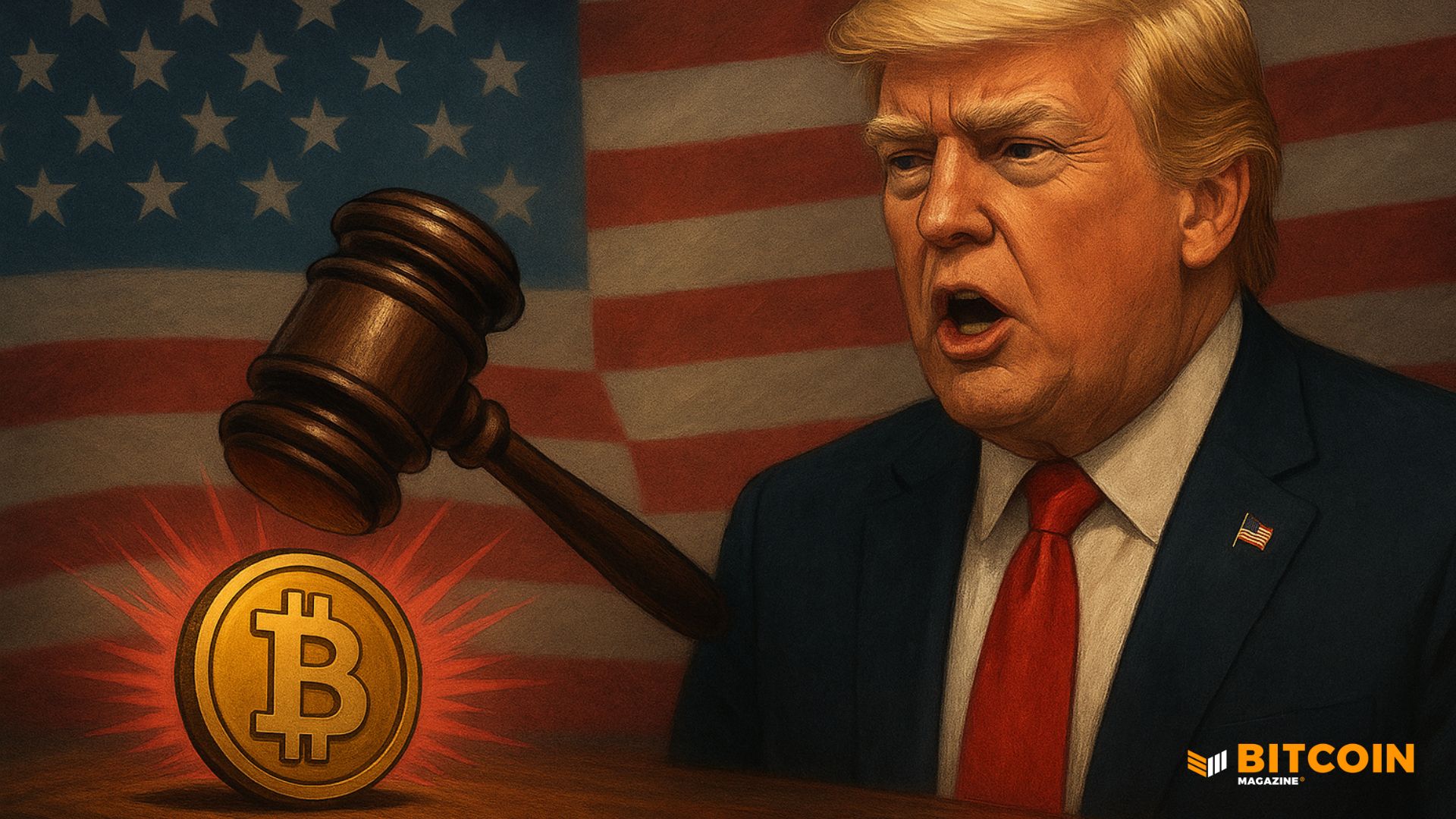
House Democrat Targets President Trump With Bill to Ban Lawmakers From Owning Crypto

U.S. Congressman Ro Khanna (D-CA) is introducing legislation that would prohibit the U.S. President, members of Congress, and their immediate families from owning, trading, or creating cryptocurrencies while in office, according to MSNBC reporting.

Khanna’s bill would mark the first major attempt to separate digital assets from political power. 

Early details indicate the measure will bar elected officials and their families from holding or issuing cryptocurrencies and from accepting foreign-backed crypto investments. 

The California lawmaker said the initiative aims to rebuild public trust and prevent policymakers from profiting off the very technologies they regulate.

Trump’s Changpeng Zhao pardon 

The proposal follows President Donald Trump’s pardon of Binance founder Changpeng Zhao and seeks to eliminate what Khanna calls “blatant corruption” at the intersection of politics and crypto.

“The pardon of Zhao is corrupt,” Khanna said on MSNBC. “You’ve got a foreign billionaire engaged in money laundering and financing terrorism, who supports the president’s son’s cryptocurrency firm, and then the president pardons him. This is corruption in plain sight.”

Zhao, the co-founder and former CEO of Binance, served four months in prison after pleading guilty to violating U.S. banking laws. 

His company was accused of allowing illicit money flows linked to child exploitation, drug trafficking, and terrorism. Soon after Zhao’s financial backing of World Liberty Financial — the crypto project founded by Donald Trump Jr. and Eric Trump — was revealed, Trump granted him a pardon. 

Khanna’s proposal directly targets that entanglement. By banning crypto ownership and trading among officials, he hopes to draw a clear boundary between public service and private gain. 

The measure mirrors previous calls to ban stock trading by lawmakers and follows Senator Adam Schiff’s COIN Act, which specifically sought to limit the Trump family’s crypto activities.

Insider trading in Congress

Lawmakers have long and repeatedly introduced legislation in hopes to curb insider trading among members of Congress.

The STOCK Act, passed in 2012 with broad bipartisan support, was designed to require members to disclose stock trades within 30 days and penalize those who used insider information for personal gain. 

Earlier this year, The Preventing Elected Leaders from Owning Securities and Investments (PELOSI) Act (S.1498) was proposed in the U.S. Senate by Senator Josh Hawley (R-MO). 

The bill addresses concerns about conflicts of interest and potential insider trading among Members of Congress by prohibiting them and their spouses from holding, purchasing, or selling most individual stocks, security futures, commodities, and similar financial instruments while in office. 

This post House Democrat Targets President Trump With Bill to Ban Lawmakers From Owning Crypto first appeared on Bitcoin Magazine and is written by Micah Zimmerman.

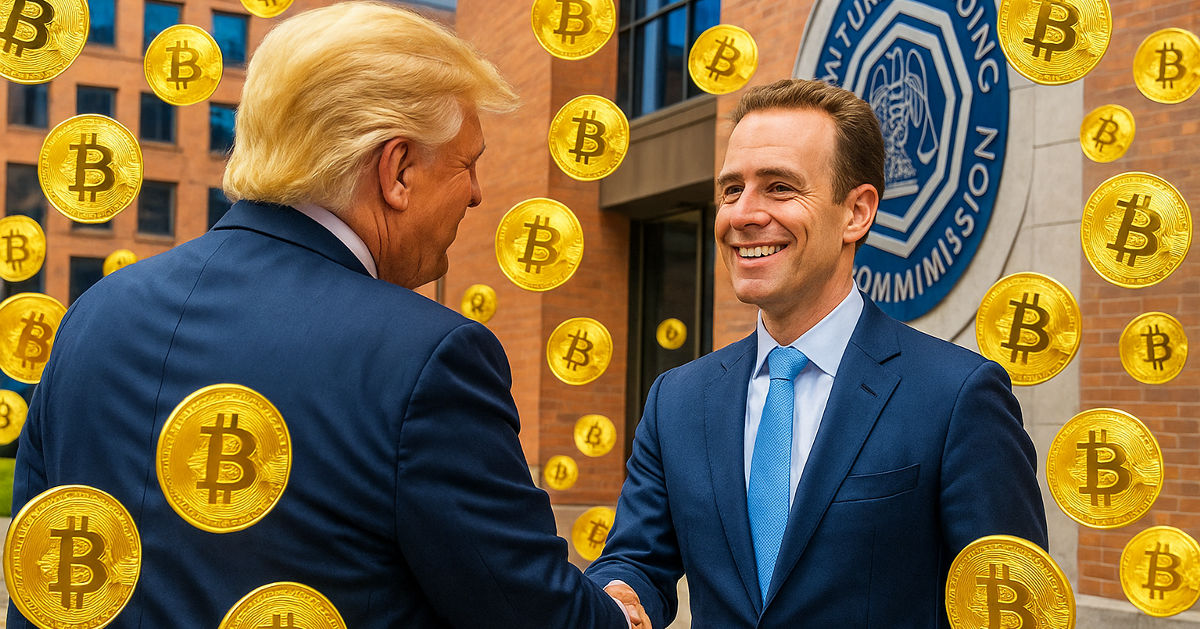
Trump Picks SEC Crypto Counsel Michael Selig to Lead CFTC

Bitcoin Magazine

Trump Picks SEC Crypto Counsel Michael Selig to Lead CFTC

President Donald Trump has selected Michael Selig, chief counsel for the Securities and Exchange Commission’s crypto task force, to chair the Commodity Futures Trading Commission (CFTC).

Selig’s nomination, first reported by Bloomberg, marks Trump’s second attempt to fill the CFTC’s top post, following the stalled nomination of Brian Quintenz, a16z crypto’s global policy chief, amid opposition from Gemini co-founder Tyler Winklevoss. 

Selig, who serves as an aide to SEC Chairman Paul Atkins, has been instrumental in coordinating regulatory approaches between the SEC and CFTC on financial and crypto market oversight.

The CFTC, which regulates futures, swaps, and prediction markets, is gaining greater prominence as Congress considers new crypto market structure legislation. 

Before joining the SEC, he was a partner at Willkie Farr & Gallagher, specializing in asset management.

Selig’s appointment will require Senate confirmation.

JUST IN: 🇺🇸 President Trump selects Michael Selig as CFTC chair amid crypto growth. pic.twitter.com/VeFZITp8U6

— Bitcoin Magazine (@BitcoinMagazine) October 24, 2025

President Trump’s growing support for crypto

President Donald Trump also recently granted a full pardon to Binance founder Changpeng Zhao, calling his prosecution part of the prior administration’s “war on cryptocurrency.” 

The move, confirmed by the White House, clears Zhao’s record and echoes a major shift in the government’s approach to the crypto industry.

Selig’s appointment comes as momentum behind U.S. crypto legislation accelerated this week as Coinbase CEO Brian Armstrong said the industry was “90%” of the way toward securing passage of the Digital Asset Market Clarity Act, or CLARITY Act. 

Despite a partial government shutdown, lawmakers from both parties reportedly made major progress on the long-awaited market structure bill.

Armstrong met with senators from both parties, including Majority Leader Chuck Schumer, Sens. Kirsten Gillibrand, Cynthia Lummis, and Tim Scott, describing the discussions as “very productive.” 

The bill, which passed the House in July with a bipartisan 294–137 vote, aimed to clarify which digital assets fall under the SEC versus the CFTC, while providing rules for decentralized finance (DeFi), stablecoins, and custody services.

The final sticking points centered on how to regulate DeFi and whether consumers could earn rewards on stablecoins. Crypto advocates urged lawmakers to target regulation at intermediaries rather than open-source code and warned that the banking lobby sought to limit yield on stablecoin holdings.

Despite procedural delays from the shutdown, optimism remained high. Lummis said she expected the bill to reach President Trump’s desk before year-end, calling it the most significant bipartisan step toward U.S. crypto clarity to date.

This post Trump Picks SEC Crypto Counsel Michael Selig to Lead CFTC first appeared on Bitcoin Magazine and is written by Micah Zimmerman.

❌