Login
LoginElon Musk Slapped With $140 Million Fine Over Deceptive Blue Checks on X

The fine would put a big dent in one Musk's only revenue-generating moves after taking over Twitter.




Read more of this story at Slashdot.
A consortium of major European banks has formed Qivalis, a new entity in Amsterdam to launch a euro-pegged stablecoin in 2026.
Back in September, nine big European banks announced a consortium aimed at developing and launching a euro-based stablecoin, a digital asset that will have its price pegged to the euro (EUR).
Currently, stablecoins are overwhelmingly dominated by the US dollar (USD), with USDT and USDC, the two largest such cryptocurrencies in the space, accounting for 85% of the market. The consortium’s euro stablecoin intends to provide a real alternative to the USD tokens.
The nine banks that initially kickstarted the plan included ING, Banca Sella, KBC, Danske Bank, DekaBank, UniCredit, SEB, CaixaBank, and Raiffeisen Bank International. As announced in a press release, a tenth European bank in France’s BNP Paribas has now joined the effort.
BNP Paribas is the second largest bank in the bloc and eighth largest globally with over $2.8 trillion in assets. The list of banks part of the consortium already included some heavy-hitters, but BNP Paribas now adding its backing further elevates the project.
BNP Paribas is classified as a global systemically important bank (G-SIB) by the Financial Stability Board, meaning that its stability is integral to the world financial order. Netherlands’ ING, another member of the consortium, is also included in a lower bucket of the same category.
In the initial announcement, the banks had noted that they had formed a new company in the Netherlands to handle the issuance of the euro stablecoin. As revealed by the consortium’s CaixaBank, the Amsterdam-based firm has now been incorporated and named Qivalis.
Qivalis is working on obtaining an electronic money institution license from the Dutch Central Bank, seeking to launch the euro-denominated stablecoin in the second half of 2026. This asset will be compliant with Markets in Crypto Assets Regulation (MiCAR), the EU’s framework for digital assets.
Jan-Oliver Sell has been lined up to serve as Qivalis’ CEO. Sell has previously had roles at Coinbase Germany and Binance. “A native Euro stablecoin isn’t just about convenience – it’s about monetary autonomy in the digital age,” noted the CEO.
Caixabank has said that the consortium is open to more banks joining. In October, Bloomberg reported that America’s Citigroup would be joining the group, but so far, the bank’s name hasn’t appeared in any subsequent press release related to the stablecoin project.
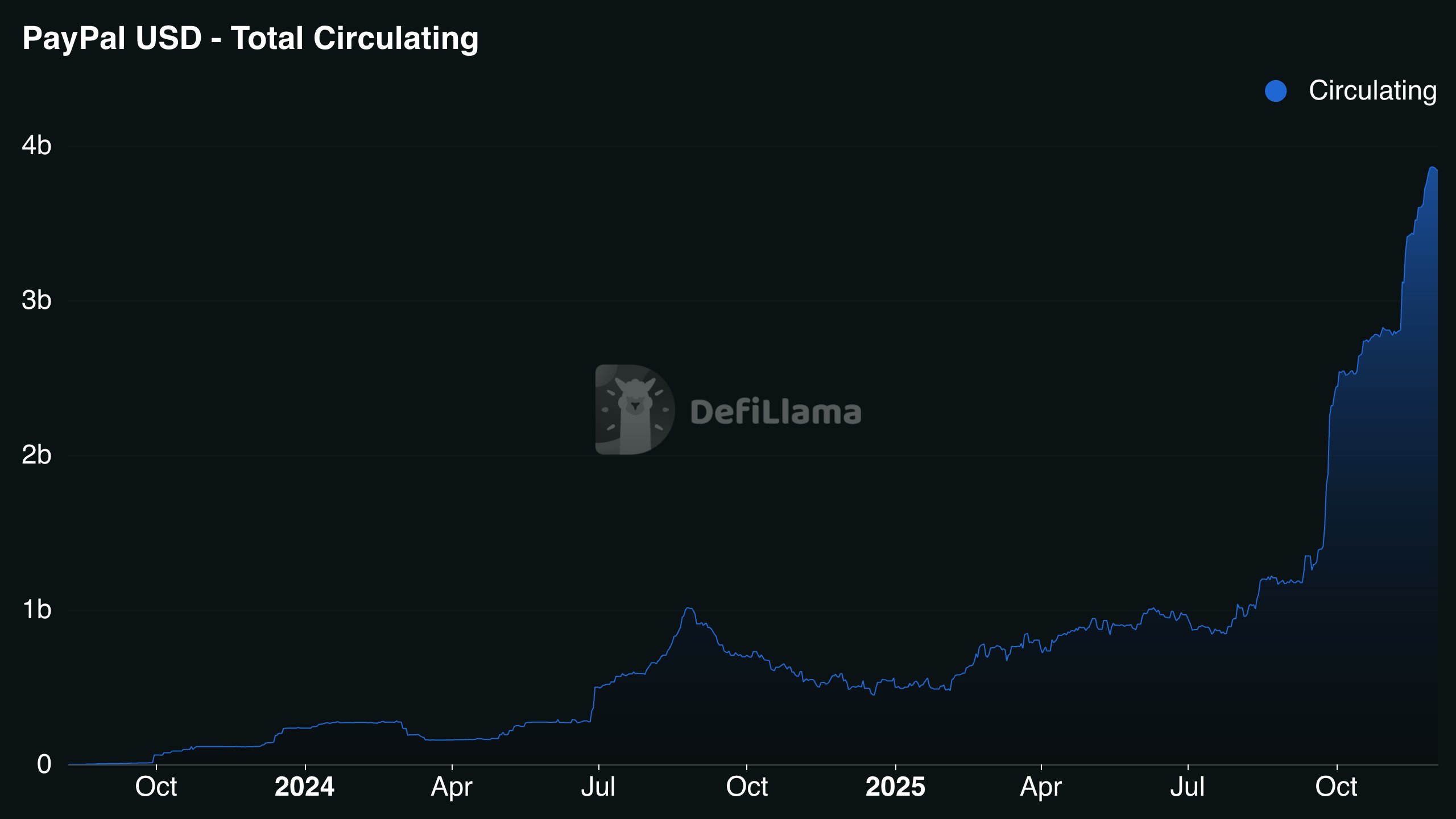
In some other news, PayPal’s PYUSD has witnessed some sharp growth since September, as DeFi analytics firm DefiLlama has highlighted in an X post.
As displayed in the above chart, PayPal’s stablecoin had a supply of $1.2 billion in September, but today that figure has sharply gone up to $3.8 billion.
At the time of writing, Bitcoin is trading around $92,800, up more than 7% over the last week.

Companies found guilty of breaching Germany's antitrust rules face fines up to 10% of annual turnover.
The post Germany Tests Apple’s Privacy Fixes in Critical Market Test appeared first on TechRepublic.
Companies found guilty of breaching Germany's antitrust rules face fines up to 10% of annual turnover.
The post Germany Tests Apple’s Privacy Fixes in Critical Market Test appeared first on TechRepublic.
Read more of this story at Slashdot.
Read more of this story at Slashdot.
Read more of this story at Slashdot.
The accord covers two major legislative texts: the Payment Services Regulation (PSR) and the Third Payment Services Directive (PSD3).
The post EU Reaches Landmark Deal to Curb Online Payment Fraud appeared first on TechRepublic.
The accord covers two major legislative texts: the Payment Services Regulation (PSR) and the Third Payment Services Directive (PSD3).
The post EU Reaches Landmark Deal to Curb Online Payment Fraud appeared first on TechRepublic.
The European Union has unveiled a new set of rules that will significantly change how crypto-asset service providers operate across the bloc.
These changes are set to take effect on January 1, 2026, marking one of the EU’s most ambitious attempts to tighten control over crypto activities.
The rules will introduce standardised reporting requirements that will give tax authorities deeper visibility into the cryptocurrency market.
At the heart of the new framework is the expansion of the Directive on Administrative Cooperation, known as DAC8.
This update requires crypto exchanges, wallet providers, and other digital-asset operators to report customer holdings and transactions in a standardised digital format.
Once submitted, these reports will be automatically shared among EU tax authorities, enabling regulators to monitor crypto flows and trading activity more effectively.
The regulation, formalised under Implementing Regulation (EU) 2025/2263, also mandates the creation of a comprehensive Crypto-Asset Operator register.
Each reporting operator will receive a unique 10-digit identification number, starting with an ISO country code, to simplify cross-border supervision.
Even when an operator is removed from the register, the information must be retained for up to 12 months, ensuring continuity in regulatory oversight.
Member states are expected to submit annual assessments to the European Commission using standardised reporting templates.
While the regulation is framed as a measure to combat tax fraud, financial crime, and market abuse, it raises significant privacy concerns for crypto users.
The Transfer of Funds Regulation, which extends the so-called “travel rule” to crypto transactions above €1,000, already requires identification of both senders and recipients, including interactions with self-hosted wallets.
Users may also be asked to verify ownership of their private wallets.
Combined with DAC8, these measures give regulators unprecedented insight into individual trading behaviour, wallet flows, and the activities of service providers.
The European Commission’s broader regulatory package works alongside the Markets in Crypto-Assets framework (MiCA) and upcoming anti-money laundering rules.
Large crypto operators will be expected to carry out detailed customer due diligence, report suspicious activities, and disclose energy consumption for their operations.
Supporters of the new rules, including ECB President Christine Lagarde, argue that a unified EU approach will replace fragmented national supervision, which has historically hindered consistent enforcement.
However, the plan to give the European Securities and Markets Authority direct oversight over major cross-border exchanges and clearing houses has drawn criticism from smaller financial hubs, including Luxembourg, Malta, and Ireland.
They warn that consolidating supervisory powers could raise compliance costs and disadvantage operators in smaller jurisdictions.
The Financial Stability Board, the G20’s leading financial watchdog, also recently noted that strict privacy laws worldwide often impede cross-border cooperation.
The post EU introduces new crypto data-sharing rules for crypto-asset service providers appeared first on CoinJournal.
The move comes after years of rising concern about how online environments affect young people’s mental health, attention, and behavior.
The post EU Lawmakers Push for 16+ Social Media Age Limit in Bid to Protect Children appeared first on TechRepublic.
The move comes after years of rising concern about how online environments affect young people’s mental health, attention, and behavior.
The post EU Lawmakers Push for 16+ Social Media Age Limit in Bid to Protect Children appeared first on TechRepublic.
Read more of this story at Slashdot.
The joint venture’s debut project will be Madrid Sur, a 160,000-square-meter data center complex designed to deliver 144 MW of processing capacity.
The post Echelon Iberdrola Digital Infra to Invest $2.3B in Data Centers in Spain appeared first on TechRepublic.
The joint venture’s debut project will be Madrid Sur, a 160,000-square-meter data center complex designed to deliver 144 MW of processing capacity.
The post Echelon Iberdrola Digital Infra to Invest $2.3B in Data Centers in Spain appeared first on TechRepublic.
The rollout allows individuals to consolidate account information from multiple banks into a single application.
The post Open Banking Launches in Switzerland appeared first on TechRepublic.
The rollout allows individuals to consolidate account information from multiple banks into a single application.
The post Open Banking Launches in Switzerland appeared first on TechRepublic.
The regulator says it is scrutinizing Apple’s App Tracking Transparency framework, which was introduced with iOS 14.5 and later versions.
The post Polish Antitrust Watchdog Probes Apple’s Privacy Policy appeared first on TechRepublic.