Reading view

There are new articles available, click to refresh the page.

Four-inch worm hatches in woman’s forehead, wriggles to her eyelid

By: Beth Mole

If you need some motivation to keep from eating too much this Thanksgiving, here it is: Doctors in Romania pulled an 11 cm (4.3 inch) living, writhing round worm from a woman’s left eyelid.

According to a report in the New England Journal of Medicine, the worm likely hatched from a hard lump in her right temple, which the woman recalled first spotting a month beforehand. She also noticed that the nodule had vanished just a day before the worm apparently made a squiggly run for her eye.

When she went to an ophthalmologist the next day, doctors immediately noted the “mobile lesion” on her eyelid, which was in the suspicious shape of a bunched-up worm just under her skin with a little redness and swelling.

Read full article

Comments

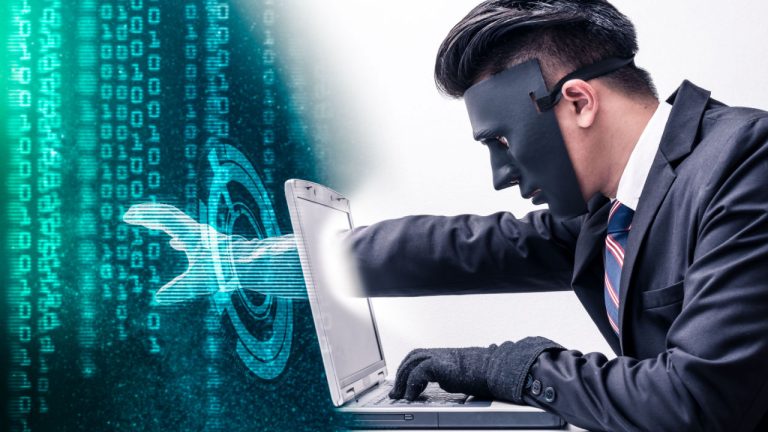
Minimize Cybersecurity Threats by Making Smart Hosting Choices

4.5/5 - (4 votes)

Last Updated on October 28, 2025 by Narendra Sahoo

When you think about protecting your website from cyber threats, your first thought probably isn’t your hosting provider. The typical go-to solutions to minimize cybersecurity threats are firewalls, strong passwords, and two-factor authentication. But the truth is, your hosting environment is one of the most overlooked yet critical components of a strong cybersecurity strategy.

  • Hosting is critical in defending websites from modern cyber threats, yet it’s often overlooked in basic security strategies.
  • Different types of hosting offer varying levels of protection, with dedicated and VPS hosting typically offering stronger isolation.
  • Evaluating provider transparency, support quality, and built-in security tools is key to making a smart, long-term hosting decision.
  • Avoid hosts with vague policies, poor support, or unrealistically low prices, as these can signal serious security gaps.

Every website, no matter how small, is a potential target for cybercriminals. The threats are constant and evolving, from malware injections to brute-force login attempts. That’s why it’s more important than ever to be proactive—and that starts with where and how your site is hosted.

In this article, we’re unpacking how your hosting choices can expose you to security risks or shield your digital presence from harm. Whether launching your first site or managing a growing online business, understanding the link between hosting and cybersecurity can save you a ton of headaches — and money — down the road.

The Overlooked Role of Hosting in Cybersecurity

Let’s be honest—hosting rarely gets the attention it deserves in cybersecurity discussions. Most people assume they’re covered if they have antivirus software and SSL encryption, but that’s only part of the picture to minimize cybersecurity threats.

Think of your hosting environment as the foundation of a house. No matter how solid your doors and windows are, the whole structure is at risk if the foundation is weak. Similarly, if your hosting service doesn’t offer a secure setup, your site becomes far more vulnerable to attacks, even if your plugins and passwords are top-notch.

Take shared hosting, for example. It’s affordable and popular, especially among small websites. However, with multiple sites sharing the same server, if one site gets compromised, the others can be at risk, too. It’s the digital version of living in an apartment building with paper-thin walls — what affects your neighbor could easily affect you.

Conversely, VPS (Virtual Private Server) or dedicated hosting offer better isolation and control, dramatically reducing the surface area for potential attacks. Cloud hosting also brings advantages, primarily when managed by a reputable provider that stays current with security patches and updates.

Real-world cases have shown that businesses using outdated or misconfigured hosting were far more likely to suffer breaches. It’s not just about having a space on the Internet—it’s about where that space is and how well it’s protected.

Why Hosting Providers Matter More Than You Think

Not all hosting companies are created equal. Beyond offering disk space and bandwidth, the best providers quietly work behind the scenes to secure their servers, monitor for unusual activity, and deploy patches long before vulnerabilities become public knowledge.

This is where price and quality start to show their true colors. Sure, costs for website hosting vary based on provider, and it is tempting to go for the cheapest option. But when it comes to cybersecurity, that bargain can come with hidden costs, like unreliable uptime, slow response during emergencies, or weak defenses against malware.

Security-conscious providers invest heavily in infrastructure, such as intrusion detection systems, daily backups, and built-in firewalls. They also typically offer responsive customer support, an underrated but critical feature when dealing with potential breaches or downtime.

A good host will be transparent about their security protocols and compliance with standards like ISO/IEC 27001 or SOC 2. If that information isn’t easy to find or their answers seem vague, take it as a warning sign.

So, before you settle on a provider, consider how seriously they treat security. Ask questions. Read the fine print. And most importantly, don’t assume that low cost equals high value — especially when your data is on the line.

Key Features That Boost Hosting Security

When comparing hosting options, it’s easy to focus on flashy promises like unlimited bandwidth or 99.9% uptime. But if you’re serious about protecting your website, your attention should shift to security-first features—the real backbone of reliable hosting.

Start with DDoS protection. Distributed denial-of-service attacks are among the most common ways bad actors try to bring down a site. A host that actively monitors traffic and filters out suspicious patterns can stop an attack before it impacts your site. This isn’t just about keeping your site live — it’s about maintaining trust with your visitors.

Next, look for malware scanning and removal tools. Some hosts offer automated daily scans, while others expect you to handle it independently. The first option gives you a much better safety net. Automatic backups are another must-have. If your site does get compromised, a solid backup system lets you quickly roll back to a clean version — ideally without jumping through a dozen support tickets.

Then there’s server isolation. On shared hosting plans, multiple websites often reside on the same server, which can be a security risk if one gets infected. But some hosts offer account-level isolation even within shared environments, which adds an extra layer of protection.

Don’t overlook patch management, either. Operating systems and server software, like your phone or laptop, need regular updates. A reputable host will apply these patches consistently, ensuring your server doesn’t become an easy target because it runs outdated software.

At the end of the day, these features aren’t just technical bells and whistles—they’re shields for your data, your users, and your reputation. If your current host doesn’t offer them or charges a premium to add them, it might be time to reassess.

Red Flags When Choosing a Host

While it’s important to know what to look for in a secure hosting provider, it’s just as crucial to recognize the warning signs that a host might not be in good shape.

First off, be wary of vague or non-existent security documentation. If a hosting company can’t clearly explain how it protects your data or what protocols it follows during a cyber incident, that’s a major red flag. Transparency is key — you should never have to guess whether your host is prepared for an attack.

Poor customer support is another tell. If you’ve ever waited days to respond to a fundamental question during a real security emergency, imagine how that would play out. Reliable hosts offer 24/7 support, and you should be able to reach a human quickly, not just a chatbot or generic email auto-reply.

Also, pay attention to what others are saying. A quick search can reveal much about how a hosting company handles breaches, outages, or user complaints. Frequent downtime or reports of hacked sites on a host’s servers aren’t just bad luck — they’re often signs of systemic issues.

Lack of compliance is another subtle but serious issue. If a host doesn’t mention industry standards like GDPR, PCI DSS, or SOC 2, that should raise eyebrows, especially if you’re handling sensitive user information like emails, passwords, or payment data.

Finally, consider the “too good to be true” effect. Ultra-cheap hosting plans might catch your eye, but they often cut corners on security, infrastructure, or customer support. And in cybersecurity, those corners can turn into open doors for attackers.

Choosing a host should never be based on price alone. The cost of bad hosting usually shows up after it’s too late in the form of  lost data, broken trust, and hours of downtime you can’t get back.

Making the Smart Choice for Your Site’s Needs

Choosing a secure hosting solution isn’t just about checking off a list of features — it’s about finding the right fit for your website’s unique needs. That starts by thinking about what kind of site you’re running, how much traffic you expect, and what kind of data you’re handling.

A secure shared hosting plan for small blogs or portfolio sites might be enough, as long as the provider offers strong baseline protection and decent customer support. But if you’re running an e-commerce site, managing user accounts, or processing payments, your hosting environment needs to be more robust. In those cases, VPS or dedicated hosting gives you better control and insulation from neighboring websites.

Business owners often benefit from managed hosting services, especially when they don’t have a technical team. These providers handle updates, backups, and even security monitoring, letting you focus on content or product development instead of worrying about server maintenance.

It’s also smart to future-proof your decision. Your hosting needs today might look different a year from now. A good provider will offer scalable plans that can grow with your site, adding more resources and tighter security as needed.

Most importantly, your hosting choice aligns with your risk tolerance and goals. Speed, performance, and price all matter—but not at the cost of leaving your site exposed.

Conclusion

Cybersecurity isn’t just the job of software tools or IT professionals — it’s something you can influence from the ground up, starting with your web hosting. Your chosen provider and plan set the tone for your site’s safety, reliability, minimize cybersecurity threats and long-term success.

By understanding how different hosting environments work and what security features matter most, you can make decisions that protect your digital space instead of leaving it vulnerable. The right hosting choice will not just give you peace of mind—it will give your users confidence in your site, and that’s a powerful asset in today’s online world.

The post Minimize Cybersecurity Threats by Making Smart Hosting Choices appeared first on Information Security Consulting Company - VISTA InfoSec.

How to make money from Food Blogging in India?

I wanted to be a food blogger and I don’t know how to become one. I did some research and I found out many people were earning a lot via food blogging. According to Semrush, food bloggers make a median monthly income of $9,169 which is approximately 7 lakh rupees in India. Is it not astonishing? I was also amazed! But getting that much income is not an easy task. In this blog, I will tell you how I started my journey as a food blogger in India and started making money.

Why did I want to be a Food Blogger?

I was interested in cooking that too with our native Indian recipes from my childhood. Cooking was a hobby for me in which I spent my time more happily than anything. My friends really liked my cooking and suggested that food blogging can help me monetize my cooking skills. I was also interested in that idea.

Food blogging excited me because I can do the cooking which I loved and also earn from it. A profession related to cooking that I always wanted to have. I was so confident that I will make my food blog and start earning from it.

Starting a Food Blog without any knowledge of a Website

I wanted to start my food blog now out of my passion for cooking, but I had a lot of doubts. So, Google was a safe haven for me where I asked my confused questions. Surely it did clear my doubts to some extent but not completely. I got a lot of information like website development, website hosting, SEO, video blogging, etc. I was so confused about how I can proceed with food blogging.

All the processes I found out about food blogging made me feel so complicated. I thought why don’t I search for a service provider who could help me with the idea of food blogging. I searched on google again for website development and digital marketing companies in India and enquired about the charges to a lot of them.

Finally, I found Repute Digital Business Agency located in Coimbatore, Tamilnadu. Out of all the service providers I enquired about, Repute was the one to solve my doubts on the first call. Reviews

How to earn via Food Blogging 

Repute stood first in my mind after enquiring about a lot of other websites and digital marketing service providers. I decided to proceed with them to do my food blogging website.

Services provided by Repute for the development of my food blogging website:

✔ Website Development
✔ Social media Marketing
✔ SEO services
✔ Website Maintenance Services
✔ Ad placements on the website

These were the processes they have promised me to do in the first phase. They explained to me each and every process. Let me now explain how my food blog website Famous India Recipe was created from the scratch.

Website Development

They suggested to go with WordPress to build my website. They developed my Famous Indian Recipes website from nothing to a good colourful website with a proper structure and theme. They did logo creation with branding.

Social media Marketing

Food Blog Content Suggestions

Repute gave me topics for the recipes after doing keyword research. I gave them the recipes accordingly so that we could post food recipes in the blog for what the people search for. This is one of the best SEO practices in food blogging, which can increase your website visibility easily. When you write for what people search, your food blog becomes a hit in less time.

SEO Services

Repute provided me with affordable SEO services. All other service providers cost a huge sum for their SEO services.

They did good On-Page SEO by creating proper internal linking in my website which provides a proper structure and hierarchy. They also did the best Off-Page SEO bringing back legit backlinks which increased my Domain Authority. All these SEO processes followed brought me many visitors and increased my website ranking.

Ad placements on the website

After bringing in good visitors through top SEO strategies, Repute started placing Ads on my Famous Indian Recipes Website. When the posting of my food recipes on my website increased, the money I earned via google ads also increased

Website Maintenance Services

Just creating and developing the website is alone not enough. You need to maintain the website and check whether many criteria are technically working properly such as the website loading time. If there is any problem with the website, it will directly hit the website’s ranking.

Consistent update of food blogs is required for proper ranking of the website. The ranking of my website was improving day by day because of proper maintenance.

Analytical Report

Repute provides me with an Analytic report every month. They explain to me the developments that happened on the website, the number of blogs uploaded, improvement in earnings from Ads, social media activities, increase in the subscribers and followers, etc. Analytics Report was clear cut and legit. I could see the development of my food blog every month statistically.

Future Food Blogging Strategies

All the above-said things are active on my website now. I have planned many strategies to develop my food blogging via digital marketing to increase my income. Some of the future food blogging strategies planned are,

✔ Video Food Blogging
✔ Affiliate Marketing
✔ Email Marketing
✔ Increase more subscribers
✔ Plan to make me an influencer
✔ Ebook with my Recipes
✔ Guest Blogging

All these strategies are yet to be executed. Though I didn’t start earning 7 lakhs in a month, I started to earn a very good sum. I am looking forward to earning more.

This is my story of how I developed my food blog and started earning from it. If you want to avail the best SEO services along with Digital Marketing, Website, and Social media Marketing Services from Repute you can contact them via support@irepute.in. You can also visit their website https://irepute.in/

The post How to make money from Food Blogging in India? appeared first on Famous Indian Recipes.

Ukrainian Steals Bitcoin From Russian Darknet Market, Donates to Charity

Ukrainian Steals Bitcoin From Russian Darknet Market, Donates to Charity

A Ukrainian living in the U.S. has reportedly hacked a major drug market on the Russian dark web, diverting some of its crypto proceeds. The man says he donated the digital cash stolen from the illicit website to an organization delivering humanitarian aid across his war-torn homeland.

Wisconsin Resident With Ukrainian Roots Hacks Russian Dark Web Market Solaris

Ukrainian-born cyber intelligence expert Alex Holden, who left Kyiv as a teenager in the 1980s and now lives in Mequon, Wisconsin, claims he has hacked into Solaris, one of Russia’s largest online drug markets, Forbes informs in a report.

Supported by his team at Hold Security, he was able to get hold of some of the bitcoin sent to dealers and the darknet site’s owners. The cryptocurrency, worth over $25,000, was later transferred to Enjoying Life, a charitable foundation based in the Ukrainian capital.

Without revealing exactly how he did it, Holden explained he took control of much of the internet infrastructure behind Solaris, including some administrator accounts, obtained the website’s source code and a database of its users and drop off locations for drug deliveries.

For a while, the Ukrainian and his colleagues also gained access to the “master wallet” of the marketplace. It was used by buyers and dealers to deposit and withdraw funds and operated as the platform’s crypto exchange, the article details.

Given the rapid turnover, the wallet rarely had more than 3 BTC at a time. Holden managed to appropriate 1.6 BTC and send it to Enjoying Life. Hold Security donated another $8,000 to the charity, which provides assistance to people affected by the war in Ukraine.

Solaris Linked to ‘Patriotic’ Russian Hacking Collective Killnet

The darknet market Solaris is suspected of having connections to the hacking crew Killnet, which after Moscow launched its invasion in late February became one of Russia’s “patriotic” hacker groups vowing to target Ukrainians and their supporters.

Killnet has also conducted a number of attacks in the U.S., including on airport and state government websites as well as the National Geospatial-Intelligence Agency. It reportedly hit the Eurovision song contest, the Estonian government and Italy’s National Health Institute.

The group was also blamed for attacking Rutor, the main rival of Solaris, which became Russia’s leading underground drugs market after Hydra was shut down this past spring. According to U.S. cybersecurity firm Zerofox, Solaris was paying Killnet for DDoS services.

Besides the battlefield, Russia and Ukraine have also clashed in the online space, with the government in Kyiv recruiting experts for its own cyberforce. The special unit was tasked to identify and prevent Russian attacks but also hack back.

Hits such as those on Russia’s largest bank, Sber, and the Moscow Stock Exchange have been attributed to the Ukrainian IT army. Social media accounts associated with the hacktivist collective Anonymous took responsibility for many other attacks.

What do you think about Alex Holden’s attack on the Russian darknet market Solaris? Let us know in the comments section below.

Germany Shuts Down Hydra Market, Seizes Servers and Bitcoin

Germany Shuts Down Hydra Market, Seizes Servers and Bitcoin

Law enforcement agencies in Germany have targeted Hydra, a leading darknet market (DNM). As part of an operation conducted with U.S. support, the German police were able to establish control over the servers of the Russian-language platform in the country and take down its website.

Investigators Hit Hydra in Germany, Confiscate Millions in Crypto

Hydra Market, one of the largest marketplaces on the darknet, has been shut down by German authorities which seized its server infrastructure. According to an announcement by the Federal Criminal Police Office (BKA), law enforcement agents also confiscated bitcoin worth around €23 million ($25 million). The following message appeared on Hydra’s website on Tuesday:

BKA carried out the raid together with the Central Office for Combating Cybercrime (ZIT) at the Public Prosecutor’s Office in Frankfurt which is leading the investigation against Hydra’s operators and administrators. They are wanted for running illegal online platforms facilitating the trade of drugs and money laundering.

The German police noted that Hydra had been active since at least 2015 before the seizures which came after extensive investigations by the BKA and ZIT. They started in August last year and were conducted with the participation of several U.S. agencies.

The darknet marketplace, which was accessible via the Tor network, was targeting Russian speakers. It had around 17 million customers and over 19,000 registered sellers, the press release detailed. Besides banned substances, these also offered stolen data, forged documents and digital services.

Hydra became a major darknet market after overtaking another Russian platform, DNM Ramp. According to the data compiled by the blockchain forensics company Chainalysis, the region of Eastern Europe sends more digital currency to darknet marketplaces than any other region.

Washington has been alleging Moscow’s involvement with malicious cyber actors like DNMs, ransomware groups and other crypto-related crime. In September, the U.S. Department of the Treasury’s Office of Foreign Assets Control (OFAC) sanctioned the Russia-based crypto broker Suex which is believed to have received more than $20 million from darknet markets like Hydra.

The Treasury Department has imposed sanctions against Hydra and a crypto exchange called Garantex. The trading platform, which has been operating mostly out of Russia, is suspected of processing over $100 million in transactions linked to illicit actors and darknet markets, including $2.6 million from Hydra.

Meanwhile, the U.S. Department of Justice announced criminal charges against a Russian resident, Dmitry Pavlov, for conspiracy to distribute narcotics and conspiracy to commit money laundering. The 30-year-old Pavlov is allegedly the administrator of Hydra Market’s servers.

German law enforcement officials think that Hydra was likely the darknet market with the highest turnover globally. BKA and ZIT have estimated that its sales reached at least €1.23 billion in 2020 alone. They also noted that the investigations were hampered by the platform’s own ‘Bitcoin Bank Mixer’ service.

Do you think other darknet markets will be targeted after Hydra? Let us know in the comments section below.

❌