❌

Reading view

There are new articles available, click to refresh the page.

NASA Sets Coverage for Astronaut Jonny Kim, Crewmates Return
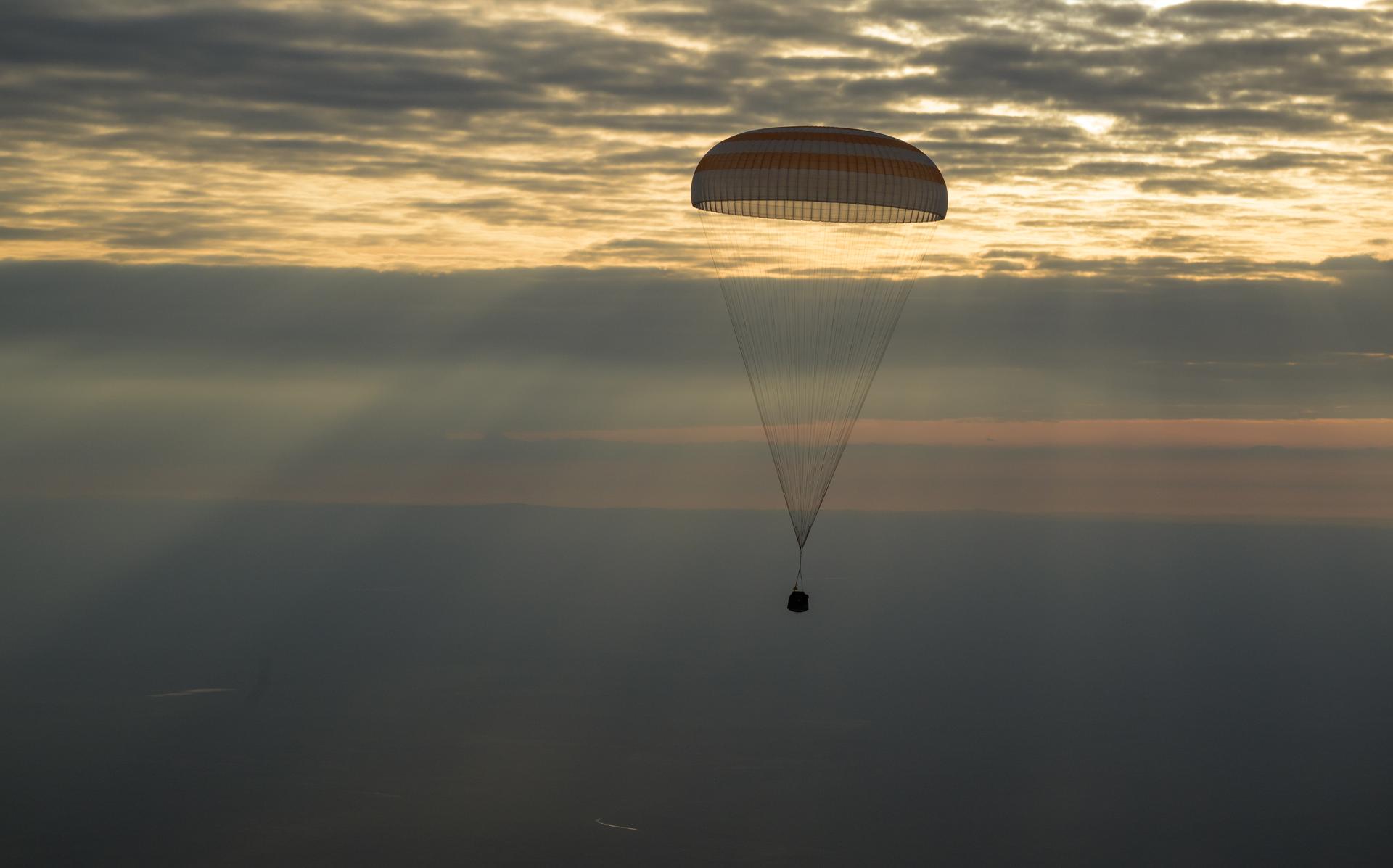
The photo features a dim horizon with the Soyuz MS-26 spacecraft as it lands by parachute.
The Soyuz MS-26 spacecraft is seen as it lands on April 20, 2025 (April 19 Eastern time) in a remote area near the town of Zhezkazgan, Kazakhstan, with the Expedition 71/72 crew aboard.
NASA/Bill Ingalls

NASA astronaut Jonny Kim, accompanied by Roscosmos cosmonauts Sergey Ryzhikov and Alexey Zubritsky, is preparing to depart the International Space Station aboard the Soyuz MS-27 spacecraft and return to Earth.

Kim, Ryzhikov, and Zubritsky will undock from the station’s Prichal module at 8:41 p.m. EST on Monday, Dec. 8, headed for a parachute-assisted landing at 12:04 a.m. on Tuesday, Dec. 9 (10:04 a.m. local time in Kazakhstan), on the steppe of Kazakhstan, southeast of the city of Dzhezkazgan.

Watch NASA’s live coverage of the crew’s return on NASA+, Amazon Prime, and the agency’s YouTube channel. Learn how to stream NASA content through a variety of online platforms, including social media.

The space station change of command ceremony will begin at 10:30 a.m. Sunday, Dec. 7, on NASA+ and the agency’s YouTube channel. Rzyhikov will hand over station command to NASA astronaut Mike Fincke for Expedition 74, which begins at the time of Soyuz MS-27 undocking.

Kim and his crewmates are completing a 245-day mission aboard the station. At the conclusion of their mission, they will have orbited Earth 3,920 times and traveled nearly 104 million miles. This was the first flight for Kim and Zubritsky to the orbiting laboratory, while Ryzhikov is ending his third trip to space.

After landing, the three crew members will fly by helicopter to Karaganda, Kazakhstan, where recovery teams are based. Kim will board a NASA aircraft and return to Houston, while Ryzhikov and Zubritsky will depart for their training base in Star City, Russia.

NASA’s coverage is as follows (all times Eastern and subject to change based on real-time operations):

Sunday, Dec. 7:

10:30 a.m. – Expedition 73/74 change of command ceremony begins on NASA+ Amazon Prime, and YouTube.

Monday, Dec. 8:

4:45 p.m. – Farewells and hatch closing coverage begins on NASA+, Amazon Prime, and YouTube.

5:10 p.m. – Hatch closing

8:15 p.m. – Undocking coverage beings on NASA+, Amazon Prime, and YouTube.

8:41 p.m. – Undocking

10:30 p.m. – Deorbit and landing coverage begins on NASA+, Amazon Prime, and YouTube.

11:10 p.m. – Deorbit burn

Tuesday, Dec. 9:

12:04 a.m. – Landing

For more than 25 years, people have lived and worked continuously aboard the International Space Station, advancing scientific knowledge and making research breakthroughs that are not possible on Earth. The station is a critical testbed for NASA to understand and overcome the challenges of long-duration spaceflight and to expand commercial opportunities in low Earth orbit. As commercial companies concentrate on providing human space transportation services and destinations as part of a robust low Earth orbit economy, NASA is focusing its resources on deep space missions to the Moon as part of the Artemis campaign in preparation for future human missions to Mars.

Learn more about International Space Station research and operations at:

https://www.nasa.gov/station

-end-

Josh Finch / Jimi Russell
Headquarters, Washington
202-358-1100
joshua.a.finch@nasa.gov / james.j.russell@nasa.gov

Sandra Jones / Joseph Zakrzewski
Johnson Space Center, Houston
281-483-5111
sandra.p.jones@nasa.gov / joseph.a.zakrzewski@nasa.gov

Share

Details

Last Updated
Dec 04, 2025
Editor
Elizabeth Shaw

Rings of Rock in the SaharaΒ 

Β 
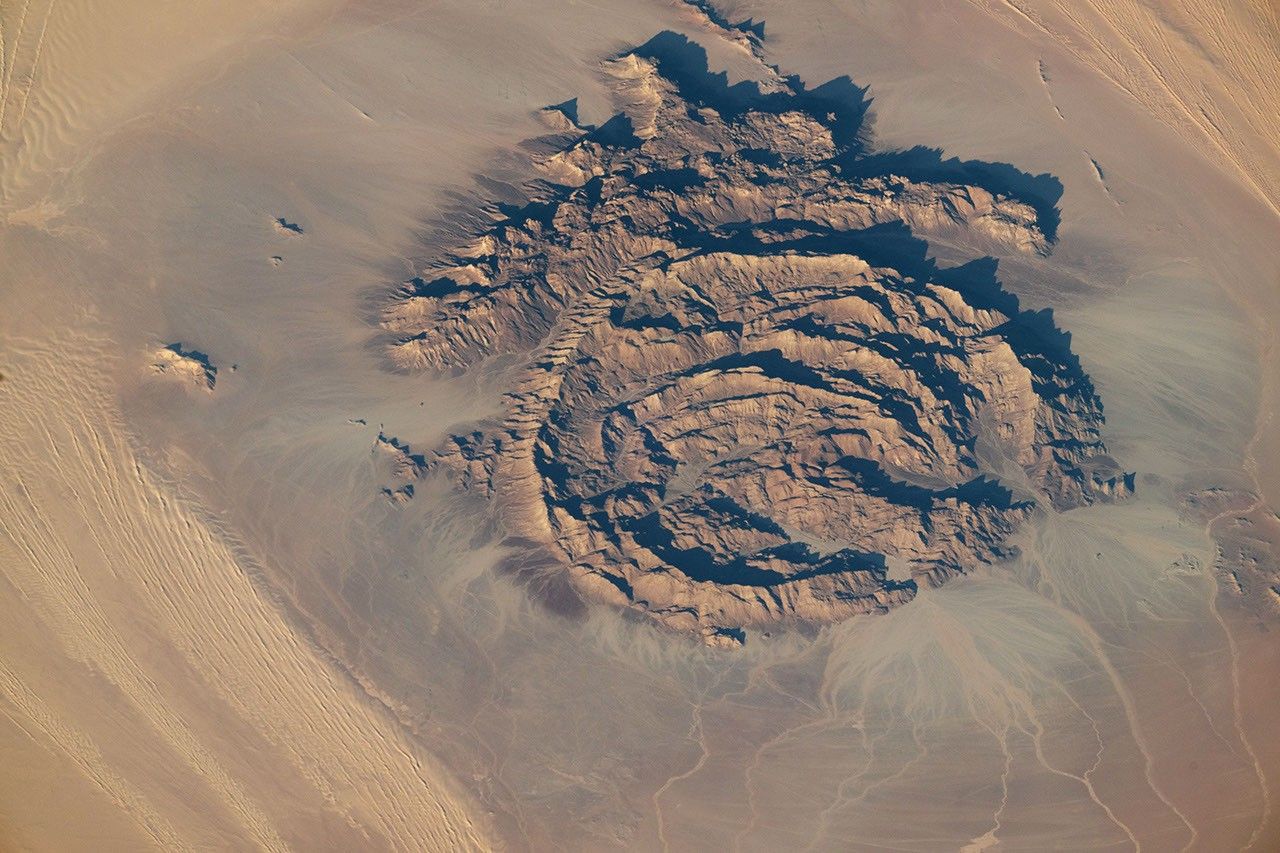
A top-down view shows circular rocky formations rising from a flat, sandy-brown landscape. Darker brown sand encircles the rocky rings, with lighter patches of outwash spreading across the terrain.
September 13, 2025

In northeastern Africa, within the driest part of the Sahara, dark rocky outcrops rise above pale desert sands. Several of these formations, including Jabal ArakanΕ«, display striking ring-shaped structures.Β Β 

Jabal ArkanΕ« (also spelled Arkenu) lies in southeastern Libya, near the border with Egypt. Several other massifs are clustered nearby, including Jabal Al Awaynat (or Uweinat), located about 20 kilometers (12 miles) to the southeast. Roughly 90 kilometers to the west are the similarly named Arkenu structures. These circular features were once thought to have formed by meteorite impacts, but later fieldwork suggested they resulted from terrestrial geological processes.Β Β Β 

Arkanū’s ring-shaped structures also have an earthly origin. They are thought to have formed as magma rose toward the surface and intruded into the surrounding rock. Repeated intrusion events produced a series of overlapping rings, their centers roughly aligned toward the southwest. The resulting ring complexβ€”composed of igneous basalt and graniteβ€”is bordered to the north by a hat-shaped formation made of sandstone, limestone, and quartz layers.Β 

This photograph, taken by an astronaut aboard the International Space Station on September 13, 2025, shows the massif casting long shadows across the desert. The ridges stand nearly 1,400 meters above sea level, or about 800 meters above the surrounding sandy plains. Notice several outwash fans of boulders, gravel, and sand spreading from the mountain’s base toward the bordering longitudinal dunes.Β Β Β 

Two wadis, or typically dry riverbeds, wind through the structure. However, water is scarce in this part of the Sahara. Past research using data from NASA and JAXA’s now-completed Tropical Rainfall Measuring Mission (TRMM) indicated that southeastern Libya, along with adjacent regions of Egypt and northern Sudan, receives only about 1 to 5 millimeters of rain per year. Slightly higher accumulations, around 5 to 10 millimeters per year, occur near Jabal ArkanΕ« and neighboring massifs, suggesting a modest orographic effect from the mountains.Β Β 

Astronaut photograph ISS073-E-698446 was acquired on September 13, 2025, with a Nikon Z9 digital camera using a focal length of 800 millimeters. It is provided by the ISS Crew Earth Observations Facility and the Earth Science and Remote Sensing Unit, Johnson Space Center. The image was taken by a member of the Expedition 73 crew. The image has been cropped and enhanced to improve contrast, and lens artifacts have been removed. The International Space Station Program supports the laboratory as part of the ISS National Lab to help astronauts take pictures of Earth that will be of the greatest value to scientists and the public, and to make those images freely available on the Internet. Additional images taken by astronauts and cosmonauts can be viewed at the NASA/JSC Gateway to Astronaut Photography of Earth. Story by Kathryn Hansen.Β Β 

ReferencesΒ & Resources

Downloads

A top-down view shows circular rocky formations rising from a flat, sandy-brown landscape. Darker brown sand encircles the rocky rings, with lighter patches of outwash spreading across the terrain.

September 13, 2025

JPEG (4.54 MB)

You may also be interested in:

Stay up-to-date with the latest content from NASA as we explore the universe and discover more about our home planet.

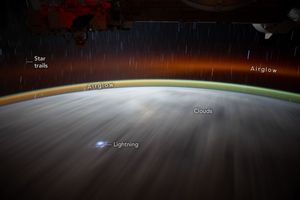
Nighttime Over the Eastern Pacific

2 min read

A long-exposure photo taken from low Earth orbit captured the brilliant illumination coming from airglow, lightning, and stars.

Article

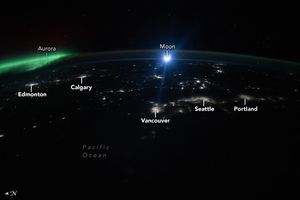
A Northwest Night Awash in Light

3 min read

The glow of city lights, the aurora, and a rising Moon illuminate the night along the northwest coast of North…

Article

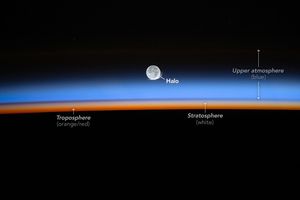
A Halo Above the Horizon

3 min read

A subtle arc, formed by the bending of light through high-altitude ice crystals, cradles the Moon above the darkened Earth.

Article
❌