Reading view

There are new articles available, click to refresh the page.

NASA Completes Nancy Grace Roman Space Telescope Construction

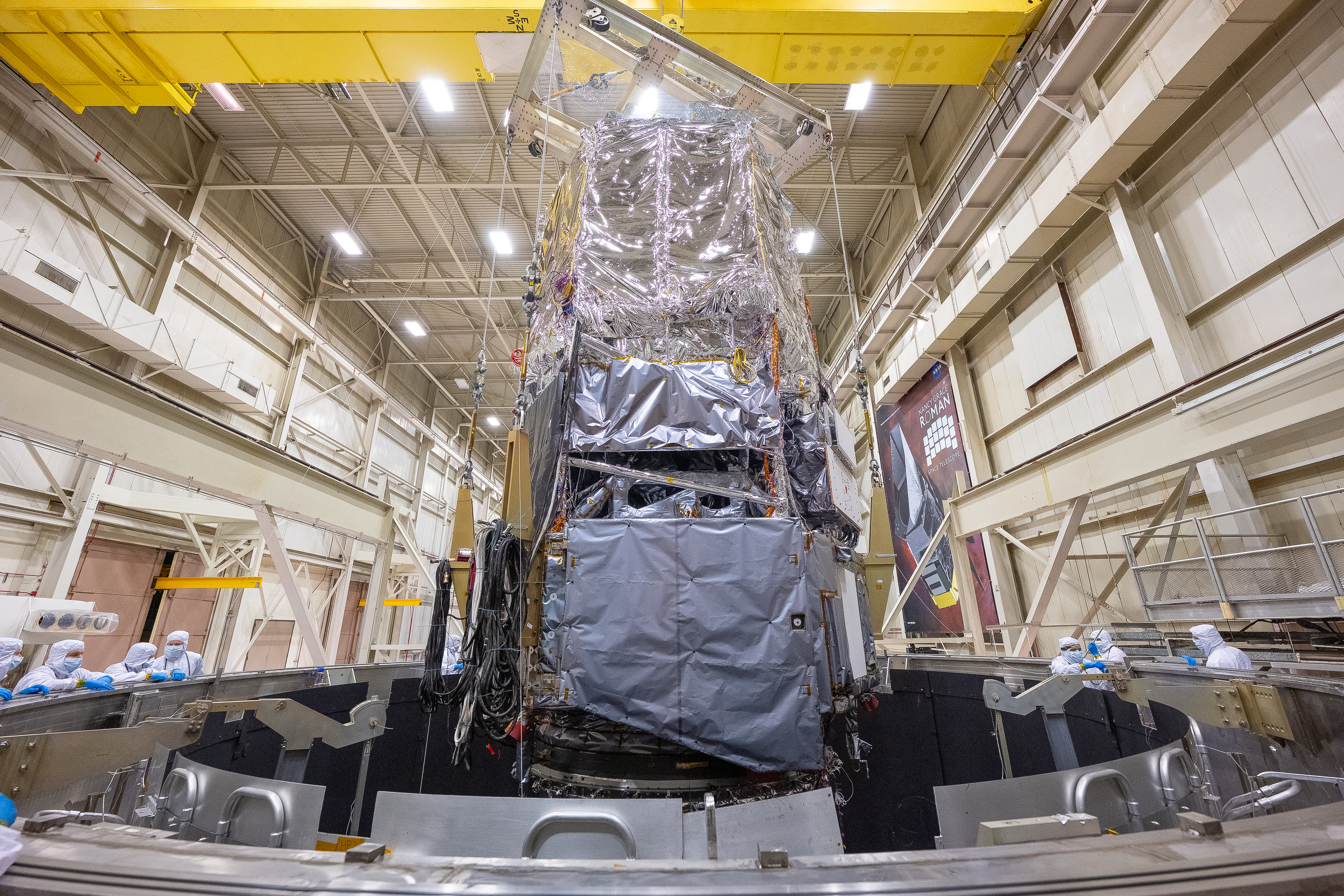
NASA’s next big eye on the cosmos is now fully assembled. On Nov. 25, technicians joined the inner and outer portions of the Nancy Grace Roman Space Telescope in the largest clean room at the agency’s Goddard Space Flight Center in Greenbelt, Maryland.
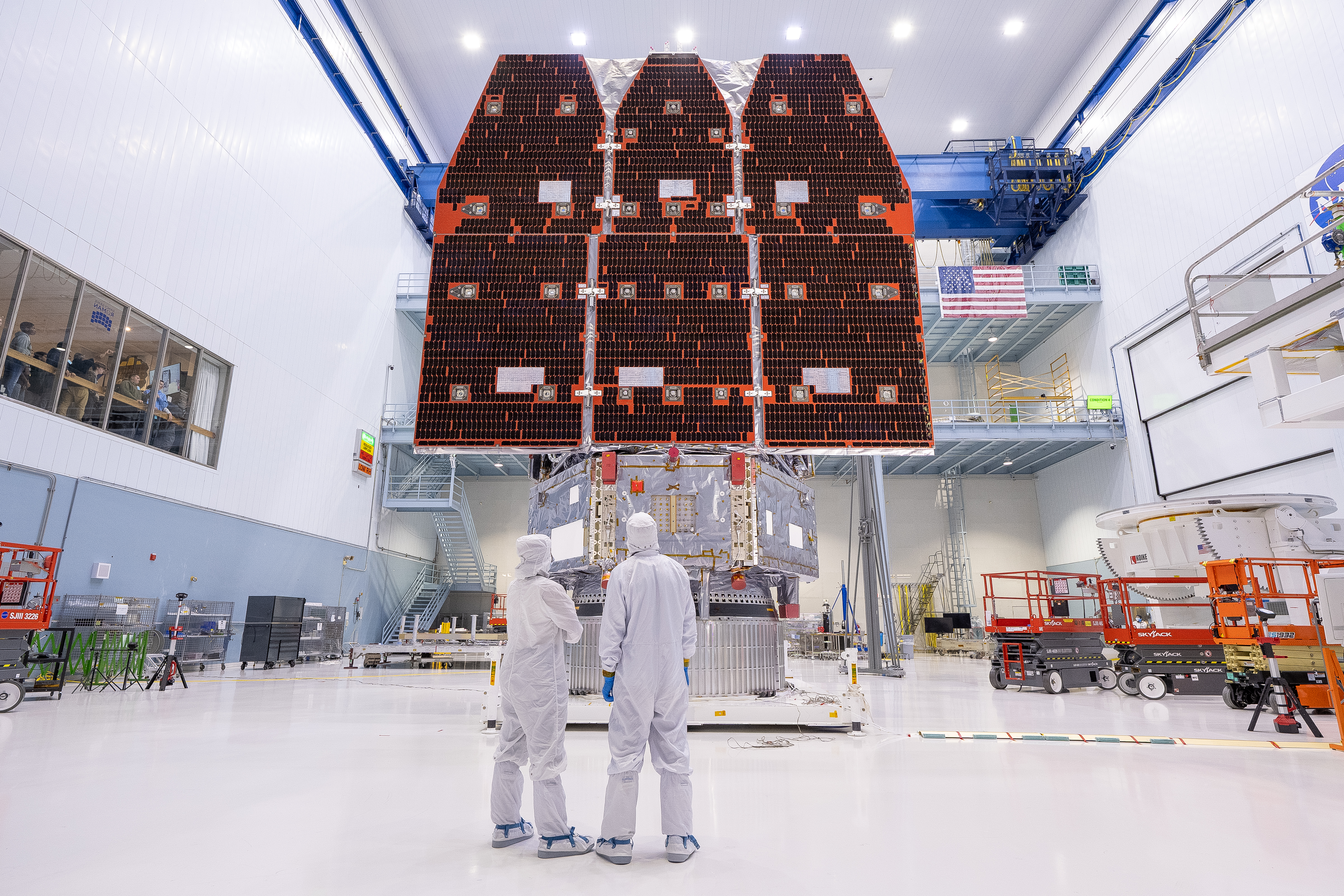
The complete observatory in a clean room
NASA’s Nancy Grace Roman Space Telescope is now fully assembled following the integration of its two major segments on Nov. 25 at the agency’s Goddard Space Flight Center in Greenbelt, Md. The mission is slated to launch by May 2027, but the team is on track for launch as early as fall 2026.
Credit: NASA/Jolearra Tshiteya

“Completing the Roman observatory brings us to a defining moment for the agency,” said NASA Associate Administrator Amit Kshatriya. “Transformative science depends on disciplined engineering, and this team has delivered—piece by piece, test by test—an observatory that will expand our understanding of the universe. As Roman moves into its final stage of testing following integration, we are focused on executing with precision and preparing for a successful launch on behalf of the global scientific community.”

After final testing, Roman will move to the launch site at NASA’s Kennedy Space Center in Florida for launch preparations in summer 2026. Roman is slated to launch by May 2027, but the team is on track for launch as early as fall 2026. A SpaceX Falcon Heavy rocket will send the observatory to its final destination a million miles from Earth.

“With Roman’s construction complete, we are poised at the brink of unfathomable scientific discovery,” said Julie McEnery, Roman’s senior project scientist at NASA Goddard. “In the mission’s first five years, it’s expected to unveil more than 100,000 distant worlds, hundreds of millions of stars, and billions of galaxies. We stand to learn a tremendous amount of new information about the universe very rapidly after Roman launches.”
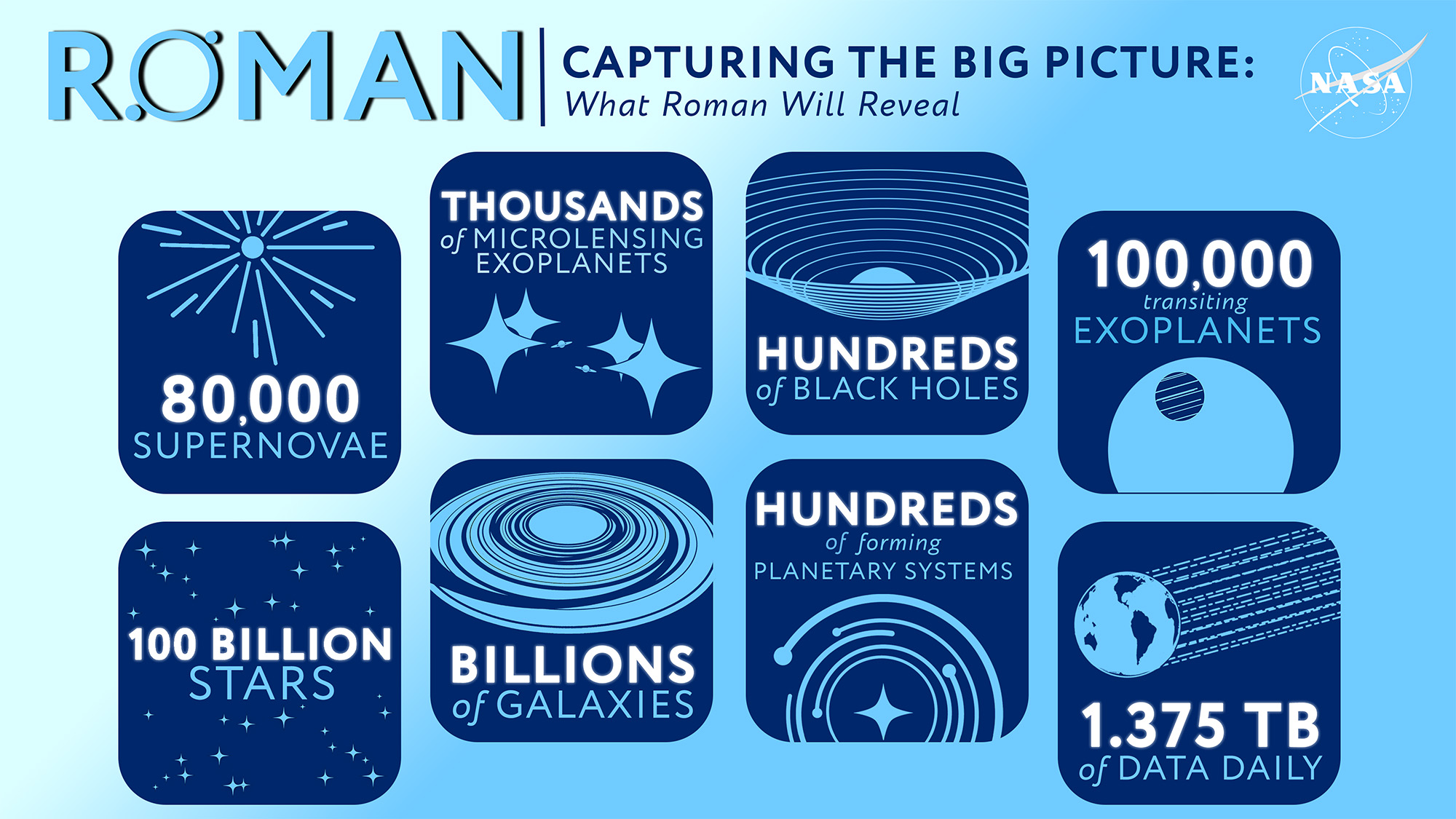
An infographic tallying up several things Roman will observe
NASA’s Nancy Grace Roman Space Telescope will survey vast swaths of sky during its five-year primary mission. During that time, scientists expect it to see an incredible number of new objects, including stars, galaxies, black holes and planets outside our solar system, known as exoplanets. This infographic previews some of the discoveries scientists anticipate from Roman’s data deluge.
Credit: NASA’s Goddard Space Flight Center

Observing from space will make Roman very sensitive to infrared light — light with a longer wavelength than our eyes can see — from far across the cosmos. Pairing its crisp infrared vision with a sweeping view of space will allow astronomers to explore myriad cosmic topics, from dark matter and dark energy to distant worlds and solitary black holes, and conduct research that would take hundreds of years using other telescopes.

“Within our lifetimes, a great mystery has arisen about the cosmos: why the expansion of the universe seems to be accelerating. There is something fundamental about space and time we don’t yet understand, and Roman was built to discover what it is,” said Nicky Fox, associate administrator, Science Mission Directorate, NASA Headquarters in Washington. “With Roman now standing as a complete observatory, which keeps the mission on track for a potentially early launch, we are a major step closer to understanding the universe as never before. I couldn’t be prouder of the teams that have gotten us to this point.”

Double vision

Roman is equipped with two instruments: the Wide Field Instrument and the Coronagraph Instrument technology demonstration.

The coronagraph will demonstrate new technologies for directly imaging planets around other stars. It will block the glare from distant stars and make it easier for scientists to see the faint light from planets in orbit around them. The Coronagraph aims to photograph worlds and dusty disks around nearby stars in visible light to help us see giant worlds that are older, colder, and in closer orbits than the hot, young super-Jupiters direct imaging has mainly revealed so far.

“The question of ‘Are we alone?’ is a big one, and it’s an equally big task to build tools that can help us answer it,” said Feng Zhao, the Roman Coronagraph Instrument manager at NASA’s Jet Propulsion Laboratory in Southern California. “The Roman Coronagraph is going to bring us one step closer to that goal. It’s incredible that we have the opportunity to test this hardware in space on such a powerful observatory as Roman.”

The coronagraph team will conduct a series of pre-planned observations for three months spread across the mission’s first year-and-a-half of operations, after which the mission may conduct additional observations based on scientific community input.

The Wide Field Instrument is a 288-megapixel camera that will unveil the cosmos all the way from our solar system to near the edge of the observable universe. Using this instrument, each Roman image will capture a patch of the sky bigger than the apparent size of a full moon. The mission will gather data hundreds of times faster than NASA’s Hubble Space Telescope, adding up to 20,000 terabytes (20 petabytes) over the course of its five-year primary mission.

“The sheer volume of the data Roman will return is mind-boggling and key to a host of exciting investigations,” said Dominic Benford, Roman’s program scientist at NASA Headquarters.

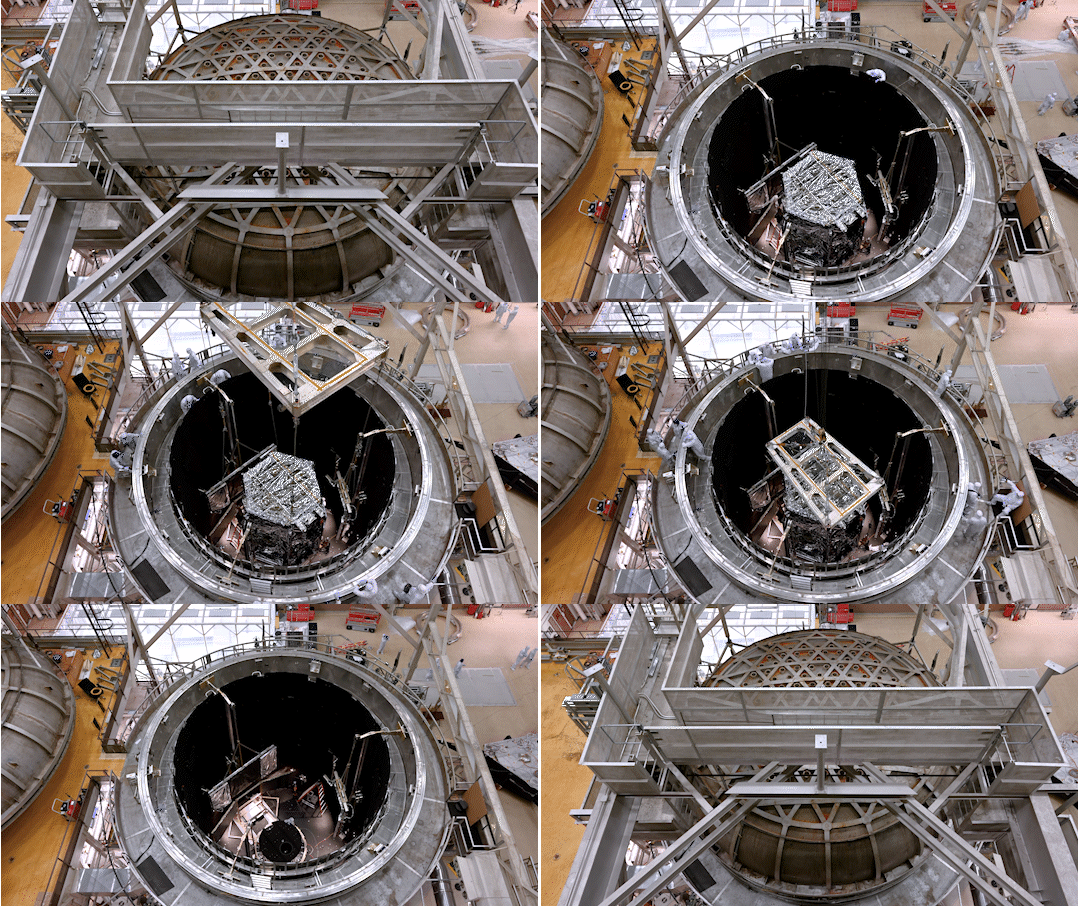
Over the course of several hours, technicians meticulously connected the inner and outer segments of NASA’s Nancy Grace Roman Space Telescope, as shown in this time-lapse. Next, Roman will undergo final testing prior to moving to the launch site at NASA’s Kennedy Space Center in Florida for launch preparations in summer 2026.
Credit: NASA/Sophia Roberts

Survey trifecta

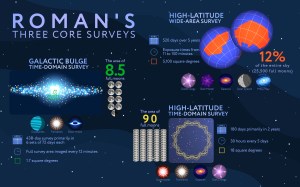
Using the Wide Field Instrument, Roman will conduct three core surveys which will account for 75% of the primary mission. The High-Latitude Wide-Area Survey will combine the powers of imaging and spectroscopy to unveil more than a billion galaxies strewn across a wide swath of space and time. Astronomers will trace the evolution of the universe to probe dark matter — invisible matter detectable only by how its gravity affects things we can see — and trace the formation of galaxies and galaxy clusters over time.

The High-Latitude Time-Domain Survey will probe our dynamic universe by observing the same region of the cosmos repeatedly. Stitching these observations together to create movies will allow scientists to study how celestial objects and phenomena change over time periods of days to years. That will help astronomers study dark energy — the mysterious cosmic pressure thought to accelerate the universe’s expansion — and could even uncover entirely new phenomena that we don’t yet know to look for.

Roman’s Galactic Bulge Time-Domain Survey will look inward to provide one of the deepest views ever of the heart of our Milky Way galaxy. Astronomers will watch hundreds of millions of stars in search of microlensing signals — gravitational boosts of a background star’s light caused by the gravity of an intervening object. While astronomers have mainly discovered star-hugging worlds, Roman’s microlensing observations can find planets in the habitable zone of their star and farther out, including worlds like every planet in our solar system except Mercury. Microlensing will also reveal rogue planets—worlds that roam the galaxy untethered to a star — and isolated black holes. The same dataset will reveal 100,000 worlds that transit, or pass in front of, their host stars.

The remaining 25% of Roman’s five-year primary mission will be dedicated to other observations that will be determined with input from the broader scientific community. The first such program, called the Galactic Plane Survey, has already been selected.

Because Roman’s observations will enable such a wide range of science, the mission will have a General Investigator Program designed to support astronomers to reveal scientific discoveries using Roman data. As part of NASA’s commitment to Gold Standard Science, NASA will make all of Roman’s data publicly available with no exclusive use period. This ensures multiple scientists and teams can use data at the same time, which is important since every Roman observation will address a wealth of science cases.

NASA’s freshly assembled Nancy Grace Roman Space Telescope will revolutionize our understanding of the universe with its deep, crisp, sweeping infrared views of space. The mission will transform virtually every branch of astronomy and bring us closer to understanding the mysteries of dark energy, dark matter, and how common planets like Earth are throughout our galaxy. Roman is on track for launch by May 2027, with teams working toward a launch as early as fall 2026. Credit: NASA’s Goddard Space Flight Center

Roman’s namesake — Dr. Nancy Grace Roman, NASA’s first chief astronomer — made it her personal mission to make cosmic vistas readily accessible to all by paving the way for telescopes based in space.

“The mission will acquire enormous quantities of astronomical imagery that will permit scientists to make groundbreaking discoveries for decades to come, honoring Dr. Roman’s legacy in promoting scientific tools for the broader community,” said Jackie Townsend, Roman’s deputy project manager at NASA Goddard. “I like to think Dr. Roman would be extremely proud of her namesake telescope and thrilled to see what mysteries it will uncover in the coming years.”

The Nancy Grace Roman Space Telescope is managed at NASA’s Goddard Space Flight Center in Greenbelt, Maryland, with participation by NASA’s Jet Propulsion Laboratory in Southern California; Caltech/IPAC in Pasadena, California; the Space Telescope Science Institute in Baltimore; and a science team comprising scientists from various research institutions. The primary industrial partners are BAE Systems Inc. in Boulder, Colorado; L3Harris Technologies in Rochester, New York; and Teledyne Scientific & Imaging in Thousand Oaks, California.

To learn about the Roman Space Telescope, visit:

https://www.nasa.gov/roman

By Ashley Balzer
NASA’s Goddard Space Flight Center, Greenbelt, Md.

Media contact:

Claire Andreoli
NASA’s Goddard Space Flight Center, Greenbelt, Md.
301-286-1940
Share

Details

Last Updated
Dec 04, 2025
Editor
Ashley Balzer
Contact
Location
Goddard Space Flight Center

NASA’s Roman Observatory Passes Spate of Key Tests

NASA’s nearly complete Nancy Grace Roman Space Telescope has made another set of critical strides toward launch. This fall, the outer portion passed two tests — a shake test and an intense sound blast — to ensure its successful launch. The inner portion of the observatory underwent a major 65-day thermal vacuum test, showing that it will function properly in space. As NASA’s next flagship space telescope, Roman will address essential questions in the areas of dark energy, planets outside our solar system, and astrophysics.

Core portion of Roman observatory exiting test chamber
The inner portion of NASA’s Nancy Grace Roman Space Telescope (which consists of the telescope, instrument carrier, two instruments, and spacecraft) recently passed thermal vacuum testing. In this photo, the assembly is being lifted out of the Space Environment Simulator after completing 65 days of assessments.
Credit: NASA/Jolearra Tshiteya

“We want to make sure Roman will withstand our harshest environments,” said Rebecca Espina, a deputy test director at NASA’s Goddard Space Flight Center in Greenbelt, Maryland. “From a mechanical standpoint, our heaviest loads and stresses come from launch, so we use testing to mimic the launch environment.”

The vibration and acoustic testing were the final round of launch simulations for the outer portion of the Roman observatory, which consists of the outer barrel assembly, deployable aperture cover, and recently installed flight solar panels.

During acoustic testing, a large chamber with gigantic horns emulated the launch’s thunderous sounds, which cause high-frequency vibrations. Test operators outfitted the chamber and assembly with various sensors to monitor the hardware’s response to the sound, which gradually ramped up to a full minute at 138 decibels — louder than a jet plane’s takeoff at close range!

After moving to a massive shaker table, Roman’s outer assembly went through testing to replicate the rocket launch’s lower-frequency vibrations. Each individual test lasts only about a minute, sweeping from 5 to 50 hertz (the lowest note on a grand piano vibrates at 27.5 hertz), but NASA engineers tested three axes of movement over several weeks, breaking up the tests with on-the-spot data analysis.

Like in acoustic testing, the team installed sensors to capture the assembly’s response to the shaking. Structural analysts and test operators use this information not only to evaluate success but also to improve models and subsequent assessments.

“There’s a real sense of accomplishment when you get a piece of hardware this large through this test program,” said Shelly Conkey, lead structural analyst for this assembly at NASA Goddard. “I am proud of the work that our team of people has done.”

The outer portion of the Roman observatory stands in the acoustic testing chamber
The outer portion of NASA’s Nancy Grace Roman Space Telescope (which consists of the outer barrel assembly, deployable aperture cover, and solar panels) recently passed vibration and acoustic testing. The structure is shown here in the acoustic testing chamber at NASA’s Goddard Space Flight Center in Greenbelt, Md., where it was blasted with intense sound to simulate launch conditions.
Credit: NASA/Jolearra Tshiteya

The core portion of the observatory (the telescope, instrument carrier, two instruments, and spacecraft bus) moved into the Space Environment Simulator test chamber at NASA Goddard in August. There, it was subjected to extreme temperatures to mimic the chill of space and heat from the Sun. A team of more than 200 people ran simulations continuously for more than two months straight, assessing the telescope’s optics and the assembly’s overall mission readiness.

“The thermal vacuum test marked the first time the telescope and instruments were used together,” said Dominic Benford, Roman’s program scientist at NASA Headquarters in Washington. “The next time we turn everything on will be when the observatory is in space!”

Gif of the inner portion of the observatory exiting thermal vacuum testing
Following extensive assessments, the core portion of NASA’s Nancy Grace Roman Space Telescope was removed from the test chamber (as shown in this gif) and returned to the largest clean room at NASA’s Goddard Space Flight Center in Greenbelt, Md. Next, it will be prepped for final integration.
Credit: NASA/Sophia Roberts

The team expects to connect Roman’s two major parts in November, resulting in a complete observatory by the end of the year. Following final tests, Roman will move to the launch site at NASA’s Kennedy Space Center in Florida for launch preparations in summer 2026. Roman remains on schedule for launch by May 2027, with the team aiming for as early as fall 2026.

The Nancy Grace Roman Space Telescope is managed at NASA’s Goddard Space Flight Center in Greenbelt, Maryland, with participation by NASA’s Jet Propulsion Laboratory in Southern California; Caltech/IPAC in Pasadena, California; the Space Telescope Science Institute in Baltimore; and a science team comprising scientists from various research institutions. The primary industrial partners are BAE Systems Inc. in Boulder, Colorado; L3Harris Technologies in Rochester, New York; and Teledyne Scientific & Imaging in Thousand Oaks, California.

For more information about the Roman Space Telescope, visit:

https://www.nasa.gov/roman

By Laine Havens and Ashley Balzer
NASA’s Goddard Space Flight Center, Greenbelt, Md.

Media contact:

Claire Andreoli
NASA’s Goddard Space Flight Center, Greenbelt, Md.
301-286-1940
Share

Details

Last Updated
Nov 25, 2025
Editor
Ashley Balzer
Contact
Location
Goddard Space Flight Center

NASA’s Roman Could Bring New Waves of Information on Galaxy’s Stars

Lee esta nota de prensa en español aqui.

A team of researchers has confirmed stars ring loud and clear in a “key” that will harmonize well with the science goals and capabilities of NASA’s upcoming Nancy Grace Roman Space Telescope.

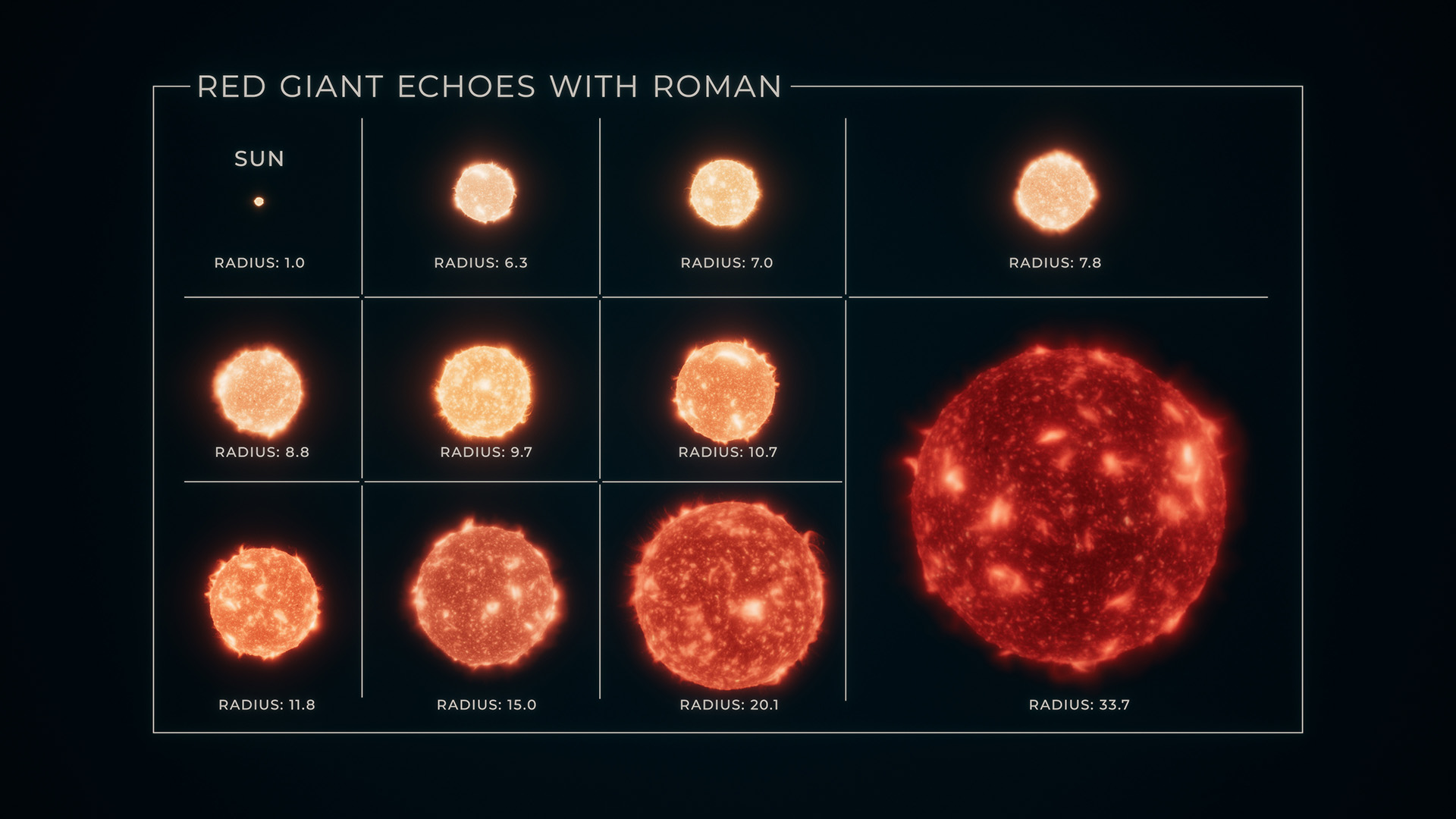
Artist’s concept of the Sun and several red giant stars
This artist’s concept visualizes the Sun and several red giant stars of varying radii. NASA’s upcoming Nancy Grace Roman Space Telescope will be well suited for studying red giant stars with a method known as asteroseismology. This approach entails studying the changes in stars’ overall brightness, which is caused by their turbulent interiors creating waves and oscillations. With asteroseismic detections, astronomers can learn about stars’ ages, masses, and sizes. Scientists estimate Roman will be able to detect a total of 300,000 red giant stars with this method. This would be the largest sample of its kind ever collected.
Credit: NASA, STScI, Ralf Crawford (STScI)

Stars’ turbulent natures produce waves that cause fluctuations in their overall brightness. By studying these changes — a method called asteroseismology — scientists can glean information about stars’ ages, masses, and sizes. These shifts in brightness were perceptible to NASA’s Kepler space telescope, which provided asteroseismic data on approximately 16,000 stars before its retirement in 2018.

Using Kepler data as a starting point and adapting the dataset to match the expected quality from Roman, astronomers have recently proven the feasibility of asteroseismology with the soon-to-launch telescope and provided an estimated range of detectable stars. It’s an added bonus to Roman’s main science goals: As the telescope conducts observations for its Galactic Bulge Time-Domain Survey — a core community survey that will gather data on hundreds of millions of stars in the bulge of our Milky Way galaxy — it will also provide enough information for astronomers to determine stellar measurements via asteroseismology.

“Asteroseismology with Roman is possible because we don’t need to ask the telescope to do anything it wasn’t already planning to do,” said Marc Pinsonneault of The Ohio State University in Columbus, a co-author of a paper detailing the research. “The strength of the Roman mission is remarkable: It’s designed in part to advance exoplanet science, but we’ll also get really rich data for other scientific areas that extend beyond its main focus.”

Exploring what’s possible

The galactic bulge is densely populated with red giant branch and red clump stars, which are more evolved and puffier than main sequence stars. (Main sequence stars are in a similar life stage as our Sun.) Their high luminosity and oscillating frequency, ranging from hours to days, work in Roman’s favor. As part of its Galactic Bulge Time-Domain Survey, the telescope will observe the Milky Way’s galactic bulge every 12 minutes over six 70.5-day stretches, a cadence that makes it particularly well suited for red giant asteroseismology.

While previous research has explored the potential of asteroseismology with Roman, the team took a more detailed look by considering Roman’s capabilities and mission design. Their investigation consisted of two large efforts:

First, the team members looked at Kepler’s asteroseismic data and applied parameters so the dataset matched the expected quality of Roman data. This included increasing the observation frequency and adjusting the wavelength range of light. The team calculated detection probabilities, which confirmed with a resounding yes that Roman will be able to detect the oscillations of red giants.

The team then applied their detection probabilities to a model of the Milky Way galaxy and considered the suggested fields of view for the galactic bulge survey to get a sense of how many red giants and red clump stars could be investigated with asteroseismology.

This sonification is based on a simulation of data that NASA’s Roman Space Telescope will collect after its launch as soon as fall 2026. The sonification converts the waves moving inside red giant stars into sound. These pressure waves cause tiny changes in brightness that Roman can measure. Bigger stars take longer for the waves to bounce around, which means brightness changes have lower frequencies. Here, those frequencies are turned into sound and sped up so we can hear them. The first sound in the sonification comes from the Sun to give a sense of scale (even though Roman won’t look at the Sun). It then moves on to bigger and bigger red giants, with the pitch changing for each one. Astronomers can calculate a star’s size and other properties by measuring these frequencies. An audio-described version is available for download at the bottom of the page. 
Credit: Video: NASA, STScI; Sonification: Christopher Britt (STScI), Martha Irene Saladino (STScI); Designer: Ralf Crawford (STScI); Science: Noah Downing (OSU), Trevor Weiss (CSU)

“At the time of our study, the core community survey was not fully defined, so we explored a few different models and simulations. Our lower limit estimation was 290,000 objects in total, with 185,000 stars in the bulge,” said Trevor Weiss of California State University, Long Beach, co-first author of the paper. “Now that we know the survey will entail a 12-minute cadence, we find it strengthens our numbers to over 300,000 asteroseismic detections in total. It would be the largest asteroseismic sample ever collected.”

Bolstering science for all

The benefits of asteroseismology with Roman are numerous, including tying into exoplanet science, a major focus for the mission and the galactic bulge survey. Roman will detect exoplanets, or planets outside our solar system, through a method called microlensing, in which the gravity of a foreground star magnifies the light from a background star. The presence of an exoplanet can cause a noticeable “blip” in the resulting brightness change.

“With asteroseismic data, we’ll be able to get a lot of information about exoplanets’ host stars, and that will give us a lot of insight on exoplanets themselves,” Weiss said.

“It will be difficult to directly infer ages and the abundances of heavy elements like iron for the host stars of exoplanets Roman detects,” Pinsonneault said. “Knowing these things — age and composition — can be important for understanding the exoplanets. Our work will lay out the statistical properties of the whole population — what the typical abundances and ages are — so that the exoplanet scientists can put the Roman measurements in context.”

Additionally, for astronomers who seek to understand the history of the Milky Way galaxy, asteroseismology could reveal information about its formation.

“We actually don’t know a lot about our galaxy’s bulge since you can only see it in infrared light due to all the intervening dust,” Pinsonneault said. “There could be surprising populations or chemical patterns there. What if there are young stars buried there? Roman will open a completely different window into the stellar populations in the Milky Way’s center. I’m prepared to be surprised.”

Since Roman is set to observe the galactic bulge soon after launch, the team is working to build a catalog in advance and provide a target list of observable stars that could help with efforts in validating the telescope’s early performance.

“Outside of all the science, it’s important to remember the amount of people it takes to get these things up and running, and the amount of different people working on Roman,” said co-first author Noah Downing of The Ohio State University. “It’s really exciting to see all of the opportunities Roman is opening up for people before it even launches and then think about how many more opportunities will exist once it’s in space and taking data, which is not very far away.” Roman is slated to launch no later than May 2027, with the team working toward a potential early launch as soon as fall 2026.

The paper was published in The Astrophysical Journal.

The Nancy Grace Roman Space Telescope is managed at NASA’s Goddard Space Flight Center in Greenbelt, Maryland, with participation by NASA’s Jet Propulsion Laboratory in Southern California; Caltech/IPAC in Pasadena, California; the Space Telescope Science Institute in Baltimore; and a science team comprising scientists from various research institutions. The primary industrial partners are BAE Systems, Inc. in Boulder, Colorado; L3Harris Technologies in Melbourne, Florida; and Teledyne Scientific & Imaging in Thousand Oaks, California.

To learn more about Roman, visit: https://www.nasa.gov/roman

By Abigail Major
Space Telescope Science Institute, Baltimore, Md.

Additional Resources

Video with audio descriptions

Nov 19, 2025

MP4 (6.58 MB)

Share

Details

Last Updated
Nov 20, 2025
Editor
Ashley Balzer
Contact
Location
Goddard Space Flight Center

World’s oldest RNA extracted from Ice Age woolly mammoth

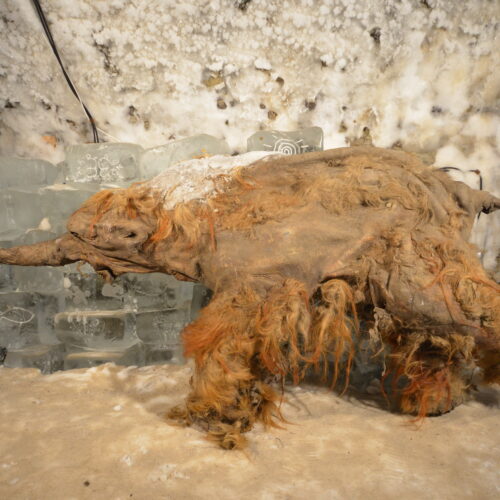
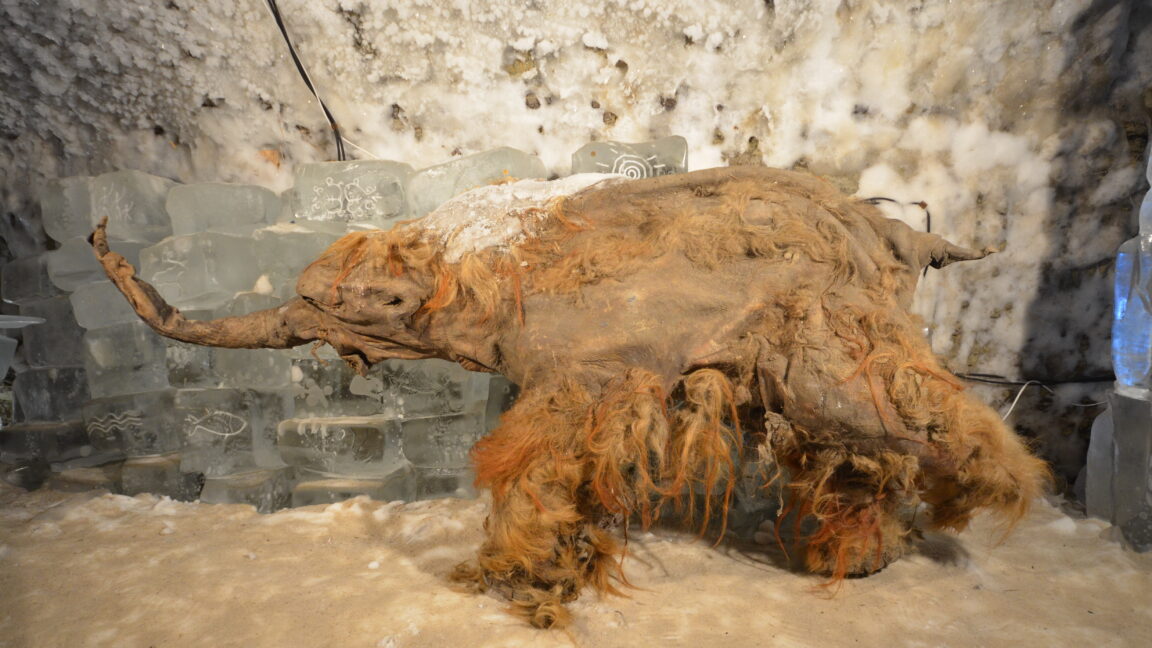
A young woolly mammoth now known as Yuka was frozen in the Siberian permafrost for about 40,000 years before it was discovered by local tusk hunters in 2010. The hunters soon handed it over to scientists, who were excited to see its exquisite level of preservation, with skin, muscle tissue, and even reddish hair intact. Later research showed that, while full cloning was impossible, Yuka’s DNA was in such good condition that some cell nuclei could even begin limited activity when placed inside mouse eggs.

Now, a team has successfully sequenced Yuka’s RNA—a feat many researchers once thought impossible. Researchers at Stockholm University carefully ground up bits of muscle and other tissue from Yuka and nine other woolly mammoths, then used special chemical treatments to pull out any remaining RNA fragments, which are normally thought to be much too fragile to survive even a few hours after an organism has died. Scientists go to great lengths to extract RNA even from fresh samples, and most previous attempts with very old specimens have either failed or been contaminated.

A different view

The team used RNA-handling methods adapted for ancient, fragmented molecules. Their scientific séance allowed them to explore information that had never been accessible before, including which genes were active when Yuka died. In the creature’s final panicked moments, its muscles were tensing and its cells were signaling distress—perhaps unsurprising since Yuka is thought to have died as a result of a cave lion attack.

Read full article

Comments

© Valeri Plotnikov

❌