Reading view

There are new articles available, click to refresh the page.

Federal judge blocks imminent State Dept layoffs, as unions seek to reverse RIFs at other agencies

A federal judge in San Francisco is temporarily blocking the State Department from finalizing hundreds of employee layoffs.

Judge Susan Illston approved a temporary restraining order on Thursday, preventing the department from officially terminating more than 200 employees, most of them Foreign Service officers.

Separately, federal employee unions are asking the U.S. District Court for the Northern District of California to reverse more layoffs than agencies have allowed under a spending deal that ended the recent government shutdown.

The American Federation of Government Employees and the American Foreign Service Association filed the emergency request for a temporary restraining order to bar the “imminent and unlawful execution” of reduction in force notices the State Department sent this summer.

“The severe threats to the public presented by the imminent State Department actions necessitate a temporary pause to protect the status quo for plaintiffs and the employees they represent who are adversely impacted by these imminent separations,” the emergency request states.

The emergency request is part of an ongoing lawsuit that unions filed on the eve of the government shutdown, which blocked the Trump administration from conducting widespread layoffs during a lapse in congressional funds.

The amended lawsuit states that several agencies, including the State Department, aren’t fully adhering to a provision in the shutdown-ending spending bill that temporarily blocked the Trump administration from carrying out layoffs.

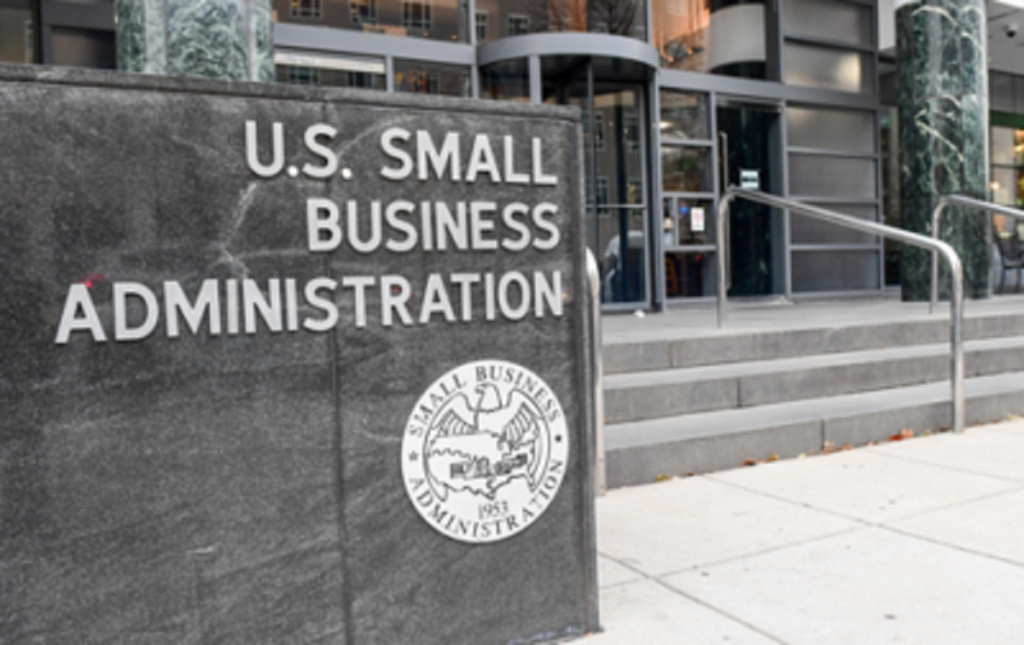
The nonprofit Democracy Forward, which is also part of the lawsuit, said the amended lawsuit seeks to reverse “other unlawful RIF actions” at the Small Business Administration and the General Services Administration, as well as the departments of Education and Defense.

“Those RIFs would violate the federal legislation that ended the federal government shutdown, which prohibits implementation of any RIFs through January 30,” the amended complaint states.

The continuing resolution Congress passed on Nov. 12 states that “any reduction in force proposed, noticed, initiated, executed, implemented, or otherwise taken by an executive agency between October 1, 2025, and the date of enactment, shall have no force or effect.”

It also states that between Nov. 12, 2025 and Jan. 30, 2026, “no federal funds may be used to initiate, carry out, implement, or otherwise notice a reduction in force to reduce the number of employees within any department.”

Agencies, however, have followed a narrower interpretation of the stopgap spending bill, and have only reinstated federal employees who received RIF notices between Oct. 1 and Nov. 12. The amended lawsuit states that interpretation of the continuing resolution “is significantly under-inclusive.”

Agencies recently told a federal court that they rescinded shutdown-era RIF notices for more than 3,600 employees.

The State Department sent RIF notices to nearly 1,350 employees in July. Most of those employees were officially separated from the agency in September.

But this Friday, Dec. 5, the department plans to officially remove nearly 250 Foreign Service employees and several civil service employees whose separation dates were postponed, because they recently gave birth or faced medical issues.

The State Department claims that the continuing resolution’s layoff protections only apply to RIF notices that went out after Oct. 1.

“Defendants are wrong,” the amended complaint states. “The plain language of the continuing resolution prohibits any actions implementing any RIFs of any employees at any agency between November 12, 2025 and January 30, 2026, and requires recission of any previously issued RIF notices (regardless of when they were issued) if the RIFs were implemented during the shutdown.”

The amended lawsuit also takes issue with how the State Department modified the official separation date for impacted employees.

Foreign Service employees were originally told they would be separated from the agency on Nov. 10,  when the agency was still affected by the government shutdown. But on that date, employees received a notice from the department’s human resources offices that said they would remain on administrative leave so the agency could correct “administrative errors.”

On Monday evening, employees received a notice that said they will be officially separated from the State Department this Friday.

“The RIF notices were not reissued, and employees received nothing further from the State Department regarding the now-expired RIF notices until December 1, 2025,” the amended lawsuit states.

The State Department’s notice to employees cites “formal written guidance” from the Office of Management and Budget and the Justice Department’s Office of Legal Counsel regarding RIFs that had been issued prior to the shutdown, but further implemented during or after the shutdown. The unions leading the lawsuit say that formal written guidance hasn’t been made publicly available.

“During the shutdown, the State Department continued to implement the stages of these RIFs in preparation for final separation of the employees, including by processing personnel paperwork in advance of the planned separations,” the amended complaint states.

The unions claim that without a temporary restraining order, State Department employees and their families will suffer “irreparable harm,” including a loss of income and health insurance benefits.

“For many of these employees, the imminent loss of employment means a sustained loss of income and benefits in a job market already flooded with unemployed former State Department and USAID employees,” the amended complaint states.

AFGE National President Everett Kelley said in a statement that “Congress clearly stated that no federal employees should lose their jobs due to a reduction-in-force for the duration of the continuing resolution.”

“This means that no RIF should be issued or acted upon, and any RIF terminations that occurred during the shutdown must be reversed,” Kelley said.

AFSA President John Dinkelman said in a statement that these “unlawful separations reveal a callous indifference to the rule of law and the people who carry out America’s diplomatic mission every day.”

The post Federal judge blocks imminent State Dept layoffs, as unions seek to reverse RIFs at other agencies first appeared on Federal News Network.
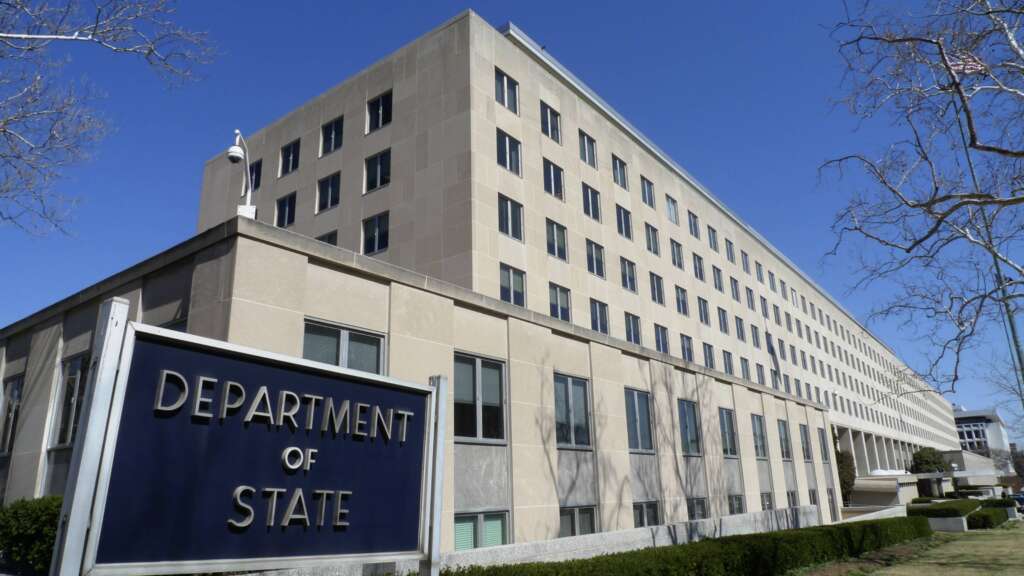
© AP Photo/J. Scott Applewhite, File

FILE - The Harry S. Truman Building, headquarters for the State Department, is seen in Washington, March 9, 2009. (AP Photo/J. Scott Applewhite, File)

PSC’s vision conference proved that forecasting government contractor workload for 2026 is no easy task


Interview transcript

Terry Gerton Timely payments, rescinding stop work orders, and monitoring long-term impacts are top priorities as agencies restart operations. We’ll also look at key takeaways from PSC’s Vision Conference with CEO Jim Carroll. Jim, thanks for joining me.

Jim Carroll Terry, thank you so much for having me on.

Terry Gerton You are coming off two days of the PSC Vision Conference. Let’s start there. What were the biggest insights that you heard over those two days of discussions?

Jim Carroll Well, I’ll say three insights. One was it was a brutal way to start the Monday after Thanksgiving holiday … But, we had to accommodate the really great speakers on — including really some wonderful keynote speakers. Next year it will not be the Monday after Thanksgiving. So for all of our members, you know, for this event, we’re thankfully able to get a better date. But more importantly, as I mentioned, really was hearing from some of the leadership in the administration about, what is their projections for 2026 and how the money, as being appropriated by Congress, as the budget request and where they expect it to go. And so, one was just the amount of money, which is something worth talking about. The other thing and is really the use of AI and how the embrace of AI by the federal government is rapid, but it’s also a bit unknown. We’re moving forward in this space of the government using AI without everyone necessarily understanding all the implications. So I think so far those are the two big takeaways that we’ve been able to summarize. And, it’s a great event for our members and a few guests.

Terry Gerton What did you hear about this administration’s take on industry partnerships?

Jim Carroll You know, I think we have to sort of look back at DoD. I think DoD with Secretary Hegseth is a good example of that. As you recall, in November, Secretary of War Pete Hegseth met with our members and the folks that do defense contracting and said that they really do want to do a radical revolutionary overhaul of the FAR, and especially, in the sense of producing deliverables and measuring outcomes based on performance and getting this done right and how the military, how the branches within DoD have been tasked with coming up with orders … by mid-January, 60 days, in terms of how they think we can best streamline the process. And our hope is that this proposal really has legs. And we think it does. There’s support in Capitol Hill. There’s support in the administration. And of course, we — the leading trade association for companies that do business with the federal government — we’re completely supportive of most of these changes. There are things that we’ve been asking for for years that would really expedite the awards. Hopefully, with the grace of God, cut down on the number of appeals following an award, which seems to be a bit of an epidemic of companies now just expect there to be an appeal. And so we’re really very hopeful that this will stick and we’re optimistic that it will. And so that’s one of the major things, and then of course, as I mentioned, the amount of money in government services. And there was discussion about that … this week from the assistant secretary of war, that you know, there really is going to be an extraordinary amount of money, $850 billion at DOD with at least $180 billion toward services. And that’s what our very, and I’m proud to say, patriotic, companies that want to do the right thing for the war fighter and the taxpayer are eager to jump on board.

Terry Gerton Speaking with Jim Carroll, CEO of the Professional Services Council. Jim, tell us more about what you heard about the deployment of AI from the government agencies and within the contractor community.

Jim Carroll Yeah, so within the government we had speakers from across the government. As I said, Assistant Secretary of War, Michael Cadenazzi, who handles the industrial base policy, talked about an initial $180 billion, $200 billion in services, and how the use of AI and services can change and how there needs to be flexibility because of AI, that when some of these contracts call for a hundred seats to be filled, that there is enough flexibility that contractors can come back to the government and say, hey, we’re gonna use some, you know, AI, some other advanced technology. We can reduce the number of personnel from a hundred to eighty people. And in the past there’s been some resistance. Both the Department of War and some of the other departments, you know, really stressed that they want flexibility because of AI. I’ll say one thing that was interesting, and we’ve seen and heard this from members, is that there are a fair number of new companies who have never put in bids for government work that are using AI to not only write their proposals, but as I mentioned, also the use of AI to appeal. I mean, it just seems like it’s a press of the AI button, if you will, and an appeal is generated. And we need to get away from that, you know, for valid, justifiable awards, let’s move forward and deliver good results. And so we’re very optimistic. The recognition that AI has some limitations to it, but that it can deliver fast results is something that will be very interesting to see in 2026.

Terry Gerton Jim, one of the things that you and I have talked about, we’ve talked about it with a lot of contracting folks on the show is the uncertainty about the federal government workload for contractors. I’m wondering what you heard from your members over the course of this conference, especially as we’re sitting right now just post-shutdown and possibly pre-shutdown in January. What what are you hearing and what is PSC’s advice?

Jim Carroll Terry, don’t jinx us. No more government shutdowns. No, we’re tracking January 30th very closely. We had very senior meetings in the White House in the West Wing with a couple different meetings because of the shutdown to talk about the impact that it is having on results and the impact it is having on protecting the homeland. And so, what we told them in addition to the impacts is when the government gets up and running, because shutdowns end. This was a record-breaking one, but shutdowns do end. And as soon as they end, you know, it’s to tell the individuals in the departments, immediately start processing these invoices, get these payments out the door. You know, there are a fair number of companies, especially in the small to mid-size, that really did not have stable cash flow. They really were hurting. We saw some layoffs or at least, you know, sidelining of key employees, and it really presented a huge financial strain on the companies, which flows down to the employees, which flows down to the communities. And so that’s what we asked for. We asked, in addition, that the momentum on getting contracts, new contracts out the door, be, you know, jump-started as fast as possible. Historically, it takes quite a while after a shutdown for things to resume sort of a normalcy. And, we don’t have time for that. In addition to the financial impact, truly the impact on national security. The world is facing new and dangerous threats that seem to be magnifying every day. And our contractors are able to deliver world-class results and protection. And unless they get up and running immediately, you know, those threats are very real.

Terry Gerton Are you seeing that kind of activity coming out of the government agencies now a couple of weeks on from shutdown?

Jim Carroll You know, we’re actually pleasantly surprised. And I hate to say that word surprised, but in the past, it does seem to be a bit of a lag. Our message seems to be delivered. We’re getting payments out quickly. Maybe not all and not every department, but it seems to be beating historic records in in terms of getting payments out. Obviously, some companies are still hurting, you know, waiting to get paid for work that they performed. But we’re happy so far. But Terry, I can’t believe you brought up January 30th of next year. You know, is this a lull between shutdowns? I hope not. I hope that they’re able to resolve, you know, some of the significant issues, healthcare, things like that. But as we’ve talked about, there’s not a lot of workdays up on Capitol Hill, and we just cannot have another shutdown.

The post PSC’s vision conference proved that forecasting government contractor workload for 2026 is no easy task first appeared on Federal News Network.

© Getty Images/Jacob Wackerhausen

Hands typing, laptop and closeup on table of military intelligence, map and research on internet. Computer, soldier and veteran online for surveillance, cyber security and info of army professional

An objective, unemotional investment strategy for your TSP, easy to say but hard to do in uncertain times


Interview transcript:


Terry Gerton We’re sitting here after weeks of uncertainty and missed paychecks during the government shutdown and a lot of people are probably feeling kind of anxious about their finances. How does that stress from just day-to-day situations spill over into how people make decisions about investments?

Art Stein Well, stress and emotion make a big difference in how people make their investments. And with the TSP, it makes a big difference in how much people are putting in the stock funds, which are the C and the S and the I funds, and then how much they’re putting in, well, especially the G fund, which is a short-term bond fund, really, it’s more of a cash account. And you know, what I’ve seen time and again for 30 years is that when the stock market crashes, federal employees and retirees tend to get disgusted and move money into the G fund. And the problem with that is, there’s never a good time to take it out of the G fund and reinvest. Usually they’ve made that move after the market has declined and frequently don’t get back in until it’s gone back a lot. So really what we caution our clients to do is to set an investment plan. And part of the investment plan is to know what you’re going to do when the stock market does crash. Because inevitably it’s going to. We don’t know when. Stock market crashes average about one every four years or one every seven years, depending upon the time period, or somewhere in between. But they are a regular part of the market cycle. And what we mean by a stock market crash is that a particular stock market like the S&P 500, which is the basis for the C fund, goes down 20% or more from a previous high. And that’s also called a bear market. A bull market is when, let’s say, the S&P 500 increases more than 20% from a previous high. And people really avoid investing in stocks or putting too much money in stocks because they fear the bear markets, they fear the crashes, they don’t like the volatility. But we’re always having volatility in any market except a bank account or the G fund. Volatility is just a fluctuation in value. Now stocks are more volatile than bonds, that’s clear. But what investors should do is trying to determine appropriate allocation between stock investments and bond investments and bank accounts. And the TSP, that means what percentage of your investments do you want in the G and the F funds, which are bonds and cash accounts, and what percentage do you want in stocks, which are C, S and I? And once you choose that percent, stick with it unless there’s a good reason to change. And the stock market crash is not really a good reason to change. And if the stock market crashes, especially for employees, that’s an opportunity. They’re investing money every two weeks. And of course they’d rather buy shares in the C and the S and the I funds when those are down and cheap than when they’re high and expensive. So just being able to stick to it really makes a difference.

Terry Gerton It’s really hard to imagine that the market is going to crash anytime soon. It’s been on such a steady upward climb for so many months. And yet you talk about when that correction, which is impossible to predict exactly, but pretty possible to predict generally happens, people do the opposite of standard recommendation. They sell low and then try to buy again high instead of buying low and selling high. Talk to us again about what kind of planning can help people avoid the emotional response to that sort of occurrence.

Art Stein Well, I think it’s very important to one, know and admit to yourself and take into account that the market’s going to crash. I mean, it’s going to happen. And it’s not unusual. It’s typical. And two, especially for employees, don’t change your investment allocation if the stock markets crash, unless you’re increasing your percentage allocation of your biweekly investments into the TSP fund. If you’re increasing the percentage going into the stock funds, that would make sense. And, you know Terry, when we speak to TSP millionaires, one consistent theme is that they had most of their investments going to the stock funds. And they did not change that when the stock markets crashed. They just kept investing. They accepted that. It was a long-term investment. And they just stuck with it.

Terry Gerton I’m speaking with certified financial planner Art Stein of Arthur Stein Financial. Art, we’re talking about a disciplined, non-emotional approach to investment here, but we’ve just come out of the longest government shutdown in history. And the current continuing resolution only goes through the 30th of January, about two and a half months from now. So how should feds think not just about their investments, about building up or building back their emergency savings if they had to dip into it during the shutdown?

Art Stein Well, this shutdown was horrible, as we know. People were living on credit card debt in many cases. It shows how important it is to have an emergency fund, three to six months of expenses in a bank account, or maybe the G fund. And what we sometimes have to recommend to people, we don’t like doing it, is to reduce your contributions to the TSP to 5%. Because in many cases, Terry, we’re speaking to people who are maxing out their contributions. But no, if you don’t have an emergency fund, that’s a mistake. Reduce it to 5%. Don’t go below that because you want to get the full 5% match from the federal government. Take that extra money that you were investing and use it to build up a bank account, three to six months of expenses. And especially, you know, this is so crazy. We’ve gone through this long shutdown, and then they had this big victory. But when you look at the victory, it only funded the government for two and a half months. I mean, how short term is that? So now is a good time. Just get on the TSP website and reduce your contributions to 5% and build up some cash. I mean, I’m praying and hoping that they won’t do another shutdown on you know, January 30th, but as we all know, things are not good with these negotiations.

The post An objective, unemotional investment strategy for your TSP, easy to say but hard to do in uncertain times first appeared on Federal News Network.

© AP Photo/David Dermer

Manny Marotta points to his laptop while examining the stock chart for Trump Media and Technology Group, Wednesday, April 24, 2024, in Cleveland. Amateur traders, mostly risking no more than a few thousand dollars each, say the stock is too volatile to declare victory yet. (AP Photo/David Dermer)

‘The mission is dead’: Federal workers say the shutdown made an ‘extremely trying year’ worse

The federal offices are back open and hundreds of thousands of federal workers have returned to work after the longest shutdown in history. But nothing is back to normal — federal workers say morale and trust in leadership are at an all-time low, tensions are high between furloughed staff and those who worked through the shutdown, schedules are slipping and projects are being pushed back, and more people are accelerating their retirement plans or leaving federal service altogether.

The recent shutdown, however, has just exacerbated the existing problems and added to what federal workers described as an already extremely trying year for the federal workforce. 

“As if morale wasn’t already non-existent, it sure is now. I expect a surge of people to (quiet) quit and I expect the remaining players to be bombarded with work with no support or guidance from leadership,” one employee told Federal News Network. 

“The mission is dead. Operations are barely running. Morale is toast,” another federal worker said. 

“Everything about being a federal employee in 2025 has destroyed workforce morale — from constant [reduction-in-force] threats, to losing colleagues to early/forced retirements and firings, to the loss of any telework to facilitate work/life balance for working parents or senior caregivers, this is the worst professional year I have experienced in nearly 20 years of service to my country. Nothing about the current [Office of Management and Budget] approach to leadership has moved our country forward,” another employee said.

A Federal News Network survey, conducted online between Nov. 17-30, asked federal workers what it has been like going back to work after the 43-day government shutdown. Survey respondents were self-selected, and they self-reported information to verify their status as current federal employees.

Federal workers described the experience as disorienting — returning to thousands of unanswered emails and scrambling to catch up with partners who kept work moving during the shutdown. There was little to no guidance from top management; they reported overwhelming backlogs and project schedules going completely awry.

Many said overloaded or outdated IT systems, lapsed system access and computer issues made even basic tasks difficult.

“IT issues as devices are set to expire and become inactive after 30 days of non-use, supervisory chain is still not back to work and others are catching up on leave. There are large gaps within the higher chain of command, tremendous amount of confusion, no clear description of how to verify back pay and related deductions are accurate, statutory deadlines did not stop during the shutdown, so crushing workload to return to,” one employee said on Nov. 24. 

“It is not so simple as flipping a switch. We are still waiting on funds to arrive and are unable to work on things until those funds arrive,” another federal worker said on Nov. 18. 

“I engage in very technical work. A 1.5-month shutdown has thoroughly derailed my train of thought. It will take a long time to refamiliarize myself with what issues were being sorted out, what solutions I had been pursuing, even how any of my own code works,” another employee said. 

Several federal workers said their agencies could face budget cuts due to not hitting mandatory spending benchmarks — goals that are “impossible to achieve” after a 40-plus day lapse in appropriations.

In addition, many employees now have to use their “use-or-lose” annual leave before the end of the year, which will further delay progress and extend timelines.

Nearly 1,500 people responded to the survey. Out of 739 federal workers who responded to this question, nearly 47% of respondents said it would take them more than two weeks to catch up on all the work missed during the shutdown.

“My program was halted immediately, but will take two months to ramp back up,” one worker said. 

“Can you really ever catch up? Some work will just be lost — deprioritized in the chaos,” another federal employee said. 

And the threat of another shutdown is looming — the bill President Donald Trump signed into law keeps the government open only through Jan. 30. The uncertainty, workers say, is making people reluctant to fully dive back into work. 

“With holidays coming, this will set projects back months,” one employee said. 

Federal employees who worked during the shutdown also expressed “apathy and annoyance” toward furloughed employees who did not work during the shutdown, saying the resentment has led to conflicts and made collaboration difficult. 

“Expect operations to be negatively affected as the furlough has driven a wedge between those furloughed employees and those who remained on the job,” one federal employee said.

Receiving back pay

Most of the federal workers worked without pay during the shutdown, missing more than four weeks of pay. 

When the government reopened on Nov. 13, the Office of Personnel Management said it would take several business days for workers to get their back pay.

Out of 728 individuals, 200 federal workers — about 27.5% — said they received their back pay within one-to-three days after returning to work. Another 200 said they were paid within four-to-seven days. For the remaining 323 individuals, it took more than a week to receive their back pay.

Source: Federal News Network November 2025 survey of 1,467 current federal employees.

Many employees told Federal News Network that there was a lot of confusion about how to process timesheets and guidance changed a few times the first two days, which had contributed to the delay in issuing our pay.

“Smithsonian still has not managed to get us paid. They are wasting time making sure everyone has the correct time codes rather than getting people paid. It’s more important to them that they take a couple weeks to record we were furloughed. Can’t pay the mortgage, but at least they’ll have the correct time code,” one employee said on Nov. 22.

One Interior Department employee told Federal News Network on Dec. 1 the agency had only paid them for 72 hours worked during the shutdown and had promised the remainder by Nov. 25 — they are still waiting on that payment. They added that none of the 69 civilian employees at the U.S. Park Police have been fully paid. Sworn officers, however, received a flat 80 hours per pay period, and while overtime and night-differential corrections were made, it’s not clear if that pay had been issued. 

“We have not heard anything about when we will be paid beyond the deadline that passed a week ago, no reason has been provided to explain the delay,” the employee said. “I will be retiring early. While not the only reason, the recent hijinks played a role in my decision.”

One employee at INTERPOL Washington told Federal News Network on Dec. 1 that personnel there have received only partial back pay and some employees have only received pay for one pay period. The issue stems from the Justice Department’s decision to dismantle INTERPOL Washington and fold its remaining functions into the U.S. Marshals Service during the shutdown — while making changes in the pay system while payroll processing was underway.

The workers were initially told they would receive all of their back pay on Nov. 21, but instead received partial pay on Nov. 24. DOJ then promised the rest by Nov. 28, but only a handful of people were paid over that weekend. The agency now says it has finally identified the problem and that employees should be paid by Dec. 3.

“Every time that the DOJ claims to find a solution and puts another date out for when we should get paid, there is just another disappointment,” the INTERPOL Washington employee said.

Another Air Force civilian at Lackland Air Force Base, who was told they would be paid last week, is still waiting for their back pay now nearly three weeks after the shutdown ended. On Monday, they were told that “the comptroller squadron is working diligently to manually process over 3,000 timecards with an estimated completion date of Nov. 29.” 

For many of those who received back pay, determining whether the amount was correct was nearly impossible. 

Dozens of respondents said they were unsure if their payments were accurate because agencies did not issue accompanying paystubs for the affected pay periods. Several employees said since payroll providers such as the Defense Finance and Accounting Service do not provide leave and earnings statements for retroactive pay, meaning they will have to wait for the next pay period to verify whether the amount is correct.

“It seems to be off by a few hundred dollars, but I can’t determine where the discrepancy is,” one federal worker said on Nov. 26. 

“We don’t know since it was a partial payment with no documentation,” another respondent said on Nov. 24. 

“Many people at work say that their paychecks were less due to taxes on lump sum payouts,” another respondent said on Nov. 25.

More feds eyeing the exit

Federal workers were already overwhelmed, stretched thin and struggling with high levels of anxiety following the Trump administration’s push to reduce the size of the federal workforce. Now, the shutdown is pushing even more people out the door. 

Out of 758 federal workers, 329 respondents — about 43.4% — said that the shutdown made them reconsider staying in federal service.

Source: Federal News Network November 2025 survey of 1,467 current federal employees.

Many said they are actively looking for an out, while for others the shutdown reinforced their decision to retire

“It is so untenable that I plan to quit in the next month or so. The situation has gotten even worse since returning,” one employee said.

“The shutdown did solidify that I will retire the first date I can,” a federal worker said.

“I have dedicated 20 years to serving my country, including service in the U.S. Army. It’s pretty thankless to be a federal civilian employee now. I used to encourage my children to pursue a similar career but now I am encouraging them to stay away from federal service,” another employee said. 

Financial, mental health toll

More than half of federal employees — 58% of respondents — reported experiencing financial challenges during the shutdown, and nearly a third said they struggled to pay bills. Over 51% of federal workers said they had to rely on credit cards, loans or emergency savings to pay their bills, while 14% reported missing rent, mortgage or other payments. About 10% of federal workers said they needed outside assistance, such as food banks and relief programs. But notably, nearly 62% said the shutdown impacted their mental health.

Source: Federal News Network November 2025 survey of 1,467 current federal employees.

Several respondents said they dipped into retirement accounts or cleared out emergency savings to stay afloat, while others reported delaying Christmas shopping, postponing home repairs or borrowing from family members to cover basic needs. Younger workers and those in single-income households were hit especially hard.

And while some said they were fortunate enough to have savings or a second household income, many still described the experience as deeply destabilizing. 

“Fortunately, we are a two-income, no-child household and good savers. But I did give a monetary gift to a colleague who is in a much more tenuous situation,” a federal worker said.

“I requested a skip loan payment on my car since I could without fees. I have paid for things out of savings and since I’m a bit older I can do that, but I’m depleting savings still as I continue to not be paid,” one employee said.

“Outsiders calling it a ‘free vacation’ don’t understand the effects the shutdown has on furloughed staff,” another employee said. 

 Workers described experiencing “constant dread and worry,” “incredible stress and anxiety” and “the feeling of absolutely no protections.”

“It was very stressful. I had to take a part-time job,” one employee said. 

Ultimately, one worker said, the impacts were “cruel and petty and proved to be irrelevant to either side achieving their stated goals.”

If you would like to contact this reporter about recent changes in the federal government, please email anastasia.obis@federalnewsnetwork.com or reach out on Signal at (301) 830-2747.

The post ‘The mission is dead’: Federal workers say the shutdown made an ‘extremely trying year’ worse first appeared on Federal News Network.

© The Associated Press

FILE - The U.S. Department of the Interior building is seen in Washington, Saturday, Dec. 7, 2024. (AP Photo/Jose Luis Magana, File)

The shutdown may be over, but its ripple effects on lending and tax compliance are just beginning


Interview transcript:


Terry Gerton As we look back, the shutdown’s over now, but it lasted over a month and it really froze critical functions across every federal agency. From your vantage point, what were the most immediate and severe impacts on lenders and small businesses?

Dave Bohrman Well, Terry, I think that’s obviously a big question because there’s some latency in what those impacts will be. So some of that will come out in the days and weeks and months ahead. But looking at it very specifically, you also have to kind of consider what was the situation going into the government shutdown, and that kind of governs what actually those impacts will were or are going to be. So you have a highly volatile economy from a lot of uncertainty, whether that be from the tariffs or whether that be from tax policy, or whether that be from any of the agencies’ policies internally with respect to workforce. All of that kind of created a perfect storm with the political situation of the landscape in Washington; really made a real recipe for the government shutdown to happen. My question always was, once a government shutdown happens, how do we get out of it? And that what we witnessed. So as far as the impact, any small businesses that were looking to do any government-guaranteed lending, 7(a), 504 program within the SBA, that was frozen if their loan wasn’t already into some kind of post approval process. IRS, if you work for the IRS, you obviously know the story. The IRS is a completely different scenario. They went from 100,000 employees to 25% haircut to 75,000 employees and to about half of that were still in operation during the government shutdown this time. I’ve been around long enough, the first shutdown I was part of was 2013. That was pretty small, 13 days. But the last one was the historic one, 35 days. And at that point in time, the IRS was completely shut down. If you were doing anything with any kind of, you know, and “tax” is very broad … so whether you were a tax preparer or you were trying to get tax data or you were dealing with information reporting, there was zero access. This time you had a hybrid of access. So I would say the impact of anybody trying to get information or deal with the IRS, it was marginalized and confusing at best, but there was something happening. If you were looking for anything with the SBA, you were pretty much put on standstill, whether you were a lender or a small business trying to get a loan.

Terry Gerton Well let’s go back to the IRS for a minute, because you say there were folks working and there was some access but it was confusing and perhaps fragmented. Why is IRS data so critical to the lending process, and what impact did it have with a reduction in access to that data?

Dave Bohrman Well, that’s somewhat part of what we do as a business, is get taxpayer data over to commercial lenders or financial institutions that are using it to make a business decision. When it comes to the SBA, because it’s government-guaranteed and there is a taxpayer component to it, the government has very strict guidelines on how to underwrite a 7(a) or 504 loan, it’s governed by their SOP, their standard operating procedures. In that it actually requires tax data, one from the borrower, the borrower has to provide a tax return, and two — directly from, at an arm’s length — from the IRS in a tax return transcript to reconcile that information. And the reason that has to be reconciled is because it can sniff out fraud. If somebody misreports their income, we go to the IRS and we say, your income doesn’t match. Or it can shine a very big light on cash flow. A small business that’s making payroll tax deposits on average twice a week — that payment behavior is very indicative of their financial help. So being able to sniff out whether a business is paying their taxes on time or not is really a key data point for lenders to make a credit decision, whether it be yes or no. The SBA requires it, commercial lenders, some have it part of their credit policy, some do not. But it’s a real problem that we’re trying to solve or at least help lenders make better credit decisions.

Terry Gerton I’m speaking with Dave Bohrman. He’s the co-founder and vice president of marketing at Tax Guard. Let’s follow the thread then. The SBA was basically closed. So for 40-plus days, no one was getting an application submitted, no one was getting a loan approved. And you also mentioned the latency impact of that. Talk us through that. What’s going to happen now that SBA’s doors are back open?

Dave Bohrman Well, there’s the business side. Because it is a public-private partnership, the private end of it is basically most banks in America have an SBA lending program. That is the upstream pipeline of applications. So when we talk to commercial lenders, they were continuing to accept applications, process them internally and get them ready and packaged for SBA delivery. So what you expect to happen, what we’re seeing happen, is the SBA just said, “we’re open.” So now they have this backlog that they’re processing. So in the next couple of days to weeks, it’ll be interesting to see how that goes through the system so that the small businesses that are looking to be funded get funded as soon as they can.

Terry Gerton As you think about this funding lapse, would you say that it exposed any sort of systematic weaknesses both, for banks and borrowers? Was there anything because of the duration here that maybe needs to be specifically addressed?

Dave Bohrman Well, that’s an interesting question because you because history will tell you something. In the past 25 years, since 2000, there’s really been three meaningful government shutdowns. So from a systemic planning process on the agency side and the federal government side, it’s probably a little bit out of bounds to kind of truly build anything into the system to account for a government shutdown. Similarly, on a business side, it’s hard to build a business process around something that happens so infrequently. So if you kind of look at the X and Y axes, it’s very damaging when it happens, but it happens very infrequently. So to answer the question, what systemic things will be changed, I can’t imagine much.

Terry Gerton As you look forward as the government gets back up to speed in these areas, are there ripple effects that you think lenders and small businesses should be looking out for? Do you expect any change in credit standards or compliance risks?

Dave Bohrman Absolutely. Kind of going back to the point of the hyper-dynamic nature and the hyper-volatile nature of the economy as it stands today, everything in the simplest form would be there’s the demand side, so small businesses that are looking for loans, and the supply side, which is the lenders that are giving the loans. So what we’ve seen since the beginning of this current administration, especially, because of the uncertainty and planning, the desire to take capital has been diminished. So the demand side has come down. And some of that — what are the interest rates going to be? Should I wait for a better interest rate? Some of that is, there’s tariffs that are impacting my business, I don’t know where that’s going to land. There are supply chain issues, I’m not sure what to do with those. So we’ve seen the demand side go down. And I think that … if you take the theme of certainty versus uncertainty and certainty driving small-business decisions, we’re still in an uncertain environment. The ripple effects of a government shutdown on top of all of those things add more uncertainty to the equation. I think we have some more, should we say, pain to work through before we get to a place of stability where we would see the credit markets kind of operate in some kind of normal fashion. But it is kind of hard to say what is normal. And on the credit side, creditors — their credit boxes have been getting tighter. The SBA underwriting requirements have increased since the Biden administration. So on the supply side, lenders are getting a little bit more frugal by which who they give money to. And on the demand side, small businesses are looking for credit less, which is impacting the overall economy.

Terry Gerton With the uncertain availability of government data, whether it’s tax data or economic data, do you see a trend for lenders especially to be looking for alternative sources of data as they consider what they’re going to do?

Dave Bohrman Absolutely. And we’ve been doing this since 2007, 2008. The general premise of tax data really isn’t about taxes. It’s really just about a database of small business or business or taxpayer information that is very rich. So when you think about the consumer, you or I, Terry, when we go get a car or we get a credit card, there’s a rich database, whether that’s the credit bureaus or all these kinds of reporting structures, that tells a lot of information about you or I as individuals. Businesses are under a completely different data regime and reporting regime, and they are governed by more usury laws, and that’s kind of based on the premise that small businesses or business in general — they should be left alone. So what that means is there are very little data requirements in the credit-data world for small businesses. So tax data, as we call it, or what we’re talking about payroll data or income data, all the things that live in an IRS database are very rich. It’s a very rich data pool by which lenders can look through. So we’re not the only ones doing this, there are people doing this. So to the point of tax data on any small business or even an individual can be very helpful in understanding who to give money to or who the good bets are, or maybe somebody that didn’t have enough data on them. Tax data tells the story that this is a compliant business and you should be able to give them funding. On the economic data, that that’s a little bit more broad. I know that during the shutdown, there was not a lot of data released. So that will be interesting to see how that plays out. And let’s just say we have a bad job report or gross domestic product, all the economic indicator reports that are going to come out over the coming weeks, that will be interesting to see how that rattles or ripples the credit markets.

The post The shutdown may be over, but its ripple effects on lending and tax compliance are just beginning first appeared on Federal News Network.

© Getty Images/iStockphoto/Urupong

Some DoD civilians are still waiting for back pay weeks after shutdown’s end

Nearly two weeks after the record-long government shutdown ended, some Defense Department civilian employees say they have yet to receive the back pay they are owed. 

The federal government reopened on Nov. 13 after President Donald Trump signed a bill to fund the government through Jan. 30, ending the 43-day shutdown and allowing tens of thousands of DoD civilians to return to work.

At the time, the Office of Personnel Management said that checks for DoD civilians were slated to go out on Nov. 16. DoD civilians, however, were told to expect payment sometime between Nov. 17 and Nov. 20. 

But with Thanksgiving week now underway, many workers say they are still waiting for as much as four weeks of back pay.

One civilian employee at Laughlin Air Force Base in Texas, who was furloughed during the shutdown, told Federal News Network that more than 150 people in their unit of more than 400 civilians have not been paid.

“When everybody got back to work, we were told that the next week — or mid-week — we would get paid. And a lot of people did get paid, but a lot of us have not. They keep saying, ‘It’s going to take a few days,’” he said Wednesday. 

The Air Force employee said there has been no official guidance or clear communication, but their supervisor told them Wednesday to expect back pay on Nov. 29.

“There’s nothing in writing,” the employee said. “It’s all the leadership just walking around telling us, ‘Expect to get paid.’ There’s no email traffic — it’s just their own interpretation of when they think we’re going to get paid. But there’s been nothing official sent out.”

A DoD spokesperson told Federal News Network that all civilians whose updated time and attendance have been received have been paid.

“It is essential that civilian employees review their time and attendance reports, and their Leave and Earnings Statements (LES) for accuracy. Civilians with questions or civilian pay issues should contact their local Agency Customer Service Representative (CSR) or immediate supervisor. [The Defense Finance and Accounting Service] will continue to work with the military components to resolve any remaining payment issues,” the spokesperson said.

Another Air Force civilian in San Antonio, who worked through the shutdown, said many civilians in their unit of police officers are still waiting for back pay. 

“Nobody in leadership has put out any message other than when I inquired with my person who handles the payroll. She just said we should be getting paid on the 23rd or 24th, but that didn’t happen. Now, we are going into past Thanksgiving, who knows when it’s going to be,” the Air Force civilian told Federal News Network on Wednesday. 

He said he has been trying for weeks to get answers for himself and the employees he supervises. When he asked his own supervisor for help, he was told to consider filing a congressional complaint.

“That’s just laughable to me because we have a GS-13, we have a commander and active-duty commander. There’s a whole bunch of people between me and my congressman that could probably provide answers. But going to your supervisor hasn’t worked,” the Air Force employee said.

I don’t understand why they can’t just put out a simple explanation, because communication really helps, whether it’s good or bad, but at least they could explain why or what the problem is, but they haven’t. It’s frustrating,” he added.

The bill that Congress passed to reopen the government reaffirmed that both furloughed and excepted federal employees would receive back pay. The Office of Personnel Management official guidance stated the agency “is committed to ensuring that retroactive pay is provided as soon as possible,” and that the retroactive pay for excepted employees “must be provided at the earliest date possible after the lapse ends.”

A defense official told Federal News Network last week that “DFAS is running continuous pay cycles to expeditiously pay civilians a one-time retroactive lump sum payment for pay periods missed during the government shutdown. Civilians and service members who have questions regarding their pay may contact their local finance office or chain of command.” 

The Department of the Air Force did not respond to questions about how many Air Force civilian employees are impacted, the cause of the delay or when civilians should expect back pay.

With pay stalled for weeks, many federal workers were forced to dip into savings, rely on credit cards, seek out no-interest loans or take on part-time work to make ends meet. Military families have been turning up at food banks in greater numbers — the Armed Services YMCA, for example, reported a 30% to 75% spike in demand at its food pantries near military installations since the shutdown began. 

“I’ve joked with my family and my kids that if I don’t get back pay, we might have to push Christmas til maybe January, but the impending loom of another shutdown at the end of January, it can’t get worse,” the Air Force employee from Laughlin Air Force Base said.

Defense Department civilians aren’t the only ones still waiting for their back pay. 

“Smithsonian still has not managed to get us paid. They are wasting time making sure everyone has the correct time codes rather than getting people paid. It’s more important to them that they take a couple weeks to record we were furloughed. Can’t pay the mortgage, but at least they’ll have the correct time code,” a federal employee told Federal News Network on Nov. 22.

At the Federal Aviation Administration, one air traffic control employee reported receiving only partial back pay through the end of November. 

Meanwhile, federal workers who have received back pay told Federal News Network they cannot verify whether the pay was accurate as they have not received an accompanying Leave and Earnings Statement.

“Not sure if it is accurate, as no LES are being created for the back pay,” one federal employee said.

“Without a LES, I have no idea. I just hope it’s right. It feels like it might be right, but I don’t know,” another employee told Federal News Network. 

Others reported major errors — an employee who received their back pay said it was “taxed so incorrectly that my first paycheck after returning was missing about $500 and only one of two missed health insurance payments were taken out.”

If you would like to contact this reporter about recent changes in the federal government, please email anastasia.obis@federalnewsnetwork.com or reach out on Signal at (301) 830-2747.

The post Some DoD civilians are still waiting for back pay weeks after shutdown’s end first appeared on Federal News Network.

© AP Photo/Charles Dharapak

FILE - The Pentagon in Washington, March 27, 2008. The Defense Department will install solar panels on the Pentagon as part of a Biden administration plan to promote energy conservation and clean energy. The Pentagon is one of 31 government sites that are receiving grants for the Energy Department program, which the administration says is intended to “reestablish the federal government as a sustainability leader” and promote President Joe Biden’s commitment to clean energy. (AP Photo/Charles Dharapak, File)

When a quarter of polluting facilities ignore the law, who’s left to enforce it?


Interview transcript:


Terry Gerton EPA enforcement cases have plummeted, even as noncompliance rates climb. Now, a major staffing cut at the Justice Department’s environmental section and a federal shutdown that paused inspections leave enforcement at a crossroads. Federal News Network’s Eric White spoke with former EPA Deputy Assistant Administrator Stacey Geis about the resource drain crippling environmental enforcement and whether states can fill the widening gap.

Eric White You know, as far as EPA enforcement, environmental enforcement from a federal perspective, things were kind of on a downward trend already and then with a slight bump. And now the first few months of the Trump administration, DOGE came in, the EPA was certainly on the list of agencies that they felt they could take some action against. What is the state of federal environmental enforcement right now? Let’s begin there.

Stacey Geis I think it’s important to understand the context of your question, meaning what is the state of environmental enforcement been, say, for the last 15 years generally and the landscape we are in right now? Back in, I think it was 2019, but there was a report that was done by Cynthia Giles, who was head of the office of enforcement and compliance assurance at EPA back in the Obama administration. And she went off to Harvard and did a report that showed that the level of significant noncompliance in the United States is surprising. And the numbers are that generally most facilities that have permits to pollute are 25% out of compliance, 25% of those companies are out of compliance with existing laws, regs or permits. And that for the facilities that emit the most hazardous air pollutants, the numbers were up to 50%, 75% noncompliance. So I say it because you’re starting from a place where we have more noncompliance than I think we would all expect. And of course, there could be a lot of reasons for that, including it could be laws that are tough to know how to comply with. So there’s a host of reasons. But I say that because it’s important to then put that into context of where we are now. Back during the Bush administration, Bush II, EPA was doing up to 6,000 enforcement cases a year. And then there was a very big decrease starting in the Obama years, and it just kind of kept going down, where they really decreased resources EPA’s enforcement. And now, you know, when the last administration came in and tried to revitalize EPA, hired hundreds of people, including in the enforcement division, and the numbers started going back up. But still, so in 2024, there were about 1,800 cases, civil enforcement cases that were concluded. So now we are in this, in the last 2025. What we’ve seen is two things. One, a reprioritization of this administration when it comes to what type of enforcement they want to do. And so a lot of folks, including the Department of Justice and the Environmental and Natural Resources Division were, on day one, reassigned to do other things, including immigration. And then of course, there was a whole host of terminations, administrative leaves, people who resigned, and then I think thousands who took the “fork in the road.” So we have an incredible resource drain right now at EPA. We also have it at the Department of Justice, which is obviously the partner that does a lot of the enforcement. So I would say where we are right now is that we will see in December, that’s when EPA has to announce, or generally for the last 10 years has announced, its enforcement results, its annual enforcement results. Meaning: how many civil cases were done, how many criminal cases, how many hundreds of millions of pounds of pollution were removed in the United States because of those enforcement actions? Those numbers will come out in December and it will be very interesting to see what those numbers are compared to prior years.

Eric White Let’s talk a little bit about the manpower aspect of this. What does proper environmental enforcement require? Does it need a lot of attorneys, investigators? I imagine that these aren’t easy cases to make, proving causation and whether or not who is to blame for environmental pollution, that can probably be tough given that it can be hard to obtain hard evidence. Can you just expand upon how, you know, just having workforce cuts in general to environmental enforcement, whether it is EPA or DOJ, and the effect that that just has on environmental enforcement in general.

Stacey Geis There’s federal enforcement, EPA does enforcement, DOJ does. There’s also states that do that, and we can talk about that later in terms of how potentially whether we will see the states gap-filling because of what we think will be a lack of federal enforcement. But going to your question, it is a whole team that exists to put together an enforcement case, and it starts with the inspectors. And those are also part of the Office of Enforcement. So you have inspectors who just routinely go out — like with any regulation, whether it’s OSHA, they go and they inspect the facilities for compliance. It starts there. And that’s one thing, for example, that’s paused during the shutdown, inspections are paused. But it’s the inspections that then are one of the key ways that an agency finds out that a facility may not be in compliance. And then that starts — you may have investigators who come in and start investigating further. You have to have scientists. You have to have hydrologists. You have to have people who know air regulations, who can come in and ascertain whether or not this really non-compliance. What level? Is this something that rises to the level of an enforcement action? And if so, what kind of enforcement action? Is it something that it should be a minor fine and they’re going to fix it? Or is it’s something that’s lying, cheating, stealing, and they are being deceptive, bypassing the pollution scrubber, and you could be looking at a criminal case. So you have inspectors, you have investigators, and then you have all the attorneys both at EPA and the Department of Justice. EPA has its own enforcement program where they do kind of those more minor, what we call administrative enforcement actions, where it’s going to be a fine and course-correcting and getting the company back into compliance. And then if it turns out the violations require a more serious enforcement, whether civil or criminal, it’ll be referred to the Department of Justice. And those Department of Justice attorneys then bring the cases to court. So that’s why the incredible drain we’re seeing in resources at DOJ as well — and I can give you numbers on that, but the environmental section is down, I think 50% to 60% of what it was in January — means understandably less resources to develop the case and less resources prosecute.

Eric White We’re speaking with Stacey Geis. She is a senior counsel with Crowell and Moring, also former deputy assistant administrator at the Environmental Protection Agency. You mentioned something in your first answer regarding how compliance could be tied to … it’s really, really hard to be in compliance, right? Especially when you’re operating a facility that is dealing with a lot of different chemicals. I mean, you know, just forming compliance, sometimes the drain comes from the people that you’re trying to enforce the regulations on, just because they need that expertise in order to reach compliance. Are there enough compliance experts to go around and also, how tough are these regulations to be in compliance? Are certain industries just going to always be having to deal with this?

Stacey Geis That is a question that we could have a whole day on that, in terms of how to craft good regulations that both are easy for the company to understand and comply with and easy to enforce. What I will say, though, is one of the challenges with the shutdown — because people are asking, what is the impact of the shutdown? I mean, the industry is facing incredible uncertainty. With the shutdown, what is paused, both at EPA and DOJ, are most enforcement actions. Criminal enforcement actions continue under their various shutdown plans, and it’s always been that way. And there’ll still be enforcement when it comes down to imminent and substantial threats to public harm or the environment. That is a very small subset. One thing that the Office of Enforcement does — it’s called the Office of Enforcement and Compliance Assurance, because not only does it enforce the laws, it’s there to provide compliance assistance to the companies, to help them. We want them to comply you, we as a public want companies to comply, right? And we want to have agencies, federal or state, that are assisting them in helping understand those regulations so they can comply. Right now, I don’t know if they called up EPA or one of the regions if they’re going to get the person, because they’re furloughed, to answer those questions. So one thing with this shutdown is not only does it mean that enforcement’s not going forward, but there’s a real uncertainty that the industry is facing right now, too, in terms of their cases aren’t moving forward, they can’t get in touch, they may have compliance questions they cannot get answered. So it actually impacts anyone who is affected by environmental regulations, meaning affected by pollution.

Eric White When you were in your position at EPA, how often were you all paying attention to those numbers? I’m just wondering about, you now, sometimes we can get caught up in, “well, the numbers increase that must mean that everything is on the up and up,” or you know, numbers are down as you had mentioned, when they’re severely down, something is definitely going on. What was the push and pull between quality versus quantity there, as far as the number of enforcement cases that you all were actually pursuing? And how did that factor into your analysis of whether or not you felt you were doing a good enough job or not?

Stacey Geis The question you want to address whenever you’re doing enforcement is going after the most harm, right? And you have limited resources. And then any unlawful violation, but certainly one of like a public and health and safety regulation, which is what pollution regulations really are, is how do you take these limited resources and best use them to enforce laws in a way that will alter behavior going forward, not just that company that may be out of compliance, but the entire industry? And so that is the challenge and always the work you’re doing is, how do you use those resources effectively and efficiently? And so while numbers matter to some extent in terms of showing like exactly what, what cases are being done, how many inspections are being done, there’s certainly a metric by which you want to use it to assess how your programs are going. You also are always looking and doing a harm analysis. Focusing on which of the cases rise to the level of the greatest harm, that maybe a federal response could be needed versus maybe the state could handle it. So that is always the calculus, it’s sort of this balance, right? So it’s never that the numbers mean everything, but that’s why you combine those numbers with, okay, so this is how many cases you prosecuted, this is many civil cases you did … that’s why when they bring the numbers, and that’s why the December numbers will be so important, is they do things like the on the ground metrics. How much pollution was reduced, was cleaned up, because of those enforcement actions? That’s a good metric. And one we’re going to want to look at. Because again, the goal is to abate the harm.

Eric White I don’t want to get you in any trouble, and you can talk as vague as you’d like, but I was wondering if we could maybe get some insight on a particular case. Who was your Al Capone? Who is your white whale that you were able to get one time? Like I said, you don’t have to mention any specifics, but is there anything that you can recall, an insight into what you saw one time and you were to successfully get them either in compliance or successfully prosecute any sort of criminal malfeasance?

Stacey Geis I mean, I can certainly talk about the defeat devices and the sort of “VW-gate” matters — that was where the company was intentionally altering the emissions control to allow the trucks or the vehicles to pollute more than the laws, regulations and permits allowed. And that was a billion-dollar criminal civil case. VW was not the only one. So those cases were still going forward while in the last couple of years. And even in the last year, there was one against Cummins, and this is public, it’s huge, they made all the Ram trucks. I think they paid over $1 billion. And then there was once against Hino, that’s public, that was a criminal-civil matter — they were called the subsidiary of Toyota. But again, those are really big cases where you’re really addressing a systemic issue. And again, bringing those cases, having very high fines, and even some of those cases being criminal is hopefully a deterrent and a message to other companies of, hey, if you’re going to try to unlawfully alter the systems of your software and your cars to pollute beyond what is allowed, that there will be enforcement there. So I think that was almost like a bigger effort that went over years, but that was something that happened in the last couple of years that I think were significant cases.

Eric White  And finishing up here, we’ve seen the Trump administration decrease the resources in areas that they feel have too much government oversight in them; CFPB comes to mind. And what I’m feeling is, is that a major Supreme Court case is probably in our future of determining what an executive branch can do and what the threshold is. You know there are environmental laws that say the federal government is responsible for enforcement in this area; at what point do you deplete enough resources where a reasonable person can feel the government is not fulfilling that law? I just was curious about getting your thoughts on that, and if that is in fact in our future of some major case that may set the precedent for that.

Stacey Geis That’s a great question. And you hit on an important point, which is, again, as I noted earlier, a lot our environmental laws that are federal laws have been delegated to the states to implement and enforce. Clean Water Act, Clean Air Act, hazardous waste laws. And there’s still a very vital role for the federal enforcement program, and there’s a big reason for that. There’s three things that need to happen. A lot of the question has been, well, if federal environmental enforcement decreases, how, if at all, will the states step in to gap-fill where there’s noncompliance in their states and there’s not an enforcement action? But there’s three issues with that. One, you have a state that has the resources to actually do those cases, including maybe the bigger ones. You need to have a state that prioritizes environmental enforcement. A lot of states are dealing with so many other big issues; it could be housing, it could be healthcare, or it could be a lot of things, right? So you need to have a state that actually is putting resources and prioritizing environmental enforcement in their state. And then, like you said, there’s several threats to the environment and public health that are not enforced by the states, and only EPA can do those, like pesticide registration, most enforcement in Indian country. And then there’s certain Clean Air Act and Clean Water Act and hazardous waste laws that only implemented by EPA and DOJ. Coal ash contamination is a big one, that’s a place where we see a lot of noncompliance. And so as a result in 2024, EPA came out with national enforcement initiatives, which is really to look at what are the biggest serious threats to the country that there’s so much significant noncompliance that it really could use federal assistance, or it’s in an area that only EPA enforces, not the states. Coal ash contamination was one of those. So you’re right, we very well will get to a place — I think these numbers in December will be really helpful to see what’s happening. I think what we all care about is, what’s the on-the-ground impact to the people? We have tens of millions of Americans who can’t drink their tap water. And that was another enforcement initiative, was really focusing on the community water systems throughout the country, thousands of which are often violating at least one health-based standard. And what are the efforts? NEPA had a whole program, to not just enforce but really provide compliance assistance to help those community water systems be able to provide safe drinking water to Americans. That’s where we’ll want to look and see, what are the impacts of this reduction, this serious reduction in workforce, reduction in priorities? And then obviously some of these things the states can’t do because they’re not delegated to do it. And even if they did, do they have the resources and will?

The post When a quarter of polluting facilities ignore the law, who’s left to enforce it? first appeared on Federal News Network.

© The Associated Press

FILE - The Richmond city skyline can be seen on the horizon behind the coal ash ponds along the James River near Dominion Energy's Chesterfield Power Station in Chester, Va., Tuesday, May 1, 2018. The Environmental Protection Agency is moving to strengthen a rule aimed at controlling and cleaning up toxic waste from coal-fired power plants. A proposed rule announced Wednesday, May 17, 2023, would require safe management of so-called coal ash dumped in areas that currently are unregulated at the federal level. (AP Photo/Steve Helber, File)

Lawmakers say agencies aren’t reinstating enough laid-off employees under shutdown-ending deal

Democratic lawmakers say agencies aren’t reinstating as many federal employees as they should be, as part of a recent spending deal that ended the longest government shutdown.

Employees who received reduction in force (RIF) notices before the government shutdown, but were on track to be officially separated from their agencies during the shutdown, say layoff protections included in the Nov. 12 continuing resolution mean they should get their jobs back.

Agencies, however, have followed a narrower interpretation, and have only reinstated federal employees who received RIF notices between Oct 1 and Nov. 12. Agencies told a federal court last week that they rescinded shutdown-era RIF notices for more than 3,600 employees.

The continuing resolution Congress passed on Nov. 12 states that “any reduction in force proposed, noticed, initiated, executed, implemented, or otherwise taken by an Executive Agency between October 1, 2025, and the date of enactment, shall have no force or effect.”

Sen. Tim Kaine (D-Va.) is leading the push for more RIF rescissions, along with several of his Democratic colleagues.

Kaine was one of eight Democratic senators who broke ranks to pass the stopgap spending bill, only after Republicans agreed to include language that would protect federal employees from layoffs at least through Jan. 30, 2026. Kaine and his colleagues backed standalone legislation during the shutdown that would have also barred the Trump administration from moving ahead with its most recent wave of mass layoffs.

Kaine, along with Sens. Ed Markey (D-Mass.), Jack Reed (D-R.I.), and Patty Murray (D-Wash.), told Small Business Agency Administrator Kelly Loeffler that the agency is “unlawfully pursuing reductions in force,” and that dozens of recently laid-off employees the agency hasn’t reinstated “have a right to continue their employment.”

Federal News Network first reported last week that SBA told 77 recently laid-off employees this week that they could get their jobs back, but rescinded that offer a day later. An SBA spokesperson said in a statement that the agency “has determined that the most recent continuing resolution signed into law does not apply to any RIFs executed by the SBA.”

The senators said the continuing resolution — particularly Section 120 of the stopgap bill — placed a moratorium on RIFs involving federal employees, and that the “moratorium is broad, clear and unequivocal.”

“Consequently, SBA is without authority to maintain any RIFs that occurred during the lapse in appropriations or to initiate or otherwise carry out any new or previously noticed RIFs,” the senators wrote in a Nov. 20 letter.

The senators are directing SBA to reinstate the SBA employees and “return them to working status with full back pay.” The letter gives SBA until this Friday to comply with their request and provide an update to their offices.

House Small Business Committee Ranking Member Nydia Velázquez (D-N.Y.) also sent a letter to SBA, expressing “serious concern” over the agency’s back-and-forth announcements about RIF rescissions.

Velázquez told Loeffler that “there was no justification for the change,” and that “you have deliberately sought to harm federal employees, who have dedicated their careers to helping entrepreneurs launch and grow their small businesses.”

“The erratic, cruel, and callous manner in which you handled this matter is unacceptable,” she wrote. “The law is clear, and SBA must restore these employees to their positions with back pay, effective immediately.”

Recently laid-off employees at the General Services Administration are calling on the agency to rescind their RIF notices, citing language in the recently passed continuing resolution. The American Foreign Service Association is urging the State Department to reverse RIF notices that went out this summer and took effect during the shutdown.

Recently RIF-ed Justice Department employees are also seeking reinstatement.

A former DOJ employee said about 30 recently laid-off staff from the agency’s Community Relations Service, Office for Access to Justice and the Organized Crime Drug Enforcement Task Forces are also seeking reinstatement. These are all offices DOJ is seeking to eliminate or consolidate, as part of its agency reorganization plans.

The recently separated employee, who worked for the Community Relations Service, said it’s clear lawmakers meant to cover as many federal employees as possible in the layoff protections.

The Justice Department declined to comment.

The former DOJ employee said several individuals seeking reinstatement have appealed to the Merit Systems Protection Board. The former employee, however, said some have not pursued an MSPB appeal because of the cost and the long wait to receive a ruling from the board.

Others are hopeful that a federal lawsuit in Boston challenging the DOJ’s reorganization plans could eventually lead to reinstatement. The lawsuit is challenging the department’s plans to eliminate the Community Relations Service.

On Monday, members of the Congressional Equality Caucus wrote that, without CRS, DOJ would be too understaffed to handle a rise in reported hate crimes in the U.S.

“With these changes, CRS would be unable to perform its statutorily required functions with just one staff member. The dismantling of CRS is not only unlawful, it is also particularly concerning given the rise in community unrest, where CRS’s peacebuilding and mediation services would play a vital role.”

The post Lawmakers say agencies aren’t reinstating enough laid-off employees under shutdown-ending deal first appeared on Federal News Network.

© AP Photo/J. Scott Applewhite

Sen. Tim Kaine, D-Va., meets with reporters to discuss President Donald Trump's strategy on tariffs, at the Capitol in Washington, Tuesday, Oct. 28, 2025. (AP Photo/J. Scott Applewhite)

776 Air Traffic controllers and technicians to get $10,000 shutdown bonuses

  • The Federal Aviation Administration is giving 776 air traffic controllers and technicians a $10,000 bonus for working during the 44-day partial government shutdown. The bonuses will be sent to those employees who maintained perfect attendance during the shutdown. Recipients will receive an automated notification this week and receive their payment no later than December 9. The FAA's decision to offer bonuses to employees follows a similar effort by the Transportation Security Administration to reward transportation security officers who also worked during the government shutdown.
  • The Agriculture Department is detailing how employees can express religion in the workplace. USDA leaders said employees are allowed to display religious items or form prayer groups at the office. Employees can also request different work schedules for religious observances, daily prayers or fasting periods. USDA will draw the line if employees start pushing unwelcome advances of discussing religion with coworkers. The new memo comes after President Trump ordered agencies to protect “religious expression” in the workplace.
  • A bipartisan group of lawmakers wants the Defense Department to overhaul how it screens service members transitioning out of the military for mental health conditions. A new bill titled the Medical Integrity in Necessary Diagnostics (MIND) for Our Veterans Act of 2025, would require DoD and the Department of Veterans Affairs to only use validated, evidence-based tools for screening PTSD, alcohol misuse and violence risk during the separation process. Lawmakers said the current health assessments lack standardized and validated mental health screening, which undermines early identification and intervention efforts. The bill also pushes the department to consider adding a substance-use screening, citing its close link to mental health challenges.
  • Two lawmakers want to fully exempt military pay from federal income tax. The Service Members Tax Relief Act seeks to eliminate federal income tax on all active-duty and reserve pay, as well as enlistment, retention, education bonuses and all special and incentive pays. The new bill goes well beyond previous tax-exemption proposals, which largely focus on exempting different types of bonuses from federal income tax. The lawmakers also introduced the Tax Cuts for Veterans Act of 2025, which would exclude all military retirement pay and veterans’ benefits from federal income taxes.
  • The Federal Communications Commission reversed cybersecurity rules for telecommunications providers that were put forward following the sweeping “Salt Typhoon” hacks. In a 2-to-1 decision, the FCC rescinded a ruling and proposed rules last January that would've required telecom operators to secure their networks under Section 105 of the Communications Assistance for Law Enforcement Act. The commission said its previous ruling and proposed rule was based on flawed legal analysis and they proposed ineffective cybersecurity requirements. The FCC said its ruling comes after months of discussions with telecommunications providers about steps they have taken to harden their cyber defenses. Additionally, the FCC said it has taken other steps including creating a Council on National Security to improve communication with critical infrastructure sectors.
  • The Trump administration said it’s finished the process of rescinding the reductions-in-force agencies issued during the government shutdown. That’s thanks to a provision in the continuing resolution that reopened the government last month. Language in the measure required agencies to treat those RIF notices as null and void, and notify the affected employees within five days. Court filings show agencies issued RIF notices to more than 3,600 people during the shutdown.
  • The Merit Systems Protection Board is moving to a different location for its office in the national capital region. The former MSPB office in Arlington, Virginia, will be relocated to a building in downtown Washington, D.C. The move took place in mid-November for D.C.-based agency employees. MSPB said any feds with pending cases before the board don’t need to take action in response to the office move.
    (MSPB Washington Regional Office has moved - Merit Systems Protection Board)
  • The chief information officer at the IRS appears to be taking the next steps in a reorganization after losing more than 25% of its staff earlier this year. In an email sent last week, the agency directed its IT workforce to complete a “technical skills assessment.” The agency’s CIO said the assessment is “not a performance rating,” and that individual results will not affect employees’ pay or grade.

The post 776 Air Traffic controllers and technicians to get $10,000 shutdown bonuses first appeared on Federal News Network.

© Federal News Network

air-traffic-control-team-working-in-a-modern-airport-tower-at-night

More than 3,600 feds get notice their shutdown RIFs are rescinded

Last week’s conclusion of the record-breaking government shutdown was great news for federal employees in general. But for a few thousand specific feds, it was even better news. They’d been told they were about to lose their jobs completely, and as of Friday, almost all of them have now had those notices formally rescinded.

Filings the Justice Department submitted to a federal court in San Francisco on Friday indicate that each of the more than 3,000 federal workers who had received reduction in force (RIF) notices after the shutdown began have now been formally notified that those RIFs have been cancelled.

That action came as a result of several provisions in the continuing resolution Congress passed last week to reopen the government. The legislation provided that not only any RIF notice an agency issued on Oct. 1 or later “shall have no force or effect,” but it also barred federal agencies from using any funding to conduct any further RIFs for as long as the current CR is in effect.

Those same RIFs were the subject of a union lawsuit that had already resulted in a preliminary injunction putting the layoffs on hold. But the Trump administration argues the continuing resolution means there’s no longer a need to litigate over whether the RIFs were legal in the first place.

“In light of these developments, defendants believe this case is moot,” attorneys wrote in a filing Friday.

In all, agency-by-agency filings show the administration attempted to fire a total of 3,605 employees during the shutdown — with RIF notices ranging from more than 1,300 at the Internal Revenue Service to 54 at the Cybersecurity and Infrastructure Security Agency.

(Story continues below table)

Agencies updated their filings on Friday to indicate that they had complied with the directive Congress included in the CR to notify each employee that their RIF notices have been withdrawn.

However, there is some doubt as to the fate of 299 positions in the Department of Education’s civil rights division. Although the department notified those workers on Oct. 14 — a time period during which Congress undid all other RIF notices — the government argues that those specific notices were first issued in March, and consequently weren’t covered by the continuing resolution.

“Although the March 2025 RIF group of OCR employees is an entirely separate group from the 137 OCR employees to whom October 10 RIF notices were issued, and finalizing the March 2025 RIF does not involve issuing or implementing a RIF during and because of the shutdown, ED has paused separating the March RIF OCR employees pursuant to this court’s preliminary injunction pending clarification from the court that the current preliminary injunction does not encompass ED’s March 2025 RIF,” Jacqueline Clay, the department’s chief human capital officer wrote in a declaration.


The post More than 3,600 feds get notice their shutdown RIFs are rescinded first appeared on Federal News Network.

© The Associated Press

FILE - The U.S. Department of Education building is seen in Washington, Tuesday, Dec. 3, 2024. (AP Photo/Jose Luis Magana, File)

What happens next with shutdown Hatch Act complaints?

Investigators at the Office of Special Counsel returning to their jobs earlier this month would likely have been greeted with multiple Hatch Act complaints after a wave of alleged partisan political messaging by federal agencies during the shutdown.

Throughout the 43-day shutdown, multiple agencies posted messages on their websites blaming the shutdown on the “radical left,” “Democrats” and other politically tinged phrases.

Those actions immediately drew multiple Hatch Act complaints. The 1939 law restricts political activities by federal employees and is intended to ensure the nonpartisan administration of government programs.

The Education Department also changed furloughed employees’ out-of-office email replies to blame the shutdown on “Democrat senators.” A federal judge earlier this month found that the agency had violated employees’ First Amendment rights. Education was forced to change the out-of-office reply shortly before the shutdown ended.

“In this compressed timeframe, we haven’t seen this level of potential Hatch Act violations with regards to just changing emails, publishing these notices on the government websites and engaging in this partisan messaging,” Michael Fallings, managing partner at law firm Tully Rinckey, told Federal News Network.

The use of federal agency websites for such messaging was also a novel development in the long-running evolution of the Hatch Act.

Kedric Payne, who helped represent Education Department employees as vice president, general counsel and senior director of ethics at the Campaign Legal Center, said the shutdown messaging “could have been a test run of what may happen during the election year.”

“You could imagine a situation where, during the election year, there may be similar banners, similar email statements and other communications coming from the agencies that are partisan,” Payne told Federal News Network. “If there are no consequences for what happened during the shutdown, there’s not a real threat for the agencies to limit themselves on violating the Hatch Act or First Amendment rights.”

Office of Special Counsel role

OSC is responsible for investigating Hatch Act complaints. But most OSC staff were furloughed through the shutdown. Out of the agency’s 122 employees, just 17 were kept onboard, according to the OSC shutdown plan. Those excepted staff were primarily focused on handling whistleblower disclosures “involving a substantial and serious risk to public health or safety or those requiring emergency action to protect property.”

Multiple nonprofit organizations publicized their Hatch Act complaints. The total number of Hatch Act complaints received by OSC isn’t public, and OSC didn’t respond to a request for comment.

But given OSC’s relatively small staff, the backlog of work due to the furlough, and the large number of known complaints, Fallings expects the Hatch Act cases will likely face delays. OSC typically takes 120 days to conduct preliminary reviews, but there isn’t a statutory deadline for completing Hatch Act investigations.

“I think what OSC would do is try to figure out which complaints may have the most proof of a violation, and pursue those,” Fallings said.

In his opinion siding with Education Department employees and their union, District Judge Christopher Cooper referenced the Hatch Act and pointed to the executive branch’s “multifront campaign to assign blame for the government shutdown.”

“It began by plastering politically-charged language on official public websites,” Cooper wrote. “Apparently, that wasn’t enough. The department waited until its furloughed employees lost access to their email, then gratuitously changed their out-of-office messages to include yet another partisan message, thereby turning its own workforce into political spokespeople through their official email accounts. The department may have added insult to injury, but it also overplayed its hand.”

While the case ultimately hinged on federal employees’ First Amendment rights, Payne said Cooper’s ruling “recognized the spirit of the Hatch Act and its role in making sure that you don’t have government employees saying something that would be considered partisan.”

With OSC having primary responsibility to enforce the Hatch Act, legal experts are closely watching what happens next with the shutdown complaints.

If OSC finds a Hatch Act violation occurs, it can bring the case before the Merit Systems Protection Board. The penalties for a Hatch Act violation can include removal from federal service, a reduction in grade, debarment from federal employment for up to five years, suspension, reprimand or a civil penalty of up to $1,000.

But OSC itself has also been at the center of the Trump administration’s efforts to rein in independent agencies. Trump earlier this year fired Special Counsel Hampton Dellinger with no explanation, drawing a short-lived legal battle.

And Trump’s nominee to replace Dellinger recently withdrew from consideration after offensive text messages came to light.

Jamieson Greer, the United States Trade Representative, is currently dual-hatted as acting Special Counsel.

“In the past, the Office of Special Counsel has been very thorough releasing opinions that give clear guidance on what activities are or are not violation of the Hatch Act,” Payne said. “But we’re not clear whether or not this agency will do that this time.”

The post What happens next with shutdown Hatch Act complaints? first appeared on Federal News Network.

© Getty Images/iStockphoto/gorodenkoff

SBA told laid-off employees they could get their jobs back. It rescinded that offer a day later  

The Small Business Administration told dozens of recently laid-off employees this week that they could get their jobs back, but rescinded that offer a day later.

SBA sent reduction in force notices to 77 employees on Sept. 29, just before the government shutdown. On Monday, the agency’s top HR official told impacted staff that those RIF notices have been rescinded.

“This letter is to formally rescind the reduction in force (RIF) notice dated 9/29/25,” SBA’s Chief Human Capital Officer John Serpa told employees in a Nov. 18 notice obtained by Federal News Network. “You are being reinstated to your position of record with the Small Business Administration (SBA).”

The notice gave laid-off employees until Wednesday to return to the office, if they wished to have their jobs back. If not, employees were given the option to retire or resign.

But a day later, the same SBA official said the layoffs will remain in effect.

“Notwithstanding any prior communication from U.S. Small Business Administration, the Sept. 29, 2025 RIF notice and termination affecting your position will remain in effect,” Serpa wrote.

The RIF rescissions and their immediate recall stem from competing interpretations of verbiage in the shutdown-ending spending deal Congress passed last week, which also put the Trump administration’s latest round of governmentwide layoffs on hold for now.

An SBA spokesperson told Federal News Network on Tuesday evening that the agency “has determined that the most recent continuing resolution signed into law does not apply to any RIFs executed by the SBA.”

“Therefore, the RIF in question, affecting 77 positions, remains,” the spokesperson said.

The spending deal that Congress passed on Nov. 12 to end the government shutdown states that, “any reduction in force proposed, noticed, initiated, executed, implemented, or otherwise taken by an executive agency between October 1, 2025, and the date of enactment, shall have no force or effect.”

SBA’s layoffs were also not included in a federal judge’s preliminary injunction that blocked the Trump administration from proceeding with layoffs during the 43-day government shutdown.

U.S. District Court Judge Susan Illston, in an Oct. 28 court proceeding, told parties in the lawsuit that her preliminary injunction “does not apply to RIF notices issued before the shutdown,” including those sent to SBA employees.

“The record may reflect that many employees of the Small Business Administration have been contacting the court. But it appears that the RIFs that they’re subject to went out on September 29 or 30, prior to the government shutdown. They would not be covered by this preliminary injunction,” Illston said.

SBA unveiled plans in March to cut its workforce by 43%. The agency expected to cut about 2,700 positions from its 6,500-employee workforce, mostly through voluntary separation incentives, as well as terminating pandemic-era and other term-appointment positions. SBA said it would only seek a limited number of layoffs through a nonvoluntary RIF.

SBA Administrator Kelly Loeffler said at the time that workforce cuts were needed to reduce “mission creep” and employees no longer needed to support pandemic-era stimulus programs.

An SBA employee told Federal News Network that union attorneys argued that SBA’s layoffs should be protected by the continuing resolution passed by Congress, because their separation dates would fall between Oct. 1 and Jan. 30.

Other unions have also made that case. The American Foreign Service Association said last week that its interpretation of the spending deal passed by Congress would block the State Department from moving forward with layoff notices it sent to more than 1,300 employees this summer.

The spending package passed by Congress states that between the date of enactment and Jan. 30, 2026, “no federal funds may be used to initiate, carry out, implement or otherwise notice a reduction in force to reduce the number of employees within any department, agency or office of the federal government.”

“We understand that Congress intended for this language to apply to as many federal employees as possible, including those who received layoff notices from the State Department on July 11,” AFSA wrote. “Given that the department set the separation date for the July 11 layoffs as today, Nov. 10, those actions should not move forward. We have written to the department to urge them to halt these actions immediately.”

AFSA wrote in a follow-up post that it is awaiting details “on how the continuing resolution will be implemented and what it means for Foreign Service members affected by the July layoffs at State.”

The post SBA told laid-off employees they could get their jobs back. It rescinded that offer a day later   first appeared on Federal News Network.

© Federal News Network

Small Business Administration building

Survey: What has it been like going back to work after the shutdown?

The longest partial shutdown in U.S. history has officially ended after President Donald Trump signed a bill last week to fund most of the government through Jan. 30 and give other agencies full-year funding. Federal agencies are starting to reopen, but many federal workers — who haven’t been paid in over a month — are still waiting for their back pay. It is also unclear how quickly operations will return to normal or what the long-term impacts will be on missions and agency readiness. And another partial shutdown threat is already looming.

If you are dealing with challenges related to this shutdown — financial, personal or work-related — we want to hear from you. Please take a few minutes to fill out our survey. All answers will be kept anonymous. The survey results will be used for an upcoming story.

Create your own user feedback survey

If you would like to contact this reporter about recent changes in the federal government, please email anastasia.obis@federalnewsnetwork.com or reach out on Signal at (301) 830-2747.

The post Survey: What has it been like going back to work after the shutdown? first appeared on Federal News Network.

© Getty Images/Richard Stephen

Close-up of the U.S Capitol with gathering storm clouds

What is the impact of a shutdown and what does it really take to reopen the federal government?

Interview transcript:

Terry Gerton: You’ve seen many shutdowns in your long career. Here we are a couple of days into restart. Let’s start with some of the impacts on people as agencies get up and running. Some people got maybe their first back paychecks over the weekend. Others will be seeing them promised early this week, but they’re not going to be complete. What should agencies and people be thinking about as we go through the logistics of making folks whole in back pay?

Bill Hoagland: Well, I think it’s important for the HR departments of the various agencies, they’re going to have a lot of work on their hands to make sure that they get the pay back, get everybody back up to where they were. And as you say, Terry, I think hopefully most of them had received the pay that they were due over the weekend because the law that was adopted said as quickly and as soon as this has become law, you’re to get the back pay. So all I can say is that the HR departments will be working very hard to make sure that happens. And then, of course, they’re going to be faced with the next payday. So there’s going to be a lot of work for the HR departments here. And when they come back, get fully staffed too.

Terry Gerton: And it’s really kind of complicated to compute that back pay, so folks who were affected need to make sure that they’re checking their own paychecks, right?

Bill Hoagland: Absolutely. I think that’s a very important point, Terry. I think that absolutely they need to check to make sure that because there could be some glitches in this, given the way this has to go fast. HR departments are supposed to move fast to get the payback. So you’re right, there could be some mistakes and so the federal worker needs to make sure and check what their previous paychecks were against what they’re getting to make sure they are getting what they have been promised.

Terry Gerton: When you talk about workload for the HR teams, many of them are much smaller than they were because a lot of HR folks have been downsized or took the DRP, but there’s a piece in this law that’s really important. It says reverse the RIFs that happened during shutdown. How is that going to play out?

Bill Hoagland: Well, since we’ve never had this happen before in a shutdown, this is going to be new. And therefore, again, we’re going to have some new complications here for the HR departments to figure this out. My hope is that it’s a simple flipping of the switch, so to speak. I hope that the HR department, they know who they RIFed. They simply have to turn that off and, of course, notify the people that they are still fully employed.

Terry Gerton: And one more thing in the HR space is the processing of a retirement backlog. Sept. 30, the day before the shutdown, was the deadline for the deferred resignation program. HR teams could come back to find stacks of retirement processing on their desks.

Bill Hoagland: Absolutely, as you’ve outlined it here and we discussed, there is going to be a lot of activity for the HR departments and how they prioritize what to address first. I think they will have to address quickly the pay issue. They will have quickly address the RIFs issue. And then I would assume that in terms of the retirement programs and people that have put in for retirement or were going to retire. That may take a backseat a little bit to those other priorities the HR department will be facing during that period of time.

Terry Gerton: Well, I started with people because they are the foundation of everything that’s going to happen in the federal government. But now put yourself in the position of one of the department or agency leaders. You’ve just got your organization started back up. What are your operational priorities? What do you think about getting back up to speed first?

Bill Hoagland: Well, I think if I was running an agency, first of all, it would depend upon the agency. Let’s be clear. Some of the agencies, such as Department of Agriculture, the Military Construction Accounts, those are full-year funded now. They will be basically going back to their full-year plans in terms of implementation. It’s for those other agencies, those other nine appropriation bills that are just operational now until the end of January, they’re going to have to look very carefully. They have received, as I understand on the day before the shutdown, there was a memorandum that was put out by Russ Vought at OMB that laid out the appropriation apportionment process. And so those agencies are going to look very carefully at that directive, that OMB memo, in terms of the implementation of their accounts and moving forward. But in terms of agency priorities, I think the first most important thing again is to make sure that those individuals that had been RIFed are put back onto the payroll quickly and working with individual programs. The problem here is for the agencies that are only receiving a continuing resolution to the end of January is planning. If they had planned new programs, new activities, technically, they’re on hold again. And so they’ll have to go back to, just as the term implies, just a continuation of their activities that were in place at the end of the last fiscal year.

Terry Gerton: I’m speaking with Bill Hoagland. He’s a senior vice president at the Bipartisan Policy Center. Well, Bill, speaking of continuing, what about the impact on contracts and contractors? I mean, there was so much disruption leading up to the end of the fiscal year, and then they went into a shutdown. If you’re still under a CR, how do you get your contracts and contractors back up and running?

Bill Hoagland: Terry, that’s a question I probably had better avoid trying to answer exactly because I think there’s some legal questions here. Technically, first of all, the contractors, many of them did not get paid, and the question whether they will get paid. They’re not federal workers, they’re on contract. And so I think as you’ve outlined it here, there’s going to be some issues associated without those contractors. Reestablish their relationship with the agency, the agency heads, do they have to enter into new contracts? That would be terrible. I would assume that a continuing resolution would allow those contractors. I hope the contracts were written in such a way that they automatically come back into play. But again, that will depend upon the way the contracts were entered into prior to the shutdown.

Terry Gerton: Does a continuing resolution provide that agencies can make penalty payments if they’re overdue in settling some of these invoices?

Bill Hoagland: I think the answer there again, Terry, is dependent upon the way the contracts were written at the time that the agency entered into it. I think it will depend. That’s the best answer I could give to that question.

Terry Gerton: Thank you. Well, we’ve been talking here about federal agencies, but Congress has got to get back to work, too. The House, at least, has been away for a while. What’s the backlog looking like as Congress tries to get itself restarted?

Bill Hoagland: Well, this is going to be a difficult period between now and through the end of January with the holiday season coming up, a Thanksgiving recess, the traditional recesses around the first of the year with the holiday season there. There’s not a lot of time. Congress does have, at least the Appropriation Committee chairwomen in the Senate, plan very strongly to try to get as many of the regular appropriation bills done as possible. And so we can expect another packaging of some of the many appropriation packages in terms of putting maybe Defense and Health and Human Services into one package and try to get that through. I do know that the hope is next week that the Senate does want to put a package together that includes Defense, Homeland Security, I think, as well as Health and Human Services. So those are big bills and so the pressure will be mounting here. But to your point, it’s not a lot of time here. And the bigger the bill, the more controversy the bill.

Terry Gerton: The more ornaments on that Christmas tree.

Bill Hoagland: That’s true. And so as a consequence, I’m gloom and doom are a little bit on this. I’m sorry to it. I don’t want to just coming off this the longest shutdown in our history. There’s a real chance a real probability that we’ll have another have to have another continuing resolution come the end of January, simply because of the backlog. And of course, there are other things defense reauthorization bill is up, trying to get that done. So Congress has got, because of the first of all, because the House has been out, we also have the Jeffrey Epstein issue coming up, which is going to cause some problems in terms of delays further. It’s going to be a full agenda between now and the end of January, which, as I say, has, unfortunately, likely a probability of another continuing resolution.

Terry Gerton: Bill, you’ve given us a hard reality pill there, but if you could make some recommendations about reforms that might help us avoid shutdowns in the future or maybe get appropriations out on time, what would you say is at the top of that list?

Bill Hoagland: Well, as a former Senate Budget Committee staff director for many years, the first thing is just to pass a budget and pass it on time. As you know, we really didn’t get a budget from the president for the fiscal year that we’re in. We had a mini kind of budget around for the Appropriation Committee, but we never got a budget. And so Congress has not adopted a budget. In fact, over the 50-year history of the Budget Act, I think about 13 or 14 times, we’ve not got budget resolutions put in place in time. So the first thing is, just basics, is get a budget put together and meet that time frame early. If you’re following the schedule, you would have your budget put in place by April the 15th, tax filing day, before the beginning of the upcoming fiscal year. That would give time for the appropriators to move and get their individual appropriation bills done. So that’s just basic. No. 2, while you’re not always going to make it. Even with a budget resolution on time, as we know. And therefore, I would also argue that maybe an automatic continuing resolution, something that I’ve argued for many years. Nobody wins in shutdowns, I’m sorry. It’s not Republican, it’s not Democrat, not the president, the American public lose. And so my argument would be, have an automatic CR. Don’t go through the shutdown aspect, but just automatically continuation of appropriations and if you want to put pressure on maybe you, after so many days on that continuing resolution, automatic continuing resolution, knock down the appropriations by a percentage point or two to keep the pressure on them to get it done. And then finally longer term, I’m a strong believer in biannual budgeting as opposed to annual budgeting, which would be another approach, would you end up after two years also end up with, maybe, but at least you’d have more time to work out your budget and your appropriations over a two-year period.

The post What is the impact of a shutdown and what does it really take to reopen the federal government? first appeared on Federal News Network.

© Getty Images/iStockphoto/OceanFishing

Department of Agriculture

Lessons from the shutdown, and what to do before funding runs out again

Interview transcript:

Terry Gerton We’re all relieved that the government shutdown is over, but I’m really interested in your perspective. You watched it unfold on the Hill for the last seven weeks. What are your takeaways from the discussions and ultimately the resolution?

Mitchell Miller Well, I think, first of all, not surprisingly, everybody agrees that a shutdown is just bad all the way around, with all the impacts that we’ve seen everywhere, with hundreds of thousands of federal workers not getting paid, the delays at the airports, the SNAP issue with people not getting their benefits. So on that, we all agree. Now, what do the parties agree on elsewhere? Nothing, really. I do think from my personal standpoint, having seen these shutdowns before, I think we really know for a fact now that the agitating party, whichever it is, Republican or Democrat, is always going to fall short of what its ultimate goal was. So for example, if you go back to 2013 when Republicans were trying to get rid of the Affordable Care Act, they didn’t quite get there and they eventually didn’t get what they wanted. This time around Democrats got a lot of the things that they wanted in terms of raising the profile of health care and all the issues related to the Affordable Care Act and extending those subsidies. They also got some political boost, of course, from people who didn’t think they fought hard enough the last time, but ultimately they didn’t get exactly what they wanted, which was a guarantee that these subsidies would be extended. So while it can be a somewhat effective way of getting political leverage, it’s obviously the most inefficient way possible to do this. How you sort out whether there are winners or losers here, I think just depends on your political point of view, whether you think Democrats got enough victories to make it worthwhile, whether you are on the more liberal end of the Democratic Party and you think that it was a cave-in and that it’s another bad indicator that the leadership of the Democrat Party doesn’t go far enough. And then on the Republican side, they say, hey, look, we held firm, we had a continuing resolution, and we did what we had to do. So really, there are no particular winners, I think, when you have a government shutdown.

Terry Gerton That’s a really helpful perspective. One of the threads that kind of kept coming through the whole period was the White House’s various comments on the federal workforce: Would they pay them? Would they not pay them? Would they hold them? Would they fire them? The CR really reaffirms what everybody kind of thought was the rule that regardless of whether you’re furloughed or accepted, you get your back pay. And it reverses the rifts. Do you think this is the beginning, maybe, of Congress taking a more supportive view of the federal workforce, a more engaged perspective?

Mitchell Miller I think so, and here’s an interesting kind of inside look at that. I spoke with Sen. Tim Kaine (D-Va.), who of course was one of the Democratic lawmakers who went along with the new CR in the Senate to get it to the final finish point with the House last week, and what he said was they really hadn’t addressed the federal equation with the employees when he jumped into the negotiations. They had talked about appropriations, they had talked about health care issues, but they hadn’t specifically addressed whether or not federal workers were going to, number one, get back pay, or also whether these RIFs would be rescinded and whether there would be guarantees in the future. And so he pushed very hard for all of those three things. And in his view, that was the most important reason why he ultimately became the deciding vote and got them to the 60 votes to break the filibuster. So I think the fact that the White House was willing to give in a little bit, and as you well know they have not for many, many months, I think this does suggest that there is a little bit more wiggle room than there used to be, and that there IS a shift where members of Congress are now taking a little more of an assertive role.

Terry Gerton Well, that might be a little bit of a silver lining. I guess the other question I wanted to ask you was people expected there would be some pressure points that would work to motivate members of Congress to reach a deal: air traffic control, SNAP, health care. What’s your take on which of those was ultimately most effective?

Mitchell Miller Well, it’s interesting because it’s almost like deja vu all over again, as Yogi Berra once infamously said. When you went back to the longest prior shutdown, the one in 2018 and 2019, what was it that ultimately ended it? It was the aviation issues, the flight delays, the cancelations, and all these other pressure points that we talked about where there were certain dates and deadlines and the fact that the open enrollment in connection with the ACA was coming. Those had various impacts, but I think ultimately it really was the whole issue related to the aviation system. And I think when I talk to people who, for example, think that the Democrats really caved, a lot of other Democrats who don’t think that they caved point out that the goodwill that they had politically with the wins at their back, with these elections that recently happened in Virginia and New Jersey would be quickly wiped out as we got closer to Thanksgiving, because obviously these these air issues were only going to get worse and so i think that was really the biggest pressure point.

Terry Gerton I’m speaking with Mitchell Miller. He’s the Capitol Hill correspondent for WTOP. All right, Mitchell, well, now they’re back and we have at least a temporary reprieve until the end of January. What’s on the legislative agenda for the upcoming couple of months?

Mitchell Miller Well, one of the small victories, of course, was the omnibus that they passed within the continuing resolution. So they had three appropriations packages that got passed. The bad news about that is those are kind of the low-hanging legislative fruit. You have [the Agriculture Department], the legislative branch, military construction. These are the things that generally both sides agree on. And I think what we now have is we have these nine other appropriations bills that need to get passed, and there is so little trust within the Congress right now between both sides, even among appropriators, that it’s going to be very, very difficult for them to get all of those through regular order, even though Senate Majority Leader John Thune (R-S.D.)has repeatedly said that’s what he wants to do. I think they will grind away at some of those, and they may make some progress there. But ultimately we may again be pushing up against that January 30th extension of the federal funding deadlines, which actually goes back to the levels under the Biden administration, believe it or not.

Terry Gerton That will be quite a challenge. And Speaker [Mike] Johnson (R-La.) has said that the House members are catching up on backlogged hearings, right?

Mitchell Miller Right. They have a huge backlog in the House. I mean, they were gone for the longest period that is not a regularly scheduled either summer or holiday recess ever. So the fact that they were gone since September 19th means they have lots of oversight hearings scheduled. They had lots of appropriations hearings scheduled. They have to just get to back to the legislating that they originally planning to do. So that was why they scheduled to get back into action this week because they have such a backlog

Terry Gerton And one of the big hearings that comes out of the CR resolution is the bill on health care premiums, right?

Mitchell Miller Right, so that will be the big question. How does Senate Majority Leader John Thune schedule this? Because there are a lot of new Republican proposals that have come about because of this whole struggle related to healthcare. A lot of people are talking about reforms to the Affordable Care Act, putting caps on them, doing various things that they believe will cut waste out of the ACA. So that’s going to be a moving target, I think, about when that vote will actually take place and what it will include. Will there be separate Republican proposals? I suspect there will. Will there a variety of amendments? And then let’s just say even if in the unlikely event that they do get to a vote where they approve extension of these subsidies, then of course it would have to go to the House. There have been no promises made by House Speaker Mike Johnson that he will hold a vote on this. He said he’s just leaving it as a clean slate and essentially saying “I’m going to wait for what the Senate does,” so a lot of unanswered questions in that category too.

Terry Gerton Well, with the holiday schedule, there aren’t a lot of work days for Congress between now and January 30th. Do you think they’ll be able to get all of it done?

Mitchell Miller I really don’t. I think that we are looking again at probably another kind of a showdown as we get to January 30th, because I just don’t think that they’re going to have enough time to get through all of these things that they need to do. And then there’s still a lot of feelings of just frustration related to the shutdown. And one of the things that’s come about related to that is there’s a hearing this week on Wednesday, the Subcommittee of the Commerce Committee on Aviation is going to look at those issues related to air safety: the delays, the cancelations, what can be done to make sure that air traffic controllers and other federal key federal employees involved in aviation are paid while this all goes on, because a lot of lawmakers are really concerned about that. So that panel’s going to hear from the head of the National Air Traffic Controllers Association, Nick Daniels, as well as others involved in aviation.

The post Lessons from the shutdown, and what to do before funding runs out again first appeared on Federal News Network.

© Getty Images/Vladone

US Capitol illuminated at dusk in Washington DC with nice reflections into the water.

New Legislation Bans Hemp-Derived THC

President Donald Trump signed a spending measure Nov. 12, funding federal operations through January and ending the longest government shutdown in US history after 43 days. The Senate had approved the measure the previous day, with seven Democrats crossing party lines to reach the needed 60-vote majority. They were won over by a Republican pledge to revisit the question of subsidies for Obamacare in December.

However, a sideshow to the fight over the Affordable Care Act is causing outrage in the hemp industry—and among farmers in hemp-producing states like Kentucky. A last-minute provision added to the spending bill will effectively ban all hemp-derived THC products.  


The Dreaded ‘Loophole’

This concerns what has been derided as a “loophole” in the 2018 Farm Bill that legalized the production of industrial hemp in the United States. The Farm Bill kept the federal ban on cannabis and cannabis products with more than 0.3% Delta-9 THC—and on Delta-9 THC itself, whether derived from hemp or “marijuana.” However, in a measure intended to legalize the CBD market, it allowed extraction and sale of cannabinoids other than Delta-9 THC, if derived from hemp. 

This had an unanticipated effect. In the wake of the 2018 law, an industry suddenly boomed around hemp-derived cannabinoid products—and not just CBD but psychoactive THC. Particularly at issue was Delta-8 THC, an isomer of Delta-9, which behaves much the same way in the human organism. Products containing Delta-8 were suddenly available in convenience stores, gas stations and truck stops coast to coast.  

A backlash also quickly emerged. Critics argued that because the industry was essentially using a subterfuge to skirt the law, these new products were basically unregulated

The new law contains a provision added to Agriculture Department funding that restricts hemp and hemp-derived products to those containing low concentrations of all THC—not just Delta-9 THC. It is to take effect on Nov. 12, 2026, one year from the date of signing. 

The new provision “prevents the unregulated sale of intoxicating hemp-based or hemp-derived products, including Delta-8, from being sold online, in gas stations, and corner stores, while preserving non-intoxicating CBD and industrial hemp products,” reads a Senate Appropriations Committee summary.  

Media reports warn of an “extinction-level event” for the hemp industry when the provision kicks in. 


Bluegrass Senators at Odds

Kentucky’s Republican Sen. Rand Paul pushed an amendment to strip the provision from the bill, but this failed in a 76-24 vote. And his principal opponent was fellow Bluegrass State GOP senator, Mitch McConnell—who had championed the 2018 Farm Bill as then-majority leader of the Senate. 

The Louisville Courier-Journal quoted Kentucky farmers fearing that the new law could be a “death sentence.” 

The move is also meeting with pushback in Texas, where the GOP-dominated political establishment is divided over an effort to ban Delta-8 at the state level. Officials with the Texas chapter of the Veterans of Foreign Wars told Waco’s KWTX that many vets use hemp-derived THC products to treat PTSD and other ailments related to their service. 

“What in the world just happened last night?” Thus responded Mitch Fuller, legislative chair for Texas VFW, after the Congressional logjam broke. Fuller had successfully lobbied Gov. Greg Abbott to veto the Delta-8 ban in the statehouse earlier this year.  

Abbott’s big rival on the question in his own administration was Lt. Gov. Dan Patrick, who had pushed for the state ban and enthused in a tweet about the federal one after it passed: “As part of the resolution, consumable, highly intoxicating hemp-derived THC is essentially banned in America. Farmers are protected to produce industrial products. CBD and CBG are still legal. However, Delta-8, Delta-10, and candies, snacks, and gummies with high dosages of intoxicating THC are all banned. Hemp-derived Delta-9 will only be allowed to be sold in very low, non-intoxicating dosages.” (This is a reference to the 0.3% cap, well below the threshold for any psychoactive effect.)

Mitch Fuller retorted: “Of course, safety is important, of course children not having access to this is important. But let’s not use a chain-saw approach to this, let’s use a scalpel approach to it, and regulate it.”

The VFW chapter said they will use the year before the ban takes effect to organize pressure to have it reversed.

Industry Voices Sound Alarm 

The hemp and cannabis industries are, predictably, distressed over the new measure. Adam Stettner, CEO of financial lender FundCanna, said in a statement: “Banning intoxicating hemp through a government funding bill isn’t policymaking; it’s panic disguised as progress. You can’t erase a $28 billion market or the millions of consumers who already exist. You can only decide whether those dollars flow through legal, regulated channels or into the shadows. You’re kidding yourself if you think consumers will stop buying hemp beverages, gummies or wellness products because Congress flipped a switch.” 


Stettner raised the specter of backsliding toward prohibition: “Dismantling compliant supply chains won’t make these products disappear; it will make them untraceable, untaxed and unsafe. What we need isn’t a ban, it’s balance and logic. If lawmakers want safer products and clearer rules, they need to regulate, not eradicate. The responsible path forward is to regulate hemp like we do alcohol or caffeine at the federal level, with age limits, testing and labeling. Inserting a blanket prohibition by sneaking it into a budget deal won’t work; prohibition never works.”

Thomas Winstanley, executive vice president of infused products purveyor Edibles.com, emphasized the ironic role of the former Senate majority leader, who has announced that he will retire next year.

“Mitch McConnell has once again proven himself the architect of the law of unintended consequences,” Winstanley said. “When he introduced the 2018 Farm Bill, it was celebrated as a lifeline for America’s farmers—a rare bipartisan achievement that gave rural communities a new cash crop and built a thriving, homegrown industry. What no one expected was that it would also ignite a $28 billion consumer market, create over 300,000 American jobs, and form a domestic supply chain rooted in U.S. agriculture and innovation. That was the first unintended consequence, a positive one. Today, history repeats itself, but this time, the fallout will be devastating. By attaching a sweeping hemp restriction to the government spending bill, McConnell has chosen to end his career by crippling the very industry he created.”

He too pledged to use the one-year grace period to organize resistance: “Farmers, brands, and consumers, once fragmented, are now mobilizing together to defend what they’ve built and to finally push for the federal framework the hemp industry has long demanded.”

The post New Legislation Bans Hemp-Derived THC appeared first on Cannabis Now.

After mixed messages on back pay, IRS says staff will get ‘majority’ by Nov. 19

IRS employees are getting mixed signals on when they should expect to receive their back pay, now that the longest government shutdown is over.

About 34,000 previously furloughed IRS employees were told earlier Friday that they would have to wait until early December to receive all of the back pay they are owed. But they’re now being told that they will receive the “majority of their back pay” by Nov. 19, which is the latest that federal employees will receive back pay.

“After ongoing conversations with the National Finance Center, the IRS now anticipates the majority of back pay will be paid on 11/19/2025,” the IRS told employees in an email obtained by Federal News Network.

In an earlier memo, IRS employees were told they would receive back pay covering two full pay periods on Nov. 24, and would receive back pay for a partial pay period on Dec. 8. That’s a later timeline than what the Trump administration provided earlier this week. The IRS, however, says these internal communications are no longer accurate.

Nearly all other federal employees will receive their back pay no later than Nov. 19. A senior administration official told Federal News Network on Thursday that all employees at the Treasury Department, as well as several other agencies, would receive their back pay on Nov. 19.

Employees at some agencies will receive their back pay as soon as this weekend, while others will get their back pay next week.

Doreen Greenwald, president of the National Treasury Employees Union, told reporters in a call Friday that the IRS “was able to get people paid much faster” after the January 2019 shutdown, which lasted for 35 days, and called the delayed timeline “entirely unacceptable.”

“To find out that there isn’t an urgency to get these employees paid is really just outrageous,” Greenwald said.

“They’re showing up to work, but they’re still not getting paid. And they are still waiting a long time to see when they’re going to get paid,” she added.

The IRS told Federal News Network, following NTEU’s call with reporters, that it had tested its systems, and expects that all employees will receive their full back pay by Nov. 24.

The IRS isn’t the only agency updating its back pay schedule. According to Greenwald, the Interior Department told its employees that they will receive 50% of their back pay on Nov. 17 and the rest on Nov. 25.

A senior administration official previously told Federal News Network that Interior Department employees would receive a “supercheck” on Nov. 17 that would cover all days between Oct. 1 and Nov. 1. Federal News Network has reached out to the Interior Department for comment.

“We’re really asking the federal government to live up to the November 19th deadline and really respect employees and the urgency of their needs and to get this pay issued as soon as possible, but no later than Nov. 19,” Greenwald said.

The Office of Personnel Management, in its latest guidance, said it “is committed to ensuring that retroactive pay is provided as soon as possible.”

The spending deal passed by Congress on Wednesday evening ensures back pay for furloughed and excepted federal employees.

A 2019 law previously called for retroactive compensation for all federal employees impacted by a shutdown. But during the shutdown, White House’s Office of Management and Budget floated the idea that back pay wasn’t guaranteed for furloughed employees.

Mike Radock, the acting director of the IRS Office of Human Resources Operations, told staff in an email obtained by Federal News Network that the agency’s payroll and employee services divisions “are working collaboratively to ensure employees receive pay and backpay.”

“Periods like this can bring challenges and uncertainty, and I want to thank you for staying connected and supporting one another. The work you do is essential, and I’m eager to move forward together as we resume normal operations,” Radock wrote.

Greenwald said the back pay schedule puts a strain on furloughed IRS employees, who missed two full paychecks and received one partial paycheck. Meanwhile, IRS staff are dealing with a significant backlog of work that has piled up during the 43-day shutdown.

“They’re coming back to their workplaces with inventory that has backed up, with messages on their phones, with emails they couldn’t answer, all the things that they weren’t allowed to do during a furlough. So they’re already set behind because the work has piled up during this time,” she said. “Let’s respect them enough to get them their back pay, so they can start to get their lives back on track and get moving forward.”

The post After mixed messages on back pay, IRS says staff will get ‘majority’ by Nov. 19 first appeared on Federal News Network.

© Getty Images/iStockphoto/marcnorman

When the FAR gets a revolutionary overhaul and the government shuts down, who’s reading the fine print?

Interview transcript: 

Eric White Let’s start from the FAR overhaul perspective. They were able to get that out right before the shutdown occurred. I wanted to see what your initial thoughts were and what you’re hearing from industry folks who are going to have to comply with these new rules.

Emily Murphy So it’s really interesting, very last minute, obviously they got everything out, they wanted to meet that deadline. And I’ve got to commend the folks at OFPP, GSA, NASA, DoD, who all got that out and they worked really hard to get that out so that it would be out there before, frankly, many of them ended up getting furloughed. They got Part 15 out, Part 16 out, so they’ve got a lot of stuff out at the very last minute, and there’s a lot there to still digest. Part 16, which is type of contracts, was really interesting because it created BPAs against GWACs, which was something we haven’t seen before. Lots of sections came out with even just PDFs, and they’ve now been updated to include the actual downloadable, the actual text. But there was a lot there. One thing that contractors should be paying attention to right now is that even though these have all gone out, if you go to the Revolutionary Far Overhaul site, you’ll see that not all of them have been adopted at every agency. And so that’s something that you should be very, very aware of, depending on where they’re contracting. So, some of the deviations have only been adopted by two, three agencies. Others have more than 30 agencies that have adopted them. But when you consider how many agencies there are, that still isn’t a very large number, and so it becomes a question of, are the agencies considering these to be just adopted by, in absence of them taking any action, is it that they are still thinking through the deviations, they need to do some additional modifications to a deviation they would be doing, because these were model deviations, they were not agency-specific deviations. And then, this was the FAR Council putting these out with the intention of doing it as a deviation that agencies could adopt and start implementing right away as they started an official rule making process. And the expectation was that official rule making would start sometime mid-November. Now, I don’t know if that’s gotten slowed down by the shutdown or not. But it raises a lot of questions. You still can go on to the acquisition.gov website and give informal comments. And I would suggest anyone who’s thinking of doing so do that, but then start coming up with what they want their real comments, their official comments to be on those rules. What did the FAR Council get right? And then, where are there areas that need changes, that need some adjustments? And I trace it with both, because frequently, at least back in the days when I was actually working on the FAR Council stuff in the Bush administration, we would frequently get comments back from people only about what they disliked. They wouldn’t tell us what was good. And when you don’t tell agencies what is good, they may actually get rid of what it was that you liked in the FAR changes because they’re not hearing people step up and say, that was a good change, that’s going to make things better, please keep that. If all they hear from is people saying we don’t like anything, you never know what’s going to then survive that comment period. So it’s very important to comment, not just on what you think needs to be changed, but also on what needs to be retained.

Eric White I think any Amazon reviewer will cite the same experience if they have that. They only tell me what they don’t like. They titled it the Revolutionary FAR Overhaul. Is that, I want to get your opinion, is that an inappropriate title? Is this really revolutionary or is this a bit of labeling that we’ve seen from the Trump administration in the past?

Emily Murphy I’m not sure that they could be truly and utterly revolutionary in terms, because there were statutory constraints, but they did about everything they could within that statutory framework. They got rid of a third of the clauses that affect commercial contracting. They got rid of the reps and certs, lots of them, and it’s going to be much easier to register as a federal contractor going forward. The commercial type contracting, they broke it down into commercial type contracting for under simplified procedures versus non-commercial, so we’re dividing the world there. It’s the only place where we saw new regulations coming in. Part 15 got rid of the old discussions and replaced it with negotiations. There is a lot of change. Part 8, taking the schedules ordering procedures out of the FAR and putting them back into the GSA Acquisition Regulations, that’s pretty revolutionary. So there’s a lot in there that is very much worth noting and is going to change how agencies operate and how vendors have to comply. It should streamline things, it should speed things up. It really does push decision-making down to the lowest level possible. And it will be interesting to see, since the FAR Council noted on the website that things that require a statutory or regulatory statutory changes or changes to executive order would be addressed with the second round of this, with the official rule making. So whether there’s even more up their sleeve, if there’s going to be more that happens. But I think that they did a lot to make this fairly momentous and they did it really fast. You remember the last time they tried to rewrite Part 15, it took years. They did it this over the course of a summer while they did every other part of the FAR as well.

Eric White We’re speaking with Emily Murphy, former GSA administrator and senior fellow at George Mason University Baroni Center for Government Contracting. Let’s get to the vendors themselves. Shutdown is still ongoing, as of this recording. What are you hearing and seeing from those vendors that have long-term contracts that are coming to a close, or they’re going to need some help operating in this new FAR environment and they may not have the necessary guidance that they could use at a time like this?

Emily Murphy So the first thing I’d say to companies that are operating, have a contract that’s about to lapse, read your contract, make sure you know what’s in it. Most contracts have a provision in there — it’s usually in 52.217, sometimes dash eight, sometimes dash nine — on how to extend that work. Make sure you know which clause you have or what clauses you have, what options are there. I’m hearing some talks about taking a no-cost extension. And that’s a decision agencies and vendors are going to have to make. But the vendors should be aware of when they do that, they’re performing at risk. That there is a good chance that they may not ever have that option exercise. They may not have that ability to get reimbursed for that. They certainly won’t get reimbursed for a no-cost extension, but they may not have something happen once the government shutdown is over. So it’s got to be a business decision they’re making at that point in time. But ultimately, know what’s in your contract, know to the greatest extent possible who it is you’re dealing with at the agency, what set of rules they’re following at this point in time, and have options in a strategy you’re willing to propose to the government to make it easier for them, because whether we’re back from the shutdown by the time this airs or we’re still on a shutdown, you’ve got a very small workforce dealing with a lot of work. And the easier you can make it for them, the better it’s going to be.

Eric White We’ve seen these shutdowns now popping up every couple of years or so, usually right around this time of year. Do you see any adjustments coming down the pipeline by vendors of putting provisions into contracts or taking necessary precautions, maybe waiting until they are messing with the extensions or deadlines before they hear whether or not there is going to be one or not? Especially, like I said, around this time of year when shutdowns seem to occur.

Emily Murphy Well, the last major shutdown that happened happened December of 2018, and it went through January of 2019, so it was the 35-day shutdown, it was the longest shutdown we’ve ever had. So while in the past it was fairly, you thought right after the fiscal year there being a risk of shutdown, the fact that it was a long shutdown that didn’t start until just before Christmas, I remember because I was at GSA at the time and people had gone home for the holiday before the shutdown happened. That made it a tough time. There’s never a good time for a shutdown, so I shouldn’t say that, but that was a tough time for people to be shutdown on Christmas. I don’t know that they’re trying to time a shutdown. It’s sort of reading tea leaves or trying to do some fortune telling. I think that smart companies, though, are planning to know that government shutdowns do happen and they have a plan for their workforce when that’s going to happen, whether it’s mandatory training that they need their employees to be taking, to maintain certifications, to comply with a government requirement, whether its the upskilling of that workforce, whether it’s working on strategic planning documents or other things, they’ve thought about how they’re going to use their workforce if the workforce isn’t able to show up. We talk a lot about what’s going to happen to federal employees and will they be paid for the work for this time that they have been furloughed. The contractors don’t get paid, and good contractors try to do everything in their power to keep paying their employees, but they’re never going to be made whole for that. And there’s a limit to how long a small business and midsize business can continue to pay people to not work. And we need to be very aware that this hits the industrial base, not just the federal employee base, and that both sides of this are feeling a lot of tension right now and a lot stress.

Eric White Wanted to finish up here by getting your thoughts on the East Wing renovation happening at the White House. People were obviously going back and forth about the actual move itself, but people like you and I were probably thinking, huh, I wonder how that contract was structured. What are your thoughts, and who do you think was handling it? We’ve got really three choices, the Executive Office of the President, GSA, your former camp, or even the Park Service, as the White Houses i actually designated as a national park.

Emily Murphy It is, and what’s interesting is when I was the GSA administrator, we were looking at doing renovations in the West Wing and that very much would have been a GSA contract. It would have in the Public Building Service doing that work. The East Wing, though, probably it’s going to fall into either the National Park Service or the [Executive] Office of the President that would be doing that work. It’s not a GSA building once you hit the East Wing. It’s fascinating when you look at the White House complex. There is an agreement that tells you down to what brick along the sidewalk is managed by GSA versus by Interior versus whoever else and who’s got responsibility for what. East Wing would definitely be either the, what they call room one or would be a National Park Service.

Eric White And when a private donor enters the picture, I imagine that that can add some complications to the paperwork, as you shake in your head now for those of us not watching on video. What does that entail, and did you ever have any experience with a private donor paying for something that the government usually does?

Emily Murphy I never had that experience at GSA. When I was at SBA, SBA had a lot of gift authority and we did occasionally get sponsorships or things along those lines that would come into play. It will allow them to go a lot faster because they’ve got private funds. But my recollection is that when they did the renovation at the White House years ago under Jackie Kennedy, that that was also funded a lot through private donations. And so there is precedent for private donations going in and assisting with paying for these things. And it’ll be interesting to see when the contract details come out, and I’m sure they will, how it’s all been structured and how it’s proceeding. And you look forward to getting a chance to look through those documents someday.

The post When the FAR gets a revolutionary overhaul and the government shuts down, who’s reading the fine print? first appeared on Federal News Network.

© Amelia Brust/Federal News Network

DHS announces $10K shutdown bonuses for some TSA officers

The Department of Homeland Security is giving $10,000 bonuses to transportation security officers who demonstrated “exemplary service” through the government shutdown.

Homeland Security Secretary Kristi Noem announced the bonuses during a press conference in Houston, Texas, today. She highlighted the “tens of thousands of individuals who stepped up and continued to serve” at the Transportation Security Administration despite receiving no pay through the 43-day shutdown.

Asked whether she was referring to those who did not call out sick or stay home, Noem said, “that’s not necessarily the parameters.”

“We’re going to look at every individual that did exceptional service during this period of time when there were so many hardships,” Noem said.

DHS did not immediately respond to questions about who qualifies for the bonuses. TSA employs approximately 50,000 transportation security officers, meaning a bonus for every officer would cost roughly $500 million.

In a press release, DHS said it’s paying for the bonuses using carryover funds from fiscal 2025.

Disruptions to air travel began to grow in the final weeks of the shutdown. Security lines began to grow longer as some TSA officers called out. Meanwhile, flight delays and cancellations grew as air traffic controllers at the Federal Aviation Administration began calling out of work amid multiple missed paychecks.

Noem’s announcement comes after a Truth Social post by President Donald Trump earlier this week, in which he raged at air traffic controllers who took time off during the shutdown. Trump also announced $10,000 bonuses for controllers who “didn’t take any time off for the ‘Democrat Shutdown Hoax.’”

Transportation Secretary Sean Duffy said he agreed with Trump’s idea for a $10,000 bonus for air traffic controllers who had no missed days of work. But Duffy also offered a reprieve for some employees who missed days during the shutdown.

“We have some controllers who were put in a very difficult position,” Duffy told a Wisconsin TV station on Tuesday. “They’re young. They don’t make a lot of money when they first start out. They can make some good money later in their careers, but when they start out, they’re not making a lot. They may be the sole source of income, and they were confronted with a real problem.

However, Duffy also vowed to target “continual bad actors” during the shutdown.

“If they started to take time off because the shutdown was an excuse for them, we’ll take a look at those people, and we’ll work with the union and see what an appropriate response from the FAA will be,” he said.

The post DHS announces $10K shutdown bonuses for some TSA officers first appeared on Federal News Network.

© AP Photo/Manuel Balce Ceneta

Homeland Security TSA Union

Federal agencies act fast to reopen the government

  • With the shutdown now officially over, the White House isn't waiting to get things back up and running. The Office of Management and Budget issued a memorandum instructing federal employees who had been furloughed to return to work today, and to take all necessary steps to ensure that offices open in a prompt and orderly manner. The Government Publishing Office even took to X to direct all teammates to report to their duty stations and contact supervisors with questions.
  • There’s a new leader in charge at the National Geospatial-Intelligence Agency. Army Lt. Gen. Michele Bredenkamp is the ninth director to lead NGA. She became director on November 5. Bredenkamp replaces outgoing NGA Director Vice Adm. Frank Whitworth. Bredenkamp has extensive experience as an intelligence officer. She most recently served as the advisor for military affairs for the director of national intelligence. Bredenkamp takes over at NGA as it manages an ever increasing deluge of geospatial intelligence data. The agency in recent years has particularly focused on the use of artificial intelligence and machine learning to make use of that data.
  • A watchdog for the Social Security Administration is warning the public of a new and widespread scam. Recent phishing messages falsely claim to be from SSA’s inspector general office. The messages state that there are “account issues detected” and claim that Social Security numbers will be suspended due to “criminal activities." The IG office said these messages are entirely false. Social Security is warning individuals not to respond if they get this type of message and that the IG office will never send out this type of letter.
    (Social Security Inspector General issues scam alert - Social Security Administration, Office of Inspector General)
  • Furloughed federal employees are coming back to work now that the longest government shutdown is over. At least 670,000 federal employees have been furloughed during the shutdown. The spending deal the House passed Wednesday evening includes back pay for furloughed workers and those who kept working without pay during the shutdown. The deal reverses layoffs for about 4,000 federal employees and prevents further layoffs through the end of January. The IRS is in the process of rescinding layoff notices sent mostly to its human resources and IT staff, according to two agency employees who spoke to Federal News Network.
  • Severance payments to former federal employees can resume now that the shutdown is over. The Office of Personnel Management directed agencies to put these severance payments on hold during the lapse in congressional funds. The severance payment freeze had a major impact on former employees at the Department of Health and Human Services. HHS laid off 10,000 employees in April who officially separated from the agency in July.
  • Over 30,000 feds could end up with much higher health premiums next year, if they choose to do nothing during Open Season. Participants whose plans are discontinued in the Federal Employees Health Benefits program get automatically enrolled into the lowest-cost nationwide plan the following year, usually. But for 2026, the Office of Personnel Management has instead chosen a different, higher-cost health plan as the auto-enrollment selection. Anyone who doesn’t choose a different plan during Open Season and who would otherwise lose coverage will be auto-enrolled into that higher cost plan. OPM’s decision mainly impacts those previously enrolled in health plans from the National Association of Letter Carriers (NALC).
  • The founder and executive chairman of Govini, a provider of acquisition data and software to the government, has been arrested and charged with four felonies, including multiple counts of unlawful contact with a minor. Eric Gillespie allegedly used an online chat platform to attempt to solicit sexual contact with a pre-teenage girl. The company said in a statement it had terminated Gillespie from its board of directors. The Pennsylvania’s Attorneys General Office said at arraignment, a magisterial district judge denied Gillespie bail, citing flight risk and public safety concerns. Govini had 26 contracts with the government in fiscal 2025 worth about $52 million, the vast majority of which were with DoD, according to the USASpending.gov platform.
  • The chairwoman of the Senate Small Business Committee wants more answers about the latest scandal involving the 8(a) program. Sen. Joni Ernst (R-Iowa) is expecting answers from the Small Business Administration and its inspector general today about alleged fraud by 8(a) firm ATI Government Solutions. Ernst wrote separate letters to SBA Administrator Kelly Loeffler and the agency's acting IG Sheldon Shoemaker on October 30th soon after the news broke about an ATI executive admitting that the company acts as a pass-through on its 8(a) contracts. She asked a series of questions about ATI, it's parent company Susanville Indian Rancheria tribe as well as any disciplinary or corrective actions to 8(a) contractors SBA has taken in the last five years.
    (Ernst is waiting on answers from SBA, its IG about 8(a) program concerns - Senate Small Business and Entrepreneurialship Committee)
  • The leader of the Cybersecurity and Infrastructure Security Agency’s post-quantum cryptography efforts has left for a job in industry. Garfield Jones has stepped down as CISA’s associate chief for strategic technology. Jones is now serving as senior vice president of research and technology strategy at quantum security company QuSecure. Before CISA, Jones served at the Office of Management and Budget, the Office of National Cyber Director, and various other federal agencies. His departure continues is just the latest in a string of senior executives to leave CISA this year amid downsizing at the agency.

The post Federal agencies act fast to reopen the government first appeared on Federal News Network.

© AP Photo/J. Scott Applewhite

The Capitol is seen during rainy weather just days before federal money runs out which could trigger a government shutdown, in Washington, Thursday, Sept. 25, 2025. (AP Photo/J. Scott Applewhite)
❌