Reading view

There are new articles available, click to refresh the page.

The Netflix and Warner Bros. deal might be great for shareholders, but not for anyone else

Netflix's $82.7 billion acquisition of Warner Bros. is, in many ways, the last thing a weakened Hollywood needs right now. The industry is still recovering from the COVID-19 pandemic, where theaters were forced to close and audiences became even more comfortable with streaming films at home. The WGA and SAG-AFTRA strikes in 2023, which were driven by legitimate concerns around studio interest in generative AI, delayed production and promotion of many film and TV projects. And the rise of streaming content pushed many media companies towards taking on debt and unwise mergers (see: Warner Bros. Discovery), which led to higher subscription costs, layoffs and production belt-tightening.

How can a troubled media company survive today? The answer seems to be further consolidation. Amazon's $8.45 billion MGM takeover in 2022 heralded future deals, like Skydance's $8 billion acquisition of Paramount . But Netflix's WB deal goes even further: It could fundamentally reshape the media industry as we know it, from theatrical movie-going to the existence of physical media.

What will the Netflix and Warner Bros. deal include? 

After next year's already-announced separation of Warner Bros. and Discovery, Netflix says it plans to acquire all of Warner Bros. remaining assets — including its film and TV studios, HBO Max and HBO — for $82.7 billion. According to Game Developer, representatives also say Warner Bros. Games, which includes Mortal Kombat developers NetherRealm, will also be part of the deal. 

Will the Netflix and Warner Bros. deal be approved by regulators?

Even before the deal was formally announced, it was clear that whoever bought WB would be facing government opposition from every side. Yesterday, Paramount sent WB a letter questioning the "fairness and adequacy" of the acquisition bidding process (which also included Comcast as a potential buyer). Afterwards, the New York Post reported that Paramount CEO David Ellison, son of the Trump-boosting Oracle CEO Larry Ellison, met with administration officials to make his case for buying Netflix. As of this morning, the Trump administration views the Netflix/WB deal with "heavy skepticism," an official tells CNBC.

On the other side of the aisle, Senator Elizabeth Warren (D-MA) has called the Netflix/WB deal an "anti-monopoly nightmare." She added, "A Netflix-Warner Bros. would create one massive media giant with control of close to half of the streaming market. It could force you into higher prices, fewer choices over what and how you watch, and may put American workers at risk."

At this point, it's too early to tell if the Netflix/WB deal will make it past regulators, but it's clear that both companies should prepare for a rocky approval process.

What does the Netflix and Warner Bros. deal mean for streaming video? 

According to data from JustWatch, a combined Netflix and HBO would account for 33 percent of the US streaming video market, putting it ahead of Prime Video's 21 percent share. As for how the two media companies would co-exist, Netflix says it will "maintain Warner Bros. current businesses," which includes HBO Max and HBO, theatrical releases for films and well as movie and TV studio operations. 
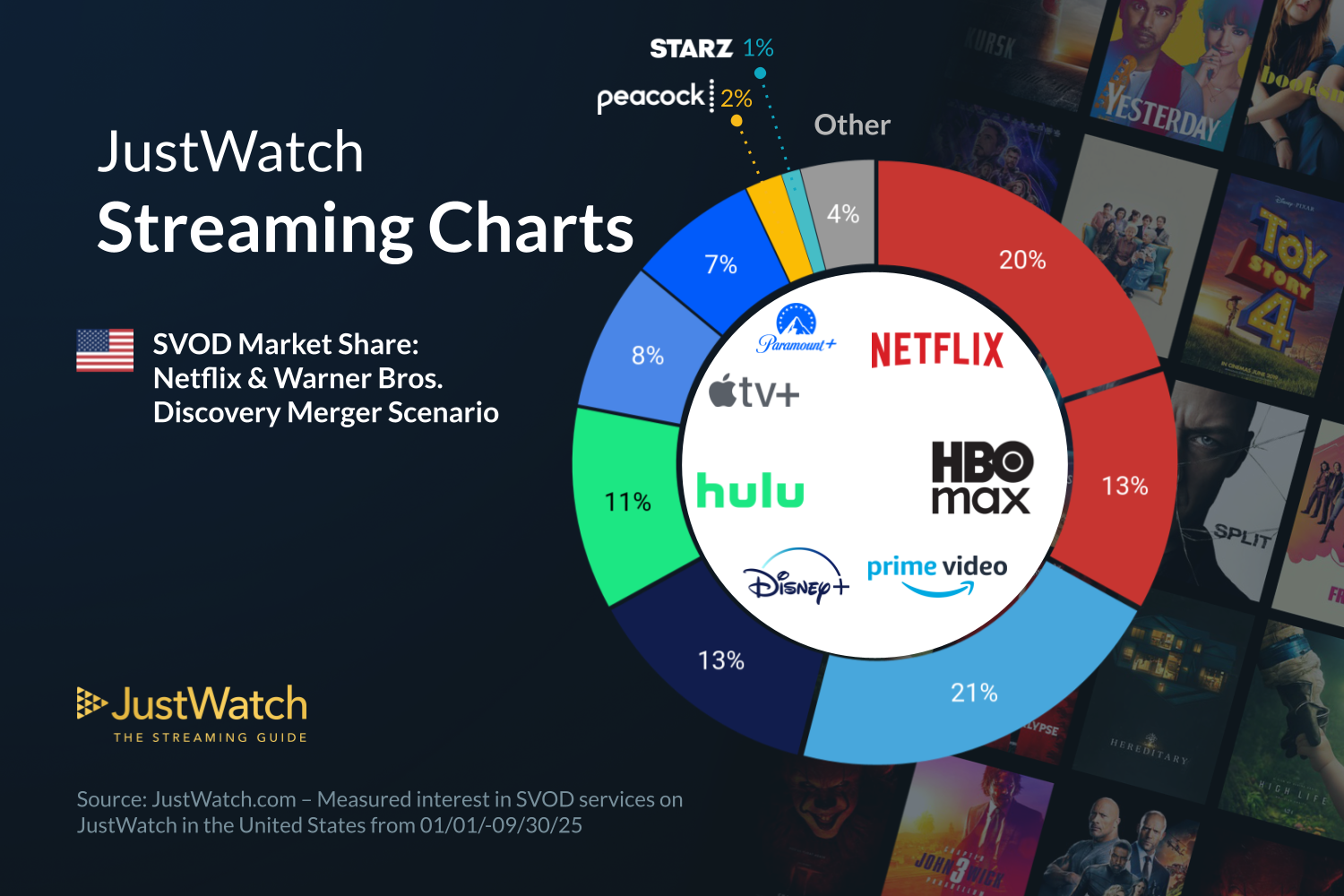
JustWatch streaming video market stats.
JustWatch

"We think it’s too early to talk specifics about how we’re going to tailor this offering for consumers," Netflix co-CEO Greg Peters said in an investor call this morning, when asked if HBO would remain a separate service. "Needless to say, we think the HBO brand is very powerful, and would constitute part of our plan for consumers. That then gives us a lot of options to figure out how to package things to offer the best options for consumers."

At the very least, we can expect increased prices across the board for HBO and Netflix. There's also potential for the company to offer combination subscriptions, similar to how Disney juggles Disney+, Hulu and ESPN. 

What does the Netflix and Warner Bros. deal mean for theaters?

In short, a combined Netflix/WB wouldn't be great for theaters. Previous mergers, like Disney and Fox's union, led to fewer theatrical releases, not more. Since its transformation into a streaming-first company, Netflix has also been primarily focused on increasing subscriptions and engagement, with theatrical releases of its original content treated as an afterthought. 

"We’ve released about 30 films into theaters this year, so it’s not like we have opposition to theatrical release," Netflix Co-CEO Ted Sarandos said in the investor call (without specifying how short some of those theatrical releases were). "It’s the longer windows that aren’t consumer friendly. Life cycle that starts in the movie theater, we’ll continue that. Over time, the windows will evolve to be much more consumer friendly, to meet the audience where we are."

He added: "All things that are going to theaters through WB will continue to do so. Our primary goal is to bring first-run movies to consumers, and we intend to continue with that." In an April interview at the Time100 Summit, Sarandos also famously called the theatrical model "outdated," since most people in the US can't easily walk to a multiplex. 

Cinema United, a trade group representing over 30,000 movie theater screens in the US, is unsurprisingly against the entire deal. “The proposed acquisition of Warner Bros. by Netflix poses an unprecedented threat to the global exhibition business. The negative impact of this acquisition will impact theatres from the biggest circuits to one-screen independents in small towns in the United States and around the world,” Cinema United President and CEO Michael O’Leary said in a statement. 

“Cinema United stands ready to support industry changes that lead to increased movie production and give consumers more opportunities to enjoy a day at the local theatre,” he added. “But Netflix’s stated business model does not support theatrical exhibition. In fact, it is the opposite. Regulators must look closely at the specifics of this proposed transaction and understand the negative impact it will have on consumers, exhibition and the entertainment industry.”

What do artists think of the Netflix and WB deal?

Writers, directors and producers are already having a tough time getting projects off the ground, so having one less place to pitch isn't going to help. There are also a handful of artists, including former WB darling Christopher Nolan, who have refused to work with Netflix entirely. 

"The end goal of these consolidations is to limit choices in entertainment to a select handful of providers, so they can capture our whole attention, and thus our every available dollar," C. Robert Cargill, the screenwriter behind Doctor Strange and The Black Phone, said in a statement to Engadget. "The result will be a gutting of diversity and fresh voices in the industry, sending thousands, if not tens of thousands, of people back to their home towns to start their lives over, as there simply isn't a place for them in Hollywood any more, while homogenizing film and television into the "content" word we all grumble about hearing."

"WB has made so many daring choices this year, with executives taking big risks that made real cultural and financial impacts at the box office," he added. "And HBO, constant name changes be damned, is still making some of the best television there is, bar none. Will those creative environments survive the merger, or will many of those brilliant execs be sent packing along with the writers, directors, and crews?" 

"In short, it's a very scary and heartbreaking time to be a filmmaker. No shade on Netflix and the people that work there; it's just that less choice in entertainment always makes for fewer winners and more people on the outside looking in."

What about physical media?

Other than noting that Netflix used to be a DVD-by-mail company, there was no mention of physical media on the acquisition's press release or investor call. That’s not too surprising, as physical releases have always been an afterthought for Netflix. A few of its films, like Roma and Frances Ha, are available as discs through the Criterion Collection, and some shows like Stranger Things are also on DVD and Blu-ray. 

Netflix claims it'll continue to run WB's businesses as usual if the deal goes through, which should include physical media, but those sorts of pre-acquisition promises rarely last for long. WB's home video business isn't entirely its own, either: In 2020, it formed the joint venture Studio Distribution Services with Universal, which also handles physical media distribution for Sony Pictures, PBS and Neon.

Given the slowing demand for physical media, it’s likely one of the first things a combined Netflix/WB would eventually drop. But there’s also been a resurgence of premium physical releases from distributors like Arrow Video, so there’s a chance Netflix may want to keep it around for special releases.

Steve Dent contributed to this report.


This article originally appeared on Engadget at https://www.engadget.com/entertainment/streaming/the-netflix-and-warner-bros-deal-might-be-great-for-shareholders-but-not-for-anyone-else-183000247.html?src=rss

©

Engadget Podcast: WTF is up with RAM? (With Will Smith from The Tech Pod)

RAM prices have gone wild, mostly thanks to AI. In this episode, Devindra chats with Will Smith (Brad and Will Made a Tech Pod) about the state of the RAM industry, as well as other hardware we expect to get more expensive. (SSD prices are definitely creeping up too!). Also, we discuss Meta poaching Alan Dye, one of Apple's design executives, and what this could mean for Meta's upcoming devices. And yes, whatever they have next will likely revolve around AI.

Subscribe!

Topics

  • Mark Zuckerberg, CEO of Meta, plans deep cuts to his company’s metaverse development – 1:09

  • Longtime Apple UI designer Alan Dye to join Meta’s AI division – 7:08

  • US DOT cuts fuel efficiency standards, doubles down on gas cars – 25:40

  • Waymo autonomous cars recently started driving more aggressively – 31:30

  • Amazon halts its anime dub beta because it sounded terrible – 38:00

  • WTF, RAM?? Will Smith joins to talk about why RAM prices are spiraling upward – 44:05

  • Around Engadget: Metroid Prime 4 is a return to form after 18 years on ice – 1:04:42

  • Working on – 1:07:36

  • Pop culture picks – 1:08:32

Credits

Host: Devindra Hardawar
Guest: Will Smith
Producer: Ben Ellman
Music: Dale North and Terrence O'Brien

This article originally appeared on Engadget at https://www.engadget.com/social-media/engadget-podcast-wtf-is-up-with-ram-with-will-smith-from-the-tech-pod-141442002.html?src=rss

©

Microsoft's Copilot+ AI PC plan fizzled, but it still served a purpose

Microsoft's Copilot+ initiative launched last year with a clear goal: To produce capable laptops for people eagerly anticipating AI-powered features. Read that sentence again, and it's glaringly obvious that Microsoft's plan was flawed from the start. Most consumers aren't nearly as hyped for AI features as the companies eager to foist artificial intelligence upon us. And those features aren't exactly compelling, either. Microsoft's Recall — which snaps screenshots of your PC to create a database of everything you’ve done– was dogged by privacy concerns from the start. And to be honest, I haven't found its ability to remember the files and websites I've opened to be that useful.

Without any sort of killer AI app, most consumers weren't going to pay a premium for Copilot+ systems either. Not in this precarious economy, anyway. So it wasn't a huge surprise to see sales of Copilot+ systems going practically nowhere over the last year. In the third quarter of 2024, they accounted for less than 10 percent of systems shipped, according to data from Mercury Research (via Tom’s Hardware). The research firm IDC (via PCWorld) also found that Copilot+ systems made up just 2.3 percent of Windows machines sold in the first quarter of 2025 (and a mere 1.9 percent of the entire PC market).

Instead of continuing to promote Copilot+, Microsoft now wants to "make every Windows 11 computer an AI PC". The new "Hey Copilot" voice commands and Copilot Vision, a feature that lets the AI assistant see what's on your screen, are both cloud-powered. That means you won't need the beefy 40 TOPS neural processing units (NPU) found on Copilot+ systems to use them. Microsoft spent the past few years touting NPUs as the gateway to useful AI features, like Recall and Windows Studio webcam effects, but only one of its new AI capabilities actually requires an NPU. (And even that is just a slight update to Click to Do, allowing you to send Zoom invitations by right-clicking on e-mail addresses.)

It's easy to view the whole Copilot+ initiative as a cynical way to ramp up AI hype and push people towards expensive new laptops, especially as the October 14 Windows 10 end of support date loomed. But it also led to some genuinely useful changes: Microsoft made 16GB of RAM a standard for Copilot+ systems, along with 256GB of storage and the aforementioned 40 TOPS NPUs. The launch of Copilot was also the kick in the pants Microsoft needed to revamp Windows for mobile Arm processors. I never thought I'd love a Surface with a Snapdragon chip, but the improved Arm support on the Surface Pro and this year's smaller model finally won me over.

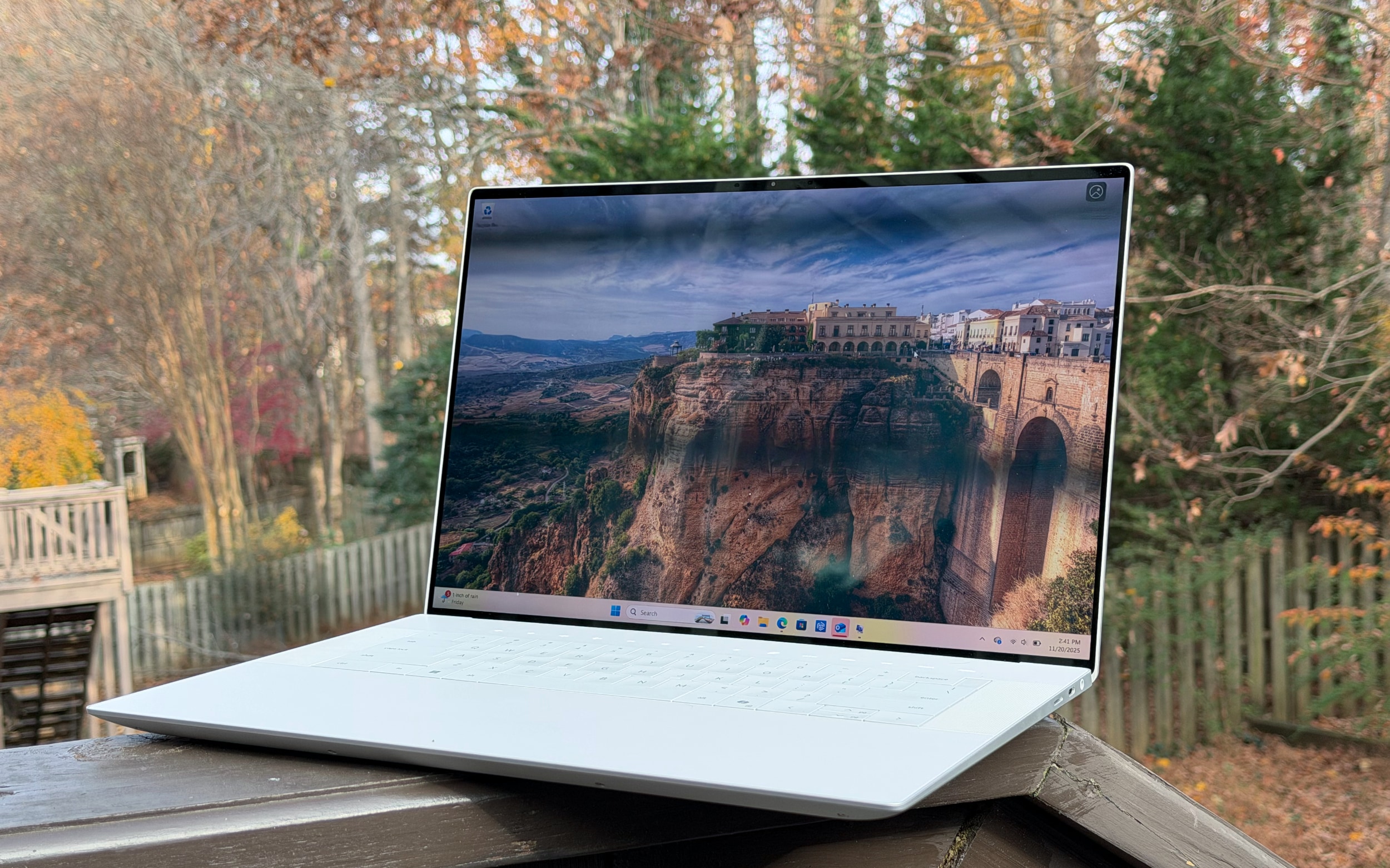
The Dell 16 Premium sitting on a ledge.

I wouldn’t call the Copilot+ program a huge swing, but it’s still the sort of industry-wide cat herding that’s rare to see in the PC space. Microsoft couldn’t just snap its fingers and shift all PCs to efficient mobile chips with powerful NPUs, like Apple did with its own jump to M-series chips years ago. Microsoft had to wait for new NPU-equipped hardware from Qualcomm (and eventually Intel and AMD). It had to finally fix the Windows on Arm problem. And it also had to double-down on AI features that felt truly transformative. It’s just a shame that consumers didn’t seem to care.

Microsoft said that Copilot+ systems accounted for 15 percent of premium PCs sold during last year’s holiday season, but the company hasn’t released any new sales figures since then. “This is the fastest adoption I've seen of a new category of hardware, and we've done it faster than the normal generational shift of silicon,” James Howell, Microsoft’s VP of Windows marketing, said in a conversation with Engadget. “Copilot+ PCs continue to be a transition that we are pushing for and prioritizing. But I can't give you the exact numbers beyond that… Just for the last two or three months, we've been doing pretty well with year-on-year growth in the Windows business.”

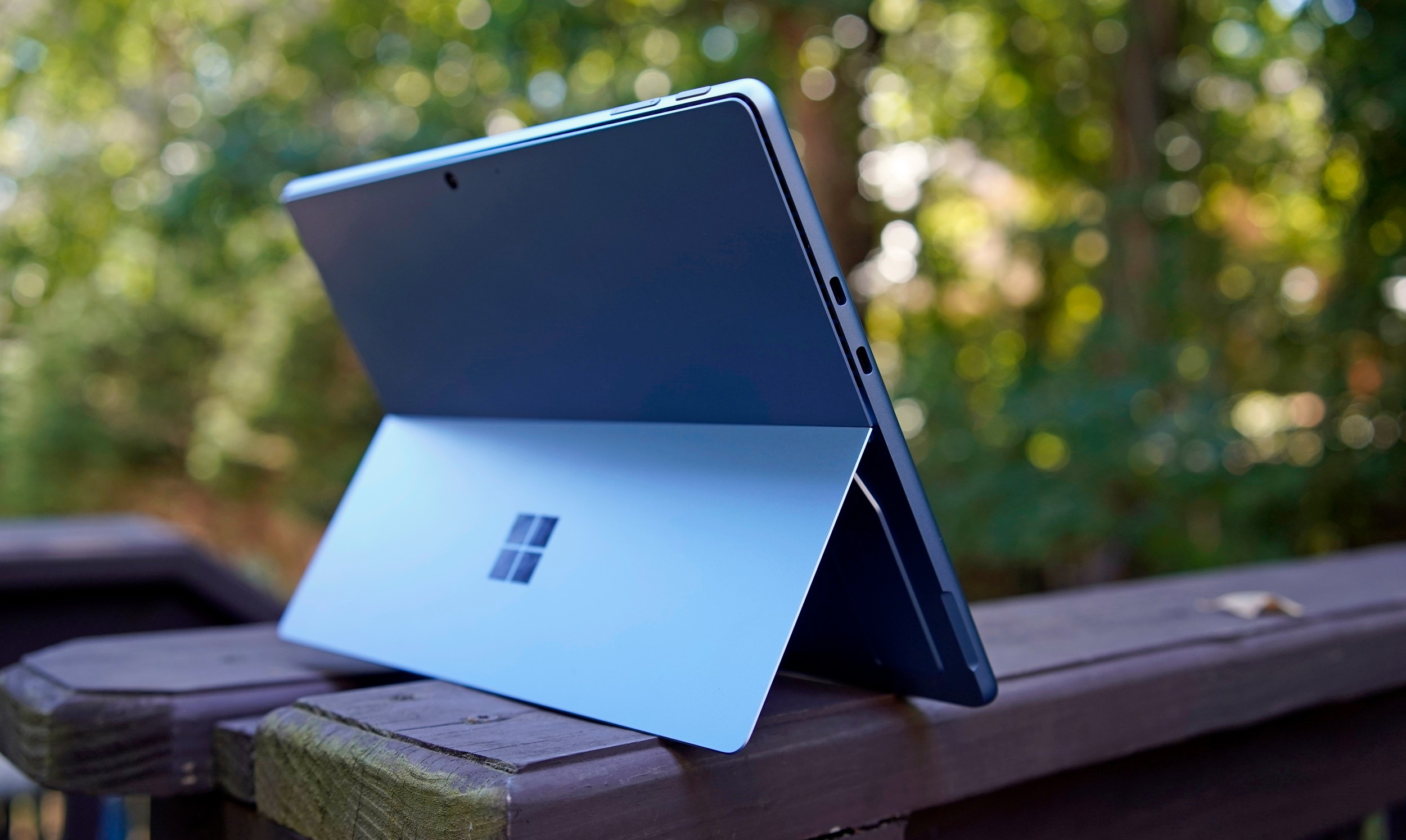
Surface Pro Copilot+
Devindra Hardawar for Engadget

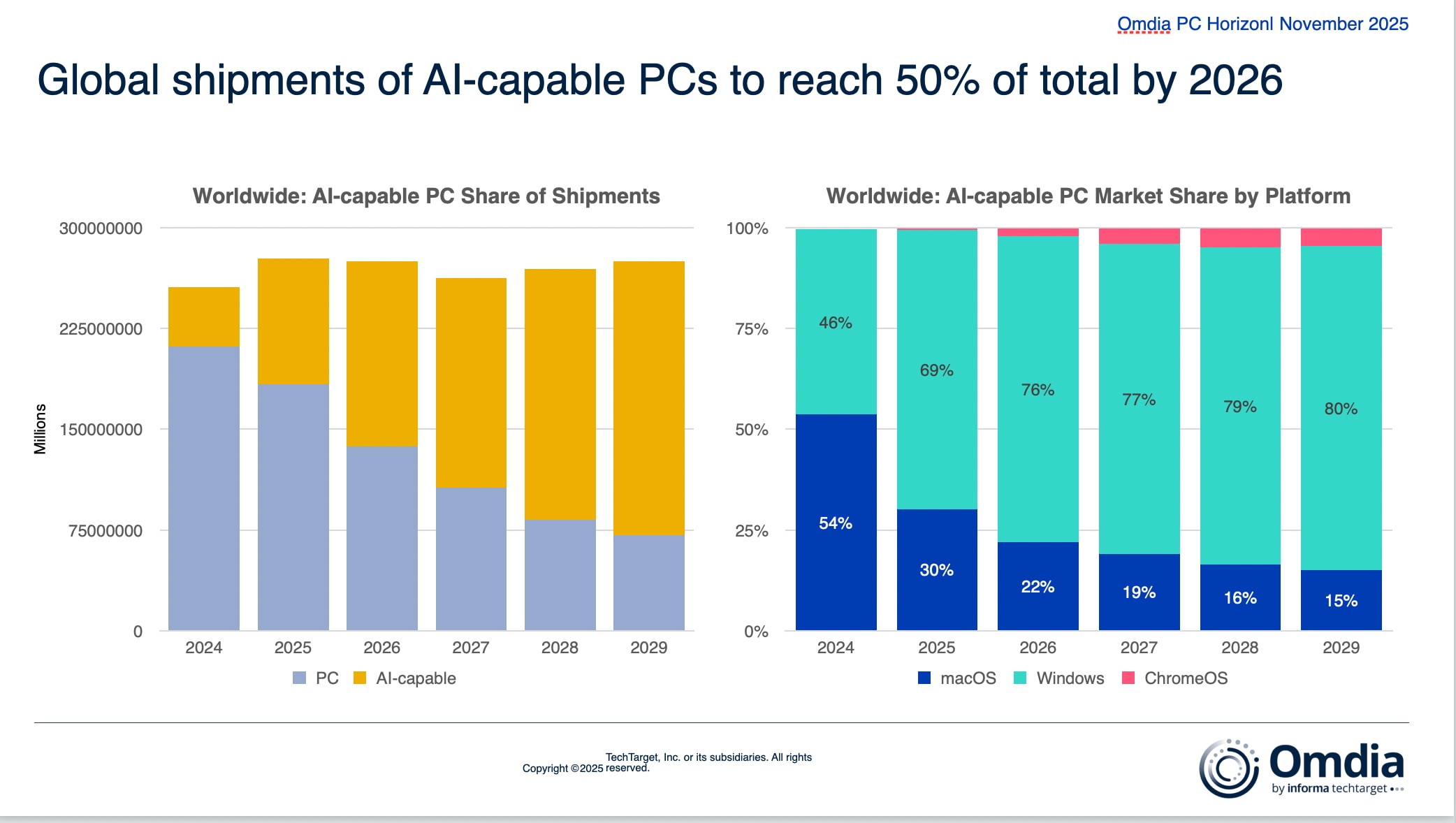
While Microsoft ultimately doesn’t have much to show for the Copilot+ initiative, the steady progression of hardware will lead to AI PCs dominating over the next five years. The research firm Omdia predicts that AI PCs will account for 55 percent of computers shipped in all of 2026, up from 42.5 percent of systems in Q3 2025. By 2029, Omdia predicts AI PCs will make up 75 percent of all systems shipped, giving Windows 80 percent of the AI PC market.  

Omdia AI PC shipment predictions
Omdia

“It’s important to note that this steep adoption curve [for AI PCs] is driven more by the product roadmaps of the PC market, rather than consumers and businesses seeking PCs specifically for AI,” according to Omdia research analyst Kieren Jessop. “For businesses, and consumers especially, AI-capable PC adoption is more a function of a customer going to purchase a device and that device just so happens to have an NPU.”

Microsoft was basically right: AI PCs are the future. But it turns out the AI features people actually want to use — like ChatGPT, Sora and Microsoft’s own Copilot — are mostly powered by the cloud, making onboard NPUs superfluous. That won’t be true forever. There are tangible security, speed and convenience benefits for onboard AI processing, like transcribing sensitive audio instead of sending it to the cloud. But for now, those AI workloads are relatively niche, and they’re not enough to make the Copilot+ a true success by any measure.

This article originally appeared on Engadget at https://www.engadget.com/computing/laptops/microsofts-copilot-ai-pc-plan-fizzled-but-it-still-served-a-purpose-130000239.html?src=rss

©

The best laptops for gaming and schoolwork in 2025

Balancing schoolwork with gaming usually means finding a laptop that can do a little bit of everything. The best gaming laptops aren’t just built for high frame rates. They also need to handle long days of writing papers, running productivity apps and streaming lectures without slowing down. A good machine should feel reliable during class and powerful enough to jump into your favorite games once homework is out of the way.

There’s a wide range of options depending on how much performance you need. Some students prefer a slim, lightweight model that’s easy to carry to school, while others want a new gaming laptop with enough GPU power to handle AAA titles. If you’re watching your budget, there are plenty of solid choices that qualify as a budget gaming laptop without cutting too many corners.

It’s also worth looking at features that help with everyday use. A bright display makes long study sessions easier on the eyes, and a comfortable keyboard is essential if you type a lot. USB-C ports, decent battery life and a responsive trackpad can make a big difference during the school day. We’ve rounded up the best laptops that strike the right mix of performance, portability and value for both gaming and schoolwork.

Table of contents

Best laptops for gaming and school in 2025

Best laptop for gaming and schoolwork FAQs

Are gaming laptops good for school?

As we’ve mentioned, gaming laptops are especially helpful if you're doing any demanding work. Their big promise is powerful graphics performance, which isn't just limited to PC gaming. Video editing and 3D rendering programs can also tap into their GPUs to handle laborious tasks. While you can find decent GPUs on some productivity machines, like Dell's XPS 15, you can sometimes find better deals on gaming laptops. My general advice for any new workhorse: Pay attention to the specs; get at least 16GB of RAM and the largest solid state drive you can find (ideally 1TB or more). Those components are both typically hard to upgrade down the line, so it’s worth investing what you can up front to get the most out of your PC gaming experience long term. Also, don’t forget the basics like a webcam, which will likely be necessary for the schoolwork portion of your activities.

The one big downside to choosing a gaming notebook is portability. For the most part, we'd recommend 15-inch models to get the best balance of size and price. Those typically weigh in around 4.5 pounds, which is significantly more than a three-pound ultraportable. Today's gaming notebooks are still far lighter than older models, though, so at least you won't be lugging around a 10-pound brick. If you’re looking for something lighter, there are plenty of 14-inch options these days. And if you're not into LED lights and other gamer-centric bling, keep an eye out for more understated models that still feature essentials like a webcam (or make sure you know how to turn those lights off).

Do gaming laptops last longer than standard laptops?

Not necessarily — it really depends on how you define "last longer." In terms of raw performance, gaming laptops tend to pack more powerful components than standard laptops, which means they can stay relevant for longer when it comes to handling demanding software or modern games. That makes them a solid choice if you need a system that won’t feel outdated in a couple of years, especially for students or creators who also game in their downtime.

But there’s a trade-off. All that power generates heat, and gaming laptops often run hotter and put more strain on internal components than typical ultraportables. If they’re not properly cooled or regularly maintained (think dust buildup and thermal paste), that wear and tear can shorten their lifespan. They’re also usually bulkier and have shorter battery life, which can impact long-term usability depending on your daily needs.

Gaming laptops can last longer performance-wise, but only if you take good care of them. If your needs are light — browsing, writing papers and streaming — a standard laptop may actually last longer simply because it’s under less stress day-to-day.

What is the role of GPU in a computer for gaming and school?

The GPU plays a big role in how your laptop handles visuals — and it’s especially important if you’re using your computer for both gaming and school.

For gaming, the GPU is essential. It’s responsible for rendering graphics, textures, lighting and all the visual effects that make your favorite titles look smooth and realistic. A more powerful GPU means better frame rates, higher resolutions and the ability to play modern games without lag or stuttering.

For schoolwork, the GPU matters too — but its importance depends on what you're doing. If your school tasks mostly involve writing papers, browsing the web or using productivity tools like Google Docs or Microsoft Office, you don’t need a high-end GPU. But if you’re working with graphic design, video editing, 3D modeling or anything else that’s visually demanding, a good GPU can speed things up significantly and improve your workflow.

Georgie Peru contributed to this report.

This article originally appeared on Engadget at https://www.engadget.com/computing/laptops/best-laptops-for-gaming-and-school-132207352.html?src=rss

©

© Engadget

The best laptops for gaming and schoolwork
❌