Login
LoginPentagon Investigating Former Astronaut Mark Kelly Over ‘Illegal Orders’ Video

"If this is meant to intimidate me...it won’t work."



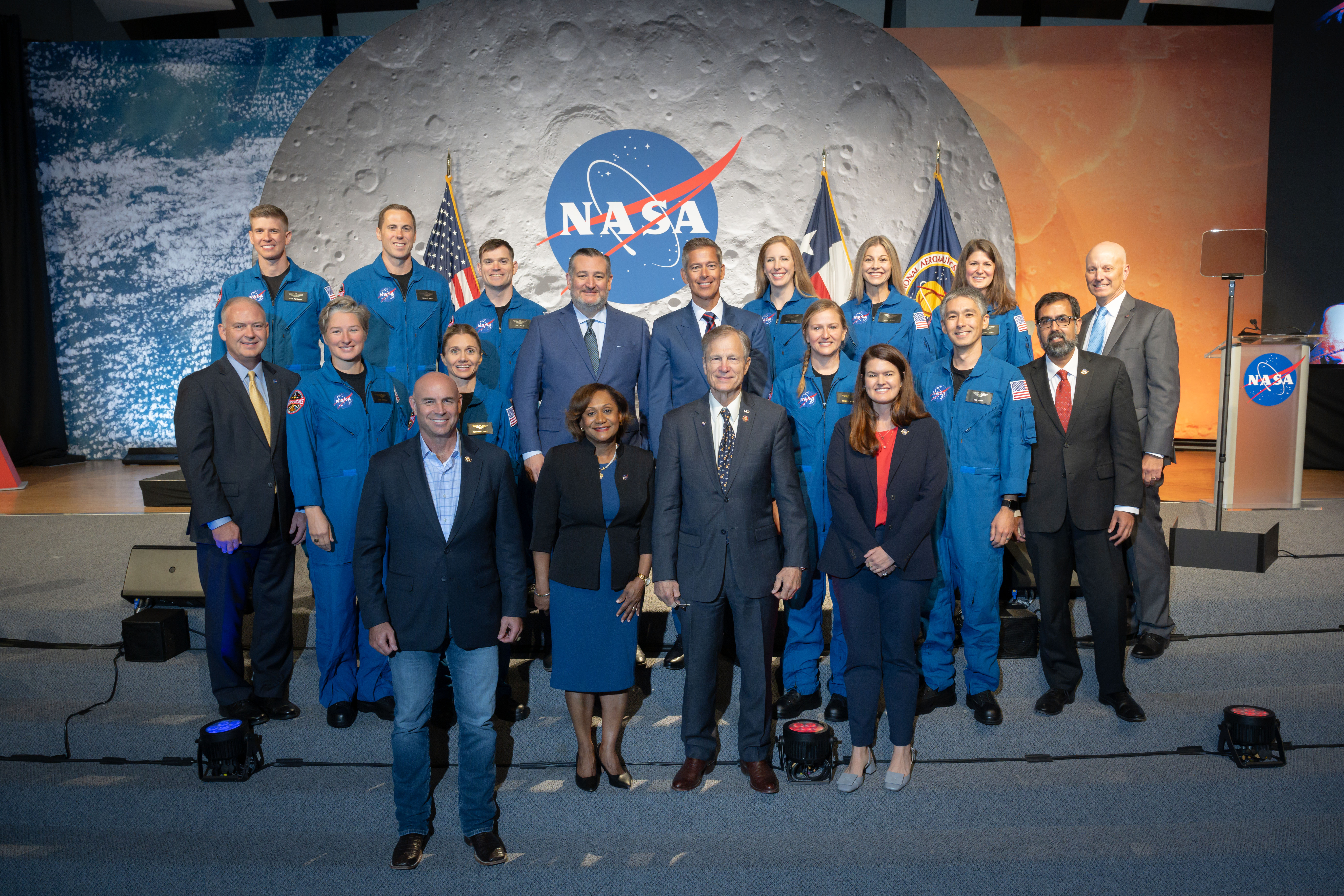
When NASA’s 2025 astronaut candidates arrived at the agency’s Johnson Space Center in Houston this fall, they stepped into history, sharing a common mission to master the skills and teamwork that define NASA’s next era of exploration.
Selected from a pool of more than 8,000 applicants, the new class represents a range of backgrounds — military test pilots, engineers, a physician, and a scientist — but all were inspired by moments in their lives that set them on a path to space.
They will spend nearly two years in training before becoming eligible for missions to low Earth orbit, the Moon, and eventually, Mars. When they graduate, they will join NASA’s active astronaut corps, advancing science aboard the International Space Station and supporting Artemis missions that will carry human exploration farther than ever before.
During the class announcement at Johnson on Sept. 22, 2025, Center Director Vanessa Wyche celebrated the moment as a milestone for exploration.
“Today is an exciting day for our nation and for all of humanity as we introduce NASA’s 2025 astronaut candidates — the next generation who will help us explore the Moon, Mars, and beyond,” Wyche said. “Each one of these candidates brings unique experiences and perspectives that reflect the diversity of America and the spirit of exploration that defines NASA.”
Behind their new blue flight suits are years of preparation and stories as multifaceted as the missions they will one day support.
Different Roads to the Same Horizon
Some of the candidates built their careers in the air, where precision, communication, and teamwork were part of every mission. Former U.S. Navy pilot and test pilot Rebecca Lawler says that is exactly what drew her to NASA.
“All of these people are coming from different disciplines and levels of expertise, and you’re all working together to get science to fly,” she said. “That’s what excites me most — bringing those experiences together as a team.”
Imelda Muller, an anesthesiologist and former U.S. Navy undersea medical officer, said her experience supporting experimental diving teams taught her how people from different backgrounds can come together under one mission, something she sees echoed at NASA.
Muller remembers looking up at the night sky as a kid, able to see almost every star on a clear night. Her grandfather worked on the Apollo program and used to share stories with her, and she says the mix of stargazing and imagining those missions inspired her dream of becoming an astronaut.
Anna Menon, a biomedical engineer and former flight controller, has seen the human side of spaceflight from the ground and from space. She supported astronaut health aboard the space station from the Mission Control Center in Houston and served as a mission specialist and medical officer aboard SpaceX’s Polaris Dawn mission.
Anna Menon
NASA Astronaut Candidate
A Houston native, she discovered her passion for exploration in the fourth grade during a field trip to Johnson. “That experience lit a fire in me to want to be part of the space industry,” she said.
The Language of Human Spaceflight

For the test pilots — including Adam Fuhrmann, Cameron Jones, Ben Bailey, and Erin Overcash — flight testing taught adaptability, composure, and the discipline to make quick decisions when it matters most. As Fuhrmann put it, it is about knowing when to lead and when to listen.
Adam Fuhrmann
NASA Astronaut Candidate
Every astronaut candidate will spend nearly two years learning spacecraft systems, practicing spacewalks in the Neutral Buoyancy Laboratory, flying T-38 jets, and studying geology, robotics, and survival training.
As U.S. Army Chief Warrant Officer and helicopter test pilot Ben Bailey said, it is not one skill that matters most — it is the combination.
“Each one is exciting on its own — flying, language training, spacewalks — but getting to do them all together, as a crew, that’s the best part,” Bailey said.
During the event, current astronauts welcomed the new class and shared advice drawn from their own journeys in human spaceflight. “Thankfully, you will have some of the most talented, passionate instructors and an incredibly dedicated team here at NASA,” said NASA astronaut Chris Williams. “Some of the most special moments will come as you find how much you get to learn from each other.”
From the International Space Station, NASA astronaut Zena Cardman encouraged the candidates to “learn everything you can, get to know each other, and enjoy the ride.”
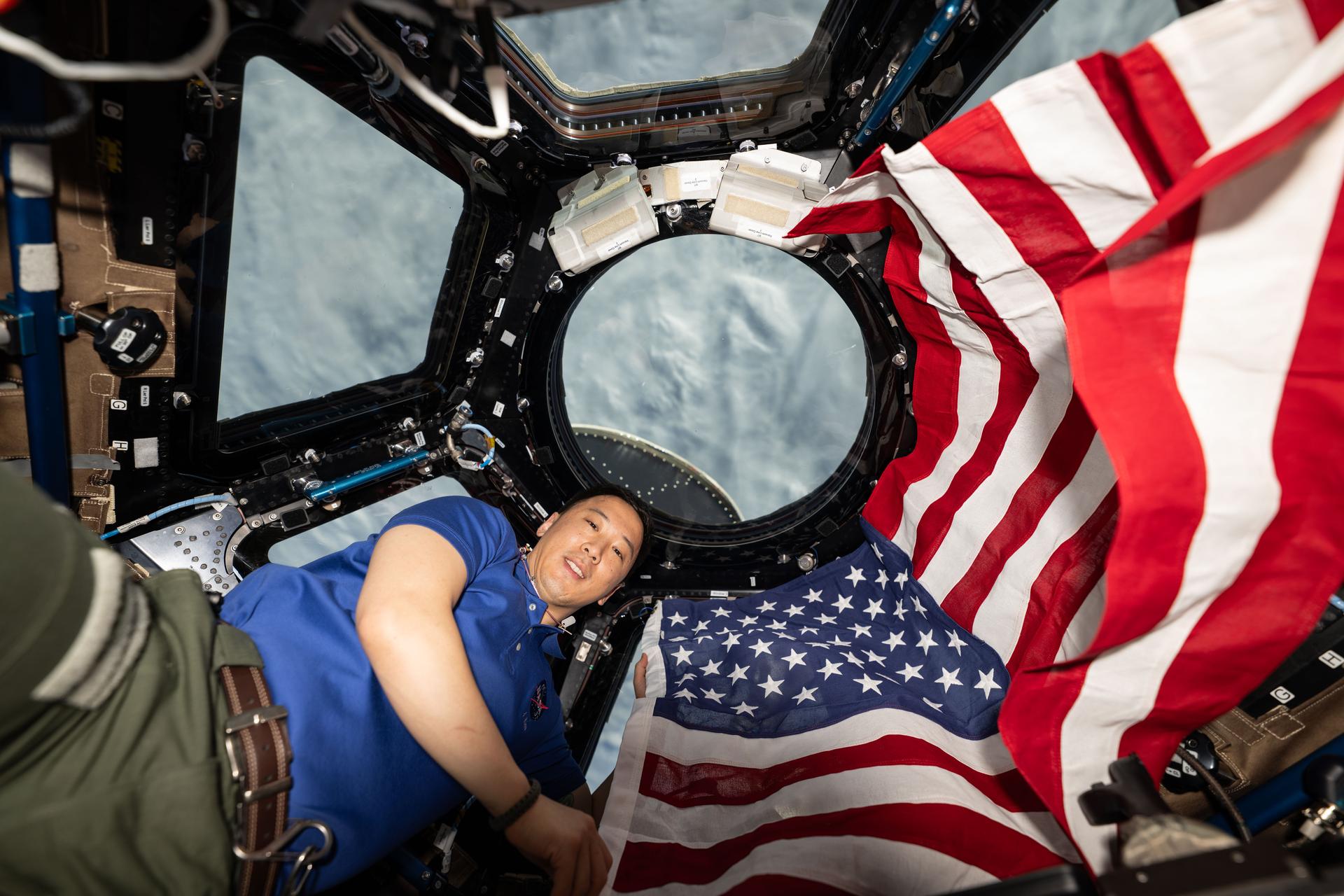
NASA astronaut Jonny Kim followed with a reminder every explorer carries forward: “The people sitting beside you now will become lifelong friends.”
Explorers of the Golden Age
From geologist Lauren Edgar, who worked on the Curiosity Mars Rover and the Artemis III science team, to engineers like Yuri Kubo, who completed seven NASA internships, and Katherine Spies, who designed and tested flight systems that make exploration possible, each brings a layer of expertise to the agency’s future on the Moon and beyond.
Yuri Kubo
NASA Astronaut Candidate
A New Era Begins
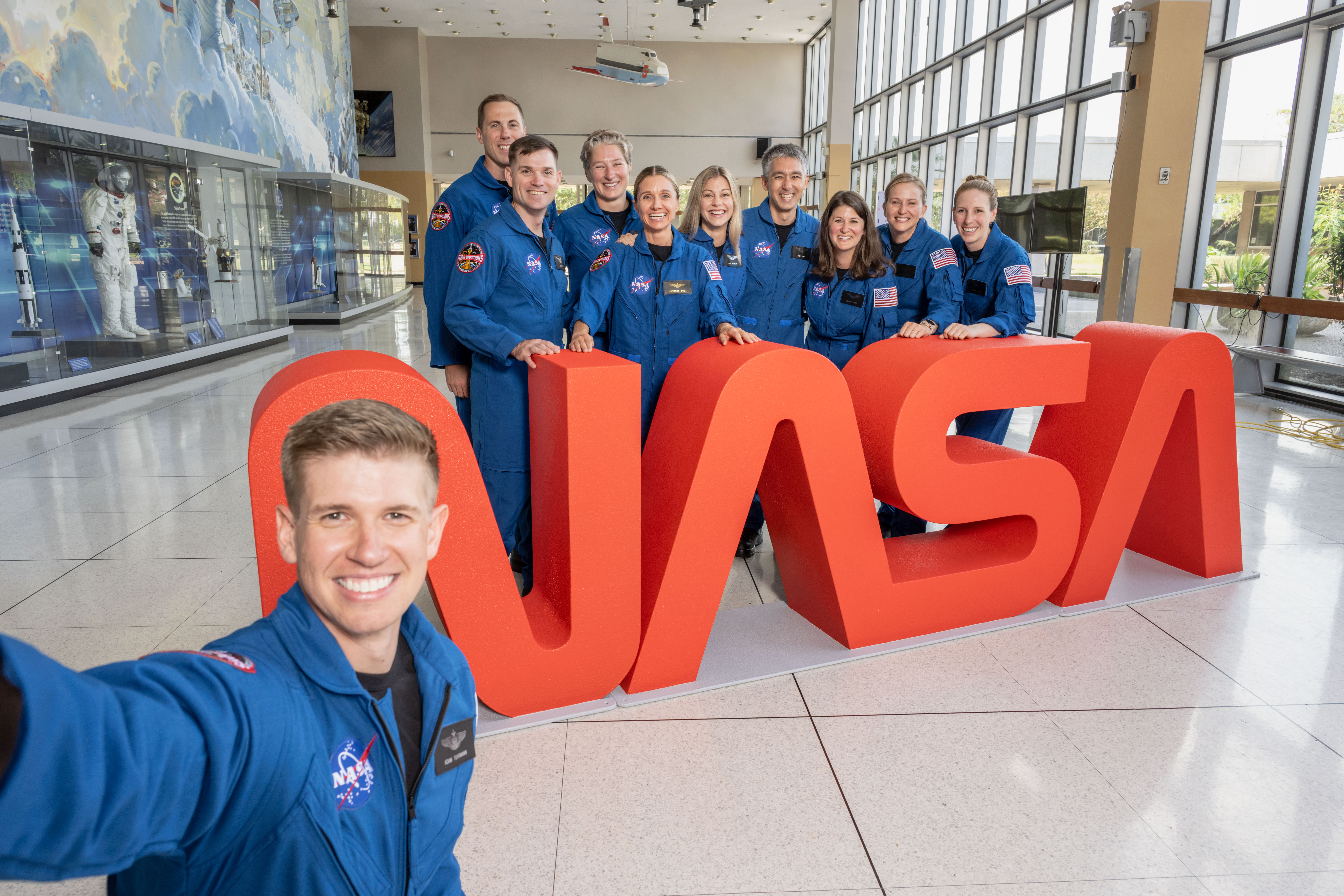
At the announcement ceremony, NASA Flight Operations Director Norm Knight said, “Every lesson learned aboard station has paved the way for where we’re headed next – to the Moon, this time to stay, and on to Mars. We have a group of individuals who are not only exceptional, but who will be inspirational for the United States of America and for our planet.”
Together, the astronaut candidates reflect the spirit of Artemis — curiosity, courage, and continuous learning as humanity prepares for its next giant leap.


NASA named astronaut Scott Tingle as chief of the Astronaut Office at the agency’s Johnson Space Center in Houston, effective Nov. 10. A decorated spaceflight veteran and former captain in the United States Navy, Tingle has logged more than 4,500 flight hours in 51 different aircraft and served as a flight engineer aboard the International Space Station.
As chief astronaut, Tingle is responsible for managing astronaut resources and operations. He also will help develop astronaut flight crew operations and make crew assignments for future human spaceflight missions, including Artemis missions to the Moon.
“Our Johnson Space Center team extends heartfelt congratulations to Scott on his appointment as chief of the Astronaut Office. We wish him every success as he steps into this dynamic and inspiring leadership position,” said Johnson Space Center Director Vanessa Wyche. “I also offer my deepest gratitude to Joe Acaba for his devoted leadership of the Astronaut Office. He accomplished the remarkable work of readying our astronaut corps for bold missions to and from the International Space Station and channeling their expertise to shape and evaluate the technologies, software, and procedures that will make future spaceflight safer and more achievable for our nation’s explorers.”
A native of Randolph, Massachusetts, Tingle was selected as a NASA astronaut in 2009. He holds a bachelor’s degree in mechanical engineering from Southeastern Massachusetts University and a master’s degree in mechanical engineering from Purdue University in West Lafayette, Indiana.
Tingle most recently served as a flight engineer aboard the space station, spending more than six months in orbit during Expedition 54/55. He was the flight engineer and United States Operational Segment lead for the mission, which launched from the Baikonur Cosmodrome aboard a Soyuz spacecraft on Dec. 17, 2017, and concluded with landing on June 3, 2018. Since returning to Earth, he has supported the Astronaut Office in various roles, including mission support, technical leadership, and crew readiness activities.
Before coming to NASA, Tingle worked for The Aerospace Corporation in El Segundo, California, where he served as a technical staff member supporting the company’s propulsion department. He was commissioned as a naval officer in 1991 and went on to complete a distinguished career, earning the rank of captain before retiring. Follow Tingle on X.
Tingle succeeds NASA astronaut Joe Acaba, who had served as chief of the Astronaut Office since February 2023. Acaba has transitioned to the center director’s staff, where he provides technical advice on mission planning and strategy at NASA Johnson. In this new role, he leads the center’s alignment with NASA’s strategic plan and human spaceflight priorities, supports the agency’s STEM workforce goals, and advances collaboration with commercial space, academia, and other government partners as NASA continues its exploration beyond low Earth orbit.
Learn more about the International Space Station:
https://www.nasa.gov/international-space-station
-end-
Shaneequa Vereen
Johnson Space Center, Houston
281-483-5111
shaneequa.y.vereen@nasa.gov
NASA announced its newest class of astronaut candidates on Sept. 22, 2025, at the agency’s Johnson Space Center in Houston. After the welcome ceremony, the 10 highly qualified individuals rolled up their sleeves and prepared for the next step in their journey to the stars: nearly two years of training to become flight-eligible for missions to low Earth orbit, the Moon, and ultimately, Mars.

The training astronaut candidates complete is comprehensive and rigorous. They learn about NASA’s history and vision, and how astronauts advance the agency’s mission. They take classes on space health – gaining an understanding of radiation exposure, microgravity’s effects on the human body, space food and nutrition, and how to use the exercise equipment aboard the International Space Station. They also study first aid and practice providing medical care for crewmates. Each candidate will receive flight training, learning to pilot or improving their current piloting skills through the T-38 supersonic jet and other aviation platforms.

With NASA’s plans for the future of exploration, this class of astronauts may have opportunities to fly to low Earth orbit, or even beyond. Some may contribute to research and technology investigations taking place aboard the space station – which is about to celebrate 25 years of continuous human presence in space. Others may venture to the Moon to prepare for future Mars missions.

To be ready for any destination, this class will complete both space station training and advanced preparation for deep space. These exercises allow astronaut candidates to work through problems and build relationships with their classmates while preparing them for space flights.
“Training was such an intense period that we got to know each other really well,” said NASA astronaut Anil Menon, who joined the agency as part of the 2021 class – astronaut group 23. “Now when we come together, there are these moments – like we might be handing off a capcom shift, or we might be flying a jet together – and in those moments, I feel like I know them so well that we know how to navigate all sorts of challenges together and just be our best selves as a team.”

Astronaut candidate training also teaches foundational skills that can be applied to any destination in space. The group will complete several dives in the Neutral Buoyancy Laboratory, simulating spacewalks in different environments and learning how to do maintenance tasks in microgravity with a full-scale underwater mockup of the International Space Station as their worksite. They will also train inside other mockups of space vehicles, learning emergency procedures, maintenance, and repair of spacecraft, along with how to contribute to future developmental programs.

Robotics training will prepare them to use the station’s Canadarm2 robotic arm. They will trek through the wilderness as part of their land and water survival training, and they will study geology in the classroom and in the field. The group will practice tasks in a variety of simulations, leveraging Johnson’s world-class facilities, virtual reality, and immersive technologies. Additionally, the class will work shifts in the Mission Control Center in Houston to experience a day in the life of the people who keep watch over the astronauts and vehicles.
Astronaut candidates who successfully complete the training program celebrate their achievement in a graduation ceremony, after which they are officially flight-eligible members of NASA’s astronaut corps. They will also receive office and ground support roles at Johnson while they await future flight assignments.

“I’ve been exposed to a lot of different parts of what we do at Johnson Space Center, working both with the current increment of supporting operations aboard the International Space Station, as well as supporting some development of the Orion spacecraft and Artemis II preparations,” said NASA astronaut Chris Birch, another member of astronaut group 23.
Many members of NASA’s active astronaut corps emphasize that the learning does not stop when astronaut candidate training ends. “You have the foundational training and you continue to build off of that,” said Deniz Burnham, adding that the hardest days can be the most educational. “You get to learn, you get to improve, and then you’re still getting the opportunity. It’s such a positively unique experience and environment, and you can’t help but be grateful.”
As NASA astronaut Frank Rubio, class mentor, told the group, “You’ll become part of a legacy of those who trained before you, continuing the adventure they started, and looking ahead to future human exploration.”

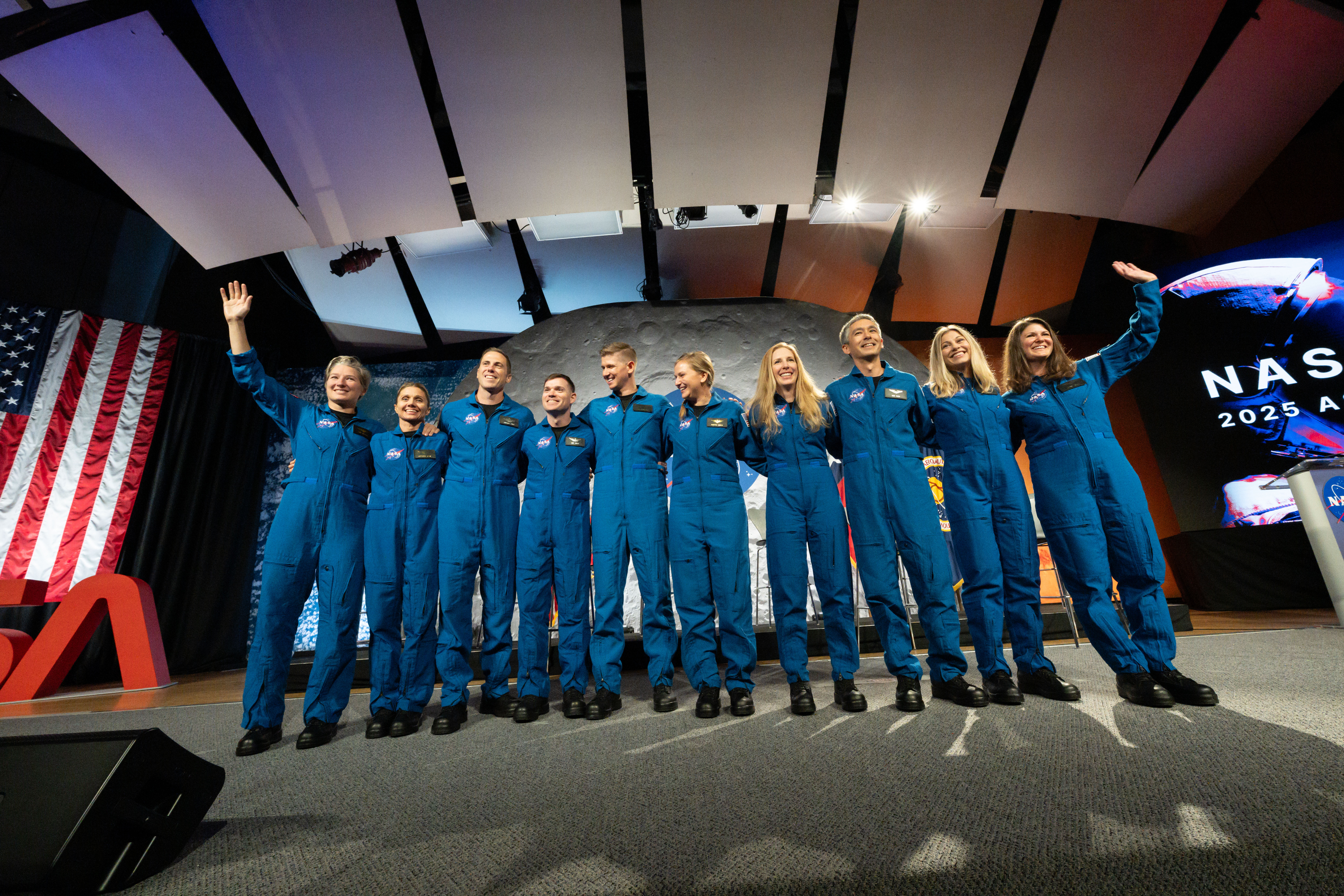
NASA’s 2025 astronaut candidate class greets the crowd in this Sept. 22, 2025, image. The group was introduced Monday following a competitive selection process of more than 8,000 applicants from across the United States. The class now will complete nearly two years of training before becoming eligible for flight assignments supporting future science and exploration missions to low Earth orbit, the Moon, and Mars.
After graduation, the 2025 class will join the agency’s active astronaut corps. Active astronauts are conducting science research aboard the space station while preparing for the transition to commercial space stations and the next great leaps in human exploration at the Moon and Mars. The candidates’ operational expertise, scientific knowledge, and technical backgrounds are essential to advancing NASA’s deep space exploration goals and sustaining a long-term human presence beyond low Earth orbit.
Image credit: NASA/James Blair

Read this press release in English here.
Diez nuevos candidatos a astronauta de la NASA fueron presentados el lunes tras un competitivo proceso de selección en el que participaron más de 8.000 aspirantes de todo Estados Unidos. Ahora, la nueva clase completará casi dos años de formación antes de poder optar a asignaciones de vuelo en apoyo de futuras misiones científicas y de exploración a la órbita terrestre baja, la Luna y Marte.
El administrador interino de la NASA, Sean Duffy, dio la bienvenida a la promoción de candidatos a astronautas estadounidenses de 2025 durante una ceremonia celebrada en el Centro Espacial Johnson de la agencia en Houston.
“¡Es un honor para mí dar la bienvenida a nuestra agencia a la próxima generación de exploradores estadounidenses! Más de 8.000 candidatos se presentaron a esta convocatoria: científicos, pilotos, ingenieros y soñadores, de todos los rincones del país. Los diez hombres y mujeres que hoy se sientan aquí personifican la realidad de que, en Estados Unidos, independientemente de dónde se empiece, no hay límites para lo que un soñador decidido puede lograr, ni siquiera ir al espacio”, afirmó Duffy. “Juntos, daremos paso a la Edad de Oro de la exploración”.
La 24.ª promoción de astronautas de la agencia se presentó al servicio en el centro Johnson a mediados de septiembre y comenzó inmediatamente su entrenamiento. Su plan de estudios incluye instrucción y adquisición de destrezas para operaciones complejas a bordo de la Estación Espacial Internacional, en misiones Artemis a la Luna y más allá. En concreto, la capacitación incluye robótica, supervivencia en tierra y agua, geología, idiomas extranjeros, medicina y fisiología espaciales, entre otras materias, además de simulacros de caminatas espaciales y vuelos en aviones de alto rendimiento.
Tras su graduación, la promoción de 2025 se incorporará al cuerpo de astronautas activos de la agencia. Los astronautas en activo llevan a cabo investigaciones científicas a bordo de la estación espacial, a la vez que se preparan para la transición a estaciones espaciales comerciales y los próximos grandes avances en la exploración humana de la Luna y Marte. La experiencia operativa, los conocimientos científicos y la formación y experiencia técnica de los candidatos son esenciales para avanzar en los objetivos de exploración del espacio profundo de la NASA y mantener una presencia humana a largo plazo más allá de la órbita terrestre baja.
Los candidatos a astronauta de 2025 son:
Ben Bailey, de 38 años de edad, suboficial mayor de 3.ª clase del Ejército de los Estados Unidos, nació y se crio en Charlottesville, Virginia. Es licenciado en Ingeniería Mecánica de la Universidad de Virginia y está completando una maestría en Ingeniería de Sistemas en la Escuela Naval de Postgrado en Monterrey, California. Bailey es graduado de la Escuela de Pilotos de Prueba de la Marina de los Estados Unidos, y tiene más de 2.000 horas de vuelo en más de 30 aeronaves diferentes, tanto de ala fija como rotatoria. En el momento de su selección, Bailey era responsable de las pruebas de desarrollo de tecnologías emergentes a bordo de aeronaves de ala rotatoria del Ejército, especializándose en el UH-60 Black Hawk y el CH-47F Chinook.
Lauren Edgar, de 40 años de edad, considera a Sammamish, Washington, su ciudad natal. Obtuvo una licenciatura en Ciencias de la Tierra en Dartmouth College, y una maestría y un doctorado en Geología en el Instituto Tecnológico de California. Edgar se ha desempeñado como investigadora principal adjunta del equipo de geología de Artemis III. En este cargo, ayudó a definir los objetivos científicos lunares, las actividades de geología que llevarán a cabo los astronautas de la NASA y las operaciones científicas para el regreso de la NASA a la Luna. También dedicó más de 17 años a apoyar a los rovers de exploración de Marte. Era científica participante en el Laboratorio de Ciencias de Marte en el momento de su selección.
Adam Fuhrman, de 35 años de edad, mayor de la Fuerza Aérea de los Estados Unidos, es originario de Leesburg, Virginia, y ha acumulado más de 2.100 horas de vuelo en 27 aeronaves diferentes, incluyendo el F-16 y el F-35. Es licenciado en Ingeniería Aeroespacial por el Instituto de Tecnología de Massachusetts y tiene una maestría en Ingeniería de Pruebas de Vuelo y otra en Ingeniería de Sistemas de la Escuela de Pilotos de Pruebas de la Fuerza Aérea de los Estados Unidos y la Universidad de Purdue, respectivamente. Ha participado en las operaciones Centinela de la libertad y Apoyo decidido, con 400 horas de combate a sus espaldas. En el momento de su selección, Fuhrmann ocupaba el cargo de director de operaciones de una unidad de pruebas de vuelo de la Fuerza Aérea.
Cameron Jones, de 35 años de edad, mayor de la Fuerza Aérea de los Estados Unidos, es oriundo de Savanna, Illinois. Tienes una licenciatura y una maestría en Ingeniería Aeroespacial de la Universidad de Illinois en Urbana-Champaign. También es graduado de la Escuela de Pilotos de Pruebas de la Fuerza Aérea de los Estados Unidos en la Base Aérea Edwards, en California, y en la Escuela de Armas de la Fuerza Aérea de los Estados Unidos en la Base Aérea Nellis, en Nevada. Es un piloto de pruebas con amplia experiencia, con más de 1.600 horas de vuelo en más de 30 aeronaves diferentes, incluyendo 150 horas de combate. En el momento de su selección, Jones era miembro académico de la Fuerza Aérea en la Agencia de Proyectos de Investigación Avanzada de Defensa.
Yuri Kubo, de 40 años de edad, es oriundo de Columbus, Indiana. Obtuvo una licenciatura en Ingeniería Eléctrica y una maestría en Ingeniería Eléctrica e Informática de la Universidad de Purdue. Trabajó durante 12 años en diferentes equipos de SpaceX, incluyendo como director de lanzamiento de los cohetes Falcon 9, director de aviónica para el programa Starshield y director del Segmento Terrestre. Al principio de su carrera, Kubo fue estudiante en el Programa de Educación Cooperativa del centro Johnson, donde completó varias rotaciones en apoyo a la nave espacial Orion, la Estación Espacial Internacional y el programa del transbordador espacial. En el momento de su selección, Kubo era vicepresidente sénior de Electric Hydrogen.
Rebecca Lawler, de 38 años de edad, es originaria de Little Elm, Texas, y excapitana de corbeta de la Marina de los Estados Unidos. Es expiloto de aviones P-3 de la Marina y expiloto de pruebas experimentales con más de 2.800 horas de vuelo en más de 45 aeronaves. Lawler es licenciada en Ingeniería Mecánica de la Academia Naval de los Estados Unidos y tiene maestrías de la Universidad Johns Hopkins y la Escuela Nacional de Pilotos de Pruebas. También es graduada de la Escuela de Pilotos de Pruebas de la Marina de los Estados Unidos. Lawler voló anteriormente como cazadora de huracanes para la Administración Nacional Oceánica y Atmosférica y pilotó vuelos de la Operación IceBridge de la NASA. En el momento de su selección era piloto de pruebas de United Airlines.
Anna Menon, de 39 años de edad, es originaria de Houston y obtuvo su licenciatura en la Universidad Cristiana de Texas con una doble especialización en Matemáticas y Español. También tiene un máster en Ingeniería Biomédica de la Universidad de Duke. Menon trabajó anteriormente en el Centro de Control de Misión del centro Johnson de la NASA, prestando apoyo al hardware y software médico a bordo de la Estación Espacial Internacional. En 2024, Menon voló al espacio como especialista de misión y oficial médico a bordo de la misión Polaris Dawn de SpaceX. En esta misión, se estableció un nuevo récord de altitud para una mujer, se realizó la primera caminata espacial comercial y se completaron aproximadamente 40 experimentos de investigación. En el momento de su selección, Menon era ingeniera sénior en SpaceX.
Imelda Muller, de 34 años de edad, considera a Copake Falls, Nueva York, su ciudad natal. Fue teniente de la Marina de los Estados Unidos y prestó servicio como oficial médico de buceo tras formarse en el Instituto Médico para Buceo de la Escuela Naval. Muller obtuvo una licenciatura en neurociencia conductual de la Northeastern University y una licenciatura en medicina de la Facultad de Medicina de la Universidad de Vermont. Su experiencia incluye la prestación de apoyo médico durante el entrenamiento operativo en buceo de la Marina en el Laboratorio de Flotabilidad Neutral de la NASA. En el momento de su selección, Muller estaba completando su residencia en anestesia en la Escuela de Medicina Johns Hopkins en Baltimore.
Erin Overcash, de 34 años de edad, capitana de corbeta de la Marina de Estados Unidos, es originaria de Goshen, Kentucky. Es licenciada en Ingeniería Aeroespacial y tiene una maestría en Bioastronáutica de la Universidad de Colorado, Boulder. Graduada por la Escuela de Pilotos de Pruebas de la Marina de los Estados Unidos, Overcash es una experimentada piloto de aeronaves F/A-18E y F/A-18F Super Hornet con participación en múltiples despliegues militares. Ha acumulado más de 1.300 horas de vuelo en 20 aeronaves, incluyendo 249 aterrizajes de apontaje en portaaviones. Overcash formó parte del Programa de Atletas de Clase Mundial de la Marina y se entrenó a tiempo completo en el Centro de Entrenamiento Olímpico con el Equipo Nacional Femenino de Rugby de Estados Unidos. En el momento de su selección, se estaba entrenando para una rotación como jefa de departamento de escuadrón.
Katherine Spies, de 43 años de edad, es originaria de San Diego y tiene una licenciatura en Ingeniería Química de la Universidad del Sur de California y una maestría en Ingeniería de Diseño de la Universidad de Harvard. Es expiloto de helicópteros de ataque AH-1 del Cuerpo de Marines y expiloto de pruebas experimentales, con más de 2.000 horas de vuelo en más de 30 aeronaves diferentes. Graduada de la Escuela de Pilotos de Pruebas de la Marina de los Estados Unidos, ocupó el cargo de oficial de proyectos para aviones UH-1Y/AH-1Z y coordinadora de la plataforma AH-1W durante su servicio activo. En el momento de su selección, Spies era directora de ingeniería de pruebas de vuelo en Gulfstream Aerospace Corporation.
Con la incorporación de estos diez candidatos, la NASA ha seleccionado a un total de 370 candidatos a astronauta desde que eligió al grupo original, conocido como “Mercury Seven”, en 1959.
“Hoy en día, nuestra misión nos impulsa aún más mientras nos preparamos para nuestro próximo gran avance con la nueva clase de candidatos a astronauta de la NASA”, afirmó Vanessa Wyche, directora del centro Johnson de la NASA. “Esta promoción, que representa a los mejores y más brillantes de Estados Unidos, marcará el comienzo de la edad de oro de la innovación y la exploración conforme avanzamos hacia la Luna y Marte”.
Se ofrecerán entrevistas con los candidatos a astronauta de forma virtual y en persona el martes 7 de octubre. Los representantes de medios de comunicación interesados en esta oportunidad limitada deben ponerse en contacto con la sala de prensa del centro Johnson llamando al teléfono +1 281-483-5111 o por correo electrónico en jsccommu@mail.nasa.gov. La política de acreditación de medios de la NASA está disponible en línea.
Para obtener más información (en inglés) y fotos de los nuevos aspirantes a astronautas, consulte el sitio web:
https://www.nasa.gov/astronauts
-fin-
Bethany Stevens / Jimi Russell / María José Viñas
Sede central, Washington
202-358-1100
bethany.c.stevens@nasa.gov / james.j.russell@nasa.gov / maria-jose.vinasgarcia@nasa.gov
Chelsey Ballarte
Centro Espacial Johnson, Houston
281-483-5111
chelsey.n.ballarte@nasa.gov
Lee este comunicado de prensa en español aquí.
NASA’s 10 new astronaut candidates were introduced Monday following a competitive selection process of more than 8,000 applicants from across the United States. The class now will complete nearly two years of training before becoming eligible for flight assignments supporting future science and exploration missions to low Earth orbit, the Moon, and Mars.
Acting NASA Administrator Sean Duffy welcomed the all-American 2025 astronaut candidate class during a ceremony at the agency’s Johnson Space Center in Houston.
“I’m honored to welcome the next generation of American explorers to our agency! More than 8,000 people applied – scientists, pilots, engineers, dreamers from every corner of this nation. The 10 men and women sitting here today embody the truth that in America, regardless of where you start, there is no limit to what a determined dreamer can achieve – even going to space,” said Duffy. “Together, we’ll unlock the Golden Age of exploration.”
The agency’s 24th astronaut class reported for duty at NASA Johnson in mid-September and immediately began their training. Their curriculum includes instruction and skills development for complex operations aboard the International Space Station, Artemis missions to the Moon, and beyond. Specifically, training includes robotics, land and water survival, geology, foreign language, space medicine and physiology, and more, while also conducting simulated spacewalks and flying high-performance jets.
After graduation, the 2025 class will join the agency’s active astronaut corps. Active astronauts are conducting science research aboard the space station while preparing for the transition to commercial space stations and the next great leaps in human exploration at the Moon and Mars. The candidates’ operational expertise, scientific knowledge, and technical backgrounds are essential to advancing NASA’s deep space exploration goals and sustaining a long-term human presence beyond low Earth orbit.
The 2025 astronaut candidates are:
Ben Bailey, 38, chief warrant officer 3, U.S. Army, was born and raised in Charlottesville, Virginia. He has a bachelor’s degree in mechanical engineering from the University of Virginia and is completing a master’s in systems engineering at the Naval Postgraduate School in Monterey, California. Bailey is a U.S. Naval Test Pilot School graduate with more than 2,000 flight hours in more than 30 different rotary and fixed-wing aircraft. At the time of his selection, Bailey was responsible for the developmental testing of emerging technologies aboard Army rotary wing aircraft, specializing in the UH-60 Black Hawk and CH-47F Chinook.
Lauren Edgar, 40, considers Sammamish, Washington, her hometown. She earned a bachelor’s degree in Earth sciences from Dartmouth College, and her master’s and doctorate in geology from the California Institute of Technology. Edgar has served as the deputy principal investigator for the Artemis III Geology Team. In this role, she helped define lunar science goals, geology activities NASA astronauts will conduct, and science operations for NASA’s return to the Moon. She also spent more than 17 years supporting Mars exploration rovers. She was working at the U.S. Geological Survey at the time of her selection.
Adam Fuhrmann, 35, major, U.S. Air Force, is from Leesburg, Virginia, and has accumulated more than 2,100 flight hours in 27 aircraft, including the F-16 and F-35. He holds a bachelor’s degree in aerospace engineering from the Massachusetts Institute of Technology and master’s degrees in flight test engineering and systems engineering from the U.S. Air Force Test Pilot School and Purdue University, respectively. He has deployed in support of Operations Freedom’s Sentinel and Resolute Support, logging 400 combat hours. At the time of his selection, Fuhrmann served as the director of operations for an Air Force flight test unit.
Cameron Jones, 35, major, U.S. Air Force, is a native of Savanna, Illinois. He holds bachelor’s and master’s degrees in aerospace engineering from the University of Illinois at Urbana-Champaign. He is also a graduate of the U.S. Air Force Test Pilot School at Edwards Air Force Base in California and the U.S. Air Force Weapons School at Nellis Air Force Base in Nevada. He’s an experienced test pilot with more than 1,600 flight hours in more than 30 different aircraft, including 150 combat hours. The majority of his flight time is in the F-22 Raptor. At the time of his selection, Jones was an Air Force Academic Fellow at the Defense Advanced Research Projects Agency.
Yuri Kubo, 40, is a native of Columbus, Indiana. He earned a bachelor’s degree in electrical engineering and a master’s in electrical and computer engineering from Purdue University. He spent 12 years working across various teams at SpaceX, including as launch director for Falcon 9 rocket launches, director of avionics for the Starshield program, and director of Ground Segment. Earlier in his career, Kubo was a co-op student at NASA Johnson, where he completed multiple tours supporting the Orion spacecraft, the International Space Station, and the Space Shuttle Program. At the time of his selection, Kubo was the senior vice president of Engineering at Electric Hydrogen.
Rebecca Lawler, 38, is a native of Little Elm, Texas, and a former lieutenant commander in the U.S. Navy. She is a former Navy P-3 pilot and experimental test pilot with more than 2,800 flight hours in more than 45 aircraft. Lawler holds a bachelor’s degree in mechanical engineering from the U.S. Naval Academy and master’s degrees from Johns Hopkins University and the National Test Pilot School. She also is a U.S. Naval Test Pilot School graduate. Lawler also flew as a National Oceanic and Atmospheric Administration hurricane hunter and during NASA’s Operation IceBridge. She was a test pilot for United Airlines at the time of selection.
Anna Menon, 39, is from Houston and earned her bachelor’s degree from Texas Christian University with a double major in mathematics and Spanish. She also holds a master’s in biomedical engineering from Duke University. Menon previously worked in the Mission Control Center at NASA Johnson, supporting medical hardware and software aboard the International Space Station. In 2024, Menon flew to space as a mission specialist and medical officer aboard SpaceX’s Polaris Dawn. The mission saw a new female altitude record, the first commercial spacewalk, and the completion of approximately 40 research experiments. At the time of her selection, Menon was a senior engineer at SpaceX.
Imelda Muller, 34, considers Copake Falls, New York, her hometown. She formerly was a lieutenant in the U.S. Navy and served as an undersea medical officer after training at the Naval Undersea Medical Institute. Muller earned a bachelor’s degree in behavioral neuroscience from Northeastern University and a medical degree from the University of Vermont College of Medicine. Her experience includes providing medical support during Navy operational diving training at NASA’s Neutral Buoyancy Laboratory. At the time of her selection, Muller was completing a residency in anesthesia at Johns Hopkins School of Medicine in Baltimore.
Erin Overcash, 34, lieutenant commander, U.S. Navy, is from Goshen, Kentucky. She holds a bachelor’s degree in aerospace engineering and a master’s in bioastronautics from the University of Colorado, Boulder. A U.S. Naval Test Pilot School graduate, Overcash is an experienced F/A-18E and F/A-18F Super Hornet pilot with multiple deployments. She has logged more than 1,300 flight hours in 20 aircraft, including 249 carrier arrested landings. Overcash was part of the Navy’s World Class Athlete Program and trained full-time at the Olympic Training Center with the USA Rugby Women’s National Team. She was training for a squadron department head tour at the time of selection.
Katherine Spies, 43, is a native of San Diego and holds a bachelor’s degree in chemical engineering from the University of Southern California and a master’s in design engineering from Harvard University. She is a former Marine Corps AH-1 attack helicopter pilot and experimental test pilot, with more than 2,000 flight hours in more than 30 different aircraft. A graduate of the U.S. Naval Test Pilot School, she served as UH-1Y/AH-1Z project officer and AH-1W platform coordinator during her time on active duty. At the time of her selection, Spies was the director of flight test engineering at Gulfstream Aerospace Corporation.
With the addition of these 10 individuals, NASA now has recruited 370 astronaut candidates since selecting the original Mercury Seven in 1959.
“Today, our mission propels us even further as we prepare for our next giant leap with NASA’s newest astronaut candidate class,” said Vanessa Wyche, director of NASA Johnson. “Representing America’s best and brightest, this astronaut candidate class will usher in the Golden Age of innovation and exploration as we push toward the Moon and Mars.”
The astronaut candidates will be available to speak with media virtually and in-person on Tuesday, Oct. 7. Media interested in this limited opportunity should contact the NASA Johnson Newsroom at 281-483-5111 or jsccommu@mail.nasa.gov. NASA’s media accreditation policy is available online.
Find photos and additional information about the new astronaut candidates at:
https://www.nasa.gov/astronauts
-end-
Bethany Stevens / Jimi Russell
Headquarters, Washington
202-358-1100
bethany.c.stevens@nasa.gov / james.j.russell@nasa.gov
Chelsey Ballarte
Johnson Space Center, Houston
281-483-5111
chelsey.n.ballarte@nasa.gov

Good morning, readers, and happy Friday. Welcome to This Week in Space, our Friday morning roundup of the week’s most important space news. Today we’ve got a bunch of good news, including a newfound exoplanet and a dozen new moons orbiting Jupiter. We’ve also got a report of an absolutely wild idea — a literal moonshot — for fighting climate change with moon dust.
Thursday afternoon, SpaceX ran a successful static fire test of its gigantic Starship rocket. With 33 separate Raptor engines, Starship has the most engines of any rocket ever. Together, their thrust is twice that of a Saturn V or the Space Launch System. Is anyone else amazed the struts can hold that thing on the gantry?
Only 31 of the 33 engines fired. However, that’s actually good news because it means Starship can handle multiple engine failures.
Views from drone of Booster 7's static fire test pic.twitter.com/KN4sk1nohf
— SpaceX (@SpaceX) February 9, 2023
SpaceX hopes to attempt a test flight for Starship in March. “That first flight test is going to be really exciting. It’s going to happen in the next month or so,” said Gwynne Shotwell, SpaceX’s president and chief operating officer.
“We will go for a test flight and we will learn from the test flight and we will do more test flights,” Shotwell added. “The real goal is to not blow up the launch pad. That is success.”
We’ve talked about how the folks aboard the International Space Station have to become polymaths to keep up with the demands of life in orbit. This winter, among many other pursuits, NASA astronauts on the ISS have been tending tomatoes and working on avant-garde methods of space propulsion. But the most recent projects in low-earth orbit make space tomatoes sound outdated. Over the past few days, crew on the ISS have been working on plasma crystals, servicing jetpacks, and… doing space plumbing.
NASA astronaut Frank Rubio and JAXA astronaut Koichi Wakata spent Thursday doing maintenance on the station’s water recovery system and orbital plumbing for the station’s bathroom, respectively. Meanwhile, station commander Sergey Prokopyev worked inside the Columbus lab “configuring video hardware that records how clouds of highly charged particles, or plasma crystals, behave in microgravity.”
The Tarantula Nebula is the brightest star-forming region in our cosmic neighborhood. It’s not even in our galaxy — it’s in the Large Magellanic Cloud, one of the Milky Way’s satellite galaxies. But it’s so bright that it dazzles even at that distance. Astronomers recently used the Hubble space telescope to capture this image of the Tarantula Nebula in all its splendor:

What you see here is actually a joint effort between two different astronomy projects. One team sought to analyze the properties of dust grains floating between stars — a proposal dubbed Scylla by the Hubble team. Those dust grains create the dark, wispy clouds spread across the frame. The other, called Ulysses, studies interstellar dust and starlight interactions.
NASA’s Perseverance rover went to Mars with a plan: Scour the planet’s surface for evidence that can teach us about Mars’ history and tell us whether the Red Planet might once have supported life. During its two years on Mars, the rover has found silicate clay and other minerals, signs that liquid water once flowed across Mars’ surface. But none of its discoveries have had evidence of water as visually obvious as a photograph that the agency’s Curiosity rover recently captured. The rover caught a photo of sandstone rock with ripples carved out of its surface, showing that the rock was once at the bottom of a lake.

The ripples support our observations of Mars’ weather and climate. Gentle, constant winds create standing ripple patterns like these. This fits with the constant prevailing winds and planetwide dust storms we’ve seen on Mars. It’s also exciting evidence that Mars indeed had liquid water once upon a time.
Russia successfully launched a Progress capsule aboard a Soyuz rocket this week, bound for the International Space Station. The rocket launched from Russia’s Baikonur aerodrome early Thursday morning, local time. This capsule, ISS Progress 83 (83P), carries about three tons of supplies, including food, water, and air. It will dock with the Russian Zvezda module on Saturday morning, replacing the Progress capsule that left Monday afternoon.
What happens to Progress 82 once it departs? Progress capsules are expendable. This means that the crew on the ISS loads the capsules with trash from the station while it’s docked. Then, hours or days after the capsule undocks, it burns up in the atmosphere.
NASA’s CAPSTONE satellite is finally responding to hails after nearly two weeks incommunicado. A software glitch left the probe unresponsive on Jan. 26 until it rebooted itself Monday.
“The spacecraft remained overall healthy and on-course throughout the issue,” NASA said in a blog post. “On Feb. 6, an automatic command-loss timer rebooted CAPSTONE, clearing the issue and restoring two-way communications between CAPSTONE and the ground.”

The satellite has made twelve successful circuits in its near-rectilinear halo orbit (NRHO) — twice what its original mission expected. That’s great news for NASA. CAPSTONE is trying out the fancy new NRHO orbit because it’s more fuel efficient than other lunar orbits we’ve used. In twelve orbits, CAPSTONE has only had to fire its engine twice. This smashing success means the agency may use the new orbital pattern for lunar support satellites under the aegis of its Artemis project.
Did you know Ball makes Mason jars — and parts for space telescopes? Ball made parts for Hubble and the mirrors for the JWST. In a similar fashion, Rolls-Royce appears to be branching out. Way out. The luxury automaker’s subsidiary, Rolls-Royce Holdings, has announced plans to build a nuclear engine for deep space exploration.

(Image: Rolls-Royce Holdings)
According to Rolls-Royce, the micro-reactor will use uranium as fuel for nuclear fission. The company hopes to use the micro-reactor as an energy source for trips to the Moon, Mars, and beyond.
NASA’s Guaranteed Time Observation program gives a certain amount of telescope time to those who worked on the JWST. One GTO project: Making observations of NASA’s DART kinetic asteroid redirect test. However, the project brought an unlooked-for surprise. Wednesday, JWST deputy project scientist Stefanie Milam explained how the telescope broke its own speed limit watching the asteroid impact.
Webb launched with the ability to track objects moving through the sky as fast as Mars. But scientists who study fast-moving small bodies like asteroids, comets, and interstellar objects “really wanted to study objects that moved faster than Mars,” said Milam. So, the team set out to show that not only could Webb exceed this “notional speed limit,” it could go much faster. Their efforts paid off when it came time to observe the DART asteroid impact.

NASA’s DART kinetic asteroid redirect test, as seen by the JWST. Image: NASA/JPL
The video Webb captured of the Dimorphos impact showed that the telescope can move its field of regard at more than triple its original maximum speed. Most of the time, though, Milam says the telescope will confine itself to double its original turning speed. Darn.
On Thursday, Canada’s favorite astronaut, Chris Hadfield, met with King Charles III at Buckingham Palace. The two sat down to discuss “efforts to encourage sustainability in space,” according to the Royal Family’s official Twitter.
“What a pleasure and privilege to be asked to advise and assist, and make the King laugh,” Hadfield wrote afterward.
What a pleasure and privilege to be asked to advise and assist. And make the King laugh :) https://t.co/3dGxNLCkUJ pic.twitter.com/DH9dgkq9t9
— Chris Hadfield (@Cmdr_Hadfield) February 9, 2023
While we don’t yet have specifics, Charles is a longtime environmentalist. Could it be that the King is interested in cleaning up space junk?
Astrophysicists are pondering the pros and cons of a literal moonshot to blunt the effects of climate change. In a recent study, a group of researchers proposed launching moon dust into orbit around Earth to create a dusty shield that would reduce Earth’s exposure to the Sun. Evidently, lunar dust grains are just the right size and composition to block some of the solar energy that would hit the Earth.
For six days out of the year, the researchers say, the dust cloud would shield Earth from a few percent of the Sun’s radiation. To carry out this plan, the researchers’ numbers require dredging up some 22 billion pounds of lunar dust. They could fire the dust into orbit from the Moon or a platform in orbit — potato, poterrible idea. Surely there is some lower-hanging fruit?
In October 2019, astronomers at the Carnegie Institution for Science found 20 new moons orbiting Saturn. This made Saturn the “moon king” of the Solar System, with a total of 83. However, the same team has announced they’ve found a dozen new moons orbiting Jupiter.

Jupiter – Unsplash
Stealing the crown back from Saturn, Jupiter now has 92 known moons. Nine of the twelve new moons are retrograde, meaning they orbit “backward” against Jupiter’s orbit. All the new moons are quite small, and they had been lost in Jupiter’s glare until now.
An international team of astronomers has reported a newfound exoplanet in our cosmic backyard. The new planet, Wolf 1069 b, is between 1 and 1.4 Earth masses and just 8% bigger. Calling it Earth-like might be a stretch: Wolf 1069 b zips around its low-mass red dwarf star in just 15 Earth days. However, it’s just 31 light-years away.
Unlike our nearest neighbor, Proxima Centauri, Wolf 1069 doesn’t show the characteristic bursts of violent flares we frequently see in red dwarf stars. This could mean it has managed to retain an atmosphere. If so, the planet’s surface temperature could be about 55 degrees Fahrenheit. If not, it’s more likely an iceball, too cold to sustain liquid water.
Comet C/2022 E3 (ZTF) is a once-in-an-epoch visitor from the outer solar system. We haven’t seen it since the time of the Neanderthals, but it’s come back for one last visit. The outbound comet passed close to Earth last week. Now, it’s buzzing Mars.

It’s green! Comet C/2022 E3 (ZTF) and its twin tails. Image: NASA
The green comet will be near Mars in the constellation of Taurus for the next several days. After sunset, look high in the sky for the best shot at catching it through binoculars or a telescope. After Feb. 14, the comet will start heading toward Orion and Eridanus.
If you don’t have a good shot at viewing the comet where you are, you can still catch it online. This weekend, the Virtual Telescope Project is webcasting a free livestream of the comet’s approach to the Red Planet. The livestream will begin this Saturday, Feb. 11, at 2 p.m. EST (1900 GMT). You can watch it on the project’s website and YouTube channel.
Feature image: This week’s waning gibbous moon, taken from the International Space Station. Courtesy of NASA HQ Flickr.