I wrote a couple of weeks ago about my personal homebrew Steam Machine, a self-built desktop under my TV featuring an AMD Ryzen 7 8700G processor and a Radeon 780M integrated GPU. I wouldn’t recommend making your own version of this build, especially with RAM prices as they currently are, but there are all kinds of inexpensive mini PCs on Amazon with the same GPU, and they’ll all be pretty good at playing the kinds of games that already run well on the less-powerful Steam Deck.
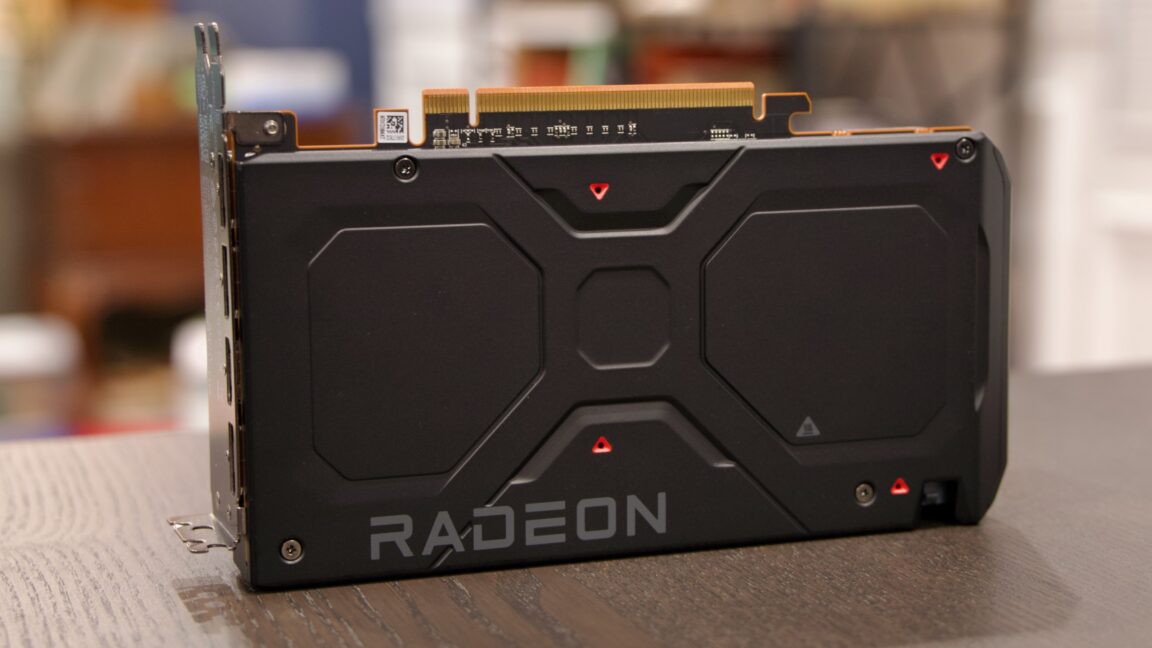
But this kind of hardware is an imperfect proxy for the Steam Machine that Valve plans to launch sometime next year—that box will include a dedicated GPU with 8GB of dedicated video memory, presenting both benefits and possible pitfalls compared to a system with an integrated GPU.
As a last pre-Steam Machine follow-up to our coverage so far, we’ve run tests on several games we test regularly in our GPU reviews to get a sense of how current versions of SteamOS stack up to Windows running on the same hardware. What we’ve found so far is basically the inverse of what we found when comparing handhelds: Windows usually has an edge on SteamOS’s performance, and sometimes that gap is quite large. And SteamOS also exacerbates problems with 8GB GPUs, hitting apparent RAM limits in more games and at lower resolutions compared to Windows.
When the RTX 5060 Ti first showed up, the performance was fine but the price wasn’t. You were paying close to upper midrange money for what was basically a very capable 1080p and entry-level 1440p GPU. At its original $469.99 list price, it was hard to recommend over slightly more expensive cards that delivered bigger […]
A crypto market analyst has compared XRP to NVIDIA, an American technology company with one of the biggest tech success stories in history. The analyst implied that buying XRP today could mirror the opportunity investors had when purchasing NVIDIA shares in 2000 at just $0.35. The comparison emphasizes the long-term potential of the XRP price and highlights the importance of HODLing.
XRP Today Shows Growth Potential Like NVIDIA In 2000
A leading market expert, Egrag Crypto, has drawn a striking parallel between the current XRP price and the early days of NVIDIA. He suggested that buying XRP now could be akin to purchasing NVIDIA shares at just $0.35, as recorded in 2000. At the time of writing, the shares are priced around $180, representing a staggering 51,329% increase from over two decades ago.
Egrag Crypto points out that a $10,000 investment in NVIDIA at $0.35 per share in 2000 would have secured roughly 28,571 shares. At today’s prices, those shares would be worth over $5,142,780, demonstrating an investment strategy focused more on maintaining conviction and patience than timing or predicting the market perfectly. Beyond this, the analyst’s comparison illustrates the power of investing long-term in disruptive technologies, showing how early adoption and willingness to hold through volatility can result in life-changing gains.
Applying this perspective to XRP, Egrag Crypto highlighted that the cryptocurrency has surged from $0.006 to $3.65 over the past 10 years. By comparing the altcoin to NVIDIA shares, he suggests the cryptocurrency could have similar potential for transformative, explosive growth. As a result, he implied that the current XRP price of $2.2 may present a potential entry point for investors willing to commit to a disciplined long-term strategy.
Much like NVIDIA in its early days around 2000, XRP is still in the initial stages of its growth trajectory. The cryptocurrency recently emerged from a prolonged legal battle with the US SEC that had constrained its development and price appreciation for nearly 7 years. With increasing utility and ongoing ecosystem developments, XRP is well-positioned to grow over time. While its price has declined roughly 20% this year, according to CoinMarketCap, analysts remain optimistic about its long-term outlook.
XRP On-Chain Activity Hits Record Levels
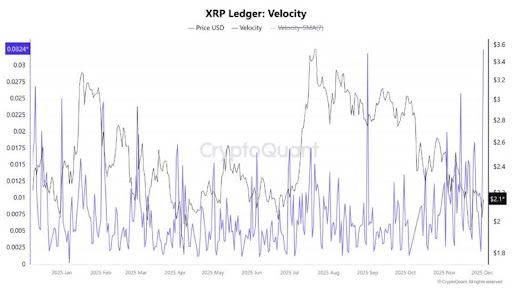
On the technical front, XRP has experienced a remarkable surge in on-chain activity, signaling heightened engagement across the network. Data from CryptoQuant shows that on December 2, the velocity metric for the XRP Ledger (XRPL) spiked to a yearly high of $0.0324.
Analysts from CryptoQuant have revealed that the rise in circulation velocity suggests that XRP is being actively traded rather than sitting idle in cold wallets. The increase points to high liquidity and significant participation from whales who appear to be moving large amounts of tokens.
Additionally, such activity indicates that the XRP network is experiencing unprecedented levels of engagement, with more coins changing hands in a short time than the market has seen so far in 2025.
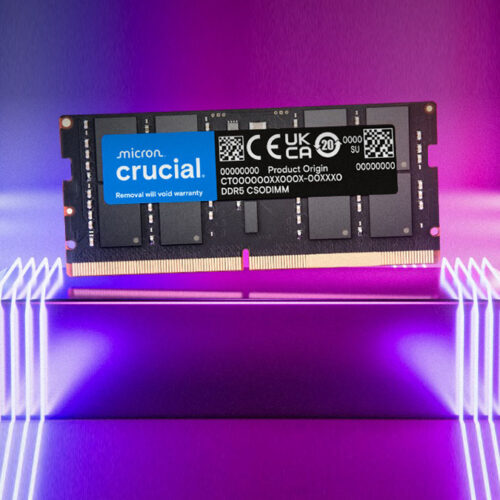
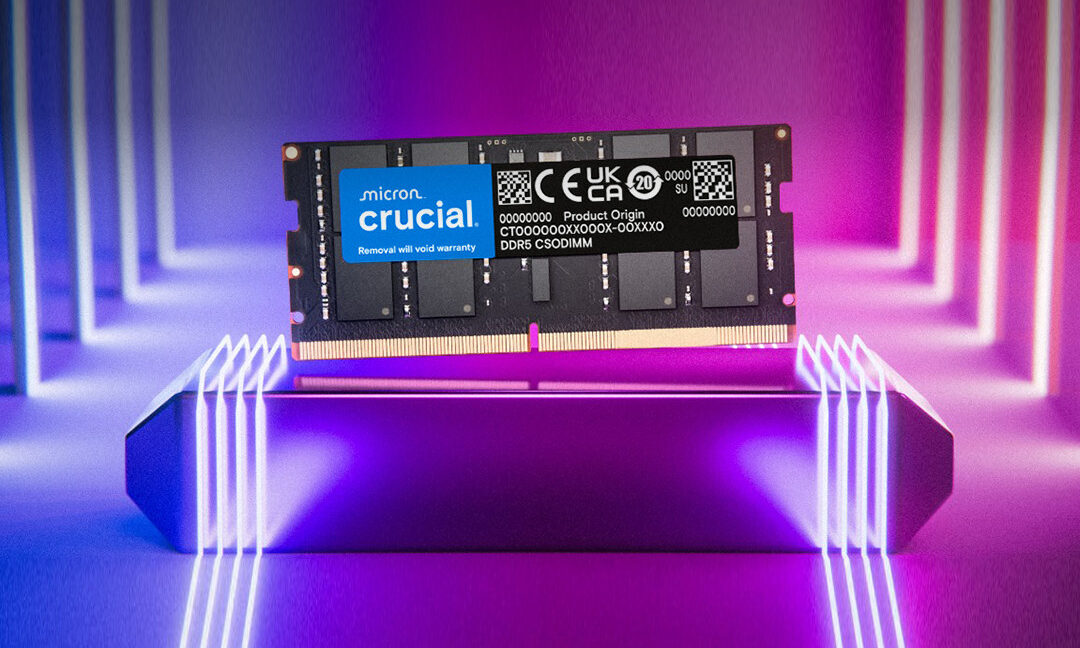
On Wednesday, Micron Technology announced it will exit the consumer RAM business in 2026, ending 29 years of selling RAM and SSDs to PC builders and enthusiasts under the Crucial brand. The company cited heavy demand from AI data centers as the reason for abandoning its consumer brand, a move that will remove one of the most recognizable names in the do-it-yourself PC upgrade market.
“The AI-driven growth in the data center has led to a surge in demand for memory and storage,” Sumit Sadana, EVP and chief business officer at Micron Technology, said in a statement. “Micron has made the difficult decision to exit the Crucial consumer business in order to improve supply and support for our larger, strategic customers in faster-growing segments.”
Micron said it will continue shipping Crucial consumer products through the end of its fiscal second quarter in February 2026 and will honor warranties on existing products. The company will continue selling Micron-branded enterprise products to commercial customers and plans to redeploy affected employees to other positions within the company.
By Valve’s admission, its upcoming Steam Machine desktop isn’t swinging for the fences with its graphical performance. The specs promise decent 1080p-to-1440p performance in most games, with 4K occasionally reachable with assistance from FSR upscaling—about what you’d expect from a box with a modern midrange graphics card in it.
But there’s one spec that has caused some concern among Ars staffers and others with their eyes on the Steam Machine: The GPU comes with just 8GB of dedicated graphics RAM, an amount that is steadily becoming more of a bottleneck for midrange GPUs like AMD’s Radeon RX 7060 and 9060, or Nvidia’s GeForce RTX 4060 or 5060.
In our reviews of these GPUs, we’ve already run into some games where the RAM ceiling limits performance in Windows, especially at 1440p. But we’ve been doing more extensive testing of various GPUs with SteamOS, and we can confirm that in current betas, 8GB GPUs struggle even more on SteamOS than they do running the same games at the same settings in Windows 11.
NVIDIA has released a critical hotfix driver, version 581.94, that fixes the severe performance drops when you run Windows 11 after the mandatory October 2025 cumulative update. Even though Microsoft hasn’t actually acknowledged the problem yet, we have a real solution.
The $2 billion investment in Synopsys, which makes software and components for designing semiconductor chips, deepens their existing partnership at a time when analysts scrutinize circular AI-industry deals and warn of a potential bubble.
Is Burry the canary in the coal mine, warning of a collapse that's inevitable? Or could his fame, his track record, his now unrestricted voice, and a fast-growing audience trigger the very implosion he's predicting?

 Login
Login