
Reading view

There are new articles available, click to refresh the page.

The Kremlin's Kill List: Inside a Culture of State-Sponsored Murder


EXPERT OPINION / PERSPECTIVE — The 2024 spy swap between Russia and the West exposed a brutal truth: Moscow still treats innocent civilians as bargaining chips, and killers as heroes. In the deal, Russia forced multiple governments to trade convicted Russian intelligence officers, including an SVR “illegal” couple arrested in Slovenia, in exchange for Western citizens that the Kremlin had deliberately entrapped. But the real prize for Russian President Vladimir Putin was Vadim Krasikov, the FSB assassin who was convicted by a German court for murdering Chechen exile Zelimkhan Khangoshvili in Berlin in 2019. Through years of negotiations, including those aimed at freeing Wall Street Journal reporter Evan Gershkovich, Krasikov’s release remained a non-negotiable demand from Russia.

When the swap finally happened, Putin greeted Krasikov on the tarmac with a public embrace, an extraordinary display of presidential affection for a convicted murderer. Days later, the Kremlin confirmed his FSB status, praised his “service,” and even highlighted his past role as a presidential bodyguard. Putin’s message to his security services—and to the world—could not have been clearer: if you kill for Putin’s regime, the regime will protect you. Killing for the regime has always been a mission for Russia’s intelligence services (RIS).

State-directed murder was long embedded in the mission and culture of the RIS and their predecessors. The practice predates the Soviet Union, reaching back to the Czarist Okhrana, which routinely hunted down dissidents when exile to Siberia failed to silence them. After the 1905 revolution, Czar Nicholas II unleashed a wave of retributive assassinations that set a precedent for the violence institutionalized by the Cheka and later the KGB. He became known as “Bloody Nicholas.” The state security “organs” (as they are still known in Russia) elevated assassination into a professional craft, giving rise to the notorious phrase in Russian: vishaya mera nakazaniya — the highest measure of punishment. The term still carries its original meaning and dreaded connotation: death at the order of the state, whether by trial or extrajudicial killing.

There were many examples both at home and abroad for Soviet citizens to be afraid. Stalin’s plot to kill his arch-rival and fellow revolutionary, Leon Trotsky, was decades in the making and ended with an ice pick to Trotsky’s head while he was in Mexico City. His assassin, Ramon Mercader, was awarded the title Hero of the Soviet Union when he was released from prison and arrived back in the USSR.

Secret institutes like the infamous “Poison Factory,” known in the KGB as Laboratory 1 or “kamera” (for “the cell”), were set up during the early years of the Cold War to study chemical and biological agents that could be used to murder quietly. Laboratory 1 specialized in refining special toxins, like the ricin pellet the KGB provided to their Bulgarian allies, and used in the infamous assassination of Bulgarian dissident Georgi Markov on a London bridge in 1978.

Today is no different. Some assassinations are believed to be directly ordered by Putin in what the Russians call “direct action” (pryamoye deistviye, also known colloquially as mokroe delo, or wet work), while others are believed to be carried out with his implied approval. Poison factories continue to function inside of Russia. Today, the FSB uses a modern “kamera” which helped refine the nerve agent Novichok for use against the defector Sergei Skripal in the 2018 Salisbury UK attack. It was the same agent used against Russian Opposition leaders Alexei Navalny in a failed assassination attempt, prior to his death in a remote Russian prison, also likely wet work at the hands of the FSB.

Why does Putin let his Chekist assassins use such a well-known, state-only produced chemical weapon like Novichok to kill defectors or dissidents? The answer: because he wants the world to know the RIS were behind the attacks and that the tradition of the “highest measure” continues. Otherwise, he could certainly have his hitmen use a gun, ice pick, or other more deniable method. There is a track record now for decades, going back to the FSB defector Alexander Litvinenko and his death from polonium in the UK. The RIS will not hesitate to murder any intelligence or military defectors that the RIS can find and reach in the West. The lack of a formidable response from the UK and the U.S. to the Litvinenko poisoning only emboldened Putin and his henchmen (one of the assassins, Lugavoy, was praised so highly within Russia that he was eventually elected to the Russian duma).

Save your virtual seat now atThe Cyber Initiatives Group Winter Summit on December 10 from 1p – 4p ET for expert-led conversations on cyber, AI and the future of national security.

The Russian Record of Killing their Own: Disincentivizing Dissent

Putin and his RIS siloviki want all of their officers to know that the price for treason is death, and they don’t care what government may be offended or what international laws are broken. Otherwise, the incentive for those officers to betray Russia’s corrupt services and look to a better life for themselves and their families is too high. It matters not whether the execution is ordered by a secret court, or carried out on the street, the RIS consider it within their purview to decide how and when.

Two historical points illustrate this as practice within the RIS. For decades of the Cold War, and after, the rumor proliferated within the KGB and GRU that one or both of the first GRU spies to work for the United States, Pyotr Popov and Oleg Penkovskiy, were executed by being thrown into a furnace alive. Popov was uncovered and executed in 1960. Penkovskiy was arrested and executed in May 1963 after the vital role he played in providing intelligence to the United States during the Cuban Missile Crisis.

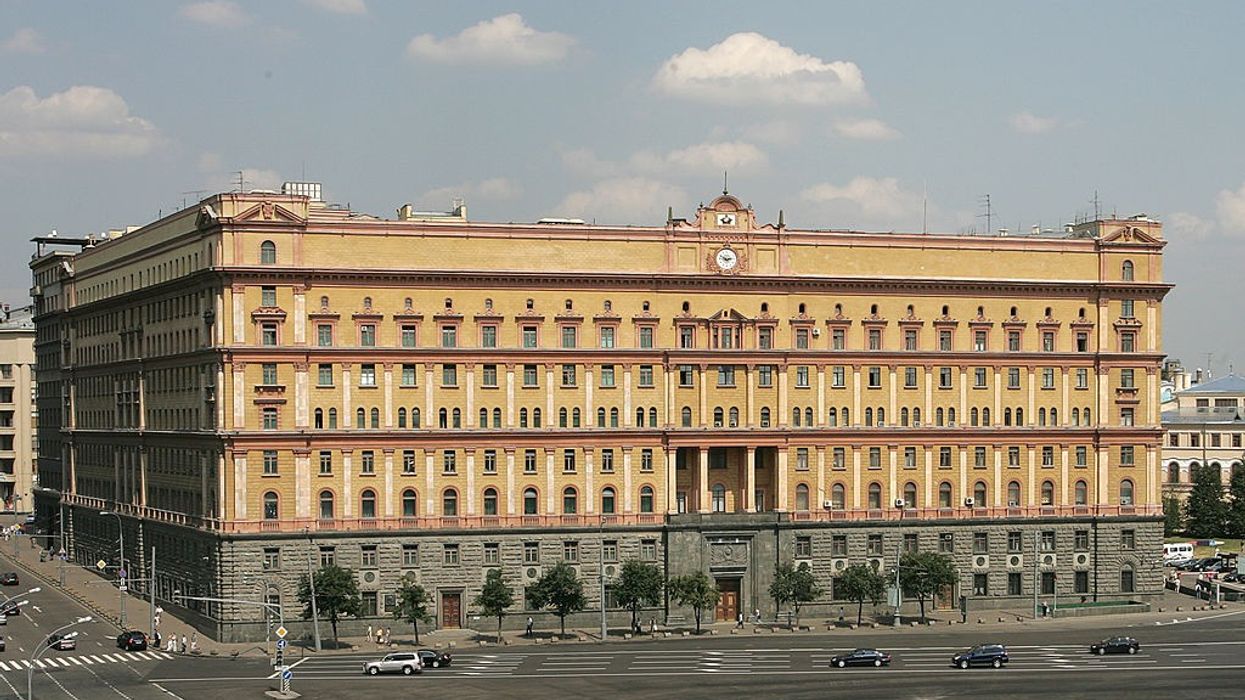
The practice during that time period, carried over from Stalin’s purges, was more likely a bullet to the back of the head up against a wall at the infamous Lubyanka prison. But the rumor, which was spread to the West by GRU defector Viktor Suvorov, was effective and garnered a lot of attention within the services; it still does. It was purposely spread, and taught, and continues to be, at the KGB Andropov Academy through the 1980s, now known as the modern SVR Foreign Service Academy (what they call the AVR). The same rumor is taught to officers at the GRU Military Diplomatic Academy. Defectors have confirmed for years that this rumor is whispered among classes at the academies, and as a warning against dissents—“you want to be thrown into a furnace alive, shut-up you idiot!” The very idea of being burned alive in a furnace is hard for young officers to forget.

There is another example from Cold War history that illustrates the same point. In 1985, the so-called “year of the spy,” while crypto-spy John Walker and his family ring were uncovered and arrested, CIA officer Ed Howard defected to Moscow, and many other espionage incidents took place. CIA traitor Rick Ames gave his “big dump” of classified holdings to the Soviets. Ames offered up roughly a dozen different U.S. cases to the Soviet services, including many penetrations of the KGB and GRU. Most of those assets were executed in short order, sending up a giant “CI flag” of counterintelligence warning to CIA/FBI and the entire U.S. intelligence community that something was amiss. A major mole hunt, which unfortunately took nine years, eventually led to Ames’ arrest. Ames himself commented after his arrest that he was astounded that the KGB/GRU had killed so many assets: why not keep them running as controlled cases, at least for a time, in order to protect him? It was an unprecedented, even reckless reaction.

Why did they do it?

The answer, as some senior Russian officers including former Line KR (kontrarazvedka or CI) Chief Viktor Cherkashin would later confirm (he wrote a book that was translated in the West) was that the Soviet services had no choice. The KGB and GRU had to take drastic steps to stop the flood of espionage and leaks in the Soviet services—too many traitors! An example had to be set.

Cherkashin would know since he ran both Ames and FBI spy Robert Hanssen when he served in the Washington D.C. Residency (station) of the KGB. Reportedly, the issue went to the highest ranks of the KGB/GRU and then on to the Central Committee of the Communist Party. For all their feared security prowess in the Soviet Union, the vaunted KGB had no idea that the CIA was running so many cases under their noses, literally, in Moscow and around the world. Since their own counterintelligence, the 2nd Chief Directorate of the KGB, had failed so miserably, the decision was made to execute them all (or nearly all, a previous few escaped death in the Gulag). There had to be a hard line drawn for the tens of thousands of other Soviet intelligence officers not to betray the regime - the highest measure would be the warning.

Need a daily dose of reality on national and global security issues? Subscriber to The Cipher Brief’s Nightcap newsletter, delivering expert insights on today’s events – right to your inbox. Sign up for free today.

Murder by Order or Murder to Impress the Boss?

The FSB is no less of a counterintelligence failure than their KGB predecessors. They cannot turn the tide against the U.S., our intelligence services, and those of our allies. Instead they arrest innocent civilians like those used to barter for the 2024 swap. That is why Putin likely continues to order death to all intelligence defectors. That is why he will greet a killer like Krasikov at the airport in Moscow in front of the cameras. But Putin’s RIS don’t just kill defectors and Chechen separatists. The RIS were almost certainly behind many political hits in Russia like Navalny, Boris Nemtsov and many others “falling out of windows” from Putin’s own government in recent years. Here it is important to recall that under President Yeltsin, Russia abolished the death penalty. So what were once judicial executions, ordered by the state, have become extra-judicial killings in the Putin era. But for the RIS, there is no distinction.

There have been many assaults and killings of journalists like Anna Politkovskaya. The question often arises—does Putin know about and order all of these murders? Perhaps, but there may be something else at play as well, an effort to impress “the boss.” This could also explain some of the more reckless acts of sabotage playing out in Europe at the hands of the RIS. Mafia families work in the same way - they surprise the boss with new income streams or take out a threat to the family with a hit, to earn one’s “button” and become a “made man.”

Indeed, the RIS function within mob-like cultures, fostered by patronage relationships, and corruption at every level. Officers are encouraged to pay bribes up the chain of command, and frauds of all kinds at every level infect their services. Putin has no doubt told aspiring leaders in the SVR, GRU and especially the FSB, his favorite service, to surprise him with new and inventive operations meant to hit back against the West, particularly regarding Ukraine. This has led to a cascading series of actions by the RIS, including sabotage, exploding parcels, and, yet again, like earlier in their history, attempted assassinations. The most brazen plot uncovered so far was the GRU plot that was unraveled in Germany in 2024 to assassinate the CEO of Rheinmetall, a leading provider of arms to Ukraine. GRU unit 29155 is likely behind that plot, just as they were behind the Skripal attack, and others.

The RIS attack dogs in Putin’s services are simply continuing a tradition of state-directed violence. Yet in the West, we often hesitate to assign blame, waiting for courtroom-quality evidence. But the evidence is already written across decades of Russian intelligence tradecraft, and reinforced by independent investigations.

Open-source teams like Bellingcat have repeatedly identified the GRU and FSB officers behind some of Moscow’s most feral operations - from the Skripal poisoning in Salisbury to the attempted assassination of Alexei Navalny. Still, conclusive proof of Kremlin authorization often appears only when an insider defects with hard intelligence. Those who contemplate such a step know they will be protected and given a new life in the West. They also know the stakes, however, if caught.

The absence of courtroom proof in every case of murder, poisoning, or a fall from a window should not silence the West. Putin’s record speaks for itself. His regime has presided over the killings of journalists, opposition figures, exiles abroad, and tens of thousands of Ukrainian civilians. He operates as a modern bloody czar, no different in impulse from Nicholas II—ordering assassinations, reprisals, and revenge killings with impunity. And the pattern is escalating. It is only a matter of time before Russian intelligence pushes further, testing its reach against U.S. and allied targets. The warning signs are unmistakable. The question is no longer whether the threat exists, but what the West intends to do about it.

All statements of fact, opinion, or analysis expressed are those of the author and do not reflect the official positions or views of the US Government. Nothing in the contents should be construed as asserting or implying US Government authentication of information or endorsement of the author’s views.

The Cipher Brief is committed to publishing a range of perspectives on national security issues submitted by deeply experienced national security professionals. Opinions expressed are those of the author and do not represent the views or opinions of The Cipher Brief.

Have a perspective to share based on your experience in the national security field? Send it to Editor@thecipherbrief.com for publication consideration.

Read more expert-driven national security insights, perspective and analysis in The Cipher Brief because National Security is Everyone’s Business.
Russia’s Intelligence Services After the War


EXPERT PERSPECTIVE — Russia’s intelligence services (RIS) have failed spectacularly in Ukraine: in planning, execution, and analysis, yet they will face no reckoning. Vladimir Putin cannot afford to hold the SVR, GRU, or FSB accountable because they are not merely instruments of the state; they are the pillars of his personal power. The RIS misled the Kremlin into believing Ukraine would fall in days, Europe would divide, and NATO would hesitate. Instead, they exposed the rot at the core of Russia’s national security system: corruption, internecine rivalry, and a profound detachment from reality. Understanding this dynamic matters for the West because it reveals not only how Russia fights its wars but how it fails, and how it will likely fight again.

As the war approaches its fourth year, the front lines have grown static, and speculation about an eventual end has returned. Certainly, the world hopes for peace and relief from the suffering that has defined Europe’s largest land conflict since 1945. Yet even when the drones stop flying, Ukraine’s struggle to rebuild will begin, and within the Russian government another kind of reckoning will unfold. The aggressor’s armed forces and intelligence services will take stock of losses and lessons learned. But unlike in the West, where failure invites inquiry and reform, Russia’s services are more likely to protect the system that failed them and pin any blame on each other.

Russian post-war accounting will not play out like we in the West might imagine. We are accustomed to commissions and legislative investigations after wars and major national security events, often resulting in harsh criticism for various agencies, and sweeping reforms. In Russia, however, Putin will largely give the RIS a pass.

To understand why, it is important to understand the roles the RIS played in the war and in the Russian government more broadly. The SVR (the Foreign Intelligence Service), the GRU (the Main Intelligence Directorate - military intelligence), and the FSB (the Federal Security Service), serve first and foremost as Putin’s Praetorian Guard. Their primary responsibility is securing his regime and hold on power. Moreover, Putin rose up through the RIS ranks in the KGB, and later held the post of FSB Director. His feelings toward the RIS are hardly objective. The reputations of Putin and the services are inextricably linked. Anything that significantly tarnishes the highly cultivated myth of RIS omnipotence inevitably damages his own hold on power.

If Putin and the “siloviki” (strongmen) who make up his inner circle try to call the RIS to account for their performance when the fighting stops, the one thing all three services will argue is that the war was an absolute success. Each will extoll their roles with little regard for the number of Russian lives lost and military assets squandered. Going back to Tsarist and Soviet times, casualties and human suffering were never a mark for a war’s success or failure in Russia. The RIS will focus on territory gained, Ukraine’s membership in NATO being halted (from their optic), and the alliance, they will claim, weakened. They will ignore the addition of two capable new members to the alliance (Finland and Sweden), the doubling of the length of NATO’s border with Russia, and the resuscitation of NATO’s military spending and defense industrial base. Facts will not stop the RIS from claiming success with Putin. But it is useful to further break down some of their likely claims, and actual performance, by service.

The SVR: “Speak up Sergey!”

Among the RIS, and especially relative to the FSB, Putin has never been particularly fond of the foreign intelligence service, the SVR. Its claims of success on Ukraine will likely not impress him or the other siloviki much. Recall Putin’s public dressing down of SVR Director Sergey Naryshkin on Russian TV in the days before the invasion for indecisiveness: “Come on Sergey, speak up, speak plainly!” But Sergey did not speak up, nor make much of a difference in the war.

Since they do not have troops or special ops elements in the war (their main Spec-Ops team, ZASLON, is used more for protection abroad), the SVR will likely try to boast of the success of its “active measures” operations. This is the traditional term the Russians have used for covert influence and disinformation activities intended to weaken, confuse, or disrupt their adversaries. Their modern term, however, is to refer to them as “measures of support” (MS). The SVR has an entire “Directorate MS” devoted to this line of operational work: using troll farms, social media, cyber operations, and recruited agents of influence to meddle in the internal politics, public opinion, and elite decision-making of its adversaries to Russia’s advantage. The Russians believe their active measures contributed to their successes in the Georgia invasion in 2008 and occupation of Crimea and parts of the Donbas in 2014. They believed they confused and stunted the West’s response and, to a degree, they were right.

But the SVR will have trouble claiming active measures succeeded in the current Ukraine war. They will perhaps try to sell Putin that the SVR sowed confusion at critical policy decision points when the U.S. and its European allies were not always in sync—hesitation in providing this or that weapons system, unity or lack thereof at times on sanctions, asset seizures, etc. Their efforts, however, did not materially alter Russia’s failure to achieve its war aims. If they were effective at all, it was only in the margins. There will be no dramatic accounting for the SVR but expect to see the SVR’s relative influence decline among the RIS, a continuation of trend since Putin’s rise to power.

Need a daily dose of reality on national and global security issues? Subscriber to The Cipher Brief’s Nightcap newsletter, delivering expert insights on today’s events – right to your inbox. Sign up for free today.

GRU: Plowed into the Grinder, and Re-Special Purposed

The GRU will likely point to the various sabotage acts, conducted in Europe after the invasion, some successful but most not, including exploding packages, industrial arson, cable cuts in the Baltic Sea, and assassinations, or attempts at them. These are the purview of the GRU and its various numbered units, such as Unit 29155, which was behind both the attempted assassination of GRU defector Sergey Skripal in the UK in 2018, and likely also the thwarted assassination plot against the CEO of Germany’s Rheinmetall in 2024. The Lithuanian government is convinced the GRU also was behind the crash of a DHL plane that same year. But these actions failed in their primary mission, to intimidate and deter Europe and NATO from assisting Ukraine. If anything, the actions have only emboldened members to continue support for Ukraine.

Another shocking GRU failure, one heavily criticized in Russia’s pro-war blogosphere but receiving less attention in the West, was its squandering of precious, highly trained Spetsnaz units on the Ukrainian battlefield. There are nine Spetsnaz, or “Special Purpose,” brigades under the GRU’s 14th Directorate (roughly analogous to Tier 1 elements in the U.S. SOCOM). Nearly all were heavily deployed in Ukraine, and all suffered extremely heavy casualties. The planned decapitation strike against the Ukrainian leadership in the first days of the war, spearheaded by Spetsnaz units, was a complete and costly failure (the failed seizure of Hostomel airport was part of this). Many Spetsnaz were also used foolishly in frontal assaults and to plug gaps in forward lines when Russian “kontraktniki” (paid soldiers, but often supplemented in frontline units with conscripts) failed. GRU Spetsnaz have a storied history and culture. It will be hard for them to recover the reputation for being “elite” without notable successes to point to in Ukraine. They failed to impact the direction of the war in any significant way.

As with the SVR, the GRU will likely avoid any dramatic negative consequences. There will probably be some modest reorganizations, just as there have been since the collapse of the USSR. In fact, the GRU is technically not even called the GRU any longer. It was formally redesignated the “GU” (Main Directorate), although many stubborn officers still refer to themselves as “GRU-chniki.” One reorganization has already occurred since the war began, the standup of something called the Department for Special Tasks (SSD). Its function and exact composition are still not fully known, but it appears to combine various Russian-termed “direct actions” (e.g., assassinations, sabotage) units, such as Unit 29155, into a unified structure. The SSD is broadly equivalent to the CIA’s Special Activities Center in terms of covert action, but dwarfs it in size (and the CIA is bound by law not to carry out assassinations). The GRU is a mammoth bureaucracy and it will likely only grow more after the war.

FSB: Failed, But Still Putin’s Favorite

Despite their many failures, there will be few significant negative consequences for the FSB, which Putin once ran. In many ways, though, the FSB’s shortcomings in Ukraine were the most egregious and consequential. The FSB was in charge of the war’s planning, particularly the hybrid dimensions, or what Russian doctrine refers to more broadly as “non-contact war.” The FSB's lead for the Ukraine invasion was its Fifth Service, which heads up both operational analysis and reporting to the President on the war. The FSB has organizational primacy for RIS operations in the “near abroad,” i.e., the states of the former USSR, including Ukraine. In the pre-war planning phase, the Fifth Service was wrong about everything: wrong about Ukrainian resilience, wrong about how quickly and substantially Europe and NATO would react, and wrong about the FSB and Russian Armed Forces’ capabilities on the ground.

FSB Spetsnaz units Alpha and Vympel all participated in the war, but like their GRU cousins, they have not distinguished themselves. Still they are still frequently lauded in the Russian press for “actions that cannot be disclosed.” The FSB also has the lead for cyber operations against Ukraine with its 16th Center, but those cyber-attacks have not materially altered the direction of the war in Russia’s favor. The battle over bytes was not won in any way by Russian FSB hackers, whose ranks were bolstered by Russian criminal groups hacking for the state and their coffers.

The FSB will likely be the RIS agency most affected by the war. But instead of accountability for failure, its power and influence will likely only grow. First, because of all the services, the FSB, in its secret police role, is the critical player in securing Putin’s rule. In the bureaucratic pecking order, the FSB sits at the very top and will remain there. FSB Director Alexander Bortnikov holds the military rank of full General, and he is treated as such by Russian military generals, despite never having served in the military. Second, if there is a formal investigation or after-action when the fighting stops, the FSB will lead it, just as it did in the investigations of the 2002 Nord-Ost theater terrorist attack, the 2004 school seizure in Beslan, and the more recent Crocus City Hall terrorist attack in 2024, each of which involved breathtaking intelligence and operational failures, but did not have significant negative repercussions for the FSB. The FSB pretends to clean up after it performs incompetently.

Are you Subscribed to The Cipher Brief’s Digital Channel on YouTube? There is no better place to get clear perspectives from deeply experienced national security experts.

In conclusion, the one thing the West can count on is that the Russian services will continue to relentlessly compete with and back-stab one another. There is no “intelligence community” in Russia remotely similar to the one we have in the United States. The rivalries within our community pale in comparison. This presents opportunities to recruit personnel from all the RIS services, many of whom will have lost colleagues in the war for a cause and for leaders whose competence an increasing number of them will come to doubt. This and the pervasive corruption in Russia are still strong incentives for espionage against those who have led Russia down this disastrous path.

The RIS will not prevent another war for Russia; if anything, they will foment one. Before they do, the US and our allies must understand these failures, but also, and critically, the Russian services’ likely self-evaluation and the lessons they themselves will draw, or fail to draw, from those lessons. When the current war ends, Putin may plan another intervention or aggression--in Europe, again in Ukraine, or elsewhere. Before he does, we need to be ready to counter the next iteration of the FSB, GRU, and SVR tactics to encourage and support war. We can better do so by studying their playbook and some of their attempted actions, and dramatic failures.

All statements of fact, opinion, or analysis expressed are those of the author and do not reflect the official positions or views of the US Government. Nothing in the contents should be construed as asserting or implying US Government authentication of information or endorsement of the author’s views.

Read more expert-driven national security insights, perspective and analysis in The Cipher Brief because National Security is Everyone’s Business.
❌