 Login
LoginLummaC2 Infects North Korean Hacker Device Linked to Bybit Heist
LummaC2 infostealer infects North Korean hacker’s device, exposing ties to $1.4B Bybit heist and revealing tools, infrastructure and OPSEC failures.

EXPERT OPINION — South Korea’s Korea Institute for Defense Analysis recently publicly stated that we underestimated North Korea’s nuclear weapons program. According to their analysis, North Korea has between 127 and 150 nuclear weapons (not 50 to 60 nuclear weapons), and by 2030 they will have 200 nuclear weapons, reaching 400 nuclear weapons by 2040.
At the eighth Central Committee of the Workers’ Congress in late 2022, North Korean leader Kim Jong Un ordered the exponential expansion of North Korea's nuclear arsenal and the development of a more powerful intercontinental ballistic missile. Mr. Kim reportedly said: “They are now keen on isolating and stifling North Korea…and the prevailing situation calls for redoubled efforts to overwhelmingly beef up our military muscle.”
During this six-day meeting of the Central Committee, Mr. Kim not only called for an “exponential increase in North Korea’s nuclear arsenal”, but he also called for the mass production of battlefield tactical nuclear weapons targeting South Korea, and a new ICBM with a “quick nuclear counterstrike capability; a weapon that could strike the mainland U.S.”
North Korean leaders usually say what they plan to do. Indeed, this is the case with Mr. Kim. Not only has he apparently done this with his arsenal of nuclear weapons, but in October 2025, at the parade celebrating the 80th anniversary of the Korean Workers’ Party, the Hwasong-20, a solid fuel, mobile three stage ICBM capable of targeting the whole of the U.S., was introduced to the international community. The Hwasong-20 possibly could also be capable of launching multiple nuclear warheads at different targets, a capability that would challenge any missile defense system. So, the arsenal of ICBMs that could strike the U.S. – Hwasong-18 and 19 – has also grown exponentially with the Hwasong-20, as Mr. Kim said in 2022.
North Korea has also been working on its submarine program, to include a nuclear-powered submarine. This is in addition to its extensive work on hypersonic and cruise missiles, all representing a challenge to any missile defense system.
North Korea is also developing a second-strike capability, with programs to ensure the survivability of some of North Korea’s nuclear weapons and the progress North Korea has made with solid-fuel mobile ICBMs and nuclear-armed submarines, providing a mobile launch platform. Moreover, North Korea’s doctrine for the use of nuclear weapons has changed to a preemptive, first use of nuclear weapons if a nuclear attack against the leadership or command and control systems is imminent or perceived to be imminent.
The Cipher Brief brings expert-level context to national and global security stories. It’s never been more important to understand what’s happening in the world. Upgrade your access to exclusive content by becoming a subscriber.
Russian President Vladimir visited Pyongyang in June 2024, when he and Mr. Kim signed a mutual defense treaty, part of a “Strategic Comprehensive Partnership” between Russia and North Korea, ratified in November 2024. Article 4 of the treaty states that should either nation “put in a state of war by an armed invasion, the other will provide military and other assistance with all means in its possession without delay”
In October 2024, NATO claimed North Korean soldiers arrived in Russian Kursk Oblast to join Russian forces in its war of aggression with Ukraine. Additionally, North Korea was providing Russia with artillery shells and ballistic missiles. That assistance to Russia continues.
In return, it’s likely that in addition to energy and food assistance, Russia is providing North Korea with assistance with its satellite and ballistic missile programs and, also, with its nuclear program. Indeed, Russia could help with North Korea’s nuclear-powered submarine program, especially with the design, materials and components for such a technically challenging program.
North Korea’s mutual defense treaty with Russia, and its participation in the war with Ukraine, was a major failing of the U.S. and South Korea. We should have seen movement in this direction and did more to prevent it from happening. Of course, there is irony in Russia now saying North Korea should have nuclear weapons when in the Six Party Talks with North Korea, Russia, with China, Japan, South Korea and the U.S., was in sync arguing that North Korea should not have nuclear weapons.
North Korea’s nuclear and ballistic missile programs are an existential threat to the U.S. and its allies. Our past policy to “contain and deter” North Korea and to be “strategically patient” with North Korea didn’t work. They failed, as evidenced by North Korea’s robust nuclear and ballistic missile programs and their allied relationship with Russia – and China. Indeed, efforts should be made by the leadership in the U.S. and South Korea to get Mr. Kim to reengage, especially with President Donald Trump.
As South Korean President Lee Jae Myung said, North and South Korea are in a “very dangerous situation” where an accidental clash is possible at any time.
This column by Cipher Brief Expert Ambassador Joseph DeTrani was first published in The Washington Times
Read more expert-driven national security insights, perspective and analysis in The Cipher Brief because National Security is Everyone’s Business.
According to a report from South Korean security firm AhnLab, state-linked hacking organizations like the North Korea-backed Lazarus Group relied heavily on spear phishing to steal funds and gather intelligence over the last 12 months. The group often posed as conference organizers, job contacts or colleagues to trick people into opening files or running commands.
Reports have disclosed that one unit known as Kimsuky used artificial intelligence to forge military ID images and lodge them inside a ZIP file to make messages look legitimate.
Security researchers say the fake IDs were convincing enough that recipients opened the attachments, which then ran hidden code. The incident has been traced to mid-July 2025 and appears to mark a step up in how attackers craft their lures.
The aim is simple. Get a user to trust a message, open a file, and the attacker gets a way in. That access can lead to stolen credentials, seeded malware or drained crypto wallets. The groups linked to Pyongyang have been tied to attacks on finance and defense targets, among others.
Some campaigns did not rely only on hidden exploits. In several cases, targets were tricked into typing PowerShell commands themselves, sometimes while believing they were following official instructions.
That step lets attackers run scripts with high privileges without needing a zero-day. Security outlets have warned that this social trick is spreading and can be hard to spot.
Attackers also abused Windows shortcut files and similar formats to hide commands that run silently when a file is opened. Researchers have documented nearly 1,000 malicious .lnk samples tied to broader campaigns, showing that familiar file types remain a favorite delivery method. Those shortcuts can execute hidden arguments and pull down further payloads.
This makes the attacks harder to stop: tailored messages, AI-forged visuals, and tricks that ask users to run code. Multi-factor authentication and software patches help, but training people to treat unusual requests with suspicion remains key. Security teams advocate basic safety nets: update, verify, and when in doubt, check with a known contact.
According to reports, Lazarus Group and Kimsuky continue to be active. Lazarus, based on AhnLab’s findings, received the most mentions in post-cybercrime analyses over the last 12 months. The group has been singled out for financially motivated hacks, while Kimsuky seems more focused on intelligence gathering and tailored deception.
Featured image from Anadolu, chart from TradingView

South Korea’s largest cryptocurrency exchange, Upbit, is facing a second major security crisis after 44.5 billion won (around $30–32 million) in digital assets were drained from a hot wallet, with authorities “strongly” suspecting North Korea’s Lazarus Group.
According to ICT industry sources and government officials cited by Yonhap News on November 28, investigators are focusing on Lazarus, a hacking unit under North Korea’s Reconnaissance General Bureau, as the likely perpetrator. The group was also suspected in Upbit’s 2019 breach, when approximately 58 billion won in Ethereum was stolen.
The latest incident again centers on a hot wallet — an internet-connected operational wallet — replicating the core vulnerability of 2019. A government official quoted by Yonhap said the attack likely did not involve a deep server exploit but instead an administrative compromise: “Rather than a server attack, it’s possible they compromised an administrator account or impersonated an administrator to transfer funds,” adding that because the earlier hack used this method, “we consider this approach the most likely.”
Security experts point to the post-hack on-chain behavior as key circumstantial evidence. After the theft, the funds were rapidly “hopped” through other exchange wallets and then subjected to “mixing,” a laundering technique designed to break traceability.
One expert noted that “funds were hopped to other exchange wallets before mixing occurred. This can be seen as the modus operandi of the Lazarus Group,” adding that “once mixing occurs, transactions become untraceable.” Because FATF member countries cannot legally operate mixing services, the expert argued it is “highly likely North Korea was responsible.”
The timing has raised additional suspicion. The hack occurred on November 27, the same day Naver and Upbit operator Dunamu held a high-profile joint press conference at Naver’s “1784” headquarters to present their group-integration and AI/Web3 expansion strategy.
A security expert suggested the date may have been intentionally chosen: “Hackers often have a strong desire to show off. It’s possible they chose the 27th as the hacking date to flaunt their timing, selecting the very day of the merger announcement.” The attack also lands almost exactly six years after Upbit’s 2019 hack, which occurred on November 27.
Regulatory and supervisory bodies have moved quickly. Following a December interpretation by the Financial Services Commission that virtual asset exchanges’ user transaction data falls under the Credit Information Act, the Financial Supervisory Service and the Korea Financial Security Institute have launched an on-site inspection of Upbit. The Korea Internet & Security Agency has joined to provide technical support.
At press time, the total crypto market cap stood at $3.07 trillion.


North Korea’s notorious cybercrime unit, Lazarus Group, is suspected of orchestrating a major cryptocurrency breach that drained roughly $30.6 million from South Korea’s largest exchange, Upbit.
Key Takeaways:
Authorities are preparing to conduct an on-site inspection at the exchange, following signs that the attack may be tied to the same actors behind previous intrusions attributed to Lazarus, Yonhap News reported, citing government and industry sources.
The group has previously been linked to crypto thefts aimed at generating revenue for Pyongyang amid persistent foreign currency shortages.
Upbit’s operator, Dunamu, confirmed that Solana-linked assets worth 44.5 billion won were transferred to an unauthorized wallet on Thursday.
The company said it will reimburse users in full using its own reserves and moved quickly to halt withdrawals and deposits as internal checks were launched.
Investigators said the techniques used in the breach closely resembled the 2019 incident in which attackers allegedly stole 58 billion won in Ethereum from the same platform.
Officials believe this time the hackers may have bypassed core infrastructure by impersonating administrators or compromising internal accounts to authorize the withdrawal.
Security officials said the funds were swiftly moved through wallets associated with other platforms, indicating an attempt to obscure transaction trails through laundering tactics that Lazarus has used in past operations.
“It is their standard approach to scatter tokens across multiple networks to break tracking,” one official said.
today south korea blamed north korea for the upbit hack
— trix (@trixwtb) November 28, 2025
nice headline
but that part came later
so what actually happened?
an unknown attacker drained a few of upbit’s hot wallets
waited a bit
then started moving funds across chains
at some point the hacker bridged usdc from… pic.twitter.com/swq8yjIOLR
Analysts noted that Lazarus has repeatedly targeted high-profile crypto platforms to maximize impact and exposure, suggesting the attack may have been deliberately staged to exploit heightened public attention.
Earlier this month, South Korea said it may reconsider its sanctions approach toward North Korea after new US measures connected Pyongyang’s crypto theft operations to the funding of its weapons programs.
Second Vice Foreign Minister Kim Ji-na said Seoul could “review sanctions as a measure if they are really needed,” stressing close coordination with Washington to counter North Korea’s growing cyber and digital threats.
“In cases of cryptocurrency theft by Pyongyang, coordination between South Korea and the US is important, as it can be used to fund North Korea’s nuclear and missile programs and pose a threat to our digital ecosystem,” Kim stated.
The breach came a day after Naver announced a plan to acquire Dunamu via a share-swap deal through its finance arm, putting the exchange in the national spotlight.
Meanwhile, Naver Financial, the fintech arm of South Korean internet giant Naver, is preparing to roll out a stablecoin wallet in Busan as part of the city’s ongoing push to build a blockchain-powered local economy.
Naver has reportedly finished development of the wallet, which is now undergoing final checks before its scheduled launch next month.
The project is being built in partnership with venture capital firm Hashed and the Busan Digital Asset Exchange (BDAN), the entity behind Busan’s broader digital asset strategy.
The post North Korea’s Lazarus Group Linked to $30M Hack at South Korean Exchange Upbit appeared first on Cryptonews.
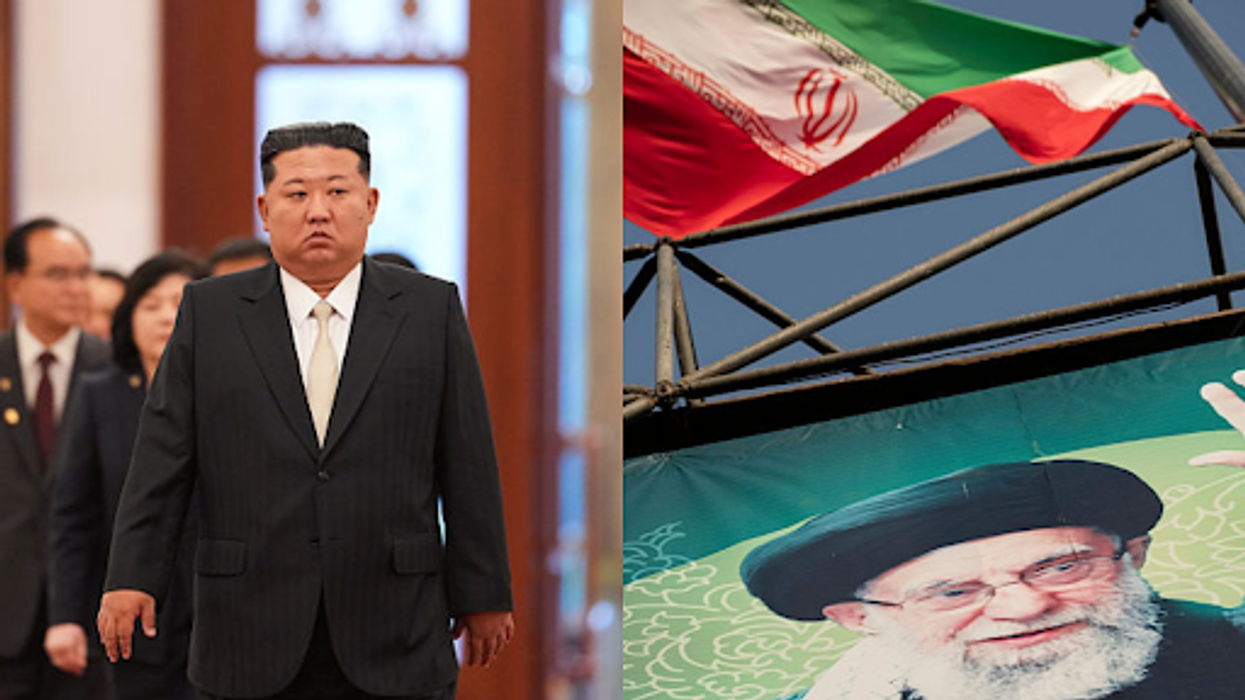
DEEP DIVE — While Washington is focused on Iran’s accelerating uranium-enrichment program and increasingly aggressive regional posture, an equally consequential shift is unfolding with seemingly less fanfare: North Korea’s rapid nuclear and missile advancements are quietly reshaping the global threat landscape.
For U.S. policymakers, the danger is no longer a pair of isolated challenges but a converging two-front nuclear problem—one that threatens to push America’s deterrence posture, crisis-management capacity, and alliance coordination closer to a breaking point. To understand how these two fronts could interact, experts emphasize that Iran and North Korea share a long-standing strategic alignment.
“The Iran–North alliance represents a four-decade-long partnership driven by shared hostility toward the United States, economic needs, and strategic isolation,” Danny Citrinowicz, a nonresident fellow with the Atlantic Council’s Middle East Programs and former head of the Iran Branch in the Research and Analysis Division (RAD) in Israeli defense intelligence, tells The Cipher Brief. “The Iranians need to rearm and prepare for another campaign, which requires additional and fresh thinking regarding the depth of the relationship between Tehran and Pyongyang.”
He also warns that this moment may become an inflection point.
“If Iran seeks to change its nuclear strategy, it could ask North Korea for nuclear bombs or highly enriched material or spare parts for the destroyed nuclear facilities, such as the conversion facility in Isfahan,” Citrinowicz continued. “The potential damage in the event of such an event is so severe that it is essential that the intelligence organizations of the United States, South Korea, and Israel identify signs of this.”
Pyongyang’s Nuclear Threat
Despite UN sanctions and diplomatic efforts, a recent Congressional Research Service (CRS) brief underscored that North Korea continues to surge forward with both nuclear-weapons and ballistic-missile development. For Kim Jong Un, analysts note, nuclear weapons are a guarantor of regime security, and he has no intention of abandoning them.
North Korea’s nuclear doctrine and capability sets are evolving in troubling ways. The 2025 CRS brief states that a September 2023 law expanded the conditions under which Pyongyang would employ nuclear weapons, lowering what had been a high threshold for use. The same report noted the regime “promised to boost nuclear weapons production exponentially and diversify nuclear strike options.”
On the delivery side, the brief outlines how North Korea is fielding solid-fueled road-mobile ICBMs, sea-based launch systems, and pursuing multiple warheads on a single missile — all elements that raise the question not just of deterrence but of crisis stability and escalation control. In short, Pyongyang appears to be reaching toward a survivable deterrent — or perhaps a warfighting capability — that can impose calculations on the U.S. and its allies in a far more challenging way than before.
“Kim’s investment in new nuclear-capable delivery systems reflects the strategic importance of the country’s nuclear arsenal,” Kelsey Davenport, Director for Nonproliferation Policy at the Arms Control Association, tells The Cipher Brief. “North Korea is better positioning itself to evade and overwhelm regional missile defenses and target the U.S. homeland.”
Treston Wheat, chief geopolitical officer at Insight Forward, reinforces that intelligence picture, stressing that open-source assessments now “frame North Korea as a maturing nuclear-warfighting state,” with doctrine “trending toward first-use options in extreme regime-threat scenarios.” He notes that U.S. intelligence already evaluates Pyongyang as having achieved miniaturization: “A 2017 DIA assessment judged DPRK miniaturization sufficient for SRBM-to-ICBM delivery.”
Taken together, those capabilities point to a shifting threat environment for Washington.
“North Korea has tested missiles with the range necessary to target the continental United States,” Davenport underscored. “U.S. military planners have to assume that North Korea can target the United States.”
Need a daily dose of reality on national and global security issues? Subscriber to The Cipher Brief’s Nightcap newsletter, delivering expert insights on today’s events – right to your inbox. Sign up for free today.
Iran’s Nuclear Surge
Meanwhile, Iran is not standing still. Tehran has begun openly emulating aspects of Pyongyang’s nuclear playbook, indicating that if Western strikes against Iranian nuclear infrastructure forced Tehran to go underground, it could adapt quickly. That duality matters: Iran can arguably deploy its program overtly, under inspection and diplomatic cover, but at some threshold, it may decide the only path to survival is accelerated weaponization. If that happens while North Korea is already pushing new strategic capabilities, the U.S. is confronted with two simultaneous flashpoints — one in the Middle East, the other in Northeast Asia.
Deterrence, by definition, demands clarity of purpose, credible capabilities, and correctly calibrated signals. When the U.S. must manage a nuclear-armed North Korea and a near-breakout Iran at the same time, the risk is that strategic bandwidth becomes overstretched.
“Despite the failure of that approach, Iran maintains that its nuclear doctrine is unchanged and it does not intend to pursue nuclear weapons,” Davenport noted. “(But) without a pragmatic diplomatic approach that addresses Iranian economic and security concerns, Tehran’s thinking about nuclear weapons could shift.”
That potential shift in Tehran’s calculus becomes even more concerning when paired with broader warnings about Western inattention.
“If Western focus on the Iran threat dwindles, there is a risk the regime could take a new, covert path to nuclear weapons using remaining or reconstituted assets or foreign help,” Andrea Stricker, Deputy Director of the Nonproliferation and Biodefense Program at the Foundation for Defense of Democracies, tells The Cipher Brief. “Such a lack of focus is similar to how North Korea became nuclear-armed.”
Tehran, experts caution, still retains deep technical capacity.
“Iran retained enough fissile stock and technical expertise to rebuild quickly, meaning the setback was tactical rather than strategic,” Wheat noted.
From Washington’s vantage point, the real danger is a dual crisis hitting at once — an Iranian enrichment surge or strike on its facilities in West Asia, paired with a North Korean missile volley or nuclear test in East Asia. That scenario forces the U.S. into parallel decision-cycles, stretching military, diplomatic, and intelligence resources, straining alliances, and creating openings that adversaries could exploit.
North Korea’s expanding warfighting delivery systems add another layer of risk: limited, precision escalation meant to test U.S. resolve. As the CRS notes, its ballistic-missile testing is designed to evade U.S. and regional defenses, putting American and allied forces at heightened risk. In effect, Pyongyang is developing not only a survivable deterrent but potential coercive leverage — just as Iran’s enrichment trajectory edges closer to a threshold that could trigger a U.S.-led military response.
“The possibility of Pyongyang providing nuclear assistance to Tehran is increasing,” Citrinowicz said. “The United States will need to focus its intelligence on this possibility, with the help of its allies who are monitoring developments.”
But that intelligence challenge intersects with another problem: mounting questions about U.S. credibility.
“President Trump has dealt a serious blow to U.S. credibility in both theaters,” Davenport asserted. “This risks adversaries attempting to exploit the credibility deficit to shift the security environment in their favor.”
U.S. Intelligence and Strategic Implications
Open-source intelligence paints a worrying picture: North Korea may have enough fissile material for perhaps up to 50 warheads, though the accuracy and reliability of delivery remain questions. It also signals Pyongyang’s development of submarine-launched ballistic missiles and multiple-warhead ICBMs. The regime has restored its nuclear test site and is now postured to conduct a seventh nuclear test at a time of its choosing.
The IAEA’s November 2025 report says it can no longer verify the status of Iran’s near–near-weapons-grade uranium stockpile after Tehran halted cooperation following the June 2025 Israeli and U.S. strikes on Natanz, Fordow, and Esfahan.
The last confirmed data, from September, showed Iran holding 440.9 kg of uranium enriched to 60 percent — a short step from weapons-grade and potentially enough for up to 10 bombs if fully processed. IAEA chief Rafael Grossi says most of this material is now entombed in damaged facilities. Moreover, satellite imagery activity around storage tunnels in Isfahan has raised serious red flags. The IAEA further cautions that oversight of this highly-enriched uranium site is “long overdue,” warning that the agency has lost “continuity of knowledge.”
Moreover, before the strikes, the IAEA assessed Iran could produce enough weapons-grade material for one bomb in about a week using part of its 60 percent stockpile at Fordow. Damage to centrifuges has likely slowed that timeline. Still, the larger question is political: whether Iran, under renewed UN sanctions and scrutiny, decides that staying within NPT safeguards costs more than openly moving toward a weapon, particularly if work resumes at undeclared or rebuilt sites.
“The U.S. and Israeli strikes have created a window of respite. What happens next depends greatly on Iran’s will to provoke new Israeli strikes,” Stricker said. “North Korea is a wild card and could provide nuclear fuel, facilities, and equipment to Iran.”
Are you Subscribed to The Cipher Brief’s Digital Channel on YouTube? There is no better place to get clear perspectives from deeply experienced national security experts.
Looking Ahead
For Washington, the takeaway is stark: systems designed to manage one nuclear threat at a time may crumble should two crises flare simultaneously. The U.S. would need tighter allied coordination, faster intelligence sharing, and stronger, more flexible military deployments to cope.
Yet above all, policymakers must anticipate the possibility of simultaneous escalation in different theatres.
In the coming months and years, key indicators will include North Korea’s choice to conduct a seventh nuclear test or field a credible submarine-launched nuclear force, and Iran’s enrichment trajectory or decision to strike a covert breakout path. The U.S. must also watch for signs of cross-coordination between Moscow and Pyongyang, or between Tehran and Pyongyang — though open links remain murky.
From a policy perspective, a dual-front scenario demands updated wargames, an inter-theatre force posture review, and close allied coordination across NATO, the Indo-Pacific, and Middle East partners. Washington must also guard against the “umbrella illusion” — the belief that the same deterrence logic will apply unchanged across two theatres facing two distinct adversaries with differing doctrine, capabilities, and thresholds.
Finally, media and public attention naturally tend to focus on Iran’s progress or North Korea’s missile launches — one at a time. However, deterring two simultaneous nuclear-adversary theatres demands strategic awareness that the world may not be sequentially configured. For the U.S., what happens in one theatre may shape adversary calculations in the other. The risk is that by the time Washington pivots from Iran, Pyongyang — or Tehran — may have forced a new reality.
In this two-front nuclear dilemma, the question is no longer whether to monitor Iran or North Korea, but how the U.S. will deter both at the same time — and whether its strategic framework is ready for that challenge.
Emerging forms of collaboration amplify that challenge.
“More concerning is that North Korea is positioning itself to benefit from Russian expertise and to further refine its missile systems using data collected from Russia’s use of North Korean systems against Ukraine,” Davenport added.
Read more expert-driven national security insights, perspective and analysis in The Cipher Brief because National Security is Everyone’s Business.
Five men have pleaded guilty to running laptop farms and providing other assistance to North Koreans to obtain remote IT work at US companies in violation of US law, federal prosecutors said.
The pleas come amid a rash of similar schemes orchestrated by hacking and threat groups backed by the North Korean government. The campaigns, which ramped up nearly five years ago, aim to steal millions of dollars in job revenue and cryptocurrencies to fund North Korean weapons programs. Another motive is to seed cyber attacks for espionage. In one such incident, a North Korean man who fraudulently obtained a job at US security company KnowBe4 installed malware immediately upon beginning his employment.
On Friday, the US Justice Department said that five men pleaded guilty to assisting North Koreans in obtaining jobs in a scheme orchestrated by APT38, also tracked under the name Lazarus. APT38 has targeted the US and other countries for more than a decade with a stream of attack campaigns that have grown ever bolder and more advanced. All five pleaded guilty to wire fraud, and one to aggravated identity theft, for a range of actions.
© Getty Images
Audricus Phagnasay, Jason Salazar, Alexander Paul Travis, Erick Ntekereze, and Oleksandr Didenko have pleaded guilty.
The post 5 Plead Guilty in US to Helping North Korean IT Workers appeared first on SecurityWeek.
Australia mirrored the US’s recent sanctions against bankers, financial institutions, and others allegedly involved in laundering funds for North Korea.
The post Australia Sanctions Hackers Supporting North Korea’s Weapons Program appeared first on SecurityWeek.
The United States has imposed sanctions on a group of bankers, financial institutions and others accused of laundering money from cyber crime schemes.
The post US Sanctions North Korean Bankers Accused of Laundering Stolen Cryptocurrency appeared first on SecurityWeek.
Mr. Kim’s recent meetings with Russian President Vladimir Putin and the new mutual defense treaty with the Russian Federation have developed into an alliance of unexpected consequences. The 15,000 North Korean troops assisting Russian forces in the Kursk region and the massive amount of artillery shells, drones and ballistic missiles provided to Russia for its war of aggression in Ukraine was a significant development that surprised many of the pundits who viewed North Korea as a distraction, confined to the Korean Peninsula.
Indeed, Mr. Kim’s presence in Beijing for the 80th anniversary of World War II Victory Day celebrations, standing next to Chinese President Xi Jinping and Mr. Putin was testimony to China’s decision that North Korea cannot be ignored and a close alliance with North Korea is in China’s interest.
And certainly, last Friday’s parade and gala in Pyongyang on the 80th anniversary of the founding of the ruling Korean Workers’ Party was an emboldened Mr. Kim announcing to the world that North Korea has arrived and can not be ignored. In the presence of Chinese Premier Li Qiang, former Russian President Dmitry Medvedev and Vietnam’s Communist Party Chief To Lam and others, Kim made it clear when he said North Korea “was a faithful member of Socialist forces… and a bulwark for independence… against the West’s global hegemony.”
Doubling down, North Korea at the military parade introduced their new Intercontinental Ballistic Missile, the Hwasong-20, a solid fuel massive missile capable of carrying multiple nuclear warheads and capable of targeting the whole of the U.S. Other weaponry, to include hypersonic and cruise missiles also were on display, making it clear that Mr. Kim was serious when he said North Korea would enhance its nuclear capabilities.
At a recent Workers’ Party Plenary session, Mr. Kim said he was prepared to meet with Mr. Trump, on the condition that the U.S. would accept North Korea as a nuclear weapons state. Mr. Kim spoke of fond memories of his previous encounters with Mr. Trump. And at the United Nations on September 29, after seven years of no-show, North Korea’s Vice Foreign Minister Kim Son-Gyong said North Korea would never give-up its nuclear weapons; to do so would be tantamount to giving up its sovereignty.
Indeed, North Korea succeeded in getting Russia to accept its nuclear weapons status. Russia was a member of the Six Party Talks with North Korea and actively assisted the U.S., South Korea, Japan and China in demanding that North Korea denuclearize completely and verifiably. Russia is now saying North Korea should retain and enhance its nuclear weapons and is probably assisting North Korea with its nuclear weapons program.
The Cipher Brief brings expert-level context to national and global security stories. It’s never been more important to understand what’s happening in the world. Upgrade your access to exclusive content by becoming a subscriber.
Hopefully, China will not relent and continue to demand that North Korea denuclearize. Some say that China is now less committed to North Korean denuclearization than in the past. It’s likely this was discussed when North Korea’s Foreign Minister, Choe Son Hui, met with her counterpart in China, Foreign Minister Wang Yi. Interestingly, both participated in the Six Party Talks with North Korea, when Mr. Wang was the chairman of the Talks in Beijing and Ms. Choe was an adviser to Vice Foreign Minister Kim Kye Kwan, head of the North Korean delegation to the Talks.
North Korea’s goal is to have a normal relationship with the U.S. This is something Mr. Kim’s father, Kim Jong il, and grandfather, Kim il Sung, pursued since 1994. A relationship with the U.S. would give North Korea international credibility and access to international financial institutions for economic development purposes. It will also untether North Korea to China. It is no secret that historically, and even after Mr. Xi assumed power in China in 2013, the bilateral relationship between North Korea and China has been tense.
And indeed, given North Korea’s experience in dealing with the former Soviet Union in 1991, at the end of the Cold War, when Moscow downgraded relations with North Korea and in 1995, when Russia officially renounced the mutual assistance treaty with North Korea. It, therefore, should be obvious to North Korea that once the war in Ukraine is over, Russia’s need for continued North Korean assistance will end and the relationship will likely be downgraded.
This is the time for Mr. Trump to meet with Mr. Kim to talk about security assurances and a path to normal bilateral relations. The issue of North Korea’s nuclear status need not be the focal point for future discussions. It should, however, continue to be our goal, but at an appropriate time.
This column by Cipher Brief Expert Joseph Detrani was first published in The Washington Times.
Are you Subscribed to The Cipher Brief’s Digital Channel on YouTube? There is no better place to get clear perspectives from deeply experienced national security experts.
Read more expert-driven national security insights, perspective and analysis in The Cipher Brief because National Security is Everyone’s Business.
EXPERT PERSPECTIVE — In 1943, a body washed up on a beach in Huelva, Spain. It was the body of a Royal Marine officer, Major William Martin. Martin was carrying papers, cuffed to his wrist in a briefcase, suggesting that the Allies would invade Greece and Sardinia, not Sicily. Spain was officially neutral, but a few Spanish officials sympathetic to the Nazis allowed German agents to discreetly photograph the documents before Spain quietly passed the documents to the British. Those British officials appeared to be in a state of panic over the lost briefcase.
Would this opportunistic espionage expose a critical Allied operation? In reality, Major William Martin never existed. The body was that of Glyndwr (“Glendure”) Michael, a Welsh drifter who died from consuming rat poison. You probably recognize this as Operation Mincemeat. British intelligence developed this incredible ruse, with American approval, and painstakingly developed a plan for the body to wash up near Huelva Spain and provided background and a personal story for Michael that allowed the body to pass convincingly as a Royal Martine officer who perished at sea while delivering sensitive documents.
The Germans took the bait. Convinced by this fabricated narrative, Hitler diverted significant forces away from Sicily. When the Allies landed in Sicily, they encountered far less resistance than expected, saving countless lives and accelerating the collapse of Axis defenses in southern Europe.
Beyond innovation and sheer audacity, this was a master class in story-telling, in knowing the pressures facing the target audience (Hitler), in creating a believable altered reality, in understanding how information moved through Nazi circles and among those who enabled them and, most importantly, in persuading our adversaries to make consequential decisions that advanced our interests over theirs. It was cognitive warfare on the offense, it represented a cognitive advantage during a perilous period, and it remains a reminder of the timeless power of cognitive persuasion.
History has many other examples of where commanders and leaders have stepped beyond traditional thinking and conventional operations into the information and cognitive space to confuse our adversaries, to win the day, and, at times, to change history.
Is this important today? Let us put cognitive warfare in strategic perspective.
First, great power competition is intensifying and the stakes are high.
The U.S is now facing the most significant global challenges than at any time in our history. We face more capable peer adversaries, more aspiring regional nations, and more proxy threats than ever before. The global environment is more uncertain than ever, and our place in it is not guaranteed. If we are to remain the global leader, we’ll have to be ready for today’s and tomorrow’s rapidly evolving competition and warfare. We must look to prioritize and commonly orient our Nation’s capabilities toward actively maneuvering and gaining advantage across the cognitive landscape to help ensure our security interests, and to actively deny any adversary their own advantage.
Second, great powers will go to great lengths to avoid direct military engagement that could have catastrophic consequences. Russia has lost the equivalent of what would be one of the world’s largest militaries and it has experienced a massive reduction in national power in the war with Ukraine. We also know the examples from WWII when nations and great militaries were defeated and even decimated as a result of great power conflict.
China has advocated winning without fighting for decades, and it still does. Khrushchev famously said “We will take American without firing a shot. We do not have to invade the U.S. We will destroy you from within.” Putin is a believer and practitioner in that approach.
Their approaches are not a mystery. Our adversaries have telegraphed how they plan to attack us, and to defeat us, without direct military engagement.
Third, given those considerations, our adversaries are increasingly relying on operations in the gray zone, or gray warfare, to advance their national interests and to take steps to undermine and weaken the United States, without risking a superpower conflict. They have prioritized their resources, decisions, and actions toward this end.
China and Russia, and even Iran and North Korea, believe there are more gains than risks in the gray zone, and any risks they do face are manageable, so we should expect them to expand their activities. If we solely maintain an unblinking stare at the conventional military capabilities of our adversaries, we might miss the real war already well underway in the gray zone.
Finally—cognitive warfare stands as the most prevalent and consequential activity our adversaries conduct in the gray zone.
This is not your grandfather’s Cold War disinformation. This is an assault on cognition, powered by advanced technology and enabled by an information environment that provides camouflage, infrastructure, and operational resources for our adversaries. Ultimately, cognitive warfare is a contest for truth and knowledge—a struggle to shape perception, control understanding, and influence both the decision-making process and its outcomes.
The Cipher Brief brings expert-level context to national and global security stories. It’s never been more important to understand what’s happening in the world. Upgrade your access to exclusive content by becoming a subscriber.
Never before in history have individuals, organizations, societies, and nations faced such a sustained assault on our ability to make our own decisions—our autonomy to think, decide, and act in our own best interests. From our adversaries’ perspective, controlling perceptions, manufacturing realities, steering decision-making, intimidation as persuasion, decision fatigue, and manufactured false choices make for persuasive and effective strategy.
In this global information landscape, where technology levels the playing field, any individual or group, and state or non-state actors can reach global audiences almost immediately. Thousands of internet sites, fake users, fabricated organizations, bots, and willing surrogates, managed by Russia, China, Iran, and North Korea, wage cognitive warfare against the U.S., our allies, and our partners at unprecedented scale and velocity. Artificial intelligence now serves as a force multiplier—amplifying reach, supercharging deception, automating the manipulation of public opinion, and constricting time in the information maneuver space.
As individuals and groups within America, this is everything from how we see the world, how we vote, how we invest, whom and what we trust, which policies we support or oppose, and who we believe are our friends and partners—locally, regionally, and globally.
For national security leaders, policymakers, and corporate and military decision-makers, our adversaries seek to influence consequential decisions on issues like Ukraine, Taiwan, trade, military posture, supply chains, alliances, participation in international organizations, technology development, and a host of other issues that could tip the balance in our adversaries’ favor.
For China, Russia, Iran, and North Korea, this is integrated national strategy where the instruments of national power—government, private sector, and surrogates—are combined to achieve strategic impact. Further, the willingness of our adversaries to defy international law; challenge economic interests, and violate the sovereignty and laws of every country including the U.S.; engage in bribery, political coercion, sabotage, and assassinations—essentially a “no limits” approach” to cognitive warfare—gives them considerable leverage—made more effective by our lack of focused emphasis on recognizing, prioritizing and taking action to mass and commonly orient our great national strengths.
If we are to make consequential decisions with confidence, we must have high certainty in the information we receive, value, and share. In the cognitive domain, truth is a strategic asset—precious, powerful, and fragile. To endure, it must be shielded from the relentless assault of manipulation, coercion, and altered realities initiated by our adversaries to shape the strategic landscape and create influence attack vectors intended to undermine and disable our ability to do the same.
Churchill recognized both the strategic value and fragile nature of truth in a time of conflict. He famously said, “In wartime, the truth [is] so precious that it should always be attended by a bodyguard of lies.” The lesson is clear. Today, just as in 1943, we must seize and defend the cognitive advantage if we are to navigate these equally perilous times.
What do we need to do to achieve a cognitive advantage?
- First, we need to reassert a strong U.S. national narrative.
In the cognitive domain, our national narrative is both sword and shield. It projects power, influence, and advances our interests. It tells the story of our values, our history, our aspirations, our view of the world, and our resolve and is reinforced by actions and deeds. Our military and economic strength and our global leaderships are strong parts of this narrative. It supports confidence in our actions, our institutions, and our commitments. It also counters adversary narratives and actions that seek to undermine America within our own borders and across the world. We all know today that our national narrative is being questioned by some at home and abroad. Regardless of how we see the political environment, we must articulate and advance a strong seamless U.S. national narrative as foundational to a cognitive advantage. We must take this on.
- Second, we need to empower our master storytellers.
Our master storytellers are not just communicators; they are architects of persuasion. We all know this; we read, we watch movies, and we listen. Facts are fleeting, but stories remain with us—they shape how we feel which in turn drives how we behave. In the cognitive domain, well-crafted stories—including those tailored to navigate today’s hyper-technical environment and chaotic information environment—shape threat perceptions, influence our perception of reality, sustain resolve, and can tip the balance in competition or conflict.
Adversaries recognize the power of narrative and weaponize it; even the truth is more persuasive when it is delivered as part of a compelling story. History proves the advantage: in cognitive warfare, facts alone rarely shift outcomes—compelling narratives and persuasive storytelling do. As in 1943, our edge will be defined by those who can craft and deliver the stories that influence minds and shape events. Yes, we need our master storytellers as much today as we did in 1943.
- Third, we need to see and understand our adversaries’ capabilities and intentions in the cognitive domain—where perception, knowledge, and decision-making are contested. Our adversaries, of course, go to great lengths to mask and conceal their activities. It is time for cognitive intelligence—intelligence in and about the cognitive domain and our ability to reliably understand how, where, and why adversaries seek to shape our thinking and decisions—to emerge as a priority.
- Fourth, we need a sustain a technological edge in AI, Cognitive Science, Cyber, and other technologies that force our adversaries to go on the defensive. China in particular is working to take that advantage from us by its own means but also by stealing U.S. data, technologies, and intellectual property to use against us. We must safeguard the extraordinary capabilities of U.S. technologies—including those small, bold startups—that not only provide a critical national security advantage but are also relentlessly targeted by our adversaries.
- Fifth—and critically important—we need to plan, organize and drive designed strategies and actions across our governmental institutions, international partners, and private sector at the intersections of shared security interests to defend against adversary tactics that target our economic, military, infrastructure, informational and Cyber pillars of security each fueled by human perception, reasoning, and effective decision-making. If you remember anything from this article, please remember this. As a priority, we need a strategy and a commitment to play offense in a quiet but relentless manner that confuses our adversaries, shatters their confidence, and forces them—not us—to deal with the uncertainties of cognitive warfare.
- Finally, if all of this is to work, we need to harness the incredible intellectual power, critical thinking, and collaboration among government, private sector, academia, and in many cases, our allies. We need to work at the nexus of shared interests. In this collaboration; we need leaders; not to overly prescribe or to build bureaucracy, but to inspire, convene, add clarity of purpose, and to enable the incredible capability this community offers. We must use the power to convene to commonly inform and set conditions for mutually beneficial action and outcomes, and to help close the relationship seams used by our adversaries as attack vectors.
Need a daily dose of reality on national and global security issues? Subscriber to The Cipher Brief’s Nightcap newsletter, delivering expert insights on today’s events – right to your inbox. Sign up for free today.
For our leaders, a reminder that when relegated to small tasks and small thinking, influence operations in the cognitive domain will achieve small results. This is a time for vision, for big thoughts, innovation, and audacity. With those attributes, and thinking back to the remarkable achievements of 1943, today’s operations in the cognitive domain can and will do remarkable things.
Those elements, we believe, are the foundation of a cognitive advantage. If we are successful, it means we have a sustained ability to protect our decision-making autonomy at all levels; we preserve domestic and allied social cohesion; we retain global influence, credibility and narrative power; we expose and undermine adversary efforts at cognitive warfare; and we achieve U.S. objectives without resulting in direct conflict. Challenging?—Yes. Attainable?—Certainly.
A final word. Last June, Dave Pitts visited Normandy for the 80th Anniversary of D-Day—which was our last conventional war of great powers. It was a war that resulted in a devastating loss of human life and unprecedented destruction. Omaha Beach, the Drop Zones around St. Mere Eglise, and the American Cemetery were vivid reminders. That war established the U.S as a global superpower and established a world order that has lasted 80 years. It also enshrined in history the “Greatest Generation.”
Today, authoritarian rule is on the rise, national sovereignty around the world is being undermined, and the global order as we know it is under attack. Once again, our preeminence, leadership, and resolve are being challenged. Let’s be clear, the next war—a quieter war, a gray war—is already underway. The outcome of that war will be as consequential as conventional war.
Cognitive warfare may very well be the defining contest of this era—a generational challenge—given the threats it poses to U.S. national security, our place and influence in the world, and our commitment to our own self-determination. If you are a professional in this space—government, private sector, academia, and ally—this is clearly your time.
Today, we are surrounded by threats, but we are also surrounded by opportunities, by extraordinary expertise, and by willing partners. The challenges ahead are formidable, but so are our experiences and capabilities as a nation. The incredible resolve, sacrifice, and refusal to fail—hallmarks of the Greatest Generation—are woven into the fabric of America and will continue to serve us well. Securing our future now demands leadership, collaboration, a bias for action, and adaptability—the hallmarks of this generation. We have what it takes.
Yes, confidence is clearly justified—but we must just as clearly match that confidence with decisive action. Time is not on our side as others have already decided to prioritize cognitive related strategies. It is time to take a bold step forward in the cognitive domain and to seize the cognitive advantage.
All statements of fact, opinion, or analysis expressed are those of the author and do not reflect the official positions or views of the U.S. Government. Nothing in the contents should be construed as asserting or implying U.S. Government authentication of information or endorsement of the author's views.
The Cipher Brief is committed to publishing a range of perspectives on national security issues submitted by deeply experienced national security professionals.
Opinions expressed are those of the author and do not represent the views or opinions of The Cipher Brief.
Have a perspective to share based on your experience in the national security field? Send it to Editor@thecipherbrief.com for publication consideration.
Read more expert-driven national security insights, perspective and analysis in The Cipher Brief
I’m not surprised by Mr. Kim’s comments. When the Six Party Talks with North Korea commenced in 2003, North Korea’s principal representative to the Talks often mentioned that North Korea wanted nuclear weapons as a deterrent, never to be used for offensive purposes. They asked to be treated as we treated Pakistan, a country that has good relations with the U.S. The North Korean representative said North Korea wanted a good, normal relationship with the U.S., promising to be a good partner. with the U.S.
North Korea has consistently been told that the U.S. would never accept North Korea as a nuclear weapons state. But with complete and verifiable denuclearization, North Korea would receive security assurances, sanctions relief, economic development assistance, to include the provision of Light Water Reactors for civilian purposes and eventual normalization of relations with the U.S. Mr. Kim’s father, Kim Jong il, seemingly accepted this U.S. offer and in September 2005, North Korea did agree to a Joint Statement committing North Korea to complete and verifiable denuclearization of the Korean Peninsula.
That was 2005. The situation has changed profoundly over the past twenty years. North Korea now has a formidable arsenal of nuclear weapons; some estimates are between 50 and 60 nuclear warheads, reportedly with sufficient fissile material to annually produce 15 to 20 nuclear warheads that can be miniaturized and mated to ballistic missiles.
North Korea’s sixth nuclear test in 2017 was assessed to be a test of a thermonuclear weapon. And in 2024, North Korea successfully launched the Hwasong/19, a mobile, solid fuel ballistic missile capable of targeting the whole of the U.S. In addition to advances in nuclear weaponization and ballistic missiles, North Korea has made significant progress with Hypersonic and cruise missiles and advances with its nuclear submarine program.
Of note is North Korea’s new mutual defense treaty with the Russian Federation and the 12,000 combat troops North Korea sent to Russia for its war with Ukraine. In addition to the troops, North Korea has provided Russia with large quantities of artillery shells and ballistic missiles. In exchange, Russia has provided North Korea with considerable technical support for its satellite and nuclear and ballistic missile programs.
The Cipher Brief brings expert-level context to national and global security stories. It’s never been more important to understand what’s happening in the world. Upgrade your access to exclusive content by becoming a subscriber.
We are now dealing with a different North Korea. Mr. Kim is more self-confident, given his new relationship with Russia and his continued close allied relationship with China. Having two of the five permanent members of the United Nations Security Council ensures that North Korea no longer must be concerned with UN sanctions. And the pictures of Mr. Kim at the parade marking the 80th anniversary of the end of World War Two in Beijing, standing next to China’s Xi Jinping and Russia’s Vladimir Putin, gave Mr. Kim significant international credibility, especially with the Global South.
A meeting of President Trump with Chairman Kim could develop into a series of meetings that could result in North Korea halting the further production of fissile material for nuclear weapons, with no additional nuclear tests and a moratorium on ballistic missile launches. This would be a major success for Mr. Trump and the U.S. It would also lessen tension with South Korea and Japan.
The “eventual” U.S. goal should continue to be complete and verifiable denuclearization. However, this doesn’t have to be up front. It’s an eventual goal that should be pursued as relations with North Korea improve, with an action-for action process: As North Korea halts the production of fissile material and stops producing more nuclear weapons and refrains from ballistic missile launches, UN sanctions imposed subsequent to 2016 could be lifted with security assurances and economic development assistance and a discussion of liaison offices in our respective capitals. North Korea should be encouraged to rejoin the Treaty on the Non-Proliferation of nuclear weapons (NPT).
Mr. Trump entering talks with Mr. Kim could develop into a relationship with North Korea that could prove beneficial for the U.S. and its allies and partners.
This column by Cipher Brief Expert Joseph Detrani was first published in The Washington Times.
Are you Subscribed to The Cipher Brief’s Digital Channel on YouTube? There is no better place to get clear perspectives from deeply experienced national security experts.
Read more expert-driven national security insights, perspective and analysis in The Cipher Brief because National Security is Everyone’s Business.
OPINION — The recent summit of President Donald Trump and South Korean President Lee Jae Myung further solidified a special relationship. It’s a relationship that goes back to the Korean War, when in June 1950 North Korea invaded South Korea, mistakenly thinking the U.S. was not interested in defending South Korea from an attack from the North. North Korea’s leader, Kim il Sung, was wrong. The U.S. came to the defense of South Korea and after three years of bloody fighting, with tens of thousands of casualties, an armistice was signed in July 1953, halting the fighting – but the war continues.
Given this legacy, the Trump-Lee summit had several deliverables — tariffs, trade, investments — but what understandably got the most enthusiastic attention was the prospect of Mr. Trump reengaging with Kim Jong Un, the leader of North Korea. Frankly, reengaging with North Korea and getting Mr. Kim to realize that a normal relationship with the U.S. – and hopefully with South Korea – is in North Korea’s interest should be our goal. Indeed, it would provide North Korea with international legitimacy and access to international financial institutions, and economic assistance for economic development purposes. It would be the beginning of a new era for North Korea – and the Korean Peninsula.
No doubt, Mr. Kim must have been impressed with China’s September 3rd victory day parade celebrating the 80th anniversary of the end of World War II. Standing next to China’s President Xi Jinping as he and Russian President Vladimir Putin reviewed the military parade exhibiting China’s modernized military must have pleased Mr. Kim. The parade and the displayed comradery between Messrs Xi, Putin and Kim were on display for the world to see. The additional 26 world leaders all heard Mr. Xi’s veiled criticism of the U.S. and his pronouncement that the world faces a choice between “peace and war, or dialogue or confrontation.”
The Shanghai Cooperation Organization (SCO) meeting in Tianjin, China on August 31 that preceded the gala military parade in Beijing was another convenient venue for Mr. Xi, in the presence of Mr. Putin and India’s Narendra Modi and 20 world leaders, to prioritize the “Global South” – a clear veiled criticism of the U.S. and its tariff policies. Mr. Xi announced a $1.3 billion fund for the SCO development bank and a clear message: “We must continue to take a clear stand against hegemonism and power politics, and practice true multilateralism.”
The message from China from these two major events -- the SCO summit and military parade -- in one week was that China is a global power and Mr. Xi is an alternative global leader, for a new world order, with its own rules, independent from Western standards.
Need a daily dose of reality on national and global security issues? Subscriber to The Cipher Brief’s Nightcap newsletter, delivering expert insights on today’s events – right to your inbox. Sign up for free today.
Unfortunately, the Trump-Putin summit in Alaska on August 15 was a failure. Despite the outreach from Mr. Trump, Mr. Putin continued to escalate the bombing of Ukraine, with continued civilian casualties. Mr. Putin then proceeded to China for the SCO Summit and the 80th anniversary military parade in Beijing to meet and confer with Messrs Xi, Putin, Kim and Iranian president Masoud Pezeshkian, members of the axis of authoritarian states.
Mr. Xi’s comments in Tianjin at the SCO summit and at the military parade in Beijing were clear: either a new world order that condones Russia’s invasion of a sovereign state, Ukraine, despite 1994 security assurances to Ukraine in the Budapest memorandum, or nations that continue to abide by the rule of law and respect for the sovereign rights of all countries. .
Mr. Kim’s father and grandfather wanted a normal relationship with the U.S., as did Mr. Kim, in his meetings with President Trump in Singapore in 2018 and Hanoi in 2019. The talks between our countries should resume soonest, knowing that North Korea’s future is with a normal relationship with the U.S. and South Korea. The details can and will be addressed.
All statements of fact, opinion, or analysis expressed are those of the author and do not reflect the official positions or views of the US Government. Nothing in the contents should be construed as asserting or implying US Government authentication of information or endorsement of the author’s views.
This column by Cipher Brief Expert Joseph Detrani was first published in The Washington Times.
Are you Subscribed to The Cipher Brief’s Digital Channel on YouTube? There is no better place to get clear perspectives from deeply experienced national security experts.
Read more expert-driven national security insights, perspective and analysis in The Cipher Brief because National Security is Everyone’s Business.
EXPERT Q&A — Russia’s massive drone attack overnight on six Ukrainian regions, which hit energy and gas transport infrastructure and cut off power to over 100,000 people, is the latest sign that Moscow is nowhere near peace. Coupled with the Kremlin’s rejection of meaningful security guarantees for Ukraine, it’s clear that President Vladimir Putin is still pursuing his maximalist war goals. That doesn’t surprise General (Ret.) Philip Breedlove, former NATO Supreme Allied Commander, who said the U.S. has been “completely deterred” by Putin for the last 11 years, across four presidents, which has built a "sanctuary" for Russia and allowed it to escalate in Ukraine unchecked.
Cipher Brief COO and Executive Editor of the Open Source Report, Brad Christian spoke with Gen. Breedlove about how that dynamic and is shaping the war and peace negotiations, as well as other global security challenges — from the threat posed by Iranian drones to the true relationship between members of the Axis of Authoritarians. Our conversation has been lightly edited for length and clarity.
The Cipher Brief: Let's start in the Middle East. Broadly speaking, how are you thinking about all of the changes and all of the action that is happening in the region and what it might be pointing to?
General Breedlove: I'm in the Middle East now and have been here for almost seven days. I'm in my second capital and we're working through some of the issues that are left over after the 12-day war such as how the Middle East is continuing to react to that and what we expect out of Iran following the pretty good beating they took. And then, what does that mean for our good friends and partners in the Middle East?
This is a time where I think many of the leaders of these nations are still reeling from what happened. I was talking with some very senior leaders today and I pointed out that in the first three and a half days of this 12-day war, Iran shot nearly 1,500 drones and missiles in the fight. And I asked them, "Is your country ready to defend against 1,500 rockets and missiles?" And of course, there's really only one nation in the Middle East that's set up for that and that's Israel, who was of course attacked. And so, others here in this region are trying to think this through.
And while these other countries are good, maybe even great partners of the U.S., we haven't fought together before. For example, how would they connect to the Navy ships and the US Air Force airplanes that have done so much in the Middle East in these recent challenges? And frankly, there's a lot of scratching of heads going on because those type’s of challenges can’t be solved overnight and nobody, including Israel, is ready to face that kind of onslaught without help from the United States.
So, there's a lot of concern and a lot of angst about how countries get ready for this? You've heard that the Axis of Evil countries, Iran and others, Russia, are starting to build these Shahed drones by the hundreds and thousands and starting new factories in South America. These adversarial nations are unable to use what we would call normal, Western style air power so they are substituting it with these drone attacks and it's a tough problem for many countries to defend against.
And then, frankly, while the nations I'm dealing with are not necessarily concerned about Israel attacking them, they are taken aback that Israel can launch aircraft, fly 1,000 miles and establish air superiority over a nation in two days. And so, there's a lot of people rethinking where they are and how it all works here based on the actions of the recent Israel-Iran conflict.
I think the good news is that the threat of Iran is somewhat diminished. Iran is going to spend some time rebuilding its defenses because especially its air defense network was pretty much decimated.
It's a busy time in the Middle East. It's a time where we need to find peace. It's a time where we don't need another distraction, as we're facing multiple theaters of conflict right now.
The Cipher Brief: On the topic of peace and some normalcy, what is the mood there? What’s happening in Gaza is both incredibly complicated and terribly upsetting to much of the world. Is there going to be a return to some regional normalcy in the relatively near future?
General Breedlove: I don't think I see or hear that right now. There's a lot of concern that the political situation, that the leadership of Israel is in with their own people and the desire for getting the hostages back either dead or alive is very much alive. And even inside of Israel, there are now protests against what's going on in Gaza. So, I can't imagine a more concerning and more confused situation and there is angst of how this is all going to work out. I must say that there is concern about how the people of Gaza have been treated. But I will tell you this, Brad, as I move around these capitals in this region, the recognized threat is Iran.
Prefer to watch The Cipher Brief interview with former NATO Supreme Allied Commander General (Ret.) Philip M. Breedlove? Check it out by subscribing to The Cipher Brief's YouTube channel.
The Cipher Brief: I want to shift gears a little bit here to the other topic that is dominating the national security space and that's Russia’s war with Ukraine. You've said consistently from the beginning of Russia’s full scale invasion that, "Mr. Putin has us deterred and we have not established deterrence over either Russia or Vladimir Putin." I'd just like to get your take on where we are with the negotiations. So many people seem to be scratching their heads at some of the things that we’re seeing play out in the public facing side of the negotiations. How are you thinking about it?
General Breedlove: Well, bottom line upfront, nothing has changed. We remain deterred. In the press you hear people talking about this war being three and a half years long. This war is over 11 years long. It started in the spring of '14 when I was still serving as the Supreme Allied Commander of Europe, and it hasn't stopped. It was hot for a few years and then it went warm. Russians were killing Ukrainians and Ukrainians were killing Russians on the line of contact. And then, after some six years or so of that warm war on the line of contact, Russia re-invaded, and I call this the third phase of the 11-year-long war.
This war has covered four presidents, Obama, Trump twice and Biden once, and all four of them have been nearly and completely deterred from the very beginning. We, as we always do in the military, offered options for how to address this conflict in Ukraine back in 2014. And the answer was, "We're not going to take any action because the war will escalate if we take action." Well, we gave them options from very small movements to larger more bellicose movements, they chose none of them and here we are. What we do know is we did not take action for fear of escalation. We were deterred and we didn't take action and Russia escalated anyway. And so our lack of action ended up in the escalation of the problem by the Russians. And that has repeated itself through four administrations for the past 11 years. We are still deterred. We have taken precious little action to stop the fight in Ukraine and we still find ourselves saying, "We're not going to do that because we've got to give peace a chance and we don't want to escalate the problem." And that formula is not working now and has not worked for 11 years.
We have virtually enabled the Russian war on Ukraine by our lack of action in a more severe way. Many of us from military backgrounds say that we have built sanctuary for Russia. From that sanctuary, we allow them to attack Ukraine. If you can think of a map, up in the northwest corner of the map is Belarus all the way to the east around through Russia all the way to the south, into the Black Sea and west across the Black Sea. We have allowed Russia to attack Ukraine from nearly 300 degrees on the map, and we still cannot determine that we should allow Ukraine to fire back deeply into Russia with our kit.
Mr. Elbridge Colby, Undersecretary of Defense for Policy, at times seems to be out of sync with President Trump because the President recently said, "You can't win a war that way." And Mr. Colby, once again, announced in the last day or so that, "We're not going to let them do long-range fires with American kit." This is an absurd policy, and it's guaranteed to be a loser and we've got to get past being so completely deterred by Russia's threats. Their program of reflexive control is working excellent on our leadership and we've got to break free of it.
The Cipher Brief: The US and Europe could inflict significant pressure on Russia through the expanded use of sanctions, yet President Trump has not yet approved the use of the sanctions that could really bite. Would increasing sanctions really cause that much of a risk of escalation on the part of Russia?
General Breedlove: Folks who follow Putin and Russia will say something to the following effect, I actually say it all the time- Sanctions have never changed Putin's actions on the battlefield. Sanctions have hurt Russia. Sanctions have hurt the Russian people. Sanctions have hurt the Russian economy. All those things are true, but they have never changed Russian actions on the battlefield. And so, we either need to double and triple the really crushing sanctions and take all of the frozen Russian money and use it to help Ukraine. We've got to physically stop the Russian shadow fleet from moving oil around the world. There's a whole host of things we could do that would truly bring Russia to their knees and we haven't done it.
It's hard to understand. We're all hoping that the President will regain his gumption, like he did going into the conversation in Alaska with Mr. Putin. You remember it was very, very clear, he said it multiple times, "If we don't get a ceasefire, there is no second meeting." Well, we didn't get a ceasefire and now we're negotiating a second meeting. And there was also the 50-day that turned into 10 days that turned into 12 days. Well, those 12 days are gone. We don't have a ceasefire, and we haven't announced new sanctions. So, there are many tools that we haven't taken that we need to take. Mr. Putin is not going to stop. Mr. Putin will have to be stopped.
Are you Subscribed to The Cipher Brief’s Digital Channel on YouTube? There is no better place to get clear perspectives from deeply experienced national security experts.
The Cipher Brief: What are NATO and Ukraine's next best moves, given everything that's in play right now?
General Breedlove: It's a confusing issue about what America is going to do or not do in any possible peace-enforcement capacity. The best move right now, not under a NATO hat, because clearly, Mr. Putin believes he's in charge and he said there will be no NATO involvement, but if NATO or European Union nations were to volunteer for a coalition of the willing presence in Ukraine, then that's what, I think, needs to happen. We need the big nations- the UK, the French, the Germans, to step up but they're waiting and watching for American leadership. Is America going to be that backbone and offer what the president talked about in his post-talk news conference and so forth? We need for all of that to happen. We need for America to make a decision to supply air power, command and control, intelligence, surveillance, reconnaissance, et cetera, those non-boots on the ground capabilities. And then, we need the European nations who've already intimated they may be willing to provide boots on the ground to get in there and get a stoppage of the fighting.
Mr. Putin’s entire objective however is to keep kicking the can to the right, run right up to the red line, wave a bright shiny object, get another red line, run right up to the red line, wave another shiny object, get another deadline. He is very good and has had great success at moving our red lines to the right.
The Cipher Brief: I want to ask if you could give us your best and worst-case scenario about how the axis relationship between China- Russia- Iran- North Korea could evolve over the next six months and what that might mean for America and our allies?
General Breedlove: I recently heard someone use a new construct that I had never heard, but it's beginning to make even more sense. This particular author labeled Russia as a proxy of China fighting against America. We've heard several times people describe Russia as the little brother, and China's going to use Russia, as opposed to Russia using China in this conflict. There does appear to be a definite relationship there where China is positioning Russia to do as much damage as they can to the United States' interests in the region. And so I think that we're going to see continued cooperation amongst these nations. They're doing this, every one of them, to benefit their nation. Russia's getting what they need from China by way of parts for the Shahed drones and other things.
Russia, of course, now is using three tranches of North Koreans to fight and to man their factories. And now, we hear they're even looking for women in South America who might want to come over and man factories. Russia is in trouble. I'd like to finish the conversation with the fact that I see Russia as losing the war against Ukraine now, not winning it.
But back to the cooperation. There's a lot of mutual benefit there for these countries. Iran has got to rebuild its air defenses; they were decimated by Israel. Russia desperately needs manpower. They can't staff their factories, and they still haven't totally retaken all the land that was taken by Ukraine and they're having to use North Koreans to help them do that. China needs them all because they want American power diminished, tied up, canceled, in any way they can, and they see Russia as a useful tool to do that. So, they all have their needs and desires and I think the mutual affray will only increase over time.
Read more expert-driven national security insights, perspective and analysis in The Cipher Brief because National Security is Everyone’s Business.
