Reading view

There are new articles available, click to refresh the page.

What can individuals and businesses expect when the tax filing window opens in just a few weeks?

Interview transcript

Terry Gerton We’re a few weeks past the longest lapse in federal appropriations and maybe looking at another one in the end of January. So I want to work with you to put October and November into context. You’ve seen many shutdowns in your time on the Hill and now at Deloitte. How would you say this one differs from previous episodes, especially when it comes to your area of expertise, tax policy?

Anna Taylor Well, I do think it was different than what we’ve seen in years past. And part of that starts with just the way folks on the hill operated in it. I was really shocked that — my first sign that something was different was — I was shocked when I heard reporting that … the members and the staff that work in the Capitol building had left before we even hit midnight the night that we entered the shutdown. That’s not normal. In years past in shutdowns, you have frantic work happening behind the scenes where they’re trying to see if there’s any way to find a deal. And it was just obviously clear to all of them that they were so far away from a deal at that point that there was nothing to do. And so they left the building. And that was my first sign that this one was not normal and we were in for a longer shutdown. You know, in terms of the impact it has on tax administration and tax policy, it’s significant. You know, the fact that you had so many furloughed workers in the federal workforce and specifically at IRS and in Treasury, during that extended period definitely has an effect on customer service. It has an effect on their ability to move forward with their reg writing and guidance plans, which is in this moment, you know, where we’re just getting through a big piece of legislation, the One Big Beautiful Bill Act that was signed into law back in the summer, and they’re in a very significant guidance process to go along with that bill right now. There’s a lot of work that needs to get done … I know that you know, the treasury and the IRS said much of that work went on during the shutdown. So I do think that there was some of that that didn’t stop, which is a good thing for taxpayers, but had to slow it down in some capacity. And when you think about just customer service for taxpayers and not being able to call and find somebody on the phone to talk to, certainly there were challenges there as well. So I do think there was that, you know, kind of tangible direct effect. Now, in terms of effect on tax policy, I think it’s jury still out. Obviously there wasn’t any sort of deal that ended the shutdown with additional legislation. So we didn’t have some big tax package coming out of the — sometimes you do see some sort of legislative deal come out of a — well, not often with a shutdown. Normally nobody wins in a shutdown. But when you’re reaching appropriations deals that don’t end in shutdown, sometimes you’ll see tax legislation attached to those kinds of deals. And, you know, we didn’t have that … There were not regular hearings and regular markups happening in the tax writing committees while we were in shutdown. And so there was probably a slowdown in some bills that are maybe under consideration because they weren’t being considered during the shutdown. And so I do think that probably it definitely had a direct effect on taxpayers who may have had an impact on customer service, but there’s also that effect of maybe slowing down policymaking as well.

Terry Gerton I’m speaking with Anna Taylor. She’s managing principal of the Tax Policy Group at Deloitte. Well, let’s talk about the specific impact on taxpayers. I mean, filing season is going to open in just a few weeks. Is there a reasonable expectation that the IRS and all of the companies that support tax filing will have written in the rules for the One Big Beautiful Bill Act provisions and anything else that might come up before the year end? Are tax filers going to have the systems ready to go?

Anna Taylor Well, I think that the Treasury and IRS have done a — they’ve made a real effort to try to get to the things from that bill first that were going to need to be implemented for taxpayers at the beginning of 2026. So I think in most cases, you have … already seen guidance come out on those things that are affecting individual taxpayers, like … the tipped income deduction and overtime pay, things like that. So they have already put out quite a bit of guidance in those spaces that will have a direct effect on individual taxpayers. There’s still a lot to go though. And, you know, you have business taxpayers who maybe aren’t filing on the same timeline as individuals. Some of that important guidance is still yet to come. But I do think that because of the thinking about the kind of end year for individuals, the administration has tried to prioritize those things that are going to need to be known on day one of the new year.

Terry Gerton That’s good to hear. You also mentioned the congressional tax writing committees and certainly as Congress has come back, the committees have quite a backlog. Can you give us any insight as to what they may be talking about in those committees?

Anna Taylor Well, they do have a full agenda. I mean, I think the first thing that you’re hearing a lot about if you turn on any news outlet right now is of course the thing that landed them in the shutdown to begin with, finding some sort of path forward on those Affordable Care Act premium tax credit — the enhancements for those credits. They didn’t reach any deal before they came out of the shutdown, but they did agree to keep working on it. So there was an agreement as part of coming out of that shutdown where Majority Leader Thune in the Senate said he will hold another round of votes on those credit extensions by the middle of December. So I do think that there’s conversations happening, both bipartisan and partisan, to see if there’s a path forward on figuring out a way to deal with health care costs and insurance premium costs. So that’s taking up a lot of time right now. In addition to that, there is interest from the committees to try to move some things that they’ve been working on for a while on a bipartisan basis. These are things that have been in works for years, honestly, and have pretty broad consensus support. Things like, you know, there’s a tax treaty with Taiwan that has moved through regular order in both the House and the Senate that I think people would like to see get over the finish line. There is, the chairman and ranking member of the Senate Finance Committee have worked on — they haven’t actually processed legislation, but they’ve put out a joint white paper on tax administration. So just some changes to make the system work better for taxpayers. I think that’s something they’re interested in trying to see if there’s opportunities to move together. And then there are a few expiring tax provisions on the business side of the ledger that haven’t been dealt with this year. You know, a lot of the expiring provisions on the individual side were included in that one big beautiful bill act back in the summer. But there are a couple of provisions like the Work Opportunity Tax Credit. That’s an important one that does have an effect on people’s ability to get a job and on business’s ability to hire. And so that’s one that is set to expire at the end of this year that I do think there’s probably bipartisan interest in extending. So those are all things I think on the near-term agenda, if they’re in an environment to be able to move some bipartisan legislation. And we all know right now that’s a big no.

Terry Gerton Well, speaking of that environment, 2026 is an election year for many members of Congress. Do you think in that environment they really will be able to move some of these big pieces of tax legislation or will they maybe just nibble around the edges?

Anna Taylor It’s a really good question. And … when I look in my crystal ball, it’s cloudy, you know. I think that, even in the most political of times, you can sometimes get smaller packages of bipartisan consensus product through. So, you know, I’m still hopeful that they can — they’re going to have to do something on appropriations again when they get to the end of January. That’s when that next government funding deadline will be reached. And so there is potentially a bipartisan vehicle that will be heading our way come late January, assuming we’re not headed towards another shutdown at that point. And so I really do think there’s a possibility that if they reach some sort of funding deal, you know, as they’re working through it in December and into January, that there’s the potential that you could see some tax legislation move along with it, possibly. The later — and I think this goes without saying — the later you get into an election year, the harder it is to do bipartisan things. So when we get into, you know, maybe late summer, early fall, I’ll stop being as optimistic. But until then, I think that there’s still a chance they could move some of the smaller consensus items.

The post What can individuals and businesses expect when the tax filing window opens in just a few weeks? first appeared on Federal News Network.

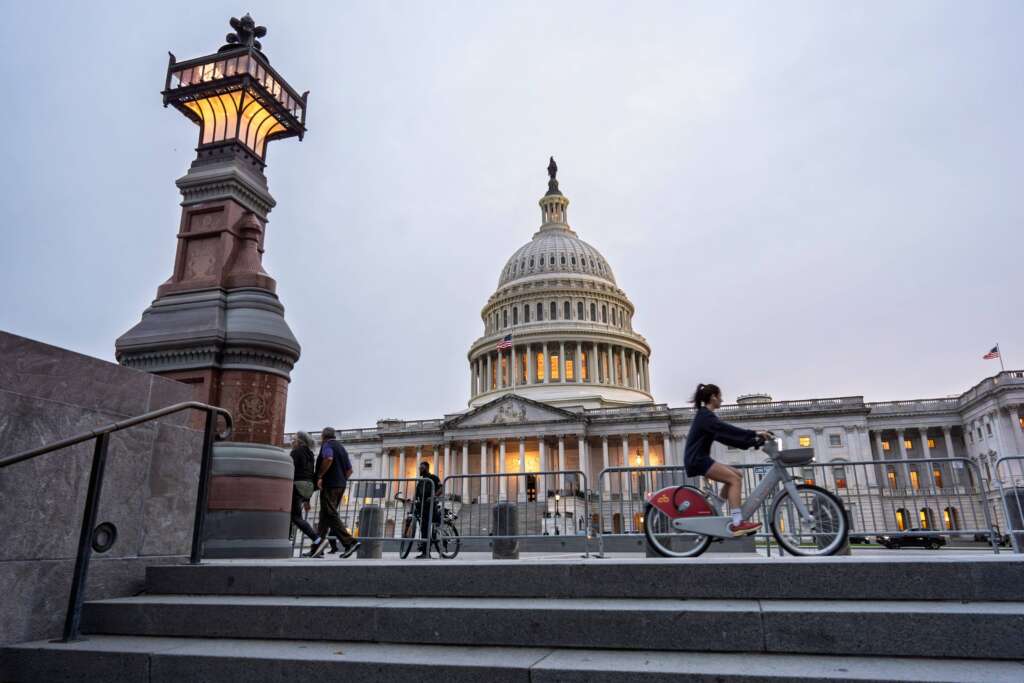
© AP Photo/J. Scott Applewhite


Early morning light filters through the fluted columns of the House of Representatives as lawmakers await final passage of President Donald Trump's signature bill of tax breaks and spending cuts, at the Capitol in Washington, Thursday, July 3, 2025. (AP Photo/J. Scott Applewhite)

Congress warned that NASA’s current plan for Artemis “cannot work”

In recent months, it has begun dawning on US lawmakers that, absent significant intervention, China will land humans on the Moon before the United States can return there with the Artemis Program.

So far, legislators have yet to take meaningful action on this—a $10 billion infusion into NASA’s budget this summer essentially provided zero funding for efforts needed to land humans on the Moon this decade. But now a subcommittee of the House Committee on Space, Science, and Technology has begun reviewing the space agency’s policy, expressing concerns about Chinese competition in civil spaceflight.

During a hearing on Thursday in Washington, DC, the subcommittee members asked a panel of experts how NASA could maintain its global leadership in space over China in general, and more specifically, how to improve the Artemis Program to reach the Moon more quickly.

Read full article

Comments

© Liu Guoxing/VCG via Getty Images

A new CFPB rule strengthens credit data standards, helping lenders and borrowers

Interview transcript

Terry Gerton CFPB recently issued a new rule regarding the Fair Credit Reporting Act and it’s pretty important. Can you walk us through the core of that rule and why you at the Consumer Data Industry Association think it’s important?

Dan Smith Sure, happy to. So the Fair Credit Reporting Act has been in existence since 1970. The leading privacy legislation in the country has specific requirements that lay out how credit reporting should take place, the protections for consumers, and a clear process. And one of the core functions of the Fair Credit Reporting Act is to have a national standard and clearly discusses preemption. Throughout the years, it’s been amended several times. But in the end, Congress is the one who makes decisions on the law. They write the law, and it’s up to judges to interpret the law. In 2022, the CFPB, under the previous administration, put out a document called the Interpretive Rule on Preemption, where they decided what the statute meant. So the first problem was that CFPB actually doesn’t have the authority to do that. They’re not the judge. They implement regulations. They don’t interpret law. That’s up to the courts to decide. They clearly decided to go against the congressional intent of the FCRA. And the current administration believes that that is not their role; that is up to Congress to decide the law. And they were attempting to state that fact, right? So they basically went back to what was common knowledge of the interpretation on preemption to what it was prior to 2022. And they acknowledge in their current interpretive rule that this is not binding, just like the 2022 rule was not binding. It was an interpretation, right? It didn’t go through the APA process, right? We couldn’t sue in 2022 because they didn’t write an actual rule. They just said, this is what we believe. So the current administration is saying you don’t have the right to say, this is what we believe. That is up to Congress. You probably remember the Loper Bright case, which basically said Congress writes the laws, right? If they’re ambiguous, the the regulators actually don’t have the flexibility to interpret it. It’s up to Congress. So I believe the current administration is trying to get the market back to where Congress intended years ago.

Terry Gerton What does this all mean for both consumers and lenders who have to use this kind of data?

Dan Smith The credit reporting ecosystem is critical to every consumer in this country. It provides access to credit. It provides the lender with the ability to mitigate their risks, to analyze the consumer and their ability to repay the loan. It helps facilitate the buying of a car. You could walk into an auto dealer and walk out with a $50,000 car today. And a good reason is because of the credit reporting system. It allows the lender to evaluate the consumer with data. They’re not making judgments. They’re not looking at the person. They are making a decision based on data that talks about their ability to repay the loan. So every day consumers benefit from a robust, complete, accurate credit report. The good, the bad and the not so good. And if you have a system that doesn’t intake the completeness of a consumer’s credit, then you’re going to have decisions that are not accurate. And a lender has two basic choices at that point. They can cut back on their lending, lend to less, or they can charge people more because they’re taking on more risk. Those are their two levers. So the more complete and more accurate a credit report is, the better the lender’s going to be able to manage their risk and lend to more people.

Terry Gerton I’m speaking with Dan Smith. He’s the CEO of the Consumer Data Industry Association. So in the interim between the previous administration’s interpretive rule and this one, some states tried to create their own standards on credit reporting. Were there any particular state actions that raised a red flag for you at CDIA?

Dan Smith Yes. The reason CDIA is so current concerned about the state action is that Congress is the decider of what can and can’t be on a credit report. And it is critical that we have a national standard, that the same data, same types of data appear across the country, so that there is a system that a lender can rely upon if they’re lending in California or they’re lending in Nevada or they’re lending in New Jersey. The credit score that’s based off that information is consistent across the country. If you had data in California that’s different than data in New Jersey, that means the score would act differently. A 750 in California that doesn’t have medical debt would perform different than a 750 in New Jersey that does have medical debt. And I don’t know how a lender can manage a network of 50 different credit reports, 50 different credit scores — and there aren’t just two credit scores, FICO and Vantage score. There’s 50 or 60 different forms of credit scores based on the lender. It’s a complex weave and it’s important to have a national standard so a lender can evaluate the consumer on a level playing field. And if you allow someone other than Congress to determine what can or can’t be on a credit report, you’re bringing politics into the decision making, not sound underwriting decisions. So today’s medical debt, tomorrow’s student loans. Next week is homes damaged by a natural disaster. And before you know it, that credit report is less valuable to the lender and they stop buying the credit report and using it as a tool to lend more.

Terry Gerton You mentioned medical debt along with some of the others. There was a recent decision in the Eastern District of Texas having to do with medical debt that vacated a C F P B rule. Was that in line with the new rule or was that related to the old rule?

Dan Smith So we actually filed that case, CDIA along with Cornerstone Credit Union League out of the Texas area. So you had you have two things. You have the current interpretive rule, which they talked about preemption and what a state can and can’t do. That’s what happened last week. Back in January of 25, the previous administration, as they were leaving, finalized the prohibition on medical debt from being included in credit reports, right? We and others sued saying you don’t have the legal authority to determine that, only Congress does. So back in … 1996, Congress actually prohibited medical debt from being on credit reports, right? People don’t realize, in ’96, they said no medical debt. We don’t think that’s correct. In 2003, they came back and said, oops, that was a mistake. When somebody has $50,000 in any kind of debt, a lender needs to know that so they can make the right choice and not put that consumer in a position that they’ll fail. You don’t want to give people more credit than they can actually afford. So Congress in 2003 passed a law saying both medical debt can be included as long as you can de-identify the medical institution. So if you are a patient at Sloan Kettering, this was an actual example by Congress. You’re a patient at Sloan Kettering and your credit report says. Medical debt, $5,000 Sloan Kettering, the assumption can be made very easily that you have a medical cancer. They don’t think that was fair. And they made the decision that you could put the medical debt, but you have to quote code it or block the identity of that company, the Sloan Kettering. But it says you can definitely put the information on there. So they completely reversed their opinion and said it’s important. So what happened was in ’25 in January, the administration and the CFPB said, we don’t agree with Congress. We’re going to take it off. And they used some data and some analysis and a lot of hyperbole and said, this isn’t fair to the consumer, so we’re gonna take it off. Well, they don’t have the authority to actually do that. So the lawsuit in Texas was to say the authority the Bureau has is to implement regulations, not make law. And the court agreed with us completely.

The post A new CFPB rule strengthens credit data standards, helping lenders and borrowers first appeared on Federal News Network.

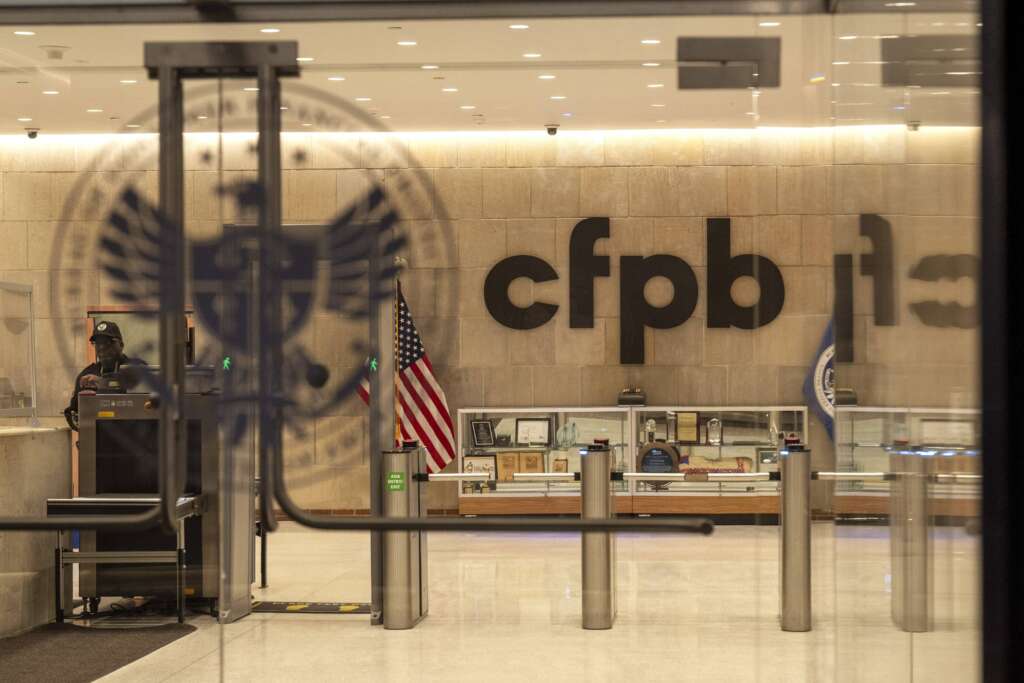
© The Associated Press

FILE - A security officer works inside of the Consumer Financial Protection Bureau (CFPB) building headquarters Monday, Feb. 10, 2025, in Washington. (AP Photo/Jacquelyn Martin, File)

Committee Republicans advance House bill to overhaul the federal probationary period

Lawmakers on the House Oversight and Government Reform Committee have advanced a slew of federal workforce bills, one of which aims to make some significant changes to the federal probationary period.

The GOP-led EQUALS Act was one of about a dozen bills that passed favorably out of the committee on Tuesday. If enacted, it would require new federal employees to serve a two-year probationary period, doubling the length that most newly hired or promoted currently face.

Under the bill, agencies also would have to actively certify that a probationary employee “advances the public interest” before the employee can become officially tenured, while those who are not certified would be removed from their jobs. The legislation advanced in a party line vote of 24-19.

Rep. Brandon Gill (R-Texas), who introduced the legislation, said the EQUALS Act builds on an April executive order from President Donald Trump, which similarly required agencies to review and actively sign off on probationary workers’ continued employment.

“President Trump could not be more right,” Gill said. “Probationary periods and trial periods are long-standing, essential tools to ensure newly hired federal employees are sufficiently performing before their appointments are finalized permanently.”

Democrats on the committee criticized the Republicans’ bill, arguing that extending the length of the probationary period would negatively impact federal recruitment, as well as open the doors to more terminations of new hires in the government.

“This bill would double the time during which federal employees have limited due process and appeal rights as probationary employees. During this time they could be fired within 30 days’ notice, they have limited rights to an attorney or representative and they generally cannot appeal their removal,” Oversight Committee Ranking Member Robert Garcia (R-Calif.) said Tuesday. “At a time when Donald Trump is attempting illegal mass firings and purging experts from agencies across our government, this bill is a dangerous step in the wrong direction.”

Rep. James Walkinshaw (D-Va.) added that the EQUALS Act would “give the Trump administration yet another tool to weaponize against federal employees who they perceive as ideological threats, and to continue efforts to destroy the non-partisan civil service.”

Gill, however, argued that the bill would not lead to mass terminations, but instead only make sure that new federal employees are carefully reviewed. He also pointed to a 2015 report from the Government Accountability Office, as well as a 2005 report from the Merit Systems Protection Board, both of which call for reforms to the probationary period.

“An employee can often work for the federal government for over 25 years,” Gill said. “Having an extra year of probationary status to ensure the right employee becomes tenured is a common sense, good government measure.”

During the committee meeting, Rep. Stephen Lynch (D-Mass.) motioned to strike the EQUALS Act and replace it with legislation to first require GAO to review effects of prior probationary period extensions before making any long-term changes. Lynch’s amendment was struck down by the committee’s Republican majority.

Legislation on official time advances

Committee Republicans also advanced a bill that would require agencies to report in greater detail the use of official time by federal employees governmentwide. The Official Time Reporting Act passed out of the committee in a vote of 24-19 along party lines.

If enacted, the bill would require all agencies to submit reports on how much official time is used in each fiscal year, and justify any potential increases in official time that may occur.

During the committee meeting, Republican lawmakers argued that official time takes away from employees’ job responsibilities. Rep. Virginia Foxx (R-N.C.), the lead co-sponsor on the bill, also criticized the lack of agencies’ reporting on official time over the last several years.

The bill “will let the American people know exactly how much of their hard-earned money is spent not providing valuable service, but on federal employee union activities,” Foxx said.

Some committee Democrats, however, described the legislation as an attack on union rights. The lawmakers emphasized that official time is used for activities that support federal employees, while raising concerns about the possibility that the bill could let the Trump administration further limit union rights.

“This year under the Trump administration, federal employees have faced job insecurity, financial strain and the loss of collective bargaining agreements. This bill will make matters worse,” Rep. Maxwell Frost (D-Fla.) said. “We all benefit when unions and their members are empowered to prevent and address retaliation, discrimination and sexual harassment.”

Generally, official time hours can go toward negotiating union contracts, meeting with management, filing grievances or representing employees dealing with management disputes. Under law, federal unions are allotted specific amounts of time and resources to conduct these activities.

Federal unions, including the American Federation of Government Employees, have pushed back against the Trump administration’s characterization of official time as “taxpayer-funded union time,” calling it a misrepresentation.

During Tuesday’s meeting, Garcia argued that official time leads to lower staff turnover and higher employee morale, while also preventing potential legal costs down the road.

“Official time is work time that employees are allowed to use for making the workplace safe and protecting workers from discrimination or harassment,” he said.

Committee approves some bills with bipartisan support

In contrast, some legislation that the committee approved on Tuesday gained strong bipartisan support from lawmakers. That includes bills on training for federal supervisors, skills-based hiring of federal contractors and amending the system for relocation payments for federal employees.

The Federal Supervisor Education Act, for instance, unanimously advanced out of the Oversight committee in a vote of 43-0. If enacted, the legislation would require agencies to work with OPM to create training programs for newly hired or promoted agency managers and supervisors.

Rep. William Timmons (R-S.C.), who introduced the legislation in October, argued during Tuesday’s meeting that many federal supervisors step into leadership roles without enough training, and with no clear expectations for how to adjust to a managerial role in government.

“Agencies promote strong technical employees into supervisory jobs, and then send them in blind,” Timmons said. “That leads to low productivity, uneven standards and a system where good employees feel unsupported and bad employees rarely face consequences.”

Timmons added that the legislation would result in “real, meaningful training,” rather than being “a slideshow or a checkbox exercise.”

Although he said he mostly agreed with the bill’s intentions, Walkinshaw proposed striking one provision of the legislation. The initial bill text included a requirement that supervisory training programs must include additional training on the probationary period — something that Walkinshaw argued was outside the bill’s scope.

Committee Republicans agreed to adopt Walkinshaw’s amendment, after saying that it would result in stronger bipartisan support for the bill. Ultimately, the legislation advanced unanimously, with the amendment included.

“I am a strong supporter of the goal of this legislation,” Walkinshaw said. “Almost all of the language will provide supervisors within the federal workforce the appropriate training and resources to ensure there are strong leaders within their respective agencies.”

The post Committee Republicans advance House bill to overhaul the federal probationary period first appeared on Federal News Network.

© AP Photo/Mariam Zuhaib

‘The mission is dead’: Federal workers say the shutdown made an ‘extremely trying year’ worse

The federal offices are back open and hundreds of thousands of federal workers have returned to work after the longest shutdown in history. But nothing is back to normal — federal workers say morale and trust in leadership are at an all-time low, tensions are high between furloughed staff and those who worked through the shutdown, schedules are slipping and projects are being pushed back, and more people are accelerating their retirement plans or leaving federal service altogether.

The recent shutdown, however, has just exacerbated the existing problems and added to what federal workers described as an already extremely trying year for the federal workforce. 

“As if morale wasn’t already non-existent, it sure is now. I expect a surge of people to (quiet) quit and I expect the remaining players to be bombarded with work with no support or guidance from leadership,” one employee told Federal News Network. 

“The mission is dead. Operations are barely running. Morale is toast,” another federal worker said. 

“Everything about being a federal employee in 2025 has destroyed workforce morale — from constant [reduction-in-force] threats, to losing colleagues to early/forced retirements and firings, to the loss of any telework to facilitate work/life balance for working parents or senior caregivers, this is the worst professional year I have experienced in nearly 20 years of service to my country. Nothing about the current [Office of Management and Budget] approach to leadership has moved our country forward,” another employee said.

A Federal News Network survey, conducted online between Nov. 17-30, asked federal workers what it has been like going back to work after the 43-day government shutdown. Survey respondents were self-selected, and they self-reported information to verify their status as current federal employees.

Federal workers described the experience as disorienting — returning to thousands of unanswered emails and scrambling to catch up with partners who kept work moving during the shutdown. There was little to no guidance from top management; they reported overwhelming backlogs and project schedules going completely awry.

Many said overloaded or outdated IT systems, lapsed system access and computer issues made even basic tasks difficult.

“IT issues as devices are set to expire and become inactive after 30 days of non-use, supervisory chain is still not back to work and others are catching up on leave. There are large gaps within the higher chain of command, tremendous amount of confusion, no clear description of how to verify back pay and related deductions are accurate, statutory deadlines did not stop during the shutdown, so crushing workload to return to,” one employee said on Nov. 24. 

“It is not so simple as flipping a switch. We are still waiting on funds to arrive and are unable to work on things until those funds arrive,” another federal worker said on Nov. 18. 

“I engage in very technical work. A 1.5-month shutdown has thoroughly derailed my train of thought. It will take a long time to refamiliarize myself with what issues were being sorted out, what solutions I had been pursuing, even how any of my own code works,” another employee said. 

Several federal workers said their agencies could face budget cuts due to not hitting mandatory spending benchmarks — goals that are “impossible to achieve” after a 40-plus day lapse in appropriations.

In addition, many employees now have to use their “use-or-lose” annual leave before the end of the year, which will further delay progress and extend timelines.

Nearly 1,500 people responded to the survey. Out of 739 federal workers who responded to this question, nearly 47% of respondents said it would take them more than two weeks to catch up on all the work missed during the shutdown.

“My program was halted immediately, but will take two months to ramp back up,” one worker said. 

“Can you really ever catch up? Some work will just be lost — deprioritized in the chaos,” another federal employee said. 

And the threat of another shutdown is looming — the bill President Donald Trump signed into law keeps the government open only through Jan. 30. The uncertainty, workers say, is making people reluctant to fully dive back into work. 

“With holidays coming, this will set projects back months,” one employee said. 

Federal employees who worked during the shutdown also expressed “apathy and annoyance” toward furloughed employees who did not work during the shutdown, saying the resentment has led to conflicts and made collaboration difficult. 

“Expect operations to be negatively affected as the furlough has driven a wedge between those furloughed employees and those who remained on the job,” one federal employee said.

Receiving back pay

Most of the federal workers worked without pay during the shutdown, missing more than four weeks of pay. 

When the government reopened on Nov. 13, the Office of Personnel Management said it would take several business days for workers to get their back pay.

Out of 728 individuals, 200 federal workers — about 27.5% — said they received their back pay within one-to-three days after returning to work. Another 200 said they were paid within four-to-seven days. For the remaining 323 individuals, it took more than a week to receive their back pay.

Source: Federal News Network November 2025 survey of 1,467 current federal employees.

Many employees told Federal News Network that there was a lot of confusion about how to process timesheets and guidance changed a few times the first two days, which had contributed to the delay in issuing our pay.

“Smithsonian still has not managed to get us paid. They are wasting time making sure everyone has the correct time codes rather than getting people paid. It’s more important to them that they take a couple weeks to record we were furloughed. Can’t pay the mortgage, but at least they’ll have the correct time code,” one employee said on Nov. 22.

One Interior Department employee told Federal News Network on Dec. 1 the agency had only paid them for 72 hours worked during the shutdown and had promised the remainder by Nov. 25 — they are still waiting on that payment. They added that none of the 69 civilian employees at the U.S. Park Police have been fully paid. Sworn officers, however, received a flat 80 hours per pay period, and while overtime and night-differential corrections were made, it’s not clear if that pay had been issued. 

“We have not heard anything about when we will be paid beyond the deadline that passed a week ago, no reason has been provided to explain the delay,” the employee said. “I will be retiring early. While not the only reason, the recent hijinks played a role in my decision.”

One employee at INTERPOL Washington told Federal News Network on Dec. 1 that personnel there have received only partial back pay and some employees have only received pay for one pay period. The issue stems from the Justice Department’s decision to dismantle INTERPOL Washington and fold its remaining functions into the U.S. Marshals Service during the shutdown — while making changes in the pay system while payroll processing was underway.

The workers were initially told they would receive all of their back pay on Nov. 21, but instead received partial pay on Nov. 24. DOJ then promised the rest by Nov. 28, but only a handful of people were paid over that weekend. The agency now says it has finally identified the problem and that employees should be paid by Dec. 3.

“Every time that the DOJ claims to find a solution and puts another date out for when we should get paid, there is just another disappointment,” the INTERPOL Washington employee said.

Another Air Force civilian at Lackland Air Force Base, who was told they would be paid last week, is still waiting for their back pay now nearly three weeks after the shutdown ended. On Monday, they were told that “the comptroller squadron is working diligently to manually process over 3,000 timecards with an estimated completion date of Nov. 29.” 

For many of those who received back pay, determining whether the amount was correct was nearly impossible. 

Dozens of respondents said they were unsure if their payments were accurate because agencies did not issue accompanying paystubs for the affected pay periods. Several employees said since payroll providers such as the Defense Finance and Accounting Service do not provide leave and earnings statements for retroactive pay, meaning they will have to wait for the next pay period to verify whether the amount is correct.

“It seems to be off by a few hundred dollars, but I can’t determine where the discrepancy is,” one federal worker said on Nov. 26. 

“We don’t know since it was a partial payment with no documentation,” another respondent said on Nov. 24. 

“Many people at work say that their paychecks were less due to taxes on lump sum payouts,” another respondent said on Nov. 25.

More feds eyeing the exit

Federal workers were already overwhelmed, stretched thin and struggling with high levels of anxiety following the Trump administration’s push to reduce the size of the federal workforce. Now, the shutdown is pushing even more people out the door. 

Out of 758 federal workers, 329 respondents — about 43.4% — said that the shutdown made them reconsider staying in federal service.

Source: Federal News Network November 2025 survey of 1,467 current federal employees.

Many said they are actively looking for an out, while for others the shutdown reinforced their decision to retire

“It is so untenable that I plan to quit in the next month or so. The situation has gotten even worse since returning,” one employee said.

“The shutdown did solidify that I will retire the first date I can,” a federal worker said.

“I have dedicated 20 years to serving my country, including service in the U.S. Army. It’s pretty thankless to be a federal civilian employee now. I used to encourage my children to pursue a similar career but now I am encouraging them to stay away from federal service,” another employee said. 

Financial, mental health toll

More than half of federal employees — 58% of respondents — reported experiencing financial challenges during the shutdown, and nearly a third said they struggled to pay bills. Over 51% of federal workers said they had to rely on credit cards, loans or emergency savings to pay their bills, while 14% reported missing rent, mortgage or other payments. About 10% of federal workers said they needed outside assistance, such as food banks and relief programs. But notably, nearly 62% said the shutdown impacted their mental health.

Source: Federal News Network November 2025 survey of 1,467 current federal employees.

Several respondents said they dipped into retirement accounts or cleared out emergency savings to stay afloat, while others reported delaying Christmas shopping, postponing home repairs or borrowing from family members to cover basic needs. Younger workers and those in single-income households were hit especially hard.

And while some said they were fortunate enough to have savings or a second household income, many still described the experience as deeply destabilizing. 

“Fortunately, we are a two-income, no-child household and good savers. But I did give a monetary gift to a colleague who is in a much more tenuous situation,” a federal worker said.

“I requested a skip loan payment on my car since I could without fees. I have paid for things out of savings and since I’m a bit older I can do that, but I’m depleting savings still as I continue to not be paid,” one employee said.

“Outsiders calling it a ‘free vacation’ don’t understand the effects the shutdown has on furloughed staff,” another employee said. 

 Workers described experiencing “constant dread and worry,” “incredible stress and anxiety” and “the feeling of absolutely no protections.”

“It was very stressful. I had to take a part-time job,” one employee said. 

Ultimately, one worker said, the impacts were “cruel and petty and proved to be irrelevant to either side achieving their stated goals.”

If you would like to contact this reporter about recent changes in the federal government, please email anastasia.obis@federalnewsnetwork.com or reach out on Signal at (301) 830-2747.

The post ‘The mission is dead’: Federal workers say the shutdown made an ‘extremely trying year’ worse first appeared on Federal News Network.

© The Associated Press

FILE - The U.S. Department of the Interior building is seen in Washington, Saturday, Dec. 7, 2024. (AP Photo/Jose Luis Magana, File)

House lawmakers to try again to extend TMF through NDAA

The Technology Modernization Fund is running out of time. In 10 days, the reauthorization will expire for the 8-year-old governmentwide account to help agencies update IT systems.

If Congress doesn’t act before Dec. 12, the TMF will not be able to make any new investments, freezing more than $150 million.

“The Technology Modernization Fund remains one of the federal government’s most effective tools for rapidly strengthening cybersecurity and improving high-impact systems. Reauthorizing the TMF is essential to ensuring stable, flexible funding that helps agencies deliver secure, modern services for the American people,” said a GSA spokesperson in an email to Federal News Network. “We look forward to working with Congress on the reauthorization effort.”

There is support in the House for reauthorizing the TMF. Rep. Nancy Mace (R-S.C.) and former Congressman Gerry Connolly (D-Va.) introduced the Modernizing Government Technology (MGT) Reform Act in April that included an extension of the fund to Dec. 31, 2031.

The bill hasn’t moved out of the House Oversight and Government Reform Committee and there is no Senate companion.

The House did pass a version of this bill in May 2024, but, again, the Senate never moved on the bill.

The Senate, however, did allocate $5 million for the TMF in its version of the fiscal 2026 Financial Services and General Government appropriations bill, released last week. This comes after Congress zeroed out new funding for the program over the last three years. The House version of the FSGG bill didn’t include any new money for the TMF.

Mace tried to include her TMF bill as a provision in the House’s version of the National Defense Authorization bill, but language didn’t make it in the version passed by the lower chamber. The Senate version of the NDAA also didn’t include the TMF extension, but there is still hope to get it in during the upcoming conference committee negotiations.

“Extending and reauthorizing the Technology Modernization Fund, which expires on Dec. 12, is a high priority for the committee and we have requested in a bipartisan manner that it be included in the final Fiscal Year 2026 National Defense Authorization Act,” said an Oversight and Government Reform Committee spokesperson. “This is a shared policy priority with the administration and the Office of Management and Budget. Extending the fund also has broad industry support, specifically the Committee has support letters from the Information Technology Industry Council (ITI), the Center for Procurement Advocacy (CPA), the Professional Services Council (PSC) and the Alliance for Digital Innovation (ADI).”

TMF: 69 investments, $1 billion

ADI wrote lawmakers a letter on Nov. 24 advocating for the TMF extension.

“To date, the TMF has catalyzed transformation across government, from strengthening cybersecurity defenses to improving citizen-facing digital services. By providing flexible capital through a merit-based process overseen by federal technology leaders, the Fund enables agencies to undertake complex modernization initiatives that would otherwise remain trapped in multi-year budget cycles. This structure ensures accountability while giving agencies the agility to respond to rapidly evolving technology landscapes and emerging threats,” the industry association said in its letter to House and Senate leadership. “The MGT Reform Act provides the right framework for the TMF’s next chapter. By extending authorization for seven years, Congress would provide agencies the long-term certainty needed to plan and execute substantial and transformational modernization programs. The legislation’s transparency provisions, including the establishment of a federal legacy IT inventory, will give policymakers greater visibility into modernization progress and priorities. These reforms strengthen oversight while preserving the operational flexibility that makes the TMF effective.”

GSA says in its fiscal 2026 budget justification that the TMF currently manages more than $1.07 billion worth of systems upgrades and modernization projects totaling 69 investments across 34 federal agencies. The TMF board has received and reviewed more than 290 proposals totaling about $4.5 billion in funding demand.

The TMF board made only one new investment in calendar year 2025. It awarded $14.6 million to the Federal Trade Commission in June to develop a cloud-based analytics platform that uses artificial intelligence tools and to train staff to handle data analysis in-house.

GSA says it had more than $231 million in available funding for 2025 and it expected to have more than $158 million for the TMF in 2026.

“The government needs updated technology, and those updates need to be done efficiently. I’m proud to co-sponsor the bipartisan Modernizing Government Technology Reform Act introduced by Cybersecurity Subcommittee Chairwoman Mace,” said Rep. Shontel Brown (D-Ohio), ranking member of the Cybersecurity, IT and Government Innovation subcommittee, in an email to Federal News Network. “The best course of action would be the Oversight Committee and Congress advancing this legislation before the authorization ends.”

Technical debt would increase faster

Former federal technology executives say letting the TMF expire would set back agency modernization efforts.

Larry Bafundo, the former executive director of the TMF program office, said without the TMF, agencies will have a more difficult time finding funding to modern legacy systems.

“We spend a vast majority of our funding on maintaining existing and outdated systems instead of adapting systems to meet changing needs. I think something is broken in the way we fund modernization of IT systems. Congress is incentivized to think in terms of projects instead of services that evolve over time. There is a huge disconnect between how the government works and how IT projects are funded,” said Bafuno, who is now president of Mo Studio, a digital services company. “There isn’t a clear, governmentwide IT modernization strategy, with a clear inventory of systems, to align programs like TMF against. As a result, we approach the problem piece-meal, rather than as part of a deliberate, or coordinated, plan. Similarly, agencies can sometimes lack incentives to modernize effectively. In many cases, they not only lack performance baselines to measure change against, but there are also very few senior executives in govt today who are evaluated based on the value of the services they provide the public. Instead, they are incentivized to preserve the status quo. All of this makes showing ‘return on investment’ difficult, along with the fact that Congress is not united in its understanding of what the return on investment looks like — is it cheaper, more secure, faster, etc.? We don’t have a common definition for success when it comes to programs like TMF.”

Bafundo said the TMF works because it provides agencies with guardrails or characteristics for the types of projects the board would invest in.

“We relied on good ideas or good proposals and someone who could defend their ideas, as opposed to a set of focal areas and show us what you can with seed funding. You can use that experience to unlock further funding,” he said. “That is how it should work instead of a 3-to-5 year plan that many programs have. In some ways the TMF because it relies on lengthy proposals instead of working software is more like a grant program than a seed fund.”

Gundeep Ahluwalia, a former Labor Department chief information officer, helped the agency win TMF funding for six different projects between 2018 and 2024.

Ahluwalia, who is now an executive vice president and chief innovation officer for NuAxis Innovations, said the TMF helped Labor pay down its technical debt.

“Whether it’s improving services to Americans or protecting against foreign adversaries, the cost of not doing anything here is just too large, especially considering the investment is paltry,” he said. “The TMF used an approach very similar to the private sector where you would make your business case, tell the board how much the company would get back from the investment. This business case is a no-brainer. For $500 million or even $250 million, it could give agencies the opportunity to improve services, reduce risks and become cyber strong.”

OMB seeks change to TMF

It’s unclear why support on Capitol Hill has been tepid a best for the TMF.

Ahluwalia said lawmakers still have trouble understanding why something like the TMF is needed and there isn’t an outspoken supporter like Connolly, who passed away in May, was for IT modernization funding.

“If you don’t understand something and there is a significant resistance to spending this becomes yet another government program. But this isn’t just another one, the TMF is a way out of our technical debt conundrums. It’s modeled after the private sector and I don’t think people may not understand that,” he said.

OMB, which didn’t respond to two requests for comments on the TMF expiring, proposed through GSA’s 2026 budget request a new funding model for the program. The White House wants to make it a revolving or working capital fund of sorts that would be authorized to collect up to $100 million a year in otherwise expired funding.

The legislative proposal would let “GSA, with the approval of OMB, to collect funding from other agencies and bring that funding into the TMF,” GSA wrote in its budget justification document. “This would allow agencies to transfer resources to the TMF using funds that are otherwise no longer available to them for obligation. This provision is essential to providing the TMF with the necessary funds to help the federal government address critical technology challenges by modernizing high-priority systems, improving AI adoption and supporting cross-government collaboration and scalable services.”

If the TMF authority expires, GSA would still be able to support existing investments with already approved funding and other program support services.

The post House lawmakers to try again to extend TMF through NDAA first appeared on Federal News Network.

© Federal News Network

technology-modernization-fund-1

3 federal workforce bills to watch in House Oversight Committee markup

The House Oversight and Government Reform Committee is convening Tuesday morning to mark up a slew of bills, many of which would impact the federal workforce in one way or another.

Tuesday’s meeting will be the first legislative markup session the committee has held in nearly two months, with the last being prior to the 43-day government shutdown. Any bills that the committee approves during the markup will advance to the full House for further consideration.

Lawmakers are expected to consider bills covering everything from whistleblower protections and skills-based hiring for federal contractors, to relocation incentives for federal employees.

Several other legislative changes may be on the horizon as well. Here are three key bills up for the committee’s consideration that may bring significant changes for the federal workforce:

Probationary period, federal workforce changes

One Republican-led bill, introduced by Rep. Brandon Gill (R-Texas) in October, aims to cement many of the changes the Trump administration has made to the government’s rules for the probationary period in the federal workforce.

If enacted, the so-called EQUALS Act would require most new federal employees to serve a two-year probationary period — a time in which employees have limited appeal rights and are easier to remove, before their employment in the federal workforce can be solidified.

Part of the bill would compel agencies to evaluate their employees regularly throughout the federal probationary period. And in the last 30 days of that two-year period, agencies would have to certify — and get the Office of Personnel Management to approve — that the probationary employee “advances the public interest,” before the employee can become tenured.

Any probationary employees who are not actively certified by their agency would be terminated, according to the GOP-led legislation.

The bill also states that when making a decision on whether to keep a probationary employee, agencies can additionally consider performance and conduct; the “needs and interests” of the agency; and whether the employee would advance “organizational goals” or “efficiency.”

The EQUALS Act aligns with efforts from the Trump administration earlier this year to overhaul the rules for the government’s probationary period. In April, President Donald Trump called for the creation of “Civil Service Rule XI,” which similarly required agencies to review and actively sign off on probationary workers’ continued employment before they can be moved out of a probationary period.

Trump’s executive order also expanded the reasons that probationary period employees can be fired. In June, OPM further clarified that probationary employees can be terminated based on broader reasons than the previous limitations set only to performance or conduct.

The House bill also comes after the Trump administration fired tens of thousands of probationary employees earlier this year, stating that the removals were due to “poor performance.” But in September, a federal judge found that OPM unlawfully directed the mass probationary firings. The judge ordered agencies to update employees’ personnel files to reflect that their firings were not due to performance or misconduct.

An eye on official time

A separate bill teed up by Republicans would compel agencies to provide much more detail on federal union representatives’ use of official time to both Congress and the public on an annual basis.

The Official Time Reporting Act from Rep. Virginia Foxx (R-N.C.) would require all agencies to submit reports on how much official time is used in each fiscal year, and justify any potential increases in official time that may occur.

The legislation would then require OPM and the Office of Management and Budget to create and send a joint report to Congress, and make publicly available online, the details of official time governmentwide. Those reports would have to cover how much official time each federal employee used, as well as provide data on official time hours calculated against the total number of bargaining unit employees for an “official time rate.”

Under the GOP-led legislation, those annual reports would additionally have to detail the specific purpose of all official time, the amount of money withheld for union dues, the cost of pay and benefits for all employees while they are on official time, and the office space and resources union representatives use while on official time.

Generally, official time refers to on-the-clock hours that go toward work such as negotiating union contracts, meeting with management, filing complaints or grievances against an agency, or representing employees who are dealing with disciplinary actions or other management disputes. Federal unions are allotted, by law, specific and limited amounts of agency time and resources to conduct activities on official time.

Official time by union representatives has been a major target of the Trump administration this year. Some agencies have either reduced or fully removed official time options, in response to executive orders from Trump calling for the termination of collective bargaining at the majority of executive branch agencies.

The administration’s actions have received major pushback from federal unions such as the American Federation of Government Employees, which said OPM’s characterization of official time as “taxpayer-funded union time” is false and stigmatizing.

Mandatory executive training

During Tuesday’s markup, Oversight committee lawmakers also plan to consider legislation that would require a mandatory training program all managers and supervisors across the federal workforce would have to take.

Under the Federal Supervisor Education Act, which Rep. William Timmons (R-S.C.) introduced in October, agencies would have to work with OPM to create training programs for agency managers, with at least some modules focused on goals like performance management, employee engagement and productivity.

The bill would also require the training programs to cover how supervisors should manage employees who have “unacceptable performance,” as well as how to make use of the probationary period. The bill also mandates that managers and supervisors receive training on how to address reports of harassment, prohibited personnel practices, employee rights, and more.

The legislation emphasizes that agencies should use “instructor-based” training as much as practicable. If enacted, supervisors would have to complete the training within one year of being appointed to a supervisory role, and would have to retake the trainings at least once every three years following that.

The Republican-led effort comes after OPM launched two federal workforce training programs for senior executives in November, incorporating common themes from the Trump administration on “accountability,” performance management and adherence to the president’s priorities.

Although both new programs are optional, OPM still told agencies to “set the expectation” that all career Senior Executive Service members should at least complete training modules on “returning to founding principles” and “implementing administration priorities” within the next year.

In the Oversight committee meeting Tuesday, all three federal workforce bills, along with many others, will be up for consideration and potential advancement in the House.

The post 3 federal workforce bills to watch in House Oversight Committee markup first appeared on Federal News Network.

© Getty Images/bpperry

US Capitol lights on its north side

POGO has new recommendations to improve the 2026 NDAA before it’s finalized

Interview transcript:

Terry Gerton: You’ve recently laid out a mix of reforms and warnings and priorities for the 2026 National Defense Authorization Act, which is still moving through Congress. What’s the overall message before we dig into the specifics that POGO wants to send about this year’s recommendations?

Greg Williams: Sure. I think we all welcome all of the extraordinary work that Congress has done this year to produce two different versions of NDAA bills that work very hard to overhaul military acquisition. Now that said, they place an enormous emphasis on deregulating military acquisition, with the Senate’s version repealing no fewer than 86 distinct statutes that govern military acquisition. Now, Congress has its own research arm to help inform for these decisions, and that’s the Government Accountability Office. Now the Government Accountability Office maintains a database of suggestions. And last I checked, there were 750 recommendations they had for how the Defense Department is run and exactly none of them recommend repealing any statutes having to do with military acquisition. Now I think the unavoidable question is if Congress doesn’t seem to be listening to the GAO, its own investigative body, well, who is it listening to? I think it’s only logical to wonder to what extent these changes are being pushed by the defense industry, perhaps at the expense of the interests of the taxpayer.

Terry Gerton: Are you seeing any specifics in the NDAA that relate back to those 750 GAO suggestions?

Greg Williams: Frustratingly few. Two that I’ll call out that I think are really important are passages in both the House and Senate versions that secure greater right to repair the military’s own equipment. Just imagine you’re far from home, you have a piece of equipment that you rely on, perhaps for your safety or in order to be able to complete your mission, and it breaks. Right now, there are rules, laws, contracts that often get in the way of military personnel fixing those things. This year’s NDAA, whether the Senate or the House versions prevail in this context, will dramatically increase the military’s right to repair its own equipment. And I think it’s really important that those passages survive conference. The other one that I think is particularly important in terms of acquisition law are some reforms to what’s called the Nunn-McCurdy Act, which stipulates that Congress needs to be informed if weapons development or procurement programs breach certain cost thresholds and requires that the Secretary of Defense or Secretary of War recertify those programs and provide updated timetables and budgets for their completion. So the passages that amend that provide Congress more say in the recertification of those programs and they make it easier to call out cost overages, especially in the case of large programs like naval shipbuilding, where if you look at the overall program, you may not have breached overall cost thresholds. But you’ve already built two or three ships and you can tell that they’re way over budget. What this passage allows you to do is to treat them as distinct subprograms and apply those thresholds to them individually.

Terry Gerton: Well, you’re right. There’s certainly a lot of coverage in the NDAA, both versions, around acquisition reform. One of the other pieces that POGO has really called out is the use of military force. First, you recommend that the authorizations for the use of military force from 1991 and 2002 tied to operations in Iraq be repealed. Why is it so important to take those off the books now?

Greg Williams: Well, those AUMFs have been used very pervasively to authorize all kinds of use of violence around the world that seem to have very little to do with the original intentions of those two AUMFs. And one of the ways Congress can clarify the use of its power to decide when and where we go to war is by not leaving things like that lying around to be potentially misinterpreted or reinterpreted by the executive branch.

Terry Gerton: I’m speaking with Greg Williams. He’s the director of the Center for Defense Information at the Project on Government Oversight. Greg, let’s follow up on this a little bit because there are conversations happening between the president and his team and Congress right now about operations in Venezuela. So how do those AUMFs relate to those kinds of current conversations?

Greg Williams: Well, I’m going to emphasize that there are operations against Venezuelan nationals and Venezuelan boats, and they’re being treated by the administration as being very distinct from potential operations that might take place in Venezuela. And in fact, the administration is arguing that they don’t need to comply with the War Powers Act in the context of the Venezuelan boats because we’re not deploying troops in harm’s way. As you may know, these boat strikes are believed to be largely conducted by unmanned aerial vehicles and so arguably, American troops are never in any danger as we execute these strikes. Now if we were to invade Venezuela or if we were to fly crewed aircraft over Venezuela or even close to Venezuela and engage in a shooting war with them, that would more clearly trigger the requirements of the War Powers Act, or at least that would not be subject to the exclusion that the Trump administration has called out in the context of those boats.

Terry Gerton: One of the other concerns that you raise about military deployments is border enforcement and the use of military forces in that function. What’s the concern there?

Greg Williams: Well, the overall concern is that what we’re seeing is a steady erosion of what we thought were bright lines, protecting both American citizens and others against being arbitrarily seized or killed. And whether we see those lines blurred outside our borders, as in the context of these boats or inside of our borders, it just makes us all a lot less safe. It’s much harder to count on not being swept up in some raid and potentially deported to a foreign country without any meaningful opportunity to defend our rights.

Terry Gerton: Well, military deployments and acquisition reform are really big topics. I want to pull you down to something a little more wonky and talk cost accounting standards because you’ve got a recommendation in here and there’s been a lot of conversation about moving DoD from cost accounting standards to GAAP, Generally Accepted Accounting Principles. Why was that important enough to raise in your memo?

Greg Williams: I think it represents a fundamental misunderstanding of how accounting in general works. And it undermines a very basic control that any customer organization wants to have over vendors that are submitting things like expense reports. So at a high level, I would describe the generally accepted accounting principles as a set of tools that are created by an industry consortium to protect shareholders in private organizations from misrepresentation of the value of the enterprise. Cost accounting standards are like the expense report guidelines that any consultant or anyone who’s ever worked as a customer for a big business has to comply with. And different customers have different standards. Some say you can’t have any alcohol at all with your dinner, some say you can have one drink. Some say if you’ve traveled less than 50 miles, you can’t submit any meal-related expenses. It represents an agreement between the customer and their vendor about what is and is not an acceptable expense. And it’s a very basic structure that any business person should recognize.

Terry Gerton: How does that relate to DoD’s ability to pass an audit?

Greg Williams: I don’t think it is particularly related. As long as you follow whatever rules are articulated for you, you can pass an audit. I think use of cost accounting standards is more about making sure that the government gets a fair deal from its vendors when those vendors submit cost reports for reimbursement.

Terry Gerton: So POGO’s list is pretty specific in terms of things that you would hope Congress would consider. If they were to take up your list, what kinds of impact would you expect to see in terms of military readiness and operations?

Greg Williams: Well, I think it’s really interesting that over the last several weeks we’ve paid a lot of attention to the USS Gerald Ford Carrier Strike Group. There are two readiness issues that bear on it directly that have received some attention, I think, should probably receive more attention. One is that it was called out as a specific example of how service people are affected by the inability to repair their own equipment. And the example that was used was, I think, more than half of the ovens used to prepare meals for sailors embarked on the Ford were out of commission and had to wait an extended period of time for the vendor to repair them. Now that’s one thing when you know you can’t have muffins with your breakfast. But if similar principles apply to systems that allow the aircraft carrier to launch and recover aircraft or move weapons to the flight deck and things like that, just imagine being 6,000 miles away from the contractor who might repair those things and having one of them break and having to wait or redeploy back to the continental United States to have those things fixed. It’s just, I think, a fundamentally unreasonable expectation and puts our troops needlessly in danger.

The post POGO has new recommendations to improve the 2026 NDAA before it’s finalized first appeared on Federal News Network.

© Federal News Network

Congress faces a packed December agenda and big decisions on healthcare subsidies

Interview transcript

Terry Gerton Last week Congress was in recess, but that didn’t mean it was a quiet news week. The White House floated a plan to address the health care subsidy problem that was part of the shutdown agreement. What are you hearing there and how’s it playing?

Mitchell Miller Well, when this trial balloon floated, it completely caught a lot of House Republicans, particularly, off guard. They were totally surprised by this and the fact that it was going to be a two-year extension. Now it would have potentially included some of the reforms that GOP lawmakers are looking for. They want limits on income that are now brought down a little bit more. They want some reforms that they say will take care of waste. But this definitely was quite an event here on the Hill, given the fact that the lawmakers are spread out all across the country in their districts, but they quickly made it clear that they did not like this proposal. And so while there was talk about it being rolled out last week, the White House quickly put the brakes on it and said, okay … Karoline Leavitt, the press secretary, is acknowledging there are some very intense discussions about what is going to happen with health care within the White House and within, among Republicans. But right now, everybody’s kind of scrambling. There are some bipartisan proposals that are coming out of the House. The Senate is trying to work with some things. What I think may happen in the coming weeks is, you’re going to have a vote in the Senate, maybe one or two, on these proposals. One of them is likely to just be a straight up extension of the ACA for a year to keep those insurance costs down. That will likely go down to defeat. And then Republicans, it’s still unclear exactly what they’re going to propose, but you can bet that there will be something brought to the floor by Senate Majority Leader John Thune. That I think will also be defeated because Democrats will filibuster it. And then I think what is really going to probably happen is, this is all gonna get pushed into January, and when people start seeing those eye popping insurance costs going up $100, $500, $1,000, $2,000 and more per month, that is going to put a lot of heat on lawmakers to try to come up with something.

Terry Gerton You make a good point that there aren’t that many working days in December before they get to having to deal with this in January. What else is on the congressional agenda for those few days?

Mitchell Miller Well, you know, that’s a big question because last week was just really a lost week. When the House came back after the shutdown, there was all this talk about they were gonna get right back to trying to get back to regular order and we were going to see a lot of action on appropriations bills. That really just did not happen. There were a few symbolic votes in the House, and so they’ve still got this set of nine appropriations bills that they have to deal with. And even though they keep talking a good game and saying that they’re going to address them, and there is some appropriations meetings going on back in behind the scenes, but that’s going to be the real big thing that they need to at least start getting some traction on, some type of a minibus, perhaps bringing together three, four, maybe five big legislative bills together. But right now that is still in a free form position, so we’ll have to see with the only those limited work days in December will will they actually get much done.

Terry Gerton It feels like we talk about the NDAA every time, but that was supposed to come up for a a vote in early December as well.

Mitchell Miller Right. And that looks like it’s being delayed as well. There’s as you know, many provisions in it that are getting a lot of discussion. Among them, of course, is one of them related to artificial intelligence, the AI provision in the NDAA. There’s so much agreement on the NDAA and we know that this always gets passed every year, but I think that’s the big sticking point right now is that, basically this push to put a hold on everything that would happen in the states with AI so that the federal government could try to get its arms around it. And there’s been a lot of pushback from state lawmakers as well as the house lawmakers that are involved with those people. So I think the NDAA is going to get pushed back a little bit more. Certainly they’re close — you have House and Senate negotiators just trying to bring all of this together. That’ll be a big one this month.

Terry Gerton I’m speaking with Mitchell Miller, he’s Capitol Hill correspondent for WTOP. Mitchell, one thing that’s got to be on lawmakers’ minds in December is the retirement of the comptroller general, the head of the government accountability office. Gene Dodaro’s term ends at the end of the month. What are you hearing in terms of the maneuvering and the nomination for his replacement?

Mitchell Miller Well, I think there’s actually a lot of nervousness right now about what is going to happen with him. He has been a steady hand on the rudder, as you know, for close to fifteen years now, and there’s really a lot of discussion about how they’re going to get a successor to him. And frankly, it’s not really clear what’s going to happen. You have this panel of lawmakers that are supposed to nominate the next person, but they’re also looking for some guidance from the White House because that will have a big role in the type of person that replaces him. And the fact that this is, you know, one of the most prominent unelected positions in the federal government, the fact that this person is really responsible for rooting out waste, which Republicans have said they want to do and that they tried to do with DOGE, how much of a leash is the new head of GAO going to have? Will the White House go along with Republicans? We’ve seen Republicans starting to assert their own voice a little bit more, saying that they want some independence here, or will the White House crush that and say, you know, President Trump says I want this person and we’re gonna put them in? So I think we’re going to see a lot of maneuvering here in the next few weeks because he will be gone, as you know, later in the month.

Terry Gerton Do you think it’s an opportunity for Congress to push back or take back some of its authority? GAO is their oversight body.

Mitchell Miller Right, exactly. I think there is because whether they’re Republican or Democrat, I think the institutionalists, at least, believe that this type of leadership is necessary. And there’s no question about it, whatever political stripe you’re from, this office does root out a substantial amount of waste. I mean, they talk about something along the lines of a $160 billion in the past year. And so also these lawmakers, let’s not forget, when they’re leading various committees or subcommittees, they rely on the GAO for investigations to try to find out what do we need to fix. Everybody’s talking about what needs to be done to make federal government better. Well, this is perfectly an example of where you find the areas where there are problems that the GAO identifies and then Congress can act and react and and create legislation.

Terry Gerton Mitchell, all of these things together, the healthcare proposal from the White House, the delay in the agenda, even this issue of replacing the the head of GAO, point to kind of a an a miasma in the air, if you will, that maybe the White House and the president are losing their grip on Republican policy. What is the feeling on the hill and what implications might this have going forward?

Mitchell Miller I think that this is a great point because there has really been no change among House and Senate Republicans from Trump 1.0 to 2.0 up to this point, however, you have definitely seen in just the past week the real first seismic changes happening within the GOP. And I think, you know, you look at Marjorie Taylor Green and you could say, oh, well, she’s only one of more than 430 lawmakers. But the fact that she decided to resign, that also caused a lot of House Republicans to say, you know what, we’re kind of fed up with being just treated like the little brother at the card table of the Thanksgiving dinner and patted on the head and we want to actually legislate, we wanna assert ourselves a little bit more. So I think you are going to see more of that, particularly on the House side. The House side, frankly, has been kind of quiet in part because they literally were not here for 43 days during the shutdown. But I think that is going to affect the policies of the White House and what they propose. Like as we just talked about, the health care proposal, like that would have been unthinkable a few months ago that Republicans would have rebelled that much. You do see it more so on the Senate side, a little bit more quietly, but I think that is going to have a pretty big impact on what we see moving forward legislatively in the coming year.

Terry Gerton And that’s going to lead right into the midterms in 2026, so much to watch.

Mitchell Miller Absolutely.

Terry Gerton Mitchell, thanks as always for joining me.

Mitchell Miller You bet

The post Congress faces a packed December agenda and big decisions on healthcare subsidies first appeared on Federal News Network.

© AP Photo/J. Scott Applewhite
The Capitol is seen at dusk as Democrats and Republicans in Congress are angrily blaming each other and refusing to budge from their positions on funding the government, in Washington, Tuesday, Sept. 30, 2025. (AP Photo/J. Scott Applewhite)

House Democrats Allege Trump Administration Is ‘World’s Most Corrupt Crypto Startup Operation’ – Report

Democratic lawmakers from the US House of Representatives have accused President Donald Trump and his administration of using the White House to enrich the presidential family through their crypto businesses, calling on Congress to fight corruption.

House Democrats Call Out ‘New Age of Corruption’

In a recent report from the House Judiciary Committee, Democratic Representative Jamie Raskin claimed that President Trump had allegedly “exploited” the presidency and transformed the White House into “a personal money-making operation” that has added billions of dollars to his net worth through his crypto ventures.

The 27-page document, named “Trump, Crypto, and a New Age of Corruption,” compiled multiple news media outlet reports affirming that the US President has seen his family’s crypto holdings surge to $11.6 billion since he stepped into office in January, making over $800 million from the sale of digital assets in the first half of 2025.

As reported by Bitcoinist, a Financial Times investigation released in October claimed that the Trump family’s crypto fortune has surged to over $1 billion from his multiple digital asset ventures since his return to the White House.

The investigation explained that Trump’s digital asset businesses have significantly boosted the US President’s net worth on paper by billions of dollars, but only calculated the potential income from the realized profits of World Liberty Financial’s WLFI token and USD1 stablecoin, and the official TRUMP and MELANIA memecoins.

According to FT calculations, the TRUMP and MELANIA memecoins made around $362 million and $65 million, respectively, for a total of $427 million in sales and trading fees. Moreover, the WLFI token had generated approximately $550 million by the time of the investigation, while the USD1 stablecoin, which recorded $2.71 billion in total sales, potentially $42 million.

“Donald Trump has turned the Oval Office into the world’s most corrupt crypto startup operation, minting staggering personal fortunes for him and his family in less than a year.” Representative Raskin affirmed in a Press Release.

“We don’t know where all the money is coming from yet, but America has never seen corruption on this scale take place inside the White House. This Report shows how Trump’s so-called ‘pro-crypto agenda’ is just one more Trump family self-enrichment plan, built on pay-to-play deals and corrupt foreign interests seeking secret channels of access and influence,” he continued.

Trump’s Crypto Ventures Expose ‘Weaknesses’ Of US System

Raskin also stated that the Trump administration has “dismantled” federal oversight and safeguards that were set to protect Americans from fraud, scams, and financial exploitation. “Trump has been pardoning criminals who commit fraud through crypto and dismantling the regulations that protect legitimate American investors.”

The report presented a list of actions that advanced “Trump and his family’s personal financial interests at the expense of the law, ethics, and national security.” The evidence exposed in the document included claims that the President’s crypto ventures have “attracted substantial investments from foreign nationals and state-linked entities seeking to curry favor with the Administration.”

Last week, Democratic Senators expressed concerns about potential national security risks related to World Liberty Financial over token sales allegedly linked to illicit actors. In a letter, the lawmakers requested that Attorney General Pam Bondi and Treasury Secretary Scott Bessent investigate allegations that the Trump-backed company had sold tokens to sanctioned entities or individuals with ties to illicit actors in Russia and North Korea.

They also argued that World Liberty Financial and its token “lacks adequate safeguards to prevent bad actors from moving funds or gaining influence over its governance,” which raises concerns over a potential conflict of interest.

The Committee’s report highlighted that the Trump Administration has paused or ended most investigations and enforcement actions involving major crypto companies and disbanded multiple federal-level crypto enforcement units. In addition, it expressed concern about the controversial pardons issue to key industry players, like Binance’s co-founder, Changpeng Zhao.

Ultimately, the document warned that Trump’s crypto moves seemingly expose “severe weaknesses” in the US’s campaign finance, conflict-of-interest, and anti-bribery laws. “Congress must expose this dangerous grift, and defend the rule of law against the profiteers and criminals who would destroy it,” Raskin concluded.

crypto, WLFI, WLFIUSDT

Cybersecurity Coalition to Government: Shutdown is Over, Get to Work

budget open source supply chain cybersecurity ransomware White House Cyber Ops

The Cybersecurity Coalition, an industry group of almost a dozen vendors, is urging the Trump Administration and Congress now that the government shutdown is over to take a number of steps to strengthen the country's cybersecurity posture as China, Russia, and other foreign adversaries accelerate their attacks.

The post Cybersecurity Coalition to Government: Shutdown is Over, Get to Work appeared first on Security Boulevard.

Some DoD civilians are still waiting for back pay weeks after shutdown’s end

Nearly two weeks after the record-long government shutdown ended, some Defense Department civilian employees say they have yet to receive the back pay they are owed. 

The federal government reopened on Nov. 13 after President Donald Trump signed a bill to fund the government through Jan. 30, ending the 43-day shutdown and allowing tens of thousands of DoD civilians to return to work.

At the time, the Office of Personnel Management said that checks for DoD civilians were slated to go out on Nov. 16. DoD civilians, however, were told to expect payment sometime between Nov. 17 and Nov. 20. 

But with Thanksgiving week now underway, many workers say they are still waiting for as much as four weeks of back pay.

One civilian employee at Laughlin Air Force Base in Texas, who was furloughed during the shutdown, told Federal News Network that more than 150 people in their unit of more than 400 civilians have not been paid.

“When everybody got back to work, we were told that the next week — or mid-week — we would get paid. And a lot of people did get paid, but a lot of us have not. They keep saying, ‘It’s going to take a few days,’” he said Wednesday. 

The Air Force employee said there has been no official guidance or clear communication, but their supervisor told them Wednesday to expect back pay on Nov. 29.

“There’s nothing in writing,” the employee said. “It’s all the leadership just walking around telling us, ‘Expect to get paid.’ There’s no email traffic — it’s just their own interpretation of when they think we’re going to get paid. But there’s been nothing official sent out.”

A DoD spokesperson told Federal News Network that all civilians whose updated time and attendance have been received have been paid.

“It is essential that civilian employees review their time and attendance reports, and their Leave and Earnings Statements (LES) for accuracy. Civilians with questions or civilian pay issues should contact their local Agency Customer Service Representative (CSR) or immediate supervisor. [The Defense Finance and Accounting Service] will continue to work with the military components to resolve any remaining payment issues,” the spokesperson said.

Another Air Force civilian in San Antonio, who worked through the shutdown, said many civilians in their unit of police officers are still waiting for back pay. 

“Nobody in leadership has put out any message other than when I inquired with my person who handles the payroll. She just said we should be getting paid on the 23rd or 24th, but that didn’t happen. Now, we are going into past Thanksgiving, who knows when it’s going to be,” the Air Force civilian told Federal News Network on Wednesday. 

He said he has been trying for weeks to get answers for himself and the employees he supervises. When he asked his own supervisor for help, he was told to consider filing a congressional complaint.

“That’s just laughable to me because we have a GS-13, we have a commander and active-duty commander. There’s a whole bunch of people between me and my congressman that could probably provide answers. But going to your supervisor hasn’t worked,” the Air Force employee said.

I don’t understand why they can’t just put out a simple explanation, because communication really helps, whether it’s good or bad, but at least they could explain why or what the problem is, but they haven’t. It’s frustrating,” he added.

The bill that Congress passed to reopen the government reaffirmed that both furloughed and excepted federal employees would receive back pay. The Office of Personnel Management official guidance stated the agency “is committed to ensuring that retroactive pay is provided as soon as possible,” and that the retroactive pay for excepted employees “must be provided at the earliest date possible after the lapse ends.”

A defense official told Federal News Network last week that “DFAS is running continuous pay cycles to expeditiously pay civilians a one-time retroactive lump sum payment for pay periods missed during the government shutdown. Civilians and service members who have questions regarding their pay may contact their local finance office or chain of command.” 

The Department of the Air Force did not respond to questions about how many Air Force civilian employees are impacted, the cause of the delay or when civilians should expect back pay.

With pay stalled for weeks, many federal workers were forced to dip into savings, rely on credit cards, seek out no-interest loans or take on part-time work to make ends meet. Military families have been turning up at food banks in greater numbers — the Armed Services YMCA, for example, reported a 30% to 75% spike in demand at its food pantries near military installations since the shutdown began. 

“I’ve joked with my family and my kids that if I don’t get back pay, we might have to push Christmas til maybe January, but the impending loom of another shutdown at the end of January, it can’t get worse,” the Air Force employee from Laughlin Air Force Base said.

Defense Department civilians aren’t the only ones still waiting for their back pay. 

“Smithsonian still has not managed to get us paid. They are wasting time making sure everyone has the correct time codes rather than getting people paid. It’s more important to them that they take a couple weeks to record we were furloughed. Can’t pay the mortgage, but at least they’ll have the correct time code,” a federal employee told Federal News Network on Nov. 22.

At the Federal Aviation Administration, one air traffic control employee reported receiving only partial back pay through the end of November. 

Meanwhile, federal workers who have received back pay told Federal News Network they cannot verify whether the pay was accurate as they have not received an accompanying Leave and Earnings Statement.

“Not sure if it is accurate, as no LES are being created for the back pay,” one federal employee said.

“Without a LES, I have no idea. I just hope it’s right. It feels like it might be right, but I don’t know,” another employee told Federal News Network. 

Others reported major errors — an employee who received their back pay said it was “taxed so incorrectly that my first paycheck after returning was missing about $500 and only one of two missed health insurance payments were taken out.”

If you would like to contact this reporter about recent changes in the federal government, please email anastasia.obis@federalnewsnetwork.com or reach out on Signal at (301) 830-2747.

The post Some DoD civilians are still waiting for back pay weeks after shutdown’s end first appeared on Federal News Network.

© AP Photo/Charles Dharapak

FILE - The Pentagon in Washington, March 27, 2008. The Defense Department will install solar panels on the Pentagon as part of a Biden administration plan to promote energy conservation and clean energy. The Pentagon is one of 31 government sites that are receiving grants for the Energy Department program, which the administration says is intended to “reestablish the federal government as a sustainability leader” and promote President Joe Biden’s commitment to clean energy. (AP Photo/Charles Dharapak, File)

When federal judges fear for their families, the entire justice system is under attack

Interview transcript: 

Jared Serbu Mr. McDaniel, let’s talk a little bit about some of the underlying factors and reasons why you organized this letter in the first place. What has changed that concerns you enough to take this step in recent days, weeks, months?

Dustin McDaniel Well, we’ve seen a significant increase in threats on the judiciary both at the state and federal level for the last several years. We pointed out that threats have increased significantly as per the numbers from the U.S. Marshal Service, and that doesn’t even count state judicial officials. And honestly, we were aware of it, but earlier this year, a group of incumbent actively serving federal judges reached out to me and my co-chair of SAGE, the Society of AGs Emeritus in Nebraska, John Brunning, and they asked specifically for former attorneys general to use their voices as lawyers and as former chief law enforcement officials in our states to encourage Congress to focus on the issue. And that was a very unusual thing. We’ve never had federal judges ask us, honestly, for anything. And so it drew our attention to the fact that they must genuinely be afraid for themselves, their families, and the integrity of the judicial system. So that was the first thing that sparked it. I will also tell you that back in September, I was in New Jersey for a meeting of attorneys general and Federal Judge Esther Salas spoke to the group and she had the most tragic story which she has been telling across the nation. But as a federal judge, she was targeted for assassination. And the man came to her home and her son and husband made it to the front door before she did. And her husband was shot several times and survived, but her son was murdered. And she was the intended target. And since that time, she has been an evangelist around the country trying to raise awareness that these threats are not just against individual members of the judiciary, but against our judicial system as a whole, undermining the rights and liberties of every single American. So between the call this summer and hearing Judge Salas speak so personally about her own experience, we felt moved to try to do what we could.

Jared Serbu And judges generally don’t go out and hold a press conference every time they receive one of these threats and they probably don’t get the media or public attention that they probably otherwise would if they were to do something like that. I mean, what’s your sense of how commonplace these sorts of things are becoming that just sort of escape public attention, because the U.S. Marshal Service, the statistics keeping agency, is really the only one tracking it?

Dustin McDaniel Well, I know that when I was attorney general, we had a political assassination in Arkansas of a high ranking official, and that prompted me to do internal security reviews in our own office. And I had no idea how many threats that I as the AG was getting on a a rather frequent basis. And so we have seen attorneys general, at that time security for AGs was kind of the exception. Today it’s the norm. And you talk to attorneys general who never thought they would want or need to have part-time or even full-time security detail, and it’s because of the credibility and frequency of the threats against them and their families that they simply have no choice. We are hearing that at the same level in the judiciary. After Judge Salas’ son Daniel’s tragic and senseless murder, we have seen a significant increase in threats on judges in the form of pizza deliveries. Federal judges at their home will receive late at night an unordered pizza delivery, and the name on the pizza will be Daniel, which is Judge Salas’ dead son’s name. That only signal to a federal judge is, we know who you are, we know where you are, and that we are sending you a message, whoever they are. Even if that never results in violence, that clearly is intimidating and upsetting and undermining the independence and security of our judicial system, which again is about more than just the judges. It’s about the people.

Jared Serbu Have you seen any indications, and this is impossible to quantify, I realize, that this change in the threat environment is influencing either the ways or the actual content of judicial decisions? Do we have any indication that it’s playing a role in how the judiciary operates?

Dustin McDaniel Well, we have always known that jurors who are judicial officials, even though they’re ordinary citizens, when they are serving as a member of a jury, they are judicial officials critical. And we know that intimidation and bribery of jurors has long been a concern. And we do have specific cases of that. I don’t have any specific cases that I can cite where a federal judge folded under threat or pressure and ruled in a way that he or she would not have ruled otherwise, but they’re human beings. And of course they’re going to have to take some of that into consideration. And it certainly makes it harder. The federal judges that I talk to, most of whom, they’re all underpaid. Our federal judges are underpaid. They certainly could make more money in private practice if they didn’t commit themselves to a lifetime of service to the nation. And the ones I talk to do it because they believe it’s their duty, and their patriotic duty to the country to serve in that capacity. So what I’m seeing from judges is a strong resilience and a commitment that they’re not going to be intimidated and they are going to do their jobs despite these threats, which makes them all the more important for us to protect them. And certainly their families didn’t sign up for that that risk and duty. And so the fact that they continue to go to work and make tough decisions every day is, they’re used to it when they are sentencing mob bosses. They’re not used to it when just their ordinary daily duties lead to the crazy people in their community targeting them for violence, often for political reasons.

Jared Serbu And so part of the ask in the letter is increased funding, and more security kind of throughout the Article III World. What would that actually look like in practice? And are there obvious gaps that you see right now that’s kind of low-hanging fruit that needs to be taken care of right away?

Dustin McDaniel Well, we got forty, the former attorneys general of forty states and the District of Columbia and I think three territories to sign on to this letter because we recognize that the problem has to be addressed. That being said, we stopped short of trying to tell Congress how to do their job. The Congress can appropriate money, and I think everybody trusts the U.S. Marshal Service to know their jobs and know how to fill the gaps once they get adequate funding and resources. I know from my own experience that they have proactive means to where they are looking for threats, even those that have not made themselves known, and then they have a reactive function to react once a threat comes in or someone says or does something that gets on their radar. I trust the U.S. Marshal Service to do their job well as long as they’re given adequate resources and time and personnel to do it. And make no mistake, this is only at the federal level. It was not practical for us to send a similar letter to every state legislature in the country. However, this is a pressing issue in every state in America.

Jared Serbu What’s behind all that? Because that fact, the fact that this is happening both in federal cases that may receive a lot of media attention or are politically charged in some way, that it’s not isolated to those and that it’s also extending to state courts, kind of points to some sort of broader, I almost want to say cultural problem. I don’t know what it is. What’s your take on what’s behind all this? And, to the extent we can point to those things, are there things that can be done, again to take your point on proactive versus reactive, to tamp down those threats instead of just responding to them?

Dustin McDaniel Well, it’s a way bigger issue than any one person can really address, and my opinion on how it’s come to be is just like anyone else’s, but we’ve certainly seen in the last thirty years a rise in school shootings, mass casualty events, online hostility, people venting their tempers in ways that would have not been anticipated, much less considered acceptable, not that long ago. There are angry people in our society. Why they’re angry, everyone’s got their opinion on that. How they manifest their frustrations, regardless of whether they’re with the economy or their elected officials or the judicial system or things that are much more personal, there are outlets, but one outlet that is simply not acceptable and that we cannot tolerate is threatening those people that we as a society entrust to hold folks accountable, to enforce our rights, to keep us safe in our own homes. We can’t expect any of that of the judiciary if they themselves are under daily threat.

The post When federal judges fear for their families, the entire justice system is under attack first appeared on Federal News Network.

© AP Photo/Mary Altaffer

FILE - This photo from Tuesday May 3, 2011, shows the Thurgood Marshall U.S. Courthouse where the Second Circuit Court of Appeals is located in New York's lower Manhattan. (AP Photo/Mary Altaffer, File)

Privatized military housing is making service members and their families sick at alarming rates, survey finds

Nearly every service member living in privatized military housing has experienced at least one serious issue in their home — and an overwhelming number say their family’s health has been negatively impacted by their housing conditions. Nearly half said a medical provider had confirmed the connection, a new survey found. 

The Change the Air Foundation recently conducted the Safe Military Housing Survey — one of the most comprehensive efforts yet to collect data the Defense Department has never been able to track accurately. The survey  was designed to answer questions previous studies had overlooked and to provide Congress and the Pentagon with better data on what families across all branches and ranks are actually experiencing in military housing. 

“We were hearing a lot of how many indoor air quality hazards and just housing hazards that these families were experiencing. But nobody was really ever asking, how is this affecting your physical health? How is this affecting your cognitive abilities? How is this affecting your mental and emotional health, and your and your personal finances? That’s a huge component of this survey,” Brandon Chappo, co-founder and director of public policy at the Change the Air Foundation, told Federal News Network. 

Erica Thompson, a military spouse and the military families’ liaison for the Change the Air Foundation, lived in military housing for 10 months at Maxwell Air Force Base located in Montgomery, Alabama. Thompson said her family immediately noticed serious issues with the house, including a failing AC system they were told couldn’t be replaced. Once contractors opened the walls without any containment, the entire family — including their dog — began experiencing a cascade of medical issues. Her son started passing out in the house and the dog started having seizures; three of their children were later diagnosed with asthma and one was diagnosed with bilateral pediatric cataracts in both eyes. 

“We saw a huge range of health implications across the board, throughout our whole family. And so I think using part of that, it was able to guide us through this questionnaire, some of those things that I wish offices knew. It was able to really give me insight into making some of these questions, because we would share our story with congressional offices, they would say, ‘How many more kids are there like yours?’ And I said, ‘I don’t know. There’s no data around that right now,’” Thompson told Federal News Network.

For decades, service members and their families living in privatized military housing have been exposed to hazardous conditions, including black mold, contaminated water, asbestos in ceilings and lead in walls. The survey found that mold, mildew or microbial growth were the most common issues, reported by 74% of respondents. More than half of respondents cited significant problems with temperature and humidity, pest infestations, water damage and HVAC failures.

“Mold and water damage can be extraordinarily hazardous to somebody’s health. That’s extremely dismaying,” Chappo said.

Overall, 76% of service members said their health has been negatively affected by housing conditions, and nearly half said a physician had confirmed their homes were making them sick. 

The survey also revealed an alarming statistic — 47% of service members said their housing issues impacted their ability to perform their duties or maintain mission readiness. The problem was particularly prevalent among those stationed in Florida. 

Three in five service members reported experiencing mental health challenges such as anxiety or depression, and roughly two in five service members said those issues affected their ability to attend work or training. One in six service members had to relocate — sometimes temporarily, sometimes permanently — often leaving behind personal items that had been damaged. 

“That is absolutely stunning. And so, if anything, it underscores the importance of trying to get these issues dealt with. It’s the fact that not only are our service members’ health and wellness being affected, it’s mission readiness. This is a national security issue, and we need to start talking about it in that light, and start really framing it in that way,” Chappo said. 

While anxiety, depression, mood changes, cognitive issues, insomnia, headaches, migraines, brain fog and skin, eye and respiratory irritation top the list of reported health problems, the survey found the health impacts to be far more extensive than that.

“This is extraordinary. These [medical conditions] weren’t just in the low percentages. We’re talking in the 20, 30, 40 percentages for some of these. Even those alone, being as high as they are, really should catch the attention of, hopefully, the country, and of course, those in Congress,” Chappo said. 

The survey found that Florida, Hawaii and Texas experienced housing-related issues at far greater rates and saw significantly higher rates of both health impacts and readiness concerns. Nearly 60% of service members stationed in Florida said housing issues impacted their ability to perform their duties. Health impacts were also higher than average — 84% of Florida service members said their families’ health had been impacted by house-related issues, compared with 83% in Hawaii and North Carolina. 

“I think it’s got to do with lots of these states are on federal land, and they don’t have to follow the state regulations for building and code, and so that’s something that needs to be looked at. But Florida, Hawaii and Texas were exponentially higher on those stats for both readiness and really across the board. And those have some really big commands in those states as well that need to have some attention drawn to it,” Thompson said. 

Marines reported the highest rates across all branches, with 85% saying their families were affected.

“We were displaced multiple times, with one displacement over 30 days. Relocation to a new home was requested, but we were denied a new home. We ultimately moved into a hotel on our dime after getting rid of everything we owned,” an active Marine service member in North Carolina told the Change the Air Foundation. 

Gaps in current dispute resolution process

Whenever a housing-related issue arises, service members are supposed to follow a three-step tenant resolution process that includes built-in escalation steps.

The first step is to file a service call. If the issue isn’t resolved to the service member’s satisfaction, it can be escalated to the Military Housing Office or the government housing office on base, along with the service member’s chain of command to help elevate the issues. Thompson said that’s where most families drop out of the process.

The survey found that nine in ten service members always reported the issues they were experiencing, but only 7% made it all the way through the tenant resolution process — and of those, 72% said it still did not resolve their problem.

One in 14 service members were denied the tenant resolution process altogether.

“I want people to try to understand this, nine of 10 service members reported issues as they should to the proper authorities. Nine of 10 had to report the same issue multiple times. 66% of those had their issues marked resolved without a satisfactory result and over 50% of those went unresolved entirely. We have a situation here where the families are asking, calling, screaming for help. They’re upholding their end of the bargain, and the other side isn’t, and it’s failing,” Chappo said.

“Only 7% of service members actually made it through the entire dispute resolution process. That shows us that it’s broken. It’s failing. It’s not working,” he added.

In addition, the survey highlights major gaps in seven-year housing histories, with only 43% of service members receiving one — and most of those were incomplete.

“You’re able to turn down a house if you recognize or see something you’re not comfortable with. But if their service calls aren’t accurate, or it’s not reporting accurately, I think that screams to a bigger issue of what is going on? What’s the further issue? It’s not only for the service members, but it’s for DoD accountability,” Thompson said. 

Out-of-pocket cost of privatized housing

Roughly half of service members reported paying an average of $1,680 out of pocket for costs such as pest control, mold inspections, hotel stays and medical bills .

“If they’re paying for pest control out of pocket, that’s not something that’s reimbursable. Our dehumidifiers and air purifiers are not reimbursable. You just end up paying out of pocket to do what you can, to try and make what you have work. And then same with medical bills, if you’re seeking extra time or care outside of the military, that’s out of pocket as well,” Thompson said. 

Nearly all military family housing in the United States — about 99% — is owned and managed by private companies. These projects are built around 50-year ground leases and legal agreements that private partners use to secure financing and guarantee predictable revenue over decades, which limited the Defense Department’s ability to cancel or renegotiate agreements when housing conditions declined, creating oversight challenges that have persisted for decades.

Thompson, along with other advocates, have been advocating for several amendments to be included in the 2026 defense policy bill, including the proposed Healthy at Home on Base Act, which would require the Defense Department to study mold and its health effects in both military housing and barracks. Another amendment would direct the department to adopt uniform mold remediation standards across all barracks and family housing.

“We’re hearing a lot of congressional offices are starting to read the report, and they’re already asking for meetings to discuss these a little more closely, and then, of course, talk about some of the fixes and solutions. We’re having some feedback and some conversations with folks at the Pentagon who are kind of taking a closer look at this as well, and trying to come up with long term fixes, as opposed to band aid fixes,” Chappo said.

The post Privatized military housing is making service members and their families sick at alarming rates, survey finds first appeared on Federal News Network.

© AP Photo/Mengshin Lin

A sheet containing resources for U.S. military families affected by on-base housing water contamination from a jet fuel leak in 2021 is seen at the Dietz family's home on Monday, April 22, 2024, in Honolulu, Hawaii. (AP Photo/Mengshin Lin)

Lawmakers say agencies aren’t reinstating enough laid-off employees under shutdown-ending deal

Democratic lawmakers say agencies aren’t reinstating as many federal employees as they should be, as part of a recent spending deal that ended the longest government shutdown.

Employees who received reduction in force (RIF) notices before the government shutdown, but were on track to be officially separated from their agencies during the shutdown, say layoff protections included in the Nov. 12 continuing resolution mean they should get their jobs back.

Agencies, however, have followed a narrower interpretation, and have only reinstated federal employees who received RIF notices between Oct 1 and Nov. 12. Agencies told a federal court last week that they rescinded shutdown-era RIF notices for more than 3,600 employees.

The continuing resolution Congress passed on Nov. 12 states that “any reduction in force proposed, noticed, initiated, executed, implemented, or otherwise taken by an Executive Agency between October 1, 2025, and the date of enactment, shall have no force or effect.”

Sen. Tim Kaine (D-Va.) is leading the push for more RIF rescissions, along with several of his Democratic colleagues.

Kaine was one of eight Democratic senators who broke ranks to pass the stopgap spending bill, only after Republicans agreed to include language that would protect federal employees from layoffs at least through Jan. 30, 2026. Kaine and his colleagues backed standalone legislation during the shutdown that would have also barred the Trump administration from moving ahead with its most recent wave of mass layoffs.

Kaine, along with Sens. Ed Markey (D-Mass.), Jack Reed (D-R.I.), and Patty Murray (D-Wash.), told Small Business Agency Administrator Kelly Loeffler that the agency is “unlawfully pursuing reductions in force,” and that dozens of recently laid-off employees the agency hasn’t reinstated “have a right to continue their employment.”

Federal News Network first reported last week that SBA told 77 recently laid-off employees this week that they could get their jobs back, but rescinded that offer a day later. An SBA spokesperson said in a statement that the agency “has determined that the most recent continuing resolution signed into law does not apply to any RIFs executed by the SBA.”

The senators said the continuing resolution — particularly Section 120 of the stopgap bill — placed a moratorium on RIFs involving federal employees, and that the “moratorium is broad, clear and unequivocal.”

“Consequently, SBA is without authority to maintain any RIFs that occurred during the lapse in appropriations or to initiate or otherwise carry out any new or previously noticed RIFs,” the senators wrote in a Nov. 20 letter.

The senators are directing SBA to reinstate the SBA employees and “return them to working status with full back pay.” The letter gives SBA until this Friday to comply with their request and provide an update to their offices.

House Small Business Committee Ranking Member Nydia Velázquez (D-N.Y.) also sent a letter to SBA, expressing “serious concern” over the agency’s back-and-forth announcements about RIF rescissions.

Velázquez told Loeffler that “there was no justification for the change,” and that “you have deliberately sought to harm federal employees, who have dedicated their careers to helping entrepreneurs launch and grow their small businesses.”

“The erratic, cruel, and callous manner in which you handled this matter is unacceptable,” she wrote. “The law is clear, and SBA must restore these employees to their positions with back pay, effective immediately.”

Recently laid-off employees at the General Services Administration are calling on the agency to rescind their RIF notices, citing language in the recently passed continuing resolution. The American Foreign Service Association is urging the State Department to reverse RIF notices that went out this summer and took effect during the shutdown.

Recently RIF-ed Justice Department employees are also seeking reinstatement.

A former DOJ employee said about 30 recently laid-off staff from the agency’s Community Relations Service, Office for Access to Justice and the Organized Crime Drug Enforcement Task Forces are also seeking reinstatement. These are all offices DOJ is seeking to eliminate or consolidate, as part of its agency reorganization plans.

The recently separated employee, who worked for the Community Relations Service, said it’s clear lawmakers meant to cover as many federal employees as possible in the layoff protections.

The Justice Department declined to comment.

The former DOJ employee said several individuals seeking reinstatement have appealed to the Merit Systems Protection Board. The former employee, however, said some have not pursued an MSPB appeal because of the cost and the long wait to receive a ruling from the board.

Others are hopeful that a federal lawsuit in Boston challenging the DOJ’s reorganization plans could eventually lead to reinstatement. The lawsuit is challenging the department’s plans to eliminate the Community Relations Service.

On Monday, members of the Congressional Equality Caucus wrote that, without CRS, DOJ would be too understaffed to handle a rise in reported hate crimes in the U.S.

“With these changes, CRS would be unable to perform its statutorily required functions with just one staff member. The dismantling of CRS is not only unlawful, it is also particularly concerning given the rise in community unrest, where CRS’s peacebuilding and mediation services would play a vital role.”

The post Lawmakers say agencies aren’t reinstating enough laid-off employees under shutdown-ending deal first appeared on Federal News Network.

© AP Photo/J. Scott Applewhite

Sen. Tim Kaine, D-Va., meets with reporters to discuss President Donald Trump's strategy on tariffs, at the Capitol in Washington, Tuesday, Oct. 28, 2025. (AP Photo/J. Scott Applewhite)

What’s happening with the 2026 appropriations bills?

Interview transcript

Terry Gerton There’s so many headlines coming out of Congress, I can’t even keep track, but let’s get to funding. Rumor has it that the NDAA is going to get a vote soon. What are you hearing?

Loren Duggan That’s what we’re hearing as well. This has been a target to do something by the end of the year. Both chambers passed versions and sent them to informal talks where they’re trying to come up with a compromise and the big four, the chairman and ranking members of the committees have been sitting down and hashing that out. We first need to see texts. They’ll come up an agreement and post this text. We’ll be pouring over it and seeing what it says. And they had hoped for votes in early December, once they all get back to town after Thanksgiving and get that through and onto President Trump, because it is a big bill every year. They always do it. No one wants to fail at doing it. And so we’re likely to see a compromise and some votes in December on that.

Terry Gerton Any surprising additions over the last few weeks?

Loren Duggan Well, I think the big thing that’s been introduced to the debate has been whether or not to preempt state AI regulation using language in this bill. That was something that had come up in the summer around the reconciliation or the one big, beautiful bill act where they had inserted it in the house, took it out in the Senate and it’s come back as an issue and would talk around maybe a draft executive order on AI policy or some sort of legislative language to address that. So that’s, been one of the things that’s come up. And you know, the bill like that always attracts everything from contracting policy to defense questions to war and peace and things like that. So, you know I think the compromise that comes out will have broad support among the folks who need to vote on it. So that might mean some things drop out of the conversation, but … until we see that language, we won’t know what makes the cut.

Terry Gerton Well, it’s good to hear that it’s moving forward on that end of the year timeline. Let’s move to appropriations bills. When we got the shutdown settlement, we got a small minibus of bills with full-year appropriations. But now they’re talking about some other combinations. What are you hearing and what’s the progress before January 30th?

Loren Duggan Right, so the continuing resolution that reopened the government had three of the bills for agriculture and FDA, legislative branch, and military construction and VA. So those are all set, but there’s still nine to go. And one of the questions is, how do you package them? What do you do? And which chambers vote on things next? So what we have been anticipating is a package in the Senate that would be the Senate bills, not necessarily a compromise, but at least to move the ball forward, package together four or five bills. I think the keys to that would be defense and then the labor HHS education bills, which are kind of like your guns and butter combination, plus some other bills that have come out of the appropriations committee. Likewise, the appropriators, the top ones in the House and the Senate sat down and tried to find their own path forward. You know, what talks can we have? Do we want to wait for the Senate? So there’s been some talk and some activity, but the January 30th deadline gives them a little bit of wiggle room. They may try to get something done. Before the end of the year, but obviously they don’t have to do another thing until January 30th.

Terry Gerton Let’s talk about that first bundle you mentioned, Defense, Labor, H[ousing], and Education. The Trump administration has been announcing its dismemberment of the Education Department, not its disestablishment, but its dismemberment. If they pass an appropriations bill that treats the department like it always was, how do you put Humpty Dumpty back together again in those circumstances?

Loren Duggan I mean, this sort of goes back to the executive action on a lot of different things where Congress had asked — I mean let’s go back to the beginning of this year where USAID was a fully funded agency and was slowly phased out and some of its responsibilities diffused elsewhere. So, you know, the education department, as you mentioned, they took some steps last week, announced some, you know, spidering out of its duties across the government as they’d like to see. Congress would probably have to pass a bill to completely disestablish the department, but we’ll see what they say in these bills. I mean, they’ve written, to my knowledge, the education portion of that Labor-HHS-Education bill is as though the department was what it was when they approved that bill. So, you know, Congress may push back on a complete dismemberment of the department, but that’s part of the kind of ongoing dynamic here that we’ve seen all year.

Terry Gerton I’m speaking with Loren Duggan, he’s deputy news director at Bloomberg Government. Loren, a couple other things I want to take up with you. One, discharge petitions seem to be having a moment in the house. Talk to us about why that is happening and what it means in terms of regular order.

Loren Duggan So discharge petitions matter most when there’s a really narrow majority. And you know, there’s the majority party and the majority of a day. And the majority of a day means you get 218 to sign onto one of these petitions and you can pull forward legislation, even if leaders don’t want. And to your point, we’ve seen that a couple of times this year. We saw it on proxy voting for parents. We saw it on most recently — we saw it on the Epstein case, obviously, which was one that had dragged out for a while. And then Jared Golden, a Maine Democrat, got it on a labor-related bill, and he attracted enough Republican support. And that’s what it means here. There are a lot of Democrats, but you need at least a few Republicans. They cross over. You can control the floor or at least push your bill forward. Historically, this existed because the speaker had an iron grip on the House agenda and members banded together and created this process. There is some talk now, some pushback. Do we need to change this process, make it harder? And we’ll see if there’s any traction for that, but as long as the majority is as narrow as it is, and you get enough members to band with you, you can kind of control the agenda for a brief period of time.

Terry Gerton Well, it does at least seem to be moving some things forward.

Loren Duggan It definitely is moving things around. I mean, the Epstein vote had been wanted by people for a long time and then they finally got it. And what was even more interesting there is you went from like a bare majority signing onto the discharge petition to all but one of those who voted voting yes in the end. So, you know, the dynamics there are really interesting.

Terry Gerton So there’s one more topic that I want to take up with you, and it bundles several recent headlines together. We had a federal judge who ruled that Trump’s deployment of the National Guard in the District of Columbia was illegal. We had some members of both houses of Congress create a video talking about why the military doesn’t need to obey illegal orders, and a response from the White House on that. And then we’ve got Ukraine and Venezuelan operations that continue to circulate. I don’t want to dig into any of those specifically, but collectively, Congress has a responsibility here when it comes to military operations and deployment. Do all of these things perhaps portend a more active engagement from either the Senate or the House on these issues of military operations?

Loren Duggan I mean, we’ve seen some of that, obviously there’s pushback a lot of times from Democrats on what this administration is doing, but there is Republican pushback as well. We’ve seen that on some of the foreign policy questions, whether it’s terrorists or, attacking Venezuela, preventing an attack on land in Venezuela, dealing with the boats. So Congress is asserting itself in some places, but, you know, controlling the hearings right now, that’s all Republicans. And if they want to avoid a hearing that would perhaps raise some of these questions. But at the same time, if you get a a nominee for a defense job in front of some senators, they may ask some tough questions and likewise in the house. So I think we’ll see some discussions, some pushback on some of these things. The defense debate that we’ve talked about having both on the spending side and the authorization side, there could be discussion around all those topics in there as well. So, you know, we see Congress asserting itself in different ways and outside of Congress too, using social media channels, using the media to get their message across or try to push back on what they don’t like.

Terry Gerton So what are you anticipating will be at the top of the agenda when Congress gets back after the Thanksgiving holiday?

Loren Duggan One thing that’s going to surge back is this ACA enhanced premium tax credit issue, how to prevent increases in what people are paying for their health insurance under Obamacare. Going into the recess, there was no consensus. They’re going to try to push for it. Senators agree to vote by the end of the year on something. We’ll be looking to see what that something ends up being. But that’s really driving a lot of the discussion on and off the floor right now.

Terry Gerton I’m speaking with Loren Duggan, deputy news director at Bloomberg Government. Loren, thanks as always. Thank you. We’ll post this interview at federalnewsnetwork.com slash federal drive. Here at the federal drive on your schedule, subscribe wherever you get your podcasts.

The post What’s happening with the 2026 appropriations bills? first appeared on Federal News Network.

© AP Photo/J. Scott Applewhite

Stairs lead to the Capitol Visitors Center with just days to go before federal money runs out with the end of the fiscal year, in Washington, Wednesday, Sept. 24, 2025. (AP Photo/J. Scott Applewhite)

New bill seeks to exempt military pay from federal income tax

Two lawmakers want to fully exempt military compensation from federal income tax — a move that would deliver a significant pay boost for service members and mark one of the most sweeping tax changes for the military community.

The legislation, dubbed the Service Members Tax Relief Act, seeks to eliminate federal income tax on all active-duty and reserve pay, including enlistment, retention and education bonuses and all special and incentive pays.

The measure would go well beyond previous tax-exemption proposals, which largely focus on bonuses or specialty pays.

In May, for example, a bipartisan group of lawmakers introduced the BONUS act, which would amend a section of the Internal Revenue Code of 1986 to explicitly exempt all military bonuses from federal income tax.

“The bill builds on existing tax exclusions for certain military benefits and responds to long-standing concerns raised by troops, families and advocates who believe those who serve should not be taxed on the bonuses they earn in service to our country,” Rep. Jen Kiggans (R-Va.), the sponsor of the BONUS act, said at the time.

Similarly, the No Tax on Bonuses Act, introduced in April, seeks to exclude service members’ enlistment and reenlistment bonuses from gross income.

Currently, service members deployed to combat zones receive tax-free income. In addition, most allowances that make up a significant portion of a service member’s total compensation, including basic allowance for housing and basic allowance for subsistence are tax-exempt.  Veterans’ disability compensation is also exempt from federal income taxes. Together, these exemptions amount to roughly $30 billion a year in foregone federal income tax revenue each year. 

Sen. Pete Ricketts (R-Neb.) and Rep. Abe Hamadeh (R-Ariz.), who introduced the Service Members Tax Relief act this week, are also sponsoring the Tax Cuts for Veterans Act of 2025, a measure that would amend Section 122 of the Internal Revenue Code to exclude all military retirement pay and veterans’ benefits from federal income taxes. This includes all retired and retainer pay under Titles 10 and 14, as well as all VA monthly benefits, including disability compensation and survivor payments covered under Titles 37 and 38. 

The two measures stand apart from prior proposals, as no recent bill has attempted a tax exemption of this scope.

“It is pretty sweeping… and it’s potentially a very expensive proposal. Now, there’s a reason why Congress has, on a bipartisan basis, provided these existing tax exclusions for military and veterans benefits — there’s a wide bipartisan appreciation for the fact that if you served our country, put your life and put your body on the line — you’re receiving benefits that you deserve for that service…I think any proposal that costs tens of billions of dollars per year, Congress is going to scrutinize,” Andrew Lautz, director of tax policy at the Bipartisan Policy Center, told Federal News Network.

It is unclear what strategy the sponsors plan to pursue — standalone bills often face political hurdles, and lawmakers frequently try to attach such proposals to larger legislative packages like the annual National Defense Authorization Act to increase their chances. 

“These bills are fiscally conservative in that they offer relief through the tax code instead of new spending. It is a win-win; the exemption instantly improves take-home pay, while helping with recruitment and retention, which in turn keeps our war fighters strong,” Hamadeh said.

Lautz pushed back on the idea that the bills are “fiscally conservative,” arguing that a dollar of a tax cut that isn’t offset adds to the deficit just as much as a dollar of new spending that isn’t paid for.

“If you’ve got $100 billion spending program or the $100 billion tax cut, and you’re not paying for that — that is not fiscally responsible. Now, Republican lawmakers have shown a preference for cutting taxes over increasing government spending, and Democrats vice versa, that is an unmistakable trend. But in terms of the fiscally responsible approach here, I think the message we’ve sent to both parties is that if you’re going to have a large tax cut or you’re going to have a large spending increase, you should pay for it with offsetting either spending cuts or tax increases,” Lautz said.

While the proposal would eliminate federal income taxes on military pay, active-duty and reserve personnel would still be paying payroll taxes on their income.

The post New bill seeks to exempt military pay from federal income tax first appeared on Federal News Network.

© The Associated Press

The Senate side of the Capitol is seen in Washington, early Monday, June 30, 2025, as Republicans plan to begin a final push to advance President Donald Trump's big tax breaks and spending cuts package. (AP Photo/J. Scott Applewhite)

A Supreme Court securities case has frozen animal welfare enforcement across thousands of labs

Interview transcript

Eric White What exactly is at stake here with the enforcement of the Animal Welfare Act? Just give us an overview of What it is and then we can kind of get into what’s going on here.

Joanna Makowska So [it’s] the first law in the United States that protects animals. It’s from the 60s. It is the only one protecting — or the first one protecting — animals in research as well. What it mandates is that USDA [Animal and Plant Health Inspection Service (APHIS)] should be doing inspections of all the licensees and registrants once a year, and they should be enforcing if there are violations. It also mandates an [Institutional Animal Care and Use Committee (IACUC)], which is a institutional organizational-level committee that will approve what’s being done with animals.

Eric White Gotcha. You all did some analysis of the actual enforcement of that rule recently. What exactly are you all finding when it comes to issuing those fines and enforcement measures?

Ashley Ridgeway Yeah, I can take this one if you want, Joanna. Our analysis revealed that following the Supreme Court’s decision in SEC v. Jarkesy, and that was in June of 2024, there was a steep drop in the issuance of fines by USDA-APHIS. So to put this into perspective, we saw just five Animal Welfare Act fines go out in the 14 months after the Jarkesy decision. And this is compared with 63 in the preceding 14-month period. And if you look at a graph of those fines on a month by month basis, you can really see that the drop occurred in late June, early July of 2024, which as I mentioned is right after the Jarkesy decision was released.

Eric White What protections do animals have in laboratories currently under the AWA? Joanna, this one may be more geared towards you. What exactly are you not allowed to use animals for these days when it comes to testing?

Joanna Makowska Yeah, I think the biggest problem with protections for animals in labs is that not all species are covered. And in fact, the species that make up about 90% of the animals that are used are not protected under the Animal Welfare Act. And that’s rats, birds, and mice who are bred for research, as well as fish and other invertebrates. So that’s the first issue. The second issue is that there are fewer mechanisms for enforcement when it comes to research facilities at the hands of the USDA. For example, labs get a registration, not a license. USDA cannot pull registration, they can pull licenses or revoke licenses. So one of the primary mechanisms that the USDA has for enforcement with research facilities are fines. And so if we’re finding that they’re no longer really issuing fines, that is a problem because that’s the primary enforcement they have for these guys.

Eric White Has there been any reasoning that you’ve been given for why that’s occurring? Is there understaffing of actual inspectors and enforcers? And also, what does that entail? Does that include somebody just doing an unannounced visit? Or what does an inspection usually look like when it comes to animal welfare?

Joanna Makowska Yes, the inspections are unannounced, so they will show up and they are expected to conduct an inspection at the time when they show up and it’s supposed to be one per year per facility. Understaffing is an issue and it has long been an issue. In a 2025 report from the USDA’s OIG, we saw that several inspectors noted that there was a lack of sufficient staffing. That they say was a contributing factor in not being able to complete inspections in a timely manner. And a recent article in Science Magazine reported that there were only 77 inspectors in APHIS in late August. And we know that there are about 17,500 licensees and registrants in 2024. So that means that each inspector would have to inspect on average 227 facilities per year. That’s just an unsustainable number. And we also know that APHIS has conducted 9,700 inspections, or just about, in 2024, which means that about 45% of facilities weren’t inspected at all. So we know that staffing issues are impacting USDA’s ability to conduct the inspections. The numbers show that, and reports from staff confirm that. But then a report also revealed that the numbers of actions that the department takes against violation[s] that it actually does document when it does conduct an inspection hasn’t dropped. It’s really the type of action that they take that has changed. So while understaffing impacts their ability to find and document animal welfare violations, this may be a separate issue from how the department chooses to enforce the violations that it does find.

Eric White Are there are restraints and issues inspectors face? I imagine they’re not exactly given a parade every time they show up. Is there an issue there with the growing number of licensees and registrants? Obviously there’s probably not enough of them to cover that all of them but even when they do come out, What sort of challenges are they facing there?

Joanna Makowska We’re not at those facilities; we’re not in those inspections, so we can’t really speculate about what’s going on. We do know from whistleblowers or anonymous people who talk to media that they find that Jarkesy has hamstrung them. They have said that. Why exactly or how we can’t speculate, unfortunately.

Eric White Ashley, getting back to the actual Jarkesy decision, can you just fill us in a little bit on the legal interpretation that you see these court cases? SEC v. Jarkesy, that doesn’t seem like it should have anything to do with the USDA, but how does it apply to the ability to issue fines under the Animal Welfare Act?

Ashley Ridgeway Yeah, you’re exactly right that, you know, on its face, this case would would not be interesting to every animal advocate out there, and you wouldn’t necessarily know the potential connection there. The Supreme Court in Jarkesy held that the Seventh Amendment entitles a party accused of securities fraud to a jury trial if the SEC is seeking to impose a fine on that party. So, now, you know, the SEC cannot continue to use that internal administrative adjudication process to impose fines because that process doesn’t afford the accused a jury trial. So that’s the background there. And there have been some questions more broadly about whether or how this decision might apply to all administrative fines rendered without a jury trial or those outside of the securities fraud context. But I do wanna be clear that the court’s decision It is not automatically applicable to USDA’s enforcement of the Animal Welfare Act. And in fact, you know, the opinion doesn’t state that USDA’s issuance of fines against Animal Welfare Act violators without a jury trial is unconstitutional. And to the contrary, there is some precedent for distinguishing SEC’s administrative enforcement from that of APHIS. But as Joanna mentioned, you know, our data and some quotes from USDA insiders in the media suggest so far that the vision is influencing APHIS’s enforcement activity now. So the way that we can kind of link this is that the USDA also uses an internal administrative process to resolve violations of the Animal Welfare Act, including by issuing fines without a jury trial. So that’s where we can see the comparison. But again, to be clear, the decision in jarkesy is quite specific and it pertains to an agency’s issuance of fines for securities fraud. And we may see courts looking to tailor their analysis in the Seventh Amendment cases like this to the nature of the alleged violations. And of course you can imagine that violations pertaining to animal welfare are gonna be different than securities fraud. So we can’t automatically assume that a court will treat it the exact same way.

Eric White Gotcha. So it’s almost as if this decision came down, it’s more ammo for — if it’s not a priority for whoever’s in charge of actually issuing those fines, it’s something that they may be able to go back to and say, well, you know, I’d like to, but I’m kind of hamstrung here.

Ashley Ridgeway So I can’t attribute any type of, you know, motive to, to what we’re seeing. All I can say is what the data shows, which is that, you know, after this decision came down, we’re seeing far fewer fines come out. And, and like I said, we are seeing USDA insiders or staff members saying that this is the reason why.

Eric White What can be done here? What would the AWI like to see done in order to rectify this? Obviously, I imagine you’d like to see a little bit step up in enforcement and hiring of inspectors. But is there, you know, strengthening of the actual Animal Welfare Act that could be a fix here? Or what do you all have in mind?

Ashley Ridgeway Sure. So first, I will point out that we have seen recent attempts by USDA and APHIS to, you know, hire more staff. So it’s possible that we will see staffing numbers rebound at least a little bit in the near future. That would be great. The more staff that APHIS has to work with, hopefully the better enforcement may follow from that. But there are a few legislative initiatives out there that could improve, could strengthen the Animal Welfare Act or its enforcement. So the first of a few that I can talk about is the Animal welfare Enforcement Improvement Act, which could soon be reintroduced … It could soon be reintroduced. A prior version was introduced in the 118th Congress. So this act would strengthen the licensing process to hold dealers and exhibitors more accountable for violations by, for instance, prohibiting USDA from issuing or renewing a license for a dealer or exhibitor found to have repeatedly violated any federal, state or local animal welfare law, and that’s including the Animal Welfare Act. USDA, under this law, could also permanently revoke a license following a hearing if a dealer or exhibiter has committed multiple animal welfare violations. And then those businesses would, importantly, under this act, be barred from receiving a new license under a different business name or through another business partner — it’s their cousin or their friend. And this is like a current loophole that we often see under the existing law. Another is the Better Care for Animals Act and that stands for Better Collaboration, Accountability and Regulatory Enforcement. This act would require a memo of understanding between USDA and the U.S. Department of Justice, commonly referred to as DOJ, to facilitate better collaboration between the two on federal cases. So that could be a strength there. It would also clarify that the DOJ has the same authority as USDA to enforce the Animal Welfare Act, including seeking license suspensions, revocations, civil penalties or fines, which DOJ would do in a federal court. The final one that I’ll mention is Goldie’s Act, and This would kind of inspire more communication, cooperation between USDA and local authorities. And it would do so in part by requiring USDA to provide a copy of its inspection reports that show violations to local law enforcement officers within 24 hours of the inspection. So you can imagine that that might prompt local authorities to take action for the animals. Everything that we’re talking about here, these are complex problems. This will not all be solved overnight, but certainly strengthening the Animal Welfare Act itself or trying to motivate better enforcement legislatively is a great starting point.

Eric White Joanna, I just want to finish up here with — I’m curious, you know, what exactly are businesses getting out of still using animals for testing? It was an issue that we saw, I would say probably in the early 2000s that had a lot more media representation behind it, but it’s kind of dropped off a little bit. Is it still as prevalent as, you know, it was back then, and if that’s the case, obviously there are going to be more cases for abuse, right?

Joanna Makowska Correct. We haven’t seen a drop off in the numbers of animals used. It’s very much still the case that animals are used in laboratories. We don’t even know the number in the U.S. Because all these species I mentioned aren’t covered, and because they constitute the vast majority of animals used, nobody’s reporting how many are used, right? And we’ve had estimates that count them up to 110 million per year in the U.S. There is a push right now to use alternatives. We have seen increases in technologies that are often referred to as NAMs, which are non-animal methods or novel approach methodologies, depending on who you ask. There is a shift to fund more of these and develop more of these, but they’re not there yet. And if you speak to scientists, they will adamantly say that they cannot fully replace animal use with these models. These models are not developed enough. We don’t have, like, a full replication of a full animal yet. So there’s a big debate in that space right now that’s occurring. You’ve probably seen announcements from the FDA and the NIH who are saying that they’re gonna phase out animal use and use more NAMs. So that’s a huge revolution happening right now. We’re gonna see where it goes. We definitely need a lot of scientists working on development and strengthening of these new methodologies. Yeah, we need to prioritize that if we want to see a decrease.

The post A Supreme Court securities case has frozen animal welfare enforcement across thousands of labs first appeared on Federal News Network.

© The Associated Press

Rescued beagles peers out from their kennel at the The Lehigh County Humane Society in Allentown, Pa., Monday, Oct. 8, 2018. Animal welfare workers removed 71 beagles from a cramped house in rural Pennsylvania, where officials say a woman had been breeding them without a license before she died last month. (AP Photo/Matt Rourke)

Space Force to finalize 15-year force design this year, with release expected in 2026

The Space Force is finalizing a strategic roadmap that will lay out what space systems, infrastructure and manpower it will need over the next 15 years to stay ahead of emerging threats.

Chief of Space Operations Gen. Chance Saltzman said most of the work on the document, known as the “objective force” is largely complete. 

“I want to publish objective force 2025 before the end of the calendar year. That’s the task I’ve given the staff. And of course, they immediately push back saying we can’t possibly do that. I think they can. So I’m really trying to hold them. I think the bulk of the work is almost complete,” Saltzman said during a Center for Strategic and International Studies event Thursday.

Saltzman said the “objective force” is designed to be a living document, updated regularly and republished every five years. The 2025 version will outline what the service will need between now and 2040, but its purpose is not to list everything new that’s needed by 2040. Instead, it maps out which systems the service will need to sustain, phase out or bring online over the next 15 years.

“There are systems we are flying today that we will continue to use into 2040, so the objective force will account for that. There are some systems we use today that we will wean ourselves off of in the intervening years between now and 2040 — the objective force will say that, ‘Hey, we plan to sunset in the 2030 time frame, 2035 and the new system will be growing along the same time so we preserve that mission capability,’” Saltzman said.

“That’s the way you want to think about, it’s not what do we need for 2040, it’s what happens between now and 2040 to make sure we have that objective force we need,” he added.

The document, however, will go beyond simply cataloging the types of systems the service already has or will need in the future. It will also outline the broader infrastructure needed to sustain the mission, including how many bases and squadrons are required and whether new military construction will be necessary — offering a full roadmap for what it will take to build and maintain a future Space Force. 

Saltzman acknowledged that circumstances and requirements will inevitably change, so the roadmap is meant to adopt along with them. 

“There will be annual updates based on resourcing, obviously, and then every five years we will re-snap the chalk line and say, ‘So objective force 2030, we’ll be looking to 2045.’ It’ll be this rolling campaign of learning to make sure that we have the force documented that we think we’re going to need in the out years,” Saltzman said.

Clear demand signal

Saltzman said the Space Force needs to clearly and formally communicate what it needs long-term to its stakeholders, including Congress, defense contractors, allies and partners. 

“We’ll try to lay all of that out, to publish it to the stakeholders so that they can see what our plan is and see a stable, comprehensive demand signal to what we need to buy, what approvals we need, how much resourcing we might need to put it in place,” Saltzman said. 

While Saltzman had originally aimed to publish the document by the end of 2025, he said its release will most likely slip into 2026.

“I think while you may not see a published document before the end of December, I can pretty much tell you that the work will be complete by the end of December, and we will be in final approvals to say yes. We’ll take this to the secretary, obviously, and make sure that the whole staff understands what we’re trying to do,” Saltzman said.

“I think the work of the force design will be done in 2025, and then hopefully publish it again to stakeholders in early 2026. That’s kind of what I see as the current timeline,” he added.

The post Space Force to finalize 15-year force design this year, with release expected in 2026 first appeared on Federal News Network.

© Getty Images/Neal McNeil

U.S. Space Force flag against a blue sky and white cloud background
❌