Login
LoginWhat to Watch for in Saudi Crown Prince Mohammed bin Salman’s Visit to Washington
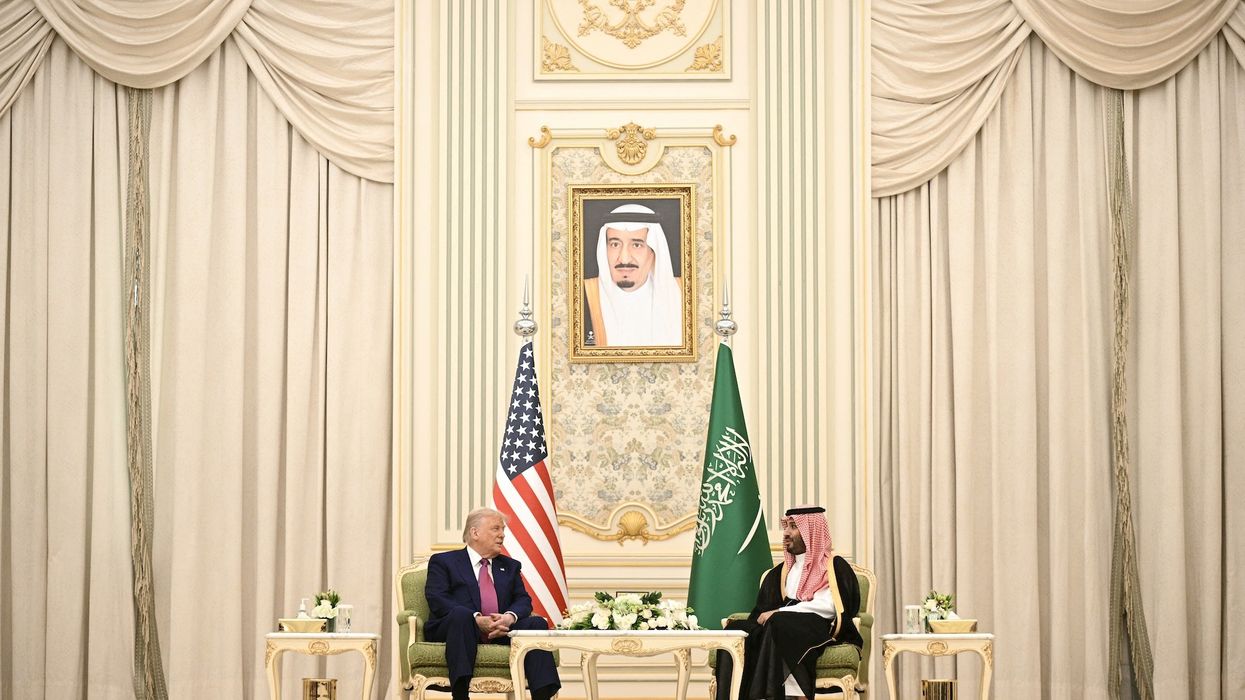
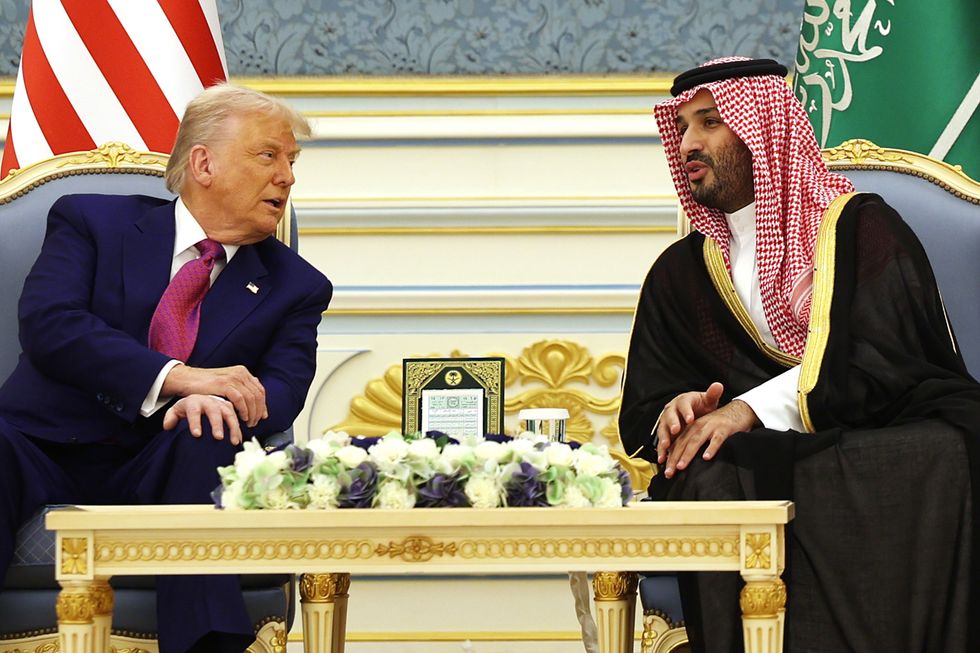
EXPERT INTERVIEW — President Trump is welcoming Saudi Crown Prince Mohammed bin Salman to the White House today with an announcement that he plans to approve the sale of F-35 fighter jets to the Kingdom, signaling a policy shift by the U.S. Administration.
The visit to Washington marks one of the most consequential moments in decades for the U.S.–Saudi relationship. Both governments see the meeting as a chance to cement the expansion of the U.S.-Saudi partnership from one focused on energy and security to include advanced technology, AI, critical minerals and defense cooperation.
The trip follows President Donald Trump’s high-profile visit to Saudi Arabia in May, when both countries announced a multibillion-dollar deal that could potentially give Riyadh access to advanced U.S. AI technology. While sources tell The Cipher Brief that many of the details of those deals remain in various stages of negotiation, the Crown Prince’s Washington visit aims to build off of that momentum.
More widely, the visit comes at the end of a year of rapid geopolitical and technological change for the Middle East. Through these shifts, Saudi Arabia and other Gulf leaders like the United Arab Emirates are positioning themselves as centers for AI infrastructure, diversified cheap energy, and global supply chains.
To help unpack the stakes and expectations behind the Crown Prince’s Washington visit, The Cipher Brief spoke with Norm Roule, who spent more than 34 years in the Intelligence Community and has been following regional developments for 43 years - including his time as a business consultant. Roule is in frequent contact with Gulf leaders on energy, security, finance and technology issues and travels frequently to the region. Cipher Brief CEO & Publisher Suzanne Kelly began by asking Roule to summarize the expectations going into this visit. Our conversation has been lightly edited for clarity and length.
THE INTERVIEW
Roule: The visit of Crown Prince Mohammed bin Salman to Washington will likely represent a transformational moment in Saudi-American relations that will stand out among the most important events in the 80-year relationship between the two countries. Each side will likely seek to use this visit to change the traditional relationship from one of oil and security to one that is more of a blend of advanced technology, mining, and energy, which includes nuclear, and defense.
Each side now sees the other as an indispensable partner and views this visit as a way of establishing an architecture that will ensure that periodic political difficulties don't destabilize a critical relationship that needs to last decades. The Saudis seek this more predictable relationship and assets that will allow them to accelerate their evolution toward becoming a global power center.
Washington seeks to revitalize and cement ties with a rising middle power that will certainly have considerably more influence in the Middle East and the Global South and will become an important link in the global energy and supply chain. Regional issues will be discussed during the visit, but I don't think it's likely we're going to see significant shifts outside of the ongoing trends.
Kelly: This visit, of course, does follow the visit by President Trump to Saudi Arabia in May of this year where some signficant deals were announced with regard to technology sharing and investment opportunities.
Roule: That is correct. In essence, what you're looking at is the other side of the coin from those visits. President Trump and a team of unprecedented stature of American cabinet members and highly consequential American business leaders traveled to the Kingdom and concluded a vast array of business deals over the months since that time. American diplomats and business leaders have met to finalize and further expand upon those deals. And now we're looking at a meeting that will, in essence, conclude those agreements or take them to the next stage of developing memorandums of understanding. These are very complicated agreements that in and of themselves will take months, if not years, to play out. But they are indeed transformational for the economies of each of the two partners.
This is exclusive Subscriber+Member content
Saudi Arabia and its neighbor, the United Arab Emirates are drawing on an unprecedented and historic combination of very focused policy decisions, massive domestic and global investment flows that they are developing with themselves and partners, and domestic social engineering that's been something that is unique in the world based upon AI and multiculturalism to redefine themselves from hitherto reliable energy suppliers into world-class members of the global supply chain - architects of the next generation of AI manufacturing and new nodes of political influence in a non-polar Middle East.
Each of these two countries is positioning themselves as models of rule of law, stable governance, and an oasis of multicultural life, open for business, open for boldness. And these two countries have a strategy that relies upon a tight weave of Liquified Natural Gas (LNG), chemicals, energy infrastructure, data centers, and finance. But each country also requires a deep, unprecedented and sustained access to the most advanced US AI technology.
So for this to happen, we're watching the Saudi Crown Prince come to Washington to build this new relationship with the United States. They know that this relationship brings tremendous benefits to the United States as well. It not only helps us build out our infrastructure, our employment at a time when we're having our own challenges, but in a way, it also sends a powerful message. They believe in us. They believe in the American future. They know that we will win, and often in ways that we sometimes don't express in ourselves.
Lastly, they're doing all of this in a way that means that they're not having to cut their commercial ties with China or offend Russia. In return for what they will give, they will receive technology that makes them global AI powers. And with the cheap energy that they are able to attach to that AI, they will be incredibly successful.
Kelly: Clearly, we're going through a dramatic shift in the Middle East right now. How important is this relationship to the United States?
Roule: It's critical. The Middle East remains vital to America's interest. The Middle East, as they say, it's in the middle. You look at any map and the Middle East is in the center of global trade, global transportation, multiple shipping routes move through the region, 80% of the data between Europe and Asia transit the region. You have global energy centered in the region. You have several of the world's major religions in the region. You have crossroads of multiple U.S. national interests.
At the same time, you're now looking at the development of an artificial intelligence infrastructure that is starting to blossom. And our ability to partner with that and to ensure that that technology does not threaten America's interests, and indeed sustains America's interest as that region partners with the Global South. It just protects our interest and expands our influence at a time when China would very much like to replace us.
Kelly: You talked about some of the ambitions of the Kingdom and the UAE, both in investment and AI. We've talked a lot in the past about their efforts and trying to lead when it comes to green energy. What do you think is driving their strategy?
Roule: Their strategy is driven by changes in the world that are just inevitable. If we were to go back one year and I were to tell you that knowledge is power, you would agree completely with me. But today, the adage is now, power is knowledge. The artificial intelligence system is inherently an energy system in and of itself. And artificial intelligence requires access to inexpensive, reliable 24-hour energy. And in the Middle East, Saudi Arabia and the Emirates and the other Gulf Cooperation Council states have access to tremendously inexpensive energy, and the prospect of additional inexpensive energy through their expansion of solar power and nuclear energy, which they're seeking. Those with access to such tremendous cheap energy and artificial intelligence have access to the benefits of artificial intelligence, which will bring them enormous economic advantage in the future.
Now, look at the other end of that stick. In Sub-Saharan Africa, at least 600 million Africans lack access to a reliable source of electricity. Imagine the social and economic disadvantage of those various societies. But let's go forward, just thinking about where the world is moving. By 2040, data center energy needs will rise fourfold. 1.5 billion people are estimated to move to cities. That means 2 billion new air conditioners will come online. And when you're in Saudi Arabia, a large portion of their oil needs, their oil production, is actually used for air conditioners in the summer. And you see their oil production move up in the summer for air conditioners. Global fleets of aircraft are expected to double from 25,000 to 50,000 aircraft by 2040. Jet fuel demand will be up by 30%. Six million kilometers of electrical transmission lines are needed by 2040. Imagine what that means in terms of copper.
So if you're looking at something like this, we're now looking at $4 trillion of investment needed annually for this energy architecture. We can't do this without partners with capital - like Saudi Arabia or the United Arab Emirates - and the many partners they bring together into their ecosystem.
So now let's look at energy. In recent years, you've had this great contest between the people who correctly talk about the need for us to battle climate change, and those who have talked about the need for more energy. Both issues must be dealt with. Well, now we realize oil demand is not going to drop. In fact, oil demand is expected to remain above 100 million barrels a day through 2040. This demand is going to be needed for materials and petrochemicals. LNG demand is expected to grow by 50%. Renewables will double. In essence, the world needs more energy, not replacement for these other energy sources.
Saudi Arabia and the Emirates and Qatar and Kuwait see themselves as becoming islands of cheap energy working with the United States. They see themselves at this moment in history - where, if they can capture a certain amount of extraordinary technology and a strategic relationship with the United States, and this ecosystem of multicultural partnership with the world - they can become a very different society. It's a fascinating dynamic. It's a very exciting time in history.
Kelly: Do you think falling oil prices are going to impact this strategy?
Roule: Well, we're watching that play out. So in essence, what we've seen is very prudent decision making. They have slowed some of the execution of major projects, but they have not stopped the projects themselves. They have extended timelines. They have delayed the rollout of certain large programs. If it has to do with their visions of Vision 2030 or Vision 2040, they have different visions in the Gulf, the projects remain on track. And it's because those projects are critical to where they need to go. If you look, for example, at the city of Neom that is often talked about, well, the port of Oxagon, which is critical to the infrastructure of trade in the Northwest Arabian Peninsula, that’s still functioning, it’s still out there. They're just going to slow the build out of that city because it's reasonable to say to slow the build out to the city. It's just not reasonable to think that you can slow the build out of trade and infrastructure in the Arabian Peninsula. That's going to happen on a different timeline.
Now, we've also seen reports that the Saudis have withdrawn some of their capital from not less productive, but maybe investments in the United States that aren't as relevant to the core vision of equities as in the past. That I think you may see a little more of, but I don't see a massive withdrawal of those investments unless we saw oil prices drop into say the low $50s or $40s. So what we're watching is prudent focus. We're watching attention to timelines. We're watching attention to anti-corruption. I'm impressed. I've not seen anybody waste money or do anything that is injudicious. And I've not seen anybody make allegations that such things have been noted by others.
Kelly: What will make this a successful visit to Washington, both on behalf of the Saudis and on behalf of the U.S.?
Roule: Architecture. And what you're looking for is something that lasts beyond one month, one deal. You're looking for something that binds us together over time. I think what you're going to hear will be announcements of MOUs. You will hear announcements of deals. And as important as it is to focus on the numbers associated with the deals, and there will certainly be focus on that and questions regarding that, it's really more important to focus on the industries, the sectors associated with those deals, and then the depth that each of those MOUs brings to the various societies.
For example, let's say that we see an aviation deal that might bring employment to the United States but will set up a manufacturing node in Saudi Arabia. If something like that were to happen, that would make Saudi Arabia part of a global supply chain. So 20 years from now, we would have a more reliable source of parts or an alternative source of parts. If mining is developed within the kingdom, well, it takes years to develop a mine, but we will have an alternative source of minerals, and Saudi Arabia is a rich source of multiple minerals that are important to the United States. Or if the Saudis invest in minerals in the U.S., it may take years for those to play out. So the architecture associated with those deals will mean employment but it's the depth and the timelines with those deals that will determine the depth of that relationship.
In terms of defense deals, I don't want to downplay that, but America has always stood with Saudi Arabia. People have often asked, 'If there's a single attack did we respond in as well or to the extent that we should have?' That's open to question. But there is no doubt in my mind, nor in the minds of regional leaders, that if there were a serious attack on Saudi Arabia by Iran or another country, we are absolutely going to be there. And do we need a defense deal to say that? I'll leave that to others, but not in my mind. But in any case, we will see some sort of defense architecture develop.
Should the Saudis have nuclear energy? Why not? Every other country does. They're looking for additional technology and there's no reason we can't provide that to them to assist them. But again, it's that architecture and the relationship over years that you seek, vice one delivery, one deal, and the announcements that go with it.
Kelly: Where do you see the region going in 2026? What will be the big headlines and the big drivers next year in the Middle East?
Roule: There's a lot of good news in the Middle East. The U.S. remains the dominant great power. Americans are not and likely will not be the target of a major military confrontation in the region. But the region itself continues to lack a strong cohesive narrative that pulls it together.
The biggest point in the region is that it remains a non-polar region. There's no reason to believe that this administration will cease its vigorous focus on the region. And we must applaud this administration for, in its first 11 months, having multiple emissaries and making visits and sending many cabinet ministers to the region. If you look at the recent conferences that have taken place in Manama, Qatar, Abu Dhabi and Riyadh, we've had cabinet level representation at all of those events to include during a government shutdown, which is no small thing, with representatives from multiple government departments. America is back and Russia and China are not.
Gaza is going to sputter along, and the U.S. commitment remains and CENTCOM is performing marvelously as a key force bringing things together. I think we're going to see that continuing. Neither side, Israel or the Palestinians, have a reason to return to war, but violence will continue. The largest or most significant political shifts in the region likely would come from a change in the Israeli government.
Iran is fragile. Iran nuclear talks are unlikely to begin until the administration sees evidence that the talks will not be a waste of time. Right now, the Iranians seek talks, but that doesn't mean they want to do anything other than have talks, because if they have talks, the rial will be strengthened and the Iranians don't have to bring anything up. The Quds Force will remain active. They will continue to deliver weapons to the Yemenis. But it's unlikely they're interested in looking for a conflict. We can't rule out a sudden collapse of Iran in case of an environmental disaster such as an earthquake, but the regime appears fragile at present.
Syria continues to make progress and I think we're going to see the progress continue in its current trend. Arab infrastructure investment continues to progress. I would watch for telecommunications and port investment work. And the reason that's important is that you're watching the Biden administration IMEC plan in essence or IMEC cooperation be realized as Gulf states put their lines up through Europe and through Syria.
Lebanon will likely remain a greater challenge. I think we're watching a lot of Saudi quiet diplomacy with Yemen and that will continue. GCC infrastructure will continue to develop. I would be surprised if we didn't see more Saudi work with Bahrain and Saudi work between the GCC and the West.
Oil will remain stable likely and soft in coming months. I think you're going to see a lot more natural gas come online. OPEC will continue to do everything it can to prevent oil from falling into the 50s while maintaining a relatively soft position so they can recapture market share from India and other places lost to Russia.
Read more expert-driven national security insights, perspective and analysis in The Cipher Brief because National Security is Everyone’s Business.