Login
LoginThis Microbe ‘Plays Dead’ in NASA Clean Rooms, and We May Have Sent It to Mars

18 years ago, a sneaky bacteria infiltrated some of the cleanest places on Earth. Scientists finally know how.


The asteroid Bennu continues to provide new clues to scientists’ biggest questions about the formation of the early solar system and the origins of life. As part of the ongoing study of pristine samples delivered to Earth by NASA’s OSIRIS-REx (Origins, Spectral Interpretation, Resource Identification, and Security-Regolith Explorer) spacecraft, three new papers published Tuesday by the journals Nature Geosciences and Nature Astronomy present remarkable discoveries: sugars essential for biology, a gum-like substance not seen before in astromaterials, and an unexpectedly high abundance of dust produced by supernova explosions.
Sugars essential to life
Scientists led by Yoshihiro Furukawa of Tohoku University in Japan found sugars essential for biology on Earth in the Bennu samples, detailing their findings in the journal Nature Geoscience. The five-carbon sugar ribose and, for the first time in an extraterrestrial sample, six-carbon glucose were found. Although these sugars are not evidence of life, their detection, along with previous detections of amino acids, nucleobases, and carboxylic acids in Bennu samples, show building blocks of biological molecules were widespread throughout the solar system.
For life on Earth, the sugars deoxyribose and ribose are key building blocks of DNA and RNA, respectively. DNA is the primary carrier of genetic information in cells. RNA performs numerous functions, and life as we know it could not exist without it. Ribose in RNA is used in the molecule’s sugar-phosphate “backbone” that connects a string of information-carrying nucleobases.
“All five nucleobases used to construct both DNA and RNA, along with phosphates, have already been found in the Bennu samples brought to Earth by OSIRIS-REx,” said Furukawa. “The new discovery of ribose means that all of the components to form the molecule RNA are present in Bennu.”
The discovery of ribose in asteroid samples is not a complete surprise. Ribose has previously been found in two meteorites recovered on Earth. What is important about the Bennu samples is that researchers did not find deoxyribose. If Bennu is any indication, this means ribose may have been more common than deoxyribose in environments of the early solar system.
Researchers think the presence of ribose and lack of deoxyribose supports the “RNA world” hypothesis, where the first forms of life relied on RNA as the primary molecule to store information and to drive chemical reactions necessary for survival.

“Present day life is based on a complex system organized primarily by three types of functional biopolymers: DNA, RNA, and proteins,” explains Furukawa. “However, early life may have been simpler. RNA is the leading candidate for the first functional biopolymer because it can store genetic information and catalyze many biological reactions.”
The Bennu samples also contained one of the most common forms of “food” (or energy) used by life on Earth, the sugar glucose, which is the first evidence that an important energy source for life as we know it was also present in the early solar system.
Mysterious, ancient ‘gum’
A second paper, in the journal Nature Astronomy led by Scott Sandford at NASA’s Ames Research Center in California’s Silicon Valley and Zack Gainsforth of the University of California, Berkeley, reveals a gum-like material in the Bennu samples never seen before in space rocks – something that could have helped set the stage on Earth for the ingredients of life to emerge. The surprising substance was likely formed in the early days of the solar system, as Bennu’s young parent asteroid warmed.
Once soft and flexible, but since hardened, this ancient “space gum” consists of polymer-like materials extremely rich in nitrogen and oxygen. Such complex molecules could have provided some of the chemical precursors that helped trigger life on Earth, and finding them in the pristine samples from Bennu is important for scientists studying how life began and whether it exists beyond our planet.

Scott SandFord
Astrophysicist, NASA's Ames Research Center
Bennu’s ancestral asteroid formed from materials in the solar nebula – the rotating cloud of gas and dust that gave rise to the solar system – and contained a variety of minerals and ices. As the asteroid began to warm, due to natural radiation, a compound called carbamate formed through a process involving ammonia and carbon dioxide. Carbamate is water soluble, but it survived long enough to polymerize, reacting with itself and other molecules to form larger and more complex chains impervious to water. This suggests that it formed before the parent body warmed enough to become a watery environment.
“With this strange substance, we’re looking at, quite possibly, one of the earliest alterations of materials that occurred in this rock,” said Sandford. “On this primitive asteroid that formed in the early days of the solar system, we’re looking at events near the beginning of the beginning.”
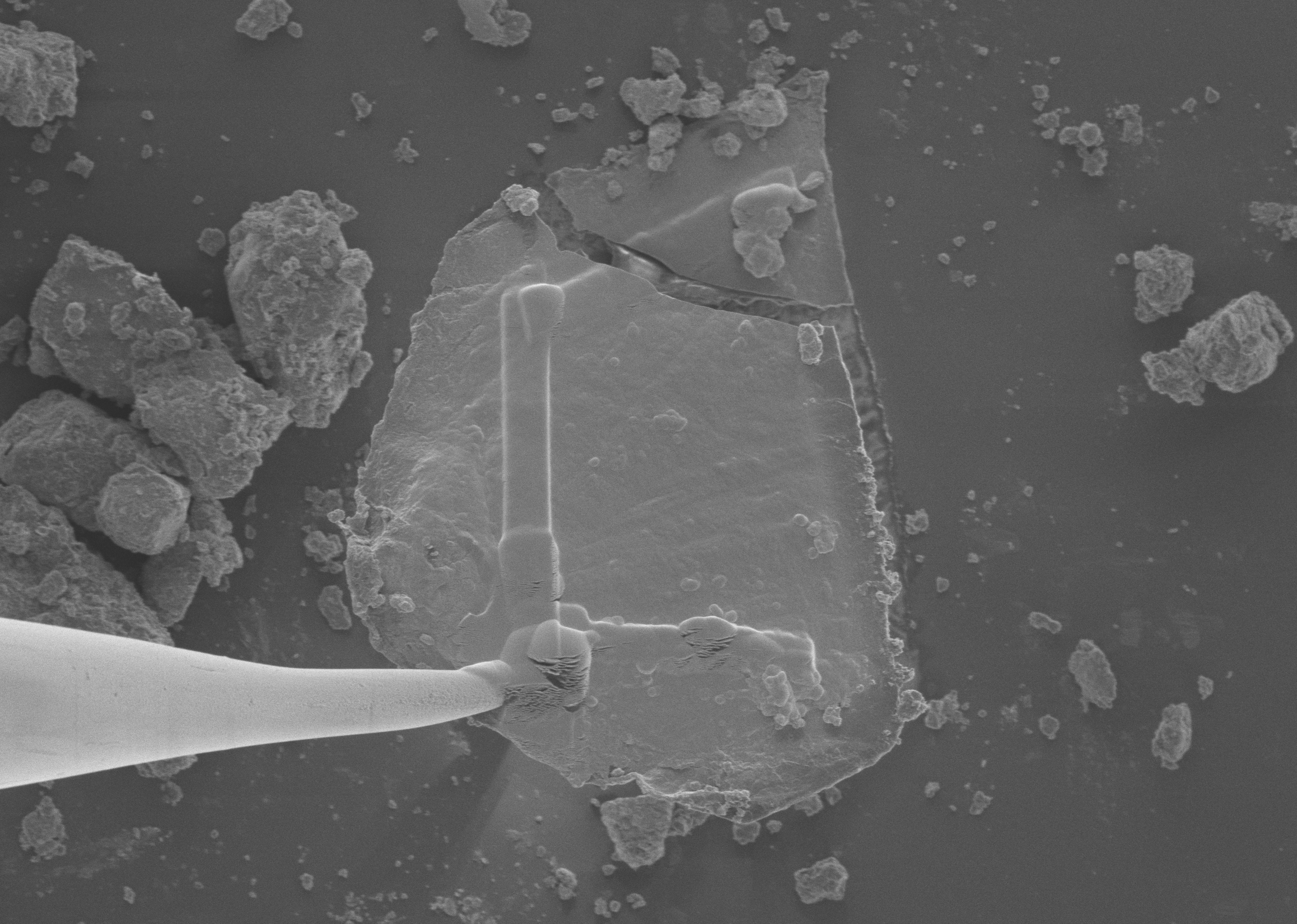
Using an infrared microscope, Sandford’s team selected unusual, carbon-rich grains containing abundant nitrogen and oxygen. They then began what Sandford calls “blacksmithing at the molecular level,” using the Molecular Foundry at Lawrence Berkeley National Laboratory (Berkeley Lab) in Berkeley, California. Applying ultra-thin layers of platinum, they reinforced a particle, welded on a tungsten needle to lift the tiny grain, and shaved the fragment down using a focused beam of charged particles.
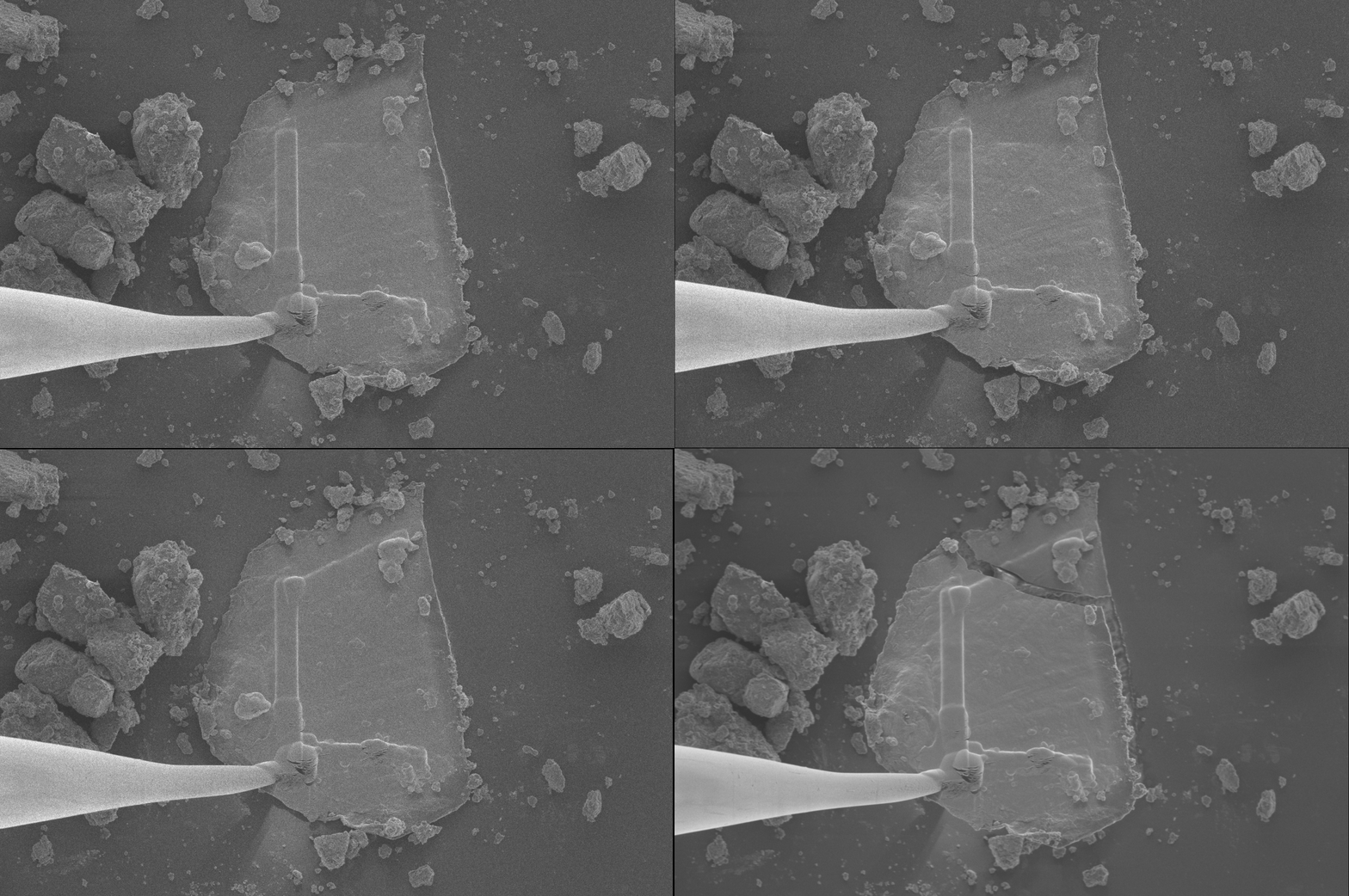
When the particle was a thousand times thinner than a human hair, they analyzed its composition via electron microscopy at the Molecular Foundry and X-ray spectroscopy at Berkeley Lab’s Advanced Light Source. The ALS’s high spatial resolution and sensitive X-ray beams enabled unprecedented chemical analysis.
“We knew we had something remarkable the instant the images started to appear on the monitor,” said Gainsforth. “It was like nothing we had ever seen, and for months we were consumed by data and theories as we attempted to understand just what it was and how it could have come into existence.”
The team conducted a slew of experiments to examine the material’s characteristics. As the details emerged, the evidence suggested the strange substance had been deposited in layers on grains of ice and minerals present in the asteroid.
It was also flexible – a pliable material, similar to used gum or even a soft plastic. Indeed, during their work with the samples, researchers noticed the strange material was bendy and dimpled when pressure was applied. The stuff was translucent, and exposure to radiation made it brittle, like a lawn chair left too many seasons in the sun.
“Looking at its chemical makeup, we see the same kinds of chemical groups that occur in polyurethane on Earth,” said Sandford, “making this material from Bennu something akin to a ‘space plastic.’”
The ancient asteroid stuff isn’t simply polyurethane, though, which is an orderly polymer. This one has more “random, hodgepodge connections and a composition of elements that differs from particle to particle,” said Sandford. But the comparison underscores the surprising nature of the organic material discovered in NASA’s asteroid samples, and the research team aims to study more of it.
By pursuing clues about what went on long ago, deep inside an asteroid, scientists can better understand the young solar system – revealing the precursors to and ingredients of life it already contained, and how far those raw materials may have been scattered, thanks to asteroids much like Bennu.
Abundant supernova dust
Another paper in the journal Nature Astronomy, led by Ann Nguyen of NASA’s Johnson Space Center in Houston, analyzed presolar grains – dust from stars predating our solar system – found in two different rock types in the Bennu samples to learn more about where its parent body formed and how it was altered by geologic processes. It is believed that presolar dust was generally well-mixed as our solar system formed. The samples had six-times the amount of supernova dust than any other studied astromaterial, suggesting the asteroid’s parent body formed in a region of the protoplanetary disk enriched in the dust of dying stars.
The study also reveals that, while Bennu’s parent asteroid experienced extensive alteration by fluids, there are still pockets of less-altered materials within the samples that offer insights into its origin.

“These fragments retain a higher abundance of organic matter and presolar silicate grains, which are known to be easily destroyed by aqueous alteration in asteroids,” said Nguyen. “Their preservation in the Bennu samples was a surprise and illustrates that some material escaped alteration in the parent body. Our study reveals the diversity of presolar materials that the parent accreted as it was forming.”
NASA’s Goddard Space Flight Center provided overall mission management, systems engineering, and the safety and mission assurance for OSIRIS-REx. Dante Lauretta of the University of Arizona, Tucson, is the principal investigator. The university leads the science team and the mission’s science observation planning and data processing. Lockheed Martin Space in Littleton, Colorado, built the spacecraft and provided flight operations. Goddard and KinetX Aerospace were responsible for navigating the OSIRIS-REx spacecraft. Curation for OSIRIS-REx takes place at NASA’s Johnson Space Center in Houston. International partnerships on this mission include the OSIRIS-REx Laser Altimeter instrument from CSA (Canadian Space Agency) and asteroid sample science collaboration with JAXA’s (Japan Aerospace Exploration Agency’s) Hayabusa2 mission. OSIRIS-REx is the third mission in NASA’s New Frontiers Program, managed by NASA’s Marshall Space Flight Center in Huntsville, Alabama, for the agency’s Science Mission Directorate in Washington.
For more information on the OSIRIS-REx mission, visit:
https://www.nasa.gov/osiris-rex
Karen Fox / Molly Wasser
Headquarters, Washington
202-285-5155 / 240-419-1732
karen.c.fox@nasa.gov / molly.l.wasser@nasa.gov
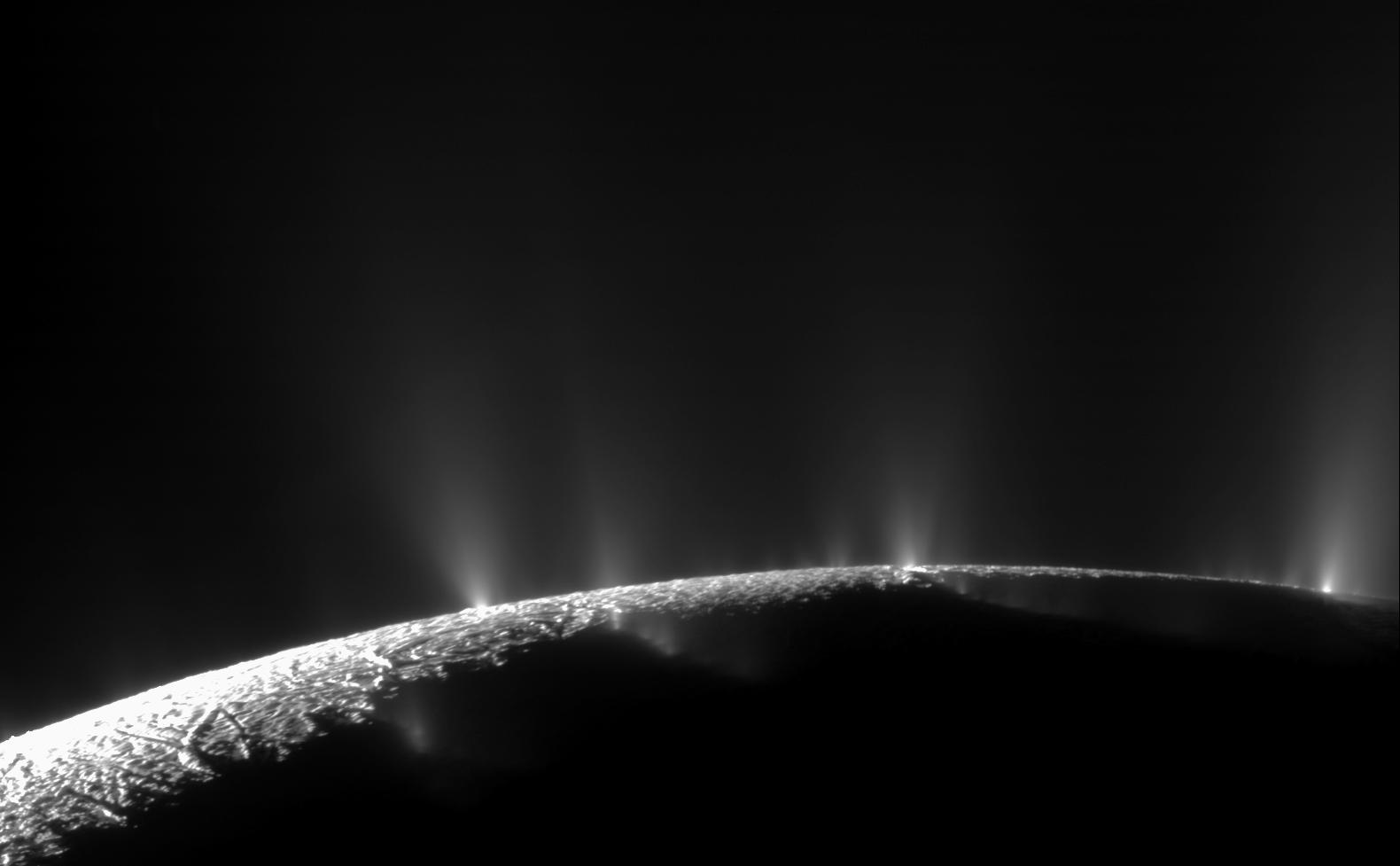
Researchers dove deep into information gathered from the ice grains that were collected during a close and super-fast flyby through a plume of Saturn’s icy moon.
A new analysis of data from NASA’s Cassini mission found evidence of previously undetected organic compounds in a plume of ice particles ejected from the ocean that lies under the frozen shell of Saturn’s moon Enceladus. Researchers spotted not only molecules they’ve found before but also new ones that lay a potential path to chemical or biochemical activity.
The ice grains studied were collected just 13 miles (21 kilometers) from the moon’s surface and mark the first time scientists have observed this diversity of organics in fresh particles ejected from the subsurface water of Enceladus. Published Wednesday in Nature Astronomy, the findings signal an important step toward confirming active organic chemistry below the moon’s surface. This is the kind of chemical activity that could support compounds that are important to biological processes and are an essential component of life on Earth.
Besides increasing the diversity of detected organics, the recent work added a new layer to earlier findings by analyzing particles that the Cassini spacecraft collected when it flew directly through a plume — the next-best thing to diving directly into the moon’s ocean.
“Previously, we detected organics in ice grains that were years old and potentially altered by the intense radiation environment surrounding them,” said Nozair Khawaja of the Freie Universität Berlin, lead author of the study. “These new organic compounds were just minutes old, found in ice that was fresh from the ocean below Enceladus’ surface.”
Scientists knew from previous Cassini data-mining that nitrogen- and oxygen-bearing organic compounds were present in particles from Saturn’s E ring, a faint, wide outer band around the planet fed by the icy material that fans out from Enceladus’ plumes. But the new research analyzed ice grains from a moon plume itself — in other words, grains found closest to their subsurface origin.
“These molecules we found in the freshly ejected material prove that the complex organic molecules Cassini detected in Saturn’s E ring are not just a product of long exposure to space, but are readily available in Enceladus’ ocean,” said coauthor Frank Postberg, also of Freie Universität Berlin.
The data was collected and sent to Earth in 2008, when ice particles impacted Cassini’s Cosmic Dust Analyzer instrument. Besides being directly sourced from a plume, the ice grains had another thing going for them: They’d been smashed to smithereens as they struck the instrument during the spacecraft’s fast fly-through at 11 miles per second (about 18 kilometers per second relative to the moon).
The energy of the impact vaporized the ice grains and ionized a substantial fraction of them. Those ions were then analyzed by the instrument’s mass spectrometer, which examined their chemical makeup.
The study’s authors were able to analyze the tiniest of fragments — smaller than a thousandth of a millimeter, smaller even than a flu virus — and identify organic compounds they hadn’t seen before in plume particles.
The newly detected compounds included those from the aliphatic and cyclic ester and ether families, some with double bonds in their molecular structures. Together with the confirmed aromatic, nitrogen- and oxygen-bearing compounds, these compounds can form the building blocks to support chemical reactions and processes that could have led to more complex organic chemistry — the kind that is of interest to astrobiology and narrows the focus of where we search for life in the solar system.
After flying through the plume, the spacecraft, managed by NASA’s Jet Propulsion Laboratory in Southern California, explored the complex Saturn system for nearly another decade.
The Cassini-Huygens mission was a cooperative project of NASA, ESA (European Space Agency), and the Italian Space Agency. A division of Caltech in Pasadena, JPL managed the mission for NASA’s Space Mission Directorate in Washington and designed, developed, and assembled the Cassini orbiter.
To learn more about Cassini, visit:
https://science.nasa.gov/mission/cassini/
Scott Hulme
Jet Propulsion Laboratory, Pasadena, Calif.
818-653-9131
scott.d.hulme@jpl.nasa.gov
Alise Fisher / Molly Wasser
NASA Headquarters, Washington
202-617-4977 / 240-419-1732
alise.m.fisher@nasa.gov / molly.l.wasser@nasa.gov
2025-127
4 min read
When you think about national park and public land astronomy programs, you might picture remote locations far from city lights. But a recent NASA Earth to Sky training, funded by NASA’s Science Activation Program, challenges that assumption, demonstrating how urban parks, wildlife refuges, museums, and green spaces can be incredible venues for connecting communities with space science. Programs facilitated in urban spaces can reach people where they already live, work, and recreate. This creates opportunities for ongoing engagement as urban astronomy program participants can discover that the skies above their neighborhoods hold the same wonders as remote locations.
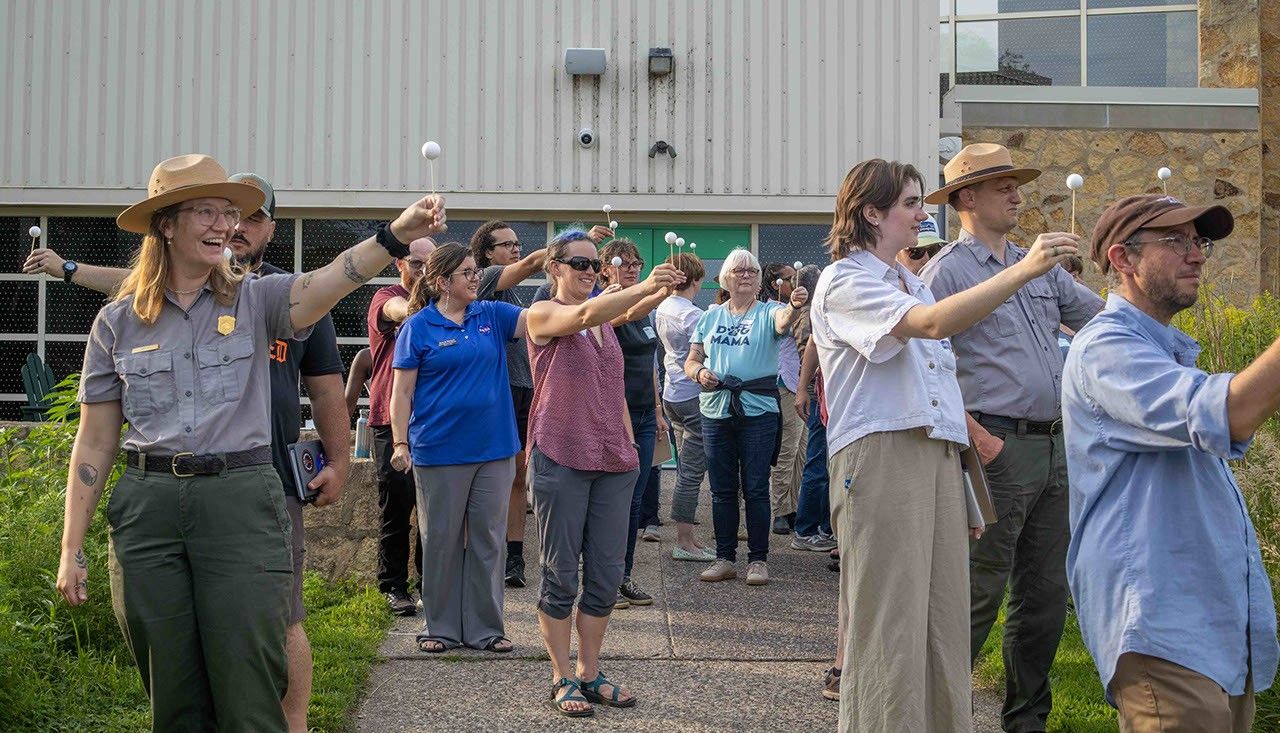
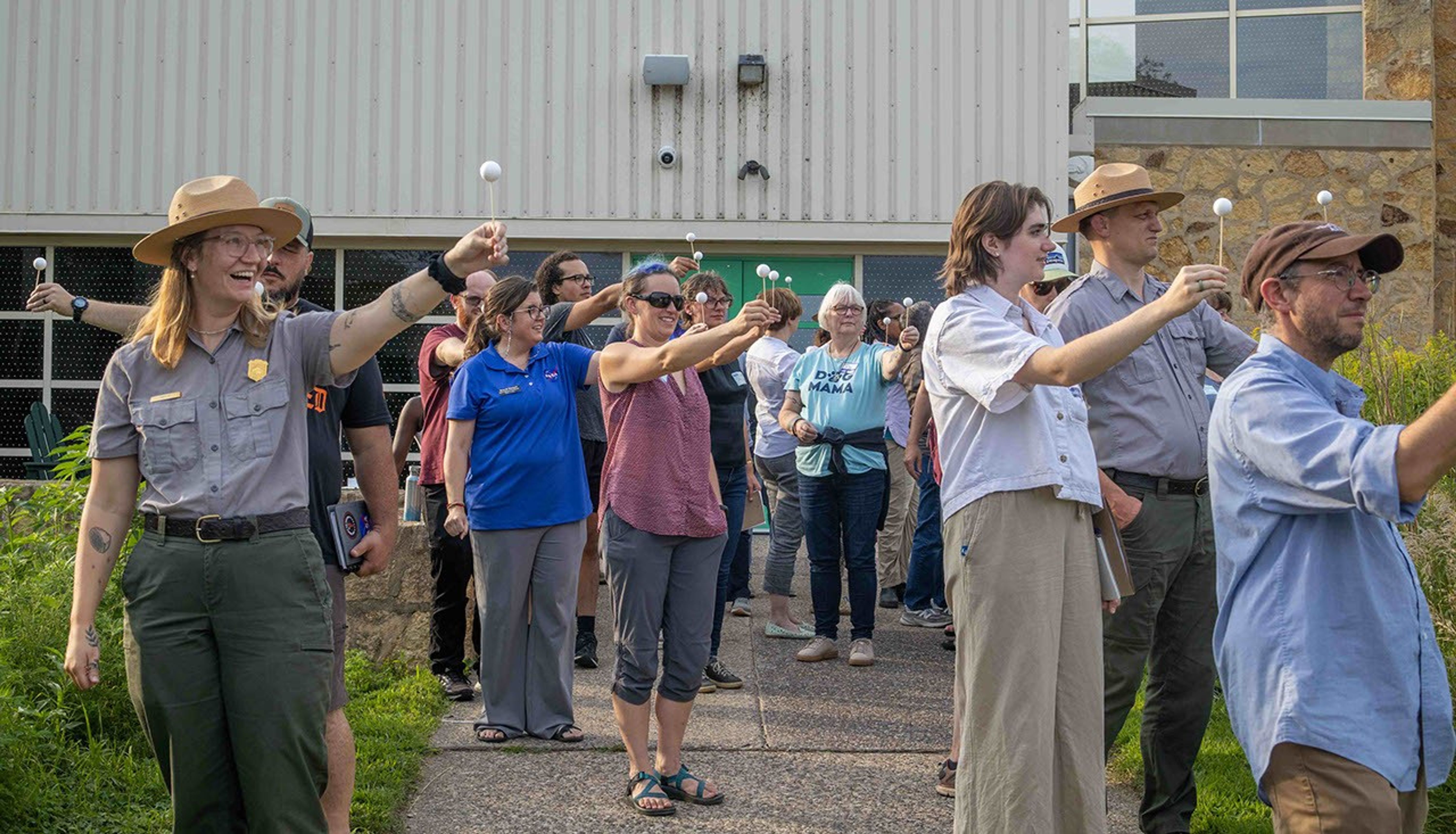
During the first week of August in 2025, NASA Earth to Sky collaborated with the National Park Service and U.S. Fish and Wildlife Service to deliver an innovative astronomy training program called “Rivers of Stars and Stories: Interpreting the Northern Night Sky” at Minnesota Valley National Wildlife Refuge in Minneapolis-St. Paul. This three-day course brought together 28 park ranger interpreters, environmental educators, and outdoor communicators from across the Twin Cities area. Presentations and discussions centered around engaging urban audiences with the wonders of space science by leveraging the benefits of metropolitan spaces and the unique opportunities that city skies provide.
Throughout this immersive training, participants explored everything from lunar observations and aurora science to NASA’s Artemis Program and astrobiology. The training empowered participants by affirming that everyone is an effective stargazer and night sky storyteller, transforming beginners into confident astronomy communicators. One participant captured their experience by noting they went from “not knowing much of anything to having a much better grasp on basic concepts and most importantly, where to find more resources!” In addition to sharing resources, this training also launched a community of practice where communicators can continue to collaborate. Participants engaged in discussions on how to respectfully incorporate the local indigenous perspectives into astronomy programming and honor the traditional stewards of the land while avoiding appropriation or misrepresentation of indigenous science.
The course also created a lasting community connection to NASA through presentations by NASA experts and demonstrations of NASA activity toolkits. As one participant noted in the evaluation, “This is just the start of a long learning journey, but I know now where to look and how to find answers.” Toolkits and resources shared included GLOBE (Global Learning & Observation to Benefit the Environment) Observer’s NUBE (cloud) game, Our Dynamic Sun by the NASA Heliophysics Education Activation Team (HEAT) and the Night Sky Network, the Aurorasaurus Citizen Science project, and the local Solar System Ambassador Network.
Participants’ sense of belonging to the Earth to Sky community increased dramatically. These outcomes support NASA’s strategic goal of building sustained public engagement with Earth and space science. The overwhelmingly positive feedback, with 100% of participants expressing interest in taking more courses like this, demonstrates the tremendous value it is for Earth to Sky to collaborate with the National Park Service and US Fish and Wildlife Service, as all agencies’ public communication goals are addressed.
This kind of collaborative work is crucial because it builds a network of science communicators who can reach thousands of visitors across Minneapolis-St. Paul’s parks, nature centers, and outdoor spaces. By training local informal educators to confidently share NASA’s discoveries and missions, the program expands access to space science for urban audiences throughout the Twin Cities region.
The Earth to Sky team will continue fostering these valuable partnerships with the National Park Service and U.S. Fish and Wildlife Service, as well as other state and local agencies and nonprofit organizations. Learn more about Earth to Sky’s work with park interpreters and nonformal educators to share NASA space science by visiting: https://science.nasa.gov/sciact-team/earth-to-sky/
Learn more about how Science Activation connects NASA science experts, real content, and experiences with community leaders to do science in ways that activate minds and promote deeper understanding of our world and beyond: https://science.nasa.gov/learn/about-science-activation/.
Webb is the premier observatory of the next decade, serving thousands of astronomers worldwide. It studies every phase in the…
This rover and its aerial sidekick were assigned to study the geology of Mars and seek signs of ancient microbial…
On a mission to “touch the Sun,” NASA’s Parker Solar Probe became the first spacecraft to fly through the corona…
NASA’s Juno spacecraft entered orbit around Jupiter in 2016, the first explorer to peer below the planet’s dense clouds to…