❌

Reading view

There are new articles available, click to refresh the page.

75% Chance Crypto Is β€˜Crossing The Chasm’ Now, Says Moonrock Capital Boss

Moonrock Capital founder Simon Dedic says the crypto industry is nearing a decisive transition from an early-adopter niche to a mainstream market, assigning a 75% probability that the sector will β€œfinish crossing the chasm and enter the early-majority phase next year.”

Is The Crypto Market Crossing The Chasm?

Dedic frames his outlook using the classic technology adoption curve, which splits the market into innovators (2.5%), early adopters (13.5%), an early majority (34%), late majority (34%) and laggards (16%). The critical β€œchasm” lies between early adoptersβ€”β€œpeople who want newest things” and accept a minimum feature setβ€”and the early majority, who demand a β€œwhole product solution” and prioritize complete, convenient offerings.
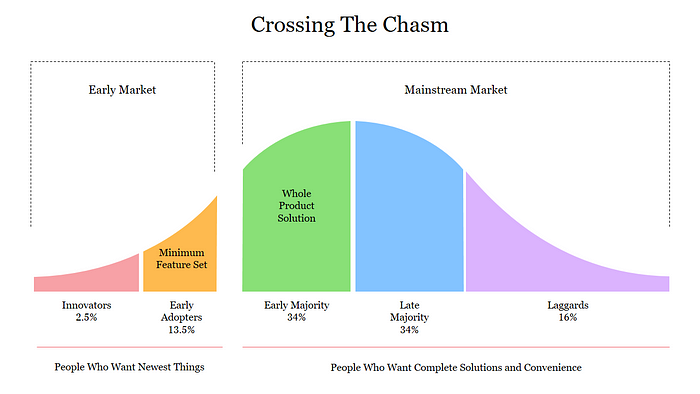
Crypto Crossing The Chasm

In his base case, Dedic argues that crypto is now close to exiting that chasm. If so, he says, β€œthe classic 4-year cycles are dead. The market will have matured and will increasingly correlate with macro cycles and industry fundamentals rather than self-fulfilling narratives.” Under this scenario, pricing would be governed less by reflexive narratives around halvings or β€œaltseason” and more by the sector’s real economic role and its interaction with broader financial conditions.

He assigns a 20% probability to a less advanced stage of adoption in which the industry is β€œstill in the early-adopter phase and only now beginning to cross the chasm.” In that case, he believes crypto could face β€œa 1-3 year bear market while the industry finds itself and pushes toward early-majority adoption.” Here, the established four-year pattern could remain intact, with another prolonged downturn before mainstream product-market fit is fully achieved.

The remaining 5% is reserved for a failure scenario in which the sector never secures such fit. β€œWe get stuck in the chasm and never find true mainstream pmf,” Dedic writes, warning that crypto could then β€œturn into a zero sum game and we will just PvP trade money from one to the other.”

Dedic makes clear he views that outcome as unlikely. He cites β€œregulatory tailwinds, institutional adoption, and the accelerating fundamentals of our industry” as reasons to believe the market is already in scenario one, β€œstanding right in front of the biggest adoption wave crypto has ever seen, and likely ever will see.”

He also argues that market structure and culture must evolve alongside adoption. β€œThe 4 year cycles and simple narrative chasing are dead,” he says. While β€œthe onchain online casino will always be part of our identity, it will shrink into a niche. It’s time for the industry to mature and start playing the serious game.”

For Dedic, that conviction is not theoretical. β€œAn incredible decade lies ahead for those willing to evolve,” he concludes, adding that he is β€œbetting basically all my money on the idea that this is only just getting started.”

At press time, the total crypto market cap stood at $3.15 trillion.
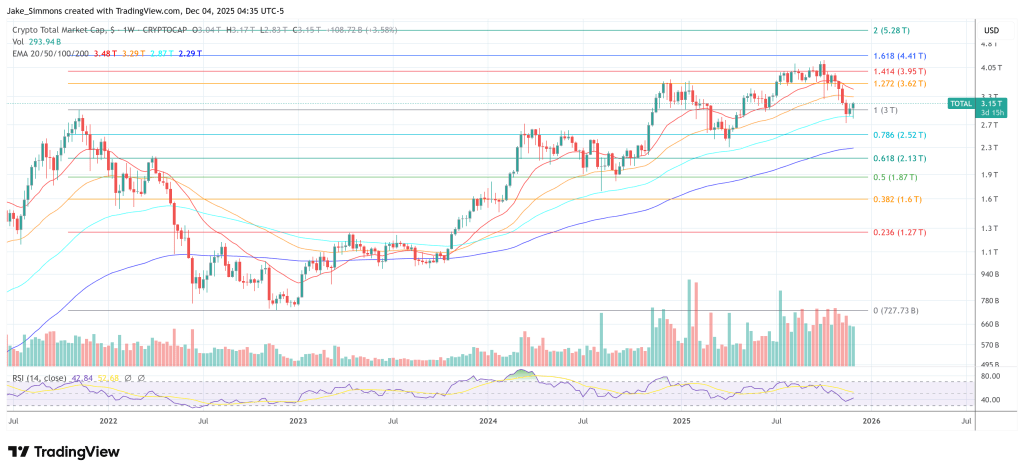
Total crypto market cap

Binance Takes Family-Centric Approach to Crypto with Junior Wallet

Cryptocurrency is no longer just for adults. While traditional financial assets like stocks and bonds are often gifted to children by parents who open custodial accounts, crypto exchange Binance aims to help families build wealth through crypto assets.

Announced on Wednesday during Binance Blockchain Week, the crypto exchange explained that β€œBinance Junior” is the first standalone mobile app that is controlled entirely by parents for children.

Introducing Binance Junior, a parent-controlled app and sub-account for kids and teens.

Build family-focused crypto savings and prepare your child for a future empowered by crypto.

Try it now πŸ‘‰ https://t.co/q4Y50PvApy pic.twitter.com/O1R2yZ4vVE

β€” Binance (@binance) December 3, 2025

The app allows adults with a Binance account to deposit crypto into a savings account for kids and teenagers between the ages of 6 to 17. The tool also allows parents to set spending and transfer limits, while enabling earn products for kids dependent on local regulations.

The Importance of Crypto Adoption at Young Ages

Binance’s newly appointed co-founder Yi He explained the importance behind Binance Junior at Binance Blockchain Week.

β€œWe not only nurture children in their early development, but also with long-term growth, responsibility and wisdom,” the executive stated. β€œHelping children face real life challenges independently means that financial health and literacy are key to preparing them for the future, especially as money is evolving.”

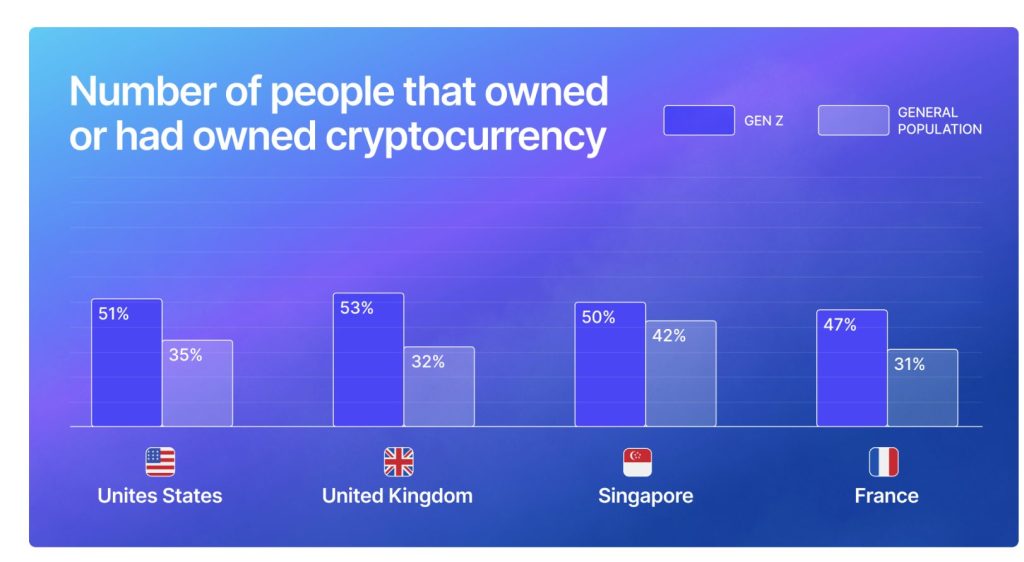
While the notion of educating children on the importance of cryptocurrency may be controversial, findings from a recent survey conducted by Gemini show that more than half (51%) of global Gen Z respondents currently own cryptocurrency or have owned it in the past. The report also notes that over half of Gen Z respondents located in the US owned or had owned cryptocurrency (51%), compared to 49% of Millennials (people born 1981-1994).

Source: Gemini

This demonstrates the growing appeal for crypto adoption amongst younger generations. Binance Junior aims to further facilitate this by allowing children 13 years and up to initiate transfers independently within the app, as long as local regulations are met and daily limits are applied.

Teaching Children About Crypto: Beneficial or Concerning?

While some users on the social media platform X expressed concerns around Binance Junior, the new app aims to align with a growing trend of teaching children about the importance of cryptocurrency at early ages.

Henri Arslanian, co-founder of Nine Blocks Capital and a best-selling author, told Cryptonews that it shouldn’t come as a surprise that Binance has launched Binance Junior.

β€œChildren used to have penny banks to keep fiat in, but now we have hard assets like Bitcoin and there is a huge learning element there that becomes critical,” he said.

Arslanian added that Binance Junior aligns with children’s books and toys centered around cryptocurrency. In September last year, Arslanian published Decoding Crypto, a best-selling children’s book that explains digital assets in simple terms.

Here’s why you should check out my latest kids book, Decoding Crypto, for your kids.

Grab your copy of Amazon’s number 1 new release kids book, Decoding Crypto with @henriandhodler https://t.co/n2hYqlc7bW pic.twitter.com/W7CSmvIsOP

β€” Henri Arslanian (@HenriArslanian) February 11, 2025

Other books including B is for Bitcoin by Graeme Moore – which is an A-to-Z style alphabet book where each letter links to a crypto term – also aim to make crypto learning fun for children. Goodnight Crypto by Scott Blair is a book that is even suitable for toddlers. Included in the story are 42 collectible non-fungible tokens (NFTs) that can be minted and added to a crypto wallet.

In addition, Binance released a self-published book entitled ABC’s of Crypto that breaks down fundamental terms including security and blockchain technology, to different types of crypto coins.

Cautiously Preparing the Next Generation for Crypto Adoption

While it’s notable that initiatives are being taken to teach young children about digital assets, caution should be exercised.

Parents and teachers explaining cryptocurrency to younger generations may wish to point out the volatile nature of digital assets. Focusing on concepts like savings, diversification, long-term thinking, and risk versus reward rather than price speculation may also be helpful.

The post Binance Takes Family-Centric Approach to Crypto with Junior Wallet appeared first on Cryptonews.

Bolivia eyes crypto and stablecoins to fight inflation and US dollar shortage

  • Bolivia lets banks offer crypto services to counter inflation and dollar scarcity.
  • Stablecoins gain traction in Bolivia as businesses and consumers hedge a weakening boliviano.
  • Government pairs digital finance push with major new financing and tax reforms.

Bolivia is turning to cryptocurrencies and stablecoins in a sweeping effort to stabilise an economy strained by high inflation, a widening fiscal deficit, and a persistent shortage of US dollars.

The initiative is emerging as a central pillar of the government’s broader plan to modernise the financial system and revive investment under President Rodrigo Paz.

Crypto push in Bolivia gains steam

The shift marks a major policy change for the country, which only lifted a longstanding ban on crypto last year.

Economy Minister Jose Gabriel Espinoza confirmed that banks will now be allowed to custody digital assets and offer crypto-based savings accounts, loans, and credit cards.

The move effectively brings stablecoins such as USDT into the formal financial system, giving them a role similar to legal tender.

Espinoza said the decision reflects the practical reality that cryptocurrencies cannot be contained by national borders. He noted that recognising and integrating them is more efficient than trying to enforce old restrictions.

This approach follows a regional trend, as several Latin American economies hit by inflation turn to digital assets as a hedge against currency depreciation.

Bolivia’s inflation, in particular, has averaged above 22% over the past year, eroding the value of the boliviano and pushing residents toward alternatives that hold value more reliably.

As a result, stablecoins, which maintain a one-to-one link to assets such as the US dollar, have become a popular escape hatch for households and businesses looking to shield their savings from further losses.

Pressure from inflation and dollar scarcity

Businesses across Bolivia have already begun pricing goods in USDT, responding to the sharp shortage of physical dollars that has disrupted imports and raised costs.

Vehicle manufacturers, including Toyota, Yamaha, and BYD, started accepting stablecoins in September after struggling to secure dollars for transactions.

The state-owned energy company YPFB has also revealed plans to create a system allowing crypto-denominated payments for energy imports, though details are still being developed.

Stablecoins offer a workaround for strict currency controls that limit access to foreign currency.

Anyone with a mobile phone and a crypto wallet can now hold dollar-pegged tokens without going through banks that enforce tight restrictions.

This ease of access has been a major factor behind the rapid rise in crypto volumes following the regulatory shift last year.

Financing push alongside crypto reforms

The government’s crypto strategy is unfolding alongside a wider effort to shore up the economy through new financing and investment incentives.

Espinoza announced that Bolivia is negotiating more than $9 billion in multilateral financing for public and private projects, far above initial projections.

Roughly a third of the funds could arrive within two to three months, providing support for infrastructure, renewable energy, and financial inclusion initiatives.

The announcement lifted Bolivia’s dollar bonds, which reached their highest levels since 2022.

The government has also moved to scrap the wealth tax and eliminate taxes on financial transactions to attract private capital and encourage investment.

These measures still require congressional approval, but they signal a significant shift away from the state-heavy policies of previous administrations.

Paz has pledged a market-oriented approach while avoiding shocks that could undermine the country’s social programs.

The administration plans to cut public spending by 30% in the 2026 budget, though officials stress that the decision was made independently and not under pressure from the International Monetary Fund.

The post Bolivia eyes crypto and stablecoins to fight inflation and US dollar shortage appeared first on CoinJournal.

❌