Reading view

There are new articles available, click to refresh the page.

Sabudhana Kheer | Indian sago pearls dessert
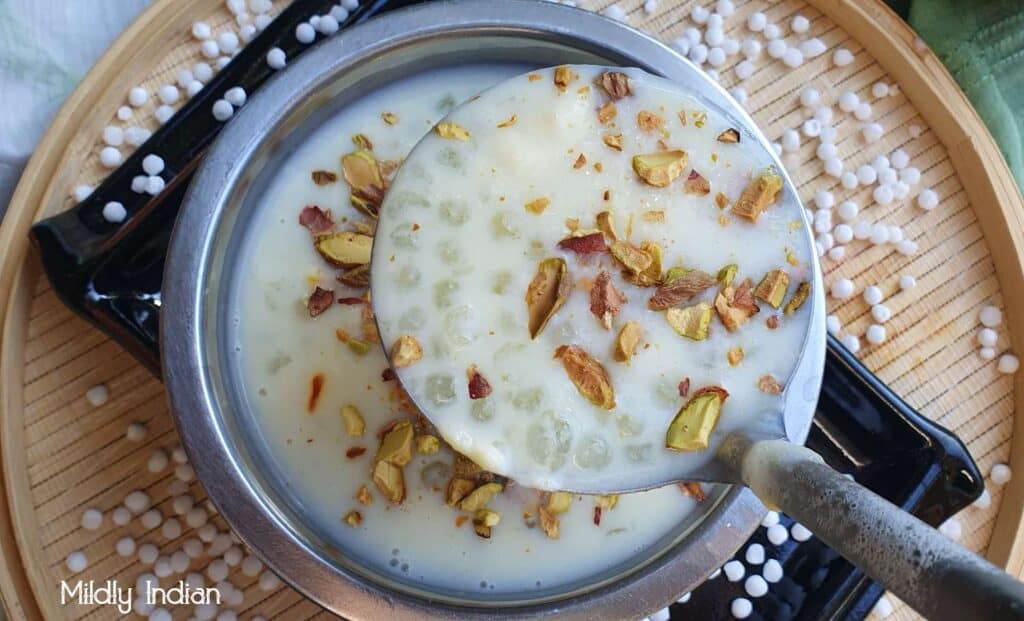
Sabudhana kheer
The sabudhana kheer is literally tapioca pearls boiled in milk. Yet, it tastes simply divine in some households and mediocre in others  if you are curious like I was here are the best collated ideas to make the best tasting sabudhana kheer.

What is sabhudhana kheer?

Sabudhana kheer is a creamy milk based  dessert popular in India and Pakistan. The recipe uses tapioca pearls cooked in milk and is flavoured with nuts, seeds and saffron. Made during festivals like Holi, Shivrathri, Diwali and Ramzan the dessert is either served warm or chilled.
In the south of India, the same is served slightly more liquid and warm. This is javarisi payasam or sago payasam.
As you travel towards Asian countries, you will find very similar dessert versions of this sago kheer like the Ginataang bayabas we made from Filipino cuisine.

Ingredients to make sabhdhana kheer

Sago pearls:medium sized tapioca pearls are the ones I use for making sago kheer. Choose the ones that have a milky centre. This cooks better than the glassy ones.
Milk: full cream milk is best for the recipe as it gives the desired creaminess to the kheer. Since you will be cooking to reduce a fair bit of this milk, you can use evaporated milk combined with the full cream milk too. Skim milk does make a fairly decent kheer, but it doesn’t have the full bodied flavour. Among plant based milks, I prefer coconut milk or cashew milk to make this recipe.
Sugar: Regular sugar is often preferred to make this kheer. Caramel syrup, dates syrup or stevia are excellent replacements.
Saffron:the fragrance of he saffron in this kheer is delightful, so don’t skip. It doesn’t matter if you choose the long stamens or the short. The saffron infused milk slightly turns the colour of the kheer to  creamy colour then white.
Cardamom: The cardamom fragrance in any kheer is just divine. Use the seeds of green cardamom is what you use. You can powder this with some sugar and store to stir into the kheer.
Nuts and seeds: Pistachios, almonds, melon seeds and cashews are the best for this recipe. Crush the almonds and pistachios to add to the kheer.
sabudhana kheer
Let’s make sabhdhana kheer
Boil the milk: to get the best results, slow cook and reduce 4 cups of milk to half the volume. Use a thick bottomed vessel and constant stirring. This ensures that the kheer has a creamy consistency.
Soak the sago pearls: The sago pearls are a bit hard to start with. I prefer to soak them for 2 hours before cooking to reduce time on the stove. You can use hot water to soak them for half hour as well. The pearls when soaked will be soft and double in size.
Cool the pearls in milk: once soaked, cook on a slow heat. Once the water reduces, add the milk and slow cook till the tapioca pearls are cooked well. The center of the pearls will be glassy when cooked well.
Add the sugar: Once the sago is cooked in the milk remove from heat and add the sugar.
Add the aromatics and nuts: Stir in the cardamom powder and the crushed nuts. Mix well and the kheer is ready.

What are the best tips to make sabhdhana kheer better?

Sabudhana kheer is a very simple. However the most delicious sabudhana kheer recipes have a few little tweaks that elevate them.
  • Cooking down the milk: reducing the milk actually brings forth a creamy density. This flaours the tapicoa pearls really well.
  • Evaporated milk cuts down a fair bit of the cooking time. It also doesn’t take away from the flavour.
  • In certain recipes for the kheer you will find the addition of milk powder. This again increases the creaminess of the milk.
  • Soak the tapioca pearls: it is no fun to bite into a hard centered tapioca pearl. So ensure you wash and then soak the tapioca pearls for a couple of hours

Is jaggery suitable to be added to this kheer instead of sugar?

You can certainly use jaggery in the place of sugar to make this recipe. If using jaggery, do not add it like you do with sugar. Instead dissole the jaggery in a bit of warm water and make a syrup. oil the syrup and remove the impruitirs that skim on top. When the cooking process for the kheer is finished, add the jaggery syrup after you remove the kheer from the heat. This will ensure the kheer is not curdled.

Meal prep for this kheer

If serving chilled the kheer has a fantastic jelly like mouth feel. It stays God in the fridge for up to a week. If serving later,it is a good idea to make this kheer thinner as the tapioca pearls sit in the milk and swell a bit more.

Serving ideas for sabhudhana kheer

As said before, this kheer can be served warm or cold.
If serving warm: serving in small sized glasses topped with crushed nuts and a spoon to enjoy this dessert warm.
If serving cold: the traditional serving style is shallow bowls with a spoon. However you can make it into a parfait style using crushed nuts, chopped fruits, pieces of jelly etc layered with the chilled kheer. This is perfect for summer months. You can also add pieces of jilebi or jamun for the festive days to create fusion kheer dessert.

Can I make this kheer vegan?

If using coconut milk in place of regular milk you have made this kheer vegan easily. Since the coconut milk doesn’t curdle upon boiling it makes it easy to get this dessert creamy. You could try the same with oat milk too if you prefer.

Can I make this a sugar free dessert?

If you replace the sugar used in this recipe as stevia, monk fruit or aspartame, then you have a sugar free dessert. However, don’t add these to boil, rather make the kheer completely without sugar and then stir in the sugar free before serving. This ensure that the slight bitterness you feel with the sugar free is not accentuated.
Print

Sabudhana kheer

The sabudhana kheer is literally tapioca pearls boiled in milk. Yet, it tastes simply divine in some households and mediocre in others  if you are curious like I was here are the best collated ideas to make the best tasting sabudhana kheer.
Course Desserts
Cuisine gluten free, Indian
Keyword festival offerings, iftar recipes, Indian desserts, pot luck recipes
Prep Time 10 minutes
Cook Time 20 minutes
soaking time 2 hours
Total Time 2 hours 30 minutes
Servings 4 people

Equipment

  • deep pot
  • measuring cups and spoons

Ingredients

  • 1/2 cup tapioca pearls
  • 1 cup water
  • 4 cups milk
  • 1/4 tsp green cardamom powder
  • 1/4 cup Assorted nuts crushed

Instructions

  • Wash and soak the sago (tapioca pearls).
  • Once it is swollen and has doubled in size it is ready to cook.
  • Boil the milk and reduce to half the volume. Ensure you are contantly stirring and scraping the solids that accumulate on the sides.
  • Add the soaked tapioca pearls and water to a deep pot and bring to a slow boil
  • Half way through add the milk and let the sago boil till the center turns glassy of each pearl.
  • Don't miss to keep stirring at this stage as it can catch the bottom easily.
  • Stir in the sugar, cardamom powder and mix well.
  • Remove from heat and stir in the crushed nuts .
  • Once he sugar is dissolved the kheer is ready to be served.
Stay connected
We make sabudhana kheer for any festivals and sometimes just on a whim. It is that easy and provides a comforting feeling always. 
Hope you like making this recipe.
Pin this kheer for later.
Stay subscribed and see you in the next post.
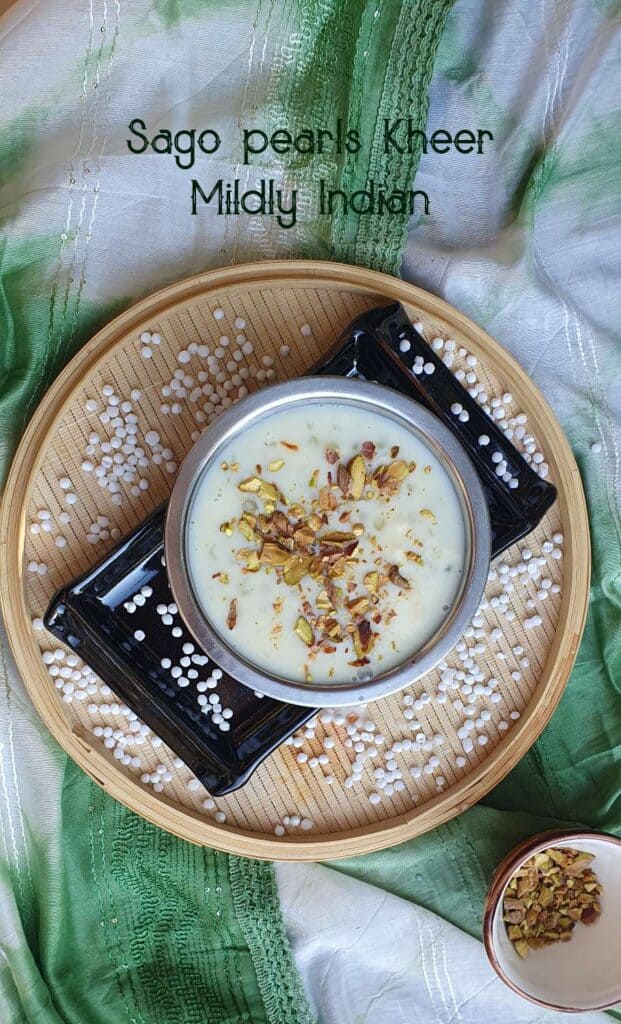
sago pearls kheer

Pudanlangai Thayir Pachadi | Potlakaya Perugu pachadi | Snake Gourd raita

Snake gourd /padwal(Marathi)/Potlakaaya (Telugu) /Padavalanga (Malayalam) / Padavalkkai (Kannada) .
Call it by any name it has a lot of nutritional value and is a powerhouse of nutrients. Snake gourd belongs to the summer squash family, mostly a summer produce ,it is available all round the year in India.

Rich in dietary fiber , vitamins A and C ,snake gourds help in digestion ,prevent bloating and constipation . Helps in detoxification of the body because of its diuretic properties. Due to water content present in the snake gourd it helps maintain body's hydration.

Snake gourd /padwal(Marathi)/Potlakaaya (Telugu) /Padavalanga (Malayalam) / Padavalkkai (Kannada) , Snake gourd /padwal(Marathi)/Potlakaaya (Telugu) /Padavalanga (Malayalam) / Padavalkkai (Kannada)  pachadi, perugu pachadi, pachadi, kichadi, padavalnga kichadi, podalanga pachadi, podalanga thayir pachadi, potlakaya perugu,potlakaya, padwal raita, padval raita, dahi padwal

 Podalangai Thayir pachadi is a new addition to my kitchen and hence it is making it to the blog . 
Amma would make it frequently during summer, but over the years I had totally forgotten about this recipe . As a flash,this recipe occurred to me this morning when I was contemplating what to make with fresh and tender snake gourd that I had just bought. The snake gourds have to be tender. Overly ripe ones taste bitter and become hard and chewy . So while buying, make sure the snake gourd vine is easy to twist and tender to feel. If you find it hard or it easily cracks ,then don't buy that .

Podalangai thayir pachadi is very easy to make and gets done in no time . A tasty paste is made using fresh coconut, ginger,green chillies and curry leaves which is added to thick whipped yogurt and boiled snake gourd is mixed along with this followed by a tempering of mustard, dry red chillies and asafoetida. 

Podalangai thayir pachadi is also made during Amavasya, pithrupaksha and Shraadh cooking in a typical Tamil Brahmin household . Vishu and Onam Sadhyas also feature padavalanga kichadi as one of the Sadhya menu items.

Snake gourd /padwal(Marathi)/Potlakaaya (Telugu) /Padavalanga (Malayalam) / Padavalkkai (Kannada) , Snake gourd /padwal(Marathi)/Potlakaaya (Telugu) /Padavalanga (Malayalam) / Padavalkkai (Kannada)  pachadi, perugu pachadi, pachadi, kichadi, padavalnga kichadi, podalanga pachadi, podalanga thayir pachadi, potlakaya perugu,potlakaya, padwal raita, padval raita, dahi padwal

Officially, though it is still winter/spring in India , we are already feeling the warmth in my part of the city. There is hardly any chillness felt and the afternoon sun is at its peak .

As always, with summer setting in; buttermilk,lassi,raita and yogurt based curries make a lot of appearance in my kitchen . Yogurt based curries are light on stomach and easy to digest as well .Most importantly it keeps the body cool during harsh summer and it maintains hydration. 

Snake gourd /padwal(Marathi)/Potlakaaya (Telugu) /Padavalanga (Malayalam) / Padavalkkai (Kannada) , Snake gourd /padwal(Marathi)/Potlakaaya (Telugu) /Padavalanga (Malayalam) / Padavalkkai (Kannada)  pachadi, perugu pachadi, pachadi, kichadi, padavalnga kichadi, podalanga pachadi, podalanga thayir pachadi, potlakaya perugu,potlakaya, padwal raita, padval raita, dahi padwal

Some lipsmacking raitas in South Indian flavor 


Pinterest link


Snake gourd /padwal(Marathi)/Potlakaaya (Telugu) /Padavalanga (Malayalam) / Padavalkkai (Kannada) , Snake gourd /padwal(Marathi)/Potlakaaya (Telugu) /Padavalanga (Malayalam) / Padavalkkai (Kannada)  pachadi, perugu pachadi, pachadi, kichadi, padavalnga kichadi, podalanga pachadi, podalanga thayir pachadi, potlakaya perugu,potlakaya, padwal raita, padval raita, dahi padwal

Preparation Time - 5 mins
Cooking Time - 8 mins
Serves - 2 to 3 
Complexity - easy 

Ingredients 

1 medium vine snake gourd 
1.5 cups thick yogurt
2 tbsp coconut grated
1 green chilli (optional)
2 to 3 dried red chilli
Few curry leaves  
Small piece ginger 
Salt as needed 
1/2 tsp oil 
1/4 tsp mustard seeds 
1/4 tsp udad dhal /black gram 
Pinch of asafoetida 

Note - if you family tradition doesn't use green chilli for shraadh/Amavasya then replace with dry red chillies.

Method 

  • Wash the snake gourd and slit it vertically . Deseed /remove the seeds and chop it into small cubes. 
  • Boil half cup water with salt and cook the snake gourd until soft and tender . Drain the water .
  • Grind the coconut, green or red chilli ,curry leaves,ginger to a fine paste .
  • Beat the curd/yogurt to make it lump free and smooth.
  • Mix the ground coconut paste ,whipped curd and boiled snake gourd . Adjust salt if needed.
  • Prepare a tempering of mustard seeds , curry leaves ,udad dhall, red chilli,asafoetida and pour it over the raita and mix well. 


Payathangaai Poriyal / Karamani Thoran / Longyard beans stir fry (Vegan & Saatvik)

 Payathangaai , karamani , chowli or Long beans is a nutrient rich and powerhouse of natural fibre coupled with antioxidants and immune boosting properties. 

A green vegetable widely used in India in various forms makes it the most sought after vegetable . As the beans reach almost 2 to 3 feet in length they are known as long yard beans . These belong to the cow pea family popularly known as lobia ,chowli or karamani . 

The beans are thin ,long ,slender and very tender . They look very appealing to the eye when we see it and are stocked up as bundles since they are long .  Very easy to cook and it can blend in very easily with all sorts of seasonings and flavorings . Normally prepared as stir fries,  steamed and used in salads or mild vegetable stews .

Payathangaai Poriyal / Karamani Thoran / Longyard beans stir fry (Vegan & Saatvik), karamani curry , chowli bhaaji , chawli sabji , chawli , payathangai thoran , sadhya special thoran , vegan thoran , mahalaya paksham special

It is good to incorporate the payathangaai in your day to day meals as it is rich in fibre and also potassium, magnesium, vitamins C and A .

A vegetable which is heart friendly due to potassium content and gut friendly due to fibre content.  The fibre content prevents constipation and the potassium present in the chowli helps to maintain the BP and in turn helps and protects the heart.

The magnesium, zinc ,vitamins C and A help in maintaining the over all cell growth in the body and helps in having a good metabolism due to the antioxidants present . 

Payathangaai Poriyal / Karamani Thoran / Longyard beans stir fry (Vegan & Saatvik), karamani curry , chowli bhaaji , chawli sabji , chawli , payathangai thoran , sadhya special thoran , vegan thoran , mahalaya paksham special

The recipe that I am sharing today is a very simple yet flavorful curry/stir fry made using karamani and very popular in Tamil Nadu and Kerala.  This version is a no Onion No Garlic recipe but you may use finely chopped shallots for added flavor.  

In Kerala,  Onam Sadhya has payathangai thoran as one of the menu items and in Tamil homes ,this is made as a part of regular meals . Since it is a native bean like cluster beans and flat beans , karamani is widely used during Pithru Paksham (mahalaya Paksham) where we tend to consume only native vegetables. 

The recipe uses very little oil and just 2 tbsp of fresh coconut for seasoning, making it a very healthy and diet friendly preparation. 

Payathangaai Poriyal / Karamani Thoran / Longyard beans stir fry (Vegan & Saatvik), karamani curry , chowli bhaaji , chawli sabji , chawli , payathangai thoran , sadhya special thoran , vegan thoran , mahalaya paksham special

Preparation Time  - 10 mins
Cooking Time - 10 mins
Complexity- easy 
Serves - 2 to 3 

Ingredients 

250 gms karamani/chowli/ long yard beans
2 tsp oil (coconut oil or any non flavored oil) 
1 tsp mustard seeds
1 tsp udad dhall
Few curry leaves 
Pinch of asafoetida
Salt to taste 
To grind 
2 tbsp fresh coconut 
2 green chillies 
1/2 tsp jeera /cumin

Method

Payathangaai Poriyal / Karamani Thoran / Longyard beans stir fry (Vegan & Saatvik), karamani curry , chowli bhaaji , chawli sabji , chawli , payathangai thoran , sadhya special thoran , vegan thoran , mahalaya paksham special


  • Trim the top and end of the long beans and chop them finely.  Wash well and keep aside .
  • Coarsely grind the coconut, green chillies and jeera in a blender . We will use this for flavoring the poriyal/thoran.
  • In a thick bottomed pan,heat oil and splutter the mustard seeds, udad dhall until golden brown followed by curry leaves and asafoetida.  
  • Add the chopped karamani, give a quick stir . Add the required amount of salt and add 1/4 cup water and cook covered for 7 to 8 min until the beans are cooked well and tender .There should be no water left in the pan .
  • If at all you see some water is left,  cook uncovered for a few more minutes until the water evaporates .
  • Now add the coconut mixture,  give a quick stir, cover the poriyal and turn off the stove.  Let the stir fry rest for a few minutes until all the flavors are absorbed well into the beans .
  • Transfer to a serving bowl and serve it with a choice of sambar rice,  rasam rice etc . 

Some more healthy and tasty stir fries /poriyal that you may like 


Vendakka Kichadi (Pachadi) | Fried ladies finger (okra) in coconut yogurt sauce - Sadhya special

 Kichadi (Pachadi) is an integral part of a festive meal (Sadhya) in Kerala. Kerala style kichadi must not be confused with the North Indian Khichdi which is a rice based main course recipe. 

 Onam and Vishu Sadhya is incomplete without serving a kichadi . Kichadi also known as Pachadi in few regions of Kerala,is a yogurt based side dish often made from various vegetables like Okra/ladies finger ,ginger ,tomato, Cucumbers, ash gourd etc .

Kichadi pairs well with Sambar Rice and a coconut based vegetable stir fry . One can even make it as a part of day to day meal as well. Why wait for a special occasion to savor such a healthy delicacy ? 

Vendakkai Thayir Kichadi/Pachadi   is made from okra/ladies finger . Ladies finger is known as Vendakka or Vendakkai in Malayalam/ Tamil.

Chopped ladies finger is shallow fried in coconut oil and then added to the coconut chilli paste mixed in yogurt. The yogurt must not be spur, else it will ruin the taste of the kichadi /pachadi.

Some recipes call for cooking the coconut chilli paste + yogurt ,but in this recipe I am not cooking the yogurt mixture . I am going to just add the fried Okra to the yogurt mix along with the tempering. 

Some popular kichadi /pachadi served as part of Sadhya 

Inji (Ginger) Thayir  Kichadi 

Thakali (Tomato) Kichadi 

Vellarikai Inji (Cucumber Ginger )Thayir 

Vellarikai (Cucumber) kichadi


This month in our SHHH Secretly Cooking Challenge food group,we are celebrating Sadhya special hosted by me . My fellow bloggers have come up with amazing and authentic Kerala Sadhya recipes . My partner for this month ,Radha Rajagopalan has dished out the traditional Ada Pradhaman ,which is a classic dessert from Kerala. Do check out her recipe for Ada Pradhaman without fail .  

To know more about the dishes served in a typical Sadhya for Onam / Vishu, check out the list soon after the recipe of Vendakkai Kichadi. I am giving you a complete list of authentic recipes.


Preparation Time - 10mins
Cooking Time- 5 mins
Complexity - simple
Serves - 2 to 3 

Ingredients

1/4 cup fresh grated coconut 
2 green chillies
1/2 tsp jeera/cumin
8 to 10 tender ladies finger/okra/vendakkai
200ml  thick yogurt/dahi/thayir
Salt as needed
2 tsp coconut oil
1/2 tsp mustard seeds
1 dry red chilli
Few curry leaves 

Method

  • Wash and dry the ladies finger. Cut into medium sized roundels. 
  • Whisk the yogurt well and make it lump free and smooth. 
  • Grind the green chillies, coconut,jeera with 1tbsp yogurt and some water  into a smooth paste.
  • Add this paste to the yogurt and mix it well with adequate salt.
  • In a frying pan,heat 1tsp of coconut oil and roast the ladies finger until it crispy  ,add a little salt to the roasted ladies finger in the end .
  • Prepare a tempering of mustard seeds,red chilli and curry leaves in the remaining coconut oil .
  • Add the roasted ladies finger ,tempering to the yogurt mixture and mix it well .Delicious and tasty vendakkai kichadi is ready to be served .

Sadhya recipes on the blog. Click on the individual items below to get detailed recipe


Pin me up


Chakka Pradhaman using Chakkavaratti - Sadhya Special

 Onam is the harvest festival of Kerala and also the day to comomerate and celebrate Vamana and King Mahabali .Whole of Kerala and Malayalees world over celebrate the day with a lot of joy and happiness. Onam is a ten day festival and as per gregorian Calender falls anyday between August - September which coincides with the  Chingam Month as per Malayalam Alamanac on the star of Thiruvonam or Sravanam which is the 22nd star or Nakshatra.


Mahabali was a very generous and powerful king who ruled Kerala and there was abundant prosperity and happiness during his reign. It is believed that on this day King Mahabali or Maaveli visits the land of Kerala and rejoices with the people of the land . To welcome the King ,an elaborate rangoli or kolam using flowers is decorated at every home , a lavish spread known as Sadhya is prepared and the annual boat race is held by the State .

ONAM is the annual state festival of Kerala.

I have already posted almost all recipes prepared for a Sadhya on my blog .I will post the link below which can be used as a ready recokner. 

Today we shall see a very traditional and authentic sweet chakka Pradhaman made using Jackfruit Jam known as Chakka Varatti . I have already posted how to make chakka varatti during jackfruit season .

This paysam is really easy to make if we have the chakka varatti ready on hand . The other  version to make Chakka Pradhaman from scratch can be found here. 

Without further delay,let me get to the recipe quickly .


Preparation Time - 10 mins
Cooking Time - 15 mins
Complexity - simple
Serves - 2 to 3

Ingredients 

1/2 cup chakka varatti / jackfruit jam
3/4 cup grated coconut 
3 tbsp jaggery 
1/2 cup thick coconut milk 
2 tbsp finely chopped coconut bits 
2 tsp ghee 

Method


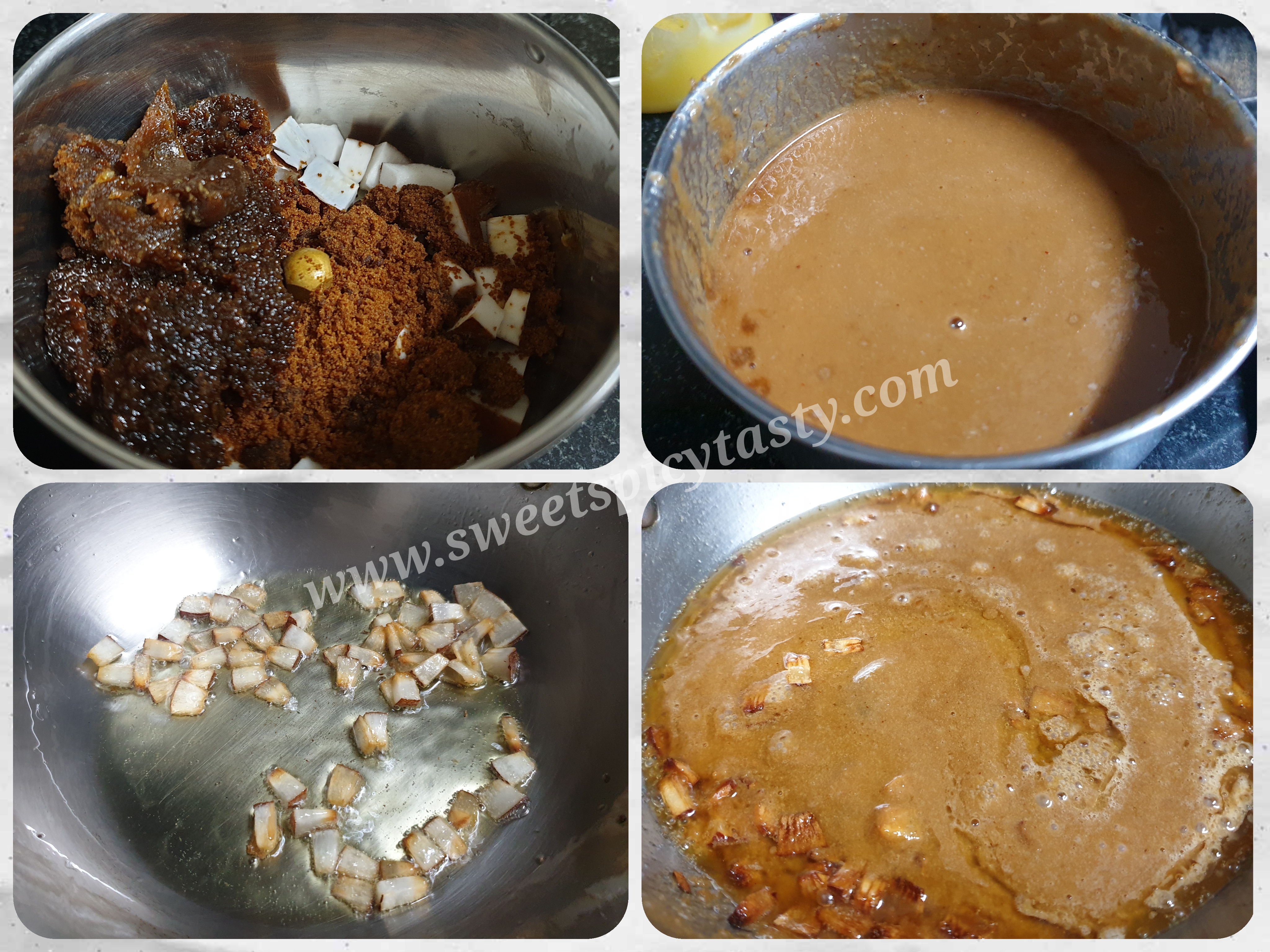
  • Blend the chakka varatti, grated coconut and jaggery with 1/4 cup water to a very fine paste .
  • In a heavy pan ,heat the ghee and fry the coconut bits until they turn crisp and brown.
  • Pour the blended paste to this fried coconut and bring it to a quick boil .
  • Add the thick coconut milk in the end ,mix well and turn off the stove .Donot try to over cook or boil the Pradhaman after adding the coconut milk ..the Pradhaman will curdle .the heat is enough to cook the coconut milk and take away the raw smell.
  • Delicious chakka Pradhaman is ready. 

Pin it up 


Sadhya recipes on the blog. Click on the individual items below to get detailed recipe


Chakkavaratti | Chakkavaratiyadhu - Jackfruit Preserve

 Jackfruits are still available in plenty in most places in India and will surely be available for a few weeks more . If you are done with your quota of eating fresh , ripe and juicy jackfruits then I suggest you must make this delicious jackfruit jam /preserve a delicacy from Kerala known as Chakka Varatti or Chakka Varatiyadhu. 

Chakkai in Malayalam means Jackfruit and Varatiyadhu means reduction /simmering process .So basically we make a tasty relish or jam like preserve from jackfruit pulp and jaggery to relish all year long when fresh jackfruits aren't available. 

You can also use fresh ripe jackfruit to make delicious Chakka Pradhaman (Jackfruit Payasam) and Chakka Unniappams . (Fritters) 

I learnt this recipe from Chandra Muthukrishnan aunty, who is an expert in making traditional and complex dishes in a breeze .She guided me  over whatasapp while I was making this and gave a final approval when I shared the video of the finished product . 

Traditionally in olden times, making chakka varatti was a long drawn process and the ladies of the house had to toil a lot to prepare since modern day gadgets like gas stoves, food processors or pressure cookers were not available. 

The jackfruit pods had to be boiled over wooden or charcoal stoves and then using grinding stone the pulp had to me made and then further cooked in huge bronze vessel called Uruli with jaggery and  ghee for hours together to get the perfect taste and texture . Now making chakka varatti is a lot easier and we can prepare it effortlessly at the comfort of our homes .


Preparation Time -20 mins
Cooking Time - 35 to 45 mins
Complexity - complex 

Ingredients 

14 to 16 ripe jackfruit pods 
jaggery powder  (same measure as jackfruit pulp) 
2tsp of cardamom powder 
ghee as needed 

Method 


  • Deseed the jackfruit pods and pressure cook it with 1/4 cup water for 2 whistles on medium flame .
  • Let the pressure release naturally, strain the excess water and let the jackfruit cool down .
  • Blend the cooked jackfruit into a smooth pulpy puree in your blender.
  • Measure the pureed jackfruit and take the same quantity of  jaggery powder ..eg if you get 1 cup of puree, using the same cup measure 1 cup of powdered jaggery and 1/2 cup ghee .


  • Melt the jaggery in 1/4 cup water and strain it for impurities. 
  • In a heavy bottomed pan ,heat the strained jaggery syrup and let it come to a nice bubbling boil .
  • At this stage add the jackfruit pulp and mix it nicely till the jaggery and pulp blend in well.
  • Keep stirring on low flame and you can see the mixture begins to cook and starts giving out a good aroma . 
  • The key is in stirring without a break as there is a chance of the mixture getting burnt easily . 
  • The mixture begins to thicken and reduces in quantity after 10 mins,at this stage add some 3 to 4 tbsp of ghee and mix well . The entire ghee gets absorbed by the mixture and you can see a nice glossy look.
  • After some time you can see that the entire jam looks glossy and begins to leave the sides of the pan easily and resembles the texture of a jam .
  • Now add the balance ghee ,cardamom powder and continue to cook for sometime. When you drop a blob of the chakka varatti using the ladle, it should slide off and fall down easily . This is the correct texture .turn off the stove at this stage and let it cool . The  jam will slightly thicken more after cooling. Donot worry about that. Once cooled, transfer the chakka varatti to a dry container using a dry spoon and refrigerate it. (Check the video below for the consistency)


Note

To have a prolonged shelf life ,never thaw the entire preserve for a long time.  Take out the desired quantity and put it back into the refrigerator.  This way the chakka varatti stays for almost 1 year .


❌