❌

Reading view

There are new articles available, click to refresh the page.

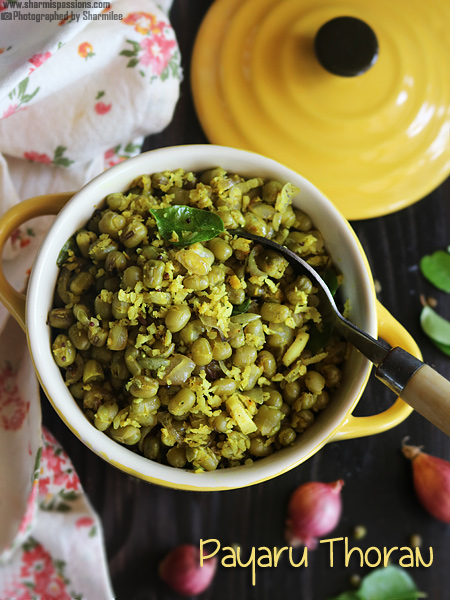
Cherupayar Thoran | Green Gram Stir Fry

Cherupayar Thoran is a very humble Kerala style side dish made using green gram, coconut and few simple spices. It has that homely taste which you always find in Kerala meals. The soft cooked green gram blends so well with fresh coconut with a small hint of garlic and pepper.
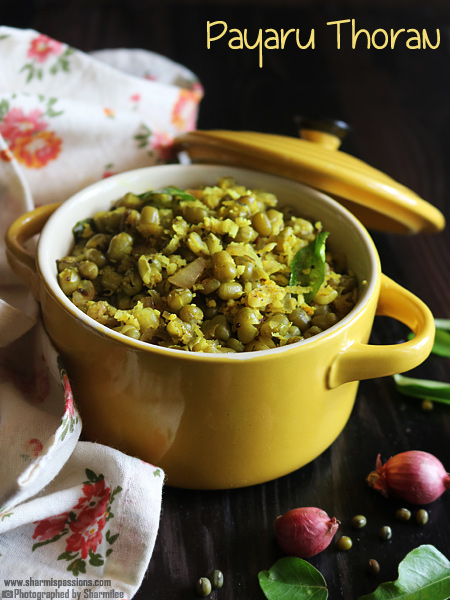
cheru payaru thoran served

This dish is not fancy or rich but has deep comfort feel in it. The aroma of coconut oil, curry leaves and green chili itself is enough to make anyone hungry. It is one dish you can make any day, even when fridge is almost empty and you still want something warm and tasty to go with rice.

[feast_advanced_jump_to]

About Cherupayar Thoran

'Cherupayar' means whole green gram or moong bean in Malayalam, and 'thoran' means a simple dry stir fry with coconut. It is one of the very common dishes made daily in Kerala homes. The beauty of this dish is in its simplicity with no heavy masala, no strong spice, still it taste balanced and delicious.

The green gram is soaked overnight so that it cooks soft but not mushy. Then it is mixed with onion, garlic, fresh coconut and few tempering items. It is light, filling and gives nice satisfaction when had with hot rice. I always love such thoran because they come together quick and is healthy too.

There are few variations too. Some people add red chilli powder or tiny bit of cumin powder to make flavor little different. Few even add grated carrot with coconut for color. But honestly the classic version taste best with just minimal spices. You can serve it as side with rice, or even eat as evening snack with tea.

I make Cherupayar Thoran often when I am tired of heavy curries or fried dishes. It is filling but light on stomach. Sometimes I eat it with kanji or even roll inside chapati like dry filling. The taste never disappoints, it is always homely and satisfying.
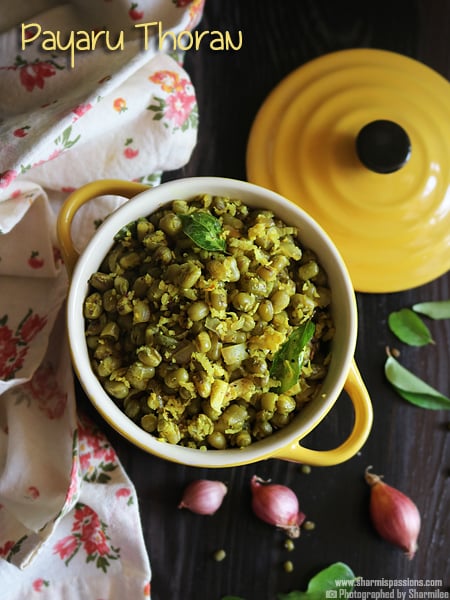
cheru payaru thoran served

Cherupayar Thoran Ingredients

  • Green gram (Cherupayar) - I have used half cup whole green gram soaked overnight. It gives good protein, earthy flavor and soft texture. You can also use sprouted ones if you want more nutrition.
  • Small onion - I used small onion for mild sweetness and balance. If you do not have, just use regular onion sliced thin, it works same.
  • Garlic - I add few small garlic just for taste and aroma You can skip if you not like strong smell, but I feel it goes nice with green gram.
  • Coconut grated - I have used fresh grated coconut, it gives nice texture and little moisture. Frozen one also okay but fresh taste better always.
  • Green chilli - I add one or two slit green chilli for small heat and brightness. You can add more if you like more spicy side.
  • Turmeric powder - Just a small pinch I used for color. It also makes the dish look brighter.
  • Pepper powder - I have used a small sprinkle to give earthy and mild spice. It balances coconut sweetness very well.
  • Coconut oil - I always make thoran with coconut oil only. It gives that Kerala flavor. Try not to skip, it changes the taste.
  • Mustard seeds - I used for little crunch and nutty taste. Wait till it pop fully before adding next item.
  • Jeera (Cumin seeds) - I add a small pinch of jeera while tempering, it gives nice flavor and also helps for digestion.
  • Curry leaves - I always use fresh curry leaves, it gives freshness and lovely aroma to dish. If you not have, you can skip but flavor reduce little.

Similar Recipes

How to make Cheru Payaru Thoran Step by Step

1.Soak green gram over night. Rinse it well and then cook in pan with enough water and little salt. When it becomes soft but not mushy, switch off. If there is excess water, drain it. If there is only little then no need to drain it, Set aside.
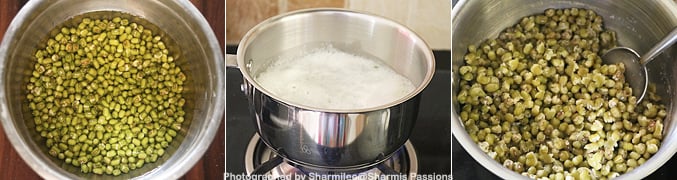
how to make cheru payaru thoran step1

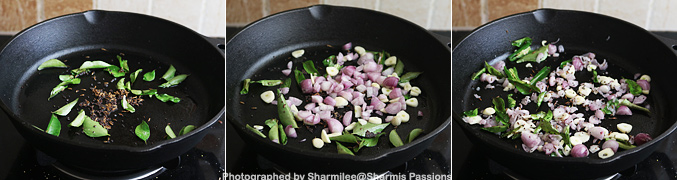
2.Heat oil in a pan - add the items listed under 'to temper', let it splutter. Add small onion, garlic, green chili, saute till it turns transparent.
how to make cheru payaru thoran step2

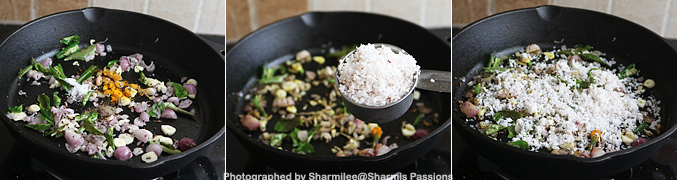
3.Add turmeric powder, pepper powder and salt. We have already added salt with green gram so adjust and accordingly. Mix well then add coconut.
how to make cheru payaru thoran step3

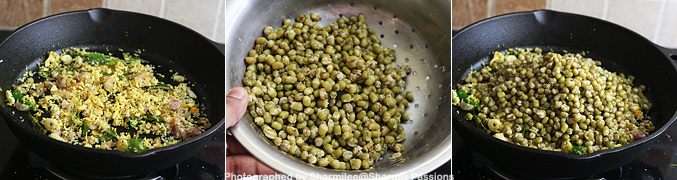
4.Saute for 2 minutes then add cooked green gram.
how to make cheru payaru thoran step4

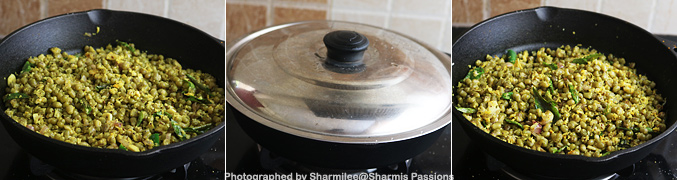
Toss it well, cook covered for 2 minutes. Fluff it up and switch it off.
how to make cheru payaru thoran step5

Serve hot / warm with rice and sambar or with any variety rice.

Expert Tips

  • Soaking time - I always soak green gram overnight or at least for 6 hours. It cooks evenly and becomes soft but not break easily.
  • Cooking stage - Do not overcook, I usually stop cooking when it just turns soft when pressed. If overdone, it becomes mushy and will not taste good for thoran.
  • Tempering - I have noticed when mustard seeds and jeera splutter well in hot coconut oil before onion, it gives strong nice flavor. So do that patiently.
  • Coconut - I used fresh grated coconut here. It gives more taste and keeps the dish moist. If you use frozen, thaw well before adding.
  • Avoid extra water - Always drain cooked green gram well. If water stays, thoran will become soggy instead of dry and fluffy. I usually spread it few minutes before mixing.

Serving and Storage

Serve Cherupayar Thoran hot with steamed rice, sambar, rasam or even moru curry. It pairs very well with simple meals and kanji also.

Leftover thoran stays good in fridge for one day. Reheat gently or keep outside for some time before serving. Try not to keep it longer as coconut may turn sour after a day.

FAQS

1.Can I make thoran without soaking green gram?

You can, but it will take more time to cook and sometimes stays uneven. So soaking always better for good result.

2.Can I add red chili powder?

Yes, small pinch gives nice color and little spice. But traditional version mostly made without.

3.Can I skip garlic?

Yes can skip, though it gives lovely aroma and mild sharpness. Without it, dish taste more plain side.

4.Why my thoran turned too dry?

Maybe green gram was drained too much or less coconut used. Add some grated coconut or little coconut oil to fix it.

5.Can I make with sprouted green gram?

Yes, sprouted one tastes good and healthy too. But cook it very lightly so it stays crunchy and fresh.
cheru payaru thoran served

If you have any more questions about this Cherupayar Thoran Recipe do mail me at sharmispassions@gmail.com. In addition, follow me on Instagram, Facebook,Β  Pinterest, Youtube andΒ TwitterΒ .

Tried this Cherupayar Thoran Recipe? Do let me know how you liked it. Also tag us on Instagram @sharmispassions and hash tag it on #sharmispassions.

πŸ“– Recipe Card

28867733394 ee8ee99ef4 o
Print

Cherupayar Thoran Recipe | Green Gram Stir Fry Recipe

Cherupayar Thoran is a very humble Kerala style side dish made using green gram, coconut and few simple spices. It has that homely taste which you always find in Kerala meals. The soft cooked green gram blends so well with fresh coconut with a small hint of garlic and pepper.
Course Side Dish
Cuisine Indian
Keyword curry, curry recipes, Kerala Meal Sidedish, legumes recipes, lunch box menu, lunch box recipes, lunch recipes, lunchbox recipes, poriyal, poriyal recipes, Side Dish, stir fry recipes, veg recipes
Prep Time 10 minutes
Cook Time 15 minutes
Servings 2
Calories 298kcal
Author Sharmilee J

Ingredients

  • Β½ cup green gram
  • 5 small onion sliced
  • 3 garlic sliced
  • ΒΌ cup coconut grated
  • 1 green chili slitted
  • 1 tiny pinch turmeric powder
  • ΒΌ teaspoon pepper powder
  • salt to taste

To Temper:

  • 2 teaspoon coconut oil
  • Β½ teaspoon mustard seeds
  • Β½ teaspoon jeera
  • small sprig curry leaves

Instructions

  • Soak green gram overnight. Rinse it well and then cook in pan with enough water and little salt. When it becomes soft but not mushy, switch off. If there is excess water, drain it. If there is only little then no need to drain it. Set aside.
  • Heat oil in a pan - add the items listed under 'to temper', let it splutter.
  • Add small onion, garlic, green chilli, saute till it turns transparent.
  • Add turmeric powder, pepper powder and salt. We have already added salt with green gram so adjust and accordingly.
  • Mix well then add coconut.
  • Saute for 2 minutes then add cooked green gram.
  • Toss it well, cook covered for 2 minutes. Fluff it up and switch it off.
  • Serve Cherupayar Thoran hot / warm with rice and sambar or with any variety rice.

Notes

  • Soaking time - I always soak green gram overnight or at least for 6 hours. It cooks evenly and becomes soft but not break easily.
  • Cooking stage - Do not overcook, I usually stop cooking when it just turns soft when pressed. If overdone, it becomes mushy and will not taste good for thoran.
  • Tempering - I have noticed when mustard seeds and jeera splutter well in hot coconut oil before onion, it gives strong nice flavor. So do that patiently.
  • Coconut - I used fresh grated coconut here. It gives more taste and keeps the dish moist. If you use frozen, thaw well before adding.
  • Avoid extra water - Always drain cooked green gram well. If water stays, thoran will become soggy instead of dry and fluffy. I usually spread it few minutes before mixing.

Nutrition

Serving: 75g | Calories: 298kcal | Carbohydrates: 45g | Protein: 14g | Fat: 8g | Saturated Fat: 7g | Polyunsaturated Fat: 0.4g | Monounsaturated Fat: 1g | Sodium: 89mg | Potassium: 827mg | Fiber: 12g | Sugar: 8g | Vitamin A: 172IU | Vitamin C: 13mg | Calcium: 102mg | Iron: 4mg

The post Cherupayar Thoran | Green Gram Stir Fry appeared first on Sharmis Passions.
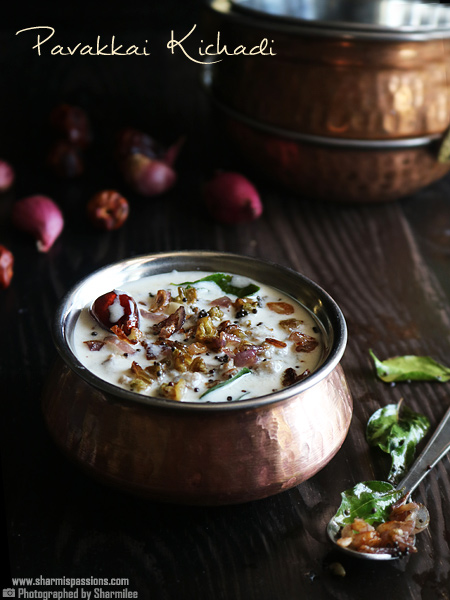
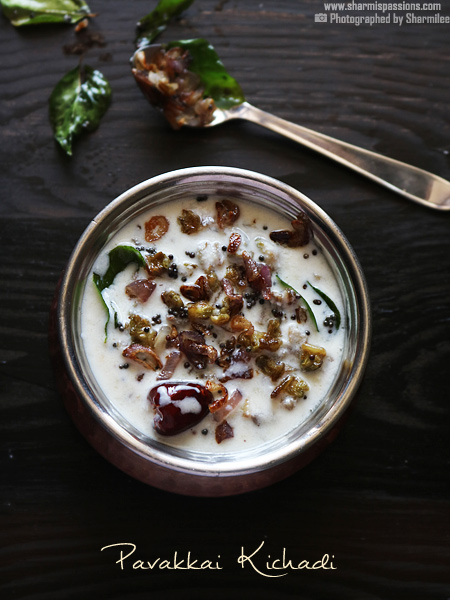
Pavakkai Kichadi Recipe

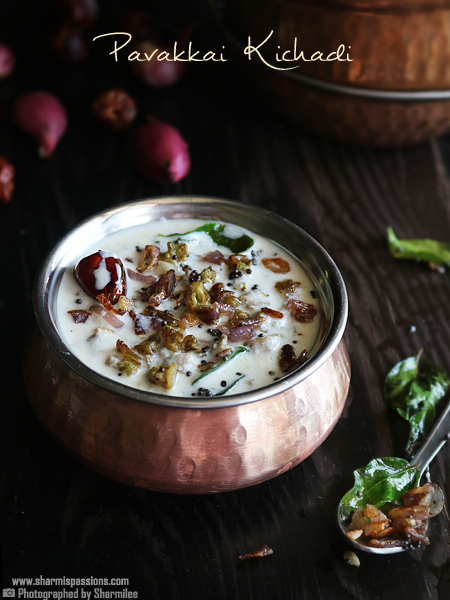
Pavakkai Kichadi is a mild side dish made using bitter gourd, curd, coconut and some basic spices. The recipe has little bitter taste but it gets balanced so well with the smooth curd and light coconut flavor. The texture turns creamy and soft, and when you mix with hot rice, it feels so soothing and comforting to have.

pavakkai kichadi served

This dish is good even for people who does not like pavakkai much, because the bitterness gets reduced a lot once it is mixed together with curd and coconut paste. The coconut paste adds body and the tempered onions give small crunch in every spoon. I like how the flavors mix together, little bitter, little sour, but overall a tasty one.

[feast_advanced_jump_to]

About Pavakkai Kichadi

Pavakkai Kichadi or Pavakkai Pachadi is a simple Kerala style curry made with bitter gourd, curd, coconut paste and mild tempering. It is mostly prepared during festival time, especially for Onam feast. This dish is light and slightly thick in texture with mix of smooth and chunky taste.

The main taste comes from curd and coconut, which blends together and reduces strong bitter taste. The tempering of mustard seeds, curry leaves and onion gives nice aroma and slight spicy punch. When served cold, the kichadi tastes even better as the flavor settles down well.

Some people make few changes according to their own taste. Some deep fry bitter gourd to make it crisp and less bitter, while others sautΓ© it just light. Few like to add more coconut paste to make it thick like chutney type, some make it thin like curd curry. You can always adjust curd sourness or spice level to match your liking.

I usually make this pavakkai kichadi during weekends or when I get fresh bitter gourd from market. It is one dish that taste nice with rice and paruppu curry too.

pavakkai kichadi served

Pavakkai Kichadi Ingredients

  • Bitter gourd - I have used finely chopped pieces so that it cooks fast and mix well with curd. It gives light bitter taste which gets balanced later. You can also use small cubes if you like bit of crunch.
  • Thick curd - I used homemade thick curd, it make the dish creamy and cool. Slightly sour curd also works good for more tangy taste.
  • Small onion - Fried onion gives little crunch and sweet balance to the dish. If small onion is not available, you can use regular one also.
  • Coconut oil - I used coconut oil for tempering which give strong Kerala flavor. If you don't not like the smell, you can use any other cooking oil too.
  • Fresh grated coconut - I used freshly grated one for smooth texture. It gives light sweetness and rich taste, frozen coconut also fine.
  • Green chilli - Adds small spice and balances the richness of curd. You can add more or less depend on your spice level.
  • Mustard seeds - Just little mustard add light tang and typical pachadi taste. I usually grind along with coconut.
  • Coconut oil - Used for tempering which give nice aroma. It also make dish feel more traditional.
  • Mustard seeds - These pop in oil and spread strong smell. Adds mild crunchy texture too.
  • Red chilli - Gives light spice and bright color to the dish.
  • Curry leaves - Adds fresh smell and typical Kerala touch to the pachadi.

Why This Recipe Works

  • This recipe is easy to make and needs only few basic ingredients.
  • It is a good way to enjoy bitter gourd in mild and tasty form.
  • The coconut and curd gives rich creamy flavor that balance bitterness.
  • It can be made in less time and goes well with any South Indian meal.
  • It is also healthy as pavakkai helps in digestion and curd keep body cool.

Similar Recipes

How to make Pavakkai Kichadi Step by Step

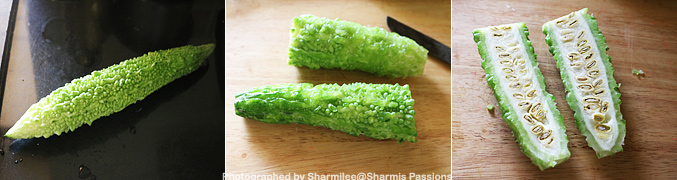
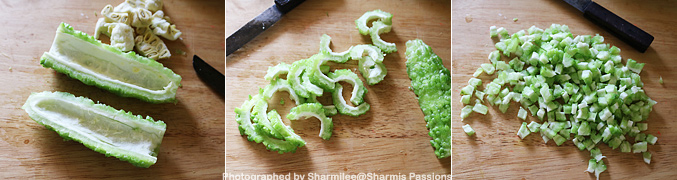
1.Wash bitter gourd well, then slightly scrap the sides. Cut it into half, I used only 1 half. Now further slit open.

how to make pavakkai kichadi step1

2.Scrape out the seeds and discard them. `Now make thin slices and cut them into small cubes.

how to make pavakkai kichadi step2

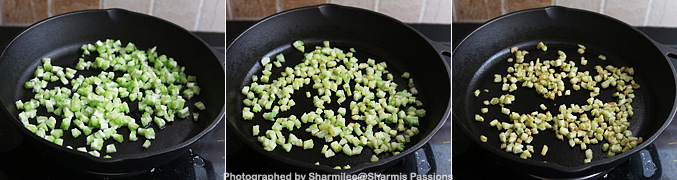
3.Heat oil in a pan, add chopped bitter gourd and sautΓ©. Keep sauteing in low medium flame.

how to make pavakkai kichadi step3

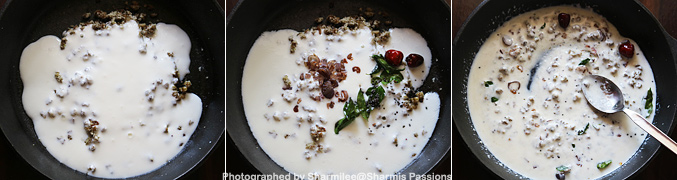
4.Meanwhile get all the ingredients listed under 'to grind' in Β a mixer jar along with little water grind it to a semi fine paste as shown, Set aside. Keep sauteing the bitter gourd.

how to make pavakkai kichadi step4

5.Once it is nicely browned like below add coconut paste cook for few minutes until raw smell leaves. This may take just few mins 3-5 minutes, Set aside to cool.

how to make pavakkai kichadi step5

6.In tadka kadai heat oil - add the ingredients listed under 'to temper and let it splutter, Set aside. Now add sliced onions, fry till golden brown.

how to make pavakkai kichadi step6

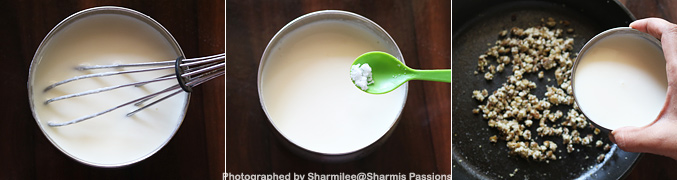
7.Beat curd well using a hand whisk, add required salt and add it to cooked bittergourd coconut mixture.

how to make pavakkai kichadi step7

8.Add fried onions and tadka items, give a quick mix and serve. This step is done off the stove.

how to make pavakkai kichadi step8

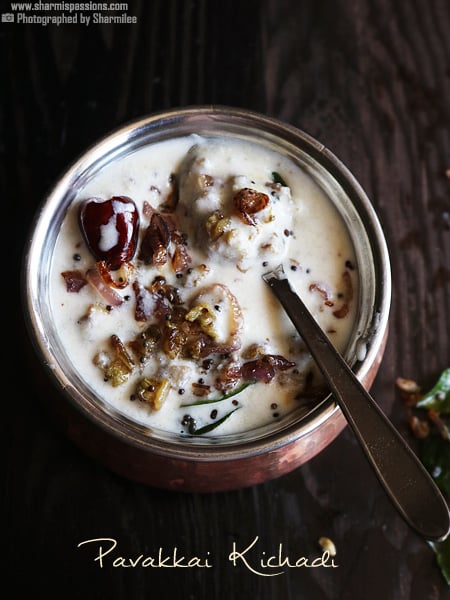
Garnish with fried onions and Serve chilled as a side dish.

pavakkai kichadi served

Expert Tips

  • Beating curd - I usually beat the curd smooth before mixing, this helps to get even texture and no curdling.
  • Cooling step - Better to cool down bitter gourd coconut mix before adding curd. If too hot, curd may split.
  • Tempering - I sometimes keep little tempering aside to add at last. It makes the look nice and give small crunch while eating.
  • Oil type - I prefer coconut oil always, it gives true Kerala touch. But if you feel strong flavor, use light cooking oil.
  • Frying bitter gourd - You can fry the bitter gourd little longer till brown to reduce bitterness. I do that when making for kids.

Serving and Storage

Serve this with hot rice, rasam or any spicy curry. It goes well as part of Onam Sadya too. Store leftover in fridge, it keeps good for one day. Mix well before serving next time. It taste better when served cold or at room temperature.

FAQS

1.Can I skip coconut?

Yes can skip, but coconut gives thickness and light sweetness, so flavor change little if you remove it.

2.Can I make this ahead of time?

Yes you can make and keep in fridge, just mix once before serving.

3.How to reduce bitterness more?

Fry pavakkai little longer or soak in salt water before cooking, it helps reduce the bitter taste.

4.Can I use homemade curd?

Yes homemade curd is best, it gives soft and fresh flavor to the dish.

5.Is this dish healthy?

Yes it is quite healthy, bitter gourd helps for blood sugar and curd helps to cool body.

pavakkai kichadi served

If you have any more questions about this Pavakkai Kichadi Recipe do mail me at sharmispassions@gmail.com. In addition, follow me on Instagram, Facebook,Β  Pinterest, Youtube andΒ TwitterΒ .

Tried this Pavakkai Kichadi Recipe? Do let me know how you liked it. Also tag us on Instagram @sharmispassions and hash tag it on #sharmispassions.

πŸ“– Recipe Card

29538455905 417388dc2c o
Print

Pavakkai Kichadi Recipe

Pavakkai Kichadi is a mild side dish made using bitter gourd, curd, coconut and some basic spices. The recipe has little bitter taste but it gets balanced so well with the smooth curd and light coconut flavor. The texture turns creamy and soft, and when you mix with hot rice, it feels so soothing and comforting to have.
Course Side Dish
Cuisine Indian
Keyword Kerala Meal Sidedish, lunch recipes, meals, raita recipes, Side Dish, thayir pachadi recipes, veg recipes, vegetable
Prep Time 15 minutes
Cook Time 15 minutes
Total Time 30 minutes
Servings 3 people
Calories 152kcal
Author Sharmilee J

Ingredients

  • 1 cup bitter gourd chopped finely
  • 1 cup thick curd
  • 5 small onion sliced
  • 2 teaspoon coconut oil
  • salt to taste

TO GRIND TO A PASTE:

  • ΒΌ cup fresh grated coconut loosely packed
  • 1 green chilli chopped roughly
  • ΒΌ teaspoon mustard seeds

TO TEMPER:

  • 1 teaspoon coconut oil
  • Β½ teaspoon mustard seeds
  • 2 small red chilli
  • 1 small sprig curry leaves

Instructions

  • Wash bitter gourd well, then slightly scrap the sides. Cut it into half, I used only 1 half. Now further slit open.
  • Scrap out the seeds and discard them. Now make thin slices and cut them into small cubes.
  • Heat oil in a pan, add chopped bitter gourd and saute. Keep sauteing in low medium flame.
  • Meanwhile get all the ingredients listed under 'to grind' in a mixer jar along with little water grind it to a semi fine paste as shown, Set aside.
  • Keep sauteing the bitter gourd.
  • Once it is nicely browned like below add coconut paste cook for few mins until raw smell leaves. This may take just few mins 3-5mins. Set aside to cool.
  • In tadka kadai heat oil - add the ingredients listed under 'to temper and let it splutter, Set aside. Now add sliced onions, fry till golden brown.
  • Beat curd well using a hand whisk, add required salt and add it to cooked bitter gourd coconut mixture.
  • Add fried onions and tadka items, give a quick mix and serve. This step is done off the stove.
  • Garnish with fried onions and Serve chilled as a side dish.

Notes

  • Beating curd - I usually beat the curd smooth before mixing, this helps to get even texture and no curdling.
  • Cooling step - Better to cool down bitter gourd coconut mix before adding curd. If too hot, curd may split.
  • Tempering - I sometimes keep little tempering aside to add at last. It makes the look nice and give small crunch while eating.
  • Oil type - I prefer coconut oil always, it gives true Kerala touch. But if you feel strong flavor, use light cooking oil.
  • Frying bitter gourd - You can fry the bitter gourd little longer till brown to reduce bitterness. I do that when making for kids.

Nutrition

Serving: 75g | Calories: 152kcal | Carbohydrates: 15g | Protein: 5g | Fat: 9g | Saturated Fat: 7g | Polyunsaturated Fat: 0.3g | Monounsaturated Fat: 1g | Cholesterol: 11mg | Sodium: 95mg | Potassium: 417mg | Fiber: 3g | Sugar: 8g | Vitamin A: 514IU | Vitamin C: 75mg | Calcium: 123mg | Iron: 1mg

The post Pavakkai Kichadi Recipe appeared first on Sharmis Passions.
Pineapple Pulissery Recipe

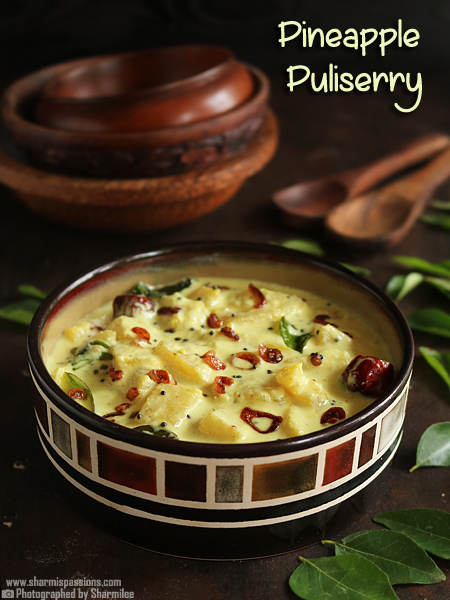
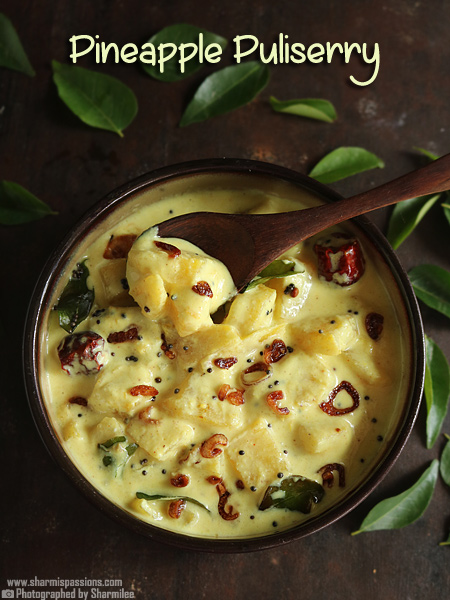
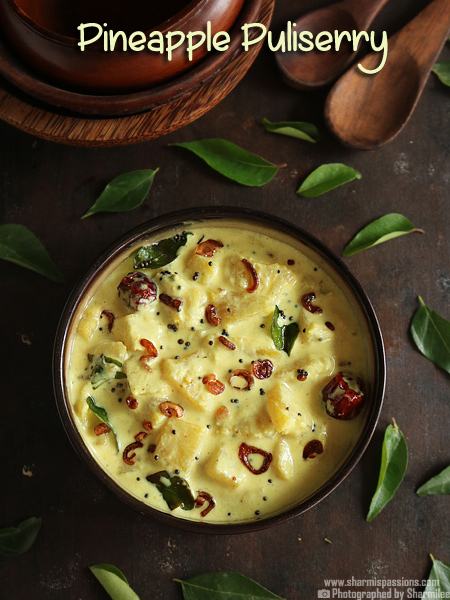
Pineapple Pulissery is a Kerala style curry made with pineapple, coconut, curd and some basic spices. It is a simple side dish which has a nice mix of flavors that taste rich and refreshing at same time. The sweet taste of pineapple, the sour of the curd and little spice all comes together so nicely in this dish. Pulissery can be enjoyed as such or with rice meal and is simple to make.

pineapple pulissery served

This dish is something that makes you feel homely with every spoon. The coconut paste gives creamy texture and the curd makes it mild and cool. The smell of coconut oil and curry leaves at the end just fills the kitchen with nice aroma. Even if you don't like sweet curries, this one somehow you will enjoy as it is balanced well.

[feast_advanced_jump_to]

About Pineapple Pulissery

Pineapple Pulissery or Kaithachakka Pulissery is one of the classic Kerala dishes made with ripe pineapple cooked in curd and coconut base. It is a must in Onam Sadhya, but also made on normal days when pineapple is available. The curry tastes sweet, sour and little spicy all at once making it taste unique and good.

The texture is smooth and slightly thick, with soft pineapple bits here and there. The coconut paste gives rich body while the curd add a little tang. When you add the final tempering of mustard, red chilli and curry leaves in coconut oil, the flavor lifts so much and smell very nice.

There are many small changes people do in this dish. Some add a pinch of sugar, some grind coconut coarse for grainy texture, and some make it very smooth. Pineapple can be replaced with ripe mango or raw banana also for same style curry. But for me, this pineapple pulissery always stands out because of that sweet aroma it gives while cooking.

I usually make Pineapple Pulissery when fresh pineapple is available in the market. The color itself makes the meal look bright. Sometimes I serve it cold, it tastes even better after some resting time . When I make sadya style lunch at home, this one is always there on the menu.

pineapple pulissery served

Pineapple Pulissery Ingredients

  • Pineapple - I used ripe pineapple chopped into small cubes. It gives sweetness and fruity smell to the curry. You can use semi-ripe one also if you like less sweet taste.
  • Thick curd - I have used fresh thick curd for creamy base and little sourness. If curd is too sour, you can mix some water to balance.
  • Turmeric powder - It adds that bright yellow color. I always add pinch just for color and mild taste.
  • Small onion - I used small onions for frying, they add small crunch and nice flavor. If you do not have, regular onion works too.
  • Red chilli powder - For mild spice and color, I added little only. You can adjust if you want more heat.
  • Fresh grated coconut - I used fresh one, but frozen coconut also fine. It gives body and smoothness to the dish.
  • Green chili - Adds heat and freshness, gives good balance for sweet pineapple.
  • Jeera (Cumin) - I add little jeera for nice earthy aroma, it blends all the tastse so well together.
  • Garlic - I use just one small clove, it gives mild flavor and smell. You can skip if you not like.
  • Coconut oil - I always use coconut oil for frying and tempering, it gives that strong Kerala flavor which completes the dish.
  • Mustard seeds - I added few mustard seeds for small crunch and nutty taste when it splutters in hot oil.
  • Fenugreek seeds - I add very little, it gives that mild bitter hint that matches so well with sweet pineapple flavor.
  • Red chilli - I put one or two for light spice and color, fry till it turn slightly dark only.
  • Curry leaves - I love to finish with few fresh curry leaves, it gives that special aroma and nice finish to the dish.

Why This Recipe Works

  • This recipe gives nice balance between sweet, tangy and light spicy flavor.
  • Pineapple adds natural sweetness, so no need for extra sugar.
  • It is quick to make and uses all simple ingredients available easily.
  • The curd and coconut makes the curry rich, smooth and cooling.
  • It is a festive style dish but still easy enough for regular meal also.

Similar Recipes

How to make Pineapple Pulissery Step by Step

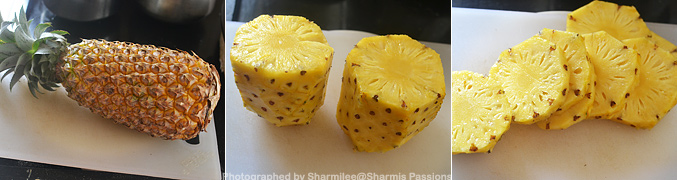
1.Clean pineapple trim the edges, scrap the sides and cut into half. Take one half, slice them thin.

how to make pineapple pulissery step1

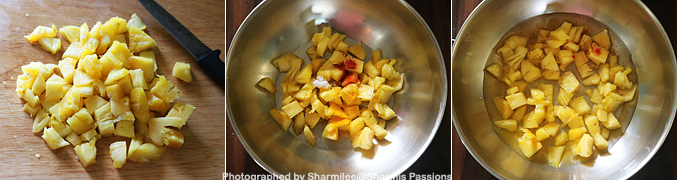
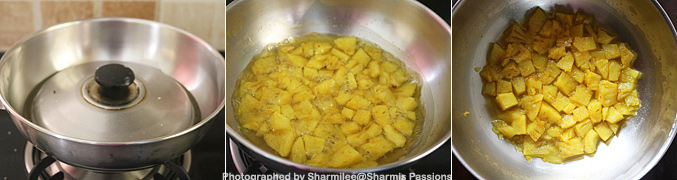
2.Chop pineapple into small cubes. Take it in a pan along with salt, turmeric powder, red chili powder and 1 cup water.

how to make pineapple pulissery step2

3.Cook covered in the pan until they are slightly soft but not too mushy, Set aside. Remember they will be cooking again in coconut mixture so half cook it that is enough.

how to make pineapple pulissery step3

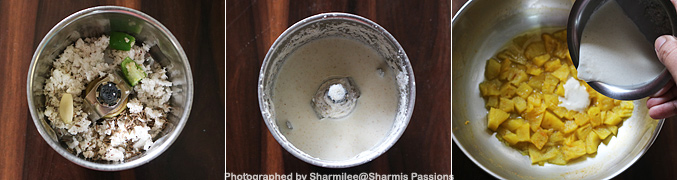
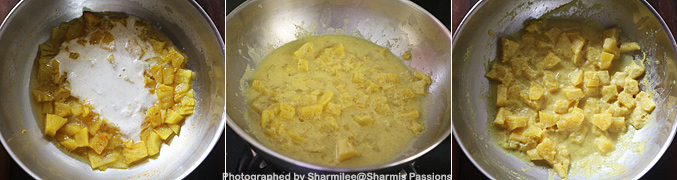
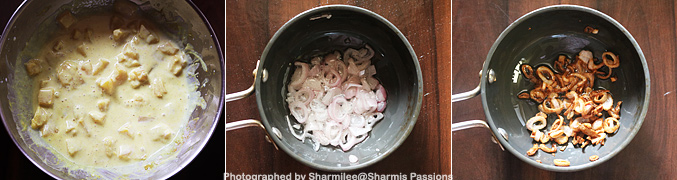
4.In a mixer jar add the ingredients listed under 'to grind', add little water and grind it to a smooth paste. Now add this coconut mixture to cooked pineapple.

how to make pineapple pulissery step4

5.Cook for few minutes until raw smell leaves may be for 3-5 minutes.

how to make pineapple pulissery step5

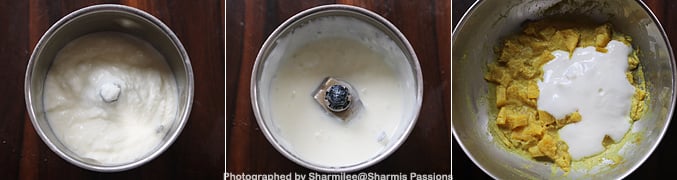
6.Give a pulse to the curd to make it smooth and creamy, you can just whisk it too. Now add this pineapple coconut mixture.

how to make pineapple pulissery step6

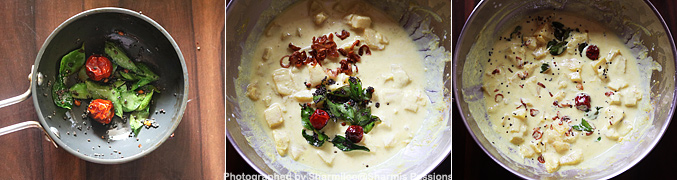
7.Bring it a boil in sim or when it starts to boil switch off else there are chances for curdling. Now in a tadka pan heat oil, add onions and fry until brown, Set aside.

how to make pineapple pulissery step7

8.In the same pan add the items listed under 'to temper' let it splutter. Add the fried onions and tadka to the curry, Mix well.

how to make pineapple pulissery step8

Garnish with fried onions and Serve chilled as a side dish.

Expert Tips

  • Beating curd - Always beat curd until smooth before adding, it helps mixing evenly and avoid splitting when hot.
  • Cooling step - Better cool down mixture little before adding curd, or just keep flame very low, else it may curdle.
  • Consistency - The pulissery should not be watery or too thick, I keep it semi thick like flowing texture.
  • Oil flavor - I always prefer coconut oil, it gives perfect smell and authentic Kerala touch. Other oil make it little flat.
  • Pineapple cook - Don't overcook pineapple, it should be soft but not mashed, else the curry loses its texture.

Serving and Storage

Serve Pineapple Pulissery with hot rice, pappadam and any spicy side curry. It taste sbest when served slightly cold also.

Keep leftover in fridge and use within one day. Mix once before serving again, you can add little water if it thickens after cooling.

FAQS

1.Can I skip coconut?

You can skip, but coconut gives main texture and flavor, without it the curry will feel thin and plain.

2.Can I make this with mango?

Yes, ripe mango also taste very nice in same recipe, just reduce chilli a bit.

3.Why curd getting split sometimes?

If you add curd when mixture too hot, it will split. Always cool it down slightly before adding.

4.Can I use store curd?

Yes can use, but beat it once to make smooth. Homemade curd also work very good.

5.Is Pineapple Pulissery sweet or spicy?

It is mostly sweet and tangy with very mild spice, not hot type curry.

pineapple pulissery served

If you have any more questions about this Pineapple Pulissery Recipe do mail me at sharmispassions@gmail.com. In addition, follow me on Instagram,Β Facebook,Β PinterestΒ ,YoutubeΒ andΒ TwitterΒ .

Tried this Pineapple Pulissery Recipe? Do let me know how you liked it. Also tag us on Instagram @sharmispassions and hash tag it on #sharmispassions.

πŸ“– Recipe Card

28896411214 5d6c7ec5ba o
Print

Pineapple Pulissery Recipe

Pineapple Pulissery is a Kerala style curry made with pineapple, coconut, curd and some basic spices. It is a simple side dish which has a nice mix of flavors that taste rich and refreshing at same time. The sweet taste of pineapple, the sour of the curd and little spice all comes together so nicely in this dish. Pulissery can be enjoyed as such or with rice meal and is simple to make.
Course Side Dish
Cuisine Indian
Keyword 30 mins recipes, curry, curry recipes, Kerala Meal Sidedish, lunch recipes, Side Dish, veg recipes, vegetable
Prep Time 10 minutes
Cook Time 20 minutes
Total Time 30 minutes
Servings 3
Calories 141kcal
Author Sharmilee J

Ingredients

TO GRIND TO A PASTE:

  • 3 tablespoon coconut fresh & grated
  • 1 green chilli chopped roughly
  • ΒΌ teaspoon jeera
  • 1 garlic

TO TEMPER:

  • 1 teaspoon coconut oil
  • Β½ teaspoon mustard seeds
  • ΒΌ teaspoon fenugreek seeds
  • 2 small red chilli
  • 1 small sprig curry leaves

Instructions

  • Clean pineapple trim the edges, scrap the sides and cut into half. Take one half, slice them thin.
  • Chop pineapple into small cubes.
  • Take it in a pan along with salt, turmeric powder, red chilli powder and 1 cup water.
  • Cook covered in the pan until they are slightly soft but not too mushy. Set aside.
  • Remember they will be cooking again in coconut mixture so half cook it thats enough.
  • In a mixer jar add the ingredients listed under 'to grind', add little water and grind it to a smooth paste.
  • Now add this coconut mixture to cooked pineapple.
  • Cook for few mins until raw smell leaves may be for 3-5mins.
  • Give a pulse to the curd to make it smooth and creamy, you can just whisk it too.
  • Now add this pineapple coconut mixture.
  • Bring it a boil in sim or when it starts to boil switch off else there are chances for curdling.
  • Now in a tadka pan heat oil, add onions and fry until brown. Set aside.
  • In the same pan add the items listed under ' to temper' let it splutter.
  • Add the fried onions and tadka to the curry. Mix well.
  • Garnish with fried onions and Serve chilled as a side dish.

Notes

  • Beating curd - Always beat curd until smooth before adding, it helps mixing evenly and avoid splitting when hot.
  • Cooling step - Better cool down mixture little before adding curd, or just keep flame very low, else it may curdle.
  • Consistency - The pulissery should not be watery or too thick, I keep it semi thick like flowing texture.
  • Oil flavor - I always prefer coconut oil, it gives perfect smell and authentic Kerala touch. Other oil make it little flat.
  • Pineapple cook - Don't overcook pineapple, it should be soft but not mashed, else the curry loses its texture.

Nutrition

Serving: 75g | Calories: 141kcal | Carbohydrates: 19g | Protein: 5g | Fat: 6g | Saturated Fat: 4g | Polyunsaturated Fat: 0.3g | Monounsaturated Fat: 1g | Cholesterol: 11mg | Sodium: 99mg | Potassium: 364mg | Fiber: 3g | Sugar: 13g | Vitamin A: 500IU | Vitamin C: 74mg | Calcium: 124mg | Iron: 1mg

The post Pineapple Pulissery Recipe appeared first on Sharmis Passions.
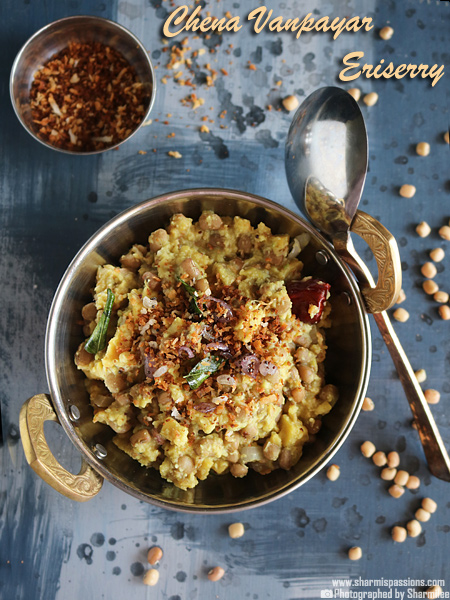
Chena Vanpayar Erissery Recipe

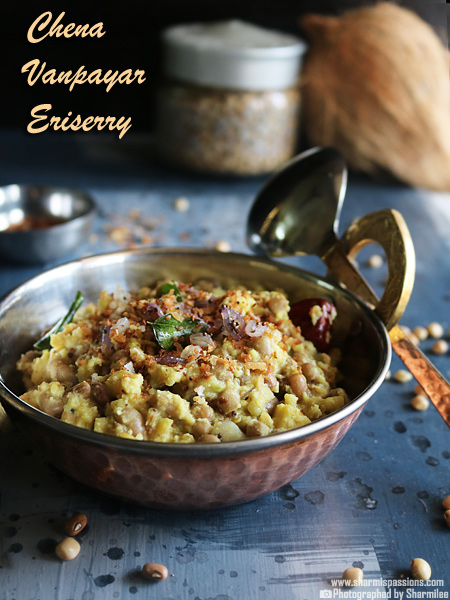
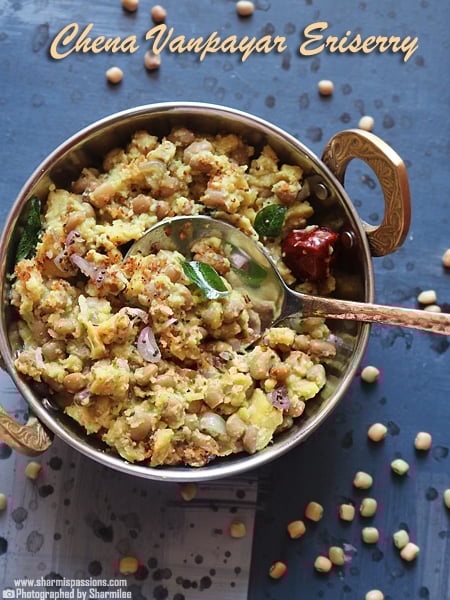
Chenna Vanpayar Erissery is a quite popular Kerala dish made often during special days. It's a rich curry made with vegetables, coconut and few spices. The mix of yam and cowpeas gives taste keeps you full for longer. It goes well with plain rice and papadam, feels so comforting to eat.

chena vanpayar erissery served

This erissery has mild flavor from coconut and roasted coconut on top gives lovely taste. It is not spicy or rich, just mild and homely food. It is one dish that everyone in the family can enjoy as it is light on stomach too. I like to make this with yam and cowpeas together, but it can also be made with pumpkin or raw banana.

[feast_advanced_jump_to]

About Chena Vanpayar Erissery

Chena Vanpayar Erissery is one of the traditional Kerala side dishes that is made during festivals and regular days also. It is a mix of cooked vegetables and legumes combined with coconut paste and tempered with coconut oil. The texture comes out slightly thick and creamy with small pieces of yam and soft cowpeas here and there.

There are many versions of erissery in Kerala homes. You can make it with pumpkin only, either with raw banana or even mix vegetables. You can add extra cowpeas for protein. It's not spicy at all, just simple and very comforting. The taste is mild with earthy flavor from yam and creamy touch from coconut.

Chena Vanpayar Eriserry is Β one of the popular eriserry recipes which is included in Onam Sadya. Usually I don't like veggies when combined with other veggies but Kerala dishes changed my taste I should say, now I have started liking combination veggies more. Β 

You can make the coconut paste by grinding coconut, jeera, onion, garlic and green chili. Roasted coconut gives nice nutty flavor and make the dish smell really good. It should be semi fine, not very smooth. The slight texture of coconut is what gives erissery its special taste. It blends well with the mashed yam and cooked cowpeas.

I make erissery often with rice and papadam for lunch. It pairs so well with simple side dishes like thoran or even just plain pickle. The roasted coconut on top is the highlight, I always add extra for that nice crunch.

chena vanpayar erissery served

Chena Vanpayar Erissery Ingredients

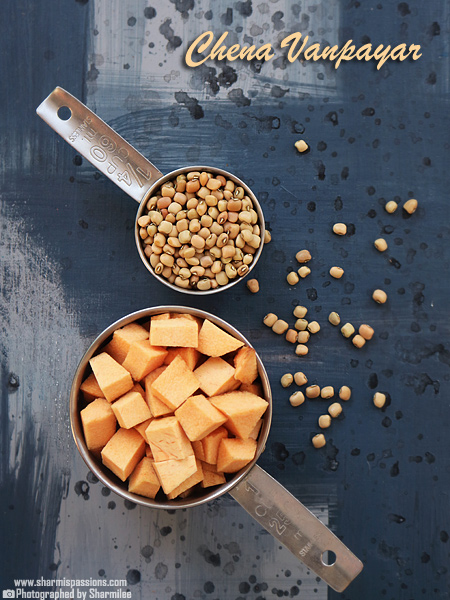
  • Chena (Yam) - I have used elephant yam, peeled and chopped into small cubes. It gives nice earthy taste and soft texture when cooked. Better to grease hands with little oil before cutting to avoid itching.
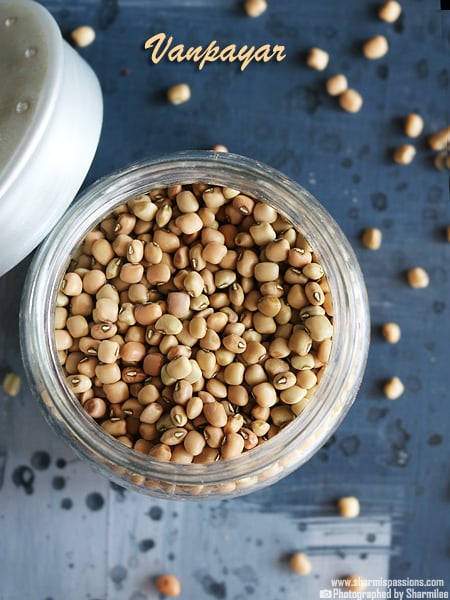
  • Cowpeas (Vanpayar / Thattapayir) - I soaked and pressure cooked till it turn soft. It adds protein and give a chewy bite to the dish.
  • Coconut (Grated) - I used in both ground paste and roasted form. It gives body to curry and add rich flavor that makes it more tasty.
  • Jeera (Cumin Seeds) - I have added little jeera while grinding the coconut mix, it gives mild aroma and balance the sweetness of coconut. Without it, paste feel bit plain.
  • Green Chilli - I add few for slight spice, not too much, just enough to bring little kick. You can add more if you like spicy taste.
  • Small Onion & Garlic - I use them for flavor, they blend well with coconut and make the curry smell so homely and nice.
  • Coconut Oil - I have used it for tempering and roasting, it is must in Kerala dishes and gives that real homely flavor. The smell itself make the curry feel so nice and warm.
  • Mustard Seeds, Curry Leaves & Red Chili - I use these for tempering in the end, they give nice aroma and add that final tasty touch to curry.
  • Turmeric Powder - I add little for taste and color, it give mild flavor and make the curry look bright and fresh.
chena and vanpayar

Similar Recipes

How to make Erissery Step by Step

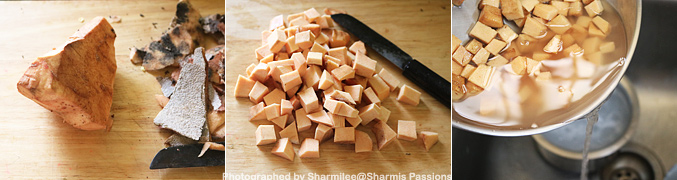
1.Scrape the skin of yam. Chop them into bite sized pieces,Set aside. Rinse it well to get rid of mud ad dirt.

how to make chena vanpayar erissery step1

2.After cutting soak in water so that it doesn't turn black. Make sure to grease your hands with oil so that it doesn't itch. Add turmeric powder along with salt required.

how to make chena vanpayar erissery step2

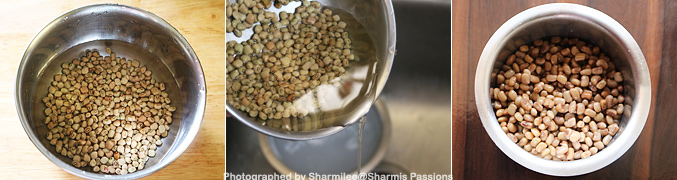
3.Meanwhile rinse cow peas, pressure cook for 4 whistles or until soft.

how to make chena vanpayar erissery step3

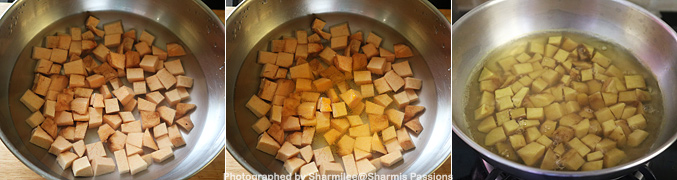
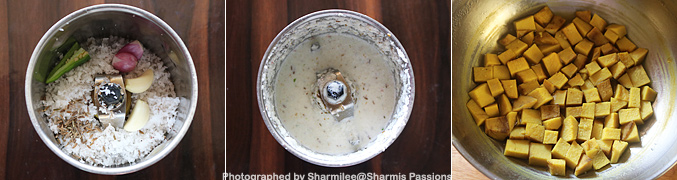
4.In a mixer add all the ingredients listed under 'to grind'. Add little water grind it to a semi fine paste. By now yam must have cooked, cook until soft enough to mash.

how to make chena vanpayar erissery step4

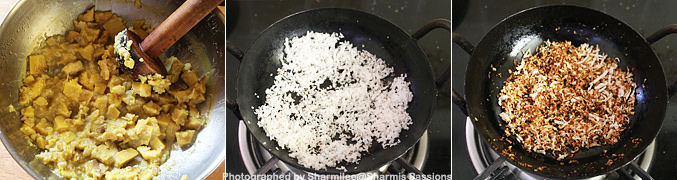
5.Mash it roughly with a ladle, Set aside. Dry roast coconut until golden brown, Set aside.

how to make chena vanpayar erissery step5

6.Now add coconut paste along with little water and let it to boil. Add required salt.

how to make chena vanpayar erissery step6

7.Cook until it starts to thicken, then add cooked cowpeas and cook in low flame. Prepare the tadka - Heat oil add the ingredients listed under 'to temper' add onion only after the items splutters. Fry till onions turn transparent.

how to make chena vanpayar erissery step7

8.One it becomes thick, add the tadka and roasted coconut, combine and let it cook for a minute. Then switch off.

how to make chena vanpayar erissery step8

Serve hot with rice and papadam.

vanpayar or cowpeas stored

Expert Tips

  • Roast - Roast the grated coconut till golden brown in low flame. It changes the taste completely and gives nutty flavor.
  • Right texture - Coconut paste should be semi fine, not watery and not very smooth. Little texture makes erissery more tasty.
  • Mash lightly - Mash yam roughly after cooking. Don't mash too much, small pieces should be seen in curry.
  • Adjust cowpeas - Cook the cowpeas soft but not mushy. It should hold the shape while mixing.
  • Use coconut oil - I always use coconut oil for authentic Kerala taste. It gives nice smell and flavor that no other oil can match.

Serving and Storage

Serve Erissery hot with plain rice and papadam. It also goes well with simple thoran or pickle on side. Store leftover erissery in fridge for a day. Reheat in pan with little water and coconut oil before serving. It thickens after cooling so adjust water slightly.

FAQS

1.Can I make this without cowpeas?

Yes, you can skip cowpeas and make only with yam or pumpkin.

2.Why my erissery became watery?

You may have added more water or ground paste too thin. It should be semi thick in texture.

3.Can I use red cowpeas instead of white?

Yes you can use any variety of cowpeas you have, both taste good.

4.Can I add more coconut?

Yes if you like richer taste, you can add little more coconut while grinding.

5.What other vegetables can I use?

You can make erissery with pumpkin, raw banana, or mixed veggies too. Method is same.

chena vanpayar erissery served

If you have any more questions about this Chena Vanpayar Erissery Recipe do mail me at sharmispassions@gmail.com. In addition, follow me on Instagram,Β Facebook,Β PinterestΒ ,YoutubeΒ andΒ TwitterΒ .

Tried this Chena Vanpayar Erissery Recipe ? Do let me know how you liked it. Also tag us on Instagram @sharmispassions and hash tag it on #sharmispassions.

πŸ“– Recipe Card

29006856884 8f96ec837b o
Print

Chena Vanpayar Erissery Recipe

Chenna Vanpayar Erissery is a quite popular Kerala dish made often during special days. It's a rich curry made with vegetables, coconut and few spices. The mix of yam and cowpeas gives taste keeps you full for longer. It goes well with plain rice and papadam, feels so comforting to eat.
Course Side Dish
Cuisine Indian, Kerala
Keyword 30 mins recipes, curry, curry recipes, Kerala Meal Sidedish, Onam, Onam Sadya, Side Dish, veg recipes, vegetable
Prep Time 10 minutes
Cook Time 20 minutes
Total Time 30 minutes
Servings 3
Calories 153kcal
Author Sharmilee J

Ingredients

  • 1 cup chena / yam chopped
  • ΒΌ cup cow peas / vanpayar /thattapayir
  • 1 tiny pinch turmeric powder
  • water as required
  • salt to taste

TO GRIND TO A PASTE:

  • 2 tablespoon coconut fresh & grated
  • ΒΌ teaspoon jeera
  • Β½ green chilli
  • 2 small onion
  • 2 small garlic

TO TEMPER:

  • 1 teaspoon coconut oil
  • Β½ teaspoon mustard seeds
  • 5 small onion sliced
  • 1 red chilli
  • 1 small sprig curry leaves

TO SEASON:

  • 2 tablespoon coconut

Instructions

  • Scrap the skin of yam. Chop them into bite sized pieces. Set aside. Rinse it well to get rid of mud and dirt.
  • After cutting soak in water sot hat it doesn't turn black. Make sure to grease your hands with oil so that it doesn't itch.
  • Add turmeric powder along with salt as required. Cook it.
  • Meanwhile rinse cow peas, pressure cook for 4 whistles or until soft.
  • In a mixer add all the ingredients listed under 'to grind'.
  • Add little water grind it to a semi fine paste.
  • By now yam must have cooked, cook until soft enough to mash.
  • Mash it roughly with a ladle. Set aside.
  • Dry roast coconut until golden brown. Set aside.
  • Now add coconut paste along with little water and let it to boil.
  • Add required salt.
  • Cook until it starts to thicken, then add cooked cowpeas and cook in low flame.
  • Prepare the tadka - Heat oil add the ingredients listed under 'to temper' add onion only after the items splutters.
  • Fry till onions turn transparent.
  • One it becomes thick, add the tadka and roasted coconut, combine and let it cook for a minute. Switch off.
  • Serve Erissery hot with rice and papadam.

Notes

  • Chena (Yam) - I have used elephant yam, peeled and chopped into small cubes. It gives nice earthy taste and soft texture when cooked. Better to grease hands with little oil before cutting to avoid itching.
  • Cowpeas (Vanpayar / Thattapayir) - I soaked and pressure cooked till it turn soft. It adds protein and give a chewy bite to the dish.
  • Coconut (Grated) - I used in both ground paste and roasted form. It gives body to curry and add rich flavor that makes it more tasty.
  • Jeera (Cumin Seeds) - I have added little jeera while grinding the coconut mix, it gives mild aroma and balance the sweetness of coconut. Without it, paste feel bit plain.
  • Green Chili - I add few for slight spice, not too much, just enough to bring little kick. You can add more if you like spicy taste.
  • Small Onion & Garlic - I use them for flavor, they blend well with coconut and make the curry smell so homely and nice.
  • Coconut Oil - I have used it for tempering and roasting, it is must in Kerala dishes and gives that real homely flavor. The smell itself make the curry feel so nice and warm.
  • Mustard Seeds, Curry Leaves & Red Chili - I use these for tempering in the end, they give nice aroma and add that final tasty touch to curry.
  • Turmeric Powder - I add little for taste and color, it give mild flavor and make the curry look bright and fresh.

Nutrition

Serving: 75g | Calories: 153kcal | Carbohydrates: 27g | Protein: 3g | Fat: 4g | Saturated Fat: 3g | Polyunsaturated Fat: 0.2g | Monounsaturated Fat: 0.3g | Sodium: 36mg | Potassium: 637mg | Fiber: 5g | Sugar: 5g | Vitamin A: 218IU | Vitamin C: 37mg | Calcium: 38mg | Iron: 1mg

The post Chena Vanpayar Erissery Recipe appeared first on Sharmis Passions.
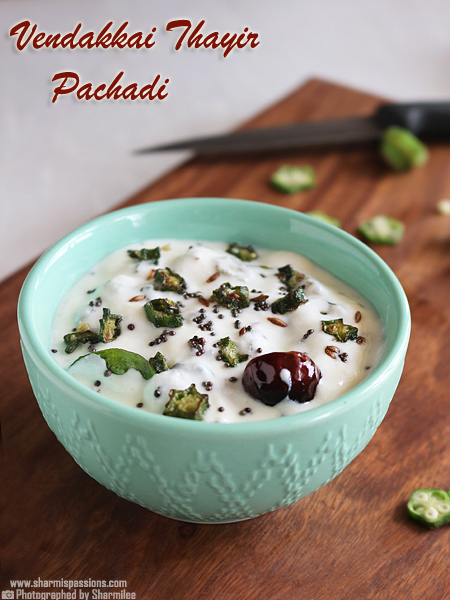
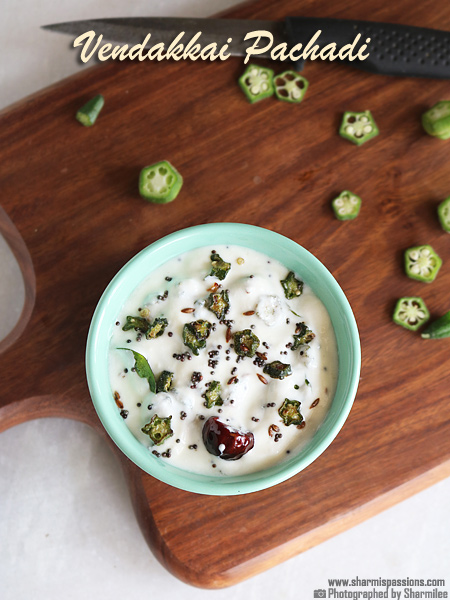
Vendakkai Pachadi | Bhindi Raita

Vendakkai Pachadi is a quite simple raita made using curd and okra. It is light and cooling, goes well with almost any meal you make. The curd gives soft creamy taste and roasted bhindi gives small crisp bites in between. This raita taste little different from regular ones and feels nice and fresh to eat.

vendakkai pachadi served

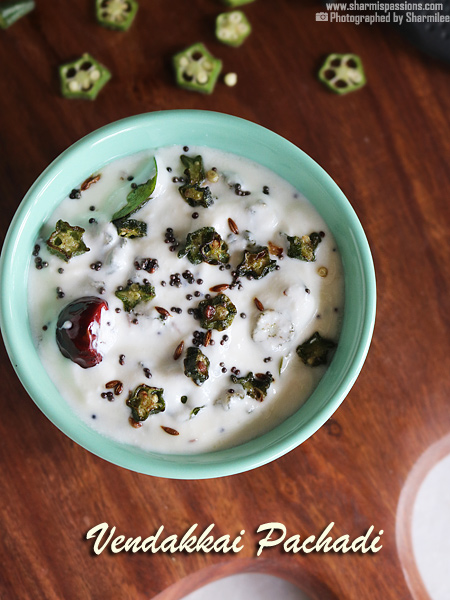
It is good for hot days or when you want something not too heavy but still tasty. The mix of fried bhindi, curd and few mild spices makes it mild and soothing. It may look simple but when you eat it, it feels homely and gives very comforting taste. It finishes so fast that sometimes I make extra just to keep some for later.

[feast_advanced_jump_to]

About Vendakkai Pachadi

Vendakkai Pachadi is a easy South Indian side dish. It is also known as Bhindi Raita in North Indian cooking. But the South Indian version has little extra tempering and uses coconut oil which gives that beautiful aroma. The curd makes it cooling and smooth, while the bhindi gives some bite to it.

The texture of this pachadi is creamy with small crunch from tempering. You get that nice mix of sour and light spice flavor in every spoon. It can be made in just few minutes and needs very simple ingredients. It is one of the dishes to prepare when you do not want to spend much time in kitchen.

You can roast or shallow fry the bhindi until slightly crisp before mixing with the curd. It removes the stickiness and also gives a roasted flavor. The tempering of mustard, cumin and red chilies adds strong aroma and little spice kick to balance the mild curd taste.

I love vendakkai /Β ladies finger / okra / bhindi in any form, with curd I know I will love it for sure and I did. Hubby too liked it and gave a big thumps up as he was not convinced when I said am going to make Bhindi raita but then when he tasted it, he loved it too. This pairs up well with rotis and for rice with sambar and poriyal.

I usually make this raita for lunch during hot weather. It cools the body and goes well with rice or even chapathi. My family like it a lot, specially when served chilled.

vendakkai pachadi served

Vendakkai Pachadi Ingredients

  • Ladies finger - I have used fresh tender bhindi, it gives nice crisp and good flavor when fried. You can also air fry if you prefer less oil.
  • Curd - The main ingredient which gives soft creamy taste and balances spice. If curd is little sour, you can add little milk to reduce it.
  • Oil - I used refined oil for roasting bhindi. You can use sesame or groundnut oil also, each gives small difference in flavor.
  • Mustard seeds - Used for tempering, gives light crunch and nice aroma when fried.
  • Cumin seeds - Adds small earthy flavor that goes well with curd. You can skip if you want.
  • Red chillies - It gives light spice and little color to the raita. You can also use green chilli if you want more spice taste.
  • Curry leaves - Fresh curry leaves always give nice smell and that small traditional touch.
  • Coconut oil - I have used this for tempering, it gives very good aroma and rich taste. You can also use ghee or normal cooking oil if you like.

Why This Recipe Works

  • This recipe is very easy to make and need only few simple ingredients.
  • It gives light and cooling feel, very good for hot sunny days.
  • The fried bhindi adds small crunch here and there, makes the raita tastier and filling.
  • You can alter curd thickness or spice level as you like.
  • It is an healthy side dish that goes well with rice or roti varieties.

Similar Recipes

How to make Vendakkai Pachadi Step by Step

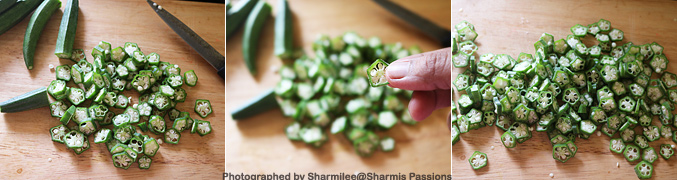
1.Rinse bhindi well to remove the dirt on the outer skin if any. Wipe off with a tissue paper to remove moisture. Trim both the edges. Slice them thin as thin as possible. I used a knife, if you have a slicer you can use it too.

how to make vendakkai pachadi step1

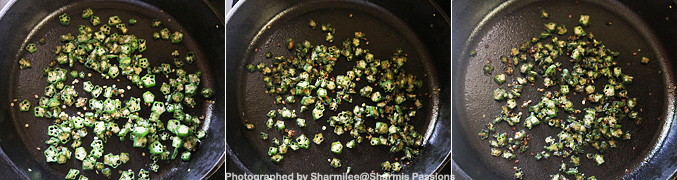
2.Saute with little oil, keep cooking in low flame. SautΓ© till it becomes slightly crisp, browned here and there, it will be non sticky. It will take at least 10-15 minutes in low flame, keep turning over for even roasting, then switch off.

how to make vendakkai pachadi step2

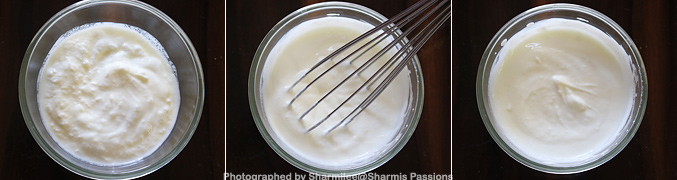
3.Beat curd with a whisk and Set aside.

how to make vendakkai pachadi step3

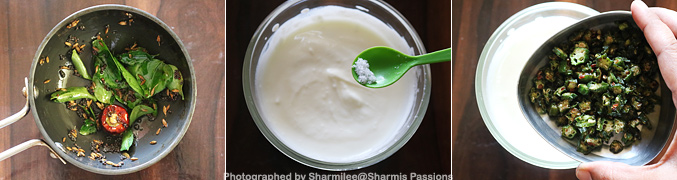
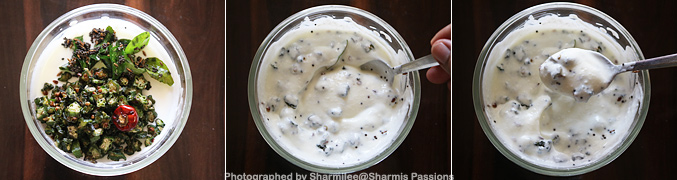
4.Heat oil in a tadka pan - add the items listed under 'to temper' let it splutter. Add salt to curd then add roasted bhindi.

how to make vendakkai pachadi step4

5.Add the tadka ingredients, give a quick mix and serve.

how to make vendakkai pachadi step5

Serve chilled!

Expert Tips

  • Roasting bhindi - Always roast in low flame till it turns non sticky and little brown. I keep stirring often for even cooking.
  • Use thick curd - Use thick fresh curd else raita becomes watery. Thick curd gives nice creamy texture.
  • Do not mix hot bhindi - Let bhindi cool for few minutes before adding to curd or it will make it slimy.
  • Extra tempering - Sometimes I keep little tempering separate to add on top before serving. It gives nice crunch while eating.
  • Variation - You can add small chopped onion or crushed roasted peanuts for little different taste.

Serving and Storage

Serve this with rice, pulao, biryani. It also goes nice with chapathi or plain paratha. The pachadi taste best when served chilled. Store leftover in fridge and use within one day. Before serving just mix once as curd may separate slightly.

FAQS

1.Can I make this using deep fried bhindi?

Yes, you can use deep fried bhindi, it gives more crisp and strong flavor.

2.Can I skip tempering?

You can skip but tempering gives nice aroma and small crunch which makes pachadi tasty.

3.What if curd is sour?

You can add little milk or water to curd to reduce sourness.

4.Can I make this ahead of time?

You can roast bhindi early and store. Mix with curd only when serving so it stays fresh.

5.Why my bhindi became sticky?

If bhindi is not dried well or cooked in high flame it gets sticky. Always wipe dry and cook slow in low flame.

vendakkai pachadi served

If you have any more questions about this Vendakkai Pachadi Recipe do mail me at sharmispassions@gmail.com. In addition, follow me on Instagram, Facebook,Β  Pinterest, Youtube andΒ TwitterΒ .

Tried this Vendakkai Pachadi Recipe? Do let me know how you liked it. Also tag us on Instagram @sharmispassions and hash tag it on #sharmispassions.

πŸ“– Recipe Card

29449486272 7804bf0ecf o
Print

Vendakkai Pachadi Recipe | Bhindi Raita Recipe

Vendakkai Pachadi is a quite simple raita made using curd and okra. It is light and cooling, goes well with almost any meal you make. The curd gives soft creamy taste and roasted bhindi gives small crisp bites in between. This raita taste little different from regular ones and feels nice and fresh to eat.
Course Lunch, Side Dish
Cuisine Indian
Keyword curd recipes, lunch recipes, meals, raita recipes, Side Dish, veg recipes, vegetable, yogurt recipes
Prep Time 10 minutes
Cook Time 10 minutes
Total Time 20 minutes
Servings 3 cup
Calories 101kcal
Author Sharmilee J

Ingredients

  • 10 ladies finger
  • 1 cup thick curd
  • 2 teaspoon oil
  • salt to taste

To Temper:

  • 1 teaspoon coconut oil
  • Β½ teaspoon mustard seeds
  • Β½ teaspoon cumin seeds
  • 2 small red chillies
  • 1 small sprig curry leaves

Instructions

  • Rinse bhindi well to remove the dirt on the outer skin if any. Wipe off with a tissue paper to remove moisture. Trim both the edges.
  • Slice them thin as thin as possible. I used a knife, if you have a slicer you can use it too.
  • SautΓ© with little oil, keep cooking in low flame. SautΓ© till it becomes slightly crisp, browned here and there, it will be non sticky. It will take at least 10-15 minutes in low flame, keep turning over for even roasting. Then switch off.
  • Beat curd with a whisk and Set aside.
  • Heat oil in a tadka pan - add the items listed under 'to temper' let it splutter.Add salt to curd then add roasted bhindi.
  • Add the tadka ingredients, give a quick mix and serve.
  • Serve Bhindi Raita chilled!

Notes

  • Roasting bhindi - Always roast in low flame till it turns non sticky and little brown. I keep stirring often for even cooking.
  • Use thick curd - Use thick fresh curd else raita becomes watery. Thick curd gives nice creamy texture.
  • Do not mix hot bhindi - Let bhindi cool for few minutes before adding to curd or it will make it slimy.
  • Extra tempering - Sometimes I keep little tempering separate to add on top before serving. It gives nice crunch while eating.
  • Variation - You can add small chopped onion or crushed roasted peanuts for little different taste.

Nutrition

Serving: 75g | Calories: 101kcal | Carbohydrates: 7g | Protein: 4g | Fat: 7g | Saturated Fat: 3g | Polyunsaturated Fat: 1g | Monounsaturated Fat: 3g | Trans Fat: 0.01g | Cholesterol: 11mg | Sodium: 41mg | Potassium: 243mg | Fiber: 1g | Sugar: 5g | Vitamin A: 395IU | Vitamin C: 44mg | Calcium: 110mg | Iron: 1mg

The post Vendakkai Pachadi | Bhindi Raita appeared first on Sharmis Passions.
Sadhya olan | gourds and cowpea stew

Kerala sadhya recipe

The banana leaf sadhya made for Onam, Vishu or any of the Kerala festivals has an array of side dishes that are served on the top half of the leaf. Some of these we have posted earlier
Aviyal
Thoran
Pachadi
Kichadi
Erisherry
Mango pickle
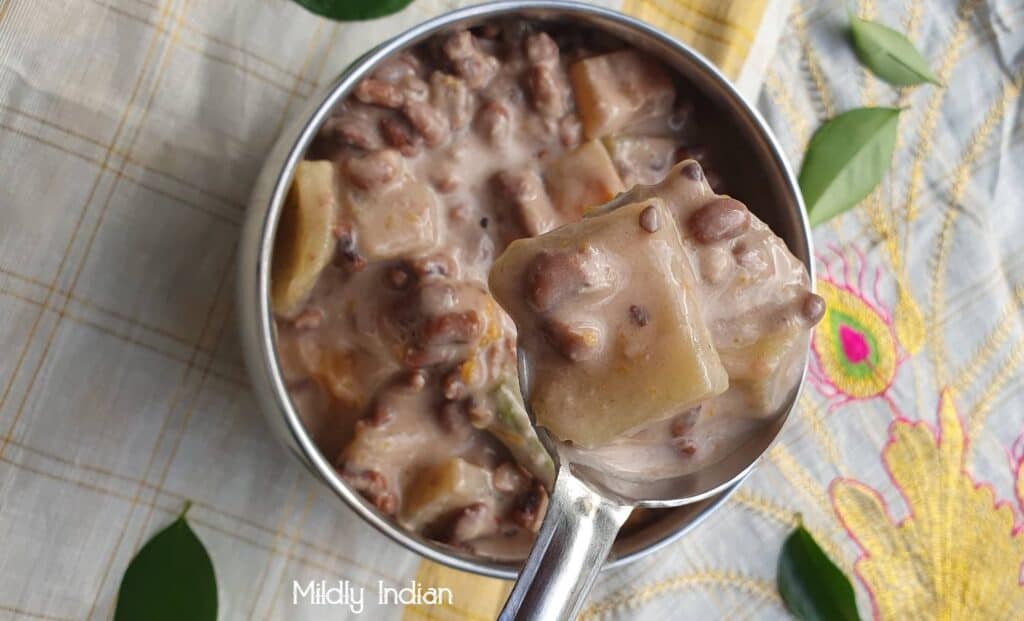
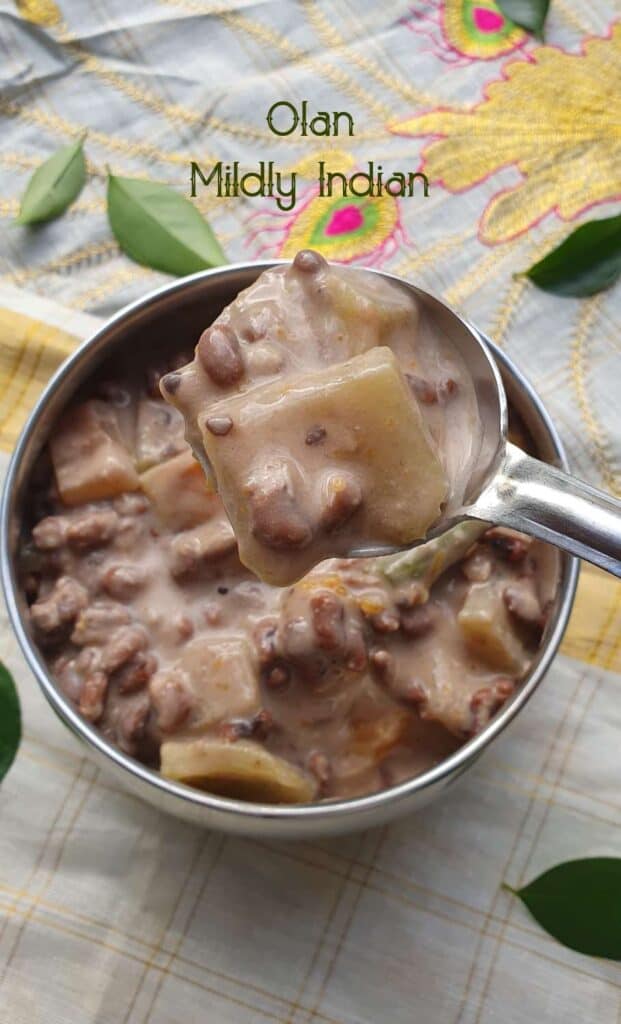
However, the mildest, creamy yet simple olan is missed if it is not on the leaf. Have you made it?

What is olan?

Olan is a slow cooked stew made with gourds cooked in coconut milk. It is a mild creamy curry that predominantly uses ashgourd and pumpkins. Depending on regional variations you will find yard long green beans (payar) or cooked cowpeas added to it. It is flavoured gently with salt,curry leaves and slit greenΒ  chillies. Unlike a lot of Kerala dishes it doesn’t have a mustard tempering, rather a good tablespoon of pure coconut oil stirred in as soon as it is removed from the heat for that roundeness and fragrance you experience.

How is sadhya olan different from regular olan?

If you are familiar with Kerala recipes, you will know that olan is one that is probably the least made in most houses. This is because the regular olan is a runny curry with less complex flavours. HoweverΒ  the sadhya olan with the creaminess from the coconut milk and the cooked cowpeas is a thicker version which never runs. Though mild it has a well flavoured along with the semi mashed vegetables. The key to making the sadhya style olan is managing the liquid content.

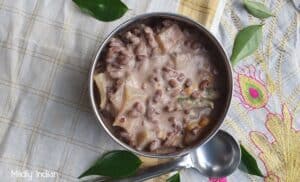
sadhya olan

Ingredients to make olan

Vegetables: since this is a mild stew with gourds and pumpkins, so they make the bulk of this recipe. the withte fleshed wintermelon ( elavan) is preferred over the giant ash gourds. The pumpkin adds a it of colour and sweetness. if you cant get the wintermelon, bottle gourd, watermelon peel or chayote work well too.
Bean: the creamy composition works because of the earthy flavours from the cooked cowpeas. Cowpeas have an earthy flavour and are perfect for this mild recipe.
Coconut milk: coconut milk is the cooking liquid here. At first the this cococnut milk is used to cook the gourds in. At the final stages, string the thick coconut milk or coconut cream. this ensures that the final result is thick olan and it is creamy.
Seasoning: Salt is the only seasoning here.
Spices: this is a mild stew and uses no spices. The single green chilli added is for fragrance, not heat. This is opional.
Oil: the final roundedness of the recipe comes from half tsp of coconut oil stirred in at the end. This is an optional step, but brings the flavour exactly like the one in the sadhya.

Mealprep this mild gourd stew

The gourd stew or olan is a great recipe to mealplan. It stays good for a few days under refrigeration. They do freeze good, but not great. The gourds do go a bit limp upon thawing the frozen one. So add it to your mealprep not much to your freezer list.

What pairs well with sadhya olan?

Sadhya olan is a great accompaniment to the banana leaf meal or a South Indian thali. It pairs well with idiyappam (string hoppers), steamed breads or chappathi. In a great rush week, Olan is perfect with some toasts or just as such warmed in a bowl resembling a chunky soup.

Lets make Sadhya Olan

Print

Sadhya Olan

Course Side Dish
Cuisine diabetic friendly, Kerala, South indian
Keyword curry recipes, Indian vegetarian dinner, Kerala recipes
Prep Time 20 minutes
Cook Time 20 minutes
to prep and cook cowpeas 6 hours 20 minutes
Total Time 7 hours
Servings 4 people

Equipment

  • 1 Kadai Thick bottomed wok
  • 1 Pressure cooker

Ingredients

for cooking cowpeas

  • 3 tbsp cowpeas
  • 2 cups drinking water

for cooking the curry

  • 250 gram wintermelon Ash gourd
  • 100 gram pumpkin
  • salt to taste
  • 1 medium green chilli
  • 5 curry leaves
  • 1/2 cup coconut milk thinned out, see notes above.

To finish the olan

  • 1 tsp coconut oil
  • 2 tbsp coconut cream

Instructions

To cook the cowpeas

  • Wash and soak the cowpeas for 6 hours or overnight.
  • Drain and add fresh water.
  • Pressure cook the cowpeas for 10 minutes in high pressure. Release the pressure naturally.
  • Drain the cooked cowpeas and save the cooking liquid.

to make the olan

  • Wash and peel the ashgourd ( winter melon) and pumpkin.
  • Slice into 1inch slices.
  • Add to the khadai, with a slit green chilli, salt and curry leaves.
  • Mix the coconut milk with a bit of water to thin it out. Don't add a lot of water as the winter melon and pumpkin will leech a lot of water when cooking.
  • Add this to the khadai. mix well.
  • Set his to cook on a low heat. cover and cook for 10 minutes.
  • Open the lid, mix well and add the drained cow peas.
  • Slow cook it till the liquid is absorbed well, You can mash the cowpeas a bit as they cook
  • Stir in the coconut cream and coconut oil.
  • Remove off the heat. Cover and keep for 10 minutes
  • The olan is ready to be served.

Stay connected

Hope you had a great Onasadhya. If you are looking for the best organizational tips to make sadhya, do check out our post
Guide to Sadhya.
When you make this olan recipe, do share your thoughts in the discussion below. We would love to hear from you.Β  If you like to share or save this recipe, here is the pin link.

Sadhya olan pin for later.

See you in the next post.

Kerala sadhya olan

Parippu Pradhaman Recipe

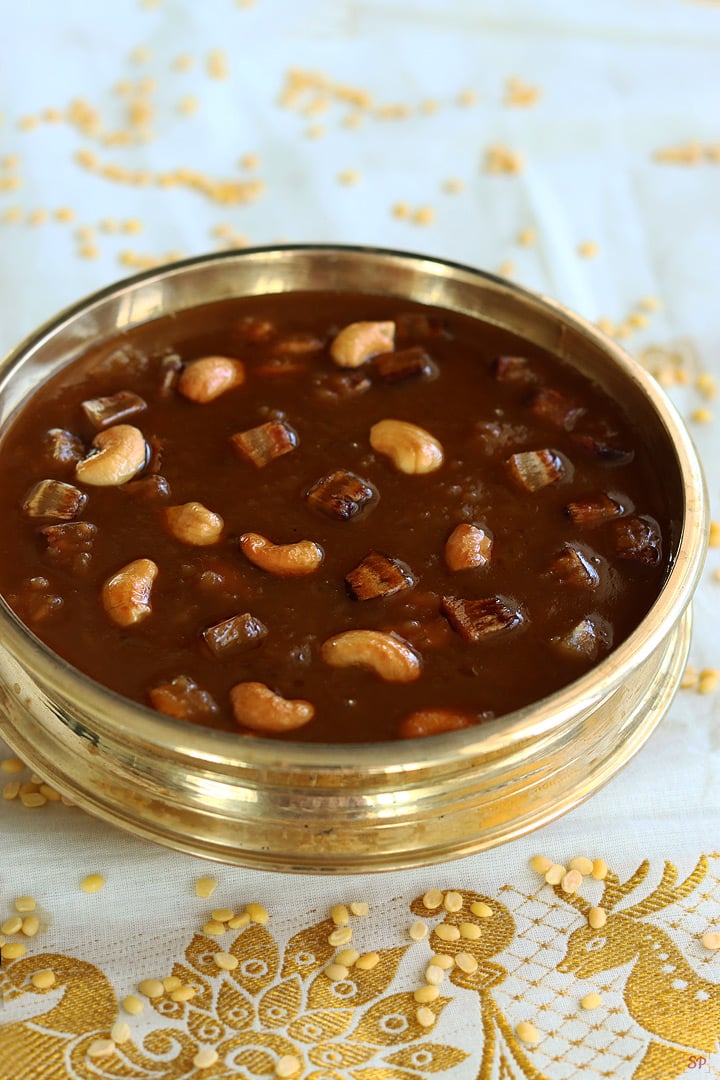
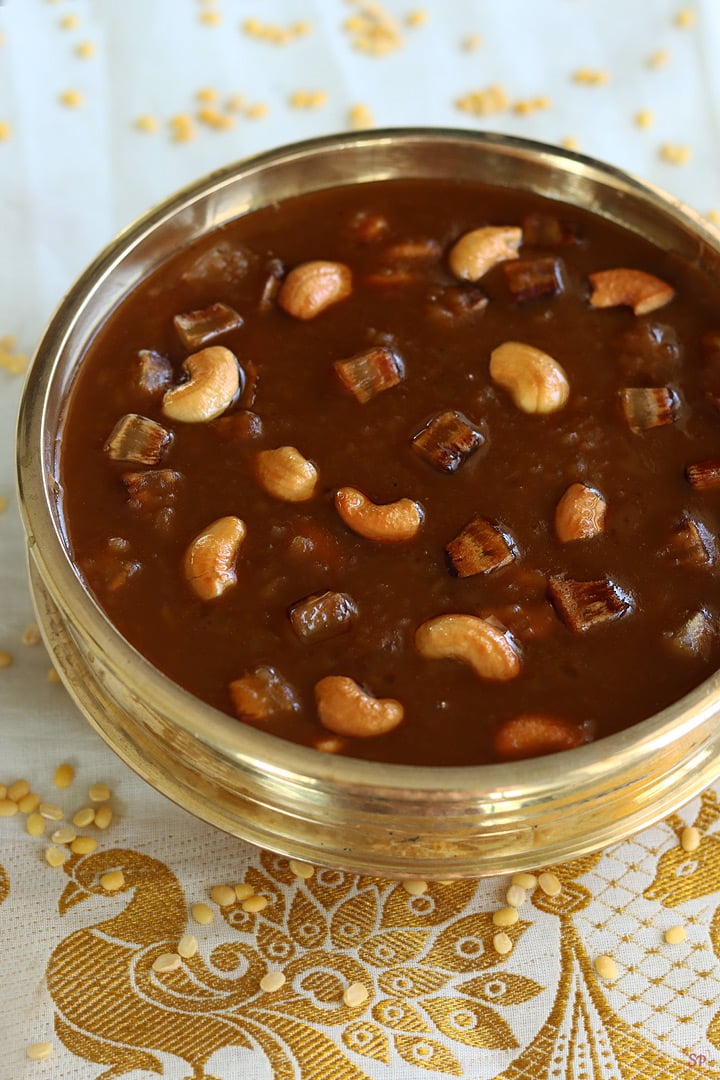
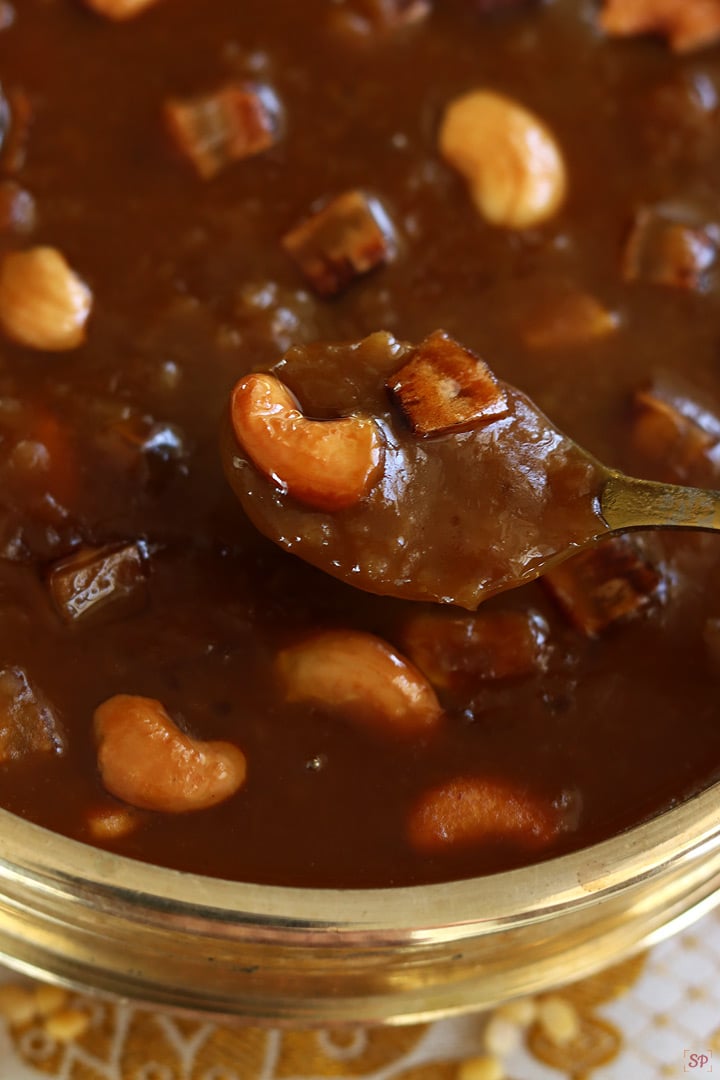
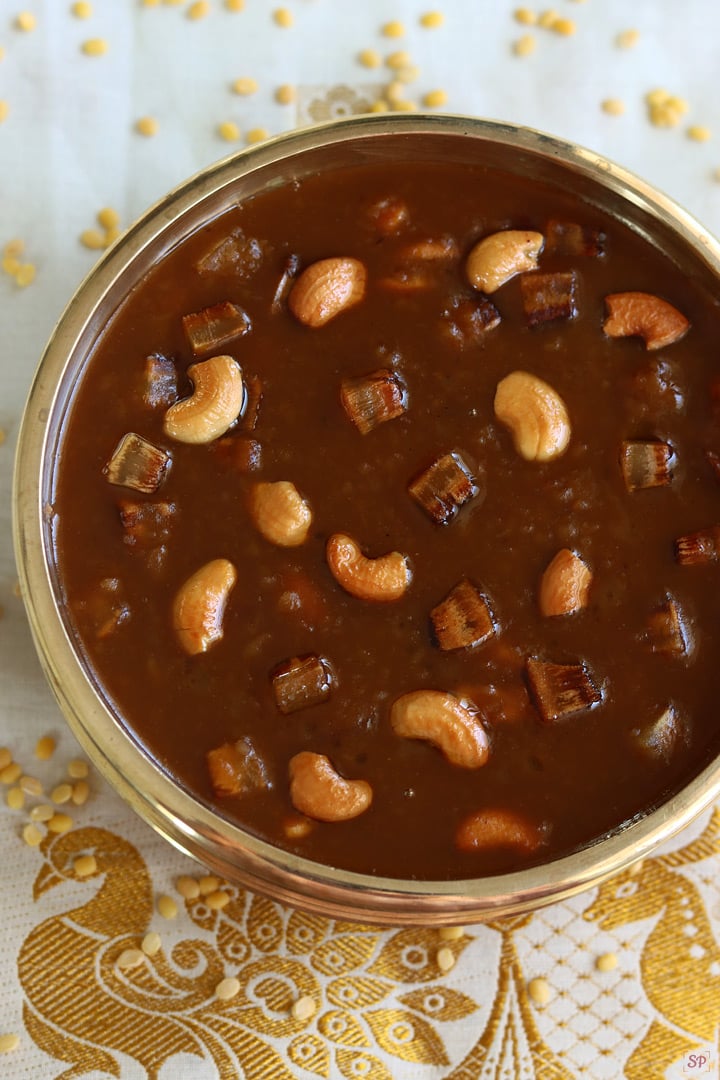
Parippu Pradhaman is a popular kheer from Kerala made using yellow moong dal, coconut milk, jaggery, coconut, cashews and cardamom. This payasam is usually made for festivals like Onam and Vishu and also makes an integral part of Onam Sadya. The mild texture from moong dal, deep sweetness from jaggery along with the rich coconut milk gives a very nice festive flavor.

parippu pradhaman served

Parippu Pradhaman is rich, creamy and every spoon tastes so comforting. Moong dal also gives a light protein touch so you can say it is little wholesome also. With just a few regular pantry ingredients this payasam can be made very easily. Once you taste it, you will surely want to make again for its simple charm and nice taste.

[feast_advanced_jump_to]

About Parippu Pradhaman

Parippu Pradhaman is well known for its rich creamy texture and gentle sweet taste. It is one of the most loved varieties of payasam served during Kerala festivals and also during family get together. It holds a special place among the traditional kheers in South India.

It is usually made using moong dal called as paasi paruppu in tamil and chiru parippu in malayalam. This payasam or kheer is also known as chiru parippu pradhaman or payasam. Cooking moong dal with jaggery until thick and adding coconut milk makes this kheer taste uniquely delicious.

It is rich and a bit thick and the dal is cooked until soft yet has texture while biting that is the specialty of this pradhaman. The flavor is balanced with cardamom and a touch of dry ginger powder which gives a nice warm taste. Fried coconut bits and roasted nuts give a slight crunch in each spoon.

You can easily adjust this payasam to your liking. Sometimes I add fried raisins, mix of nuts or even little condensed milk for extra richness. Each version comes out tasty and perfect to finish any meal on a sweet note.

I usually make this when I have some cooked moong dal left or feel like having a sweet treat at home. It is quick to put together and turns into a tasty payasam in less than an hour.

parippu pradhaman served

Parippu Pradhaman Video

Parippu Pradhaman Ingredients

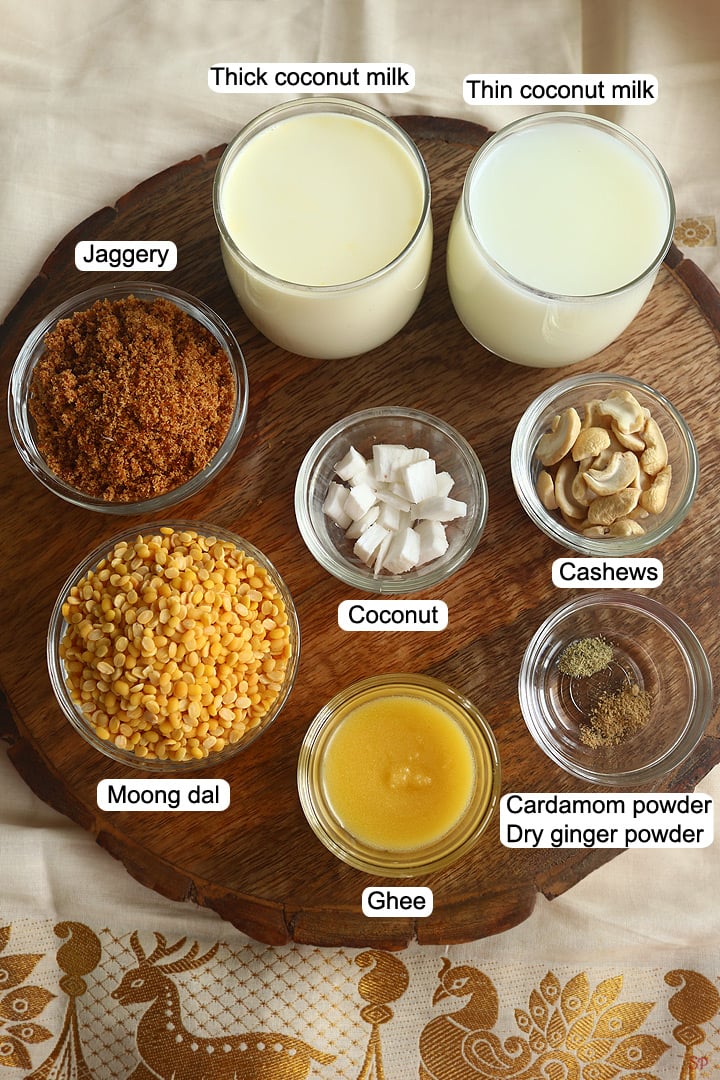
  • Moong dal – Use split yellow moong dal which turns soft when cooked. You can try with other dals also but it might change the taste little bit.
  • Jaggery – I have added jaggery for sweetness and to give the payasam a nice deep caramel color.
  • Thin coconut milk – I added this while cooking so it gives light creaminess to the dish. I mostly use fresh coconut milk but sometimes canned one also works fine.
  • Thick coconut milk – I have added this at the end to give rich creamy finish for the dessert. It really makes the payasam taste more special.
  • Dry ginger powder – This gives mild spicy flavor that balance the sweetness. You can skip if you don’t like spice flavor.
  • Cardamom powder – I added this for that classic sweet smell and taste. You can use crushed cardamom pods also if you prefer.
  • Cashews & Coconut pieces – I just fried them and put in for nice crunch and texture. If you like, add raisins too for little extra flavor.
  • Ghee – I love using fresh ghee to fry the nuts and coconut pieces, it gives such a nice smell and rich taste for the payasam.
ingredients needed to make parippu pradhaman

Similar Recipes

How to make Parippu Pradhaman Step by Step

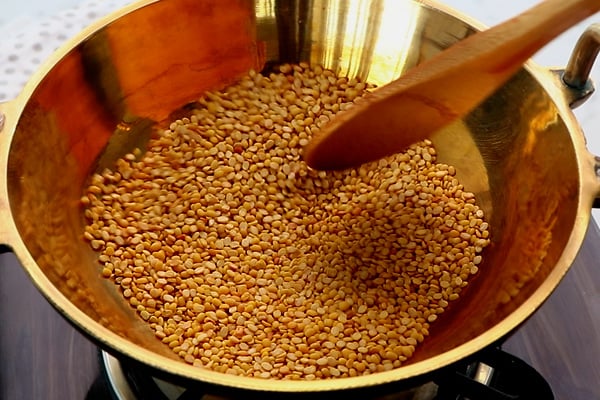
1.Dry roast 1 cup moong dal until golden, Switch off.

dry roast moong dal

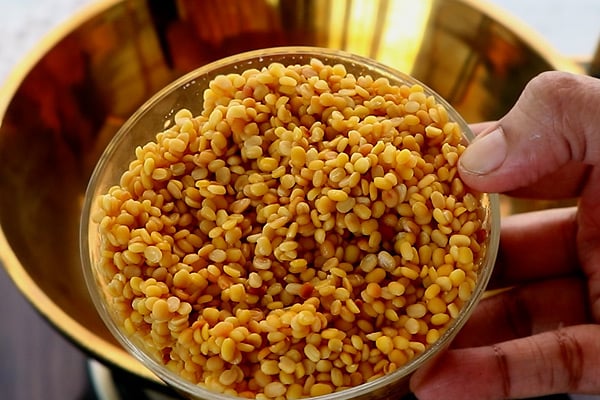
2.Remove from flame, cool down rinse it well and set aside.

rinse it well

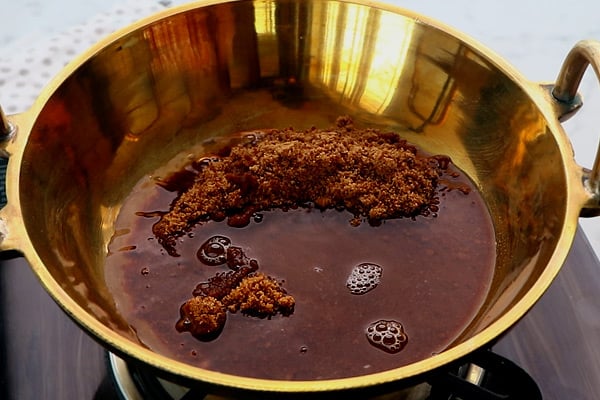
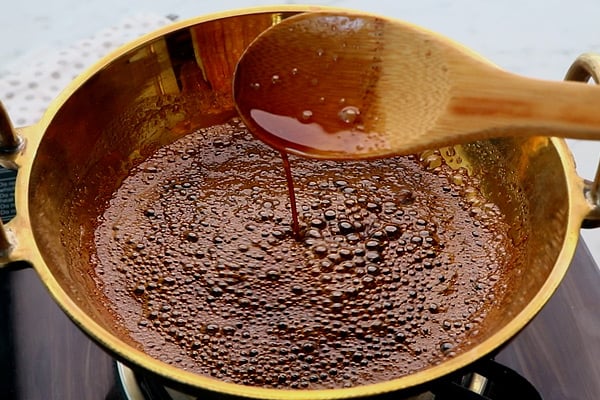
3.Now add 2 cups jaggery along with 1 cup water.

add water to jaggery

4.Cook until jaggery melts completely. Switch off and set aside.

cook till it dissolves

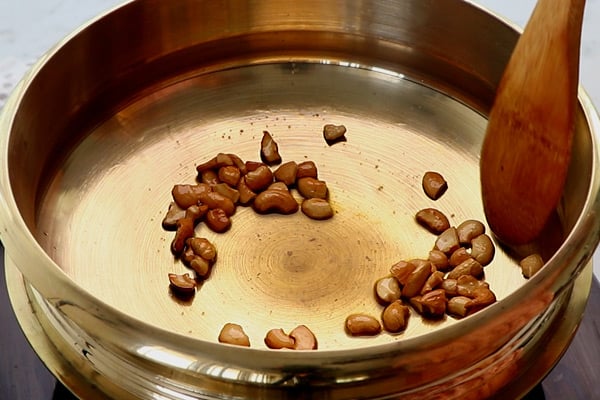
5.To a heavy bottomed pan add 1 tablespoon ghee add 3 tablespoon cashews fry until golden brown remove and set aside.

fry cashew

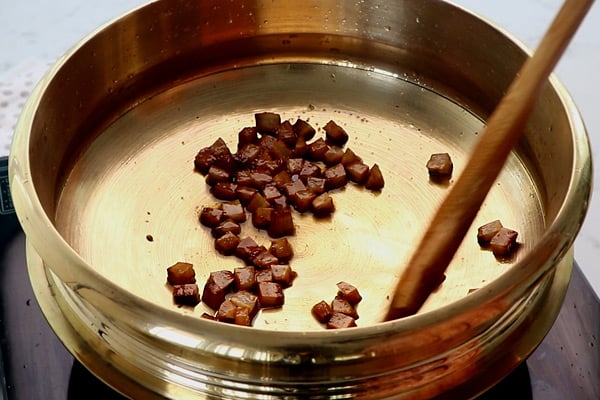
6.Now add 3 tablespoon coconut pieces and fry until golden brown, remove and set aside.

fry coconut

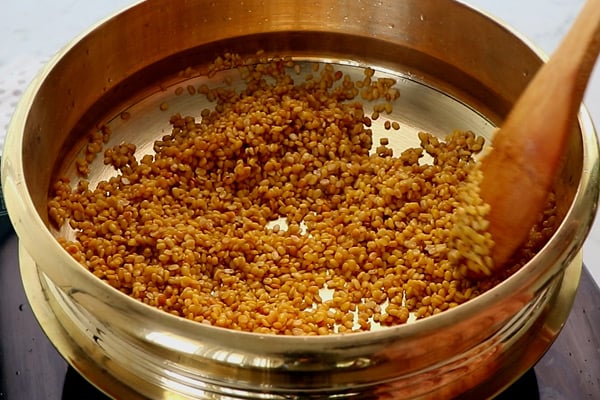
7.Add rinsed, drained moong dal and sautΓ© for 2 minutes.

fry moong dal

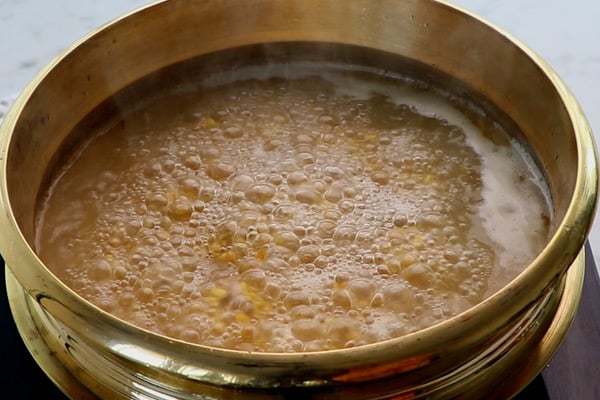
8.Add around 4 cups water and cook until moong dal turns mushy.

cook moong dal

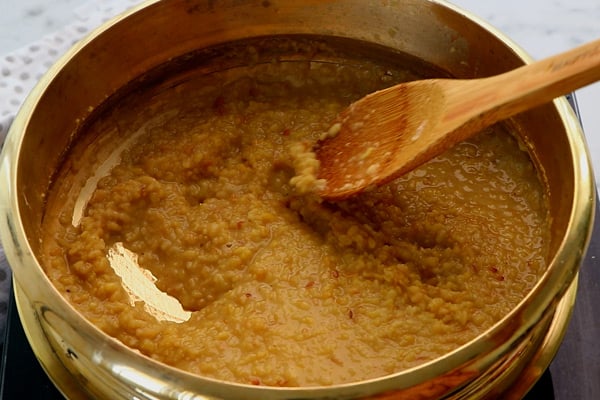
9.It should turn soft and mash-able. Mash it roughly with the ladle. If you want smooth texture you can mash it well.

cook until mushy

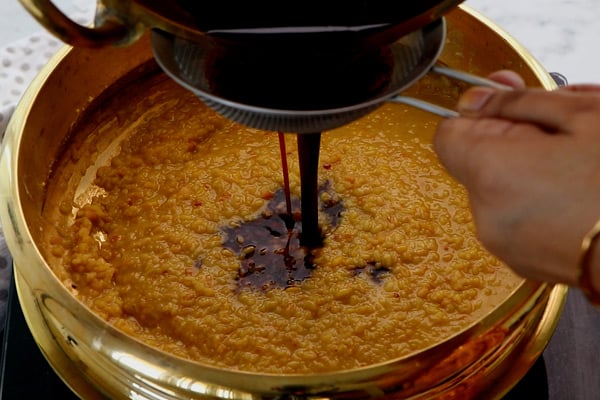
10.Strain and add jaggery syrup.

strain and add jaggery syrup

11.Mix until well combined.

mix well

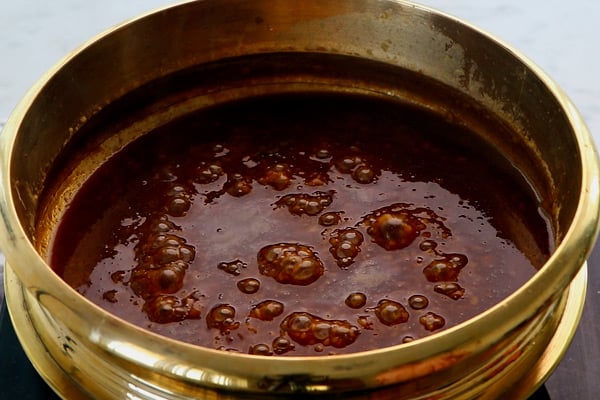
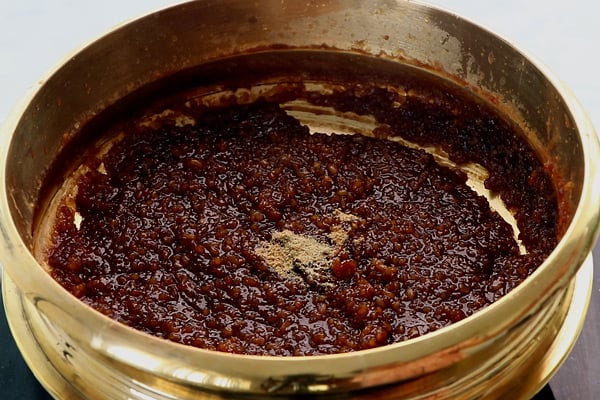
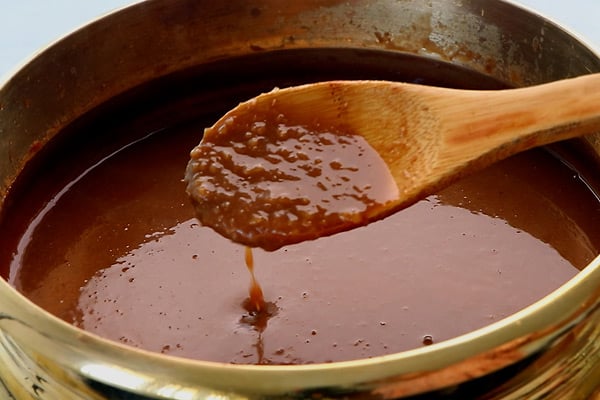
12.Cook until it becomes thick like this, now add ΒΌ teaspoon cardamom powder, ΒΌ teaspoon dry ginger powder.

cook till thick, add cardamom powder, dry ginger powder

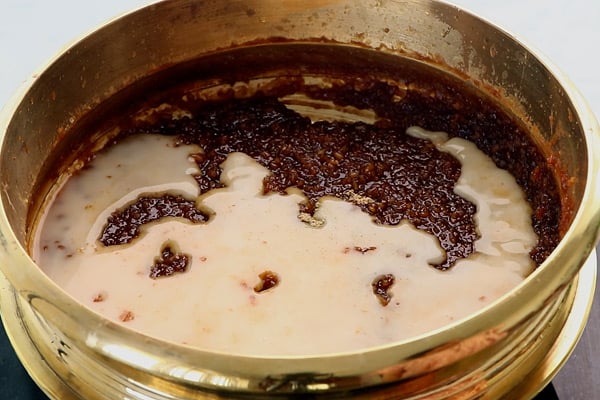
13.Add 1 cup thin coconut milk first and mix until well combined.

add thin coconut milk

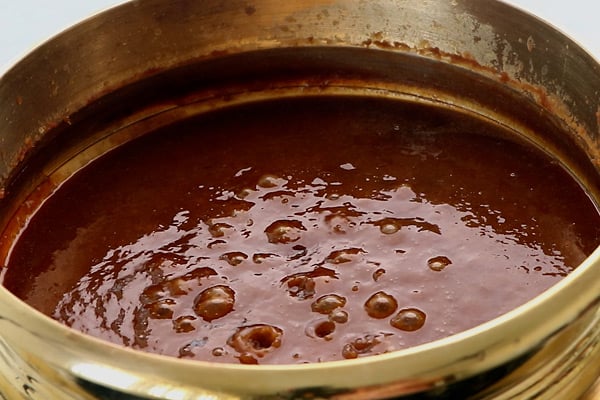
14.Cook until it becomes slightly thick.

cook till thick

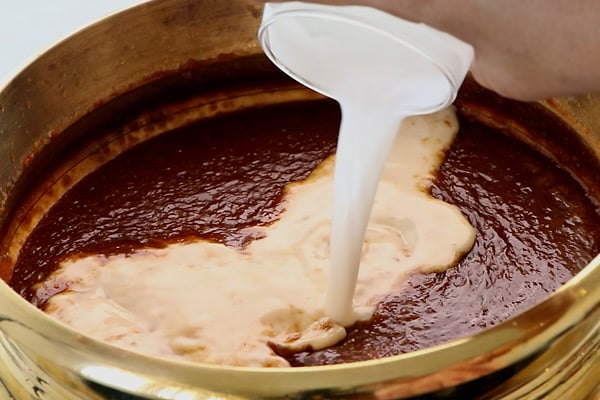
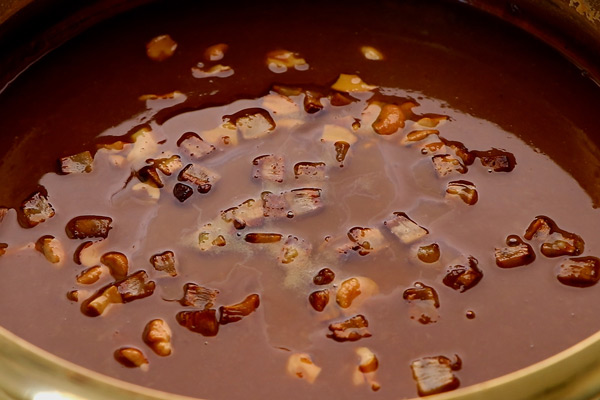
15.Now add 1 cup thick coconut milk.

add thick coconut milk

16.Mix it well. When it starts to boil switch off. Do not cook for long after first coconut milk is added as it may curdle.

mix it well

17.Add 2 tablespoon ghee along with ghee fried cashews and coconut pieces. Mix it well and switch off.

add fried cashews, coconut

Enjoy hot or warm.

parippu pradhaman served

Expert Tips

  • Jaggery syrup – I have used freshly melted jaggery syrup for better flavor but you also use leftover jaggery syrup or jaggery powder.
  • Don’t cook on high flame – After adding the coconut milk, I have always kept it on low flame to avoid splitting up. You can keep stirring gently to prevent sticking. After adding thick coconut milk do not cook for long it may split up.
  • Adjust Consistency – This payasam thickens as it cools so I usually add little warm water or milk before serving if it’s too thick.
  • For Crunch – I fry cashews and coconut pieces till golden brown in ghee, it adds a nice crunch and aroma. don't skip it.
  • Spices – I add only a pinch of dry ginger and cardamom powder so the sweetness there, you can add more if you prefer. You can even add ΒΌ teaspoon roasted cumin powder.

Serving and Storage

Serve Parippu Pradhaman warm. This can be served as dessert after a nice meal.Β  If the payasam is thick while serving, add little hot milk or hot water to thin it. You can store leftovers in the fridge for up to 2 days.

FAQS

1.Can I add regular milk?

Yes, you can but it won’t taste exactly same. It still tastes good but traditionally coconut milk is only added.

2.Can I make this ahead of time?

You can make it before and keep in fridge. It tastes better the next day.

3.Can I use sugar?

No for parippu pradhaman only jaggery should be used.

4.Is it okay to add other nuts & dry fruits?

Yes, you can add raisins, almonds in addition, fry them in ghee and add for extra taste and texture.

5.How long can I keep this payasam?

You can keep it in fridge for about two days. After that, taste and texture may change.

parippu pradhaman served

If you have any more questions about this Parippu Pradhaman Recipe do mail me at sharmispassions@gmail.com. In addition, follow me on Instagram, Facebook,Β  Pinterest, Youtube andΒ TwitterΒ .

Tried this Parippu Pradhaman Recipe? Do let me know how you liked it. Also tag us on Instagram @sharmispassions and hash tag it on #sharmispassions.

πŸ“– Recipe Card

Print

Parippu Pradhaman Recipe

Parippu Pradhaman is a popular kheer from Kerala made using yellow moong dal, coconut milk, jaggery, coconut, cashews and cardamom. This payasam is usually made for festivals like Onam and Vishu and also makes an integral part of Onam Sadya. The mild texture from moong dal, deep sweetness from jaggery along with the rich coconut milk gives a very nice festive flavor.
Course Dessert
Cuisine Indian
Keyword coconut recipes, dal recipes, dessert recipes, jaggery recipes, payasam, rice kheer recipes, sweet recipes
Prep Time 20 minutes
Cook Time 30 minutes
Total Time 50 minutes
Servings 3 people
Calories 588kcal
Author Sharmilee J

Ingredients

  • 1 cup split yellow moong dal
  • 4 cups water
  • 2 cups jaggery
  • 1 cup thin coconut milk
  • 1 cup thick coconut milk
  • ΒΌ teaspoon dry ginger powder
  • ΒΌ teaspoon cardamom powder
  • 3 tablespoon cashews
  • 3 tablespoon coconut
  • 3 tablespoon melted ghee

Instructions

  • Dry roast 1 cup moong dal until golden, Switch off.
  • Remove from flame, cool down rinse it well and set aside.
  • Now add 2 cups jaggery along with 1 cup water.
  • Cook until jaggery melts completely. Switch off and set aside.
  • To a heavy bottomed pan add 1 tablespoon ghee add 3 tablespoon cashews fry until golden brown remove and set aside.
  • Now add 3 tablespoon coconut pieces and fry until golden brown, remove and set aside.
  • Add rinsed, drained moong dal and saute for 2 minutes.
  • Add around 4 cups water and cook until moong dal turns mushy.
  • It should turn soft and mash-able. Mash it roughly with the ladle. If you want smooth texture you can mash it well.
  • Strain and add jaggery syrup.
  • Mix until well combined.
  • Cook until it becomes thick like this, now add ΒΌ teaspoon cardamom powder, ΒΌ teaspoon dry ginger powder.
  • Add 1 cup thin coconut milk first and mix until well combined.
  • Cook until it becomes slightly thick.
  • Now add 1 cup thick coconut milk.
  • Mix it well. When it starts to boil switch off. Do not cook for long after first coconut milk is added as it may curdle.
  • Add 2 tablespoon ghee along with ghee fried cashews and coconut pieces. Mix it well and switch off.
  • Enjoy hot or warm.

Video

Nutrition

Serving: 100ml | Calories: 588kcal | Carbohydrates: 91g | Protein: 10g | Fat: 20g | Saturated Fat: 16g | Polyunsaturated Fat: 0.5g | Monounsaturated Fat: 2g | Cholesterol: 13mg | Sodium: 27mg | Potassium: 161mg | Fiber: 4g | Sugar: 69g | Vitamin A: 68IU | Vitamin C: 1mg | Calcium: 54mg | Iron: 4mg

The post Parippu Pradhaman Recipe appeared first on Sharmis Passions.
❌