Meta wants to make its AI hardware slicker and more fashion-forward. It also needs to make its software more usable. The way to do all that appears to be hiring design maestros away from Apple.
By rolling back auto industry fuel efficiency goals, US president Donald Trump hopes to make new cars cheaper. But prices won’t drop for years, and consumers will spend more on gas in the meantime.
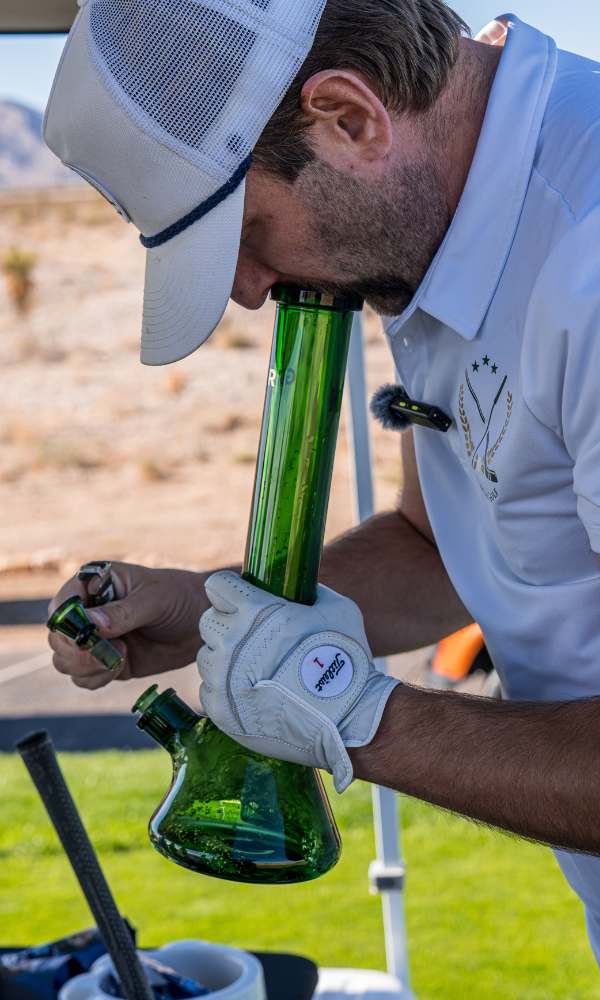
The inaugural Las Vegas Vlasic Classic kicked off on November 8 at the Las Vegas Paiute Golf Resort, in collaboration with the Paiute Tribe and NuWu Cannabis. This event marked the first golf tournament in Nevada designed to fully comply with cannabis regulations. The concept was simple yet effective, taking place on a course known for hosting major events, and the turnout demonstrated a clear interest in the initiative.
This Las Vegas stop marked a significant development for the growing tournament series, which began in the Midwest and has steadily expanded. Founder Willy Vlasic noted that the move westward was intentional, linking the Classic to a major cannabis market at a time when the industry seeks more open and well-organized events.
“Las Vegas represents the next chapter in our mission to blend sport, advocacy and cannabis culture positively,” Vlasic said. “Partnering with the Paiute Tribe and NuWu Cannabis to create Nevada’s first compliant golf tournament showcases how collaboration can advance national reform efforts.”
The charity golf tournament attracted golfers, industry operators, brand representatives, advocates and supporters from the cannabis community.
While golfers competed for trophies and hole-in-one prizes, the day prioritized dialogue as much as competition. Sponsor tents provided a mixture of product showcases and casual hangouts. Participants varied in their pace of play; some rushed through, while others savored the experience, with no one seeming eager to finish quickly.
Because the event was held at the Las Vegas Paiute Golf Resort, owned and operated by the Paiute Tribe, on-site consumption was permitted. This was a unique twist for a cannabis industry event, which are typically limited by state and local restrictions on public use. It added a practical ease to the day and meant attendees could sample products, join activations, and move through the course without the usual workarounds that define most cannabis gatherings.
This relaxed pace suited the attendees well, allowing them to seamlessly transition between golfing, networking, advocacy and casual conversation without interruptions. The event felt like an educational field trip, filled with familiar faces, as well as new introductions and ample opportunities for discussion—all without the constraints of a hectic conference schedule.
A Fundraiser With Clear Outcomes
The Las Vegas Vlasic Classic raised over $17,500, which was distributed among three national organizations dedicated to cannabis justice. Freedom Grow Forever and the Last Prisoner Project each received $6,250, while The Weldon Project received $5,000. These funds support various initiatives, including commissary accounts, re-entry assistance, legal advocacy and clemency efforts for individuals affected by cannabis-related incarceration.
Each partner organization plays a unique role within the reform landscape. Freedom Grow Forever, led by Bill and Jeff Levers, directs funds to support individuals still incarcerated for cannabis offenses. The Last Prisoner Project focuses on providing resources for re-entry microgrants and support systems for those returning to society. The Weldon Project, founded by Weldon Angelos, is dedicated to federal clemency, sentencing policy, and high-level advocacy.
Bill Levers, CEO of Freedom Grow, expressed gratitude to the Vlasic brand and their family for their advocacy work for cannabis prisoners. “The Vlasic family has been incredible partners and true advocates for Freedom Grow’s mission. The Las Vegas Vlasic Classic has played a crucial role in helping us share prisoners’ stories with the public. More importantly, it has allowed us to directly support those on our outreach list thanks to their generous donations. We are deeply thankful to the Vlasic family and every sponsor who made this event possible.”
With Las Vegas now added to the series, the Vlasic Classic, which took place earlier this year in Michigan and Missouri, has raised over $140,000 for second-chance and reform efforts.
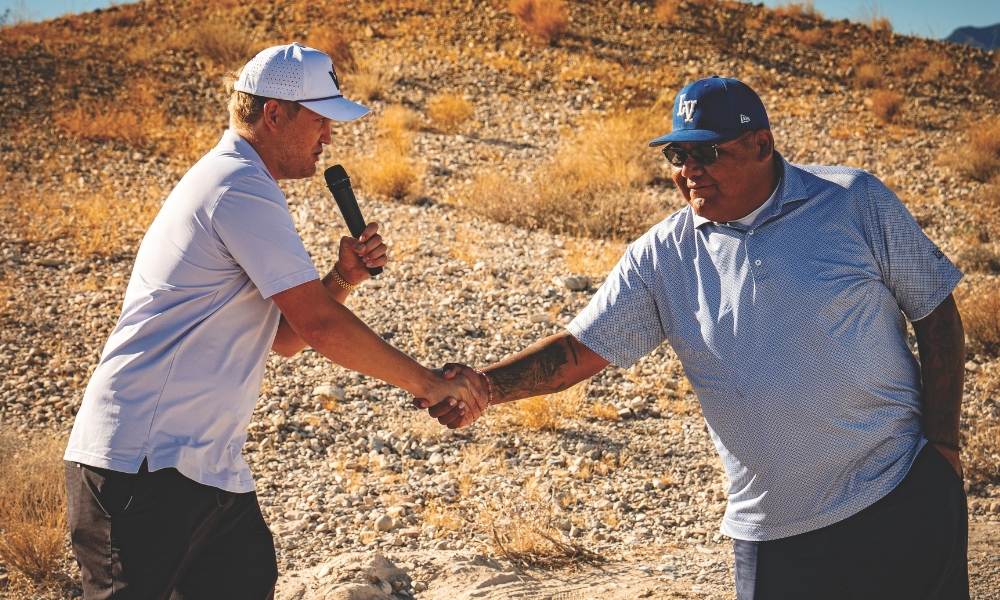
Willy Vlasic with Benny Tso, the former chair of the Las Vegas Paiute Nation, at the historic first-ever legal consumption golf tournament in the US.
Strong Support From Across the Industry
A diverse array of brands supported the Las Vegas Classic, including Cannabis Now, Mama J’s, Matrix, Verano, Curaleaf, STIIIZY, and Good Day Farm. Their participation helped anchor the event and attract attention from the broader region. The National Cannabis Industry Association (NCIA) also returned as the official trade association sponsor, offering discounted first-year memberships to attendees.
The next event in the series is the 2026 Missouri Vlasic Classic, scheduled for May 1–3 at Old Kinderhook Resort. Previous Missouri events experienced strong attendance and media coverage, and early indications for 2026 suggest continued momentum.
Recent exploits show iPadOS windows running on an iPhone, hinting at the future of Apple hardware and software alike—while also possibly revealing its incoming foldable phone experience.
Explore the top tech conferences to attend in 2026. Discover key dates, locations, and must-see events in AI, cloud, cybersecurity, IT, and emerging tech.
The streaming giant quietly removed the feature that lets you control content on your TV screen using a mobile device. The company says the feature was not widely used.
Explore the top tech conferences to attend in 2026. Discover key dates, locations, and must-see events in AI, cloud, cybersecurity, IT, and emerging tech.
Swatch will laser unique gold snowflakes on every new “Cold Moon” MoonSwatch, but there’s a catch: You’ll only be able to buy one when it’s snowing in Switzerland.
Mexico's consumer protection agency and FIFA are working on a “ticket relocation system” that will allow those with extra World Cup tickets to sell them safely and at appropriate prices.
A push by military contractors could alter pending legislation that would have empowered servicemembers to repair equipment. Lobbyists are pitching a subscription service instead.
Today, we’re exploring mobile forensics, a field that matters deeply in modern crime investigations. Think about how much our phones know about us. They carry our contacts, messages, locations, and app history in many ways. They are a living log of our daily lives. Because they travel with us everywhere, they can be a goldmine of evidence when something serious happens, like a crime. In a murder investigation, for instance, a suspect’s or a victim’s phone can help us answer critical questions: Who were they in touch with right before the crime? Where did they go? What were they doing? What kind of money dealings were they involved in? All of this makes mobile forensics powerful for investigators. As digital forensic specialists, we use that data to reconstruct timelines, detect motives, and understand relationships. Because of this, even a seemingly small app on a phone might have huge significance. For example, financial trading apps may reveal risky behavior or debt. Chat apps might contain confessions or threats. Location logs might show the victim visiting unusual places.
The Difference Between Android and iOS Forensics
When we do mobile forensics, we usually see Android and iOS devices. These two operating systems are quite different under the hood, and that affects how we work with them. On Android, there’s generally more openness. The file system for many devices is more accessible, letting us examine data stored in app directories, caches, logs, and more. Because Android is so widespread and also fragmented with many manufacturers and versions, the data we can access depends a lot on the model and version.
On iOS, things are tighter. Apple uses its own file system (APFS), and there’s strong encryption, often backed by secure hardware. That means extracting data can be more challenging. Because of this, forensic tools must be very sophisticated to handle iOS devices.
When it comes to which has more usable data, Android often gives us more raw artifacts because of its flexibility. But iOS can also be very rich, especially when data is backed up to iCloud or when we can legally access the device in powerful ways.
The Tools For the Job
One of the most powerful tools is Cellebrite, which is used by law enforcement and digital forensic labs. Cellebrite’s tools are capable of extracting data from both Android and iOS devices, sometimes even from locked devices. But the ability to extract depends a lot on the device model, its security patch level, and how encrypted it is.
There’s an interesting twist when it comes to GrapheneOS, which is a very security-focused version of Android. According to reports, Cellebrite tools struggle more with GrapheneOS, especially on devices updated after 2022. In some cases, they may be able to do a “consent-based” extraction (meaning the phone has to be unlocked by the user), but they can’t fully bypass the security on a fully patched GrapheneOS phone. Because of that, from a security perspective, users are strongly encouraged to keep their firmware and operating system updated. Regular updates close vulnerabilities. Also, using strong passcodes, enabling encryption, and being careful about where sensitive data is stored can make a real difference in protecting personal data.
Our Case: Investigating a Murder Using an Android Phone
Now, let’s turn to our case. We are in the middle of a murder investigation, and we’ve managed to secure the victim’s Android phone. After talking with witnesses and people who were close to the victim, we believe this phone holds critical evidence. To analyze all of that, we are using ALEAPP, a forensic tool made specifically for parsing Android data.
ALEAPP and How It Works
ALEAPP stands for Android Logs, Events, And Protobuf Parser. It’s an open-source tool maintained by the forensic community. Basically, ALEAPP allows us to take the extracted data from an Android phone, whether it’s a logical extraction, a TAR or ZIP file, or a file-system dump and turn that raw data into a human-readable, well-organized report. ALEAPP can run through a graphical interface, which is very friendly and visual, or via command line, depending on how you prefer to work. As it processes data, it goes through different modules for things like call logs, SMS, app usage, accounts, Wi-Fi events, and more. In the end, it outputs a report, so you can easily explore and navigate all the findings.
We started by examining the internal storage of the Android device, especially the /data folder. This is where apps keep their private data, caches, and account information. Then, we prepared a separate place on our investigation workstation, a folder called output, where ALEAPP would save its processed data.
Once ALEAPP was ready, we launched it and pointed it to the extracted directories. We left all its parsing modules turned on so we wouldn’t miss any important artifact. We clicked “Process,” and depending on the size of the extracted data, we waited for a few minutes while ALEAPP parsed everything.
When the processing was done, a new folder appeared inside our output directory. In that folder, there was a file called index.html, that’s our main report. We opened it with a browser and the GUI showed us different categories. The interface is clean and intuitive, so even someone not deeply familiar with command-line tools can navigate it.
Evidence That Stood Out
One of the first things that caught our attention was a trading app. ALEAPP showed an installed application named OlympTrade. A quick web search confirmed that OlympTrade is a real online trading platform. That fits with what witnesses told us. The victim was involved in trading, possibly borrowing or investing money. We also noted a hash value for the app in our report, which helps prove the data’s integrity. This means we can be more confident that what we saw hasn’t been tampered with.
Next, we turned to text messages. According to the victim’s best friend’s testimony, the victim avoided some calls and said he owed a lot of money. When we checked SMS data in ALEAPP, we found a thread where the victim indeed owed $25,000 USD to someone.
We looked up the number in the contacts list, and it was saved under the name John Oberlander. That makes John an important person of interest in this investigation.
Then, we dove into location data. The victim’s family said that on September 20, 2023, he left his home without saying where he was going. In ALEAPP’s “Recent Activity” section, which tracks events like Wi-Fi connections, GPS logs, and other background activity, we saw evidence placing him at The Nile Ritz-Carlton in Cairo, Egypt. This is significant. A 5-star hotel, which could have security footage, check-in records, or payment logs. Investigators would almost certainly reach out to the hotel to reconstruct his stay.
The detective pressed on with his investigation and spoke with the hotel staff, hoping to fill in more of the victim’s final days. The employees confirmed that the victim had booked a room for ten days and was supposed to take a flight afterward. Naturally, the investigator wondered whether the victim had saved any ticket information on the phone, since many people store their travel plans digitally nowadays. Even though no tickets turned up in the phone’s files, the search did reveal something entirely different, and potentially much more important. We looked at Discord, since the app appeared in the list of installed applications. Discord logs can reveal private chats, plans, and sometimes illicit behavior. In this case, we saw a conversation indicating that the victim changed his travel plans. He postponed a flight to October 1st, according to the chat.
Later, he agreed to meet someone in person at a very specific place. It was the Fountains of Bellagio in Las Vegas. That detail could tie into motive or meetings related to the crime.
What Happens Next
At this stage, we’ve collected and parsed digital evidence, but our work is far from over. Now, we need to connect the phone-based data to the real world. That means requesting more information from visited places, checking for possible boarding or ticket purchases, and interviewing people named in the phone, like John Oberlander, or the person from Discord.
We might also want to validate financial trail through the trading platform (if we can access it legally), bank statements, or payment records. And importantly, we should search for other devices or backups. Maybe the victim had cloud backups, like Google Drive, or other devices that shed more light.
Reconstructed Timeline
The victim was heavily involved in trading and apparently owed $25,000 USD to John Oberlander. On September 20, 2023, he left his residence without telling anyone where he was headed. The phone’s location data places him later that day at The Nile Ritz-Carlton in Cairo, suggesting he stayed there. Sometime afterward, according to Discord chats, he changed his travel plans and his flight was rescheduled for October 1. During these chats, he arranged a meeting with someone at the Fountains of Bellagio in Las Vegas.
Summary
Mobile forensics is a deeply powerful tool when investigating crimes. A single smartphone can hold evidence that helps reconstruct what happened, when, and with whom. Android devices often offer more raw data because of their openness, while iOS devices pose different challenges due to their strong encryption. Tools like ALEAPP let us parse all of that data into meaningful and structured reports.
In the case we’re studying, the victim’s phone has offered us insights into his financial troubles, his social connections, his movements, and his plans. But digital evidence is only one piece. To solve a crime, we must combine what we learn from devices with interviews, external records, and careful collaboration with other investigators.
Our team provides professional mobile forensics services designed to support individuals, organizations, and legal professionals who need clear, reliable answers grounded in technical expertise. We also offer a comprehensive digital forensics course for those who want to build their own investigative skills and understand how evidence is recovered, analyzed, and preserved. And if you feel that your safety or your life may be at risk, reach out immediately. Whether you need guidance, assistance, or a deeper understanding of the digital traces surrounding your case, we are here to help.
Check out our Mobile Forensics training for more in-depth training
Headlights. Indicators. Trunk releases. Seatbelts. Airbags. Just about any part of a car you can think of is governed by a long and complicated government regulation. It’s all about safety, ensuring that the car-buying public can trust that their vehicles won’t unduly injure or maim them in regular operation, or in the event of accident.
However, one part of the modern automobile has largely escaped regulation—namely, the humble door handle. Automakers have been free to innovate with new and wacky designs, with Tesla in particular making waves with its electronic door handles. However, after a series of deadly incidents where doors wouldn’t open, regulators are now examining if these door handles are suitable for road-going automobiles. As always, regulations are written in blood, but it raises the question—was not the danger of these complicated electronic door handles easy to foresee?
Trapped
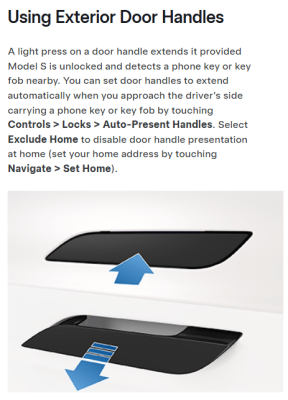
A number of automakers have developed fancy retractable door handles in recent years. They are most notably seen on electric vehicles, where they are stated to have a small but measurable aerodynamic benefit. They are often paired with buttons or other similar electronic controls to open the doors from the inside. Compared to mechanical door handles, however, these door handles come with a trade-off in complexity. They require electricity, motors, and a functioning control system to work. When all is well, this isn’t a problem. However, when things go wrong, a retractable electronic door handle often proves inaccessible and useless.
It’s not hard to find case reports of fatal incidents involving vehicles with electronic door handles—both inside and out. Multiple cases have involved occupants burning alive inside Tesla vehicles, in which electronic door handles failed after a crash. Passengers inside the vehicles have failed to escape due to not finding emergency release door pulls hidden in the door panels, while bystanders have similarly been unable to use the retracted outside door handles to free those trapped inside.
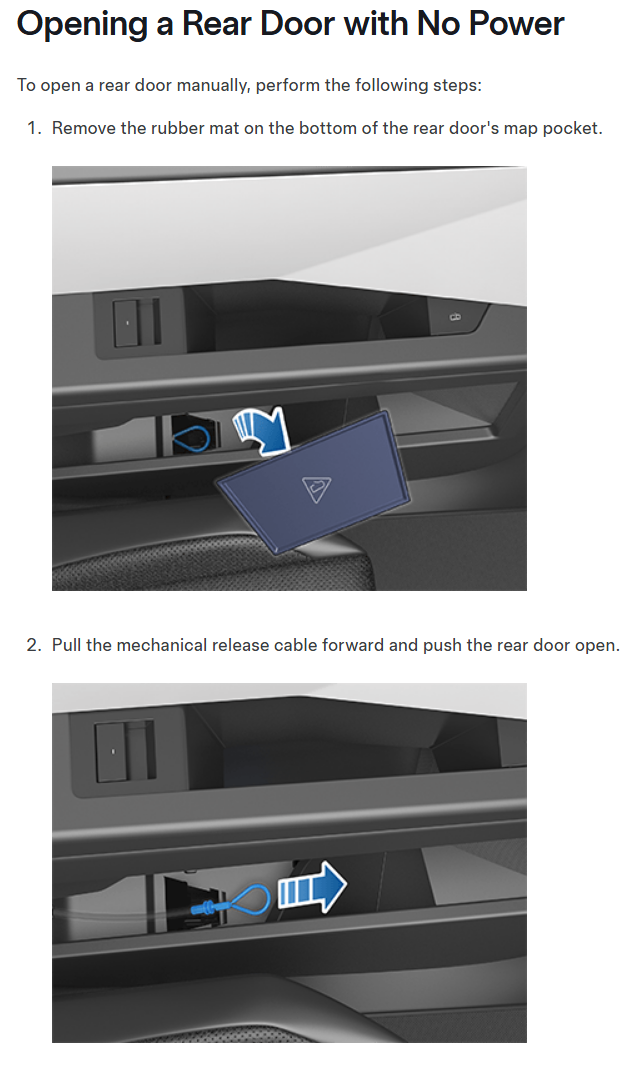
In response, some Tesla owners have gone so far as to release brightly-colored emergency escape ripcords to replace the difficult-to-spot emergency release pulls that are nearly impossible to find without prior knowledge. In the case of some older models, though, there’s less hope of escape. For example, in the Tesla Model 3 built from 2017 to 2023, only front doors have an emergency mechanical release. Rear passengers are out of luck, and must find another route of escape if their electronic door handles fail to operate. No Tesla vehicles feature an easily-accessible mechanical release that can be used from outside the vehicle.
US regulations mandate highly-visible emergency trunk release handles that are easily activated. However, obvious mechanical backups have not been required for cars fitted with electronic door handles. Credit: NHTSA
It’s worth noting that in the US market, federal regulations have mandated glow-in-the-dark trunk releases be fitted to all sedans from the 2002 model year onwards. You could theoretically escape from the trunk of certain Teslas more easily than a Cybertruck or Model 3 with a failed electrical system.
Tesla isn’t the only company out there building cars with retractable door handles. It does, however, remain the most prominent user of this technology, and its vehicles have been involved in numerous incidents that have made headlines. Other automakers, such as Audi and Fiat, have experimented with electronic door handles, both for ingress and egress, with varying degrees of mechanical backup available. In some cases, automakers have used smart two-stage latches. A small pull activates the electronic door release, while a stronger pull will engage a mechanical linkage that unlatches the door. It’s smart engineering—the door interface responds to the exact action a passenger would execute if trying to escape the vehicle in a panic. There are obviously less concerns around electronic door releases that have easily-accessed mechanical backups; it’s just that Tesla is particularly notable for not always providing them.
Over the years, national automotive bodies have thrown up their arms about all sorts of emerging automotive technologies. In the United States specifically, NHTSA has famously slow-walked the approval of things like camera-based rear-view mirror systems and replaceable-bulb headlamps, fearing the worst could occur if these technologies were freely allowed on the market.
Meanwhile, despite the obvious risks, electronic door handles have faced no major regulatory challenges. There were no obvious written rules standing in the way of Tesla making the choice to eliminate regular old door handles. Nor were there strict regulations on emergency door releases for passengers inside the vehicle. Tesla spent years building several models with no mechanical door release for the rear passengers. If your door button failed, you’d have to attempt escape by climbing out through the front doors, assuming you could figure out how to open them. Even today, the models with mechanical door releases still often hide them behind interior trim pieces or carpets, where few passengers would ever think to look in an emergency.
Try explaining this to someone in the back seat while the car is burning around you. Credit: Tesla
Obvious Mistakes
Flush door handles have become popular with Chinese automakers like BYD and Geely. However, these door handles require the vehicle’s electrical supply to be intact in order to work. Credit: BYD
Things are beginning to change, however. Chinese regulators have led the charge, with reports stating that electronic retractable door handles could be banned as soon as 2027. While some semi-retractable styles will potentially avoid an outright ban, it’s believed new regulations will require a mechanically redundant release system as standard.
As for the US, the sleeping giant of NHTSA has finally awoken in the wake of Bloomberg‘s reporting on the matter. As reported by CNBC, Tesla has been given a deadline of December 10 to deliver records to the federal regulator, regarding design, failures, and customer issues around its electronic door release systems. The Office of Defects Investigations within NHTSA has already recorded 16 reports of failed exterior door releases in the a single model year of the Tesla Model Y. It’s likely a drop in the ocean compared to the full population of Tesla vehicles currently on roads. Meanwhile, the US automaker also faces multiple lawsuits over the matter from those who have lost family members in fatal crashes and fires involving the company’s vehicles.
In due time, it’s likely that automotive regulators in most markets will come out against electronic door handles from a safety perspective alone. No matter how well designed the electrical system in a modern vehicle, it’s hard to beat a lever flipping a latch for simplicity and robustness. The benefits of these electronic door handles are spurious in the first place—a fraction of a percent reduction in drag, and perhaps a little more luxury appeal. If the trade-off is trapping passengers in the event of a fire, it’s hard to say they’re worthwhile.
The electronic door handle, then, is perhaps the ultimate triumph of form over function. They’re often slower and harder to use than a regular door handle, and particularly susceptible to becoming useless when iced over on a frosty morning. For a taste of the future, lives were put at risk. Anyone could see that, so it’s both strange and sad that automakers and regulators alike seemed not to notice until it was far too late. Any new regulations will, once again, be written in blood.
Nominations are now open for the 2026 Most Inspiring Women in Cyber Awards! The deadline for entry is the 9th January 2026. We’re proud to be media supporters once again.
The 2026 event is hosted by Eskenzi PR and sponsored by Fidelity International, BT, Bridewell and Plexal – organisations that are leading the way in making the cybersecurity industry more inclusive. The 6th annual event, held at the iconic BT Tower on the 26th February 2026, aims to celebrate trailblazers at all stages of their careers from across the cybersecurity industry who are doing exceptional things.
Additionally, Eskenzi PR has partnered with some of the most influential women in cyber groups to help shape the awards, ensuring they are more inclusive and intersectional than ever before. By partnering with WiCyS UK & Ireland Affiliate and Women in Tech and Cybersecurity Hub (WiTCH), it is hoped that the 2026 event will reach an even wider range of inspirational women from across all corners of the globe.
Aiding in this mission, cybersecurity consultancy Bridewell has committed to sponsoring a bursary that will allow the UK based winners of the Ones to Watch category to attend the awards with paid travel and accommodation. A new addition for the 2026 awards, sparked by industry feedback, this move is hoped to remove the financial barriers of attending industry events for people starting out in their careers.
Cybersecurity continues to face challenges with diversity and representation. According to research by ISC2, women now make up about 22% of the global cybersecurity workforce. Despite the industry’s growing demand for skilled professionals – driven by escalating talent shortages and increasingly sophisticated threats – representation remains limited. Building a more inclusive cybersecurity community requires visible role models, mentorship, and active encouragement. After all, we cannot become what we cannot see.
The Most Inspiring Women in Cyber Awards aims to bring together and empower incredible women (both established and those starting out their careers) and make long lasting connections.
Nominations can be submitted via this link and will remain open until 5pm on Friday 9th January 2026. An esteemed panel of judges (yet to be confirmed) will then review the submissions and narrow the list down to the Top 20, each of whom will be profiled on the IT Security Guru. There will also be five women crowned ‘ones to watch’.
On the 26th February 2026, a physical awards ceremony will be held in London at the iconic BT Tower. The event will include a welcome address and an informal panel discussion with a Q&A featuring industry leaders. Then, the finalists will be awarded their certificates and trophies. The event will conclude with networking over food and drinks at the top of the tower. Finalists, judges, and guests are welcome to attend in person and the public can tune in to the ceremony via a live stream. More information to be provided soon.
The award’s founder, Yvonne Eskenzi, said: “We’re delighted to once again host the Most Inspiring Women in Cyber Awards, supported by industry leaders including Fidelity International, Bridewell and Plexel. With BT’s continued partnership, it’s a pleasure and a privilege to return to the iconic BT Tower once again for this special occasion. At Eskenzi, we remain deeply committed to championing diversity in cybersecurity through meaningful action. Together with leading women’s networks and forward-thinking organisations, the Most Inspiring Women in Cyber Awards aims to celebrate, elevate and empower women across the sector while helping to forge lasting connections among all who attend.”
‘Women in Cyber’ group, at Fidelity International, said: “At Fidelity International, supporting the 2026 Most Inspiring Women in Cyber Awards reflects our belief that empowering women strengthens cybersecurity. As cyber threats intensify, diverse perspectives are key to safeguarding our digital future. By championing talent and creating opportunities, we aim to inspire the next generation of women leaders in cybersecurity.”
Laura Price, Cyber Skills Partnerships Manager at BT Business, said: “At BT Business, we’re committed to helping organisations stay connected, secure, and future ready. Supporting the Most Inspiring Women in Cyber Awards reflects our belief that diversity and innovation go hand in hand. By celebrating role models and amplifying voices, we aim to inspire the next generation of cyber leaders and strengthen the resilience of businesses in an increasingly digital world.”
Diane Gilbert, Senior Lead Programmes at Plexal, said: “Plexal supports women in cyber to build careers and grow their businesses. Wonderful moments like the Most Inspiring Women in Cyber Awards provide an opportunity to celebrate the increased inclusion and diversification of the industry to date. And reinforces the important role we all play in keeping the momentum going on female representation in the sector. Plexal is excited to be a returning sponsor of the 2026 awards.”
On the eve of KubeCon 2025, experts from companies like Uber, AWS, and Block shared how SPIRE and workload identity fabrics reduce risk in complex, cloud-native systems.
The scene from the 2024 GeekWire Gala in Seattle. (GeekWire File Photo)
Early bird tickets for the GeekWire Gala are going fast, and today is your last chance to secure discounted pricing for our annual holiday extravaganza.
The Gala is the Seattle tech community’s biggest holiday celebration, and it takes place Dec. 11 at Showbox SoDo.
The festive night includes food, drinks, karaoke, games, and plenty of surprise moments. Bring your whole team and make our holiday party your holiday party alongside the region’s top innovators and entrepreneurs.
In addition to the party atmosphere, GeekWire and Greater Seattle Partners will once again use the Gala to recognize the region’s “Uncommon Thinkers,” the groundbreaking innovators who are changing the way we work, live and play. We’ve profiled three of these individuals so far — Anindya Roy, co-founder and chief scientific officer of Lila Biologics; and Chet Kittleson, co-founder and CEO of Tin Can; and Brian Pinkard, co-founder and CTO at Aquagga. We’ll publish profiles of other honorees in the coming weeks.
Showbox SoDo is located at 1700 1st Ave S., not far from T-Mobile Park. The event from 6 p.m. to 10 p.m. is 21+ and all attendees must have valid ID to enter. Dress to impress, bust our your holiday flare, or just keep it geek chic.
Sponsorships include brand exposure, VIP access, and a front-row seat to the celebration. For sponsorship and group ticket sales, contact us at events@geekwire.com.

 Login
Login