PC builders love installing the latest and shiniest CPUs in their systems. This is generally a good thing, as current-generation chips typically deliver excellent performance at a reasonable cost. And they won’t bottleneck your graphics card in games—unlike some older chips that have aged like fine milk.
Modern PCs can set you back by a considerable amount, so it makes sense to protect your hardware from heat and excessive voltage. Over the past few years, there’s been a noticeable rise in CPU failures linked to overvolting on default motherboard settings. What’s causing this, and is there a way to prevent it?
If you’re an executive at Intel or AMD and in charge of sales forecasts, you likely projected some big numbers for the end of 2022. Both companies had unveiled their new platforms, promising next-gen performance and features. Since many people could not upgrade their PCs during the pandemic, all the ingredients of a booming holiday sales period were present. Added to the mixture were all-new, high-powered GPUs as well. Overall, it seemed like the perfect time to build or buy a new PC. Oddly, that did not come to pass. Instead, Q4 ended up being the worst period for CPU sales in 30 years, according to Mercury Research.
The market analysis company’s president, Dean McCarron, discussed the somber news with our colleagues at PCMag this week. CPU sales declined year-over-year by 34% and quarter-over-quarter by 19%. Those are the biggest declines for both metrics Mercury has ever tabulated in its 30 years of existence.
The reasons for the decline include excess inventory and low demand for CPUs. Intangible factors may also be at play, such as global economic uncertainty. The numbers mirror those from IDC, which also posted a gloomy Q4 report recently for PC shipments. IDC’s numbers from 90 countries showed a 28.1% decline year-over-year. That drop-off was twice as high as in Q3, making Q4 a particularly bloody quarter for the PC industry.
(Image: Mercury Research)
In response to the turbulence, Intel and AMD are now under-shipping CPUs. Both companies’ CEOs admitted to this in their recent earnings calls. AMD’s CEO said it would do less of it in Q1, though. Intel CEO Pat Gelsinger said his company’s “Q4 under shipping [was] meaningfully higher than full year.” Despite this strategy, CPU shipments for both laptops and desktops suffered dramatic declines in what is normally a robust quarter. Intel also suffered from its decision to announce price increases in Q3. That caused some of its partners to buy stock before the price went up in Q4.
Despite the dour report, it’s not all bad for the PC market. In 2022 overall, CPU shipments and revenue were down 21 and 19%, respectively, from previous years. However, that was the pandemic era, a magical time of record profits for all semiconductor companies. Despite the decline, the numbers in 2022 were still better than the pre-pandemic years. Although the red ink is projected to continue to flow for another quarter or two, a turnaround is expected later this year.
One unexpected result from this volatility is it’s allowed AMD to claw market share away from Intel. According to IDC’s report via HotHardware, AMD now has over 30% of the x86 market. While Intel still has more than twice that market share, it lost 5.6% over the past year.
Things move fast in the world of PC hardware. One day you’re sitting on the top of the throne; the next, you’re an also-ran. Such is the case with AMD’s fledgling Zen 4 mobile CPU, the “Dragon Range” Ryzen 9 7845HX. Earlier this week, it appeared out of the shadows and leaped to the top of Passmark’s mobile CPU rankings. Now, just several days later, it’s been usurped by Intel’s Raptor Lake mobile. Those CPUs officially launched this week alongside Nvidia’s RTX 4090 and 4080 laptop GPUs. All is not lost for AMD, though, as it’s yet to launch the flagship SKU, which could even the score.
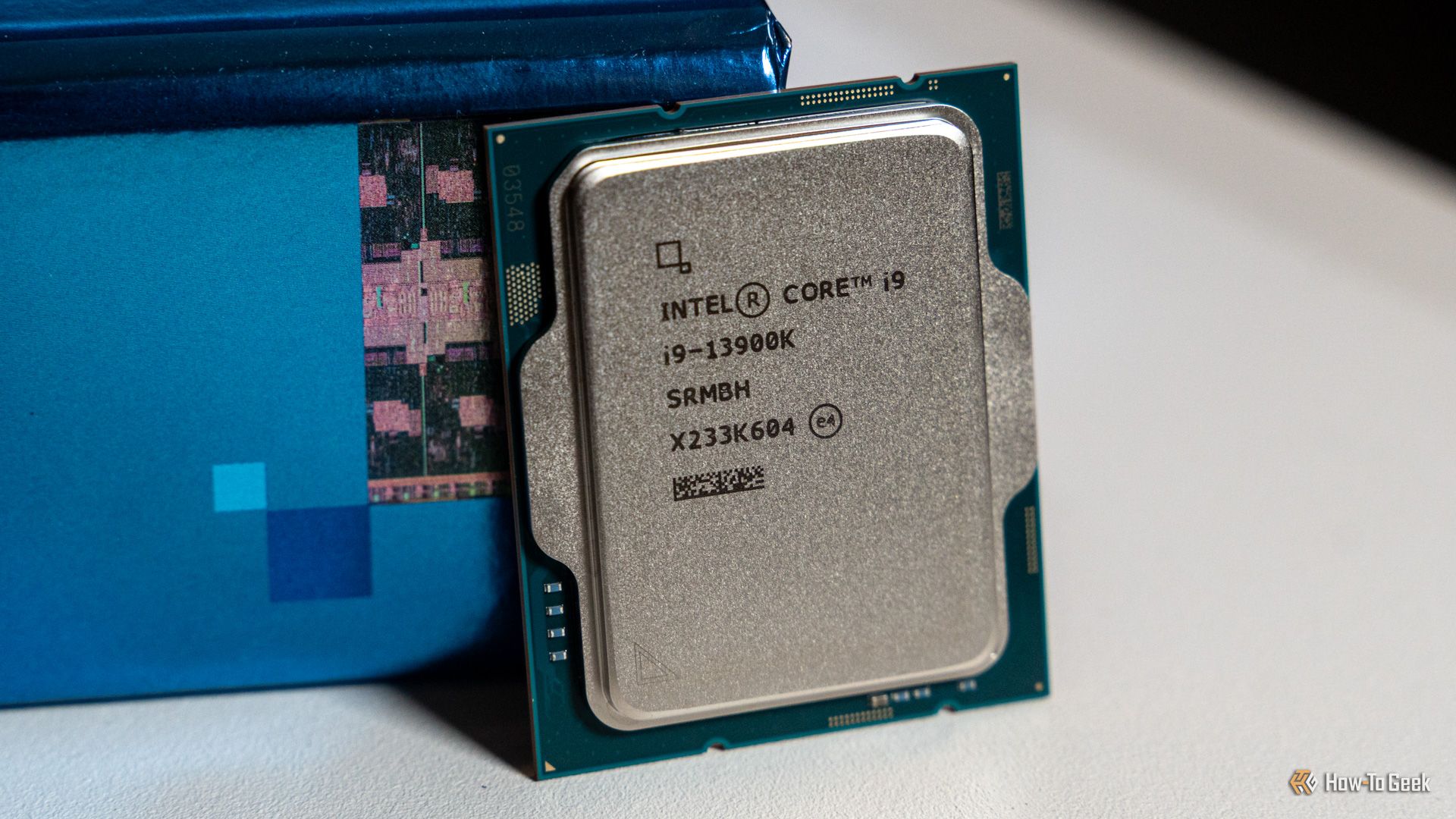
Two Intel CPUs now stand atop the PassMark mobile benchmark leader boards care of @9550Pro: the Core i9-13980HX and 13900HX. They were both stuffed into expensive, heavy, and powerful next-gen laptops, which were reviewed this week. Each of the CPUs shares the same 8P-core, 16E-core design, offering 32 threads in a mobile CPU for the first time. The 13980HX’s maximum boost frequency of 5.6GHz is 200MHz higher than that of the 13900HX. Its E-cores can also boost 100MHz higher to 4GHz. Otherwise, the two CPUs are basically the same and share a 55W TDP base power consumption. That can go as high as 157W or as low as 45W.
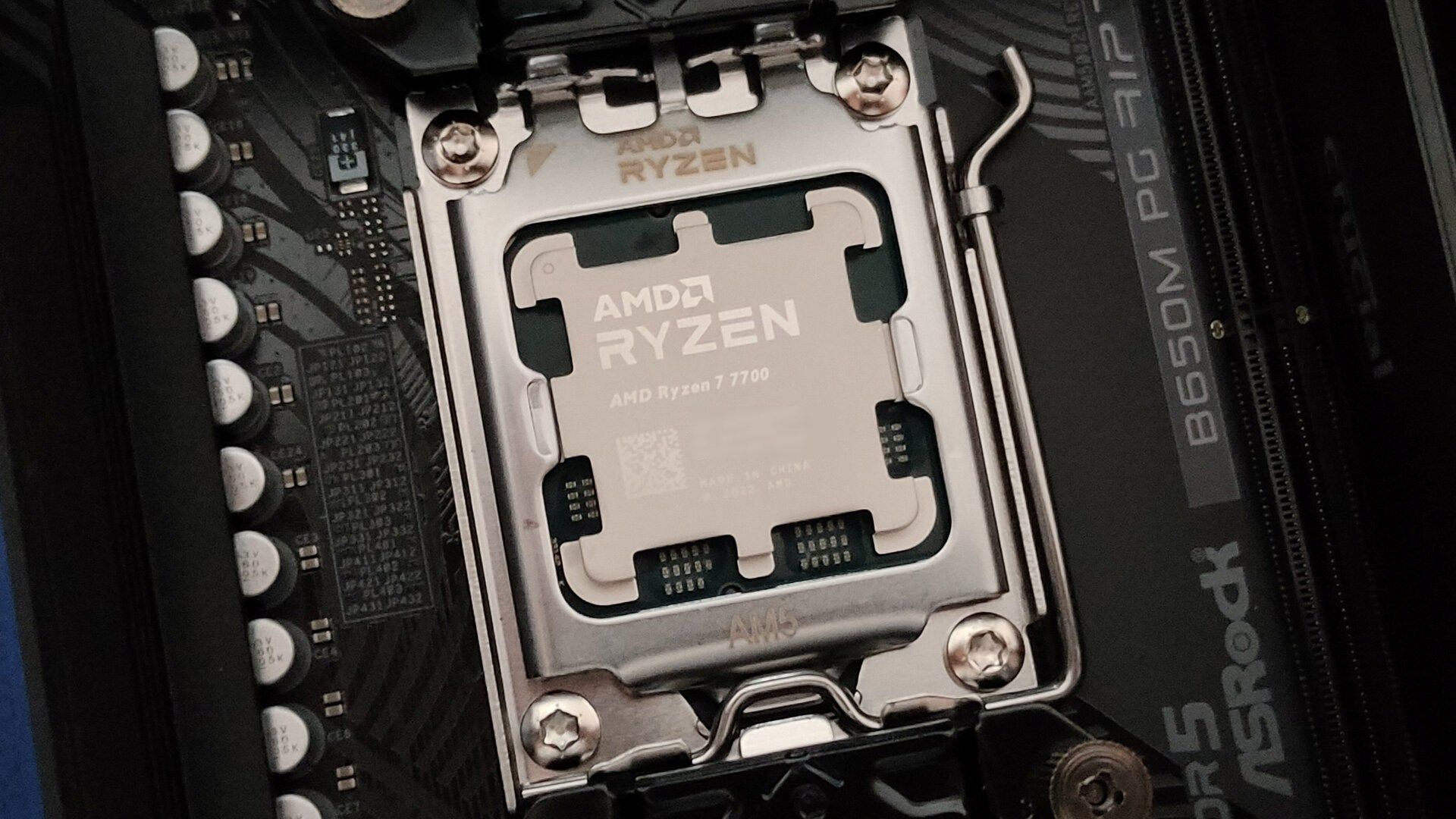
Intel’s 24-thread, 32-core CPUs went up against the Ryzen 9 7845HX, which is also a 55W CPU. However, it is a 12-core, 24-thread SKU with a maximum boost frequency of 5.2GHz. Clearly, the odds are stacked in Intel’s favor here. Overall, in single-threaded performance, Intel’s CPUs are faster than the AMD 7845HX by 9% and 14% for the 13900 and 13980HX, respectively. In multi-threaded performance, Intel’s CPUs hold an advantage of 11% and 16%, as noted by Videocardz. It should also be noted that AMD has not officially launched its Zen 4 mobile CPUs, so take AMD’s numbers with a grain of salt.
For now, Intel better hold off popping the cork on that champagne bottle. That is, assuming it hasn’t auctioned it off on eBay yet after its most recent earnings report. AMD still has an ace up its sleeve in the form of the Ryzen 9 7945HX. That is the 16-core, 32-thread Dragon Range CPU with a maximum boost clock of 5.4GHz. That’ll put it alongside the Core i9-13900HX on the spec sheet for clocks and threads. Intel still has a small advantage in core count at 24 total. Not to mention Intel also has the Core i9-13980HX with even higher clocks. Still, we expect this battle to be a nail-biter.
(Image: AMD)
AMD is expected to launch notebooks featuring its Dragon Range CPUs this month. It should also be unveiling its RDNA 3 mobile GPUs in them too. Intel and Nvidia have already laid down a heavy marker with their latest hardware. It’ll be interesting to see if AMD can compete and whether it can leverage its AMD Advantage technology to leapfrog its rivals. Its Dragon Range CPUs are also the first mobile CPUs with a chiplet design, so that adds a spicy twist to the proceedings.

 Login
Login