Reading view

There are new articles available, click to refresh the page.

Solana Vs. XRP: Clear Winner Emerges With ETF Net Flow Numbers

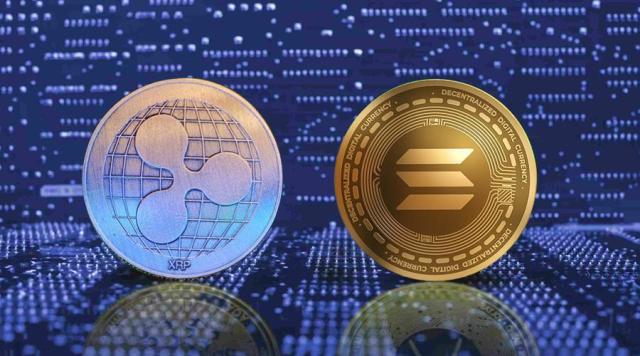
With the crypto market showing signs of recovery, both the XRP and Solana Exchange Traded Funds (ETFs) have attracted significant investor interest. The rivalry among major crypto ETFs has intensified, with XRP taking the spotlight amid its consistent surge in daily inflows and the Solana ETF recording significant outflows.

Solana ETFs See Largest Outflow Yet

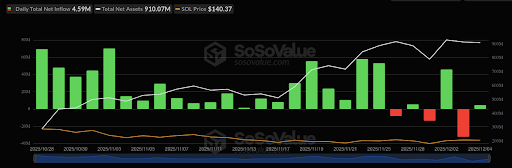
Solana has entered a surprising phase of turbulence as its recently launched US Spot ETF struggles to maintain momentum after weeks of inflows. The latest data from Sosovalue reveal a sizable setback with a fresh withdrawal of $32.19 million, marking the third and largest outflow recorded since the investment product debuted in late October 2025. 

The outflow, registered on December 3, came as a major surprise, especially given that the broader crypto market had been enjoying a slight reprieve from the bearishness weighing it down. Notably, Sosovalue’s data shows that the entire Solana ETF outflow originated from the 21Shares TSOL offering, which shed $41.79 million in a single session. Minor inflows into the remaining six Solana ETFs had softened the blow, reducing total outflow to $32.19. 
Solana XRP 1

Since the launch of Solana ETFs, TSOL has been responsible for all negative flows posted, including the $13.55 million pullback on December 1 and the $8.10 million decline in late November. Across all sessions, 21Shares Solana ETF has now seen total outflows reach $101.51 million. 

The weakness in TSOL stands in sharp contrast to Bitwise’s Solana ETF, BSOL. BSOL continues to outpace other investment products, with impressive cumulative inflows of $580.72 million, making it the most successful Solana ETF. Grayscale’s GSOL follows at a distant $89.01 million. Overall, the net cumulative inflows for the Solana ETF have reached $623.21 million. While this is impressive, it is still significantly behind the XRP ETF. 

XRP Overtakes Solana ETF As It Nears $1 Billion Inflows

The latest on-chain numbers show the XRP ETF pulling ahead of the Solana ETF with surprising speed and volume. Analyst Neil Tolbert highlighted the rise in XRP ETF inflow this week, noting that growing institutional interest indicates the trend is only getting started. With more XRP ETFs expected to debut soon, Tolbert anticipates a significant rise in demand and inflows as traditional finance finally wakes up. 

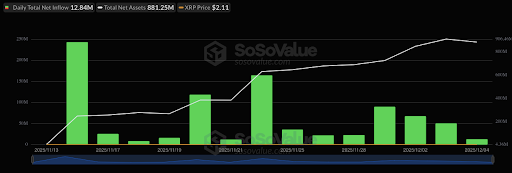
Five Spot XRP ETFs collectively hold more than $984 million in assets, with less than $16 million to reach the $1 billion inflow milestone. Canary Capital’s XRPC leads with $358.88 million, followed by Grayscale’s GXRP, Bitwise’s ETF, Franklin Templeton’s XRPZ, and finally REX-Osprey’s XRPR.  
Solana XRP 2

According to SosoValue, the total XRP ETFs, excluding that of REX-Osprey, have attracted approximately $887.12 million in net cumulative inflows. Since its launch in November, the XRP ETF has recorded 15 days of positive inflows, in stark contrast to Solana ETFs, which have seen multiple outflows. 

Despite Solana launching seven ETFs as early as October 2025 and XRP only introducing four last month, XRP ETFs have already surpassed Solana ETFs in total inflows by almost 30%. With fewer products and a later debut, XRP has emerged as the clear winner amongst the newest ETF entrants in 2025. 
XRP price chart from Tradingview.com

Solana Eyes Major Resistance After $140 Reclaim, But Analyst Questions SOL’s Strength

As the market rebounds, Solana (SOL) is retesting a crucial area that has served as resistance since the November pullbacks. Some market watchers suggest that a short-term rally is likely, while others have highlighted potential signs of weakness.

Solana Eyes $144 Resistance

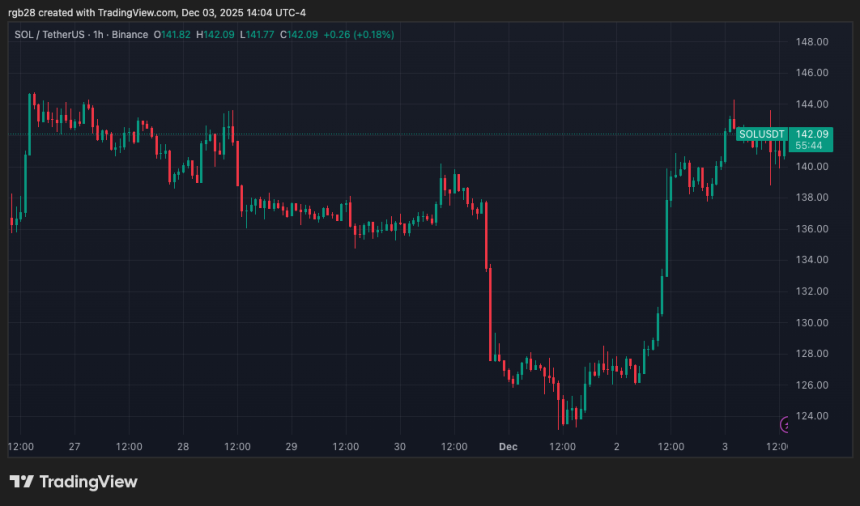
Solana is attempting to turn the $140 area into support while nearing a key local resistance for the third time in a month. The cryptocurrency has been trading between the $120-$144 levels since mid-November, struggling to hold the high zone of its local range amid the recent market volatility.

Last week, it bounced 10% toward the $140-$144 area but plunged to the range lows after Sunday’s correction, hitting a one-week low of $123 on Monday. As a result, it tested an ascending trendline that has served as support since 2023.

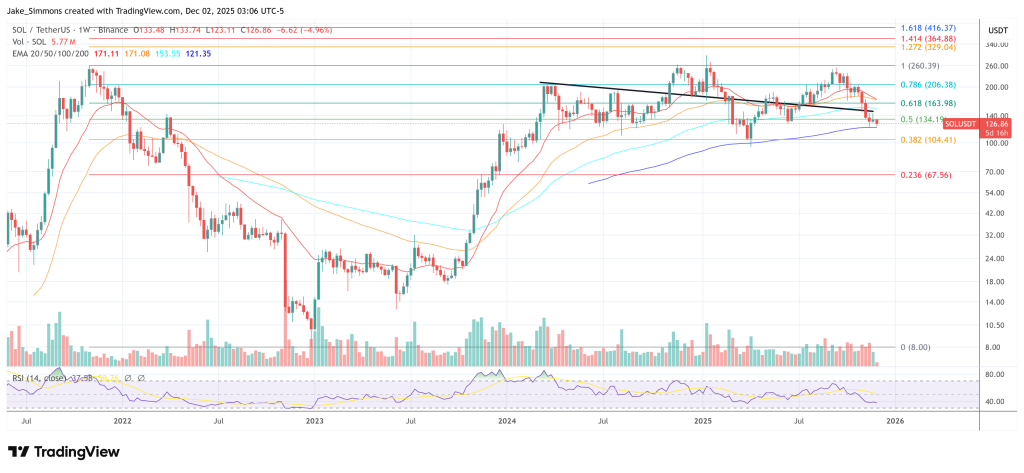
Ali Martinez explained that during the pullbacks, SOL has retested this key support trendline. Notably, each time the cryptocurrency has tapped this trendline, it has registered strong rebounds in the following months, suggesting that the price could rally more than 80% in the mid-term if this support holds.

Following Tuesday’s market rebound, SOL climbed back to the range’s highs, attempting to break above the local range once more. Market observer More Crypto Online affirmed that Wednesday’s rejection from $144 was expected, as it has been a strong resistance for weeks.

The trader considers that investors should not worry as long as the mid-zone of its range, between the $134-$139 levels, holds as support. “It’s not really a breakdown yet; we just have a first sharp pullback,” he affirmed, emphasizing that there’s no evidence that bears are taking the lead.

He noted that breaking below the mid-zone of its range would open the door to a retest of the recent lows and potentially risk a drop to the $117 area or lower. Nonetheless, if bulls take the lead and reclaim the $144 level as support, it will open the door to a retest of higher levels, including the $163 level, where the major next sell wall for SOL is situated.

Is SOL’s Crucial Support Weakening?

Meanwhile, Rekt Capital shared an analysis on longer timeframes, pointing out that Solana has been moving within a clear macro range, situated between the $123 and $296 levels, in the monthly timeframe, clustering in this area since early 2024.

Per the analyst, the cluster has been developing for an extended period, and the potential for distribution and its function as a re-accumulation structure decreases the longer it continues.

Despite this, he emphasized that the focus is on the 21-month horizontal support level. As the analysis noted, Solana recorded a 140% rally during the first major rebound from the region in Q3 and Q4, 2024.

In the second rebound from this support, which started in Q3 2025, SOL saw a significantly smaller rally, surging around 100% to its September local high. Now, the cryptocurrency is rebounding from this level, which could confirm a decreasing trend for the altcoin and raise the alarm about its strength.

“While it is positive to see this rebound, if the move turns into a weaker rebound than the previous ones, then questions will arise regarding the strength of this support,” Rekt Capital asserted.

To prevent this, Solana must breach the one-year downtrend or the multi-week downtrend on the weekly timeframe. “Failing to break either of these trendlines would produce a smaller rally because the prior rebound — the one that rallied around 100% — would fall short and reject from these downtrends instead.”

The analyst concluded that a sequence of progressively smaller bounces “would imply increasing weakness into that support, which in turn would favour the potential for distribution in Solana over time.”

Solana, SOL, SOLUSDT

Solana Treasury Companies Mark New Lows In Ongoing Downtrend – What This Means For SOL’s Price

In a significant development, the bearish action of the Solana price is currently spilling into the SOL-backed Treasury reserves. A recent report shows that corporate treasury companies are experiencing a sharp decline in their SOL holdings in the shadow of broader market unease.

Corporate Solana Reserves Continue To Bleed

Solana is experiencing a notable development that is capable of shaping its next market direction. Ted Pillows, a market expert and investor, shared on the X platform that the corporate treasuries of Solana are sinking further as the price of SOL struggles to regain upward traction.

According to the expert, SOL treasury companies are making new lows that echo through the on-chain corridors of the network. This implied that the wallets previously renowned for their steady accumulation are now showing diminishing conviction as balances discreetly shrink in the current bearish market phase.

The trend shows how institutional Solana holders are adjusting in the face of tightened liquidity and increased volatility, but it’s not a sudden exodus. Rather, it may be a steady, calculated exhalation.

Solana

Pillows highlighted that this drop to new lows is a major reason why the price of SOL has been performing badly, as buying demand has faded among institutional investors. Until these companies recover, the expert is confident that a recovery in SOL will be difficult.

However, Solana has started throwing up a quiet flare, one that heralds a recovery. After examining the altcoin’s price action on the weekly time frame, Ali Martinez, a crypto analyst and trader, revealed that SOL is flashing a bullish signal that points to a potential upward move. 

Martinez’s analysis hinges on the key Tom DeMark (TD) Sequential indicator. Since March 2023, the TD Sequential has proven to be very accurate when it comes to identifying SOL trend shifts on the weekly chart. During the ongoing bearish wave, the indicator is flashing a buy signal, suggesting that Solana is likely gearing up for a bounce.

SOL Activity Is On The Rise

Despite Solan’s price facing volatility, the leading network continues to wax strong as activity grows. In a post on X, Solana Daily disclosed that the network’s x402 activity is accelerating at a pace that feels more like an explosion this week. Currently, transactions are broadening, participation is expanding, and on-chain discussion is rising in the community.

The platform highlighted that the daily transaction volume on the protocol reached a new all-time high with approximately $380,000 processed on November 30 alone. This move to a new peak represents a 750% Week-over-Week (WoW) surge.

Furthermore, Solana has flipped the chart in dollar volume for the first time since its inception. With x402 transactions reaching new highs and a flip in dollar volume, the network is emerging as the most active in the cohort.

Solana

Kalshi Picks Solana To Ignite Tokenized Event Trading

Kalshi has switched on tokenized versions of its event contracts on Solana, making its first explicit play to court the same crypto-native traders who have funneled billions of dollars into rival prediction platform Polymarket.

Instead of holding positions solely as traditional off-chain contracts on Kalshi’s regulated venue, users can now buy and sell tokenized representations of those wagers on Solana. The economic exposure is identical, but the wrapper is crypto-native: the bet becomes a transferable token on a public blockchain.

Solana Lands Kalshi’s First Fully Tokenized Event Markets

“The tokenized versions of the contracts work the same way as the regular ones found previously on Kalshi’s platform,” the company told CNBC. The key difference is market structure. By trading the tokens rather than the contracts themselves, users can operate with greater pseudonymity and more flexibility in how they custody and move positions, putting Kalshi “on par with Polymarket, which allows users to trade directly on-chain.”

Support for these tokenized wagers is already live on Solana. Decentralized finance protocols DFlow and Jupiter are onboarding as institutional conduits, effectively bridging Kalshi’s off-chain orderbook into Solana’s liquidity. That link is designed to let crypto-native traders discover, route and size positions through the DeFi stack while Kalshi continues to run its core matching and settlement infrastructure in a regulated environment.

The timing coincides with a sharp upswing in prediction market activity. Combined trading volume in prediction markets reached almost $28 billion through October 2025, with a weekly record of $2.3 billion in the week of October 20, according to data cited from Crypto.com’s research arm. Kalshi’s thesis is that the next leg of growth will be driven by the digital asset market, which it pegs at roughly $3 trillion and heavily populated by traders already comfortable with on-chain risk.

“There’s a lot of power users in crypto,” said John Wang, Kalshi’s head of crypto. “This is about tapping into the billions of dollars of liquidity that crypto has, and then also enabling developers to build third party front ends that utilize Kalshi’s liquidity.”

Founded in 2018, Kalshi was the first exchange to roll out federally regulated event contracts on US congressional races for American traders in late 2024, following a years-long legal battle with the Commodity Futures Trading Commission. Since then, it has expanded to roughly 3,500 markets, raised more than $300 million at a $5 billion valuation, and grown its footprint to over 140 countries, according to the company.

That regulatory and capital advantage is being tested as Polymarket moves to relaunch in the US and other competitors scale. Kalshi’s leadership is effectively betting that deeper liquidity is the decisive differentiator — and that crypto traders are the marginal source of that liquidity.

Digital asset holders tend to trade prediction markets at higher volumes than non-crypto users, Wang said, arguing that their funds can meaningfully thicken orderbooks and sharpen pricing across Kalshi’s markets. “If you have a market with no liquidity, then you don’t really have a market,” he said. “People can’t really trade size or get the prices that they want.”

At press time, Solana (SOL) traded at $126.86.

Solana price

Ripple Exec Sounds Warning: XRP Must Learn This From Solana Or Risk Damage

XRP and Solana share the opening line of a direct industry alert from a senior Ripple executive who argues that technical maturity alone will not guarantee XRP’s relevance in the next competitive cycle. He points to Solana’s execution style as a benchmark that XRP must study and internalize to stay competitive, drive innovation, and avoid strategic setbacks.

Solana’s Edge And The Core Lessons For Ripple

Luke Judges draws on his experience in the Solana ecosystem to highlight operational lessons for XRP. Before joining Ripple, he built two startups on Solana and ran a validator managing over $30 million in staked tokens. He personally navigated the network’s full market swings from its peak near $200 to a collapse below $10 and its eventual recovery—gaining insights into infrastructure demands, validator economics, and developer dynamics that go beyond theory.

According to Judges, Solana’s growth reflects a combination of speed, practical engineering decisions, and developer-friendly onboarding. He acknowledges Solana’s weaknesses, including a falling validator count that could raise decentralization concerns, but emphasizes that these do not negate the network’s operational strengths. High transaction throughput and pragmatic design choices, he notes, continue to attract builders and support adoption, demonstrating that efficiency and practical execution can drive results even when a system is imperfect.

Judges link these observations directly to XRP’s path forward. He suggests that overlooking the strengths of competing networks creates blind spots that hinder ecosystem development. Studying Solana’s approach can help the network refine its operations, accelerate development cycles, improve tooling for builders, and align technical decisions with real-world usage patterns. These, he indicates, are essential steps for XRP to maintain competitiveness in a fast-evolving layer-1 landscape.

XRP’s Strategic And Competitive Focus

Ripple’s internal roadmap already includes critical enhancements—smart contracts, native staking primitives, and the AlphaNet rollout for XRP Ledger Smart Contracts. However, Judges’ comments signal that technical capability without a sharpened go-to-market strategy is insufficient. He points to the Ethereum Foundation’s recent tightening of its GTM approach after losing market share to Solana as an example of the stakes involved.

To address these challenges, XRP’s competitive focus comes down to three main areas. First, the ecosystem must augment its programmability track with clearly packaged developer value propositions that demonstrate tangible differentiation. Second, validator economics require forward-looking structuring to avoid the attrition dynamics now visible in Solana’s network. Third, go-to-market alignment must accelerate, converting technology milestones into momentum-building enterprise and retail narratives.

Judges’ message ultimately operates as both caution and catalyst. He frames Solana’s strengths not as threats but as operational lessons, while its weaknesses provide a blueprint for pitfalls XRP should avoid. His message is clear: the blockchain space is shifting, and Ripple’s executive team signals that the window to capture the next market cycle demands adaptation, not insulation. The underlying mandate is to learn fast, move faster, and ensure XRP remains structurally relevant in the next phase of blockchain adoption.

XRP price chart from Tradingview.com

Solana Braces For A Dual-Test Setup – Here’s What Could Happen Next

Momentum on Solana is compressing as the chart approaches two pivotal decision points, making the coming days especially significant. With a deeper corrective target on the macro frame and a respected support zone in the mid-range, SOL is gearing up for a move that could shape its next major trend.

This Wave Completed As Solana Signals A Larger Pullback

Elliott Waves Academy has presented a fresh perspective on SOL, focusing on the weekly timeframe. According to the analysis, SOL appears to have completed its upward wave, identified as wave (1)/(A), within a broader bullish structure. This recent break below a key level reinforces the view that a deeper corrective phase may already be underway.

Based on the wave count and Fibonacci measurements, the correction is expected to extend toward the $49.26–$32.03 range, which aligns with the 50%–61.8% retracement levels. Should SOL reach this area, a clear corrective pattern paired with a strong bounce would help validate the broader bullish thesis and suggest that buyers are stepping back in with conviction. Price behavior within this zone will be critical in determining the next major swing.

Solana

If this scenario unfolds as anticipated, a decisive breakout above the key level that was previously broken will act as confirmation for renewed upside momentum. However, a violation of the $8.00 level would invalidate the bullish outlook entirely, signaling a much deeper structural shift.

SOL Coils For Impact As Price Compresses Into A Tightening Structure

According to a recent update from CryptoPulse, Solana is shaping up for what looks like a textbook technical setup. The current structure is tightening, showing reduced volatility and signaling that a decisive move may be approaching. With SOL consolidating, the chart is beginning to align with a major technical level.

The key zone highlighted is the $133 support level, an area that has previously acted as a reliable reaction point for buyers. Real partnerships, continuous development, and increasing on-chain activity are all reinforcing this technical zone with additional weight.

Given this confluence, the strategy becomes clearer: allow price to revisit the $133 region and observe how the market responds. If buyers step in aggressively, forming wicks, bullish engulfing candles, or strong volume spikes, it could signal that the level is holding once again. 

CryptoPulse emphasizes patience above all. Instead of chasing the market, let the chart come to you. When both fundamentals and technicals point to the same area, it often increases the probability of a strong follow-through. Acting on confirmation rather than prediction is the key to building a solid position in setups like this.

Solana

Solana price recovery cut short as Pump.fun’s $436M USDC outflow spooks investors

  • Pump.fun’s $436M USDC outflow fuels Solana investor caution.
  • Currently, SOL struggles near $121–$123 support amid death cross risks.
  • Technical setups, however, hint at $160 target, but momentum remains weak.

Solana price has struggled to sustain its recent recovery after a volatile week, as concerns over ecosystem stability and broader market pressures weighed on the cryptocurrency.

Despite technical signals that had hinted at a potential rebound, investor caution has surged following a massive USDC outflow from Pump.fun, Solana’s leading meme coin platform.

The unexpected move has cast a shadow over the network’s short-term outlook, challenging bulls and reigniting debate over whether Solana (SOL) can regain momentum in the current market environment.

Pump.fun outflow rattles the market

The spotlight has shifted squarely onto Pump.fun after on-chain data from Lookonchain revealed a substantial transfer of 436.5 million USDC to the Kraken crypto exchange.

This outflow, originating from mid-October, comes amid growing uncertainty over the platform’s financial strategy and public silence.

Notably, investor confidence has visibly waned, with the PUMP token falling more than 22% over the past week, and the USDC movement has been interpreted as a potential cash-out, adding downward pressure on Solana’s broader ecosystem.

Furthermore, the USDC outflow is not an isolated event.

The same Lookonchain report indicates that Pump.fun also offloaded a large portion of Solana (SOL) holdings in recent months, including 3.93 million SOL moved to Kraken and 264,373 SOL sold on-chain.

These actions, combined with declining activity on the platform’s Mayhem Mode, signal reduced engagement, which could translate into lower network fee revenue for Solana and dampened investor sentiment.

The sharp decline in new tokens created under Mayhem Mode, from over 1,400 to fewer than 20 on November 21, according to data from the Dune platform, further illustrates the erosion of user participation.

Mayhem Tokens Created
Source: Dune

This wave of uncertainty arrives as Solana navigates a broader market landscape marked by extreme fear, with the crypto Fear & Greed Index registering 12/100.

On-chain volume data shows that while SOL remains active, liquidity pressures and ecosystem jitters are weighing heavily on the short-term outlook.

Solana price recovery prospects

Earlier, technical analysts had pointed to a potential rebound in Solana’s price.

They noted that SOL reclaimed its 4-hour trend line, signalling momentum recovery ahead of other major assets.

Trader Cobb highlighted a breakout above short-term resistance levels near $143–$145, while GTradeCrypto identified a breakout from a symmetrical triangle and a possible incoming inverse head and shoulders breakout.

$SOL 1H:
Broke $130 resistance.
Broke EMA Ribbon.

Now ready to break the wedge and inverse H&S.

$140 next.

Solana https://t.co/9ekxVui0uL pic.twitter.com/nan6tp6CuQ

— Da' G (@GtradeCrypto) November 23, 2025

This pattern pointed to a measured move toward $160, raising hopes of a more sustained recovery.

But despite these bullish indicators, SOL remains confined within a descending channel that has dictated price action since mid-September.

SOL/USDT 4H$SOL is still camped at the channel bottom. With top & bottom trendlines converging, volatility is compressing — energy is building for a one-sided move.
A clean reclaim above Demand Zone 3 sets up a run toward Demand Zone 2 / upper TL;
failure to hold → fresh leg… pic.twitter.com/cF4uDKB4VH

— CryptoKoon (@Cryptokoon_) November 24, 2025

The formation of a death cross on the daily chart, with the 50-day moving average crossing below the 200-day moving average, has added caution to the technical outlook.

Death cross formation on the Solana daily chart
Solana price analysis | Source: CoinMarketCap

While recent candlesticks display long lower wicks, indicating aggressive buying at support levels between $121–$123, the market has yet to demonstrate sustained momentum.

A close above $144–$146 would be needed to validate early strength, with a breach of $172 signalling a meaningful trend shift.

Meanwhile, the broader technical structure hints at a potential cup-and-handle formation, with the weekly price range between $128–$180 remaining intact.

On-chain volume supporting the network’s activity suggests that underlying demand persists despite near-term volatility.

The post Solana price recovery cut short as Pump.fun’s $436M USDC outflow spooks investors appeared first on CoinJournal.

SOL price ticks higher as Solana teases a big announcement loading

  • SOL price rises 2.3% as Solana teases a major announcement, sparking community speculation.
  • Institutional ETF inflows and staking incentives boost SOL’s short-term momentum.
  • Solana’s Alpenglow upgrade, currently in the testing phase, aims to improve network speed, efficiency, and adoption potential.

The SOL price has bounced back as Solana fuels excitement with a cryptic teaser hinting at a major upcoming announcement.

The teaser comes at a time when the cryptocurrency market is navigating volatility, and Solana’s price has not been spared as major coins drop.

Solana’s cryptic message

Solana’s official X account has dropped a brief but compelling teaser, simply stating, “Something big is coming.”

The understated message has triggered waves of speculation across social media, with analysts and enthusiasts debating the potential significance of the announcement.

Historical patterns suggest that major updates from leading blockchain networks often impact token performance, and this Solana tease appears designed to generate maximum attention.

Investors are particularly intrigued by the timing, seeing that Solana ranks among the top layer-1 blockchain networks, known for high-speed transactions and low fees, and it has been steadily expanding with DeFi and NFT projects.

Any new development from Solana could strengthen its network capabilities and enhance adoption, making this announcement even more significant.

SOL price rebounds

Following the cryptic message, SOL price has climbed 2.3% to $139.77 at press time, outperforming the broader cryptocurrency market, which has fallen by 0.2% today.

Besides the cryptic teaser, this uptick can also be attributed to a combination of institutional demand and staking-related incentives.

Solana-based ETFs have experienced a total of $265 million in inflows over the past ten days, highlighting institutional confidence as traders rotated capital from Bitcoin (BTC) and Ethereum (ETH) products into Solana (SOL).

Total Solana Spot ETF Net Inflow
Total Solana Spot ETF Net Inflow | Source: Coinglass

The Grayscale Solana Trust ETF (GSOL) has also staked its holdings through institutional validators, offering investors an appealing yield of around 7%, further bolstering confidence in Solana’s ecosystem.

Technical indicators reinforce this bullish momentum with the Relative Strength Index (RSI) rebounding to 35.92 from an oversold region that seems to have encouraged tactical buying.

The altcoin’s price has also rebounded above the 7-day simple moving average at $138.42, suggesting short-term support, though resistance remains at the 30-day SMA of $168.2.

Solana price analysis
Solana price analysis | Source: TradingView

While the rebound is positive, sustained momentum will be necessary for SOL to break higher and maintain its gains.

Solana ecosystem upgrades and long-term optimism

Beyond short-term market movements, Solana is pursuing technological improvements that may shape long-term investor sentiment.

The Alpenglow network upgrade, currently in its test phase, aims to reduce transaction finality to 150 milliseconds, enhancing efficiency and scalability.

These improvements address historical congestion issues and strengthen Solana’s position among high-speed, low-cost blockchains.

Combined with staking opportunities through ETFs like GSOL, these upgrades could attract both developers and yield-focused investors, potentially increasing network adoption and overall ecosystem growth.

As the speculation builds, the combination of institutional support, technical rebounds, and staking-driven incentives is contributing to a cautiously optimistic outlook.

The post SOL price ticks higher as Solana teases a big announcement loading appeared first on CoinJournal.

SOL dips below $140 as market sentiment remains bearish

Key takeaways

  • Solana is down by less than 1% and is currently trading below $140.
  • Canary Capital and Fidelity announced the launch of their spot Solana ETFs SOLC and FSOL on Tuesday.

SOL down 1% despite positive fundamentals

SOL, the native coin of the Solana blockchain, is down by less than 1% in the last 24 hours and is currently trading below $140. This bearish performance comes despite Canary Capital and Fidelity announcing the launch of their spot Solana Exchange Traded Funds (ETFs), SOLC and FSOL, on Tuesday.

BREAKING: @Fidelity, one of the world’s largest asset managers with $6.4 Trillion AUM, launches Solana ETF on @NYSE: FSOL 🔥 pic.twitter.com/m9DhhOlfUt

— Solana (@solana) November 18, 2025

The news boosted market sentiment amid growing institutional investors. However, it didn’t translate into a positive rally for SOL, as the coin continues to eye the weekly support level around $128. 

Fidelity became the fourth asset manager to launch an SOL ETF and also added a staking feature to the fund. This latest development indicates growing institutional interest in Solana-based investment products, which could become a bullish outlook for SOL in the long term. 

SOL could retest the $128 low as bearish momentum persists

The SOL/USD daily chart is bearish and efficient as Solana has underperformed over the past few days. SOL faced rejection at the daily level of $168.79 last week and has lost over 22% of its value since then. At press time, SOL is trading above $136 per coin after hitting the $144 level on Tuesday. 

SOL/USD Daily Chart

If the current support level at $128.68 continues to hold, SOL could extend the recovery toward the next major resistance and TLQ level at $160. The RSI on the daily chart currently stands at 34, indicating that the bearish trend remains strong.

However, if SOL’s daily candle closes below $128.68 over the next few hours, the coin could extend its decline toward the next daily support at $118. Currently, the trend and order flow are negative, indicating that sellers are in control.

The post SOL dips below $140 as market sentiment remains bearish appeared first on CoinJournal.

Solana price bounces off $129 lows but is SOL out of the woods?

  • Solana price dropped to lows of $129, falling as Bitcoin and Ethereum dipped below key levels.
  • Bulls have shown a slight bounce with SOL above $136.
  • If bears take further control, the altcoin could dip to lows of $100.

Solana (SOL) was trading in the red, down 3% in the last 24 hours.

However, the altcoin has staged a tentative recovery, with bulls climbing back above $136 after dipping to intraday lows of $129.

Prices are down 17% in the past week and 26% from SOL’s three-month high.

Nonetheless, trading volume has surged to over $9.1 billion, up 76% in 24 hours and signaling heightened investor activity.

Amid broader market jitters, Bitcoin’s price has slipped to $90,000, and Ethereum touched lows of $2,940.

So, does Solana’s rebound signal a slowdown of bearish pressure, or are bears regrouping for a fresh attack?

Solana price – negative but SOL back above $130

The sharp descent that preceded Solana’s slight recovery comes as crypto suffers further price vulnerability.

SOL plumbed depths of $129 on November 17, marking its lowest level since April 2025.

On major exchanges like Binance and Coinbase, the plunge wiped out most recent gains as bears extended losses and looked poised to revisit levels seen earlier in the year.

Cascading liquidations have seen rekt positions cross the $1 billion mark across the crypto sector in the past 24 hours.

It all points to selling that has bulls pegged in negative territory. Yet, analysts see a potential bounce.

What’s next for SOL?

The technical picture on Solana’s daily chart paints a cautiously optimistic yet precarious outlook.

SOL price teeters between a markedly bearish structure and hints of bullish divergence. 

Notably, Solana’s token currently trades below the key moving averages of the 50-day and the 200-day.

Bears are showing downtrend control with a potential death cross pattern.

However, this is only hinted at on the daily chart, and despite strong sell signals across multiple oscillators, including RSI and MACD indicators, bulls might have a chance to invalidate the picture.

“SOL putting in quite the reversal relative to its $BTC pair. And it’s not the only coin,” Daan Crypto Trades said on X.

$SOL Putting in quite the reversal relative to its $BTC pair.

And it's not the only coin.

Good to watch here. pic.twitter.com/I5rrbT8uAF

— Daan Crypto Trades (@DaanCrypto) November 18, 2025

A decisive hold above the $130 level could allow buyers to target the $145-150 demand zone.

Previous consolidations in the region have helped bulls advance toward $160-180.

The token is now consolidating and trading below $140 and the 100-hourly SMA, facing immediate resistance at $136, where a bearish trend line also sits.

A move above $142 could open the door to a recovery toward $150 and $155.

However, failure to clear $140 risks renewed downside, with support at $130 and $128.

A break below $128 may push SOL toward $120 or even $108.

In the short term, the main support area in case of a fresh decline could allow sellers to target $100.

Long-term, Solana’s outlook remains largely bullish. ETF momentum, network upgrades, and regulatory shifts all provide a major confluence for bulls.


The post Solana price bounces off $129 lows but is SOL out of the woods? appeared first on CoinJournal.

SOL could dip below $120 as ETF inflows and sentiment weaken

Key takeaways

  • Solana is down 10% in the last 24 hours and is now trading below $140.
  • The coin could dip further as the market sentiment weakens.

Market sentiment weakens as cryptos suffer huge losses.

SOL, the sixth-largest cryptocurrency by market cap, has lost 13% of its value this week, making it the third consecutive week of recording losses. The bearish performance comes despite the two-week-old Solana spot Exchange Traded Funds (ETFs) in the US recording the lowest net inflows ever, suggesting softer institutional demand. According to Sosovalue, the US Solana spot ETFs logged $1.49 million net inflow on Thursday, mainly driven by the Bitwise Solana staking ETF. This was the lowest inflow since the inception of Solana ETFs, suggesting a decline in demand from institutional investors. 

In addition to that, CoinGlass data reveals that the SOL futures Open Interest (OI) is down 3.34% in the last 24 hours to $7.35 billion. This suggests that futures traders are either closing long positions or reducing leverage. 

In line with the current market conditions, the OI-weighted funding rate has shifted to a negative level of -0.0076% from near-neutral levels earlier in the day, indicating that traders are holding more short positions. If the current market conditions persist, the recovery would be a tough battle for bulls. 

Will Solana extend the decline to $120?

The SOL/USD daily chart remains bearish and efficient as Solana has underperformed in recent days. The coin is edging lower for the fourth consecutive day this week after breaking below the $150 psychological level a few hours ago. 

At press time, SOL is trading at $138 and is aiming for the $126 low from June 22. If SOL breaks below this low, it could test the $100 psychological support over the coming days or weeks. 

SOL/USD Daily Chart

The Relative Strength Index (RSI) dips to 36 on the same chart, oscillating towards the oversold zone, indicating selling pressure. The Moving Average Convergence Divergence (MACD) also failed to cross above the signal line, extending the downward trend.

However, if the technical indicators improve and SOL maintains its value above $126, it could record a slight recovery towards the $155 demand-turned-supply zone. The next resistance level at $175 could prove challenging in the near term.

The post SOL could dip below $120 as ETF inflows and sentiment weaken appeared first on CoinJournal.

❌