
 Login
LoginThe Healing Art: Military Veteran Portraits Highlight PTSD & Cannabis
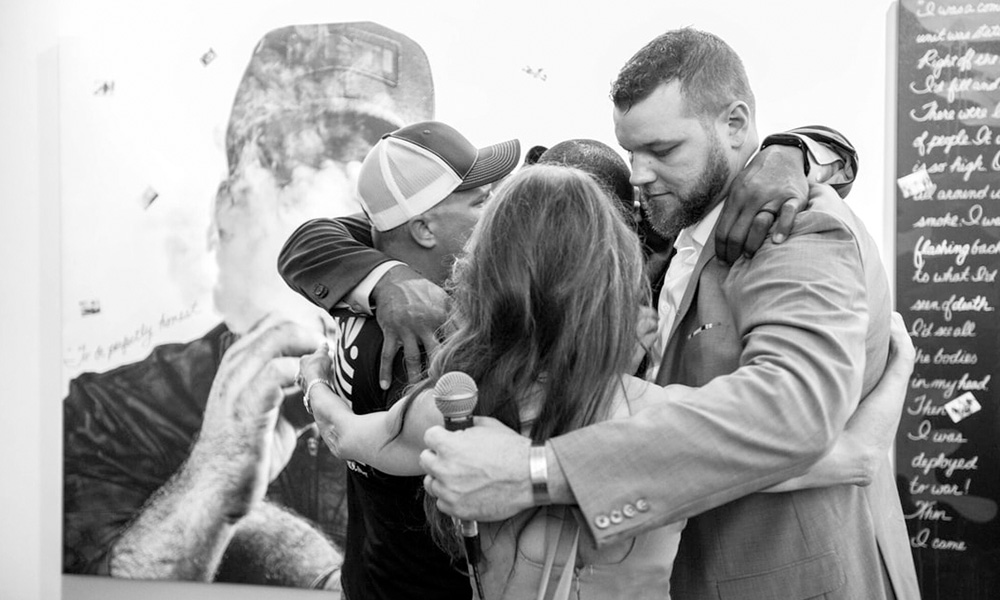
One of the worst nights of Susan Barron’s career came a few years ago, when the artist was in Manhattan to unveil her mixed-media art series, Depicting The Invisible. Military veteran portraits adorned with paint and text comprised the collection, which Barron designed to highlight veteran struggles with post-traumatic stress disorder (PTSD).
Just before the show, Barron’s phone rang. On the other end of the line was the mother of one of her photographic subjects. “She said he had succumbed to PTSD and taken his own life,” Barron says. “It was a gut punch.”
Nearly three million service members have deployed in support of the Global War on Terror since 2001. Of those who served in Iraq or Afghanistan, between 11 and 20 percent now suffer from PTSD. These glaring statistics have left an interminable trail of suicide victims in their wake—individuals, like Barron’s friend, who quietly endure the invisible wounds of combat, personal loss or sexual assault.
22 veterans per day. The suicide statistic has circulated extensively since such data first reached the public sphere. In 2020, the Department of Veterans Affairs reported 6,146 military vets died by suicide, an astonishing 17 per day. And while that number amounted to the lowest total since 2006, any semblance of empathy would suggest it stands at 6,146 too many.
It was learning about this epidemic that inspired Barron to create “Depicting The Invisible,” an exhibit that, since its launch, has occupied the hallowed halls of the National Veterans Memorial and Museum in Columbus, OH, and the Army and Navy Club in Washington, DC. among others.
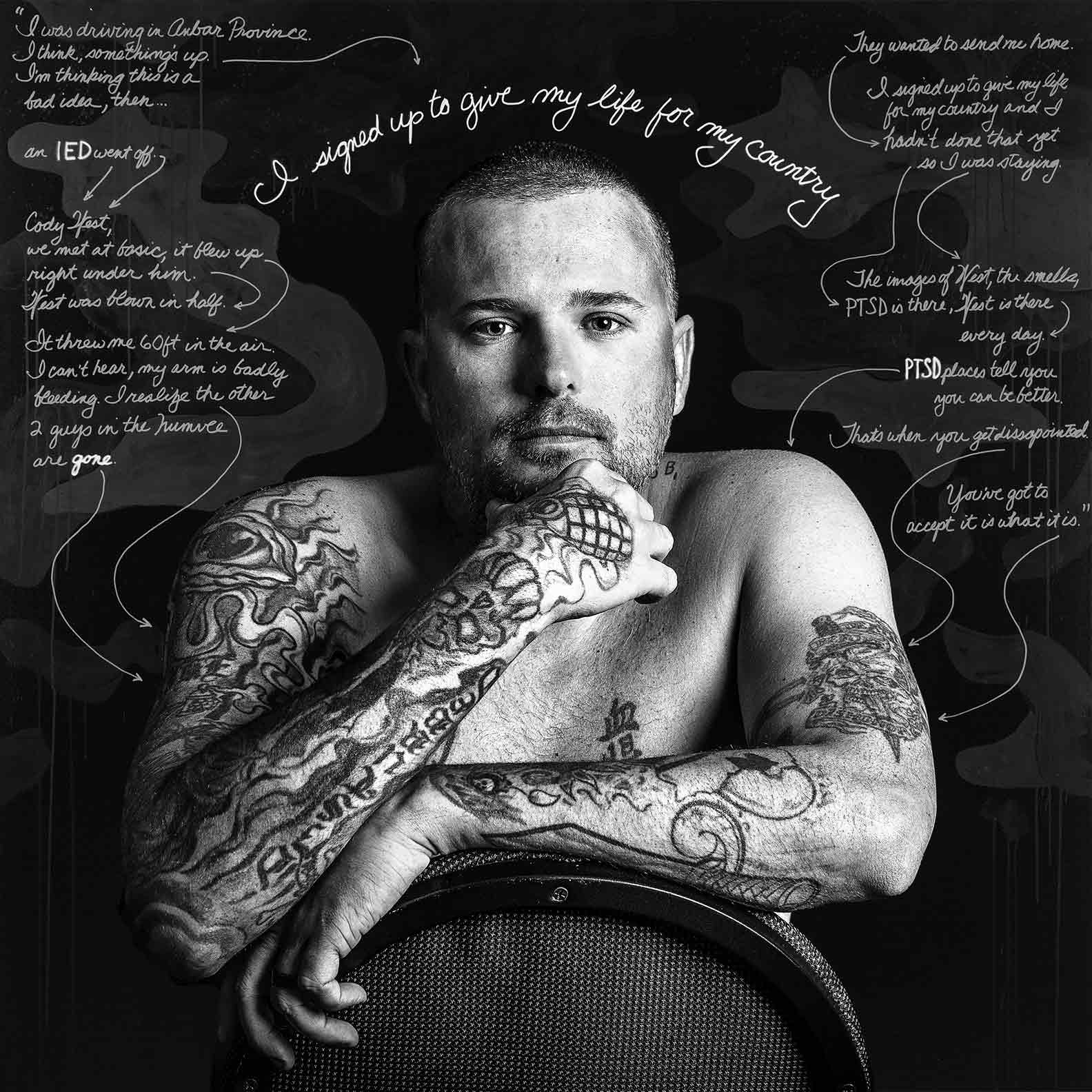
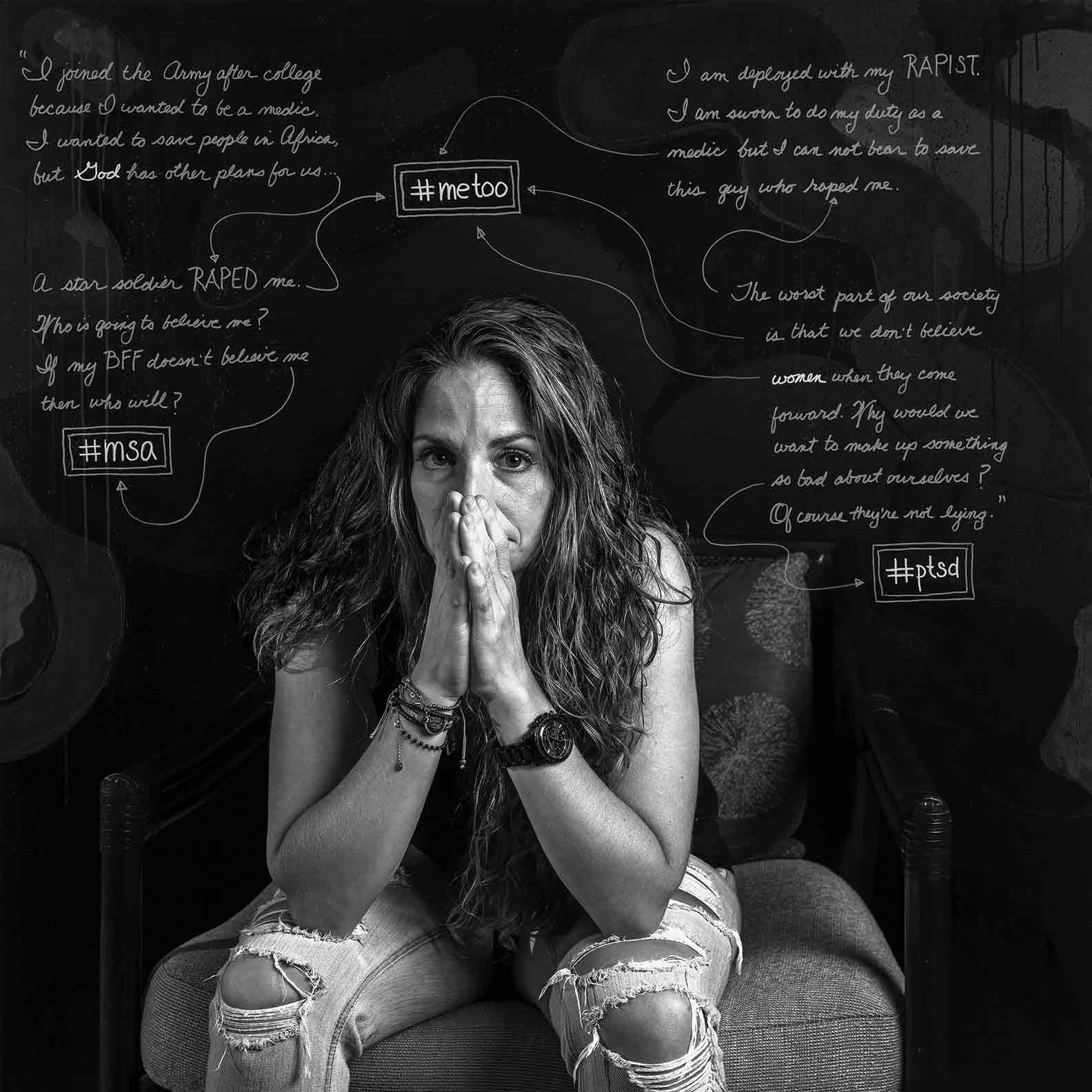
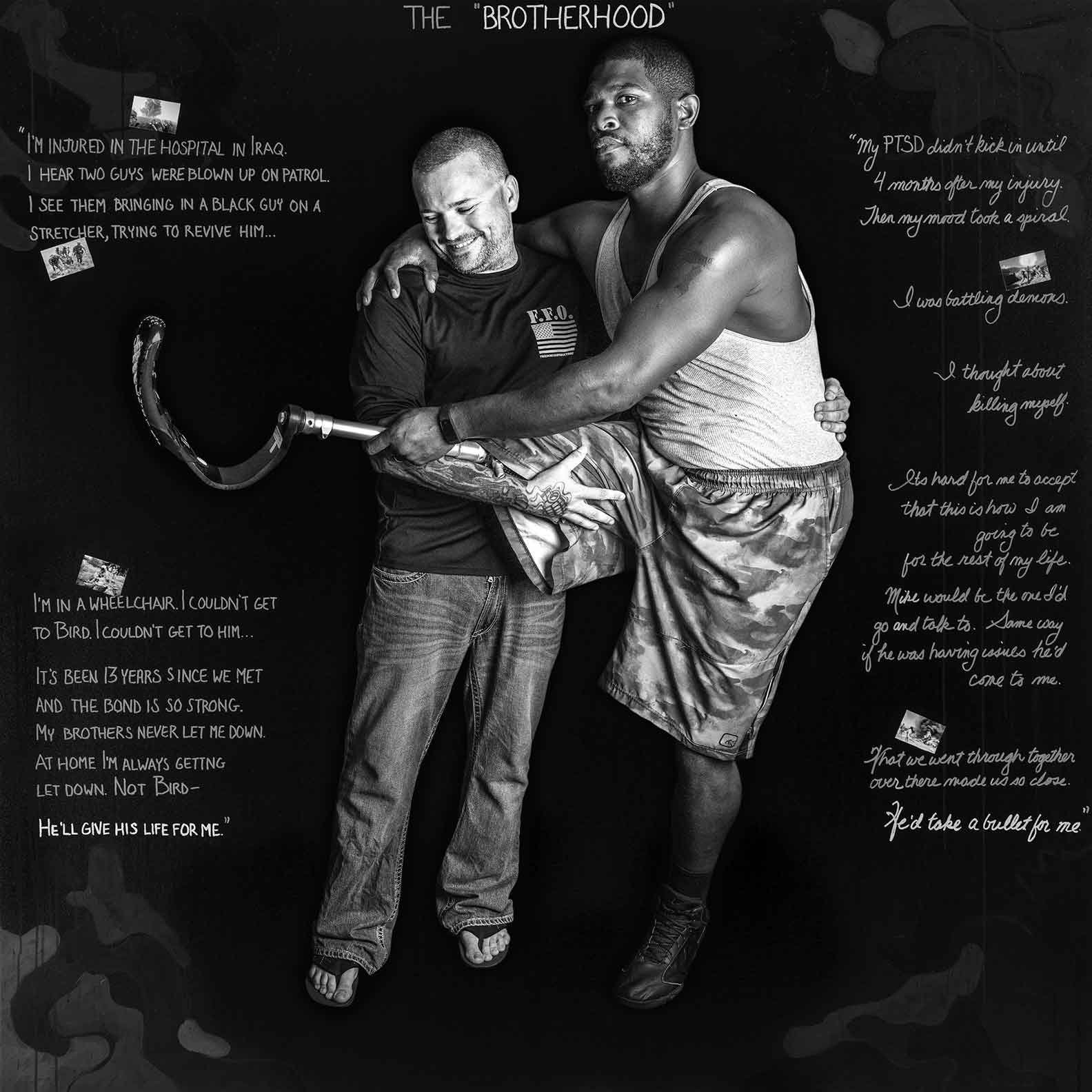
“I’m really grateful these very brave men and women shared their stories with me,” Barron says. “I wanted to shine a light on this epidemic of PTSD and suicide and help break down the stigma around issues of mental health. Every one of us needs to do whatever we can to help. As an artist, this is what I felt I could do.”
Barron’s photo series was shot using a classical black-and-white style that she says, “was intentionally in direct contrast to the brutality of their stories.”
“They’re heroic. They’re elegant,” Barron says.
The works also proved to be conversation starters, eventually becoming the subject of an NPR podcast and an award-winning short documentary of the same name.
“This project has had so many hands lift it up, and throughout all of it, I’ve been contacted by people I don’t even know telling me what a huge difference it made in their life or in their spouse’s life,” Barron says. “Sons, mothers, grandmothers—so many family members have been thankful for destigmatizing this, for honoring this as a wound of war and not a mental illness.”
Shattering stigmas has also opened the door to a more expansive network of PTSD treatment options for veterans, cannabis principal among them.
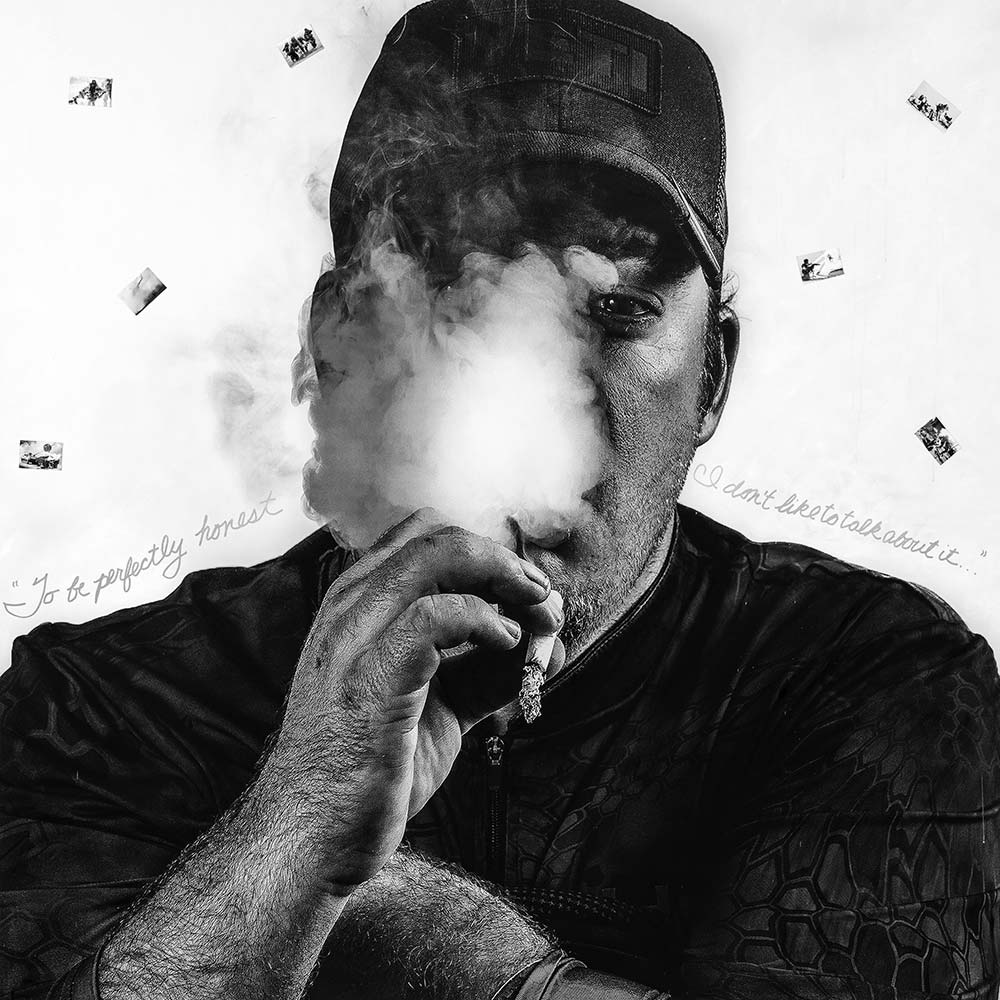
Ryan Cauley may not be one of Barron’s subjects, but his story, like the myriad of veterans enduring the trials of neurological trauma, is remarkably similar. Originally from Pendleton, Indiana, Cauley joined the Army in 2004 and served as a cavalry scout until 2007 with the service’s 1st Squadron, 32nd Cavalry Regiment, 101st Airborne Division.
Life after the service proved difficult. Post-traumatic stress impacted Cauley’s ability to connect. Depression and anxiety became a viciously cyclical norm. His attitude and behavior soured, and in turn, his marriage and personal relationships eroded.
Months of anger management and cognitive behavioral therapy helped Cauley understand how to manage the condition, but it wasn’t until his 2016 foray into medical cannabis—and subsequent launch of the cannabis and PTSD advocacy company Combat Cultivators—that he’d experience a real transformation.
“I had to convince my wife about using cannabis, but almost instantly, she was able to see the change in my attitude,” Cauley says. “I was able to give more love and be more compassionate. I could focus on tasks and not be consumed by negative thoughts.”
Noticeable attitude changes eventually manifested a genuine interest in the industry, and in 2018, Cauley set out to complete his first grow. “I was such a baby,” he says, smiling at the memory. “I wanted to grow my own cannabis, because, at the time, prices were more expensive than they are now. Today, we grow our own because it’s better than anything in the dispensaries.”
Cauley’s infantile curiosity soon blossomed into a profession. He became a lead grower at a company in Michigan, learning the ins and outs of large-scale growth, environmental control and cloning. He even recruited his best friend from the Army, Carlos Ozuna, to work in the same role. Together, the duo launched the Combat Cultivators Instagram account to be a vehicle of contacting other veteran cannabis advocates struggling with PTSD.
And while the friends have since left the company, Cauley credits the knowledge the two accumulated there for the duo’s success with Combat Cultivators. More than that, however, has been the remarkable difference cannabis has made in Cauley’s personal life. “It’s given me so much of my life back,” he says. “That sense of doing something for a reason. It also gave Carlos and I the opportunity to work together again.”
The number of ways veterans are learning to confront PTSD is ever-expanding. For Barron and Cauley, using their respective platforms has injected life into a conversation about mental health that remained dormant for far too long.
The dreaded phone call Barron received that day in Manhattan is one that many of today’s veterans and military family members have endured ad nauseam. Every story is unique, but the excruciating pain of loss is undeniably similar. Preventing that from happening to anyone else, Barron says, is a calling we should all gravitate toward.
“That day was a personal low for me, but it ignited an even stronger drive to get these stories out there,” Barron says. “We all just really need to do more.”
This story was originally published in issue 47 of the print edition of Cannabis Now.
The post The Healing Art: Military Veteran Portraits Highlight PTSD & Cannabis appeared first on Cannabis Now.
