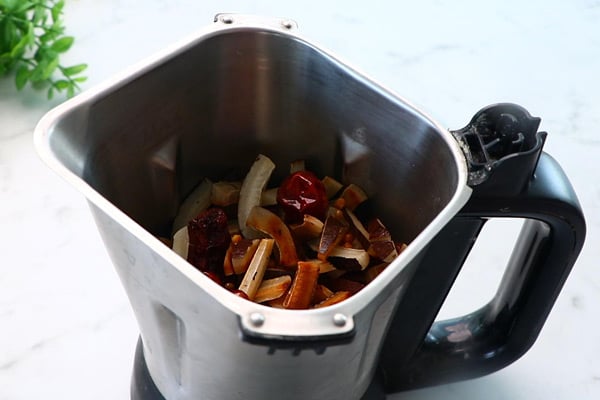
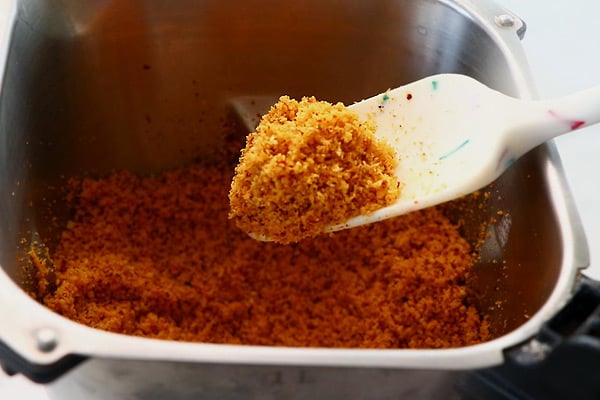
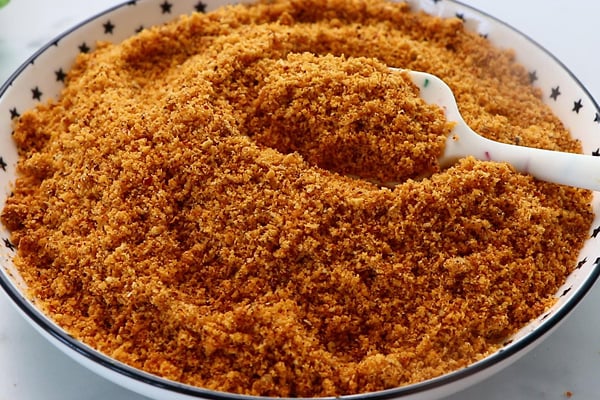
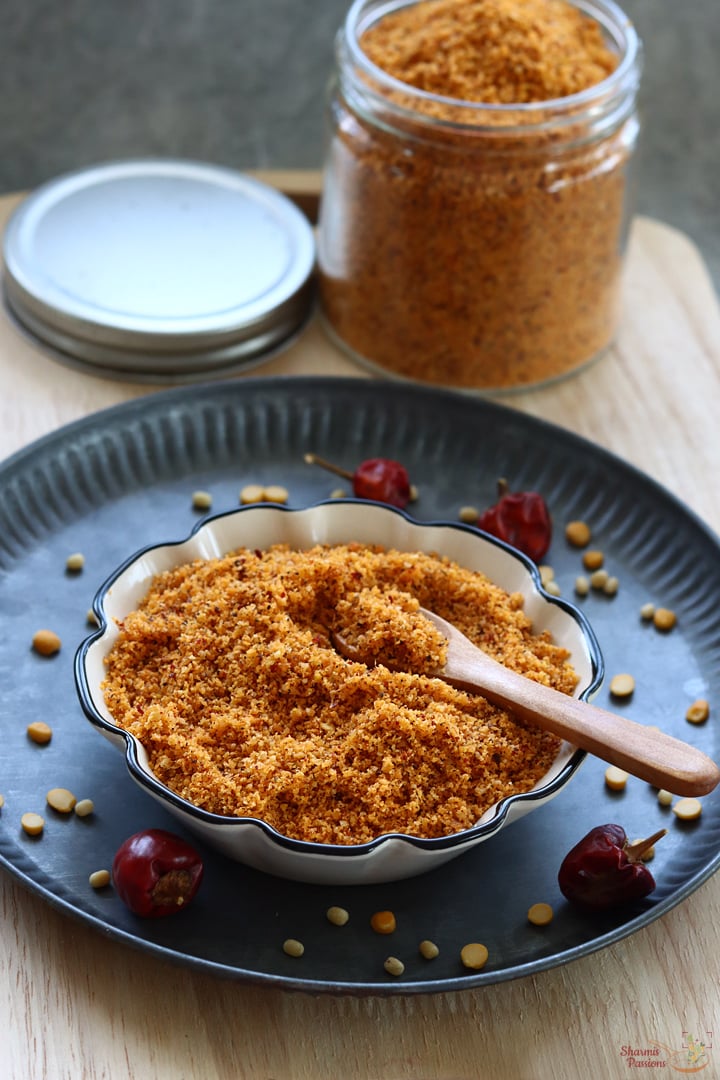
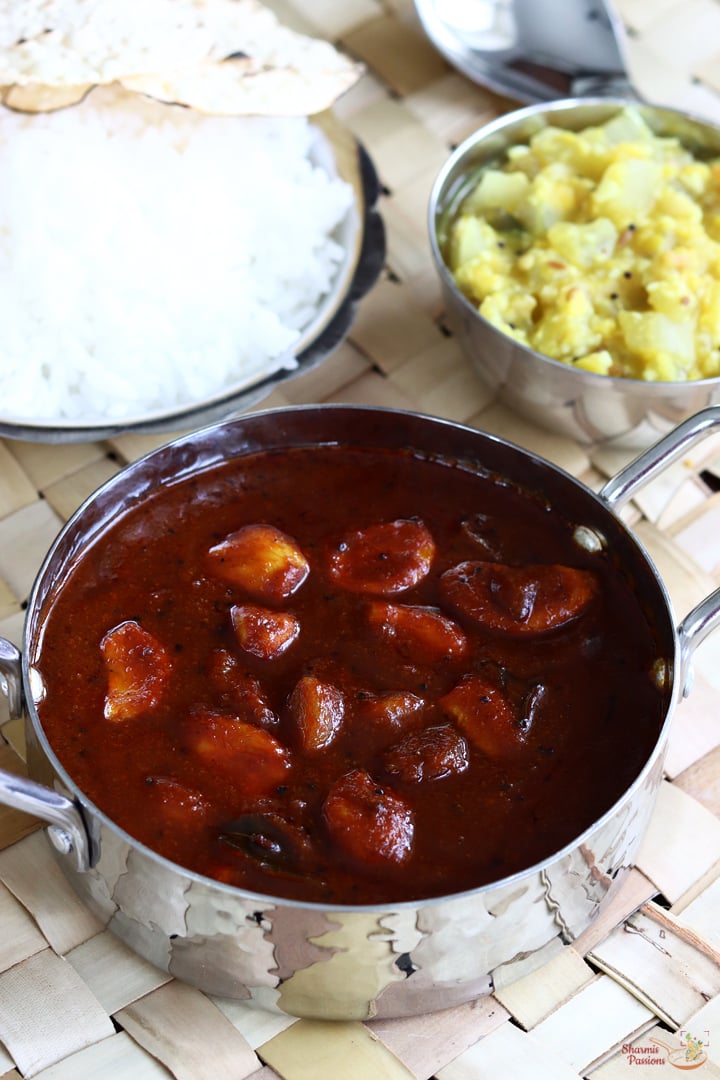
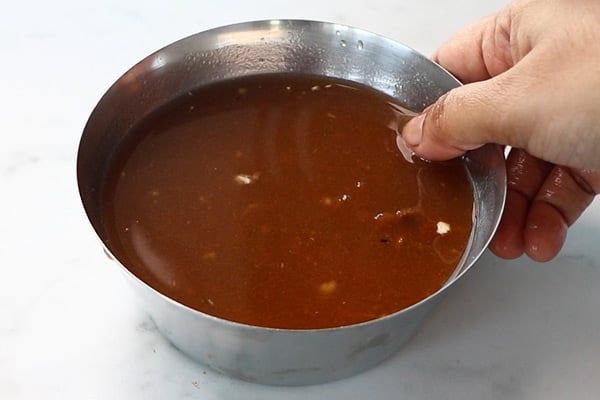
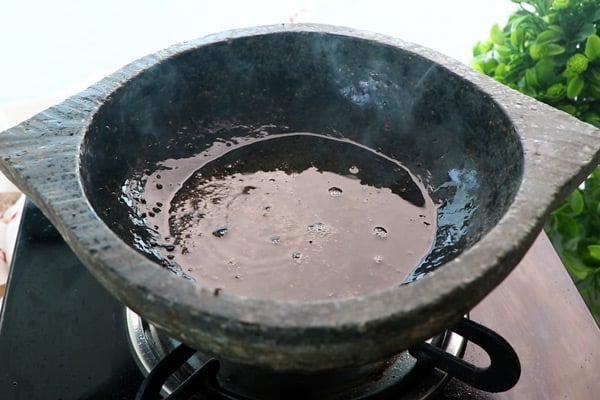
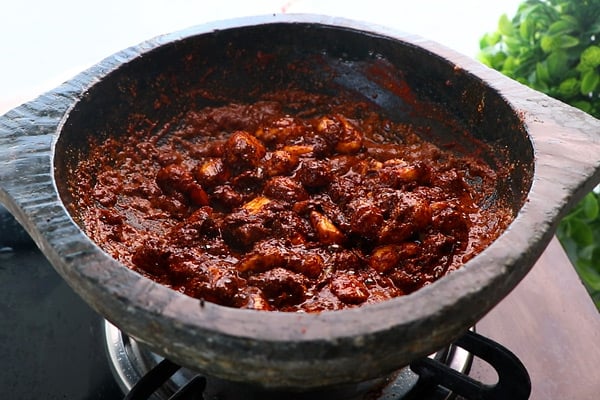
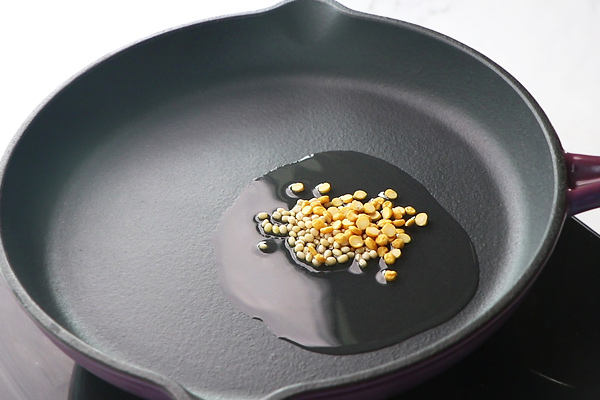
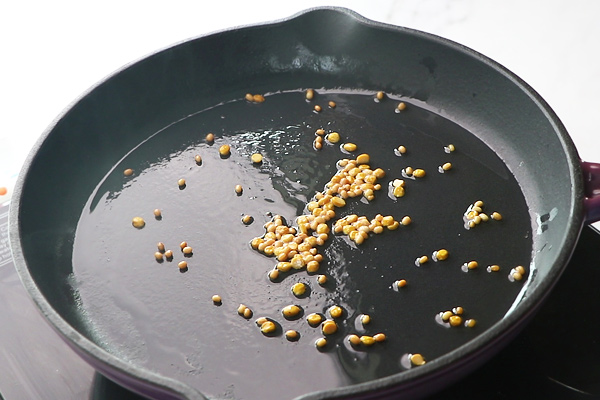
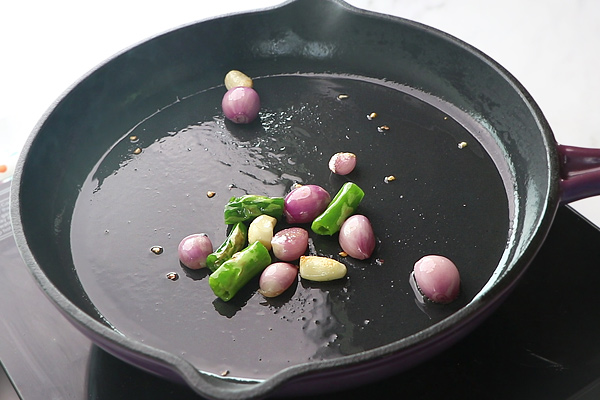
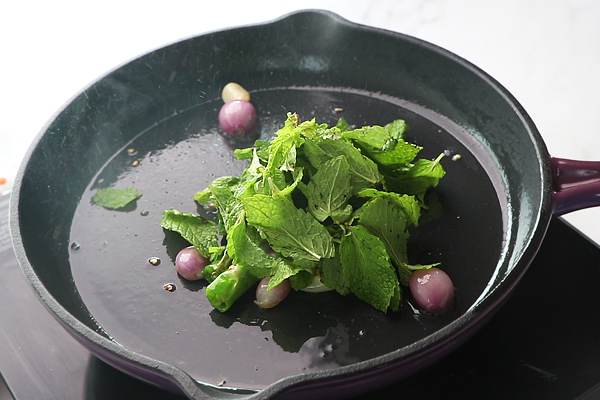
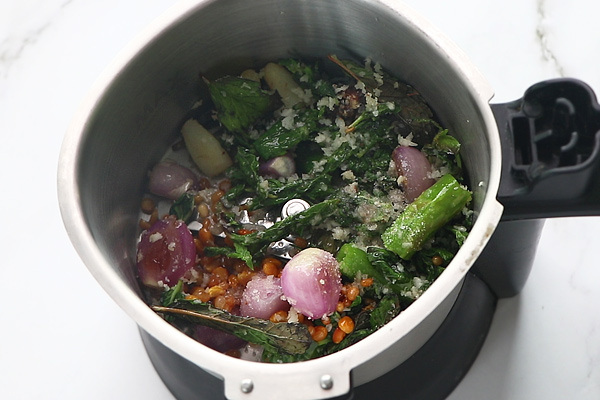
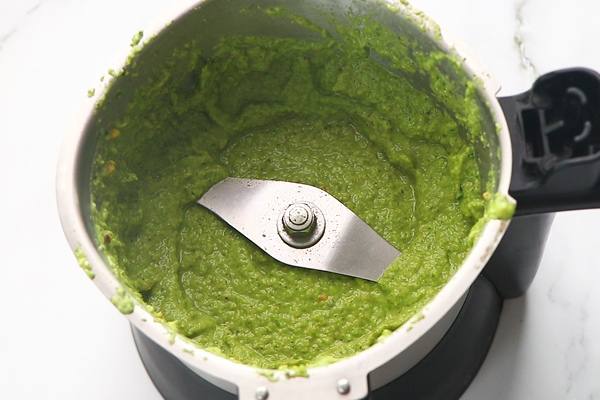
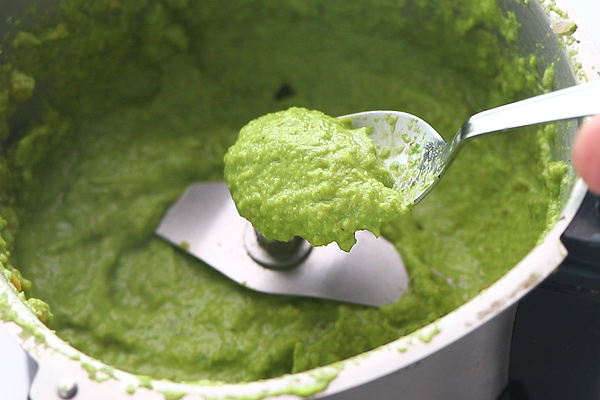
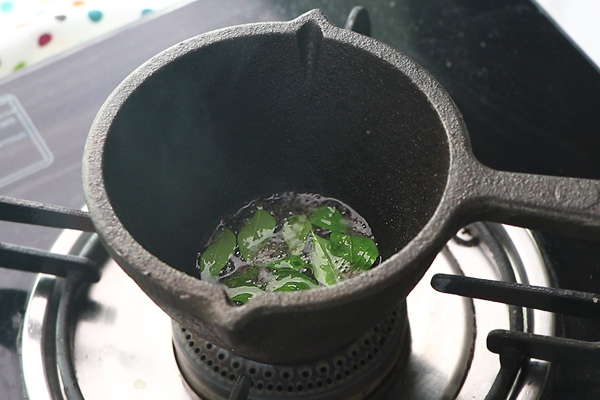
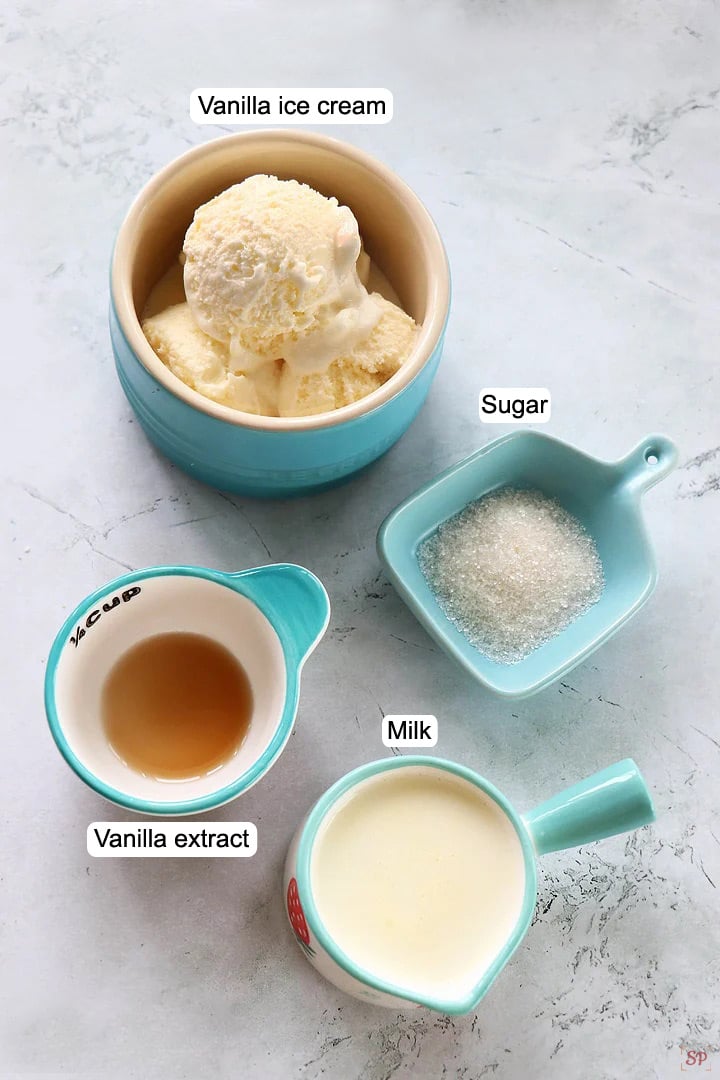
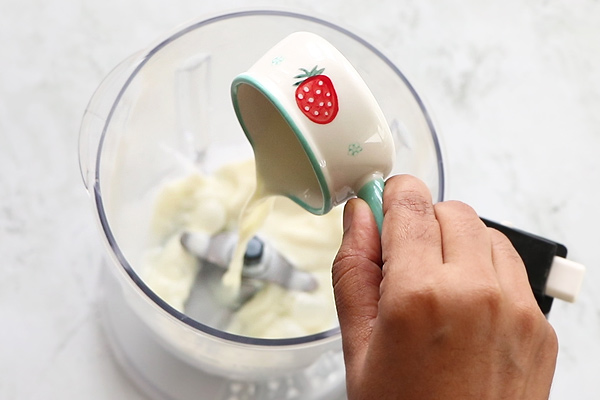
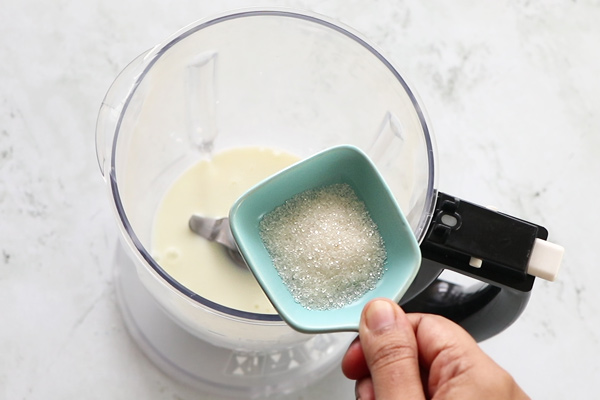
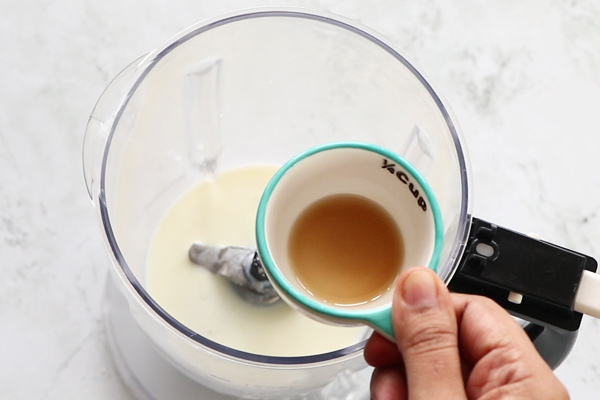
❌

Reading view

There are new articles available, click to refresh the page.

Chettinad Milagai Chutney Recipe

Chettinad Milagai Chutney is a spicy side dish made using dry chillies, garlic, small onion, tamarind and few basic spices. This milagai chutney recipe is Chettinad style perfect to relish with paniyaram, idli, dosa, uttapam etc. Chettinad Dry Chilli Chutney is simple and quick to make in minutes.
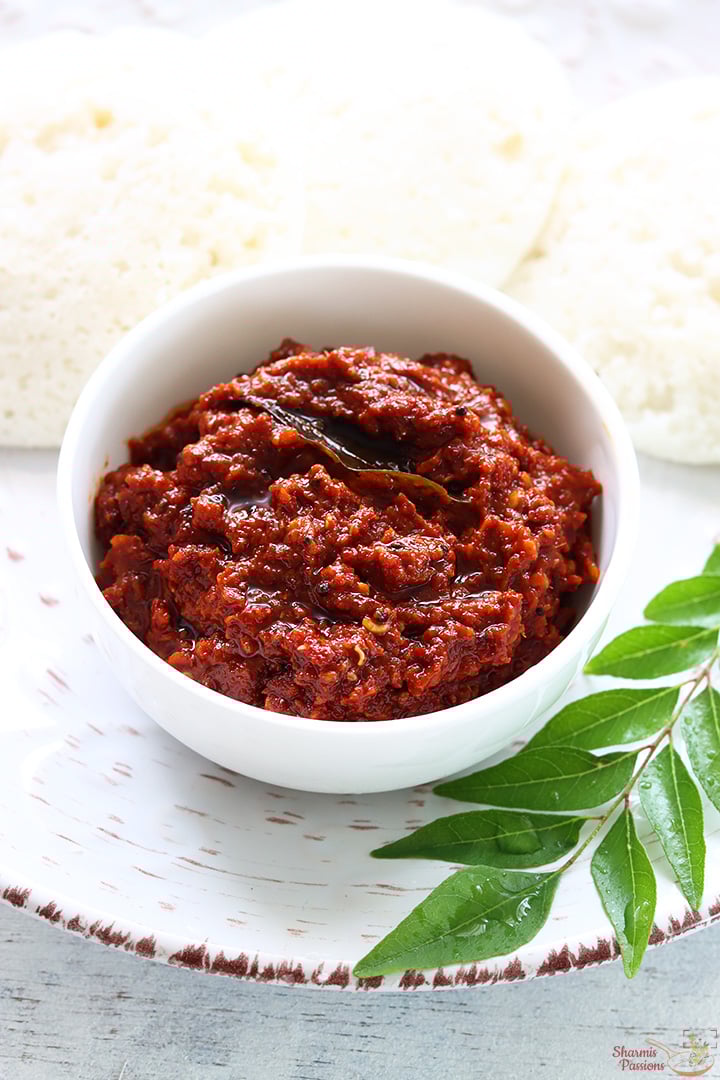
chettinad style milagai chutney served with idli

This chutney follows Chettinad style, so the flavor is bit stronger than the usual milagai chutney we make often. It lifts even a plain idli and makes it feel special. It tastes too good with paniyaram also because the spicy-sour taste balances well with the soft batter.Β 

[feast_advanced_jump_to]

About Vara Milagai Chutney

Vara Milagai Chutney is a classic and popular red chilli chutney known for its bright color and simple rustic taste. This chutney is traditionally served wihVella Paniyaram in Chettinad homes. The dry chili, onion garlic paste is kept little coarse, so the texture feels more natural. The bright red color comes mostly from the mix of chillies. It cooks fast also, so it really helps on busy mornings.

It tastes bold, has good flavor, and goes well with almost any South Indian tiffin we make often. As it cooks, the raw smell slowly fades and the chutney becomes a deep red mix. Some versions add garlic or skip tomato, but the taste stays close to the traditional one only.

There are version using tomatoes in this chutney but the traditionally tomatoes are not used. But it is your preference if you want to reduce the heat then you can add tomatoes while grinding and make this chutney too.

You can adjust this chutney based on what you like. For a brighter color, add few more Kashmiri chillies. For sharper taste, increase regular chillies little. A pinch of jaggery also balances heat if you prefer mild. Small changes bring slightly new taste but the main chilli flavor stays the hero.

I usually make this chutney whenever we plan dosa or idli for brunch. It needs very little chopping and comes together so quick If you like chutneys with small punch but still homely, this one fits daily meals nicely.Β 

Vara Milagai Chutney is one of those quick chutneys I make when I don't want to spend too much time in kitchen but still need something tasty for dosa or idli. We love it with soft hot idlis.
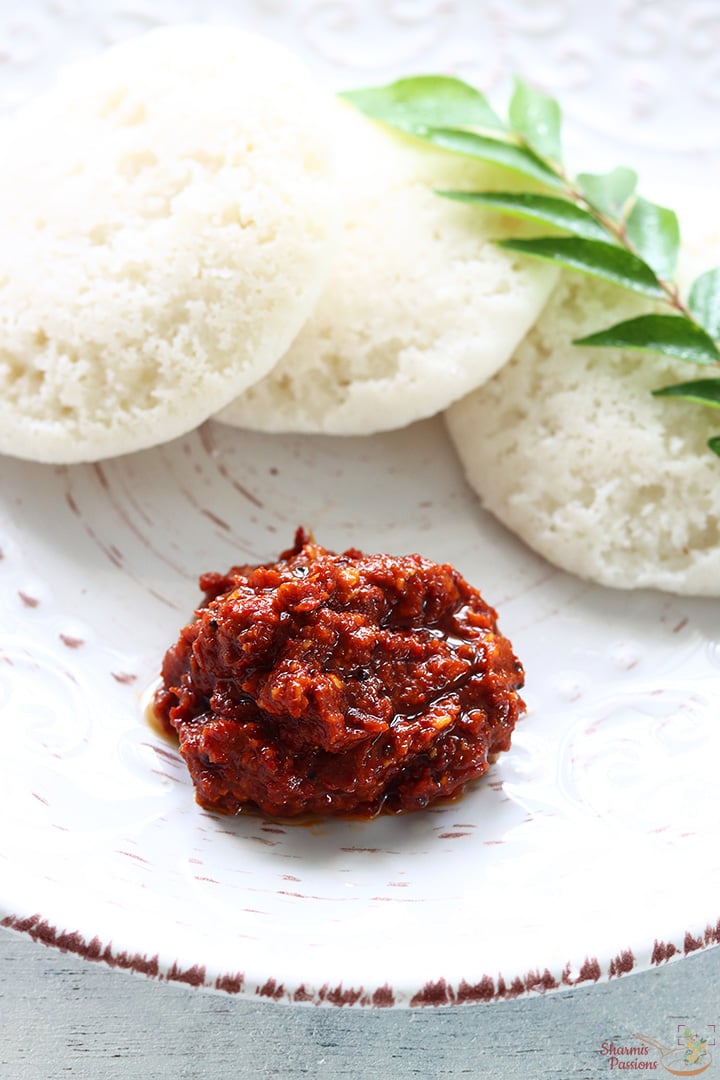
chettinad style milagai chutney served with idli

Chettinad Milagai Chutney Video

Vara Milagai Chutney Ingredients

  • Red chillies - I have used these for heat since they give that sharp spicy taste. You can reduce it if you want milder chutney.
  • Kashmiri red chillies - I added this mainly for color because it gives a nice deep red look. You can use only regular chillies also, but then the color comes a bit darker.
  • Small onion - I have used this for the base flavor, it gives a mild sweetness and blends well with the chillies. You can add regular onion if you don't have small ones.
  • Garlic - This adds great taste and flavor.
  • Tamarind - I added a small piece for slight tanginess which balance the spice nicely. You can add little more if you like extra sour taste.
  • Gingelly oil - I used this for tempering since it gives a lovely aroma and that usual traditional taste. If you don't have it, you can add little coconut oil also.
  • Mustard seeds - This is added for tempering and gives a light nuttiness when it splutters. You can skip if you don't like mustard flavor.
  • Curry leaves - This gives a fresh smell and blends so well with gingelly oil. You can add more leaves if you like stronger flavor.
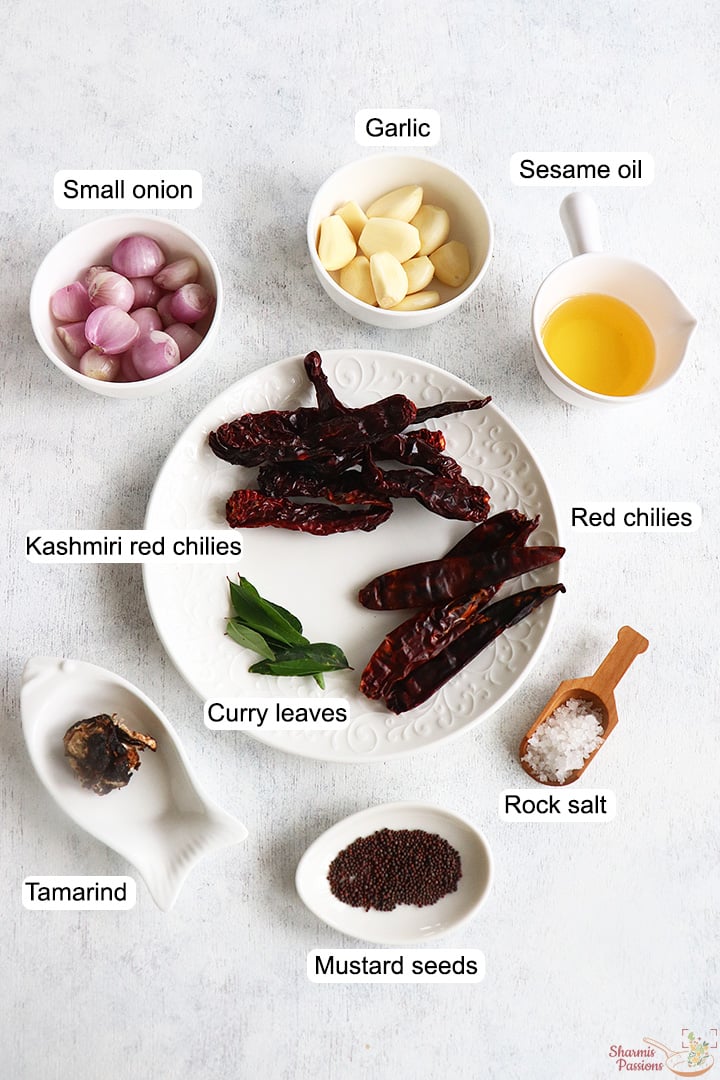
ingredients needed. to make milagai chutney

Similar Recipes

How to make Chettinad Milagai Chutney Step by Step

1.To a mixer jar add 10 kashmiri red chilies along with 5 regular red chilies.
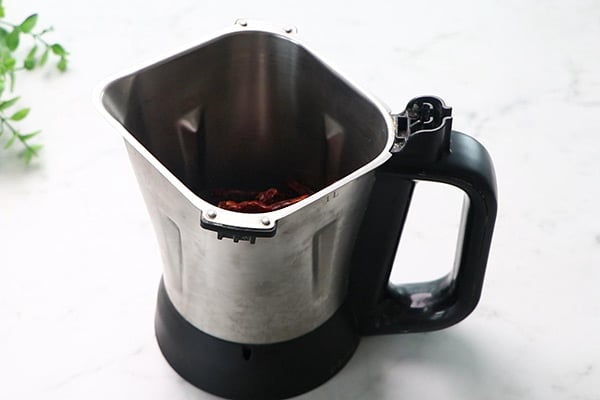
add chilies to mixer

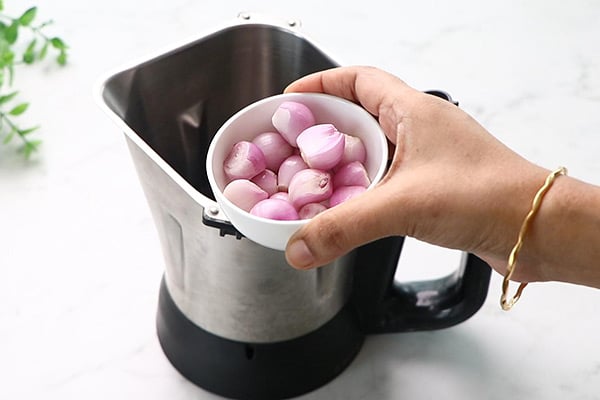
2.Add 15 small onion.

add small onion

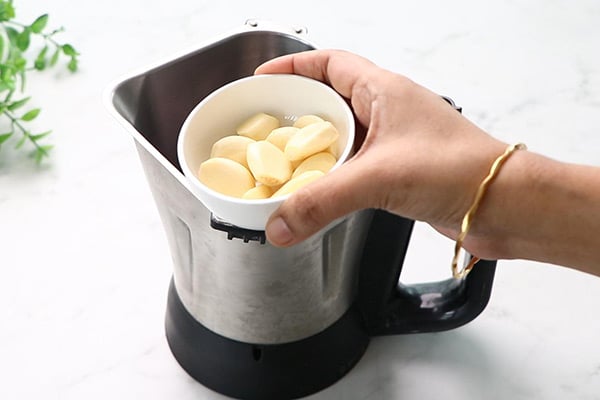
3.Add 10 garlic cloves.

add garlic

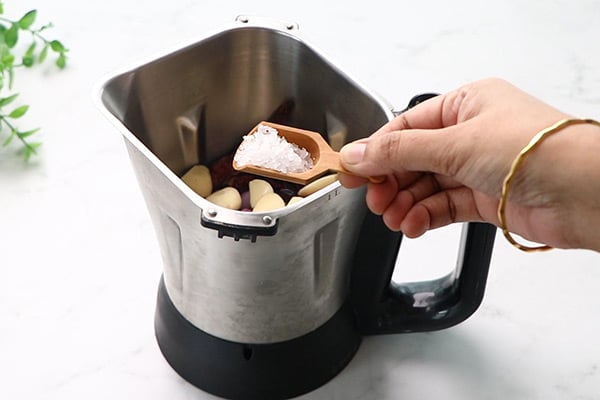
4.Add rock salt to taste.

5.Add 1 teaspoon tamarind.
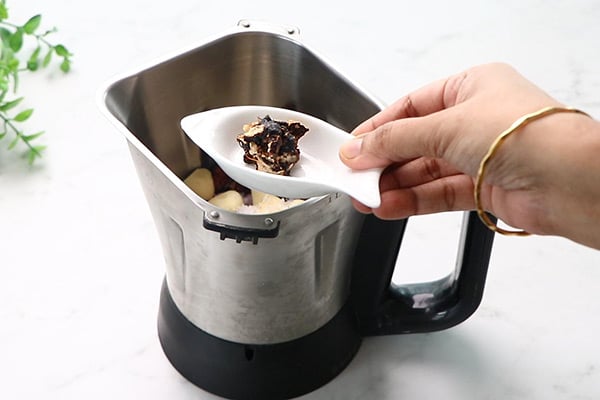
add tamarind

6.Add little water and grind it slightly coarse.
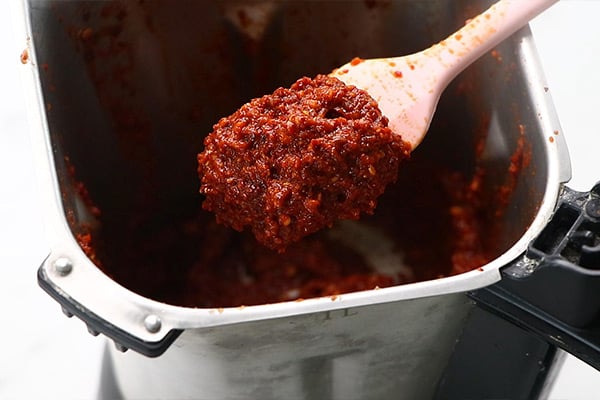
add water and grind it coarse

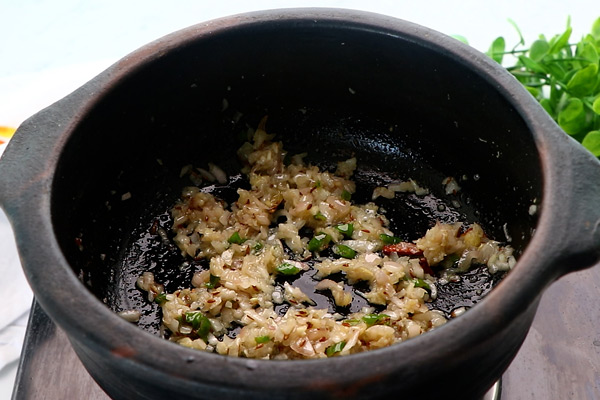
7.Heat 1 tablespoon sesame oil - add 1 teaspoon mustard seeds let it splutter then add few curry leaves, let it splutter.
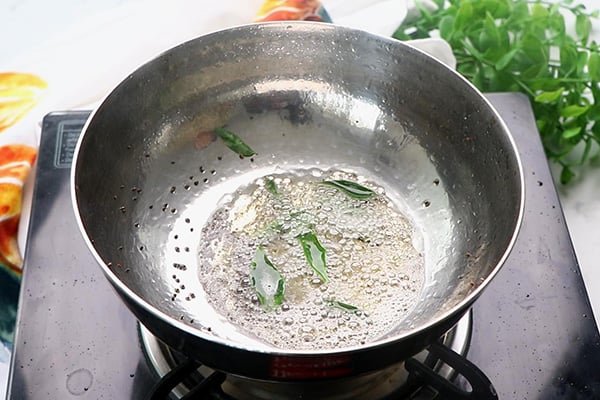
temper in oil

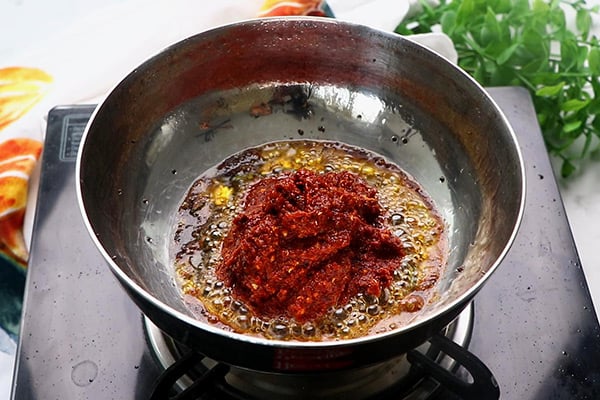
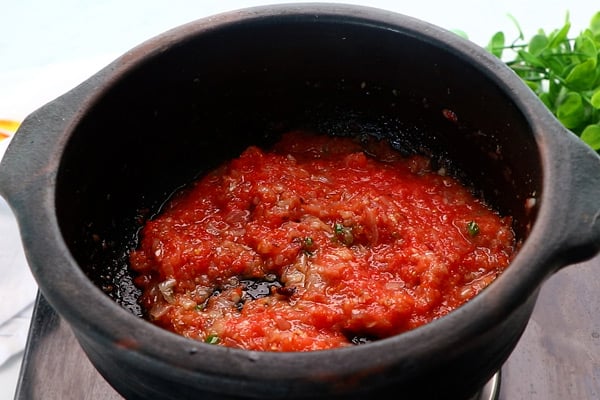
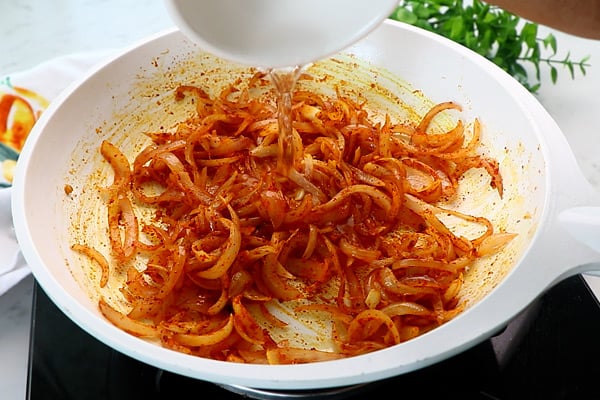
8.Add the prepared chili paste.

add chili paste

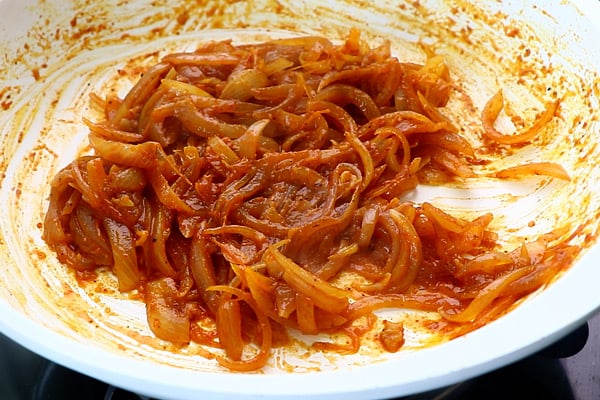
9.Saute well.

saute well

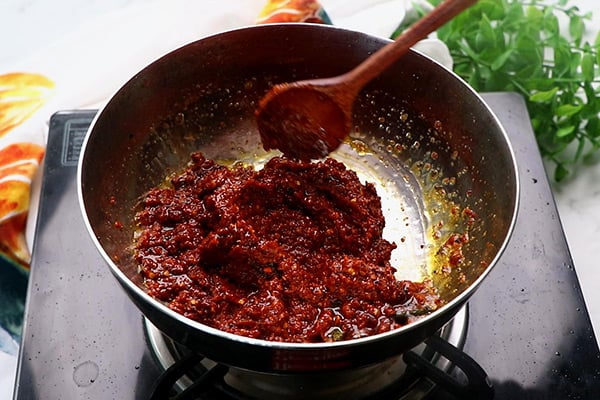
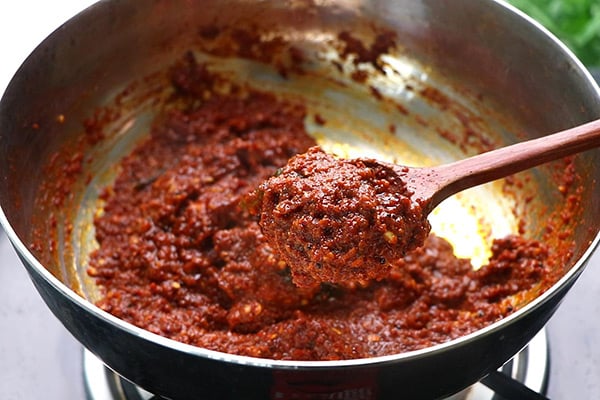
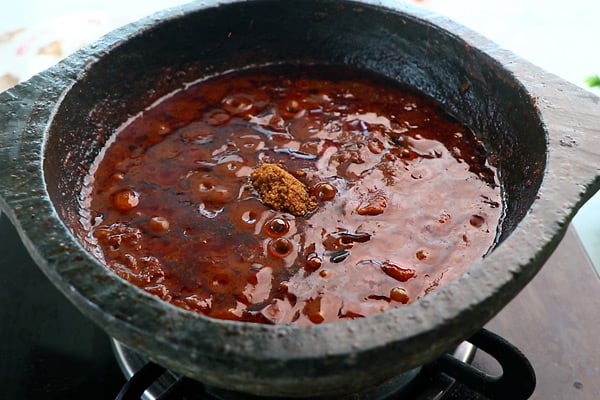
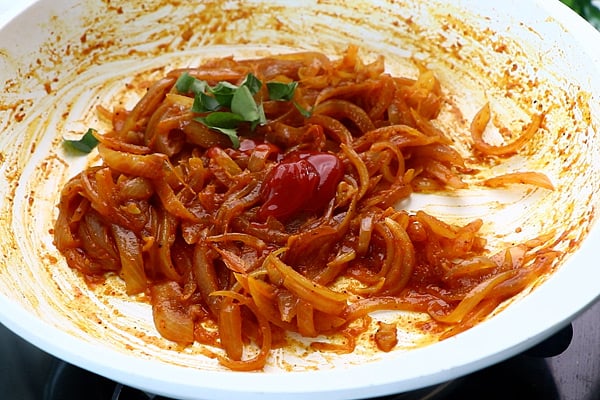
10.Cook for 5-7 minutes or until raw smell leaves.
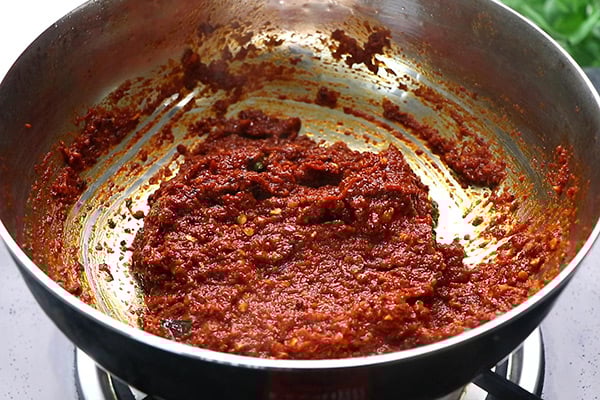
cook for few minutes

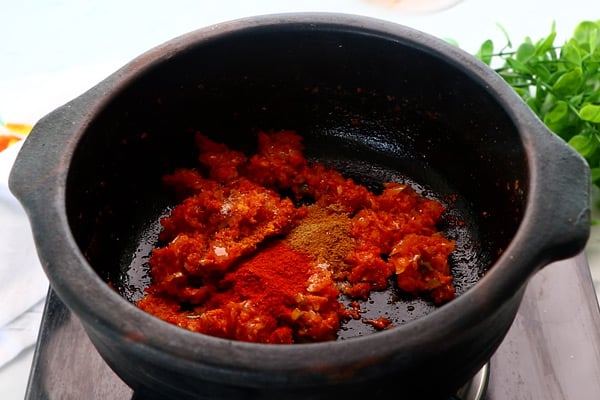
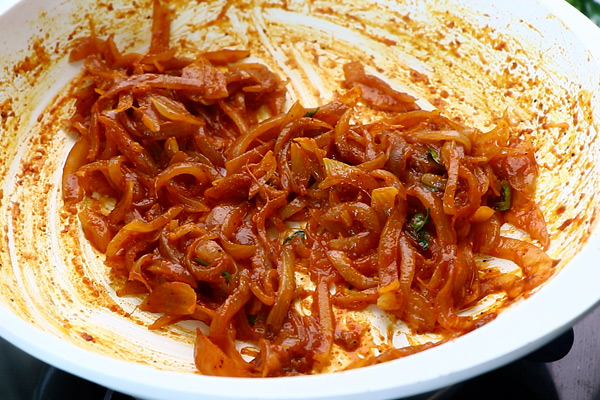
11.Finally add 1 tablespoon sesame oil.
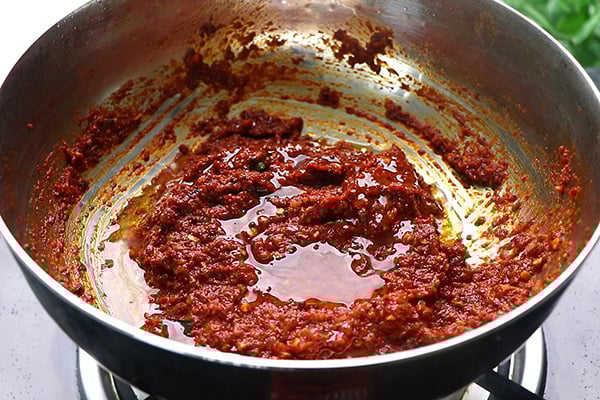
add sesame oil

12.Mix it well and switch off.

mix well, switch off

Chettinad style raw milagai chutney is ready.
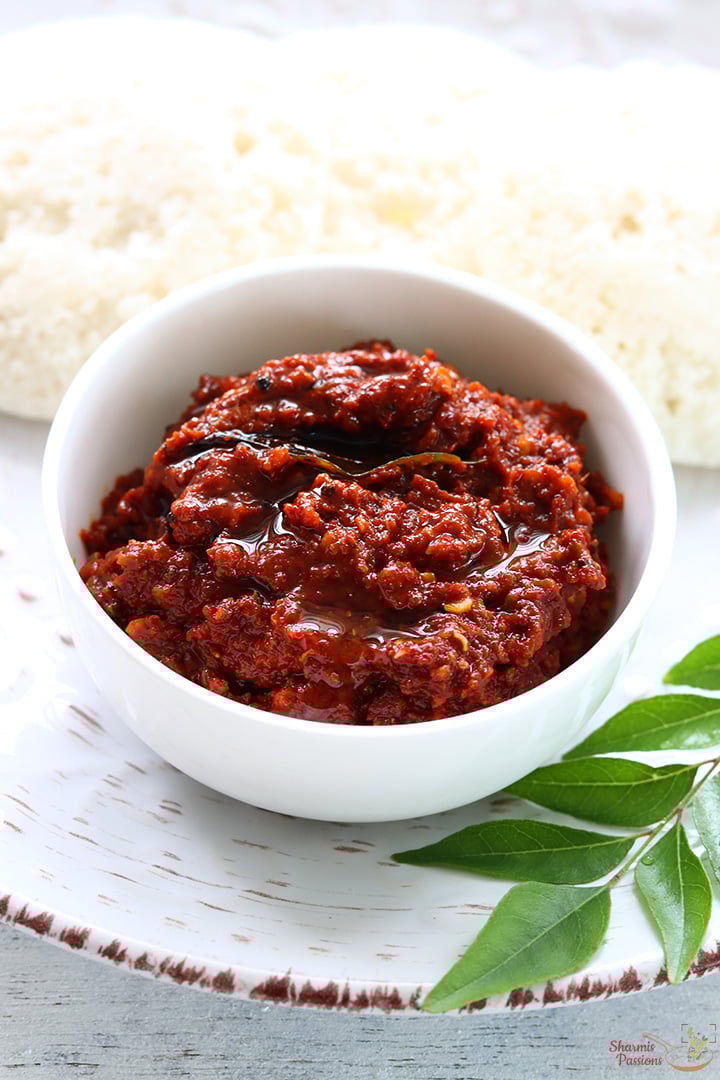
chettinad style milagai chutney served with idli

Expert Tips

  • Grind texture - I grind the mixture slightly coarse as it gives better taste and rustic feel. Smooth grinding changes the flavor.
  • Oil quantity - I usually add little extra gingelly oil because this chutney tastes better when oil shows up. Try not to reduce it too much.
  • Cooking time - I cook till the raw smell goes fully, otherwise the chutney tastes harsh. Let it simmer slowly.
  • Chilli mix - Try mixing both regular and Kashmiri chillies as it gives the right color and heat. Only regular chillies make it too spicy.
  • Storage - Keep the chutney a little thick if you want to store it, thinner consistency doesn't stay fresh for long.
  • Balance - Add 1 teaspoon sugar for a tangy taste and balance.

Serving and Storage

Serve this chutney hot with idli, dosa, uthappam or even kuzhi paniyaram. It also goes nice with curd dosa or even chapathi if you enjoy a spicy side. Store the chutney in a tight jar and keep it in fridge. It stays good for around two days. You can warm it a bit before serving, just don't heat too much otherwise the color turns little dark.

FAQS

1.Can I add tomato?

Yes, you can add 1 tomato while grinding but chutney becomes less spcy. Traditionally tomatoes are not used for this chutney.

2.Can I make with Kashmiri chillies alone?

Yes you can, but then the chutney won't be much spicy, so adjust it how you like.

3.Can I add big onion?

Yes, you can add big onion but small onion adds more taste.

4.Can I make this chutney in advance?

Yes, it keeps well in fridge for two days. Just reheat a little before using.

5.Why sesame oil?

It gives the best flavor for this chutney, and it matches the chili taste so well.
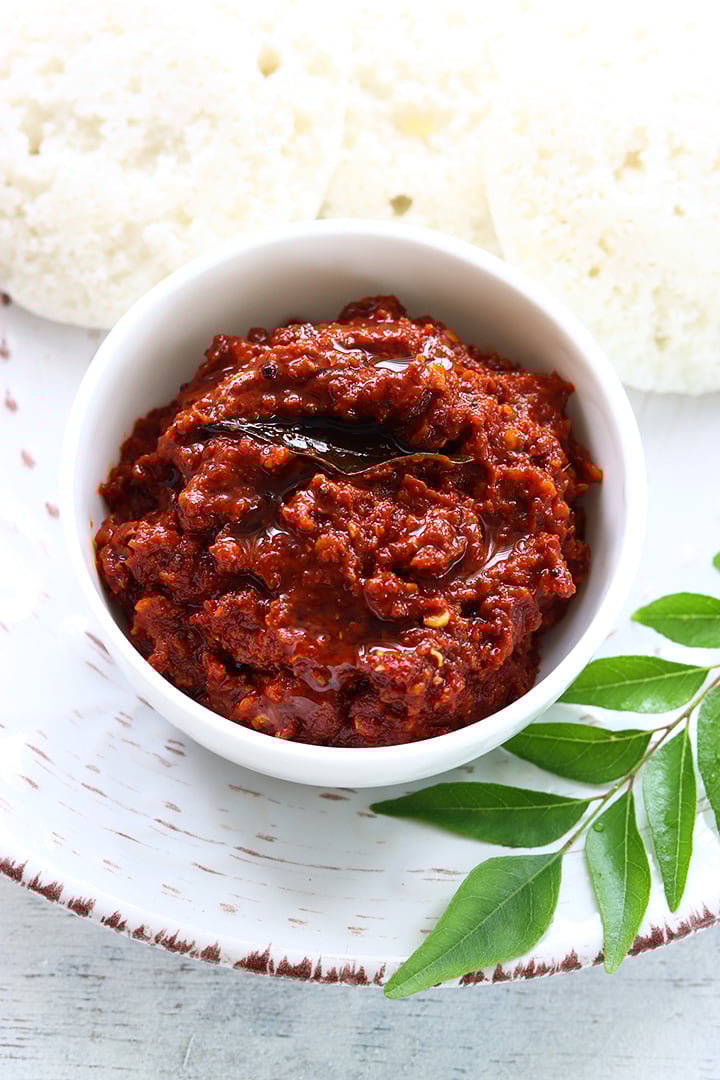
chettinad style milagai chutney served with idli

If you have any more questions about this Milagai Chutney RecipeΒ do mail me at sharmispassions@gmail.com. In addition, follow me on Instagram,Β Facebook,Β PinterestΒ ,YoutubeΒ andΒ TwitterΒ .

Tried this Milagai Chutney Recipe? Do let me know how you liked it. Also tag us on Instagram @sharmispassions and hash tag it on #sharmispassions.

πŸ“– Recipe Card

Print

Chettinad Milagai Chutney Recipe

Chettinad Milagai Chutney is a spicy side dish made using dry chillies, garlic, small onion, tamarind and few basic spices. This milagai chutney recipe is Chettinad style perfect to relish with paniyaram, idli, dosa, uttapam etc. Chettinad Dry Chilli Chutney is simple and quick to make in minutes.
Course Side Dish
Cuisine Indian
Keyword 30 mins recipes, chettinad, chilli recipes, chutney recipes, dosa sidedish, idli side dish, oothapam kara chutney, Side Dish
Prep Time 5 minutes
Cook Time 10 minutes
Total Time 15 minutes
Servings 4
Calories 150kcal
Author Sharmilee J

Ingredients

  • 1 tablespoon sesame oil
  • 10 kashmiri red chilies
  • 5 red chilies
  • 15 small onion
  • 10 garlic
  • 1 teaspoon tamarind
  • rock salt to taste

To temper:

  • 1 tablespoon sesame oil
  • 1 teaspoon mustard seeds
  • few curry leaves

Instructions

  • To a mixer jar add 10 kashmiri red chilies along with 5 regular red chilies.
  • Add 15 small onion.
  • Add 10 garlic cloves.
  • Add rock salt to taste.
  • Add 1 teaspoon tamarind.
  • Add little water and grind it slightly coarse.
  • Heat 1 tablespoon sesame oil - add 1 teaspoon mustard seeds let it splutter then add few curry leaves, let it splutter.
  • Add the prepared chili paste.
  • Saute well.
  • Cook for 5-7 minutes or until raw smell leaves.
  • Finally add 1 tablespoon sesame oil.
  • Mix it well and switch off.
  • Chettinad style raw milagai chutney is ready.

Video

Notes

  • Grind texture - I grind the mixture slightly coarse as it gives better taste and rustic feel. Smooth grinding changes the flavor.
  • Oil quantity - I usually add little extra gingelly oil because this chutney tastes better when oil shows up. Try not to reduce it too much.
  • Cooking time - I cook till the raw smell goes fully, otherwise the chutney tastes harsh. Let it simmer slowly.
  • Chilli mix - Try mixing both regular and Kashmiri chillies as it gives the right color and heat. Only regular chillies make it too spicy.
  • Storage - Keep the chutney a little thick if you want to store it, thinner consistency doesn't stay fresh for long.
  • Balance - Add 1 teaspoon sugar for a tangy taste and balance.

Nutrition

Serving: 40g | Calories: 150kcal | Carbohydrates: 19g | Protein: 3g | Fat: 8g | Saturated Fat: 1g | Polyunsaturated Fat: 3g | Monounsaturated Fat: 3g | Sodium: 11mg | Potassium: 389mg | Fiber: 3g | Sugar: 8g | Vitamin A: 728IU | Vitamin C: 192mg | Calcium: 71mg | Iron: 1mg

The post Chettinad Milagai Chutney Recipe appeared first on Sharmis Passions.

Boondi Raita Recipe

Boondi Raita is a curd based dish made with crispy boondis. thick curd and some basic spices. Boondi Raita is one of those quick side dishes that comes together in just few minutes but tastes so refreshing with almost any meal. It tastes really good with hot rotis or parathas, and even goes well with a simple pulao or on days when you want something cooling on the side.

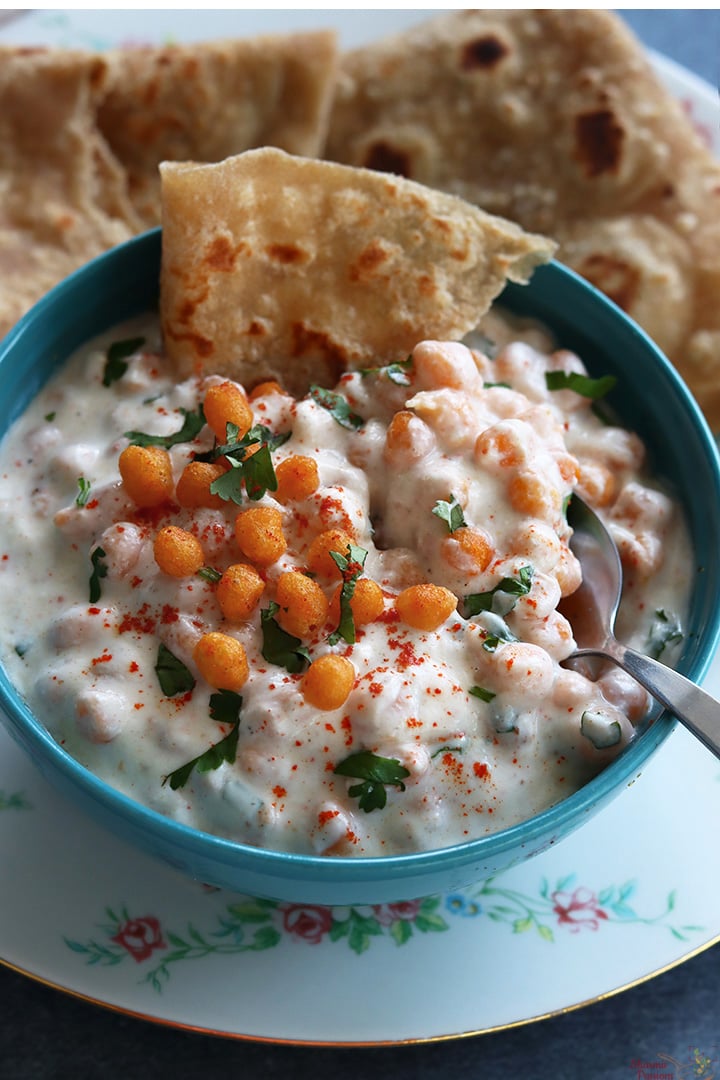
boondi raita served with chapathi

The creamy curd mixed with soft little boondis gives a nice mix of textures, and the spices add light tang and small heat also. It keeps light on the stomach and the boondi gives a small crunch if you serve it immediately. Many people like it chilled too because the flavor settles nicely and the raita tastes fresh.

[feast_advanced_jump_to]

About Boondi Raita

Boondi Raita is a popular Indian side dish made using yogurt, boondi and spices. Boondi is a deep fried snack made using gram flour. The texture can be changed based on how you like. Some prefer the boondi crunchy, some like it little soft after it soaks in the curd. The overall taste is mild and creamy goes well with rice dishes.

My fond memories with boondi raita is having it with aloo paratha in my favorite North Indian restaurant. They serve aloo paratha with boondi raita and a spicy veg sabji. The boondi raita they serve has a slightly sweet taste which I love the most. Hope my regular followers will know my love for North Indian food and this raita is one of my favorite side dishes.

Boondi is a deep fried snack made using gram flour batter, and it comes in both sweet and spicy versions. For this raita, mostly kara boondi is used since it gives a nice savory flavor. Spices keep the taste lively without making it too heavy. The curd acts like the base and balances everything quite well.

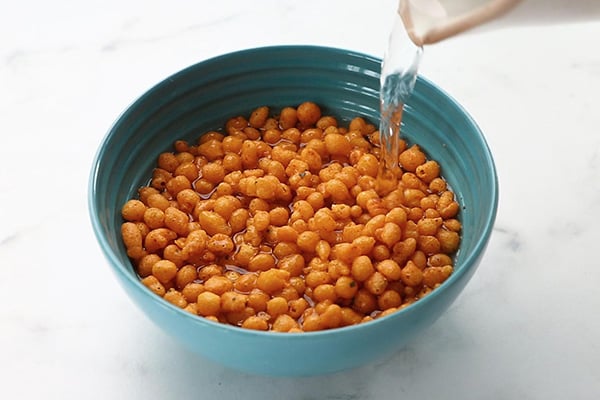
There are many small variations you can try like adding roasted jeera powder, tiny pinch of sugar for balance, or using mint leaves instead of coriander. I have soaked the boondi in warm water first to soften it and remove extra oil also. It makes the boondi soft, but you can add as such too for crispy boondis in raita.

You can make the raita thick or thin depending on what you are serving with. We love it a bit thick and creamy like here. I usually make this whenever I want a no-cook side dish that still feels complete. I make it often on busy days also because it hardly takes any time at all.

boondi raita served with chapathi

Boondi Raita Video

Boondi Raita Ingredients

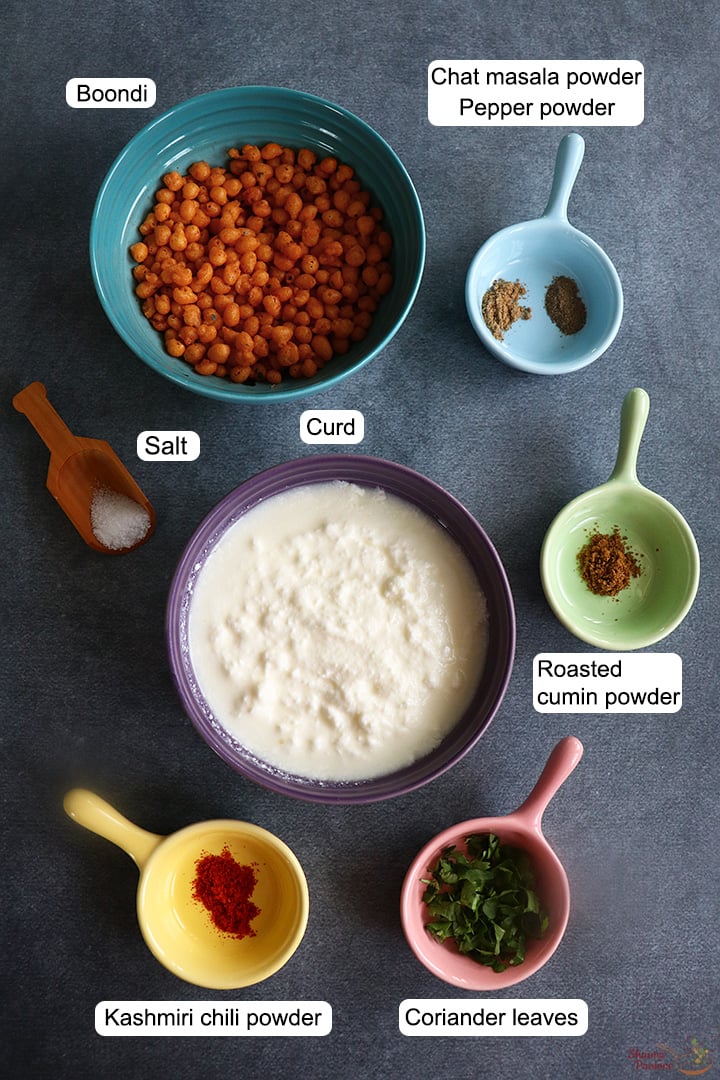
  • Thick curd - I have thick homemade curd as it it adds creamy texture and holds the spices well. You can add little water or milk if you want it slightly thinner.
  • Boondi - You can add plain boondi or kara boondi that is available in shops. This adds the main flavor and little crunch.
  • Red chili powder - I used this for a mild heat and color. You can add little more if you prefer the raita spicier.
  • Roasted cumin powder - This adds a great flavor to any raita and is a must spice too.
  • Chat masala powder - I add this for tangy flavor. You can add roasted jeera powder also as another option.
  • Pepper powder - This adds a light sharpness but it is optional. You can skip it if you don't want the extra spice.
  • Coriander leaves - I added as this adds freshness and color. You can add mint leaves also if you like that flavor.
ingredients needed to make boondi raita

Similar Recipes

How to make Boondi Raita Step by Step

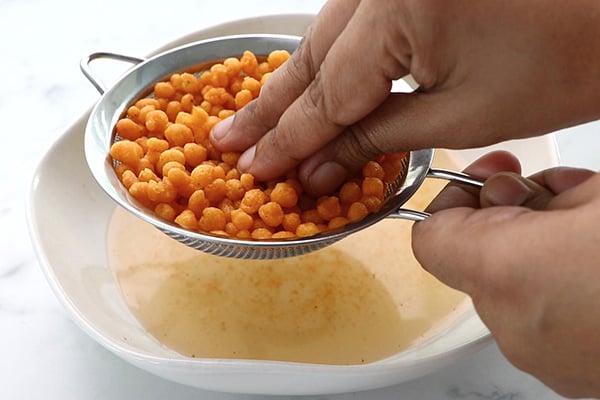
1.To a bowl add Β½ cup boondi, add warm water to it. Soak for 5-7 minutes. I used store bought kara boondi, you can use plain boondi too.

2.Transfer to a strainer and press slightly to remove excess water, Set aside.

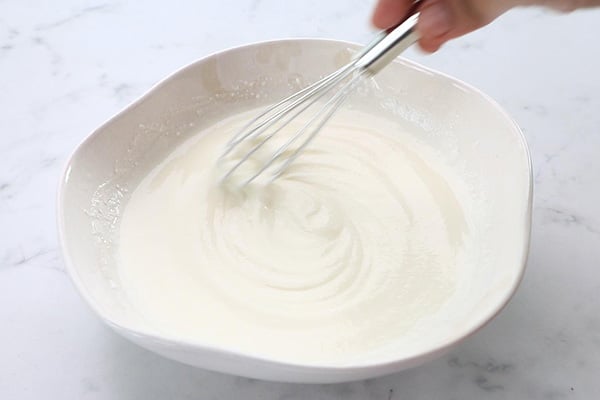
3.To a mixing bowl add 1 cup thick curd, whisk it well to make it smooth and creamy. You can add little water or milk to thin down the consistency.

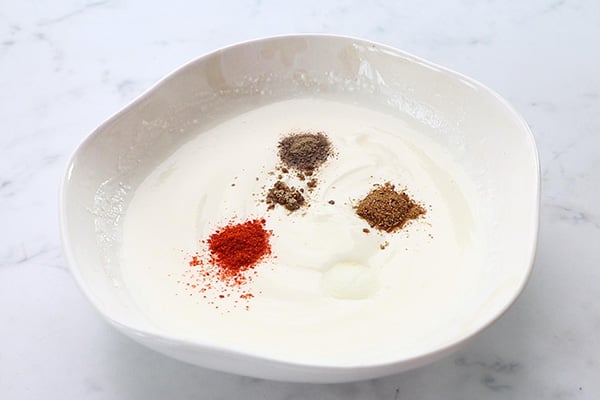
4.Add Β½ teaspoon kashmiri chili powder, Β½ teaspoon roasted cumin powder, ΒΌ teaspoon chat masala powder and ΒΌ teaspoon pepper powder.

5.Mix it well until the spice mix is blended evenly.

6.Now add drained boondi and 1 tablespoon coriander leaves.

7.Mix it well.

Boondi Raita is ready!

Expert Tips

  • Boondi - You can use plain or kara boondi for this raita. Add boondi to hot water to make it soft and add it as such to have a crunch in the raita. Make sure to add boondi just before serving if you want the crunch.
  • Whisking - I whisk the curd smooth as it helps the spices mix evenly. Don't skip this step.
  • Soft boondi - If you like softer boondi, soak them it in warm water for a minute and squeeze out the water and add.
  • Chilling - I just usually chill the raita for few minutes before eating, it makes the flavors settle well.
  • Seasoning - I make sure to taste and adjust salt or chat masala after mixing, so raita tastes better when balanced.

Serving and Storage

Serve them chilled with hot parathas, pulao or roti for the best taste. This goes well with biryani also when you want something light on the side. Store the raita in the fridge and try to finish it the same day.Β 

FAQS

1.Can I use sweet boondi for this?

It won't suit because sweet boondi changes the flavor, better to use kara or plain boondi.

2.Why did my boondi become too soft?

It happens when kept for long in the curd, add boondi just before serving for crunch.

3.Can I make this ahead?

You can whisk the curd and spices earlier but add the boondi only while serving.

4.What other spices can I add?

You can amchoor powder, garam masala powder for a flavor change.

5.How to fix raita if it becomes too thick?

Just add little chilled water or milk and mix until it reaches to desired consistency.

boondi raita serve with chapati

If you have any more questions about this Boondi Raita Recipe do mail me at sharmispassions@gmail.com. In addition, follow me on Instagram, Facebook,Β  Pinterest, Youtube andΒ TwitterΒ .

Tried this Boondi Raita Recipe? Do let me know how you liked it. Also tag us on Instagram @sharmispassions and hash tag it on #sharmispassions.

πŸ“– Recipe Card

Print

Boondi Raita Recipe

Boondi Raita is a curd based dish made with crispy boondis. thick curd and some basic spices. Boondi Raita is one of those quick side dishes that comes together in just few minutes but tastes so refreshing with almost any meal. It tastes really good with hot rotis or parathas, and even goes well with a simple pulao or on days when you want something cooling on the side.
Course Side Dish
Cuisine Indian
Keyword 30 mins recipes, Kerala Meal Sidedish, lunch recipes, meals, raita recipes, Side Dish, thayir pachadi recipes, veg recipes
Prep Time 5 minutes
Cook Time 10 minutes
Total Time 15 minutes
Servings 3 people
Calories 131kcal
Author Sharmilee J

Ingredients

Instructions

  • To a bowl add Β½ cup boondi, add warm water to it. Soak for 5-7 minutes. I used store bought kara boondi, you can use plain boondi too.
  • Transfer to a strainer and press slightly to remove excess water, Set aside.
  • To a mixing bowl add 1 cup thick curd, whisk it well to make it smooth and creamy. You can add little water or milk to thin down the consistency.
  • Add Β½ teaspoon kashmiri chili powder, Β½ teaspoon roasted cumin powder, ΒΌ teaspoon chat masala powder and ΒΌ teaspoon pepper powder.
  • Mix it well until the spice mix is blended evenly.
  • Now add drained boondi and 1 tablespoon coriander leaves.
  • Mix it well.
  • Boondi Raita is ready!

Video

Notes

  • Boondi - You can use plain or kara boondi for this raita. Add boondi to hot water to make it soft and add it as such to have a crunch in the raita. Make sure to add boondi just before serving if you want the crunch.
  • Whisking - I whisk the curd smooth as it helps the spices mix evenly. Don't skip this step.
  • Soft boondi - If you like softer boondi, soak them it in warm water for a minute and squeeze out the water and add.
  • Chilling - I just usually chill the raita for few minutes before eating, it makes the flavors settle well.
  • Seasoning - I make sure to taste and adjust salt or chat masala after mixing, so raita tastes better when balanced.

Nutrition

Serving: 75g | Calories: 131kcal | Carbohydrates: 16g | Protein: 7g | Fat: 4g | Saturated Fat: 2g | Polyunsaturated Fat: 1g | Monounsaturated Fat: 1g | Cholesterol: 11mg | Sodium: 82mg | Potassium: 312mg | Fiber: 2g | Sugar: 6g | Vitamin A: 270IU | Vitamin C: 1mg | Calcium: 112mg | Iron: 1mg

The post Boondi Raita Recipe appeared first on Sharmis Passions.
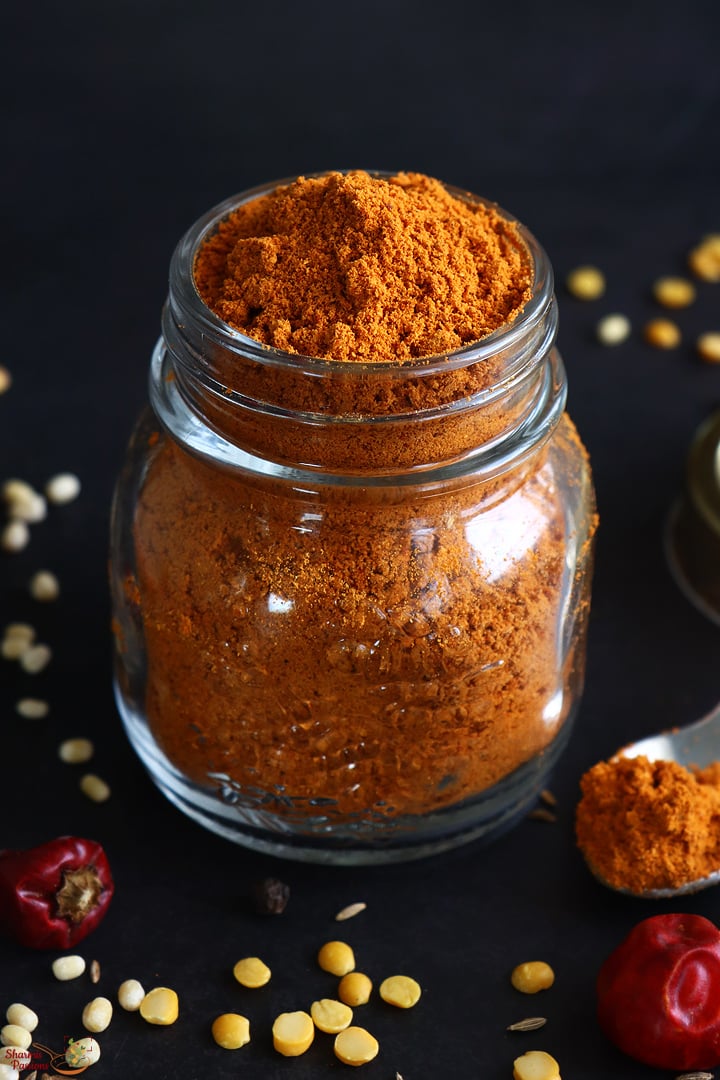
Thengai Podi Recipe | Coconut Podi Recipe

Thengai Podi is a simple coconut spice powder that serves as a great side dish for idli, dosa and rice. Also known as coconut podi, it has a nice roasted flavor with little bit spice, so it becomes a good choice when you want something quick on the side. It is easy to make and gives a tasty touch to a plain meal. The mix of coconut, dal and chilies gives a warm aroma that feels very tasty and comforting.

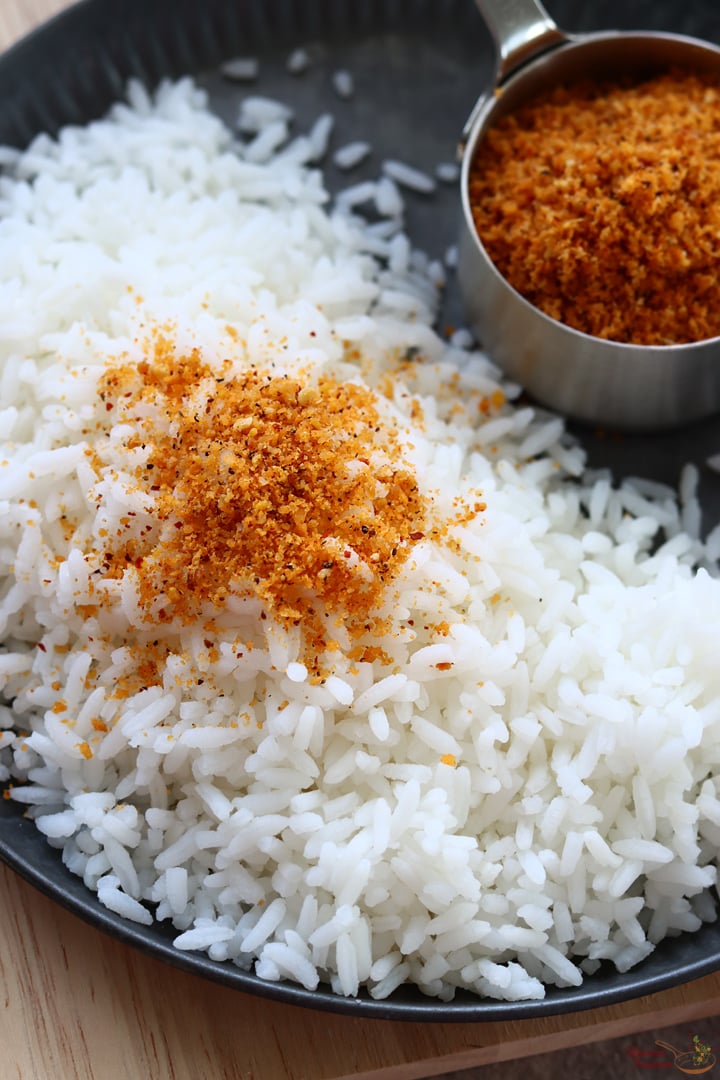
thengai podi in a small bowl

This is one of those podis you can make once and use for many days without much effort. It tastes good when mixed with ghee or even sesame oil. Since it uses dry roasted ingredients, it stores quite well also and stays fresh for long. It is a handy podi for busy mornings and also for quick weekend lunch.

[feast_advanced_jump_to]

About Thengai Podi

Thengai Podi is a spiced coconut powder made by dry roasting dried coconut along with dal and spices. It is used as a side for idli, dosa, rice by mixing with ghee/ oil and is relished by all spice powder lovers. This podi is quite common in many Tamil homes and often kept ready in the kitchen shelf for easy breakfasts.

The texture is slightly coarse and not fully powdered, and that gives a nice bite when mixed with ghee or oil. Kashmiri red chilies gives color and regular chilies gives heat but not too strong so perfect to serve for kids too. Adding tamarind for a bit of tang which balances the coconut taste well. Hing also brings a sharp flavor which goes well with the roasted dal.

There are small variations for this podi like adding chana dal along with urad dal or roasting the coconut extra brown for stronger taste, adding garlic etc. The flavor is mild but still rich because the coconut gets slightly golden and gives light sweetness.

thengai podi in a small bowl with rice

Thengai Podi Video

Thengai Podi Ingredients

  • Coconut - I have used kopra (dried coconut) for more shelf life. You can use fresh grated coconut too. If using freshly grated coconut first grind all the other ingredients coarsely then add coconut and pulse it to get this texture.
  • Urad dal, Chana dal - I added whole urad dal, chana dal for roasting because it gives a nutty taste and volume to the podi.
  • Red chilies - I add Kashmiri chilies for color and regular chilies for heat. You can add more regular chilies if you want more spice.
  • Garlic - Adding garlic is purely optional but adds more flavor to the podi. Coconut with garlic combo is the best so I recommend adding it.
  • Tamarind - I have used little tamarind for mild tang which balances the coconut heaviness.
  • Hing - I have added a pinch of hing for flavor, it brings small lift to the podi.
  • Coconut oil - I have used coconut oil to roast the spices which gives a nice aroma. You can use regular oil but coconut oil suits better.
  • Rock salt - added to taste, if adding rock salt roast and add it to avoid it from letting out water.
ingredients needed to mame thengai podi

You can reduce the spice for kids and use more coconut. This is one of those podis you can adjust easily according to your liking and still it turns good. I usually make this when I have extra coconut in the fridge because this podi helps use it up nicely without wasting.

This podi serves great with rice, ghee and I love this coconut podi even with curd rice. This is such a versatile spice mix that can be used to serve as side dish.

Why This Recipe Works

  • It gives a fresh roasted flavor that tastes great with idli and dosa.
  • The podi is simple to prepare and uses basic ingredients from the kitchen only.
  • It stores well and stays good for long time since everything is roasted nicely.
  • You can adjust spice, texture or even tang based on what you like.
  • It mixes easily with ghee or oil, so even kids enjoy having it.
rice with coconut podi mixed

How to make Thengai Podi Step by Step

1.We need 1 tablespoon coconut oil in total, Add half of oil to a pan and heat it. Add Β½ cup whole urad dal, 2 tablespoon chana dal, 10 red chilies along with 6 kashmiri red chilies.

add dal, chilies

2.Roast until golden brown, Transfer to the plate and set aside.

roast until golden brown

3.To the same pan add remaining oil then 2 cups dried coconut(kopra).

add dried coconut

4.Roast until golden brown, Transfer to the plate and set aside.

roast until golden

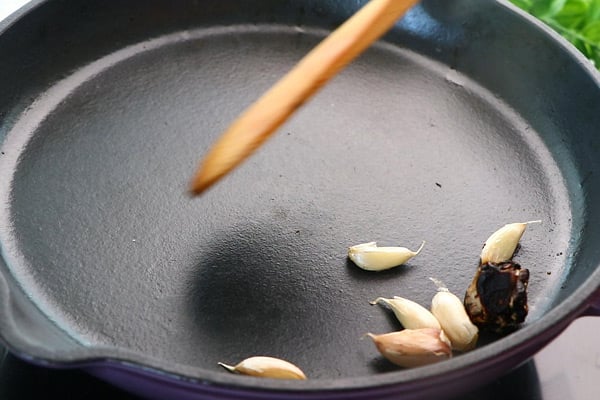
5.Add 6 cloves small sized garlic. Roast until golden.

add garlic

6.Now add 1 teaspoon tamarind and roast for a minute. Transfer to the plate and set aside.

add tamarind

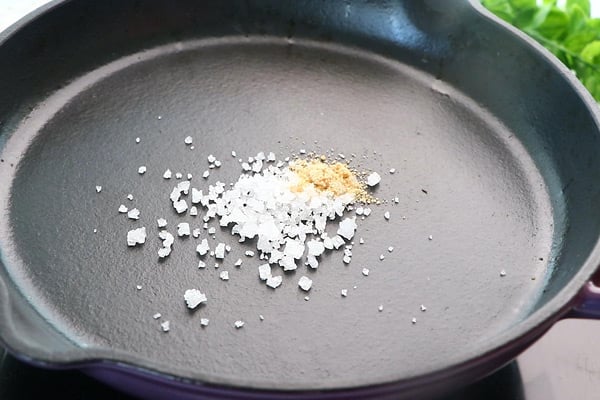
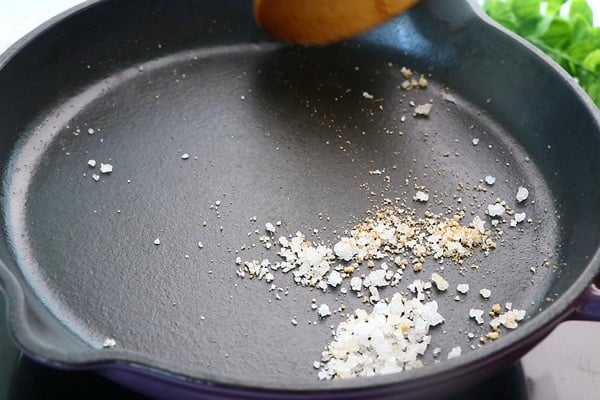
7.Add rock salt along with 1 teaspoon hing.

add rock salt, hing

8.Switch off sautΓ© for few seconds and transfer to the plate.

transfer

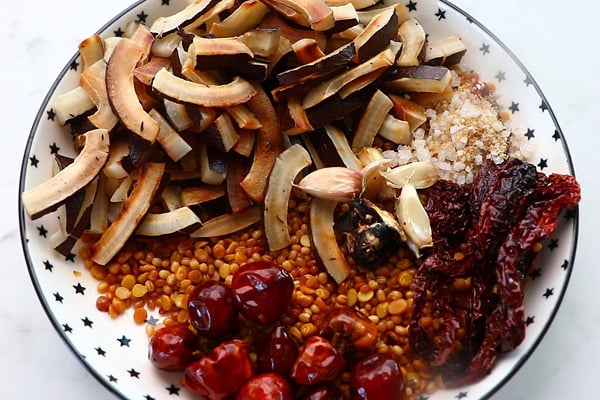
9.Cool down completely.

cool the items

10.Transfer to a dry mixer jar.

transfer to mixer jar

11.Grind it coarse like shown. Do not grind more as it will release oil.

grind it coarse

12.Transfer to a plate, cool down then store.

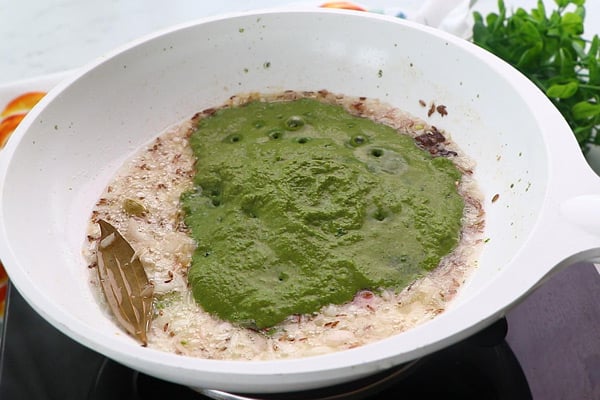
transfer to a plate

Store in airtight container and enjoy!

thengai podi in a small bowl

Expert Tips

  • Roasting coconut - I usually roast the coconut slowly in low flame so it turns golden without burning. Adding dried coconut increases shelf life.
  • Grinding texture - Grind it coarse with texture. Do not grind more as coconut will release oil making the podi sticky.
  • Using tamarind - Adds a mild tang to the podi, roast it just for few seconds.
  • Salt choice - I usually add rock salt for podi. Make sure to roast it then add for grinding to prevent form letting out water.
  • Storage - I keep this podi in clean dry jar so it stays well for many days.

Serving and Storage

Serve this with idli, dosa or even with hot rice and ghee if you like simple meals. It taste very good when mixed with warm ghee as it brings out the coconut aroma. Store this podi in airtight container and keep it dry, it stays fresh for almost a month at room temperature.

FAQS

1.Can I add fresh coconut?

Yes you can, but roast it well until golden brown to increase shelf life. But dried coconut has more shelf life.

2.Is Kashmiri chili necessary?

Not required, but it gives bright color without too much heat.

3.What others can I add?

You can add few curry leaves, Β½ teaspoon mustard seeds roast and add it for a variation.

4.Will the podi spoil fast?

No, as long you roast the coconut well and keep it dry, it stays good.

5.Can I grind finely?

You can, but the coarse texture tastes nicer with ghee.

thengai podi with rice

If you have any more questions about this Thengai Podi Recipe do mail me at sharmispassions@gmail.com. In addition, follow me on Instagram,Β Facebook,Β PinterestΒ ,YoutubeΒ andΒ TwitterΒ .

Tried this Thengai Podi Recipe? Do let me know how you liked it. Also tag us on Instagram @sharmispassions and hash tag it on #sharmispassions.

πŸ“– Recipe Card

Print

Thengai Podi Recipe | Coconut Podi Recipe

Thengai Podi is a simple coconut spice powder that serves as a great side dish for idli, dosa and rice. Also known as coconut podi, it has a nice roasted flavor with little bit spice, so it becomes a good choice when you want something quick on the side. It is easy to make and gives a tasty touch for a plain meal. The mix of coconut, dal and chilies gives a warm aroma that feels very tasty and comforting.
Course Side Dish
Cuisine Indian
Keyword 30 mins recipes, coconut recipes, dosa sidedish, idli podi recipe, Idli recipes, idli side dish, Kerala Meal Sidedish, podi recipes, recipes, Side Dish
Prep Time 15 minutes
Cook Time 15 minutes
Total Time 30 minutes
Servings 30
Calories 120kcal
Author Sharmilee J

Ingredients

  • 2 cups dried coconut kopra
  • Β½ cup whole urad dal
  • 2 tablespoon chana dal
  • 10 regular red chilies
  • 6 kashmiri red chillies
  • 1 teaspoon tamarind
  • 1 teaspoon hing
  • 6 small cloves garlic
  • rock salt / salt to taste
  • 1 tablespoon coconut oil

Instructions

  • We need 1 tablespoon coconut oil in total, Add half of oil to a pan and heat it. Add Β½ cup whole urad dal, 2 tablespoon chana dal, 10 red chilies along with 6 kashmiri red chilies.
  • Roast until golden brown, Transfer to the plate and set aside.
  • To the same pan add remaining oil then 2 cups dried coconut(kopra).
  • Roast until golden brown, Transfer to the plate and set aside.
  • Add 6 cloves small sized garlic. Roast until golden.
  • Now add 1 teaspoon tamarind and roast for a minute. Transfer to the plate and set aside.
  • Add rock salt along with 1 teaspoon hing.
  • Switch off sautΓ© for few seconds and transfer to the plate.
  • Cool down completely.
  • Transfer to a dry mixer jar.
  • Grind it coarse like show. Do not grind more as it will release oil.
  • Transfer to a plate, cool down then store.

Video

Notes

  • Roasting coconut - I usually roast the coconut slowly in low flame so it turns golden without burning. Adding dried coconut increases shelf life.
  • Grinding texture - Grind it coarse with texture. Do not grind more as coconut will release oil making the podi sticky.
  • Using tamarind - Adds a mild tang to the podi, roast it just for few seconds.
  • Salt choice - I usually add rock salt for podi. Make sure to roast it then add for grinding to prevent form letting out water.
  • Storage - I keep this podi in clean dry jar so it stays well for many days.

Nutrition

Serving: 20g | Calories: 120kcal | Carbohydrates: 6g | Protein: 2g | Fat: 11g | Saturated Fat: 9g | Polyunsaturated Fat: 0.1g | Monounsaturated Fat: 1g | Sodium: 6mg | Potassium: 90mg | Fiber: 3g | Sugar: 1g | Vitamin A: 4IU | Vitamin C: 1mg | Calcium: 7mg | Iron: 1mg

The post Thengai Podi Recipe | Coconut Podi Recipe appeared first on Sharmis Passions.
Cold Coffee Recipe (Cafe Style)

Cold Coffee is a popular chilled beverage made using coffee powder, milk, sugar and ice cream. Cafe Style Cold Coffee can be made easily at home with just 4 ingredients. Creamy, frothy and delicious cold coffee can be made in just 10 minutes and you will love it. Learn to make cafe style cold coffee the perfect way with step by step pictures and video.

cold coffee served with whipped  cream topping

Cold Coffee can made in numerous ways and this one tastes just like in cafe shops with minimal effort. It has a rich, creamy and frothy texture with a perfect balance of sweetness and bitterness. To make it rich I have used ice cream but you can skip it and use just frozen milk and coffee powder and still it tastes delicious.

[feast_advanced_jump_to]

About Cold Coffee

Cold Coffee is a classic refreshing beverage made by blending milk, sugar, instant coffee powder and ice cream. All the ingredients are blended until smooth and frothy making it a delicious beverage. Ice cream is added to make it more rich and creamy however you can replace ice cream with frozen milk too.

Cafe Style Cold Coffee can be made quickly using basic ingredients available in your kitchen. Within 10 minutes you can whip up a creamy, rich and delicious cold coffee. After few trials I have recreated the cafe style cold coffee and here is the recipe for you all.

In many cafe shops cold coffee is served in a glass drizzle with chocolate syrup with ice cream or whipped cream as topping. This Classic Cold Coffee Recipe shared here is one of our family favorites so I make it often during summer.

I am a coffee person and can start my daily chores only after a cup of coffee as a first thing in the morning. I love coffee flavor a lot so this cold coffee is my favorite too. This cafe style cold coffee is a must try for all coffee lovers.

Creamy, thick and satisfying cold coffee ready in just few minutes. You don't need to go to your favorite cafe shop to enjoy cold coffee anymore - Make it at home and enjoy at your convenience!

cold coffee served with whipped  cream topping

Cold Coffee Video

Similar Recipes

Cold Coffee Ingredients

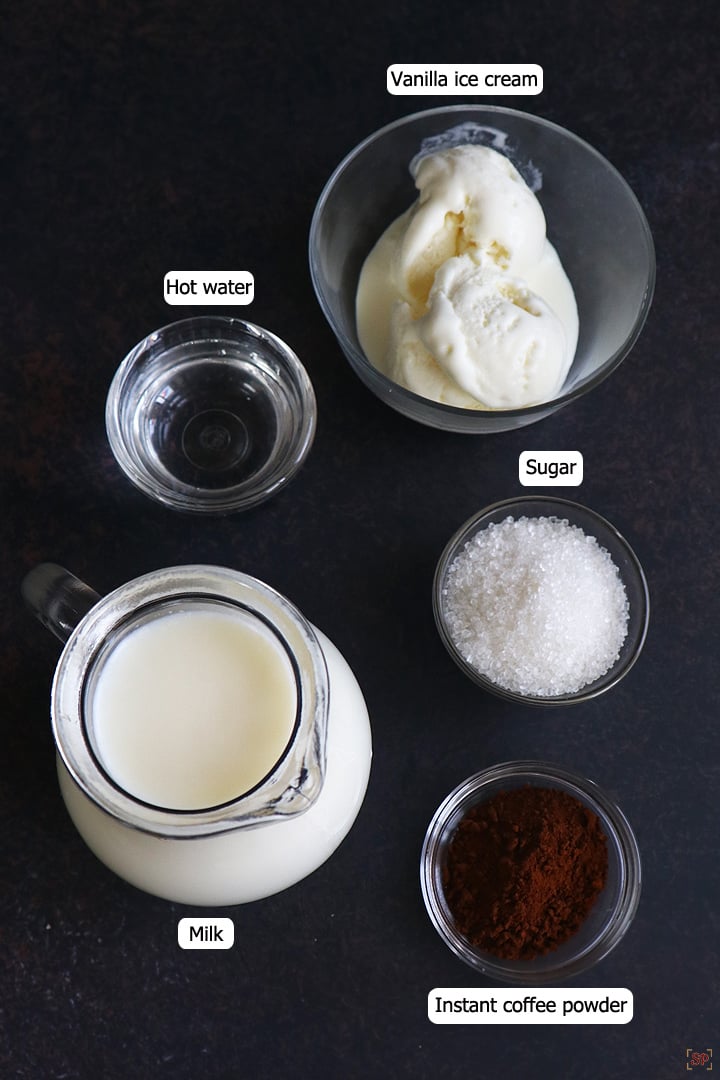
  • Milk -Β Use fresh full fat milk for best taste. Always boil the milk, then chill and use it.
  • Ice cream - Vanilla ice cream is the best combo for cold coffee. Ice cream is added to make cold coffee more rich and creamy. Alternatively you can use frozen milk too.
  • Sweetener - Adjust sugar according to your taste preference. If skipping ice cream add more sugar.
  • Instant Coffee PowderΒ - I used instant coffee powder however you can use coffee syrup prepared using coffee filter too.
  • WaterΒ - Hot water is used for coffee powder to dissolve easily and to make the coffee syrup.
cold coffee ingredients

How to make Cold Coffee Step by Step

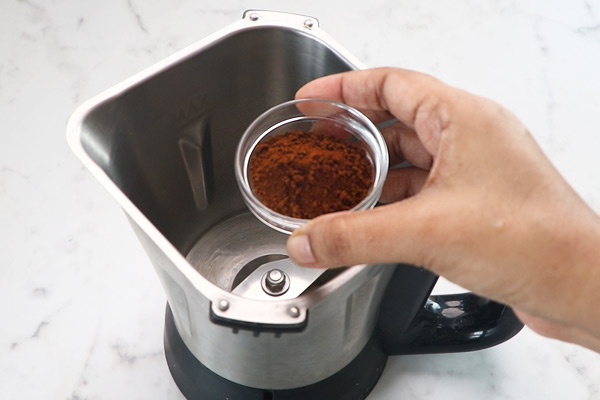
1.First to a mixer jar add 1 tablespoon instant coffee powder.

add instant coffee powder

2.Add 2 tablespoon sugar to it.

add sugar to it

3.Add 2 tablespoon hot water to it.

add hot water

4.Blend this well first until frothy and creamy like this.

blend it well until frothy and creamy

5.Add 1 cup chilled milk to it.

add milk

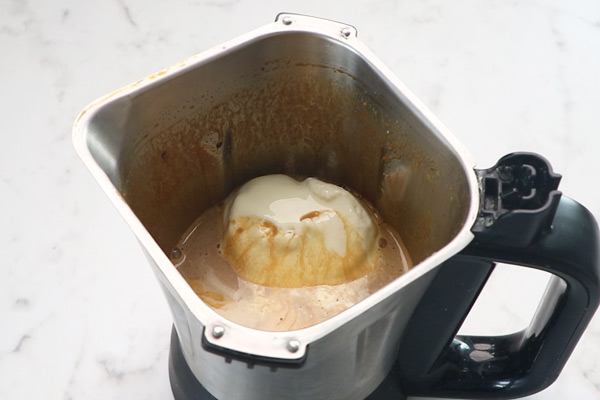
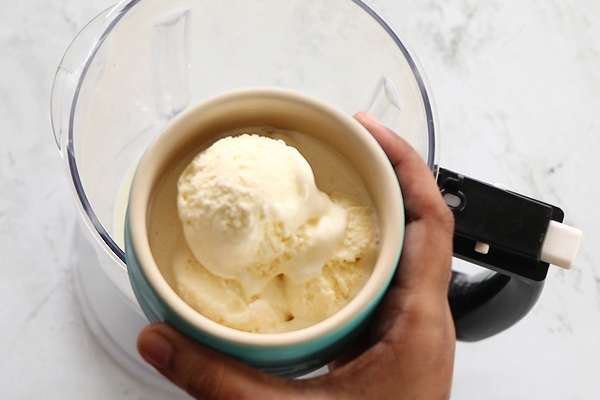
6.Add 2 big scoops vanilla ice cream.

add ice cream

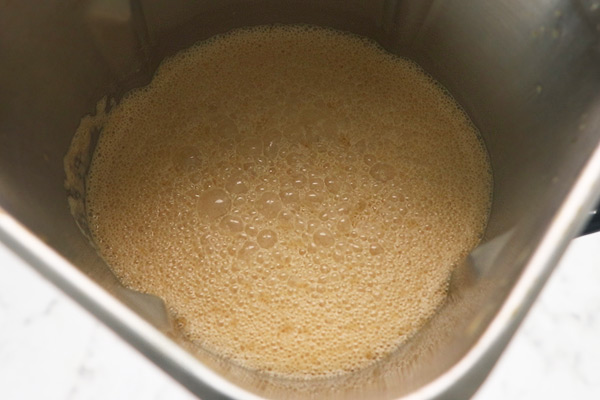
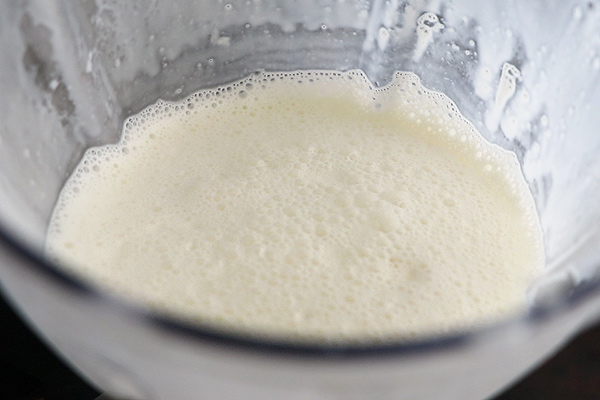
7.Blend until frothy and creamy.

blend until frothy

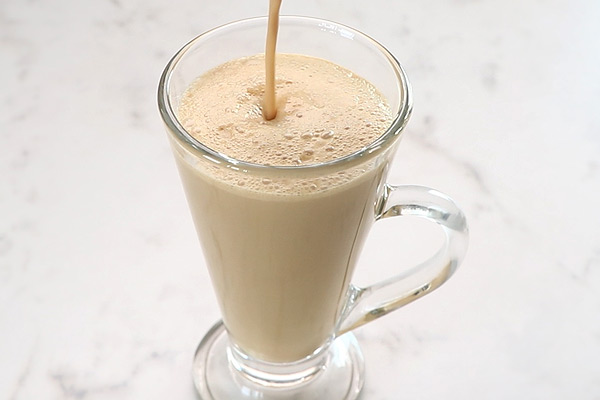
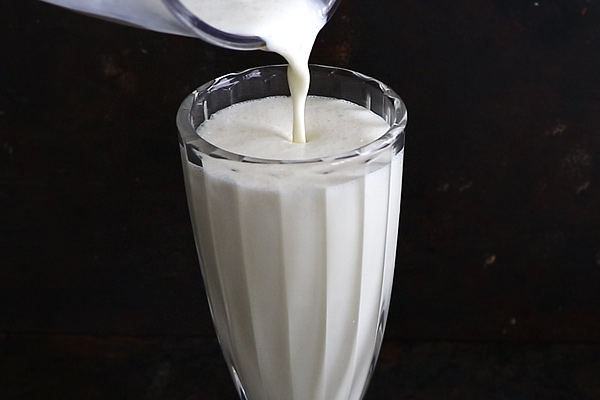
8.Pour into serving glass with the froth on top.

pour into serving glass

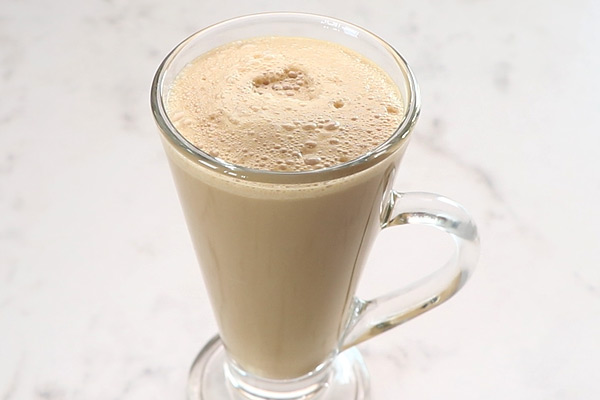
9.Cold Coffee is ready!

cold coffee is ready

10.Top it up with whipped cream. You can add a scoop of vanilla ice cream too.

top with whipped cream

11.Sprinkle a pinch of instant coffee powder and serve it chilled with a straw on the side.

sprinkle instant coffee powder

12.Enjoy cold coffee chilled!

cold coffee served with whipped  cream topping

Expert Tips

  • Milk - Make sure to use full cream milk for best rich creamy cold coffee.
  • Replacing ice cream - You can replace ice cream with Β½ cup frozen milk with ΒΌ teaspoon vanilla essence.
  • Coffee powder- You can add instant coffee powder or coffee decoction.
  • Chocolate flavor - Add 1 tablespoon chocolate syrup for a chocolatey cold coffee.
  • Ice cubes - I do not use ice cubes as it makes the cold coffee runny.
  • Topping - You can skip the whipped cream topping and alternatively drizzle chocolate syrup and serve it too You can even add a scoop of vanilla ice cream on top and serve it..

Serving & Storage

You can have Cold Coffee anytime of the day. You can make the coffee mixture and store it in fridge it keeps well for about 2 weeks. When serving time just blend the coffee syrup with milk, ice cream and serve chilled.

FAQS

1.Is cold coffee and iced coffee same?

Cold Coffee is more rich with the addition of ice cream with milk along with coffee syrup but Iced Coffee is slightly runny as it has just milk and coffee syrup with lots of ice cubes.

2.How can I make rich and creamy cold coffee?

Ice cream is the best option to make your cold coffee creamy and rich. Alternatively you can use frozen milk too which gives the same creamy rich texture.

3.What is coffee syrup or decoction?

Coffee syrup also popularly known as coffee decoction is nothing but coffee powder with hot water blended well.

4.Is cold coffee same as iced coffee?

No not exactly. Cold Coffee is milk based and is more creamy and rich whereas iced coffee is brewed coffee poured over lots of ice cubes, milk and sugar can or cannot be added.

5.Can I make cold coffee without mixer?

Yes you can add all ingredients to a tight jar and shake vigorously until frothy, thick and creamy.

cold coffee served with whipped  cream topping

If you have any more questions about thisΒ Cold Coffee RecipeΒ do mail me atΒ sharmispassions@gmail.com. In addition, follow me onΒ Instagram,Β Facebook,Β PinterestΒ ,YoutubeΒ andΒ TwitterΒ .

Tried thisΒ Cold Coffee Recipe? Do let me know how you liked it. Also tag us on Instagram @sharmispassions and hash tag it on #sharmispassions.

πŸ“– Recipe Card

Print

Cold Coffee Recipe | Cafe Style Cold Coffee

Cold Coffee is a popular chilled beverage made using coffee powder, milk, sugar and ice cream. Cafe Style Cold Coffee can be made easily at home with just 4 ingredients. Creamy, frothy and delicious cold coffee can be made in just 10 minutes and you will love it. Learn to make cafe style cold coffee the perfect way with step by step pictures and video.
Course Drinks
Cuisine Indian
Keyword 15 mins recipes
Prep Time 10 minutes
Total Time 10 minutes
Servings 1
Calories
Author Sharmilee J

Ingredients

  • 1 tablespoon instant coffee powder
  • 2 tablespoon sugar
  • 2 tablespoon hot water
  • 1 cup milk boiled cooled and chilled
  • 2 big scoops vanilla ice cream

Instructions

  • First to a mixer jar add 1 tablespoon coffee powder.
  • Add 2 tablespoon sugar to it.
  • Add 2 tablespoon hot water to it.
  • Blend this well first until frothy and creamy like this.
  • Add 1 cup chilled milk to it.
  • Add 2 big scoops vanilla ice cream.
  • Blend until frothy and creamy.
  • Pour into serving glass with the froth on top.
  • Cold Coffee is ready!
  • Top it up with whipped cream. You can add a scoop of vanilla ice cream too.
  • Sprinkle a pinch of instant coffee powder and serve it chilled with a straw on the side.
  • Enjoy cold coffee chilled!

Video

Notes

  • Milk - Make sure to use full cream milk for best rich creamy cold coffee.
  • Replacing ice cream - You can replace ice cream with Β½ cup frozen milk with ΒΌ teaspoon vanilla essence.
  • Coffee powder- You can add instant coffee powder or coffee decoction.
  • Chocolate flavor - Add 1 tablespoon chocolate syrup for a chocolatey cold coffee.
  • Ice cubes - I do not use ice cubes as it makes the cold coffee runny.
  • Topping - You can skip the whipped cream topping and alternatively drizzle chocolate syrup and serve it too You can even add a scoop of vanilla ice cream on top and serve it..

The post Cold Coffee Recipe (Cafe Style) appeared first on Sharmis Passions.
Poondu Kuzhambu | Garlic Kulambu

Poondu Kulambu is a spicy and flavorful curry made using garlic, tamarind, spice powders, herbs and spices. Poondu Kulambu is an excellent choice when we run out of vegetables and perfect to serve with rice, idli and dosa. Learn to make tasty Poondu Kuzhambu with step by step pictures and video.

poondu kuzhambu served with rice, sutta appalam and chow chow kootu

I've tried many versions of puli kuzhambu, each one different in its own way. But finally settled down with this one which is my keeper as its our family favorite. This is a very easy and quick recipe that you can prepare in just 20 minutes if you have all the ingredients in hand. I served it with rice, sutta appalam and sundakkai kootu. Do try and enjoy this poondu kuzhambu!

[feast_advanced_jump_to]

About Poondu Kuzhambu

'Poondu' in tamil means Garlic and 'Kuzhambu' means Curry so Poondu Kuzhambu translates to Garlic Curry. This Poondu Kuzhambu is a tangy spiced South Indian curry perfect to pair up with idli, dosa, rice, chapati etc. It is one of the easy and quick side dish that you can prepare for lunch to pair up with rice and use left overs for dinner with idli, dosa.

This South Indian curry is packed with flavors and keeps well for 2 days. It tastes best the next day with idli or dosa, pairs well with hot steamed rice too. I love it even with curd rice so delicious.

I love garlic in any form, so this kuzhambu is obviously my favorite. The spicy and tangy taste with a dash of sweetness is perfect for rice, idli or even dosa. This keeps well for 3-4 days. You can add any other vegetable of your choice like ladies finger, brinjal etc.

Trust me gugu loves this so much that he fondly tells amma I can have this daily, yes he likes it so very much that he asked me to pack it for lunchbox even after having it for 2 meals straight the previous day. If you like tangy garlic flavored dishes then this is a must try for you!

poondu kuzhambu served with rice, sutta appalam and chow chow kootu

Garlic Kuzhambu Video

Garlic Kuzhambu Ingredients

  • Garlic - Garlic is the main ingredient here which flavors the curry. You can use small garlic variety or big ones according to your liking.
  • Small Onion - Small Onion adds flavor to the curry.
  • Tamarind - Tamarind forms the base for this curry along with the grind paste.
  • Tempering - A basic tempering is done with mustard seeds, cumin seeds, fenugreek seeds, hing and curry leaves.
  • Spice powders - Turmeric powder, red chili powder and coriander powder is added to this curry.
  • Jaggery - Powdered jaggery is added at the last stage to balance the taste.
ingredients needed to make garlic kuzhambu

Similar Recipes

How to make Garlic Kuzhambu Step by Step

1.To a bowl add ΒΌ cup tamarind (tightly packed). Add around 1 and Β½ cups water to it.

soak tamarind

2.Crush it well and set aside.

crush well

3.To a kadai add 3 tablespoon gingelly oil. Gingelly oil is best to use however you can use any cooking oil too.

heat oil

4.Add 1 teaspoon mustard seeds let it splutter. Add Β½ teaspoon cumin seeds, ΒΌ teaspoon fenugreek seeds, few curry leaves and a pinch of hing. Let it crackle.

splutter the items

5.Add 10-15 small onion, 20-25 garlic cloves.

add onion, garlic

6.Fry until it turns slightly golden.

fry until it is golden

7.Add 1 and Β½ tablespoon red chili powder and 3 tablespoon coriander powder. Spice powders give thickness to this curry.

add spice powders

8.Saute well for few seconds.

saute well

9.Strain and add tamarind extract.

strain and tamarind extract

10.Add Β½ cup water.

add water

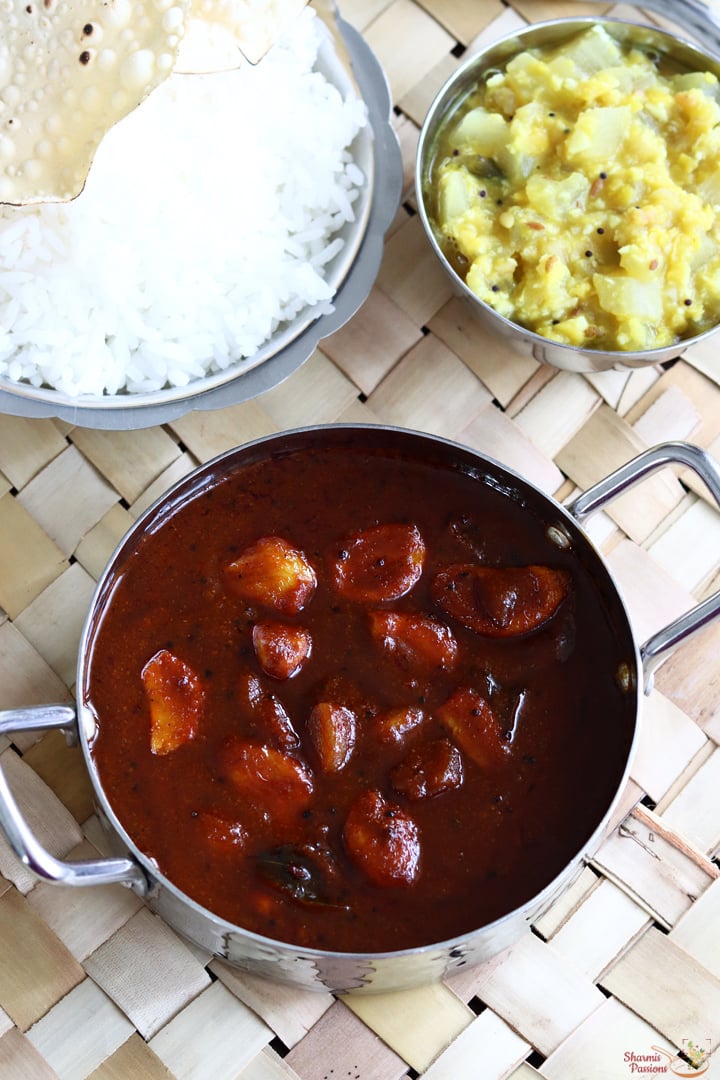
11.Cook covered for 15 minutes or until thick and oil separates. Stir in between to avoid sticking or burning at the bottom.

cook covered

12.Oil separates and the curry becomes thick. Add 1 teaspoon jaggery powder to it and mix well.

add jaggery powder

13.Switch off.

switch off

Serve it hot with rice and vegetable of your choice.

Expert Tips

  • Garlic - I have used the bigger variety as the small ones easily gets dissolves with the simmering for more time.
  • Tamarind - Soak tamarind in hot water then crush it which makes the task easier and yields more pulp.
  • Spice powders - The spice powders gives thickness to the curry so add as mentioned. Adjust spice level according to your preference.
  • Vegetables - You can also add vegetables like brinjal, ladies finger with garlic. Just sautΓ© the veggies like we do for garlic and onion and follow the same procedure.
  • Jaggery - You can omit jaggery if you don't like sweet taste in your curryΒ  but we love it as the tangy spicy taste compliments well with the sweetness.
  • Spice variation - This is medium spicy, if you like it more spicy add 2 tablespoon red chili powder and 4 tablespoon coriander powder.

Serving & Storage

Serve Poondu Kuzhambu with rice and any stir fried vegetables, tastes best when had fresh. Keeps well in room temperature for 5-6 hours, refrigerate it and it keeps well for 2 days in fridge.

FAQS

1.There is so much oil, Is it healthy?

We use gingelly oil for this curry and gingelly oil is a healthy addition to your diet. If you prefer to just have it for one meal then reduce oil and consume it soon. Adding more oil increases shelf life and taste too.

2.Can I replace gingelly oil?

Yes you can replace gingelly oil or sesame oil with regular cooking oil. But the taste varies as gingelly oil is best for this curry.

3.Can I add coconut?

Yes you can grind 3 tablespoon coconut to a fine paste and add it to get more volume.

4.Is jaggery mandatory?

No you can skip jaggery but I would recommend adding it for the perfect balance and to make this curry tangy.

5.Can we use small sized garlic?

Yes you can use but it may break or get dissolved easily. So I would recommend adding big or medium sized garlic.

poondu kuzhambu served with rice, sutta appalam and chow chow kootu

If you have any more questions about this Poondu Kuzhambu Recipe do mail me at sharmispassions@gmail.com. In addition, follow me on Instagram,Β Facebook,Β PinterestΒ ,YoutubeΒ andΒ TwitterΒ .

Tried this Β Poondu Kulambu Recipe? Do let me know how you liked it. Also tag us on Instagram @sharmispassions and hash tag it on #sharmispassions.

πŸ“– Recipe Card

Print

Poondu Kulambu Recipe | Garlic Kuzhambu Recipe

Poondu Kulambu is a spicy and flavorful curry made using garlic, tamarind, spice powders, spices and herbs. Poondu Kulambu is an excellent choice when we run out of vegetables & perfect to have with rice, idli and dosa. Learn to make tasty Poondu Kuzhambu with step by step pictures and video.
Course Lunch, Side Dish
Cuisine Indian
Keyword curry, curry recipes, garlic recipes, healthy recipes, kuzhambu, kuzhambu recipes, lunch recipes, recipes, veg recipes
Prep Time 15 minutes
Cook Time 30 minutes
Total Time 45 minutes
Servings 2 people
Calories 286kcal
Author Sharmilee J

Ingredients

  • 10-15 small onion
  • 20-25 garlic
  • ΒΌ teaspoon turmeric powder
  • 1 and Β½ tablespoon ed chili powder
  • 3 tablespoon coriander powder
  • 1 teaspoon jaggery powder
  • salt to taste

To temper

  • 3 tablespoon gingelly
  • 1 teaspoon mustard seeds
  • Β½ teaspoon cumin seeds
  • ΒΌ teaspoon fenugreek seeds
  • a pinch hing
  • few curry leaves

For tamarind extract

  • ΒΌ cup tamarind
  • 1 and Β½ cups water

Instructions

  • To a bowl add ΒΌ cup tamarind (tightly packed). Add around 1 and Β½ cups water to it.
  • Crush it well and set aside.
  • To a kadai add 3 tablespoon gingelly oil.
  • Add 1 teaspoon mustard seeds let it splutter. Add Β½ teaspoon cumin seeds, ΒΌ teaspoon fenugreek seeds, few curry leaves and a pinch of hing. Let it crackle.
  • Add 10-15 small onion, 20-25 garlic.
  • Fry until it turns slightly golden.
  • Add 1 and Β½ tablespoon red chili powder and 3 tablespoon coriander powder.
  • Saute well for few seconds.
  • Strain and add tamarind extract.
  • Add Β½ cup water.
  • Cook covered for 15 minutes or until thick and oil separates. Stir in between to avoid sticking or burning at the bottom.
  • Oil separates and the curry becomes thick. Add 1 teaspoon jaggery powder to it and mix well.
  • Switch off.

Video

Notes

  • You can omit jaggery if you don't like sweet taste in your curryΒ  but we love it as the tangy spicy taste compliments well with the sweetness.
  • The spice powders gives thickness to the curry so add as mentioned. Adjust spice level according to your preference.
  • You can also add vegetables like brinjal, ladies finger with garlic. Just saute the veggies like we do for garlic and onion and follow the same procedure.
  • This is medium spicy, if you like it more spicy add 2 tablespoon red chili powder and 4 tablespoon coriander powder.

Nutrition

Serving: 75g | Calories: 286kcal | Carbohydrates: 42g | Protein: 6g | Fat: 12g | Saturated Fat: 1g | Polyunsaturated Fat: 3g | Monounsaturated Fat: 7g | Trans Fat: 0.04g | Sodium: 995mg | Potassium: 697mg | Fiber: 7g | Sugar: 18g | Vitamin A: 1419IU | Vitamin C: 289mg | Calcium: 167mg | Iron: 3mg

The post Poondu Kuzhambu | Garlic Kulambu appeared first on Sharmis Passions.
Pudina Rice Recipe | Mint Pulao Recipe

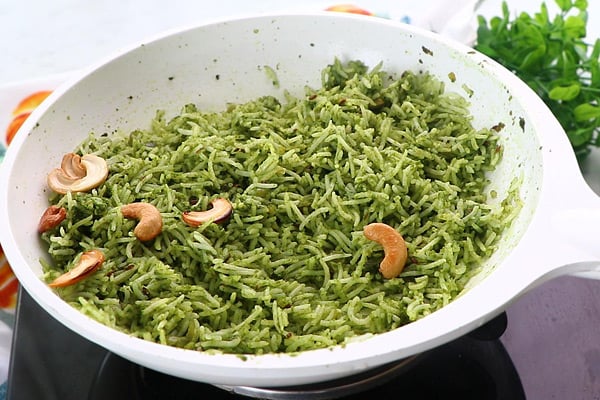
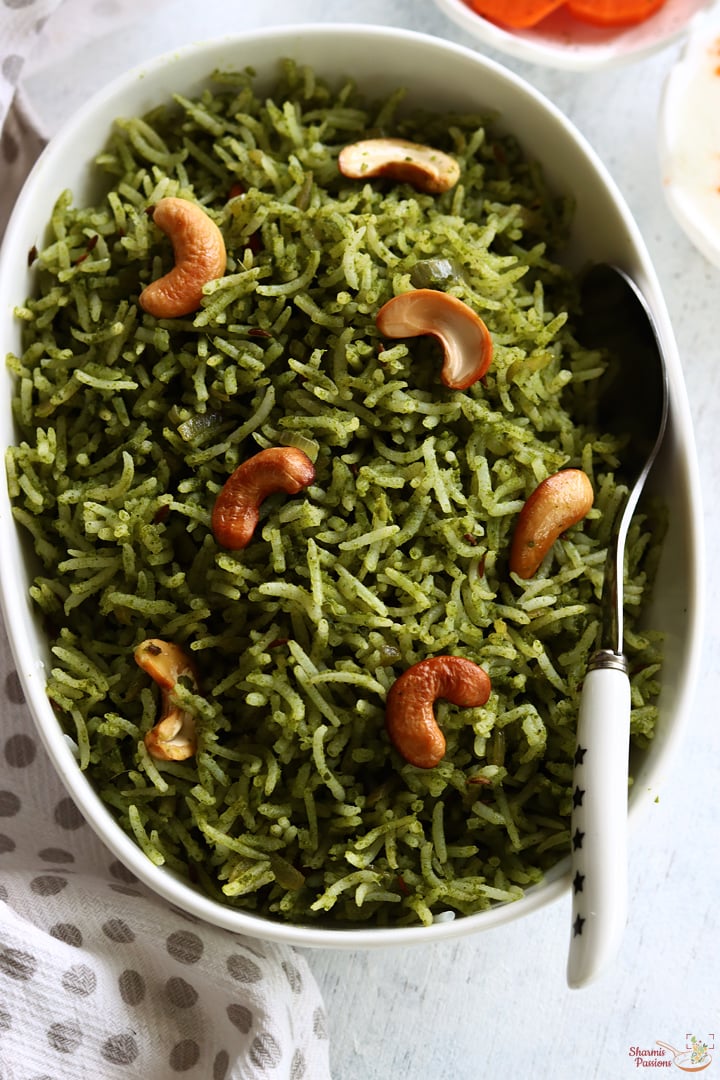
Pudina Rice is an aromatic and flavorful one pot meal made using basmati rice, mint leaves, spices and herbs. Pudina Rice is enjoyed with raita and a good choice to make it for a weekend lunch. The vibrant green color makes this variety rice tempting and also wholesome yet easy and quick to make.

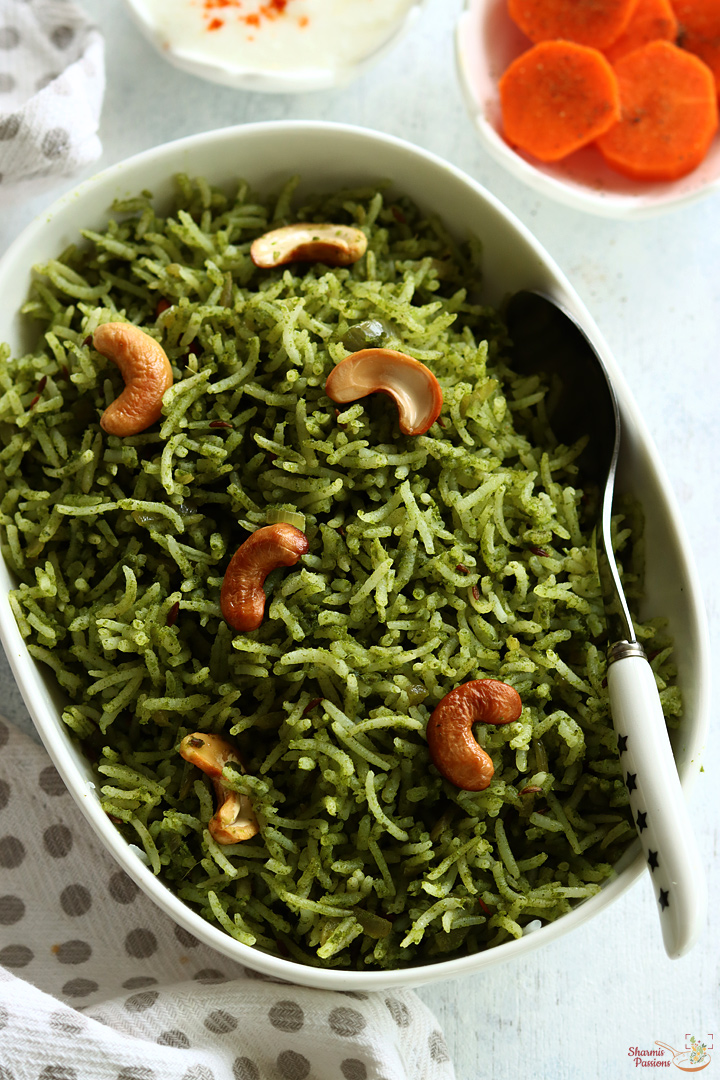
mint rice served with curd, carrot salad

I always love the flavor of mint leaves either in chutney or thogayal or biriyani. Biryani or Pulao is not complete without the addition of mint leaves, it adds so much flavor to the dish. This pudina rice is very simple and easy to make, do try this and enjoy!

[feast_advanced_jump_to]

About Pudina Rice(Mint Rice)

'Pudina' in hindi means mint leaves so Pudina Rice is a flavored one pot meal made with mint leaves and rice as main ingredients. This Pudina Rice is made pulao style and is very tasty. Pudina or Mint leaves is an Indian herb used most commonly for making chutney, biryani, pulao, curry, dips etc.

The natural coolness and refreshing aroma of mint balances beautifully with the heat of green chillies and whole spices like cinnamon, cloves, and bay leaf. Lightly sautΓ©ed onions along with the masala paste adds body and texture, making it a wholesome yet comfort-style meal.

This mint rice is a great way to use up a bunch of mint leaves which is lying around unused. This tastes more like pulao also very easy and quick to make. It is perfect to pack for lunchbox for kids and office goers. It tastes best when resting time is given.

This pulao style pudina rice is super aromatic and flavorful perfect for lunch. It goes well with raita or even plain curd. You can even make it in a pot or pressure cooker or even instant pot.

I make mint rice when I am pressed for time and want to finish the lunch with one pot. This pudina or mint rice is not only easy and quick to make, it makes a tasty meal when paired with raita or just plain curd. You can add vegetables like carrot, peas or even potatoes to make more wholesome.

mint rice served with curd, carrot salad

Pudina Rice Video

Similar Recipes

Mint Rice Ingredients

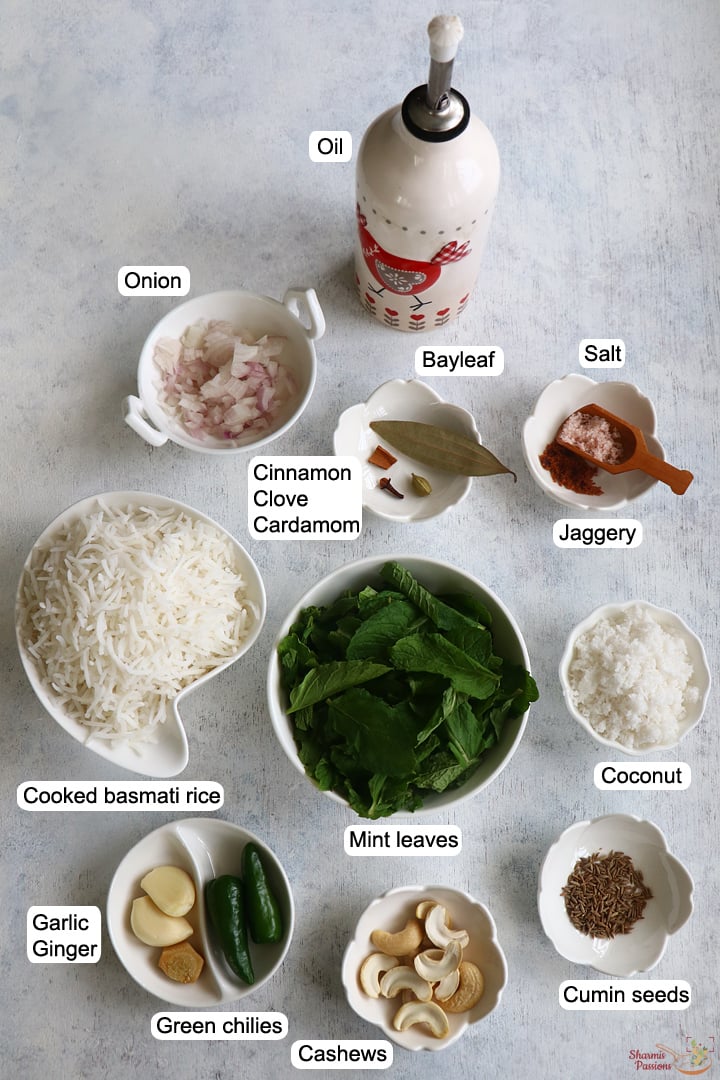
  • Rice - Use any long grained rice or basmati rice for best results. However you can use regular parboiled rice too. Cook it grain separated and use it.
  • Mint leaves - Use fresh tender mint leaves that is fresh. I used home grown mint leaves from my mini garden.
  • Whole spices - Bay leaf, cinnamon, cloves and cardamom is added while tempering.
  • Cumin seeds - added while tempering to give it a warm flavor and taste.
  • Cashews - Cashews are fried until golden brown and added. You can replace it with peanuts too.
  • Jaggery - Jaggery balances the herbs and spices added, so do add it.
  • Coconut - It gives flavor, taste and texture to the pulao.
  • Ginger, Garlic - added along with other ingredients to make the masala paste.
  • Green chilies - added for heat. You can even add little red chili powder if you want it more spicy.
  • Oil - to fry cashews and to cook the masala paste.
ingredients needed to make mint rice

How to make Pudina Rice Step by Step

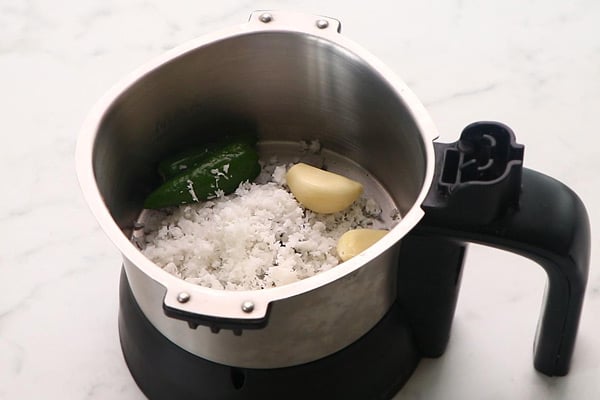
1.To make masala paste - Add 2 tablespoon coconut, 1 inch ginger, 2 green chilies, 2 garlic to a mixer.

add items to grind

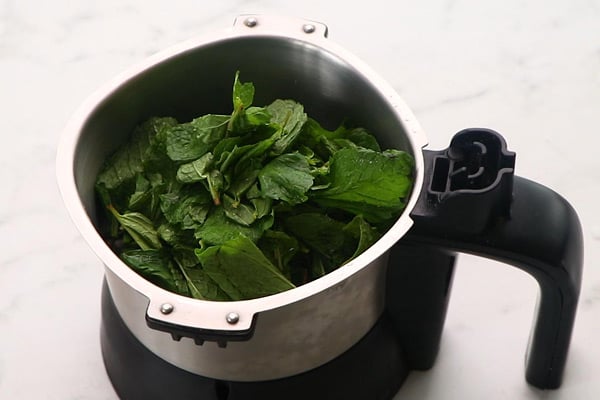
2.Rinse and add 2 cups mint leaves.

add mint leaves

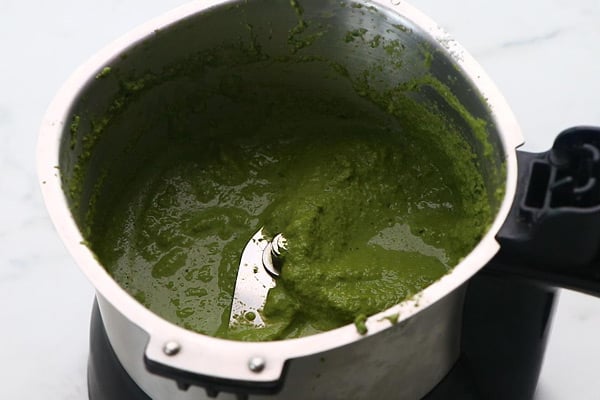
3.Add little water and make a fine paste like this, Set aside.

make a fine paste

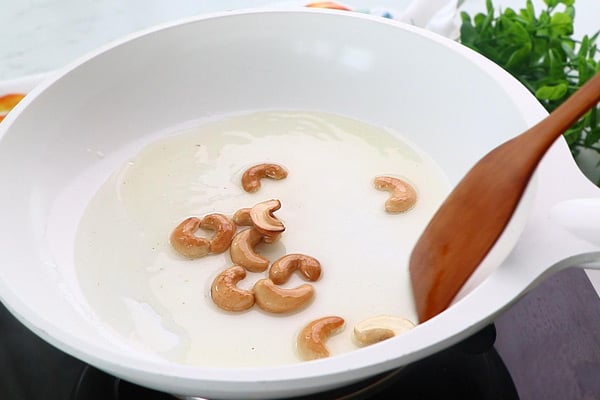
4.Heat 1 and Β½ tablespoon oil, add around 12 cashews, fry until golden brown, remove and set aside.

fry cashews

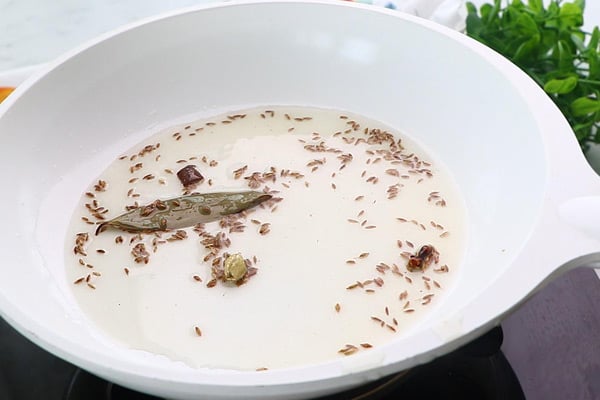
5.Add 1 small bay leaf, 1 clove, 1 cardamom, Β½ inch cinnamon and Β½ teaspoon cumin seeds. Let it splutter, give a quick sautΓ©.

add whole spices, cumin seeds

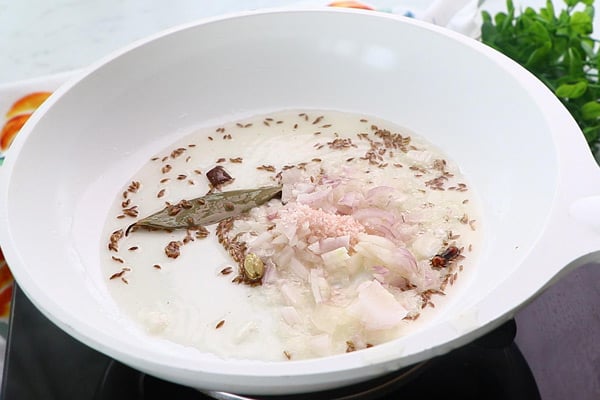
6. Add Β½ cup chopped onion along with salt to taste.

add onion, salt

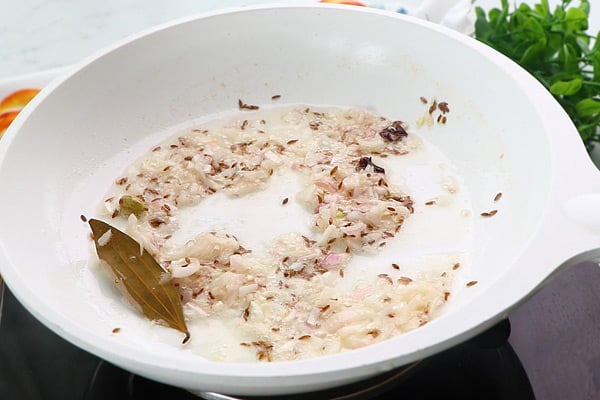
7.Saute until onions turn slightly golden.

saute until golden

8.Add mint paste.

add mint paste

9.Saute until raw smell leaves, it turns dark green. Add 1 tablespoon oil.

add oil

10.Add 1 teaspoon jaggery. Give a quick saute.

add jaggery

11.Add 2 cups cooked basmati rice.

add basmati rice

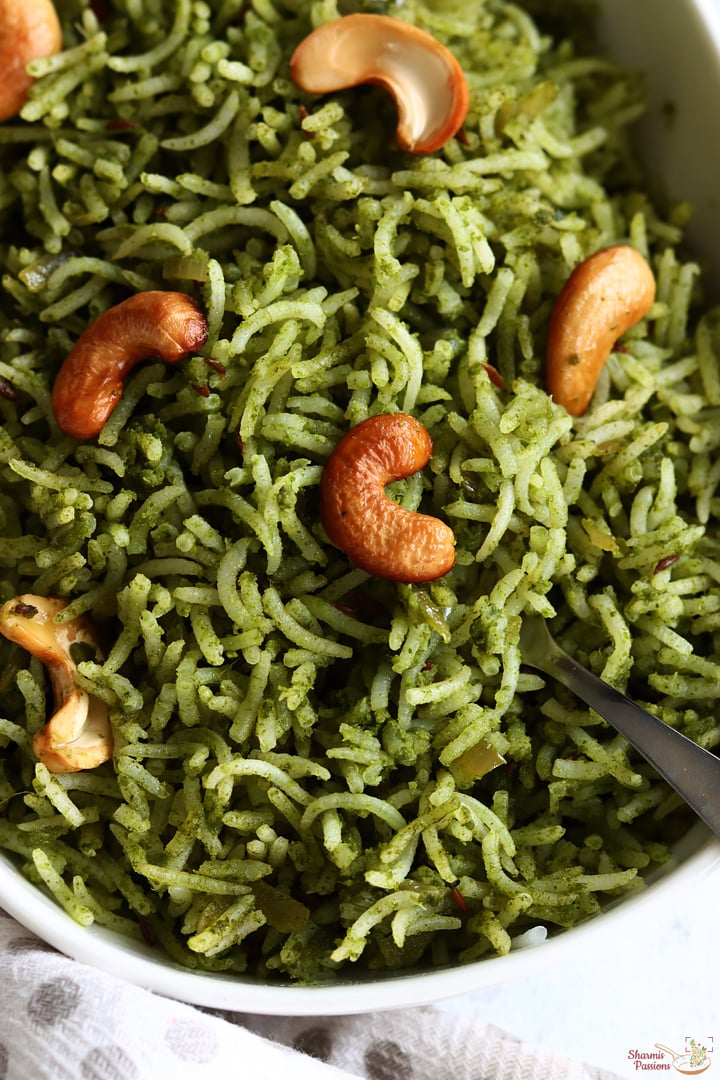
12.Mix it well until the masala coats well. Check and adjust with salt. Finally add fried cashews, give a quick mix and switch off.

mix it well

Expert Tips

  • Soaking - Soaking rice for 20 minutes makes it soft and fluffy. I always soak the rice and cook.
  • Rice - Cook rice grain separated. You can use any long grained rice or regular rice too.
  • Mint leaves - Use fresh mint leaves, avoid stale leaves as they taste bitter and dull the color.
  • Variation - You can add ΒΌ cup coriander leaves for added flavor. You can replace oil with ghee or use half and half. You can add 1 teaspoon lemon juice at the end for more flavor.
  • Pairing - Pair it with plain curd or any raita of your choice.

Serving & Storage

Pudina rice is best with onion raita or plain curd. It can be served with papad too. This keeps good in fridge for 1 day. You can reheat while serving if in fridge.

FAQS

1.Which rice is best to use?

Long grained rice is best to use as it gives it a pulao taste. How ever you can use regular cooking rice too. Seeraga samba tastes good too.

2.Can I add coriander leaves?

Yes you can add 1 cup coriander leaves for a variation and different flavor, taste.

3.How to maintain the bright green color?

Do not over cook but make sure the raw smell leaves. You can even add lemon juice, turmeric powder to retain the vibrant green color.

4.Can I make it without onion, garlic?

Yes you can skip them. Instead add little more coconut, roasted gram dal while grinding.

5.How long does mint rice stay fresh?

Mint rice stays good for 5-6 hours in room temperature and 1 day in fridge.

mint rice served with curd, carrot salad

If you have any more questions about this Pudina Rice Recipe do mail me at sharmispassions@gmail.com. In addition, follow me on Instagram,Β Facebook,Β PinterestΒ ,YoutubeΒ andΒ TwitterΒ .

Tried this Pudina Rice Recipe? Do let me know how you liked it. Also tag us on Instagram @sharmispassions and hash tag it on #sharmispassions.

πŸ“– Recipe Card

Print

Pudina Rice Recipe | Mint Rice Recipe

Pudina Rice is an aromatic and flavorful one pot meal made using basmati rice, mint leaves, spices and herbs. Pudina Rice is enjoyed with raita and a good choice to make it for a weekend lunch. The vibrant green color makes this variety rice tempting and makes it wholesome yet easy and quick to make.
Course Lunch, Main Course
Cuisine Indian
Keyword 30 mins recipes, 30 mins rice recipes, Kids Lunch Box, kids lunch box recipes, kids lunchbox, kids lunchbox menu, lunch box menu, lunch box recipes, lunch recipes, lunchbox recipes, pulao, pulao recipes, rice recipes
Prep Time 10 minutes
Cook Time 20 minutes
Total Time 30 minutes
Servings 2
Calories 545kcal
Author Sharmilee J

Ingredients

  • 1 tablespoon oil
  • 2 cups cooked basmati rice
  • Β½ cup chopped onion
  • 1 teaspoon jaggery
  • salt to taste

To temper

  • 1 and Β½ tablespoon oil
  • 12 cashews
  • 1 small bay leaf
  • 1 small clove
  • 1 small cardamom
  • Β½ inch cinnamon
  • Β½ teaspoon cumin seeds

For the masala paste

  • 2 cups mint leaves
  • 2 tablespoon coconut
  • 1 inch ginger
  • 2 green chilies
  • 2 garlic

Instructions

  • To make masala paste - Add 2 tablespoon coconut, 1 inch ginger, 2 green chilies, 2 garlic to a mixer.
  • Rinse and add 2 cups mint leaves.
  • Add little water and make a fine paste like this, Set aside.
  • Heat 1 and Β½ tablespoon oil, add around 12 cashews, fry until golden brown, remove and set aside.
  • Add 1 small bay leaf, 1 clove, 1 cardamom, Β½ inch cinnamon and Β½ teaspoon cumin seeds. Let it splutter, give a quick sautΓ©.
  • Add Β½ cup chopped onion along with salt to taste.
  • Saute until onions turn slightly golden.
  • Add mint paste.
  • Saute until raw smell leaves, it turns dark green. Add 1 tablespoon oil.
  • Add 1 teaspoon jaggery. Give a quick saute.
  • Add 2 cups cooked basmati rice.
  • Mix it well until the masala coats well. Check and adjust with salt. Finally add fried cashews, give a quick mix and switch off.

Video

Notes

  • Soaking - Soaking rice for 20 minutes makes it soft and fluffy. I always soak the rice and cook.
  • Rice - Cook rice grain separated. You can use any long grained rice or regular rice too.
  • Mint leaves - Use fresh mint leaves, avoid stale leaves as they taste bitter and dull the color.
  • Variation - You can add ΒΌ cup coriander leaves for added flavor. You can replace oil with ghee or use half and half. You can add 1 teaspoon lemon juice at the end for more flavor.
  • Pairing - Pair it with plain curd or any raita of your choice.

Nutrition

Serving: 125g | Calories: 545kcal | Carbohydrates: 102g | Protein: 10g | Fat: 10g | Saturated Fat: 6g | Polyunsaturated Fat: 1g | Monounsaturated Fat: 2g | Cholesterol: 19mg | Sodium: 1063mg | Potassium: 736mg | Fiber: 7g | Sugar: 5g | Vitamin A: 262IU | Vitamin C: 32mg | Calcium: 65mg | Iron: 2mg

The post Pudina Rice Recipe | Mint Pulao Recipe appeared first on Sharmis Passions.
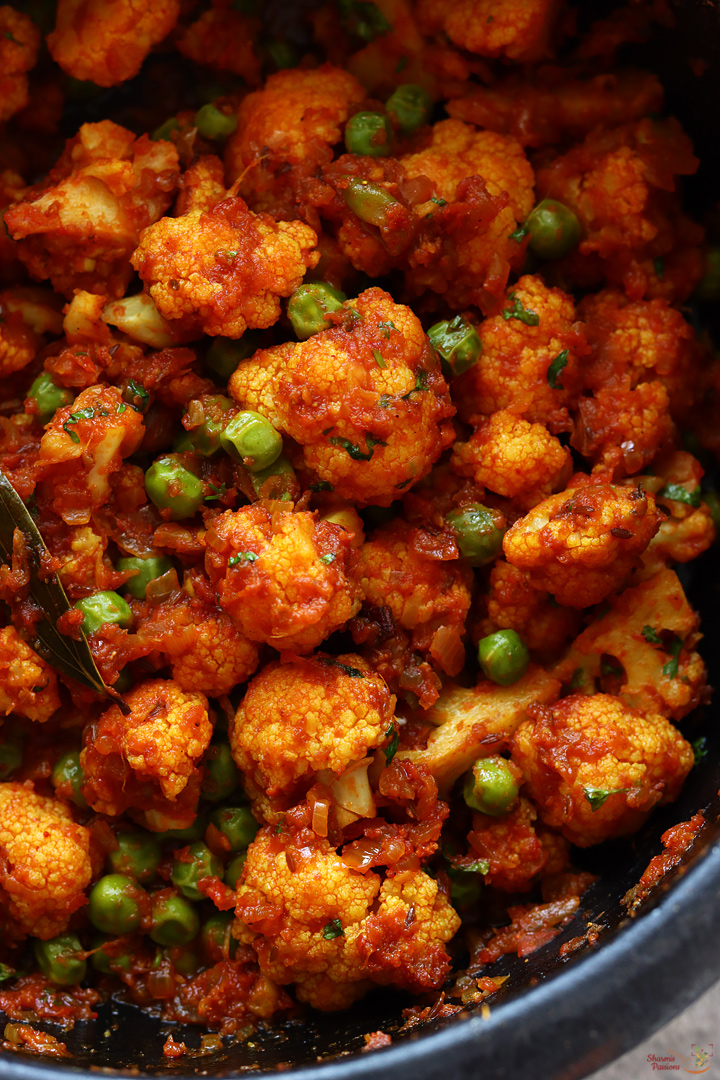
Gobi Matar | Gobi Matar Masala

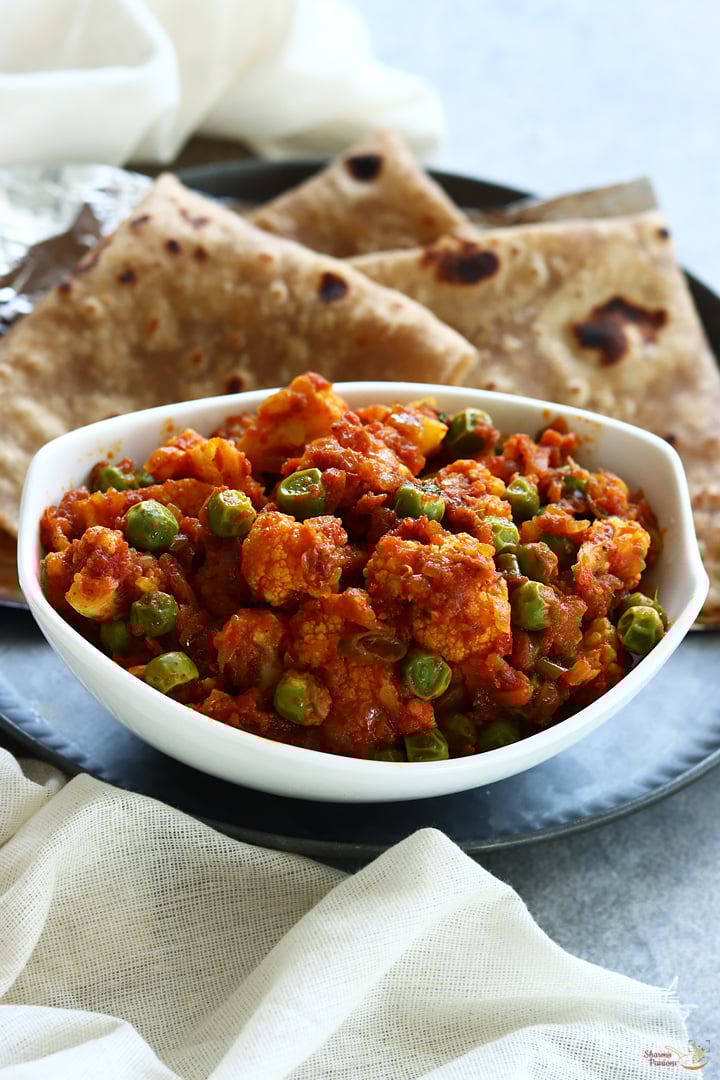
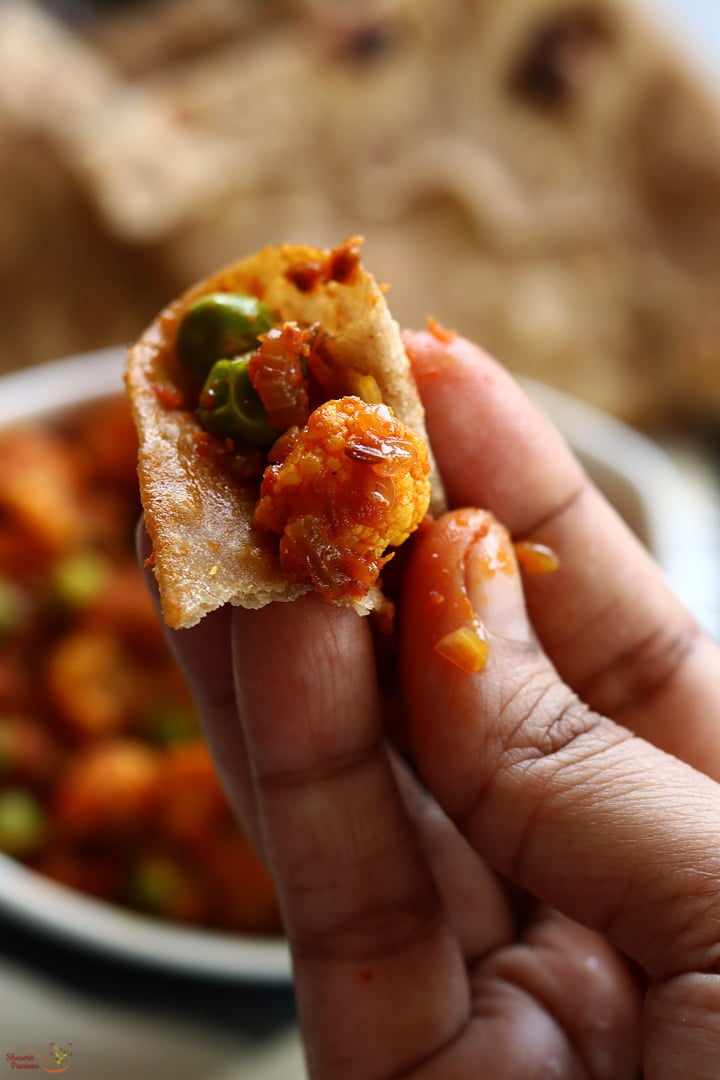
Gobi Matar is a simple and tasty North Indian style curry made with cauliflower and green peas cooked along with onion, tomato masala and a few Indian spices. It is one of the semi-dry sabzi which always brings that comfort feel in every bite. The mix of soft gobi and sweet green peas coated in a flavorful masala makes it wholesome and satisfying.

Gobi Matar Masala is healthy and light too as it uses less oil and no cream. The cauliflower gives that mild flavor and peas add a nice sweetness which balances the spice very well. Gobi Matar can be made in very short time and is perfect for lazy dinner times or a simple lunch meal. It is also a great choice when you want something delicious but not heavy.

[feast_advanced_jump_to]

About Gobi Matar

'Gobi' in Hindi means cauliflower and Matar is peas so Gobi Matar is basically a semi dry sabzi made with cauliflower and peas. Gobi Matar is one of the popular dry type subzi made in most North Indian homes.

It has the mild spice of masalas along with the natural taste of vegetables which makes it so comforting. The base is made using onion and tomato which is cooked till thick and flavorful. Gobi soaks the masala very nicely and each bite has that rich taste even without cream or any rich ingredients.

The texture of this curry is semi-dry, not fully gravy type but also not dry. It coats the vegetables nicely with masala making it perfect for both rice and chapathi. Red chilli powder, turmeric powder and coriander powder gives it a nice color and aroma. Garam masala adds a warm taste and coriander leaves in the end gives freshness to the dish.

Gobi Matar Video

That one extra step of roasting cauliflower after cooking makes a lot of difference in taste do try and see. Gobi Matar is healthy and at the same time simple & quick to make for roti and rice meal. It pairs up well with rice, roti, pulao, jeera rice etc. I love dry subzis with rotis and this is one of my favorites. Even kids are fond of vegetables with roti so I make it often.

You can find many variations for this curry in different homes. Some add little coconut for richness, some make it without tomato to keep it dry. Few even add potato or carrot along with gobi and matar. It is one of those recipes that you can easily adjust as per your taste. It is healthy, flavorful and also light on stomach.

I usually make this Gobi Matar often when fresh peas starts coming in season. The smell of masala cooking with cauliflower fills the kitchen so beautifully. It is one of my favorite combo which I never get bored, especially with hot phulkas or simple jeera rice.

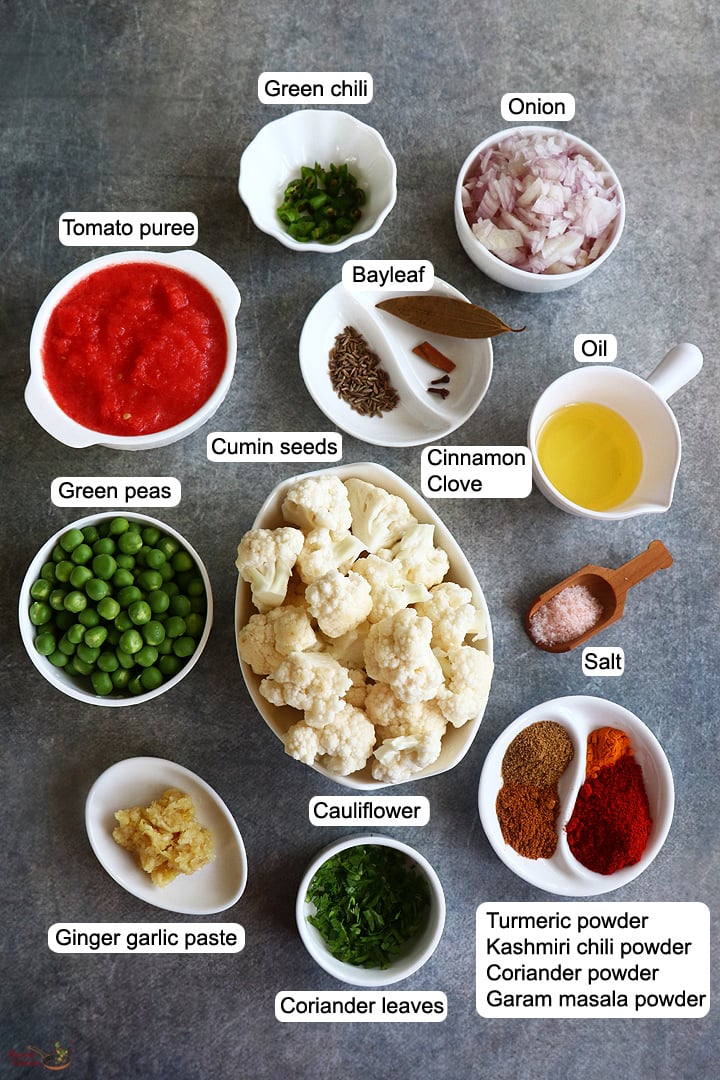
Gobi Matar Ingredients

  • Cauliflower - I have used fresh cauliflower florets here. It gives a soft bite and absorbs masala very well.
  • Green Peas - I have used fresh peas as it gives light sweetness and bright color. Frozen peas can also be used, just cook it for a while before adding.
  • Onion - It gives light sweetness and makes the base thick. I added finely chopped so that masala mixes well.
  • Tomato - I have pureed and added it for smooth texture. It give nice tangy taste and bright color to the curry.
  • Green chilies, Ginger Garlic Paste - Green chilies adds heat and flavor while ginger garlic paste adds deep flavor and removes raw smell from veggies. You can also crush the ginger and garlic and add it.
  • Turmeric powder, Red Chilli Powder - Turmeric powder adds flavor, Kashmiri chili powder adds heat and color. You can reduce or increase on your taste preference.
  • Coriander Powder - I have used for earthy flavor and light thickness in the masala. You can add little cumin powder too for different aroma.
  • Garam Masala Powder - I add at final for flavor and warmth. If you do not have you can skip it.
  • Coriander Leaves - I used finally for garnish, it gives freshness and nice smell to the curry.
  • Oil - I have used oil for tempering, ghee can also be used for more rich taste.
  • Bay leaf, Cinnamon, Cloves, Cumin Seeds - These are added while tempering, gives light spice flavor and aroma to the curry.

Why This Recipe Works

  • This is simple and quick to make using easily available ingredients.
  • It's a light and healthy full of flavors from masala and fresh vegetables.
  • The gravy texture can be adjusted easily from dry to semi-gravy as you like.
  • It goes perfectly with rice, chapathi, phulka or even with plain paratha.
  • The mild spice and taste makes it good for everyone including kids.

Similar Recipes

How to make Gobi Matar Step by Step

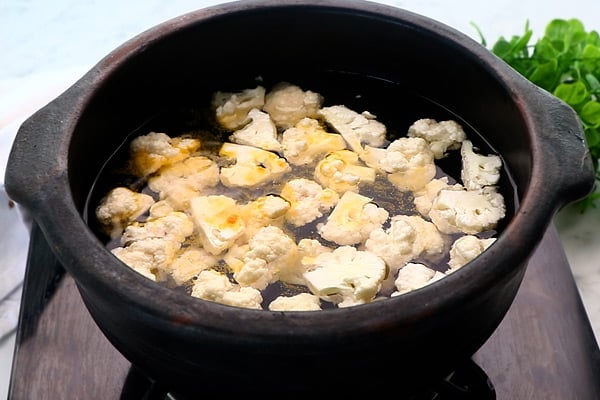
1.To a pot add around 3 cups water, 2 heaped cups cauliflower florets, cut into small florets like shown. Add salt to taste along with a pinch of turmeric powder.

2.Cook for 5 minutes or until cauliflower turns slightly transparent. Remove the cooked florets and set aside.

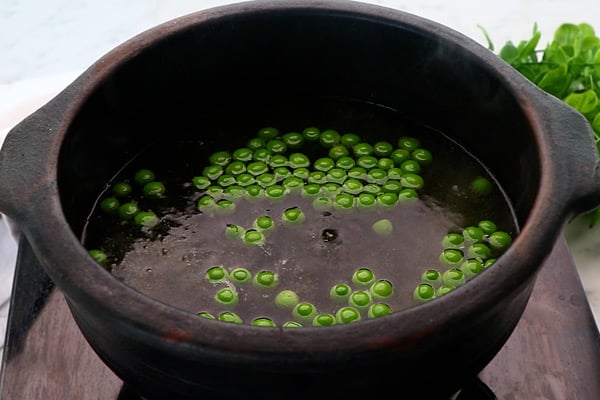
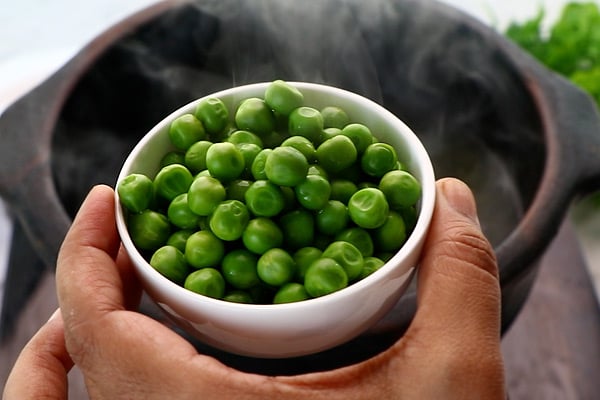
3.Add Β½ cup heaped green peas and cook until soft.

4.Drain water, remove the peas and set aside.

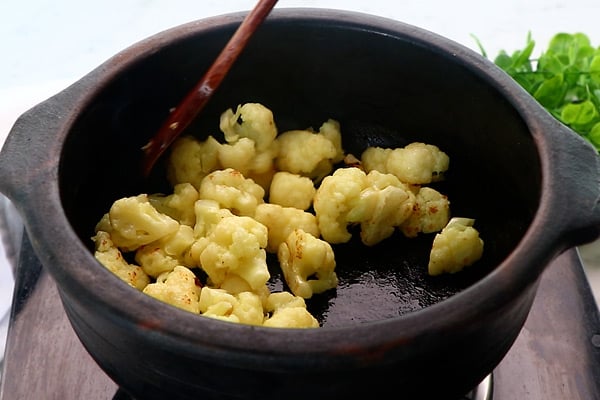
5.Heat 1 tablespoon oil add cooked cauliflower florets and toast until slightly golden at the edges. Remove and set aside.

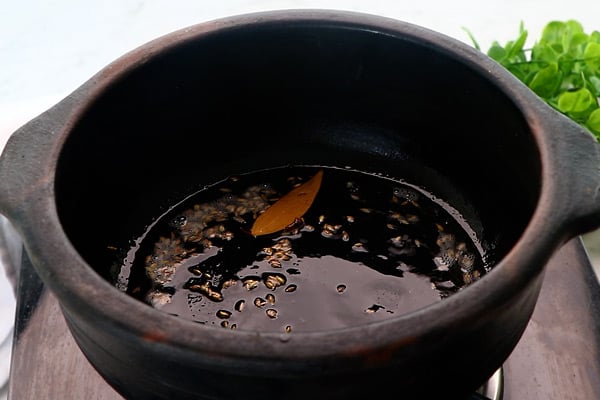
6.Add 2 tablespoon oil add 1 small bay leaf, one 1 inch cinnamon, 2 cloves and 1 teaspoon cumin seeds. Give a quick saute.

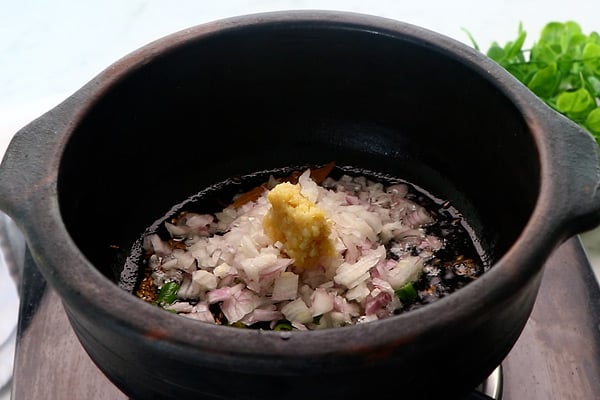
7.Add 1 green chili (chopped finely), 1 medium sized onion(chopped finely), 1 teaspoon ginger garlic paste and salt to taste.

8.Saute until it turns golden.

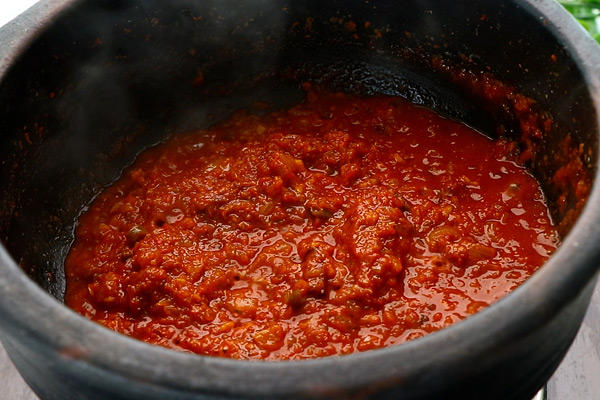
9.Add 1 cup tomato puree, I used 3 medium sized tomatoes to get 1 cup puree. Saute well for 2 minutes.

10.Cook covered for 10 minutes, stir in between to avoid burning at the bottom.

11.Now open give a quick saute then add ΒΌ teaspoon turmeric powder, 1 tablespoon kashmiri chili, Β½ teaspoon coriander powder and Β½ teaspoon garam masala powder.

12.Saute well until raw smell leaves then add little water and let it boil for few minutes.

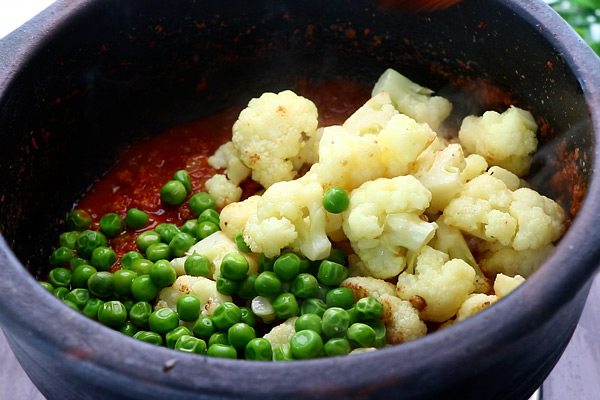
13.Add cooked cauliflower and peas.

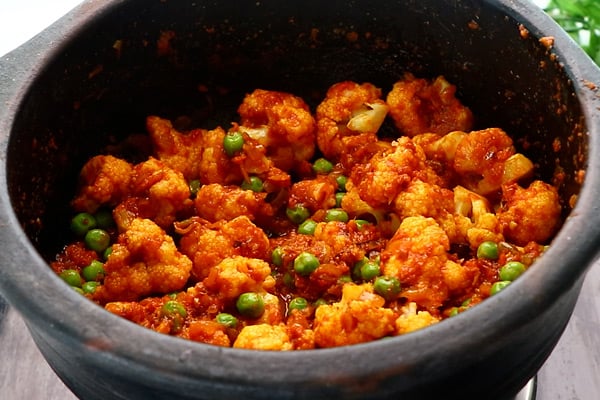
14.Mix it well until the masala coats well.

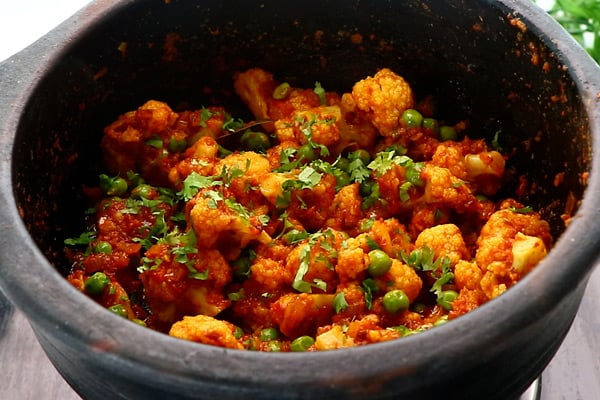
15.Finally add 1 tablespoon coriander leaves, give a quick mix and switch off.

Serve it with chapathi or phulka.

Expert Tips

  • Cleaning - I add cauliflower florets in warm water and salt for a while to get rid of worms if any.
  • Cooking - Cook cauliflower and peas just soft not mushy.
  • Do Not Overcook - I cook the gobi and peas at soft yet have small crunch texture . Overcooking will make it mushy and loose the mild crunch.
  • Toasting - Toast cooked cauliflower until it turns golden at the edges, this step is optional but enhances the taste of the curry.
  • Frying - I completely cook onion, tomato and spices till raw smell goes fully. This small step gives nice flavor and makes curry taste better.
  • Fresh Ingredients - Use fresh peas and cauliflower for best taste. Old vegetables do not hold the shape well.
  • Make it Richer - You can add small spoon of cream or ground coconut paste at end. I do this sometimes when making for guests.

Serving and Storage

Serve Gobi Matar Curry with chapati, phulka or even plain rice. It also taste nice with mild pulao or simple jeera rice. Keep leftover curry in fridge for one day in a tight box. While reheating, sprinkle some water as gravy become thick after cooling. It taste even better after few hours when masala get mixed well with vegetables.

FAQS

1.Can I skip peas in this curry?

Yes can skip, but peas give nice sweetness and bright color, so better to add if you have.

2.Can I skip onion and garlic?

Yes you can skip both. Add more tomato and few extra spices to bring the taste.

3.Can I make this curry in advance?

Yes you can make it few hours before and warm it up before serving. Add little water when reheating.

4.Can I add potato along with gobi?

Yes potato goes well in this curry. You can boil and then mix it with cauliflower and peas.

5.Can I try frozen cauliflower?

Yes you can, just thaw it first and cook only for short time else it turn too soft.

If you have any more questions about this Gobi Matar Recipe do mail me at sharmispassions@gmail.com. In addition, follow me on Instagram, Facebook,Β  Pinterest, Youtube andΒ TwitterΒ .

Tried this Gobi Matar Recipe? Do let me know how you liked it. Also tag us on Instagram @sharmispassions and hash tag it on #sharmispassions.

πŸ“– Recipe Card

Print

Gobi Matar Recipe | Gobi Matar Masala Recipe

Gobi Matar is a simple and tasty North Indian style curry made with cauliflower and green peas cooked along with onion, tomato masala and a few Indian spices. It is one of the semi-dry sabzi which always brings that comfort feel in every bite. The mix of soft gobi and sweet green peas coated in a flavorful masala makes it wholesome and satisfying.
Course Lunch, Side Dish
Cuisine Indian
Keyword curry, curry recipes, gobi recipes, Kerala Meal Sidedish, Kids Lunch Box, kids lunch box recipes, kids lunchbox, kids lunchbox menu, lunch box menu, lunch box recipes, lunch recipes, lunchbox recipes, matar recipes, meals, roti sidedish, Side Dish, veg recipes, vegetable
Prep Time 10 minutes
Cook Time 25 minutes
Total Time 35 minutes
Servings 3 people
Calories 111kcal
Author Sharmilee J

Ingredients

  • 2 heaped cup cauliflower
  • Β½ heaped cup fresh green peas
  • salt to taste
  • water as needed
  • 2 tablespoon oil
  • 1 green chili
  • 1 teaspoon ginger garlic paste
  • 1 medium sized onion
  • 1 cup tomato puree
  • 1 tablespoon coriander leaves

Spice powders

To temper

  • 1 tablespoon oil
  • 1 small bay leaf
  • one 1 inch cinnamon
  • 2 cloves
  • 1 teaspoon cumin seeds

Instructions

  • To a pot add around 3 cups water, 2 heaped cups cauliflower florets, cut into small florets like shown. Add salt to taste along with a pinch of turmeric powder.
  • Cook for 5 minutes or until cauliflower turns slightly transparent. Remove the cooked florets and set aside.
  • Add Β½ cup heaped green peas and cook until soft.
  • Drain water, remove the peas and set aside.
  • Heat 1 tablespoon oil add cooked cauliflower florets and toast until slightly golden at the edges. Remove and set aside.
  • Add 2 tablespoon oil add 1 small bay leaf, one 1 inch cinnamon, 2 cloves and 1 teaspoon cumin seeds. Give a quick saute.
  • Add 1 green chili (chopped finely), 1 medium sized onion(chopped finely), 1 teaspoon ginger garlic paste and salt to taste.
  • Saute until it turns golden.
  • Add 1 cup tomato puree, I used 3 medium sized tomatoes to get 1 cup puree. Saute well for 2 minutes.
  • Cook covered for 10 minutes, stir in between to avoid burning at the bottom.
  • Now open give a quick saute then add ΒΌ teaspoon turmeric powder, 1 tablespoon kashmiri chili, Β½ teaspoon coriander powder and Β½ teaspoon garam masala powder.
  • Saute well until raw smell leaves then add little water and let it boil for few minutes.
  • Add cooked cauliflower and peas.
  • Mix it well until the masala coats well.
  • Finally add 1 tablespoon coriander leaves, give a quick mix and switch off.
  • Serve it with chapathi or phulka.

Video

Notes

  • Cleaning - I add cauliflower florets in warm water and salt for a while to get rid of worms if any.
  • Cooking - Cook cauliflower and peas just soft not mushy.
  • Do Not Overcook - I cook the gobi and peas at soft yet have small crunch texture . Overcooking will make it mushy and loose the mild crunch.
  • Toasting - Toast cooked cauliflower until it turns golden at the edges, this step is optional but enhances the taste of the curry.
  • Frying - I completely cook onion, tomato and spices till raw smell goes fully. This small step gives nice flavor and makes curry taste better.
  • Fresh Ingredients - Use fresh peas and cauliflower for best taste. Old vegetables do not hold the shape well.
  • Make it Richer - You can add small spoon of cream or ground coconut paste at end. I do this sometimes when making for guests.

Nutrition

Serving: 75g | Calories: 111kcal | Carbohydrates: 9g | Protein: 2g | Fat: 8g | Saturated Fat: 1g | Polyunsaturated Fat: 2g | Monounsaturated Fat: 5g | Trans Fat: 0.03g | Sodium: 671mg | Potassium: 233mg | Fiber: 4g | Sugar: 3g | Vitamin A: 329IU | Vitamin C: 26mg | Calcium: 40mg | Iron: 1mg

The post Gobi Matar | Gobi Matar Masala appeared first on Sharmis Passions.
Tomato Bath Recipe

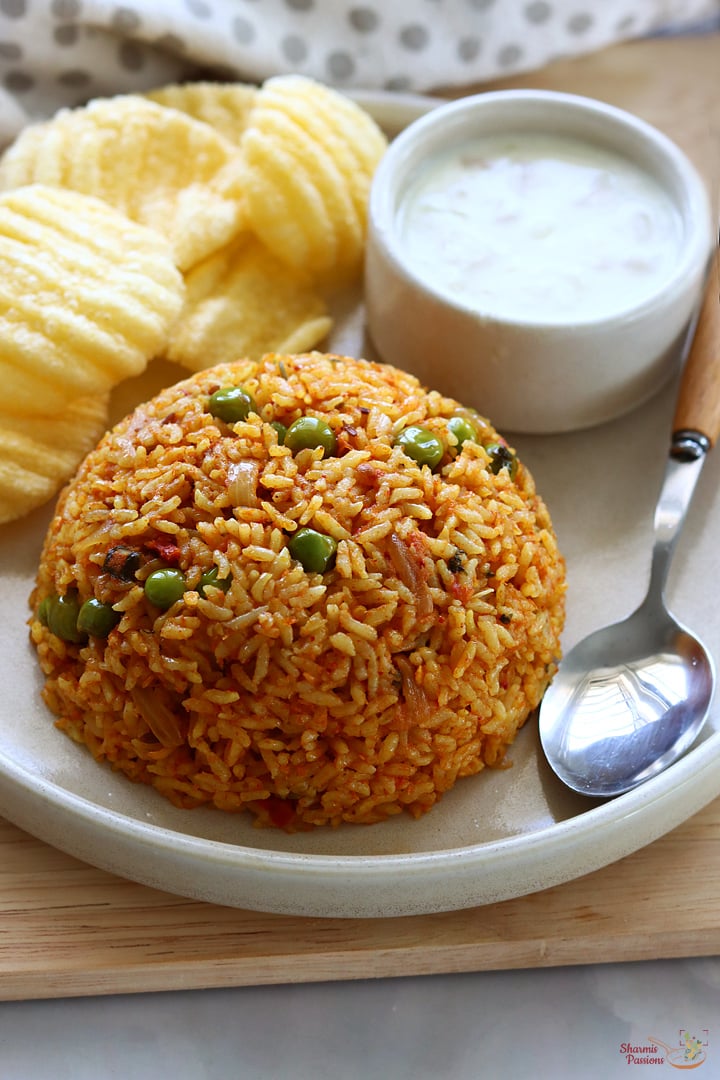
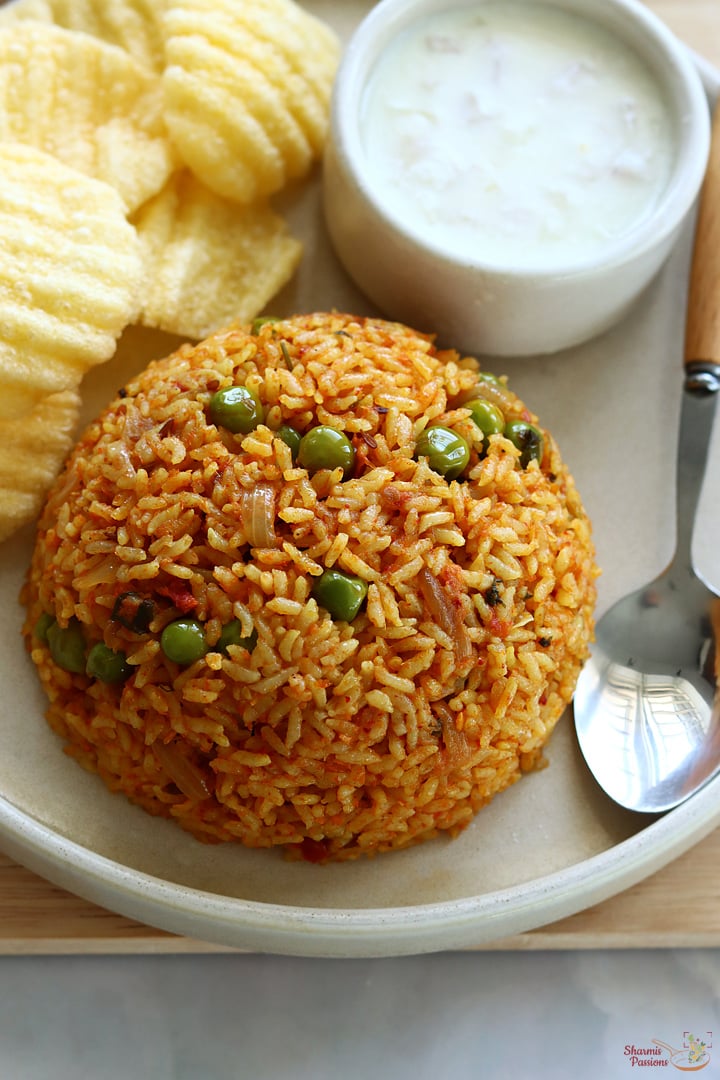
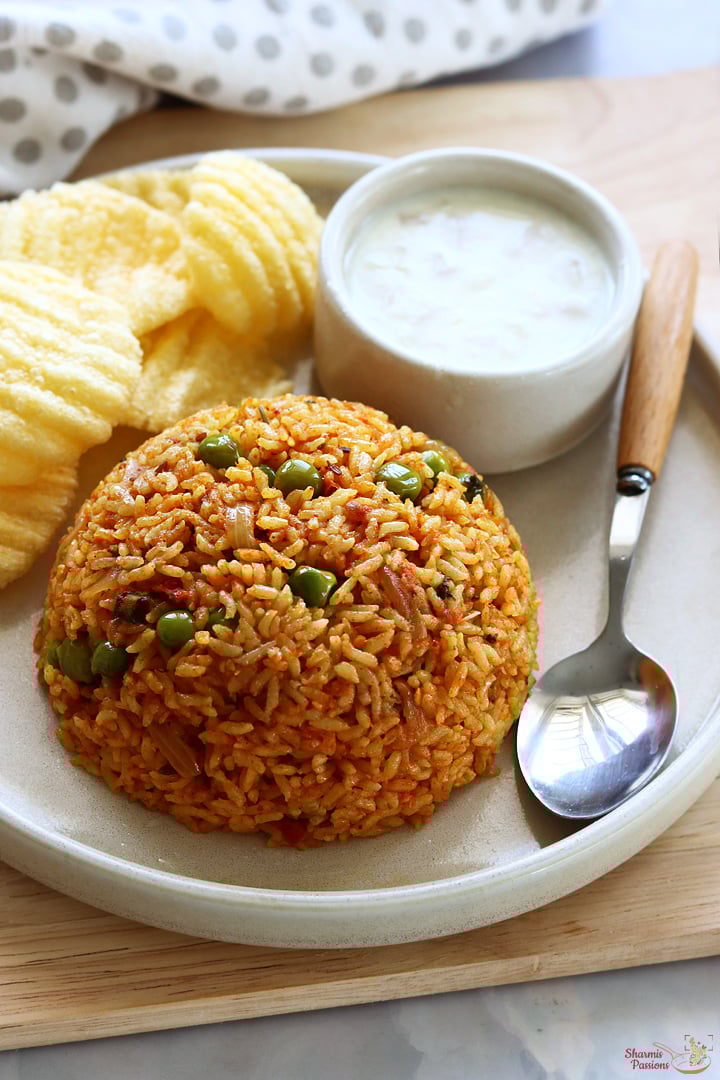
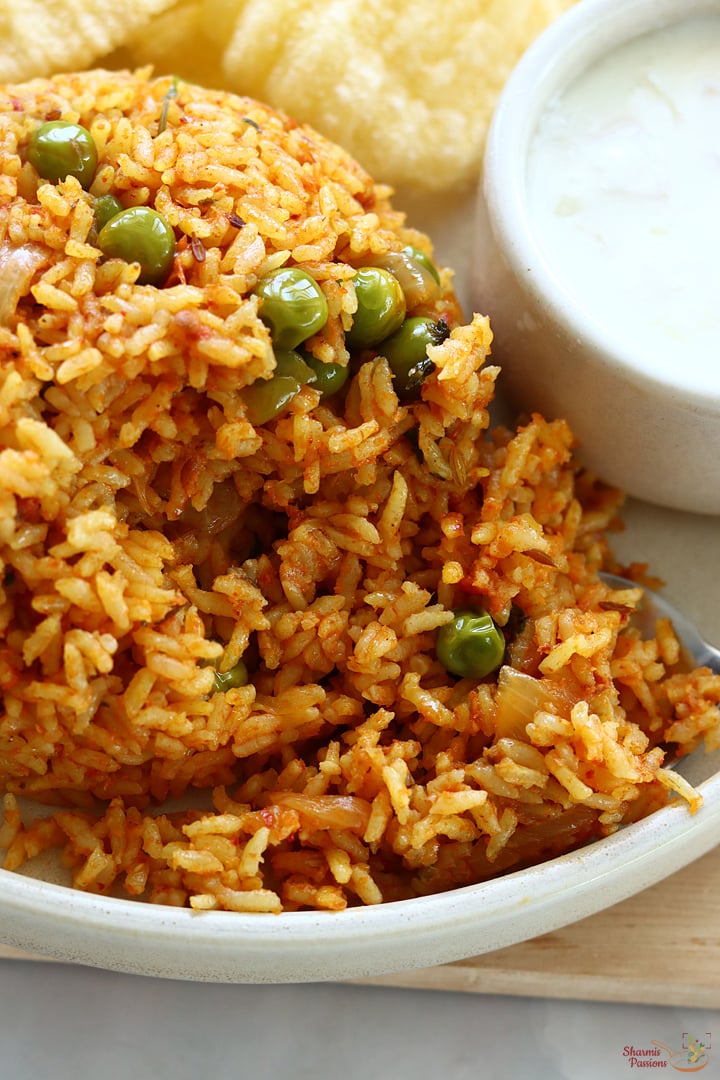
Tomato Bath is a traditional Karnataka style rice dish which is very flavorful and aromatic. It is made by cooking rice with whole spices, onion, tomato a special masala paste and few spices. The smell itself makes you so hungry even before tasting. It has that tangy tomato taste with small hint of spice and coconut flavor which makes it taste very unique.

tomato bath served with onion raita, papad

Tomato Bath is colorful and has that homely taste that tastes in between biryani or pulao. The best part is that you can make it simple or rich, as you like, by adding ghee or roasted cashews. This dish is often made during weekends or small get-togethers as it looks so vibrant and taste so good even when packed for lunch box.

[feast_advanced_jump_to]

About Tomato Bath

Tomato Bath is a very popular Karnataka style rice dish. It is different from usual tomato rice because it has a special masala paste made from coconut, ginger, garlic, red chilies and fennel seeds. The special masala paste gives deep aroma and smooth texture to the rice. Tomato Bath is slightly moist but rice should not turn mushy.

The base for this recipe is a thick tomato masala. Fresh tomatoes are sauteed well until mushy along with onion. Then a masala paste is added which gives a mild sweetness and nice aroma. Seeraga samba rice is cooked along which makes the rice tastes so good. If you are a biryani / pulao lover then this tomato bath is a must try for you.

This recipe is very simple to adjust how you like. You can add few pieces of carrot or some green peas to make it more colorful and taste better. You can also add little biryani masala powder for extra nice flavor. You can serve it with papad, chips or plain onion raita for full meal experience.

I make this whenever I feel like having something tangy and spicy but not too heavy, I end up making Tomato Bath. It fills stomach well and tastes best even when slightly warm, perfect for lunch box or travel food.

Now this tomato bath has become a regular in our monthly meal menu. Do try this and enjoy it with your family. I love tomato bath with curd or onion raita the best combination. Tomato Bath is packed with flavors and no less than a biryani. Variety rice and one pot rice varieties are always my favorite to cook and eat.

tomato bath served with onion raita, papad

Tomato Bath Video

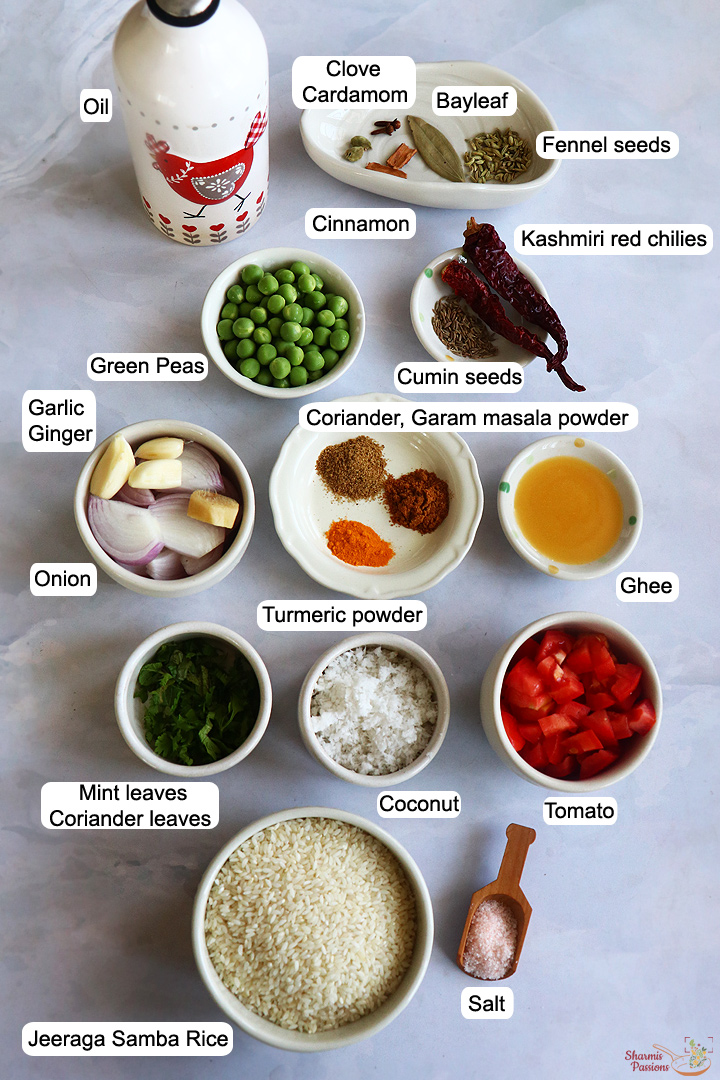
Tomato Bath Ingredients

  • Rice - I have used seeraga samba rice you can use basmati rice too.
  • Onion - It gives mild sweetness and nice body to the masala. I have used big onion sliced thin, you can use shallots also.
  • Tomatoes - I used fresh tomatoes chopped fine, it adds tangy taste and lovely color. Use ripe ones for more juicy flavor.
  • Green Peas - Use fresh green peas which gives mild sweetness in between the spicy rice.
  • Spice powders - I have added turmeric powder, coriander powder and garam masala powder. Add red chili powder if you want it more spicy.
  • Mint, Coriander leaves - adds freshness and flavor to the rice.
  • Masala paste - A special flavorful masala paste is made with coconut, kashmiri red chilies, ginger, garlic and fennel seeds.
  • Whole spices - Spices include cinnamon, cardamom, cloves and bayleaf which is added while tempering.
  • Cumin seeds - is added while tempering and adds nice flavor.
  • Oil, Ghee - used to temper the whole spices.
ingredients needed to make tomato bath

Why This Recipe Works

  • This recipe has a balance of tangy, spicy and slightly sweet taste.
  • The coconut paste gives nice smooth texture and unique Karnataka touch.
  • Easy to make using simple ingredients already in kitchen.
  • It stays good even after few hours, great for lunch box.
  • You can easily make it plain or rich by adding ghee, vegetables or nuts.

Similar Recipes

How to make Tomato Bath Step by Step

1.Rinse Β½ cup seeraga samba rice well then soak in water for 30 minutes. Cover and set aside.

soak rice

2.To a mixer jar add 2 tablespoon coconut, 2 kashmiri red chilies, Β½ teaspoon fennel seeds, 3 small garlic, Β½ inch ginger piece and little water.

add ingredients to grind

3.Grind to a fine paste and set aside.

make masala paste

4.To a pressure cooker heat 1 tablespoon ghee, 1 teaspoon oil - add 1 small bay leaf, 2 small cloves, 2 small cardamom and Β½ teaspoon cumin seeds.

temper the spices

5.Add 1 medium sized onion sliced along with salt. Saute until it turns transparent.

saute onion

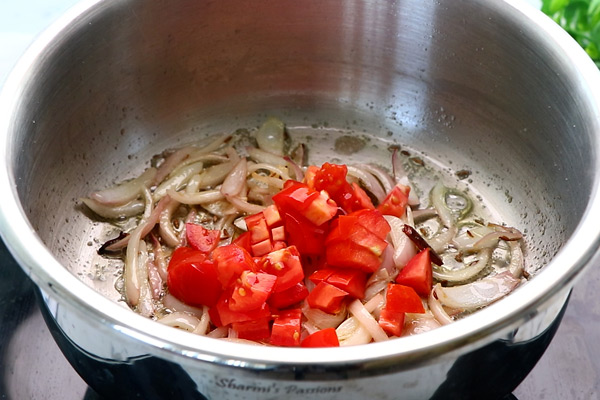
6.Add 2 small sized tomatoes roughly chopped.

add tomatoes

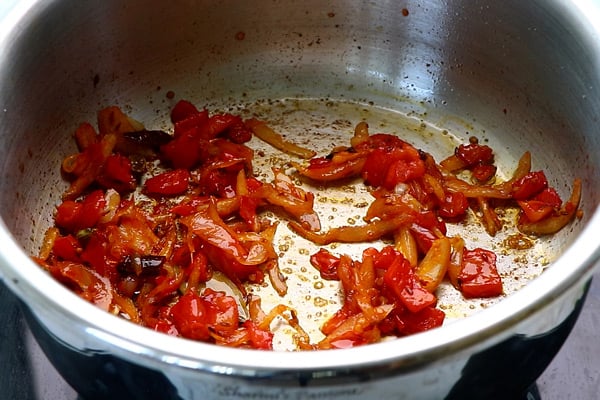
7.Saute until tomatoes turns mushy.

saute until mushy

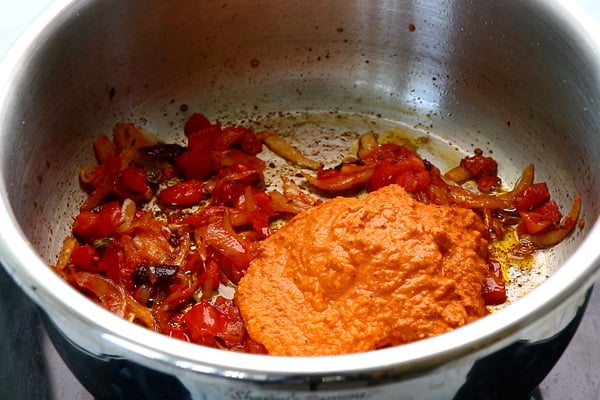
8.Add the masala paste.

add masala paste

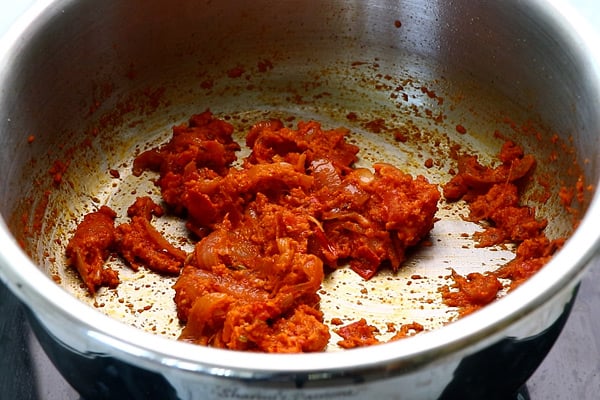
9.Saute for 3 minutes or until the raw smell of tomatoes leave.

saute well

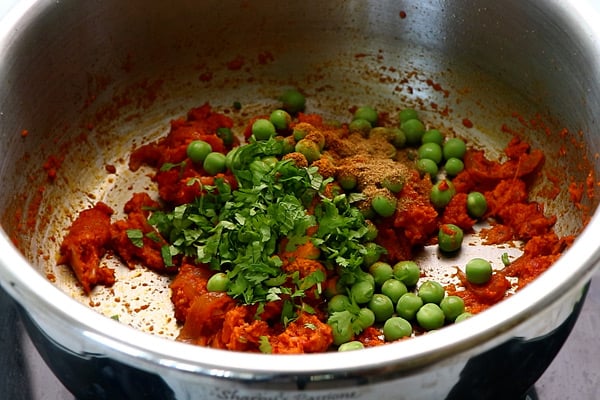
10.Add ΒΌ teaspoon turmeric powder, Β½ teaspoon garam masala powder and Β½ teaspoon coriander powder. Add Β½ teaspoon red chili powder if you like it more spicy. Add ΒΌ cup green peas, 1 tablespoon mint leaves, 1 tablespoon coriander leaves.

add spice powder, peas, mint, coriander leaves

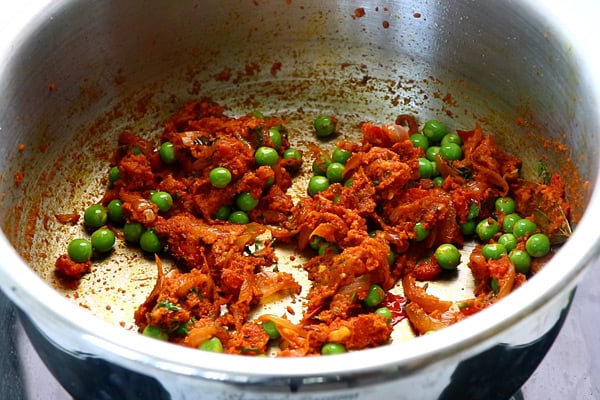
11.Give a quick saute.

saute well

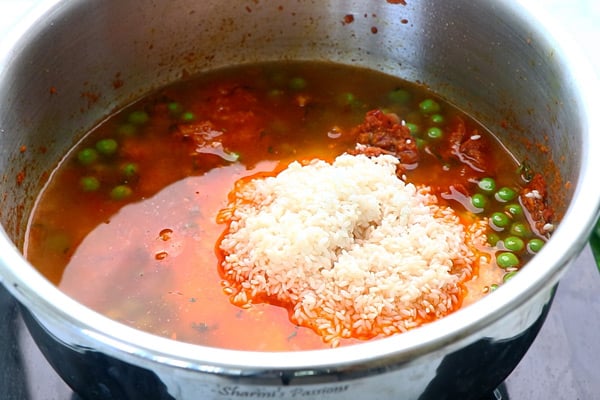
12.Drain water from rice add it along with 1 cup water and salt if needed. I used 1(rice):2(water) ratio. So for Β½ cup rice I used 1 cup water.

add rice, water, salt

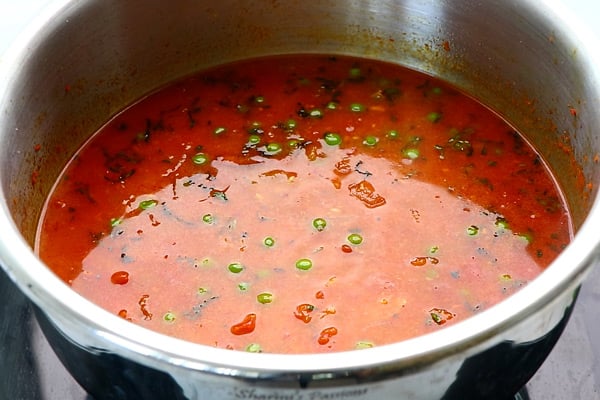
13.Give a quick mix, add 1 teaspoon oil.

mix well

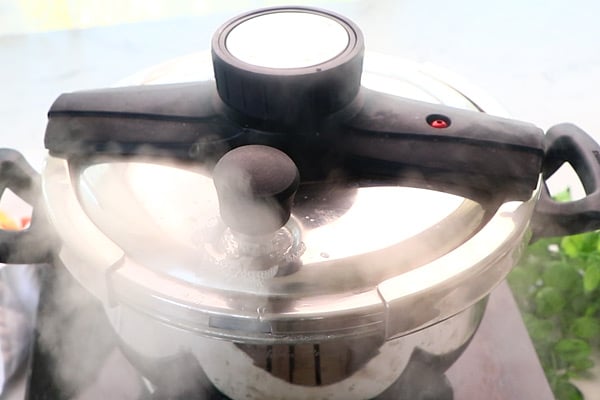
14.Close with lid and pressure cook in medium flame for 3 whistles.

pressure cook

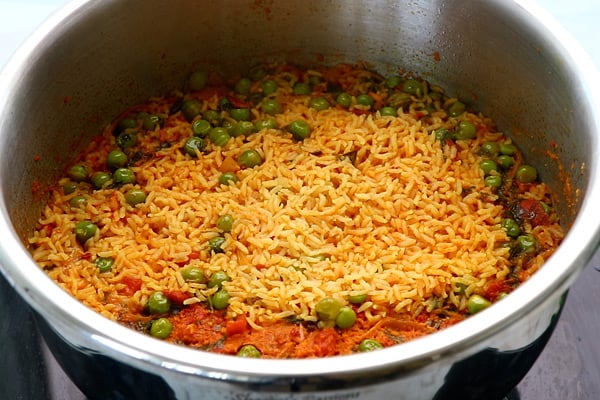
15.Let pressure release by itself then open.

open

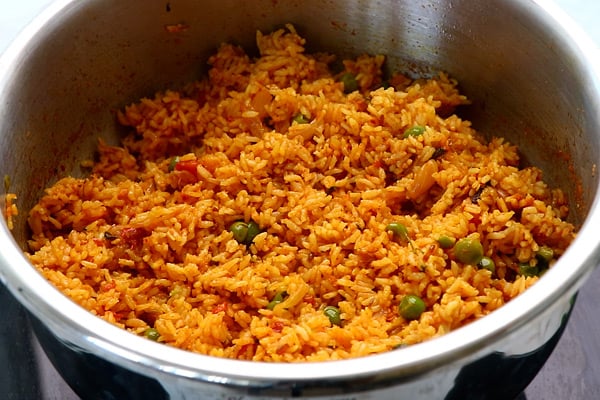
16.Fluff it gently. The rice may look moist but will become grain separated once cooled.

fluff gently

Serve hot with onion raita and papad, tastes best.

tomato bath served with raita and papad

Expert Tips

  • Soaking rice - Soaking rice is must for soft grain separated rice.
  • Cook rice right - I always use 1:2 ratio for rice, water which works perfect. I have used seeraga samba rice but you can use sona masoori or raw rice too, but add water accordingly to the rice variety.
  • Heat - I have used 2 kashmiri chilies while grinding, if you want more spice replace with regular chilies. Or you can even add little red chili powder while adding spice powders.
  • Fry tomato well - Let the tomatoes and masala paste cook till raw smell fully goes and oil separate. This step gives bright color and taste.
  • Ghee - Ghee adds flavor and glaze to the bath. Do not skip it.

Serving and Storage

Serve Tomato Bath warm with onion raita, papad or some crispy fryums. It taste very good with plain curd also if you like mild side.

Store leftovers in fridge and just heat a bit before serving. The taste and smell almost same even next day, only rice become little firm after cooling.

FAQS

1.What rice is best for tomato bath?

I like seeraga samba the best but you can replace it with sona masoori or basmati rice or even raw rice. Make sure to adjust water according the variety of rice used.

2.Can I skip coconut paste?

No the masala paste is the main flavor of tomato bath so I would not recommend slipping it.

3.Can I add vegetables?

Yes sure, you can add peas, carrot or capsicum. Just fry them with onion before adding tomato paste.

4.Why my rice turned mushy?

That happens if you over cook or water is more. 1:2 ratio works perfect and cook for 3 whistles in medium flame.

5.What variations can I make?

Use fully ghee instead of oil, sautΓ© onions and tomatoes well until mushy, and add a touch of vangi bath powder for enhanced aroma and taste.

tomato bath served with onion raita, papad

If you have any more questions about this Tomato Bath Recipe do mail me at sharmispassions@gmail.com. In addition, follow me on Instagram, Facebook,Β  Pinterest, Youtube andΒ TwitterΒ .

Tried this Tomato Bath Recipe? Do let me know how you liked it. Also tag us on Instagram @sharmispassions and hash tag it on #sharmispassions.

πŸ“– Recipe Card

Print

Tomato Bath Recipe

Tomato Bath is a traditional Karnataka style rice dish which is very flavorful and aromatic. It is made by cooking rice with whole spices, onion, tomato a special masala paste and few spices. The smell itself makes you so hungry even before tasting. It has that tangy tomato taste with small hint of spice and coconut flavor which makes it taste very unique.
Course Lunch, Main Course
Cuisine Indian
Keyword 30 mins rice recipes, healthy rice, rice recipes, tomato recipes, Variety Rice
Prep Time 15 minutes
Cook Time 20 minutes
Total Time 35 minutes
Servings 2
Calories 551kcal
Author Sharmilee J

Ingredients

  • Β½ cup seeraga samba rice
  • 1 cup water
  • 1 teaspoon oil
  • 1 medium sized onion
  • 2 small sized tomatoes
  • ΒΌ teaspoon turmeric powder
  • Β½ teaspoon garam masala powder
  • Β½ teaspoon coriander powder
  • ΒΌ cup green peas
  • 1 tablespoon mint leaves
  • 1 tablespoon coriander leaves
  • salt to taste

For masala paste

  • 2 tablespoon coconut
  • 2 kashmiri red chilies
  • Β½ teaspoon fennel seeds
  • 3 small garlic
  • Β½ inch ginger piece
  • little water

For tempering

  • 1 tablespoon ghee
  • 1 teaspoon oil
  • 1 small bay leaf
  • 2 small cloves
  • 2 small small cardamom
  • Β½ teaspoon cumin seeds

Instructions

  • Rinse Β½ cup seeraga samba rice well then soak in water for 30 minutes. Cover and set aside.
  • To a mixer jar add 2 tablespoon coconut, 2 kashmiri red chilies, Β½ teaspoon fennel seeds, 3 small garlic, Β½ inch ginger piece and little water.
  • Grind to a fine paste and set aside.
  • To a pressure cooker heat 1 tablespoon ghee, 1 teaspoon oil - add 1 small bay leaf, 2 small cloves, 2 small cardamom and Β½ teaspoon cumin seeds.
  • Add 1 medium sized onion sliced along with salt. Saute until it turns transparent.
  • Add 2 small sized tomatoes roughly chopped.
  • Saute until tomatoes turns mushy.
  • Add the masala paste.
  • Saute for 3 minutes or until the raw smell of tomatoes leave.
  • Add ΒΌ teaspoon turmeric powder, Β½ teaspoon garam masala powder and Β½ teaspoon coriander powder. Add Β½ teaspoon red chili powder if you like it more spicy. Add ΒΌ cup green peas, 1 tablespoon mint leaves, 1 tablespoon coriander leaves.
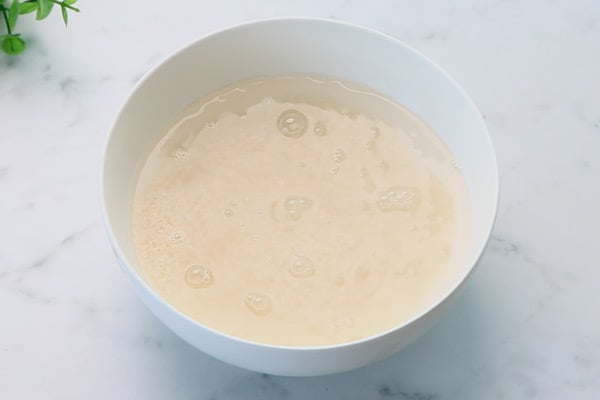
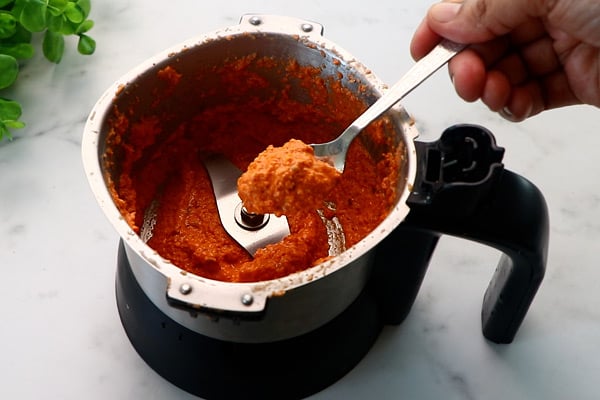
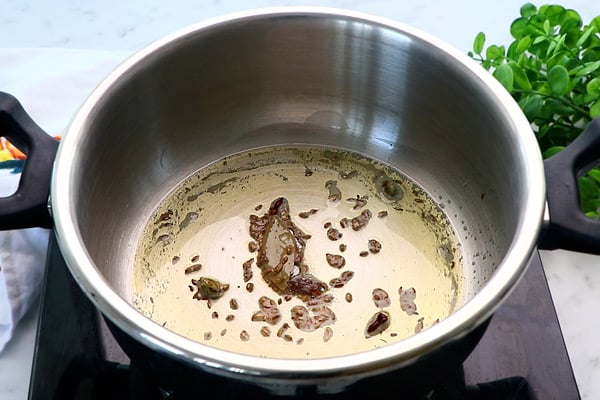
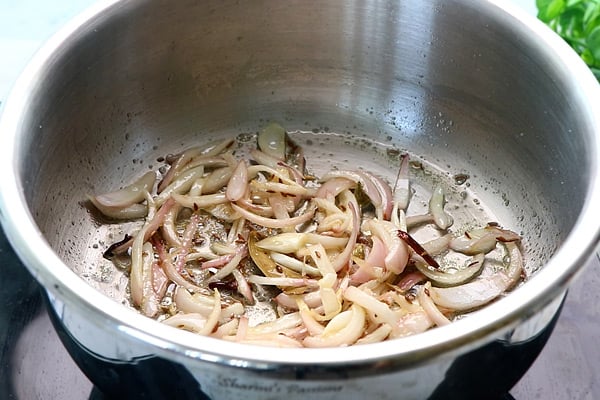
  • Give a quick saute.
  • Drain water from rice add it along with 1 cup water and salt if needed. I used 1(rice):2(water) ratio. So for Β½ cup rice I used 1 cup water.
  • Give a quick mix, add 1 teaspoon oil.
  • Close with lid and pressure cook in medium flame for 3 whistles.
  • Let pressure release by itself then open.
  • Fluff it gently. The rice may look moist but will become grain separated once cooled.
  • Serve hot with onion raita and papad, tastes best.

Video

Notes

  • Soaking rice - Soaking rice is must for soft grain separated rice.
  • Cook rice right - I always use 1:2 ratio for rice, water which works perfect. I have used seeraga samba rice but you can use sona masoori or raw rice too, but add water accordingly to the rice variety.
  • Heat - I have used 2 kashmiri chilies while grinding, if you want more spice replace with regular chilies. Or you can even add little red chili powder while adding spice powders.
  • Fry tomato well - Let the tomatoes and masala paste cook till raw smell fully goes and oil separate. This step gives bright color and taste.
  • Ghee - Ghee adds flavor and glaze to the bath. Do not skip it.

Nutrition

Serving: 125g | Calories: 551kcal | Carbohydrates: 95g | Protein: 9g | Fat: 15g | Saturated Fat: 4g | Polyunsaturated Fat: 3g | Monounsaturated Fat: 7g | Trans Fat: 0.04g | Sodium: 174mg | Potassium: 438mg | Fiber: 7g | Sugar: 10g | Vitamin A: 207IU | Vitamin C: 115mg | Calcium: 88mg | Iron: 2mg

The post Tomato Bath Recipe appeared first on Sharmis Passions.
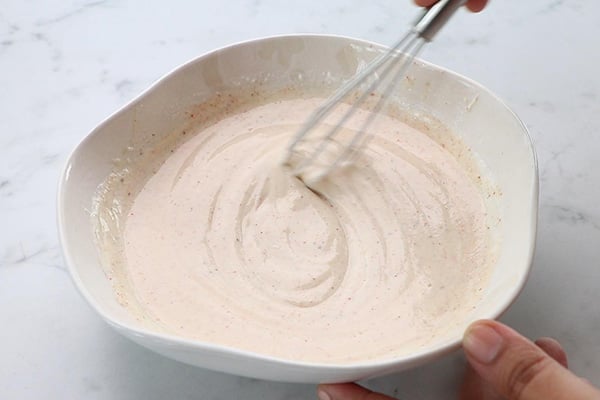
How to make Asafoetida | Homemade Hing Recipe

Asafoetida is a quite essential spice every Indian kitchen must have. It is that tiny pinch we add that gives great aroma and unique punch to our dals and curries. Most of us buy ready hing powder from stores, but fresh homemade hing powder has great flavor and stroNg aroma, and it is pure. When you make it at home, you can control how fine you want and the flavor also lasts longer.

homemade asafoetida

When you make it fresh, you can really feel how much change it brings in the taste, especially in rasam, sambar and chutneys. I started making hing powder at home few years back. The solid hing may look small, but when you roast and powder it, the kitchen fills with strong traditional smell.

[feast_advanced_jump_to]

About Asafoetida

Hing, also called as Asafoetida, is a gum resin obtained from plant roots, mostly used in Indian cooking for its strong flavor and digestive property. It is very common in South Indian homes, especially used in dishes with dal and legumes. The strong pungent smell becomes mild and pleasant once roasted and powdered.

In olden days, compound or solid hing was mostly used as it stays fresh for a long time. Nowadays most people prefer powdered one because it is easy to handle. But homemade hing powder from compound hing is always more pure and strong compared to packed ones. It just needs few minutes and little patience to make at home.

The solid hing pieces are cut into small chunks, lightly roasted till they puff up and then cooled down before powdering. The roasting part is very important because it removes raw smell and makes hing easy to grind. It can be stored for many months without losing aroma.

I usually make this in small batch and store it in an airtight bottle. When I open the jar, the smell itself reminds me of my grandmother's kitchen. It is one of those simple things that keeps the real taste of Indian cooking alive.

homemade asafoetida

Asafoetida Recipe Video

Asafoetida Ingredients

  • Solid / Compound Hing - I have used pure solid or compound hing bought from a local store. It gives stronger aroma and more flavor than readymade powder. You can use any good quality brand you get easily.
compound asafoetida

Why This Recipe Works

  • This recipe is very simple and takes just few minutes to prepare.
  • Homemade hing powder stays fresh for many months when stored properly.
  • Roasting removes raw smell and brings that lovely nutty aroma.
  • You get pure hing flavor without any added flour or filler.
  • It makes all dishes taste better, even a small pinch is enough.

Similar Recipes

How to make Asafoetida Step by Step

1.Take compound hing (asafoetida), stretch it a bit. I used 2 small blocks.

stretch compound hing

2.Cut into small pieces. It is a bit hard but you can cut it using a sharp scissor.

cut into small pieces

3.All cut and ready.

cut and ready

4.Add it to a pan and dry roast it.

add to pan and roast

5.Roast until it is crisp and puffs up. It takes around 8-10 minutes in low flame.

roast till it puffs well

6.Cool down completely.

cool down

7.Transfer to a mixer jar.

add to mixer

8.Grind it to a fine powder.

powder it fine

9.Transfer to a plate, cool down completely. Store in a clean dry jar.

cool down

Expert Tips

  • Cut small - I always cut the solid hing into very small pieces so that it gets roasted evenly and puffs up well.
  • Roast slowly - Keep the flame low, roast till it bulges slightly and gives nice smell. If burnt, it becomes bitter so take care to roast only in low flame. While roasting it may tends to stick but it is ok.
  • Cool down - Let it cool down completely before powdering else it become sticky.
  • Grind fine - I use small dry jar to powder it very fine. It mixes easily in dishes.
  • Storage - Keep the powder in small airtight bottle away from moisture. I usually store in a glass jar.

Serving and Storage

Use homemade hing powder just like store-bought one. Add a pinch while tempering for rasam, sambar or any dal dish. You can even use in chutneys and pickles for that traditional aroma. Store it in airtight bottle in cool dry place. It stays good for 6 to 8 months easily if handled clean.

FAQS

1.Can I skip roasting the hing?

No, roasting is must. It removes raw harsh smell and makes hing crisp which makes it easy to grind.

2.Why my hing turned sticky after grinding?

Maybe it was hot when powdered or too much moisture in air. Always cool it fully before grinding.

3.Can I use mixer for grinding?

Yes, use small dry mixer jar. Grind in short pulses to get fine powder.

4.Is this stronger than store bought hing?

Yes, very much stronger and pure. You can use less quantity while cooking.

5.How to make it mild if too strong?

You can mix small portion with rice flour or roasted urad dal powder to reduce strength.

homemade asafoetida

If you have any more questions about thisΒ Homemade Asafoetida RecipeΒ do mail me at sharmispassions@gmail.com. In addition, follow me onΒ Instagram,Β Facebook,Β Β Pinterest,Β YoutubeΒ andΒ TwitterΒ .

Tried thisΒ Homemade AsafoetidaΒ Recipe? Do let me know how you liked it. Also tag us on Instagram @sharmispassions and hash tag it on #sharmispassions.

πŸ“– Recipe Card

Print

How to make Asafoetida | Homemade Hing Recipe

Asafoetida is something every Indian kitchen must have. It is that tiny pinch we add that gives great aroma and unique punch to our dals and curries. Most of us buy ready hing powder from stores, but fresh homemade hing powder has great flavor and strog aroma, and it is pure. When you make it at home, you can control how fine you want and the flavor also last longer.
Course how to
Cuisine Indian
Keyword 20 mins recipes, How to
Prep Time 10 minutes
Cook Time 10 minutes
Total Time 20 minutes
Servings 20
Calories
Author Sharmilee J

Ingredients

  • 100 grams compound hing

Instructions

  • Take compound hing (asafoetida), stretch it a bit. I used 2 small blocks.
  • Cut into small pieces. It is a bit hard but you can cut it using a sharp scissor.
  • All cut and ready.
  • Add it to a pan and dry roast it.
  • Roast until it is crisp and puffs up. It takes around 8-10 minutes in low flame.
  • Cool down completely.
  • Transfer to a mixer jar.
  • Grind it to a fine powder.
  • Transfer to a plate, cool down completely. Store in a clean dry jar.

Video

Notes

  • Cut small - I always cut the solid hing into very small pieces so that it gets roasted evenly and puffs up well.
  • Roast slowly - Keep the flame low, roast till it bulges slightly and gives nice smell. If burnt, it becomes bitter so take care to roast only in low flame. While roasting it may tends to stick but it is ok.
  • Cool down - Let it cool down completely before powdering else it become sticky.
  • Grind fine - I use small dry jar to powder it very fine. It mixes easily in dishes.
  • Storage - Keep the powder in small airtight bottle away from moisture. I usually store in a glass jar.

Nutrition

Serving: 1g

The post How to make Asafoetida | Homemade Hing Recipe appeared first on Sharmis Passions.
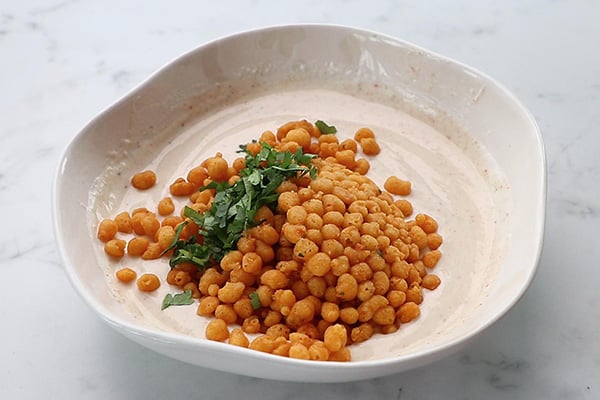
Egg Puffs Recipe

Egg Puffs is one of the most loved snacks popular in bakeries which is made with puff pastry sheets, boiled egg and a simple onion masala. It is flaky, crisp on outside with soft spicy filling inside makes it so delicious. The taste is mild spicy, tangy and the layers of puff makes every bite interesting.

egg puffs served with tomato sauce and tea

Egg Puffs is mostly enjoyed with evening tea or coffee, but honestly you can serve it any time as snacks. The recipe is simple to make and feels more fresh and flavorful than the store bought ones. It is also a good choice to prepare on weekends when you want to serve your family something special and filling.

[feast_advanced_jump_to]

About Egg Puffs

Egg Puffs is a very popular bakery snack, especially in South India. Almost every bakery counter will have these golden brown puffs stacked neatly. It is popularly called Mutta Puffs in Tamil. They are flaky pastry stuffed with masala onion filling and half of boiled egg. These puff up beautifully with crisp edges and soft inside when baked.

I studied in a convent where they have a small canteen which has only limited snacks and this egg puffs is one of them. I am so obsessed with it since my school days as my canteen serves the best egg puffs.

The origin of egg puffs goes back when bakeries started selling puff pastry based snacks. Since egg is simple and protein rich, it became a common filling. Over time, the onion masala was added to give more spice and taste. Even now many people buy egg puffs as quick snack instead of samosas or vadas.

The flavor is mainly from the caramelized onions and the masala powders. The tomato sauce adds slight tang, making it different from plain boiled egg puff. I have added just curry leaves for flavor, you can add coriander leaves too. If you prefer spicy, you can increase chili powder or pepper powder.

I used store bought puff pastry sheet, slightly thawed and used it. The layers and the color purely depends on the quality of the puff pastry sheets used. Here in my place only few brands are available so used that. I will surely try and post homemade puff pastry sheet in the near future.

I usually make egg puffs on Sunday evenings. Kids love it warm from oven, and it makes the house smell so nice while baking. Since puff pastry sheets are available frozen, this snack hardly takes much time. Once you try at home, you will not miss bakery version.

egg puffs served with tomato sauce and tea

Egg Puffs Video

Egg Puff Ingredients

  • Puff pastry sheets - I have used ready frozen puff pastry sheets. It gives nice flaky layers after baking.
  • Oil - I used little oil to sautΓ© onion and masala. You can use any cooking oil you have, even butter for rich flavor.
  • Onion - I have used large onions sliced thin, it caramelizes and gives sweetness to balance the spices. You can use small onions too but slicing is more work.
  • Ginger garlic paste - This adds strong aroma and flavor to masala. If it is not available, you can crush fresh ginger and garlic.
  • Spice powders - I added turmeric powder, kashmiri chili powder, pepper powder, garam masala for color, little heat, good flavor and taste.
  • Tomato sauce - I have just used for a slight tangy taste. You can also use tomato puree but sauce makes it more tasty.
  • Boiled eggs - I used half of boiled egg in each puff, yolk side down. You can season eggs with pinch of pepper before placing.

Why This Recipe Works

  • This recipe is simple to make at home with easily available puff pastry sheets.
  • The filling is flavorful with caramelised onion and spice mix.
  • Egg puff is flaky outside but soft and tasty inside, perfect balance.
  • You can serve this as tea-time snack or even light dinner.
  • It is a bakery favorite that can be recreated fresh in your own kitchen.

Similar Recipes

How to make Egg Puffs Step by Step

1.To a pan heat 1 and Β½ tablespoon oil , add 2 medium sized onion(sliced).

add onion

2.Saute until it turns transparent then add 1 teaspoon ginger garlic paste.

saute, add ginger garlic paste

3.Saute for 2 minutes.

saute until transparent

4.Cook covered until it turns soft.

cook covered until soft

5.Now give a quick sautΓ© then add salt to taste, 1 and Β½ teaspoon chili powder, ΒΌ teaspoon turmeric powder, Β½ teaspoon pepper powder and Β½ teaspoon garam masala powder.

add spice powders

6.Saute well for a minute then add Β½ cup water.

add water

7.Saute and cook for 2 minutes.

saute well

8.Add 1 tablespoon tomato sauce and few curry leaves torn.

add tomato sauce, curry leaves

9.Give a quick mix and switch off.

mix well

10.Boil eggs slice into half and keep it ready. Transfer the filling to a bowl and set aside to cool. Both filling and eggs are ready.

filling and boiled eggs ready

11.Take a puff pastry sheet. I have used 5'X5' frozen puff pastry sheet. Dip your finger with water and wet the edges first.

wet the edges

12.Add around 2 tablespoon onion filling first then add half an egg with yoke side facing down like shown.

add egg, filling

13.Close from the sides like shown. While you do this preheat oven at 200 DEG C for 10 minutes.

seal the edges

14.Close from all four sides and seal completely. Repeat to finish.

seal well

15.Beat an egg well, dip using a brush.

beat an egg

16.Give egg wash for all.

add egg wash

17.Repeat to finish.

repeat to finish

18. Bake in preheated oven at 200 DEG C for 20-25 minutes.

bake in oven

Serve it hot!

egg puffs served with tomato sauce and tea

Expert Tips

  • Thawing pastry - I usually take puff pastry sheets out just 10-15 minutes before baking. Don't leave long, else it becomes sticky and hard to handle.
  • Filling cooling - Always cool onion masala before filling pastry. If it is hot, the pastry will turn soggy.
  • Egg placement - I place egg yolk side down so that puff seals better and egg sits flat.
  • Sealing edges - I use little water at the edges to seal well. You can also press with fork for design and sealing.
  • Baking - I bake at 200Β°C until golden brown. Don't open oven often, let it puff up nicely.

Serving and Storage

Serve Egg Puffs warm with tea, coffee or even with a simple ketchup or chutney. It tastes best when fresh and hot, right out of oven. If storing, keep in airtight container once cooled. You can reheat in oven or tawa before serving, but it is always most crisp on the same day.

FAQS

1.Can I skip tomato sauce?

Yes you can skip. Tomato sauce adds a tangy taste to the filling so I recommend adding it. The puffs will be more plain but still tasty with onion masala with just spice powders.

2.Can I use homemade puff pastry sheet?

Yes, you can use homemade puff pastry sheets but it takes much more time to prepare compared to frozen sheets.

3.Can I make it spicy?

Yes, you can just add more chili powder or black pepper if you want it more spicy.

4.Can I add other vegetables with the filling?

Yes you can add carrot, capsicum or even mushrooms along with onion if you like variation.

5.Can I replace egg with other filling?

Yes, you can try potato masala, paneer or even chicken filling instead of eggs.

egg puffs served with tomato sauce and tea

If you have any more questions about thisΒ Egg Puffs RecipeΒ do mail me at sharmispassions@gmail.com. In addition, follow me onΒ Instagram,Β Facebook,Β Β Pinterest,Β YoutubeΒ andΒ TwitterΒ .

Tried thisΒ Egg PuffsΒ Recipe? Do let me know how you liked it. Also tag us on Instagram @sharmispassions and hash tag it on #sharmispassions.

πŸ“– Recipe Card

Print

Egg Puffs Recipe

Egg Puffs is one of the most loved snacks popular in bakeries which is made with puff pastry sheets, boiled egg and a simple onion masala. It is flaky, crisp on outside with soft spicy filling inside makes it so delicious. The taste is mild spicy, tangy and the layers of puff makes every bite interesting.
Course Baking, snacks
Cuisine Indian
Prep Time 15 minutes
Cook Time 40 minutes
Total Time 55 minutes
Servings 3
Calories 2356kcal
Author Sharmilee J

Ingredients

Instructions

  • To a pan heat 1 and Β½ tablespoon oil , add 2 medium sized onion(sliced).
  • Saute until it turns transparent then add 1 teaspoon ginger garlic paste.
  • Saute for 2 minutes.
  • Cook covered until it turns soft.
  • Now give a quick sautΓ© then add salt to taste, 1 and Β½ teaspoon chili powder, ΒΌ teaspoon turmeric powder, Β½ teaspoon pepper powder and Β½ teaspoon garam masala powder.
  • Saute well for a minute then add Β½ cup water.
  • Saute and cook for 2 minutes.
  • Add 1 tablespoon tomato sauce and few curry leaves torn.
  • Give a quick mix and switch off.
  • Boil eggs slice into half and keep it ready. Transfer the filling to a bowl and set aside to cool. Both filling and eggs are ready.
  • Take a puff pastry sheet. I have used 5'X5' frozen puff pastry sheet. Dip your finger with water and wet the edges first.
  • Add around 2 tablespoon onion filling first then add half an egg with yoke side facing down like shown.
  • Close from the sides like shown. While you do this preheat oven at 200 DEG C for 10 minutes.
  • Close from all four sides and seal completely. Repeat to finish.
  • Beat an egg well, dip using a brush.
  • Give egg wash for all.
  • Repeat to finish.
  • Bake in preheated oven at 200 DEG C for 20-25 minutes.
  • Serve it hot!

Video

Notes

  • Thawing pastry - I usually take puff pastry sheets out just 10-15 minutes before baking. Don't leave long, else it becomes sticky and hard to handle.
  • Filling cooling - Always cool onion masala before filling pastry. If it is hot, the pastry will turn soggy.
  • Egg placement - I place egg yolk side down so that puff seals better and egg sits flat.
  • Sealing edges - I use little water at the edges to seal well. You can also press with fork for design and sealing.
  • Baking - I bake at 200Β°C until golden brown. Don't open oven often, let it puff up nicely.

Nutrition

Calories: 2356kcal | Carbohydrates: 186g | Protein: 38g | Fat: 163g | Saturated Fat: 42g | Polyunsaturated Fat: 21g | Monounsaturated Fat: 91g | Trans Fat: 0.01g | Cholesterol: 241mg | Sodium: 1143mg | Potassium: 373mg | Fiber: 7g | Sugar: 4g | Vitamin A: 800IU | Vitamin C: 1mg | Calcium: 80mg | Iron: 12mg

The post Egg Puffs Recipe appeared first on Sharmis Passions.
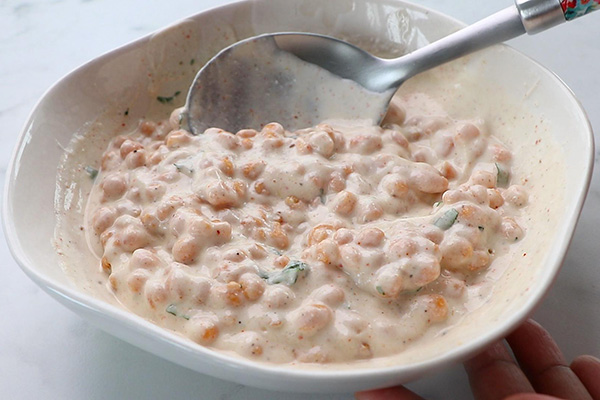
Pudina Chutney | Mint Chutney

Pudina Chutney is a flavorful and aromatic chutney made with mint leaves, onion, garlic, green chilies, coconut and basic spices for tempering. Pudina Chutney is a great side dish with idli, dosa, uttapam etc. Mint Chutney or Pudina Chutney can be served along with snacks like bajji, bonda too.

mint chutney served with oothapam

Pudina Chutney shared here is the traditional version which serves as a great side dish for idli, dosa and all other South Indian tiffin items. I love all green based chutneys like coriander chutney, capsicum chutney, spinach chutney etc and this one is my most favorite too.

[feast_advanced_jump_to]

About Pudina Chutney

Pudina chutney, also known as mint chutney, is a refreshing and flavorful South Indian side dish that perfectly complements idli, dosa, vada, and upma. It combines the cooling freshness of mint leaves with the flavor and aroma of roasted dal, coconut, with a basic tempering using mustard seeds, curry leaves and hing.

Pudina chutney has a vibrant green color, a slightly spicy and tangy taste with the addition of tamarind. It has a smooth, creamy texture that pairs beautifully with soft idlis or crispy dosas or soft oothapams. It's not only delicious but also healthy, cooling and helps in digestion because of the properties of mint.

Pudina Chutney is often confused with mint chutney or green chutney that is served along with chats and tandoori platter. I love that chutney too but this version is more authentic and flavourful with the addition of small onion and garlic.

This Pudina Chutney is made with a handful of easily available ingredients in your pantry and is quick to make too. This Pudina Chutney Recipe is from amma but her version slightly varies, I adjusted the ingredients and this has been my go to chutney whenever I buy a bunch of mint leaves or pudina.

Mint Leaves Benefits

  • Mint is a flavourful herb which has many nutritional values and health benefits.
  • Mint Leaves helps in digesting heavy foods.
  • Mint Leaves can mask bad breath and odour.
  • Mint leaves are a good source of iron.
mint chutney served with oothapam

Pudina Chutney Video

Pudina Chutney Ingredients

  • Mint Leaves - Use fresh mint leaves. You can clean mint leaves pluck the leaves from the stem and store in a clean dry box in the fridge. This way mint leaves stays fresh fro a longer time.
  • Coconut - This chutney can be made without coconut also but increasing the other ingredients measure but I strongly recommend to add coconut. The addition of coconut elevates the taste of this chutney.
  • Dal - Urad dal and chana dal are roasted and added to grind which gives a texture and taste to the chutney.
  • Onion, Garlic - Small onion and garlic are added for more flavour. Using small onion is best, but if you don't have you can use 1 medium sized big onion roughly chopped.
  • Green chilli, Tamarind - Green chili is added for heat and tamarind is added for tanginess which gives a balance to this chutney.
  • Tempering - A simple tempering is made using oil, mustard seeds, hing and curry leaves. This is the most satisfying part of any chutney.
ingredients needed to make mint chutney

Similar Recipes

How to make Pudina Chutney Step by Step

1.Heat 1 teaspoon oil - add 1 teaspoon urad dal, 1 teaspoon chana dal.

heat oil add dals

2.Saute until golden. Transfer to a plate and set aside.

roast dals until golden

3.To the same pan add 8-10 small onion, 3 garlic and 2 green chilies.

add onion, garlic

4.Add around 2 cups mint leaves(cleaned and rinsed).

add mint leaves

5.Saute until it shrinks just for few seconds.

saute until it shrinks

6.Now add 2 tablespoon coconut and Β½ teaspoon tamarind.

add coconut and tamarind

7.Give a quick saute and switch off.

saute for a minute

8.Transfer to a plate and set aside to cool down.

transfer to a plate

9.Now transfer this to a mixer jar along with required salt and water.

transfer to a mixer jar

10.Grind it to a chutney consistency.

grind to a chutney consistency

11.Add water little by little and grind so that it the chutney does not become watery.

grind to a chutney consistency

12.To prepare tadka : Heat 2 teaspoon oil add mustard seeds let it crackle then add curry leaves and switch off. Let it splutter then remove.

prepare tadka

13.Add the tempering to chutney.

add tadka to chutney

14.Mix well. Pudina Chutney is ready.

mix well chutney is ready

Serve Pudina Chutney with idli or dosa and enjoy.

mint chutney served with oothapam

Expert Tips

  • Mint leaves - Make sure to use tender, fresh mint leaves for a vibrant green color chutney. First pluck the leaves from the stem, rinse well then use it.
  • Storing mint leaves - While storing do not rinse and store, just pluck from the stem and store it to avoid spoiling. While using you can take the leaves rinse and use it.
  • Adjust spices - Adjust dal and spices according to your spice preference.
  • Tempering - I have used regular cooking oil for tempering but you can even use coconut oil for a flavor variation.
  • Cooking - After adding mint leaves do not cook for more time it may change the color and will give a dull looking chutney.
  • Balance in taste - Tamarind is added as a balance if you do not like then you can skip it.
  • Variation - You can make this chutney without coconut too : In that case add 1 tablespoon chana dal and urad dal each and add 1 medium sized tomato. Add finely chopped tomato along with onion tomato and saute well until raw smell leaves then proceed with other ingredients.

Serving and Storage

Mint or Pudina Chutney can be made ahead and stored but the color of the chutney changes after sometime dur to oxidation. As it has coconut I would recommend storing the left overs in fridge and use. This chutney keeps well in room temperature for a day only.

You can serve this chutney along with Idli, dosa, pongal, vada, oothapam etc.

FAQS

1.Why does my pudina chutney turn dark or dull in color?

This happens when the chutney heats up during grinding or overcooking mint leaves can lead to a dull color chutney. To prevent mixer heating you can use ice cold water and grind it intervals. Adding a pinch of turmeric powder also helps to give a bright green color.

2.Is Pudina Chutney healthy?

Mint leaves has a lot of health benefits so including it in our daily diet is essential for a healthy lifestyle.

3.What can we eat with Pudina Chutney?

Pudina Chutney can be served along with idli, dosa, upma, uttapam, pongal etc. Mint Chutney serves as a great sidedish with snacks like bonda, bajji too.

4.How to retain the green color in Pudina Chutney?

To retain the vibrant green color do not sautΓ© mint leaves for more time, this will retain the green color.

5.Should I add tempering to pudina chutney?

Tempering is optional but highly recommended. A simple tempering of mustard seeds, hing and curry leaves in hot oil adds a wonderful aroma and authentic South Indian flavor.

mint chutney served with oothapam

If you have any more questions about this Pudina Chutney Recipe do mail me at sharmispassions@gmail.com. In addition, follow me on Instagram, Facebook,Β  Pinterest, Youtube andΒ TwitterΒ .

Tried this Pudina Chutney Recipe ? Do let me know how you liked it. Also tag us on Instagram @sharmispassions and hash tag it on #sharmispassions.

πŸ“– Recipe Card

Print

Pudina Chutney Recipe | Mint Chutney Recipe

Pudina Chutney is a flavorful and aromatic chutney made with mint leaves, onion, garlic, green chilies, coconut and basic spices for tempering. Pudina Chutney is a great side dish with idli, dosa, uttapam etc. Mint Chutney or Pudina Chutney can be served along with snacks like bajji, bonda too.
Course how to, Side Dish
Cuisine Indian
Keyword 30 mins recipes, chutney recipes, dosa sidedish, idli side dish, Side Dish, tiffin recipes
Prep Time 10 minutes
Cook Time 10 minutes
Total Time 20 minutes
Servings 3 people
Calories 182kcal
Author Sharmilee J

Ingredients

  • 1 teaspoon oil
  • 1 teaspoon urad dal
  • 1 teaspoon chana dal
  • 8-10 small onion
  • 3 big garlic
  • 2 green chillies
  • 2 cups mint leaves (loosely packed)
  • Β½ teaspoon tamarind
  • 2 tablespoon coconut
  • salt to taste
  • water as needed

To temper:

  • 2 teaspoon oil
  • 1 teaspoon mustard seeds
  • few curry leaves
  • 1 tiny pinch hing

Instructions

  • Heat 1 teaspoon oil - add 1 teaspoon urad dal, 1 teaspoon chana dal.
  • Saute until golden. Transfer to a plate and set aside.
  • To the same pan add 8-10 nos small onion, 3 nos garlic and 2 nos green chillies.
  • Add around 2 cups mint leaves(cleaned and rinsed).
  • Saute until it shrinks just for few seconds.
  • Now add 2 tablespoon coconut and Β½ teaspoon tamarind
  • Give a quick saute and switch off.
  • Transfer to a plate and set aside to cool down.
  • Now transfer this to a mixer jar along with required salt and water.
  • Grind it to a chutney consistency.
  • Add water little by little and grind so that it the chutney does not become watery.
  • To prepare tadka : Heat 2 teaspoon oil add mustard seeds let it crackle then add curry leaves and switch off. Let it splutter then remove.
  • Add tadka to chutney
  • Mix well. Pudina Chutney ready.
  • Serve Pudina Chutney with idli or dosa and enjoy.

Video

Notes

  • Mint leaves - Make sure to use tender, fresh mint leaves for a vibrant green color chutney. First pluck the leaves from the stem, rinse well then use it.
  • Storing mint leaves - While storing do not rinse and store, just pluck from the stem and store it to avoid spoiling. While using you can take the leaves rinse and use it.
  • Adjust spices - Adjust dal and spices according to your spice preference.
  • Tempering - I have used regular cooking oil for tempering but you can even use coconut oil for a flavor variation.
  • Cooking - After adding mint leaves do not cook for more time it may change the color and will give a dull looking chutney.
  • Balance in taste - Tamarind is added as a balance if you do not like then you can skip it.
  • Variation - You can make this chutney without coconut too : In that case add 1 tablespoon chana dal and urad dal each and add 1 medium sized tomato. Add finely chopped tomato along with onion tomato and saute well until raw smell leaves then proceed with other ingredients.

Nutrition

Serving: 75g | Calories: 182kcal | Carbohydrates: 28g | Protein: 7g | Fat: 7g | Saturated Fat: 2g | Polyunsaturated Fat: 2g | Monounsaturated Fat: 3g | Trans Fat: 0.02g | Sodium: 1344mg | Potassium: 930mg | Fiber: 14g | Sugar: 1g | Vitamin A: 6953IU | Vitamin C: 184mg | Calcium: 422mg | Iron: 8mg

The post Pudina Chutney | Mint Chutney appeared first on Sharmis Passions.
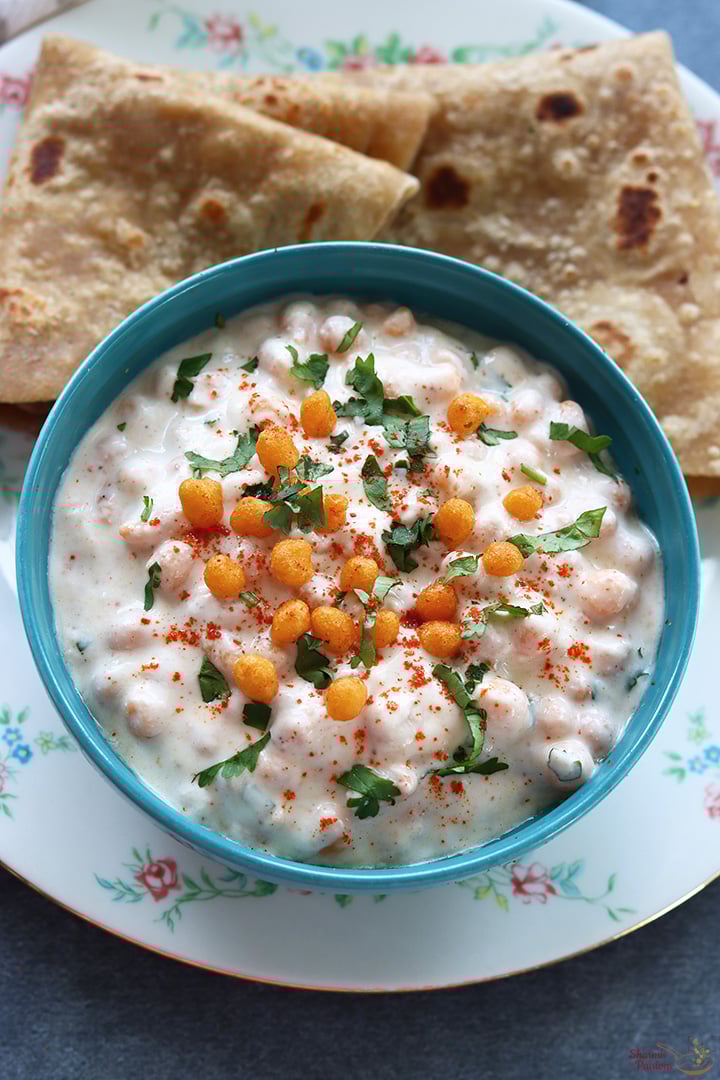
Peri Peri Masala Recipe | Piri Piri Masala

Peri Peri Masala is a spicy tangy spice blend which has a combination of Indian spices and herbs. It was originated from Portuguese and African cuisines. Making peri peri at home is very easy takes just few minutes of time if you have all the ingredients in hand. It is popular to use it as a topping for fries and snacks.

peri peri masala in a glass jar

I have tasted Piri Piri seasoning only few times with french fries and I soo love it as I like all tangy dishes, even kids enjoyed it so wanted to try at home. After few trials I got the perfect taste and texture so thought to record the recipe here.

[feast_advanced_jump_to]

About Peri Peri Masala

Peri Peri Masala is an Indian spice mix originated from Spain, Portugese, South Africa. Peri Peri or Piri Piri means pepper pepper in Swahili. The term peri peri originally refers to the spicy sauces and spices powders. It is also called as Piri Piri Masala or Piri Piri Seasoning.

Peri Peri Masala is spicy blend mix so if you are lover of spicy food then you will love it. It has become globally popular these days. Peri Peri Masala can be used in French fries, bread sticks, barbecue chicken, crispy corn and many more such crispy starters.

You can make Peri Peri Masala at home in just 5 minutes if you have the ingredients in hand. I have used most ingredients easily available in pantry. I skipped citric acid alone but taste wise its very close except the slight sourness, I have replaced it with amchur powder to get that tanginess.

Piri Piri Seasoning is known for its vibrant orange color, spicy, tangy and fiery taste. With just few ingredients you can make Peri Peri at home quickly. If you have all the ingredients in hand then it will take just 10 minutes to make this spice mix.

peri peri masala

Peri Peri Masala Video

I always wanted to taste peri peri masala, finally got a pack but it was too spicy especially for kids. So that was the main reason for me to try this at home. I checked the ingredients list, googled then finally tried a homemade batch which was a huge hit so made it again to post here. This Peri Peri Masala can be used for a lot of dishes including starters, curries, chats, salads etc.

Peri Peri Masala can be grind to a paste too but the shelf life is very less so I always prefer to make dry spice mix and store. Also this can be used for many dishes than the wet paste.

Peri Peri Masala Ingredients

  • Kashmiri chili powder - added for a bright color and mild heat.
  • Red chili powder - for adding spice to the blend mix.
  • Garlic powder - adds a deep garlicy flavor.
  • Onion powder - adds a mild sweet and earthy taste.
  • Amchur powder - adds tanginess to the spice mix.
  • Salt - to taste
  • Black salt - adds tanginess and taste.
  • Sugar - gives a mild sweetness to the blend mix.
  • Pepper powder - gives mild heat and flavor.
  • Oregano - adds aroma, flavor and taste.
ingredients needed to make peri peri masala

Similar Recipes

How to make Peri Peri Masala Step by Step

  1. To a mixer jar add the following ingredients :
  • 3Β tablespoonΒ kashmiri red chili powder
  • 1 tablespoon red chili powder
  • 1 tablespoonΒ garlic powder
  • 1 tablespoonΒ onion powder
  • 1 tablespoon amchur powder (raw mango powder)
  • 1 tablespoonΒ oregano
  • 1 tablespoonΒ sugar
  • 1 and Β½Β teaspoonΒ pepper powder
  • ΒΎ tablespoon salt
  • Β½ tablespoon black salt

2.Grind it to a fine powder like this.

3.Cool down and store in a clean airtight jar.

Peri peri masala is ready. You can use this for any starters like french fries, chats, makhana etc

Spicy tangy peri peri masala ready. Add to roasted makhana or french fries and enjoy!!

Expert Tips

  • Chili powder - I have used kashmiri red chili powder for bright color and regular chili powder for spice.
  • Small batches - Grind and store in small batches to retain freshness and flavor.
  • Smokiness - You can add Β½ teaspoon smoked paprika for smoky flavor.
  • Color - The color of the spice mix depends on the chili powder color. I used homemade kashmiri chili powder. But it should be bright orange in color.
  • Taste check - You can taste it and adjust according to your liking too.
  • Usage - You can use piri piri seasoning on fries, popcorn, or salads. Mix with oil or yogurt for marinades. Stir into pasta, noodles, or roasted veggies for instant flavor.

Storage

Store piri piri masala in an airtight glass jar, away from sunlight and moisture. It stays fresh for up to 3 months if stored in a cool, dry place. It stays good in fridge for up to a year.

FAQS

1.What is the meaning of Peri Peri?

The term peri peri orginally refers to the spicy sauces and spices powders. Peri peri is a type of red chilli used for giving food a spicy taste. Peri-peri is also known as the African Birds-Eye chilli.

2.What is Peri Peri Masala made of?

Peri peri masala is an indian spice mix of various herbs and spices in a particular measure to get the perfect spicy and tangy taste. It includes chili powder, onion powder, garlic powder, oregano, salt, sugar, amchur powder, pepper powder etc.

3.What is the taste of Peri Peri Masala?

Peri peri masala has an unique taste which is tangy slightly spicy with a hint of sweetness too.

4.Is Piri Piri Masala very spicy?

Yes, it's moderately to highly spicy, depending on the chili type and measurement used. I have used kashmiri red chili powder for color and regular chili powder for heat so there is a balance.

5.What does Piri Piri Masala taste like?

It has a bold combination of flavors which includes spicy, tangy, garlicky and slightly sweet. The taste is both fiery, tangy and refreshing.

peri peri masala in a glass jar

If you have any more questions about this Peri Peri Masala do mail me at sharmispassions@gmail.com. In addition, follow me onΒ Instagram,Β Facebook,Β PinterestΒ ,YoutubeΒ andΒ TwitterΒ .

Tried this Peri Peri Masala? Do let me know how you liked it. Also tag us on Instagram @sharmispassions and hash tag it on #sharmispassions.

πŸ“– Recipe Card

Print

Peri Peri Masala Recipe | Piri Piri Masala Recipe

Peri Peri Masala is a spicy tangy spice blend which has a combination of Indian spices and herbs. It was originated from Portuguese and African cuisines. Making peri peri at home is very easy takes just few minutes of time if you have all the ingredients in hand. It is popular to use it as a topping for fries and snacks.
Course Side Dish
Cuisine Indian
Keyword chaat, chaat recipes, masala recipes, peri peri masala, peri peri masala recipe, piri piri masala, spice recipes, spicy indian mix
Prep Time 10 minutes
Total Time 10 minutes
Servings 10
Calories 93kcal
Author Sharmilee J

Ingredients

  • 3 tablespoon kashmiri red chili powder
  • 1 tablespoon chili powder
  • 1 tablespoon garlic powder
  • 1 tablespoon onion powder
  • 1 and Β½ teaspoon pepper powder
  • ΒΌ tablespoon black salt
  • ΒΎ tablespoon salt
  • 1 tablespoon amchur powder (optional)to give more sour taste
  • 1 tablespoon oregano
  • 1 tablespoon sugar

Video

Notes

  • Chili powder - I have used kashmiri red chili powder for bright color and regular chili powder for spice.
  • Small batches - Grind and store in small batches to retain freshness and flavor.
  • Smokiness - You can add Β½ teaspoon smoked paprika for smoky flavor.
  • Color - The color of the spice mix depends on the chili powder color. I used homemade kashmiri chili powder. But it should be bright orange in color.
  • Taste check - You can taste it and adjust according to your liking too.
  • Usage - You can use piri piri seasoning on fries, popcorn, or salads. Mix with oil or yogurt for marinades. Stir into pasta, noodles, or roasted veggies for instant flavor.

Nutrition

Serving: 100g | Calories: 93kcal | Carbohydrates: 20g | Protein: 3g | Fat: 2g | Saturated Fat: 0.3g | Polyunsaturated Fat: 1g | Monounsaturated Fat: 0.4g | Sodium: 2495mg | Potassium: 390mg | Fiber: 6g | Sugar: 7g | Vitamin A: 3209IU | Vitamin C: 4mg | Calcium: 86mg | Iron: 3mg

The post Peri Peri Masala Recipe | Piri Piri Masala appeared first on Sharmis Passions.

How to make paneer | Homemade Paneer Recipe

Homemade Paneer is fresh, soft and very easy to make at home using just 2 ingredients. Paneer or Indian cottage cheese can be made at home with no added preservatives or additives. Making paneer at home is so easy and comes out perfect every time if you the steps and instructions mentioned in this post.

homemade paneer cubes

Making paneer at home is easy and had been making it for years now. Though we always use homemade paneer, I didn't give much thoughts of posting it here until my best friend asked to post the recipe. I have shared all the tips and tricks to make perfect homemade paneer every single time.

[feast_advanced_jump_to]

What is Paneer?

Paneer also known as Indian Cottage Cheese is fresh cheese made by curdling milk using any acidic foods like lemon juice, curd or vinegar or citric acid etc. The resulting whey water is strained and the curdled milk solids are transferred to a cheese cloth and pressed using a heavy object to form a paneer block. Later the block is cubed into small paneer cubes and used in dishes.

Paneer is basically fresh non melting cheese made without using rennet like other cheese varieties so it is completely vegetarian. Paneer is soft and neutral in flavor so it absorbs the flavors easily.

Paneer can be used to make a lot of dishes including gravies, starters, rice, pulao, biryani and many more. You can even just sautΓ© paneer with onion, capsicum and some basic spices and it is good to go as a side dish or even as a filling for wraps. Paneer is so versatile that it can be used to make so many dishes.

homemade paneer cubes

Video

Homemade Paneer

My paneer making journey started soon after I started cooking. Amma started making homemade paneer even when paneer was not popular in the 80's. When I was in 4th-5th grade when there was no internet or recipes online amma used to make paneer learnt from a popular tamil magazine.

First she used to make crumbled paneer to add it along with vegetables to make stir fry later she started making black of paneer to make gravies and curries. So seeing that from my childhood homemade paneer was not at all new to me. It is one of the few dishes I learnt soon after I started cooking.

Paneer making process is very easy - First boil milk then add any acidic food to curdle the milk. The curdled milk solids are strained to a muslin or cheese cloth to form a block pf paneer. It is pressed with a heavy object to drain out all the excess water and set to make a block of paneer.

Homemade paneer comes out super soft and cannot be compared with store bought ones. Just follow the tips and tricks shared here and you will get perfect homemade paneer.

homemade paneer making process

Homemade Paneer Ingredients

  • Milk - I prefer to use fresh milk that is cows milk. But you can use any full fat or full cream milk. You can use raw milk or even previously boiled milk to make paneer.
  • Curd / Yoghurt - I always use curd to curdle milk for 2 reasons - it gives volume also does not leave any after taste like the other food acids.
ingredients needed to make homemade paneer

Milk to use

You can use raw milk or even leftover boiled milk too to make paneer.

  • Farm Fresh Milk - Farm fresh milk is raw milk without any processing straight from the cow. We usually buy cows milk on a regular basis so mostly use this for making paneer.
  • Processed milk - Milk is processed and sold in packets or bottles to increase shelf life and to kill harmful bacteria. You can use this milk also to make paneer.

Acidic foods to curdle milk

  • Curd - For 1 liter milk you will need Β½ cup curd. The measure of curd may vary depending on the fat content in the milk so you may need 1- 2 tablespoon extra curd based on it.
  • Lemon Juice - For 1 liter milk you will need 2 tablespoon lemon juice. I usually don't suggest lemon juice as it imparts lemony flavor to the paneer even after it is washed.
  • Vinegar - For 1 liter milk you will need 2 tablespoon vinegar juice. Vinegar is the most quickest to curdle the milk.
  • Whey water - Whey water is drained water after collecting the curdled milk solids. For 1 liter milk you will need around 1 cup whey water.
  • Citric acid - For 1 liter milk you will need Β½ teaspoon citric acid.
food acids to curdle milk

How to press paneer (with & without paneer maker)

You don't really need a paneer press to make homemade paneer. Paneer press makes paneer making process a bit quicker and easier, also gives it the perfect square shape as store bought ones. I have shown both making paneer with and without paneer press here.

homemade paneer using paneer maker

You can make homemade paneer with just a cheese cloth or muslin cloth too. I was using cloth to make paneer for so many years only recently I bought this paneer press so wanted to share my experience.

If you don't have a paneer press don't worry - You can make homemade paneer by pouring the curdled milk to a muslin / cheese cloth. Wrap it well and place heavy object on it to remove excess water. The resulting paneer block will be round in shape and it can be cut into cubes. You can even wrap it to a square to make square paneer block.

First pic is homemade paneer using paneer press and second pic is using just a cloth without using paneer maker.

paneer using paneer press and without using paneer maker

How to make Paneer Step by Step

Boiling milk

1.To a large pot add 2 liters milk to it.

boil milk

2.Let it start to boil.

let it start to boil

3.Give a quick mix.

give a quick mix

Curdling milk

4.Add 1 cup curd little by little stirring simultaneously.

curdle milk

5.Keep stirring until you start the milk curdling.

stir it well

6.In few seconds the milk will curdle and you will clear greenish liquid separating which is called whey water.

milk is curdled

7.This is curdled milk solids. Do not overcook immediately switch off.

curdled milk solids

Using paneer maker / paneer press

8.Place a strainer over the bowl first. Then place the paneer press on the strainer.

paneer maker kept ready

Draining

9.Place the cheese cloth on the strainer and pour the milk curdles to it.

strain the curdles

10.Rinse it with water.

rinse it with water

11.Press it with a ladle to drain out excess water.

press with ladle

12.Wrap it with the cloth.

wrap with cloth

Pressing paneer

13.Cloth with the paneer maker lid and press well to remove the excess water.

press with lid

14.Place the paneer maker on a wire rack and place heavy object on the paneer press making sure the paneer maker is pressed well. Let it set for at least 1 hour.

place heavy object on it

Homemade paneer

15.After 1 hour remove the paneer from the press. Fresh, soft homemade paneer is ready.

homemade paneer is ready

16.Cut into cubes.

cut it

17.You can store it as a block as such or cut into small cubes and store in fridge.

cut into small cubes

18.See how soft it is.

soft paneer is ready

Without using paneer maker

19.I served little curdles to show you how to make paneer without the paneer maker.Place the cheese cloth over the strainer first. Transfer the curdles to it.

strain the curdles

20.Pull the edges of the cloth and press well to remove excess water.

press well to squeeze excess water

21.Flatten it slightly.

flatten it slightly

22.Place heavy object on it. Let it set for 1 hour minimum.

place a heavy object

23.Now remove and your homemade paneer is ready.

homemade paneer is ready

24.Cut into cubes.

cut into cubes

25.Homemade paneer is ready!

homemade paneer is ready

26.Store the paneer in a clean container soaked in water. You can store this in fridge for up to a week.

store in soaked water

27.The drained water is whey water, you can collect this and store in a clean bottle in fridge. You can use this to knead chapathi / roti dough or use to curdle milk the next time you make paneer.

whey water

Expert Tips

  • Milk - For perfect soft paneer I would recommend to use full fat whole milk. Pasteurized milk is ok to use but should have high fat content. You can use leftover boiled milk or fresh milk to make paneer.
  • Food Acid - I prefer using curd or yogurt to curdle milk. However you can use lemon juice or vinegar or citric acid too to curdle milk but these have a slight after taste in the paneer.
  • Straining - While straining the milk solid curdles make sure to strain it on a cheese cloth or muslin cloth.
  • Whey water - Use the leftover whey for making rotis or rasgullas or save it for making paneer next time.
  • Pressing Paneer - Use any heavy flat object to be placed directly. You can use heavy stone based chapathi board or hand mortar pestle etc.
  • Setting time - Leave at least minimum 1 hour for the paneer to set well. Leave it undisturbed. Take care to wrap it to form a circle / square so that while cutting into pieces it is easy to form squares.

Storage

You can store the paneer as a block or cut into cubes. Make sure to soak in water and store in fridge for it to stay fresh even for a week. Soaking in water avoids paneer from becoming hard.

FAQS

1.What type of milk to use?

Use full cream or full fa milk for best results. You can use farm fresh milk that is cows milk or processed milk too. You can use raw milk boil and use it or use leftover previously boiled milk too.

2.Even after adding food acids milk is not curdling why?

If the fat or cream content in milk is more then milk may not curdle with less quantity of food acids. So add little more in parts until you see whey water start to separate.

3.My paneer is crumbling or grainy, why?

If you keep stirring after the milk curdles it may result in crumbled paneer.

4.How much paneer do I get?

The measure of paneer you yield purely depends on the cariety of milk used. But on an average if you use full fat milk for 1 adn Β½ liters of milk you will get around 200 grams paneer.

5.Why my paneer is hard or rubbery?

Do not keep cooking after the milk curdles. Immediately switch off when you see milk curdles and strain it. Overcooking results in hard and rubbery paneer.

homemade paneer cubes

Recipes with Paneer

More paneer recipes

homemade paneer cubes in a bowl

If you have any more questions about this How to make paneerΒ do mail me at sharmispassions@gmail.com. In addition, follow me on Instagram,Β Facebook,Β PinterestΒ ,YoutubeΒ andΒ TwitterΒ .

Tried this How to make paneer? Do let me know how you liked it. Also tag us on Instagram @sharmispassions and hash tag it on #sharmispassions.

πŸ“– Recipe Card

Print

How to make paneer | Homemade Paneer Recipe

Homemade Paneer is fresh, soft and very easy to make at home using just 2 ingredients. Paneer or Indian cottage cheese can be made at home with no added preservatives or additives. Making paneer at home is so easy and comes out perfect every time if you the steps and instructions mentioned in this post.
Course howtos
Cuisine Indian
Keyword easy paneer recipes, How to, indian paneer recipes, milk recipes, paneer 65, paneer dishes, paneer recipes
Prep Time 30 minutes
Cook Time 10 minutes
Total Time 40 minutes
Servings 1 cup
Calories 694kcal
Author Sharmilee J

Ingredients

  • 2 liters milk
  • 1 cup curd

Instructions

  • To a large pot add 2 liters milk to it.
  • Let it start to boil.
  • Give a quick mix.
  • Add 1 cup curd little by little stirring simultaneously.
  • Keep stirring until you start the milk curdling.
  • In few seconds the milk will curdle and you will clear greenish liquid separating which is called whey water.
  • This is curdled milk solids. Do not overcook immediately switch off.
  • Place a strainer over the bowl first. Then place the paneer press on the strainer.
  • Place the cheese cloth on the strainer and pour the milk curdles to it.
  • Rinse it with water.
  • Press it with a ladle to drain out excess water.
  • Wrap it with the cloth.
  • Cloth with the paneer maker lid and press well to remove the excess water.
  • Place the paneer maker on a wire rack and place heavy object on the paneer press making sure the paneer maker is pressed well. Let it set for at least 1 hour.
  • After 1 hour remove the paneer from the press. Fresh, soft homemade paneer is ready.
  • Cut into cubes.
  • You can store it as a block as such or cut into small cubes and store in fridge.
  • See how soft it is.
  • I served little curdles to show you how to make paneer without the paneer maker.Place the cheese cloth over the strainer first. Transfer the curdles to it.
  • Pull the edges of the cloth and press well to remove excess water.
  • Flatten it slightly.
  • Place heavy object on it. Let it set for 1 hour minimum.
  • Now remove and your homemade paneer is ready.
  • Cut into cubes.
  • Homemade paneer is ready!
  • Store the paneer in a clean container soaked in water. You can store this in fridge for up to a week.
  • The drained water is whey water, you can collect this and store in a clean bottle in fridge. You can use this to knead chapathi / roti dough or use to curdle milk the next time you make paneer.

Video

Notes

  • I prefer to cut them a bit small so that while added to gravies, it absorbs well. Soaking the paneer 10mins before adding it to gravies also makes it to absorb the gravy well. You can store in fridge for up to 3 to 4 days....After that it starts to harden.
  • Use the leftover whey for making rotis or rasgullas or save it for making paneer next time.
  • Setting time is very important in getting the perfect paneer cubes. Also keeping in fridge before cutting into cubes gives neat pieces.
  • You can even use ΒΌ cup curd to curdle but I used Β½ cup to curdle quickly and to get little more volume of paneer.
  • I used cows milk so had to simmer for a while before I added curd as cows milk is little watery. People here in India can use aavin full cream milk.
  • Use a cheese cloth which drains the water well. I used dhoti cloth for draining.
  • Take care to wrap it to form a circle / square so that while cutting into pieces it is easy to form squares.
  • Also allow the paneer to come to room temperature before cutting it to avoid paneer from crumbling.

Nutrition

Serving: 200g | Calories: 694kcal | Carbohydrates: 54g | Protein: 38g | Fat: 37g | Saturated Fat: 22g | Polyunsaturated Fat: 1g | Monounsaturated Fat: 8g | Cholesterol: 140mg | Sodium: 448mg | Potassium: 1737mg | Sugar: 55g | Vitamin A: 1792IU | Vitamin C: 1mg | Calcium: 1417mg | Iron: 0.1mg

The post How to make paneer | Homemade Paneer Recipe appeared first on Sharmis Passions.
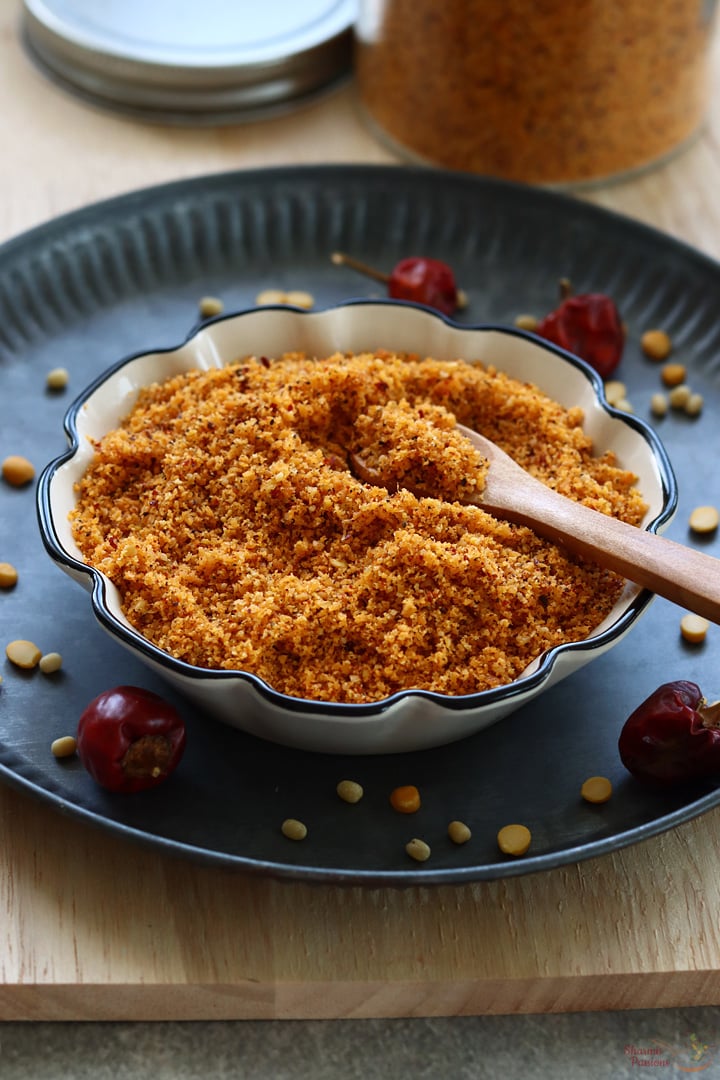
Sambar Powder Recipe (Sambar Masala)

Sambar Powder is a masala blend of lentils and spices that makes Sambar taste delicious. Sambar Podi or Sambar Masala is a handy spice blend mix common in most of South India households stocked to make Sambar effortlessly. Sambar powder enhances the taste and makes sambar flavorful, aromatic and tasty too.

sambar powder stored in a glass jar

Sambar Masala or Sambar Powder is flavorful when made at home rather than buying it from stores. You can feel the taste difference significantly when you try making sambar with the homemade sambar powder. It takes the taste of sambar to a whole new level.

[feast_advanced_jump_to]

About Sambar Powder

Sambar Powder is one of the most essential spice blend mix needed to make Sambar. Sambar Powder or Sambar Masala is made using lentils, red chilies and few spices. Sambar is a South Indian curry made using lentils and vegetables. Sambar is served with tiffin items and also with rice.

There are many sambar powder recipes across South India prepared using varying ingredients and this recipe I have posted here is passed from my grandmother. Amma learnt it from and I got the recipe from amma's cookbook. This sambar powder is very popular among my friends and relatives that I usually make a big batch and pack it when I visit them.

Amma's sambar is very popular during my school and college days that my friends ask me to bring a separate dabba of sambar for them. I use this sambar masala even for puli kulambu and tamarind based curries and it tastes soo good.

Sambar Powder is a handy ingredient to make tasty, flavorful sambar easily & quickly. Sambar made with this Sambar Powder Recipe makes the dishes tastier - Idli, Dosa, Pongal, Vada, Oothapam gets to another level.

Sambar powder is an assortment of spices - They have rich medicinal value and makes the dish healthy & tasty to relish. Mittu just loves sambar especially this sambar - she would literally drink it with a spoon sometimes. For her sake, sambar is in our menu at least twice a week.

Sambar Powder - Sambar Masala - Sambar Podi

Sambar Powder, Sambar Masala, Sambar Podi, Thanjavur Sambar Podi, Udupi Sambar Powder, Iyengar Sambar Podi, Brahmin Sambar Podi all means one and the same Sambar Powder. Sambar powder is called in different names as they are vary slightly with regions & ingredients but the core Sambar Powder recipe is the same.

sambar powder just made

Sambar Powder Video

Sambar Powder Ingredients

  • Red chillies or Laal mirch - Red Chilies makes the Sambar powder spicy. The quantity can be adjusted based on the family liking (mild spicy to very spicy). I have used round variety of red chilli for home style Sambar Powder(but you can replace it with regular chillies too) and the long variety of red chilli for Traditional Sambar Powder. Bydagi & Kashmiri Chillies can also be used individually or with a mix of one or more variety and both of them give excellent color and are less spicy.Β 
  • Lentils / Dal - Toor Dal, Urad Dal and Chana Dal are added in equal proportions which makes the base of Sambar Powder. Dals influence the taste & color of Sambar powder.
  • Coriander / Dhaniya - Coriander seeds is another key ingredient in Sambar Powder. Coriander seeds have a great flavor when crushed and thus the sharp differentiating taste of Sambar Powder.
  • Fenugreek / Methi - Fenugreek seeds gives aroma & nutty, slightly bitter taste to Sambar Powder. Do not use fenugreek more than prescribed quantity as it will make the Sambar bitter.
  • Black pepper or Kali Mirch or Pepper Corn - gives the sharp spicy taste to the Sambar Powder. It helps in digestion and weight loss by improving the metabolism of the body.
  • Cumin - also called as Jeera adds earthy, warming and aromatic flavors to Sambar Powder. Jeera also aids in building up our immunity and has anti-bacterial properties.
  • Mustard seeds - Adding mustard is this sambar powder recipe's specialty as I haven't seen many of them adding mustard in sambar powder. Mustard have anti-inflammatory properties and aids in digestion.
ingredients needed to make sambar powder

Sometimes we do not need answers to all the questions when we are comfortable with it. Especially question like: Why I make Sambar for the 4th time in this week when it is barely Wednesday? Sambar made with my Mom's sambar powder recipe gives that emotion. This Sambar powder recipe is from my mother's handwritten book which was originally passed over orally for generations together.

I have shared my family's recipe passed over generations, you can try at home that will surely keep your family happy even when you make sambar 7 days in a week.Β Yes trust me and try it.

Similar Recipes

sambar masala ingredients roasted

How to make Sambar Powder Step by Step

1.Measure and keep the ingredients ready. First dry roast 3 cups red chilies along with ΒΌ cup urad dal till dal turns golden brown and chilies turn slightly browned and crisp, transfer to a plate. If dry red chilies is roasted separately it may get burnt easily so always roast it along with any dal.

roast red chilies, urad dal until golden

2.Dry roast β…› cup pepper until crisp, let it crackle then transfer to the same plate and set aside.

roast pepper corns until golden

3.Dry roast ΒΎ cup coriander seeds until golden and aromatic. Transfer to the same plate and set aside.

roast coriander seeds until golden

4.Dry roast 1 tablespoon fenugreek seeds until golden. Transfer to the same plate and set aside.

roast fenugreek seeds until golden

5.Next dry roast β…› cup cumin seeds until golden brown. Transfer to the same plate and set aside.

roast cumin seeds until golden

6.Then dry roast ΒΌ cup chana dal until golden brown. Transfer to the same plate and set aside.

roast chana dal until golden

7.Dry roast ΒΌ cup toor dal until golden. Transfer to the same plate and set aside.

roast toor dal until golden

8.Finally add 1 tablespoon mustard seeds let it splutter, transfer to the plate and set aside.

roast mustard seeds until it splutters

9.Cool down the roasted ingredients completely.

cool down the roasted ingredients

10.Transfer the ingredients to a mixer jar.

transfer to a mixer jar

11.Grind it to a fine powder.

grind to a fine powder

12.Spread it over a plate to cool down and then store in a clean airtight container.

spread it on a plate and cool down

Fresh aromatic sambar powder is ready!

Expert Tips

  • Roasting vs Sun drying - You can even sundry the ingredients till crisp and then give for grinding. I usually prefer roasting as it is quick and easy.
  • Red chilies - Adjust red chilies according to your spice level - 3 cups can be increased to around 4 cups or more if you prefer sambar powder to be spicy.
  • Color - The color of the powder largely depends on the red chili variety. Also always fry red chilies along with the dal to avoid burning. If the red chilies turn dark/black then it will affect the color and taste of the sambar powder too.
  • Making in bulk - If you are grinding in bulk you can give it to flour mill for grinding which will give a more fine powder. If you are making in a small batch you can grind it your regular mixer itself.
  • Cooling - Make sure you cool down completely before you grind it. Also after grinding spread it on a plate, let it cool down before youΒ store.

Storage

Sambar Masala looses flavor and aroma through evaporation when exposed to too much of light, air so store in airtight container. You can scale up or down the recipe depending on your needs!

Sambar Powder quantity prescribed in this post lasts for about 6 months for us with usage of at least 2 times a week. I usually transfer half of it to a separateΒ container and store it for later use sometimes I refrigerateΒ it. For daily use I use a small container in the kitchen. Sambar Podi keeps well for 3 months in room temperature and even for a year in fridge / freezer

FAQS

1.What can we make with Sambar Powder?

Of course Sambar!Β  It can be added for Kuzhambu, Kootu, Poriyal and as a replacement for Kuzhambu Milagai Thool & Curry Masala Powder when you run out of stock with them!

2.How do you make Sambar Powder?

Dry roast spices, lentils, chili separately and grind them in mixer grinder to make Sambar powder. Alternatively you can sun dry them until crisp and grind it too but roasting gives more flavor.

3.Is all the spices & dals mandatory for making sambar powder?

Yes - use prescribed ingredients which gets tasty sambar. If you are running out of stock, you can skip urad dal, cumin, turmeric and mustard. Additionally you may use hing, roasted curry leaves. Also you can add powders if you do not have in seeds form. You can also add desiccated coconut to make it tastier, but the shelf life comes down by half!

4.Is there any specific variety of red chilli that is used for Sambar powder?

You can use bydagi, kashmiri chili or round variety of red chili for making sambar powder.

5.Is Sambar Powder necessary for making Sambar?

Not necessarily - however having sambar powder handy at home reduces the effort in making sambar all time. We can grind all the spices fresh each time to make Sambar but who would not want to save time unless you are making it big for marriage like function! Make sambar easily with sambar powder.

sambar powder stored in a glass jar

If you have any more questions about this Sambar Powder RecipeΒ do mail me at sharmispassions@gmail.com. In addition, follow me on Instagram,Β Facebook,Β PinterestΒ ,YoutubeΒ andΒ TwitterΒ .

Tried this Sambar Powder Recipe? Do let me know how you liked it. Also tag us on Instagram @sharmispassions and hash tag it on #sharmispassions.

πŸ“– Recipe Card

Print

Sambar Powder Recipe | Sambar Masala Recipe

Sambar Powder is a masala blend of lentils and spices that makes Sambar taste delicious. Sambar Podi or Sambar Masala is a handy spice blend mix common in most of South India households stocked to make Sambar effortlessly. Sambar powder enhances the taste and makes sambar flavorful, aromatic and tasty too.
Course Side Dish
Cuisine Indian
Keyword hotel sambar recipe, masala recipes, podi recipes, powder recipes, sambar, sambar recipes, spice recipes, spicy indian mix
Prep Time 10 minutes
Cook Time 20 minutes
Total Time 30 minutes
Servings 15
Calories 42kcal
Author Sharmilee J

Ingredients

Home Style Sambar Masala

  • 3 cups red chillies
  • ΒΎ cup coriander seeds
  • 1 tablespoon fenugreek seeds
  • ΒΌ cup urad dal
  • ΒΌ cup toor dal
  • ΒΌ cup chana dal
  • β…› cup pepper corns
  • β…› cup cumin seeds
  • 1 tablespoon mustard seeds

Instructions

Home Style Sambar Masala

  • Measure and keep the ingredients ready.
  • First dry roast red chillies along with urad dal till dal turns golden brown and chillies turn slightly browned and crisp,transfer to a plate.
  • Dry roast pepper until crisp,Transfer to plate.
  • Dry roast coriander seeds until golden and aromatic, transfer to a plate and set aside.
  • Dry roast fenugreek seeds until golden, transfer to plate.
  • Next dry roast jeera followed by toor dal until golden brown.Transer to plate.
  • Then dry roast chana dal.
  • Roast till golden brown, set aside.
  • Finally add mustard seeds let it splutter, transfer to the plate and set aside and cool down completely.
  • Transfer the roasted ingredients to a plate and cool down.
  • Transfer the ingredients to a mixer jar.
  • Grind it a fine powder.
  • Allow it to cool down and then store in a clean airtight container.
  • Fresh aromatic sambar powder ready!

Traditional Sambar Powder Step by Step

  • Measure all your ingredients(I halved the original recipe).Dry roast red chilies till the chilies turn crisp,Set aside..Dry roast coriander seeds till golden brown,Set aside to cool down.
  • Then dry roast toor dal, urad dal, chana dal each separately till golden brown and set aside.
  • Dry roast fenugreek seeds for 2 mins,Set aside.Dry roast pepper corns till nice aroma rises and till the spluttering stops.Dry roast turmeric sticks for a minute.
  • Collect all the ingredients and let it cool down.Using a hand mortar and pestle coarse grind the turmeric sticks.
  • Now add all the roasted ingredients along with the turmeric mixture and grind to a fine powder.Spread in a plate and set aside to cool down.
  • Store in an airtight container.

Video

Notes

  • Roasting vs Sun drying - You can even sundry the ingredients till crisp and then give for grinding. I usually prefer roasting as it is quick and easy.
  • Red chilies - Adjust red chilies according to your spice level - 3 cups can be increased to around 4 cups or more if you prefer sambar powder to be spicy.
  • Color - The color of the powder largely depends on the red chili variety. Also always fry red chilies along with the dal to avoid burning. If the red chilies turn dark/black then it will affect the color and taste of the sambar powder too.
  • Making in bulk - If you are grinding in bulk you can give it to flour mill for grinding which will give a more fine powder. If you are making in a small batch you can grind it your regular mixer itself.
  • Cooling - Make sure you cool down completely before you grind it. Also after grinding spread it on a plate, let it cool down before youΒ store.

Nutrition

Serving: 20g | Calories: 42kcal | Carbohydrates: 8g | Protein: 2g | Fat: 1g | Saturated Fat: 0.1g | Polyunsaturated Fat: 0.2g | Monounsaturated Fat: 1g | Sodium: 6mg | Potassium: 132mg | Fiber: 3g | Sugar: 1g | Vitamin A: 193IU | Vitamin C: 27mg | Calcium: 43mg | Iron: 2mg

The post Sambar Powder Recipe (Sambar Masala) appeared first on Sharmis Passions.
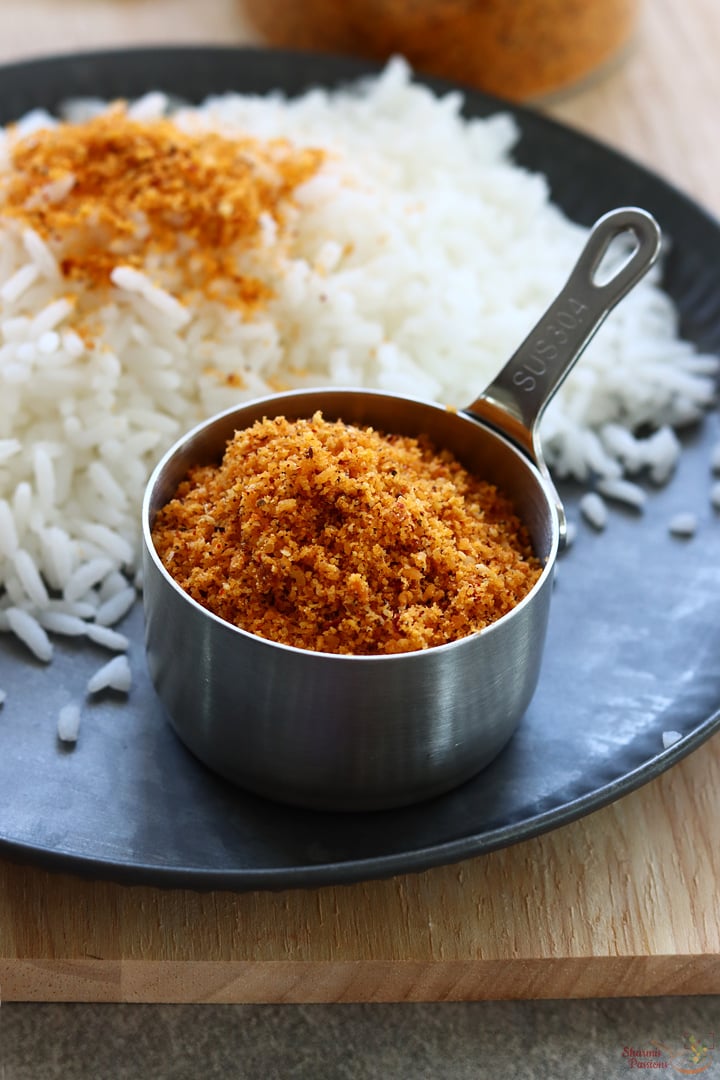
Jeera Water | Cumin Water

Jeera Water also known as Cumin Water is a beverage made with a popular Indian spice called jeera or cumin seeds. It has a lot of health benefits as jeera is a healing spice and is very good for digestion. Cumin water also known as cumin tea is an easy way to enjoy the full benefits of the spice.

jeera water in a mug

Jeera Water is one of the most common solution for indigestion. It has numerous health benefits which is good for your hair, skin etc. Its obvious that people in Kerala drink cumin water replacing normal water in their day to day life.

[feast_advanced_jump_to]

What is Jeera Water?

Jeera water is nothing but water boiled along with jeera or cumin seeds until it is reduced. All the nutrients and flavors are infused in the water hence it is very good and boosts overall health. The flavor is enhanced when boiled in water or either roasted or fried.

Cumin water is said to improve digestion and promote lactation during pregnancy. When it is had in empty stomach in the morning it helps in weight loss. Cumin seeds is one of the quite essential spice in Indian cooking.

Apart from helping in digestion cumin water is said to have a lot of health benefits like improving immunity, helping in weight loss etc. More jeera or cumin seeds recipes include Jeera rice, Jeera powder etc.

Jeera also known as cumin seeds is one of the seeds that has earthy flavors and very good for digestive system. It is more flavorful when the seeds are crushed, roasted or cooked. Jeera is used in many dishes in everyday cooking while tempering or can be used as powdered too.

Just add jeera or cumin seeds to water and boil until water until it is reduced and the color of water changes. Healthy and healing cumin water is ready, you can drink it replacing water too. This is said to have a lot of health benefits and also helps in weight loss.

You can enjoy this drink warm or at room temperature. You can even add a little honey or lemon juice to enhance the taste. This is a popular home remedy for digestive issues and can be consumed after meals or in empty stomach. This water is very beneficial but individual responses can vary so always consult your doctor to have any diet changes.

jeera water in a mug

Jeera Water - 2 ways

  • Simmering method : Boil water crush cumin seeds add to boiling water. Simmer for few mins until it reduces to almost half. Close and set aside. Then strain and cumin water is ready to drink.
  • Soaking method : Soak cumin seeds in hot water overnight. Next day strain and drink the water alone.

Jeera Water for weight loss

  • Soak a teaspoon of cumin in warm water overnight. Next day morning you can strain and drink the water
  • Boil 2 cups water add 1 teaspoon cumin to it , boil until it reduces. When its still warm add lemon juice and drink it.
  • You can drink cumin water in empty stomach for best results. If it is in between then you can have it at least 2 times a day.

Jeera Water Video

Similar Recipes

Jeera Water Ingredient

Cumin seeds, also known as jeera is a popular spice used in various cuisines around the world. It is called Cumin seeds in English, Jeera in Hindi and Jeeragam in Tamil.

  • Flavor and Aroma - It has an unique flavor and aroma that it is used in most of the Indian tempering.
  • Health Benefits - Jeera or cumin seeds aid digestion, promotes weight loss, rich source of iron, reduce fat reduction etc.
  • Natural Remedy - Cumin seeds have been used to treat various ailments like digestive problems, acidity etc and it is a natural remedy.
  • Culinary Uses - Cumin seeds is a versatile spices used in various cuisines throughout the world. Used in a wide range of dishes including soups, stews, curries, rich dishes etc.
cumin seeds

How to make Jeera Water Step by Step

1.Take 2 cups water in a sauce pan. Let it boil well.

boil water

2.Add 1 heaped teaspoon jeera to it. You can even crush jeera using a mortar pestle and add it to get more a strong flavor.

add jeera

3.Give a quick mix.

boil well

4.Boil until it reduces to half. You can cook covered while simmering too.

jeera water recipe simmer until reduced

5.The color changes and also should be reduced to almost half.

color changes

6.You can see the cumin seeds nicely release its flavor and color.

flavors infused

7.Switch off at this stage.

switch off

8.Set aside by keeping it covered for few minutes.

cover and keep

9.After few minutes, open.

jeera water is ready

10.Strain the seeds, discard it. Consume it hot or warm.

strain jeera water

Consume it hot or warm.

Expert Tips

  • Cumin seeds - You can even crush cumin seeds using a mortar and pestle then add it for more strong flavor.
  • Boiling - Boil cumin seeds in water well and let the water reduce then keep it covered for a while for the flavors to get blend in fully.
  • Sweetener - Add little honey while serving if you prefer to have it sweet.
  • Jeera powder - You can even add roasted jeera powder to hot water mix well, strain and drink. But fresh seeds is always advisable and recommended.
  • Variations - You can even add mint or basil leaves and boil it along with cumin seeds, it aids in digestion. Adding cinnamon powder to jeera water aids in maintaining blood sugar levels.
  • Serving - Jeera water is best to be had fresh and warm.

Serving & Storage

Jeera water is best when had fresh. Serve it hot or warm. Consume jeera water the same day itself, storing is not recommended. You can make a batch and consume throughout the day.

FAQS

1.When is the best time to drink cumin water?

Though we can have cumin water anytime of the day, its best to have it in the morning on an empty stomach especially if you are drinking jeera water for weight loss. Also it is best to have it hot or warm.

2.When should I drink jeera water for weight loss?

The best time to have jeera water if you are looking for weight loss it to have it in empty stomach one you wake up in the morning.

3.How many times to drink jeera water for weight loss?

You can drink 1 cup jeera water (250 ml)Β  2 times a day.

4.Can jeera water reduce belly fat?

Yes if had regularly along with good diet and exercise jeera water is said to help in burning belly fat and reducing weight.

5.Can I add other ingredients?

You can add lemon juice or cinnamon powder or grated ginger to enhance the flavor.

jeera water in a mug

If you have any more questions about this Jeera Water Recipe do mail me at sharmispassions@gmail.com. In addition, follow me on Instagram,Β Facebook,Β PinterestΒ ,YoutubeΒ andΒ TwitterΒ .

Tried this Jeera Water Recipe? Do let me know how you liked it. Also tag us on Instagram @sharmispassions and hash tag it on #sharmispassions.

πŸ“– Recipe Card

Print

Jeera Water Recipe | Cumin Water recipe

Jeera Water also known as Cumin Water is a beverage made with a popular Indian spice called jeera or cumin seeds. It has a lot of health benefits as jeera is a healing spice and is very good for digestion. Cumin water also known as cumin tea is an easy way to enjoy the full benefits of the spice.
Course Drinks
Cuisine Indian
Keyword flavored tea, healthy recipes, Healthy tea time drink, Nutritional Beverage, Nutritional Drink
Cook Time 10 minutes
Total Time 10 minutes
Servings 3
Calories 3kcal
Author Sharmilee J

Ingredients

  • 2 cups water
  • 1 heaped teaspoon jeera (cumin seeds)

Instructions

  • Take 2 cups water in a sauce pan. Let it boil well.
  • Add 1 heaped teaspoon jeera to it. You can even crush jeera using a mortar pestle and add it.
  • Give a quick mix.
  • Boil until it reduces to half. You can cook covered while boiling too.
  • The color changes and also should be reduced to almost half.
  • You can see the cumin seeds nicely release its flavor and color.
  • Switch off at this stage.
  • Set aside by keeping it covered for few mins.
  • After few mins, open.
  • Strain the seeds, discard it. Consume it hot or warm.

Video

Notes

  • Cumin seeds - You can even crush cumin seeds using a mortar and pestle then add it for more strong flavor.
  • Boiling - Boil cumin seeds in water well and let the water reduce then keep it covered for a while for the flavors to get blend in fully.
  • Sweetener - Add little honey while serving if you prefer to have it sweet.
  • Jeera powder - You can even add roasted jeera powder to hot water mix well, strain and drink. But fresh seeds is always advisable and recommended.
  • Variations - You can even add mint or basil leaves and boil it along with cumin seeds, it aids in digestion. Adding cinnamon powder to jeera water aids in maintaining blood sugar levels.
  • Serving - Jeera water is best to be had fresh and warm.

Nutrition

Serving: 200ml | Calories: 3kcal | Carbohydrates: 0.3g | Protein: 0.1g | Fat: 0.1g | Saturated Fat: 0.01g | Polyunsaturated Fat: 0.02g | Monounsaturated Fat: 0.1g | Sodium: 9mg | Potassium: 12mg | Fiber: 0.1g | Sugar: 0.02g | Vitamin A: 8IU | Vitamin C: 0.05mg | Calcium: 11mg | Iron: 0.4mg

The post Jeera Water | Cumin Water appeared first on Sharmis Passions.
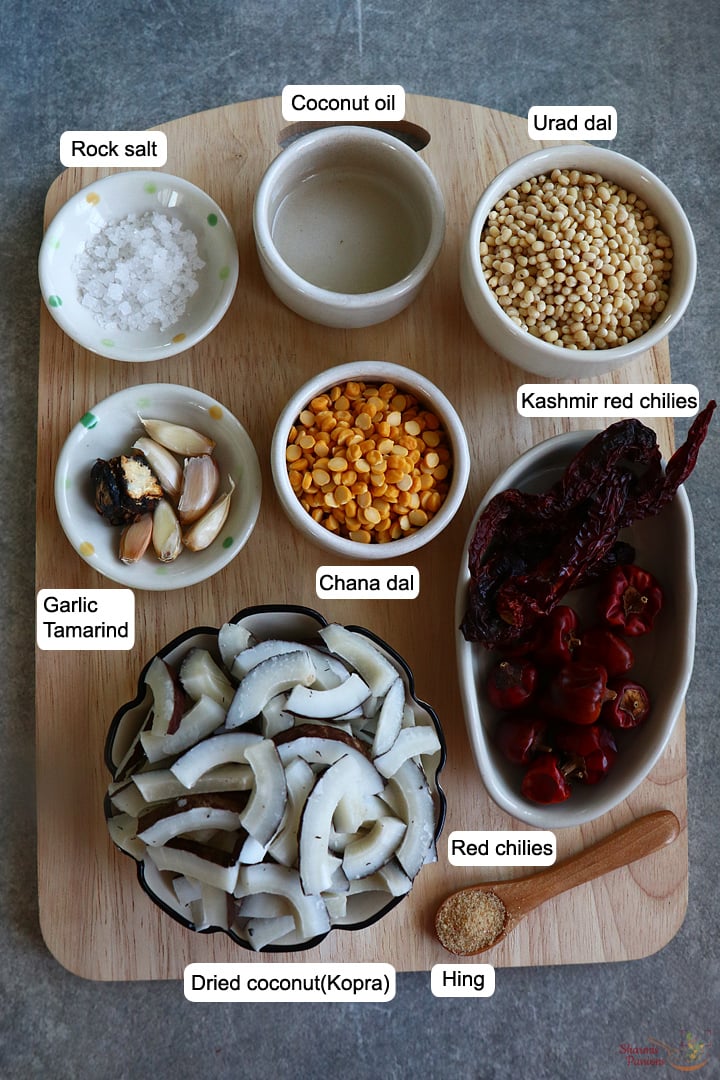
Vanilla Milkshake Recipe

Vanilla Milkshake is a classic creamy beverage made with just few ingredients in hand including vanilla ice cream, milk, vanilla and sugar. Vanilla Milkshake is one of the popular shakes loved by all. It is rich, has a velvety smooth texture and the most demanding milkshakes in restaurants.

vanilla milkshake served in a tall glass

Vanilla Milkshake is great after a meal or even along with a midday snack. Nothing beats a chilled, smooth creamy milkshake after a long day and this vanilla milkshake is just perfect. Do try and enjoy the cafe style vanilla milkshake at home with easily available ingredients at home.

[feast_advanced_jump_to]

About Vanilla Milkshake

Vanilla Milkshake is so easy and quick to make. Just blend the ingredients together to get a creamy shake but the proportions are really important to get the perfect tasting milkshake just like in cafe or restaurant. The subtle sweetness, creamy texture and mild vanilla flavor makes this shake refreshing and tastes delicious.

Vanilla Milkshake is just made with 4 basic ingredients which includes cold milk, vanilla ice cream, sugar and vanilla essence. Indian style Vanilla Milkshake is just perfect for get together or kids parties. Ice cream is added to make the shake rich and more creamy, alternatively you can add frozen milk too.

This Vanilla milkshake has a pleasantly rich sweet taste as it combines ice cream and milk. Vanilla is the basic flavor, it is one of the popular among other flavors too. So it is obvious that Vanilla Milkshake though simple gains much attention and popularity among other shakes.

This can be just had with a scoop of ice cream or whipped cream. As we are adding ice cream while blending the shake, I prefer whipped cream topping along with sprinkles looks and feels tempting.

vanilla milkshake served in a tall glass

Vanilla Milkshake - 2 ways

  • Vanilla Milkshake with icecream - This is a classic combination of just blending chilled milk along with sugar , vanilla icecream and vanilla essence.
  • Vanilla Milkshake without icecream - This is slightly a low fat version replacing icecream. Freeze 2 cups of milk overnight until fully frozen then add it along with milk, vanilla essence a little more of sugar and blend until thick and creamy.

Vanilla Milkshake Ingredients

  • Milk - Use full fat milk especially for milkshakes to get creamy smooth shake just as in restaurants. Boil cool down then chill the milk.
  • Ice cream - I have used vanilla icecream here. If you do not want to use icecream then freeze 2 cups milk and add it while blending replacing icecream.
  • Vanilla extract - Though we use vanilla ice cream I use a dash of vanilla extract or essence to get the punch. I have used homemade vanilla extract. But if you don't have vanilla essence then just skip it and use just vanilla ice cream.
  • Sugar - Though sugar is optional I love to add it to lift the sweetness.
ingredients needed to make vanilla milkshake

Similar Recipes

How to make Vanilla Milkshake Step by Step

1.To a blender add Β½ cup chilled milk (boiled, cooled and chilled).

add milk

2.Add 2 teaspoon sugar to it.

add sugar

3.Add ΒΌ teaspoon vanilla extract.

add vanilla essence

4.Add 4 scoops vanilla ice cream.

add vanilla icecream

5.Blend everything together until smooth and creamy.

blend until smooth and creamy

6.Pour vanilla milkshake into a tall glass.

pour into tall galss

7.Top it up with whipped cream and sprinkles.

top with whipped cream

Serve immediately and Enjoy Vanilla Milkshake!

vanilla milkshake served in a tall glass

Expert Tips

  • Milk - Always add full cream milk for milkshakes. Make sure milk is boiled before use. Add only ΒΌ cup milk if you prefer a very thick milkshake.
  • Chilling - Add chilled milk and ice cream to make the shake chill. Also you can refrigerate the shake for few mins to make it chilled. Do not add ice cubes as it will dilute and make the shake watery.
  • Sweetness - Though adding sugar is optional, I recommend adding it.
  • Ice cream - Adding more ice cream makes the shake rich and creamy.

Variations

  • Without ice cream - You can make vanilla milkshake with or without ice cream as per your preference. Check out tips for more details on making vanilla milkshake without icecream.
  • Adding nuts - You can add chopped nuts and dry fruits to get a more rich nutty vanilla milkshake.
  • Custard - You can add 2 tablespoon vanilla custard to make vanilla milkshake for a variation.

Topping Ideas

  • Top it up with nuts and dry fruits if you like.
  • You can add a scoop of vanilla icecream with a syrup drizzle of your choice. Caramel syrup and chocolate syrup suits best.
  • If you like strawberry flavour drizzle strawberry sauce and serve.
  • You can add whipped cream with sprinkles.
  • Topping and garnish is fully your preference, you can even add chocolate chips or cut fresh fruits.

Serving and Storage

Always serve Vanilla Milkshake chilled! You can make the milkshake and store it in fridge up to 2 days. Incase if you want to store more than that then freeze the milkshake which keeps well for about 10 days. When you want to serve just thaw it just give a quick blend and serve chilled!

FAQs

1.Can I make Vanilla shake without ice cream?

Yes! You can make Vanilla milkshake without ice cream. You can add frozen milk replacing ice cream to get a perfect thick and creamy shake.

2.What is Vanilla milkshake made of?

Vanilla Milkshake is made using chilled milk, sugar, vanilla ice cream and vanilla essence or extract.

3.Can I make milkshake without mixer?

Yes you can make Vanilla milkshake using an immersion blender instead of a mixer.

4.Which milk is used for Vanilla Milkshake?

Use full cream milk for milkshakes. Do not use raw milk boil well, chill it and then use. As we buy cows milk I do not use raw milk. May be if you are using carton milk that is readily available you can use raw milk.

vanilla milkshake served in a tall glass

If you have any more questions about this Vanilla Milkshake RecipeΒ Β do mail me at sharmispassions@gmail.com. In addition, follow me on Instagram,Β Facebook,Β PinterestΒ ,YoutubeΒ andΒ TwitterΒ .

Tried this Vanilla Milkshake Recipe? Do let me know how you liked it. Also tag us on Instagram @sharmispassions and hash tag it on #sharmispassions.

πŸ“– Recipe Card

Print

Vanilla Milkshake Recipe (Vanilla Shake)

Vanilla Milkshake is a classic creamy beverage made with just few ingredients in hand including vanilla ice cream, milk, vanilla and sugar. Vanilla Milkshake is one of the popular shakes loved by all. It is rich, has a velvety smooth texture and the most demanding milkshakes in restaurants.
Course Drinks, milkshakes
Cuisine American, Chinese, French, Indian, Italian, Mediterranean, Mexican
Keyword drink recipes, Healthy tea time drink, milk recipes, milkshake recipes, Nutritional Beverage, Nutritional Drink, vanilla recipes
Prep Time 10 minutes
Total Time 10 minutes
Servings 2
Calories 328kcal
Author Sharmilee J

Ingredients

  • Β½ cup milk
  • 2 teaspoon sugar
  • Β½ teaspoon vanilla extract
  • 4 scoops vanilla icecream

Instructions

  • To a blender add Β½ cup chilled milk(boiled, cooled and chilled).
  • Add 2 teaspoon sugar to it.
  • Add ΒΌ teaspoon vanilla extract.
  • Add 4 scoops vanilla ice cream.
  • Blend everything together until smooth and creamy.
  • Pour vanilla milkshake into a tall glass.
  • Top it up with whipped cream and sprinkles.
  • Serve immediately and Enjoy Vanilla Milkshake!

Video

Notes

  • Milk - Always add full cream milk for milkshakes. Make sure milk is boiled before use. Add only ΒΌ cup milk if you prefer a very thick milkshake.
  • Chilling - Add chilled milk and ice cream to make the shake chill. Also you can refrigerate the shake for few mins to make it chilled. Do not add ice cubes as it will dilute and make the shake watery.
  • Sweetness - Though adding sugar is optional, I recommend adding it.
  • Ice cream - Adding more ice cream makes the shake rich and creamy.

Nutrition

Serving: 200ml | Calories: 328kcal | Carbohydrates: 38g | Protein: 7g | Fat: 16g | Saturated Fat: 10g | Polyunsaturated Fat: 1g | Monounsaturated Fat: 4g | Cholesterol: 65mg | Sodium: 129mg | Potassium: 356mg | Fiber: 1g | Sugar: 35g | Vitamin A: 655IU | Vitamin C: 1mg | Calcium: 244mg | Iron: 0.1mg

The post Vanilla Milkshake Recipe appeared first on Sharmis Passions.
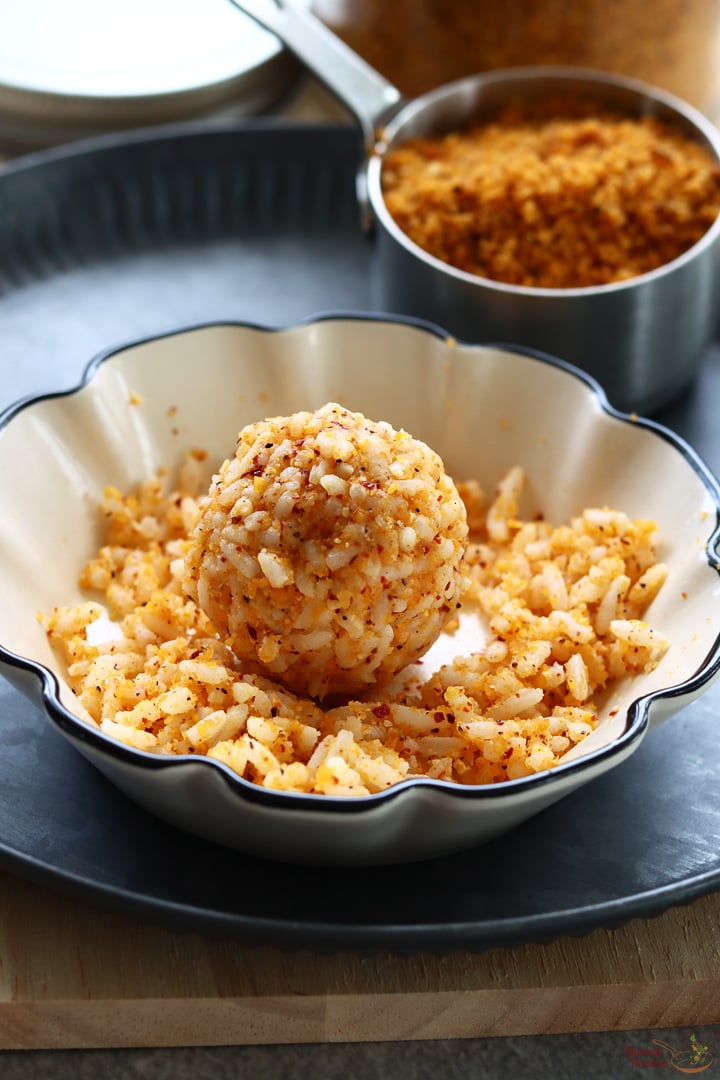
Ragi Powder | Ragi Flour Recipe | Ragi Recipes

Ragi Powder also known as Ragi Flour can be made easily at home. Homemade Ragi Powder is a nutritious, whole-grain flour made by cleaning, rinsing, soaking, sprouting, drying, and grinding finger millet (ragi) at home. It has a light brown color, a slightly nutty aroma, and a mild earthy taste.

homemade ragi powder in a glass  jar

Sprouted ragi flour is made by soaking and germinating ragi (finger millet) grains before drying and grinding them. Sprouting enhances the nutritional value, digestibility, and flavor of the flour. It is especially popular for making baby foods, porridges, malt drinks, and rotis due to its soft texture and improved taste.

[feast_advanced_jump_to]

About Ragi Flour

Ragi as it is popularly known in Kannada is Finger millet in English, Kezhvaragu or Keppai in Tamil, Ragulu in Telugu, Mandika in Hindi and Nachani in marathi etc. Homemade Ragi Powder is nutritious and is super beneficial too.

Ragi or Finger Millet is very nutritious and it is always said that the nutrition doubles up when any millet or bean is sprouted. I agree it takes time and effort to make homemade flours but I tell you, after making I am sure you will feel content, happy and will never look back at store bought flour.

Ragi is an easily digestible millet hence it is first started solids for babies. Ragi is very good especially for kids and elders and no wonder its the first grain introduced to babies. Preparing ragi flour at home ensures it's pure, fresh, and free from preservatives or additives.

Homemade Ragi Flour is rich in calcium, iron, fiber, and amino acids, making it a great choice for babies, kids, and adults. It's commonly used to prepare ragi porridge, dosa, idiyappam, ladoo, malt, and rotis, offering a wholesome, gluten-free base for various dishes.

Ragi Powder Video

Homemade Ragi Powder Ingredients

  • Finger millet - Ragi as it is popularly known in kanada. Choose the whole grain which is easily available in stores.
whole ragi or fingermillet

Ragi Flour - 2 Methods

Generally there are 2 methods for making finger millet flour at home :

  • Method 1 - (Elaborate) - This is the method I have shared here which takes little longer but worth the time and effort. In this method to begin with we first pick out all the specks if any then rinse the millet well until the water is clear then soak for a day, drain water completely then sprout it for a day or so. Then we sundry until completely dry, then roast in a kadai and finally powder it.
  • Method 2 - (Quick & Instant) - This method comes handy when you have no time for soaking or sprouting. Remove speck, rinse the millet well then drain water completely. Sun dry well finally roast and powder it.
homemade ragi powder in a glass  jar

Ragi Recipes

More Ragi Recipes

How to make Homemade Ragi Flour Step by Step

1.Take Β½ kg finger millet in a bowl.

take ragi

2.Pick out speck if any. You can even spread it on a plate and remove. Do in batches.

pick out speck

3.Discard the speck

remove the speck and discard it

4.Add water rinse it well at least 2-3 times.

rinse it well in water

5.Drain water, discard it.

drain water

6.Rinse well, drain water until water is clear like this.

rinse well

7.Drained water is clear.

clear drained water

8.When you see clear water while rinsing then you can stop rinsing.

rinse until clear water

9.Now soak in water.

soak in water

10.Keep covered for at least 8 hrs or even overnight.

keep covered

11.Rinse it one more time. Then drain water completely.

rinse and drain

12.Add the millet to a hot box, spread it. You can even tie in a cloth, squeeze excess water and keep it in a colander. Hot box makes sprouting faster.

add millet to hotbox

13.Close it tightly and set aside undisturbed for a day or at least for 10 hours. You can even keep it in muslin cloth for sprouting.

keep covered to sprout

14.This is the tiny sprout I got after 10 hours. If you wish to get longer sprouts then you can rest for one more day but make sure the millet does not get spoiled.

homemade ragi flou sproutsr

15.Spread it in a plate to a thin layer so that it gets dried easily. Sun dry for a day. Make it a thin layer otherwise it takes time to get dried. It will take just few hours if the climat is very hot and sun is scorching.

spread on a plate

16.Add to kadai and dry roast for 5 minutes. I did it in 2 batches. You can skip this step and powder it finely after sun drying itself.

add to kadai

17.Spread it on a plate. Cool down completely.

cool completely

18.Finally grind it until fine. Do it in batches to avoid heating of mixie which will in turn create moisture. But if you wish you can sieve ragi flour if the flour is very coarse. I usually do not sieve.

powder it

19.Spread it on a plate, then cool completely later store in a clean dry jar.

homemade ragi flour is ready

Homemade sprouted ragi flour is ready!

Expert Tips

  • Cleaning - Always remove stones, husk, and dust from the ragi grains before washing.
  • Washing - Rinse the grain 2-3 times in clean water to remove any dirt.
  • Sprouting - Soak for 8 hours then rinse once again. Then drain water completely and add it to hot box for sprouting. I left it only for small sprouts, if you leave longer the sprouts will be longer.
  • Drying - Sun dry well until no moisture is there.
  • Roasting - Make sure to dry well before roasting and grinding. There should be no moisture while grinding else the ragi flour might get spoiled soon.
  • Grinding - If it is a small batch you can grind it at home in mixer itself.
  • Sieving - You can sieve ragi flour using a fine sieve. Then collect the coarse particles and again grind it along with next batch.

Storage

Homemade Ragi Powder keeps well in room temperature for about 3 months. You can extend shelf life by storing in fridge, in fridge it keeps well for about a year also.

FAQS

1.Why do we need to sprout ragi?

Sprouting doubles and increase the nutritional value. Also sprouted flour when made into a powder is easy digestible especially for babies and kids.

2.How much do we need to sprout ragi?

I just allow it to sprout just when it the white stem starts to peep out which is around 10 hours. You can sprout for a day too for longer sprouts.

3.Can I skip sprouting?

Yes you can skip sprouting part. Just rinse the millet drain well, sundry it then roast and grind it to a fine powder too.

4.What's the difference between regular and sprouted ragi flour?

  • Sprouted ragi flour: Grains are soaked, germinated, dried, and then roasted and ground to a fine powder.
  • Regular ragi flour- Made from cleaned, dried, and ground grains.

5.Should sprouted ragi be roasted before grinding?

Roasting is optional but recommended. It enhances the aroma, gives a nutty flavor, and helps prevent spoilage. For baby food, you can skip roasting to retain more nutrients.

homemade ragi powder in a glass jar

If you have any more questions about this Ragi Flour RecipeΒ do mail me at sharmispassions@gmail.com
In addition, follow me on Instagram,Β Facebook,Β PinterestΒ ,YoutubeΒ andΒ TwitterΒ .

Tried this Ragi Flour Recipe? Do let me know how you liked it. Also tag us on Instagram @sharmispassions and hash tag it on #sharmispassions.

πŸ“– Recipe Card

Print

Ragi Powder | Ragi Flour | Ragi Recipes

Ragi Powder also known as Ragi Flour can be made easily at home. Homemade Ragi Flour or Ragi Powder is a nutritious, whole-grain flour made by cleaning, drying, and grinding finger millet (ragi) at home. It has a light brown color, a slightly nutty aroma, and a mild earthy taste.
Course Main Course, Side Dish
Cuisine Indian
Keyword millet recipes, powder recipes, ragi recipes
Prep Time 3 days
Cook Time 15 minutes
Total Time 3 days 15 minutes
Servings 5
Calories 820kcal
Author Sharmilee J

Ingredients

  • Β½ kg fingermillet

Instructions

  • Take Β½ kg finger millet in a bowl.
  • Pick out speck if any. You can even spread it on a plate and remove. Do in batches.
  • Discard the speck.
  • Add water rinse it well.
  • Drain water, discard it. Rinse well, drain water until water is clear.
  • When you see clear water while rinsing then you can stop rinsing.
  • Now soak in water.
  • Keep covered for atleast 8 hrs or even overnight.
  • Rinse it one more time. Then drain water completely.
  • Add the millet to a hot box, spread it. You can even tie in a cloth, squeeze excess water and keep it in a colander. Hot box makes sprouting faster.
  • Close it tightly and set aside undisturbed for a day or atleast for 10 hours.
  • This is the tiny sprout I got after 10 hours. If you wish to get longer sprouts then you can rest for one more day but make sure the millet does not get spoiled.
  • Spread it in a plate to a thin layer so that it gets dried easily. Sun dry for a day or two. Make it a thin layer otherwise it takes time to get dried.
  • Add to kadai and dry roast for 3-5 mins. I did it in 2 batches.
  • Spread it on a plate. Cool down completely.
  • Finally powder it until fine.Do it in batches to avoid heating of mixie which will in turn create moisture. I wouldn't recommend sieving. But if you wish you can sieve it if the flour is very coarse.
  • Spread it on a plate, cool completely then store in a clean dry jar.
  • Homemade ragi flour ready!

Video

Notes

  • Cleaning - Always remove stones, husk, and dust from the ragi grains before washing.
  • Washing - Rinse the grain 2-3 times in clean water to remove any dirt.
  • Sprouting - Soak for 8 hours then rinse once again. Then drain water completely and add it to hot box for sprouting. I left it only for small sprouts, if you leave longer the sprouts will be longer.
  • Drying - Sun dry well until no moisture is there.
  • Roasting - Make sure to dry well before roasting and grinding. There should be no moisture while grinding else the ragi flour might get spoiled soon.
  • Grinding - If it is a small batch you can grind it at home in mixer itself.
  • Sieving - You can sieve ragi flour using a fine sieve. Then collect the coarse particles and again grind it along with next batch.

Nutrition

Serving: 125g | Calories: 820kcal | Carbohydrates: 180g | Protein: 18g | Fat: 3g | Saturated Fat: 1g | Polyunsaturated Fat: 1g | Monounsaturated Fat: 2g | Sodium: 28mg | Potassium: 1020mg | Calcium: 860mg | Iron: 10mg


The post Ragi Powder | Ragi Flour Recipe | Ragi Recipes appeared first on Sharmis Passions.
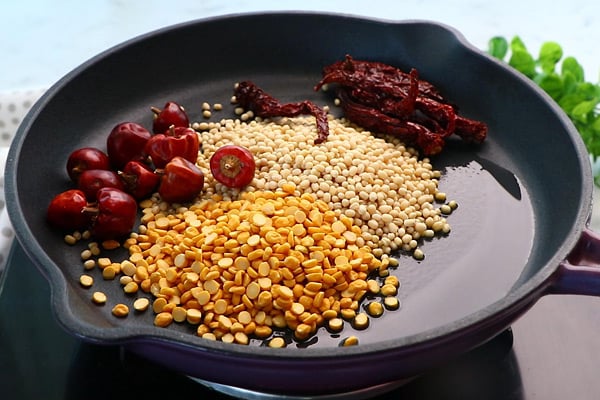
Mixture Recipe | Madras Mixture

Mixture is a crunchy and flavorful snack that I always love making at home. It has that perfect mix of kara boondi, omapodi, peanuts, poha and few nuts all tossed together in a spice mix. Each bite gives that mix of spice, crunch and flavor which makes it really hard to stop eating. Mixture also known as Madras Mixture is the most commonly relished snack for tea time and made at home for Diwali and special occasions.

mixture served with coffee

This is such a simple snack that can be made easily when you have few fried items ready in hand. You can make it in small batches because it stays fresher and crisper that way. What I like most about this snack is, you can always change the ingredients as you like and make it in your own way. It is one of those snacks that always stays special in every home.

[feast_advanced_jump_to]

About Mixture Recipe

Mixture is a crunchy and tasty snack made by mixing few fried items like kara boondi, omapodi, fried gram dal and peanuts. Chivda as known in North India is called Mixture or Madras Mixture in South India. The flavor comes out so balanced and nice, not too spicy or strong. It is that kind of snack you can enjoy anytime, with tea or just like that.

Mixture is one of the popular South Indian snacks we can make easily at home. If you have omapodi and kara boondi ready then frying all others are just so easy. I usually make these a day before and fry all other ingredients and mix it.

There are many versions of this mixture depending on region and taste. Some people like to make it spicy with lot of nuts and boondi, while few prefer mild and light version with more omapodi. No matter how it is made, mixture always gives that crispy joy in every handful and it never fails to bring that happy munching mood.

mixture in a glass jar

Mixture Video

The texture is the best part of this mixture, crisp boondi, airy poha, crunchy peanuts and that nice aroma from fried curry leaves. You get little bit of everything in each spoon. This recipe is light to eat but still gives that filling feel after few bites.

It is one of those snacks you can just keep munching anytime in the day and still not feel too heavy. I usually make omapodi and boondi one day before to save time. Next day I fry the rest of items and mix all together.

You can even add fried garlic for extra flavor, add raisins for that sweet crunch, add little sugar for balance in taste.

mixture served with coffee

South Indian Mixture Ingredients

  • Kara boondi - I have used homemade kara boondi. It adds nice spice flavor and gives crisp texture. You can even use readymade if short of time.
  • Omapodi - I used slightly thick omapodi for this as while mixing it will not break easily.
  • Poha - Use thick poha, it puffs up well when fried and adds light texture to the mixture. You can skip if not available.
  • Fried gram dal - It adds crunchy bite and nutty flavor. You can use chana dal too.
  • Cashewnuts - I fried till light golden. It gives nice taste and a bit of sweetness.
  • Peanuts - I fried raw peanuts till golden brown and added.
  • Curry leaves - I fried them and added at the final stage after all the ingredients are mixed, it gives lovely aroma and adds flavor to mixture.
  • Red chili powder - I used for both color and spice. You can use pepper if you like that flavor .
  • Hing - I have added a small pinch, it gives good aroma and helps in digestion.
ingredients needed to make mixture

Why This Recipe Works

  • It is very simple to make when you have all fried items ready beforehand.
  • You can change or add ingredients as per your liking.
  • The mix of crunchy, spicy and nutty taste makes it so addictive.
  • It stays crisp for many days when stored properly in airtight jar.
  • This mixture is light to eat and goes well with tea or even plain coffee.

Similar Recipes

How to make Mixture Step by Step

1.Make omapodi and keep it ready. You can check the recipe in ingredients list. You can use slightly big holed press for making mixture so that it does not break easily while mixing.

remove the omapodi

2.Break it slightly and set aside.

break it gently

3.Break it rough as anyways we are going to mix and it will break by itself. We need 2 cups omapodi.

omapodi or sev is ready

4.Prepare kara boondi. You can check the recipe in ingredients list.

boondi strained

5.Strain and keep in a bowl. We need 2 cups kara boondi.

add to a bowl

6.Heat oil in a kadai. Place a strainer inside, add 1 cup poha, add in batches and fry. Mix it well for even frying. Transfer and set aside.

fry poha

6.Again place the strainer inside oil and add Β½ cup raw peanuts and fry until crisp and golden brown. Strain, transfer and set aside.

fry peanuts

7.Add Β½ cup roasted gram dal and fry until golden. Strain, transfer and set aside.

fry roasted gram dal

8.Next add Β½ cup cashews and fry until golden. Strain, transfer and set aside.

fry cashews

9.Add a handful of curry leaves and fry until it splutters. Strain, transfer and set aside.

fry curry leaves

10.To a big mixing bowl add 2 cups omapodi, 2 cups kara boondi, 1 cup fried poha, Β½ cup peanuts, Β½ cup cashews, Β½ cup roasted gram dal along with 1 and Β½ teaspoon red chili powder, Β½ teaspoon hing, salt to taste.

add all ingredients except curry leaves

11.Mix it well.

mix it well

12.Add fried curry leaves.

add curry leaves

12.Give a quick mix.

mix it well

Mixture is ready.

mixture in hands

Expert Tips

  • Ratio - There is no particular ratio of ingredients for making mixture. Omapodi and kara boondi should be slightly more than all other ingredients. Other ingredients you cna plus and minus according to your preference.
  • Frying poha - I always use thick poha and fry in small batches only. If we add more, it gets brown very fast and loses that light crispness. I keep the oil medium hot, so poha becomes puffed and not oily.
  • Nuts and dal - I fry peanuts first, then gram dal and cashews one by one. This way all fry evenly and not burn. Each one takes different time so better to fry separately.
  • Mixing part - I spread all fried items on a large mixing bowl. Then I add salt, red chili powder and hing. I usually mix with a ladle or hands, gently tossing everything. This way masala spreads evenly and not break the poha or omapodi.
  • Spice - I have added just red chili powder, you can even add little pepper powder if you like the flavor. You can increase red chili powder to 2 teaspoon if you like your mixture to be more spicy.
  • Flavor - You can use pepper powder instead of chili powder if you like mild taste or crush 2-3 garlic cloves and fry them till golden, then add to mixture
  • Avoid moisture - If you are mixing later, make sure all fried items are fully cool. Even small moisture can make mixture soggy. I always keep everything ready and mix only when all are at room temperature.

Serving and Storage

Serve South Indian Mixture with a cup of hot tea or coffee. It makes a lovely crunchy evening snack or something to munch while watching TV. Store the mixture in airtight jar once fully cool. It stays crisp easily for about 2 weeks.

FAQS

1.Can I skip boondi?

Yes, you can skip boondi and add more omapodi or poha instead.

2.Can I add garlic flavor in mixture?

Yes, fry few crushed garlic in oil and add it. It gives good aroma and extra flavor.

3.Can I make this less spicy?

Yes you can, just reduce chili powder or use pepper powder instead.

4.How long can I store this mixture?

It stays fresh and crisp for around 2 weeks if you keep it in airtight box. I usually store in steel container, it keeps the crunch better.

5.Can I add cornflakes or other nuts?

Yes of course, you can add fried cornflakes, almonds or even small pieces of murukku. It gives more crunch and makes the mixture even more tasty.

mixture just made

If you have any more questions about this Mixture RecipeΒ do mail me at sharmispassions@gmail.com. In addition, follow me on Instagram,Β Facebook,Β PinterestΒ ,YoutubeΒ andΒ TwitterΒ .

Tried this Mixture Recipe? Do let me know how you liked it. Also tag us on Instagram @sharmispassions and hash tag it on #sharmispassions.

πŸ“– Recipe Card

Print

Mixture Recipe | Madras Mixture Recipe

Mixture is a crunchy and flavorful snack that I always love making at home. It has that perfect mix of kara boondi, omapodi, peanuts, poha and few nuts all tossed together in a spice mix. Each bite gives that mix of spice, crunch and flavor which makes it really hard to stop eating. Mixture also known as Madras Mixture is the most commonly relished snack for tea time and made at home for Diwali and special occasions.
Course Snack
Cuisine Indian
Keyword diwali dishes, diwali food, diwali recipes, diwali snacks, diwali snacks recipes, easy diwali snacks, savoury recipes, snack recipes, virtual diwali party
Prep Time 10 minutes
Cook Time 50 minutes
Total Time 1 hour
Servings 2
Calories 489kcal
Author Sharmilee J

Ingredients

  • 2 cups kara boondi
  • 2 cups omapodi
  • Β½ cup poha
  • Β½ cup fried gram dal
  • Β½ cup cashew nuts
  • Β½ cup peanuts
  • 1 handful curry leaves
  • 1 and Β½ teaspoon red chilli powder
  • Β½ teaspoon hing
  • salt to taste

Instructions

  • Make omapodi and keep it ready. You can check the recipe in ingredients list. You can use slightly big holed press for making mixture so that it does not break easily while mixing.
  • Break it slightly and set aside.
  • Break it rough as anyways we are going to mix and it will break by itself. We need 2 cups omapodi.
  • Prepare kara boondi. You can check the recipe in ingredients list.
  • Strain and keep in a bowl. We need 2 cups kara boondi.
  • Heat oil in a kadai. Place a strainer inside, add 1 cup poha, add in batches and fry. Mix it well for even frying. Transfer and set aside.
  • Again place the strainer inside oil and add Β½ cup raw peanuts and fry until crisp and golden brown. Strain, transfer and set aside.
  • Add Β½ cup roasted gram dal and fry until golden. Strain, transfer and set aside.
  • Next add Β½ cup cashews and fry until golden. Strain, transfer and set aside.
  • Add a handful of curry leaves and fry until it splutters. Strain, transfer and set aside.
  • To a big mixing bowl add 2 cups omapodi, 2 cups kara boondi, 1 cup fried poha, Β½ cup peanuts, Β½ cup cashews, Β½ cup roasted gram dal along with 1 and Β½ teaspoon red chili powder, Β½ teaspoon hing, salt to taste.
  • Mix it well.
  • Add fried curry leaves.
  • Give a quick mix.
  • Mixture is ready.

Video

Notes

  • Ratio - There is no particular ratio of ingredients for making mixture. Omapodi and kara boondi should be slightly more than all other ingredients. Other ingredients you cna plus and minus according to your preference.
  • Frying poha - I always use thick poha and fry in small batches only. If we add more, it gets brown very fast and loses that light crispness. I keep the oil medium hot, so poha becomes puffed and not oily.
  • Nuts and dal - I fry peanuts first, then gram dal and cashews one by one. This way all fry evenly and not burn. Each one takes different time so better to fry separately.
  • Mixing part - I spread all fried items on a large mixing bowl. Then I add salt, red chili powder and hing. I usually mix with a ladle or hands, gently tossing everything. This way masala spreads evenly and not break the poha or omapodi.
  • Spice - I have added just red chili powder, you can even add little pepper powder if you like the flavor. You can increase red chili powder to 2 teaspoon if you like your mixture to be more spicy.
  • Flavor - You can use pepper powder instead of chili powder if you like mild taste or crush 2-3 garlic cloves and fry them till golden, then add to mixture
  • Avoid moisture - If you are mixing later, make sure all fried items are fully cool. Even small moisture can make mixture soggy. I always keep everything ready and mix only when all are at room temperature.

Nutrition

Serving: 100g | Calories: 489kcal | Carbohydrates: 71g | Protein: 25g | Fat: 11g | Saturated Fat: 2g | Polyunsaturated Fat: 3g | Monounsaturated Fat: 5g | Cholesterol: 3mg | Sodium: 266mg | Potassium: 880mg | Fiber: 15g | Sugar: 8g | Vitamin A: 335IU | Vitamin C: 1mg | Calcium: 63mg | Iron: 7mg

The post Mixture Recipe | Madras Mixture appeared first on Sharmis Passions.
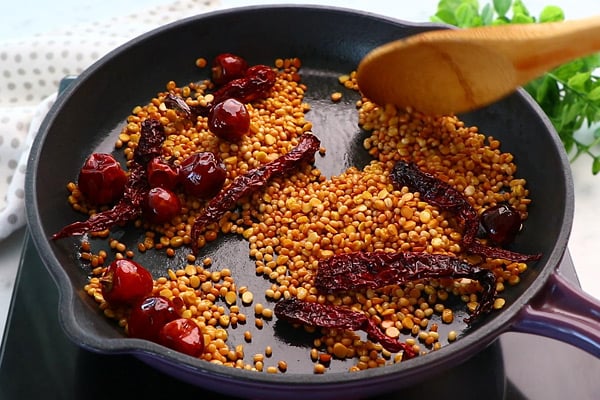
Rasgulla Recipe

Rasgulla is a popular Indian sweet that is made for special occasions & Diwali across India but relished almost every other day after meal in Bengal. This recipe has a mild sweet taste, and when you bite, the juicy soft texture feels really nice. And yes making these rasgullas at home need some patience, but once you see them turning spongy in syrup, the effort feels worth it. Learn to make easy and perfect spongy rasgulla with the help of step by step pictures and video.

rasgulla served in a glass bowl

This sweet dish is often served after lunch or dinner as an after meal dessert. Unlike ghee loaded sweets, rasgulla never feels heavy, so even if stomach is already full, you can still enjoy one or two. It is made using very simple ingredients like milk, vinegar, sugar and cardamom.

[feast_advanced_jump_to]

About Rasgulla

RAsgulla literally means ' syrup filled balls'. Rasgulla is made by curdling milk then separating chenna(paneer or Indian cottage cheese). Then the separated chenna is kneaded and shaped into smooth balls which is cooked in sugar syrup till they turn light and spongy.

Rasgulla is one of the most loved sweets across India. These are soft when pressed, and fully soaked in sugar syrup inside. The syrup is thin, lightly sweet with cardamom or sometimes rose essence, giving a gentle flavor. That balance makes rasgulla different from heavy milk sweets and keeps it refreshing even after a full meal.

Each rasgulla soaks syrup fully, so every bite feels juicy but never sticky. The pure white round look also makes it very tempting to see, and many people serve it chilled which makes the taste even better. The only main care is making smooth chenna, because that decides how soft the rasgullas will come. Once chenna is perfect, rest is easy to handle.

There are many versions too. You can fill dry fruits inside, or use saffron or rose water in the syrup, and there is a famous version called chhena poda which is baked, it has a caramel taste. Each style has its own charm, but still this classic white rasgulla is the most loved.

I usually make rasgulla during festive days and sometimes even on weekends when we want a sweet. It is easy to serve, everyone at home enjoys. Mittu is fond of rasgulla and demands it during special occasions especially her birthday. Gugu loves rasmalai so make it with few of them just for him. I love rasmalai more than rasgulla but can easily gulp few rasgullas too.

rasgulla served in a glass bowl

Rasgulla Video

Rasgulla Ingredients

  • Milk - I have used full cream milk as it gives rich and soft chenna. I would recommend using only full fat milk or any thick milk. Traditionally buffalo milk is used.
  • Vinegar, water - Vinegar is mixed with water to curdle milk. This helps to make chenna soft and not rubbery.
  • Sugar - I have used white sugar for making syrup, it makes rasgulla sweet and juicy, you can also adjust sugar depending on your taste.
  • Cardamom powder - I just added 3 small cardamom. You can even add few drops rose essence if you like the flavor.
ingredients needed to make soft rasgulla

Why This Recipe Works

  • This recipe is simple with very few ingredients, so anyone can try at home.
  • The rasgullas turn soft and spongy if the tips are followed properly.
  • You can serve them chilled which makes it very refreshing after a meal.
  • This recipe works well for casual family after meal desserts.
  • You can just flavor the syrup in many ways, making it a versatile recipe.

Similar Recipes

soft rasgulla cut open

How to make Rasgulla Step by Step

1.To a sauce pan add 1 liter milk. Stir and boil for a minute. Switch off and let it rest for 2-3 minutes.

boil milk

2.To a small bowl add 2 tablespoon vinegar, 2 tablespoon water, mix it well and set aside.

mix vinegar with water

3.Now add vinegar water solution little by little and stir gently. Now the flame is off, this helps to slowly curdle milk and the resulting chenna is so soft.

add it to milk

4.Now whey water(green liquid) and chenna(white solid) separates.

milk is curdled

5.Now it is curdled completely. Switch off.

chenna in a ladle

6.Transfer this to a cloth placed on a strainer. Keep a bowl underneath to collect the whey water. You can use this whey water for kneading chapathi dough or for curdling milk again.

add to a strainer

7.Rinse it with water well.

rinse well with water

8.Squeeze excess water.

squeeze water

9.Roll and place it on the strainer. Keep 2 bowls on it. Do not keep heavy weight. Set aside for 10 minutes.

set aside for 10 mins

10.Now open, moisture should be still there slightly, it should not be dry.

moisture is still there

11.Transfer the prepared chenna to a wide plate crumble it first.

crumble chenna

12.Knead it well using your palm like shown.

knead well

13.Knead for 10 minutes or until the texture changes.

texture changes

14.At one stage it will gather to a mass without sticking. Make a dough like this. Pinch a small portion.

pinch small portion

15.Roll between your palms gently and smoothly.

roll gently

16.It is ready, Repeat to finish.

smooth ball is ready

17.All the balls are made and ready!

balls are ready

18.Cover it with a wet cloth to avoid drying.

cover with wet cloth

19.To a wide pot add 1 and Β½ cups sugar along with 4 cups water and 3 small cardamom.

add sugar, cardamom and water

20.Stir until sugar dissolves completely. Let it boil for 5 minutes.

boil for 5 minutes

21.Give a quick mix. Add the prepared balls slowly.

add the prepared balls

22.Cook covered in high heat for 10 minutes.

cook covered

23.You can see through the glass that it is doubled in size.

doubles in size

24.Now open slightly stir and cook covered in medium heat again for 5 minutes.

cook again in medium heat

25.Rasgulla is ready!

rasgulla is ready

Chill for minimum 30 minutes in fridge then serve!

rasgulla just made

Expert Tips

  • Vinegar solution - Vinegar when mixed with water is more concentrated and makes chenna soft.
  • Preparing chenna - Boil milk give a quick stir and switch off, let it rest for few minutes before adding vinegar solution. Add vinegar, water mixture little by little and stir gently.
  • Kneading - I usually knead for at least 7-10 minutes till dough becomes smooth, this is what make rasgullas smooth and crack free. Make sure you do not over knead then fat will get released.
  • Shape carefully - The balls must be smooth without cracks, I roll them gently in my palm for uniform shape.
  • Sugar syrup - I always use wide vessel so balls have enough space to double in size, don't overcrowd else the shape would change.
  • Cooking time - Do not overcook as rasgullas may turn hard, I keep them covered on high flame for about 10 minutes then in medium heat for 3-5 minutes.
  • Chilling - Let rasgullas rest in syrup before serving, I usually chill them in fridge few hours for best taste.
  • Retain shape - You can dip the rasgullas in ice cubes with chilled water to retain its shape.

Serving and Storage

Serve rasgulla chilled straight from the fridge with some sugar syrup and garnish with pistachios. It also tastes nice when served plain without garnish. You can store leftovers in fridge for 3 to 4 days. Always keep them soak in sugar syrup, do not leave them dry as they will shrink.

FAQS

1.Can I add lemon juice?

Yes you can, but vinegar and water gives a more neutral flavor while lemon leaves a faint aftertaste even after rinsing.

2.What milk should we use to make Rasgulla?

Always use full fat or full cream milk for best results. You can use cows milk too but make sure it is thick. Always make sure to use only fresh milk. Traditionally buffalo milk is used.

3.How much time should we knead chenna?

It depends on the time and pressure applied while kneading. For me it took around 10 minutes to get the perfect texture. The dough should become pastey and soft making it easy to roll this is the perfect time to stop.

4.What is the consistency of sugar syrup?

Sugar syrup should be watery so no need to check for any consistencies. Just dissolve sugar, cook for 5 minutes then start adding the chenna balls.

5.How to check if rasgulla is cooked?

You can see the chenna balls will double in size after getting cooked. Cook covered for 10 minutes in high heat then give a light mix and cook covered again for 3-5 minutes.

6.Why is my rasgulla rubbery?

If you overcook then your rasgulla will turn rubbery. You cannot fix overcooked rasgulla so the only way is to use it for making rasmalai.

7.How long these last?

They stay good for about 3 to 4 days when stored in fridge with sugar syrup.

rasgulla served in a glass bowl

If you have any more questions about this Rasgulla RecipeΒ do mail me at sharmispassions@gmail.com. In addition, follow me on Instagram,Β Facebook,Β PinterestΒ ,YoutubeΒ andΒ TwitterΒ .

Tried this Rasgulla Recipe? Do let me know how you liked it. Also tag us on Instagram @sharmispassions and hash tag it on #sharmispassions.

πŸ“– Recipe Card

Print

Rasgulla Recipe

Rasgulla is a popular Indian sweet that is made for special occasions & Diwali across India but relished almost every other day after meal in Bengal. This recipe has a mild sweet taste, and when you bite, the juicy soft texture feels really nice. And yes making these rasgullas at home need some patience, but once you see them turning spongy in syrup, the effort feels worth it. Learn to make easy and perfect spongy rasgulla with the help of step by step pictures and video.
Course sweets
Cuisine Indian
Keyword curd recipes, diwali dishes, diwali food, diwali mithai, diwali recipes, diwali sweets, diwali sweets recipes, Festival, milk recipes, sweet recipes, virtual diwali party, yogurt recipes
Prep Time 30 minutes
Cook Time 15 minutes
Total Time 45 minutes
Servings 15 balls
Calories 97kcal
Author Sharmilee J

Ingredients

  • 1 liter full cream milk
  • 2 tablespoon vinegar
  • 2 tablespoon water
  • 1 and Β½ cups sugar
  • 4 cups water
  • 3 cardamom

Instructions

  • To a sauce pan add 1 liter milk. Stir and boil for a minute. Switch off and let it rest for 2-3 minutes.
  • To a small bowl add 2 tablespoon vinegar, 2 tablespoon water, mix it well and set aside.
  • Now add vinegar water solution little by little and stir gently. Now the flame is off, this helps to slowly curdle milk and the chenna is so soft.
  • Now whey water(green liquid) and chenna(white solid) separates.
  • Now it is curdled completely. Switch off.
  • Transfer this to a cloth placed on a strainer. Keep a bowl underneath to collect the whey water. You can use this for kneading chapathi dough or for curdling milk again.
  • Rinse it with water well.
  • Squeeze excess water.
  • Roll and place it on the strainer. Keep 2 bowls on it. Do not keep heavy weight. Set aside for 10 minutes.
  • Now open, moisture should be there, it should not be dry.
  • Transfer the prepared chenna to a wide plate crumble it first.
  • Knead it well using your palm like shown.
  • Knead for 10 minutes or until the texture changes.
  • At one stage it will gather to a mass without sticking. Make a dough like this. Pinch a small portion.
  • Roll between your palms gently and smoothly.
  • It is ready, Repeat to finish.
  • All the balls are made and ready!
  • Cover it with a wet cloth to avoid drying.
  • To a wide pot add 1.5 cups sugar along with 4 cups water, 3 cardamom.
  • Stir until sugar dissolves completely. Let it boil for 5 minutes.
  • Give a quick mix. Add the prepared balls slowly.
  • Cook covered in high heat for 10 minutes.
  • You can see through the glass it is doubled.
  • Now open slightly stir and cook covered in medium heat again for 5 minutes.
  • Rasgulla is ready!

Video

Notes

  • Vinegar solution - Vinegar when mixed with water is more concentrated and makes chenna soft.
  • Preparing chenna - Boil milk give a quick stir and switch off, let it rest for few minutes before adding vinegar solution. Add vinegar, water mixture little by little and stir gently.
  • Kneading - I usually knead for at least 7-10 minutes till dough becomes smooth, this is what make rasgullas smooth and crack free. Make sure you do not over knead then fat will get released.
  • Shape carefully - The balls must be smooth without cracks, I roll them gently in my palm for uniform shape.
  • Sugar syrup - I always use wide vessel so balls have enough space to double in size, don't overcrowd else the shape would change.
  • Cooking time - Do not overcook as rasgullas may turn hard, I keep them covered on high flame for about 10 minutes then in medium heat for 3-5 minutes.
  • Chilling - Let rasgullas rest in syrup before serving, I usually chill them in fridge few hours for best taste.
  • Retain shape - You can dip the rasgullas in ice cubes with chilled water to retain its shape.

Nutrition

Serving: 25g | Calories: 97kcal | Carbohydrates: 17g | Protein: 2g | Fat: 3g | Saturated Fat: 1g | Polyunsaturated Fat: 0.1g | Monounsaturated Fat: 1g | Cholesterol: 9mg | Sodium: 31mg | Potassium: 113mg | Fiber: 0.03g | Sugar: 17g | Vitamin A: 116IU | Vitamin C: 0.03mg | Calcium: 91mg | Iron: 0.02mg

The post Rasgulla Recipe appeared first on Sharmis Passions.
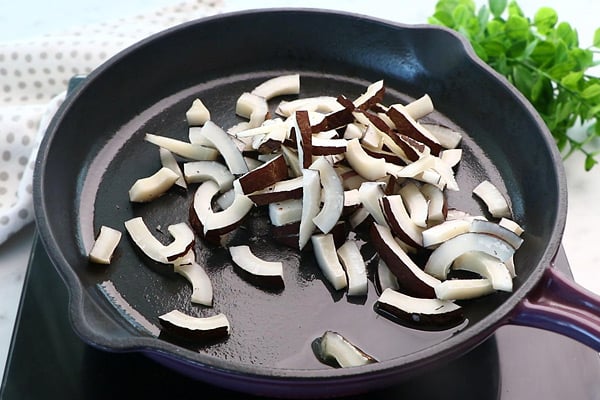
Besan Ladoo Recipe (Besan Laddu)

Besan Ladoo is an easy and quick sweet made using besan flour, ghee, sugar, nuts and cardamom powder. This ladoo has a nice aroma and soft melt in the mouth texture. Besan Ladoo is a traditional sweet popular in India and made for Diwali & special occasions. Learn to make perfect Besan ke Laddu with the help of step by step pictures and video.

besan ladoo served

The ladoo making process is very easy but needs little patience while roasting. Don't roast in high flame else it will get burnt or taste raw. Once you get the right texture, these laddus turn out soft, aromatic and really delicious. Even kids like it so much and it stays good for many days, so it is nice for gifting also.

[feast_advanced_jump_to]

About Besan Ladoo

Besan Ladoo is made by slowly roastingΒ besanΒ in ghee till it turns golden brown and gives that nice nutty aroma all over the kitchen. Then it is mixed with sugar and shaped into smooth round balls. It tastes rich and has that perfect melt in mouth feel.

The flavor of roasted besan along with ghee, sugar and cardamom gives that comfort feeling which makes you want to eat more. This sweet is usually made during festive times or for family occasions.

It is a simple traditional sweet made using very few ingredients but the taste is so good. The main secret is in roasting besan in low flame until it reaches the desired texture. Adding cardamom powder lifts the flavor more and makes it smell so divine.

Every family have their own recipe for besan ladoo. Some people add little rava for crunchiness, some adds powdered nuts for texture. I mostly adds roasted cashews for crunch and cardamom powder for extra flavor.

The ghee gives nice aroma and helps in shaping the ladoos easily without breaking. Besan Ladoo is a flavorful and aromatic ladoo, just melts in your mouth. It is quick and easy to make and also one of the most popular ladoo recipes.

I make Besan Ladoo often on special days or whenever I crave for something sweet and simple. This is one of the easy and quick diwali sweet recipes with no prior soaking/grinding etc.

It is very easy yet delicious, melt in the mouth ladoo recipe, and one more thing is that it had no consistency check like other sweets and thats another good news and it cannot flop at all. So what are you waiting bookmark and makeit for diwali and surprise your loved ones!

besan ladoo served

Besan Ladoo Video

Besan Ladoo Ingredients

  • Besan flour - I used fine besan. You can use coarse besan that is available in market. Roast slowly in low flame to get that perfect texture and nice golden color.
  • Sugar - I have used fine powdered sugar, it gives sweetness and mix well with roasted besan. Don't use normal sugar, it won't blend smooth.
  • Ghee - I used homemade ghee for rich aroma and soft texture. This adds nice flavor and helps ladoo hold its shape. You can add little more ghee if mixture feels dry.
  • Cardamom powder - I always add cardamom powder, it gives mild sweet aroma and lifts the flavor and taste.
  • Cashews - I chopped it fine dry roasted and added to ladoo mixture. It gives nice crunch in every bite.
  • Pistachios - I added chopped pistachios on top for look and taste.
ingredients needed to make besan ladoo

Similar Recipes

How to make Besan Ladoo Recipe Step by Step

1.Dry roast 2 tablespoon cashews finely chopped for 2 minutes, transfer to a bowl and set aside.

dry roast cashews

2.Heat ΒΌ cup + 1 tablespoon ghee add 1 cup besan flour.

heat oil, add besan flour

3.Roast it in low flame until color changes. Keep stirring continuously to avoid burning at the bottom. First it will look crumbly like this.

start roasting, turns crumbly

4.Keep roasting and after few minutes it will become moist like this.

turns moist

5.After few more minutes it will become runny and loose - do not panic this is the consistency we want. Switch off immediately.

turns loose

6.Transfer to a mixing bowl, mix with a spatula and cool down completely. Cooling down completely is an important step.

transfer to a bowl

7.Add Β½ cup sugar to a mixer jar.

add sugar to mixer

8.Grind it fine. If you want your ladoo to have a slightly coarse texture grind it slightly coarse.

grind it fine

9.Add powdered sugar along with roasted cashews and ΒΌ teaspoon cardamom powder. Make sure you add powdered sugar only after the mixture cools down completely.

add powdered sugar, cashews and cardamom powder

10.Mix it well.

mix it well

11.Start shaping - first pinch a portion and shape by closing the fingers and fist.

start shaping

12.Then roll between your palms.

roll between palms

13.Ladoo is shaped and ready.

ladoo is ready

14.Repeat to finish other ladoos too. Add chopped pistachios on top and slightly press to keep it intact.

add chopped pista

Besan ladoo is ready!

Expert Tips

  • Roasting besan - Roast only in low flame. Keep stirring else it may get burnt and taste bitter. You will know it is done when it turns golden and changes texture it will become loose and runny like shown.
  • Sugar - Make sure to add powdered sugar only after mixture cools down completely. If you add when it is hot, sugar will melt and make the mixture loose.
  • Ghee - Add ΒΌ cup + 1 tablespoon ghee which will be perfect. If it is still dry add 1 teaspoon extra.
  • Additions - You can add some chopped almonds or pista for extra richness. Little roasted sooji can also be added for a light grainy texture.
  • Storage - I store it in clean airtight box. This can be stored fresh for 10 to 12 days at room temperature.

Serving and Storage

Serve this sweet as dessert after meals or on any festive days. It taste really good with a cup of warm milk too. I store it in a airtight container after it cool down fully. It stays soft, aromatic and fresh for more than a week.

FAQS

1.Why does my ladoo taste raw?

It means the besan was not roasted properly. Always roast in low flame till the raw smell leaves.

2.Can I use jaggery?

Yes, you can use fine powdered jaggery also. But make sure it is clean before mixing. But traditionally white sugar is only used.

3.Why my ladoo not holding shape?

Add little more melted ghee and mix again. Shape when mixture is warm.

4.My mixture does not turn loose while roasting like shown, What should I do?

Add 1-2 teaspoon extra ghee after around 10-12 minutes of roasting and it will become runny in consistency.

How long can I store these laddoos?

They keep well for more than a week in airtight container. For longer shelf life, refrigerate.

besan ladoo served

If you have any more questions about this Besan Ladoo Recipe do mail me at sharmispassions@gmail.com. In addition, follow me on Instagram, Facebook,Β  Pinterest, Youtube andΒ TwitterΒ .

Tried this Β Besan Ladoo Recipe? Do let me know how you liked it. Also tag us on Instagram @sharmispassions and hash tag it on #sharmispassions.

πŸ“– Recipe Card

Print

Besan Ladoo Recipe | Besan Laddu Recipe

Besan Ladoo is an easy and quick sweet made using besan flour, ghee, sugar, nuts and cardamom powder. This ladoo has a nice aroma and soft melt in the mouth texture. Besan Ladoo is a traditional sweet popular in India and made for Diwali & special occasions. Learn to make perfect Besan ke Laddu with the help of step by step pictures and video.
Course Dessert, sweet
Cuisine Indian
Keyword diwali dishes, diwali food, diwali mithai, diwali recipes, diwali sweets, diwali sweets recipes, easy diwali recipes, laddu, ladoo recipes, sweet recipes
Prep Time 10 minutes
Cook Time 20 minutes
Total Time 30 minutes
Servings 8 ladoos
Calories 200kcal
Author Sharmilee J

Ingredients

  • 1 cup besan flour
  • Β½ cup sugar
  • ΒΌ cup + + 1 tablespoon ghee
  • ΒΌ teaspoon cardamom powder
  • 2 tablespoon cashews
  • 2 tablespoon pistachio for topping

Instructions

  • Dry roast 2 tablespoon cashews finely chopped for 2 minutes, transfer to a bowl and set aside.
  • Heat ΒΌ cup + 1 tablespoon ghee add 1 cup besan flour.
  • Roast it in low flame until color changes. Keep stirring continuously to avoid burning at the bottom. First it will look crumbly like this.
  • Keep roasting and after few minutes it will become moist like this.
  • After few more minutes it will become runny and loose - do not panic this is the consistency we want. Switch off immediately.
  • Transfer to a mixing bowl, mix with a spatula and cool down completely. Cooling down completely is an important step.
  • Add Β½ cup sugar to a mixer jar.
  • Grind it fine. If you want your ladoo to have a slightly coarse texture grind it slightly coarse.
  • Add powdered sugar along with roasted cashews and ΒΌ teaspoon cardamom powder. Make sure you add powdered sugar only after the mixture cools down completely.
  • Mix it well.
  • Start shaping - first pinch a portion and shape by closing the fingers and fist.
  • Then roll between your palms.
  • Ladoo is shaped and ready.
  • Repeat to finish other ladoos too. Add chopped pistachios on top and slightly press to keep it intact.
  • Besan ladoo is ready!

Video

Notes

  • Roasting besan - Roast only in low flame. Keep stirring else it may get burnt and taste bitter. You will know it is done when it turns golden and changes texture it will become loose and runny like shown.
  • Sugar - Make sure to add powdered sugar only after mixture cools down completely. If you add when it is hot, sugar will melt and make the mixture loose.
  • Ghee - Add ΒΌ cup + 1 tablespoon ghee which will be perfect. If it is still dry add 1 teaspoon extra.
  • Additions - You can add some chopped almonds or pista for extra richness. Little roasted sooji can also be added for a light grainy texture.
  • Storage - I store it in clean airtight box. This can be stored fresh for 10 to 12 days at room temperature.

Nutrition

Serving: 40g | Calories: 200kcal | Carbohydrates: 17g | Protein: 4g | Fat: 13g | Saturated Fat: 7g | Polyunsaturated Fat: 1g | Monounsaturated Fat: 4g | Cholesterol: 28mg | Sodium: 11mg | Potassium: 155mg | Fiber: 2g | Sugar: 9g | Vitamin A: 9IU | Vitamin C: 1mg | Calcium: 9mg | Iron: 1mg

The post Besan Ladoo Recipe (Besan Laddu) appeared first on Sharmis Passions.
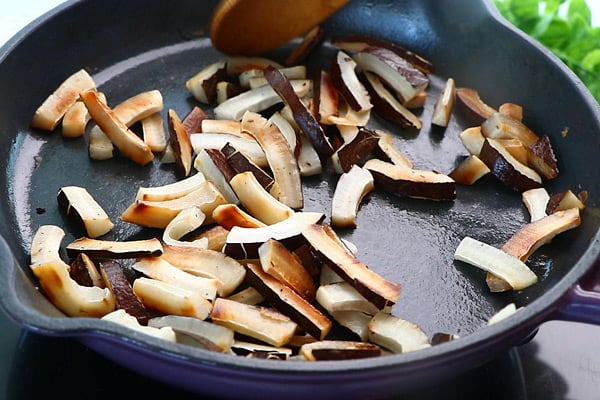
❌