Reading view

There are new articles available, click to refresh the page.

Crypto Gets Legal Recognition: UK Enacts Property Act 2025 For Digital Assets

The United Kingdom (UK) has reached a significant milestone in its approach to digital assets with the recent passage of the Property Act 2025, which now officially categorizes cryptocurrencies as legal property. 

UK’s New Law Sets Criteria For Digital Assets

The creation of this dedicated legal category for digital assets followed recommendations from the Law Commission, which advocated for a framework that acknowledges assets not fitting traditional definitions of personal property.

This legal evolution is seen as part of a broader strategy to position the UK as a leading digital finance hub, responding to experts’ calls for the country to align its regulatory environment with that of the United States in order to promote growth in the digital asset market. 

According to law firm Clyde & Co, a key provision in the law states that “a thing (including a thing that is digital or electronic in nature) is not prevented from being the object of personal property rights merely because it is neither (a) a thing in possession, nor (b) a thing in action.” 

This phrase confirms that digital assets can now be recognized as a third category of personal property, distinct from the traditional classifications of tangible and intangible assets.

However, the Act does not guarantee that any specific type of asset qualifies as personal property; rather, it aims to “unlock” the common law’s ability to adapt to technological advancements and new asset types, as outlined in the Explanatory Notes from Parliament. 

The interpretation of existing digital assets—such as cryptocurrencies and non-fungible tokens (NFTs)—as well as any emerging forms will ultimately depend on future court rulings. 

The law firm also noted that, under this new law, a digital asset must meet certain criteria to qualify as personal property: it must be definable and identifiable by third parties and capable of being assumed by them, as well as possess a degree of permanence.

Additionally, digital assets will be included in bankruptcy and insolvency proceedings, allowing them to be treated as part of the overall asset pool available to creditors and heirs. 

Government Moves To Ban Crypto Donations

While momentum continues for digital asset recognition, the UK government is also addressing concerns surrounding cryptocurrency in the political sphere. 

Ministers are reportedly working on legislation aimed at banning political donations made through digital currencies, although this crackdown may not be ready in time for the upcoming elections bill in the new year. 

Officials have raised alarms that cryptocurrency donations pose risks to the integrity of the electoral process, primarily due to their difficult-to-trace nature, which could open the door to exploitation by foreign entities or criminal organizations.

Crypto

At the time of writing, the market’s leading cryptocurrency, Bitcoin, was trading at $92,180, surging 4% in the past 24 hours. 

Featured image from Shutterstock, chart from TradingView.com 

Republicans drop Trump-ordered block on state AI laws from defense bill

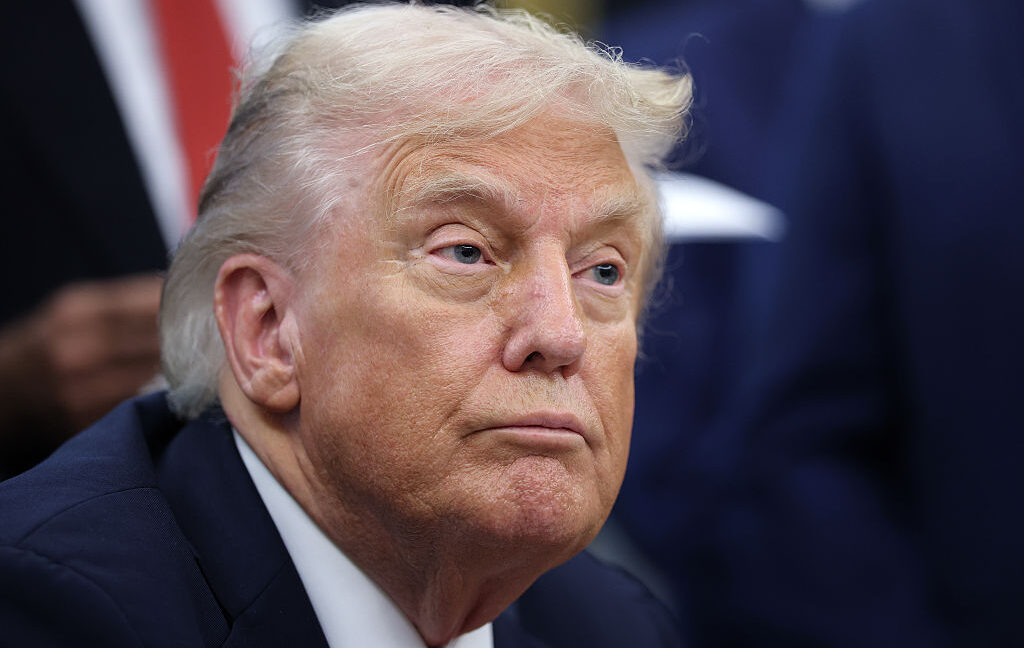
A Donald Trump-backed push has failed to wedge a federal measure that would block states from passing AI laws for a decade into the National Defense Authorization Act (NDAA).

House Majority Leader Steve Scalise (R-La.) told reporters Tuesday that a sect of Republicans is now “looking at other places” to potentially pass the measure. Other Republicans opposed including the AI preemption in the defense bill, The Hill reported, joining critics who see value in allowing states to quickly regulate AI risks as they arise.

For months, Trump has pressured the Republican-led Congress to block state AI laws that the president claims could bog down innovation as AI firms waste time and resources complying with a patchwork of state laws. But Republicans have continually failed to unite behind Trump’s command, first voting against including a similar measure in the “Big Beautiful” budget bill and then this week failing to negotiate a solution to pass the NDAA measure.

Read full article

Comments

© Win McNamee / Staff | Getty Images News

UK’s Crypto Crackdown Begins: Exchanges Required To Collect Transaction Records By 2026

The UK has declared a fresh crackdown on cryptocurrency holdings. The concept compels digital asset providers, including exchanges, to provide precise financial information about UK taxpayers. 

Major Shift In Crypto Trading Oversight

According to the Financial Times, cryptocurrency holders have been cautioned that, starting January 1, 2026, major cryptocurrency exchanges will be mandated to collect extensive transaction records from their UK customers. 

This includes crucial details such as purchase prices, selling amounts, and profits accrued from these transactions, as part of a broader initiative to combat tax avoidance.

His Majesty’s Revenue & Customs (HMRC) will gain further visibility into the financial activities of cryptocurrency holders as these exchanges are tasked with recording and eventually sharing this information directly with the tax authority. By 2027, HMRC will receive these detailed reports.

Experts have issued a warning to individuals trading in digital currencies—from Bitcoin (BTC) and Ethereum (ETH) to lesser-known tokens—to ensure they are accurately reporting their profits in their self-assessment tax returns. 

Seb Maley, CEO of tax insurance provider Qdos, emphasized that this development represents a fundamental shift in how digital asset trading is monitored from a tax perspective. “HMRC will soon know exactly who is making gains—and how much,” he stated. 

Maley noted that anyone involved in cryptocurrency must ensure that they are documenting their gains on their tax returns, as the new regulations will enable HMRC to cross-check this information against the records received from platforms.

Turkmenistan’s New Law on Digital Assets

In Asia, Turkmenistan has officially moved towards embracing digital assets by enacting a new law that legalizes and regulates cryptocurrencies, including provisions for licensing digital asset exchanges and mining entities. 

This significant development was reported by the state media on Friday, following the signing of the law by President Serdar Berdymukhamedov. The legislation is set to take effect on January 1, 2026.

One of the alleged reasons behind this move is Turkmenistan’s desire to diversify its economy, which has long relied heavily on exporting natural gas, primarily to China. 

A government spokesperson told Reuters on Friday that the newly implemented law aims to attract investment and foster digitalization within the country, aligning with global trends in the digital economy.

The legislation outlines regulations governing the creation, storage, placement, utilization, and circulation of virtual assets in Turkmenistan. It also clarifies the legal and economic status of these assets, marking a significant step toward establishing a structured framework for the digital asset industry.

Crypto

Featured image from DALL-E, chart from TradingView.com 

Securing AI-Generated Code in Enterprise Applications: The New Frontier for AppSec Teams 

GenAI, multimodal ai, AI agents, CISO, AI, Malware, DataKrypto, Tumeryk,

AI-generated code is reshaping software development and introducing new security risks. Organizations must strengthen governance, expand testing and train developers to ensure AI-assisted coding remains secure and compliant.

The post Securing AI-Generated Code in Enterprise Applications: The New Frontier for AppSec Teams  appeared first on Security Boulevard.

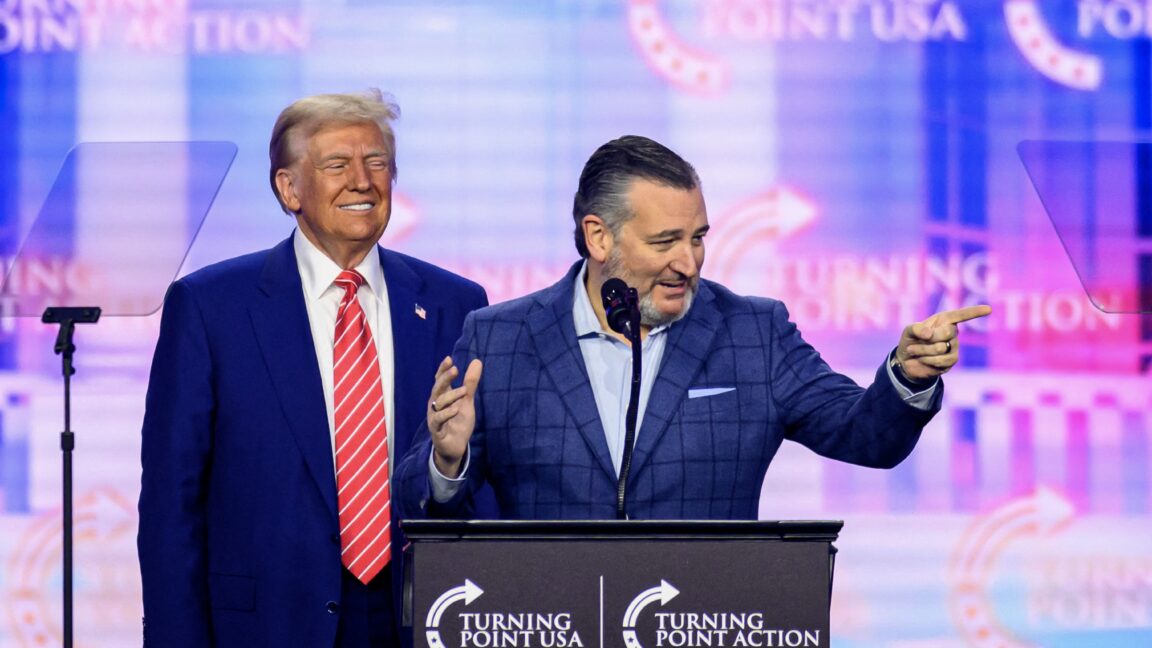
Trump revives unpopular Ted Cruz plan to punish states that impose AI laws

President Trump is considering an executive order that would require the federal government to file lawsuits against states with AI laws, and prevent states with AI laws from obtaining broadband funding.

The draft order, “Eliminating State Law Obstruction of National AI Policy,” would order the attorney general to “establish an AI Litigation Task Force whose sole responsibility shall be to challenge State AI laws, including on grounds that such laws unconstitutionally regulate interstate commerce, are preempted by existing Federal regulations, or are otherwise unlawful in the Attorney General’s judgment.”

The draft order says the Trump administration “will act to ensure that there is a minimally burdensome national standard—not 50 discordant State ones.” It specifically names laws enacted by California and Colorado and directs the Secretary of Commerce to evaluate whether other laws should be challenged.

Read full article

Comments

© Getty Images | Josh Edelson

Washington Lawmakers Propose Raising Taxes on Higher Potency Weed

Cannabis consumers in Washington state may soon be subject to a “dank tax.” 

Lawmakers there have introduced a bill that would tax marijuana products based on the percentage of THC.

In other words: the stronger the weed, the higher the price.

“Research indicates that between 12 and 50% of psychotic disorders could be prevented if high potency cannabis products were not available,” said Washington state House Rep. Lauren Davis, one of the sponsors of the bill, as quoted by local news station KXLY.

Davis believes that the measure is necessary to combat what she describes as a “crisis.”

“If we fail to act now to counter the emerging public health crisis created by high potency cannabis products, we will soon have another epidemic on our hands,” Davis added.

The legislation, House Bill 1641, would restructure “the 37 percent cannabis excise tax to a tax of 37 percent, 50 percent, or 65 percent of the selling price, based on product type and tetrahydrocannabinol (THC) concentration,” according to an official legislative summary of the measure. 

“[Thirty-seven] percent of the selling price on each retail sale of cannabis-infused products, useable cannabis with a THC concentration less than 35 percent, and cannabis concentrates with a THC concentration less than 35 percent,” the summary read. “[Fifty] percent of the selling price on each retail sale of cannabis concentrates and useable cannabis with a THC concentration of 35 percent or greater but less than 60 percent; and 65 percent of the selling price on each retail sale of cannabis concentrates and useable cannabis with a THC concentration greater than 60 percent.”

HB 1641, which had its first public hearing last week, would also establish the following, per the legislative summary:

“Marketing and advertising prohibitions on advertising a product that contains greater than 35 percent total THC … Prohibits cannabis retail outlets from selling a cannabis product with greater than 35 percent total THC to a person who is under age 25 who is not a qualifying patient or designated provider … Requires cannabis retailers to provide point-of-sale information to consumers who purchase certain cannabis products and requires the Liquor and Cannabis Board to develop optional training for retail staff … Requires mandatory health warning labels for cannabis products that contain greater than 35 percent total THC … Requires cannabis products to be labeled with the number of serving units of THC included in the package, and with an expression of a standard THC unit in volume or amount of product … Directs $1 million annually from the Dedicated Cannabis Account for targeted public health messages and social marketing campaigns.” 

Not everyone is on board with the proposal, which has a dozen sponsors. 

Carol Ehrhart, who owns a dispensary in the state, told KXLY that the proposed tax increase could lead to some adverse consequences. 

“There’s this, you know, idea that the THC is going to get me further along. The higher that we make those prices, the more apt someone is to buy the higher priced item because they think they’re getting more bang for their buck when they’re really not,” Ehrhart told the station.

“A product that we’re selling right now for $40 that’s over the 60% threshold would go to $47, almost $48. You know, that’s seven or $8 in taxes on one piece of product,” Ehrhart added.

Washington became one of the first two states to legalize recreational cannabis in 2012, when voters there approved a measure that legalized possession and paved the way for a regulated market. (Colorado also approved a legalization measure the same year.)

The post Washington Lawmakers Propose Raising Taxes on Higher Potency Weed appeared first on High Times.

Hawaii Senate Hearing Garners Overwhelming Support for Psilocybin Bill

Sen. Ron Kouchi introduced Senate Bill 1454 on Jan. 25, which was unanimously passed in the Hawaii Senate Committee on Health and Human Services (HHS) on Feb. 6. If the bill becomes law, it would establish a “therapeutic psilocybin working group” (managed by the Office of Wellness & Resilience [OWR]) to “Examine the medicinal and therapeutic effects of psilocybin or psilocybin-based products vis-à-vis mental health including post-traumatic stress disorder, depression, anxiety, and end-of-life psychological distress.”

The group would also be tasked with evaluating how markets such as regulators in Oregon and Colorado are tackling their own state psilocybin programs, with the goal of developing a comprehensive approach for Hawaii. In effect, the place would ensure that psilocybin access is safe, accessible, and affordable for patients.

During the hearing on Feb. 6, numerous testimonies were presented in favor of passing the bill to allow psilocybin access. The HHS compiled these testimonies on a 117-page document, which included a variety of speakers, beginning with a statement from Tia Roberts Hartsock, Executive Director of the OWR with the Office of the Governor. “As negative impacts of the COVID-19 pandemic continue to show up in our daily lives, promising interventions for mental health disorders should be included in conversations relating to trauma,” Hartsock wrote. “To make informed decisions on how we should address and resource attention on complex social issues like mental health disorders, research needs to be examined. The OWR supports the purpose of SB1454 to establish a working group to provide recommendations on their findings on the potential benefits of the therapeutic use of psilocybin.”

The Drug Policy Forum of Hawaii Board President, Nikos Leverenz, also expressed support for the bill. “Hawai῾i should endeavor to work more proactively in creating a climate that is conducive to allowing qualified medical professionals to use psilocybin as a therapeutic tool for those who could benefit from its supervised use,” Leverenz said.

Patients who had personal experiences with plant medicine treatments also shared how the bill could help countless others. “l can attest without hesitation that plant medicines are both safe and effective means by which to address and recover from intense psychological and physical trauma,” said Wyly Gray, Executive Director of Veterans of War. “Veterans of War sees firsthand the healing potential of these ancient medicines day in and day out, and we advocate strongly for their decriminalization on behalf of a nation of veterans suffering from the after-effects of war, as a group, we deserve a safe and effective path towards recovery; as a group, we simply want to come home. This is bigger than the failed War on Drugs; lives are lost every day.”

This year has been productive for Hawaii legislators looking into plant medicine and legalization. On Jan. 11, Rep. Jeanné Kapela spoke about introducing an adult-use cannabis bill. “We all know, and Hawaii’s people know, that it is high time to legalize recreational cannabis use for adults in Hawaii. This year we stand on the precipice of history,” Kapela stated. “Following the recommendations of a task force devoted to addressing cannabis policy, we now have a roadmap for legalizing recreational cannabis in our islands.” Kapela has not yet introduced her bill, but she explained that it would include a mass expungement program. “Social equity. People. That is what forms the heart of our proposal,” she explained.

The people of Hawaii also recently showed support for cannabis legalization through a poll conducted by the Hawaii Cannabis Industry Association. The survey revealed that 52% of Hawaii residents are in favor of legalization (with 31% saying they are opposed).

The post Hawaii Senate Hearing Garners Overwhelming Support for Psilocybin Bill appeared first on High Times.

New Hampshire Governor Dismisses Legalization Bill’s Chances

Democratic and Republican lawmakers in New Hampshire are gearing up for another effort to legalize marijuana, but the state’s governor doesn’t think they will succeed.

The latest cannabis bill being floated in the New Hampshire legislature has support from members of both parties, and the proposal was considered at a hearing in the state House Commerce Committee on Wednesday, according to New Hampshire Public Radio

Republicans have control over the New Hampshire state government, holding majorities in both the state Senate and state House of Representatives. 

The state’s governor, Chris Sununu, is also a Republican. 

As was the case last year, when another marijuana legalization was considered, the proposal has exposed a divide within the New Hampshire GOP. 

While the House of Representatives has “repeatedly backed plans to legalize cannabis,” according to New Hampshire Public Radio, the Republican-led state Senate has not been on board. 

Sununu, meanwhile, represents another obstacle to the bill. 

“I’ve always said now’s not the time. Every state does it very different. I’ve always wanted to see what works and what doesn’t,” Sununu said in a gubernatorial debate last year. “There may be a way to do it but given that we are facing an opioid crisis, given that we still don’t know what works with other states, it could be inevitable, I get it, but you got to be patient about how you do it and the steps that are best for New Hampshire.”

On Wednesday, Sununu’s office was dismissive of the latest legalization’s bill’s prospects.

“It’s failed in the Senate repeatedly, in both Republican-held years and Democrat-held years,” the governor’s office said, as quoted by New Hampshire Public Radio. “With teen drug use and overdoses on the rise, it is not anticipated that the legislature will see this as a time to ignore the data and move it forward.”

Sununu has backed other cannabis-related reforms, however. 

According to the Associated Press, “Sununu signed legislation decriminalizing small amounts of marijuana, expanding access to medical marijuana and creating a system for annulling old convictions for marijuana possession,” but “a bill to legalize recreational use has never reached his desk.”

“Governor Sununu has done more on the issues surrounding marijuana reform than any other governor in New Hampshire history,” Sununu spokesperson Ben Vihstadt told the AP.

The legislation was announced last month by two of the senior members of the state House of Representatives: House Majority Leader Jason Osborne and House Democratic Leader Matt Wilhelm.

“The House has long stood united in finding a pathway to getting this done for Granite Staters,” Osborne said at the time. “With any luck, the Senate will come around to supporting the will of the vast majority of New Hampshire citizens.”

On Wednesday, Osborne stumped for the bill before the House Commerce Committee.

“What you are looking at is a result of a number of months of work by an entire coalition of groups and advocates, everything from the business side to the consumer side, the civil rights side to the economic liberty side, as well as the recovery community and people concerned about child safety,” Osborne said at the hearing, as quoted by the Associated Press. “It’s about time we get something done.”

The Associated Press reports that “a coalition that includes both the ACLU of New Hampshire and the conservative group Americans for Prosperity is backing a bipartisan bill to legalize the drug, regulate and tax retail operations and allow it to be grown at home,” and that most of the revenue generated from marijuana sales “would go toward reducing the state’s pension liability, with some going to substance abuse prevention programs and other groups.”

The post New Hampshire Governor Dismisses Legalization Bill’s Chances appeared first on High Times.

Delaware Lawmakers Renew Effort To Legalize Pot

Democratic lawmakers in Delaware last week performed what has become an annual legislative ritual by introducing measures that would legalize recreational marijuana.

And, as per recent tradition, their biggest obstacle remains the most senior member of their own state party. 

The Delaware News Journal reports that members of the state House of Representatives introduced a pair of bills on Friday “to legalize and create a recreational marijuana industry in Delaware, setting up a likely fight within the Democratic Party this legislative session.” 

The anticipated intra-party feud centers around Democratic Gov. John Carney, who has long been opposed to marijuana legalization and has stymied efforts by Democrats in the legislature to end the prohibition on pot. 

Last year, Carney vetoed a bill that would have legalized recreational pot in the state. 

Despite holding a majority in each chamber of the state General Assembly, Democratic lawmakers were unable to override Carney’s veto.

“[The legalization bill] would, among other things, remove all penalties for possession by a person 21 years of age or older of one ounce or less of marijuana and ensure that there are no criminal or civil penalties for transfers without remuneration of one ounce or less of marijuana between persons who are 21 years of age or older,” Carney said in a statement following his veto.

“I recognize the positive effect marijuana can have for people with certain health conditions, and for that reason, I continue to support the medical marijuana industry in Delaware,” he continued. “I supported decriminalization of marijuana because I agree that individuals should not be imprisoned solely for the possession and private use of a small amount of marijuana—and today, thanks to Delaware’s decriminalization law, they are not.”

“That said, I do not believe that promoting or expanding the use of recreational marijuana is in the best interests of the state of Delaware, especially our young people,” Carney added. “Questions about the long-term health and economic impacts of recreational marijuana use, as well as serious law enforcement concerns, remain unresolved.”

Democrats who are backing the two bills introduced in the state House last week are hopeful that Carney will eventually come around.

“My hope is that with continued open dialogue with the governor’s office, that will help alleviate a veto,” Democratic state House Rep. Ed Osienski, one of the sponsors of the legislation, told the Delaware News Journal. “I have more support from my members … for a veto override, but I’m hoping it doesn’t come to that.”

According to the outlet, a “Carney spokeswoman said Friday that the governor’s views on marijuana have not changed.”

According to the Delaware News Journal, the bill dedicated to removing all penalties for possession would “require a simple majority or 21 votes.”

The other bill “would create a framework to regulate the growth, sale and possession of weed,” essentially treating pot like alcohol, and would require “a three-fifths vote because it deals with revenue and taxation,” the Delaware News Journal reports.

The measures also include social equity provisions aimed at enhancing opportunities in the new marijuana industry to individuals from communities who have been historically targeted by anti-drug policies.

The News Journal has more details on the two proposals:

“Delawareans would buy marijuana from a licensed retail marijuana store. The bill would allow for up to 30 retail licenses to be distributed within 16 months of the legislation going into effect. The process will be competitive, with prospective retailers being rewarded for providing good salaries and benefits and hiring a diverse workforce.”

The post Delaware Lawmakers Renew Effort To Legalize Pot appeared first on High Times.

Arizona Bill Would Provide Grants for Magic Mushroom Trials

Legislation proposed in Arizona would provide millions of dollars in grant funding to expand research into psilocybin––the primary psychoactive component in magic mushrooms––as a potential treatment for certain mental health conditions.

The bill, introduced by a Republican lawmaker and backed by Democrats, “would put $30 million in grants over three years toward clinical trials using whole-mushroom psilocybin to treat mental health conditions like depression and PTSD,” the Arizona Mirror reports

The outlet reports that one of the bill’s biggest backers is Dr. Sue Sisely, an internal medicine physician who believes that psilocybin treatment could be a boon for ailing military veterans. 

“It’s curbed their suicidality, it’s put their PTSD into remission, it’s even mitigated their pain syndromes,” Sisely said of patients she has seen benefit from psilocybin, as quoted by the Arizona Mirror. “It’s shown evidence of promoting neurogenesis (the growth and development of nerve tissue). There’s all kinds of great things that are being uncovered, but they’re not in controlled trials—they’re anecdotes from veterans and other trauma sufferers.” 

According to the Mirror, “so far the only controlled trials on psilocybin to treat medical conditions have used a synthetic, one-molecule version of the substance, which is vastly different from a whole mushroom, which contains hundreds of compounds.”

“These agricultural products are very complex, and that is what people are reporting benefit from,” Sisley told the Arizona Mirror. “Nobody in the world has access to synthetic psilocybin unless you’re in one of these big pharma trials.” 

In the last decade, psilocybin has gone from the fringes to the mainstream, as researchers and policymakers have grown more amenable to mushrooms as an effective treatment for a variety of different disorders. 

It has also become the next frontier for drug legalization advocates, as states like Arizona consider measures that would expand its usage. 

To the north of the Grand Canyon State, advocates in Utah have launched a campaign to push legislators to legalize psilocybin for clinical and academic purposes.

“Numerous robust studies have shown that psilocybin therapy is beneficial in reducing treatment-resistant depression, anxiety, addiction, trauma, obsessive-compulsive disorder, and other mental health disorders. It is more effective than synthetic pharmaceuticals by a large margin. Psilocybin has also shown effectiveness in easing fear and anxiety in people with terminal cancer. For instance, a groundbreaking study performed by John Hopkins Medicine found that psilocybin reported better moods and greater mental health after participating in a single clinical dose,” Utah Mushroom Therapy, the group behind the campaign, says in a statement.

The group is looking to gin up public support for the treatment after the state’s Republican governor, Spencer Cox, signed a bill last year establishing a task force that will study psilocybin as a mental health treatment.

Utah Mushroom Therapy says that, in the wake of the task force, “legalizing and decriminalizing Psilocybin in Utah is now very likely but still needs public support.”

“The use of mushrooms has been documented in 15 indigenous groups in America and various religious communities in Utah. This petition supports those groups who wish to use psilocybin safely, sincerely, and as a necessary part of their religion. The use of psilocybin does not contradict other Utah cultures and is protected by the first amendment as well as the Religious Freedom Restoration Act. This petition is to advocate Utah law to protect the religious rights of Utahns,” the group says

“Psilocybin is a natural, non-toxic substance. Despite this, it is currently a Schedule I substance. Scientists have demonstrated it has profound medicinal value and believe serotonergic hallucinogens assist cognitive processes and should be decriminalized. Psychedelics can change perception and mood, help people soften their perspective and outlook, and process events that may otherwise lead to substance abuse, trauma, and criminal behavior,” it continues.

The post Arizona Bill Would Provide Grants for Magic Mushroom Trials appeared first on High Times.

❌