Reading view

There are new articles available, click to refresh the page.

Thirukarthigai - Recipes - Why & How do we celebrate Karthigai Deepam

Thirukarthigai, also known as Karthigai Deepam, is one of the oldest and most sacred Tamil festivals, celebrated in the Tamil month of Karthigai on the auspicious Pournami (Full Moon) day. It is a festival of light, devotion, and divine protection, where homes are adorned with rows of glowing oil lamps symbolizing prosperity and spiritual awakening.

Throughout the entire month of Karthigai, families light lamps at the entrance of their homes. On the day of Thirukarthigai/Karthigai Deepam, the whole house is beautifully illuminated, creating a divine and uplifting atmosphere.

One of the most iconic places associated with this festival is Thiruvannamalai, world-renowned for its spectacular Karthigai Deepam celebrations.

Traditional oil lamps lit for Thirukarthigai festival during Karthigai Deepam.
Rows of glowing oil lamps lit for the auspicious Thirukarthigai / Karthigai Deepam festival.

The Legend Behind Thirukarthigai / Karthigai Deepam

According to Hindu scriptures, Lord Brahma and Lord Vishnu once fell into an ego-driven argument, each claiming superiority. To humble them and restore harmony, Lord Shiva appeared as an infinite pillar of fire (Jyothi Sthambam) and challenged them:

“Whoever finds the beginning or end of this fire is the greatest.”

  • Brahma transformed into a swan (Annam) and flew upward.
  • Vishnu took the form of Varaha (boar) and dug deep into the earth.

Despite their divine powers, neither could find the beginning nor end of Shiva’s fiery form. Realizing their mistake, they surrendered their ego and prayed with devotion. Lord Shiva then revealed himself to them.

This divine appearance as a pillar of endless fire is commemorated as Thirukarthigai / Karthigai Deepam.

Thiruvannamalai Deepam – The Holy Fire Hill

Thiruvannamalai in Tamil Nadu is the spiritual epicenter of Karthigai Deepam. Lord Shiva is believed to have manifested as Arunachala Hill, a form of Agni (fire).

  • Tiruvannamalai and Arunachala both mean “holy fire hill.”
  • The Shiva Linga here is the Agni Linga, representing the fire element.
  • Devotees light tiny oil lamps at home which symbolize miniature Jyothi Lingas.

Every year, lakhs of devotees gather to witness the Mahadeepam, lit atop the sacred hill—a mesmerizing sight symbolizing divine brilliance and protection.

Spiritual Significance of Thirukarthigai

Karthigai Deepam represents

  • The victory of light over darkness
  • Removal of ignorance and ego
  • Infinite nature of God (Ananta Jyothi)
  • Protection, prosperity & spiritual growth

Homes are decorated with rows of lamps to invoke Lord Shiva’s Jyothi Swarupam—the form of divine light.

Festival Days

  • Day 1: Appa Karthigai
  • Day 2: Vadai Karthigai

Devotees prepare and offer traditional neivedhyam such as Pori, Adhirasam, Vella Seedai, Vetrilai-Pakku, and fruits.

In South Tamil Nadu and Kerala, sisters light the sacred Gajalakshmi Vilakku (Elephant Lamp) to pray for the well-being and longevity of their brothers.

Why Do We Light the Elephant Lamp (Gajalakshmi Vilakku) on Karthigai?

A touching traditional story explains this practice:

A king once had a single daughter who grew up with a beloved elephant. She treated the elephant as her own brother. After marriage, she deeply missed him. Every Karthigai Deepam, she lit an elephant-shaped lamp, prayed for her brother, and offered:

  • Tender coconut
  • Milagu Adai (elephant-leg sized)
  • Pori
  • Adhirasam
  • Vella Seedai

This devotional practice later became part of the traditional Karthigai rituals. Today, lighting the Gajalakshmi Vilakku symbolizes:

  • Protection of brothers
  • Family prosperity
  • Blessings of Goddess Lakshmi
  • Removal of obstacles

Verses to Chant While Lighting the Lamp

கீட: பதங்கா மசகாஸ்ச வ்ருதா
ஜலே ஸ்த்யேயே விசரந்தி ஜீவா
தருஷ்டவா ப்ரதீபம் ந ச ஜன்ம பாகிந:
பவந்தி நித்யம் சவ பசா ஹி விப்ரா

Yaanai Vaazha
Arasan Vaazha
Penn Vaazha
Piranthagam Vaazha

After chanting, devotees place a piece of pori into the lamp and offer neivedhyam.

Thirukarthigai Neivedhyam Recipes

The post Thirukarthigai - Recipes - Why & How do we celebrate Karthigai Deepam appeared first on Subbus Kitchen.

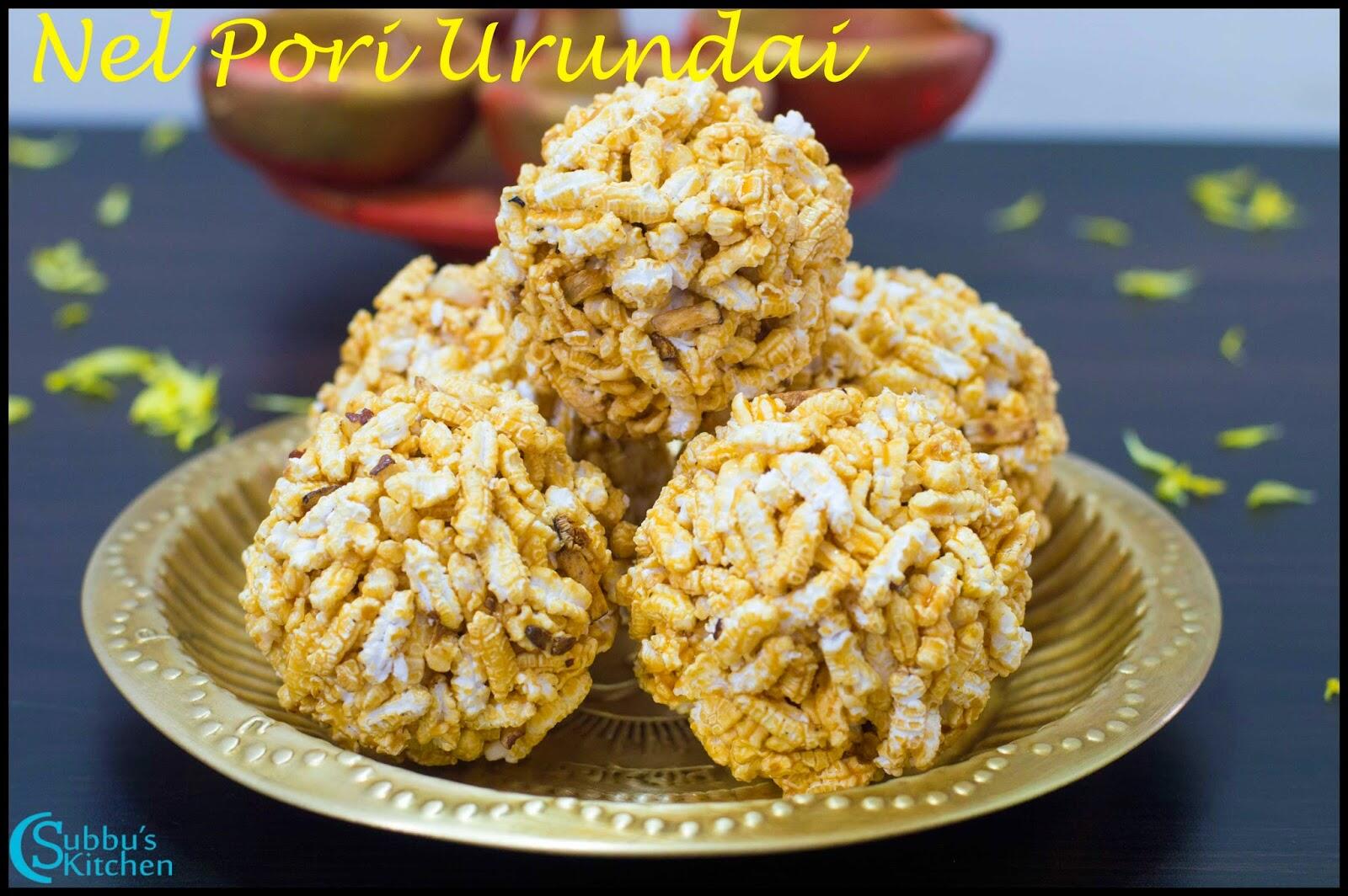
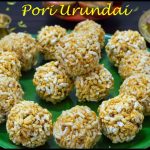
Pori Urundai Recipe | Aval Pori Urundai Recipe | Nel Pori Urundai Recipe

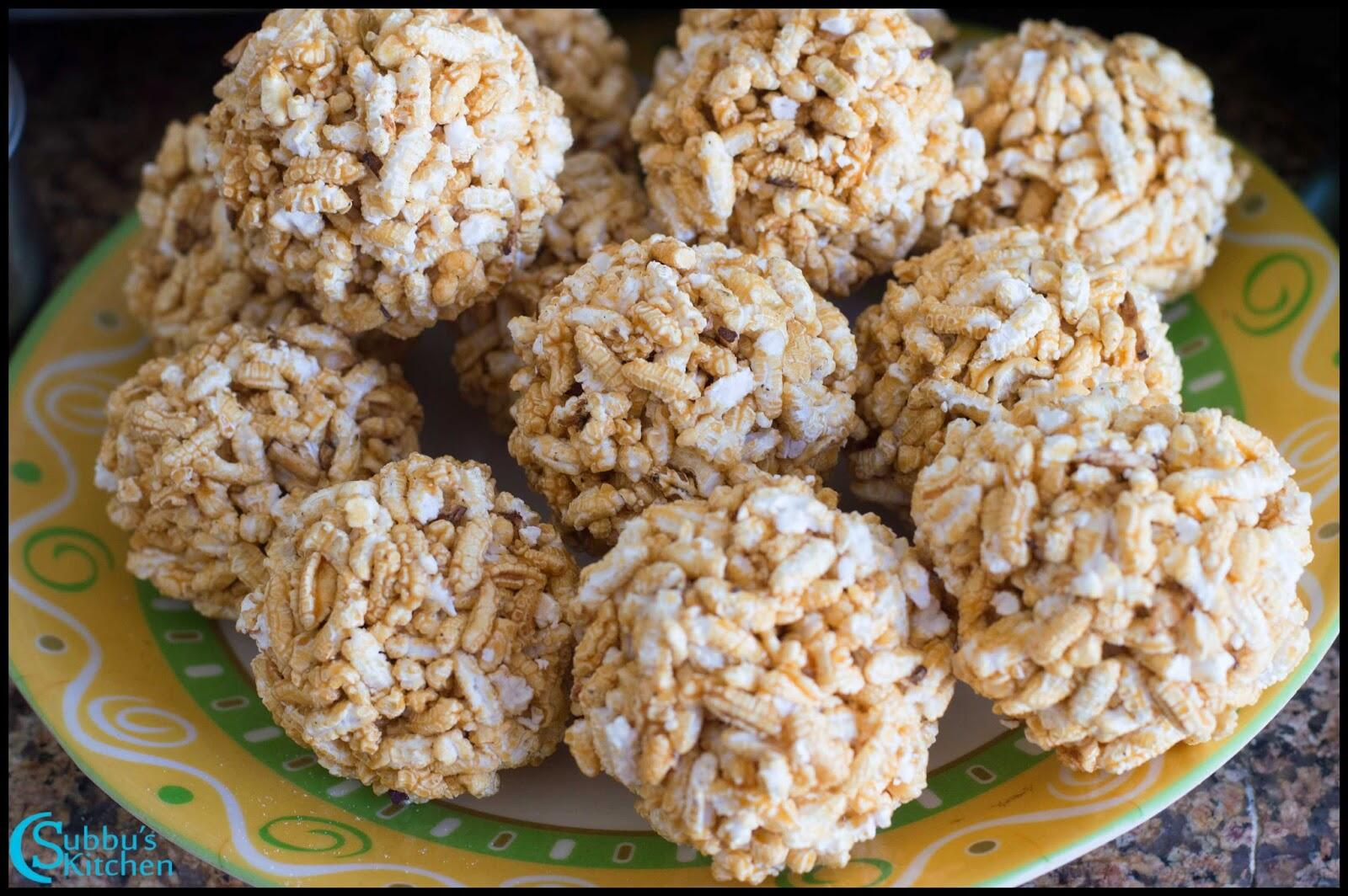
There’s something magical about the aroma of freshly melted jaggery and crispy puffed rice coming together during Karthigai Deepam. This Pori Urundai Recipe is rooted deeply in tradition, especially with the use of Aval Pori or Nel Pori as neivedhyam offerings for Thirukarthigai/Karthigaideepam. The combination of jaggery syrup, cardamom, and coconut pieces creates a nostalgic sweetness that families look forward to every year. While many prepare them as neatly shaped balls, some households—especially in Tirunelveli and Nagercoil—simply mix the pori with the jaggery syrup and offer it as is. Whether you follow the custom of making pori urundai alone or also prepare Milagu Adai, Vellai Appam, and Vella Seedai, this recipe carries the warmth, authenticity, and festive spirit of the season. Happy Karthigai Deepam to you and your family!

Nel Pori Urundai | Thirukarthigai Nel Pori Urundai
Nel Pori Urundai

Pori Urundai holds a cherished place in South Indian homes, especially during the auspicious festival of Karthigai Deepam (also known as Thirukarthigai). 

[feast_advanced_jump_to]

Ingredients

  • Aval Pori / Nel Pori (puffed rice)
  • Grated Jaggery
  • Finely sliced / chopped Coconut pieces
  • Cardamom powder

Each of these ingredients plays an essential role in creating the perfect Pori Urundai:

  • Puffed rice (Aval Pori / Nel Pori): This provides the light, airy base. Its delicate crunch contrasts beautifully with the sticky jaggery syrup, giving the urundai its signature texture.
  • Jaggery: This is the sweetener and binder — when boiled to just the right consistency, jaggery syrup coats the puffed rice and helps hold everything together. It also provides a warm, caramel-like depth of flavor that feels very traditional.
  • Coconut pieces: Lightly dry-fried coconut adds a toasty richness and a subtle chewiness. Frying removes moisture so that the coconut stays crisp even after mixing, which elevates both texture and flavor. 
  • Cardamom powder: This spice gives a fragrant, floral aroma that cuts through the sweetness and lifts the overall flavor profile. It’s a small but powerful ingredient that makes the urundai feel festive and aromatic.

See recipe card for quantities.

Instructions

Pori Undai_step1
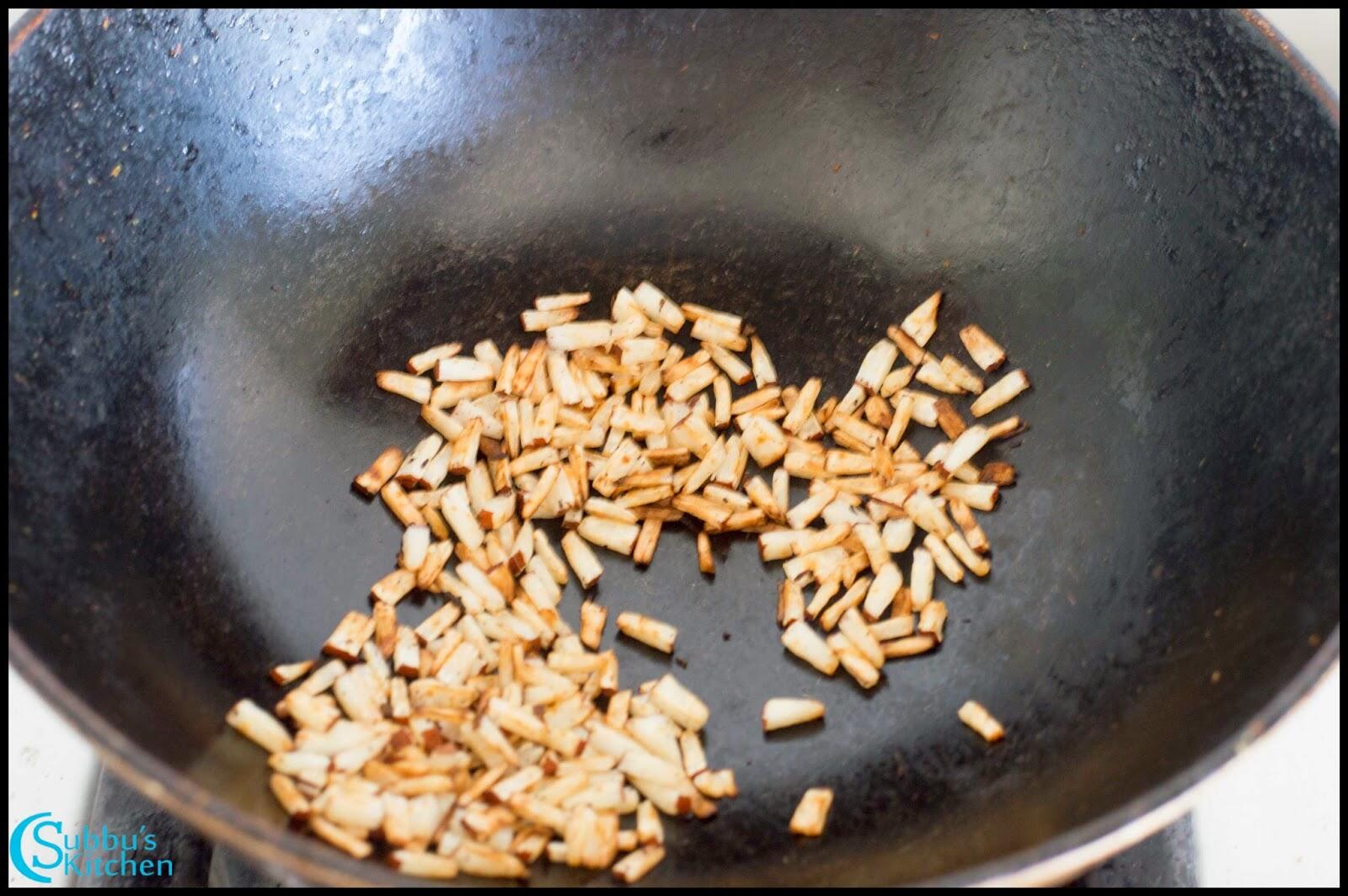
  1. Heat a pan and add the finely chopped coconut pieces. Dry roast them on a low flame until they turn deep brown and all the moisture evaporates.
Pori Undai_step2
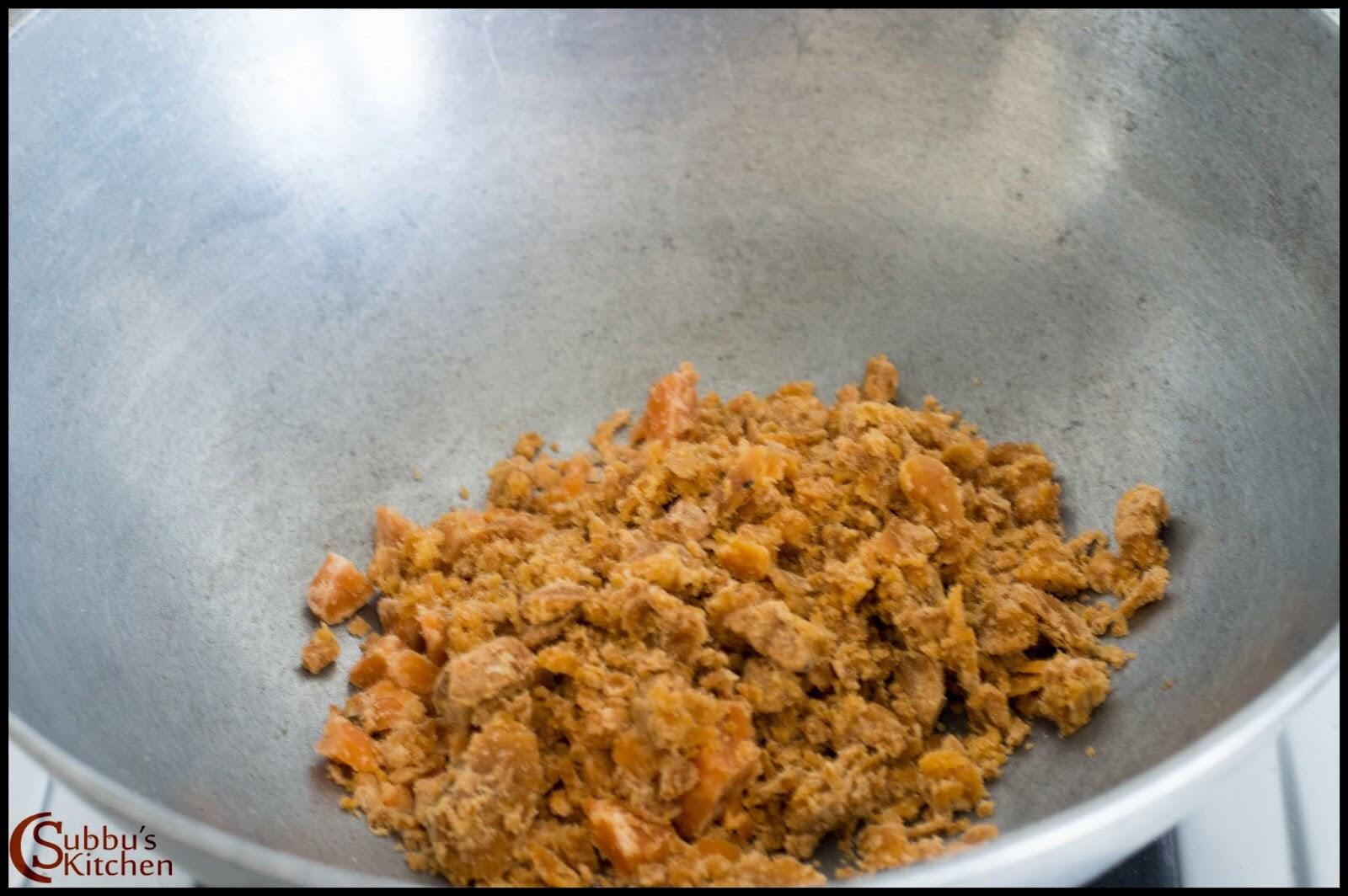
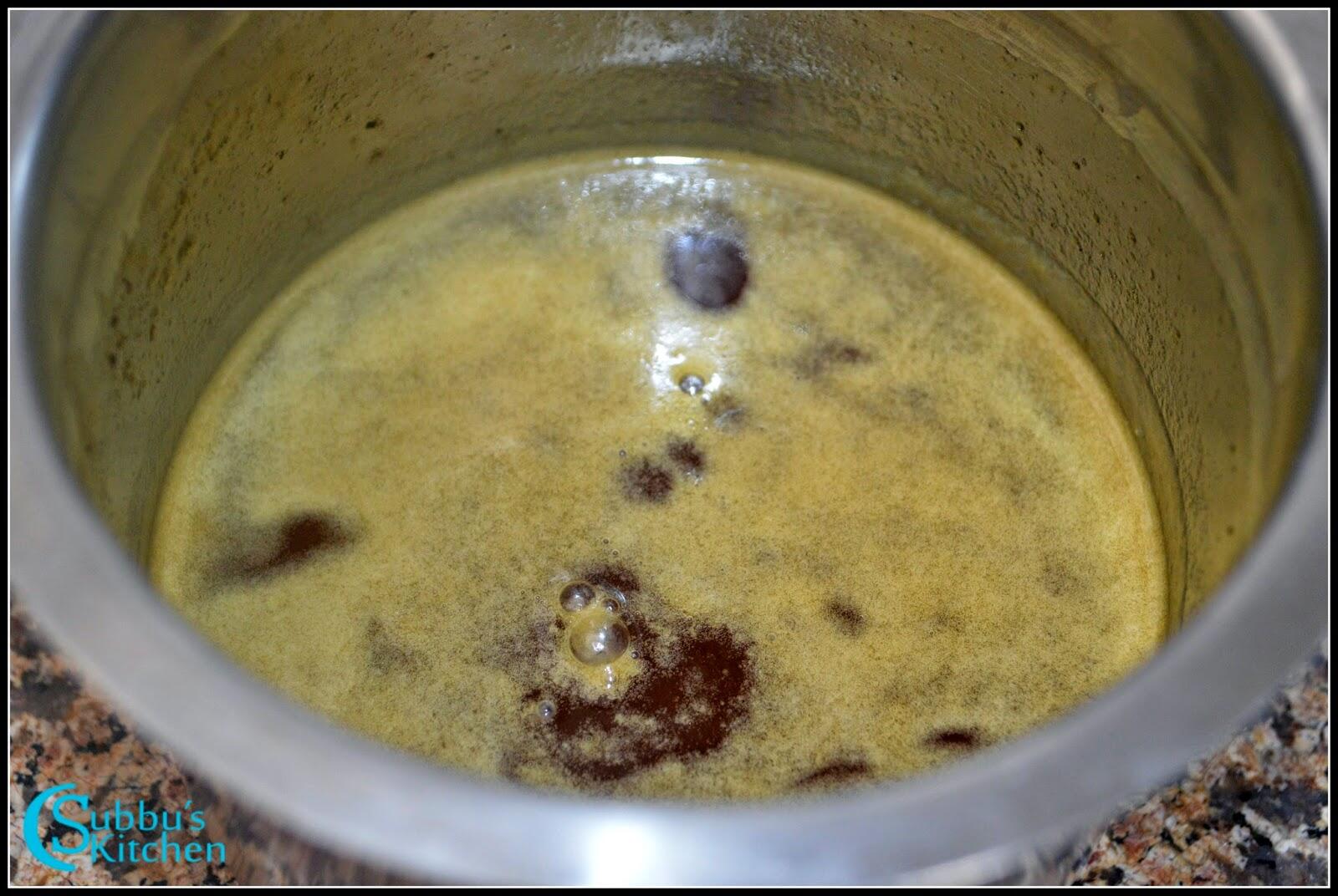
  1. Add the grated jaggery to a pan
Pori Undai_step3
  1. Add ½ cup of water and heat it on a low flame, allowing the jaggery to melt completely into the water.
Pori Undai_step4
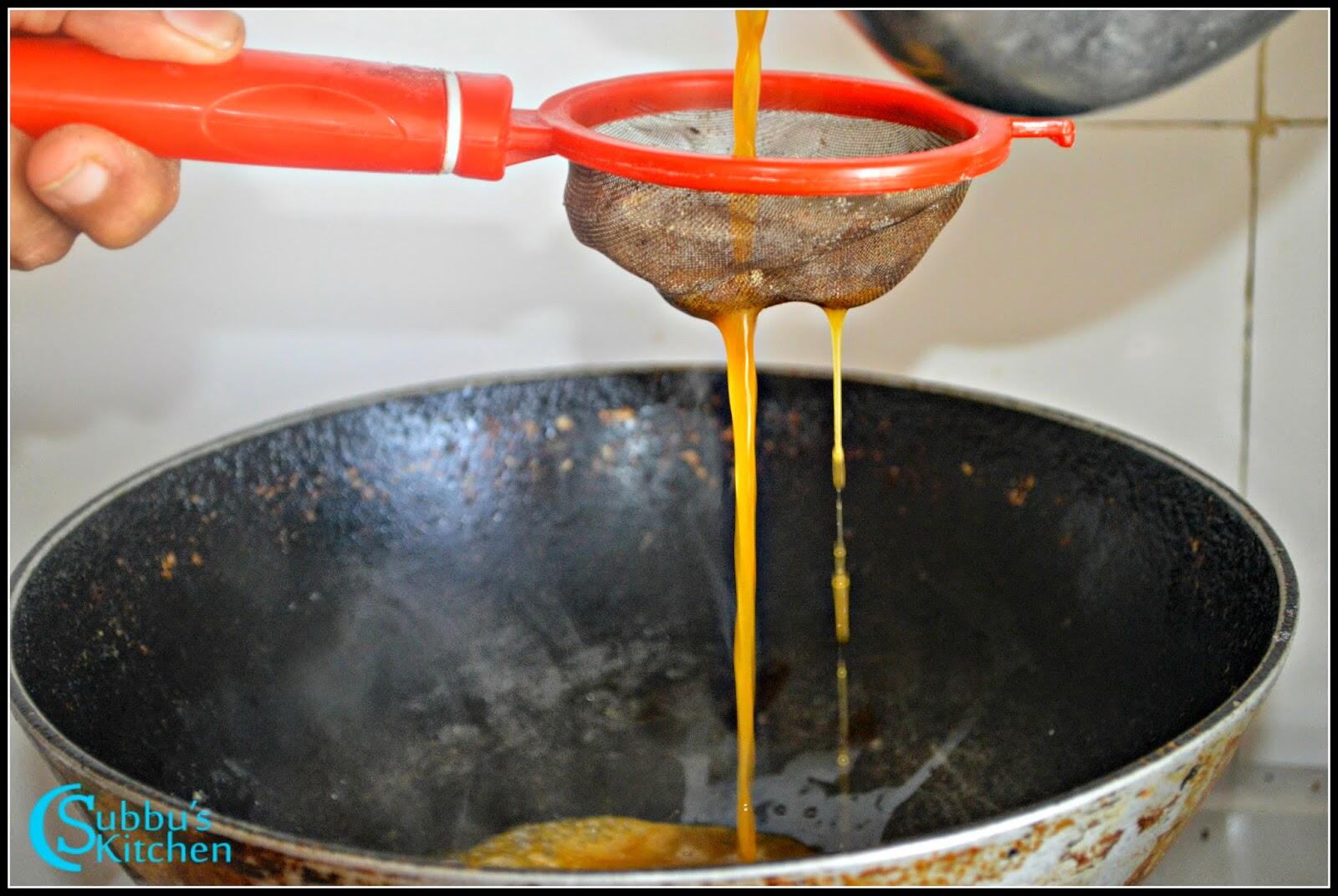
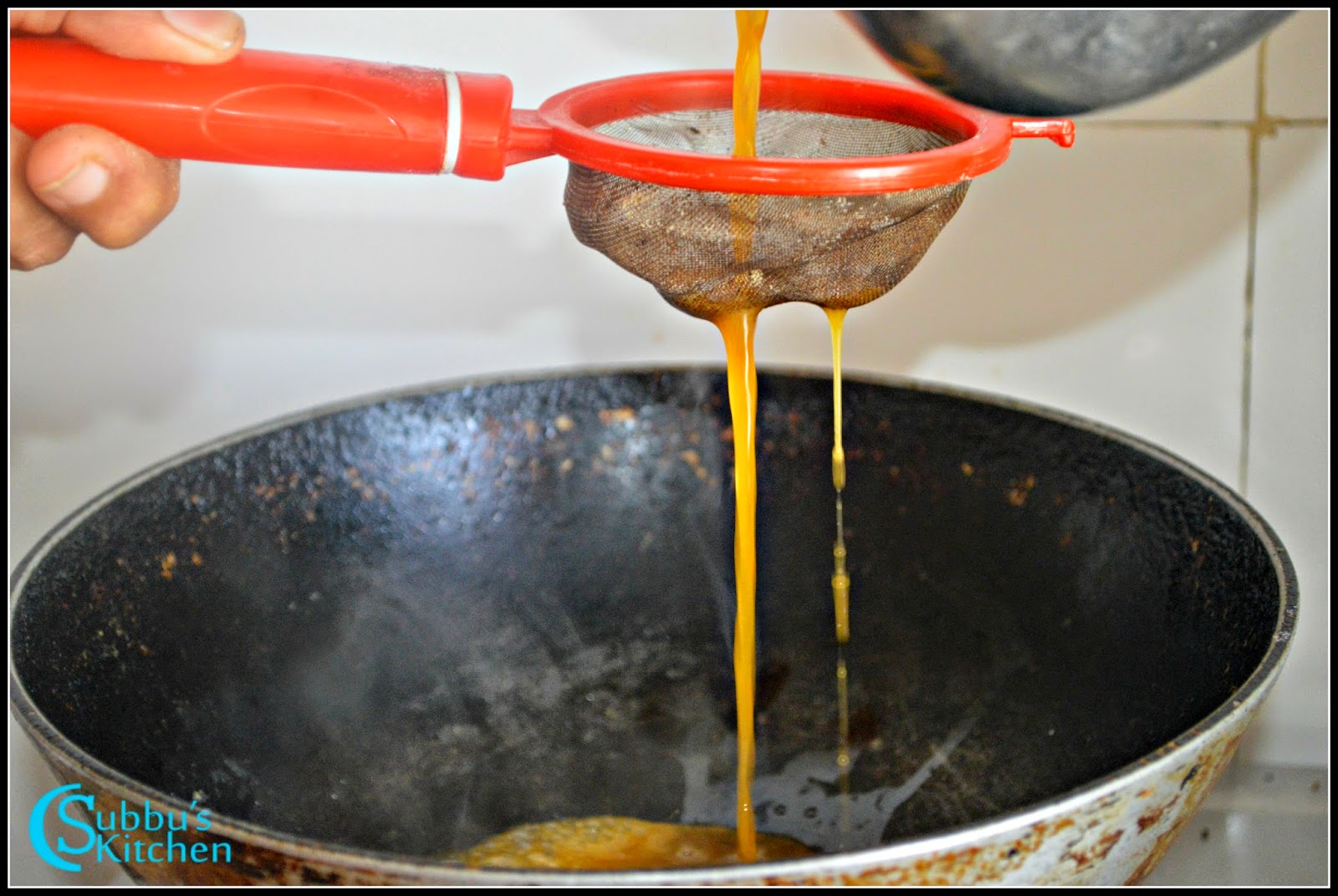
  1. Once the jaggery has fully dissolved, strain the syrup to remove any impurities such as dirt or sand.
Pori Undai_step5
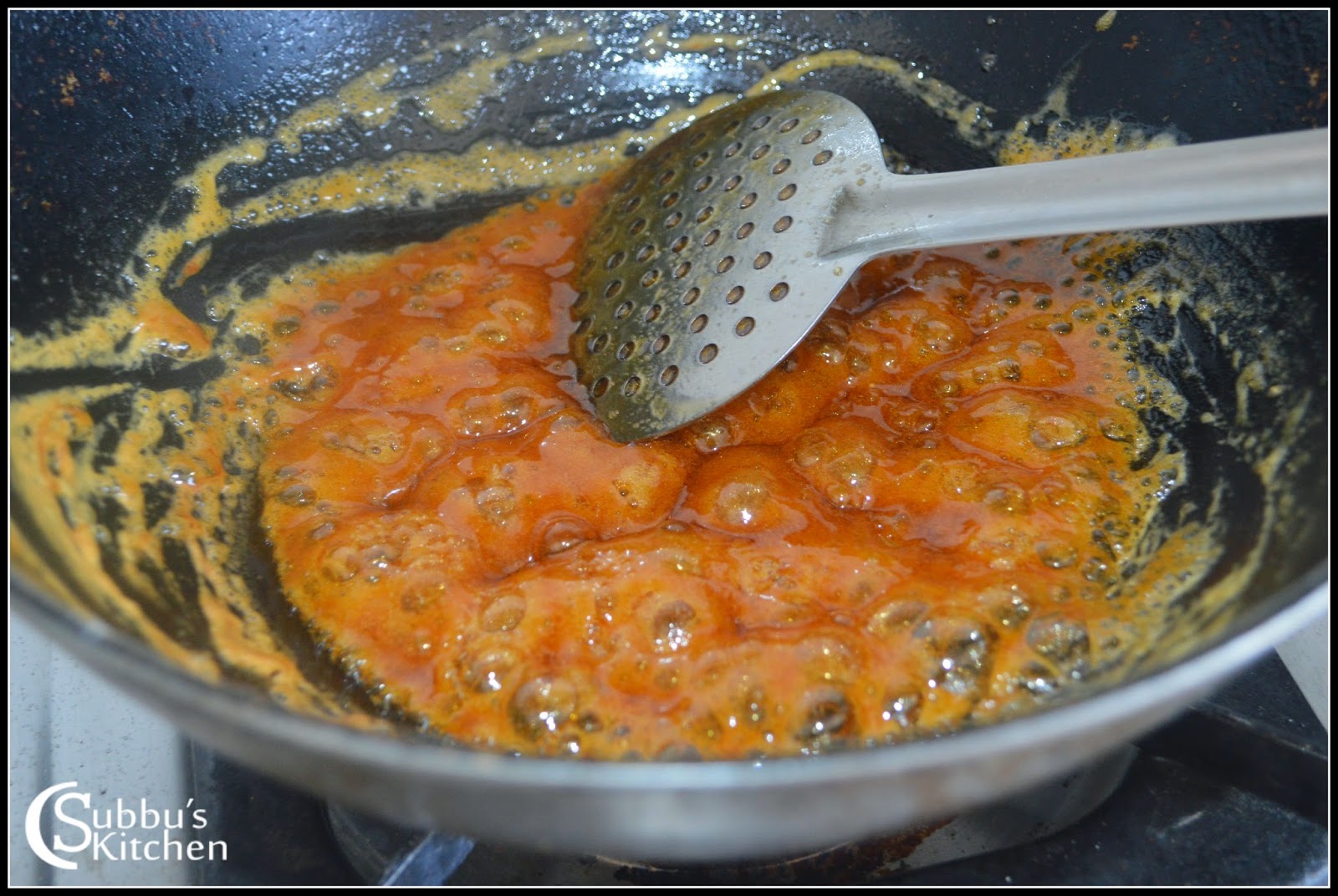
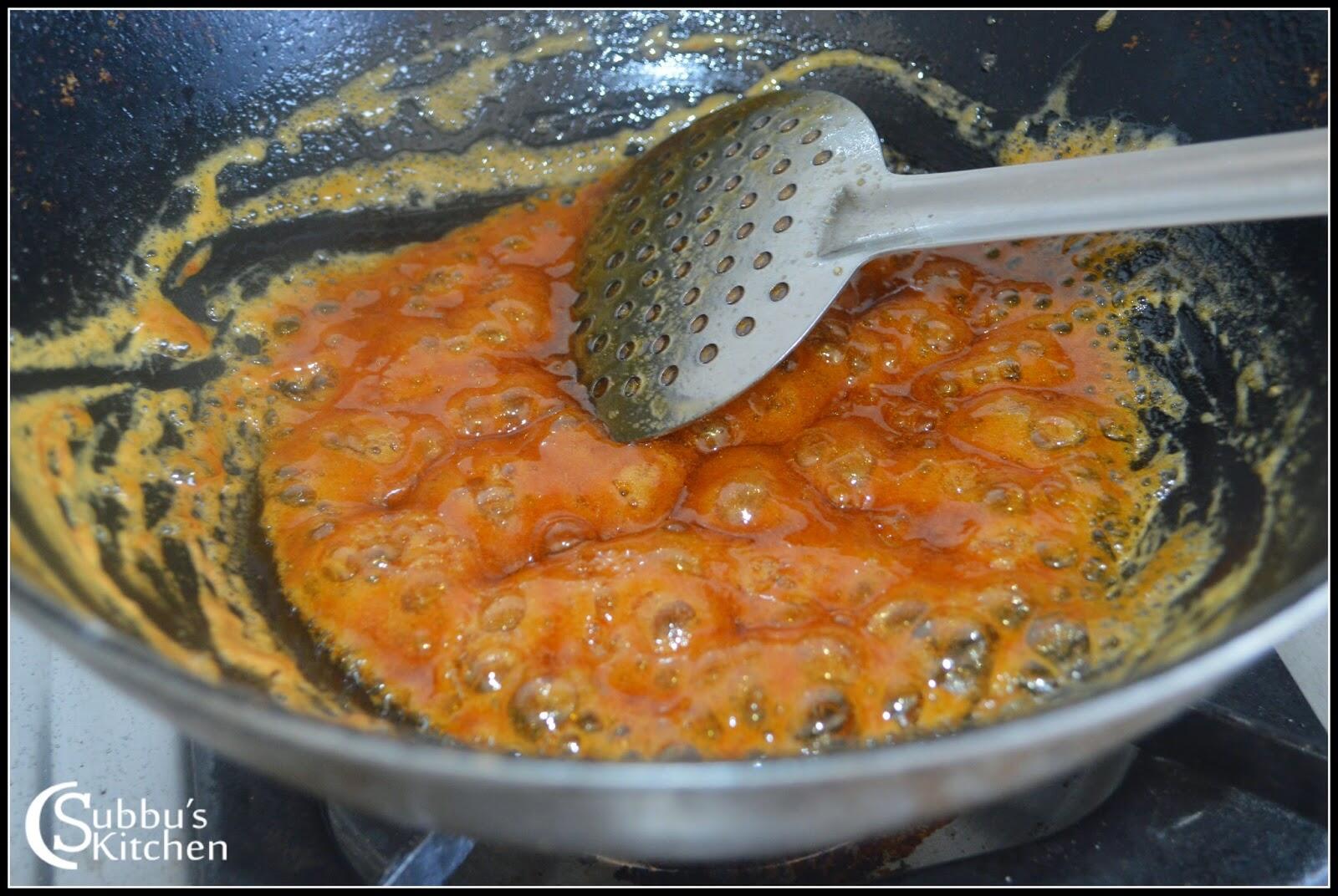
  1. Return the strained jaggery syrup to the pan and boil it again, stirring continuously until it reaches stone consistency.
Pori Undai_step6
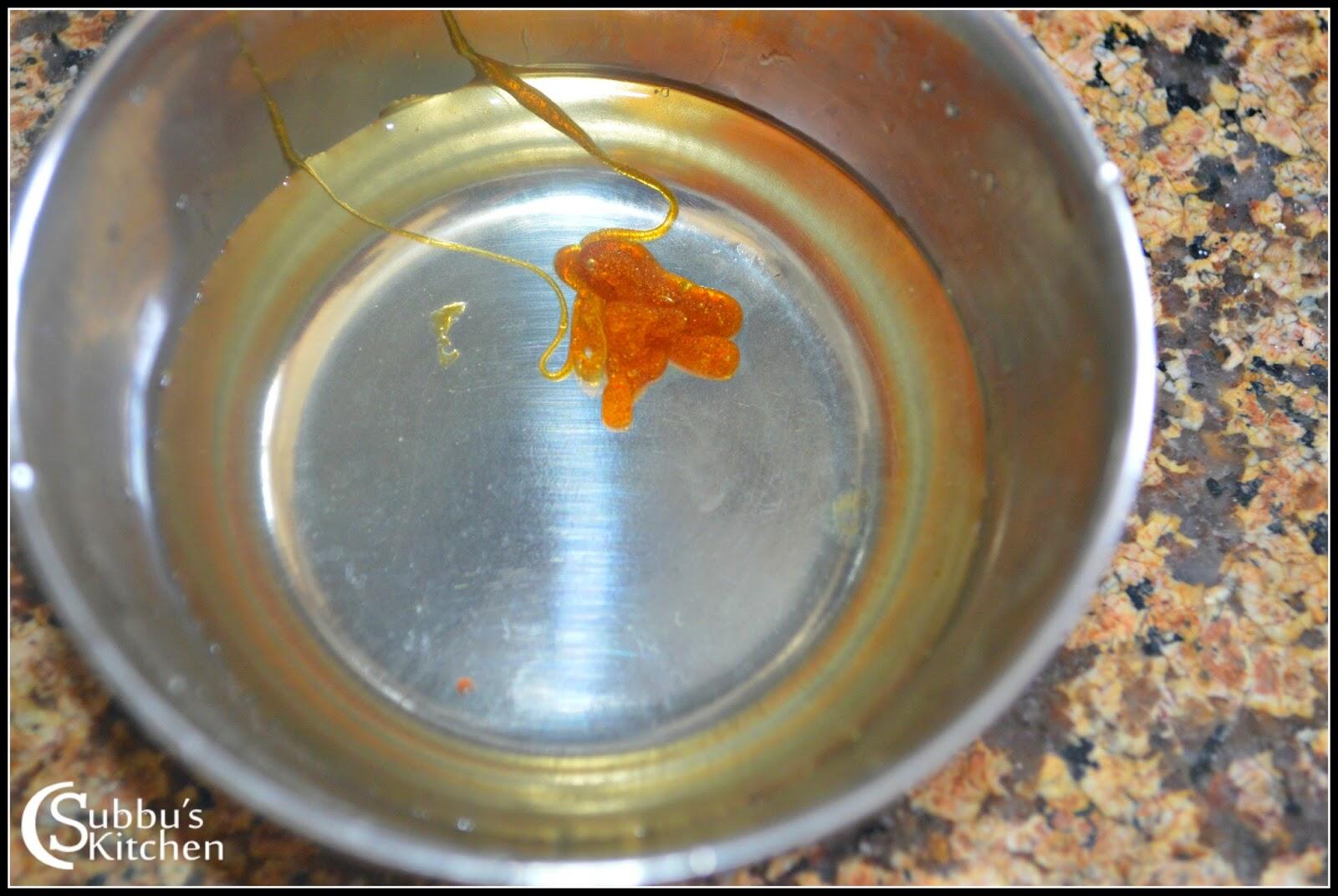
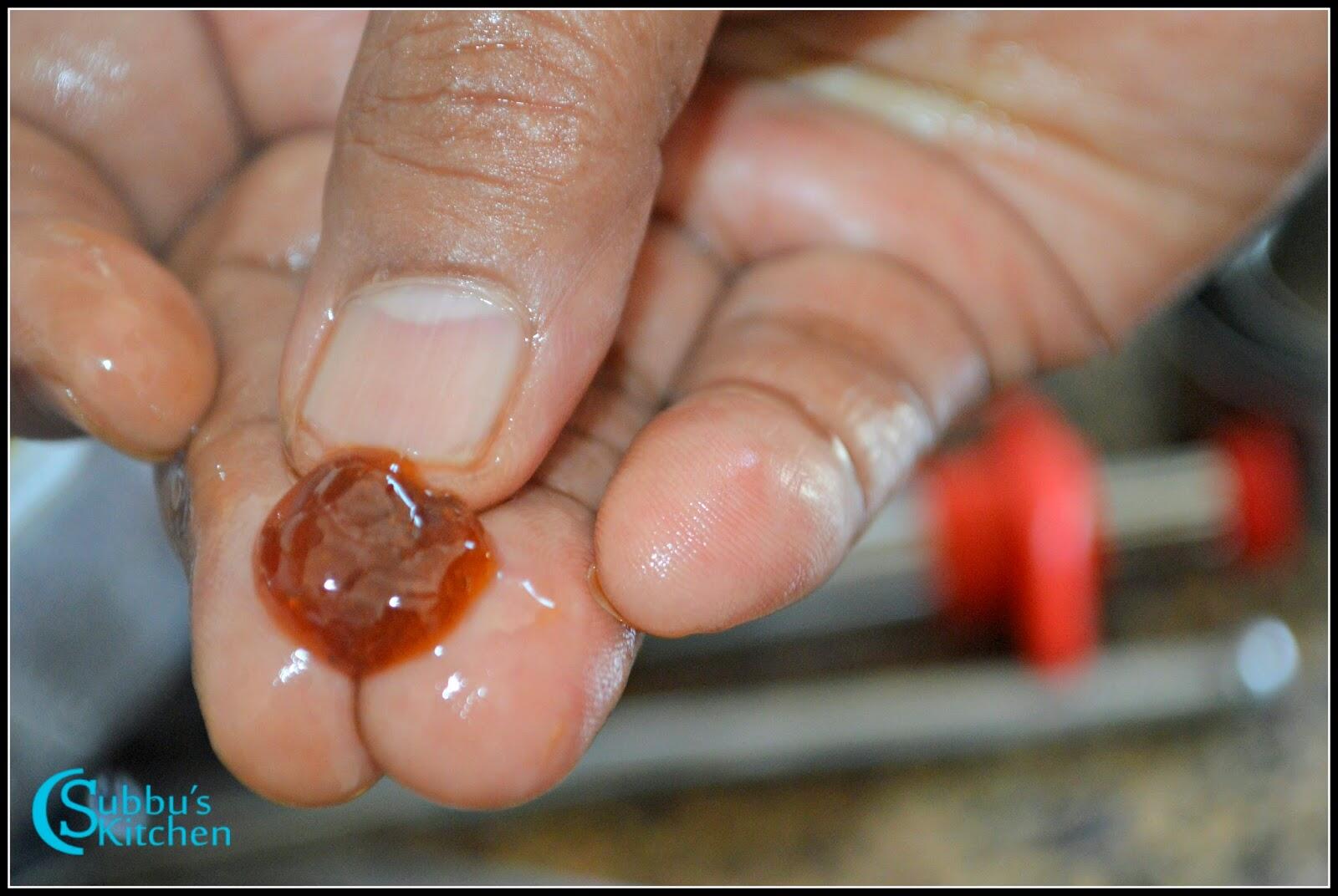
  1. To check, drop a small amount of the syrup into a bowl of water—it should not dissolve, and you should be able to form a soft ball. The syrup should be firm enough to hold its shape but not too hard. When you drop this ball onto a steel plate, you should hear a distinct tapping sound, indicating the syrup has reached the perfect consistency.
Pori Undai_step7
  1. When you take a portion of the jaggery syrup from the bowl, you should be able to roll it into a soft ball. It should also produce a light tapping sound when dropped onto a plate or surface. This indicates that the jaggery syrup has reached the perfect consistency.
Pori Undai_step8
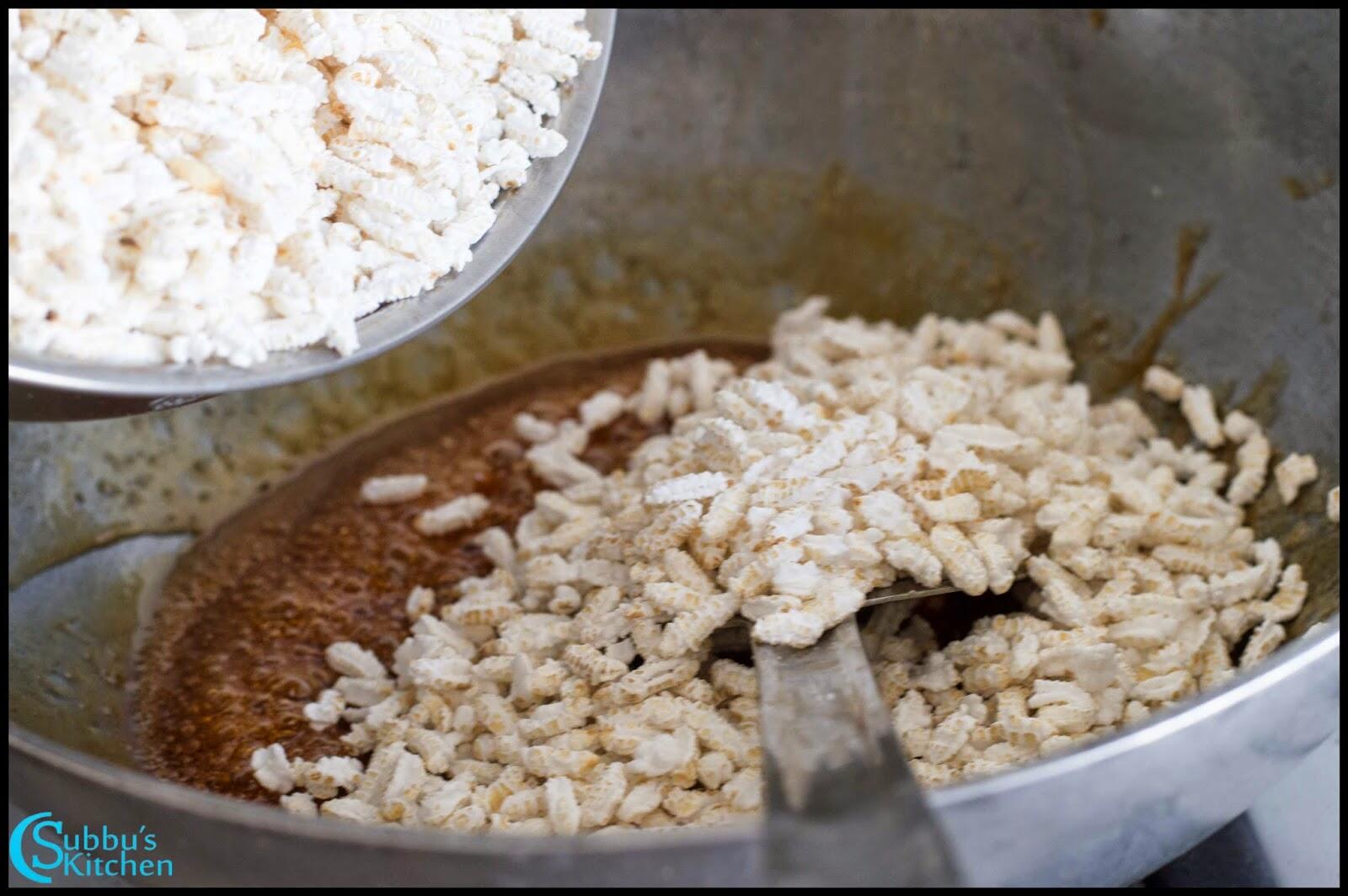
  1. Add the cardamom powder and the fried coconut pieces to the jaggery syrup, and stir well to combine. Remove the pan from the flame, then immediately add the Nel Pori or Aval Pori.
Pori Undai_step9
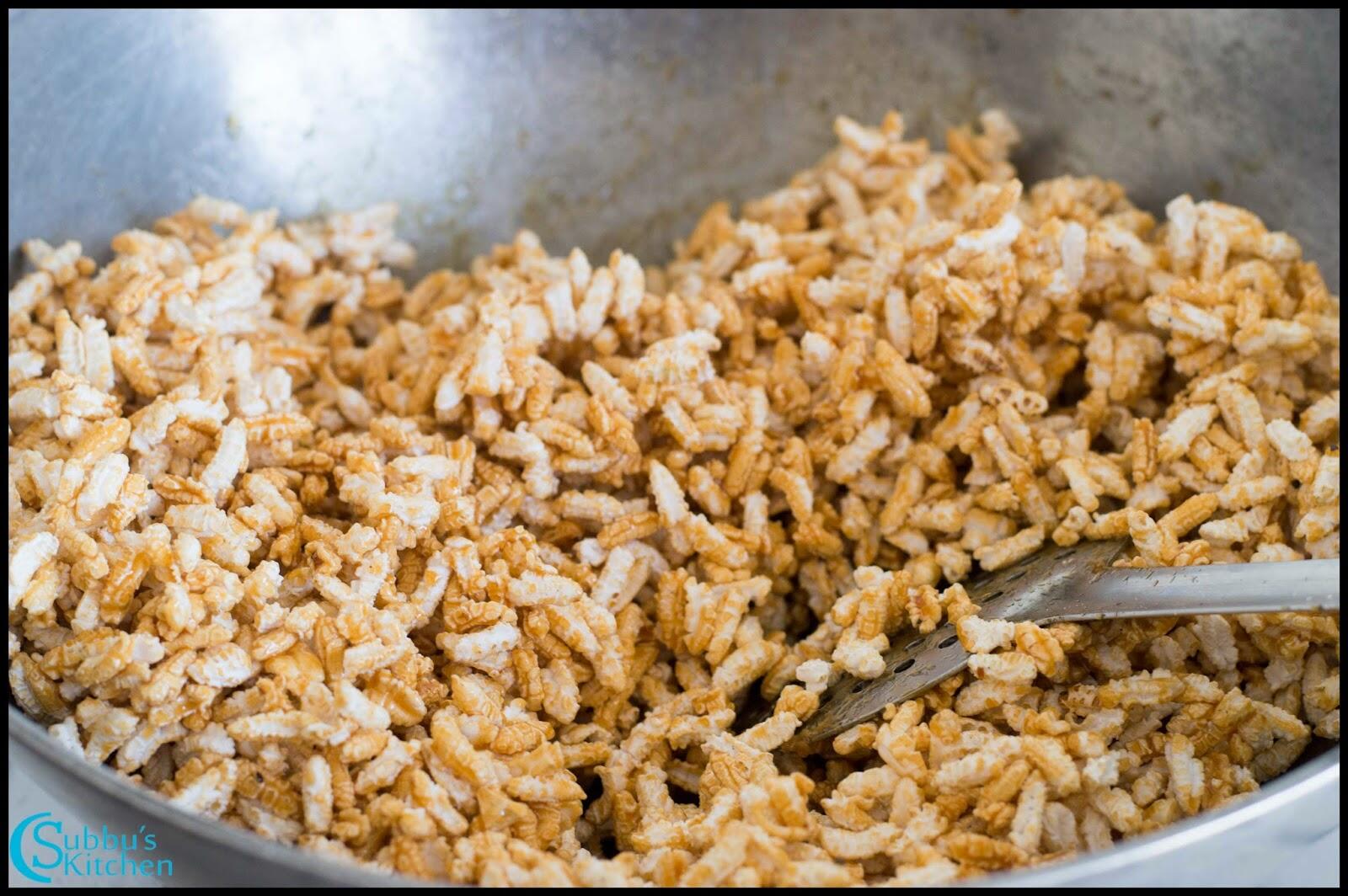
  1. Gently mix the Aval or Nel Pori with the jaggery syrup until well coated.
Pori Undai_step10
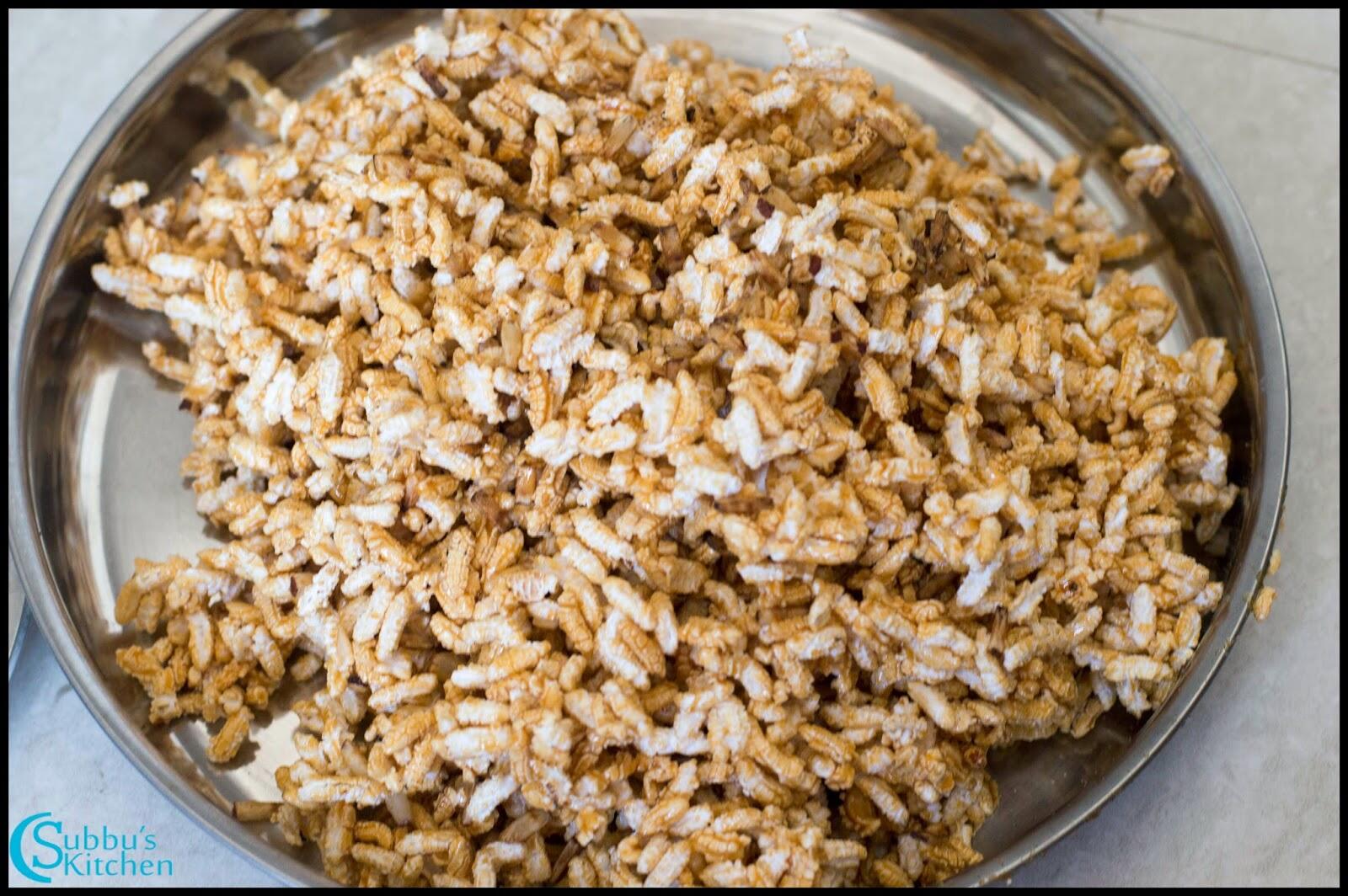
  1. Transfer the mixture onto a plate and spread it evenly.
Pori Urundai_step1
  1. Once the pori mixture has cooled enough to handle, start shaping it into balls with your hands. If the mixture feels too hot or sticky, lightly dust your palms with rice flour to make the process easier.
Pori Urundai_step12
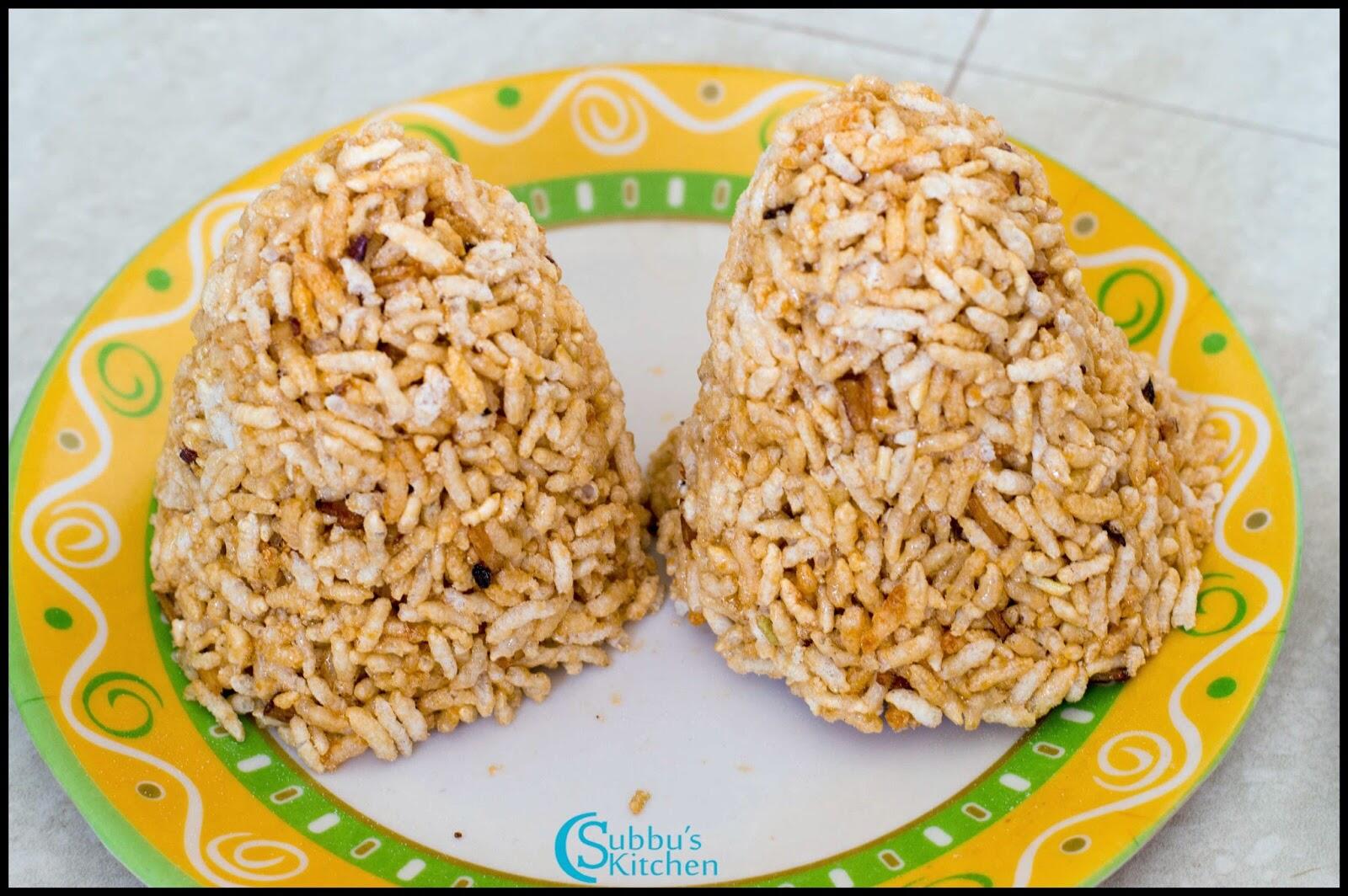
  1. Alternatively, you can shape the mixture into paruppu thengai as shown in the picture below. Repeat the same procedure for the other variety of Pori.The delicious Aval & Nel Pori orundai is now ready for neivedhyam.

Hint: Make sure the jaggery syrup reaches the right stone consistency before mixing with the puffed rice—this ensures the Pori Urundai holds its shape. If the mixture is too sticky to handle, lightly dust your palms with rice flour for easy shaping.

Variations

  • Nutty – add roasted cashews, almonds, or pistachios along with the coconut pieces for a crunchy, festive twist.
  • Sesame – mix in roasted sesame seeds with the puffed rice and jaggery syrup for a nutty flavor and added health benefits.
  • Dry Fruit – include finely chopped raisins, dates, or dried figs to make the sweet richer and more indulgent.
  • Coconut Milk – replace part of the water in the jaggery syrup with coconut milk for a creamier, aromatic variation.
  • Healthy / Millet – swap puffed rice with puffed millets like foxtail millet or ragi for a fiber-rich and wholesome version.

Storage

Allow the Pori Urundai balls to cool completely before storing. Keep them in an airtight container at room temperature for up to 7–10 days. For longer shelf life, store in the refrigerator for up to 2 weeks, and bring to room temperature before serving to retain their crispness.

Top Tip

Ensure the jaggery syrup reaches the perfect stone consistency before mixing with the puffed rice—this is key for shaping the pori urundai without it falling apart. Test by dropping a small amount of syrup in water; it should form a soft ball that holds its shape.

FAQ

What is the difference between Aval Pori and Nel Pori?

Aval Pori is puffed rice made from flattened rice flakes, while Nel Pori is traditional puffed rice. Both can be used interchangeably in this recipe with the same method.

How do I know when the jaggery syrup is ready?

The syrup is ready when it reaches stone consistency. Drop a small amount in water—it should form a soft ball that holds its shape but is not too hard. You should also hear a light tapping sound if dropped on a plate.

Can I shape the pori mixture without rice flour?

Yes, if the mixture has cooled enough and isn’t too sticky, you can shape it with your hands. If it sticks, lightly dust your palms with rice flour for easier handling.

Can I use alternative sweeteners instead of jaggery?

Traditional jaggery gives the authentic taste and texture, but you can try palm sugar or brown sugar as a substitute. Note that the flavor will vary slightly, and the syrup consistency may require adjustment.

Related

Recipe Card

Aval Pori Urundai | Karthigai Deepam Pori Urundai
Print

Pori Urundai Recipe | Aval Pori Urundai Recipe | Nel Pori Urundai Recipe

Aval Pori and Nel Pori are the two traditional neivedhyam dishes prepared on the auspicious occasion of Thirukarthigai/Karthigaideepam. Puffed rice mixed with jaggery syrup along with cardamom and coconut pieces, is a wonderful sweet dish.
Course Festival Recipes, Sweet
Cuisine Indian, South Indian, Tamil Nadu
Prep Time 10 minutes
Cook Time 20 minutes
Total Time 30 minutes
Servings 6 people
Calories 70kcal
Author Sowmya Venkatachalam

Equipment

  • Heavy Bottomed Pan

Ingredients

  • 4 Cups Aval Pori / Nel Pori (Puffed Rice) 1 Cup - 250ml
  • 1 Cup Grated Jaggery
  • 2 tablespoon Finely Sliced Coconut
  • 1 teaspoon Cardamom Powder

Instructions

  • Heat a pan and add the finely chopped coconut pieces. Dry roast them on a low flame until they turn deep brown and all moisture has evaporated—this step is essential to ensure the crispness of the Pori Urundai. You’ll notice the coconut pieces start to crackle and burst slightly when perfectly roasted. Once done, set the fried coconut aside.
    2 tablespoon Finely Sliced Coconut
  • Add the grated jaggery to a pan and pour in ½ cup of water. Heat on low flame until the jaggery melts completely.
    1 Cup Grated Jaggery
  • Once dissolved, strain the jaggery syrup to remove any impurities like dirt or sand.
  • Return the strained jaggery syrup to the pan and boil it again, stirring continuously until it reaches stone consistency. To check, drop a small amount of syrup into water—it should not dissolve and should form a soft ball. The ball should be firm enough to hold its shape but not too hard. When dropped onto a steel plate, it should make a light tapping sound. This indicates the jaggery syrup has reached the perfect consistency for making Pori Urundai.
  • Add cardamom powder and the fried coconut pieces to the syrup and mix well. Remove from heat.
    1 teaspoon Cardamom Powder
  • Add the Aval or Nel Pori to the syrup and mix thoroughly until the puffed rice is well coated.
    4 Cups Aval Pori / Nel Pori (Puffed Rice)
  • Transfer the mixture to a plate and spread evenly. Allow it to cool slightly.
  • Once the pori mixture has cooled enough to handle, shape it into balls using your hands. If the mixture feels too hot or sticky, lightly dust your palms with rice flour to make shaping easier. Alternatively, you can shape the mixture into paruppu thengai cones.
  • Repeat the same procedure for the other variety of Pori. 
  • The delicious Aval & Nel Pori orundai is now ready for neivedhyam.

Video

Notes

You can lightly dust your hands with rice flour to easily shape the pori mixture into round ladoos. For easier binding, you can increase the jaggery to 2 cups for every 4 cups of puffed rice—this ratio helps the Pori Urundai hold its shape perfectly.

Nutrition

Serving: 1Pori Urundai | Calories: 70kcal | Carbohydrates: 18g | Protein: 4g | Fat: 1g
Pori Urundai Recipe | Aval Pori Urundai Recipe | Nel Pori Urundai Recipe

The post Pori Urundai Recipe | Aval Pori Urundai Recipe | Nel Pori Urundai Recipe appeared first on Subbus Kitchen.
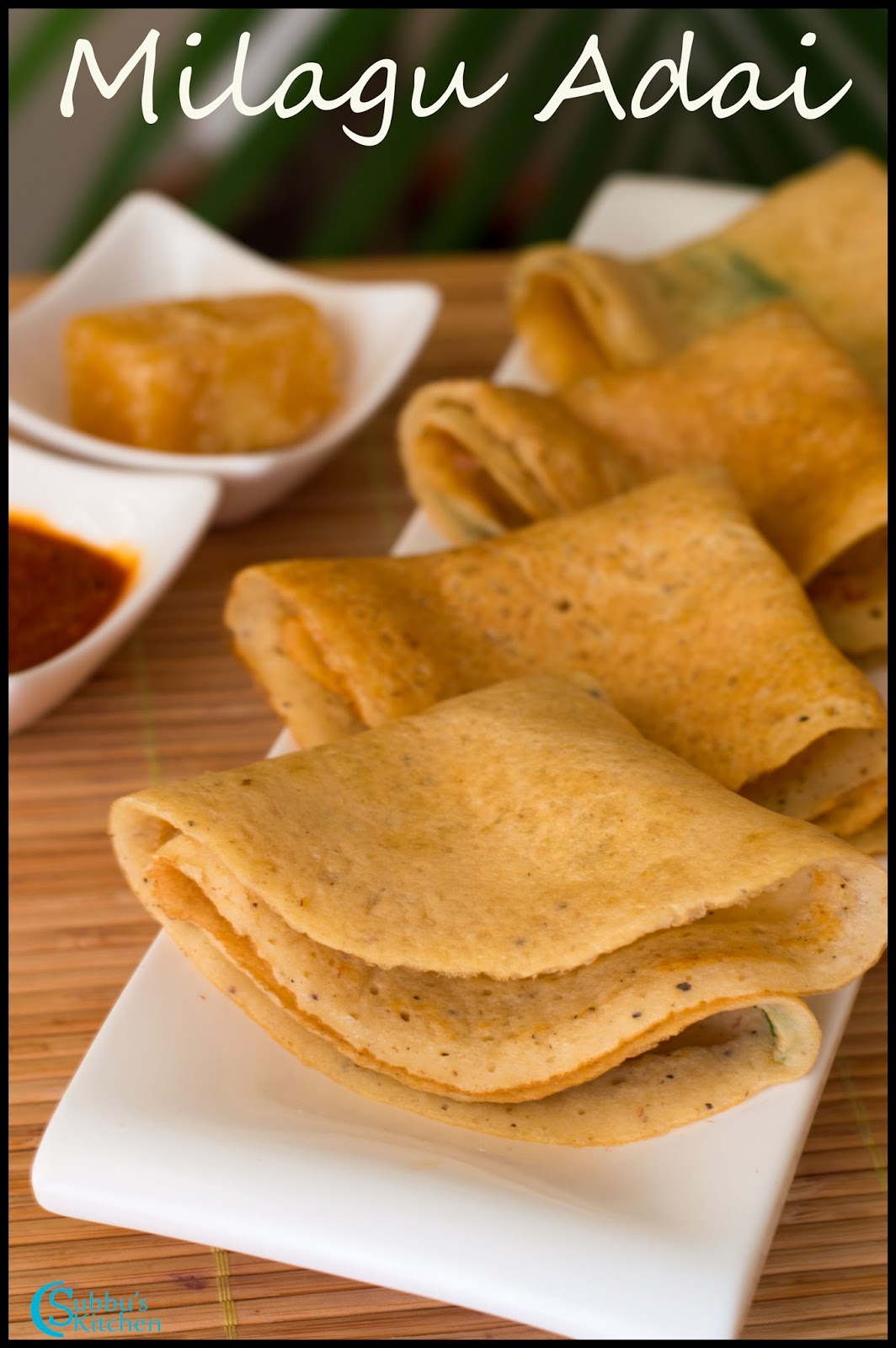
Milagu Adai | Thirukarthigai Adai

In our families Milagu Adai also one of the neyvedhyam for Thirukarthigai. As per the mythological story a princes has to leave an elephant which she considered as her brother when she gets married and move to her husbands place. So for every Thirukarthigai/Karthigai deepam occasion, elephant lamp(Gajalakshmi vilaku) and she will prepare tender coconut, elephant leg size milagu Adai, and few more dishes and keep them as neivedhyam for this festival.
We can make this Adai in normal occasions for breakfast or for dinner.Serve with Chutney or Jaggery.

You can try:

Milagu Adai(Thirukarthigai Adai)


Thirukarthigai Milagu Adai
Print

Milagu Adai | Thirukarthigai Adai

Milagu Adai | Thirukarthigai Adai is an offering to God we make on the auspicious occasion of Thirukarthigai Deepam. 
Course Breakfast, Evening Tiffen
Cuisine Indian, South Indian, Tamilnadu
Prep Time 10 minutes
Cook Time 30 minutes
Soaking Time 2 hours
Total Time 40 minutes
Servings 4 Adai
Calories 197kcal
Author Sowmya Venkatachalam

Ingredients

  • 1 Cup Raw Rice
  • ¼ Cup Whole Urad Dal
  • ¼ Cup Toor Dal (Pigeon pea)
  • ¼ Cup Split Bengal Gram (Channa Dal / Kadalaparuppu)
  • 1 teaspoon Peppercorns
  • 1 teaspoon Salt As Needed
  • a Pinch Asafoetida (Asafetida / Hing)
  • 2 tablespoon Grated Coconut
  • Few Curry Leaves

Instructions

  • Soak the rice with all the dhals in water for 2 hours to 3 hours.
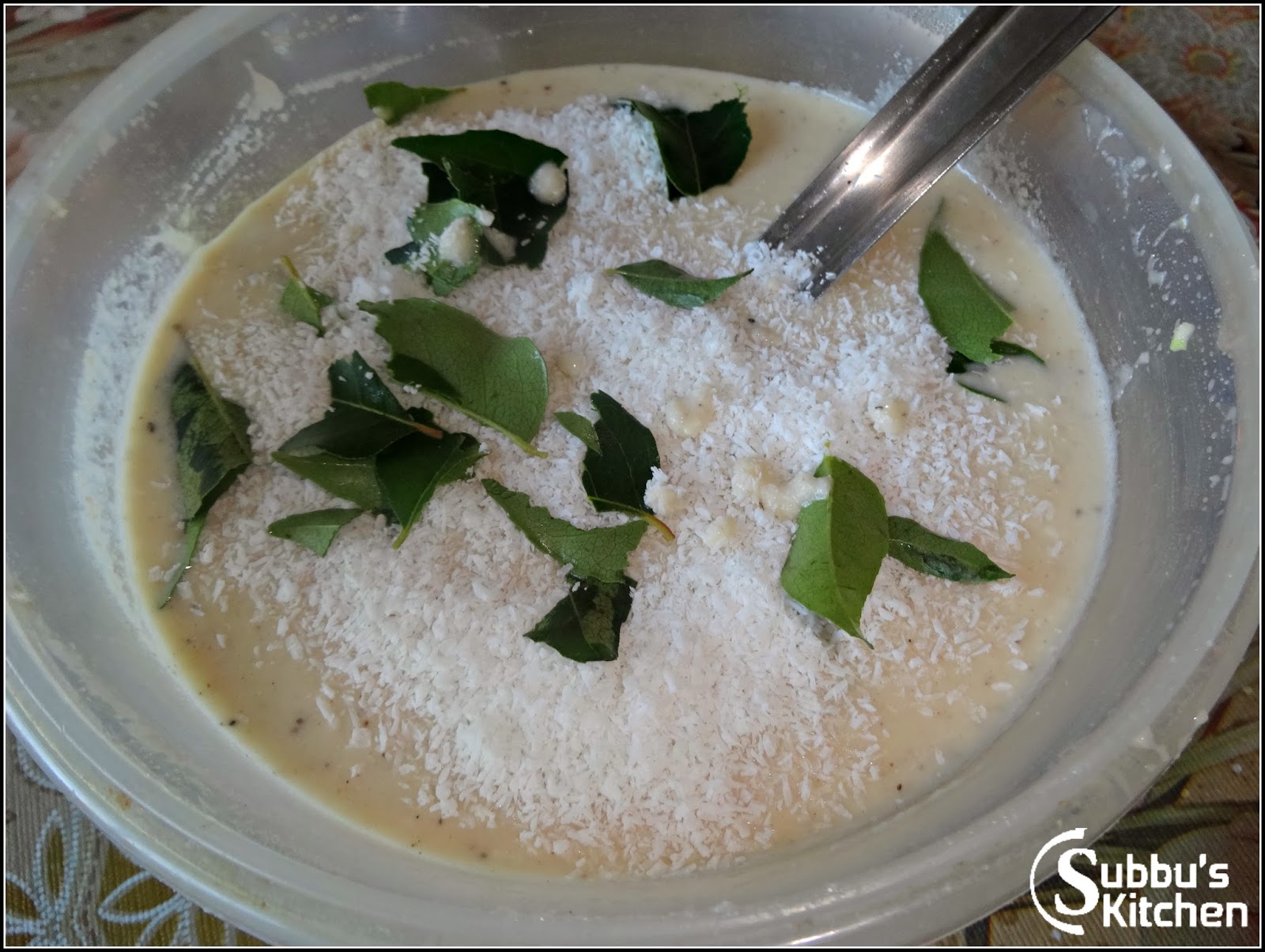
  • Drain the rice and dhals and grind it in mixer to a coarse paste. The adai flour should not be very smooth. ransfer this to a bowl and mix the pepper salt, hing, curry leaves and grated coconut.
  • The consistency should be slightly thicker than our normal dosa batter.
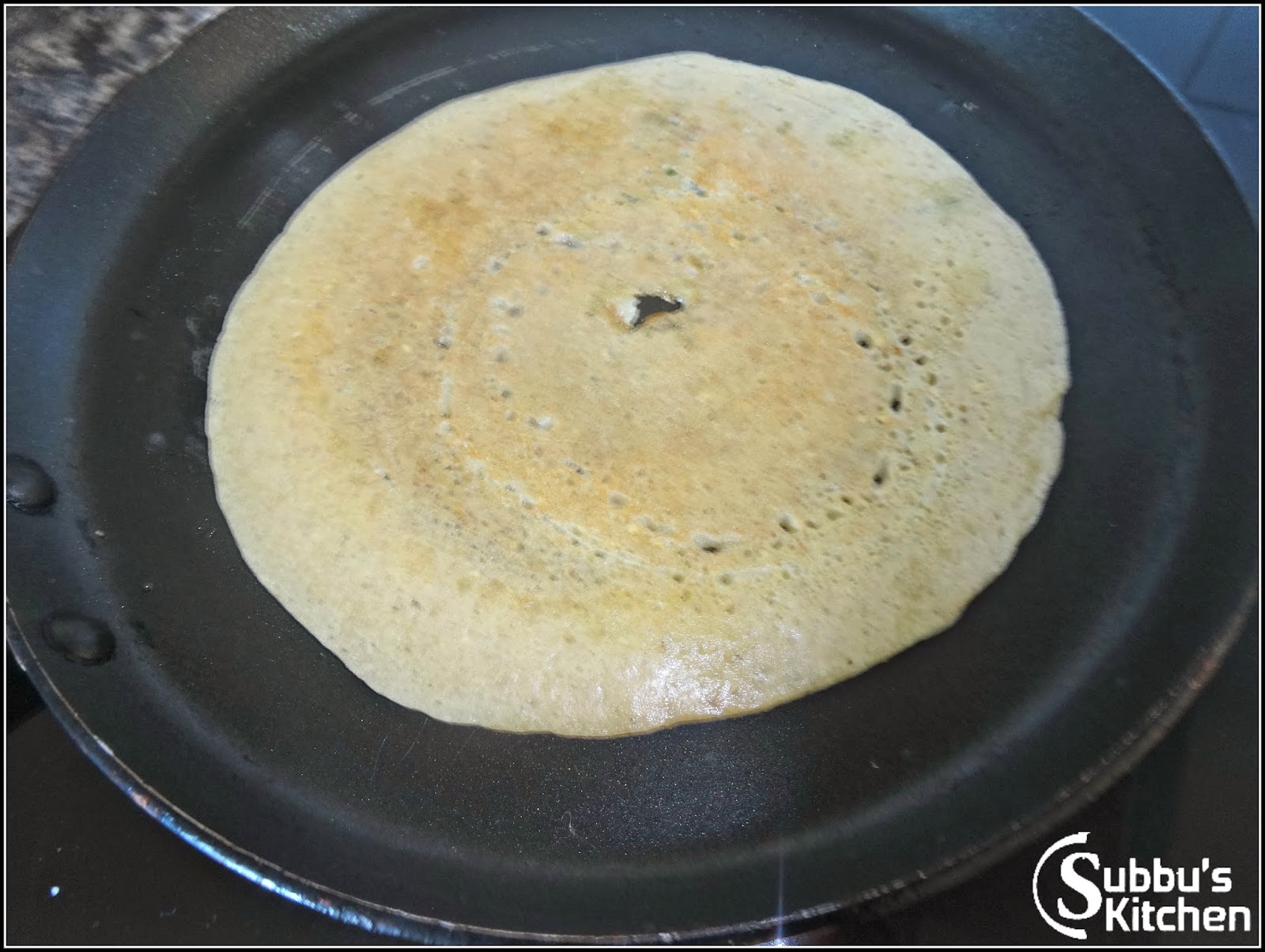
  • Heat the thawa and pour 1 ladle of flour and spread evenly and cook the adai on both the sides till the adai is crisp
  • Serve the tasty adai along with Jaggery.

Video

Notes

  1. If you make this on normal days, we can add onion. 
  2. For Festivals, we need to use Raw Rice, for normal occasions, we can use parboiled rice

Nutrition

Serving: 1Adai | Calories: 197kcal | Carbohydrates: 29g | Protein: 7g | Fat: 5g
Method:
  • Soak the rice with all the  dhals in water for 2 hours to 3 hours. Drain the rice and dhals and grind it in mixer to a coarse paste. The adai flour should not be very smooth. ransfer this to a bowl and mix the pepper salt, hing, curry leaves and grated coconut. The consistency should be slightly thicker than our normal dosa batter.
  • Heat the thawa and pour 1 ladle of flour and spread evenly and cook the adai on both the sides till the adai is crisp
  • Serve the tasty adai along with Jaggery.
Milagu Adai(Thirukarthigai Adai)


The post Milagu Adai | Thirukarthigai Adai appeared first on Subbus Kitchen.
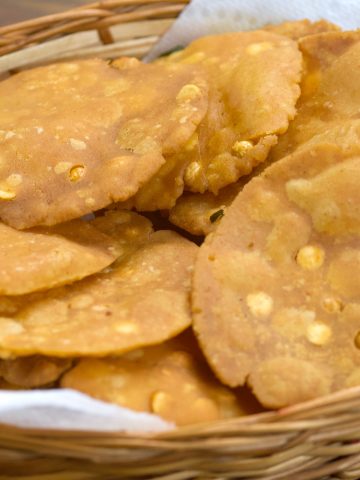
Vella Seedai Recipe | Sweet Seedai Recipe

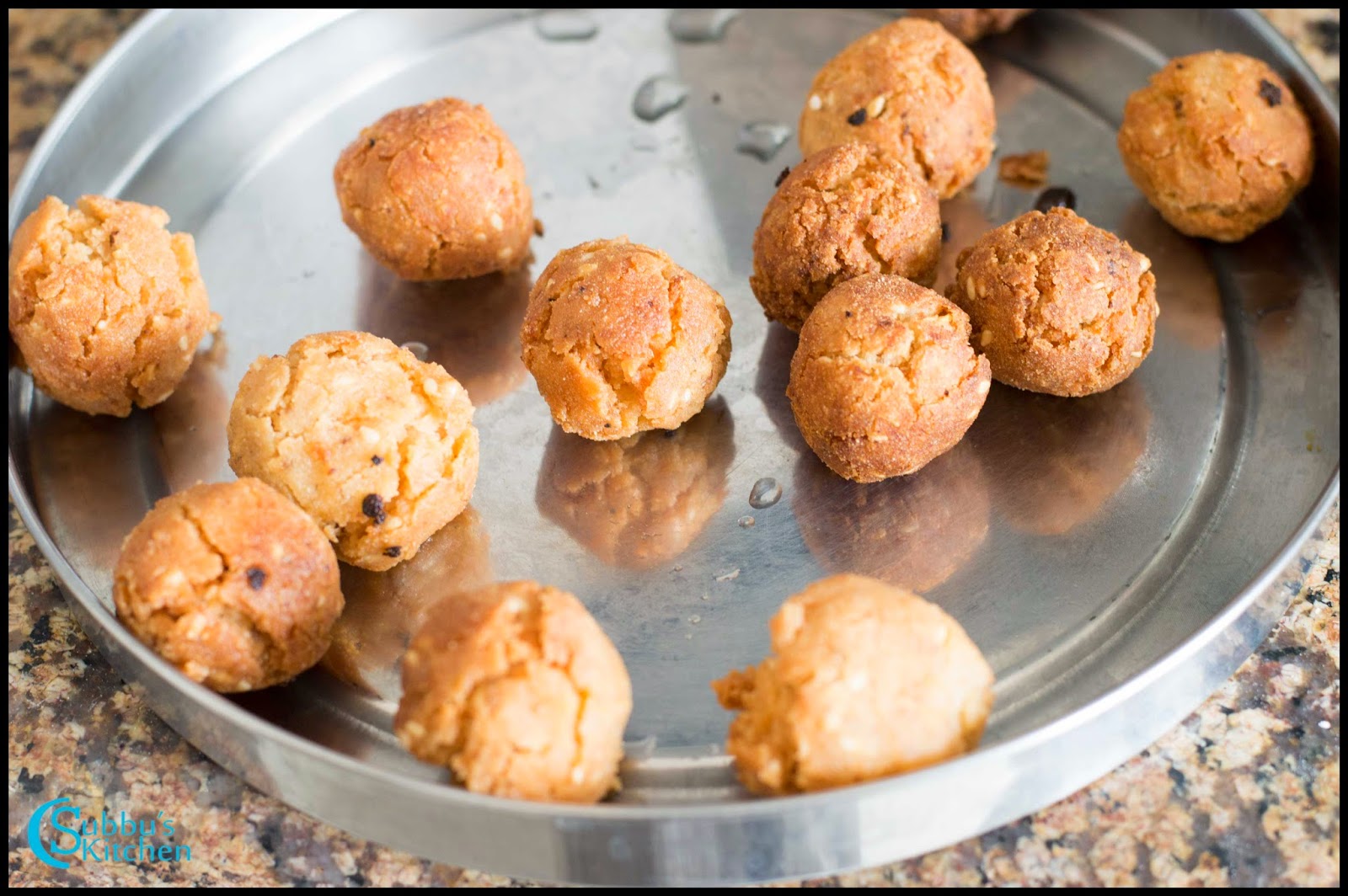
Vella Seedai, also known as Sweet Seedai, holds a significant place as a neivedhyam dish during both the Krishna Jayanthi and Thirukarthigai festivals. This delectable treat is a deep-fried sweet creation crafted from a blend of rice flour, urad dal flour, and jaggery. What sets Vella Seedai apart is its delightful combination of a crispy outer shell and a melt-in-your-mouth interior, offering a truly unique flavor and texture.

During Krishna Jayanthi, alongside Vella Seedai, offerings like Uppu Seedai, Aval Puttu, and Nei Appam hold immense importance as Prasad offerings to Lord Krishna. In our quest for perfection in preparing Vella Seedai, we've gathered some invaluable tips to ensure your sweet seedai turns out just right.

Tips for making Vella Seedai:

  1. Texture of flours: Rice flour and Urad dal flour should be smooth without any lumps. Pass the flours through the sieve twice to ensure there are no lumps in the flours.
  2. Homemade rice flour Vs Store bought rice flour: I have used store bought rice flour in this recipe. Usually for Prasad we prepare rice flour at home and use that. Follow the link to see how to prepare homemade Rice flour. We can also use store bought rice flour.
  3. Roasting Rice Flour: Whether its Store bought or home made rice flour, we need to dry roast the rice flour till its warm. We don't need to roast till it change to red. Just roast till the flour feels warm in your hands.
  4. Ratio of Flours: The ratio of rice flour to urad dal flour is 1 Cup : 1 tbsp. We just need 1 tablespoon of urad dal flour, but grinding 1 tablespoon of roasted urad dal in mixer grinder is hard. Lesser quantity doesn't get grind to smooth powder usually. So dry roast ½ cup of urad dal and grind it to smooth powder. Use only 1 tablespoon of urad dal for 1 cup of rice flour. Rest of the urad dal flour you can use it for making Uppu Seedai, thattai and thenkuzhal.
  5. Jaggery Syrup Consistency: There is not particular consistency like one-string for this Vella Seedai. We just need to melt the jaggery and bring it to rolling boil. Then strain the jaggery and add it to flours.
  6. Butter: Soften the butter at room temperature and add it to flours. Do not add cold butter or melted butter.
  7. Consistency of dough: While we prepare vella seedai dough, knead it to a smooth dough using the strained jaggery juice. If you feel the jaggery syrup is not enough to make a dough, try sprinkling water and knead it to dough.
  8. Allow the dough balls to dry for 5 mins before adding in hot oil.
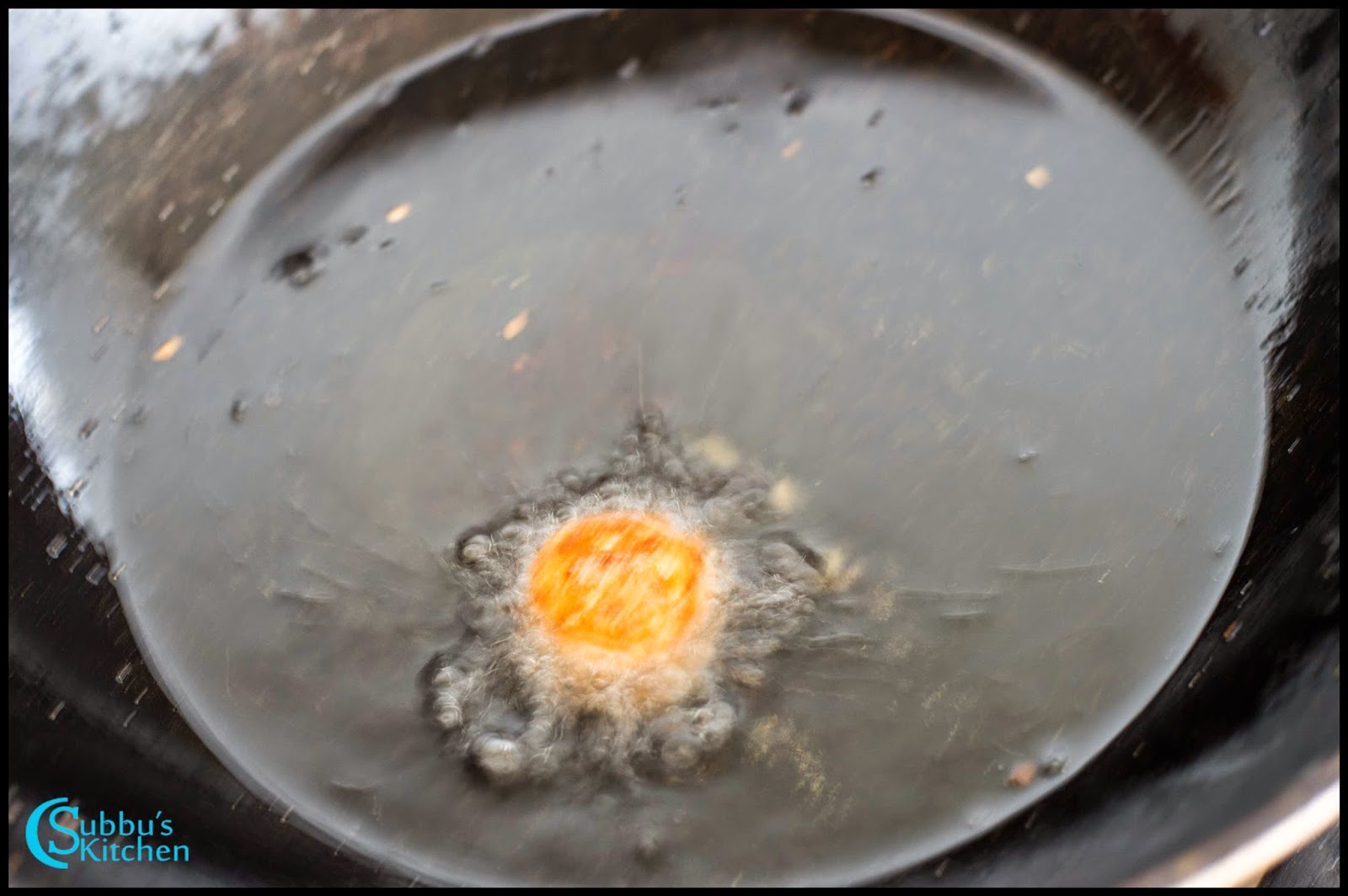
  9. Deep Frying: Ensure the oil is hot enough before dropping the vella seedai. Once the oil is hot, add 1 vella seedai ball and ensure its not splitting in oil. Do not panic if it splits, just adjust the dough by adding little roasted rice flour and then once again roll into ball and vella seedai will not split in oil.
  10. Oil Temperature:  We need to maintain right temperature of oil while frying. After adding vella seedai balls in oil, keep the flame in low and fry till the vella seedai becomes golden brown color. Between the batches adjust the flame to medium to ensure the oil is at right temperature.

Other Gokulashtami Recipes:

  1. Uppu Seedai
  2. Aval Kesari
  3. Aval Puttu
  4. Nei Appam

Recipe Card for Vella Seedai

Vella Seedai
Print

Vella Seedai | Sweet Seedai | Gokulashtami Recipes

Discover the sweet magic of Vella Seedai, a cherished treat for Krishna Jayanthi and Thirukarthigai festivals. Crispy on the outside, melt-in-the-mouth inside – explore the secrets to perfecting this divine sweet delight. Learn tips for flawless Vella Seedai preparation and relish its unique flavor and texture
Course Festival, Sweet
Cuisine Indian, South Indian, Tamil Nadu
Prep Time 5 minutes
Cook Time 30 minutes
Total Time 35 minutes
Servings 1 Cup
Calories 400kcal
Author Sowmya Venkatachalam

Equipment

  • Heavy Bottomed Pan

Ingredients

  • 1 Cup Homemade Rice Flour
  • 1 tablespoon Urad Dal Flour
  • 1 tablespoon Butter at Room Temperature
  • ½ Cup Grated Jaggery
  • 1 teaspoon Sesame Seeds
  • 1 tablespoon Grated Coconut
  • ¼ teaspoon Cardamom Powder
  • 2 Cups Oil For Deep Frying

Instructions

Prepare the Flours

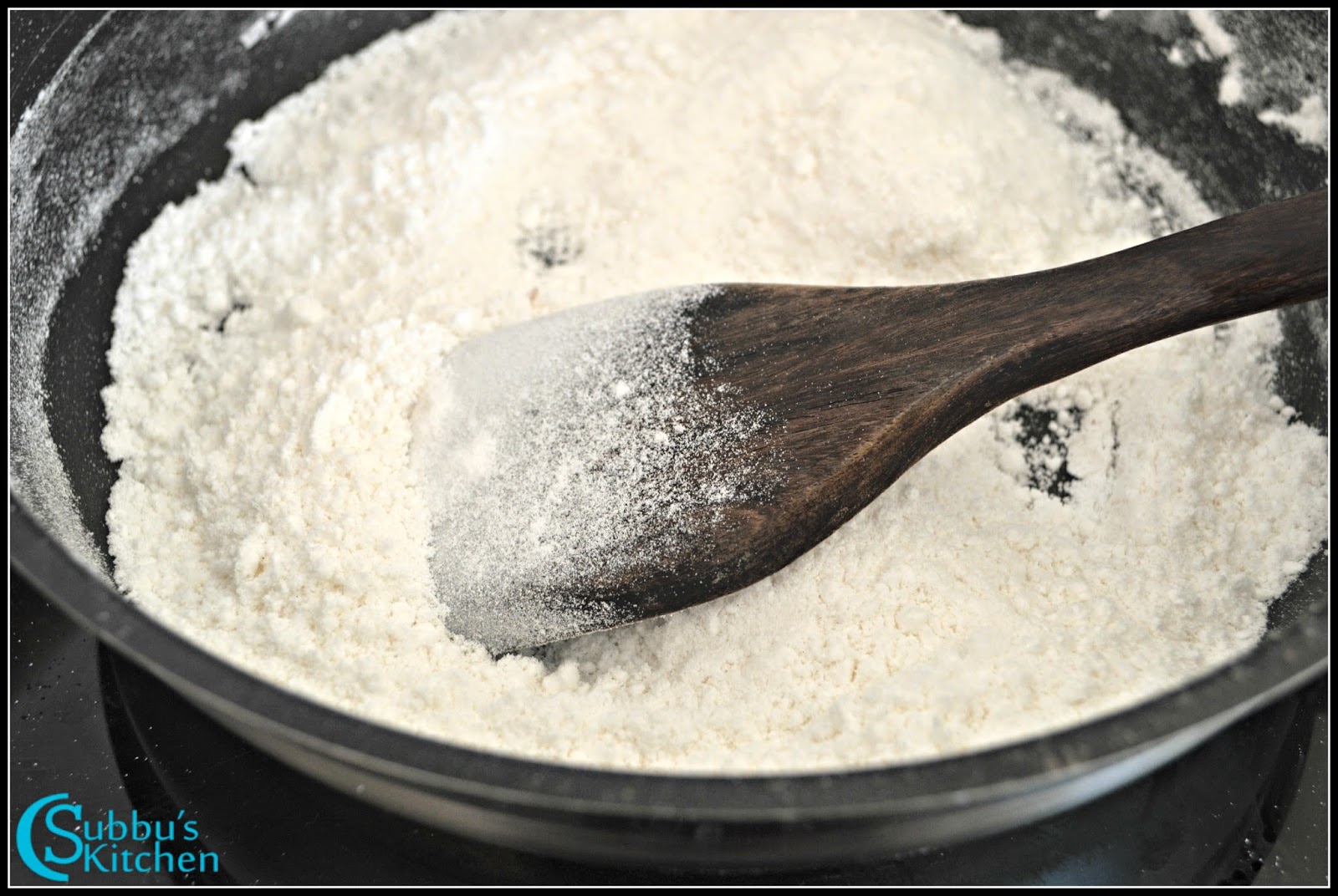
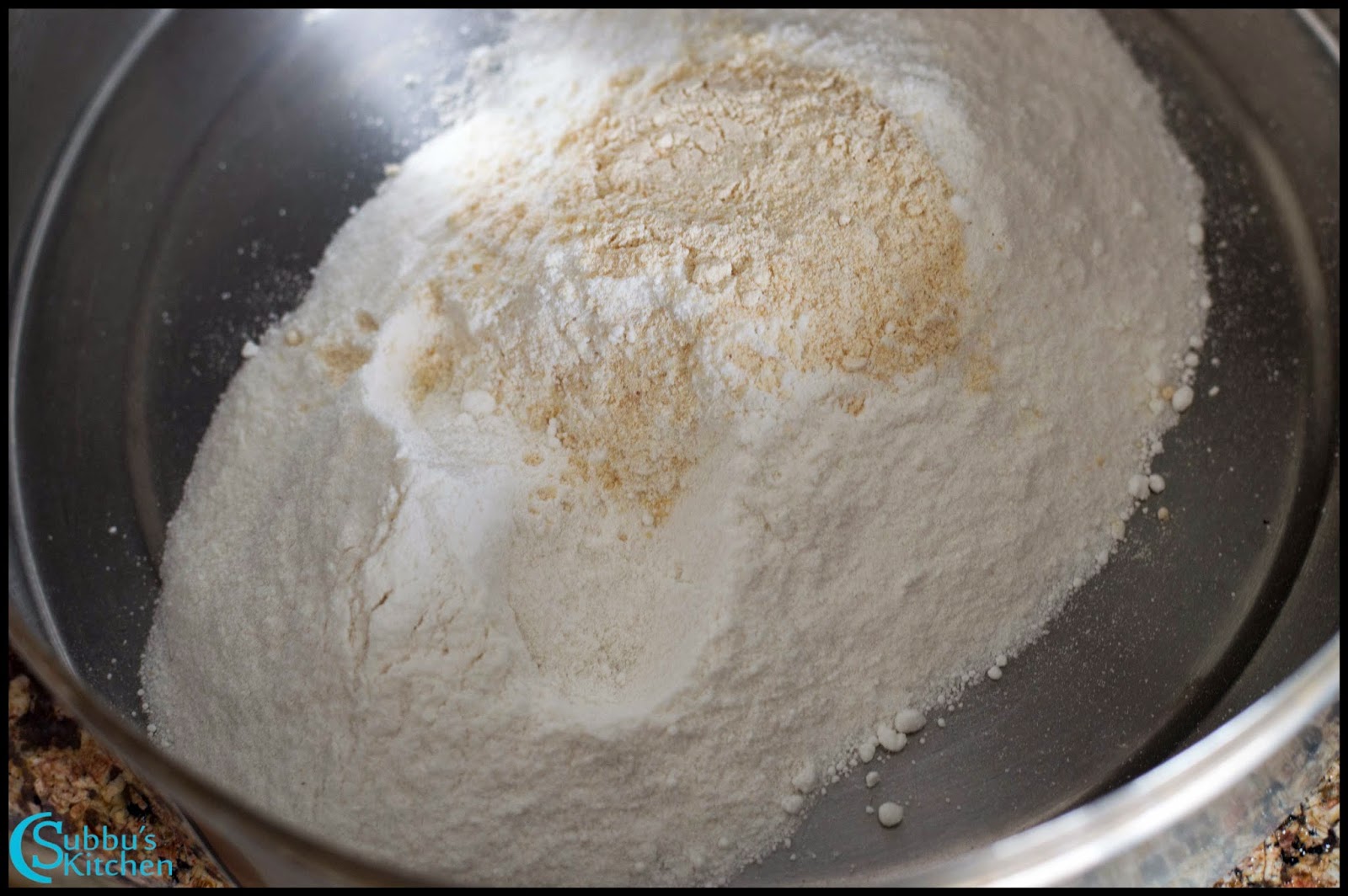
  • Prepare the rice flour as given in the link here. Heat a pan and dry roast the rice flour in low flame for couple of minutes. Do not fry the rice flour till they become over burnt. Just heat the flour till they are hot and if you take a pinch of rice flour you should be able to draw or put little kolam. Take the roasted rice flour in a mixing bowl along with uriddal flour. Dry roasting is an important step in vella sedai preparation. Do not use freshly ground rice flour as it contain some moisture which will make the seedai to burst. You can also use store bought rice flour. IF you are using store bought rice flour, then dry roast it for couple of minutes and then sieve it and again dry roast it for another couple of minutes without burning the rice flour. 

Prepare Sesame & Coconut

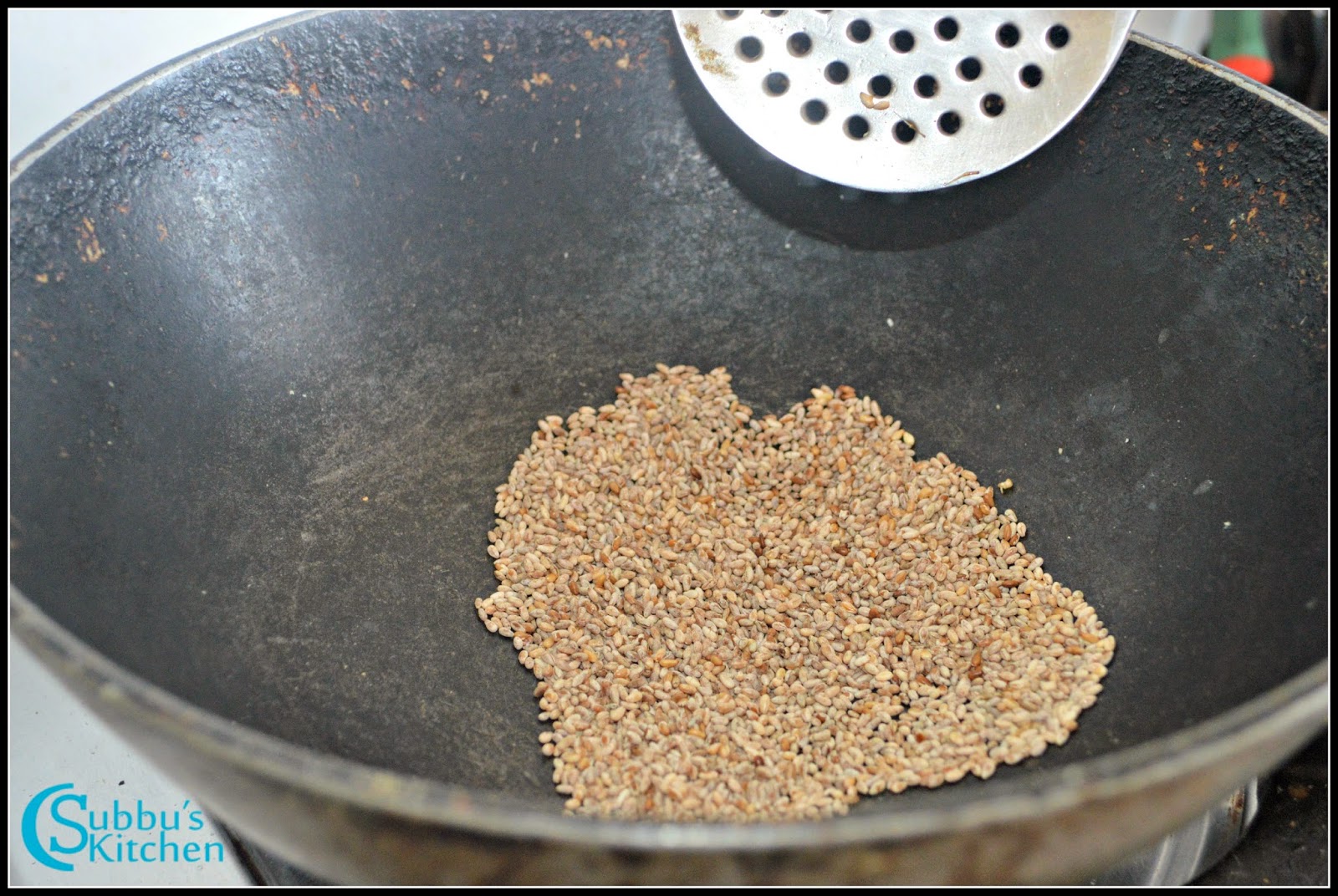
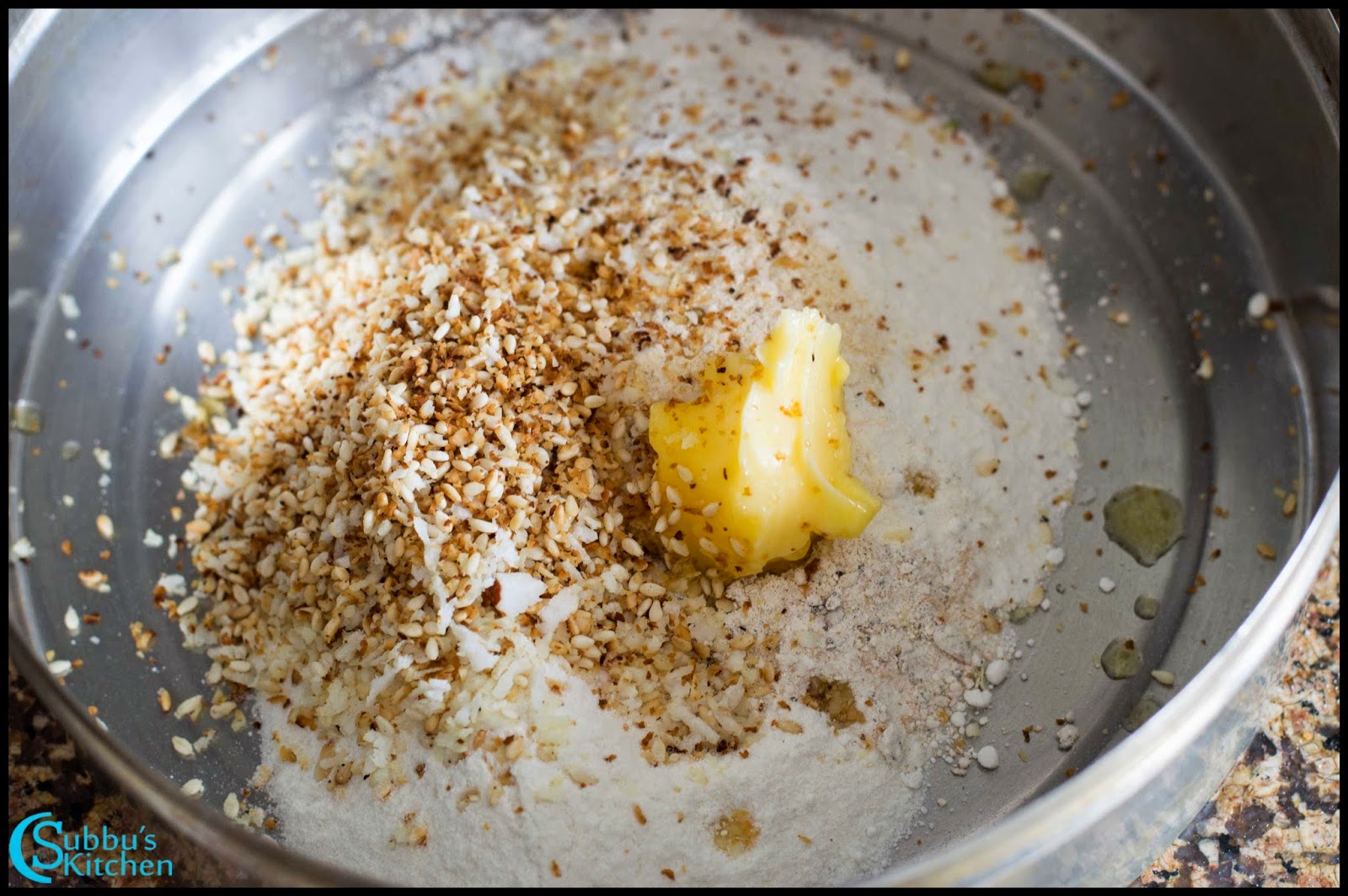
  • Take a pan, add sesame seeds and grated coconut and dry fry them till they become golden brown color. Add these fried sesame seeds and grated coconut to the rice flour along with butter. The butter should be in room temperature. Mix everything well.

Making Jaggery Syrup

  • Take grated jaggery in a bowl and add water just to soak the jaggery. I have added 2 tablespoon of water. Allow the jaggery to boil till it is dissolved. Pass this jaggery juice through a strainer to get rid of sand and other impurities
  • Add the strained jaggery juice to a pan and keep in flame till it comes a rolling boil. We don’t need any string or solid consistency. Add this jaggery juice to the rice flour and mix the rice flour well with a ladle or spoon. Make it to a right dough. If the dough is loose and soft then the seedai will dissolve in hot oil. So when you get a tough pliable dough then stop adding the jaggery syrup. Sometimes we might end up with dry dough where we may need to again sprinkle warm water and make it little soft. If the dough is too dry, then also the seedai will start to dissolve in oil. I have add 2 teaspoon of water to make the dough little soft.

Deep Frying Process

  • Make gooseberry sized balls out of the seedai dough. Keep it aside for few minutes before dropping in hot oil. Heat oil in  a pan. When the oil is hot enough, just drop a single seedai ball into the oil and in low flame deep fry them. Check if the seedai is not getting dissolved or not getting burst in the oil. If it does we may need to alter the seedai mixture. 
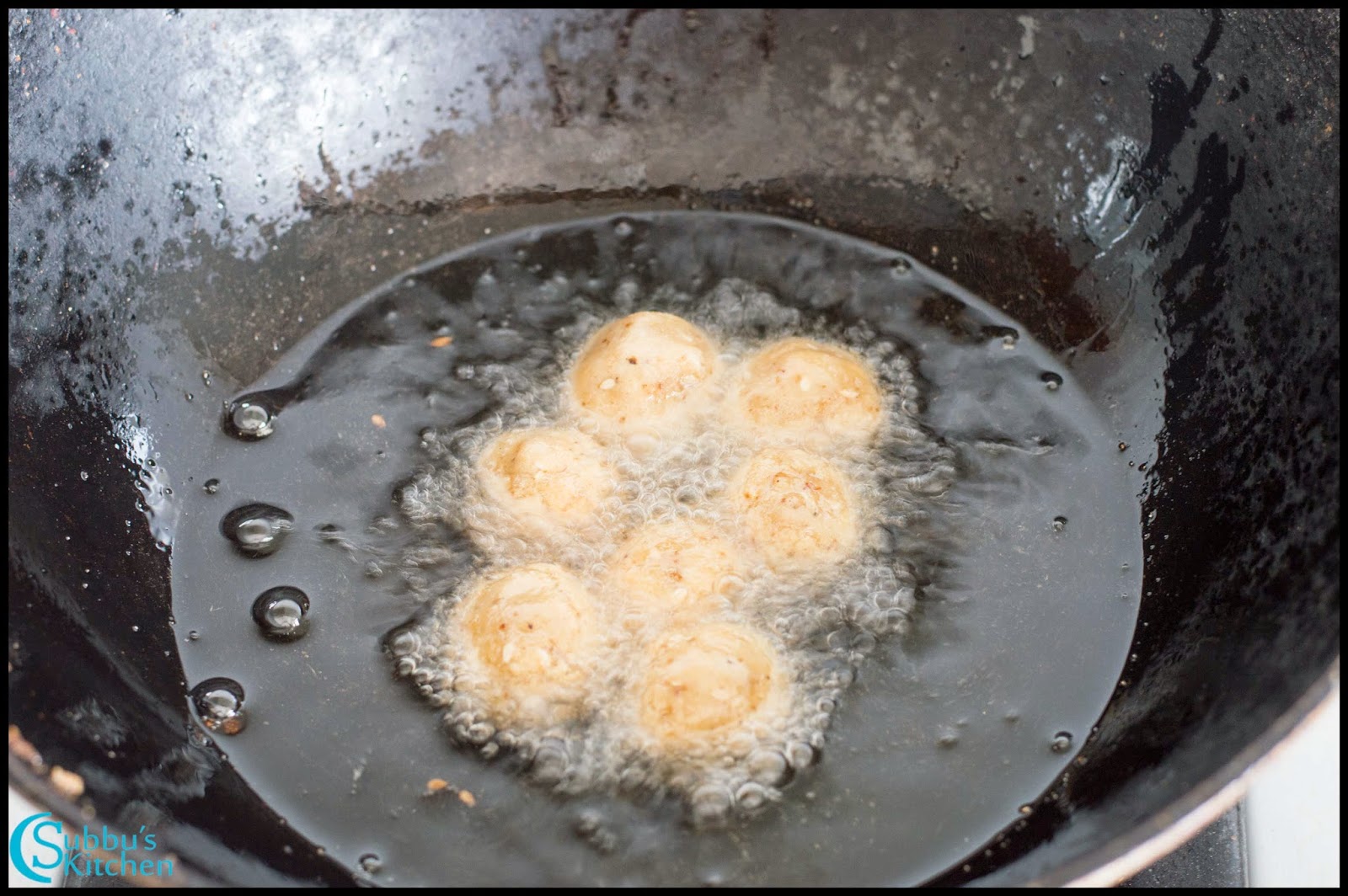
  • When you are sure that the seedai is not getting dissolved or burst, then drop 4-5 seedai in one batch and in low flame deep fry them till the seedai are crispy and light golden brown color. 
  • Remove the crispy seedai from flame and place it in a paper towel to drain the excess oil
  • Yummy and crispy vella seedai is now ready for neivedhyam or for serving.

Video

Notes

  • If the seedai is getting dissolved, it may be because of very dry ball and in that case, we need to sprinkle warm water little by little and make the dough little soft
  • If the dough is already very soft, then sprinkle rice flour little by little and mix well. 
  • If the seedai is bursting, then it may be due to the very coarse  rice flour or uriddal flour. 

Nutrition

Serving: 1Cup | Calories: 400kcal | Carbohydrates: 62g | Protein: 7g | Fat: 28g

Method with Step by Step Pictures :

  • Prepare the rice flour as given in the link here. Heat a pan and dry roast the rice flour in low flame for couple of minutes. Do not fry the rice flour till they become over burnt. Just heat the flour till they are hot and if you take a pinch of rice flour you should be able to draw or put little kolam. Take the roasted rice flour in a mixing bowl along with uriddal flour. Dry roasting is an important step in vella sedai preparation. Do not use freshly ground rice flour as it contain some moisture which will make the seedai to burst. You can also use store bought rice flour. IF you are using store bought rice flour, then dry roast it for couple of minutes and then sieve it and again dry roast it for another couple of minutes without burning the rice flour.
  • Take a pan, add sesame seeds and grated coconut and dry fry them till they become golden brown color. Add these fried sesame seeds and grated coconut to the rice flour along with butter. The butter should be in room temperature. Mix everything well.
  • Take grated jaggery in a bowl and add water just to soak the jaggery. I have added 2 tablespoon of water. Allow the jaggery to boil till it is dissolved. Pass this jaggery juice through a strainer to get rid of sand and other impurities
  • Add the strained jaggery juice to a pan and keep in flame till it comes a rolling boil. We don't need any string or solid consistency. Add this jaggery juice to the rice flour and mix the rice flour well with a ladle or spoon. Make it to a right dough. If the dough is loose and soft then the seedai will dissolve in hot oil. So when you get a tough pliable dough then stop adding the jaggery syrup. Sometimes we might end up with dry dough where we may need to again sprinkle water and make it little soft. If the dough is too dry, then also the seedai will start to dissolve in oil. I have add 2 teaspoon of water to make the dough little soft.
  • Make gooseberry sized balls out of the seedai dough. Keep it aside for few minutes before dropping in hot oil. Heat oil in  a pan. When the oil is hot enough, just drop a single seedai ball into the oil and in low flame deep fry them. Check if the seedai is not getting dissolved or not getting burst in the oil. If it does we may need to alter the seedai mixture.
    • Seedai is getting dissolved, it may be because of very dry ball and in that case, we need to sprinkle warm water little by little and make the dough little soft
    • If the dough is already very soft, then sprinkle rice flour little by little and mix well.
    • Seedai is bursting, then it may be due to the very coarse  rice flour or uriddal flour.
  • When you are sure that the seedai is not getting dissolved or burst, then drop 4-5 seedai in one batch and in low flame deep fry them till the seedai are crispy and light golden brown color.
  • Remove the crispy seedai from flame and place it in a paper towel to drain the excess oil
  • Yummy and crispy vella seedai is now ready for neivedhyam or for serving.

Vella Seedai Recipe | Sweet Seedai Recipe


The post Vella Seedai Recipe | Sweet Seedai Recipe appeared first on Subbus Kitchen.
Nei Appam (Ghee Appam)

Appam holds a special place as a neivedhyam dish during the Krishna Jayanthi festival, especially in the evening when we invite Lord Krishna into our homes. Nei Appam, a renowned delicacy from Kerala, is a popular choice for various occasions, including Avani Avittam, Karthigai Deepam, and other auspicious events. It also serves as a delightful evening or after-school snack for children.

The key ingredients in Appam are rice and jaggery. Initially, rice is ground to a thick consistency, and then jaggery juice is added to create the Appam batter. If the batter becomes too thin, a small amount of wheat flour can be used to adjust the consistency. It's worth noting that Appam can also be made with wheat flour and jaggery alone, omitting the rice flour. Nei Appam is a straightforward neivedhyam offering suitable for any festival or auspicious occasion.

You may also want to try :

  1.  Rava Appam - Rava Appam is a sweet which can be made instantly. We usually make this for the Karthigai Deepam. Unlike the conventional appam, Rava appam doesn't require soaking and grinding process. It's quick, easy and tasty.
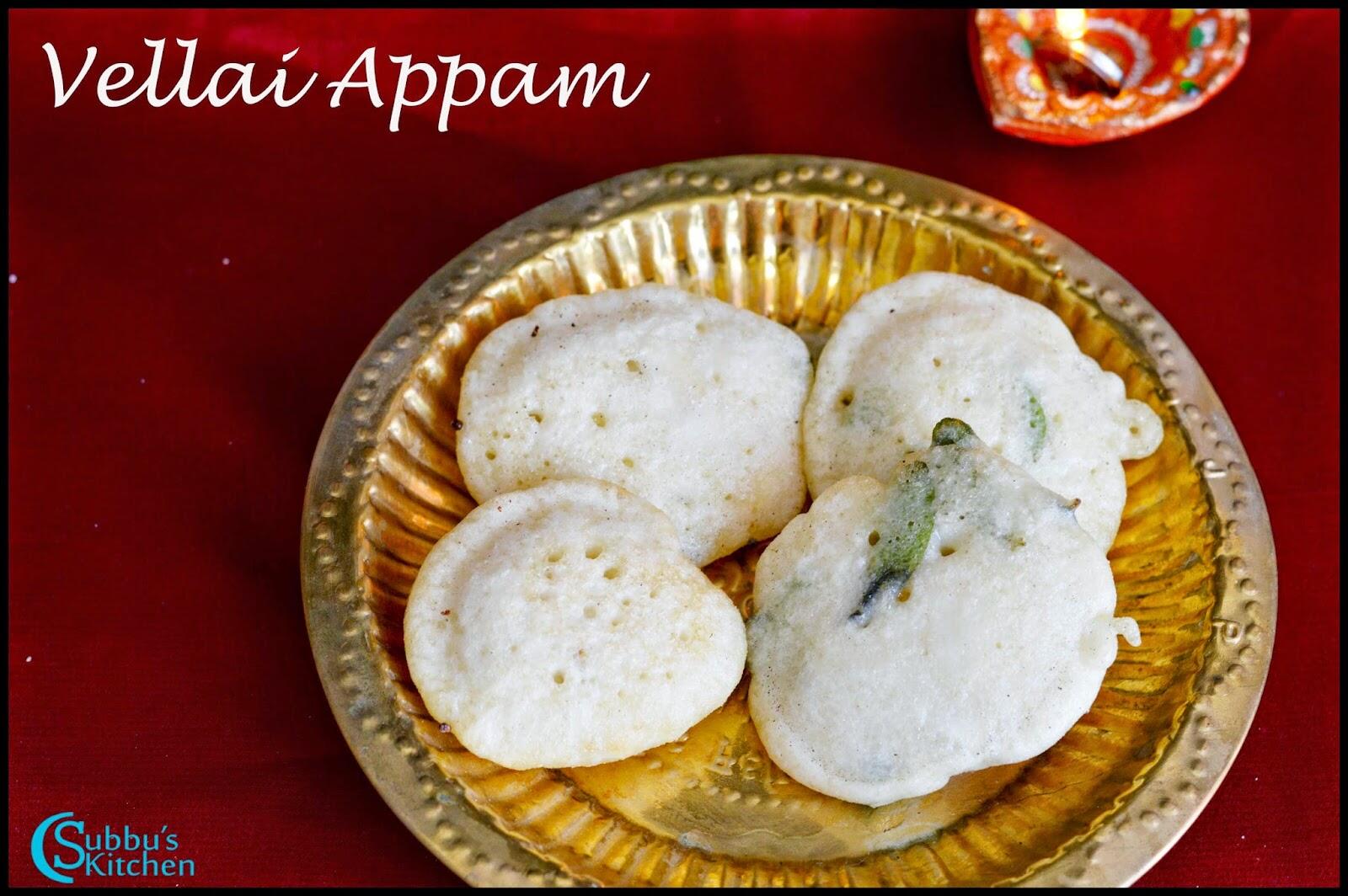
  2. Vellai Appam - Vellai Appam is a traditional prasad made for special occasions/festivals like "Karthigai Deepam" or Diwali. Vellai Appam is deep fried rice crepes.
  3.  Aval Kesari - Aval Kesari is similar to our conventional Kesari but made using Aval (Poha / Flattened Rice). This Kesari is quick to make with few available ingredients. This can be served as neivedhyam for the Gokhulashtami. This can also be served as a dessert for any festivals /occassions

Recipe Card for Nei Appam

Nei Appam
Print

Nei Appam | Ghee Appam

A delightful South Indian sweet treat! Explore the secrets to crafting these golden, ghee-infused rice flour sweet, perfect for festive occasions. Discover the unique flavor and fluffy texture of Nei Appam in this culinary journey.
Course Festival, Sweet
Cuisine Indian, Kerala, Tamil Nadu
Prep Time 5 minutes
Cook Time 25 minutes
Rice Soaking Time 1 hour
Total Time 1 hour 30 minutes
Servings 25 Appam
Calories 100kcal
Author Sowmya Venkatachalam

Equipment

  • Paniyaram Pan

Ingredients

  • 1 cup Raw Rice 1 cup = 250 ml
  • 1 cup Jaggery grated
  • 2 tablespoon Grated Coconut
  • 2 nos Banana small size
  • ¼ teaspoon Cardamom Powder
  • 1 pinch Baking Soda optional

Instructions

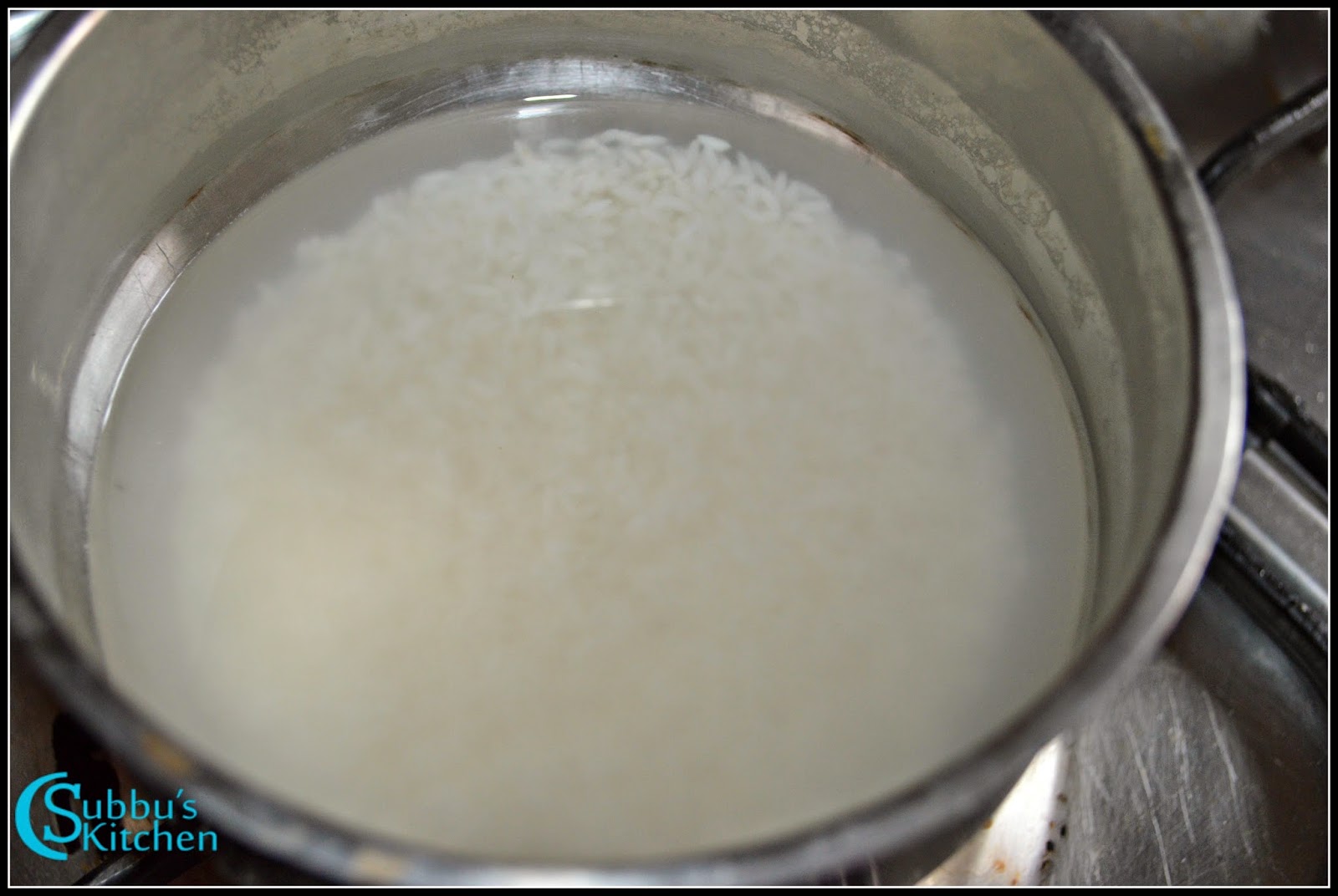
  • Rinse the rice twice and Soak the raw rice in water for an hour. After 1 hour, drain the water and add it to the mixer
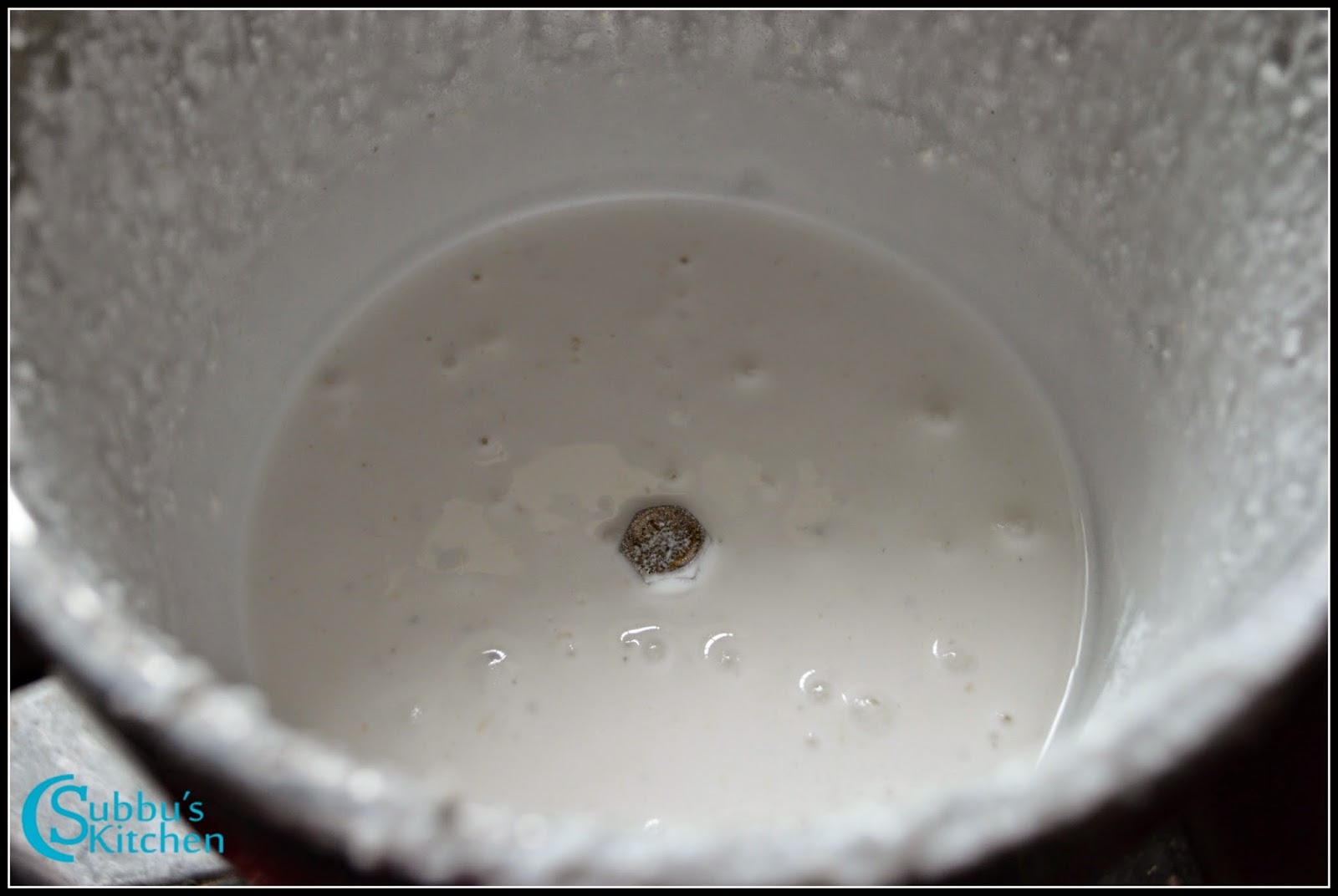
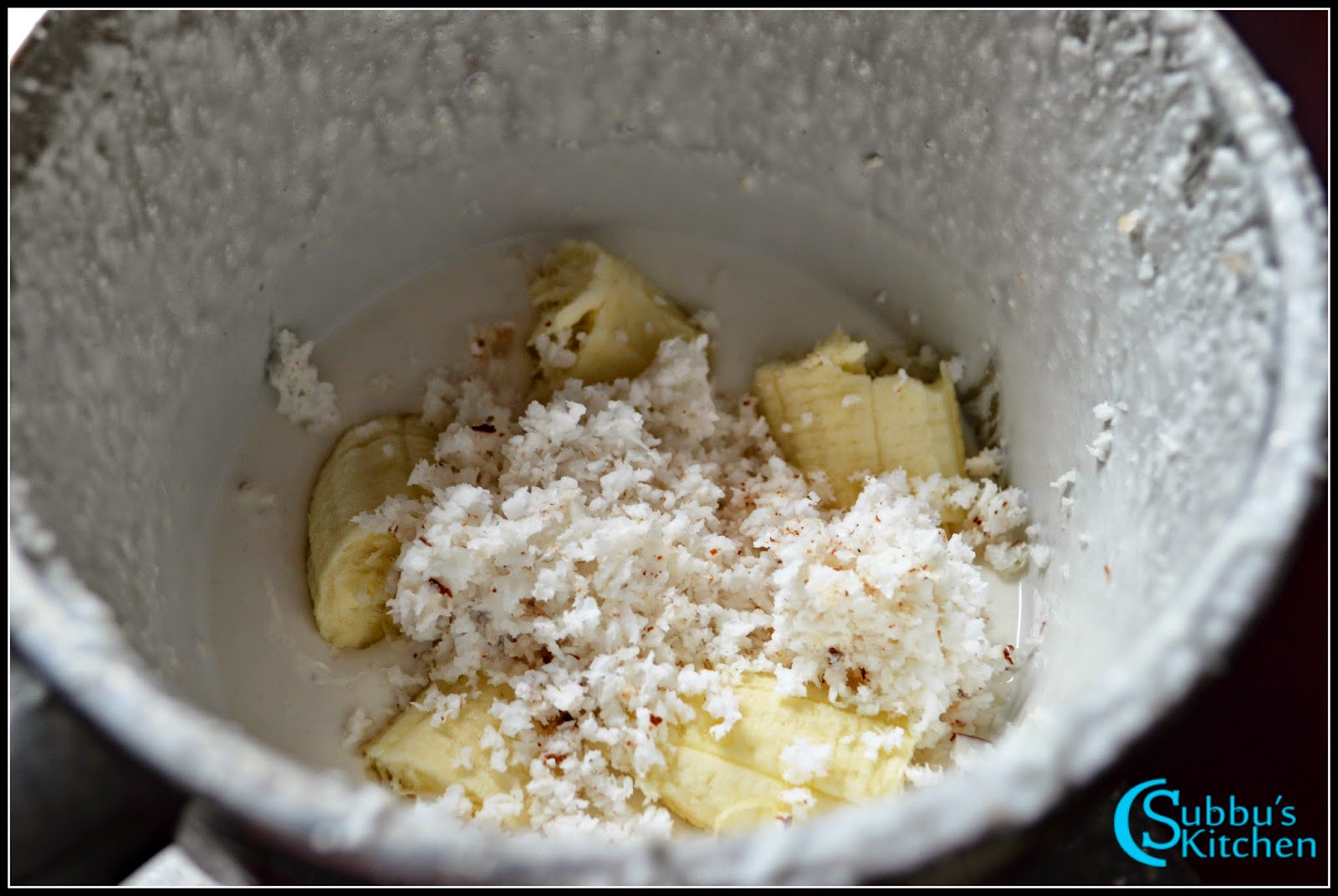
  • Grind it in mixer to a fine paste without adding water. Now add grated coconut,  banana, cardamom powder to the mixer
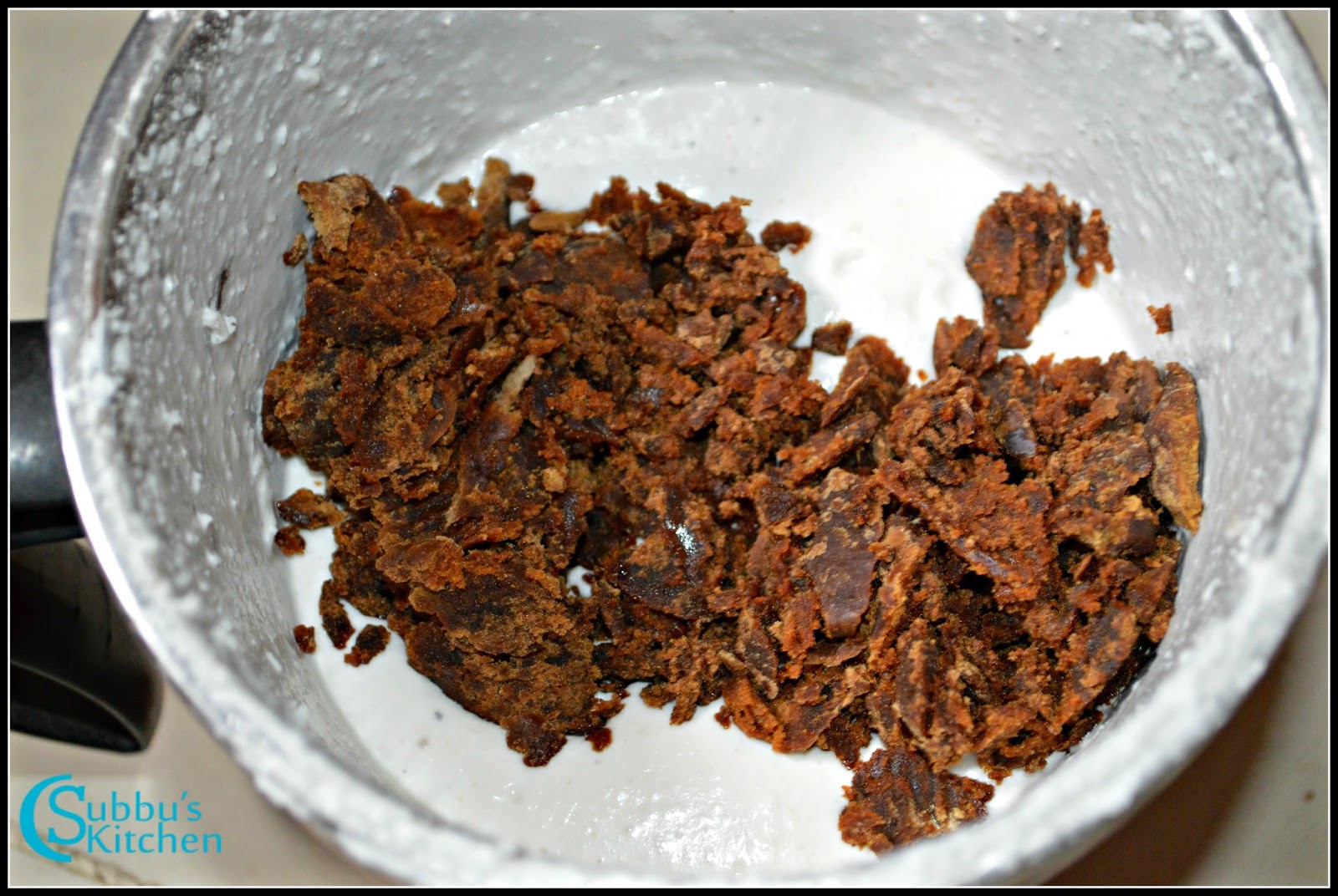
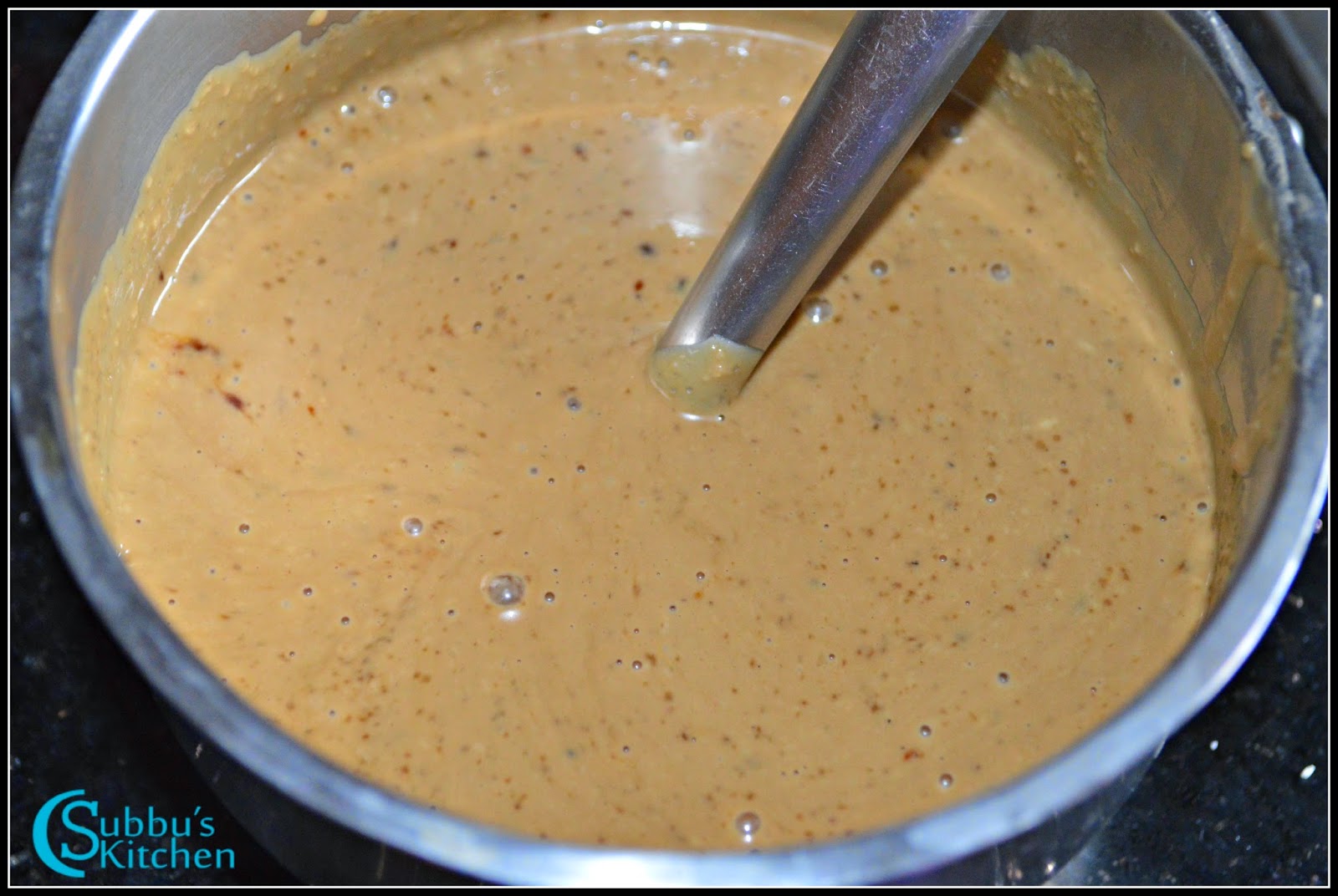
  • Grind it to a fine paste.  Finally add jaggery and give a pulse or two. If  you grind it more, the jaggery will dilute the appam batter. Now our appam batter is ready.
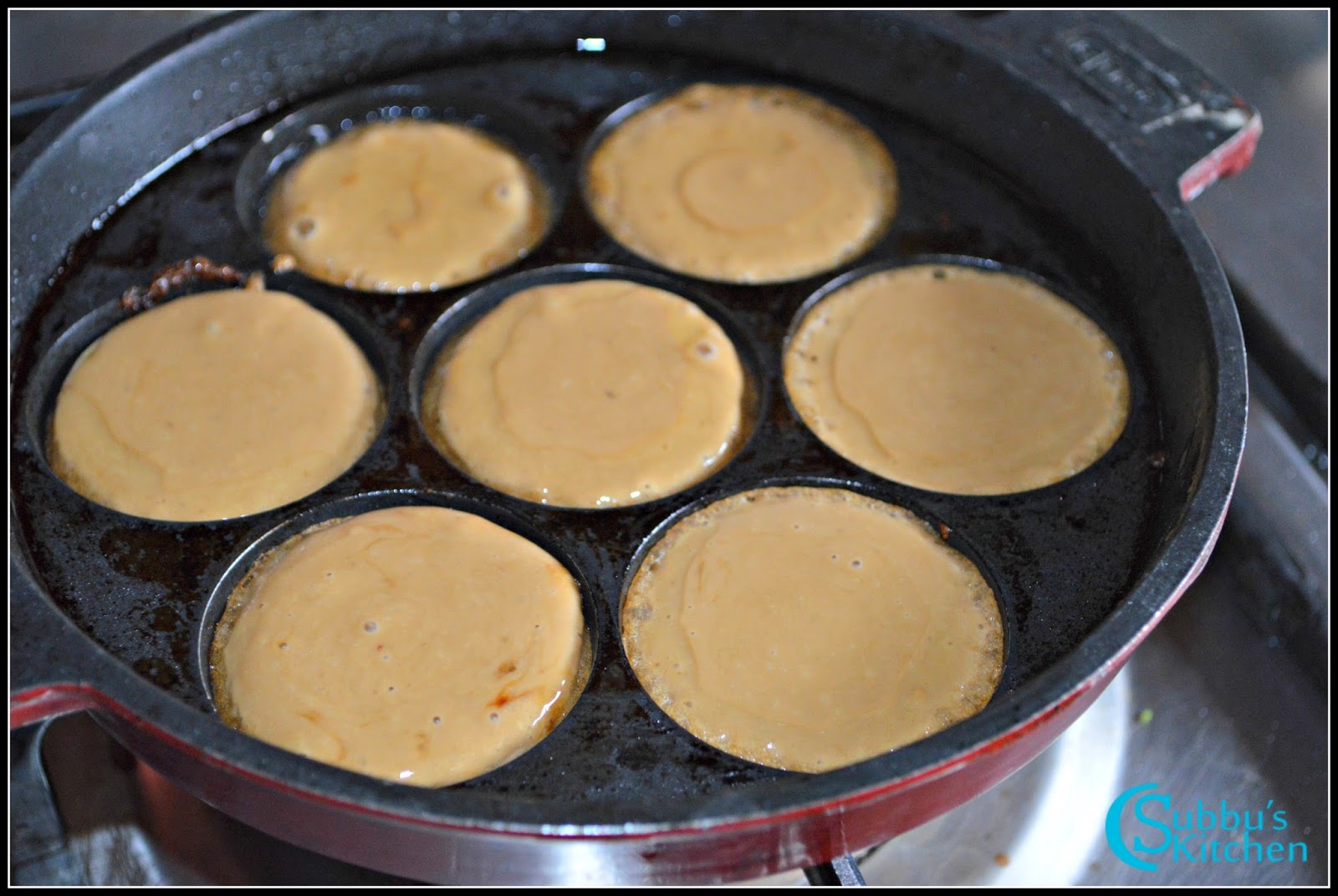
  • Now a days we have appakarai(Non stick Appam pan) which makes our job easier. Keep the nonstick appam pan in the flame and add little ghee to each kuzhi. When the pan is hot, take a small ladle and fill ¾th of each hole with the batter. 
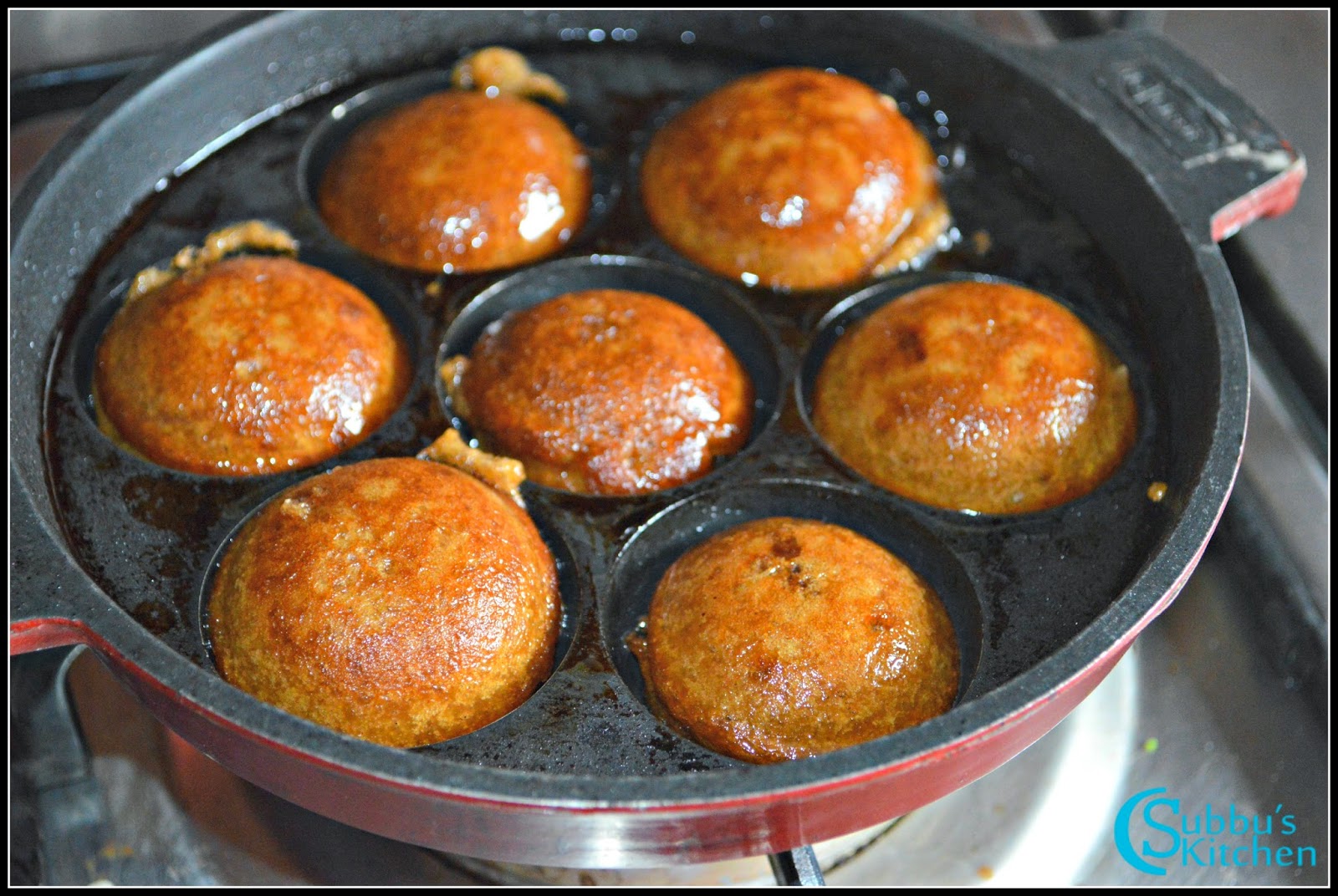
  • Let the Appam cook for a while and then when it turns golden brown color, remove the appam from the oil, and place it in a paper towel to drain excess oil. Repeat the above steps for the rest of the flour
  • The yummy Appam is ready for neivedhyam and for serving

Video

Notes

  •  Cooking soda helps in making appam softer and fluffy. We can also alternate with eno salt or we can also ignore this as this is only optional.
  • If the appam starts to break in the oil, add 2 teaspoon of wheat flour or rice flour to the ground appam flour and then try again
  • We used to get good quality jaggery few years back which do not need any straining of sand or stones. But nowadays most of the jaggery has stones or sand in it. So instead of grinding jaggery with the rice flour, we can add jaggery to pan and add just a teaspoon of water and allow it to dissolve and when the jaggery gets dissolved, we can strain the jaggery and add it to the rice batter and mix well. This way we can get rid of the stones. 
  • Always first add ghee before pouring appam batter in each mould. that way the batter will not stick to bottom and after it gets cooked, it will automatically float so we can flip and cook on other side

Nutrition

Serving: 1piece | Calories: 100kcal | Carbohydrates: 10g | Protein: 0.7g | Fat: 10g | Sodium: 1mg | Fiber: 1.1g | Vitamin A: 1420IU | Vitamin C: 0.3mg | Calcium: 60mg | Iron: 0.1mg

Method with step by step pictures :

  • Rinse the rice twice and Soak the raw rice in water for an hour. After 1 hour, drain the water and add it to the mixer
  • Grind it in mixer to a fine paste without adding water. Now add grated coconut,  banana, cardamom powder to the mixer
  • Grind it to a fine paste.  Finally add jaggery and give a pulse or two. If  you grind it more, the jaggery will dilute the appam batter. Now our appam batter is ready.
  • Now a days we have appakarai(Non stick Appam pan) which makes our job easier. Keep the nonstick appam pan in the flame and add little ghee to each kuzhi. When the pan is hot, take a small ladle and fill ¾th of each hole with the batter. Let the Appam fry for a while and then when it turns golden brown color, remove the appam from the oil, and place it in a paper towel to drain excess oil. Repeat the above steps for the rest of the flour
  • The yummy Appam is ready for neivedhyam and for serving
Appam
Appam
Note: If the appam starts to break in the oil, add 2 teaspoon of wheat flour or rice flour to the ground appam flour and then try again

The post Nei Appam (Ghee Appam) appeared first on Subbus Kitchen.
❌