Reading view

There are new articles available, click to refresh the page.

Key Updates On The US Crypto Market Structure Bill: What You Need To Know

The anticipated crypto market structure bill, or namely the CLARITY Act, designed to provide essential regulatory clarity for digital assets in the United States, is approaching critical dates in the Senate. However, it faces significant complexities related to stablecoin yield, conflicts of interest, and decentralized finance (DeFi).

Senate Divided On Crypto Market Structure Bill

Legal expert and Chief Legal Officer of Variant Jake Chervinsky, reports that the Senate is divided into two committees: Banking, which is handling the securities law aspect, and Agriculture, responsible for the commodities law portion. 

Both committees have published drafts of their work this fall, with the next step being markup, a process where hearings will be held to vote on amendments before sending the bill to the Senate floor for a full vote.

However, both committees are cautious and are unlikely to proceed with markup until they resolve ongoing disputes. Among these, three significant issues stand out.

The first major concern involves stablecoin yield. In the GENIUS Act, banks lobbied for a prohibition on interest payments, meaning stablecoin issuers cannot offer holders any form of interest or yield. 

While the current prohibition prevents direct yield payments to holders, it does not address non-yield rewards or yield provided by third parties. Banks consider this gap a “loophole” and are advocating for broader restrictions to be included in the market structure bill. 

Conflicts Of Interest And DeFi Regulations Stall Progress

The second issue revolves around conflicts of interest. Some Democratic senators have indicated they would not support the market structure legislation unless it includes provisions that restrict the President’s family from conducting business in the crypto space. 

The third and perhaps most crucial issue pertains to DeFi. It is important to note that market structure legislation primarily addresses centralized platforms that exercise custody over user funds and transactions. 

Chervinsky believes the bill should primarily focus on protecting DeFi, but traditional finance (TradFi) stakeholders have been pushing Congress to categorize virtually all entities in the crypto sector—developers, validators, and others—as intermediaries. 

The expert emphasized that the success of any market structure bill hinges on ensuring robust protections for developers since the viability of the crypto industry relies on their contributions. 

Given the intricate nature of these issues and the swiftly approaching holiday break, Chervinsky noted that it is possible that discussions about market structure could extend into January. 

Senate Markup Set For December 17-18

Market analyst MartyParty provided another update on December 4, indicating that the bipartisan Digital Asset Market Structure Bill is gaining significant momentum in Congress, with a markup session in the Senate Banking Committee tentatively scheduled for December 17-18, just before the holiday recess

If successfully passed, he states that the bill could establish clearer pathways for tokenized real-world assets (RWAs) and mitigate “debanking” risks, paving the way for compliant exchanges and potentially stimulating market volumes following the Commodity Futures Trading Commission (CFTC) approvals for spot crypto trading. 

This “regulatory convergence” is seen as a catalyst that could drive liquidity and energize the next bull market, reinforcing President Trump’s vision for the US to emerge as the “crypto capital of the world.”

Crypto

Featured image from DALL-E, chart from TradingView.com 

Leveraging the Revolutionary FAR Overhaul

This column was originally published on Roger Waldron’s blog at The Coalition for Common Sense in Government Procurement and was republished here with permission from the author.

On Nov. 3, Jeff Koses, the General Services Administration’s senior procurement executive, posted an article on LinkedIn announcing that the “RFO is in play.” The article highlighted that GSA, the U.S. Department of Agriculture, and the Department of Homeland Security had issued all the deviations with Nov. 3 as the effective date for the changes. A new era begins for the Federal Acquisition Regulation as agencies and departments continue to work towards implementing the RFO deviations and updating their supplemental acquisition regulations. The procurement policy teams responsible for drafting the deviations, the Practitioner’s Albums, and the FAR Companion deserve praise for the thoughtful, integrated, and comprehensive effort. The streamlined RFO is an improvement on the FAR, providing a clear, concise, and coherent acquisition framework for government and industry.

As we know, the next phase of the process, the public rulemaking, is critical to the long-term success of the RFO. The rule making process provides the public, including key stakeholders across the procurement community, with the formal opportunity, consistent with law, to comment on the deviations in the form of proposed or interim rules. A robust, transparent process will ensure that the deviations become final rules, cementing the RFO. The Coalition for Common Sense in Government Procurement’s members look forward to the start of the public rule making phase and the opportunity to formally comment on the revised FAR.

The RFO is central to improving the efficiency and effectiveness of the procurement system. The FAR establishes the ground rules for government and industry transacting business in support of agency missions. The RFO streamlines and clarifies the ground rules thereby increasing competition and access to the commercial market.

Leveraging the RFO to deliver best value mission support for customer agencies and the American people centers on three critical elements: (1) requirements development (2) the acquisition workforce; and (3) operational commercial best practices. 

1. Developing Sound Requirements

Clear, concise, and well communicated requirements are foundational to successful procurement outcomes that deliver best value mission support. Program offices must play a central role in developing requirements. In this regard, coordination between senior program managers and contracting officers drives effective requirements development for complex requirements. Part and parcel of requirements development is market research. Understanding the capabilities and technologies in the commercial market will inform sound requirements. Too often, government requirements reflect a “Hail Mary” approach that seeks a capability well beyond what is currently commercially available rather acquiring the 80 percent commercial solution that can meet mission needs. As with most “Hail Marys” these requirements often end unfulfilled and undelivered.

Finally, today’s outcome-based contracts are yesterday’s performance-based contracts. The administration rightly has identified outcome-based requirements as a strategy that can increase competition, improve performance and achieve greater savings. The long-standing challenge of outcome-based contracting is the articulation and implementation of clear outcomes and associated measures to support contractor performance and government contract administration. It all starts with the statement of objectives. Management focus on and investment in outcome-based requirements development is a commercial best practice. The government should look to emulate this commercial best practice to unlock the positive potential of outcome-based contracting. Perhaps leveraging technology (e.g. artificial intelligence) for data analysis and analytics can support the government’s requirements development process.

2. Embracing The Acquisition Workforce

The RFO vests greater discretion to the contracting officer. Some of the commentary around the RFO has raised the potential of increased inconsistency in contracting operations due to greater discretion. The Practitioner’s Albums, FAR Companion, and Category Management Buying Guides are the starting point for the acquisition workforce. As the implementation of the RFO moves forward, translating real life experience with the revised ground rules into a set of operational best practices will be important in fostering consistency. Further, consistent, strategic investments in acquisition training and professional development will enhance sound decision making. Finally, management support and corresponding lines of authority in contracting operations will foster consistency and accountability in the process.

3. Adopting Commercial Best Practices in Procurement Operations  

The hallmark of the RFO is its leveraging of the commercial market. The RFO reduces the number of clauses applicable to commercial contracts, strengthens the preference for commercial products and services, and streamlines the overall procurement process. As a policy statement, the RFO recognizes that access to, and competition from the commercial market drives innovation, efficiency, and increases value for the government mission.

Adopting commercial best practices in procurement operations is the third key element in leveraging the RFO to deliver best value mission support for the American people. For example, as mentioned above, it is a commercial best practice to invest significant time and resources in requirements development. Sound outcome-based requirements are the blueprint for success. Vigorous competition for sound requirements is the single most effective way to drive value for the taxpayer. Avoiding government-unique, noncommercial practices is the other side of the coin. Operational practices that overregulate or reregulate the procurement process will limit competition, reduce access to the commercial market, and undermine mission support. It will be incumbent at the operational level to embrace commercial best practices while avoiding/eliminating noncommercial practices that undermine the efficiency and effectiveness of the procurement process.

The post Leveraging the Revolutionary FAR Overhaul first appeared on Federal News Network.

© Federal News Network

Roger Waldron, host of Off the Shelf.

A New Era Begins: CFTC Approves Spot Bitcoin On Regulated US Markets

Regulators in Washington on Thursday cleared a major step that lets Americans trade spot Bitcoin and other cryptocurrencies on federally registered exchanges for the first time.

According to the Commodity Futures Trading Commission, listed spot crypto products may now be offered on exchanges registered with the agency, a move announced on December 4, 2025.

Regulated Spot Trading Begins

The action comes from a CFTC press release labeled Release No. 9145-25 and that the change allows spot crypto contracts to be listed on futures exchanges that are registered with the CFTC.

The regulator said its rules now permit such listings to trade under the oversight and surveillance standards those exchanges already follow.

.@CFTCpham Announces First-Ever Listed Spot Crypto Trading on U.S. Regulated Exchanges: https://t.co/89Mx6f0ss4

— CFTC (@CFTC) December 4, 2025

Bitnomial Leads The Way

Bitnomial, a Chicago-based derivatives exchange, is set to be the first exchange to list such products, with plans to offer both leveraged and non-leveraged spot trading on its platform.

Market notices and statements show Bitnomial moved quickly to use the new framework, announcing a launch and filings that position it as the first US venue to trade listed spot crypto under CFTC rules.

What This Means For Investors

According to market commentators and reporting, the shift brings spot trades under long-standing market protections like clearing, surveillance and execution rules that apply to other listed products.

That can make some institutional players and big funds more willing to trade onshore. At the same time, regulators say this is meant to pull activity away from unregulated offshore venues and improve market oversight.

Acting Chairman Caroline Pham said the move is meant to strengthen the US position in the crypto market while giving traders access to safer and more transparent trading venues.

Risks Remain

Reports have disclosed that the change does not remove the underlying risks of crypto: prices can swing widely, and no regulatory move can stop market volatility.

Also, only exchanges that seek and obtain the proper CFTC registration will be able to use this route, so most offshore platforms remain outside US oversight for now.

Next Steps

Observers will be watching whether other US exchanges follow Bitnomial, how many retail investors gain access, and how the SEC responds on parallel issues such as token classification and custody rules.

The CFTC had flagged this pathway in August as part of a broader initiative to allow listed spot crypto trading, and agencies have since coordinated on guidance and public engagement.

The CFTC’s Acting Chairman said this brings spot crypto trading into a regulated setting Americans can trust, and that exchanges with the right protections can now list these products.

This development is part of a months-long policy push by the administration to create clearer rules for digital assets.

Featured image from Barron’s, chart from TradingView

Record $12M Crypto Donation to Reform Rocks UK Politics as Government Weighs Ban

Reform UK has landed its biggest donation yet, after receiving £9 million ($12 million) from crypto investor and aviation businessman Christopher Harborne, according to newly released figures from the Electoral Commission.

The sum is now the largest single political donation ever made by a living person to a UK political party.

Harborne, a British investor living in Thailand, has long been active in UK political donations. He donated heavily to the Conservatives during Boris Johnson’s time in office and also supported the Brexit Party, which later became Reform UK, in both 2019 and 2020.

Two companies tied to him, AML Global and Sherriff Group, operate in the private aviation sector.

Harborne’s £9M donation Reshapes UK as Crypto Money Enters UK Politics

Harborne’s donation comes at a time when, as the next general election is not due until 2029, but local elections are scheduled for May. It also comes as Reform UK has remained at the top of several national opinion polls since the spring.

Harborne’s £9 million donation breaks the previous record of £8 million, which was set in 2019 by supermarket heir Lord David Sainsbury in support of the Liberal Democrats.

Separately, Lord John Sainsbury left £10 million to the Conservatives through his will in 2022.

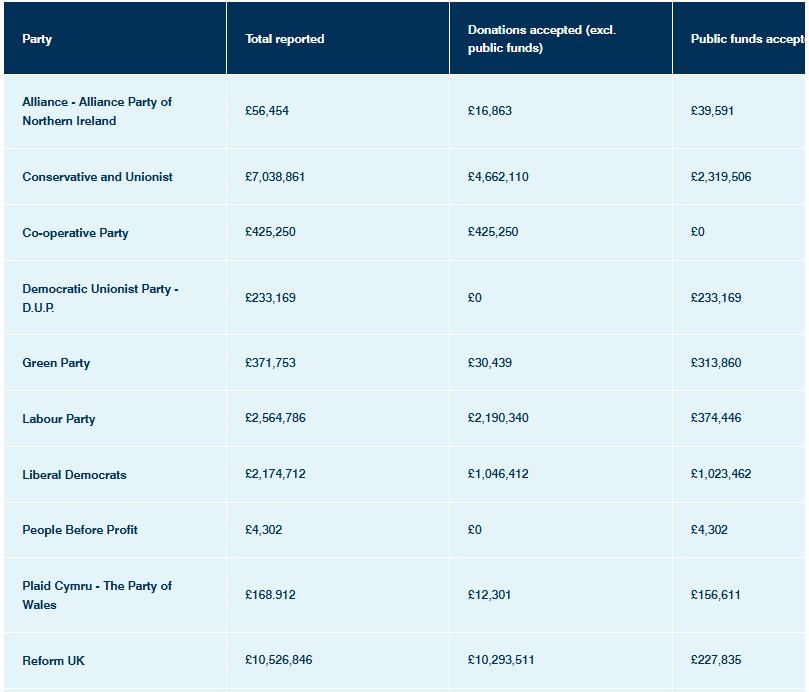
Figures released by the UK Electoral Commission show that Reform UK raised more than £10.2 million between July and September, over twice the amount collected by the Conservatives in the same period, which brought in £4.6 million.

Source: Electoral Commission UK

Labour brought in £2.1 million, and the Liberal Democrats reported £1 million. This makes it the first full quarter in which Reform will outpace Conservatives in fundraising since the general election in 2024.

Still, the longer-term numbers slightly favor the Conservatives, showing that since July 2024, they have raised around £14.4 million in total, compared with Reform’s £13.5 million.

Conservative leader Kemi Badenoch downplayed the impact of Harborne’s contribution, describing it as a “one-off” and insisting her party remains stronger when it comes to steady, repeat donors

Beyond fundraising, the donation has reignited debate around the role of cryptocurrency in UK politics.

In May, Reform leader Nigel Farage announced that the party would begin accepting Bitcoin donations, making it the first UK political party to do so.

The party later launched a dedicated digital donation portal and confirmed that it had already received a small number of crypto contributions, the first recorded instance of such donations in British political history.

Foreign Influence Fears Drive UK Review of Crypto Political Funding

That decision is now under increasing political scrutiny. The UK government says it’s now looking into whether cryptocurrency donations should be blocked entirely for political parties.

While no formal proposal has been confirmed, officials say discussions are underway across Whitehall about it, driven by rising concerns over transparency and the risk of foreign interference in British politics.

🚨 UK considers crypto political donation ban, threatening @Nifel_Farage Reform UK’s campaign and fundraising amid foreign interference and money-laundering concerns.#UKPolitics #ReformUK https://t.co/WBR07U05bb

— Cryptonews.com (@cryptonews) December 2, 2025

Additionally, security specialists caution that while blockchain records are public, the real origin of funds can still be obscured through layered wallets, intermediaries, and offshore structures.

The debate gained urgency after former Reform Wales leader Nathan Gill was convicted and sentenced to over 10 years in prison for accepting payments to push pro-Russian narratives while serving as a Member of the European Parliament.

The Ministry of Housing, Communities and Local Government, which is leading work on the Elections Bill, has also warned that existing rules leave the political system exposed to covert foreign influence.

Proposed changes are expected to focus on donations funneled through shell companies and to introduce stricter risk checks for politically sensitive contributions.

The discussion unfolds as the UK moves ahead with its wider digital asset rules. On December 3, Parliament passed a law recognizing cryptocurrencies and stablecoins as legal property for the first time under UK law.

The post Record $12M Crypto Donation to Reform Rocks UK Politics as Government Weighs Ban appeared first on Cryptonews.

Spot Crypto Assets Get Nod For Trading On CFTC-Registered Futures Exchanges

The US Commodity Futures Trading Commission (CFTC) announced on Thursday that spot crypto asset contracts will soon be available for trading on futures exchanges that are registered with the agency, aligning with the positive regulatory changes championed by President Donald Trump’s administration. 

Crypto Sprint Progress

The CFTC disclosed that this recent decision follows recommendations from the President’s Working Group on Digital Asset Markets and insights gathered from the CFTC’s Crypto Sprint initiative, as well as collaborative efforts with the Securities and Exchange Commission (SEC). 

Acting CFTC Chairman Caroline Pham highlighted the importance of providing Americans with access to safe and regulated markets, stating, “Recent events on offshore exchanges have shown us how essential it is for Americans to have more choice and access to safe, regulated US markets.”

In addition to the introduction of spot trading, the Crypto Sprint initiative includes measures to enable tokenized collateral—such as stablecoins—within derivatives markets. 

The CFTC also plans to implement regulatory updates to facilitate the use of blockchain technology in various operational areas, including collateral, margin, clearing, settlement, reporting, and recordkeeping.

Historic Shift In CFTC’s Digital Asset Trading Move

Market expert MartyParty on social media stated that this latest move is an historic decision that will empower retail and institutional traders to buy, sell, and leverage crypto assets directly on CFTC-registered exchanges. MartyParty further noted:

It’s the culmination of years of regulatory groundwork, including a joint SEC-CFTC statement clarifying that existing laws already permit such trading on registered venues.

Pham remarked on the collaborative efforts of the administration, stating that President Trump’s leadership has fostered a comprehensive plan for the US to reclaim its status as a global leader in digital asset markets. As she noted, “The CFTC has a central role to play” in this initiative.

Crypto

Featured image from DALL-E, chart from TradingView.com 

Regulators Order Bitcoin ATM Giant Coinme to Repay $8M, Halt Operations

Washington state’s Department of Financial Institutions (DFI) has ordered Bitcoin ATM operator Coinme to halt all money transmission services and repay over $8 million to customers. The regulator issued a Temporary Cease and Desist Order on December 1, 2025, alleging the Seattle-based firm illegally converted unredeemed customer funds into corporate revenue.

The DFI’s investigation found that Coinme required customers to purchase paper vouchers at kiosks and redeem them online. When vouchers went unredeemed within a specific timeframe, Coinme allegedly claimed the outstanding balances as its own income, a violation of the state’s Uniform Money Services Act.

“Washington’s money transmission laws exist to protect consumers that rely on licensed companies to safely transmit funds,” DFI Director Charlie Clark stated.

Is Bitcoin ATM Operator Coinme About to Lose Its License?

The order also charges that from 2020 to 2025, Coinme failed to maintain its legally required tangible net worth, submitted inaccurate reports, and did not properly disclose redemption timeframes to users.

Coinme now faces a potential revocation of its state money transmitter license, a $300,000 fine, and a possible 10-year industry ban for the company and its CEO, Neil Bergquist. The company has 20 days to request a hearing before the order becomes permanent.

In a statement, Coinme Chief Compliance Officer Ben Enea said the company is cooperating with regulators.

The Institutional Take

This action against Coinme is a significant escalation in the regulatory campaign targeting the operational grey areas of crypto-to-fiat gateways. For institutional desks, the key risk is not the solvency of one ATM operator but the precedent it sets for the treatment of customer funds held in limbo.

Regulators are clearly signaling an end to the tolerance of treating unclaimed crypto assets as breakage or miscellaneous income. This move pressures all consumer-facing crypto services to tighten their accounting, escheatment, and disclosure policies, introducing new compliance overhead that could compress margins for the entire sector.

The post Regulators Order Bitcoin ATM Giant Coinme to Repay $8M, Halt Operations appeared first on Cryptonews.

Taiwan Eyes First Stablecoin Debut In 2026 As Regulatory Framework Advances

As the sector continues to gain global momentum, Taiwanese authorities have announced that a locally issued stablecoin could be launched next year, pending the imminent approval of the country’s regulatory crypto framework and related legislation.

First Local Stablecoin To Debut Next Year

On Wednesday, Taiwan’s Financial Supervisory Commission (FSC) Chairman Peng Jin-long revealed that the island’s first regulated stablecoin could debut in the latter half of 2026, local news outlet Focus Taiwan reported.

The FSC chair affirmed that the Virtual Assets Service Act (VASA), which incorporates stablecoin regulation, could be passed during its third hearing in the next legislative session, scheduled for this week, after clearing initial reviews with a “high level of consensus.”

After the framework’s approval, stablecoin-centered regulations would be developed within six months, setting the launch of a locally issued token pegged to the New Taiwan Dollar (NTD) or the US Dollar (USD) to the second half of the year.

The VASA supports the efforts by Taiwanese authorities to establish a comprehensive crypto framework that promotes industry growth and safeguards investors. Last year, the FSC announced an overhaul of the Anti-Money Laundering (AML) framework to include crypto businesses, introducing stricter AML guidelines for Virtual Asset Service Providers (VASPs) and requiring all crypto firms to complete the AML registration by September 2025.

In January, Peng stated that investors could have a “convenient” entrance to crypto assets in the future through stablecoins, which could serve as a bridge between the country’s legal tender and virtual currency.

In March, the FSC published the finalized draft of its landmark crypto legislation, which the VASA’s draft proposed authorizing banks to issue stablecoins pegged to the New Taiwan Dollar or the US Dollar.

Meanwhile, Premier Cho Jung-tai and Central Bank Governor Yang Chin-long recently expressed support for a formal Bitcoin (BTC) policy, pledging to study the flagship cryptocurrency as a strategic reserve asset, accelerate pro-BTC rulemaking, and pilot treasury exposure through government-seized assets.

Taiwan Sets Financial Institutions’ Role

At the legislative hearing, the FSC’s chair highlighted that the bill’s draft draws from the European Union (EU)’s Markets in Crypto-Assets Regulation (MiCA). He explained that the Virtual Assets Service Act doesn’t require stablecoins to be issued exclusively by financial institutions, which has been a divisive topic in other jurisdictions.

As reported by Bitcoinist, South Korea’s long-awaited stablecoin legislation could be delayed until next year as the Korean Financial Services Commission clashes with the Bank of Korea (BOK) over the role of banks in the sector.

A local news media outlet recently noted that the BOK and regulators agree that financial institutions must be involved in the issuance of won-pegged tokens, but differ on the extent of their role.

The central bank is pushing for a consortium of banks owning at least 51% of any stablecoin issuer seeking regulatory approval. Meanwhile, regulators are concerned that giving a majority stake to banks could reduce participation from tech companies and limit the market’s innovation. Earlier this week, authorities set December 10 as the deadline for the government to deliver a draft bill.

Unlike South Korea’s financial authorities, Focus Taiwan reported that the regulator and the central bank have agreed that only financial institutions will be allowed to issue stablecoins in the initial stage to reduce risk management, suggesting that companies could join at a later stage of the project.

stablecoin, bitcoin, btc, btcusdt

Crypto Gets Legal Recognition: UK Enacts Property Act 2025 For Digital Assets

The United Kingdom (UK) has reached a significant milestone in its approach to digital assets with the recent passage of the Property Act 2025, which now officially categorizes cryptocurrencies as legal property. 

UK’s New Law Sets Criteria For Digital Assets

The creation of this dedicated legal category for digital assets followed recommendations from the Law Commission, which advocated for a framework that acknowledges assets not fitting traditional definitions of personal property.

This legal evolution is seen as part of a broader strategy to position the UK as a leading digital finance hub, responding to experts’ calls for the country to align its regulatory environment with that of the United States in order to promote growth in the digital asset market. 

According to law firm Clyde & Co, a key provision in the law states that “a thing (including a thing that is digital or electronic in nature) is not prevented from being the object of personal property rights merely because it is neither (a) a thing in possession, nor (b) a thing in action.” 

This phrase confirms that digital assets can now be recognized as a third category of personal property, distinct from the traditional classifications of tangible and intangible assets.

However, the Act does not guarantee that any specific type of asset qualifies as personal property; rather, it aims to “unlock” the common law’s ability to adapt to technological advancements and new asset types, as outlined in the Explanatory Notes from Parliament. 

The interpretation of existing digital assets—such as cryptocurrencies and non-fungible tokens (NFTs)—as well as any emerging forms will ultimately depend on future court rulings. 

The law firm also noted that, under this new law, a digital asset must meet certain criteria to qualify as personal property: it must be definable and identifiable by third parties and capable of being assumed by them, as well as possess a degree of permanence.

Additionally, digital assets will be included in bankruptcy and insolvency proceedings, allowing them to be treated as part of the overall asset pool available to creditors and heirs. 

Government Moves To Ban Crypto Donations

While momentum continues for digital asset recognition, the UK government is also addressing concerns surrounding cryptocurrency in the political sphere. 

Ministers are reportedly working on legislation aimed at banning political donations made through digital currencies, although this crackdown may not be ready in time for the upcoming elections bill in the new year. 

Officials have raised alarms that cryptocurrency donations pose risks to the integrity of the electoral process, primarily due to their difficult-to-trace nature, which could open the door to exploitation by foreign entities or criminal organizations.

Crypto

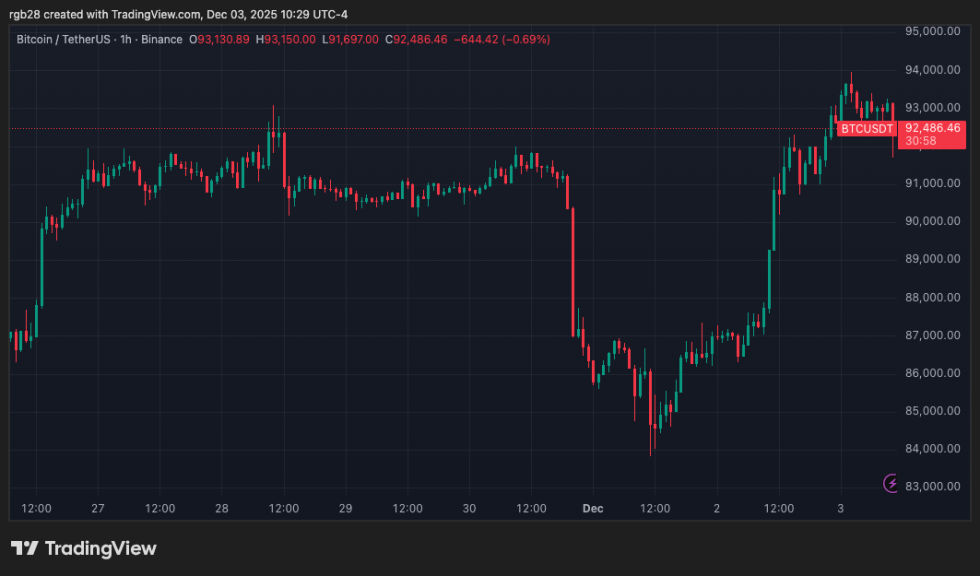
At the time of writing, the market’s leading cryptocurrency, Bitcoin, was trading at $92,180, surging 4% in the past 24 hours. 

Featured image from Shutterstock, chart from TradingView.com 

Rep. Steil Demands Regulators Fast-Track GENIUS Act as Stablecoin Law Deadline Looms

Regulators are facing growing pressure from Congress to accelerate implementation of the United States’ new stablecoin law, with Rep. Bryan Steil warning that the one-year rulemaking deadline is approaching.

During a House Financial Services Committee hearing on Tuesday, Steil urged agency heads to provide concrete updates on their progress in rolling out the Guiding and Establishing National Innovation for U.S. Stablecoins Act, which President Donald Trump signed into law on July 18.

FDIC to Publish First GENIUS Act Proposal This Month as Multi-Agency Effort Begins

The Genius Act, signed into law on July 18, 2025, is the first U.S. statute to impose a unified federal structure on stablecoin issuers.

The law gives regulators until July 18, 2026, to complete the full set of implementing rules, although the framework will not take effect until the earlier of two dates: January 18, 2027, or 120 days after final regulations are published.

That timeline pressurizes agencies preparing the first wave of proposals.

Steil said the committee has seen cases where Congress passes a bill but implementing regulations arrive late or stall.

🚨Breaking Crypto Update🚨
⁰NCUA Chair @kylehauptman confirms we are on track to implement the GENIUS Act by July 18. pic.twitter.com/Elvgme0f75

— Bryan Steil (@RepBryanSteil) December 2, 2025

He told regulators that delivering the GENIUS Act on schedule is essential, especially as stablecoins play an increasingly important role in global dollar liquidity and digital-asset markets.

During the exchange, NCUA Chairman Kyle Hauptman assured lawmakers that the credit union regulator expects its first GENIUS-related rulemaking to focus on the application process for issuers.

Hauptman said the agencies involved understand the July deadline and are working to meet it.

The hearing brought together leaders from the Federal Reserve, the Office of the Comptroller of the Currency, the National Credit Union Administration, and the Federal Deposit Insurance Corporation.

In prepared remarks released before the hearing, FDIC Acting Chair Travis Hill said his agency expects to publish its first proposal later this month, establishing the application process for stablecoin issuers supervised by the FDIC.

✅ The Federal Deposit Insurance Corporation will publish its first US stablecoin rule framework later this month.#Stablecoin #FDIChttps://t.co/yuIdMYcRek

— Cryptonews.com (@cryptonews) December 2, 2025

Hill said the FDIC’s responsibilities extend well beyond licensing, noting that the law tasks his agency with defining the capital, liquidity, and reserve standards that bank-issued stablecoins must meet.

He said a separate proposal detailing prudential standards is planned for early next year, setting up a two-step regulatory rollout.

GENIUS Act Moves Forward Alongside CLARITY Act and Anti-CBDC Proposals

The GENIUS Act would require stablecoin issuers to maintain one-to-one backing with U.S. dollars or high-quality liquid assets and introduce annual audits for firms whose tokens exceed a $50 billion market cap.

It also outlines the first federal standards for foreign-issued stablecoins, giving Washington a clearer framework for overseeing offshore projects.

Federal agencies have already begun laying groundwork for implementation.

The Treasury Department has opened multiple public consultations to gather industry input on stablecoin rule designed and how illicit-finance risks should be monitored.

🏦 The U.S. Treasury is calling on the public for feedback on how financial institutions can prevent crypto risks as part of the GENIUS Act. #Treasury #GENIUSActhttps://t.co/7Bu5ExndQt

— Cryptonews.com (@cryptonews) August 19, 2025

Treasury Secretary Scott Bessent said the feedback will shape ongoing research into compliance tools, including their effectiveness and privacy impact.

He called the GENIUS Act “essential” to maintaining U.S. leadership in the stablecoin market.

The legislative process, however, continues to feature political flashpoints.

During the latest hearing, Rep. Maxine Waters raised concerns about whether a sitting president should hold business interests in sectors they regulate, referencing President Trump’s link to the World Liberty Financial project.

She said the situation highlights unresolved conflict-of-interest questions that Congress must address.

Regulatory momentum is advancing in parallel with broader market-structure efforts on Capitol Hill.

The House passed its digital-asset package, the CLARITY Act, earlier this year, assigning oversight responsibilities between the Commodity Futures Trading Commission and the Securities and Exchange Commission based on token classifications.

🇺🇸 GENIUS Act, Anti-CBDC Act, and CLARITY Act pass crucial procedural vote 215-211 in Congress after Trump's decisive Oval Office intervention rescues stalled crypto agenda.#GeniusAct #Trumphttps://t.co/Lm2tCBbimp

— Cryptonews.com (@cryptonews) July 16, 2025

The bill still awaits Senate consideration, and analysts say its prospects remain unclear.

Another key proposal, the Anti-CBDC Surveillance State Act, is also pending in the Senate.

It would bar the Federal Reserve from issuing a retail central bank digital currency without explicit congressional authorization, a step supporters argue is necessary to safeguard financial privacy.

The post Rep. Steil Demands Regulators Fast-Track GENIUS Act as Stablecoin Law Deadline Looms appeared first on Cryptonews.

❌