Reading view

There are new articles available, click to refresh the page.

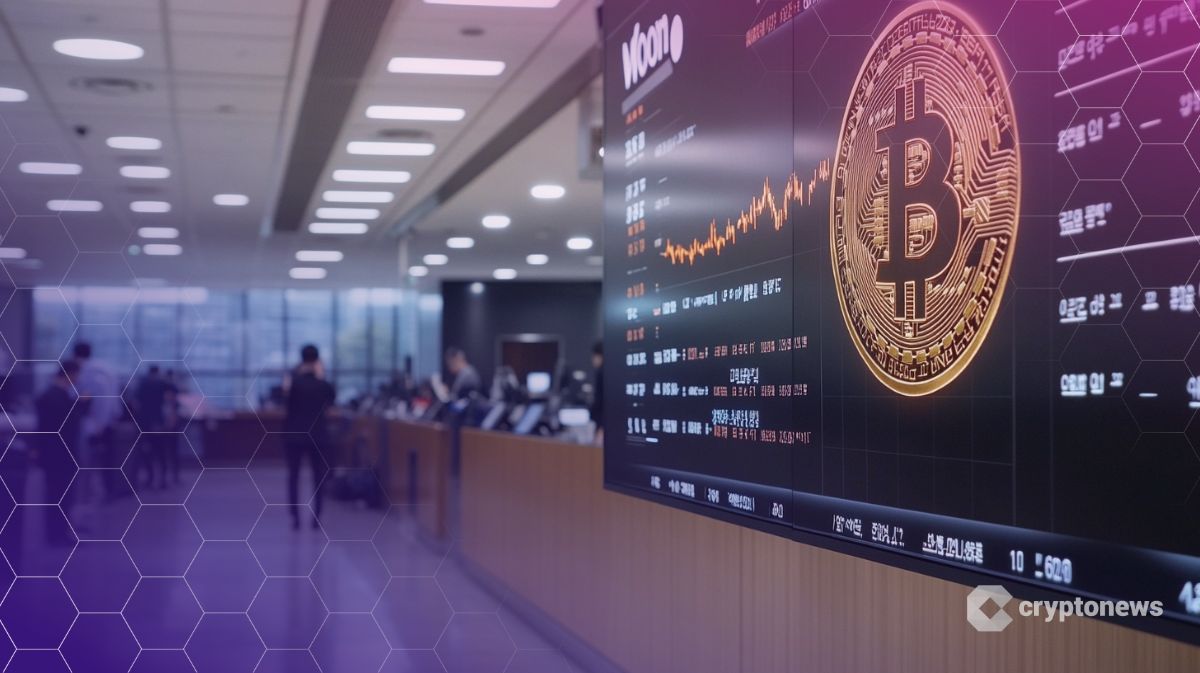
Woori Bank Becomes First in Korea to Display Bitcoin Prices in Trading Room

By: Amin Ayan

Woori Bank has begun displaying Bitcoin prices inside its main trading room in Seoul, placing the cryptocurrency alongside core financial indicators such as the won–dollar exchange rate and stock market data.

Key Takeaways:

  • Woori Bank is the first Korean commercial bank to display Bitcoin prices in its main trading room.
  • The move reflects Bitcoin’s rising role in global market sentiment as Korean banks expand deeper into digital asset infrastructure.
  • Upcoming regulations could position major banks like Woori as central players in South Korea’s future digital finance landscape.

The move marks the first time a commercial bank in South Korea has integrated a crypto price feed directly into its frontline dealing environment, the space where traders handle foreign exchange, bonds and derivatives.

Bitcoin Now Seen as Market Signal, Says Woori Bank Official

A Woori Bank official said the decision reflects the growing weight of digital assets in global finance, noting that Bitcoin has increasingly become a signal for broader market sentiment.

“As digital assets continue to grow in prominence and influence in global financial markets, we determined that they should be monitored as a key indicator to better read overall market trends,” the official said.

The update comes as Korean banks step deeper into digital asset infrastructure.

Hana Financial Group this week signed a partnership with Dunamu, operator of the Upbit exchange, to incorporate blockchain tools into services ranging from overseas remittances to financial data systems.

While Woori has yet to announce a formal partnership with a crypto exchange, senior executives have repeatedly indicated that the bank intends to expand into digital asset services.

CEO Jung Jin-wan said in October that payments and digital asset ecosystems are “increasingly interconnected,” suggesting the sector could open new revenue avenues for banks.

🇰🇷 SOUTH KOREAN BANKING GIANT WOORI BANK JUST STARTED DISPLAYING #BITCOIN PRICE IN THEIR DEALING ROOM

BANKS ARE COMING!! pic.twitter.com/NBiXXhBLe0

— Vivek Sen (@Vivek4real_) December 5, 2025

Regulators are also shaping a clearer path. The government and ruling Democratic Party are examining a proposal that would restrict issuance of won-based stablecoins to bank-led consortia with majority bank ownership.

If enacted, the framework could position major lenders like Woori as central players in future stablecoin markets.

As reported, South Korean investors turned the Chuseok holiday into a high-risk trading week, pouring $1.24 billion into US tech and crypto-linked assets while local markets were closed between October 3 and 9.

The frenzy was led by leveraged ETFs and high-growth stocks, as traders sought to ride Wall Street’s momentum amid optimism surrounding US tech resilience and domestic stimulus hopes.

South Korea to Extend Crypto Travel Rule to Sub-$700 Transactions

Last week, South Korea revealed that it is preparing one of its most aggressive crackdowns on cryptocurrency-related financial crime by expanding its travel rule requirements.

The new threshold covers transactions under 1 million won ($680), which until now allowed users to bypass identity checks by breaking transfers into smaller amounts

The Financial Intelligence Unit (FIU) will also introduce pre-emptive account-freezing powers in serious cases, allowing investigators to lock suspicious accounts before funds can be moved beyond recovery.

Officials said legislative amendments are expected to be submitted to the National Assembly in the first half of 2026, with South Korea also expanding coordination with global regulators such as the Financial Action Task Force to align with international standards.

The post Woori Bank Becomes First in Korea to Display Bitcoin Prices in Trading Room appeared first on Cryptonews.
Bitcoin Enters New Adoption Phase: Vanguard, Schwab, and Japan Fuel BTC Recovery

Bitcoin has climbed back above $93,000 after enduring days of intense selling pressure, heightened volatility, and widespread market uncertainty. The recovery marks a significant shift in sentiment, but according to a new report from CryptoQuant, one signal stands out as the primary driver behind the rebound: institutional capital is quietly flowing back into the market.

The analysis highlights a key metric— the Coinbase Premium Index, long regarded as a reliable proxy for US institutional demand. Throughout November’s steep correction, the premium plunged deep into negative territory, revealing a stark imbalance: US spot buyers were far weaker than their offshore counterparts.

During this phase, as Bitcoin slid below $90,000, the sharp drop in the premium reflected clear risk-off positioning among US-regulated investors, many of whom stepped back or took profits amid rising macro uncertainty.

Now, with Bitcoin recovering key levels, the data shows early signs of renewed accumulation from US-based institutions. This subtle but meaningful shift suggests that the most conservative segment of the market—professional and regulated capital—may be positioning again after the correction. If this trend continues, the rebound above $93K could evolve into a much broader shift in market structure.

Institutional Catalysts Drive Bitcoin Coinbase Premium Higher

According to the CryptoQuant report, the narrative has shifted decisively. The Coinbase Premium Index has climbed back into positive territory, signaling renewed accumulation from US-based institutional and regulated investors. This shift coincides with a wave of major developments reshaping the global investment landscape.

Bitcoin Coinbase Premium Index | Source: CryptoQuant

Most notably, Charles Schwab, a $12 trillion asset manager, announced plans to offer Bitcoin and Ethereum trading in early 2026. This follows Vanguard’s market-moving reversal that opened access to spot crypto ETFs for more than 50 million conservative investors. These firms are not speculative players—they are the backbone of American retirement wealth.

At the same time, a powerful but less publicized catalyst is emerging overseas: Japan is moving toward formal approval of Bitcoin ETFs. Given the size of Japanese investment trusts, pension-linked products, and retail participation, early adoption could inject $3–10 billion of fresh demand. While no single region drives Bitcoin’s valuation alone, combined flows from the US, Europe, and Japan could easily deliver a mid-single-digit percentage uplift to BTC in the early phases of this expansion.

The broader takeaway is unmistakable: Bitcoin is transitioning from a niche risk asset into a globally standardized investment product. The return of a positive Coinbase Premium may be the market’s earliest confirmation that institutions—especially the most conservative ones—are positioning ahead of 2026.

Weekly Structure Shows Early Signs of Recovery

Bitcoin’s weekly chart shows a decisive rebound, with price pushing back above $93,000 after weeks of aggressive selling pressure. The recent wick down toward the green 100-week moving average (100W MA) marked a key moment: buyers stepped in precisely at long-term dynamic support, preventing a deeper breakdown toward the $80,000–$82,000 region.

This reaction confirms that long-term holders and institutional buyers are protecting this level, aligning with the recent return of positive signals from the Coinbase Premium Index.

BTC HoldingKkey Weekly Support | Source: BTCUSDT chart on TradingView

Despite the rebound, the chart still shows Bitcoin facing overhead resistance. The 50-week MA sits just above the price, creating a supply zone between $97,000 and $102,000. This has historically acted as a trend-determining range; reclaiming it would shift momentum decisively back to the bulls. Until then, the market remains in a mid-cycle consolidation.

Volume behavior also supports the recovery narrative. The huge sell-volume spikes seen in November marked capitulation-like behavior, which often precedes trend reversals. The recent green weekly candle forming on rising buy volume suggests that demand is returning, aligning with improving liquidity conditions on major US and global exchanges.

Featured image from ChatGPT, chart from TradingView.com

75% Chance Crypto Is ‘Crossing The Chasm’ Now, Says Moonrock Capital Boss

Moonrock Capital founder Simon Dedic says the crypto industry is nearing a decisive transition from an early-adopter niche to a mainstream market, assigning a 75% probability that the sector will “finish crossing the chasm and enter the early-majority phase next year.”

Is The Crypto Market Crossing The Chasm?

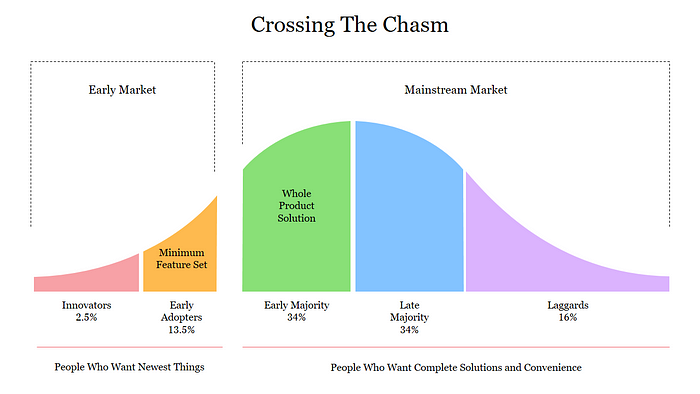
Dedic frames his outlook using the classic technology adoption curve, which splits the market into innovators (2.5%), early adopters (13.5%), an early majority (34%), late majority (34%) and laggards (16%). The critical “chasm” lies between early adopters—“people who want newest things” and accept a minimum feature set—and the early majority, who demand a “whole product solution” and prioritize complete, convenient offerings.

Crypto Crossing The Chasm

In his base case, Dedic argues that crypto is now close to exiting that chasm. If so, he says, “the classic 4-year cycles are dead. The market will have matured and will increasingly correlate with macro cycles and industry fundamentals rather than self-fulfilling narratives.” Under this scenario, pricing would be governed less by reflexive narratives around halvings or “altseason” and more by the sector’s real economic role and its interaction with broader financial conditions.

He assigns a 20% probability to a less advanced stage of adoption in which the industry is “still in the early-adopter phase and only now beginning to cross the chasm.” In that case, he believes crypto could face “a 1-3 year bear market while the industry finds itself and pushes toward early-majority adoption.” Here, the established four-year pattern could remain intact, with another prolonged downturn before mainstream product-market fit is fully achieved.

The remaining 5% is reserved for a failure scenario in which the sector never secures such fit. “We get stuck in the chasm and never find true mainstream pmf,” Dedic writes, warning that crypto could then “turn into a zero sum game and we will just PvP trade money from one to the other.”

Dedic makes clear he views that outcome as unlikely. He cites “regulatory tailwinds, institutional adoption, and the accelerating fundamentals of our industry” as reasons to believe the market is already in scenario one, “standing right in front of the biggest adoption wave crypto has ever seen, and likely ever will see.”

He also argues that market structure and culture must evolve alongside adoption. “The 4 year cycles and simple narrative chasing are dead,” he says. While “the onchain online casino will always be part of our identity, it will shrink into a niche. It’s time for the industry to mature and start playing the serious game.”

For Dedic, that conviction is not theoretical. “An incredible decade lies ahead for those willing to evolve,” he concludes, adding that he is “betting basically all my money on the idea that this is only just getting started.”

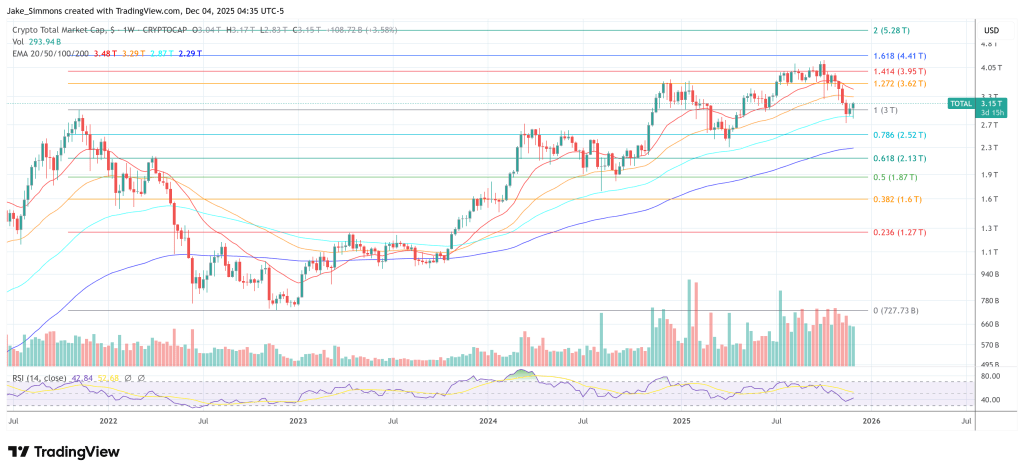
At press time, the total crypto market cap stood at $3.15 trillion.

Total crypto market cap

Binance Takes Family-Centric Approach to Crypto with Junior Wallet

Cryptocurrency is no longer just for adults. While traditional financial assets like stocks and bonds are often gifted to children by parents who open custodial accounts, crypto exchange Binance aims to help families build wealth through crypto assets.

Announced on Wednesday during Binance Blockchain Week, the crypto exchange explained that “Binance Junior” is the first standalone mobile app that is controlled entirely by parents for children.

Introducing Binance Junior, a parent-controlled app and sub-account for kids and teens.

Build family-focused crypto savings and prepare your child for a future empowered by crypto.

Try it now 👉 https://t.co/q4Y50PvApy pic.twitter.com/O1R2yZ4vVE

— Binance (@binance) December 3, 2025

The app allows adults with a Binance account to deposit crypto into a savings account for kids and teenagers between the ages of 6 to 17. The tool also allows parents to set spending and transfer limits, while enabling earn products for kids dependent on local regulations.

The Importance of Crypto Adoption at Young Ages

Binance’s newly appointed co-founder Yi He explained the importance behind Binance Junior at Binance Blockchain Week.

“We not only nurture children in their early development, but also with long-term growth, responsibility and wisdom,” the executive stated. “Helping children face real life challenges independently means that financial health and literacy are key to preparing them for the future, especially as money is evolving.”

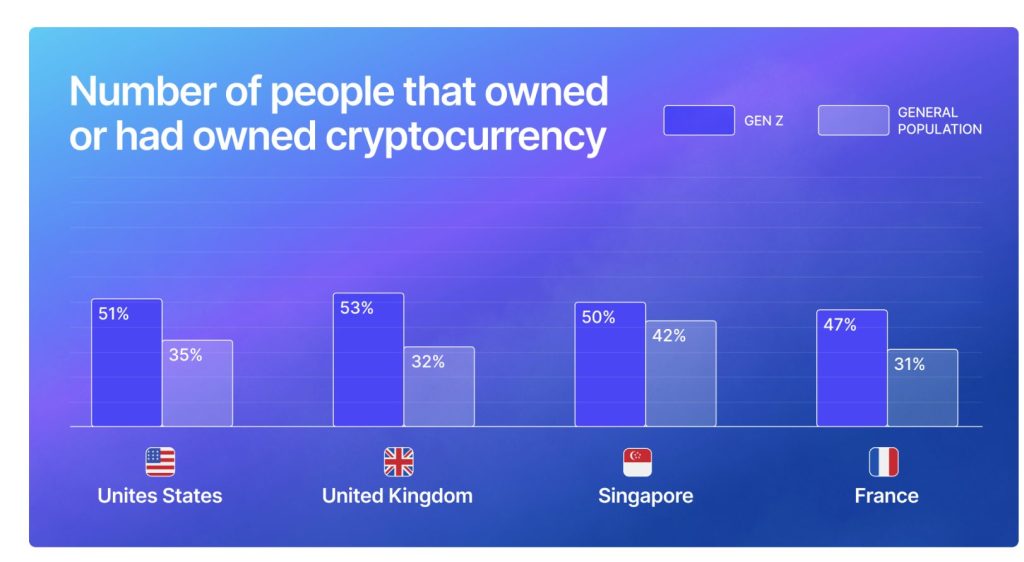
While the notion of educating children on the importance of cryptocurrency may be controversial, findings from a recent survey conducted by Gemini show that more than half (51%) of global Gen Z respondents currently own cryptocurrency or have owned it in the past. The report also notes that over half of Gen Z respondents located in the US owned or had owned cryptocurrency (51%), compared to 49% of Millennials (people born 1981-1994).

Source: Gemini

This demonstrates the growing appeal for crypto adoption amongst younger generations. Binance Junior aims to further facilitate this by allowing children 13 years and up to initiate transfers independently within the app, as long as local regulations are met and daily limits are applied.

Teaching Children About Crypto: Beneficial or Concerning?

While some users on the social media platform X expressed concerns around Binance Junior, the new app aims to align with a growing trend of teaching children about the importance of cryptocurrency at early ages.

Henri Arslanian, co-founder of Nine Blocks Capital and a best-selling author, told Cryptonews that it shouldn’t come as a surprise that Binance has launched Binance Junior.

“Children used to have penny banks to keep fiat in, but now we have hard assets like Bitcoin and there is a huge learning element there that becomes critical,” he said.

Arslanian added that Binance Junior aligns with children’s books and toys centered around cryptocurrency. In September last year, Arslanian published Decoding Crypto, a best-selling children’s book that explains digital assets in simple terms.

Here’s why you should check out my latest kids book, Decoding Crypto, for your kids.

Grab your copy of Amazon’s number 1 new release kids book, Decoding Crypto with @henriandhodler https://t.co/n2hYqlc7bW pic.twitter.com/W7CSmvIsOP

— Henri Arslanian (@HenriArslanian) February 11, 2025

Other books including B is for Bitcoin by Graeme Moore – which is an A-to-Z style alphabet book where each letter links to a crypto term – also aim to make crypto learning fun for children. Goodnight Crypto by Scott Blair is a book that is even suitable for toddlers. Included in the story are 42 collectible non-fungible tokens (NFTs) that can be minted and added to a crypto wallet.

In addition, Binance released a self-published book entitled ABC’s of Crypto that breaks down fundamental terms including security and blockchain technology, to different types of crypto coins.

Cautiously Preparing the Next Generation for Crypto Adoption

While it’s notable that initiatives are being taken to teach young children about digital assets, caution should be exercised.

Parents and teachers explaining cryptocurrency to younger generations may wish to point out the volatile nature of digital assets. Focusing on concepts like savings, diversification, long-term thinking, and risk versus reward rather than price speculation may also be helpful.

The post Binance Takes Family-Centric Approach to Crypto with Junior Wallet appeared first on Cryptonews.

Microsoft drops AI sales targets in half after salespeople miss their quotas

Microsoft has lowered sales growth targets for its AI agent products after many salespeople missed their quotas in the fiscal year ending in June, according to a report Wednesday from The Information. The adjustment is reportedly unusual for Microsoft, and it comes after the company missed a number of ambitious sales goals for its AI offerings.

AI agents are specialized implementations of AI language models designed to perform multistep tasks autonomously rather than simply responding to single prompts. So-called “agentic” features have been central to Microsoft’s 2025 sales pitch: At its Build conference in May, the company declared that it has entered “the era of AI agents.”

The company has promised customers that agents could automate complex tasks, such as generating dashboards from sales data or writing customer reports. At its Ignite conference in November, Microsoft announced new features like Word, Excel, and PowerPoint agents in Microsoft 365 Copilot, along with tools for building and deploying agents through Azure AI Foundry and Copilot Studio. But as the year draws to a close, that promise has proven harder to deliver than the company expected.

Read full article

Comments

© Wong Yu Liang via Getty Images

Taiwan Targets Late-2026 Launch for First Domestic Stablecoin

By: Amin Ayan

Taiwan could roll out its first domestically issued stablecoin by the second half of 2026 as lawmakers move forward with legislation to regulate digital assets, though key design choices, including which currency the token will track, remain unresolved.

Key Takeaways:

  • Taiwan is targeting a late-2026 launch for its first domestic stablecoin pending passage of a new crypto law.
  • Banks will lead initial issuance as regulators coordinate closely with Taiwan’s central bank.
  • The choice of peg remains open, with a US dollar tie seen as easier than linking it to the Taiwan dollar.

According to local media, Financial Supervisory Commission chair Peng Jin-long told lawmakers this week that the draft Virtual Assets Service Act has cleared initial cabinet reviews and could pass its third reading in the next legislative session.

Rules specific to stablecoins would follow within six months of approval, pointing to a possible late-2026 release at the earliest.

Taiwan to Let Banks Lead Stablecoin Rollout as Regulators Tighten Controls

The draft law does not confine issuance to banks, but Peng said financial institutions will take the lead in the early stages, reflecting a cautious approach as regulators open the door to domestic digital tokens.

The FSC is coordinating policy development with the Central Bank of the Republic of China (Taiwan), which has long enforced strict controls to keep the Taiwan dollar from circulating overseas.

That constraint is shaping the stablecoin debate. A token pegged to the Taiwan dollar would collide with existing foreign-exchange rules, as the currency is not allowed to circulate offshore.

A US dollar-backed stablecoin, by contrast, would avoid the thorniest regulatory issues and align more closely with global settlement use cases tied to cross-border payments.

Stablecoins, by design, move value across borders with speed and low cost, features that could undercut decades of policy aimed at keeping the local currency onshore and preventing unofficial offshore pricing.

Regulators are now drafting guardrails requiring full reserve backing, strict segregation of client assets and domestic custody to limit risk at launch.

What remains undecided is the anchor currency itself. Peng said the final choice will depend on market demand, with no commitment yet to either the US dollar or the Taiwan dollar.

Taiwan Weighs Adding Bitcoin to National Reserves

As reported, Taiwan’s government is moving closer to integrating Bitcoin into its national reserve strategy, with the island’s Executive Yuan and Central Bank agreeing to evaluate Bitcoin as a potential strategic asset and explore pilot holdings using seized BTC currently awaiting auction.

BREAKING: TAIWAN'S CENTRAL BANK TO OFFICIALLY PILOT A STRATEGIC #BITCOIN RESERVE

THIS IS ABSOLUTELY MASSIVE 🔥 pic.twitter.com/V6Xd6uyc6p

— The Bitcoin Historian (@pete_rizzo_) November 12, 2025

In August, Taiwanese prosecutors indicted 14 individuals in the nation’s largest crypto money-laundering case, exposing a NT$2.3 billion ($75 million) fraud that deceived over 1,500 victims through fake crypto exchange franchises.

The operation, led by Shi Qiren, ran more than 40 storefronts under names like “CoinW” and “BiXiang Technology,” posing as licensed exchanges while secretly funneling investor funds into overseas crypto accounts.

Authorities seized cash, crypto, and luxury assets worth over NT$100 million, while Shi faces up to 25 years in prison for fraud, money laundering, and organized crime.

The group’s success hinged on exploiting regulatory blind spots in Taiwan’s crypto oversight. By claiming false approval from the Financial Supervisory Commission, the network built investor trust, collected hefty franchise fees, and used “deposit machines” to mimic legitimate exchange operations.

Prosecutors described the scheme as “systematic fraud” that leveraged Taiwan’s crypto curiosity and weak enforcement.

The post Taiwan Targets Late-2026 Launch for First Domestic Stablecoin appeared first on Cryptonews.

Ripple Exec Sounds Warning: XRP Must Learn This From Solana Or Risk Damage

XRP and Solana share the opening line of a direct industry alert from a senior Ripple executive who argues that technical maturity alone will not guarantee XRP’s relevance in the next competitive cycle. He points to Solana’s execution style as a benchmark that XRP must study and internalize to stay competitive, drive innovation, and avoid strategic setbacks.

Solana’s Edge And The Core Lessons For Ripple

Luke Judges draws on his experience in the Solana ecosystem to highlight operational lessons for XRP. Before joining Ripple, he built two startups on Solana and ran a validator managing over $30 million in staked tokens. He personally navigated the network’s full market swings from its peak near $200 to a collapse below $10 and its eventual recovery—gaining insights into infrastructure demands, validator economics, and developer dynamics that go beyond theory.

According to Judges, Solana’s growth reflects a combination of speed, practical engineering decisions, and developer-friendly onboarding. He acknowledges Solana’s weaknesses, including a falling validator count that could raise decentralization concerns, but emphasizes that these do not negate the network’s operational strengths. High transaction throughput and pragmatic design choices, he notes, continue to attract builders and support adoption, demonstrating that efficiency and practical execution can drive results even when a system is imperfect.

Judges link these observations directly to XRP’s path forward. He suggests that overlooking the strengths of competing networks creates blind spots that hinder ecosystem development. Studying Solana’s approach can help the network refine its operations, accelerate development cycles, improve tooling for builders, and align technical decisions with real-world usage patterns. These, he indicates, are essential steps for XRP to maintain competitiveness in a fast-evolving layer-1 landscape.

XRP’s Strategic And Competitive Focus

Ripple’s internal roadmap already includes critical enhancements—smart contracts, native staking primitives, and the AlphaNet rollout for XRP Ledger Smart Contracts. However, Judges’ comments signal that technical capability without a sharpened go-to-market strategy is insufficient. He points to the Ethereum Foundation’s recent tightening of its GTM approach after losing market share to Solana as an example of the stakes involved.

To address these challenges, XRP’s competitive focus comes down to three main areas. First, the ecosystem must augment its programmability track with clearly packaged developer value propositions that demonstrate tangible differentiation. Second, validator economics require forward-looking structuring to avoid the attrition dynamics now visible in Solana’s network. Third, go-to-market alignment must accelerate, converting technology milestones into momentum-building enterprise and retail narratives.

Judges’ message ultimately operates as both caution and catalyst. He frames Solana’s strengths not as threats but as operational lessons, while its weaknesses provide a blueprint for pitfalls XRP should avoid. His message is clear: the blockchain space is shifting, and Ripple’s executive team signals that the window to capture the next market cycle demands adaptation, not insulation. The underlying mandate is to learn fast, move faster, and ensure XRP remains structurally relevant in the next phase of blockchain adoption.

XRP price chart from Tradingview.com

Housing Crisis Pushes Young Americans Into Crypto Gambles: Study

By: Amin Ayan

A new study warns that a growing share of young Americans is turning to cryptocurrency not as an ideological choice, but as a financial gamble driven by despair over housing costs.

Key Takeaways:

  • Young Americans are turning to crypto out of financial desperation as housing becomes increasingly unaffordable.
  • Researchers say “discouraged renters” replace saving with high-risk investing once homeownership feels impossible.
  • Over time, this shift traps many in near-zero wealth while hopeful homeowners continue to build assets.

The report argues that soaring home prices have reshaped how an entire generation thinks about money, risk and opportunity.

US Homeownership Slips Out of Reach, Pushing Youth Toward Risky Bets

Researchers found that the median US house price-to-income ratio has risen so sharply since the 1980s that today’s young adults would need nearly two extra years of income to afford the same home their parents could.

As the possibility of owning a home fades, financial behavior shifts just as dramatically. Instead of saving for a down payment, many turn to volatile assets that offer a chance at a sudden leap in wealth.

“Crypto becomes a substitute for the American Dream,” the authors write, describing digital assets as vehicles for high-risk, high-reward betting when conventional goals feel unreachable.

Rather than reflecting faith in decentralization or distrust of banks, crypto participation is increasingly a coping strategy for a broken path to stability.

The research identifies a tipping point the authors call “discouraged renters.” Once people conclude homeownership is no longer realistic, their financial habits change in lasting ways.

Compared with homeowners of similar net worth, discouraged renters rack up about 10% more in credit card spending and are far more likely to disengage from long-term career ambition.

The US housing bubble popped in 2007-08, causing a massive financial crisis.

So what did the US do after? It inflated another housing bubble, which is even bigger now.

Because the US economy is a financialized house of cards built on asset price bubbles.https://t.co/Fr54cJmTk9 pic.twitter.com/JLHPzPozTE

— Ben Norton (@BenjaminNorton) November 30, 2025

The study links this mindset to the rising phenomenon of “quiet quitting,” where workers remain employed but emotionally checked out.

Wealth levels also change how people interact with crypto. Renters holding between $50,000 and $300,000 in assets show the highest participation, falling into what the report describes as a no-man’s-land: too creditworthy to give up, yet too poor to buy property.

Below $50,000, investment almost disappears, not for lack of interest, but for lack of cash.

Crypto, the report notes, becomes a “last-chance lever,” a way to try to beat a system that no longer feels fair.

Welfare programs soften the blow of failure, encouraging moonshot risk-taking with limited downside.

However, the long-term effects are bleak. Over time, discouraged renters sink into what the study calls a near-zero wealth trap, while those who hold onto the hope of homeownership continue building capital.

Global Housing Crisis Pushes Youth From Saving Into Crypto Speculation

Young people in South Korea and Japan express similar disengagement under the weight of housing inflation, and both countries have fast-growing crypto communities.

The pattern, researchers conclude, is global. When shelter becomes unattainable, speculation replaces saving.

In March, the US Department of Housing and Urban Development (HUD) revealed that it is exploring the potential use of blockchain and stablecoins to improve certain operational functions.

Officials also debated a pilot program where a HUD grantee would receive payments via stablecoin, with the initiative first being tested in a single department before broader implementation.

The post Housing Crisis Pushes Young Americans Into Crypto Gambles: Study appeared first on Cryptonews.

Bolivia eyes crypto and stablecoins to fight inflation and US dollar shortage

  • Bolivia lets banks offer crypto services to counter inflation and dollar scarcity.
  • Stablecoins gain traction in Bolivia as businesses and consumers hedge a weakening boliviano.
  • Government pairs digital finance push with major new financing and tax reforms.

Bolivia is turning to cryptocurrencies and stablecoins in a sweeping effort to stabilise an economy strained by high inflation, a widening fiscal deficit, and a persistent shortage of US dollars.

The initiative is emerging as a central pillar of the government’s broader plan to modernise the financial system and revive investment under President Rodrigo Paz.

Crypto push in Bolivia gains steam

The shift marks a major policy change for the country, which only lifted a longstanding ban on crypto last year.

Economy Minister Jose Gabriel Espinoza confirmed that banks will now be allowed to custody digital assets and offer crypto-based savings accounts, loans, and credit cards.

The move effectively brings stablecoins such as USDT into the formal financial system, giving them a role similar to legal tender.

Espinoza said the decision reflects the practical reality that cryptocurrencies cannot be contained by national borders. He noted that recognising and integrating them is more efficient than trying to enforce old restrictions.

This approach follows a regional trend, as several Latin American economies hit by inflation turn to digital assets as a hedge against currency depreciation.

Bolivia’s inflation, in particular, has averaged above 22% over the past year, eroding the value of the boliviano and pushing residents toward alternatives that hold value more reliably.

As a result, stablecoins, which maintain a one-to-one link to assets such as the US dollar, have become a popular escape hatch for households and businesses looking to shield their savings from further losses.

Pressure from inflation and dollar scarcity

Businesses across Bolivia have already begun pricing goods in USDT, responding to the sharp shortage of physical dollars that has disrupted imports and raised costs.

Vehicle manufacturers, including Toyota, Yamaha, and BYD, started accepting stablecoins in September after struggling to secure dollars for transactions.

The state-owned energy company YPFB has also revealed plans to create a system allowing crypto-denominated payments for energy imports, though details are still being developed.

Stablecoins offer a workaround for strict currency controls that limit access to foreign currency.

Anyone with a mobile phone and a crypto wallet can now hold dollar-pegged tokens without going through banks that enforce tight restrictions.

This ease of access has been a major factor behind the rapid rise in crypto volumes following the regulatory shift last year.

Financing push alongside crypto reforms

The government’s crypto strategy is unfolding alongside a wider effort to shore up the economy through new financing and investment incentives.

Espinoza announced that Bolivia is negotiating more than $9 billion in multilateral financing for public and private projects, far above initial projections.

Roughly a third of the funds could arrive within two to three months, providing support for infrastructure, renewable energy, and financial inclusion initiatives.

The announcement lifted Bolivia’s dollar bonds, which reached their highest levels since 2022.

The government has also moved to scrap the wealth tax and eliminate taxes on financial transactions to attract private capital and encourage investment.

These measures still require congressional approval, but they signal a significant shift away from the state-heavy policies of previous administrations.

Paz has pledged a market-oriented approach while avoiding shocks that could undermine the country’s social programs.

The administration plans to cut public spending by 30% in the 2026 budget, though officials stress that the decision was made independently and not under pressure from the International Monetary Fund.

The post Bolivia eyes crypto and stablecoins to fight inflation and US dollar shortage appeared first on CoinJournal.

These New Shareholder Tools Make Bitcoin Activism Easy to Launch and Hard to Ignore

By: Nick Ward

Bitcoin Magazine

These New Shareholder Tools Make Bitcoin Activism Easy to Launch and Hard to Ignore

For most of my life, the limiting factor in bringing my ideas to life has been code. I’ve always had a clear vision for the tools I wanted to build, but the execution gap was real. The ideas stayed on whiteboards, in notebooks, or in half-finished PhotoShop mockups.

That barrier no longer exists.
AI has collapsed it.

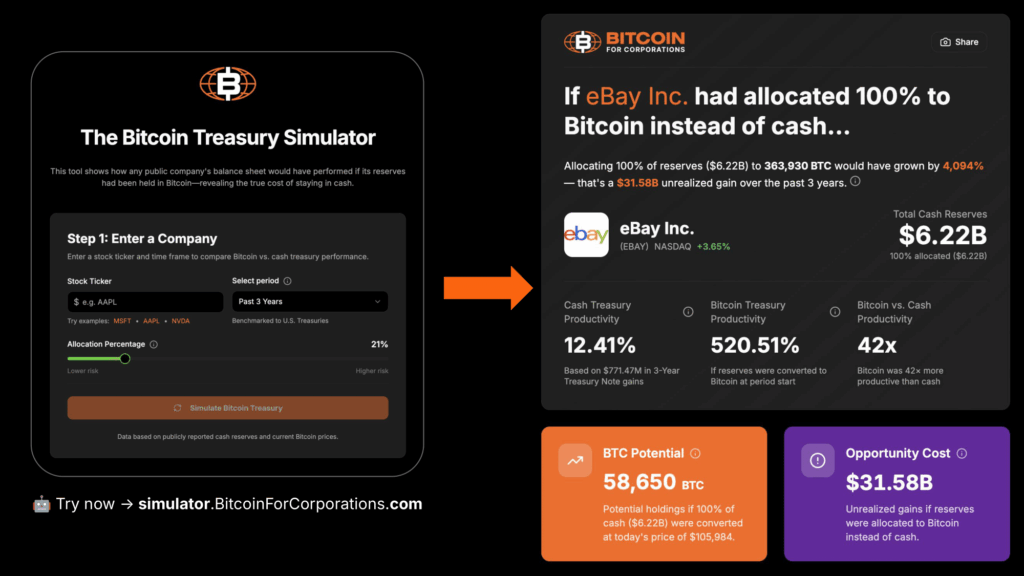
In just 9 days, I built two fully functioning consumer applications designed to equip shareholders with the leverage they’ve never had: the ability to advocate—cleanly, credibly, and at scale, for Bitcoin on the corporate balance sheet.

These tools weren’t commissioned. No one told me to build them. They are not fancy, intricate, or technically complicated. They came from a simple observation: 1) corporations control the majority of global capital, and 2) shareholders deserve a frictionless way to push those corporations toward strategic, long-term Bitcoin adoption.

1. The Bitcoin Treasury Simulator

The Bitcoin Treasury Simulator answers a question that should be trivial but wasn’t:
How would a company have performed if it had allocated even a portion of its treasury to Bitcoin?

Retail investors can now enter a ticker, choose a time frame, and instantly see the opportunity cost of holding cash instead of Bitcoin—expressed in clear, defensible terms that anyone can understand.

For the first time, shareholders have a factual, data-driven tool they can bring to boards, IR teams, and fellow investors to show exactly what’s at stake.

🤖 Try the simulator: simulator.bitcoinforcorporations.com

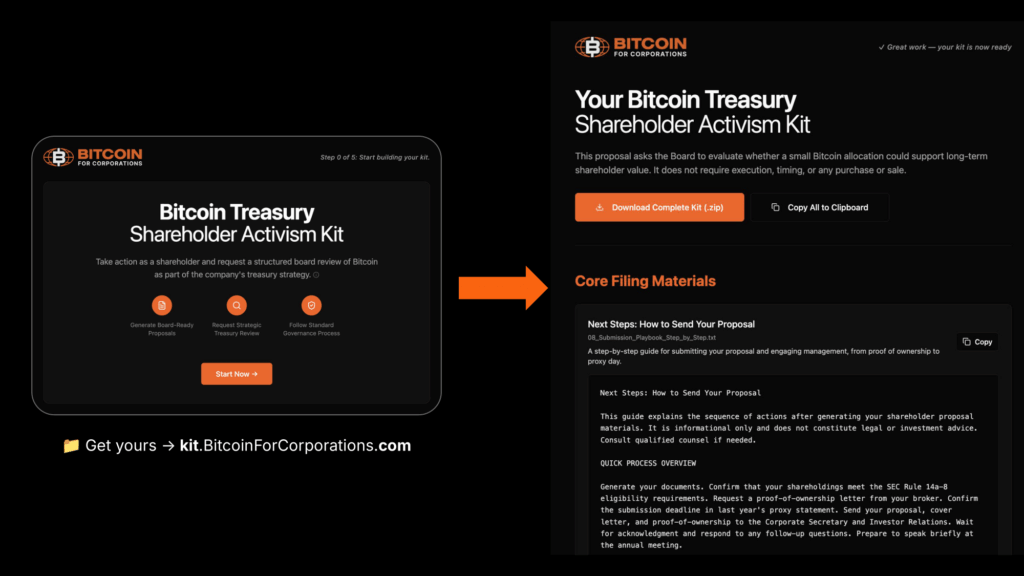
2. The Bitcoin Treasury Shareholder Activism Kit

Shareholder activism has always been powerful, but it’s been inaccessible to most investors. The rules are complex. The legalese is intimidating. The entire process feels like a wall you only get past if you’re a lawyer or a billion-dollar fund.

So I built a generator that removes all of that friction.

The Bitcoin Treasury Shareholder Activism Kit walks any verified shareholder—step by step—through generating a legitimate, SEC-compliant proposal asking a company to evaluate or adopt a Bitcoin treasury strategy. It produces the documentation, the language, the filing structure, and the instructions needed to get the proposal included in the company’s proxy.

Something that once felt like it required attorneys and institutional resources can now be completed in 2 minutes.

🤖 Create your kit: kit.bitcoinforcorporations.com

Why These Tools Exist

Corporate Bitcoin adoption does not happen by accident. It happens because someone—inside or outside the company—pushes for it with clarity, precision, and persistence.

These tools are built for the people willing to make that push.

They give shareholders:

  • Clear data.
  • A credible filing pathway.
  • A structured way to change corporate behavior.
  • And the confidence to take action without needing permission.

If you understand the value of compute, you should understand #Bitcoin.

Yet @Nvidia sits on ~$43B in cash.#Bitcoin outpaced cash reserves by ~41x over the last 3 years—That's nearly $216B in opportunity cost. pic.twitter.com/AftSN7LHpm

— Nick Ward (@nckbtc) November 11, 2025

What Comes Next

This is just the beginning. Both tools will evolve, expand, and integrate more deeply into the broader Bitcoin For Corporations ecosystem. But the important part is this: AI has made technical hurdles of these projects much easier to overcome.

And if enough people decide to build the future they want—one tool at a time—we accelerate corporate Bitcoin adoption far faster than anyone expects.

Disclaimer: This content was written on behalf of Bitcoin For CorporationsThis article is intended solely for informational purposes and should not be interpreted as an invitation or solicitation to acquire, purchase or subscribe for securities.

This post These New Shareholder Tools Make Bitcoin Activism Easy to Launch and Hard to Ignore first appeared on Bitcoin Magazine and is written by Nick Ward.

Harvard Triples Bitcoin ETF Stake, Makes It Largest Public Holding

Bitcoin Magazine

Harvard Triples Bitcoin ETF Stake, Makes It Largest Public Holding

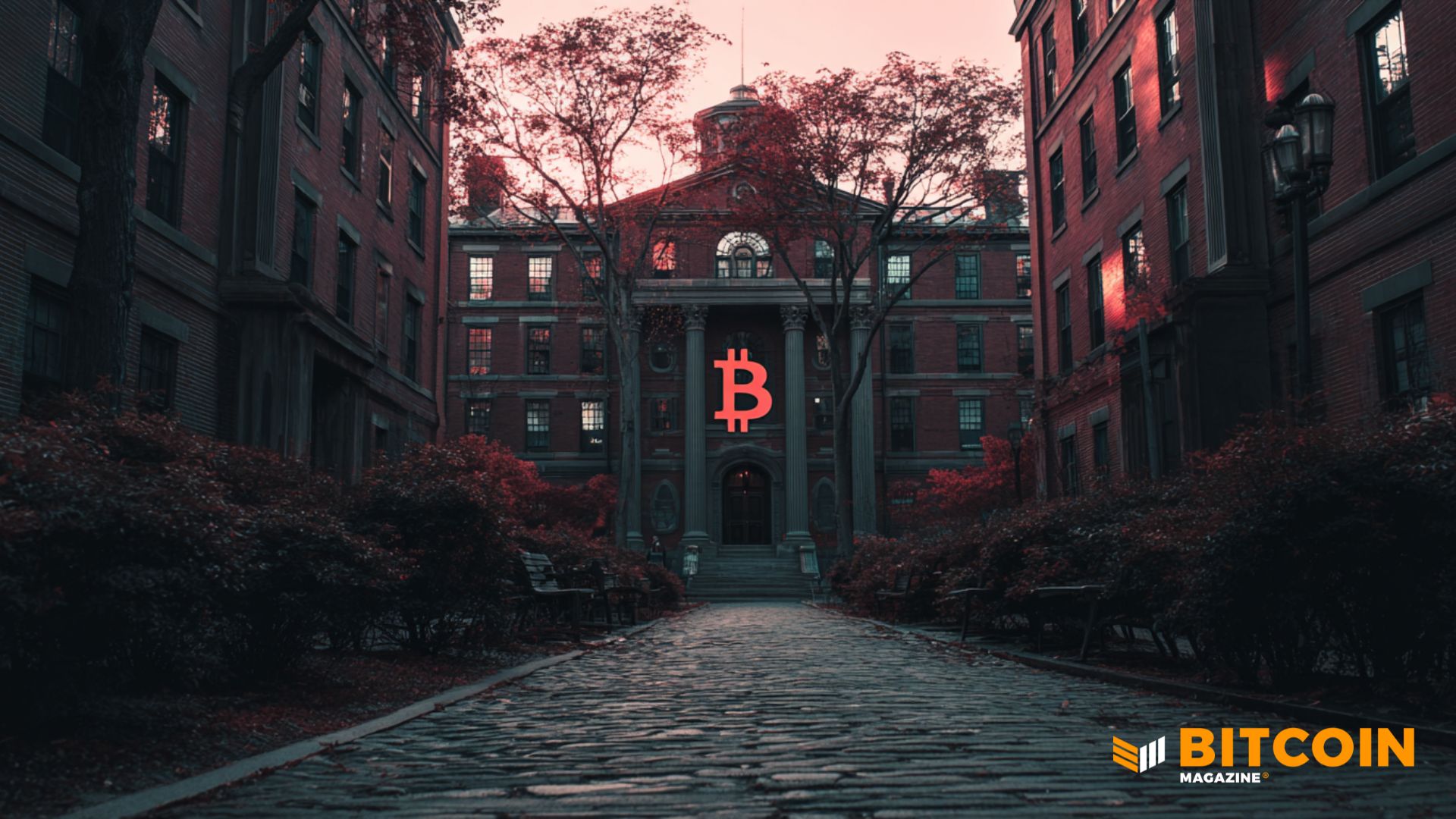
Harvard University’s endowment has been quietly and massively increasing its Bitcoin holdings. 

The university bought more than 6.8 million shares of BlackRock’s iShares Bitcoin Trust (IBIT) as of September 30. The investment is valued at $442.8 million.

This marks a 257% increase from Harvard’s previous holding of 1.9 million shares, worth $116.6 million. The move makes IBIT Harvard’s largest publicly disclosed position. It is also the biggest single-quarter increase in its holdings, according the the filing. 

Harvard Management Company runs the university’s $57 billion endowment. The Bitcoin ETF now represents just under 1% of total endowment assets. 

Bloomberg ETF analyst Eric Balchunas said it is “super rare” for a university to invest in an ETF. He added that the stake is “as good a validation as an ETF can get.”

FUN FACT: Harvard University holds more in Bitcoin ETFs than it holds shares in Microsoft. pic.twitter.com/Lzblc1gjcP

— Bitcoin Magazine (@BitcoinMagazine) November 15, 2025

Despite Bitcoin’s recent price drop below $93,000, the move signals growing institutional acceptance. IBIT remains the world’s largest spot Bitcoin ETF, with nearly $75 billion in net assets.

Harvard also increased its gold exposure. The endowment nearly doubled its holding in SPDR Gold Shares (GLD) to 661,391 shares, worth $235.1 million. 

Other major holdings remain in U.S. tech companies, including Amazon, Microsoft, Meta, and Alphabet. The endowment also added positions in Klarna ($16.8 million) and Taiwan Semiconductor ($59.1 million).

The increase in Bitcoin and gold allocations highlights Harvard’s focus on portfolio diversification. Analysts see this as part of a wider institutional trend. Bitwise analyst Ryan Rasmussen said the stake may grow to 1% or even 5% as peer institutions follow.

Institutions other then Harvard are buying Bitcoin

Other institutions are also increasing Bitcoin ETF exposure. Emory University disclosed a 91% increase in its Grayscale Bitcoin Mini Trust ETF holdings, totaling over $42 million.

An Abu Dhabi sovereign wealth fund, Al Warda Investments, reported a 230% increase in IBIT holdings, now valued at $517.6 million.

Harvard’s Bitcoin move is rare but significant. Institutional investors traditionally avoid ETFs, preferring private equity, real estate, or direct investments. 

The university’s entry could encourage similar strategies across other endowments, pension funds, and sovereign wealth funds.

At the time of writing, Bitcoin’s price is nearing $92,000, putting it almost 30% below its all-time high near $126,000 — a level referenced in earlier market coverage. The drop follows weeks of sharp selling, with BTC sliding from the mid-110,000s — where it was trading when panic hit and rumors swirled about large institutional outflows — to its current lows.

This post Harvard Triples Bitcoin ETF Stake, Makes It Largest Public Holding first appeared on Bitcoin Magazine and is written by Micah Zimmerman.

Institutions Stay Bullish on Bitcoin as Retail Capitulates: Bitwise CIO Sees Crypto Rally Ahead

Bitcoin Magazine

Institutions Stay Bullish on Bitcoin as Retail Capitulates: Bitwise CIO Sees Crypto Rally Ahead

Bitwise CIO Matt Hougan says the crypto market may be nearing a turning point as retail exhaustion deepens and institutional demand quietly builds.

Appearing on CNBC, Hougan — who oversees $12 billion in assets at Bitwise — said retail sentiment is at “maximum desperation” following months of liquidations, leverage blowouts, and yield protocol failures.

“It’s hard to find a crypto native investor who still has much enthusiasm,” he said. “That market is close to a bottom.”

JUST IN: $12 billion Bitwise CIO Matt Hougan on CNBC: “I am optimistic that we are going to rally at the end of the year.” 🚀 pic.twitter.com/QsEOKaeKBS

— Bitcoin Magazine (@BitcoinMagazine) November 5, 2025

In contrast, Hougan noted that institutional investors remain upbeat. 

“When I speak to financial advisors, they’re still excited to allocate to an asset class that’s delivered strong long-term returns,” he said, adding that he expects a year-end rally as institutional capital begins to take the lead. 

“So I’m optimistic, but we do have to finish this wash out of retail sentiment,” Hougan said.

Meanwhile, on Capitol Hill, Senator Cynthia Lummis reaffirmed her support for digital asset integration within the U.S. banking system. 

Addressing tensions over stablecoin regulation, Lummis said she wants community banks to be able to custody and manage both fiat and digital assets.

“This is the 21st-century economy,” Lummis said on X. “Digital assets are the future, and we need to make sure community banks embrace the opportunity.”

She noted that Louisiana, Virginia, and Wyoming already allow banks to custody crypto — and expects more states to follow as new legislation advances.

Bitcoin price rebound

Bitcoin and the broader crypto market has seen a turbulent month, dipping below $100,000 on Tuesday — its lowest level since June — before rebounding above $103,000 today. 

The slide was driven by heavy selling pressure, nearly $1.8 billion in ETF outflows, and a stronger U.S. dollar following Federal Reserve Chair Jerome Powell’s hawkish tone, signaling that interest rates could stay higher for longer.

The sell-off traces back to October 10, when President Trump announced 100% tariffs and export controls on China, sparking a broad crypto liquidation. Bitcoin fell roughly 20–25% from early October highs, while altcoins like Ethereum and Solana dropped as much as 40%. Crypto-linked stocks, including MicroStrategy, Coinbase, and Robinhood, also slid. 

Open interest in Bitcoin futures fell around 30%, reflecting a pullback from leveraged traders, and the crypto fear and greed index reached “extreme fear.”

But, as retail investors capitulate, Matt Hougan’s comments suggest institutional demand could soon take the lead in crypto accumulation.

This post Institutions Stay Bullish on Bitcoin as Retail Capitulates: Bitwise CIO Sees Crypto Rally Ahead first appeared on Bitcoin Magazine and is written by Micah Zimmerman.

Bitcoin Price Rebounds to $109,000 After ‘Uptober’ Disappointment, Traders Eye November Bounce

Bitcoin Magazine

Bitcoin Price Rebounds to $109,000 After ‘Uptober’ Disappointment, Traders Eye November Bounce

Bitcoin price has rebounded slightly to $109,600 after yesterday’s dip to $106,000, ending what has been a tumultuous October for bitcoin.

Traders are now cautiously optimistic as the market transitions from the failed “Uptober” rally to the historically stronger month of November.

Yesterday, Bitcoin tumbled over 3% amid renewed risk-off sentiment sparked by Federal Reserve Chair Jerome Powell’s hawkish comments on future rate cuts and renewed U.S.–China trade tensions. 

The dip extended a week-long decline that began after the Fed delivered a modest 25 basis point cut but signaled uncertainty for December’s meeting.

Bitcoin price had a disappointing October

Bitcoin entered October with high hopes for “Uptober,” a seasonal trend historically associated with double-digit gains. 

Early in the month, Bitcoin briefly touched $125,000, only to give back much of those gains amid macroeconomic jitters and slow institutional activity. On October 10, the bitcoin price dropped sharply to the $108,000 range from $117,000 as the U.S.-China trade tensions and new tariffs triggered a market-wide sell-off. 

At its lowest, Bitcoin fell about 10% on that day and other cryptocurrencies dropped 20–40%, though it later rebounded to around $113,000 amid high volatility.

Strategy (MSTR), one of the largest Bitcoin accumulators, bought just 778 BTC in October — down 78% from September — bringing its total holdings to over 640,000 BTC.

JUST IN: #Bitcoin is about to enter into it's highest performing month on average 👀

Bullish on November 🚀 pic.twitter.com/GTDUSGIhQd

— Bitcoin Magazine (@BitcoinMagazine) October 31, 2025

Altcoins mirrored Bitcoin’s struggle this month. At times, Ethereum fell below $3,790, while Solana dipped under $187. Despite the weakness, Bitcoin dominance remains steady at roughly 57%, suggesting the market is consolidating rather than capitulating.

Bitcoin price rebound in ‘Moonvember?’

Looking ahead, traders are turning their attention to next month, November — sometimes nicknamed “Moonvember” — which historically follows strong October performances. 

Despite macroeconomic pressures, some analysts see potential for Bitcoin to retest all-time highs going into 2026, assuming stable Fed guidance, renewed inflows, and no new shocks.

That being said, bitcoin has traded in an unusually tight range between $106,000 and $123,000 for over four months, pushing volatility to record lows, a pattern that historically precedes major trending moves. 

If past fractals repeat, Bitcoin could see significant gains toward $170,000–$180,000 by and through  2026, though sideways trading may persist until macro catalysts like Fed rate cuts or capital rotation spur renewed volatility.

This post Bitcoin Price Rebounds to $109,000 After ‘Uptober’ Disappointment, Traders Eye November Bounce first appeared on Bitcoin Magazine and is written by Micah Zimmerman.

❌