 Login
LoginThe Beloved Episodes That Inspired Creator Joe Brumm’s Last ‘Bluey’ Hurrah

'Bluey's Quest for the Gold Pen' launches December 11 on mobile before rolling out next year on PC and console.




Netflix’s $72 billion takeover of Warner Bros. Discovery reshapes Hollywood, uniting HBO, DC, and major film libraries under one streaming giant.
The post Why Netflix’s 72B Warner Bros. Deal Could Change How You Watch TV appeared first on TechRepublic.
Netflix’s $72 billion takeover of Warner Bros. Discovery reshapes Hollywood, uniting HBO, DC, and major film libraries under one streaming giant.
The post Why Netflix’s 72B Warner Bros. Deal Could Change How You Watch TV appeared first on TechRepublic.


Despite extensive scrutiny and public reporting, commercial surveillance vendors continue to operate with alarming sophistication. Intellexa, a prominent mercenary spyware provider known for its “Predator” surveillance tool, has adapted to evade international sanctions and restrictions, establishing itself as one of the most prolific exploiters of zero-day vulnerabilities targeting mobile devices. Recent analysis from Google’s Threat […]
The post New iOS Zero-Day Exploit Chain Enables Advanced Surveillance by Mercenary Spyware appeared first on GBHackers Security | #1 Globally Trusted Cyber Security News Platform.

Google now uses AI in Circle to Search and Lens to detect scam messages, explain risks, and guide users with real-time warnings across Android devices.
The post Your phone can now tell you when a text looks like a scam appeared first on Digital Trends.


New data shows 90% of NEDs lack confidence in cybersecurity value. CISOs and CIOs must translate cyber risk into business impact.
The post CISOs, CIOs and Boards: Bridging the Cybersecurity Confidence Gap appeared first on Security Boulevard.


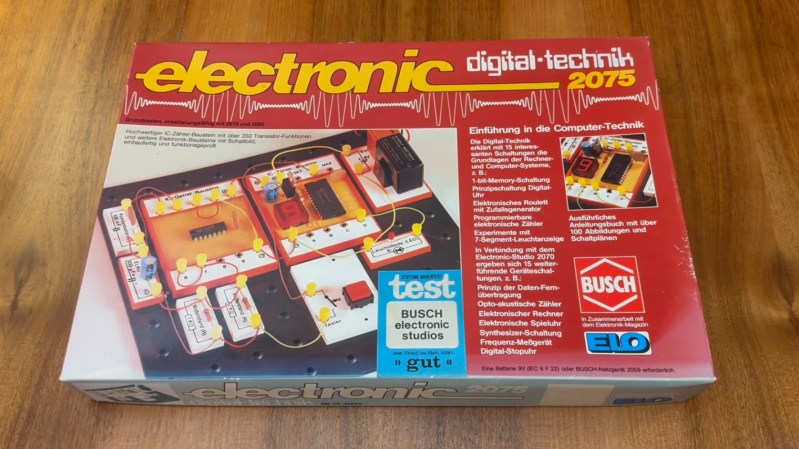
In a recent video, [Jason Jacques] demos the Busch Electronic Digital-Technik 2075 which was released in West Germany in the 1970s.
The Digital-Technik 2075 comes with a few components including a battery holder and 9 V battery, a push button, two 1 K resistors, a red LED, a 100 nF ceramic capacitor, a 100 µF electrolytic capacitor, a quad NAND gate IC, and a counter module which includes an IC and a 7-segment display. The kit also comes with wires, plugs, a breadboard, and a tool for extracting modules.
The Digital-Technik 2075 doesn’t use the spring terminals we see in other project labs of the time, such as the Science Fair kits from Radio Shack, and it doesn’t use modular Denshi blocks, such as we saw from the Gakken EX-150, but rather uses wire in conjunction with yellow plastic plugs. This seems to work well enough.
In the video, after showing us how to do switch debouncing, [Jason] runs us through making a counter with the digital components and then getting the counter to reset after it counts to five. This is done using NAND gates. Before he gets stuck into doing a project he takes a close look at the manual (which is in German) including some of the advertisements for other project labs from Busch which were available at the time. As he doesn’t speak German [Jason] prints out an English translation of the manual before working through it.
We’ve heard from [Jason] at Hackaday in recent history when we saw his Microtronic Phoenix Computer System which referenced the 2090 Microtronic Computer System which was also made by Busch.
Apple’s rumored iOS 27 update may focus on cleanup and Apple Intelligence upgrades while the company bets on Siri, Veritas, and services growth for AI revenue.
The post Report: Here’s What Apple Users Can Expect from iOS 27 appeared first on TechRepublic.
Apple’s rumored iOS 27 update may focus on cleanup and Apple Intelligence upgrades while the company bets on Siri, Veritas, and services growth for AI revenue.
The post Report: Here’s What Apple Users Can Expect from iOS 27 appeared first on TechRepublic.


Google Maps adds AI-powered tips, social recommendations, reviewer privacy tools, and EV charger predictions to help travelers navigate the holiday rush.
The post Gemini Comes to Google Maps With Insider Tips, Social Lists, and EV Tools appeared first on TechRepublic.
Google Maps adds AI-powered tips, social recommendations, reviewer privacy tools, and EV charger predictions to help travelers navigate the holiday rush.
The post Gemini Comes to Google Maps With Insider Tips, Social Lists, and EV Tools appeared first on TechRepublic.
Last year, Apple finally added support for Rich Communications Services (RCS) texting to its platforms, improving consistency, reliability, and security when exchanging green-bubble texts between the competing iPhone and Android ecosystems. Today, Google is announcing another small step forward in interoperability, pointing to a slightly less annoying future for friend groups or households where not everyone owns an iPhone.
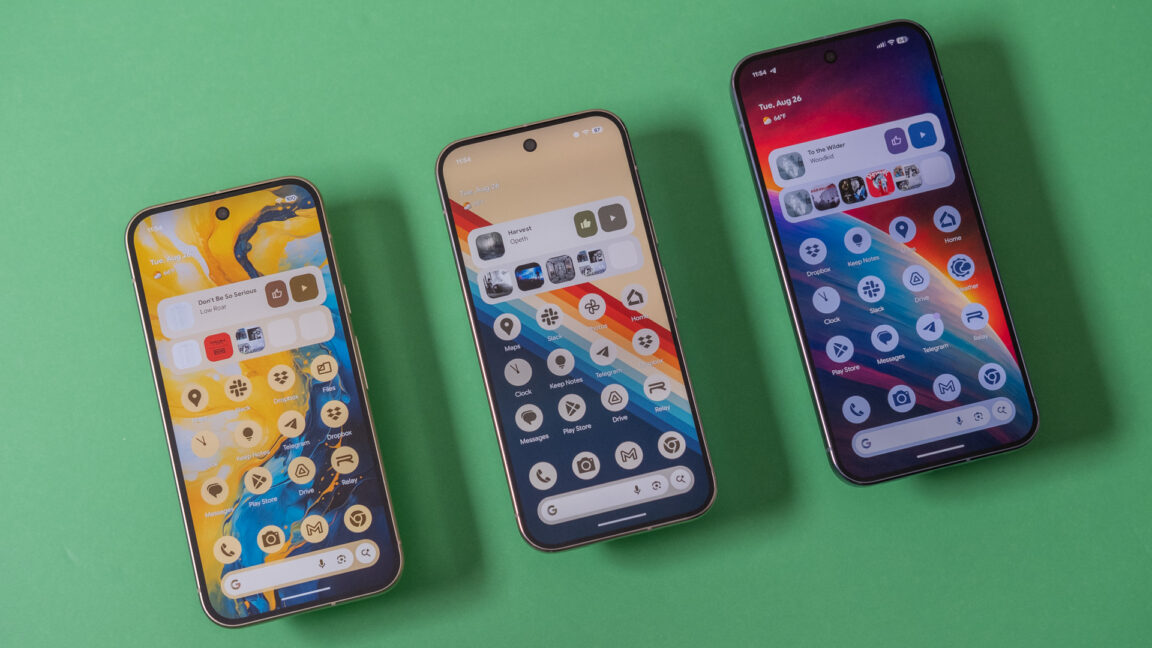
Google has updated Android’s Quick Share feature to support Apple’s AirDrop, which allows users of Apple devices to share files directly using a local peer-to-peer Wi-Fi connection. Apple devices with AirDrop enabled and set to “everyone for 10 minutes” mode will show up in the Quick Share device list just like another Android phone would, and Android devices that support this new Quick Share version will also show up in the AirDrop menu.
Google will only support this feature on the Pixel 10 series, at least to start. The company is “looking forward to improving the experience and expanding it to more Android devices,” but it didn’t announce anything about a timeline or any hardware or software requirements. Quick Share also won’t work with AirDrop devices working in the default “contacts only” mode, though Google “[welcomes] the opportunity to work with Apple to enable ‘Contacts Only’ mode in the future.” (Reading between the lines: Google and Apple are not currently working together to enable this, and Google confirmed to The Verge that Apple hadn’t been involved in this at all.)
© Ryan Whitwam
iOS 26.2 Public Beta 2 introduces code-based AirDrop sharing, Liquid Glass UI refinements, stricter Sleep Scores, and smoother iPad multitasking.
The post Apple Reveals iOS 26.2 Public Beta 2, Polishing Features and Expanding AirDrop appeared first on TechRepublic.
iOS 26.2 Public Beta 2 introduces code-based AirDrop sharing, Liquid Glass UI refinements, stricter Sleep Scores, and smoother iPad multitasking.
The post Apple Reveals iOS 26.2 Public Beta 2, Polishing Features and Expanding AirDrop appeared first on TechRepublic.
There’s been a lot of talk of an AI bubble lately, especially regarding circular funding involving companies like OpenAI and Anthropic—but Clem Delangue, CEO of machine-learning resources hub Hugging Face, has made the case that the bubble is specific to large language models, which is just one application of AI.
“I think we’re in an LLM bubble, and I think the LLM bubble might be bursting next year,” he said at an Axios event this week, as quoted in a TechCrunch article. “But ‘LLM’ is just a subset of AI when it comes to applying AI to biology, chemistry, image, audio, [and] video. I think we’re at the beginning of it, and we’ll see much more in the next few years.”
At Ars, we’ve written at length in recent days about the fears around AI investment. But to Delangue’s point, almost all of those discussions are about companies whose chief product is large language models, or the data centers meant to drive those—specifically, those focused on general-purpose chatbots that are meant to be everything for everybody.


© Axios
