Reading view

There are new articles available, click to refresh the page.

Spinach and Chickpea Curry | Chole Palak

I bet you’ve never had chole this way before! It combines the comfort of chole with the goodness of spinach to make this delicious Spinach and Chickpea Curry or Chole Palak that will make you want to lick your bowl clean! 

a bowl of chole palak served along with onion rounds and naan

Eating your winter greens has never been this delicious and this Spinach and Chickpea Curry aka chole palak is so delicious that it will make even non palak lovers fall in love! I was so excited when testing this recipe, because believe me, it’s amazing how much flavor this curry packs in just 25 minutes! 

Save this for when you’re too tired to think, meal prep for the week ahead, or even when you want to feel like you’re eating something nourishing without sacrificing taste. If you love the classic Pindi Chole, it’s time you give this variation a shot. 

Ingredients for Chickpea and Spinach Curry

  • Chickpeas (Chana): The star of the dish. Soaked overnight or at least 8 hours 
  • Oil: Any neutral oil works; sunflower, canola, or vegetable oil
  • Whole Spices: Jeera (cumin seeds), bay leaf, black and green cardamoms, cinnamon, and cloves bring warmth and depth to the base. 
  • Aromatics: Finely chopped ginger, garlic, onions, and green chilli add layers of flavour and that essential punch.
  • Spice Powders: Coriander powder, cumin powder, turmeric, red chilli powder, chole masala, and salt create the masala base that makes this curry so deeply flavourful.
  • Tomatoes: Finely chopped and cooked down until mushy, they add tanginess and body to the gravy.
  • Spinach (Palak) and Coriander Leaves: Blanched and blended into a bright green puree that keeps the curry fresh, vibrant, and packed with nutrients.
  • Finishing Touches: Garam masala and roasted kasuri methi (dried fenugreek leaves) go in at the end for an extra layer of aroma.

Richa’s Top Tips

  • Soak your chickpeas properly: Overnight soaking is best, but if you’re short on time, at least give them 8 hours. Well-soaked chickpeas cook evenly and turn soft without falling apart.
  • Don’t skip the ice bath for spinach: Blanching the spinach and immediately dunking it in ice water locks in that bright green colour. It’s the difference between a dull, brownish curry and one that looks as good as it tastes.
  • Cook the masala well: Let the tomatoes break down completely and until the oil starts to separate from the spices before adding the chickpeas. This step builds the flavour base, so don’t rush it.
  • Adjust the consistency at the end: The curry thickens as it sits, so add a splash of water if it looks too thick. You want a gravy that coats the back of a spoon but still flows nicely.

Frequently Asked Questions

Can I use frozen spinach instead of fresh?

Yes, you can! Thaw it completely, squeeze out the excess water, and blend it into a puree. Fresh spinach gives you a brighter colour and flavour, but frozen works in a pinch and saves you the blanching step.

Why does my spinach turn dark when cooking?

Spinach turns dark when it’s overcooked or not cooled quickly enough after blanching. The ice bath is key, it stops the cooking process immediately and locks in that vibrant green colour. Skip it, and you’ll end up with a dull, olive-toned curry.

Can I substitute spinach with other greens like methi or kale?

Absolutely! Methi (fenugreek leaves) will give you a slightly bitter, earthy flavour that’s delicious with chole. Kale works too, though it’s a bit tougher, so blanch it a little longer. Amaranth leaves or mustard greens are also great options if you want to switch things up.

How do I prevent the curry from becoming too watery?

Cook the spinach puree for a good 3-4 minutes after adding it so it absorbs all the masala and thickens up. If it’s still too thin, let it simmer uncovered for a bit longer. The curry should have a thick, coating consistency, not a soupy one.

Storage Tips

  • Fridge: Store leftover chickpea spinach curry in an airtight container for up to 3 days. The flavours actually deepen over time, so day-two chole palak often tastes even better than freshly made.
  • Freezer: This curry freezes beautifully for up to 2 weeks. Let it cool completely before transferring to freezer-safe containers. Thaw overnight in the fridge before reheating.
  • Reheating: Warm it gently on the stovetop with a splash of water to loosen the gravy. You can also microwave it, but stovetop reheating keeps the texture better and lets you adjust the consistency as needed.

Serving Ideas

This chickpea and spinach curry is delicious on its own, but it really shines when you pair it with the right sides. Here are some easy combinations that work beautifully:

  • With Jeera Rice: The mild, aromatic rice lets the curry take center stage and soaks up all that delicious gravy.
  • With Rotis or Parathas: Perfect for mopping up every last bit of that spinach gravy. Nothing beats tearing off a piece of warm roti and scooping up the chole.
  • With Naan: Soft, pillowy naan is great if you want something a little richer to go with the curry.
  • With Pulao: A lightly spiced pulao complements the earthy, spiced flavours of the chole palak without overwhelming it.
  • With Raita: A cooling cucumber or boondi raita on the side balances out the warmth of the spices.
  • With Pickles and Papad: Add some pickles and crispy papad for that full Indian meal experience.

Customisation Ideas

  • Add paneer for extra protein: Toss in some cubed paneer at the end for a richer, more filling curry. It soaks up the gravy beautifully and adds a creamy texture.
  • Make it creamier: Stir in a tablespoon or two of cream or coconut milk right before serving for a silkier, more indulgent gravy.
  • Dial down the heat: Skip the green chilli or use less red chilli powder if you prefer a milder curry. You’ll still get all the flavour without the fire.
  • Try it with other greens: Swap spinach for methi (fenugreek), amaranth, or even a mix of greens for a different flavour profile that’s just as delicious.
a bowl of chole palak served along with onion rounds and naan

Why You’ll Love This Curry  

Spinach and chickpeas are a powerhouse combination when it comes to nutrition. Spinach is packed with iron, and chickpeas are loaded with protein and fiber, making this curry a complete, balanced meal in one bowl. The best part? The vitamin C from the tomatoes actually helps your body absorb the iron from the spinach more effectively. So not only does this chole palak taste comforting, it’s also working behind the scenes to nourish you in all the right ways.

This chole palak is comfort food at its best, and I hope it becomes a regular in your kitchen. If you make it, I’d love to see how it turns out, tag me on Instagram @my_foodstory!

Watch Spinach and Chickpea Curry Recipe Video

a bowl of chole palak served along with onion rounds and naan
Print

Spinach and Chickpea Curry | Chole Palak

The comfort of chole along with goodness of spinach come together to make this delicious and heartwarming, winter special Spinach and Chickpea Curry that tastes delicious with garlic naan!
Course Main Course
Cuisine Indian
Diet Vegan, Vegetarian
Prep Time 5 minutes
Cook Time 20 minutes
Total Time 25 minutes
Servings 4 persons
Calories 173kcal
Author Richa

Equipment

Ingredients

  • ½ cup white chick peas chana (soaked overnight or for 8 hours) (refer note.1)
  • 3 tablespoons oil
  • 1 teaspoon jeera
  • 1 bay leaf
  • 1 black cardamom
  • 1 inch cinnamon dalchini
  • 2 cloves
  • 2 green cardamoms
  • 2 teaspoons finely chopped ginger
  • 1 tablespoon finely chopped garlic
  • ¾ cup finely chopped onions 2 medium onions
  • 1 green chilli finely chopped
  • 1 tablespoon coriander powder
  • 1 teaspoon cumin powder
  • ½ teaspoon turmeric powder
  • 1 teaspoon chole masala
  • 1 teaspoon red chilli powder
  • 1 teaspoon salt
  • ½ cup + 2 tablespoons finely chopped tomatoes 2 medium tomatoes
  • 3 ¼ cups + 2 tablespoons water divided
  • ½ teaspoon garam masala
  • ½ teaspoon roasted & crushed kasuri methi
  • 3 cups tightly packed palak 150 gms
  • ½ cup coriander leaves & stems

Instructions

Cooking chana:

  • Heat oil in a pressure cooker, add jeera and once it crackles, add bay leaf, black & green cardamoms, cinnamon, cloves & saute for 8-10 seconds.
    3 tablespoons oil, 1 teaspoon jeera, 1 bay leaf, 1 black cardamom, 1 inch cinnamon, 2 cloves, 2 green cardamoms
  • Add ginger, garlic and saute on high for a few seconds till fragrant. Add onions & fry till they turn golden brown.
    2 teaspoons finely chopped ginger, 1 tablespoon finely chopped garlic, ¾ cup finely chopped onions, 1 green chilli
  • Add spice powders – coriander, cumin, turmeric, red chilli, chole masala, salt, tomatoes and cook on low for 3-4 minutes till the tomatoes are mushy.
    1 tablespoon coriander powder, 1 teaspoon cumin powder, ½ teaspoon turmeric powder, 1 teaspoon chole masala, 1 teaspoon red chilli powder, 1 teaspoon salt, ½ cup + 2 tablespoons finely chopped tomatoes
  • Add soaked chick peas, give a good mix, add 1 ¼ cups of water, cover the lid of the pressure cooker and cook on high till the first whistle, on low for 20 minutes or 4-5 whistles till the chick peas are cooked well.
    ½ cup white chick peas, 3 ¼ cups + 2 tablespoons water

Making palak puree:

  • Heat a pot with 2 cups of water, bring to a boil, add palak, coriander leaves. Immediately switch off the flame, and cover the pot. Let this sit for 2 minutes. In the meanwhile, prepare a bowl with water and ice cubes in it. Strain the palak & coriander leaves and dump them in the ice water. The leaves will immediately get a bright green color. Let them sit for half a minute, strain, and grind to a fine paste.
    3 cups tightly packed palak, ½ cup coriander leaves & stems

Making chole palak:

  • Open the pressure cooker, Add garam masala, kasuri methi, mix and cook for 2-3 minutes.
    ½ teaspoon garam masala, ½ teaspoon roasted & crushed kasuri methi
  • Add palak puree and cook for 3-4 minutes till the puree absorbs all the masalas. You may add 1-2 tablespoons of water to adjust the consistency to a thick gravy and serve.

Video

Notes

  1. ½ cup of soaked chick peas yields approx. 1 ⅓ cups.
  2. Leftovers will stay good for 2-3 days when refrigerated in an airtight container.

Nutrition

Calories: 173kcal | Carbohydrates: 15g | Protein: 4g | Fat: 12g | Saturated Fat: 1g | Polyunsaturated Fat: 3g | Monounsaturated Fat: 7g | Trans Fat: 0.04g | Sodium: 663mg | Potassium: 365mg | Fiber: 5g | Sugar: 3g | Vitamin A: 2570IU | Vitamin C: 15mg | Calcium: 82mg | Iron: 3mg

This article was researched and written by Harita Odedra.

The post Spinach and Chickpea Curry | Chole Palak appeared first on My Food Story.

Matar Paneer Pulao

Some days you just want a meal that feels homely without taking forever, and this matar paneer pulao does exactly that.

This matar paneer pulao is the kind of dish you put together on days when you want something comforting but don’t have the mental space for a long recipe. Soft paneer, sweet peas, and fragrant basmati rice all cook together in one pot, and the result is a bowl that feels cozy, familiar, and satisfying every single time.

If you enjoy easy one-pot meals like this, you might also love trying our Tehri (UP style vegetable pulao or yellow rice) or Kabuli Chana Pulao, both are simple, flavourful, and perfect for fuss-free & delicious recipes. 

Ingredients for Matar Paneer Pulao

  • Rice: Use a long grain variety of rice to achieve that separate, fluffy rice texture. I have used basmati rice, but any long grain rice will work here.  
  • Paneer: Cubed paneer lightly coated in cornflour and fried until golden-brown to help it retain its shape.  If you have 15 extra minutes, I would highly recommend making paneer from scratch using my homemade paneer recipe. It yields really soft and delicious paneer and you’ll be surprised how easy it is to make!
  • Veggies: Green peas for sweetness and thinly sliced onions for a soft, caramelised base.
  • Whole Spices: Cumin seeds, cinnamon, bay leaves, green and black cardamom, cloves, and peppercorns add warmth and aroma.
  • Aromatics: A slit green chilli for gentle heat and brightness.
  • Fats: Sunflower oil and ghee for richness and a fragrant finish.
  • Seasoning: Salt and a splash of lemon juice for balance.
  • Fresh Herbs: Chopped coriander leaves to garnish.

Richa’s Top Tips

  • Fry the paneer lightly: A quick shallow-fry helps the paneer stay firm and golden so it doesn’t crumble when mixed with the rice.
  • Keep the rice soaked: Soaking basmati for at least 30 minutes ensures long, separate grains that don’t turn sticky while cooking.
  • Let the whole spices bloom: Give the spices a minute in hot ghee to release their aroma before adding onions. This step builds the base flavour of the pulao.
  • Sauté the rice gently: Stirring the soaked, drained rice in the ghee-spice mixture for a couple of minutes helps coat each grain and prevents breakage during cooking.
  • Rest the pulao before serving: Once cooked, let the pulao sit covered for 10 minutes. This allows the flavours to settle and the grains to firm up without turning mushy.

Frequently Asked Questions

Can I make this in a pressure cooker?

Yes! After sautéing the onions, rice, peas, and paneer, add water and cook for 1 whistle on medium heat. Let the pressure release naturally for the fluffiest results.

Can I add other vegetables to this recipe?

Absolutely. Carrots, beans, cauliflower, sweetcorn, and even potatoes work well. Just chop them small so they cook evenly with the rice.

Can I replace paneer with a non-veg protein?

Yes. Boneless chicken pieces or small prawns can be added. Sauté them first until half-cooked, then mix into the rice as it cooks.

Why did my rice turn mushy?

This usually happens if there’s too much water or the rice wasn’t soaked and drained well. Stick to the recipe ratio and avoid stirring too much once water is added.

How do I stop my paneer from breaking?

Use firm, fresh paneer (homemade paneer is best), cut into large cubes, and coat lightly in cornflour. This keeps the pieces intact even when mixed with rice.

Storage Tips

  • Fridge: Store the pulao in an airtight container for 2–3 days. Add a splash of water while reheating so the rice stays soft and doesn’t dry out.
  • Freezer: You can freeze it for up to a month. Portion it into small boxes, thaw overnight in the fridge, and reheat gently on the stovetop.
  • Reheating: Warm on low heat with a little water or ghee. Avoid microwaving for too long because paneer can turn rubbery, short bursts work best.
  • Avoid leaving out: Since it contains paneer and cooked rice, don’t leave it at room temperature for more than 1–2 hours.

Serving Ideas

For a quick and light meal, matar pulao pairs well with simple sides like:

  • Cucumber raita: super quick and easy, this raita is refreshing & makes for the perfect accompaniment. 
  • Boondi Raita: if you want to jazz up your simple side, try this variation for similar flavors in different textures. 
  • Asian Slaw: another super light and fresh side fix for a healthy addition to your plate. 
  • Curry: for a heartier, more complete meal, matar pulao is excellent when served alongside a flavorful curry. 

Try this matar paneer pulao to satisfy your cravings tonight and don’t forget to tag me on Instagram @my_foodstory so that I can see how you give them your own spin.

Watch Matar Paneer Pulao Recipe Video

Print

Matar Paneer Pulao

Aromatic, textural, and absolutely delicious, this matar paneer pulao recipe is comforting enough for a weeknight meal but delicious enough to keep it fun and interesting.
Course Main Course
Cuisine Indian
Diet Vegetarian
Prep Time 10 minutes
Cook Time 20 minutes
Total Time 30 minutes
Servings 8 portions
Calories 432kcal
Author Richa

Ingredients

  • 2 cups basmati rice soaked for 30 minutes
  • 400 grams paneer cut into 1 ½ inch cubes
  • 2 tablespoons cornflour
  • 3 tablespoons sunflower oil
  • 2 tablespoons ghee
  • 1 teaspoon cumin seeds
  • ½ inch cinnamon
  • 2 bay leaves
  • 2 green cardamoms
  • 1 black cardamom
  • 5 black peppercorns
  • 5 cloves
  • 1 green chilli slit
  • 2 onions thinly sliced, 1 cup
  • 1 cup green peas
  • 4 cups water
  • 1 ½ teapoon salt
  • 1 teapoon lemon juice
  • 1 tablespoon finely chopped coriander leaves

Instructions

  • add the paneer pieces to a bowl, add the corn flour, mix gently to coat the paneer well.
    400 grams paneer, 2 tablespoons cornflour
  • Heat a pan or kadai with 3 tablespoons of oil and once the oil is moderately hot, add the paneer pieces & fry them until golden brown from both sides, transfer to a plate and set aside for use later.
    3 tablespoons sunflower oil
  • Heat the same pan or kadai, add ghee, add all the whole spices, green chilli, stir & cook over low flame for a minute. add onions & cook over medium heat until turn light golden. Drain water from soaked rice, add to the kadai & saute gently for 2-3 minutes till they are dry. Add green peas, fried paneer pieces, salt, lemon juice, water and stir well. Once it starts boiling, set the pulao on low heat and cook for 12-15 minutes till the rice is cooked. Rest for 10 minutes, garnish with chopped coriander leaves and serve.
    2 cups basmati rice, 2 tablespoons ghee, 1 teaspoon cumin seeds, ½ inch cinnamon, 2 bay leaves, 2 green cardamoms, 1 black cardamom, 5 black peppercorns, 5 cloves, 1 green chilli, 2 onions, 1 cup green peas, 4 cups water, 1 ½ teapoon salt, 1 teapoon lemon juice, 1 tablespoon finely chopped coriander leaves

Video

Nutrition

Calories: 432kcal | Carbohydrates: 46g | Protein: 12g | Fat: 22g | Saturated Fat: 10g | Polyunsaturated Fat: 0.5g | Monounsaturated Fat: 6g | Cholesterol: 43mg | Sodium: 479mg | Potassium: 154mg | Fiber: 3g | Sugar: 2g | Vitamin A: 148IU | Vitamin C: 10mg | Calcium: 275mg | Iron: 1mg

This article was researched and written by Harita Odedra.

The post Matar Paneer Pulao appeared first on My Food Story.
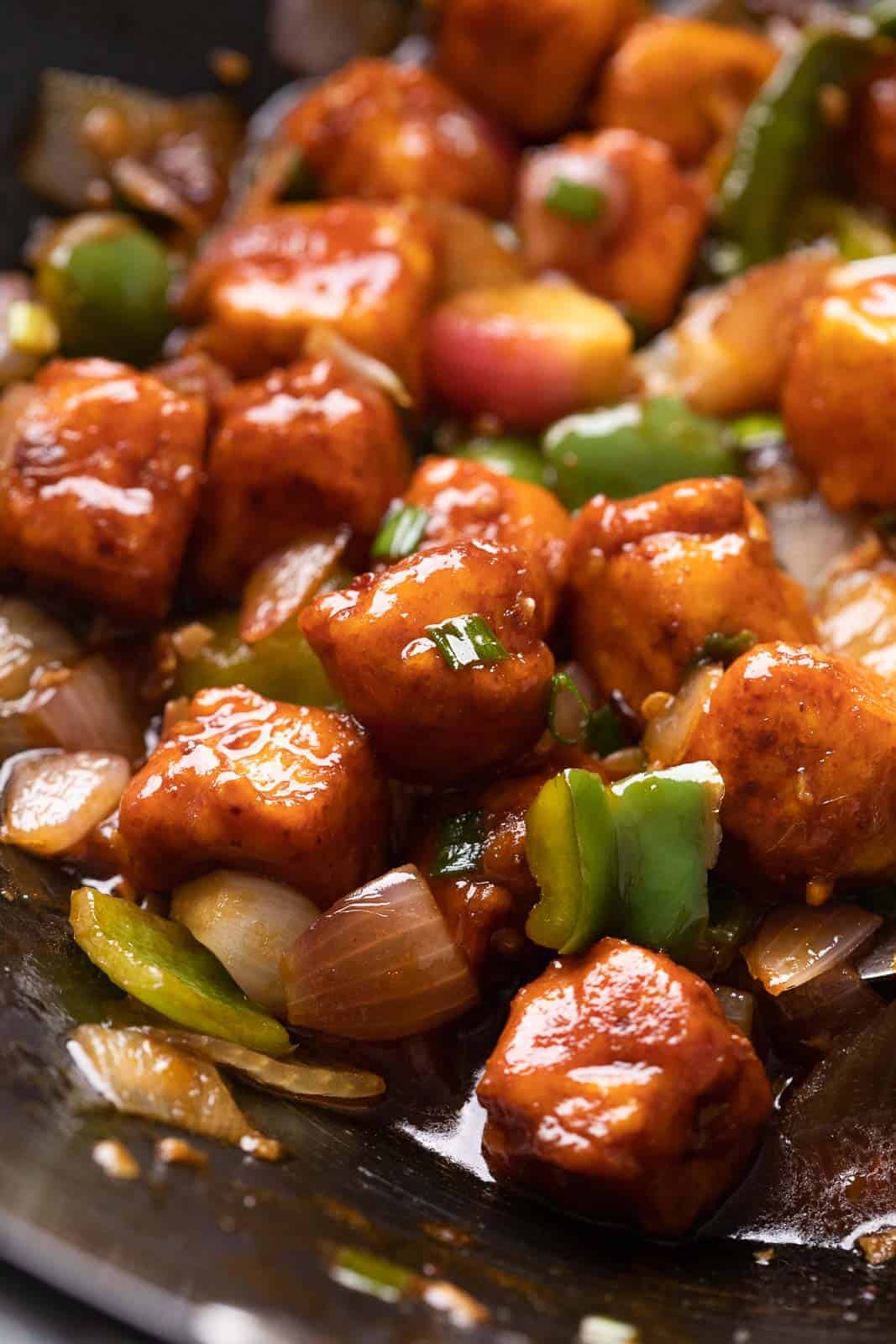
Basil Fried Rice

Some days, you just need a one-pan wonder that makes you feel good without making a mess. That’s where this Basil Fried Rice comes in–light, aromatic, and ready in minutes.

basil fried rice served on a green plate with a spoon

If you’re like me and could happily eat fried rice every other day, you’ll love how quick this Basil Fried Rice is to make. It’s light, herby, and feels fresher than the usual Indo-Chinese stir-fries. 

A handful of basil, some leftover rice, and ten minutes in the kitchen, that’s all it takes to make this comforting bowl of Basil Fried Rice. The mix of garlicky aroma and fresh basil instantly lifts your mood and turns old plain rice into something crave-worthy. And if fried rice is your thing, you should also check out my Veg Fried Rice or Egg Fried Rice recipe next, they’re just as easy, just as delicious.

Basil Fried Rice Ingredients

  • Rice: Use cooked basmati or long-grain rice. Day-old rice works best since it’s a bit firm and doesn’t turn mushy while stir-frying.
  • Basil: Fresh Thai basil is key here. It brings a lovely fragrance and peppery flavor that makes this dish special.
  • Veggies: Finely chopped carrots and baby corn add crunch and color. Feel free to add beans, bell peppers, or peas if you have them on hand.
  • Aromatics: Garlic gives the rice its signature stir-fry aroma.
  • Seasoning: Just salt and pepper to keep it simple.
  • Oil: Any neutral oil works well. Sunflower or vegetable oil keeps the flavors balanced.

Richa’s Top Tips

  • Use day-old rice: Freshly cooked rice tends to clump together. Cold, leftover rice gives you that perfect, non-sticky fried rice texture.
  • High heat is key: Cook everything on high heat to get that signature smoky, restaurant-style flavor.
  • Don’t overdo the basil: A little goes a long way. Add it right at the end so it stays bright and aromatic.
  • Add soy sauce sparingly: If you decide to season further, start with a light splash, too much can overpower the basil.
  • Chop small, cook fast: Keep the veggies finely chopped so they cook quickly and blend well with the rice.

Frequently Asked Questions

What’s the difference between Thai fried rice and basil fried rice?

Thai fried rice uses soy sauce or fish sauce for seasoning, while basil fried rice gets most of its flavour from fresh Thai basil and garlic. It’s a little spicier and more aromatic.

Can I use regular basil instead of Thai basil?

You can, but Thai basil has a stronger, slightly peppery flavour that really makes this dish stand out. Regular basil will give a milder, more Italian-style taste.

Can I add chicken, shrimp, or tofu?

Absolutely! Stir-fry your protein first, then mix it in with the rice and basil at the end. It turns this quick side into a full meal.

Why is my fried rice sticky?

That usually happens if the rice is freshly cooked and still warm. Use cold, day-old rice for the best texture, it stays fluffy and doesn’t clump.

Is basil fried rice healthy?

Yes, especially when you use minimal oil and load it up with veggies or lean protein. Thai basil also has antioxidant and anti-inflammatory benefits.

Storage Tips

  • Fridge: You can let the fried rice cool completely before transferring it to an airtight container. It’ll stay fresh for up to 3 days. 
  • Freezer: Basil fried rice freezes well for up to a month. Portion it into freezer-safe containers, thaw overnight in the fridge, and stir-fry again for a few minutes before serving.
  • Reheating: Cook it in a pan with a splash of water or oil to bring back that just-cooked texture.

Serving Ideas

Basil Fried Rice is one of those dishes that goes with just about anything — here are a few ways to make it shine:

Customisation Ideas

  • Add Protein: Toss in some pan-fried tofu, prawns, or shredded chicken to turn it into a hearty meal.
  • More Veggies: Throw in bell peppers, mushrooms, or snap peas for extra crunch and colour.
  • Make it Spicier: Stir in a spoonful of homemade Chilli Oil or finely chopped Thai chillies for that fiery edge.
  • Fried Egg on Top: A sunny-side-up egg makes this feel like comfort food with a little extra flair.
  • Saucy Twist: Drizzle some soy sauce or a dash of fish sauce at the end for a deeper umami flavour.
freshly cooked basil fried rice in the frying pan with a spatula

And there you have it, a quick, flavourful Basil Fried Rice that tastes just as good as your favourite takeout version (maybe even better). It’s fresh, fragrant, and endlessly adaptable, whether you want to keep it veggie-loaded or toss in some protein.

If you give it a try, don’t forget to tag @my_foodstory  on Instagram. I’d love to see how your version turns out!

close up of basil fried rice in a pan to show it's fluffy texture
Print

Basil Fried Rice

Super quick and easy, this basil fried rice recipe is a refreshing, herby, garlicky dish that makes for the fastest dinner ever!
Course Main Course
Cuisine Indian Chinese
Diet Vegan, Vegetarian
Prep Time 5 minutes
Cook Time 35 minutes
Total Time 40 minutes
Servings 4 people
Calories 198kcal
Author Richa

Ingredients

  • 1 ½ tablespoons cooking oil
  • 1 tablespoon finely chopped garlic
  • ¼ cup very finely chopped carrots
  • ¼ cup very finely chopped baby corn
  • 2 ½ cups cooked basmati rice got by cooking ½ cup raw basmati
  • 1 cup fresh basil leaves julienned
  • ½ teaspoon salt
  • ½ teaspoon ground pepper

Instructions

  • Heat oil in a pan or kadai, add garlic and saute for 30 seconds on high until fragrant.
    1 ½ tablespoons cooking oil, 1 tablespoon finely chopped garlic
  • Add carrots, baby corn and saute on medium for 1-2 minutes until tender.
    ¼ cup very finely chopped carrots, ¼ cup very finely chopped baby corn
  • Add the cooked rice, basil leaves, salt, pepper and toss for a minute or 2 and serve.
    2 ½ cups cooked basmati rice, 1 cup fresh basil leaves, ½ teaspoon salt, ½ teaspoon ground pepper

Notes

  1. Basmati rice is most suitable for this recipe which may be replaced with any long grain rice.
  2. Any cooking oil may be used, I have used sunflower oil.

Nutrition

Calories: 198kcal | Carbohydrates: 33g | Protein: 4g | Fat: 6g | Saturated Fat: 1g | Polyunsaturated Fat: 2g | Monounsaturated Fat: 3g | Trans Fat: 0.02g | Sodium: 298mg | Potassium: 123mg | Fiber: 1g | Sugar: 1g | Vitamin A: 1696IU | Vitamin C: 3mg | Calcium: 29mg | Iron: 1mg

This article was researched and written by Harita Odedra.

The post Basil Fried Rice appeared first on My Food Story.
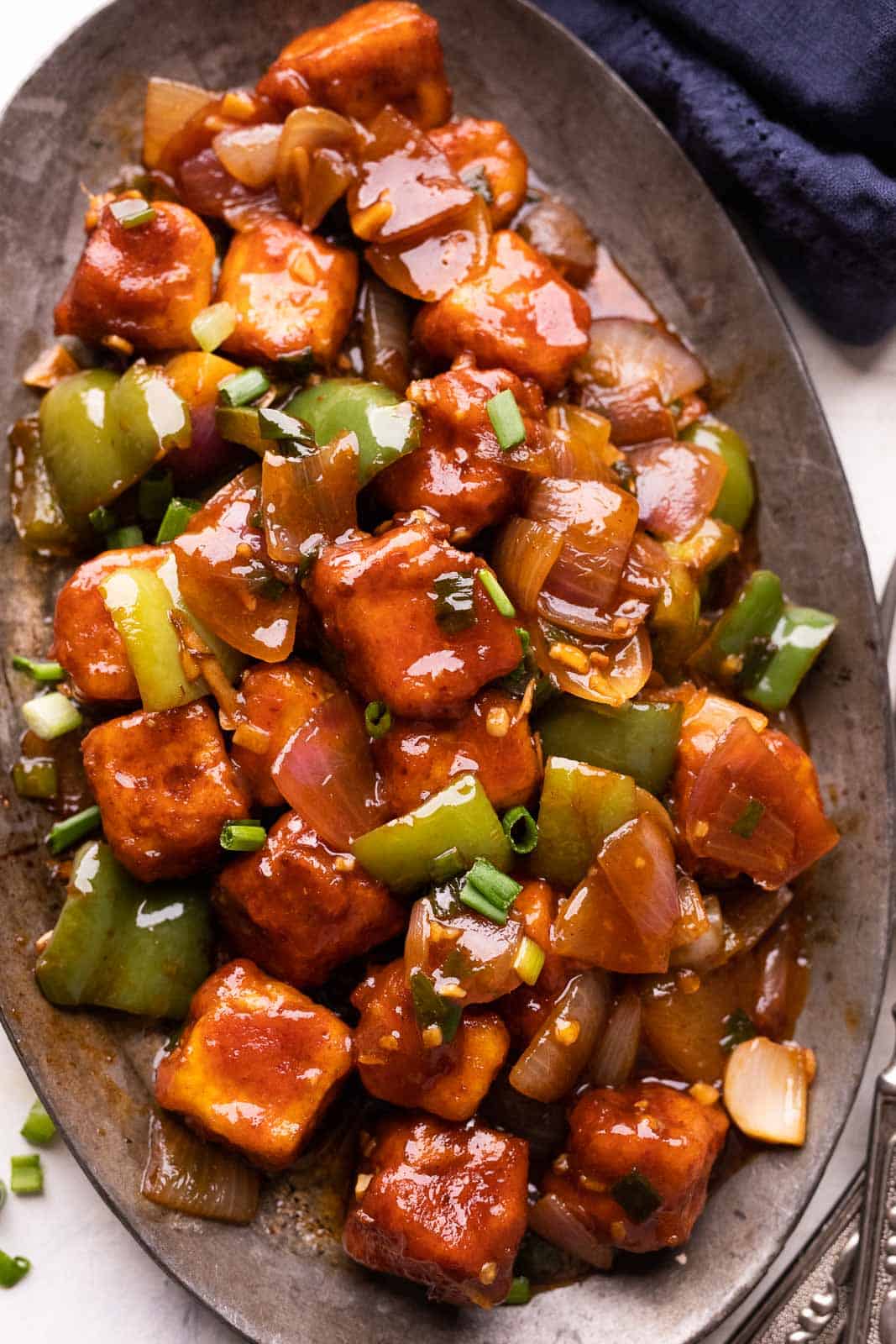
Chilli Paneer – Street Style

By: Richa

Craving that spicy, tangy, street-style Chilli Paneer you get from your favorite Indo-Chinese joint? This version brings the same bold flavors home and that signature glossy sauce you can’t stop eating.

Close up of street style chilli paneer in a wok

Chilli Paneer has that perfect balance of spice, crunch, and comfort that makes it everyone’s go-to Indo-Chinese dish. The soft paneer, crisp veggies, and glossy, flavourful sauce come together so beautifully that it’s hard to stop at just one bite. 

Making it at home is so much easier than you might think. You just need a handful of pantry staples and a hot wok to get those street-style flavours right. These go perfectly with dishes like Veg Hakka Noodles or Egg Fried Rice, to make up the perfect meal for a cosy night in with family & friends.

Chilli Paneer Ingredients

  • Paneer: Use fresh, firm paneer so it holds shape when fried but stays soft inside.
  • Coating Mix: A blend of cornflour, maida (all purpose flour), Kashmiri chilli powder, soy sauce, salt, and a splash of water to give the paneer a crisp outer layer.
  • Aromatics: Ginger, garlic, and green chillies add that signature Indo-Chinese punch and depth of flavour.
  • Veggies: Onion and capsicum (green bell pepper) for added texture 
  • Sauces: Soy sauce, red chilli sauce, ketchup, vinegar, and a touch of cornflour creates the glossy, spicy-sweet base.
  • Oil: For frying and stir-frying.
  • Spring Onions: To garnish and add freshness.

Frequently Asked Questions

Can I make this recipe vegan?

Yes! Simply replace the paneer with firm tofu. Pat it dry before coating and frying so it crisps up nicely and holds the sauce well.

Can I make this with gravy?

Absolutely. Just add about half a cup of water or vegetable stock to the sauce when cooking, and let it simmer for a few extra minutes. You’ll get that perfect saucy consistency that’s great with rice or noodles.

Is Chilli Paneer healthy?

It can be! While it’s usually fried, you can air fry or pan-fry the paneer instead of deep frying. Use less oil, add more veggies, and you’ll have a lighter version that still tastes amazing.

Richa’s Top Tips

  • Use quality paneer: Good paneer will take on flavours really well and stay soft instead of becoming rubbery when deep fried. Store bought paneer will do, but if you’ve got that extra 15 minute window, try out my Homemade Paneer Recipe!
  • Fry on high heat: Keeps the paneer crispy on the outside and prevents it from turning chewy.
  • Keep the veggies crunchy: Onions and capsicum should be just cooked, still bright, crisp, and full of bite. That’s where the street-style texture comes from.
  • Don’t skip the wok toss: Once you add the sauce, toss everything quickly on high heat to coat the paneer evenly and get that glossy finish.

Storage Tips

  • Fridge: Store leftover Chilli Paneer in an airtight container for up to 2 days. The paneer might soften a bit, but it’ll still taste delicious.
  • Freezer: It’s best to freeze just the sauce (without paneer) for up to 10 days. When ready to eat, thaw and toss with freshly fried paneer cubes.
  • Reheating: Warm it up in a pan over low heat. Add a splash of water to loosen the sauce and keep it from drying out. Avoid microwaving too long, as paneer can turn rubbery.

Serving Ideas

This Chilli Paneer tastes amazing on its own, but if you’re putting together a full Indo-Chinese spread, here are some delicious pairings to try:

Customisation Ideas

  • Make it saucier: Want that restaurant-style gravy version? Just add an extra half cup of water to the sauce and let it simmer till slightly thickened.
  • Try it with tofu: Swap the paneer with firm tofu for a vegan-friendly version that’s just as satisfying.
  • Add veggies: Toss in diced bell peppers, mushrooms, or baby corn for more texture and flavor.
  • Use baked or air-fried paneer: Skip deep-frying for a lighter, equally tasty version that still has that crisp bite.
  • Add crunch: Sprinkle toasted sesame seeds or crushed roasted peanuts on top just before serving for a fun twist.
Chilli Paneer served on a platter

And that’s your street-style Chilli Paneer, mouth watering crispiness, spicy, and full of flavor. You can trust it to always hit the right spot, whether you’re cooking for friends or just craving a quick fix for yourself. Every bite has that balance of heat and tang that makes you reach for another piece before you even realize it.

If you try this recipe, I’d love to see how it turns out! Share your version and tag @my_foodstory on Instagram, I can’t wait to see your kitchen magic.

Watch Paneer Chilli Recipe Video

Chilli Paneer served on a platter
Print

Street Style Chilli Paneer

Make street style chilli paneer easily with this recipe! Sweet, spicy, tangy with soft cubes of crispy paneer – this recipe is irresistable!
Course Snacks & Appetizers
Cuisine Indian Chinese
Diet Vegan, Vegetarian
Prep Time 10 minutes
Cook Time 15 minutes
Total Time 25 minutes
Servings 4 people
Calories 308kcal
Author Richa

Ingredients

  • 200 grams Paneer cut into cubes
  • 2 tablespoons Cornflour
  • 1 tablespoon maida
  • 1 teaspoon Kashmiri Chilli Powder
  • 1 teaspoon soy sauce
  • ½ teaspoon Salt
  • A splash of water
  • Oil for Frying approx half cup

Sauce Mixture

  • 1 tablespoon Soy Sauce
  • 2 teaspoons Red Chilli Sauce
  • 1 tablespoon Ketchup
  • ¼ teaspoon Kashmiri Chilli Powder or paprika
  • ½ teaspoon Vinegar
  • ¼ teaspoon Salt
  • ½ teaspoon Cornflour
  • ½ cup Water

For the Stir Fry

  • 2 teaspoons chopped Ginger
  • 2 teaspoons chopped Garlic
  • 2-3 Green Chillies slit lengthwise
  • 2 Onions cubed
  • 1 Capsicum cubed
  • 1 tablespoons chopped Spring Onions

Instructions

  • Add cornflour, maida, kashmiri chilli powder, soy sauce, salt to a bowl. Add the paneer cubes and toss to coat. Sprinkle a little water just to get the coating to stick to the paneer. Toss and set aside.
  • Heat oil in a wok or pan and add the paneer piece by piece to prevent them from sticking to each other. Fry them on high heat for 2-3 minutes, turning once or twice till they are golden brown. Take them out on a plate and set aside.
  • Whisk together all the ingredients under sauce and set aside.
  • Remove any excess oil from the wok, leaving behind 1.5 tbsp oil. Once the oil is hot, add ginger, garlic and green chillies. Saute for a minute or two and add onions and capsicum.
  • Stir fry for 2-3 minutes on high heat and add the paneer cubes. Toss the paneer with the aromatics for a minute.
  • Give the sauce a whisk and add it to the wok. Toss together on high heat for 2 minutes till the cornflour is cooked and the sauce takes on a thick, glossy finish and coats the paneer pieces. Add a little water if you want a little more sauce. Sprinkle with chopped spring onions and serve hot.

Video

Notes

  1. Chilli Paneer Gravy: For saucier chilli paneer, add an extra half cup of water to the sauce
  2. Vegan Chilli Paneer: You can easily substitute the paneer for tofu to make chilli tofu
  3. You can substitute the store bought chilli sauce with homemade chilli garlic paste. I highly recommend making it yourself. I used Kashmiri Red Chillies for this recipe which have more colour than heat
  4. If using homemade chilli paste, once you add it to to the wok, be sure to fry it until almost all of the raw aroma goes. This will help you avoid the raw chilli taste and smell in the dish. 

Nutrition

Calories: 308kcal | Carbohydrates: 17g | Protein: 9g | Fat: 23g | Saturated Fat: 8g | Polyunsaturated Fat: 3g | Monounsaturated Fat: 7g | Trans Fat: 1g | Cholesterol: 33mg | Sodium: 850mg | Potassium: 191mg | Fiber: 3g | Sugar: 7g | Vitamin A: 1152IU | Vitamin C: 46mg | Calcium: 264mg | Iron: 1mg

This article is researched and written by Harita Odedra.

The post Chilli Paneer – Street Style appeared first on My Food Story.

South Indian Style Egg Curry

Somewhere between the creaminess of coconut milk, sharpness of tamarind, and fragrance of curry leaves, this South Indian egg curry manages to make plain old boiled eggs taste like something special.

an image of south indian style egg curry in a black clay pot and garnished with coriander and curry leaves

If you’re looking for a new way to eat boiled eggs or give your regular egg curry a delicious new twist, then it’s time to try this South Indian Style Egg Curry. It’s got a spicy, creamy base, brightness from tamarind, and  The creamy coconut milk wraps around the spices, the tamarind adds a bright kick, and that signature South Indian flavor from the curry leaves–all of which comes together to make an egg curry that’s delicious and comforting. 

I love how homely it feels, and if there is an egg curry recipe I love as much as my grandfather’s Dhaba style egg curry, it’s got to be this one. The whole thing comes together in one pot, and the eggssoak up all that flavour like little sponges. It’s the kind of curry that makes everyone go quiet for a few minutes at the table because they’re too busy eating. 

Ingredients for South Indian Egg Curry

  • Hard-boiled eggs – The star of the dish. Follow the instructions in my How to Cook Hard-Boiled Eggs article for perfectly boiled eggs that soak up all the flavor!  
  • Whole Spices: Mustard seeds, cinnamon stick, green and black cardamom, peppercorns form a warm, aromatic base
  • Oil: I have used coconut oil for the authentic flavor, but sub it with a neutral-flavored oil in a pinch
  • Aromatics: Finally chopped ginger, garlic, and green chillies for lots of flavor and aroma. 
  • Onions and tomatoes: Finely chopped. These form the base of the curry
  • Powdered Spices: turmeric, coriander, and red chilli powders add color, warmth, and flavor  
  • Coconut Milk: This egg curry recipe calls for both thin and thick coconut milk for creaminess and that beautiful nutty flavor 
  • Tamarind water: Adds a bright tanginess that lifts the whole curry
  • Curry leaves – That final hit of sharp, herby aroma that makes it unmistakably South Indian.

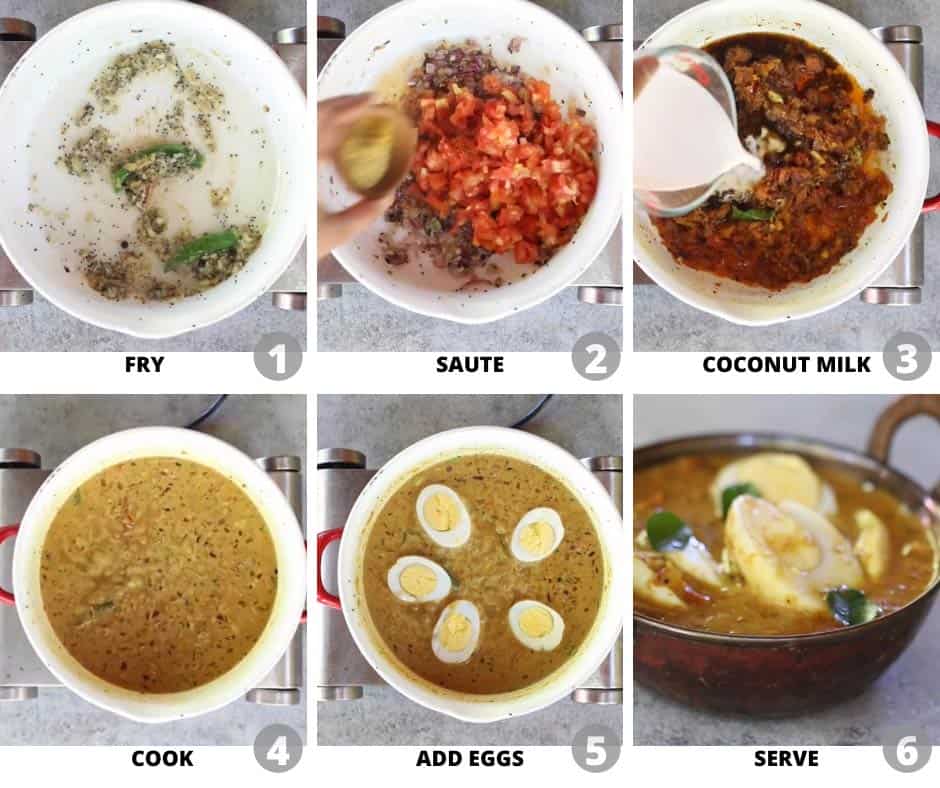
How to make South Indian Egg Curry

Step by step pictures to show you how to make South Indian Egg Curry

Richa’s Top Tips 

  • Sauté the spices well – Let the whole spices crackle and release their aroma before adding onions, this builds the base flavour for the curry.
  • Use two kinds of coconut milk – Thin coconut milk is used to add flavor and creaminess to the dish, while thick coconut milk gives the gravy that luscious, silky finish. 
  • Don’t overcook the eggs – Keep the yolks just set and still a bit creamy inside. Over-boiled eggs can turn rubbery and won’t soak up flavours as well.
  • Balance tamarind carefully – Start with a little and taste, it should add brightness without making the curry too sour.
  • Add curry leaves right at the end – Toss them in just before you switch off the heat so they stay fragrant and fresh.

Frequently Asked Questions

Can I make this with vegetables instead of eggs?

Absolutely, try adding boiled baby potatoes, paneer cubes, or even grilled mushrooms. They soak up the curry beautifully and pair well with the coconut-tamarind base.

Can I replace eggs with chicken?

Yes! Use small boneless chicken pieces. Brown them first, then simmer in the curry until cooked through. You may need to add a little extra water and adjust seasoning as chicken takes longer than eggs.

Storage Tips

  • Fridge: Store the curry (without eggs) in an airtight container for 3–4 days. Add freshly boiled eggs when you reheat it.
  • Freezer: The curry base freezes well for up to 2 months. Thaw overnight in the fridge, heat gently, and drop in boiled eggs just before serving.
  • Leftovers with eggs: If you’ve already added eggs, refrigerate and eat within 24 hours, eggs can get rubbery if stored too long.
  • Reheating: Warm gently on the stovetop, stirring often. Add a splash of water or coconut milk if the curry has thickened in the fridge.

Serving Ideas

A bowl of this curry is great on its own, but it really shines with the right sidekicks. Try one of these easy pairings to make it feel like a full South Indian-style feast:

  • With Laccha Paratta – Their flaky layers are perfect for scooping up all that creamy curry.
  • Over Steamed Rice – A simple bowl of basmati or sona masoori rice works beautifully with the rich gravy.
  • With Coconut Stir-Fry Rice – Doubles up on the coconut flavour while adding texture.
  • With Jeera Rice – The mild cumin pairs well with the bold, tangy notes of the curry.
  • Alongside Lemon Rice – The bright citrusy rice balances the richness of the curry.
  • With Idiyappam (String Hoppers) – A traditional South Indian combo that soaks up the gravy perfectly.
  • With Ragi Dosa – For a crispy, light pairing that turns this into a brunch-style meal.

Customisation Ideas

  • Fry the eggs first – Halve the boiled eggs and lightly pan-fry them till golden before adding them to the curry for a deeper, toasty flavour.
  • Switch the cooking fat – Use ghee instead of coconut oil for a richer, festive taste, or sesame oil for a gentle nutty note.
  • Swap the tang – Replace tamarind water with kokum or a splash of raw mango pulp for a brighter, fruitier sourness.
  • Add some greens – Stir in spinach, amaranth, or drumstick leaves toward the end for a fresh, earthy lift.
  • Top with crunch – Toast a few cashews or coconut slivers and sprinkle them on top right before serving for texture.
close up image of south indian style egg curry to show the creamy texture and perfectly boiled eggs

So go forth, and enjoy this. And if you are a crazy egg curry fan like me, here’s some spicy North Indian style egg curry which is almost as good!

Also Try – North Indian Style Egg Curry

More South Indian Recipes:

Watch South Indian style Egg Curry Recipe Video (Step by Step)

close up image of south indian style egg curry to show the creamy texture and perfectly boiled eggs
Print

South Indian Style Egg Curry

Learn how to make south indian style egg curry, inspired by Kerala cuisine. Easy, comforting and creamy egg curry recipe!
Course Main Course, Side Dishes
Cuisine Indian
Diet Halal
Prep Time 10 minutes
Cook Time 30 minutes
Total Time 40 minutes
Servings 5 Portions
Calories 333kcal
Author Richa

Ingredients

  • 5 Hard Boiled Eggs peeled
  • 1 tablespoon Coconut Oil
  • 1 teaspoon Mustard seeds
  • 1 Cinnamon small stick
  • 3 Cardamom pods
  • 5 Peppercorns lightly smashed
  • 2 – 3 Green Chillies slit lengthwise
  • 1 teaspoon Ginger finely chopped or ginger paste
  • 7 Garlic cloves smashed and roughly chopped or garlic paste
  • 2 Onions finely chopped (medium)
  • 3 Tomatoes finely chopped (large)
  • 1/2 teaspoon Turmeric Powder
  • 1 teaspoon Coriander Powder
  • 1/2 teaspoon Chili Powder Red
  • 1/4 cup Tamarind Water See Note 2
  • 1 cup Thin Coconut Milk See Note 3
  • 1/2 cup Thick Coconut Milk
  • 8 – 10 Curry Leaves
  • Salt to taste

Instructions

  • In a large pan, heat coconut oil and add mustard seeds, cinnamon, cardamom, peppercorns and green chilies. Once everything starts spluttering, add ginger, garlic and onions.
  • Cook till the onions turn soft and translucent and add tomatoes, turmeric powder, coriander powder, chili powder and salt. Let the tomatoes cook till they are pulpy, 6-8 minutes.
  • Add tamarind water and thin coconut milk.Stir and bring this to a boil and reduce heat to simmer.
  • Simmer till the gravy reduces slightly and becomes thicker, about 5 minutes. At this point, add some water if you need to adjust the consistency.
  • Adjust seasoning, add curry leaves and pour in the thick coconut milk. Stir a few times, without letting it come to a boil and switch off the flame. Drop the eggs in the curry, and cover and let it sit for five minutes before serving.

Video

Notes

  1. To hard boil eggs perfectly, add eggs to a pot and fill it with water till it covers the eggs. Bring it to a boil and switch off the flame. Cover and let it sit for 12 minutes. Transfer to a vessel and place in cold water for perfectly hard boiled eggs.
  2. To make tamarind water, add a small, bite sized ball of tamarind to warm water and let it sit for 10 minutes. Mash with your hands and use the paste/water in the curry.
  3. Most packaged coconut milk is first pressing or thick coconut milk. To make thin coconut milk from it, add half water and half coconut milk for one cup thin coconut milk.
  4. If storing this curry for later, do not add eggs. You can freeze the curry and reheat it when required. Use fresh hardboiled eggs when you reheat the curry. 

Nutrition

Calories: 333kcal | Carbohydrates: 19g | Protein: 10g | Fat: 26g | Saturated Fat: 19g | Cholesterol: 187mg | Sodium: 233mg | Potassium: 505mg | Fiber: 6g | Sugar: 10g | Vitamin A: 1070IU | Vitamin C: 94mg | Calcium: 86mg | Iron: 3mg

This article was researched and written by Harita Odedra.

The post South Indian Style Egg Curry appeared first on My Food Story.

Thai Curry Soup with Noodles

A big, slurpy, comforting bowl of noodle soup is all I crave on some days, and this creamy, fragrant, and bursting with flavors Thai Curry Noodle Soup hits the spot each time! 

close up image of thai curry soup scooped up in a spoon to show it's creamy texture

This Thai Curry Noodle Soup is like a hug in a bowl. It’s got that rich coconut milk base, a gentle kick from curry paste, and the kind of veggie goodness that makes you feel both indulgent and cozy at the same time. Plus, it comes together faster than you think.

Honestly, it’s one of those dishes I turn to when I’m craving something restaurant-style but also want to curl up on the couch with my blanket. Comforting, slightly spicy, wholesome, and totally slurp-worthy. 

Thai Curry Soup Ingredients 

  • Thai curry paste – The hero! I have used a store-bought red Thai curry paste for ease and convenience.
  • Aromatics: Shallots and garlic for lots of and aroma
  • Coconut oil – for a subtle nutty depth, but can be subbed with a neutral-flavored oil in a pinch 
  • Veggies: red capsicum, carrot, baby corn, mushrooms, bok choy add flavor, texture and nutrition to the dish. 
  • Sauces: soy sauce and fish for umami notes that take this Thai curry soup to the next level!
  • Jaggery – Just a pinch to balance out the spice and saltiness of this dish
  • Coconut milk – Makes the soup rich, creamy, and hearty. 
  • Rice noodles – The perfect addition to make the dish more wholesome. Can be subbed with any noodles of your choice. 
  • Water – To adjust the consistency. 
  • Coriander leaves – For garnish. Adds a fresh, herby finishing touch. 
  • Thai red chillies (optional) – For those who like an extra fiery kick at the end.

Richa’s Top Tips 

  • Don’t overcook the veggies: Cook veggies on high heat so they cook fast while still remaining crunchy. Overcooking will make them soggy, which is not ideal for this recipe. 
  • Use full-fat coconut milk for the best, creamy texture. Light coconut milk tends to water down the flavor.
  • Soak noodles separately instead of boiling them in the soup — this keeps the broth silky and not starchy.
  • Fry the bok choy lightly: That char adds so much flavor!
  • Add a protein of choice: Feel free to add poached chicken, pan-fried tofu, paneer, or even shrimp to make this dish more wholesome.  
  • This dish can easily be made ahead in a big batch for quick and easy weeknight meals, as it’s both fridge and freeze-friendly (check storage instructions below)

Frequently Asked Questions 

Which are the best noodles for this Red Thai Curry Soup? 

I have used rice noodles as I really enjoy their light and thin texture, but hakka, udon, vermicelli, soba, or pad thai also taste equally great! 

What can I use instead of fish sauce? 

If you’re a vegetarian, you can replace fish sauce with a mix of soy sauce and rice vinegar. You can also replace it with oyster sauce if that’s more easily available to you. However, oyster sauce will alter the taste of the dish slightly, but it will still be amazing! 

Can I make this with green Thai curry instead? 

Absolutely! This recipe is super customisable, and a green Thai curry soup with noodles will also taste delicious. 

Customisation Ideas

  • Toss in some tofu cubes, prawns, or poached and shredded chicken for extra heartiness.
  • Customise the veggies based on preference and whatever’s in your fridge — broccoli, zucchini, or snap peas work beautifully.
  • Feel free to adjust the spice levels based on your tolerance. Thai curry paste comes in different levels of heat. Adjust according to your tolerance, and skip the chillies if you like it mild.
  • Make it vegan: Simply omit the fish sauce and replace it with extra soy sauce. 

Storage Tips

  • Refrigerate: Store the curry soup base (without the noodles) in the fridge for 2–3 days in an airtight container so the coconut milk doesn’t absorb other fridge smells.
  • Freezing: The broth can also be frozen for up to a month. Coconut milk sometimes separates when thawed, but a quick whisk while reheating brings it back together.
  • Reheating: Warm the soup on the stovetop over low heat (avoid high heat so the coconut milk doesn’t split). Then add the noodles and bok choy just before serving.
thai curry soup served in a bowl ready to be eaten

If you’re looking for a meal that’s equal parts comforting, flavorful, and a little exotic, this Thai Curry Noodle Soup is it. It’s quick enough for a weeknight, but special enough to serve when you’re having friends over. Slurp it up, and let the cozy vibes roll!

If you make this at home, don’t forget to send me your recreations over in my DMs @my_foodstory. I love hearing from you guys so much!!

Watch Thai Curry Soup Recipe Video

Print

Thai Curry Noodle Soup

A big, slurpy, comforting bowl of noodle soup is all I crave on some days, and this creamy, fragrant, and bursting with flavors Thai Curry Noodle Soup hits the spot each time!
Course Main Course
Cuisine international, Thai
Diet Vegetarian
Prep Time 5 minutes
Cook Time 7 minutes
Total Time 12 minutes
Servings 4 portions
Calories 351kcal
Author Richa

Ingredients

  • 1 tablespoon coconut oil or any neutral cooking oil divided
  • 2 teaspoons finely chopped garlic
  • 1 ½ tablespoons thai curry paste
  • 5-6 shallots thinly sliced
  • ½ red capsicum cut into broad sticks
  • ½ medium carrot thinly sliced
  • 5 baby corns sliced into 4
  • 5 mushrooms halved
  • 1 ½ teaspoon soy sauce
  • ½ teaspoon fish sauce
  • 1 teaspoon jaggery
  • 1 cup thick coconut milk
  • 1 bok choy sliced vertically into 2
  • 100 grams rice noodles
  • 5 cups water divided
  • 2 tablespoons of coriander leaves
  • 2 thai red chillies thinly sliced (for serving / optional)

Instructions

Making soup

  • Heat 2 teaspoons of oil in a pan, add garlic & saute on high for a few seconds till fragrant. Add thai curry paste and saute for a minute on low. Add shallots & saute for a minute. Add capsicum, carrot, baby corns, mushrooms, saute for a minute on low. Add 2 cups of water and cook on low for 2-3 minutes till the veggies are just tender. Do not overcook as the veggies get soggy.

Cooking noodles

  • Take noodles in a bowl, heat 2 cups of water and once it boils, add it to the bowl to soak the noodles for 1-2 minutes till they are cooked. Drain and set aside.

Frying bok choy

  • Heat a teaspoon of oil in a pan, add bok choy and roast for 2 minutes on low on either sides till they are lightly browned and tender. Set aside on a plate.

Serving curry soup

  • Add 3 ladles of soup to a bowl, add noodles, bok choy, garnish with coriander leaves and 2-3 slices of red chillies.

Video

Nutrition

Calories: 351kcal | Carbohydrates: 42g | Protein: 8g | Fat: 19g | Saturated Fat: 16g | Polyunsaturated Fat: 1g | Monounsaturated Fat: 1g | Sodium: 344mg | Potassium: 991mg | Fiber: 6g | Sugar: 11g | Vitamin A: 12084IU | Vitamin C: 124mg | Calcium: 272mg | Iron: 4mg

This article has been researched and written by Urvi Dalal.

The post Thai Curry Soup with Noodles appeared first on My Food Story.
One Pot Pav Bhaji | Pressure Cooker Pav Bhaji

This one-pot pav bhaji recipe is perfect when you want all that street-style flavor without juggling multiple pans. Add a dollop of butter, squeeze of lime, and freshly chopped onions, and you’ve got yourself a plate of pure happiness!

pressure cooker pav bhaji served on a sectioned plate with accompaniments

Pav Bhaji always takes me back to my college days in Mumbai. I’m BIG on street food and I could never get enough of the buttery, spicy goodness that the street stalls whipped up. That rich bhaji, those crunchy onions, the perfect squeeze of lemon on top, all scooped up with buttery pav – I mean! 😋

There’s no way I could go without it even all these years later and I’ve got the perfect recipe to replicate that street-style flavor right at home! This Pav Bhaji is made in the instant pot or pressure cooker, which does all the heavy-lifting so that only FIVE minutes of hands-on prep are involved. And no compromises on taste or texture!

I love to serve this decadent, veggie-loaded bhaji with my homemade ladi pav and I SWEAR by both these recipes! If you’ve got the same college cravings like me then you also need to check out my Misal Pav recipe and my OG Pav Bhaji recipe. And of course, Mumbai’s famous Green Keema Masala toooo!

Ingredients for One Pot Pav Bhaji

Vegetables – Potatoes, carrots, capsicum, beetroot and peas — the hearty base that makes the bhaji thick, filling, and nutritious.

Soya Granules – These add extra texture and depth to the bhaji, as well as adding protein!

Onions & Tomatoes – Onions for sweetness and body, tomatoes for tang and depth that tie the masala together.

Ginger, Garlic & Green Chilli – The essential aromatics that add sharpness, heat, and earthiness.

Pav Bhaji Masala – The star spice blend that gives pav bhaji its signature street-style flavour. Any store-bought version of your choice works. 

Turmeric & Chilli Powder – For colour, warmth, and a gentle kick of spice.

Butter & Oil – Butter for richness and indulgence, oil for balance in cooking. I prefer to use a neutral oil like sunflower oil here. 

Pav (Bread Rolls) – Soft ladi pavs, perfect for soaking up the bhaji.Garnish – Fresh coriander, onions, and lemon wedges for brightness, crunch, and zing.

freshly made one pot pav bhaji scooped up in a ladle to show it's texture

Steps To Make Pressure Cooker Pav Bhaji

Prepare the Base

  • Heat butter + oil in a pressure cooker or Instant Pot.
  • Add onions and sauté until golden. Stir in ginger-garlic paste and cook till aromatic.

Add Spices and Veggies

  • Stir in pav bhaji masala, chilli powder,  turmeric, coriander powder and salt. 
  • Add tomatoes and cook until they soften and the oil begins to separate.
  • Add all chopped vegetables (potatoes, beetroot, capsicum, carrots, peas, and soya granules) 
  • Pour in water, mix, and pressure cook until the veggies are soft.

Mash the Bhaji

  • Once pressure releases, use a potato masher to mash the cooked veggies into a smooth, slightly chunky curry. Add water as needed to adjust consistency and squeeze lemon juice into the bhaji. 
  • Add a little tadka of butter and spices to elevate the flavors even more. 

Toast the Pav

  • Heat butter on a flat tawa or pan.
  • Slice pavs horizontally, place on the pan, and toast until golden.

Serve

  • Plate bhaji hot, topped with butter, onions, coriander, and lemon wedges.
  • Serve with the buttery toasted pavs.

Richa’s Top Tips

  • Don’t skip the butter! It’s what makes pav bhaji authentic and indulgent.
  • For a deeper flavor, add a little kasuri methi (dried fenugreek leaves) at the end.
  • If making ahead, keep bhaji and pav separate. Toast pav fresh before serving.
  • Use a wide potato masher or even the back of a katori for a smooth, street-style mash.
  • You can easily make this recipe vegan by replacing butter with oil.
  • You can adjust consistency of pav bhaji to suit your preference. If you like it slightly runny, add some water. For thicker bhaji, mash the bhaji more and simmer uncovered for a few extra minutes to reduce excess liquid.

Frequently Asked Questions

What is pav bhaji made of?

Pav bhaji is made from a mix of mashed vegetables like potatoes, peas, carrots, capsicum, and beetroot, cooked with spices and butter, and served with pav (bread rolls).

Which pav is best for pav bhaji?

Soft, fluffy ladi pav (dinner rolls) are the classic choice. I have started making mine in the air fryer to save time and effort, and they always turn out sooo delicious! If unavailable, substitute with burger buns or sandwich rolls.

Can I make pav bhaji without a pressure cooker?

Yes! You can simmer the veggies in a pot until soft. It’ll take longer, but the flavor is just as good. Check out my OG Pav Bhaji recipe for this!

How to get that bright red color of pav bhaji?

Street-style pav bhaji often has a vibrant red hue that comes from Kashmiri red chilli powder or degi mirch, which adds colour without making it too spicy. Some vendors also use a little beetroot purée or food colour, but Kashmiri chilli powder works beautifully at home.

I don’t have pav bhaji masala, what can I use instead?

Pav bhaji masala is unique, but you can make a quick substitute by mixing garam masala, coriander powder, cumin powder, chilli powder, and a pinch of amchur (dry mango powder). It won’t be exactly the same, but it’ll give you a close flavour profile.

Serving Ideas

  • Always top with extra butter (the more, the better!).
  • Garnish with raw chopped onions and lemon wedges.
  • Serve with papad, salad, or pickles for a fuller spread.

Storage Tips

  • Store in an airtight container in the fridge for up to 2 days. 
  • You can freeze the bhaji in an airtight container for up to 2 months. Thaw and reheat with a splash of water. Toast pavs fresh. 
pressure cooker pav bhaji served on a sectioned plate with accompaniments

One bite of this Pav Bhaji and you won’t be able to stop! It’s super quick to make, just as delicious as the street-side version and perfect for the entire family to enjoy. Make this and send me your recreations over on my IG @my_foodstory

Watch One Pot Pav Bhaji Recipe Video

close up of pressure cooker pav bhaji to show it's texture
Print

One Pot Pav Bhaji | Pressure Cooker Pav Bhaji

This one-pot pav bhaji recipe is perfect when you want all that street-style flavor without juggling multiple pans. Tastes delicious with fresh laadi pavs, a dollop of butter, and crunchy onions!
Course Main Course
Cuisine Indian
Diet Vegetarian
Prep Time 5 minutes
Cook Time 20 minutes
Total Time 25 minutes
Servings 4 people
Calories 677kcal
Author Richa

Equipment

Ingredients

  • 1 ½ tablespoons sunflower oil or any neutral cooking oil
  • 80 grams butter divided
  • ½ teaspoon cumin seeds jeera
  • 2 teaspoons finely chopped garlic
  • 1 cup thinly sliced onions approx 120 grams
  • 3 green chillies finely chopped
  • 1 tablespoon kashmiri red chilli powder divided
  • 2 teaspoons coriander powder
  • ¼ teaspoon turmeric powder
  • 1 tablespoon + 1 teaspoon pav bhaji masala
  • 1 ¾ teaspoon salt
  • 1 cup finely chopped tomatoes 240 gms
  • 2 large potatoes peeled and cubed, approx 330 gms
  • 1 green capsicum cubed, approx 65 grams
  • 1 ⅓ carrots peeled & roughly chopped, approx 70 grams
  • beetroot peeled & chopped into ¼ inch cubes, approx 60 grams
  • cup fresh or frozen green peas approx 85 grams
  • ½ cup soya granules hydrated, refer note 1
  • 1 teaspoon garlic paste
  • teaspoon kasuri methi
  • ½ lemon juice
  • 2 – 2 ½ cups water divided
  • 2 tablespoons finely chopped coriander leaves

For serving

  • 10 – 12 pav
  • ½ cup finely chopped onions
  • 2 tablespoons finely chopped coriander leaves
  • 8 lemon wedges

Instructions

  • Add vegetable oil and 40 grams of butter to a pressure cooker and allow to heat on medium heat. Add cumin seeds and let it splutter. Add garlic and saute for a few seconds on medium until fragrant.
    1 ½ tablespoons sunflower oil or any neutral cooking oil, 80 grams butter, ½ teaspoon cumin seeds, 2 teaspoons finely chopped garlic
  • Add onions and fry on medium for 3-4 minutes till translucent. Add green chillies and saute for a few seconds.
    1 cup thinly sliced onions, 3 green chillies
  • Add 2 teaspoons of kashmiri chilli powder, coriander powder, turmeric powder, pav bhaji masala, 1 teaspoon of salt and chopped tomatoes, stir to combine, cover and cook on low for 5-6 minutes or until tomatoes are softened.
    1 tablespoon kashmiri red chilli powder, 2 teaspoons coriander powder, ¼ teaspoon turmeric powder, 1 tablespoon + 1 teaspoon pav bhaji masala, 1 ¾ teaspoon salt, 1 cup finely chopped tomatoes
  • Add potatoes, capsicum, carrots, beetroot, green peas and soya granules. Stir to combine. Add 1 ½ cups of water, mix well and pressure cook for 3-4 whistles or 12 minutes after the 1st whistle.Allow the cooker to depressurise by itself and then open the lid.
    2 large potatoes, 1 green capsicum, 1 ⅓ carrots, ⅓ beetroot, ⅓ cup fresh or frozen green peas, ½ cup soya granules, 2 – 2 ½ cups water
  • Mash the cooked veggies well using a potato masher. add ½ to 1 cup of water to adjust the consistency of the bhaji. Heat the cooker uncovered for 2-3 minutes on low for the veggies to absorb all the flavours and take off the heat. Add lemon juice and mix well.
    2 – 2 ½ cups water, ½ lemon juice
  • Heat the remaining 40 grams of butter in a small (or tadka) pan. Add 1 teaspoon garlic paste & fry for a few seconds. Add the remaining 1 teaspoon of kashmiri chilli powder, stir for a few seconds, add kasuri methi, 2 tablespoons of chopped coriander leaves, add the tadka to the pav bhaji and mix.
    80 grams butter, 1 tablespoon kashmiri red chilli powder, 1 teaspoon garlic paste, ⅔ teaspoon kasuri methi, 2 tablespoons finely chopped coriander leaves
  • To serve, top pav bhaji with chopped onion, coriander leaves and serve with lemon wedges and hot toasted pav.
    10 – 12 pav, ½ cup finely chopped onions, 2 tablespoons finely chopped coriander leaves, 8 lemon wedges

Video

Notes

  1. To hydrate soya granules: Soak the soya granules in 1 cup of boiling water for 10-15 minutes, drain & squeeze out water & use.

Nutrition

Calories: 677kcal | Carbohydrates: 91g | Protein: 17g | Fat: 30g | Saturated Fat: 13g | Polyunsaturated Fat: 3g | Monounsaturated Fat: 12g | Trans Fat: 1g | Cholesterol: 43mg | Sodium: 1940mg | Potassium: 1067mg | Fiber: 14g | Sugar: 11g | Vitamin A: 5047IU | Vitamin C: 87mg | Calcium: 274mg | Iron: 7mg

This article was researched and written by Navya Khetarpal.

The post One Pot Pav Bhaji | Pressure Cooker Pav Bhaji appeared first on My Food Story.

The Khichdi Recipe that’s SO tasty!

By: Richa

Khichdi or khichri or khichuri is pure comfort food. You either LOVE khichdi or hate it. If you are a hater, I’m here to change your mind! This version can be made in a traditional pressure cooker or an Instant Pot.

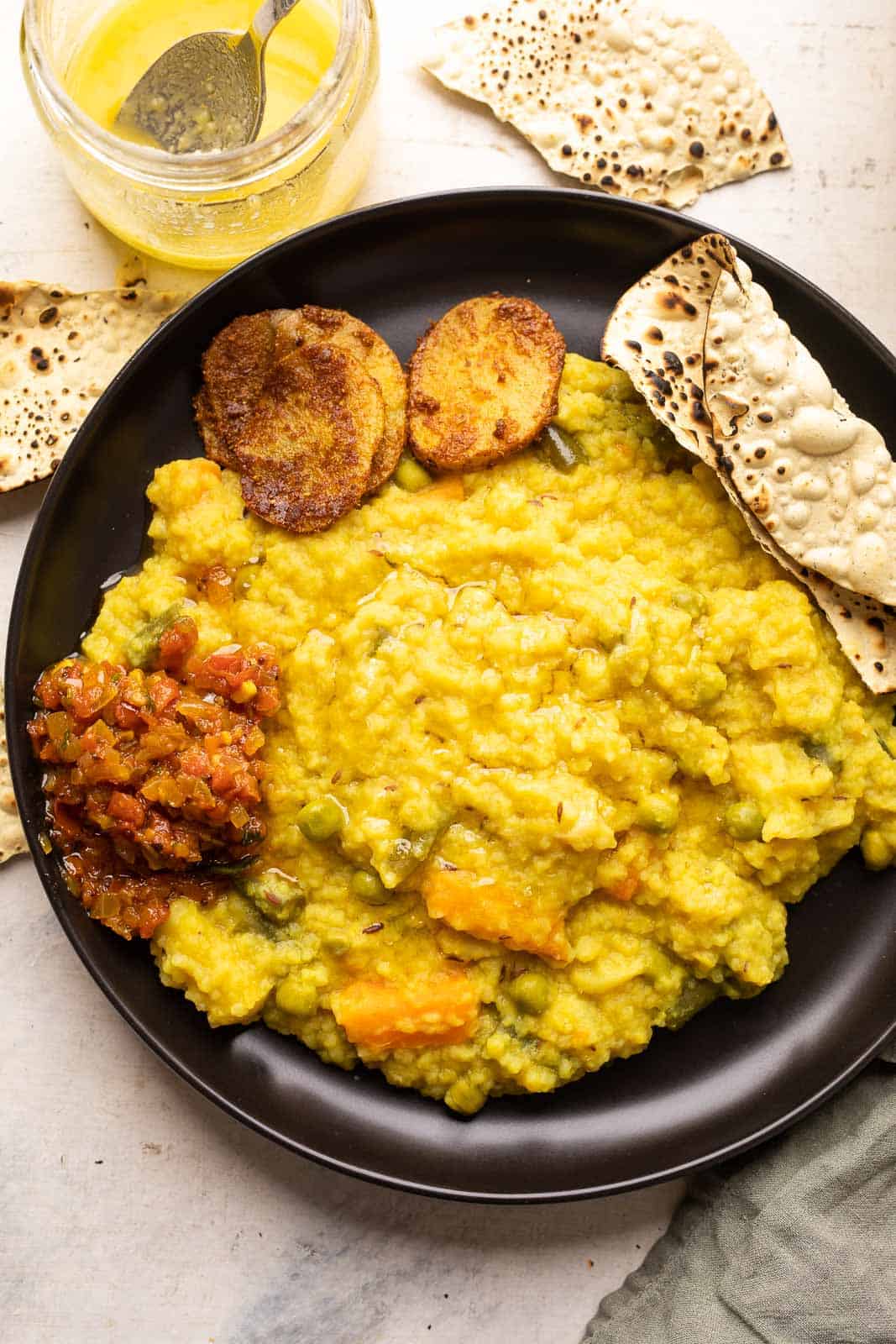
Khichdi served on a black plate with papad, tomato chutney and aloo fry

I swear there’s nothing more comforting than a piping hot bowl of khichdi topped with a big dollop of ghee. Feeling under the weather? A bowl of khichdi it is. Need something to cozy up with when it’s raining? A bowl of khichdi it is. No matter what you’re feeling, khichdi is always the answer!! 

This recipe is inspired from my grandma’s kitchen, and it’s got whole spices and chunks of potato and other vegetables that just melt into the dish. The secret to all that flavor lies in roasting the rice and dal in ghee along with the whole spices before pressure cooking and that creates the most amazing nutty aroma and depth. Serve it up with yogurt, fried potatoes, or some tomato chutney and you’ve got yourself a bowl of goodness that’s trulyyy good for the soul 🥰

This khichdi is up there on my list of go-to comforting recipes along with my Dal Fry, Rice Bath, and Millet Bise Bele Bath

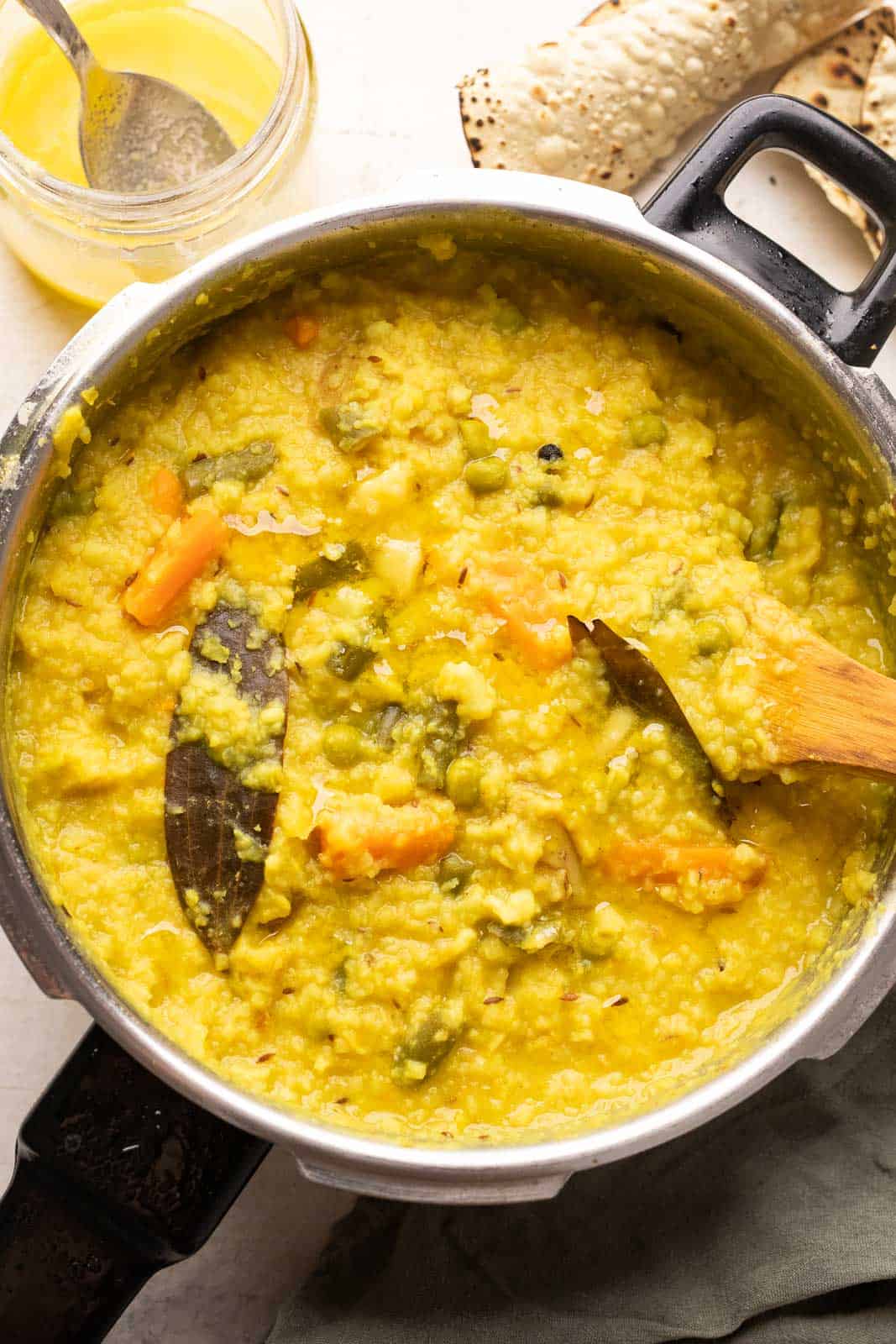
Khichdi pictured in the pressure cooker that it was cooked in

Khichdi Ingredients

  • Rice: Small-grain rice works best for creamy texture
  • Dal: A mix of toor dal + moong dal
  • Ghee: For roasting + that richness of flavor. Don’t skip this!
  • Whole spices: Cumin, peppercorns, bayleaf, cloves, cardamom
  • Aromatics: Ginger and green chilli
  • Veggies: Potato, carrot, beans, cauliflower, peas
  • Spices: Turmeric, red chilli powder, salt
  • Water: To cook it all down until creamy

Frequently Asked Questions

What is khichdi made of?

Khichdi is made from rice + dal cooked together with spices and vegetables. It’s a super comforting dish to make when you need some extra love! 

Why is khichdi healthy?

It’s a one-pot meal that’s:
– High in protein (from dal)
– Easy to digest
– Full of fiber and vitamins (from veggies)
– Naturally gluten-free and nourishing

What type of dal works best for khichdi?

Moong dal: Light, easy to digest, great for kids or sick days
Toor dal: Adds body and flavor
Mix of dals (like this recipe): Best balance of taste + nutrition

Can I make khichdi without vegetables?

Yes! Skip the veggies and keep it simple with just rice and dal — it’ll still be delicious.

How do I make khichdi creamier?

Add a little more water or ghee while mixing, or stir in a spoonful of butter at the end.

Richa’s Top Tips

  • Apart from the dals and rice, I love adding diced carrots, beans, potatoes, cauliflower and green peas to my khichdi for lots of extra texture and nutrition.
  • Unless you’re vegan, don’t skimp on the ghee. It’ll melt all over and glisten and make every bite extra delicious.
  • The water ratio is an important determinant to the final texture of this recipe. I like my khichdi to have a thick porridge-like consistency, for which I had 5 cups of water for for a total of 1 cup of rice and lentils. You can easily increase or decrease the amount of water based on your personal preference.
  • If you notice that your khichdi looks too thick after cooking, simply add a little more water and cook for a few extra minutes to adjust the consistency.
  • If you live outside India, both these lentils are easily available at Indian stores and sometimes even at large supermarkets.

Serving Ideas

  • Add a drizzle of ghee on top (mandatory 😉)
  • Serve with yogurt or raita on the side
  • Pair with a fried potatoes for extra crunch
  • Serve along with papad + pickle for tang and texture
  • Have it along with some tomato chutney 
  • Eat it with some curd or plain unsweetened yogurt.

Storage Tips

  • Refrigerate leftovers in an airtight container for 2 days
  • Add a splash of water when reheating, khichdi thickens as it cools
  • Reheat in a pan or microwave until steaming hot
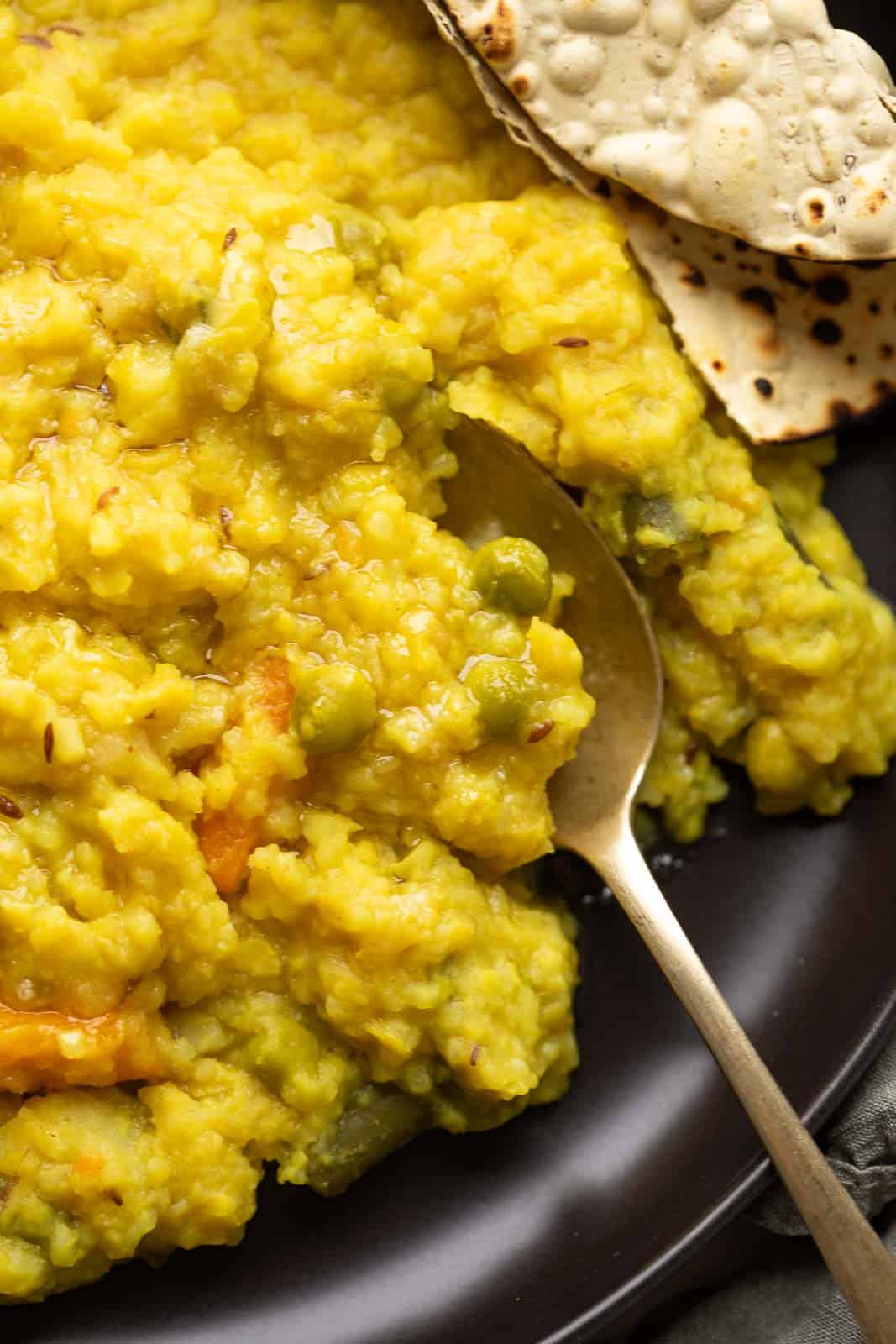
Closeup of khichdi in a spoon

This isn’t just khichdi — it’s a hug in a bowl. With the nutty ghee-roasted base, whole spices, and hearty veggies, this recipe turns a simple comfort dish into something extraordinary. Whether you’re under the weather, craving something cozy, or just want a quick, nourishing meal, this khichdi will always deliver. Try it and send me your recreations over on my IG @my_foodstory

Watch Khichdi Recipe Video

Khichdi served on a black plate with papad, tomato chutney and aloo fry
Print

The Khichdi Recipe that’s actually tasty!

Khichdi or khichri is an Indian one pot lentil and rice dish that's vegetarian, easy to digest and wholesome. Done right, it can be incredibly tasty and may become your favourite comfort food. This version can be made in a traditional pressure cooker or an Instant Pot and I have instructions below for both.
Course Main Course
Cuisine Indian
Diet Gluten Free, Vegetarian
Prep Time 10 minutes
Cook Time 45 minutes
Total Time 55 minutes
Servings 4 Portions
Calories 313kcal
Author Richa

Ingredients

  • 1/2 cup Small grain Rice
  • 1/4 cup Arhar Dal Toor dal/ Split Pigeon Peas
  • 1/4 cup Dhuli Moong Dal skinless Petite Yellow Lentils
  • 2 tablespoons Ghee
  • 1 teaspoon Cumin Seeds
  • 6-8 Whole Peppercorns
  • 2 Bayleaves
  • 4-5 Cloves
  • 2 Cardamoms whole
  • 1 teaspoon Ginger grated
  • 1 Green Chilli / Serrano Chilli split lengthwise
  • 6-8 Cauliflower Florets
  • 1 Potato quartered
  • 1 Carrot peeled and cut into 1 inch pieces (large )
  • 8-10 French Beans cut into 1 inch pieces
  • 1/2 cup Green Peas frozen or fresh
  • 1 teaspoon Turmeric
  • 1/2 teaspoon Red Chilli Powder / Paprika Powder
  • 1.5 teaspoons Salt
  • 5 cups Water

Instructions

Traditional Pressure Cooker:

  • Wash the rice and both the dals (lentils) well, and soak them in enough water to cover them for at least 30 minutes or up to two hours. This helps them cook faster.
    1/2 cup Small grain Rice, 1/4 cup Arhar Dal, 1/4 cup Dhuli Moong Dal
  • Heat ghee in the pressure cooker and add cumin seeds, peppercorns, bayleaves, cloves, cardamoms, ginger and green chilli. Saute for two minutes on medium flame.
    2 tablespoons Ghee, 1 teaspoon Cumin Seeds, 6-8 Whole Peppercorns, 2 Bayleaves, 4-5 Cloves, 2 Cardamoms, 1 teaspoon Ginger, 1 Green Chilli / Serrano Chilli
  • Drain all the water from the rice and lentils and add them to the cooker. Dry roast them for 4-5 minutes, till you can smell a nutty aroma. Don’t worry if some of the rice and lentils stick to the bottom of the pan, but be careful not to burn them.
  • Add all the veggies, turmeric, chilli powder, salt and water to the cooker and pressure cook for 6-7 whistles. Let the pressure release naturally. Once all the pressure has released, open the pressure cooker and mix well. After mixing, the rice and dal should have broken down and should look slightly creamy. Check for salt, and serve hot with ghee, fried potatoes, tomato chutney or just yogurt.
    6-8 Cauliflower Florets, 1 Potato, 1 Carrot, 8-10 French Beans, 1/2 cup Green Peas, 1 teaspoon Turmeric, 1/2 teaspoon Red Chilli Powder / Paprika Powder, 1.5 teaspoons Salt, 5 cups Water

Instant Pot Version:

  • Wash the rice and both the dals (lentils) well, and soak them in enough water to cover them for at least 30 minutes or up to two hours. This helps them cook faster.
  • Turn on the saute function and heat ghee in the pot. Add cumin seeds, peppercorns, bayleaves, cloves, cardamoms, ginger and green chilli. Saute for two minutes or till you can smell the spices.
  • Drain all the water from the rice and lentils and add them to the cooker. Dry roast them for 5-6 minutes, till you can smell a nutty aroma. Don’t worry if some of the rice and lentils stick to the bottom of the pan, but be careful not to burn them.
  • Add all the veggies, turmeric, chilli powder, salt and water to the cooker and cook on high pressure for 30 minutes. I prefer using the manual pressure function. Let the pressure release naturally for at least 10 minutes, and then release pressure manually. Once all the pressure has released, open the pressure cooker and mix well. After mixing, the rice and dal should have broken down and should look slightly creamy. Check for salt, and serve hot with ghee, fried potatoes, tomato chutney or just yogurt.

Video

Notes

  1. Here’s a pretty cool article about dals (lentils) along with their images to help you identify them easily
  2. The consistency of a khichdi is a personal preference. We like ours on the mushier side, but if you prefer it less mushy, reduce the water by a cup. You can also add more water if you like and cook it further if you want your version mushier.
  3. To reheat, just add a little water and heat it over a low flame.
  4. Aloo Fry is amazing with khichdi. I do a slightly different version with skin on sliced potatoes and here’s what you’ll need for it. Follow the instructions in the video to make it.
    1. Potatoes 2 (skin on, thinly sliced)
    2. 1 tsp chilli powder
    3. 1 tsp Jeera Powder
    4. 1.5 tsp Coriander Powder
    5. 1/2 tsp Turmeric
    6. 1/2 tsp Salt
    7. 2 tbsp Mustard Oil
  5. You can also serve khichdi with raita, you can check out my raita recipe here – https://myfoodstory.com/indian-raita-recipe/ 
 

Nutrition

Calories: 313kcal | Carbohydrates: 49g | Protein: 11g | Fat: 8g | Saturated Fat: 5g | Cholesterol: 19mg | Sodium: 920mg | Potassium: 458mg | Fiber: 8g | Sugar: 3g | Vitamin A: 2875IU | Vitamin C: 31mg | Calcium: 61mg | Iron: 3mg

This article was researched and written by Navya Khetarpal.

The post The Khichdi Recipe that’s SO tasty! appeared first on My Food Story.

Air Fryer General Tso’s Chicken

The charm of General Tso Chicken is simple: bold, sticky flavours wrapped around juicy chicken. And with this recipe you don’t need a takeout box to get it.

air fryer general tso's chicken freshly made still in the frying pan

General Tso’s chicken has always been one of those dishes I can’t resist ordering– crispy little bites wrapped in that glossy, sweet-spicy sauce; it’s absolute perfection. On the surface, it looks like it would be a lot of work, but once you break it down, it’s actually super doable at home. And honestly, it tastes even better because you get to control how saucy, spicy, or tangy you want it.

You can go classic with a deep fry for that crunchy bite, or air fry if you want to keep it lighter. Either way, the sauce clings beautifully to the chicken, and yes, you’ll probably end up fighting for the last piece.

About This Recipe

General Tso’s chicken became so iconic in the US that it even got its own documentary—The Search for General Tso (2014). The film follows the story of how this dish, which doesn’t really exist in China, became one of the most loved “Chinese takeout” meals in America. It traces its roots back to Chinese chefs who moved to the US and adapted flavours for local palates, and shows how a simple, sweet-and-spicy chicken dish ended up as a cultural phenomenon.

General Tso’s Chicken Ingredients

For the marinade

  • Chicken thighs (boneless, cut into cubes) 
  • Ginger + garlic (grated) – for flavor
  • Cornflour – for a light coating
  • Salt – for seasoning.
  • Egg whites – to bind everything together and make the coating crispier.

For dredging

  • All-purpose flour (maida) – The main coating that makes the chicken golden.
  • Baking powder – Makes the chicken light and crispy. 
  • Salt – for seasoning
  • Water – for binding 

For the General Tso’s sauce

  • Sauces: Light soy sauce, dark soy sauce, ketchup, and vinegar for lots of flavor 
  • Sugar – That hint of sweetness General Tso’s is known for.
  • White pepper – Gentle heat and flavour.
  • Cornstarch + water – Thickens the sauce into a glossy glaze.
  • Toasted sesame oil – Nutty aroma that finishes the sauce beautifully.

For the stir-fry

  • Cooking oil – Any neutral-flavored oil such as sunflower, peanut, canola, etc. 
  • Garlic + ginger (finely chopped) – Punchy aromatics that flavour the base.
  • Whole red chillies – For heat and spiciness 
  • Red capsicum (bell pepper) – A pop of colour and crunch.

Other

  • Cooking oil (extra) – For brushing or deep frying

Richa’s Top Tips

  • Marinate properly – Even 30 minutes makes the chicken more flavourful and tender.
  • Get clumpy dredge – Sprinkle water into the flour so you get those rough clumps that fry up extra crispy.
  • Use thighs, not breasts – Thighs stay juicy after frying, while breasts can dry out quickly.
  • High heat = flavour – Stir-fry garlic, ginger, and chillies on high heat for that punchy aroma.
  • Don’t rush the sauce – Let it bubble until glossy before tossing the chicken in.

Frequently Asked Questions

Why is it called General Tso’s chicken?

Funny enough, the dish isn’t actually from China—it’s an American-Chinese creation. It was named after General Tso, a 19th-century Chinese military leader, but there’s no record of him ever eating it. The name just stuck because it sounded authentic!

What’s the difference between General Tso’s chicken and Kung Pao chicken?

Both are saucy chicken dishes, but the flavours are pretty different. General Tso’s is sweet, tangy, and a little spicy, with a sticky sauce. Kung Pao is lighter, spicier, and has peanuts for crunch, giving it more of a savoury kick.

Can I make this vegetarian?

Absolutely! Swap the chicken for crispy tofu, cauliflower florets, or even mushrooms. They soak up the sauce beautifully, and you’ll get the same glossy, sweet-spicy flavour.

Storage Tips

  • Fridge: Store leftovers in an airtight container in the fridge for up to 2 days. Reheat in a pan or oven so the chicken gets some of its crispiness back.
  • Freezer: The fried chicken (without sauce) freezes really well for up to a month. Re-crisp it in the oven or air fryer, then toss in fresh sauce.
  • Sauce ahead: Make the General Tso’s sauce and keep it in the fridge for 3–4 days. When ready to serve, fry the chicken and toss it in.
  • Meal prep tip: If you want to save time, dredge and air fry the chicken earlier in the day, then just reheat and coat in sauce before dinner.

Serving Ideas

General Tso’s chicken is bold, saucy, and a little fiery—it deserves sides that balance or soak it all up. Here are some recipes from the blog that make perfect pairings:

Customisation Ideas

  • Add nutty flavour by tossing in roasted cashews or peanuts when stir-frying.
  • Balance the heat with pineapple chunks for a sweet-tangy bite.
  • Bulk it up by adding broccoli, snap peas, or baby corn to the stir-fry.
  • Finish with crunch by sprinkling toasted sesame seeds just before serving.
  • Turn up the spice with extra chilli paste or fresh green chillies.
  • Brighten the sauce with a splash of orange juice or a little zest.
  • Make it richer by swapping some of the sugar with honey for a deeper glaze.
  • Add freshness with spring onion greens, coriander, or Thai basil on top.

General Tso’s chicken is proof that bold flavours don’t have to stay in the takeout box, you can bring them straight to your table. Whether you deep fry or air fry, pile it over rice or sneak bites right from the wok, it’s the kind of recipe you’ll keep coming back to. 

And if you do make it, tag me on Instagram @my_foodstory, I’d love to see your General Tso’s plates!

Watch General Tso’s Chicken Recipe Video

air fryer general tso's chicken freshly made still in the frying pan
Print

Air Fryer General Tso’s Chicken

The charm of General Tso’s Chicken is simple: bold, sticky flavours wrapped around juicy chicken. And with this recipe you don’t need a takeout box to get it.
Course Snacks & Appetisers
Cuisine Indian Chinese
Diet Halal
Prep Time 5 minutes
Cook Time 35 minutes
Total Time 40 minutes
Servings 4 people
Calories 361kcal
Author Richa

Equipment

Ingredients

Marinade

  • 500 gms boneless chicken thigh / cut into ¾ inch cubes
  • 2 teaspoons grated ginger
  • 1 tablespoon grated garlic
  • 2 tablespoons cornflour
  • ½ teaspoon salt
  • 2 egg whites

For dredging

  • 1 ½ cups all purpose flour maida
  • 1 ½ teaspoons baking powder
  • ½ teaspoon salt
  • 1 tablespoon water

For General Tso sauce

  • ¼ cup light soy sauce
  • 2 teaspoons dark soy sauce
  • 2 tablespoons sugar
  • 2 tablespoons vinegar
  • 2 tablespoons ketchup
  • 1 teaspoon white pepper
  • 2 teaspoons cornstarch
  • ½ cup water
  • 2 teaspoons toasted sesame oil

For stir fry

  • 1 tablespoon cooking oil
  • 1 tablespoon garlic finely chopped
  • 1 tablespoon ginger finely chopped
  • 6 red chillies whole
  • ½ red capsicum cut into ½ inch squares

Other

  • 1-2 tablespoons cooking oil for brushing additional oil if deep frying

Instructions

Marinating chicken

  • Take all ingredients for marination in a bowl, mix to combine well. Set aside for 30 minutes.
    500 gms boneless chicken thigh / cut into ¾ inch cubes, 2 teaspoons grated ginger, 1 tablespoon grated garlic, 2 tablespoons cornflour, ½ teaspoon salt, 2 egg whites

Dredging chicken

  • Take maida, baking powder & salt in a deep plate or a flat bowl, sprinkle water and mix the flour to get large clumps in it. Dip marinated chicken and ensure it is coated well on all the sides. Place on a plate and repeat the same process for all the marinated chicken cubes.
    1 ½ cups all purpose flour, 1 ½ teaspoons baking powder, ½ teaspoon salt, 1 tablespoon water

Deep Fry method

  • Heat ½ cup of oil in a deep pan and once it’s medium hot, drop dredged chicken into the oil & fry on medium heat for 4-5 minutes or till they turn crisp. Set aside.
    1-2 tablespoons cooking oil for brushing
  • OR
    1-2 tablespoons cooking oil for brushing

Airfryer method

  • Pre-heat airfryer at 180C. brush the airfryer basket with oil. Place the dredged chicken with some gap between each other and air fry at 180C for 13 minutes while flipping and brushing oil on chicken every 7 minutes. Air fry at 200 C for 2 minutes till they turn crisp.

General tso sauce

  • Take all the ingredients under general tso sauce mix in a bowl & mix to combine well. Set aside.
    ¼ cup light soy sauce, 2 teaspoons dark soy sauce, 2 tablespoons sugar, 2 tablespoons vinegar, 2 tablespoons ketchup, 1 teaspoon white pepper, 2 teaspoons cornstarch, ½ cup water, 2 teaspoons toasted sesame oil

Making General tso chicken

  • Heat 1 tablespoon of oil in a pan or wok, add ginger, garlic & saute on high for 30 seconds until fragrant. Add red chillies, red capsicum and saute on high for a minute. Add the General tso sauce & cook for 1-2 minutes while stirring continuously. Add the fried chicken, toss well for 1-2 minutes and serve.
    1 tablespoon cooking oil, 1 tablespoon garlic, 1 tablespoon ginger, 6 red chillies, ½ red capsicum

Video

Notes

  1. Fry the aromatics on high heat which enhances its flavour.
  2. The cooking time in the Air Fryer might vary slightly with different brands and capacities.

Nutrition

Calories: 361kcal | Carbohydrates: 59g | Protein: 10g | Fat: 10g | Saturated Fat: 1g | Polyunsaturated Fat: 3g | Monounsaturated Fat: 5g | Trans Fat: 0.03g | Sodium: 1822mg | Potassium: 410mg | Fiber: 3g | Sugar: 12g | Vitamin A: 1147IU | Vitamin C: 118mg | Calcium: 122mg | Iron: 4mg

The post Air Fryer General Tso’s Chicken appeared first on My Food Story.

❌