❌

Reading view

There are new articles available, click to refresh the page.

Warnings About Retrobright Damaging Plastics After 10 Year Test
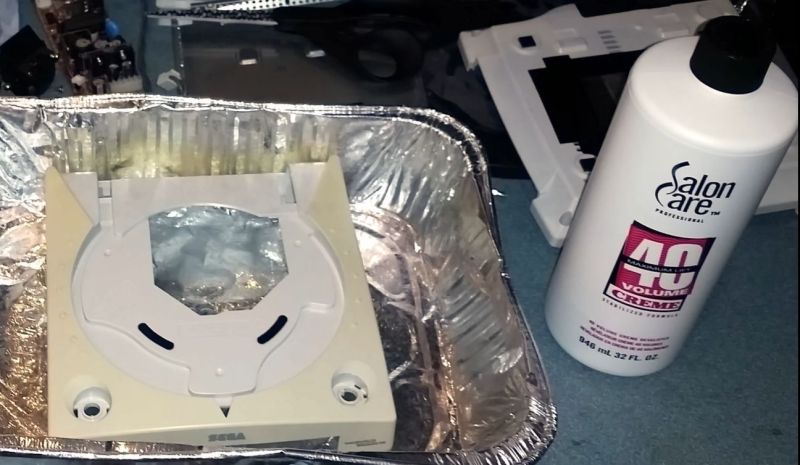
Within the retro computing community there exists a lot of controversy about so-called β€˜retrobrighting’, which involves methods that seeks to reverse the yellowing that many plastics suffer over time. While some are all in on this practice that restores yellow plastics to their previous white luster, others actively warn against it after bad experiences, such as [Tech Tangents] in a recent video.

Uneven yellowing on North American SNES console. (Credit: Vintage Computing)

After a decade of trying out various retrobrighting methods, he found for example that a Sega Dreamcast shell which he treated with hydrogen peroxide ten years ago actually yellowed faster than the untreated plastic right beside it. Similarly, the use of ozone as another way to achieve the oxidation of the brominated flame retardants that are said to underlie the yellowing was also attempted, with highly dubious results.

While streaking after retrobrighting with hydrogen peroxide can be attributed to an uneven application of the compound, there are many reports of the treatment damaging the plastics and making it brittle. Considering the uneven yellowing of e.g. Super Nintendo consoles, the cause of the yellowing is also not just photo-oxidation caused by UV exposure, but seems to be related to heat exposure and the exact amount of flame retardants mixed in with the plastic, as well as potentially general degradation of the plastic’s polymers.

Pending more research on the topic, the use of retrobrighting should perhaps not be banished completely. But considering the damage that we may be doing to potentially historical artifacts, it would behoove us to at least take a step or two back and consider the urgency of retrobrighting today instead of in the future with a better understanding of the implications.

Research roundup: 6 cool stories we almost missed

It’s a regrettable reality that there is never enough time to cover all the interesting scientific stories we come across each month. In the past, we’ve featured year-end roundups of cool science stories we (almost) missed. This year, we’re experimenting with a monthly collection. November’s list includes forensic details of the medieval assassination of a Hungarian duke, why woodpeckers grunt when they peck, and more evidence that X’s much-maligned community notes might actually help combat the spread of misinformation after all.

An assassinated medieval Hungarian duke

The observed perimortem lesions on the human remains (CL=cranial lesion, PL= Postcranial lesion). The drawing of the skeleton was generated using OpenAI’s image generation tools (DALLΒ·E) via ChatGPT. Credit: TamΓ‘s Hajdu et al., 2026

Back in 1915, archaeologists discovered the skeletal remains of a young man in a Dominican monastery on Margaret Island in Budapest, Hungary. The remains were believed to be those of Duke Bela of Masco, grandson of the medieval Hungarian King Bela IV. Per historical records, the young duke was brutally assassinated in 1272 by a rival faction and his mutilated remains were recovered by the duke’s sister and niece and buried in the monastery.

Read full article

Comments

Β© EΓΆtvΓΆs LorΓ‘nd University

Why synthetic emerald-green pigments degrade over time

The emergence of synthetic pigments in the 19th century had an immense impact on the art world, particularly the availability of emerald-green pigments, prized for their intense brilliance by such masters as Paul CΓ©zanne, Edvard Munch, Vincent van Gogh, and Claude Monet. The downside was that these pigments often degraded over time, resulting in cracks and uneven surfaces and the formation of dark copper oxidesβ€”even the release of arsenic compounds.

Naturally, it’s a major concern for conservationists of such masterpieces. So it should be welcome news that European researchers have used synchrotron radiation and various other analytical tools to determine whether light and/or humidity are the culprits behind that degradation and how, specifically, it occurs, according to a paper published in the journal Science Advances.

Science has become a valuable tool for art conservationists, especially various X-ray imaging methods. For instance, in 2019, we reported on how many of the oil paintings at the Georgia O’Keeffe Museum in Santa Fe, New Mexico, had been developing tiny, pin-sized blisters, almost like acne, for decades. Chemists concluded that the blisters are actually metal carboxylate soaps, the result of a chemical reaction between metal ions in the lead and zinc pigments and fatty acids in the binding medium used in the paint. The soaps start to clump together to form the blisters and migrate through the paint film.

Read full article

Comments

Β© Royal Museum of Fine Arts Antwerp, KMSKA

Ancient Egyptians likely used opiates regularly

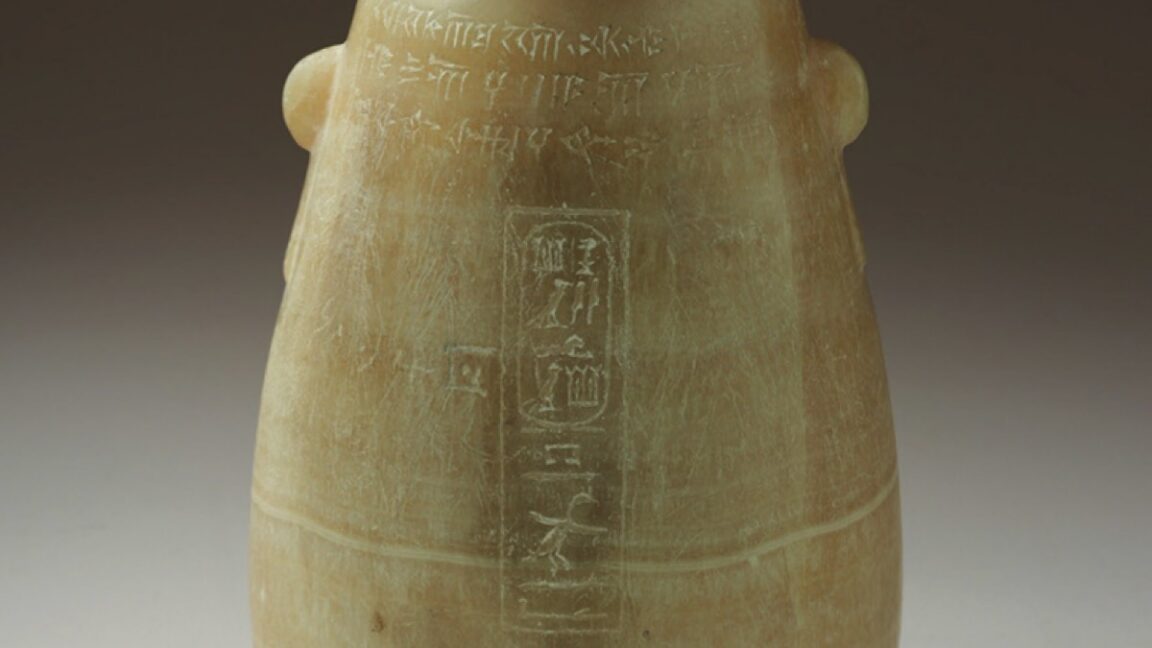
Scientists have found traces of ancient opiates in the residue lining an Egyptian alabaster vase, indicating that opiate use was woven into the fabric of the culture. And the Egyptians didn’t just indulge occasionally: according to a paper published in the Journal of Eastern Mediterranean Archaeology, opiate use may have been a fixture of daily life.

In recent years, archaeologists have been applying the tools of pharmacology to excavated artifacts in collections around the world. As previously reported, there is ample evidence that humans in many cultures throughout history used various hallucinogenic substances in religious ceremonies or shamanic rituals. That includes not just ancient Egypt but also ancient Greek, Vedic, Maya, Inca, and Aztec cultures. The Urarina people who live in the Peruvian Amazon Basin still use a psychoactive brew called ayahuasca in their rituals, and Westerners seeking their own brand of enlightenment have also been known to participate.

For instance, in 2023, David Tanasi, of the University of South Florida, posted a preprint on his preliminary analysis of a ceremonial mug decorated with the head of Bes, a popular deity believed to confer protection on households, especially mothers and children. After collecting sample residues from the vessel, Tanasi applied various techniquesβ€”including proteomic and genetic analyses and synchrotron radiation-based Fourier-transform infrared microspectroscopyβ€”to characterize the residues.

Read full article

Comments

Β© Courtesy of the Yale Babylonian Collection;

MIT Chemists Design Multidrug Nanoparticle to Treat Cancer

(Image: Misael Moreno/Unsplash)
When it comes to treating cancer, groups of synergistic drugs are often more effective than standalone drugs. But coordinating the delivery of multiple drugs is easier said than done. Drugs’ molecular properties tend to differ, making it difficult to ensure that pharmaceuticals make it to their destinations without losing effectiveness along the way. An all-new multidrug nanoparticle might be the solution. A team of researchers at MIT has created a β€œmolecular bottlebrush” capable of delivering any number of drugs at the same time.

Drug-loaded nanoparticlesβ€”or ultrafine particles ranging from one to 100 nanometers in diameterβ€”prevent treatments from being released prematurely, which ensures that the drug reaches its destination before beginning to do its job. This means nanoparticles carrying cancer treatments can collect at the tumor site, facilitating the most effective treatment possible. There is, of course, one caveat: Only a few cancer-treating nanoparticles have been approved by the FDA, and only one of those is capable of carrying more than one drug.

MIT’s molecular bottlebrush, detailed Thursday in the journal Nature Nanotechnology, challenges that. Chemists start by inactivating drug molecules by binding and mixing them with polymers. The result is a central β€œbackbone” with several spokes. All it takes to activate the inactivated drugs sitting along the backbone is a break in one of those spokes. This unique design is what enables the new nanoparticle to carry (and thus deliver) multiple drugs at a time.

(Image: Detappe et al/Nature Nanotechnology/MIT)

The team tested the molecular bottlebrush in mice with multiple myeloma, a type of cancer that targets the body’s plasma cells. They loaded the nanoparticle with just one drug: bortezomib. On its own, bortezomib usually gets stuck in the body’s red blood cells; by hitching a ride on the bottlebrush, however, bortezomib accumulated in the targeted plasma cells.

The researchers then experimented with multidrug combinations. They tested three-drug bottlebrush arrangements on two mouse models of multiple myeloma and found that the combinations slowed or stopped tumor growth far more effectively than the same drugs delivered sans bottlebrush. The team even found that solo bortezomib, which is currently approved only for blood cancers and not solid tumors, was highly effective at inhibiting tumor growth in high doses.

Through their startup Window Therapeutics, the researchers hope to develop their nanoparticle to the point that it can be tested through clinical trials.

Now Read:

❌