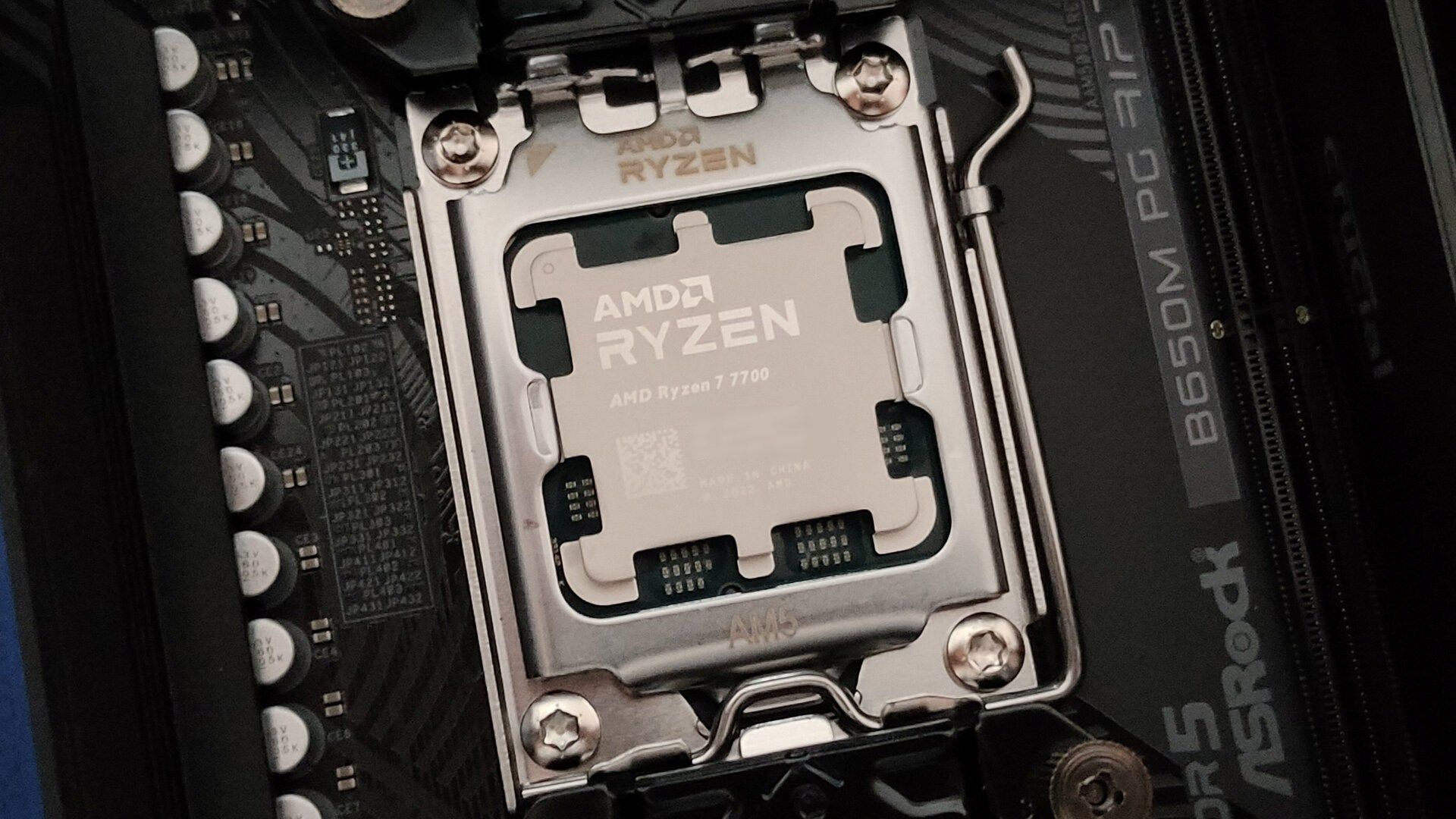
I wrote a couple of weeks ago about my personal homebrew Steam Machine, a self-built desktop under my TV featuring an AMD Ryzen 7 8700G processor and a Radeon 780M integrated GPU. I wouldn’t recommend making your own version of this build, especially with RAM prices as they currently are, but there are all kinds of inexpensive mini PCs on Amazon with the same GPU, and they’ll all be pretty good at playing the kinds of games that already run well on the less-powerful Steam Deck.
But this kind of hardware is an imperfect proxy for the Steam Machine that Valve plans to launch sometime next year—that box will include a dedicated GPU with 8GB of dedicated video memory, presenting both benefits and possible pitfalls compared to a system with an integrated GPU.
As a last pre-Steam Machine follow-up to our coverage so far, we’ve run tests on several games we test regularly in our GPU reviews to get a sense of how current versions of SteamOS stack up to Windows running on the same hardware. What we’ve found so far is basically the inverse of what we found when comparing handhelds: Windows usually has an edge on SteamOS’s performance, and sometimes that gap is quite large. And SteamOS also exacerbates problems with 8GB GPUs, hitting apparent RAM limits in more games and at lower resolutions compared to Windows.
By Valve’s admission, its upcoming Steam Machine desktop isn’t swinging for the fences with its graphical performance. The specs promise decent 1080p-to-1440p performance in most games, with 4K occasionally reachable with assistance from FSR upscaling—about what you’d expect from a box with a modern midrange graphics card in it.
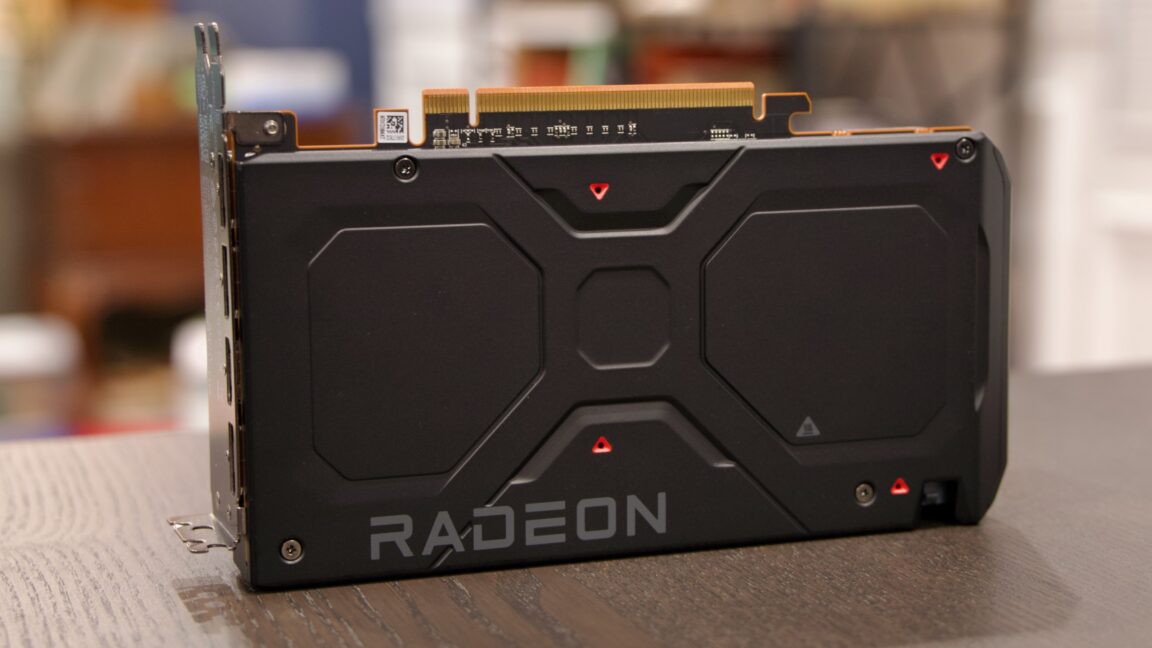
But there’s one spec that has caused some concern among Ars staffers and others with their eyes on the Steam Machine: The GPU comes with just 8GB of dedicated graphics RAM, an amount that is steadily becoming more of a bottleneck for midrange GPUs like AMD’s Radeon RX 7060 and 9060, or Nvidia’s GeForce RTX 4060 or 5060.
In our reviews of these GPUs, we’ve already run into some games where the RAM ceiling limits performance in Windows, especially at 1440p. But we’ve been doing more extensive testing of various GPUs with SteamOS, and we can confirm that in current betas, 8GB GPUs struggle even more on SteamOS than they do running the same games at the same settings in Windows 11.
Pat Gelsinger, the former Intel CEO who was pushed out in late 2024 during a five-year turnaround effort, told the Financial Times that the "decay" he found when he returned to the company in 2021 was "deeper and harder than I'd realized." In the five years before his return, "not a single product was delivered on schedule," he said. "Basic disciplines" had been lost. "It's like, wow, we don't know how to engineer anymore!"
Gelsinger was also unsparing about the Biden administration's implementation of the 2022 Chips Act, legislation he spent more time lobbying for than any other CEO. "Two and a half years later [and] no money is dispensed? I thought it was hideous!" There's what Gelsinger carefully calls "a touch of irony" in how things played out.
Intel's board forced him out four years into a five-year plan, then picked successor Lip-Bu Tan -- who Gelsinger says is following the same broad strategy. Tan has kept Intel in the manufacturing game and delivered the 18A process node within the five years Gelsinger originally promised. Asked what went wrong, Gelsinger conceded he was "very focused on managing 'down'" and should have managed "up" more. He also would have pushed harder for more semiconductor expertise on the board, he said.
Remember when Intel launched its Arrow Lake-S desktop processors (the Core Ultra 200S series) late last year? The reception was a bit lukewarm. But new data shows it’s been quietly getting way better with age. According to some fresh benchmarks from Phoronix, the flagship Core Ultra 9 285K is now running about 9% faster on […]
Analyst Ming‑Chi Kuo claims Intel may start manufacturing Apple’s entry-level M-series chips by mid-2027. It’s not a revival of Intel-powered Macs, but a behind-the-scenes shake-up that could reshape Apple’s supply chain and how future MacBooks are built.
Modern PCs can set you back by a considerable amount, so it makes sense to protect your hardware from heat and excessive voltage. Over the past few years, there’s been a noticeable rise in CPU failures linked to overvolting on default motherboard settings. What’s causing this, and is there a way to prevent it?
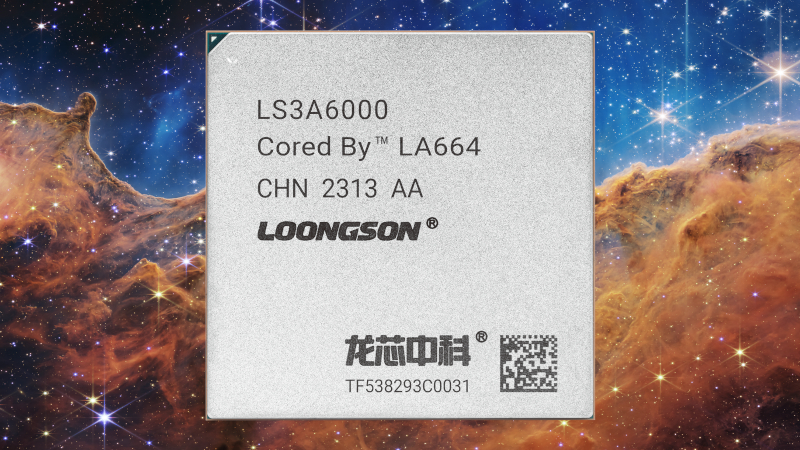
When it comes to PCs, Westerners are most most familiar with x86/x64 processors from Intel and AMD, with Apple Silicon taking up a significant market share, too. However, in China, a relatively new CPU architecture is on the rise. A fabless semiconductor company called Loongson has been producing chips with its LoongArch architecture since 2021. These chips remain rare outside China, but some in the West have been benchmarking them.
[Daniel Lemire] has recently blogged about the performance of the Loongson 3A6000, which debuted in late 2023. The chip was put through a range of simple benchmarking tests, involving float processing and string transcoding operations. [Daniel] compared it to the Intel Xeon Gold 6338 from 2021, noting the Intel chip pretty much performed better across the board. No surprise given its extra clock rate. Meanwhile, the gang over at [Chips and Cheese] ran even more exhaustive tests on the same chip last year. The Loongson was put through typical tasks like compressing archives and encoding video. The outlet came to the conclusion that the chip was a little weaker than older CPUs like AMD’s Zen 2 line and Intel’s 10th generation Core chips. It’s also limited as a four-core chip compared to modern Intel and AMD lines that often start at 6 cores as a minimum.
If you find yourself interested in Loongson’s product, don’t get too excited. They’re not exactly easy to lay your hands on outside of China, and even the company’s own website is difficult to access from beyond those shores. You might try reaching out to Loongson-oriented online communities if you seek such hardware.
It’s not a bad time to upgrade your gaming PC. Graphics card prices in the 2020s have undulated continuously as the industry has dealt with pandemic and AI-related shortages, but it’s actually possible to get respectable mainstream- to high-end GPUs like AMD’s Radeon RX 9060 XT and 9070 series or Nvidia’s RTX 5060, 5070, and 5080 series for at or slightly under their suggested retail prices right now. This was close to impossible through the spring and summer.
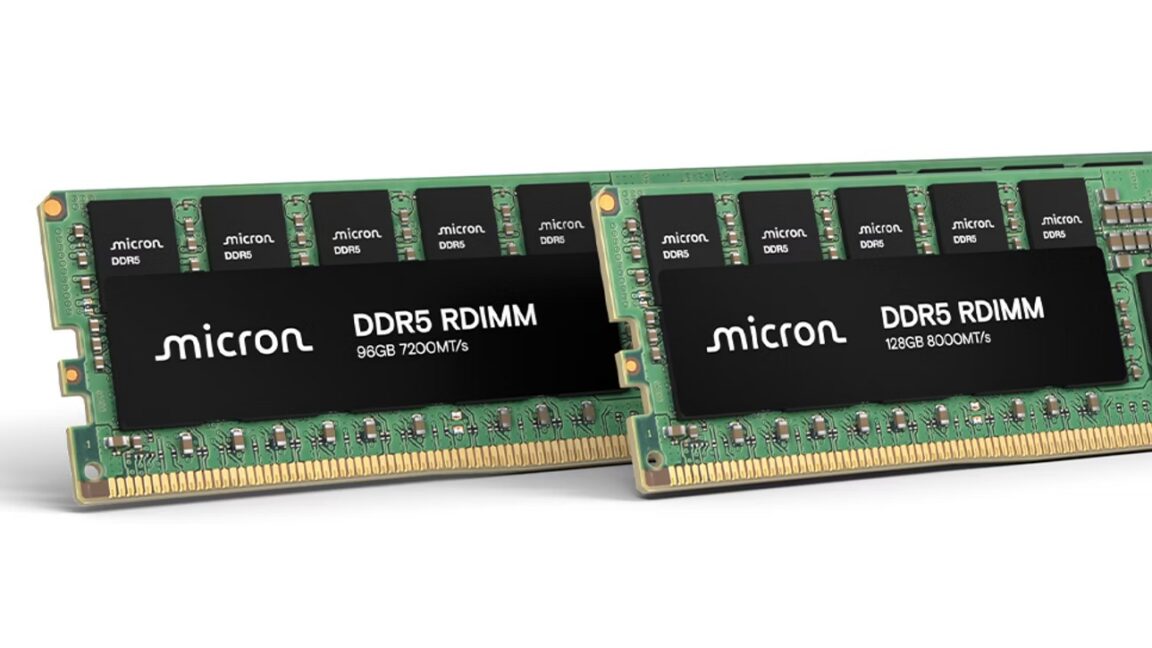
But it’s not a good time to build a new PC or swap your older motherboard out for a new one that needs DDR5 RAM. And the culprit is a shortage of RAM and flash memory chips that has suddenly sent SSD and (especially) memory prices into the stratosphere, caused primarily by the ongoing AI boom and exacerbated by panic-fueled buying by end users and device manufacturers.
To illustrate just how high things have jumped in a short amount of time, let’s compare some of the RAM and storage prices listed in our system guide from three months ago to the pricing for the exact same components today. Note that several of these are based on the last available price and are currently sold out; we also haven’t looked into things like microSD or microSD Express cards, which could also be affected.
Intel’s 386 CPU is notable for being its first x86 CPU to use so-called standard cell logic, which swapped the taping out of individual transistors with wiring up standardized functional blocks. This way you only have to define specific gate types, latches and so on, after which a description of these blocks can be parsed and assembled by a computer into elements of a functioning application-specific integrated circuit (ASIC). This is standard procedure today with register-transfer level (RTL) descriptions being placed and routed for either an FPGA or ASIC target.
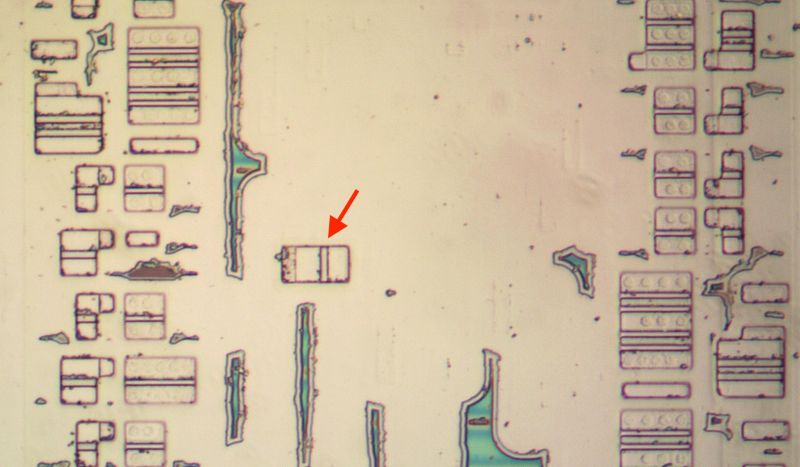
That said, [Ken Shirriff] found a few surprises in the 386’s die, some of which threw him for a loop. An intrinsic part of standard cells is that they’re arranged in rows and columns, with data channels between them where signal paths can be routed. The surprise here was finding a stray PMOS transistor right in the midst of one such data channel, which [Ken] speculates is a bug fix for one of the multiplexers. Back then regenerating the layout would have been rather expensive, so a manual fix like this would have made perfect sense. Consider it a bodge wire for ASICs.
Another oddity was an inverter that wasn’t an inverter, which turned out to be just two separate NMOS and PMOS transistors that looked to be wired up as an inverter, but seemed to actually there as part of a multiplexer. As it turns out, it’s hard to determine sometimes whether transistors are connected in these die teardowns, or whether there’s a gap between them, or just an artifact of the light or the etching process.
PowerLattice founders, from left: Gang Ren, Dr. Peng Zou, and Sujith Dermal. (PowerLattice / Walden Kirsch Photo)
PowerLattice, a Vancouver, Wash.-based startup aiming to reduce energy demands of AI computing, emerged from stealth mode this week and announced a $25 million Series A round.
Playground Global and Celesta Capital led the round, which brings total funding to $31 million.
AI chips are becoming so powerful that they’re using huge amounts of electricity and generating massive heat inside data centers. Data center operators are running into limits on available power and cooling capacity.
PowerLattice says its new component — a “power delivery chiplet” — can cut that energy use by more than half and boost chip performance by delivering power more efficiently, directly inside the processor package.
Early silicon is already complete, and the company is providing engineering samples for next-generation GPUs, CPUs and custom accelerators. PowerLattice said the technology can slot into existing chip products without major redesigns.
Founded in 2023, PowerLattice has about 20 employees and is actively sampling with a range of organizations, according to a spokesperson.
PowerLattice was founded by semiconductor veterans Peng Zou, Gang Ren and Sujith Dermal, with backgrounds spanning Qualcomm, Intel and NUVIA — a silicon startup acquired by Qualcomm in 2021. Board members include former Intel CEO Pat Gelsinger, now a general partner at Playground Global, and Celesta Capital’s Steve Fu.
Gelsinger spent more than three decades at Intel, more recently serving as CEO from 2021 to 2024. He previously led VMWare as CEO for more than eight years.
“AI is not constrained by capital, it’s constrained by power,,” Gelsinger said in a statement. “PowerLattice represents a dramatic breakthrough in the efficiency and scale of power delivery.”
PowerLattice is headquartered in Vancouver, Wash., near Portland, with additional operations in Chandler, Ariz.
GeekWire previously reported on PowerLattice in May.
If you’re an executive at Intel or AMD and in charge of sales forecasts, you likely projected some big numbers for the end of 2022. Both companies had unveiled their new platforms, promising next-gen performance and features. Since many people could not upgrade their PCs during the pandemic, all the ingredients of a booming holiday sales period were present. Added to the mixture were all-new, high-powered GPUs as well. Overall, it seemed like the perfect time to build or buy a new PC. Oddly, that did not come to pass. Instead, Q4 ended up being the worst period for CPU sales in 30 years, according to Mercury Research.
The market analysis company’s president, Dean McCarron, discussed the somber news with our colleagues at PCMag this week. CPU sales declined year-over-year by 34% and quarter-over-quarter by 19%. Those are the biggest declines for both metrics Mercury has ever tabulated in its 30 years of existence.
The reasons for the decline include excess inventory and low demand for CPUs. Intangible factors may also be at play, such as global economic uncertainty. The numbers mirror those from IDC, which also posted a gloomy Q4 report recently for PC shipments. IDC’s numbers from 90 countries showed a 28.1% decline year-over-year. That drop-off was twice as high as in Q3, making Q4 a particularly bloody quarter for the PC industry.
(Image: Mercury Research)
In response to the turbulence, Intel and AMD are now under-shipping CPUs. Both companies’ CEOs admitted to this in their recent earnings calls. AMD’s CEO said it would do less of it in Q1, though. Intel CEO Pat Gelsinger said his company’s “Q4 under shipping [was] meaningfully higher than full year.” Despite this strategy, CPU shipments for both laptops and desktops suffered dramatic declines in what is normally a robust quarter. Intel also suffered from its decision to announce price increases in Q3. That caused some of its partners to buy stock before the price went up in Q4.
Despite the dour report, it’s not all bad for the PC market. In 2022 overall, CPU shipments and revenue were down 21 and 19%, respectively, from previous years. However, that was the pandemic era, a magical time of record profits for all semiconductor companies. Despite the decline, the numbers in 2022 were still better than the pre-pandemic years. Although the red ink is projected to continue to flow for another quarter or two, a turnaround is expected later this year.
One unexpected result from this volatility is it’s allowed AMD to claw market share away from Intel. According to IDC’s report via HotHardware, AMD now has over 30% of the x86 market. While Intel still has more than twice that market share, it lost 5.6% over the past year.
Intel CEO Pat Gelsinger holds an 18A SRAM wafer. (Credit: Intel)
Intel CEO Pat Gelsinger holds an 18A SRAM wafer. (Credit: Intel)
Intel has reported its earnings for all of 2022 as well as Q4, and it’s so bad that analysts are likely diving for their thesauruses to properly characterize it. “Historic collapse” is how one summarized the losses. One just said there are simply “no words.” Intel reported its worst earnings in more than 20 years. Though the company’s earnings were still within its guidance, they came in at the very low end and mark a historic downturn for the company. The news caused Intel’s stock to fall almost 10% in value. Its earning reports are available in various forms on its investment website.
For 2022, Intel earned $63.1 billion in total, a 20% decline from its 2021 earnings. Its Q4 revenue was $14 billion, a precipitous 32% drop from the same quarter last year. One analyst notes this is the largest year-over-year decline in the company’s history. It posted a net loss of $664 million for the quarter, which almost matches its worst quarterly loss in history: In 2017, it reported a loss of $687 million in the fourth quarter.
Though Intel ended 2022 with $8 billion in profit, last year it made $19.1 billion. That’s a remarkable 60% reduction, which is why the word “collapse” is being thrown around. Its gross margin for Q4 of 39.2% is the lowest in decades as well. Intel used to get 60% margins not that long ago.
As far as where the hits came from, it’s in both data center and client computing. It earned $6.6 billion on the client side, which is down 36% from last year’s Q4. Total revenue for client computing in 2022 dropped 23% compared with 2021. Its Data Center and AI (DCAI) group’s revenue fell 33% YoY, and 15% for the year as a whole. The only bright spots were gains in Mobileye, Intel Foundry Services, and its graphics division. All three divisions posted increases, with its foundry services posting a surprising 30% improvement for the quarter.
Despite the grim report, Intel says it’s still on target to achieve its long-term goals. It notes it’s still pursuing its “five nodes in four years” strategy laid out by CEO Gelsinger upon his arrival in 2021. This will theoretically allow it to achieve industry leadership in both transistor performance and efficiency leadership by 2025. To that end, Gelsinger says it’s looking to begin its ramp for Meteor Lake in the second half of 2023. If that occurs, we’ll be surprised as it’s been rumored to be delayed. Instead, we may see a Raptor Lake refresh.
“We are at or ahead of our goal of five nodes in four years,” said Gelsinger in the earnings report. “Intel 7 is now in high-volume manufacturing for both client and server. On Intel 4, we are ready today for manufacturing and we look forward to the MTL (Meteor Lake) ramp in the second half of the year,” he said.
Unfortunately for Intel, it doesn’t anticipate a quick rebound from its financial nadir. Its CEO predicted continuing “macro weakness” through the first half of 2023. However, he noted there’s a possibility of an uptick later this year. Given the uncertain economic conditions though, Intel is only providing guidance for Q1 of 2023 and nothing beyond that. That guidance is even more brutal than this report: It predicts YoY revenue will be down 40%, with gross margins hitting 39%.
Intel’s earnings report follows news this week that it has canceled a planned $700 million R&D facility in Oregon. It was also announced this week that it was laying off 544 employees in California as it begins to tighten its belt. It’s stated it plans on reducing expenses by $3 billion in 2023, with that number increasing to $10 billion by 2025.
Japanese multinational conglomerate Fujifilm has been forced to shut down parts of its global network after falling victim to a suspected ransomware attack. The company, which is best known for its digital imaging products but also produces high-tech medical kit, including devices for rapid processing of COVID-19 tests, confirmed that its Tokyo headquarters was hit […]

 Login
Login