A good pickle can completely change a meal, and this Mangalorean Prawn Pickle proves it. This recipe brings together juicy prawns, roasted spices, and chillies in a finger-licking addictive punch.
If you love having a little something spicy on the side of your meals, this Mangalorean Prawn Pickle is going to make you very happy. It’s full of the classic slow-roasted kick that coastal dishes are known for.
The flavours remind me of the same comfort you get from dishes like our Prawn Curry. Plus this one also has that same homely charm with a simple mix of prawns, chillies and spices cooked down till everything smells amazing. It’s easy to make, stores beautifully, and only tastes better with time.
Prawns: Fresh, cleaned prawns work best here. They’re marinated before to help them firm up slightly before cooking.
For the Masala Paste: Byadgi chillies (for colour and flavour), cumin, black pepper, cloves, cinnamon, fenugreek seeds and turmeric. Everything is ground with vinegar for that tangy base.
Aromatics: Sliced garlic, chopped ginger, green chillies and curry leaves add freshness and that signature South Indian aroma.
Oils: Sesame oil for frying the prawns and roasting the masala, and a little coconut oil at the end for an authentic coastal touch.
Seasoning & Liquid: Salt and hot water to bring the pickle together and help it cook down to the right consistency.
Frequently Asked Questions
What makes Mangalorean prawn pickle different from other prawn pickles?
Mangalorean pickle has a deep flavour from Byadgi chillies, vinegar, and slow-roasted spices. It’s spicy, tangy, and has a beautiful red colour without needing any food colouring.
Can I use frozen prawns instead of fresh ones?
Yes, absolutely. Just thaw them completely and drain out every bit of excess water. Pat them dry so the pickle doesn’t get watery.
How do I prevent the prawns from turning rubbery?
Cook them on low heat and only until they turn opaque and lightly golden. Overcooking is the main reason prawns become chewy.
How long does prawn pickle last?
It stays good for 2–3 months in the fridge when stored in a clean, dry glass jar. Always use a dry spoon and avoid introducing any moisture
Richa’s Top Tips
Dry the prawns really well: Any extra moisture makes the pickle watery and reduces its shelf life, so pat the prawns dry before marinating.
Fry the prawns on low heat to help them firm up without turning rubbery. They should get lightly golden on the edges, not crisp.
Roast the masala patiently: This is where most of the flavour comes from. Keep the heat low and roast until you see oil separating on the sides.
Use vinegar, not water, for grinding: It gives the masala a smooth texture and also helps preserve the pickle.
Always add hot water at the end: Cold water can reduce shelf life. Hot water blends into the masala better and helps everything come together.
Storage Tips
Fridge: Store the prawn pickle in a clean, completely dry glass jar for up to 2–3 months. The key is keeping moisture out, so always use a dry spoon when scooping.
Room Temperature: Avoid keeping the pickle out for long, especially in warm weather. After serving, pop it back into the fridge as soon as you can.
Freezer: Not recommended. Freezing can change the texture of the prawns and affect the flavour of the spices.
Shelf-Life Booster Tip: Use hot water in the recipe exactly as mentioned, it helps the pickle last longer and keeps the masala smooth.
Serving Ideas
A good prawn pickle can lift almost anything you pair it with. Here are some delicious ways to enjoy it: :
With Rice: The classic way to enjoy spicy, tangy prawn pickle. Keep it simple and comforting.
With Neer Dosa: Soft, delicate Neer Dosa balances the heat beautifully.
With Parathas: Enjoy it with flaky Laccha Paratha or even simple chapatis.
With Biryani: A tiny spoon of this pickle takes your Hyderabadi Veg Biryani to the next level.
In Tiffin Boxes: Pairs well with lemon rice, upma, curd rice, or pongal when you want something quick and flavourful.
Customisation Ideas
Add a coconut twist: Stir in a spoon of roasted coconut paste (just lightly roast grated coconut till golden and grind without water). It gives the pickle a coastal, almost-thokku style richness.
Add heat in layers: Instead of increasing just the red chillies, add ½ teaspoon crushed black pepper towards the end. Pepper heat hits differently and gives you that Mangalorean-style punch.
Oil-cured version: After the pickle cools, top it with 2–3 extra tablespoons of sesame oil. As it rests, the oil absorbs flavour and becomes a ready-to-drizzle “prawn chilli oil” for dosas and rice.
Whether you’re pairing it with a simple dal-chawal meal or adding it to a festive thali, it brings instant excitement to the plate. If you try this at home, don’t forget to tag me on Instagram @my_foodstory I’d love to see how your batch turns out!
Take prawns in a bowl, add turmeric powder, salt and mix well. Set aside to marinate for 30 minutes.
Add all ingredients for ground masala except for vinegar to a mixer. Add ¼ cup of vinegar and start grinding the spices. Add 2-3 tablespoons of vinegar at a time and grind to a smooth paste. This method of grinding ensures the smooth grinding of paste.
Heat sesame oil in a kadai or pan, add the marinated prawns and fry them on low heat for 5-6 minutes till the moisture evaporates and prawns get roasted on the edges to a golden brown. Remove from oil and set aside on a plate.
Heat the same kadai, add garlic, ginger and green chillies and saute for 1-2 minutes till they are fragrant. Add 2 sprigs of curry leaves and saute for a few seconds. Add the ground paste, salt and roast on low for 10-12 minutes till the masala gets roasted and oil separates from the side of the pan. While frying, if the masala sticks to the sides of the pan, scrape them out and add to the masala getting roasted. This will add more flavour to the pickle.
Add roasted prawns, mix well and cook for 2-3 minutes. Add hot water, mix well, cook for 2-3 minutes, add the remaining 1 sprig of curry leaves and take off the heat.
Cool completely, store in an airtight glass container and refrigerate.
Video
Notes
Make sure you use only hot water to increase its shelf life.
Pickle stays good for 2-3 months in the refrigerator.
Glass container is ideal as its stored for a longer period.
If you love idlis and dosas but want to make them a little more nourishing, this Ragi Idli Dosa Batter is the perfect place to start; simple, healthy, and absolutely delicious.
Starting your day with a plate of soft idlis or crispy dosas fresh off the pan is 100% guarantee of a wonderful day ahead. This Ragi Idli Dosa Batter recipe will only add a lil more to the same joy. It’s packed with all the wholesome goodness of finger millet that gives the idlis and dosas a little health and flavor boost.
If you’ve loved our Idli Dosa Batter recipe before, this version will feel like the healthier cousin that’s just as easy to make. Ragi, or finger millet, is rich in calcium, iron, and fibre, making every bite nourishing and satisfying.
This Ragi Idli Dosa batter recipe calls for simple, pantry-staple ingredients. Here’s everything you’ll need:
Ragi (Finger Millet): The star of this recipe. Gives the batter its earthy flavour and a big nutritional boost with calcium, iron, and fibre.
Idli Rice: The base of the batter. I have used idli rice, basically parboiled short grain rice, as its higher starch content delivers great results. But any short grain rice variety such as sona masoori or kollam will work in a pinch too.
Urad Dal: Makes the batter light, creamy, and airy.
Poha (Flattened Rice): Keeps the batter light and helps make crisp dosas.
Fenugreek Seeds (Methi): Aids the fermentation process and adds to the taste too. A little goes a long way.
Ice cubes/Ice cold water: To prevent the batter from heating up when grinding.
What is Ragi & What Are The Benefits of Ragi?
Ragi is also known as finger millet and it is a nutritious gluten-free cereal grain rich in fiber, protein, calcium, and iron. Because of its high fibre content and low glycaemic index, benefits of ragi include aiding digestion, promoting bone health, managing weight and blood sugar, and improving your skin and hair.
How to Make Idli Dosa Batter
The process of making idli dosa batter takes about 20 minutes over a day. Yes thats all!! Here’s the timeline that you can follow.
DAY 1 (Morning) – Washing and Soaking
In the morning, you need to wash and soak the ragi, rice and lentils. While it’s a pretty straightforward process, here are some tips I find helpful:
When washing the ragi, rice and lentils, rub them between your fingers as you wash, and rinse in clean water 3-4 times till the water starts running almost clean. Doing so helps get rid of dust, impurities, and excess starch from the rice.
Soak the ragi, rice and lentils in clean water. They should be completely submerged and have at least an inch of water over them. Soaking the lentils makes it easy to grind and makes the batter nice and fluffy which is very essential for the texture.
DAY 1 (Evening) – Grinding, Fermenting
In the evening, it’s time to grind the ragi, rice and lentils to make the batter. To do so:
Drain the excess water, transfer to a mixer jar, and grind. Using a mixer grinder can heat up the batter, which affects the flavour. Use ice cold water to prevent overheating and maintain the desired temperature.
The consistency should be such that it leaves a thick coat on the back of a spoon and falls in a ribbon like consistency when poured with a ladle. The ground batter should feel very slightly gritty between your fingers.
Pour the batter into a bowl that’s large enough so that there is room for the batter to rise. Mix the batter with clean hands as shown in the video – this is an important step as it helps in the fermentation so please don’t skip it.
Cover the bowl and set aside to ferment. Leave it in a warm, dry place away from direct sunlight to ferment. Fermentation takes anywhere between 12-24 hours depending on the humidity and temperature at your place. The warmer it is, the faster it’ll ferment.
DAY 2 (Morning) – Using or Storing
The next morning or after, the batter should have increased by almost 1.5 times, and that’s how you know it’s fermented and ready for use. If you follow the exact measurements of this recipe, you should have approx 1.75 litres (6-7 cups) of idli and dosa batter -1 cup batter makes 6-7 idlis or 4-6 dosas depending on the size.
How To Tell If The Batter Is Fermented
The batter will expand and almost double in size as it ferments.
When you mix the batter, you should be able to see tiny air bubbles in the batter (watch the video to see how fermented batter looks). It should look and feel frothy and airy
The batter should smell mildly yeasty or sour
If the batter smells very sour or smells bad, then it may have over fermented or gone bad. Unfortunately, there’s no coming back from this, so make sure the batter doesn’t get over fermented!
Which is The Best Blender to Grind Ragi Dosa Batter
If you make idlis and dosas frequently, I highly recommend using an electrical wet grinder which produces a light, fluffy batter without heating it up. The disadvantage is that they take up more counter space and are quite big and bulky.
Richa Recommends
I use a blender and mixer grinder at home and my favourite is the Sujata Dynamix Mixer Grinder. The disadvantage of using a mixer grinder is that it heats up the batter as it grinds, which is not ideal. To keep the batter from heating up, I use ice cold water while grinding.
Frequently Asked Questions
Is ragi dosa healthier than regular dosa?
Yes, it is! Ragi is packed with calcium, iron, and fibre, which makes it more nutrient-dense than traditional rice-based dosa. It’s also gluten-free and helps keep you fuller for longer.
Can I make ragi dosa without fermenting the batter?
Technically, yes. You can make an instant version by adding curd and a pinch of baking soda to the batter. However, fermenting naturally gives it a softer texture, better flavour, and that classic dosa rise.
Why didn’t my batter ferment properly?
Fermentation depends on warmth. If your kitchen is too cold, keep the bowl near a warm appliance or wrap it in a thick towel. You can also preheat your oven for a minute, switch it off, and let the batter rest inside overnight.
Can I use ragi flour instead of whole ragi?
Yes, but the texture will be slightly different. Whole ragi grains give a more natural, slightly coarse texture. If using flour, mix it with urad dal and rice batter for better consistency.
Top Tips to make the best Ragi Idlis & Dosas
Add salt later: Only salt the portion you plan to use immediately. This keeps the rest of the batter from turning too sour while stored.
Soak everything well: Give the ragi, rice, and dal enough time to soak. This helps them grind smoothly and ensures the batter ferments properly.
Use cold water while grinding: Adding ice cubes or chilled water prevents the batter from heating up, which can slow down fermentation and affect flavour.
Mix with your hands: Don’t skip this step! Mixing the batter by hand helps kickstart fermentation and gives the batter that light, airy texture.
Watch the consistency: The batter should be thick but pourable, it should coat the back of a spoon and fall in ribbons when lifted.
How to Make Ragi Idlis
Step 1: Once your batter has fermented and doubled in volume, take the portion you’ll use and add ½ teaspoon salt just before steaming.
Step 2: Grease your idli plate with a little oil (or ghee), which helps the idlis demould easily.
Step 3: Pour the batter into the molds, filling them just shy of the rim (the batter will rise a little more during cooking).
Step 4: Steam on medium heat for about 10 minutes until a toothpick inserted in the centre comes out clean. Over-steaming makes ragi idlis dry.
Step 5: Let the idlis rest in the steamer for 2 minutes with the lid on, then cool for another 2-3 minutes before removing them gently with a spoon.
Tip: If the batter is slightly sour, skip adding sugar at this stage. If it tastes flat, a tiny pinch of sugar helps the idlis rise better and improve flavour.
How to Make Ragi Dosas
Step 1: Using chilled batter helps you spread the dosa thin and crisp. So make sure it’s either cold or room temperature, avoid using hot temperature batter.
Step 2: Heat your non-stick pan or seasoned cast iron tawa until water droplets sizzle and evaporate instantly. That’s your cue.
Step 3: Pour a ladle of batter onto the centre of the pan and spread in circular motion (for a thin dosa) or keep thicker for soft-roast style. Drizzle a teaspoon of oil or ghee around the edges.
Step 4: For a crisp edge keep heat on medium-high, cook for 30 seconds with lid, then another minute uncovered. For a softer version: cook on medium heat, cover for 30 seconds, then finish without flipping.Step 5: Flip once and cook for 30 seconds if you prefer it both sides roasted; otherwise, keep it single-sided for maximum crisp.
Tip: Serve immediately with chutney or sambar. Do not wait, as ragi dosas lose their crispness if left too long.
Equipments To Make Ragi Idlis & Dosas
For Idlis: You can make idlis in an idli stand in a regular Idli steamer. Alternatively, you can also place the idli stand inside a pressure cooker without using the whistle. If you don’t have an Idli stand – no worries! You can make idlis in greased steel tumblers that can withstand high heat!
For Dosas: A well-seasoned cast iron tawa or pan is the best for making dosas. A cast iron tawa will last you a lifetime, but keep it exclusively for making dosas and uttapams. A non-stick tawa is an easier alternative. I prefer the cast iron tawa because it heats up evenly, it stays hot for longer and the dosas come out extra crispy. Non-stick pans tend to overheat faster and spreading the dosas can become difficult after a while.
Recipes with Ragi Idli Dosa Batter
Dhokla
Idli
Dosa
Appe / Paniyaram
Mysore Masala
Uttapam
Dosa Waffle
Schezwan Idli Fry
Storage Tips
Fridge: Store unsalted ragi idli dosa batter in a clean, airtight container for up to 3–4 days. When ready to use, take out only what you need and add salt before making idlis or dosas.
Freezer: The batter can be frozen for up to a month. Portion it into smaller airtight containers or silicone trays so you can thaw just what you need. Let it defrost overnight in the fridge before using.
Room Temperature: Once fermented, avoid leaving the batter out for more than a few hours. Warm weather can cause it to over-ferment and turn too sour.
Serving Ideas
This ragi idli dosa batter gives you endless breakfast (or dinner) options, it’s light, wholesome, and goes beautifully with a variety of sides. Here are some ideas to get you started:
Recipes to try:Idli, Ragi Dosa, Appe / Paniyaram, Mysore Masala Dosa, Dosa Waffles etc.
With Coconut Chutney: A classic combo that never fails. Try our Coconut Chutney for that perfect creamy, nutty balance.
With Sambar: Pair your hot idlis or crisp dosas with a bowl of Homemade Sambar for a hearty, protein-packed meal.
With Tomato Chutney: Add a tangy twist with Tomato Chutney, it’s slightly spicy and brightens up every bite.
Ragi Idli Dosa Batter is now one of the regular recipes that has become part of my kitchen. It’s wholesome, light, and gives you that comfort of a homemade South Indian breakfast, but with a healthy twist.
If you’re already a fan of classic Idli Dosa Batter, this version is the perfect next step. Tried it out? Tag me on Instagram @my_foodstory, I’d love to see your breakfast table!
Wash & soak ragi, idli rice, urad dal, poha, fenugreek seeds in enough water in a bowl so that there is at least an inch of extra water over the rice and dal. Soak for 8 hours.
Day 1 evening
Once the grains have soaked for 8 hours, drain the excess water from the bowl.
Grind till almost smooth with approx. 1 cup of water and 4-5 ice cubes in a mixer grinder. Add additional water if required. The consistency should be such that it can leave a thick coat on the back of a spoon and falls in a ribbon like consistency when poured with a ladle. The ground batter should feel very slightly gritty between your fingers.
Pour the batter into a bowl that’s large enough so that there is room for the batter to rise. Mix the batter with clean hands as shown in the video – this is an important step as it helps in the fermentation, so please don’t skip it.
Cover the bowl and set aside to ferment. Leave it in a warm, dry place away from direct sunlight to ferment. Fermentation takes anywhere between 12-24 hours depending on the humidity and temperature at your place. The warmer it is, the faster it’ll ferment.
Day 2 – morning
Once fermented, the batter should have become almost 1 ½ times its size with a slight dome shape and a wrinkle, bubbly layer on top. You should be able to smell a little sourness in the batter. This smell means it has fermented. If it is too sour, it has fermented too much! You can use a spoon to check the batter – the texture should be frothy with air bubbles.
Take out 2 cups of batter in a bowl, add ½ teaspoon of salt and make idlis, dosa etc.
Making Idlis
Heat water in an idli steamer and bring to a boil. Grease the idli plate with oil or ghee so its easier to demould the idlis.
Only once the water in the steamer comes to a roaring boil, pour batter into the idli mould and fill them up almost to the top (as shown in the video)
Place the idli mould in the steamer and steam on medium for 10 minutes till the idlis are cooked. To check doneness, insert a toothpick in the centre of idlis and it should come out clean.
Let the idlis rest in the steamer for 2 minutes, then take it out and let it cool for another 2-3 minutes. Use a spoon or butter knife to demould idlis from the idli plate.
Making dosas
Take 1 cup of batter in a bowl, add ⅛ teaspoon salt, ⅛ teaspoon sugar and mix well.
Heat a non-stick pan or seasoned cast iron dosa tawa over medium heat. Once hot, reduce the heat to low & pour one ladle of dosa batter and pour in the center of the tawa. Spread by using the back of the ladle, moving it in concentric circles to form a big round dosa.
Increase the heat to medium, drizzle a spoon of oil or ghee around the edges and in the center, cover with lid & cook for 30 seconds.
Remove the lid and let this roast for 1-2 minutes till golden brown on medium. Flip it over and roast for 30 seconds. Flip it back, fold and serve hot.
Follow the same steps for making the rest of the dosas.
Video
Notes
Ice cubes are added to avoid the batter from getting too hot while grinding.
Batter should be thick & fall in ribbons without being too runny.
Salt to be added to the quantity of batter you are using to avoid the batter getting too sour.
If you are not using all of the batter, store the remaining unsalted batter in an air tight container in the fridge for up to 3 days or freeze the batter for up to a month.
Do not over steam the idlis as they become dry & hard.
Demoulding idlis easier, if they are cooled for a few minutes.
To check if the pan is hot enough to make dosa, sprinkle a few drops of water over the tawa & if it is ready, it should sizzle.
For best results, dosa should be fried on medium heat.
Somewhere between the creaminess of coconut milk, sharpness of tamarind, and fragrance of curry leaves, this South Indian egg curry manages to make plain old boiled eggs taste like something special.
If you’re looking for a new way to eat boiled eggs or give your regular egg curry a delicious new twist, then it’s time to try this South Indian Style Egg Curry. It’s got a spicy, creamy base, brightness from tamarind, and The creamy coconut milk wraps around the spices, the tamarind adds a bright kick, and that signature South Indian flavor from the curry leaves–all of which comes together to make an egg curry that’s delicious and comforting.
I love how homely it feels, and if there is an egg curry recipe I love as much as my grandfather’s Dhaba style egg curry, it’s got to be this one. The whole thing comes together in one pot, and the eggssoak up all that flavour like little sponges. It’s the kind of curry that makes everyone go quiet for a few minutes at the table because they’re too busy eating.
Hard-boiled eggs – The star of the dish. Follow the instructions in my How to Cook Hard-Boiled Eggs article for perfectly boiled eggs that soak up all the flavor!
Whole Spices: Mustard seeds, cinnamon stick, green and black cardamom, peppercorns form a warm, aromatic base
Oil: I have used coconut oil for the authentic flavor, but sub it with a neutral-flavored oil in a pinch
Aromatics: Finally chopped ginger, garlic, and green chillies for lots of flavor and aroma.
Onions and tomatoes: Finely chopped. These form the base of the curry
Powdered Spices: turmeric, coriander, and red chilli powders add color, warmth, and flavor
Coconut Milk: This egg curry recipe calls for both thin and thick coconut milk for creaminess and that beautiful nutty flavor
Tamarind water: Adds a bright tanginess that lifts the whole curry
Curry leaves – That final hit of sharp, herby aroma that makes it unmistakably South Indian.
How to make South Indian Egg Curry
Richa’s Top Tips
Sauté the spices well – Let the whole spices crackle and release their aroma before adding onions, this builds the base flavour for the curry.
Use two kinds of coconut milk – Thin coconut milk is used to add flavor and creaminess to the dish, while thick coconut milk gives the gravy that luscious, silky finish.
Don’t overcook the eggs – Keep the yolks just set and still a bit creamy inside. Over-boiled eggs can turn rubbery and won’t soak up flavours as well.
Balance tamarind carefully – Start with a little and taste, it should add brightness without making the curry too sour.
Add curry leaves right at the end – Toss them in just before you switch off the heat so they stay fragrant and fresh.
Frequently Asked Questions
Can I make this with vegetables instead of eggs?
Absolutely, try adding boiled baby potatoes, paneer cubes, or even grilled mushrooms. They soak up the curry beautifully and pair well with the coconut-tamarind base.
Can I replace eggs with chicken?
Yes! Use small boneless chicken pieces. Brown them first, then simmer in the curry until cooked through. You may need to add a little extra water and adjust seasoning as chicken takes longer than eggs.
Storage Tips
Fridge: Store the curry (without eggs) in an airtight container for 3–4 days. Add freshly boiled eggs when you reheat it.
Freezer: The curry base freezes well for up to 2 months. Thaw overnight in the fridge, heat gently, and drop in boiled eggs just before serving.
Leftovers with eggs: If you’ve already added eggs, refrigerate and eat within 24 hours, eggs can get rubbery if stored too long.
Reheating: Warm gently on the stovetop, stirring often. Add a splash of water or coconut milk if the curry has thickened in the fridge.
Serving Ideas
A bowl of this curry is great on its own, but it really shines with the right sidekicks. Try one of these easy pairings to make it feel like a full South Indian-style feast:
With Laccha Paratta – Their flaky layers are perfect for scooping up all that creamy curry.
Over Steamed Rice – A simple bowl of basmati or sona masoori rice works beautifully with the rich gravy.
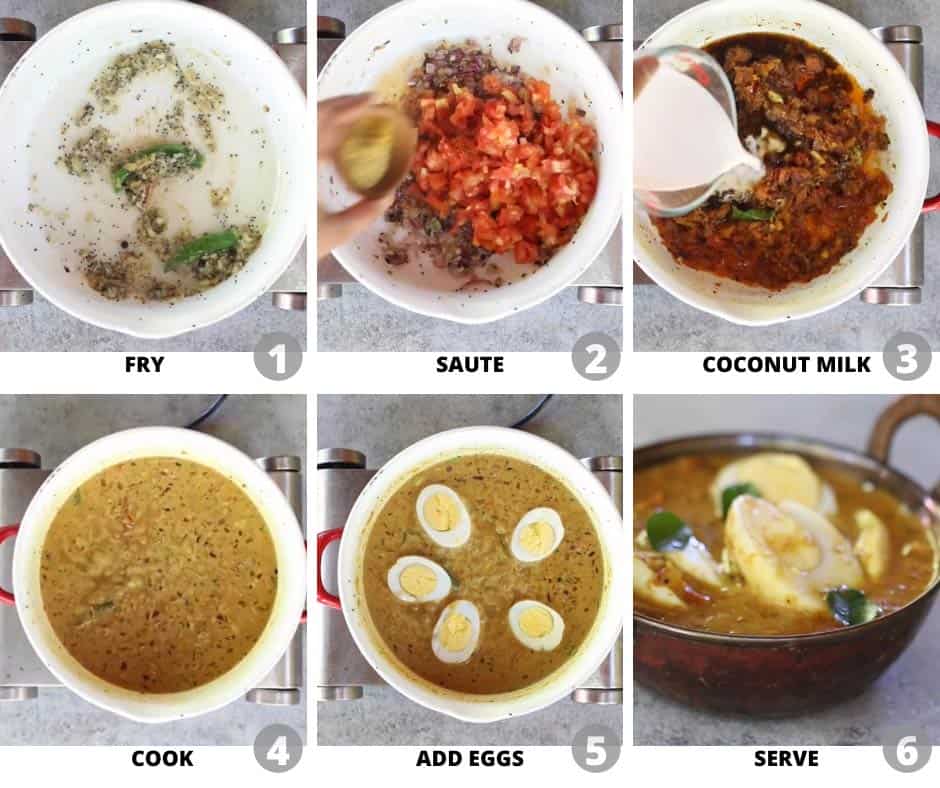
In a large pan, heat coconut oil and add mustard seeds, cinnamon, cardamom, peppercorns and green chilies. Once everything starts spluttering, add ginger, garlic and onions.
Cook till the onions turn soft and translucent and add tomatoes, turmeric powder, coriander powder, chili powder and salt. Let the tomatoes cook till they are pulpy, 6-8 minutes.
Add tamarind water and thin coconut milk.Stir and bring this to a boil and reduce heat to simmer.
Simmer till the gravy reduces slightly and becomes thicker, about 5 minutes. At this point, add some water if you need to adjust the consistency.
Adjust seasoning, add curry leaves and pour in the thick coconut milk. Stir a few times, without letting it come to a boil and switch off the flame. Drop the eggs in the curry, and cover and let it sit for five minutes before serving.
Video
Notes
To hard boil eggs perfectly, add eggs to a pot and fill it with water till it covers the eggs. Bring it to a boil and switch off the flame. Cover and let it sit for 12 minutes. Transfer to a vessel and place in cold water for perfectly hard boiled eggs.
To make tamarind water, add a small, bite sized ball of tamarind to warm water and let it sit for 10 minutes. Mash with your hands and use the paste/water in the curry.
Most packaged coconut milk is first pressing or thick coconut milk. To make thin coconut milk from it, add half water and half coconut milk for one cup thin coconut milk.
If storing this curry for later, do not add eggs. You can freeze the curry and reheat it when required. Use fresh hardboiled eggs when you reheat the curry.
This Coconut chutney recipe is the best way to turn South Indian food into something unforgettable. It’s quick, it’s fresh, and it’s the easiest way to turn a regular breakfast into something worth slowing down for.
There’s something about fresh coconut chutney that just makes a South Indian plate feel complete. Maybe it’s the way the coconut tastes clean and sweet, or the little kick from green chilli, or how that hot mustard seed tempering hits the cool chutney and sends up the best smell in the kitchen.
This version takes all of five minutes, just a quick blend and a sizzling tempering. It’s not fussy, so you don’t have to wait for a special occasion, and it’s just as happy next to a masala dosa as it is spread on toast when you’ve run out of butter. Make it once, and you’ll start finding reasons to keep a jar in the fridge.
Grated coconut – Freshly grated for the best flavour, though frozen works too if thawed.
Green chilli – Brings a gentle heat that cuts through the creaminess.
Ginger – Adds a zesty freshness that lifts the chutney.
Curry leaves – Infuses a subtle earthy aroma even when blended in.
Coriander leaves – Bright, herby notes to balance the richness.
Roasted Bengal gram (chana dal) – Adds body and a nutty depth to the chutney.
Tamarind – A hint of tang to balance the creaminess.
Salt – To season and bring out all the flavours.
For the tempering:
Vegetable oil – Neutral in flavour, perfect for frying the spices.
Mustard seeds – The classic South Indian tempering starter.
Urad dal – Adds a nutty crunch.
Curry leaves – Fragrant and essential for that authentic flavour.
Richa’s Top Tips For Coconut Chutney
Control the heat – Adjust green chillies to your spice comfort level. A single chilli for mild, two or more for extra kick.
Tweak the texture – Grind for less time if you like it slightly coarse, or longer for a smooth, creamy finish.
Don’t skip the tempering – The sizzle of curry leaves and mustard seeds adds aroma and that signature South Indian touch.
Serve it fresh – Coconut chutney tastes best within a few hours of making. If storing, refrigerate and stir well before serving.
Avoid too much water – Add just enough to help grind smoothly; too much will make it watery and bland.
Grind with warm water: Using warm water to grind the chutney prevents the fat from separating.
Frequently Asked Questions
Can I use frozen coconut to make coconut chutney?
Yes! Just thaw it completely before blending so it grinds smoothly. You might need to add a splash of warm water to bring back its natural softness.
What is the correct consistency for coconut chutney?
It’s really up to you—some like it thick and scoopable, others prefer it a bit looser for dipping. Add water slowly while grinding so you can control the texture.
I don’t have roasted chana dal, what can I use instead?
You can try roasted peanuts, cashews, or even a small piece of bread for binding. Each will slightly change the flavour, but they work well in a pinch.
How long does coconut chutney last?
It’s best eaten fresh, but you can store it in the fridge for up to 2–3 days. Keep it in an airtight container and stir well before serving.
Storage Tips
Fridge: Store coconut chutney in an airtight container in the refrigerator for up to 2–3 days. Add warm water to adjust the consistency and stir well to bring it together before serving.
Freezer: For longer storage, freeze in small airtight containers or ice cube trays. Thaw in the fridge and stir before using.
Make ahead: Grind the chutney without water, store in the fridge, and thin out with water just before serving to keep it fresh-tasting.
Avoid metal containers: Coconut can react with metal, so use glass or food-grade plastic.
Serving Ideas
Coconut chutney has a way of making everything it touches a little brighter. You’ll find yourself reaching for it far beyond the usual idli-dosa mornings.
With hot dosas – Crisp, fresh-off-the-pandosastaste even better when you scoop them up with chilled chutney.
Next to idlis – Soft, fluffy idlis soak up all that creamy goodness beautifully.
With medu vadas – Dunk those golden, crispy vadas straight in for the best bite.
Spread on uttapam – Smear a little on top of your uttapam before folding for an extra layer of flavour.
Beside lemon rice – The cooling chutney is a lovely contrast to tangy, spiced lemon rice.
With pongal – Adds freshness to this warm, comforting dish.
Alongside upma – Makes a simple breakfast upma feel a little more special.
As a dip for snacks – Pair with pakoras, bhajiyas, or even crispy air-fried veggies.
Customisation Ideas
Make it nutty: Blend in a few roasted cashews or peanuts for a richer, creamier texture.
Skip the tempering: For a lighter, milder version, serve without tempering—still delicious and very fresh-tasting.
Boost the tang: Add more tamarind or a squeeze of lemon juice for a sharper, more refreshing chutney.
Herb it up: Throw in a handful of fresh mint or coriander leaves for a herbal twist.
Play with texture: Grind coarsely for a rustic, slightly chunky chutney or blend until silky smooth for a refined finish.
Go roasted: Lightly toast the coconut before blending for a warm, nutty flavour.
Coconut Chutney Variations
Onion Coconut Chutney – Sautéed onions blend in a subtle sweetness and earthy depth, making the chutney richer.
Tomato Coconut Chutney – Juicy ripe tomatoes add tang and freshness, giving the chutney a vibrant lift.
Tamarind Coconut Chutney – Extra tamarind enhances the chutney with a bold tartness that cuts through the creaminess.
Coriander Coconut Chutney – Fresh coriander leaves bring a garden-fresh aroma and a burst of herbal flavour.
Red Coconut Chutney – Dried red chillies create a smoky heat and a striking reddish colour for a spicier twist.
Did You Know?
Coconut chutney might be a South Indian breakfast staple today, but its roots go way beyond the morning table. In coastal regions, freshly grated coconut was historically used to cool down fiery curries and balance spiced rice dishes. The word “chutney” comes from the Hindi word chatni, meaning “to lick” or “to taste with relish”, exactly how you’ll feel about this one. And here’s a fun kitchen fact: adding roasted chana dal not only gives the chutney body but also helps keep it from spoiling too quickly in warm weather.
Coconut chutney is one of those quick, fresh, and instant recipes that makes everything on the plate taste better. A few basic ingredients, a quick blitz in the blender, and a sizzling tempering, and you’ve got something you’ll keep coming back to.
Tried it out? Tag me on Instagram @my_foodstory—I’d love to see how you’re serving it, whether it’s with fluffy idlis, crispy dosas, or something entirely your own.
Add all ingredients listed under chutney to a mixer and grind to a smooth paste. Transfer to a bowl.
1 cup grated coconut, 1-2 green chillies, ½ inch ginger, 10 curry leaves, 2 tablespoons coriander leaves, 2 teaspoons tamarind paste, ½ teaspoon salt, ¼ cup + 2 tablespoons warm water
Tempering
Heat a small pan or tadka pan with oil, add mustard seeds, cumin seeds, urad dal & when the dal turns golden, add curry leaves & take off the heat. Stir and pour over the chutney.
1 teaspoon oil, ½ teaspoon mustard seeds, ¼ teaspoon cumin seeds, ½ teaspoon urad dal, 15 curry leaves
Video
Notes
Fresh coconut is used for best results. If you are using frozen coconut, bring it to room temperature before grinding else the coconut fat will separate.
Warm water is added while grinding to get the smooth texture of the chutney.
After grinding the chutney, you may adjust the consistency as per your liking by adding more water.
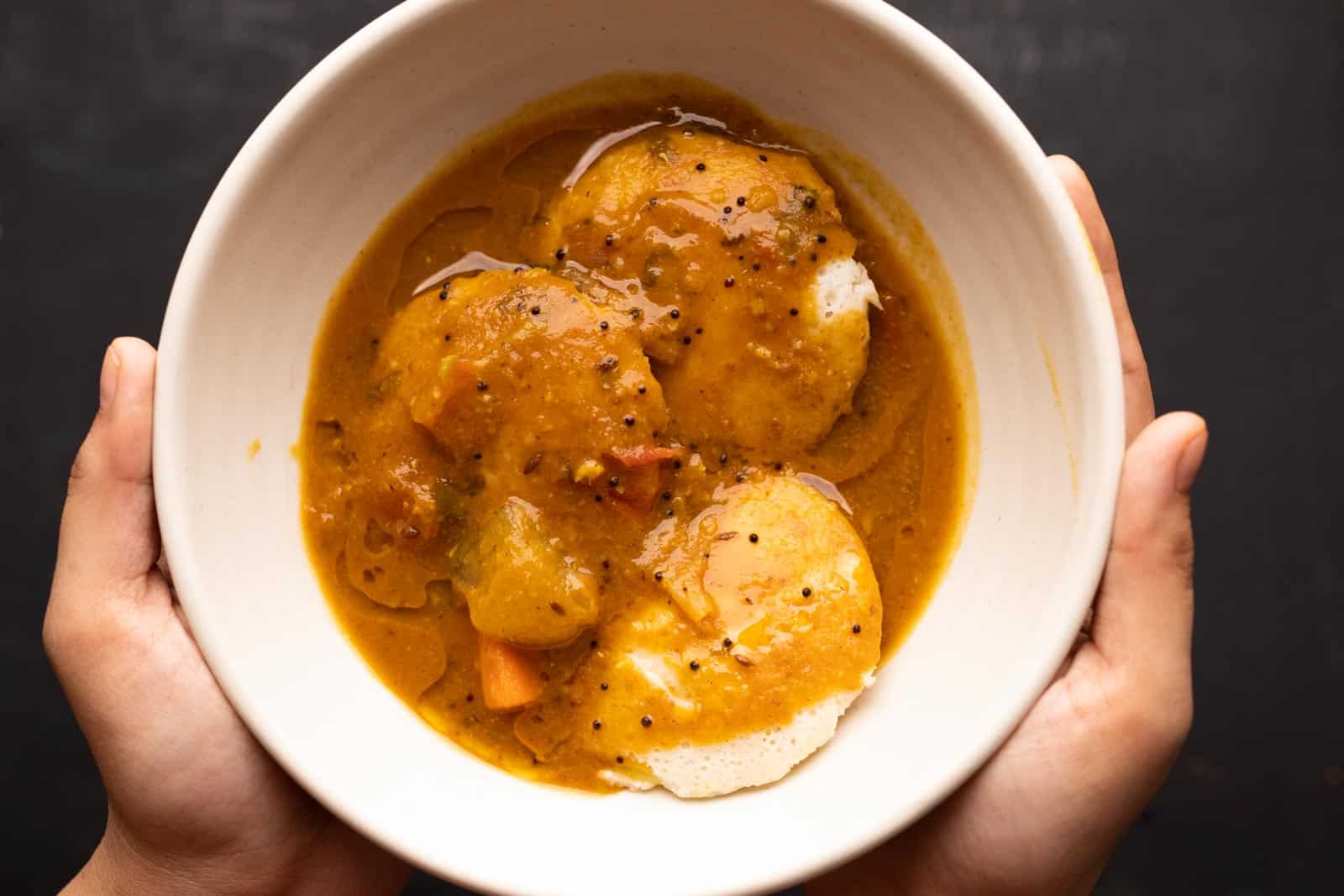
Craving a comforting bowl of sambar with idlis and dosas? This one-pot sambar recipe is the perfect solution — quick, flavorful, and made effortlessly in a pressure cooker!
I am the kind of person who cannot imagine having my idlis and dosas without a big bowl of piping hot sambar on my plate. I think it’s the perfect way to round up the simple flavors of idli and dosa, as well as make the meal more nutritious.
And considering how often we make South Indian dishes in this household, the whole shabang of making sambar the traditional way started to feel too cumbersome pretty soon. Enter: My one pot sambar recipe! With no compromise on the taste or texture, it delivers all the authentic South Indian goodness in a fraction of the time. So if you love sambar but like me, not the long cooking, this quick method might just become your new go-to.
Toor dal: Split pigeon peas form the base of this sambar.
Aromatics: Garlic, green chillies, and curry leaves for flavor and aroma
Veggies: Diced carrots, tomatoes, sambar onions, or cubed regular onions, beans, and drumsticks add lots of flavor, texture, and nutrition
Spices: Turmeric, red chilli, and coriander powders along with sambar powder for warmth and flavor
Tamarind pulp: For a nice, refreshing tang. I highly recommend not skipping this
Salt: For seasoning
Water: To pressure cook and adjust consistency
Oil: Prevents the dal from overflowing and foaming when releasing pressure. Any neutral-flavored oil such as vegetable, sunflower, peanut, canola, etc.
For tempering:
Ghee or oil: Ghee adds a really nice flavor and richness, but you can replace it with any neutral-flavored oil to make it vegan
Spices: Mustard seeds, cumin seeds, hing or asafoetida, and curry leaves for warmth, flavor, and aroma
Fenugreek seeds: It adds aroma and more depth of flavor to the sambar, along with aiding in digestion. A little goes a long way here. You can skip it if you don’t have it. Coriander leaves: Finely chopped for garnish. Adds fresh, earthy flavors to the whole dish
How to Make One Pot Sambar
Unlike the traditional sambar recipe that This one pot sambar recipe comes together entirely in the pressure cooker in just three simple steps:
01 Cooking dal: We start by pressure cooking our toor dal along with some turmeric powder, tomato, and oil until everything is cooked down and soft
02 Making sambar: Now to the same pressure cooker, we add all our veggies, curry leaves, tamarind, and spice powders and cook for one more whistle
03 Tempering: Once everything is cooked through, we make a tadka with mustard and cumin seeds, hing, curry leaves, etc. add it to the prepared sambar in the pressure cooker, mix everything well, and that’s it–our delicious, warming, one-pot sambar is ready to be served!
What is sambar powder
Sambar powder is a special spice and lentil mix blend that lends sambar its authentic flavor, warmth, and aroma. It’s usually made from chana dal (split chickpeas) as the base along with spices like coriander seeds, dried red chillies, cumin seeds, fenugreek seeds, and hing (asafoetida). Some people also add peppercorns to this blend, but that’s optional.
Sambar powder is easily available at most grocery stores online and offline in India, and at local Indian stores outside India. You can also easily make it at home in under 15 minutes. It has a long shelf life (stays good in the fridge for up to 6 months). In my experience, homemade sambar powder makes the dish a lot more flavorful, but store-bought can easily be used in a pinch.
Common Sambar Vegetables
Even though this sambar recipe uses just a handful of veggies, there are so many you can choose from. Here are all the veggies you can add depending on preference and availability:
Potato
Carot
Drumstick
Beans
Cauliflower
Pumpkin
Ladies Finger or Okra
Brinjal or Egg plant
Radish
Bottle gourd
Broad beans
Long beans
Plantains
Which lentils work best in Sambar?
Traditionally sambar uses just just toor dal or split pigeon peas and that’s what we have used for this one pot sambar recipe as well. However, you can use a mix of toor and moong or masoor dal. The flavor will change a little bit, but it will still be delicious!
Frequently Asked Questions
What is the difference between sambar and dal?
Sambar and dal are both lentil-based dishes, but here’s how the two are different: – Sambar is generally made with just toor dal, contains lots of veggies, has a sour flavor, and has many more spices than a regular dal – Dal on the other hand can be made with toor, masoor, chana, or moong dal, or even a mix of various dals and usually has no veggies. It has a thicker, creamier consistency as compared to sambar which is usually more watery.
Is it possible to make sambar without sambar powder?
Yes, absolutely! Sambar powder adds more warmth and an authentic flavor to the sambar, but you can easily skip it in a pinch. Even though the taste will differ slightly, the sambar will still be delicious.
Richa’s Top Tips
Follow the pressure cooking time mentioned in the recipe card, especially when cooking the veggies. We need our veggies to be completely cooked, but still have a little bite. Over cooking will lead to mushy veggies, which is not ideal for this sambar recipe
Sambar is generally watery, but feel free to adjust the consistency to your liking.
I would highly recommend using fresh spices and lentils for the best flavor and texture
It’s important to make the tempering on a medium flame to avoid burning and keep the spices and herbs aromatic
This sambar has medium spiciness and sourness. You can easily adjust the quantities of chilli powder, and tamarind to suit your preference. You can also add some jaggery to balance out the sourness if you like.
Ghee is traditionally to temper as it adds a beautiful richness and aroma to the sambar. However, you can easily replace it with coconut oil or neutral-flavored oil to make it vegan.
Storage Tips
Refrigerator: When stored in an airtight glass or steel container, sambar stays good in the fridge for up to 2-3 days.Reheat thoroughly on the stovetop and bring it to a boil to kill any bacteria before serving.
Freezer: Sambar is super freezer-friendly and stays well for up to 3 months. Store in single-servings as repeated thawing and freezing causes it to spoil very quickly. Thaw it out in the fridge overnight and then reheat in the microwave or on the stovetop before serving. Please note: Veggies may become a bit mushy when thawed which may change the texture slightly, but the flavors still remain intact.
Serving Ideas
There are so many ways to eat sambar. Here are a few favorites that always hit the right spot:
Poured over crispy medu vadasfor the most satisfying breakfast ever
Simply drink it by the bowl for a light and satisfying meal
Sambar Variations
Oil: While oil is traditionally used to temper sambar, some recipes, especially from Tamil Nadu, use gingelly or sesame seed oil (different from toasted sesame oil), while recipes from Kerala use coconut oil.
Jaggery: In Karnataka, adding a little jaggery to the sambar is a pretty common practice. Jaggery helps balance out the sourness from tamarind, while adding just a hint of sweetness.
Coconut: You can add toasted coconut shavings or make a paste by grinding toasted coconut and whole dried red chilli to add a nutty, spicy flavor to your sambar.
Raw mango: A lot of sambar recipes add raw mango when it’s in season for a deliciously tangy kick.
So now that you know how easy and hassle-free it can be to make sambar, there’s no reason to not make it the next time you’re making a South Indian spread. Once you make sambar for idli and dosa in this way, there’s no going back, I promise!
If you try this easy sambar recipe, don’t forget to send a DM with the pictures over on my IG @my_foodstory as well as tag me in your stories!
This is an easy vegetable sambar recipe where I show you how to transform store bought Sambar Powder into an amazing Sambar. Perfect for idlis, dosas and uttapams.
Add toor dal, turmeric powder, garlic,half the tomatoes, 1 ½ cups of water and 1 teaspoon oil to a pressure cooker and cook on medium for about 4 whistles (first whistle on high and then lower the flame and cook for 3 more whistles) till it’s cooked well. Mash the dal with the back of a spoon or a whisk and set aside.
Making Sambar
Add curry leaves, carrots, beans, drumsticks, sambar onions, green chillies, sambar powder, chilli powder, coriander powder, tamarind pulp and salt along with another cup of water. Mix well. Cook for one more whistle on high. Turn off the flame immediately after the whistle goes off. Once the pressure releases naturally, open the cooker and add more water if required to adjust the consistency. Keep the sambar on a simmer while you make the tempering or tadka.
Tempering
Heat ghee/oil in a tadka pan or a saucepan on a medium flame. add mustard seeds and cumin seeds. As they start to splutter, add hing, whole red chilli, curry leaves and fry till fragrant. Add chopped coriander and mix well. Turn off the heat and add tempering to the prepared sambar, mix well and serve.
Video
Notes
I like this sambar with almost fully mashed dal. If you like yours to be more chunky, do not mash it as much as I have. You can also reduce the cooking time for the dal by 5 minutes.
I have used MTR sambar powder in this recipe, you can use any trusted variety.
You can substitute fresh tamarind pulp with pre-packed tamarind paste.
I’m convinced that Idli Fry is the most addictive way to eat idlis! This one is basically crisped up Idlis with an Indo-Chinese twist and it’s absolutely perfect for tea-time, quick lunches, or packed for the tiffin!
While I love a traditional IdliSambar, there’s just something sooo addictive about this chilli Idli Fry. Imagine crisped up idlis tossed in a zingy Indo-Chinese sauce along with aromatics and crunchy veggies. That’s right – this dish is the best of both worlds. South Indian comfort and Indo-Chinese addictiveness 😝It’s perfectly warm and crispy and you just can’t help but lick that delicious masala off your fingers! I love enjoying these on their own with heaps of spring onions on top.
Generally idlis are deep fried to make them crunchy, but I like air frying them – same result, just less oil
Use leftover idlis for best results – they are slightly drier than fresh ones so they crisp up well
You can customize the veggies based on preference and availability – sweet corn, baby corn, mushrooms, and even broccoli will taste nice here.
If you are making a large batch, air fry the idlis in batches to make sure they are evenly crispy.
Adjust the spice level to your taste by increasing or decreasing the green chillies and schezwan sauce.
Frequently Asked Questions
What kind of idli is best for frying?
Day-old idlis are best — they’re firm and hold their shape when fried.
Can I skip air frying and only pan fry instead?
Yes, you can. The idlis won’t be as crispy and may break apart from stir frying, but the resulting dish will be delicious nonetheless. I’d recommend using leftover idlis if doing this since they are firmer in texture.
Storage Tips
This Idli Fry is best eaten fresh, hot off the pan.
If you must store, keep in an airtight container in the fridge and microwave to reheat.
Serving Ideas
Dunk these into some extra schezwan sauce or even some mayo/ketchup if you’d like
Pair with a piping hot cup of chai
Customisation Ideas
Add any veggies that you like – baby corn, broccoli, mushrooms
While I LOVE this Indo-Chinese preparation of Idli Fry, there are so many other variations to this recipe too! You can…
Spice up the idlis with a tempering of podi, mustard seeds, curry leaves, tomatoes, onions, and green chillies for that classic masala fry
Go the chatpata route by pan-frying the idlis with a mix of pav bhaji masala, chaat masala and veggies
Use sambhar masala, dried red chillies, veggies and curry leaves for a wholesome South Indian style fry
This idli fry recipe totally comes in clutch when I’ve got extra idlis and absolutely everyone at home loves them! Such a quick and easy recipe with incredible flavor and texture. A true winner snack recipe in my book and one that you MUST try out!
If you liked this recipe, be sure to stay tuned for more as part of my Idli Dosa Batter series, and send me your recreations over on my IG @my_foodstory!
2tablespoonssunflower oil or any neutral cooking oildivided
2teaspoonsfinely chopped garlic
½teaspoonfinely chopped ginger
2green chilliesslit
1cuponion petals
½red capsicumcubed
½green capsicumcubed
6idliscut into 4 pieces
1 ½teaspoonslight soy sauce
2teaspoonsketchup
1tablespoon+ 1 teaspoon schezwan sauce
⅛teaspoonsalt
2tablespoonsfinely chopped spring onion greens
Instructions
Air frying idlis
pre-heat the air fryer to 180C and brush the basket with oil. Add idlis to the basket and spray or brush them with oil and air fry at 180C for 6 minutes and 2-3 minutes at 200C till they turn crisp from the outside and have light golden edges. Remove from the basket and set aside.
2 tablespoons sunflower oil or any neutral cooking oil, 6 idlis
Making idli chilli
heat 1 tablespoon oil in a wok or deep kadai, add garlic, ginger & saute for a few seconds until fragrant. Add green chilli, onion petals and saute for 1-2 minutes till the onion edges turn light golden. Add red & green capsicums and toss for a minute. Add fried idlis and toss for a minute. Add soy sauce, ketchup, schezwan sauce, salt and toss for 1-2 minutes till the idlis are well coated with the sauce. Garnish with spring onion greens and serve.
2 teaspoons finely chopped garlic, ½ teaspoon finely chopped ginger, 2 green chillies, 1 cup onion petals, ½ red capsicum, ½ green capsicum, 1 ½ teaspoons light soy sauce, 2 teaspoons ketchup, 1 tablespoon + 1 teaspoon schezwan sauce, ⅛ teaspoon salt, 2 tablespoons finely chopped spring onion greens
Video
Notes
Leftovers idlis work really well in this recipe.
This article was researched and written by Navya Khetarpal.
Uttapam (savory South Indian pancakes) is like the comforting cousin of dosa – it’s thick, soft, and loaded with heaps of veggies. Crispy edges, fluffy center, it’s perfect for breakfast, brunch, or a light dinner.
Uttapam is up there on my list of favorite breakfasts to make – and for good reason! I can’t get enough of its fluffy texture when dunked into some piping hot sambar. And you can’t forget about that perfect crunch from the onions, tomatoes and chillies. Truly comfort food.
I told you guys that my Idli Dosa Batter recipe is my ultimate go-to and this is one of the reasons why! Beyond the classic idli and dosa – there’s so much more you can do with the batter and I’ll be sharing it all with you in my new series, starting with this uttapam recipe.
Idli dosa batter: I have used my easy homemade batter, but store-bought works in a pinch
Salt: for seasoning
Sugar: for balance and to make uttapams extra crispy
Onion: cut into half horizontally and dipped in oil to season the pan
Veggies: I have used finely chopped onions, tomatoes, green capsicum, green chillies, and ginger along with grated carrots but you can use any veggies you like
Idli podi: for an extra boost of flavor
Cooking oil or ghee
Butter
How to make Uttapam
Once your batter is ready, season it with salt and sugar and mix well.
Heat a non-stick pan or seasoned cast iron dosa tawa over medium heat. Once hot (you can sprinkle some water on the pan to check this, it should sizzle), pierce an onion with your fork, dip it in oil and rub this over the tawa. This will prevent the uttapam from sticking to the tawa.
Reduce the heat to low and pour a ladle of dosa batter in the center of the tawa and make a thick dosa without spreading it too much.
Add a tablespoon each of the toppings – onions, tomatoes, capsicum, carrots, ¼ teaspoon green chilli & ginger and sprinkle ½ teaspoon of idli podi.
Drizzle 1 teaspoon of ghee around the edges and ½-1 teaspoon of butter on top of the uttapam. Let this roast for 1-2 minutes on low heat till the base gets roasted well & turns golden brown.
Flip it over and roast for 1-2 minutes on low while gently pressing on the uttapam so that the veggies get roasted well. Roast the uttapam well on both sides and serve.
Frequently Asked Questions
What veggies can I add to my uttapam?
You can mix and match any veggies of your liking! Onion, tomato, capsicum, grated carrot, grated beetroot, and corn are some of my favorites to add.
Why is my uttapam sticking to the pan?
This usually happens if: – The pan isn’t hot enough when you start – make sure to sprinkle some water on the pan to check if it is hot enough, the water should sizzle and evaporate quickly – You’re using a new/unseasoned cast iron pan -The batter is too thin or too thick Troubleshooting Tip: Always rub the pan with an onion dipped in oil before making each uttapam to prevent sticking.
Can I use storebought idli dosa batter?
Yes, you can! (Although I totally recommend making my homemade idli dosa batter) Just be sure to let the batter come to room temperature, and adjust salt if needed. For crispier uttapams, you can add a pinch of sugar and a few tablespoons of rava (sooji) to the batter.
What is the difference between dosa and uttapam?
Dosa is thin and crisp, and made by spreading the batter in concentric circles to form a large circle that is then folded or stuffed with masala and then folded. Uttapam, on the other hand, is thick and fluffy, made without spreading the batter too much to form a circle with a diameter of 3 inches. This is then topped with veggies and roasted on both sides. Same batter, totally different textures!
Why do I add salt only to the portion of the batter I’m using?
Salt speeds up fermentation. If you’re storing leftover batter, adding salt to it may make it too sour by the next day. Always salt only what you’ll cook immediately.
What’s the Best Pan for Uttapam?
`Both non-stick and cast iron pan work, but here’s how they compare:
Cast Iron Tawa
Retains high heat well, which gives you a crisp, perfectly golden base
Best for: People who make uttapam/dosas regularly, love a crisp texture, and don’t mind the upkeep
Non-Stick Tawa
Easy to use and clean — great for beginners
Requires less oil
Lightweight and heats quickly
Doesn’t get as hot, so uttapam may be softer and not as golden in color
Can wear out over time, especially with metal utensils
Best for: Occasional uttapam/dosa makers or anyone who prefers low-maintenance cookware
Richa’s Top Tips
Use a well-fermented batter for fluffy texture
Note: Use cold water for grinding to prevent the batter from heating up and affecting fermentation. I use ice cold water. Ferment in a warm spot — near a window, inside an oven with the light on, or wrapped in a towel.
Cook on low heat so the base roasts and the top cooks through
Don’t spread the batter too thin as you would when making dosa, this is the most key step. The batter in itself should be of a thick, pourable consistency
When you pour the batter on the pan, it will end up spreading on its own. You can also spread it slightly here – we want to make a thick fluffy uttapam with a diameter of 2.5-3 inches
It’s important to flip and roast the uttapam on both sides so that the veggies get roasted well
Serve hot and fresh — uttapam is best when crisp on the edges and soft in the centre
Use a non-stick dosa tawa or an iron tawa. Personally, I love the results that an iron tawa gives but I know they need some extra maintenance so a non-stick dosa tawa works in a jiffy. For best results, don’t use the tawa for anything else except uttapam/dosas to maintain the quality of both the uttapam/dosas and the tawa for a long long time.
Make sure to check that your pan is hot before spreading the batter – you can do this by sprinkling a few drops of water on the pan. If the water sizzles and evaporates quickly, then the pan is hot enough.
This uttapam recipe is never going to let you down – because you get that perfectly crisp yet fluffy texture every time! Enjoy it fresh off the tawa or pack it for your kiddo’s tiffin, this is a recipe that you’ll keep coming back to for sure.
If you liked this recipe, be sure to stay tuned for more as part of my Idli Dosa Batter series, and send me your recreations over on my IG @my_foodstory!
Uttapam (savory South Indian pancakes) is like the comforting cousin of dosa – it’s thick, soft, and loaded with heaps of veggies. Crispy edges, fluffy center, it’s perfect for breakfast, brunch, or a light dinner.
Wash and soak idli rice, urad dal, poha and methi seeds in enough water in a way that there is at least an inch of extra water over the rice and dal.
1 ½ cups idli rice or parboiled rice, ½ cup skinned urad dal, ¼ cup poha, 1 teaspoon methi seeds
Day 1 – evening
Once the grains have soaked for about 8 hours, drain the excess water from the bowl.
Grind the idli rice-urad dal mix with cooked rice until almost smooth with approx. 1 ½ cups water and 4-5 ice cubes in a mixer grinder. Add additional water if required. The consistency should be such that it can leave a thick coat on the back of a spoon and falls in a ribbon like consistency when poured with a ladle. The ground batter should feel very slightly gritty between your fingers.
¼ cup cooked rice, 1 ½ cups water, 4-5 ice cubes
Pour the batter into a bowl that’s large enough so that there is room for the batter to rise. Mix the batter with clean hands as shown in the video – this is an important step as it helps in the fermentation so please don’t skip it.
Cover the bowl and set aside to ferment. Leave it in a warm, dry place away from direct sunlight to ferment. Fermentation takes anywhere between 12-24 hours depending on the humidity and temperature at your place. The warmer it is, the faster it’ll ferment.
Day 2 – morning or afternoon
Once fermented, the batter should have become almost 1.5 times its size with a slight dome shape and a wrinkle, bubbly layer on top. You should be able to smell a little sourness in the batter. This smell means it has fermented. If it is too sour, it has fermented too much! You can use a spoon to check the batter – the texture should be frothy with air bubbles. This will yield approx. 1.75 litres (6-7 cups) of batter.
Prepping batter
take 1 cup of batter in a bowl, add salt, sugar and mix well.
Heat a non-stick pan or a seasoned cast iron dosa tawa over medium heat. Once hot, pierce the onion half with a fork, dip in oil & rub on the tawa (like shown in the video). This prevents the uttappam from sticking to the tawa.
1 onion
Making Uttappam
Reduce the heat to low & pour one ladle of dosa batter in the center of the tawa and make a thick dosa without spreading much.
Add 1 tablespoon each of the toppings – onions, tomatoes, capsicum, carrots, ¼ teaspoon green chilli & ginger and sprinkle ½ teaspoon of idli podi.
Drizzle 1 teaspoon of ghee around the edges and ½-1 teaspoon of butter on top of the uttappam. let this roast for 1-2 minutes on low heat till the base gets roasted well & turns golden brown.
2 teaspoons cooking oil or ghee, 1 ½ teaspoons butter
Flip it over and roast for 1-2 minutes on low while gently pressing on the uttappam so that the veggies get roasted well. Roast the uttappam well on both sides and serve.
Follow the same steps for making the rest of the uttappams.
Video
Notes
To check if the pan is hot enough to make uttappam, sprinkle a few drops of water over the tawa & if it is ready, it should sizzle.
Rubbing the tawa with onion dipped in oil prevents the uttappam from sticking to the tawa, so try not to skip it.
For best results, uttappam should be cooked on low heat.
Uttapams taste best when they are served hot
Salt should be added ONLY to the quantity of batter you are using to avoid the batter from getting too sour.
If you are not using all the batter, store the remaining unsalted batter in an air tight container in the fridge for up to 3 days or freeze the batter for up to a month. Bring the batter to room temperature before making uttappams.
Crispy on the outside, soft on the inside, these appe are going to be your snack-time best friend.
Appe, paddu, paniyaram whatever you call it, is one of those recipes that feels like a reward for planning ahead. If you’ve got some idli or dosa batter in the fridge, you’re already halfway to golden, crispy, soft-in-the-middle deliciousness. These little rounds are comfort food, South Indian-style.
I’ve been making appe for years, usually as a quick breakfast or something fun to sneak into lunchboxes. They’re great plain, but also super versatile if you want to throw in veggies, spices, or even cheese. One batch never lasts long at our place!
Here’s what you’ll need to make a basic batch of appe using idli or dosa batter:
Idli/Dosa Batter: Fermented batter works best, slightly sour and fluffy, it gives appe their signature light texture.
Veggies (optional): Finely chopped onions, carrots, capsicum, or grated coconut are great add-ins.
Tempering (optional but recommended): Mustard seeds, curry leaves, chopped green chillies, and ginger sautéed in oil for extra flavor.
Oil: Just a few drops per mold in the appe pan for crisp, golden edges.
How to make Appe
Prep the Batter: Use fermented idli/dosa batter straight from the fridge or bring it to room temperature. Stir in salt if not already added. (Here’s the recipe or scroll down to the recipe card)
Add-ins (Optional): Mix in your chopped veggies or a quick tempering to boost flavor.
Heat the Appe Pan: Grease each mold with a drop of oil and heat on medium.
Cook the Appe: Spoon batter into each mold and cook covered for 2–3 minutes until the edges firm up. Flip and cook uncovered till golden and crisp on both sides.
Richa’s Top Tips For The Best Appes
Use well-fermented batter: The slight sourness and airy texture from a properly fermented idli or dosa batter is what gives appe their signature fluffiness inside and crisp edges outside.
Rest the batter (if straight from fridge): Cold batter can yield dense appe. Let it sit at room temperature for 20–30 minutes before cooking to get that light, airy texture.
Grease the pan well: Add a few drops of oil to each cavity of the appe pan before spooning in the batter. This helps create a golden crust and makes flipping easier.
Cook covered first, then crisp: Cover the pan while the first side cooks to help the batter steam and puff up. Once flipped, cook uncovered to crisp up the outsides.
Consistency of the batter: The ideal batter consistency for appe is medium to medium-thick, similar to idli batter or pancake batter. It should be thick enough to hold its shape when dropped into the appe pan but still pourable.
Frequently Asked Questions
What is the difference between appam and paniyaram?
Appam is a lacy, bowl-shaped fermented rice pancake, typically soft and spongy in the centre. Paniyaram (or appe) are bite-sized dumplings made from the same idli/dosa batter, but cooked in an appe pan with a crispy crust and soft inside.
Why are my appe sticky on the inside?
This usually happens when the batter is too thick or hasn’t come to room temperature before cooking. Another reason could be undercooking—make sure to cook covered first, then flip and crisp up the other side.
Can I make appe without a paniyaram/appe pan?
The appe pan really does help achieve the right shape and texture, but if you don’t have one, you can try using a mini muffin tray in the oven (though they won’t be quite the same!).
Can I store leftover appe?
Yes! Store them in an airtight container in the fridge for up to 2 days. Reheat in a pan or air fryer to bring back some of the crispiness.
Can I make this with readymade idli dosa batter?
You can, but the taste and texture is so much better when you use homemade dosa batter.
Are appe healthy?
Yes! they’re made from fermented rice and lentil batter, which boosts nutrient absorption and gut health, and since they’re pan-cooked with minimal oil, they’re light and easy to digest too.
Which Appe Pan is Better – Cast Iron or Non-Stick?
Choosing between a cast iron and non-stick appe pan depends on your cooking style and comfort level. Cast iron pans are a traditional choice, they heat evenly and give the appes a beautiful, crispy crust. Plus, cooking in cast iron adds a bit of iron to your diet naturally. But they do need regular seasoning and care to maintain their non-stick properties.
On the other hand, non-stick appe pans are beginner-friendly and super convenient. They require less oil, are easier to clean, and are great when you’re short on time or cooking for kids. Just be sure to use soft utensils and avoid high heat to extend the life of the coating.
If you’re just starting out, go for a good-quality non-stick pan. But if you’re up for a little extra effort and love that rustic crisp, a cast iron pan is totally worth it.
Storage Tips
Refrigeration: Let the appe cool completely before storing. Keep them in an airtight container in the fridge for 2 days.
Freezing: Appe can be frozen too! Lay them out on a tray, freeze, then transfer to a ziplock bag. Reheat directly from frozen in the appe pan or air fryer.
Reheating: To retain the texture, warm them in an appe pan, air fryer, or oven, not the microwave, which can make them rubbery.
Serving Ideas
These little bites are super versatile and pair beautifully with all kinds of chutneys and sides.
Dip them in classic Coconut Chutney for a traditional South Indian combo.
Serve with Green Chutney if you’re leaning into North Indian flavours.
Create a breakfast thali withIdlis, Sambar, and appe for a hearty start to your day.
Snack on them with a side of Peanut Chutney, a creamy, nutty dip that’s incredibly satisfying.
Pack them into a lunchbox with Lemon Rice or Tamarind Rice for a fun and fuss-free meal.
For a South Indian brunch twist, serve them alongside Veggie Upma and chutneys for a mix of textures and flavours.
Customisation Ideas
Spice it up: Add chopped green chillies, crushed pepper, or a spoonful of podi (gunpowder) to the batter.
Veggie-packed: Finely chopped onions, grated carrots, capsicum, cabbage, or even spinach can be added directly into the batter.
Cheesy twist: Stuff a tiny cube of cheese or grated mozzarella in the centre for a surprise melty bite.
South Indian masala style: Stir in a tadka of mustard seeds, curry leaves, and urad dal into the batter before cooking.
Sweet version: Add jaggery, mashed banana, and a hint of cardamom to the idli batter and cook as usual (It’s great for kids)
I am going to share the recipes of all these dishes along with an easy one-pot sambar and coconut chutney over the next 11 days. So make sure to tune in!
Did You Know
Appe (or paniyaram) is a popular South Indian snack that goes by many names across regions. It’s called paddu in Karnataka, ponganalu in Andhra Pradesh, and kuzhi paniyaram in Tamil Nadu. Traditionally made in cast iron appe pans over a wood fire, this snack has been adapted in modern kitchens using non-stick or even electric appe makers. Despite its humble look, it’s a versatile dish that reflects how South Indian food uses the same base ingredients (like fermented rice and lentils) in totally different, creative ways.
If you’ve got idli or dosa batter at home, appe is honestly one of the easiest and most rewarding snacks you can whip up. Whether you keep them plain and classic or jazz them up with fillings and dips, they always deliver on flavour and comfort. Plus, they’re ideal for everything from breakfast to tea-time to school lunchboxes.
Ready to try them? Tag me on Instagram @my_foodstory, I’d love to see what mix-ins you add or what you pair them with.
2-3tablespoonssunflower oil or any neutral flavored oil
Instructions
Prepping appe batter mix
Take the idli dosa batter in a bowl. Add capsicum, carrots, onions, ginger, green chilli, curry leaves, salt, sugar and give a good mix.
Tempering
Heat oil in a pan, add mustard seeds, cumin seeds and once they crackle, add chana dal, urad dal & roast on low heat for a few seconds till the dals turn light golden. Add the tempering to the appe batter and mix well.
Making Appe
Heat appe pan & add a few drops of oil to each cavity. Using a spoon or ladle, pour the batter to fill the cavities almost to the top (as shown in the video). Cover with a lid and cook on low for 1-2 minutes until the base is firm and golden.
Using a skewer or spatula, turn over each appe and cook the other side without covering the pan. Cook on low to medium for 2-3 minutes on this side till they are golden and crisp from the outside. Remove and serve.
Repeat the same steps to make the rest of the appe.
Video
Notes
Add oil to the appe cavity before making the appe as it avoids the appe sticking to the pan & also helps in roasting them well.
Do not over fill the cavities as appe rise when cooked
Appe taste best when they are hot and fresh off the pan
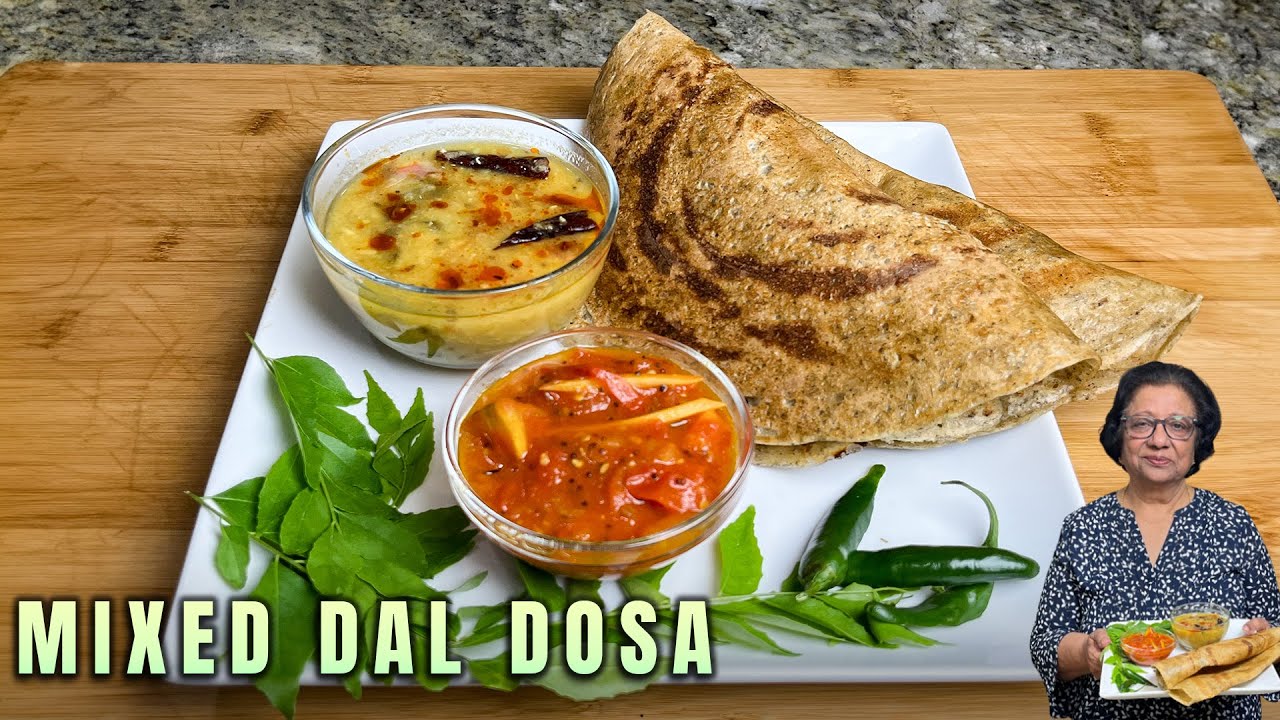
Mixed Dal Dosa is a simple and nutritious flatbread that doesn’t require fermentation. This high-protein dosa is made from a blend of various lentils (dal), which are soaked and ground into a smooth paste. A few spices enhance the flavors, and the dosa is cooked on a hot skillet until it’s crispy and golden. These dosas are not only high in protein but also vegan and gluten-free, making them a healthy choice for everyone.These protein-rich mixed dal dosas are incredibly versatile. They’re perfect for a healthy breakfast, but they can also be enjoyed at any meal—lunch, dinner, or even as a snack. Serve them with your favorite chutney, a comforting soup, or your choice of vegetable dish to complete the meal.
Prep Time 15 minutesminutes
Cook Time 20 minutesminutes
Servings 6Dosa
Ingredients
¼cupmoong dal
¼cupwashed moong dal
¼cupwashed urad dal
¼cupred lentil
1green chili choppedoptional
¼pieceginger chopped
½tspcumin seeds (jeera)
¼tspblack pepper
⅛tspasafetida (hing)
½tspsalt (adjust to taste)
4tbspoil
Instructions
In a bowl mix all the dal, wash them changing water 2-3 times. Soak dal in four cups of water for 6-8 hours.
Drain the water. Blend the lentils (dal) with green chili and ginger, adding water slowly as needed to make a smooth batter. Note: The less water, the smoother the batter.
Mix the salt and cumin seeds into the batter. Add water as needed. The total water added will be about ½ cup, just enough to achieve the consistency of pancake batter.
Place a non-stick skillet over medium-high heat. Test by sprinkling a few drops of water on it. The water should sizzle right away.
Pour about ½ cup of the batter mixture into the skillet and spread evenly with the back of a spoon. Starting from the center, spiral outward until evenly spread, about seven inches in diameter.
When the batter begins to dry, gently spread one teaspoon of oil over it. Wait about 30 seconds, then flip the dosa using a flat spatula.
Press the dosa lightly with the spatula all around to ensure even cooking, turning them two to three times. Dosa should be crisp and golden brown on both sides.
Repeat for the remaining dosas.
Notes
Notes: If you are on a gluten-free diet, be aware that asafetida (hing) in powder form is often not gluten-free. In that case, you may want to avoid using asafetida.Serving suggestionServe dosas with any chutney, such as tomato chutney, peanut chutney or cilantro chutney, or chutney of your choice.You can also serve them with samber (a south Indian style dal) or your choice of soup.For a creative twist, you can use these dosas to make delicious wraps, commonly known as frankies or kathi rolls. Simply wrap some vegetables or salad inside the dosa for a wholesome and satisfying meal on the go. You can even make these dosas in advance, then reheat them over a skillet to restore their crispness.For a creative twist, you can use these dosas to make delicious wraps. Make the dosas slightly thicker so they stay soft; these wraps are commonly known as frankies or kathi rolls. Simply wrap some vegetables or salad inside the dosa for a wholesome and satisfying meal on the go.
Introduction to Mixed Dal Dosa
Mixed Dal Dosa is a wholesome, protein-rich flatbread that’s not only easy to make but also doesn’t require the traditional fermentation process. Made from a blend of various lentils, this dosa is packed with plant-based protein, making it a great meal option for anyone looking to boost their protein intake. Lentils like moong dal, urad dal, and red lentils are soaked, ground into a smooth batter, and spiced to create a savory and crispy dosa. The best part? This dosa is both vegan and gluten-free, catering to various dietary preferences while still delivering great taste and texture.
Cultural and Traditional Importance
Dosas are a staple in South Indian cuisine, traditionally made from fermented rice and lentil batter. However, the Mixed Dal Dosa offers a quicker alternative without the need for fermentation, making it an ideal choice for those who are short on time. Lentils are a common ingredient in Indian cooking, celebrated for their versatility and nutritional value. By using a variety of dals, this dosa provides a range of nutrients, especially plant-based proteins, making it a go-to dish for breakfast, lunch, dinner, or even as a snack.
The beauty of Mixed Dal Dosa lies in its simplicity and adaptability. It’s a great way to incorporate different types of lentils into your diet, each contributing its unique flavor and health benefits. Traditionally served with chutneys and sambar, this dosa has found a place in modern kitchens due to its quick preparation and nutritious profile.
Recipe Variations from Manjula’s Kitchen
While Mixed Dal Dosa is delicious and nutritious on its own, there are several other similar dosa and pancake recipes available on Manjula’s Kitchen that you can explore for variety:
Moong Dal Dosa: Another high-protein dosa made primarily from moong dal, offering a lighter alternative.
Besan Chilla: A savory pancake made with gram flour (besan), perfect for a quick, protein-packed breakfast.
Rava Dosa: A crisp and delicate dosa made with semolina, for those who prefer a thin and crunchy dosa.
Oat Dosa: Similar to Mixed Dal Dosa, Instant Oat dosa is an easy recipe that is perfect for busy families.
Health Benefits and Dietary Considerations
The Mixed Dal Dosa is packed with nutrients, especially protein, making it a great option for those following a vegetarian or vegan diet. Lentils are an excellent source of protein, fiber, vitamins, and minerals, contributing to overall digestive health and maintaining energy levels throughout the day. By using a variety of dals, you’re also ensuring that you get a broader range of nutrients in every dosa.
Additionally, this recipe is gluten-free, making it suitable for those with gluten sensitivities or anyone on a gluten-free diet. If you’re strictly gluten-free, it’s important to note that asafetida (hing) often contains gluten, so be sure to use a gluten-free version or skip it altogether.
Serving Suggestions
Mixed Dal Dosa can be served with a variety of chutneys to complement its savory flavors. Here are a few chutney options from Manjula’s Kitchen that pair well with the dosa:
Tomato Chutney: A tangy and slightly sweet chutney that adds a fresh burst of flavor.
Cilantro Chutney: A classic chutney with refreshing cilantro and a hint of spice.
Peanut Chutney: A creamy and nutty chutney that pairs wonderfully with the crispy dosa.
For a complete meal, serve Mixed Dal Dosa with Sambar or a comforting soup. Another creative twist is to use the dosa as a wrap, filling it with vegetables, paneer, or salad to create a delicious and nutritious frankie or kathi roll. The dosas can also be prepared in advance and reheated on a skillet, making them an excellent option for meal prep.
Conclusion
Mixed Dal Dosa is a simple yet highly nutritious meal that can be enjoyed at any time of the day. Its high protein content, along with being vegan and gluten-free, makes it a versatile option for a variety of dietary needs. Whether you’re serving it with chutney for breakfast or transforming it into a wrap for lunch, this high protein dosa will quickly become a favorite in your household. Explore the other dosa recipes on Manjula’s Kitchen to discover even more delicious ways to enjoy Indian flatbreads.
Frequently Asked Questions (FAQs)
What makes Mixed Dal Dosa high in protein?
The use of multiple lentils like moong dal, urad dal, and red lentils makes Mixed Dal Dosa rich in plant-based protein, making it an excellent option for those seeking a high-protein meal.
Can I make the dosa ahead of time?
Yes, you can make the dosas in advance and reheat them on a skillet to restore their crispness. They also work well as wraps for on-the-go meals.
What are some serving options for Mixed Dal Dosa?
Serve Mixed Dal Dosa with chutneys like tomato chutney, cilantro chutney, or peanut chutney. You can also pair it with sambar or use it as a wrap filled with vegetables or paneer.
Is Mixed Dal Dosa gluten-free?
Yes, this dosa is naturally gluten-free. However, be cautious with asafetida (hing) as it may contain gluten unless specifically labeled gluten-free.
Can I adjust the spiciness of the dosa?
Absolutely! You can adjust the spice level by adding or omitting green chili and black pepper based on your preference.
Learn how to make Mixed Dal Dosa, a protein-packed, gluten-free Indian crepe made from various lentils. Perfect for a healthy breakfast or snack, this recipe is easy to prepare and loaded with nutrition.
Quick and delicious Semiya Kesari recipe with video and detailed step by step pictures. Easy seviyan kesari, vermicelli kesari – easy sweet recipe made with basic pantry ingredients! Semiya Kesari is a super simple, quick dessert recipe that’s quite delicious too. As the name suggests, Kesari is a south Indian style sweet made with Semiya...
Kothavarakkai poriyal is a basic stir fry made with cluster beans. Valued for its medicinal properties this cluster beans stirfry is a gluten-free, vegan addition to your everyday Indian meals.
The visit to Bengaluru this time has seen so many changes. My mother-in-law is finally hooked on blogger world. She is now curious about the new idea. She was talking about bloggers, YouTubers and plenty more who have daily appearances on her devices. So, the suggestion to be videoed while she was making the daily food was welcomed instantly. So as a start, we have kothavarakkai poriyal from her kitchen.
What is kothavarakkai?
The tender pods of Cyamopsis tetragonoloba are used as a vegetable known in regional languages as guar, gawarfali, the green seed pods that grow in clusters are the product of interest. Grown in crop rotation the guar plant notably provides the legume but also improves the soil by nitrogen fixation. The low-calorie pods are a good source of fibre and potassium.
Did you know?
The much-valued commercial flour improver guar gum is extracted from the endosperm of the mature dry seeds of this plant. This is used in breadmaking, the cheese industry and ice cream manufacture.
Ingredients for this kothavarakkai poriyal
This kothavarakka proiyal is made by my mother-in-law. It is one of the simplest stirfries yet very very tasty. Here is the list of ingredients you need to prepare this Cluster beans or kothavarakkai is the main ingredient in this recipe. Wash and clean the beans. Remove the beans from the thick stalk. Pinch off the tail as it tends to be a bit chewy. Now slice the beans as thin as you like. Tempering: the classic south Indian tempering is of mustard seeds that crackle to flavour the coconut oil, a touch of dals (split lentils ) for the crunch, followed by curry leaves and red chillies that further flavour the oil. Seasoning: the recipe is usually just seasoned with salt. However, if you like it spicy use about half teaspoon of cayenne pepper powder can be added. Garnishes: the final addition of the freshly grated coconut adds a lot of difference to the dish. Honestly, it doesn’t feel the same with the desiccated coconut. However, grated frozen coconut still manages a good bit of flavour. Additional adds: Shallots: sliced shallots can be added along with the curry leaves. This gives a wonderful aroma to the poriyal. However, this is not common in Tambaram kitchens so my mother-in-law doesn’t use it. Cumin: if you don’t have mustard seeds, use cumin. The cumin (jeera) gives a different flavour to the oil.
How to make the poriyal?
As a part of this new journey, we have made a short mature video of how the poriyal is prepared. My mother-in-law is the one who is making this so the measurements in the video are approximate. However, you can follow the recipe card below to get the exact measurements and step-by-step instructions. Hope you will like and share this video too.
Keyword bean salad, Indian vegetarian dinner, Lunch recipes, warm salad
Prep Time 20minutes
Cook Time 20minutes
Servings 4peopl
Equipment
chopping board
Knife
Kadai
ladle
Ingredients
2cupscluster beanschopped
For tempering
1tbspcoconut oil
1/2tspmustard seeds
1/2tspurad dal
1/2tspChanna Dal
1smalldry red chilli
curry leaveswe did not have any.
seasonings
1pinchturmeric powder
salt to taste
To cook
1/4cupdrinking water
Garnish
1/4cupgrated coconut
Instructions
Wash and trim the cluster beans.
Chop the cluster beans into small bits. Set it aside till needed.
Into the khadai add coconut oil and set on medium high heat.
As the oil heats up add the mustard seeds, urad dal, channa dal and red chillies. Add curry laves and stir fry till mustard seeds splutter.
Add the chopped cluster beans and stir fry for a minute.
Now add the turmeric powder, salt and mix well.
Add 1/4 cup of water and cover and cook for 5-7 minutes.
Once cooked, add the grated coconut and stir fry for another minute or two till water is completely absorbed.
The kothavarakkai poriyal is now ready.
Serving suggestions
Kothavarakkai poriyal paired with steamed rice, quinoa or millets with a classic gravy like sundakkai thengaarachukozhambu or podipotta sambhar is a perfect South Indian meal. To make an easy wrap use a spinach phulka as the base and fill up with this poriyal. If you have cooked potatoes mash add it up to give a filling wrap.
Meal prep and storage
The poriyal can be made and saved for about 3 days if refrigerated. If storing for a week, I avoid adding the coconut. Since the coconut added is fresh add it after thawing. The cluster beans stirfry is not the best to be frozen. It turns a bit rubbery if texture.
Stay connected
As we are exploring new ideas this year, hope you stay with us by subscribing to our newsletter. When you try this recipe don’t forget to let us know in the comments how you like it and rate the recipe with a 5-star rating. We will love to stay connected with you. Follow us on Instagram or Facebook to receive updates more often.
Super healthy and delicious Andhra special Pesarattu recipe recipe with detailed step by step pictures. Pesarattu video recipe, Andhra style green moong video recipe, pesara attu recipe - perfect breakfast or dinner recipe! Make this simple & easy green moong dosa – healthy goodness! Pesarattu is one of the specialties from Andhra, in South India...

 Login
Login