Reading view

There are new articles available, click to refresh the page.

NASA-JAXA XRISM Finds Elemental Bounty in Supernova Remnant

4 min read

NASA-JAXA XRISM Finds Elemental Bounty in Supernova Remnant

For the first time, scientists have made a clear X-ray detection of chlorine and potassium in the wreckage of a star using data from the Japan-led XRISM (X-ray Imaging and Spectroscopy Mission) spacecraft.

The Resolve instrument aboard XRISM, pronounced “crism,” discovered these elements in a supernova remnant called Cassiopeia A or Cas A, for short. The expanding cloud of debris is located about 11,000 light-years away in the northern constellation Cassiopeia.

“This discovery helps illustrate how the deaths of stars and life on Earth are fundamentally linked,” said Toshiki Sato, an astrophysicist at Meiji University in Tokyo. “Stars appear to shimmer quietly in the night sky, but they actively forge materials that form planets and enable life as we know it. Now, thanks to XRISM, we have a better idea of when and how stars might make crucial, yet harder-to-find, elements.”

A paper about the result published Dec. 4 in Nature Astronomy. Sato led the study with Kai Matsunaga and Hiroyuki Uchida, both at Kyoto University in Japan. JAXA (Japan Aerospace Exploration Agency) leads XRISM in collaboration with NASA, along with contributions from ESA (European Space Agency). NASA and JAXA also codeveloped the Resolve instrument.
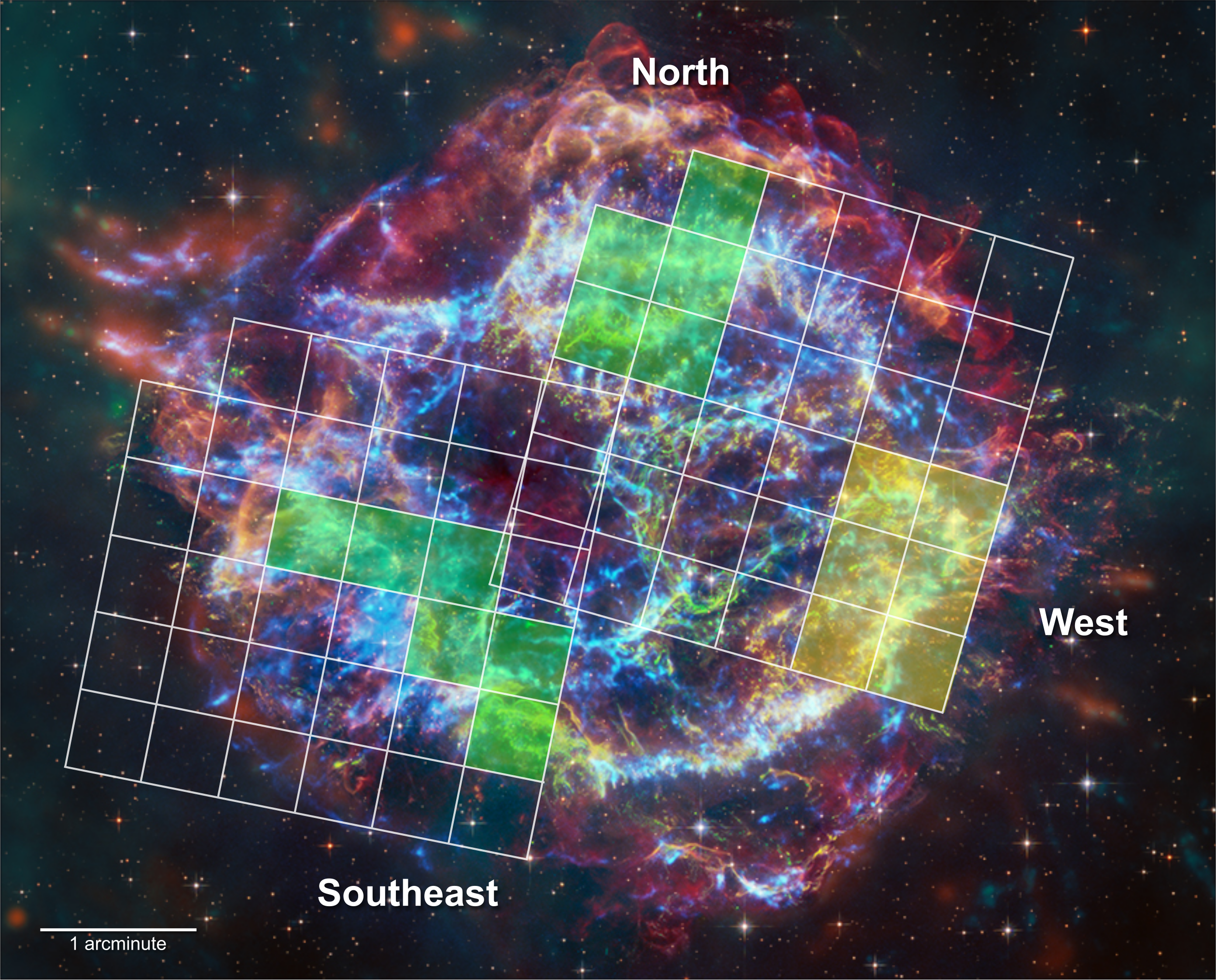
The Cassiopeia A supernova remnant with the XRISM Resolve fields of view
Observations of the Cassiopeia A supernova remnant by the Resolve instrument aboard the NASA-JAXA XRISM (X-ray Imaging and Spectroscopy Mission) spacecraft revealed strong evidence for potassium (green squares) in the southeast and northern parts of the remnant. Grids superposed on a multiwavelength image of the remnant represent the fields of view of two Resolve measurements made in December 2023. Each square represents one pixel of Resolve’s detector. Weaker evidence of potassium (yellow squares) in the west suggests that the original star may have had underlying asymmetries before it exploded.
NASA’s Goddard Space Flight Center; X-ray: NASA/CXC/SAO; Optical: NASA/ESA/STScI; IR: NASA/ESA/CSA/STScI/Milisavljevic et al., NASA/JPL/CalTech; Image Processing: NASA/CXC/SAO/J. Schmidt and K. Arcand

Stars produce almost all the elements in the universe heavier than hydrogen and helium through nuclear reactions. Heat and pressure fuse lighter ones, like carbon, into progressively heavier ones, like neon, creating onion-like layers of materials in stellar interiors.

Nuclear reactions also take place during explosive events like supernovae, which occur when stars run out of fuel, collapse, and explode. Elemental abundances and locations in the wreckage can, respectively, tell scientists about the star and its explosion, even after hundreds or thousands of years.

Some elements — like oxygen, carbon, and neon — are more common than others and are easier to detect and trace back to a particular part of the star’s life.

Other elements — like chlorine and potassium — are more elusive. Since scientists have less data about them, it’s more difficult to model where in the star they formed. These rarer elements still play important roles in life on Earth. Potassium, for example, helps the cells and muscles in our bodies function, so astronomers are interested in tracing its cosmic origins.

The roughly circular Cas A supernova remnant spans about 10 light-years, is over 340 years old, and has a superdense neutron star at its center — the remains of the original star’s core. Scientists using NASA’s Chandra X-ray Observatory had previously identified signatures of iron, silicon, sulfur, and other elements within Cas A.

In the hunt for other elements, the team used the Resolve instrument aboard XRISM to look at the remnant twice in December 2023. The researchers were able to pick out the signatures for chlorine and potassium, determining that the remnant contains ratios much higher than expected. Resolve also detected a possible indication of phosphorous, which was previously discovered in Cas A by infrared missions.

Watch to learn more about how the Resolve instrument aboard XRISM captures extraordinary data on the make-up of galaxy clusters, exploded stars, and more using only 36 pixels.
Credit: NASA’s Goddard Space Flight Center

“Resolve’s high resolution and sensitivity make these kinds of measurements possible,” said Brian Williams, the XRISM project scientist at NASA’s Goddard Space Flight Center in Greenbelt, Maryland. “Combining XRISM’s capabilities with those of other missions allows scientists to detect and measure these rare elements that are so critical to the formation of life in the universe.”

The astronomers think stellar activity could have disrupted the layers of nuclear fusion inside the star before it exploded. That kind of upheaval might have led to persistent, large-scale churning of material inside the star that created conditions where chlorine and potassium formed in abundance.

The scientists also mapped the Resolve observations onto an image of Cas A captured by Chandra and showed that the elements were concentrated in the southeast and northern parts of the remnant.

This lopsided distribution may mean that the star itself had underlying asymmetries before it exploded, which Chandra data indicated earlier this year in a study Sato led.

“Being able to make measurements with good statistical precision of these rarer elements really helps us understand the nuclear fusion that goes on in stars before and during supernovae,” said co-author Paul Plucinsky, an astrophysicist at the Center for Astrophysics | Harvard & Smithsonian in Cambridge, Massachusetts. “We suspected a key part might be asymmetry, and now we have more evidence that’s the case. But there’s still a lot we just don’t understand about how stars explode and distribute all these elements across the cosmos.”

By Jeanette Kazmierczak
NASA’s
Goddard Space Flight Center, Greenbelt, Md.

Media Contact:
Claire Andreoli
301-286-1940
NASA’s Goddard Space Flight Center, Greenbelt, Md.

Facebook logo
Instagram logo

Planned satellite constellations may swamp future orbiting telescopes

On Wednesday, three NASA astronomers released an analysis showing that several planned orbital telescopes would see their images criss-crossed by planned satellite constellations, such as a fully expanded Starlink and its competitors. While the impact of these constellations on ground-based has been widely considered, orbital hardware was thought to be relatively immune from their interference. But the planned expansion of constellations, coupled with some of the features of upcoming missions, will mean that at least one proposed observatory will see an average of nearly 100 satellite tracks in every exposure.

Making matters worse, some of the planned measures meant to minimize the impact on ground-based telescopes will make things worse for those in orbit.

Constellations vs. astronomy

Satellite constellations are a relatively new threat to astronomy; prior to the drop in launch costs driven by SpaceX’s reusable rockets, the largest constellations in orbit consisted of a few dozen satellites. But the rapid growth of the Starlink system caused problems for ground-based astronomy that are not easy to solve.

Read full article

Comments

© NASA

Formation of oceans within icy moons could cause the waters to boil

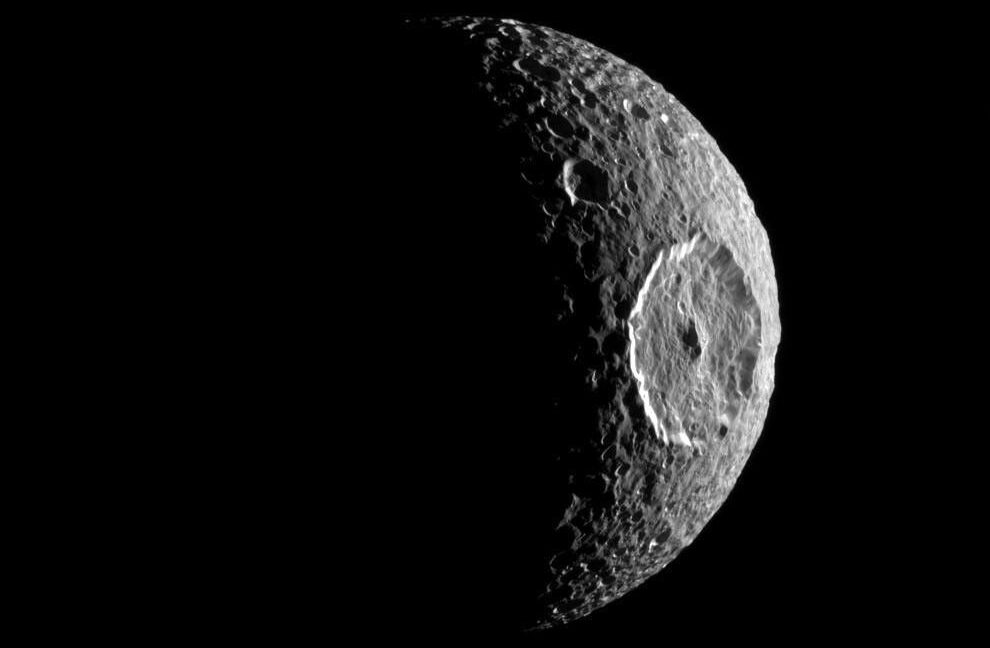
Our exploration of the outer Solar System has revealed a host of icy moons, many with surface features that suggest a complex geology. In some cases, these features—most notably the geysers of Enceladus—hint at the presence of oceans beneath the icy surfaces. These oceans have been ascribed to gravitational interactions that cause flexing and friction within the moon, creating enough heat to melt the body’s interior.

Something that has received a bit less attention is that some of these orbital interactions are temporary or cyclical. The orbits of any body are not always regular and often have long-term cycles. That’s also true for the other moons that provide the gravitational stress. As a result, the internal oceans may actually come and go, as the interiors of the moons melt and refreeze.

A new study, released today by Nature Astronomy, looks at one of the consequences of the difference in density between liquid water and ice (about 10 percent): the potential for the moon’s interior to shrink as it melts, leaving an area of low pressure immediately below its icy shell. If the moon is small enough, this study suggests, that could cause the surface of the ocean to boil.

Read full article

Comments

© NASA/JPL/Space Science Institute

Scientists found the key to accurate Maya eclipse tables

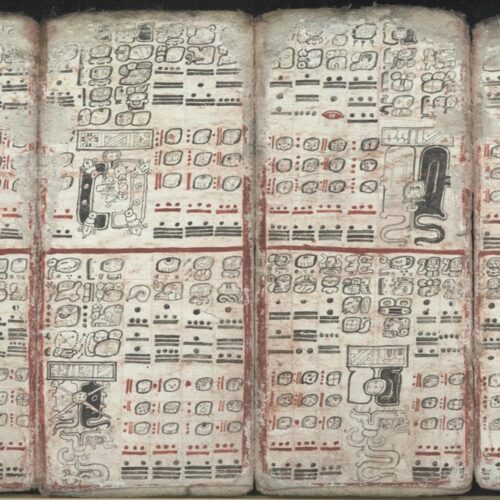
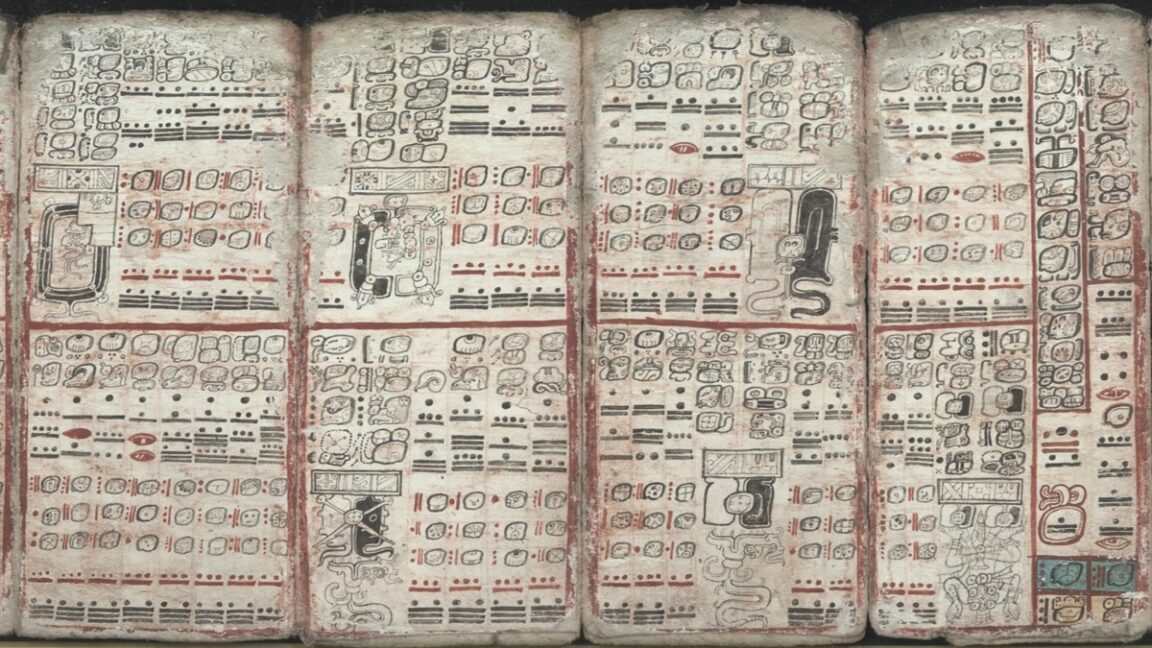
Astronomical events such as eclipses were central to Maya culture, reflected in the care the Maya took to keep accurate calendars to aid in celestial predictions. Among the few surviving Maya texts is the so-called Dresden Codex, which includes a table of eclipses. Researchers have concluded that this table was repurposed from earlier lunar month tables, rather than being created solely for eclipse prediction, according to a paper published in the journal Science Advances. They also figured out the mechanism by which the Maya ensured that table would be accurate over a very long time period.

The Maya used three primary calendars: a count of days, known as the Long Count; a 260-day astrological calendar called the Tzolk’in; and a 365-day year called the Haab’. Previous scholars have speculated on how awe-inspiring solar or lunar eclipses must have seemed to the Maya, but our understanding of their astronomical knowledge is limited. Most Maya books were burned by Spanish conquistadors and Catholic priests. Only four hieroglyphic codices survive: the Dresden Codex, the Madrid Codex, the Paris Codex, and the Grolier Codex.

The Dresden Codex dates back to the 11th or 12th century and likely originated near Chichen Itza. It can be folded accordion-style and is 12 feet long in its unfolded state. The text was deciphered in the early 20th century and describes local history as well as astronomical lunar and Venus tables.

Read full article

Comments

© Public domain

NASA really wants you to know that 3I/ATLAS is an interstellar comet

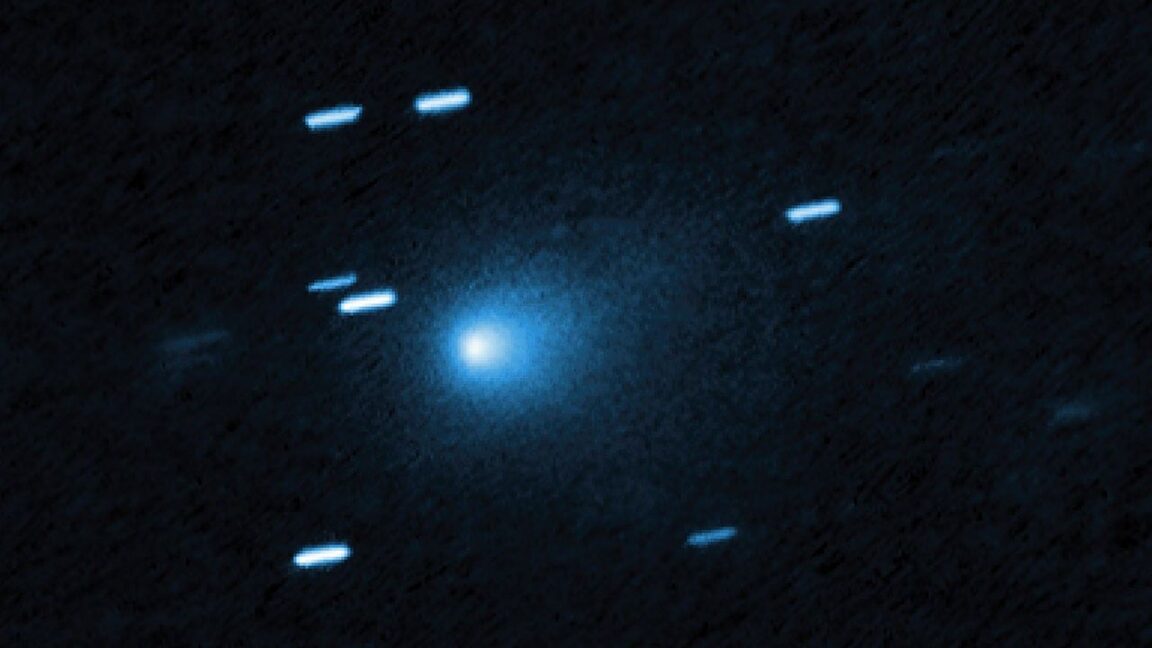
Since early July, telescopes around the world have been tracking just our third confirmed interstellar visitor, the comet 3I/ATLAS—3I, for third interstellar, and ATLAS (Asteroid Terrestrial-impact Last Alert System) for the telescope network that first spotted it. But the object’s closest approach to the Sun came in late October during the US government shutdown. So, while enough people went to work to ensure that the hardware continued to do its job, nobody was available at NASA to make the images available to the public or discuss their implications.

So today, NASA held a press conference to discuss everything that we now know about 3I/ATLAS and how NASA’s hardware contributed to that knowledge. And to say one more time that the object is a fairly typical comet and not some spaceship doing its best to appear like one.

Extrasolar comet

3I/ATLAS is an extrasolar comet and the third visitor from another star that we’ve detected. We know the comet part because it looks like one, forming a coma of gas and dust, as well as a tail as the Sun heats up its materials. That hasn’t stopped the usual suspect (Avi Loeb) from speculating that it might be a spacecraft, as he had for the earlier visitors. NASA doesn’t want to hear it. “This object is a comet,” said Associate Administrator Amit Kshatrya. “It looks and behaves like a comet, and all evidence points to it being a comet.”

Read full article

Comments

© NASA, ESA, David Jewitt (UCLA)

❌