While AI bubble talk fills the air these days, with fears of overinvestment that could pop at any time, something of a contradiction is brewing on the ground: Companies like Google and OpenAI can barely build infrastructure fast enough to fill their AI needs.
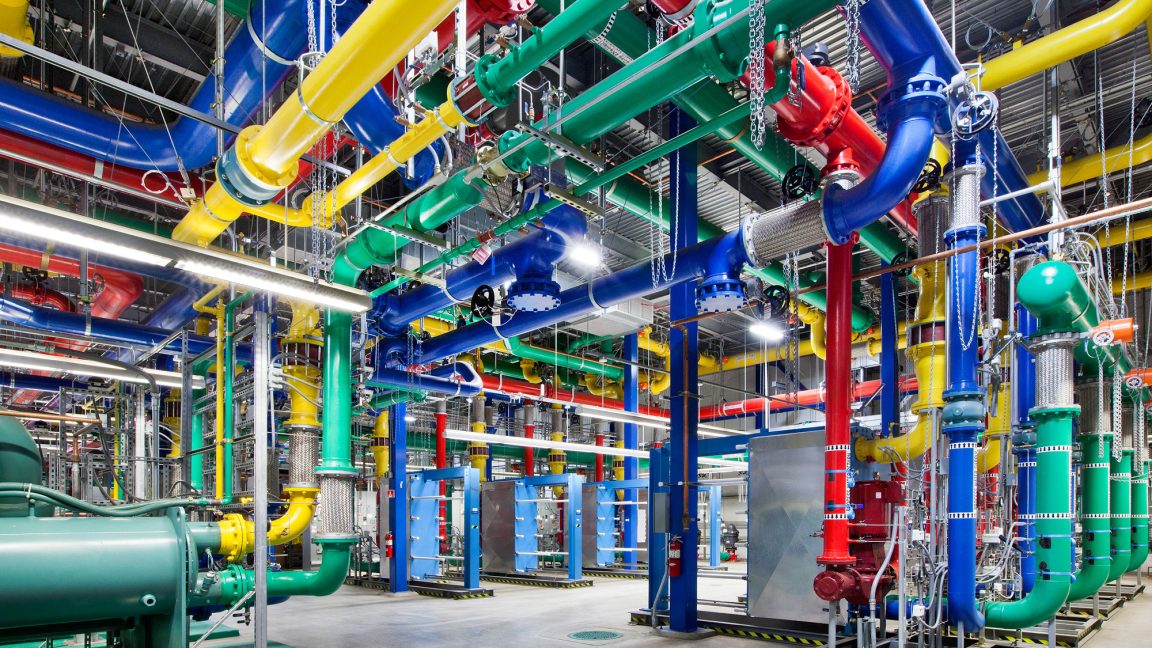
During an all-hands meeting earlier this month, Google’s AI infrastructure head Amin Vahdat told employees that the company must double its serving capacity every six months to meet demand for artificial intelligence services, reports CNBC. The comments show a rare look at what Google executives are telling its own employees internally. Vahdat, a vice president at Google Cloud, presented slides to its employees showing the company needs to scale “the next 1000x in 4-5 years.”
While a thousandfold increase in compute capacity sounds ambitious by itself, Vahdat noted some key constraints: Google needs to be able to deliver this increase in capability, compute, and storage networking “for essentially the same cost and increasingly, the same power, the same energy level,” he told employees during the meeting. “It won’t be easy but through collaboration and co-design, we’re going to get there.”
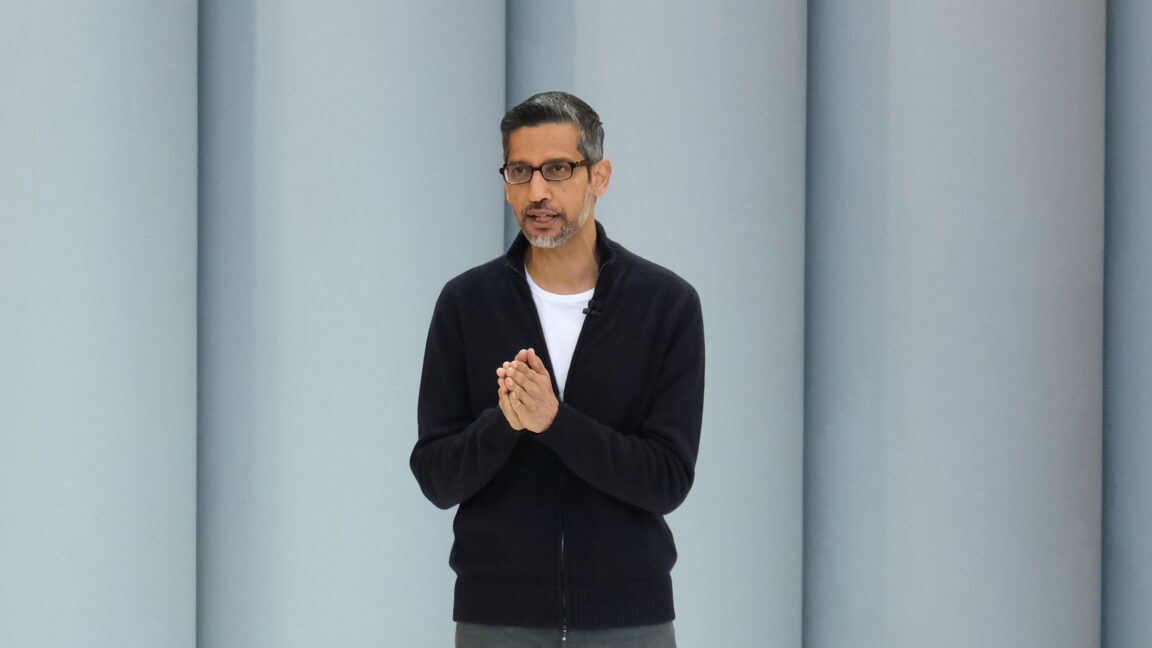
On Tuesday, Alphabet CEO Sundar Pichai warned of “irrationality” in the AI market, telling the BBC in an interview, “I think no company is going to be immune, including us.” His comments arrive as scrutiny over the state of the AI market has reached new heights, with Alphabet shares doubling in value over seven months to reach a $3.5 trillion market capitalization.
Speaking exclusively to the BBC at Google’s California headquarters, Pichai acknowledged that while AI investment growth is at an “extraordinary moment,” the industry can “overshoot” in investment cycles, as we’re seeing now. He drew comparisons to the late 1990s Internet boom, which saw early Internet company valuations surge before collapsing in 2000, leading to bankruptcies and job losses.
“We can look back at the Internet right now. There was clearly a lot of excess investment, but none of us would question whether the Internet was profound,” Pichai said. “I expect AI to be the same. So I think it’s both rational and there are elements of irrationality through a moment like this.”

 Login
Login