❌

Reading view

There are new articles available, click to refresh the page.

Rocket Report: Blunder at Baikonur; do launchers really need rocket engines?

Welcome to Edition 8.21 of the Rocket Report! We’re back after the Thanksgiving holiday with more launch news. Most of the big stories over the last couple of weeks came from abroad. Russian rockets and launch pads didn’t fare so well. China’s launch industry celebrated several key missions. SpaceX was busy, too, with seven launches over the last two weeks, six of them carrying more Starlink Internet satellites into orbit. We expect between 15 and 20 more orbital launch attempts worldwide before the end of the year.

As always, we welcome reader submissions. If you don’t want to miss an issue, please subscribe using the box below (the form will not appear on AMP-enabled versions of the site). Each report will include information on small-, medium-, and heavy-lift rockets, as well as a quick look ahead at the next three launches on the calendar.

Another Sarmat failure. A Russian intercontinental ballistic missile (ICBM) fired from an underground silo on the country’s southern steppe on November 28 on a scheduled test to deliver a dummy warhead to a remote impact zone nearly 4,000 miles away. The missile didn’t even make it 4,000 feet, Ars reports. Russia’s military has been silent on the accident, but the missile’s crash was seen and heard for miles around the Dombarovsky air base in Orenburg Oblast near the Russian-Kazakh border. A video posted by theΒ Russian blog site MilitaryRussia.ru on Telegram and widely shared on other social media platforms showed the missile veering off course immediately after launch before cartwheeling upside down, losing power, and then crashing a short distance from the launch site.
Read full article

Comments

Β© Korea Aerospace Research Institute
Rocket Report: SpaceX’s next-gen booster fails; Pegasus will fly again

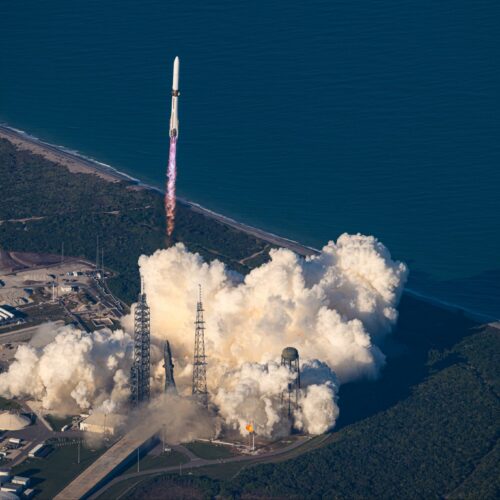
Welcome to Edition 8.20 of the Rocket Report! For the second week in a row, Blue Origin dominated the headlines with news about its New Glenn rocket. After a stunning success November 13 with the launch and landing of the second New Glenn rocket, Jeff Bezos’ space company revealed a roadmap this week showing how engineers will supercharge the vehicle with more engines. Meanwhile, in South Texas, SpaceX took a step toward the first flight of the next-generation Starship rocket. There will be no Rocket Report next week due to the Thanksgiving holiday in the United States. We look forward to resuming delivery of all the news in space lift the first week of December.

As always, we welcome reader submissions. If you don’t want to miss an issue, please subscribe using the box below (the form will not appear on AMP-enabled versions of the site). Each report will include information on small-, medium-, and heavy-lift rockets, as well as a quick look ahead at the next three launches on the calendar.

Northrop’s Pegasus rocket wins a rare contract.Β A startup named Katalyst Space Technologies won a $30 million contract from NASA in August to build a robotic rescue mission for the agency’s Neil Gehrels Swift Observatory in low-Earth orbit. Swift, in space since 2004, is a unique instrument designed to study gamma-ray bursts, the most powerful explosions in the Universe. The spacecraft lacks a propulsion system and its orbit is subject to atmospheric drag, and NASA says it is β€œracing against the clock” to boost Swift’s orbit and extend its lifetime before it falls back to Earth. On Wednesday, Katalyst announced it selected Northrop Grumman’s air-launched Pegasus XL rocket to send the rescue craft into orbit next year.

Read full article

Comments

Β© Manuel Mazzanti/NurPhoto via Getty Images

Rocket Report: Blue Origin’s stunning success; vive le Baguette One!

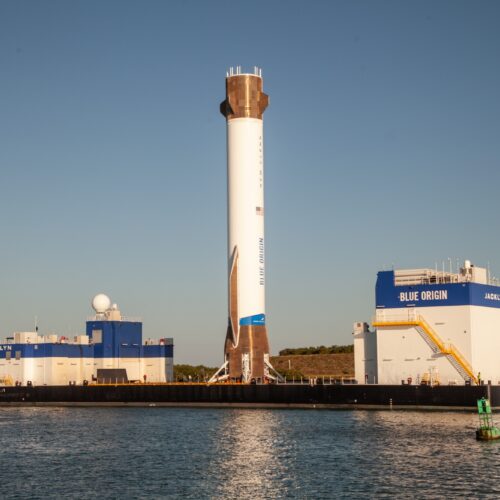
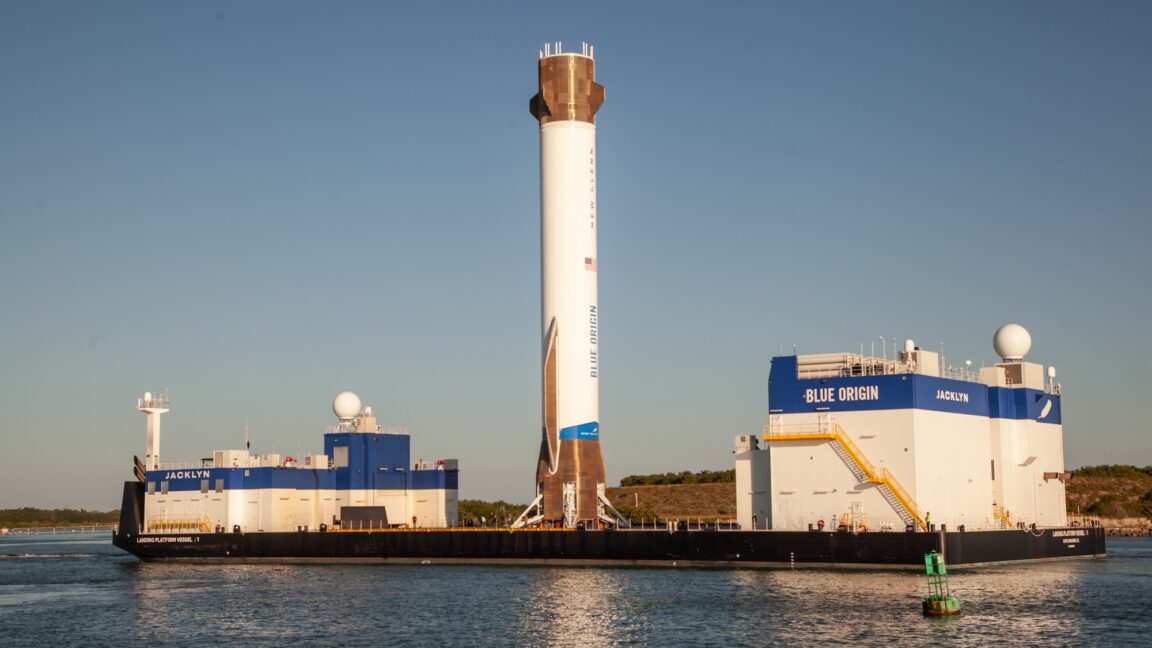
Welcome to Edition 8.19 of the Rocket Report! Thursday was a monumental day in launch history with Blue Origin’s New Glenn rocket not just taking off successfully, but with the first stage masterfully returning to the surface of the ocean, hovering near the Jacklyn drone ship, and then making a landing in the center of the barge. It was fantastic to watch and cements our new reality of reusable rockets. The future of space access is very bright indeed.

As always, we welcome reader submissions, and if you don’t want to miss an issue, please subscribe using the box below (the form will not appear on AMP-enabled versions of the site). Each report will include information on small-, medium-, and heavy-lift rockets as well as a quick look ahead at the next three launches on the calendar.

Private Chinese rocket fails. Galactic Energy’s solid-fuel Ceres-1 rocket lifted off from Jiuquan Satellite Launch Center in northwest China on Sunday, carrying three satellites toward low-Earth orbit. The rocket’s first three stages performed well, according to media reports, but its fourth and final stage shut down too early, leading to the loss of all three payloads, Space.com reports.

Read full article

Comments

Β© Blue Origin

❌