Reading view

There are new articles available, click to refresh the page.

Microsoft shareholders invoke Orwell and Copilot as Nadella cites ‘generational moment’

From left: Microsoft CFO Amy Hood, CEO Satya Nadella, Vice Chair Brad Smith, and Investor Relations head Jonathan Nielsen at Friday’s virtual shareholder meeting. (Screenshot via webcast)

Microsoft’s annual shareholder meeting Friday played out as if on a split screen: executives describing a future where AI cures diseases and secures networks, and shareholder proposals warning of algorithmic bias, political censorship, and complicity in geopolitical conflict.

One shareholder, William Flaig, founder and CEO of Ridgeline Research, quoted two authorities on the topic — George Orwell’s 1984 and Microsoft’s Copilot AI chatbot — in requesting a report on the risks of AI censorship of religious and political speech.

Flaig invoked Orwell’s dystopian vision of surveillance and thought control, citing the Ministry of Truth that “rewrites history and floods society with propaganda.” He then turned to Copilot, which responded to his query about an AI-driven future by noting that “the risk lies not in AI itself, but in how it’s deployed.”

In a Q&A session during the virtual meeting, Microsoft CEO Satya Nadella said the company is “putting the person and the human at the center” of its AI development, with technology that users “can delegate to, they can steer, they can control.”

Nadella said Microsoft has moved beyond abstract principles to “everyday engineering practice,” with safeguards for fairness, transparency, security, and privacy.

Brad Smith, Microsoft’s vice chair and president, said broader societal decisions, like what age kids should use AI in schools, won’t be made by tech companies. He cited ongoing debates about smartphones in schools nearly 20 years after the iPhone.

“I think quite rightly, people have learned from that experience,” Smith said, drawing a parallel to the rise of AI. “Let’s have these conversations now.”

Microsoft’s board recommended that shareholders vote against all six outside proposals, which covered issues including AI censorship, data privacy, human rights, and climate. Final vote tallies have yet to be released as of publication time, but Microsoft said shareholders turned down all six, based on early voting. 

While the shareholder proposals focused on AI risks, much of the executive commentary focused on the long-term business opportunity. 

Nadella described building a “planet-scale cloud and AI factory” and said Microsoft is taking a “full stack approach,” from infrastructure to AI agents to applications, to capitalize on what he called “a generational moment in technology.”

Microsoft CFO Amy Hood highlighted record results for fiscal year 2025 — more than $281 billion in revenue and $128 billion in operating income — and pointed to roughly $400 billion in committed contracts as validation of the company’s AI investments.

Hood also addressed pre-submitted shareholder questions about the company’s AI spending, pushing back on concerns about a potential bubble. 

“This is demand-driven spending,” she said, noting that margins are stronger at this stage of the AI transition than at a comparable point in Microsoft’s cloud buildout. “Every time we think we’re getting close to meeting demand, demand increases again.”

Elon Musk’s X first to be fined under EU’s Digital Services Act

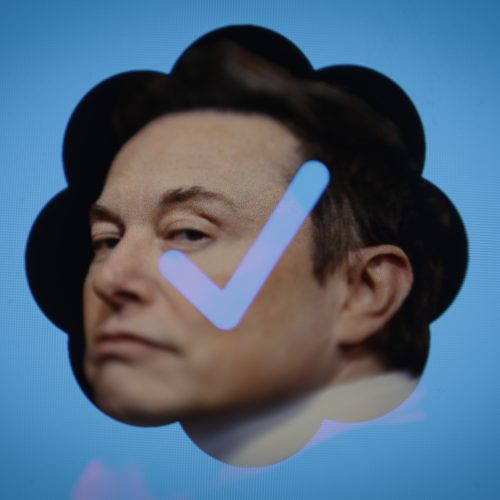
Elon Musk’s X became the first large online platform fined under the European Union’s Digital Services Act on Friday.

The European Commission announced that X would be fined nearly $140 million, with the potential to face “periodic penalty payments” if the platform fails to make corrections.

A third of the fine came from one of the first moves Musk made when taking over Twitter. In November 2022, he changed the platform’s historical use of a blue checkmark to verify the identities of notable users. Instead, Musk started selling blue checks for about $8 per month, immediately prompting a wave of imposter accounts pretending to be notable celebrities, officials, and brands.

Read full article

Comments

© NurPhoto / Contributor | NurPhoto

ChatGPT hyped up violent stalker who believed he was “God’s assassin,” DOJ says

ChatGPT allegedly validated the worst impulses of a wannabe influencer accused of stalking more than 10 women at boutique gyms, where the chatbot supposedly claimed he’d meet the “wife type.”

In a press release on Tuesday, the Department of Justice confirmed that 31-year-old Brett Michael Dadig currently remains in custody after being charged with cyberstalking, interstate stalking, and making interstate threats. He now faces a maximum sentence of up to 70 years in prison that could be coupled with “a fine of up to $3.5 million,” the DOJ said.

The podcaster—who primarily posted about “his desire to find a wife and his interactions with women”—allegedly harassed and sometimes even doxxed his victims through his videos on platforms including Instagram, Spotify, and TikTok. Over time, his videos and podcasts documented his intense desire to start a family, which was frustrated by his “anger towards women,” whom he claimed were “all the same from fucking 18 to fucking 40 to fucking 90” and “trash.”

Read full article

Comments

© Yurii Karvatskyi | iStock / Getty Images Plus

Republicans drop Trump-ordered block on state AI laws from defense bill

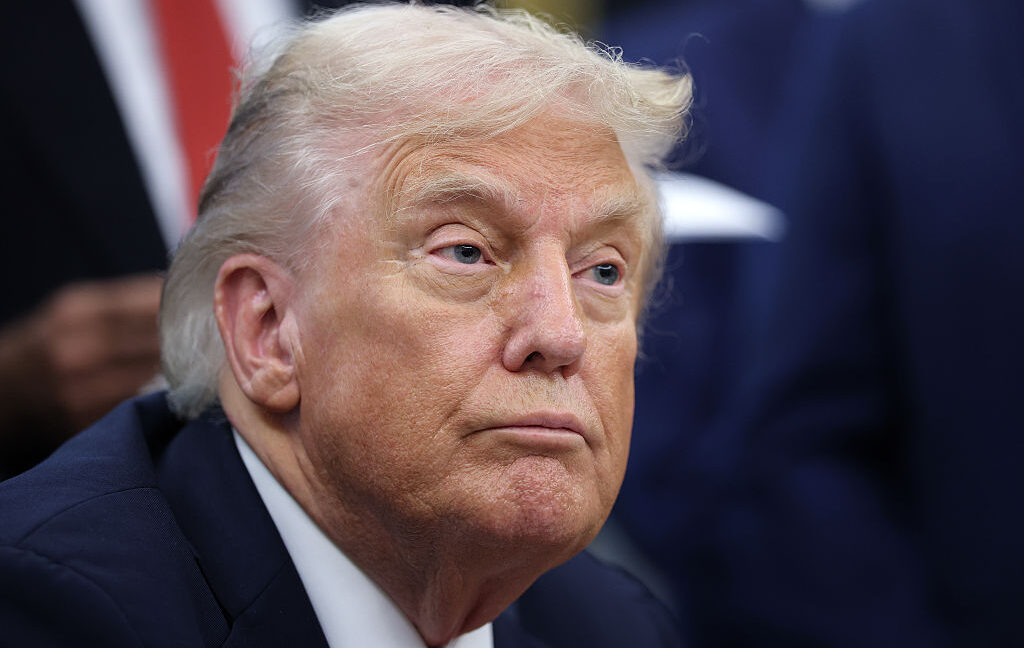
A Donald Trump-backed push has failed to wedge a federal measure that would block states from passing AI laws for a decade into the National Defense Authorization Act (NDAA).

House Majority Leader Steve Scalise (R-La.) told reporters Tuesday that a sect of Republicans is now “looking at other places” to potentially pass the measure. Other Republicans opposed including the AI preemption in the defense bill, The Hill reported, joining critics who see value in allowing states to quickly regulate AI risks as they arise.

For months, Trump has pressured the Republican-led Congress to block state AI laws that the president claims could bog down innovation as AI firms waste time and resources complying with a patchwork of state laws. But Republicans have continually failed to unite behind Trump’s command, first voting against including a similar measure in the “Big Beautiful” budget bill and then this week failing to negotiate a solution to pass the NDAA measure.

Read full article

Comments

© Win McNamee / Staff | Getty Images News

FCC boss Brendan Carr claims another victory over DEI as AT&T drops programs

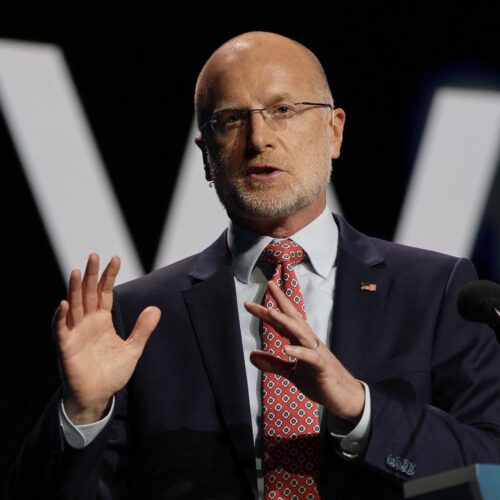
AT&T told the Federal Communications Commission that it has eliminated DEI (diversity, equity, and inclusion) policies and programs, complying with demands from Chairman Brendan Carr.

The FCC boss has refused to approve mergers and other large transactions involving companies that don’t agree to drop support for DEI. On Monday, AT&T filed a letter disowning its former DEI initiatives in the FCC docket for its $1 billion purchase of US Cellular spectrum licenses.

“We have closely followed the recent Executive Orders, Supreme Court rulings, and guidance issued by the US Equal Employment Opportunity Commission and have adjusted our employment and business practices to ensure that they comply with all applicable laws and related requirements, including ending DEI-related policies as described below, not just in name but in substance,” AT&T’s letter to Carr said.

Read full article

Comments

© Getty Images | Lluis Gene

India orders device makers to put government-run security app on all phones

Apple reportedly won’t comply with a government order in India to preload iPhones with a state-run app that can track and block lost or stolen phones via a device’s International Mobile Equipment Identity (IMEI) code. While the government describes it as a tool to help consumers, privacy advocates say it could easily be repurposed for surveillance.

Reuters reported today, citing three anonymous sources, that “Apple does not plan to comply with a mandate to preload its smartphones with a state-owned cyber safety app and will convey its concerns to New Delhi.” Reuters noted that the government mandate has “sparked surveillance concerns and a political uproar.”

The government’s Sanchar Saathi (“Communication Partner”) app is billed as a consumer tool for reporting suspected fraud communications, verifying the genuineness of a phone, and blocking lost or stolen handsets. The app can already be installed by users as it is available on the Apple and Google Play app stores, but the government wants device makers such as Apple, Google, Samsung, and Xiaomi to load phones with the app before they are shipped.

Read full article

Comments

© Getty Images | Idrees Mohammed

❌