Roughly two years ago, Sam Altman tweeted that AI systems would be capable of superhuman persuasion well before achieving general intelligence—a prediction that raised concerns about the influence AI could have over democratic elections.
To see if conversational large language models can really sway political views of the public, scientists at the UK AI Security Institute, MIT, Stanford, Carnegie Mellon, and many other institutions performed by far the largest study on AI persuasiveness to date, involving nearly 80,000 participants in the UK. It turned out political AI chatbots fell far short of superhuman persuasiveness, but the study raises some more nuanced issues about our interactions with AI.
AI dystopias
The public debate about the impact AI has on politics has largely revolved around notions drawn from dystopian sci-fi. Large language models have access to essentially every fact and story ever published about any issue or candidate. They have processed information from books on psychology, negotiations, and human manipulation. They can rely on absurdly high computing power in huge data centers worldwide. On top of that, they can often access tons of personal information about individual users thanks to hundreds upon hundreds of online interactions at their disposal.
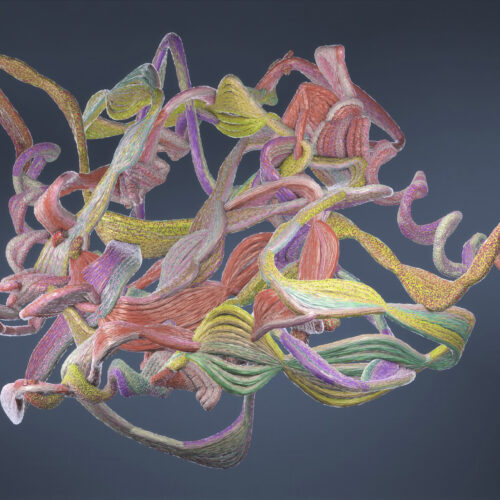
AI systems have recently had a lot of success in one key aspect of biology: the relationship between a protein’s structure and its function. These efforts have included the ability to predict the structure of most proteins and to design proteins structured so that they perform useful functions. But all of these efforts are focused on the proteins and amino acids that build them.
But biology doesn’t generate new proteins at that level. Instead, changes have to take place in nucleic acids before eventually making their presence felt via proteins. And information at the DNA level is fairly removed from proteins, with lots of critical non-coding sequences, redundancy, and a fair degree of flexibility. It’s not necessarily obvious that learning the organization of a genome would help an AI system figure out how to make functional proteins.
But it now seems like using bacterial genomes for the training can help develop a system that can predict proteins, some of which don’t look like anything we’ve ever seen before.
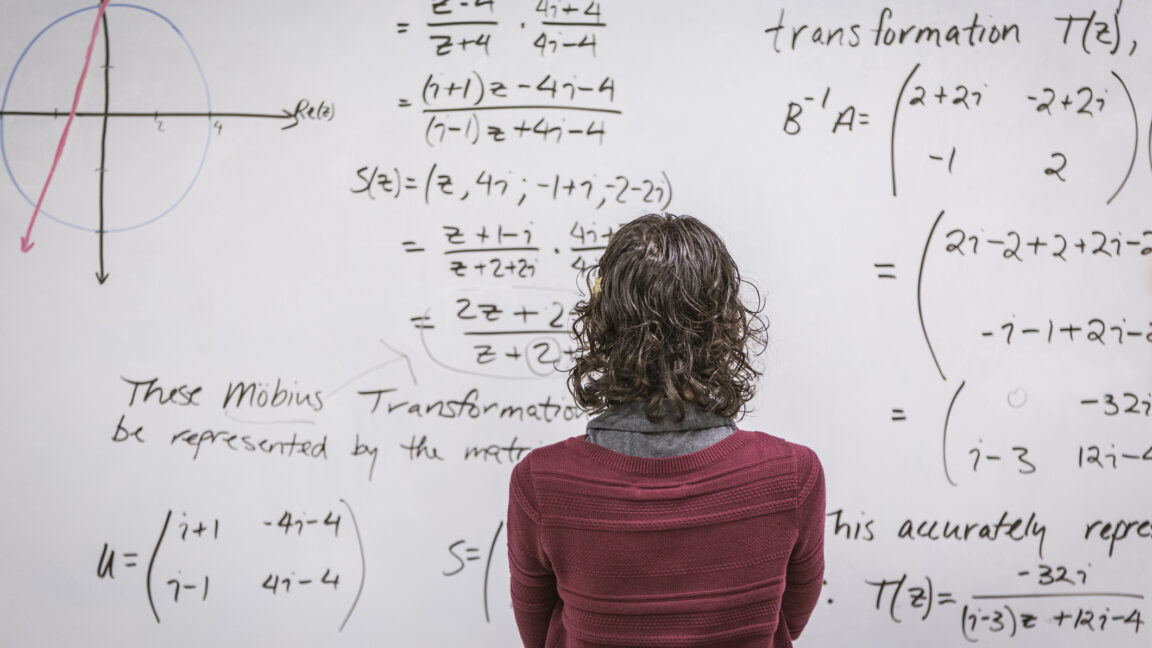
Computers are extremely good with numbers, but they haven’t gotten many human mathematicians fired. Until recently, they could barely hold their own in high school-level math competitions.
But now Google’s DeepMind team has built AlphaProof, an AI system that matched silver medalists’ performance at the 2024 International Mathematical Olympiad, scoring just one point short of gold at the most prestigious undergrad math competition in the world. And that’s kind of a big deal.
True understanding
The reason computers fared poorly in math competitions is that, while they far surpass humanity’s ability to perform calculations, they are not really that good at the logic and reasoning that is needed for advanced math. Put differently, they are good at performing calculations really quickly, but they usually suck at understanding why they’re doing them. While something like addition seems simple, humans can do semi-formal proofs based on definitions of addition or go for fully formal Peano arithmetic that defines the properties of natural numbers and operations like addition through axioms.
Magdalena Balazinska, director of the UW Allen School of Computer Science & Engineering, opens the school’s annual research showcase Wednesday in Seattle. (GeekWire Photo / Todd Bishop)
The University of Washington’s Paul G. Allen School of Computer Science & Engineering is reframing what it means for its research to change the world.
In unveiling six “Grand Challenges” at its annual Research Showcase and Open House in Seattle on Wednesday, the Allen School’s leaders described a blueprint for technology that protects privacy, supports mental health, broadens accessibility, earns public trust, and sustains people and the planet.
The idea is to “organize ourselves into some more specific grand challenges that we can tackle together to have an even greater impact,” said Magdalena Balazinska, director of the Allen School and a UW computer science professor, opening the school’s annual Research Showcase and Open House.
Here are the six grand challenges:
Anticipate and address security, privacy, and safety issues as tech permeates society.
Make high-quality cognitive and mental health support available to all.
Design technology to be accessible at its inception — not as an add-on.
Design AI in a way that is transparent and equally beneficial to all.
Build systems that can be trusted to do exactly what we want them to do, every time.
Create technologies that sustain people and the planet.
Balazinska explained that the list draws on the strengths and interests of its faculty, who now number more than 90, including 74 on the tenure track.
With total enrollment of about 2,900 students, last year the Allen School graduated more than 600 undergrads, 150 master’s students, and 50 Ph.D. students.
The Allen School has grown so large that subfields like systems and NLP (natural language processing) risk becoming isolated “mini departments,” said Shwetak Patel, a University of Washington computer science professor. The Grand Challenges initiative emerged as a bottom-up effort to reconnect these groups around shared, human-centered problems.
Patel said the initiative also encourages collaborations on campus beyond the computer science school, citing examples like fetal heart rate monitoring with UW Medicine.
A serial entrepreneur and 2011 MacArthur Fellow, Patel recalled that when he joined UW 18 years ago, his applied and entrepreneurial focus was seen as unconventional. Now it’s central to the school’s direction. The grand challenges initiative is “music to my ears,” Patel said.
In tackling these challenges, the Allen School has a unique advantage against many other computer science schools. Eighteen faculty members currently hold what’s known as “concurrent engagements” — formally splitting time between the Allen School and companies and organizations such as Google, Meta, Microsoft, and the Allen Institute for AI (Ai2).
University of Washington computer science professor Shwetak Patel at the Paul G. Allen School’s annual research showcase and open house. (GeekWire Photo / Taylor Soper)
This is a “superpower” for the Allen School, said Patel, who has a concurrent engagement at Google. These arrangements, he explained, give faculty and students access to data, computing resources, and real-world challenges by working directly with companies developing the most advanced AI systems.
“A lot of the problems we’re trying to solve, you cannot solve them just at the university,” Patel said, pointing to examples such as open-source foundation models and AI for mental-health research that depend on large-scale resources unavailable in academia alone.
These roles can also stretch professors thin. “When somebody’s split, there’s only so much mental energy you can put into the university,” Patel said. Many of those faculty members teach just one or two courses a year, requiring the school to rely more on lecturers and teaching faculty.
Still, he said, the benefits outweigh the costs. “I’d rather have 50% of somebody than 0% of somebody, and we’ll make it work,” he said. “That’s been our strategy.”
The Madrona Prize, an annual award presented at the event by the Seattle-based venture capital firm, went to a project called “Enhancing Personalized Multi-Turn Dialogue with Curiosity Reward.” The system makes AI chatbots more personal by giving them a “curiosity reward,” motivating the AI to actively learn about a user’s traits during a conversation to create more personalized interactions.
On the subject of industry collaborations, the lead researcher on the prize-winning project, UW Ph.D. student Yanming Wan, conducted the research while working as an intern at Google DeepMind. (See full list of winners and runners-up below.)
At the evening poster session, graduate students filled the rooms to showcase their latest projects — including new advances in artificial intelligence for speech, language, and accessibility.
DopFone: Doppler-based fetal heart rate monitoring using commodity smartphones
Poojita Garg, a second-year PhD student.
DopFone transforms phones into fetal heart rate monitors. It uses the phone speaker to transmit a continuous sine wave and uses the microphone to record the reflections. It then processes the audio recordings to estimate fetal heart rate. It aims to be an alternative to doppler ultrasounds that require trained staff, which aren’t practical for frequent remote use.
“The major impact would be in the rural, remote and low-resource settings where access to such maternity care is less — also called maternity care deserts,” said Poojita Garg, a second-year PhD student.
CourseSLM: A Chatbot Tool for Supporting Instructors and Classroom Learning
Marquiese Garrett, a sophomore at the UW.
This custom-built chatbot is designed to help students stay focused and build real understanding rather than relying on quick shortcuts. The system uses built-in guardrails to keep learners on task and counter the distractions and over-dependence that can come with general large language models.
Running locally on school devices, the chatbot helps protect student data and ensures access even without Wi-Fi.
“We’re focused on making sure students have access to technology, and know how to use it properly and safely,” said Marquiese Garrett, a sophomore at the UW.
Efficient serving of SpeechLMs with VoxServe
Keisuke Kamahori, a third-year PhD student at the Allen School.
VoxServe makes speech-language models run more efficiently. It uses a standardized abstraction layer and interface that allows many different models to run through a single system. Its key innovation is a custom scheduling algorithm that optimizes performance depending on the use case.
The approach makes speech-based AI systems faster, cheaper, and easier to deploy, paving the way for real-time voice assistants and other next-gen speech applications.
“I thought it would be beneficial if we can provide this sort of open-source system that people can use,” said Keisuke Kamahori, third-year Ph.D. student at the Allen School.
ConvFill: Model collaboration for responsive conversational voice agents
Zachary Englhardt (left), a fourth-year PhD student, and Vidya Srinivas, a third-year PhD student.
ConvFill is a lightweight conversational model designed to reduce the delay in voice-based large language models. The system responds quickly with short, initial answers, then fills in more detailed information as larger models complete their processing.
By combining small and large models in this way, ConvFill delivers faster responses while conserving tokens and improving efficiency — an important step toward more natural, low-latency conversational AI.
“This is an exciting way to think about how we can combine systems together to get the best of both worlds,” said Zachary Englhardt, a third-year Ph.D. student. “It’s an exciting way to look at problems.”
ConsumerBench: Benchmarking generative AI on end-user devices
Yile Gu, a third-year PhD student at the Allen School.
Running generative AI locally — on laptops, phones, or other personal hardware — introduces new system-level challenges in fairness, efficiency, and scheduling.
ConsumerBench is a benchmarking framework that tests how well generative AI applications perform on consumer hardware when multiple AI models run at the same time. The open-source tool helps researchers identify bottlenecks and improve performance on consumer devices.
There are a number of benefits to running models locally: “There are privacy purposes — a user can ask for questions related to email or private content, and they can do it efficiently and accurately,” said Yile Gu, a third-year Ph.D. student at the Allen School.
Designing Chatbots for Sensitive Health Contexts: Lessons from Contraceptive Care in Kenyan Pharmacies
Lisa Orii, a fifth-year Ph.D. student at the Allen School.
A project aimed at improving contraceptive access and guidance for adolescent girls and young women in Kenya by integrating low-fidelity chatbots into healthcare settings. The goal is to understand how chatbots can support private, informed conversations and work effectively within pharmacies.
“The fuel behind this whole project is that my team is really interested in improving health outcomes for vulnerable populations,” said Lisa Orii, a fifth-year Ph.D. student.
See more about the research showcase here. Here’s the list of winning projects.
Runner up: “VAMOS: A Hierarchical Vision-Language-Action Model for Capability-Modulated and Steerable Navigation” Mateo Guaman Castro, Sidharth Rajagopal, Daniel Gorbatov, Matt Schmittle, Rohan Baijal, Octi Zhang, Rosario Scalise, Sidharth Talia, Emma Romig, Celso de Melo, Byron Boots, Abhishek Gupta
Runner up: “Dynamic 6DOF VR reconstruction from monocular videos” Baback Elmieh, Steve Seitz, Ira-Kemelmacher, Brian Curless
People’s Choice: “MolmoAct” Jason Lee, Jiafei Duan, Haoquan Fang, Yuquan Deng, Shuo Liu, Boyang Li, Bohan Fang, Jieyu Zhang, Yi Ru Wang, Sangho Lee, Winson Han, Wilbert Pumacay, Angelica Wu, Rose Hendrix, Karen Farley, Eli VanderBilt, Ali Farhadi, Dieter Fox, Ranjay Krishna
Editor’s Note: The University of Washington underwrites GeekWire’s coverage of artificial intelligence. Content is under the sole discretion of the GeekWire editorial team. Learn more about underwritten content on GeekWire.

 Login
Login