Industry leader Tom Lee has shared how the Ethereum price could reach $12,000 within the next few months. He based his prediction on the Bitcoin price action and how ETH could match the flagship crypto on a potential run to the upside.
Tom Lee Explains How The Ethereum Price Could Rally To $12,000
Speaking at the Binance Blockchain Week, Tom Lee predicted that the Ethereum price could reach $12,000 as Bitcoin rallies to $250,000 within the next few months. He explained that ETH can reach the $12,000 target if the ETH/BTC ratio returns to its eight-year average of 0.0479. Lee described this potential rally to $12,000 as a “huge move.”
Tom Lee further predicted that the Ethereum price could reach $22,000 if the ETH/BTC ratio gets to its 2021 high of 0.0873. He added that he believes Ethereum will become the future of finance and the payment rails. As such, Lee predicted that the ETH/BTC ratio could reach 0.2500, sparking an Ethereum rally to as high as $62,500. In line with this, the expert declared that ETH at $3,000 is “grossly undervalued.”
Tom Lee also remarked that the bigger the base, the bigger the breakout for the Ethereum price. He noted that ETH spent years building a similar base to its current price action before the move from $90 to its previous all-time high (ATH) of $4,866. The expert added that if the pattern plays out again, the next leg could be larger than what people expect.
It is worth noting that Tom Lee is the chairman of BitMine, which is the largest Ethereum treasury company. According to Strategic ETH Reserve data, the company currently holds 3.73 million ETH, which is just over 3% of the altcoin’s total supply. Lee remains bullish on the Ethereum price, despite his company holding an unrealized loss of $3.3 billion of their ETH investment.
A Rally To $62,000 Is “Ambitious”
Market commentator Milk Road described Tom Lee’s Ethereum price prediction of $62,000 in a few months as being ambitious. The platform stated that an ETH/BTC ratio of 0.25 has never happened. The highest it has ever gone is 0.15, and that was during the 2017 supercycle, which makes it less likely now, given that market conditions have changed.
Tom Lee had based his Ethereum prediction on Bitcoin hitting $250,000, which Milk Road also described as an issue. The market commentator noted that BTC would need to surge 177% from current prices to reach this target. The last time this happened was in 2020 when it surged from $7,000 to $19,000 during the “peak mania.” Notably, BTC didn’t record a 100% gain even when the Bitcoin ETFs launched last year.
At the time of writing, the Ethereum price is trading at around $3,000, down over 4% in the last 24 hours, according to data from CoinMarketCap.
The United States State Department has approved a possible Foreign Military Sale (FMS) to the Government of Lebanon for Medium Tactical Vehicles and associated support, with an estimated cost of $90.5 million. The Defense Security Cooperation Agency (DSCA) formally notified Congress of the proposed sale on December 5, 2025. According to DSCA, the Government of […]
The United States Navy’s Strategic Systems Programs (SSP) office has announced its intent to award a sole-source contract to General Dynamics Mission Systems (GDMS) for engineering and technical services supporting fire control systems for the nuclear‑armed, sea‑launched cruise missile (SLCM‑N) program. According to a presolicitation notice posted on December 4, the proposed agreement is being […]
The United States Army is seeking potential U.S.-based producers for a next-generation 155mm artillery projectile designed to replace aging stockpiles of Dual-Purpose Improved Conventional Munitions (DPICM). A sources sought notice, released by the Army Contracting Command-New Jersey on December 5, outlines the service’s effort to identify qualified manufacturers for the XM1208 Advanced Submunitions projectile. According […]
The Bitcoin price has had a mixed performance over the past week, with both sides of the market divide struggling to establish dominance. In the latest battle between the bulls and bears, the premier cryptocurrency appears to be succumbing to pressure from the latter group.
As this weekend approached, the Bitcoin price retreated from its latest local high of around $94,000 to beneath the psychological $90,000 level. This latest correction has prompted questions in the crowd, with investors wondering whether it is just a brief obstacle or the end of the recovery.
Why $80,500 Could Be The Next Local Low For BTC
In a December 5 post on the social media platform X, Alphractal CEO and founder shared insight into the latest Bitcoin price decline below $90,000. The on-chain expert revealed that losing the $89,800 level is the more relevant occurrence in the latest price downturn.
In a previous post on X, Wedson evaluated the likely trajectory of the Bitcoin price should it lose the $89,800 level. The crypto pundit revealed that losing this price mark could lead to an accumulation pattern for the bulls or a redistribution phase for the bears.
While the accumulation period for the bulls would initially coincide with lower prices, it eventually leads to a Bitcoin price return to above the latest local high. Meanwhile, a redistribution phase could see the bears push the flagship cryptocurrency to around the $70,000 mark.
According to the Alphractal CEO, the price of BTC also failed to hold the key on-chain levels, strengthening the probability of a broader price sideways phase. “Sideways action is the cause — the big pumps or dumps are just the effect,” Wedson had earlier stated in his previous X post.
Furthermore, Wedson noted that the next level to watch is $86,500, which, if lost, opens the very high possibility for the formation of a new local low around $80,500. This local low could provide a perfect spot for investors to buy the dip and enter the market.
Bitcoin Price Overview
As mentioned earlier, the past week has been one of highs and lows for the premier cryptocurrency, plummeting to as low as $84,600 on Monday, December 1. After a shaky start to the month, the Bitcoin price recovered strongly to around $94,000 on Thursday, December 4.
As of this writing, the market leader is valued at around $89,415, reflecting an over 3% price decline in the past 24 hours. According to data from CoinGecko, the price of Bitcoin has been down by nearly 10% in the past year.
A crypto analyst has made an unexpected declaration, predicting that XRP investors could become extremely rich in just a few months. This bold claim comes with a new technical analysis, suggesting that XRP is now entering a pivotal price area that previously triggered explosive rallies. Despite the cryptocurrency’s low price and recent downtrend, the analyst remains confident that XRP could mirror past trends and skyrocket to new highs.
XRP To Make Holders Wealthy In 3 Months?
In a recent X post, popular market analyst ‘Steph Is Crypto’ issued a dramatic warning to XRP holders, announcing that investors will become extremely rich within the next three months. The analyst’s bold prediction elicited mixed reactions from the XRP community, with some expressing optimism and others skepticism.
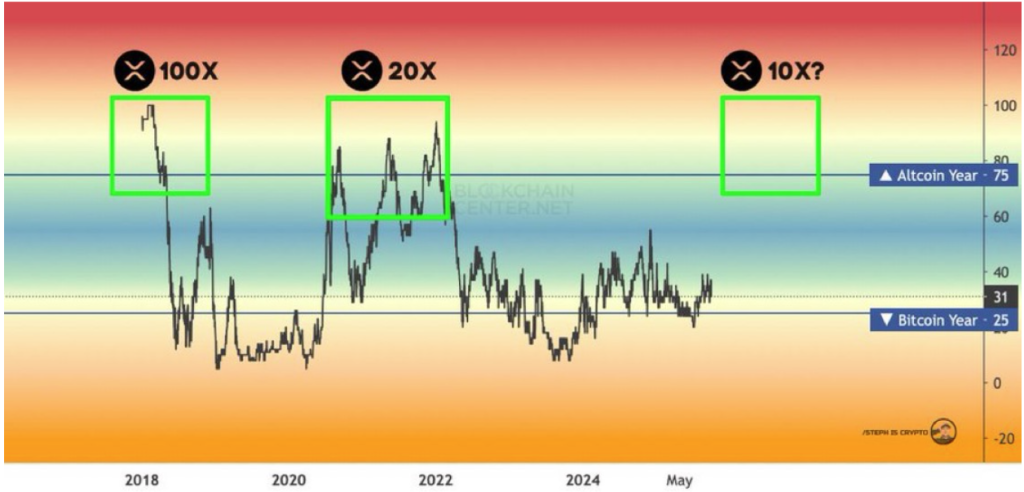
Steph Is Crypto shared a price chart with colored bands to support his ambitious claims, tracking XRP’s performance through multiple past bull cycles. The chart highlights a recurring pattern in which XRP enters a higher-colored zone during periods often associated with altcoin strength. In previous cycles, those moments were followed by unexpected, explosive upward price moves.
During the bull cycle in 2018, XRP skyrocketed by 100x, pushing its price up towards its current all-time high of $3.84. A similar uptrend occurred again during the 2020 to 2022 cycle, with XRP entering a prolonged bull phase that saw its price rally by 20x. According to Steph Is Crypto, the current chart setup appears similar to these past bullish phases.
His chart analysis suggests that XRP is once again approaching the same colored region that previously marked the start of strong price rallies. While the scale of the projected acceleration this time may differ from the peaks seen in the last two cycles, Steph Is Crypto remains confident that it will still be substantial enough to make holders significantly wealthy by March 2026.
XRP Maintains Bullish Monthly SuperTrend
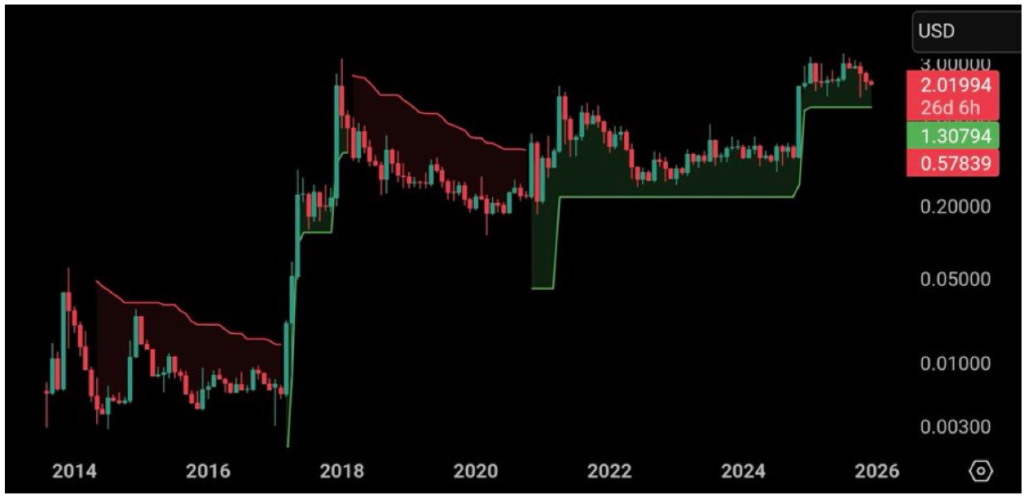
Crypto market analyst ChartNerd has released a fresh technical analysis of XRP, suggesting that the cryptocurrency continues to show strong positive signals. According to him, XRP’s monthly SuperTrend remains firmly bullish. He emphasized that maintaining a price above the green SuperTrend line near $1.30 signals a long-term upward trajectory, with no red trends currently indicating the onset of a bear market.
ChartNerd shared a chart with a SuperTrend overlay where green lines represent bullish conditions and red lines highlight previous bear markets. The current monthly candles for XRP remain well above the green zone, reinforcing the belief that broader market conditions favor an upside. The analyst interprets this as confirmation that XRP’s long-term price trend is still predominantly bullish.
Historical data on the chart also indicate that past declines in XRP coincided with prolonged red SuperTrend phases. This happened before the big 2017 and 2020 breakout, with each recovery triggered once the price moved back above the green SuperTrend line.
Featured image from Unsplash, chart from TradingView
In remarks made on December 4, US Securities and Exchange Commission (SEC) Chair Paul Atkins expressed an optimistic outlook for the cryptocurrency industry. Atkins emphasized the SEC’s intent to modernize its rules to facilitate an on-chain market environment, leveraging distributed ledger technology and the tokenization of financial assets.
SEC Chair Advocates For Crypto Tokenization
Atkins highlighted the transformative potential of these technologies for the capital markets. He stressed that enhancing these markets is essential for US firms and investors to maintain their leadership on a global scale.
The chair underscored that the advancements in blockchain technology could streamline not only trading processes but also the entire issuer-investor relationship, which would enable a more efficient and transparent financial ecosystem.
Tokenization, according to Atkins, goes beyond merely changing the mechanics of trading. He pointed out that it can foster direct connections for various important functions such as proxy voting, dividend payments, and shareholder communications, all while reducing the reliance on multiple intermediaries.
In his address, Atkins acknowledged several innovative models that deserve consideration. He noted that some companies are directly issuing equity on public distributed ledgers in the form of programmable assets.
These assets can integrate compliance features, voting rights, and governance capabilities, allowing investors to hold securities in a digital format that promotes transparency and reduces the number of intermediaries involved.
Additionally, he mentioned that third parties are engaging in the tokenization of equities by generating on-chain security entitlements that represent ownership stakes in traditional equities.
The emergence of synthetic exposures—tokenized products designed to reflect the performance of public equities—was also highlighted. While many of these offerings are currently being developed offshore, they showcase the international interest in US market exposure supported by distributed ledger technology.
Atkins Critiques Past SEC Strategies
However, Atkins cautioned that transitioning to on-chain capital markets entails more than just issuance. He stated that it is essential to address various stages of the securities transaction lifecycle effectively.
For instance, if tokenized shares cannot be traded competitively in liquid on-chain environments, they risk becoming little more than conceptual assets without practical utility.
The chair also criticized the previous SEC’s approach toward the crypto industry under the agency’s former chair Gary Gensler, which attempted to adapt to on-chain markets through an expansive redefinition of “exchange.”
This earlier strategy enforced a broad regulatory framework that ultimately created uncertainty and stifled innovation, Atkins stated. He said that it is vital to avoid repeating such mistakes in order to stimulate innovation, investment, and job creation in the United States.
To foster a conducive environment for growth, Atkins called for compliant pathways that can enable market participants to capitalize on the unique benefits of new technologies like crypto.
In light of this conviction, he has instructed SEC staff to explore recommendations for utilizing the agency’s exemptive authorities, permitting on-chain innovations while the Commission works toward developing long-term, effective crypto regulatory frameworks.
Featured image from DALL-E, chart from TradingView.com
The State Department has approved two major Foreign Military Sales (FMS) to Denmark, authorizing the transfer of advanced U.S. air-to-air missiles and a ground-based air defense system with an estimated combined value of $3.73 billion. According to a press release from the Defense Security Cooperation Agency (DSCA), Denmark has been cleared to purchase 200 AIM-120C-8 […]
BAE Systems has secured a new $198.4 million contract modification from the U.S. Army to produce an additional 240 Armored Multi-Purpose Vehicles (AMPVs). The award is a fixed-price-incentive modification to contract W56HZV-23-C-0024, and brings the total value of the agreement to just under $2.48 billion. The Army Contracting Command at Detroit Arsenal, Michigan, is managing […]
The U.S. State Department has approved a possible $301 million Foreign Military Sale to Italy for advanced long-range cruise missiles and associated support, according to a release from the Defense Security Cooperation Agency (DSCA). Italy has requested to purchase 100 AGM-158B/B-2 Joint Air-to-Surface Standoff Missiles with Extended Range (JASSM-ER), along with encryption equipment, software, spare […]
Lockheed Martin has received a $1.14 billion contract modification from the Department of the Navy to fund long lead components for future production of F-35 fighter jets under Lots 20 and 21, the Pentagon announced. According to a release, the modification (P00005) to contract N0001925C0070 covers procurement of parts, materials, and components in support of […]
The State Department has approved a possible Foreign Military Sale to the Republic of Korea for an additional batch of GBU-39/B Small Diameter Bombs (SDB-I) and associated equipment, with a total estimated cost of $111.8 million. According to a press release from the Defense Security Cooperation Agency (DSCA), the Republic of Korea has requested to […]
The cryptocurrency market experienced another wave of liquidations on Friday, with Bitcoin (BTC) prices dipping below the critical support level of $90,000. This decline followed a brief rally that had seen its price rise approximately $3,000 above this threshold earlier in the week.
Crypto Market Faces $430 Million In Liquidations
Data from CoinGlass reveals that nearly $430 million in liquidations occurred across the crypto market over the past 24 hours, predominantly affecting leveraged long positions, which accounted for about $350 million.
During this period, Bitcoin underwent a 3.5% retracement, with its price settling at just above $89,120—a stark 29% below its all-time high of over $126,000 reached in October.
Market expert OxNobler recently highlighted the role of both retail and institutional investors in this downturn. In a post on social media platform X, OxNobler detailed the reason behind Bitcoin’s decline: significant sell-offs by major players.
According to the analyst, the world’s largest cryptocurrency exchange, Binance, sold 4,000 BTC; U.S.-based Coinbase (COIN) liquidated 5,675 BTC; and traditional finance giant Fidelity sold 3,288 BTC. Additionally, market maker Wintermute offloaded 1,793 BTC.
Notably, the analyst pointed out that Strategy, formerly MicroStrategy, which is the largest public company holder of Bitcoin with over 650,000 coins, has also sold over 3,820 coins in this same time frame.
The firm’s sell-off comes on the heels of speculation regarding Strategy’s potential to liquidate some of its holdings due to the substantial losses affecting its financial performance amid declining Bitcoin prices.
When Strategy CEO Phong Le was questioned about the possibility of selling off Bitcoin, he acknowledged that while the firm’s former CEO, Michael Saylor, has consistently opposed selling, circumstances may change if the company’s stock trades below the net value of its Bitcoin holdings, which aligns with the recent actions taken by the firm.
Coinbase Analysts Predict December Recovery
Interestingly, while these institutional sell-offs have contributed to the current market dip, Coinbase’s institutional division has projected a potential recovery for the crypto market in December, citing improving liquidity, a 92% probability of the Federal Reserve (Fed) cutting rates, and supportive macroeconomic conditions.
Analysts have pointed out several reasons for optimism, including the recovery of liquidity, the resilience of the “AI bubble,” and the attractiveness of short US dollar trades at current levels.
However, OxNobler warned that the situation may not be so straightforward. Alongside the activities of major institutions, he noted that BlackRock, the world’s largest asset manager, had recently sold $130 million worth of Bitcoin and Ethereum (ETH).
Furthermore, Vitalik Buterin, one of Ethereum’s co-founders, seems to have resumed selling Ethereum, with millions of ETH being moved from the foundation’s wallet through Gnosis Safe.
Ultimately, OxNobler asserts that these institutional activities may have a hand in manipulating crypto prices and preventing them from climbing to higher levels and key resistance points.
Featured image from DALL-E, chart from TradingView.com
Plus: The Trump administration declines to issue sanctions over Salt Typhoon’s hacking spree, officials warn of a disturbingly stealthy Chinese malware specimen, and more.
MetaMask, the most widely used Ethereum wallet, is moving directly into the prediction market arena through a new integration with Polymarket, giving users the ability to trade event outcomes from inside their wallets.
Key Takeaways:
MetaMask has integrated Polymarket, allowing users to trade real-world event outcomes.
The integration adds one-tap funding from any EVM chain.
Polymarket’s rapid growth continues amid a potential $15 billion valuation.
“You can now trade on the future outcome of real world events inside your wallet,” Consensys’ Gabriela Helfet wrote, adding that users will also earn MetaMask Rewards points for every prediction placed.
MetaMask Becomes New Gateway to Polymarket With One-Tap Funding
The integration creates a new on-ramp for Polymarket and introduces “one tap funding,” allowing users to deposit with any token from any EVM-compatible chain.
The move further tightens the link between everyday crypto wallets and decentralized betting platforms, positioning MetaMask as a gateway not only to Web3 apps but also to real-world event speculation.
Polymarket has surged in popularity over the past year, fueled in part by heightened attention during the 2024 US election cycle.
Former President Donald Trump’s embrace of crypto and a more relaxed regulatory climate helped push the platform back into the US market.
The company is now reportedly exploring a valuation of up to $15 billion, following a $2 billion strategic investment from Intercontinental Exchange, the parent of the NYSE.
Predicting on MetaMask only takes a few seconds.
We've enabled 1-click funding with any EVM token, or you can get started instantly if you have an existing @polymarket account! pic.twitter.com/zZtrQPDu3m
For MetaMask, the move comes as the wallet expands beyond its Ethereum-focused roots. In October, it launched multichain accounts that support both EVM and non-EVM networks, including Solana.
The move comes as Polymarket is recruiting staff for an internal market-making team that would trade against its own customers, mirroring a controversial feature already used by rival Kalshi that has drawn criticism and legal challenges.
As reported, the New York-based prediction market startup has approached traders, including sports bettors, to join the new unit, people familiar with the matter said, requesting anonymity because the plans remain private.
Prediction Markets Hit $13B in Record Activity
Prediction markets have crossed $13 billion in cumulative trading volume, marking a record high even as broader crypto markets cool.
The surge has drawn in major players across tech and finance, including Fanatics, Coinbase, and MetaMask, all of which have recently launched or expanded event-trading platforms.
Against this backdrop, YZi Labs, the venture firm founded by Binance co-founder Changpeng “CZ” Zhao, has been intensifying its involvement in the sector.
YZi-backed Opinion has emerged as one of the most surprising breakout platforms. Launched on BNB Chain in October, it recorded nearly $1.5 billion in weekly trading volume within its first month, briefly overtaking established names such as Kalshi and Polymarket.
Meanwhile, prediction markets platform Kalshi has secured a major media breakthrough after signing a partnership with CNN, making the company the network’s official prediction markets partner while closing a $1 billion funding round at an $11 billion valuation.
CoinShares head of research James Butterfill has dismissed insolvency concerns surrounding Tether following warnings from BitMEX founder Arthur Hayes, who claimed a 30% drop in the stablecoin issuer’s Bitcoin and gold holdings could wipe out its equity.
Butterfill’s December 5 market update affirmed that Tether maintains over $181 billion in total reserves against roughly $174.45 billion in liabilities, leaving a surplus of approximately $6.78 billion.
The dismissal comes as crypto markets navigate turbulence in Japanese government bonds and softer US employment data that showed a -32,000 print versus forecasts of +10,000.
Hayes sparked controversy on November 30 by arguing Tether is “running a massive interest rate trade” that positions the company for Federal Reserve rate cuts while exposing it to dangerous volatility through its $22.8 billion allocation to gold and Bitcoin.
The Tether folks are in the early innings of running a massive interest rate trade. How I read this audit is they think the Fed will cut rates which crushes their interest income. In response, they are buying gold and $BTC that should in theory moon as the price of money falls.… pic.twitter.com/ZGhQRP4SVF
Tether CEO Counters Insolvency Claims with Financial Data
CEO Paolo Ardoino swiftly refuted Hayes’s assessment with detailed disclosures showing Tether Group’s total assets reach approximately $215 billion.
The executive explained that the company holds roughly $7 billion in excess equity on top of its stablecoin reserves, plus another $23 billion in retained earnings as part of Tether Group equity.
Bitcoin and gold represent just 12.6% of total reserves, with over 70% held in short-term U.S. Treasuries.
“S&P made the same mistake of not considering the additional Group Equity nor the ~$500M in monthly base profits generated by U.S Treasury yields alone,” Ardoino stated, suggesting critics are “either bad at math or have the incentive to push our competitors.“
re: Tether FUD
From latest attestation announcement (Q3 2025):
"Tether will continue to maintain a multi-billion-dollar excess reserve buffer and an overall proprietary Group equity approaching $30 billion."
Tether had (at end of Q3 2025) ~7B in excess equity (on top of the…
The company generated more than $10 billion in profit this year from interest income on reserve assets, making it one of the most efficient cash-generating businesses globally with just 150 employees.
His defense followed S&P Global’s November 26 downgrade of USDT’s peg-stability rating from 4 to 5, citing increased exposure to “high-risk” assets and “persistent gaps in disclosure.”
Ardoino responded defiantly, declaring, “We wear your loathing with pride,” while positioning Tether as “the first overcapitalized company in the financial industry, with no toxic reserves.”
The rating action carries profound implications under MiCA regulations, which prohibit USDT from EU exchanges with a “5” rating, potentially shifting institutional liquidity toward competitors like Circle’s USDC.
Industry Veterans Challenge Hayes’s Fundamental Analysis
Joseph Ayoub, former head of digital asset research at Citi, noted Hayes overlooked critical distinctions between Tether’s disclosed reserves and total corporate holdings.
The analyst explained that Tether maintains a separate equity balance sheet comprising mining operations and corporate reserves that aren’t publicly reported under the company’s “matching philosophy” for reserve disclosure.
“Tether isn’t going insolvent, quite the opposite; they own a money printing machine,” Ayoub concluded, pointing to the company’s roughly $120 billion in interest-yielding Treasuries generating approximately 4% returns since 2023.
I spent 100’s of hours writing research on tether for @Citi. @CryptoHayes missed a few key points.
1) 𝐓𝐡𝐞𝐢𝐫 𝐝𝐢𝐬𝐜𝐥𝐨𝐬𝐞𝐝 𝐚𝐬𝐬𝐞𝐭𝐬 =/ 𝐚𝐥𝐥 𝐜𝐨𝐫𝐩𝐨𝐫𝐚𝐭𝐞 𝐚𝐬𝐬𝐞𝐭𝐬
When tether generates $ they have a separate equity balance sheet which they don’t… https://t.co/pHSRr245Up
Banks operate on significantly lower fractional reserves of 5-15% in liquid assets compared to Tether’s overcollateralized structure. However, traditional institutions benefit from central bank lender-of-last-resort support that Tether lacks.
Hunter Horsley, CEO of Bitwise Invest, characterized Tether’s structure as “better than fractional banking reserves,” while CryptoQuant CEO Ki Young Ju dismissed Hayes’s warning as motivated by trading position management.
Former FT Alphaville editor Izabella Kaminska offered a deeper structural analysis, suggesting Tether’s thick equity buffer and retained earnings model creates “a capital structure that looks a lot like the banking model academic Anat Admati advocates: much thicker equity buffers, far less leverage, and minimal maturity mismatch.“
Kaminska noted that if Tether’s depositor base proves willing to redeem directly in gold during stress situations, the metal becomes “the natural last-resort funding asset for its shadow/grey exposures and a hard-asset substitute for the lender-of-last-resort support that banks get from central banks.”
Analysts are overlooking how stablecoins that retain earnings (aka Tether) are evolving into something structurally unusual.
The reality is, as Tether’s retained earnings accumulate, they operate economically like a very thick equity buffer — far beyond the capitalisation… https://t.co/KXtsrG52kU
The company’s Q3 attestation showed USDT issuance increased by more than $17 billion during the quarter, lifting circulating supply above $174 billion, with October figures surpassing $183 billion.
Federal prosecutors are demanding a 12-year prison sentence for Terraform Labs co-founder Do Kwon for orchestrating the fraud that triggered TerraUSD’s catastrophic $40 billion collapse in 2022.
According to Bloomberg, the government described Kwon’s crimes as “colossal in scope” in a Thursday filing before US District Judge Paul Engelmayer, pointing to cascading market failures that ultimately contributed to FTX’s downfall.
The 34-year-old South Korean entrepreneur pleaded guilty in August to conspiracy and wire fraud charges under an agreement capping prosecutorial recommendations at 12 years.
However, the statutory maximum reaches 25 years for his role in the algorithmic stablecoin fraud.
The Justice Department’s sentencing memorandum emphasizes that Kwon’s fraudulent statements to customers triggered a chain reaction across cryptocurrency markets.
Prosecutors specifically cited the collapse’s contribution to Sam Bankman-Fried’s FTX implosion as evidence of broader systemic damage beyond Terra’s immediate investor losses.
Kwon admitted in court that between 2018 and 2022, he “knowingly agreed to participate in a scheme to defraud purchasers of cryptocurrencies” from Terraform Labs.
He acknowledged making false statements about TerraUSD’s peg restoration mechanisms and concealing Jump Trading’s secret role in propping up the stablecoin during a May 2021 depeg event that foreshadowed the larger catastrophe.
The timing carries added significance, as the Trump administration has largely eased the tough-on-crypto enforcement actions, as the Biden administration did before.
Although the administration defended the pardon, claiming it was reviewed “with the utmost seriousness.”
Defense Cites Montenegro Detention and Dual Prosecution
Kwon’s attorneys argue that nearly three years in what they describe as “brutal conditions in Montenegro” should factor heavily into sentencing calculations.
His legal team emphasizes that more extended imprisonment proves “far greater than necessary” to achieve justice, particularly given the substantial punishment already endured during extended foreign detention.
The defense filing highlights Kwon’s agreement to forfeit over $19 million and multiple properties under the plea deal reached with prosecutors in the Southern District of New York.
His lawyers further note that Kwon still faces trial in South Korea for identical conduct, where prosecutors are seeking a 40-year prison term that creates additional consequences warranting consideration in the American sentence.
Do Kwon seeks a five-year sentence for Terra's $40 billion collapse while facing a separate 40-year prosecution in South Korea.#DoKwon#FTXhttps://t.co/Ex54HALudb
Prosecutors notably aren’t pursuing restitution from the millions of investors who lost $40 billion, citing the excessive complexity of determining individual losses across global markets.
US authorities have indicated they will support Kwon serving the second half of his sentence in South Korea if he complies with the plea terms and qualifies under international transfer programs.
Sentencing Disparities Raise Deterrence Questions
The contrasting approaches to major crypto fraud cases have sparked debate over the consistency of punishment.
Bankman-Fried received 25 years, plus an $11 billion restitution order, after a trial conviction on all counts, though recent reports indicate that four years were later reduced from that sentence.
Kwon’s guilty plea significantly reduced his exposure despite Terra’s larger $40 billion loss compared to FTX’s $8 billion fraud.
Legal experts note that federal sentencing guidelines for fraud at Terra’s magnitude would typically suggest advisory ranges approaching life imprisonment before statutory caps, making Kwon’s five-year request face steep odds.
US agrees to recommend a 12-year prison sentence and a $19m fine for Do Kwon after he has pleaded guilty to wire fraud and conspiracy#DoKwon#TerraUSDhttps://t.co/ktCCrKzob4
The Judge handling his case, Engelmayer, is known for the strict handling of financial fraud cases, and most observers expect sentences of 15 to 20 years, given the massive victim impact.
The December 11 hearing will determine whether cooperation through guilty pleas significantly reduces punishment compared to trial convictions, as in Bankman-Fried’s case.
Kwon was arrested in Montenegro in March 2023 while traveling under a fake passport, triggering a lengthy extradition battle between US and South Korean authorities.
He spent nearly two years detained in the Balkan nation before being sent to America in January, where his case became one of the most closely watched legal battles in cryptocurrency’s brief history.
A newly introduced bill in Indiana would require public retirement programs to offer Bitcoin-related investment options and would also limit how much power local governments have to restrict the use of digital assets.
The proposal was filed on Thursday by State Representative Kyle Pierce, a Republican from Anderson. Known as House Bill 1042, the legislation was presented during a meeting of the House Financial Institutions Committee.
It focuses on giving public workers access to cryptocurrency investments while setting clear legal boundaries around digital asset use, custody, payments, and mining.
Indiana Targets First-in-the-Nation Mandate for Bitcoin in Public Pensions
Under the bill, administrators of several state-run retirement and savings plans would be required to include cryptocurrency exchange-traded funds as standard investment choices.
It would also permit certain public pension funds to invest directly in crypto-linked ETFs and give the state treasurer authority to place funds from specific accounts into stablecoin-based ETFs.
Pierce said the bill is designed to give Indiana residents more financial flexibility as digital assets become a larger part of the broader economy.
He added that the legislation is intended to balance investment choice with regulatory guardrails while allowing the state to explore potential government use of blockchain technology through pilot programs.
The legislation goes beyond retirement investing and takes aim at local regulation. Cities and counties would be prohibited from passing rules that place “unreasonable” limits on digital assets if similar rules do not apply to traditional financial activity.
The bill adds clear safeguards for self-custody. It states that private digital asset keys could only be demanded through a court order and only when no other legal method of access is available.
It would also prevent local governments from zoning out mining facilities from industrial zones and would protect properly zoned residential mining activity.
If enacted, Indiana would become the first state in the country to require publicly managed retirement programs to provide Bitcoin exposure as a standard option.
While some states permit limited crypto investment flexibility, none currently mandate it.
U.S. States Expand Crypto Access in Pensions, Payments, and Property Laws
Other states have taken related but narrower steps. Oklahoma passed a law in 2024 protecting residents’ right to hold crypto in self-custody wallets and blocking special taxes on Bitcoin transactions.
The fund also holds roughly $13.6 million in Ethereum through the Grayscale Ethereum Trust. Wisconsin’s state investment board has also disclosed more than $387 million in Bitcoin ETF exposure.
At the federal level, broader regulatory efforts are also underway. Lawmakers are preparing new frameworks that could shape how states approach crypto policy, including updated guidance on 401(k) crypto exposure expected in 2026.
Strategy CEO Phong Le says the company’s newly built $1.44 billion cash reserve is designed to quiet investor anxiety over its ability to withstand a sharp downturn in Bitcoin.
Key Takeaways:
Strategy built a $1.44B cash reserve to ease investor fears about its ability to meet dividend and debt obligations.
The firm raised the funds in just eight and a half days, aiming to show it can still attract capital without selling any Bitcoin.
Strategy says it will only consider selling BTC if its stock falls below NAV.
Speaking on CNBC’s Power Lunch, Le said the move followed weeks of speculation about whether the firm could continue meeting its dividend and debt commitments if market conditions worsened.
“We’re very much a part of the crypto ecosystem and Bitcoin ecosystem,” Le said. “Which is why we decided a couple of weeks ago to start raising capital and putting US dollars on our balance sheet to get rid of this FUD.”
Strategy Builds Cash Buffer to Avoid Selling Bitcoin in Market Slump
The reserve, announced Monday and funded via a stock sale, is intended to secure at least 12 months of dividend payments, with plans to stretch that buffer to 24 months.
The company emphasized that the stock-funded buildup gives Strategy breathing room without having to sell any Bitcoin during a turbulent period for the market.
Concerns over Strategy’s dividend stability had grown louder in recent weeks as Bitcoin retreated from its highs.
Le acknowledged the market chatter but dismissed it as exaggerated. “We weren’t going to have an issue paying dividends, and we weren’t likely going to have to tap into selling our Bitcoin,” he said.
“But there was FUD that was put out there that we wouldn’t be able to meet our dividend obligations, which causes people to pile into a short Bitcoin bet.”
This afternoon, Phong Le, CEO of @Strategy, joined @CNBC@PowerLunch to discuss how $MSTR moves with bitcoin, how our USD reserve addresses recent FUD, the shifting Overton Window, key volatility drivers, and why bitcoin’s long-term outlook remains strong. pic.twitter.com/1t5hsfov0m
The CEO said raising $1.44 billion in just eight and a half days was intended as a direct response, showing the firm can still attract capital even in a downcycle.
“We did it to address the FUD, and to show people we’re still able to raise money when Bitcoin is under pressure.”
Last week, Le said Strategy would only consider selling Bitcoin if the stock dropped below net asset value and the company lost the ability to raise additional funds.
Strategy has also introduced a new “BTC Credit” dashboard, which it says shows the company holds enough assets to service dividends for more than 70 years.
Strategy Adopts Dual-Reserve Model as BTC Buying Slows
As reported, Strategy has shifted from its long-standing “buy Bitcoin at all costs” approach to a dual-reserve treasury model that pairs long-term BTC holdings with a growing dollar buffer.
The move follows a dramatic slowdown in the firm’s accumulation pace, from 134,000 BTC per month at its 2024 peak to just 9,100 BTC in November, signaling preparation for a potentially prolonged bear market.
Despite the slowdown, the company remains one of the world’s largest Bitcoin holders, with roughly 650,000 BTC on its balance sheet.
Strive, a Nasdaq-listed firm and the 14th-largest public holder of Bitcoin, is pushing back against MSCI’s plan to remove companies with significant digital-asset exposure from its global indexes.
Key Takeaways:
Strive says MSCI’s plan to exclude crypto-heavy firms would shut investors out of key growth sectors.
JPMorgan warns Strategy could face up to $2.8B in losses under the proposal.
Strive argues BTC-focused firms are vital to AI infrastructure and structured finance, making the cutoff unfair.
In a letter addressed to MSCI chairman and CEO Henry Fernandez, the company warned that the proposal, which would exclude firms whose crypto holdings exceed 50% of total assets, risks shutting passive investors out of fast-growing corners of the market.
JPMorgan Warns Strategy Could Lose $2.8B Under MSCI Proposal
JPMorgan analysts recently cautioned that Strategy, a prominent Bitcoin treasury company included in the MSCI World Index, could face as much as $2.8 billion in losses if the exclusion moves forward.
Strategy’s chair, Michael Saylor, has confirmed that discussions with MSCI are ongoing as the company attempts to head off the decision.
Strive CEO Matt Cole argued that the proposal misunderstands the role large Bitcoin-focused firms play in emerging industries, particularly artificial intelligence.
He noted that miners such as MARA Holdings, Riot Platforms, and Hut 8, all potential exclusion targets, are rapidly expanding into AI infrastructure by retooling data centers for high-intensity compute workloads.
“Many analysts argue that the AI race is increasingly limited by access to power, not semiconductors,” Cole wrote, adding that miners are uniquely positioned to meet those needs.
Even as AI revenue increases, he said, companies will continue holding sizable Bitcoin reserves, meaning MSCI’s exclusion would permanently wall off a sector positioned at the intersection of digital assets and next-generation computing.
Cole also pointed to the rising demand for Bitcoin-linked financial products. Firms such as Strategy and Metaplanet function similarly to banks offering structured BTC notes, providing equity-based access to Bitcoin performance without requiring investors to hold the asset directly.
Excluding these treasury companies, he argued, would give traditional financial institutions, including JPMorgan, Morgan Stanley, and Goldman Sachs, an uneven playing field, as index-linked capital would become biased against firms whose business models center on Bitcoin exposure.
Strive Says MSCI’s 50% Rule Would Cause Index “Whiplash”
Strive further challenged the practicality of MSCI’s 50% threshold, noting that tying index eligibility to a volatile asset would cause companies to drift in and out of benchmarks, increasing tracking errors for funds that follow them.
Cole highlighted Trump Media & Technology Group as an example. Despite holding one of the largest public Bitcoin treasuries, it narrowly avoided MSCI’s preliminary exclusion list because its BTC exposure currently sits just under the cutoff.
Instead of a blanket rule, Strive proposed a parallel “ex-digital asset treasury” version of MSCI’s indexes.
This would allow asset managers who wish to avoid crypto-heavy companies to do so, while others could maintain exposure to the full investable universe.
MSCI has not yet indicated whether it will revise its proposal, but industry pressure is mounting as treasury-heavy firms await a final decision.

 Login
Login

 The United States State Department has approved a possible Foreign Military Sale (FMS) to the Government of Lebanon for Medium Tactical Vehicles and associated support, with an estimated cost of $90.5 million. The Defense Security Cooperation Agency (DSCA) formally notified Congress of the proposed sale on December 5, 2025. According to DSCA, the Government of […]
  The United States Navy’s Strategic Systems Programs (SSP) office has announced its intent to award a sole-source contract to General Dynamics Mission Systems (GDMS) for engineering and technical services supporting fire control systems for the nuclear‑armed, sea‑launched cruise missile (SLCM‑N) program. According to a presolicitation notice posted on December 4, the proposed agreement is being […]
  The United States Army is seeking potential U.S.-based producers for a next-generation 155mm artillery projectile designed to replace aging stockpiles of Dual-Purpose Improved Conventional Munitions (DPICM). A sources sought notice, released by the Army Contracting Command-New Jersey on December 5, outlines the service’s effort to identify qualified manufacturers for the XM1208 Advanced Submunitions projectile. According […]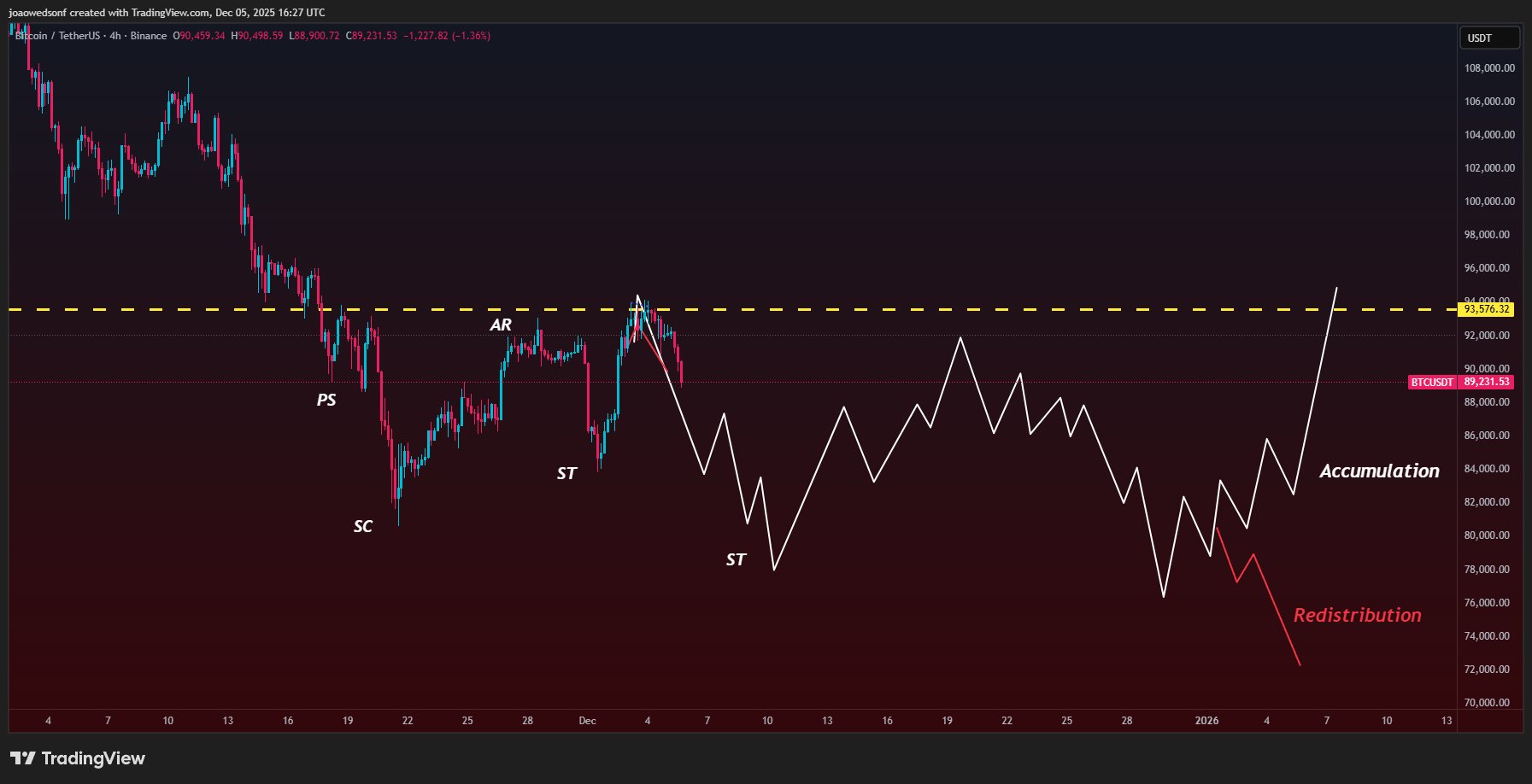



 The State Department has approved two major Foreign Military Sales (FMS) to Denmark, authorizing the transfer of advanced U.S. air-to-air missiles and a ground-based air defense system with an estimated combined value of $3.73 billion. According to a press release from the Defense Security Cooperation Agency (DSCA), Denmark has been cleared to purchase 200 AIM-120C-8 […]
  BAE Systems has secured a new $198.4 million contract modification from the U.S. Army to produce an additional 240 Armored Multi-Purpose Vehicles (AMPVs). The award is a fixed-price-incentive modification to contract W56HZV-23-C-0024, and brings the total value of the agreement to just under $2.48 billion. The Army Contracting Command at Detroit Arsenal, Michigan, is managing […]
  The U.S. State Department has approved a possible $301 million Foreign Military Sale to Italy for advanced long-range cruise missiles and associated support, according to a release from the Defense Security Cooperation Agency (DSCA). Italy has requested to purchase 100 AGM-158B/B-2 Joint Air-to-Surface Standoff Missiles with Extended Range (JASSM-ER), along with encryption equipment, software, spare […]
  Lockheed Martin has received a $1.14 billion contract modification from the Department of the Navy to fund long lead components for future production of F-35 fighter jets under Lots 20 and 21, the Pentagon announced. According to a release, the modification (P00005) to contract N0001925C0070 covers procurement of parts, materials, and components in support of […]
  The State Department has approved a possible Foreign Military Sale to the Republic of Korea for an additional batch of GBU-39/B Small Diameter Bombs (SDB-I) and associated equipment, with a total estimated cost of $111.8 million. According to a press release from the Defense Security Cooperation Agency (DSCA), the Republic of Korea has requested to […]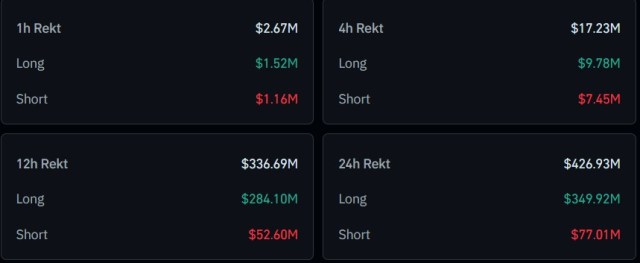



 (@MetaMask)
 (@paoloardoino)
  Analysts are overlooking how stablecoins that retain earnings (aka Tether) are evolving into something structurally unusual.

 US agrees to recommend a 12-year prison sentence and a $19m fine for Do Kwon after he has pleaded guilty to wire fraud and conspiracy

 Arizona’s push to integrate digital assets into state financial infrastructure is nearing a critical milestone.
  The State of Michigan Retirement System has increased its exposure to Bitcoin, tripling its holdings in the
  Bitcoin NYC Mayor Adams established the “nation’s first-ever” municipal office for crypto and blockchain to position the city as the global crypto hub.