Is it possible to have too much of a good thing? The Kia EV9 was one of the first EVs from an established automaker truly designed for American tastes. It’s a big, boxy SUV that gives drivers a commanding view of the road, while three rows of seats and quick charging make it perfect for […]
Harmonic, the math-focused AI startup founded by Robinhood’s CEO, has reached a $1.45B valuation after a major funding round to scale its provably correct AI models.
Harmonic, the math-focused AI startup founded by Robinhood’s CEO, has reached a $1.45B valuation after a major funding round to scale its provably correct AI models.
Microsoft Research head Peter Lee, right, in the Moment Motors shop with founder Marc Davis, left, and car builder Brandon Beaman in Austin, Texas, this week. Moment is converting Lee’s 1968 Ford Mustang GT Fastback to electric. (Photo courtesy of Peter Lee)
Out of Office is a new GeekWire series spotlighting the passions and hobbies that members of the Seattle-area tech community pursue outside of work.
Day job: President, Microsoft Research. Lee leads the organization’s global labs and drives the incubation of new research-powered products in artificial intelligence, computing foundations, health, and life sciences.
Out-of-office passion: Converting classic cars to electric.
When Peter Lee first started his research for a project to convert his replica 1955 Porsche 550 Spyder to electric, he used the AI model Davinci-003 (OpenAI’s early Chat GPT-4) for help with the engineering design.
When he explained to the AI what he wanted to do, the first response Lee got back was, “Why on earth would you want to ruin a beautiful classic car like that?”
The head of Microsoft Research doesn’t just hear it from artificial intelligence. Now in the midst of converting another classic — a 1968 Ford Mustang GT Fastback — Lee is used to plenty of human car fanatics expressing their displeasure with his hobby.
“Half the people I’ve told about this project think it’s the coolest thing, and the other half think it’s totally evil,” Lee said. “One guy actually told me I’m never going to heaven.”
Lee, who joined Microsoft in 2010 and previously spent 22 years at Carnegie Mellon University, was named one of Time magazine’s 100 most influential people in health and life sciences in 2024. Cars have been a passion since he was a kid. He raced karts and Formula Ford, and was even a licensed auto body technician for a time.
Peter Lee’s replica 1955 Porsche 550 Spyder that was converted to electric. (Photo courtesy of Peter Lee)
Frustrated by fuel system issues with the Porsche in 2020, Lee connected with Marc Davis, founder of Moment Motor Co. in Austin, Texas, a shop that “transforms vintage head-turners into modern electric cars.” Moment is dedicated to “preserving the art and beauty” of classics like those owned by Lee.
Some classic car lovers are quick to criticize EV conversions for messing with the original gas-powered intent of manufacturers, pointing out that the cost alone makes it irresponsible. Davis said Moment’s work generates “plenty of vomit emojis” from purists on the company’s social media posts.
“I personally believe what we’re doing is preservation,” he said, pointing to projects in which people bring new life to a car that was their all-time favorite or something that their dad drove. (This Bloomberg video shows how the conversion process works.)
The cost of such a conversion can depend on car condition, size, and performance and range requirements from the owner, but Davis puts the ballpark between $50,000 and $150,000. That’s on top of a classic car that might cost $200,000. The Mustang project entails 100-150 hours of engineering work and 400-500 hours of installation work.
Lee is drawn to many of the benefits of going electric — no gas or oil to worry about, modern components, and explosive torque.
In the wet Pacific Northwest, Lee’s Porsche is garaged for the winter at a 50% charge. On the first nice day in the spring, there’s little to fuss with.
“I’ll just check the air in the tires, turn it on, and it’ll just go. And it’ll go fast. It’s really a wonderful, wonderful thing,” Lee said, adding that speeds in the Porsche, which is a replica of the model in which Hollywood icon James Dean died, can be “a little scary.”
Clockwise from top left: Peter Lee’s Mustang; a rendering showing the battery boxes and motor configuration; high-voltage wiring running along the car’s underside; and a 3D scan of the car’s empty engine bay. (Moment Motors Images)
With the Mustang, Lee is involved in decisions big and small, from what type of shift knob he might like, to whether to retain the solid rear axle.
“I put thought into this, especially when I was driving the car to get to know it,” Lee said. “I ended up thinking that the car wouldn’t be a Mustang anymore if we got rid of the live rear axle, and it turned out that Marc’s design choice was exactly the same.”
When it’s done, the Mustang will be a unique build, and one that Lee says will demand plenty of attention on the car show circuit.
Asked whether he has a third vehicle in mind to convert next, Lee laughed before considering his growing collection and his desire to possibly change over an old pickup truck.
“My wife isn’t around is she?” he said.
Classic vehicles being converted to electric in the Moment Motor Co. shop in Austin. (Photo courtesy of Peter Lee)
Most rewarding aspect of this pursuit: Lee loves that there are serious technical and design aspects of what he’s pursuing. In the case of the current project, he grapples with decisions that impact what it means for the car to still be a Mustang, and feel like a Mustang.
“The thing I’ve always loved about cars, and why I love to work on cars, is you actually finish something,” he said. “That never happens in software. Software’s never done. You might ship it, but you’re still working on it forever.”
Lee is also a believer in the growing business potential of converting classic cars to EV and he thinks it would be a thrill to be involved on the side with a company that’s doing such work.
“The whole idea of beautiful, classic-looking cars that have all the modern conveniences of being EV — I think that’s going to be a bigger and bigger thing,” he said.
The lessons he brings back to work: Lee has wanted to combine his passion around cars with his day job forever. Today, car technology and auto racing have become so technical that he now has fellow researchers at Microsoft who are generally interested as well.
He called cars “a great laboratory” for trying to understand action models — the AI systems designed to predict and determine the next best action an agent (like a robot or software) should take to achieve a specific goal.
At Microsoft Research, advancements in car software provide interesting ways to think about the architecture of an action model or training paradigms, with learnings that could impact what’s happening on your own computer.
“It wouldn’t surprise me if five years from now the ’68 Mustang conversion has more intelligence, more self-drive, more action model, more robotic capabilities,” Lee said. “I think you’ll see those things pop up even in your plain old Windows desktop over time.”
Do you have an out-of-office hobby or interesting side hustle that you’re passionate about that would make for a fun profile on GeekWire? Drop us a line: tips@geekwire.com.
Marissa Coughlin and Constantine Vetoshev, owners of Swoon City, a new romance bookstore in Seattle’s Ballard neighborhood. (GeekWire Photo / Kurt Schlosser)
When Marissa Coughlin left her latest tech job to open a romance bookstore and crafting hub in Seattle, she didn’t leave technology behind completely.
In fact, alongside her partner, Constantine Vetoshev, who still works in tech, artificial intelligence has become a major player in this next chapter of their lives.
Coughlin worked in a variety of communications and content roles for companies including Airbnb, Textio, Highspot, and most recently, T-Mobile. Vetoshev is a software developer at Brook.ai, a Seattle-area health technology startup that uses AI to help clinical teams deliver remote care.
Both big readers, the pair first started looking at spaces and developing a bookstore business plan in 2023. But with two small children, they were waiting for better timing. When a space became available on Market Street in Seattle’s Ballard neighborhood they finally made the leap, and opened Swoon City last month.
While Coughlin has no interest in seeing AI used to write the books or illustrate the covers that line her shelves, she’s a big believer in how the technology can help the back end of the business.
“I think more businesses should be using this stuff, especially small businesses, if they can figure out how to tap into it,” Coughlin said. “It’s super useful, but you have to know that it’s there and what it can do, and be a little bit creative and figure out the solutions.”
Here are some of the ways Swoon City is tapping into AI, leveraging Coughlin and Vetoshev’s know-how:
To help pick the store’s inventory of 3,000 books, they used analysis based on Seattle Public Library data of the most-borrowed romance novels over the past 18 months.
They built a custom generative AI tool to categorize all the romance novels they bought into sub-genres so people can quickly find their favorites. For example, the book “Thirsty” would typically just be categorized under romance or maybe paranormal romance, but Swoon’s system categorizes it as paranormal romance, LGBTQ, enemies to lovers, vampire romance, romantic comedy, and urban fantasy.
GenAI was used to build a customer loyalty program. Vetoshev, who said he is “all in” on Anthropic, asked the AI assistant Claude to analyze some requirements they had for different programs. Claude wrote back and said, “You could go with this one, or you could just build it yourself. Here’s how.”
Swoon City moved into a space previously occupied by Monster, which sold clothing, crafts and more. (GeekWire Photo / Kurt Schlosser)
“I feel like there’s a lot of things that we’ve created for this store that other people who might be curious about doing something like this could tap into and be able to leverage for their own stuff,” Coughlin said.
Vetoshev said he can come home from his day job, put the kids to bed and then focus on something that needs to be built for the store.
“A couple of hours of work with a [large language] model, and we’re off to the races,” he said.
The technology is all in service of a genre that is exploding, especially among young readers.
Romance is the leading growth category for the total print book market thus far in 2025, and the volume for the category has more than doubled compared to four years ago, with 51 million units sold in the past 12 months, according to industry analysis.
NPR credited romance interest driven by Gen Z readers, especially on BookTok, a subcommunity of TikTok for recommending, reviewing, and discussing books.
Swoon City is hoping to follow in the successful footsteps of The Ripped Bodice, an independent brick-and-mortar romance bookstore with locations in Los Angeles and Brooklyn, N.Y.
Coughlin looks forward to bringing people together not just around books, but by hosting various events and building out crafting classes for embroidery, stained glass, jewelry making and more.
“I feel like part of what was exciting for a romance bookstore is the community, because it is often not a genre that’s as well respected in the book community, even though it’s huge,” she said.
Pioneer Square Labs has launched more than 40 tech startups and vetted 500-plus ideas since creating its studio a decade ago in Seattle.
Now it’s testing whether its company-building expertise and data on successful startup formulas can be codified into software — with help from the latest AI models.
PSL just unveiled Lev, a new project that aims to be an “AI co-founder” for early stage entrepreneurs.
Developed inside PSL and now rolling out publicly, Lev can evaluate ideas, score their potential, and help founders develop them into companies.
Lev grew out of an internal PSL tool that used PSL’s proprietary rubric to score startup ideas. The studio decided to turn it into a product after outside founders who tested early versions wanted access for themselves.
Here’s how it works:
Users start by entering an idea (along with any associated information/background) and selecting “venture” or “bootstrap.”
Lev walks founders through milestones from solution to customer discovery, go-to-market, and product build.
It can generate “assets” like interview scripts, outreach templates, competitive maps, pricing models, brand palettes, customer personas, landing pages, potential leads, and even product specs.
“We’re mapping a lot of the PSL process into it,” said T.A. McCann, managing director at PSL.
Lev’s structured workflow sets it apart from generic chatbots, said Shilpa Kannan, principal at PSL.
“The sequencing of these components as you go through the process is one of the biggest value-adds,” she said.
Lev joins a growingnumber of startups leveraging AI to act as an idea validation tool for early-stage founders, though its precise approach makes it stand out.
Pioneer Square Labs Managing Director T.A. McCann (left) and Principal Shilpa Kannan. (PSL Photos)
Upcoming features will add team-building and fundraising modules and let users trigger actions — such as sending emails or buying domains — directly from within the platform.
McCann envisions Lev eventually connecting to tools like Notion and HubSpot to serve as a “command center” for running a company — integrating tools, drafting investor updates, tracking competitors, and suggesting priorities. There are several competitors in this space offering different versions of “AI chief of staff” products.
On a broader level, Lev raises an existential question for PSL: what happens when a startup studio teaches an AI to do the things that make a startup studio valuable?
“In some ways, this is ‘Innovators Dilemma,’ and you have to cannibalize yourself before someone else does it,” McCann said, referencing Clayton Christensen’s concept of technology disruption.
PSL also sees Lev as a potential funnel for entrepreneurs it could work with in the future. And it’s a way to expand the studio’s reach beyond its focus on the Pacific Northwest.
“It’s scaling our knowledge in a way that we wouldn’t be able to do otherwise,” McCann said.
Kannan and Kevin Leneway, principal at PSL, wrote a blog post describing how PSL designed the backbone of Lev and how the firm generated its own startup ideas at higher volumes with lower cost.
“As we see more and more individuals become founders with the support of AI, we are incredibly excited for the potential increase in velocity and successful outcomes from methodologies like ours that focus on upfront ideation and validation,” they wrote.
Kannan told GeekWire that PSL is prioritizing founders’ privacy and intellectual property. “We are making intentional product and technical decisions to ensure Lev is designed from the ground up to safeguard ideas and founder data, including guardrails on data we collect and our team can access,” she said.
For now, PSL is targeting venture-scale founders — people in tech companies or accelerators with ambitions to build fast-growing startups. But McCann believes Lev could eventually empower solo operators running multiple micro-businesses.
Lev is currently free for one idea, $20 per month for up to five ideas, and $100 per month for 10 ideas and advanced features. It’s available on a waitlist basis.
Lev also offers a couple fun tools to help boost its own marketing, including a founder “personality test” and an “idea matcher” that produces startup concepts based on your interests and experience.
Punjab is a land of milk, ghee and makhhan. Some even call it a kukkad (chicken) nation whose sale hits a peak during evenings when people enjoy their whisky and that even turns the population to turn their native language to English (pun intended)
On my recent trip to Amritsar I had a few hits (from unexpected outlets) and a few misses from a few well known places.
Starting with Murthal where we had the first halt.
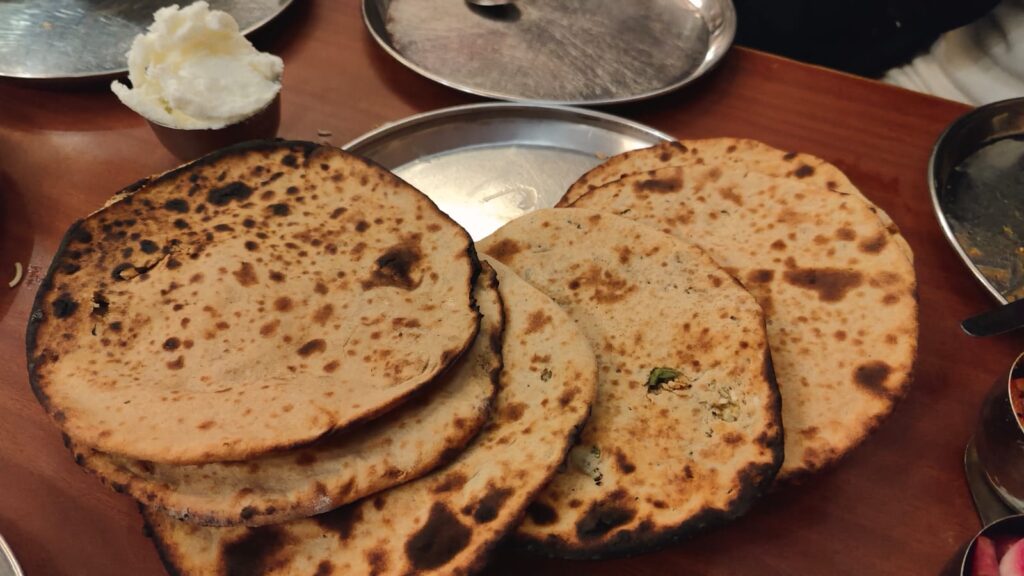
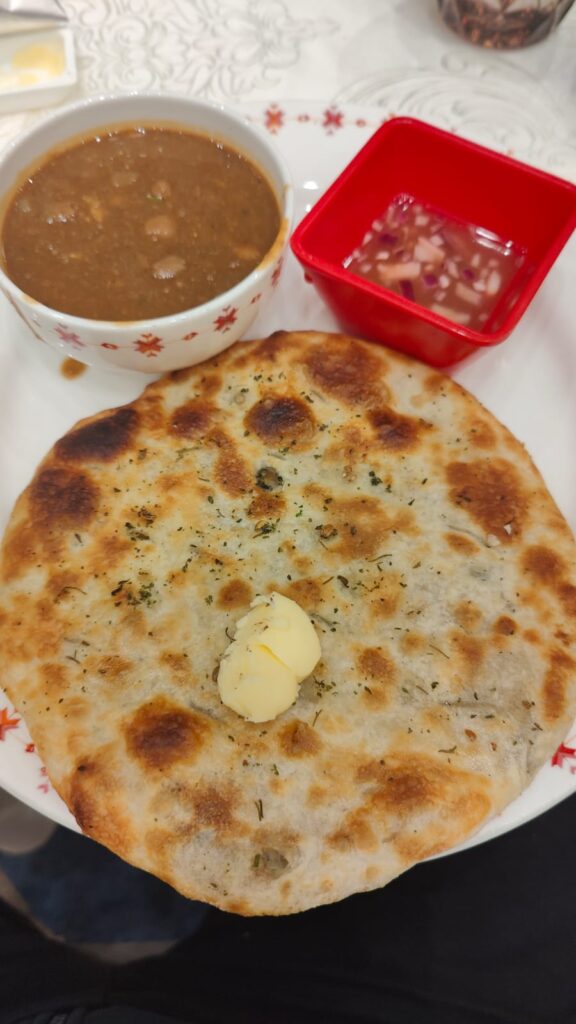
Amrik Sukhdev: A place where I love the tandoori Paratha with soft white butter. Even though it was 1am in the morning, this huge space was so full and buzzing that we had to wait for 20 minutes. I won’t say that we had to stand in the queue as there is no queue. Guests are left on their own to search for the table making them stand next to someone else’s table who is still eating, giving them glances to get up early. What a spoiler. Wonder why they can’t have a token system?
Plus this time the paranthas were thick and tasteless as if the main cooks have already left and helpers doing the job. Lastly, the soft fresh white butter was hard.
No taste in the chowmien and serving hot milk instead of kada hua (thickened) milk only strengthened my resolve to not go back there anytime soon.
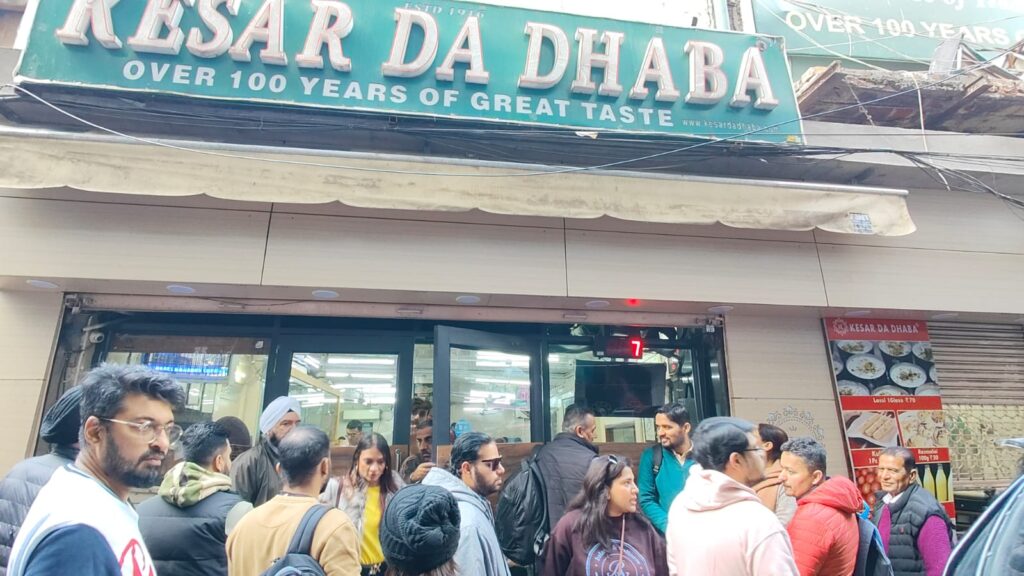
Kesar da Dhaba, Amritsar: This has been one of my favourite joint for dal makhani along with crisp tandoori parantha. But this outlet has also got more touristy over the years. I skipped my breakfast to enjoy my lunch here. And after the meal, I even had to skip my dinner apart from getting acidic burps.
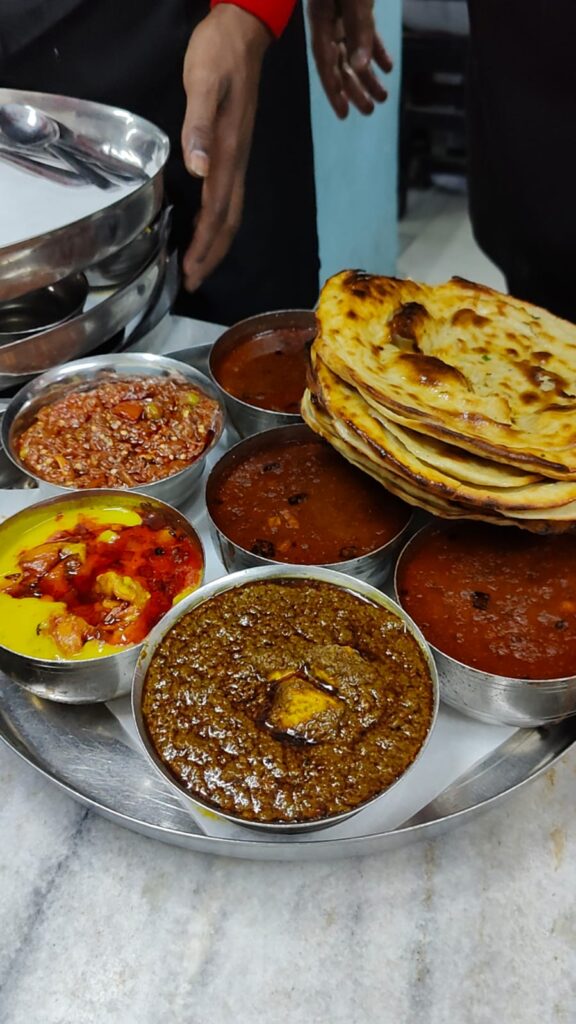
Thali at Kesar Da Dhaba
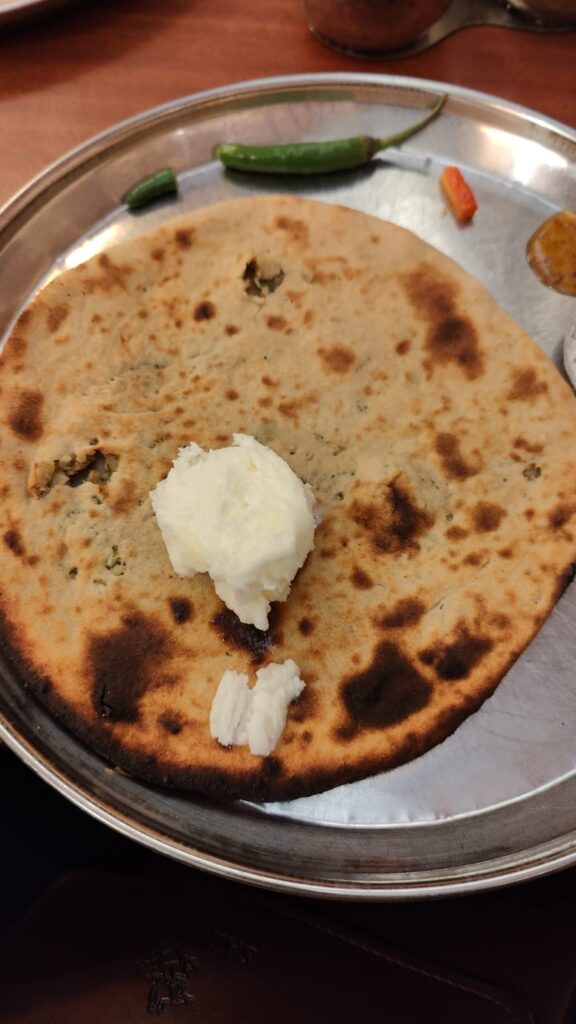
Dal Makhani has loads of ghee on top but the only taste one can get in the dal is yes, of course, of ghee. I had two paranthas with my meal, not because it was delicious but because I was hungry. First parantha was overly crisp and second a tad undercooked. Not everything is bad at Kesar. Kadi was delicious with one of the softest pakodas I have had, bharta was decent without being exceptional. However paneer in palak paneer was chewy and the water bottle was served to us with a broken seal that we thankfully noticed as even the water was slightly less than what is normally there in a sealed bottle.
So would I go back to Kesar? I still might if I am on that side but making a special visit that side is totally unnecessary. Pains of taking a rickshaw or walking in those narrow lanes with a waiting of at least 30 minutes is not worth it.
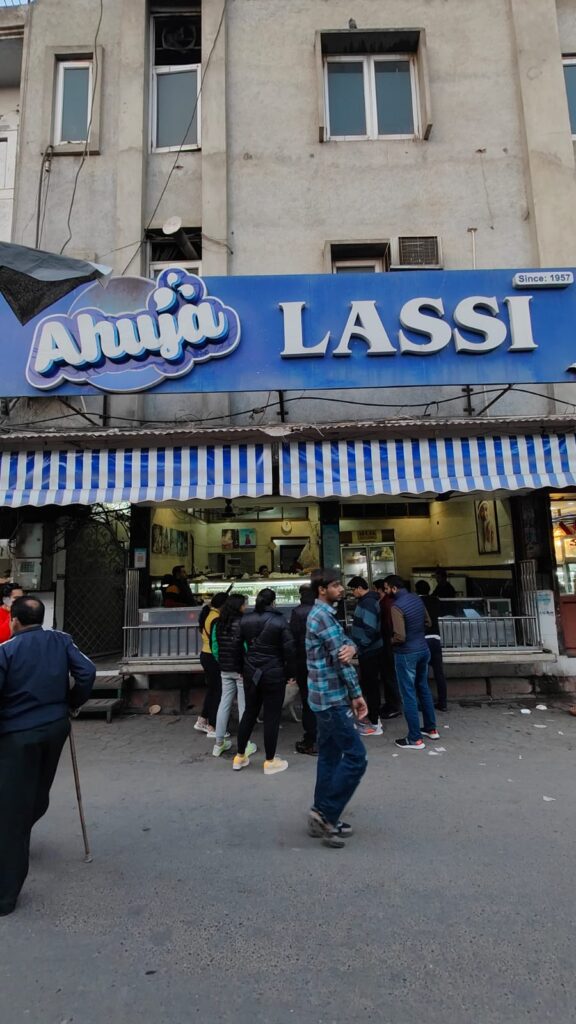
Lassi: We tried lassi at Ahuja which is again average.
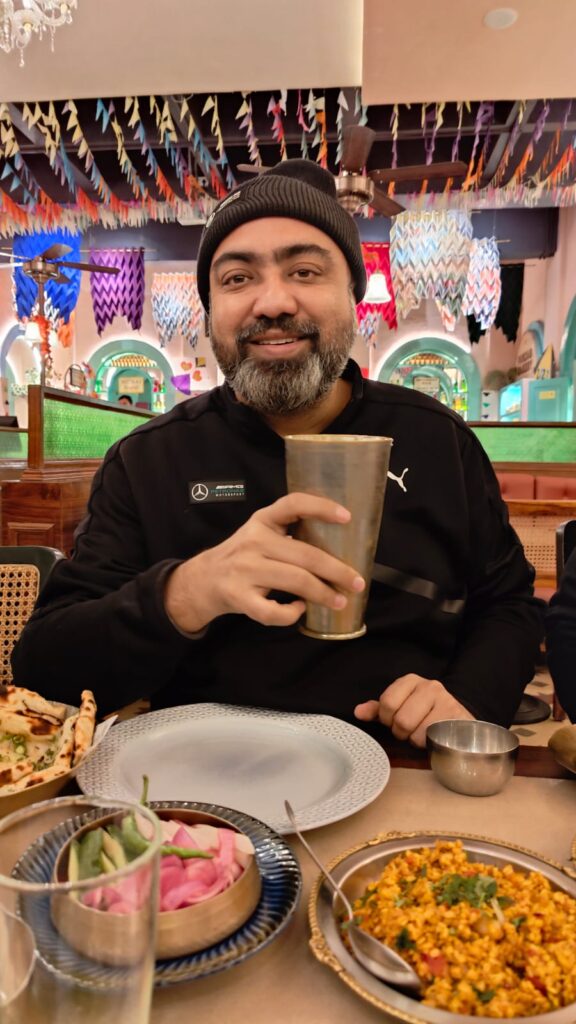
However we were pleasantly surprised with the lassi at Rang Panjab, a restaurant. It’s thick lassi with peda and malai on top is so good that it can beat any popular joints hand down.
Lassi at Rang Panjab
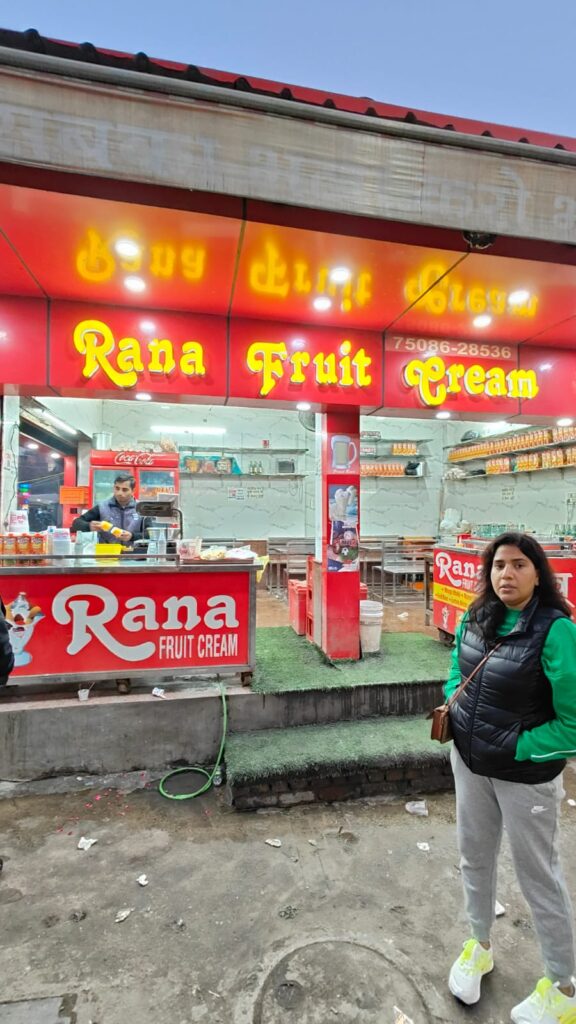
Fruit Cream: If you like fruit cream then you must try at Rana Fruit Cream. Though the temperature at which it is served is not correct and it is more like fruit ice cream, it is still so tasty that one can easily ask for a repeat.
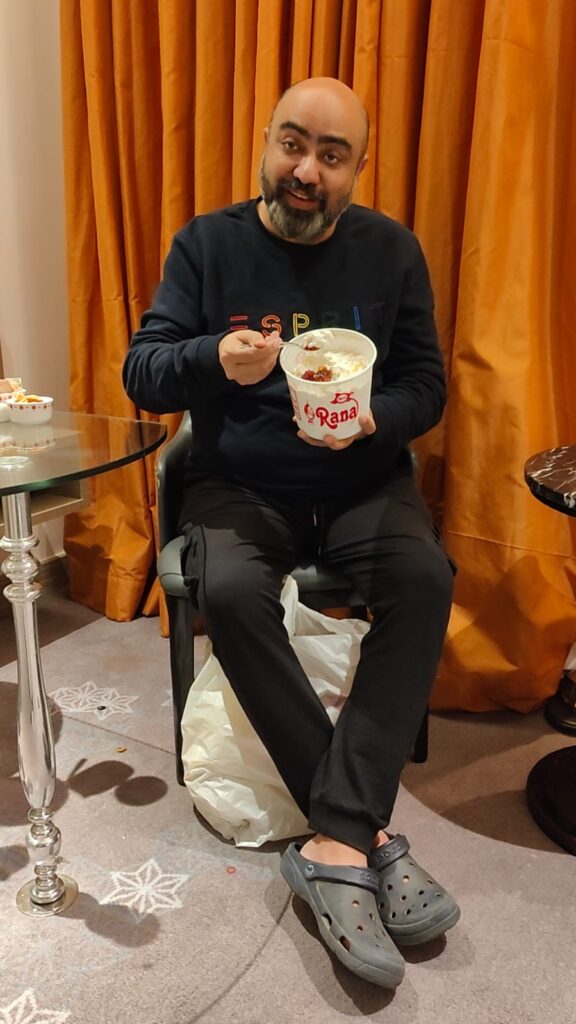
Infact I got a kilo of this fruit cream packed for hotel and put it in the mini bar. As soon as the cream melted while it was still chilled, it tasted even better. This is a must eat.
Kulcha: There are many recommendations for Kulcha in the city. Almost 10 years ago I did a kulcha trail and even gave certificate to Ashok Kulchewala but this time I was in no mood to explore so much.
However the chef at WelcomHotel by ITC served some delicious kulchas in our breakfast that was included in the room pricing.
I wanted to try so much more. But given the overdose of ghee, makkhan etc, I ate just 5 meals including breakfast instead of 10 meals that I could have had in the duration that I was there. Just adding more and more fat doesn’t make the meal tasty. It has to be the right proportions of everything, including love.
Pudina Sev in Air Fryer Recipe : Pudina (mint) flavored gluten free and guilt free sev prepared in Air Fryer. This is a quick savory snack/evening after school snack which I have made several times in a year. I also made a small batch of deep fried version (recipe later) for kids and air fried...
Karasev Recipe is my first air fryer based recipe in the blog. This air fried karasev is absolutely delicious, crispy and came out perfect like the deep fried ones. I have made so many batches and planning to do one more batch before this Diwali 2021…This gluten free and vegan snack can be eaten as...
Hope that everyone had a lovely Christmas and New Year. This year we celebrated our first Diwali and Christmas without my husband. As a family, we still wanted to continue the tradition of celebrating these Read More ...
My husband loved all kinds of Indian street foods and the chaats were his favourite. He loved the hot and spicy flavours and could make a chaat using basic ingredients in the kitchen. What is Read More ...
Who doesn’t love the potato salad served as a side at home or in restaurants? We all tend to have huge helpings at the eat as much as you like buffets!! However, a lot Read More ...
Thank you very much to all of you who have got in touch personally or through social media asking why I have not posted anything on my blog recently. Some of you have asked for Read More ...
As the U.S. looks to bolster electric vehicle (EV) adoption, a new challenge is on the horizon: cybersecurity.
Given the interconnected nature of these vehicles and their reliance on local power grids, they’re not just an alternative option for getting from Point A to Point B. They also offer a new path for network compromise that could put drivers, companies and infrastructure at risk.
To help address this issue, the Office of the National Cyber Director (ONCD) recently hosted a forum with both government leaders and private companies to assess both current and emerging EV threats. While the discussion didn’t delve into creating cybersecurity standards for these vehicles, it highlights the growing need for EV roadmaps that help reduce cyber risk.
Lighting Strikes? The State of Electric Adoption
EV sales in the United States are well ahead of expert predictions. Just five years ago, fully electric vehicles were considered niche. A great idea in theory, but lacking the functionality and reliability afforded by traditional combustion-based cars.
In 2022, however, the tide is turning. According to InsideEVs, demand now outpaces the supply of electric vehicles across the United States. With a new set of tax credits available, this demand isn’t going anywhere but up, even as manufacturers struggle to improve the pace of production.
Part of this growing interest stems from the technology itself. Battery life increases as charging times fall, and the EV market continues to diversify. While first-generation electric vehicle makers like Tesla continue to report strong sales, the offerings of more mainstream brands like Ford, Mazda and Nissan have helped spur consumer interest.
The result? The United States has now passed a critical milestone in EV sales: 5% of new cars sold are entirely electric. If the sales patterns stateside follow that of 18 other countries that have reached this mark, EVs could account for 25% of all cars sold in the country by 2025, years ahead of current forecasts.
Positive and Negative — Potential EV Issues
While EV adoption is good for vehicle manufacturers and can ease reliance on fossil fuels, cybersecurity remains a concern.
Consider that in early 2022, 19-year-old security researcher David Colombo was able to hack into 25 Teslas around the world using a third-party, open-source logging tool known as Teslamate. According to Colombo, he was able to lock and unlock doors and windows, turn on the stereo, honk the horn and view the car’s location. While he didn’t believe it was possible to take over and drive the car remotely, the compromise nonetheless showed significant vulnerability at the point where OEM technology overlaps third-party offerings. Colombo didn’t share his data immediately; instead, he contacted TelsaMate and waited until the issue was addressed. Malicious actors, meanwhile, share no such moral code and could leverage this kind of weakness to extort EV owners.
And this is just the beginning. Other possible cyber threat avenues include:
Connected vehicle systems
EV systems such as navigation and optimal route planning rely on WiFi and cellular networks to provide real-time updates. If attackers can compromise these networks, however, they may be able to access key systems and put drivers at risk. For example, if malicious actors gain control of the vehicle’s primary operating system, they could potentially disable key safety features or lock drivers out of critical commands.
Charging stations
Along with providing power to electric vehicles, charging stations may also record information about vehicle charge rates, identification numbers and information tied to drivers’ EV application profiles. As a result, vulnerable charging stations offer a potential path to exfiltrated data that could compromise driver accounts.
Local power grids
With public charging stations using local power grids to deliver fast charging when drivers aren’t at home, attackers could take aim at lateral moves to infect car systems with advanced persistent threats (APTs) that lie in wait until cars are plugged in. Then, malicious code could travel back along power grid connections to compromise local utility providers.
Powering Up Protection
With mainstream EV adoption looming, it’s a matter of when, not if, a major cyberattack occurs. Efforts such as the ONCD forum are a great starting point for discussion about EV security standards. However, well-meaning efforts are no replacement for effective cybersecurity operations.
In practice, potential protections could take several forms.
First is the use of automated security solutions to manage user logins and access. By reducing the number of touchpoints for users, it’s possible to limit the overall attack surfaces that EV ecosystems create.
Next is the use of security by design. As noted by a recent Forbes piece, new vehicles are effectively “20 computers on wheels,” many of which are embedded in hardware systems. The result is the perfect setup for firmware failures if OEMs don’t take the time to make basic security protocols — such as usernames and passwords that aren’t simply “admin” and “password”, and the use of encrypted data — part of each EV computer.
Finally, there’s a need for transparency across all aspects of EV supply, design, development and construction. Given the sheer number of components in electric vehicles which represent a potential failure point, end-to-end visibility is critical for OEMs to ensure that top-level security measures are supported by all EV hardware and software components.
Getting from Here to There
As EVs become commonplace, a cybersecurity roadmap is critical to keep these cars on the road up to operator — and operational — safety standards.
But getting from here to there won’t happen overnight. Instead, this mapping mission requires the combined efforts of government agencies, EV OEMs and vehicle owners to help maximize automotive protection.

 Login
Login