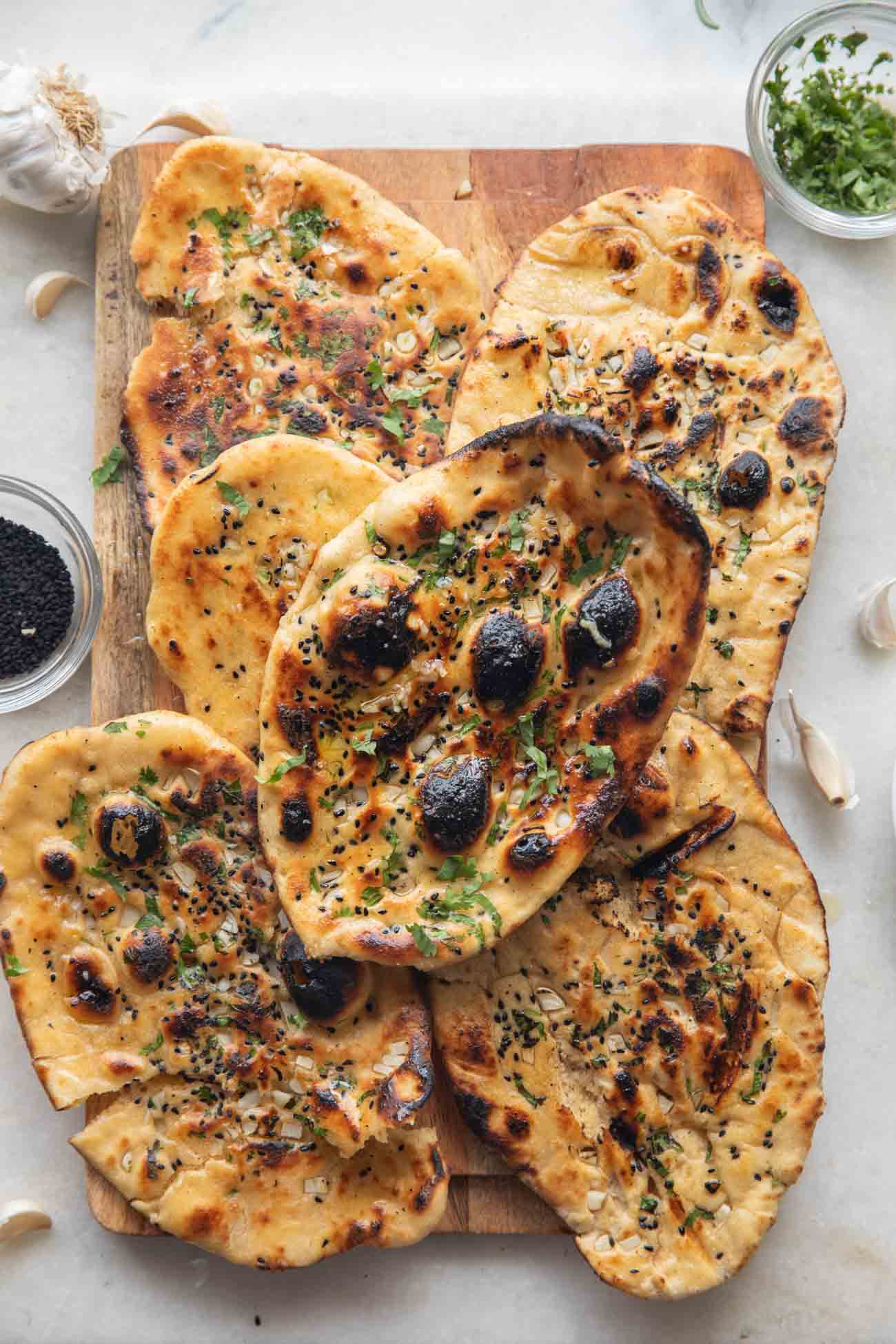
If you’ve ever wished you could make restaurant-style Garlic Naan at home without any stress, you’re going to love this recipe!
Making restaurant-style garlic naan at home is easier than you’d think. All you need is a few pantry staple ingredients and 30 minutes to recreate the best, homemade garlic naan. Since this is a no-yeast recipe, the dough needs almost no resting time, which means you can whip up a batch whenever the craving for it hits.
This recipe keeps things really easy, even if you’re new to making naan. And once you get the hang of it, you can switch things up to add a little chilli to turn it into a chilli-garlic naan, or try our no-yeast naan variation when you want something even quicker. can get the same restaurant-style charred bits and a smokey flavour on the stovetop.
Dry Ingredients: Maida, salt, sugar (helps tenderize, brown and balance flavors), and baking powder (for that signature naan fluffiness)make up the base of this naan.
Wet Ingredients: Milk and water help bring the dough together, and a little oil keeps it smooth and easy to roll.
Garlic Topping: Finely chopped garlic and coriander for that classic flavour.
Finishing: Melted butter brushed on top once the naan is cooked to give it that glossy, restaurant-style finish.
Richa’s Top Tips
Make sure the pan is hot enough, but not smoking before placing the rolled dough, or it won’t stick properly.
Once you make dough balls, leave them to rest on a greased plate or baking tray to prevent them from sticking to the plate or each other. Rest the dough properly: Those 30 minutes of resting time make a huge difference. The dough relaxes, becomes easier to roll, and cooks softer.
Roll it evenly (and not too thick): A thin, even naan puffs better on the tawa and cooks without turning chewy.
Use water to help it stick: Brushing the non-garlic side with water before placing it on the tawa ensures the naan sticks well and won’t fall off when you flip the pan.
Cook on medium heat: Too high and the naan burns before it cooks through, too low and it dries out. Medium heat gives the perfect puff and colour.
Press the garlic in gently: Lightly pressing the garlic onto the dough helps it stay put while cooking instead of falling off on the tawa.
Frequently Asked Questions
Why isn’t my naan puffing up?
This usually happens when the dough isn’t soft enough or the naan is rolled too thick or too thin. Make sure the dough is well-rested and roll it out evenly so it has room to puff on the tawa.
Can I use whole wheat flour instead of all-purpose flour?
You can swap part of the maida for atta, but using 100 percent whole wheat will make the naan denser and less soft. A half-and-half mix works best if you want a healthier version.
How do I make the naan soft and not chewy?
Keep the heat at medium, roll the dough thin, and don’t overcook it. Removing the naan as soon as it gets those golden brown spots keeps it soft.
Do I need a tandoor or oven for this recipe?
No, this stove-top method gives you the same smoky, charred effect without any special equipment.
Storage Tips
Fridge: Keep leftover naan wrapped in foil or in an airtight container for 2 days. Warm it on a tawa with a little butter to bring back the softness.
Freezer: Garlic naan freezes really well. Cool completely, stack with butter paper between each piece, wrap tightly, and freeze for up to a month.
Reheating: Heat on a tawa for 1–2 minutes until soft. Avoid the microwave for too long because it can make the naan chewy.
Serving Ideas
Garlic Naan goes with almost any creamy curry or sabzi, but here are some tried-and-loved pairings that turn it into a full, comforting meal:
With Chana Masala: A classic vegetarian pairing that never disappoints.
With Dal Tadka: Simple, wholesome, and perfect when you want something light but satisfying.
Customisation Ideas
Extra-Garlic Lover’s Naan: Mix grated garlic directly into the dough and brush the naan with garlic butter at the end for a double-hit of flavour.
Cheesy Garlic Naan: Right after flipping the naan and letting it puff, sprinkle shredded mozzarella or cheddar on the cooked side. It melts instantly and tastes like restaurant-style cheese naan.
Chilli-Garlic Twist: Mix finely chopped green chillies into the garlic topping before pressing it onto the dough. Adds heat without changing the recipe structure.
Herb Explosion: Swap coriander for fresh chives or parsley if you want a milder, fresher flavour profile.
Did You Know?
The word “naan” comes from the Persian word nān, which simply means “bread.” The earliest mentions of naan date back to 1300 AD in the writings of Indo-Persian poet Amir Khusrau. It was originally baked in royal Mughal kitchens—making naan the original food of emperors.
Now it’s over to you! Make a fresh, cozy, homemade garlic naan without special equipment using simple ingredients for that amazing restaurant-style flavour. Serve it hot, share it around, and watch how quickly it becomes a favourite.
Don’t forget to tag me on Instagram @my_foodstory when you make it. I’d love to see your fluffy naans!
Add all dry ingredients, maida, salt, sugar, baking powder in a bowl and mix well. Add 1 teaspoon oil, milk & water and knead for 7-8 minutes till you get a soft, smooth dough. Add oil on the surface of the dough & keep covered to rest for 30 minutes.
3 tablespoons milk, 1 pinch salt, 1 pinch sugar, 1 ½ + ⅛ teaspoon baking powder, 1 cup maida, 2 teaspoons sunflower oil, 3 tablespoons water
Herb butter: Take melted butter in a bowl, add coriander leaves. Mix and set aside.
Divide the dough into 3-4 balls. Take a ball of dough, place it on a rolling platform and roll into a round or oval shaped naan, about 6 inches long and ⅛ inch thick. Sprinkle chopped garlic and gently press with fingers.
1 tablespoon finely chopped garlic
Brush the non garlic side with water and place the water side on the hot tawa so that it sticks well to the tava (watch video for details). cook on high until bubbles form on top, about 1-2 minutes. Flip the tava over so that the naan is directly over the flames. Set the heat to medium and move the tava around till more bubbles form and naan is brown all over and charred around the edges.
2 tablespoons water
Alternatively, if the naan does not stick to the tava or slips out while frying, you may hold the naan with tongs and fry the naan over flames on either side till they turn brown.
Transfer the naan on a plate, brush with the herb butter and serve. Repeat the same process of making naan with the rest of the dough.
Video
Notes
If the dough is extremely sticky, add a teaspoon of flour at a time till it’s workable. The dough should be soft and pliable
Roll the naan thin so that it puffs up better
To make this in the oven, heat the oven to 220C or as high as your oven will go. Place the baking tray in the oven to get it nice and hot. Roll out the naan with all the toppings. Brush the other side with water and place it water-side down on the hot baking tray, being careful not to burn yourself. Now place the baking tray back in the oven. After 3-4 minutes once you see the naan puff up and see bubbles on top, turn on the broil function (or only the top element) and cook it for another 2-3 minutes till it browns a bit. Then take it out and brush it with butter.
The Reg is still standing (this time) despite our best efforts
Updated Routine Cloudflare maintenance went awry this morning, knocking over the company's dashboard and API and sending sites around the world into error screens.…
Isaacman: 'We can never accept a gap in our capabilities again'
The US must return astronauts to the Moon before China mounts its first crewed landing there, NASA administrator nominee Jared Isaacman predicted on Wednesday. He also vowed that the country will not endure another gap in its human-spaceflight capabilities as the International Space Station approaches retirement.…
OpenAI and Microsoft yank their chatbots, telling millions of users to head elsewhere
The European Commission has opened an antitrust probe into Meta after WhatsApp rewrote its rules to block rival AI chatbots including OpenAI's ChatGPT and Microsoft's Copilot.…
An ‘anomaly’ meant a fireball arrived at the recovery zone instead of a spent first stage
There's good news and bad news for the Chinese commercial launch industry. The good news is that LandSpace's ZhuQue-3 launched successfully on its maiden flight. The bad news is that a hoped-for recovery of the first stage ended in a fireball.…
Starting in March, Frontline Worker and Kiosk–only mailboxes lose EWS access
Microsoft is getting serious about the end of Exchange Web Services (EWS) and has announced that, starting in March 2026, it will begin blocking EWS access to mailboxes without license rights.…
Russian vehicles will depart soon, but Baikonur launchpad damage clouds future arrivals
Updated NASA confirmed this week that for the first time, all eight of the International Space Station's docking ports are currently occupied – four by Russian vehicles.…
Statcounter shows the gap narrowing as users cling to older hardware and familiar workflows
Windows 11 has not significantly widened its market share lead over Windows 10, despite support for many versions of the latter ending almost two months ago.…
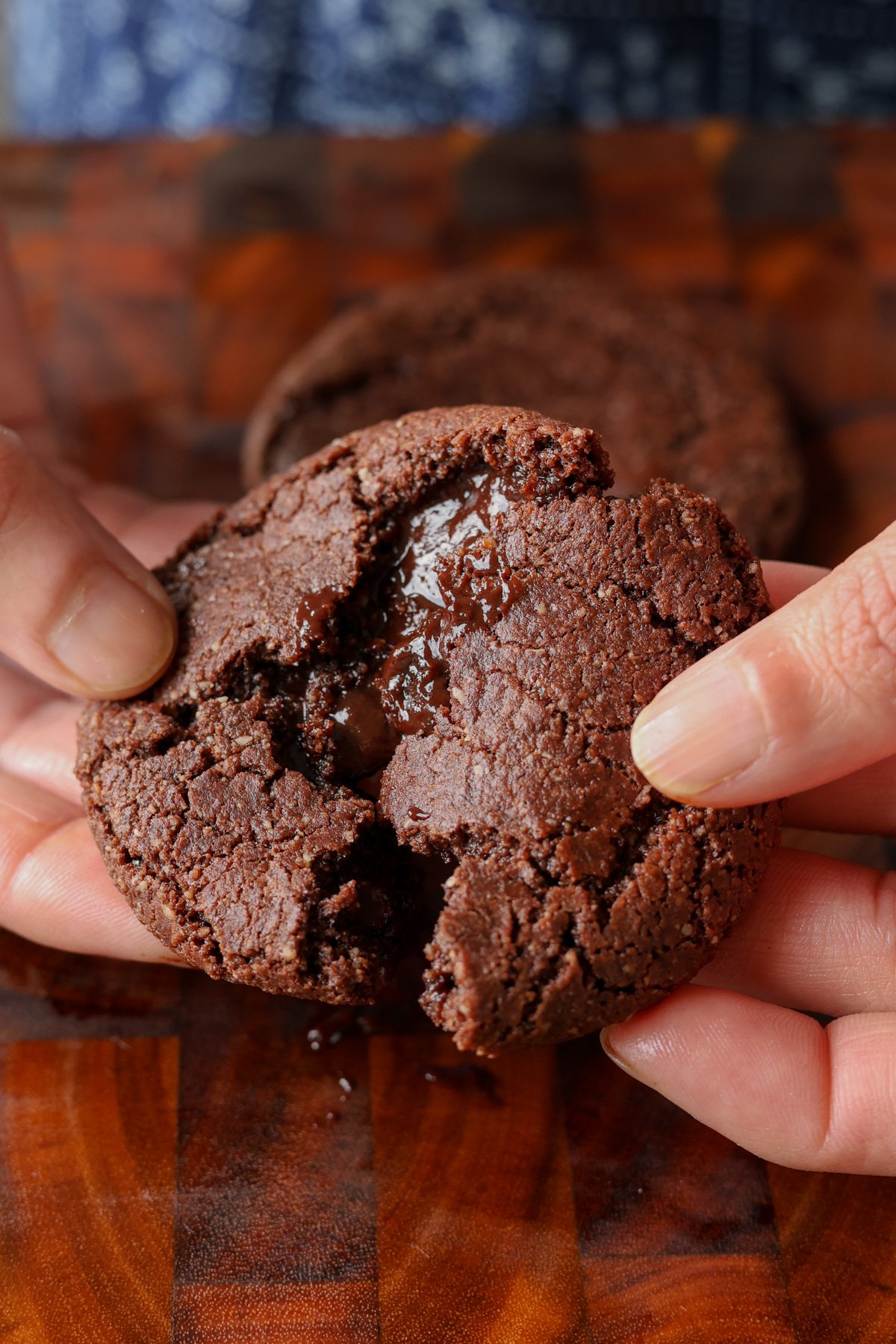
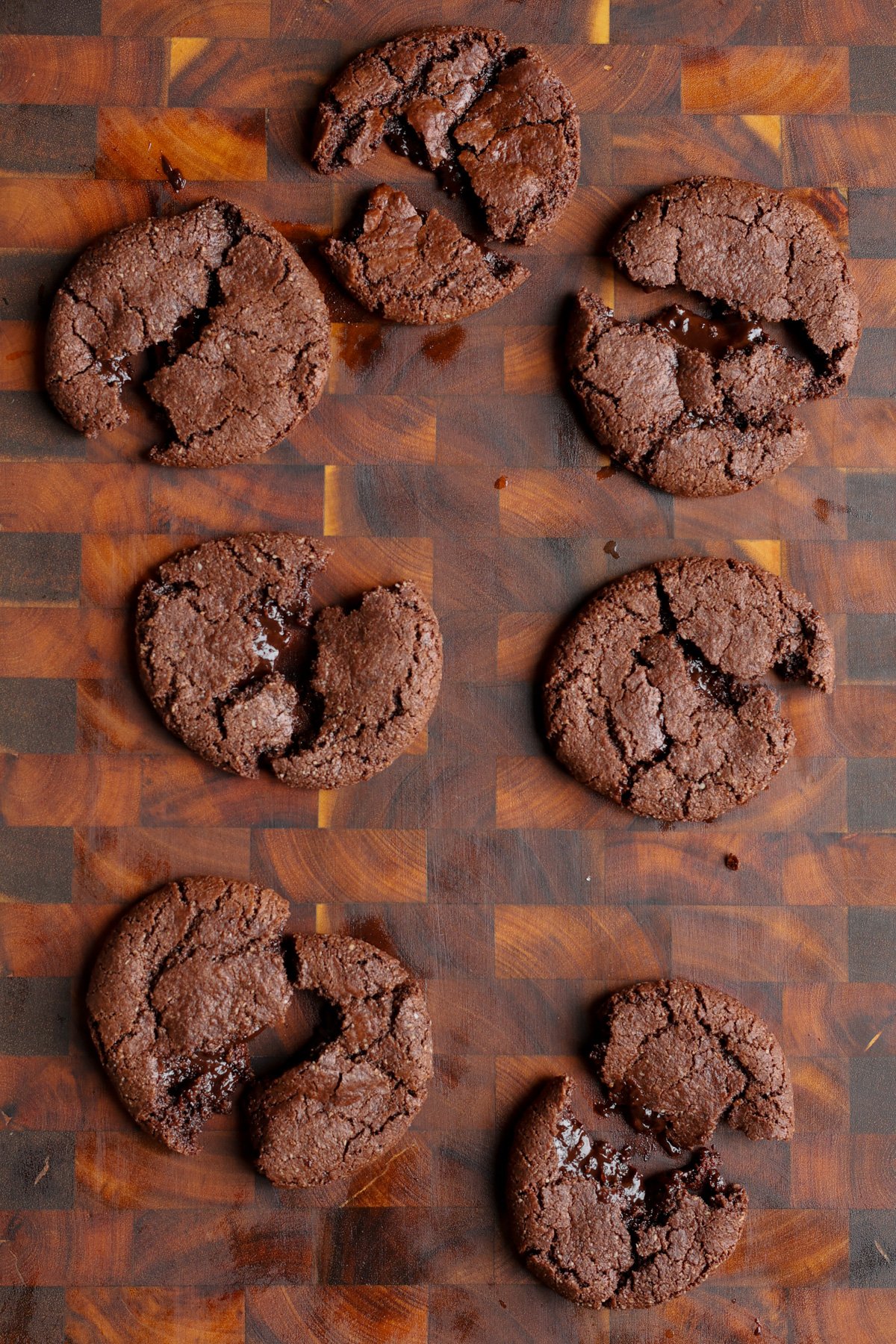
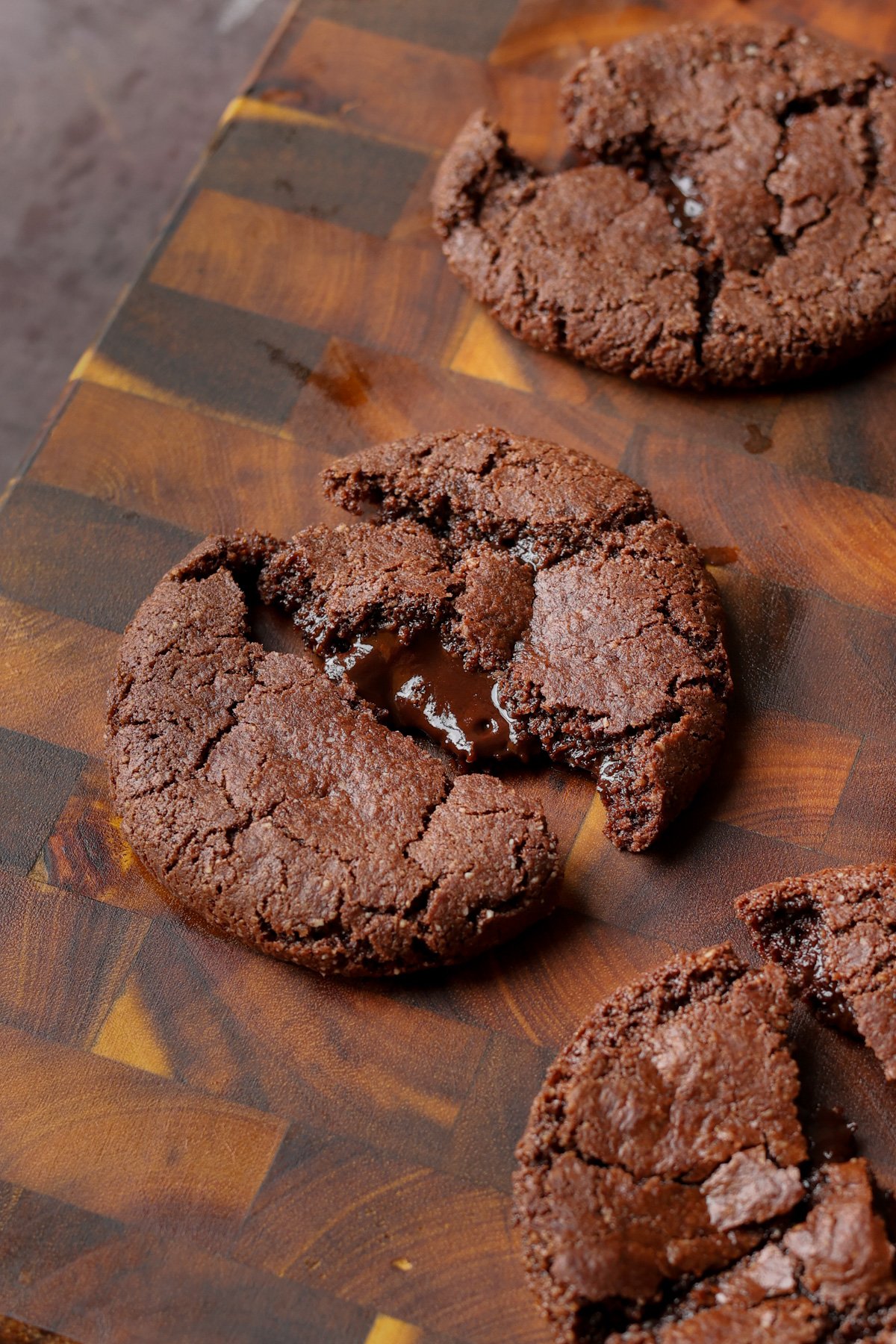
These decadently delicious chocolate lava cookies use my soft, chewy, almond flour cookie dough and a flowy, chocolate ganache filling that oozes out when you break them in half! (gluten-free and soy-free with nut-free options)
It’s cookie season, and I wanted to make a decadent, chocolatey cookie. And what better idea than to convert molten lava cake into cookie form!
My motto is that baking should be super easy and flexible, so that even if you make a few measuring errors, things still turn out great. Nobody has time to whip up butter and sugar and all that, so I use my trusty almond flour cookie dough, which works every time.
To make this simple dough, you just add all the dry ingredients to a bowl, mix really well, add some melted coconut oil and maple syrup, mix again, and that’s it! You have a dough!
For this recipe, we’ll add cocoa powder to make a chocolate cookie dough. Then, we make a molten chocolate “lava bomb,” which is a melted chocolate ganache that goes inside the cookie. As the cookie bakes, it spreads and traps the chocolate ganache inside. When you break it open, it’s oozy, melty, and so delicious.
New York National Guard soldiers and airmen joined local veterans to load 150 Christmas trees onto a truck at Ellms Family Christmas Tree Farm in Ballston Spa, N.Y.
Isaacman backs Texas relocation amid warnings that costs could top $150M
US President Donald Trump's nominee for NASA administrator, Jared Isaacman, is "committed to move the Space Shuttle Discovery to Houston," according to the office of Senator John Cornyn (R-TX).…
Lineup spans 3B to 14B parameters, from edge devices to multi-GPU rigs
Mistral AI has released a suite of open source models under the Mistral 3 banner, aiming to scale from a mobile device or drone up to multi-GPU datacenter beasts.…
2025 Xmas knitware nightmare could be yours if you make us smile: When was peak Microsoft?
Free Wear It's that time of year again when Microsoft dispatches its latest Ugly Sweater to The Register, and we spoil a lucky reader that makes us smile by sending you the garment in time for Christmas.…
Brit astro Tim Peake's much-vaunted mission to the ISS a distant memory
Nearly ten years after Brit astronaut Tim Peake visited the International Space Station (ISS), the UK has slipped behind Spain in European Space Agency funding rankings.…
Welcome back to The State of AI, a new collaboration between the Financial Times and MIT Technology Review. Every Monday for the next two weeks, writers from both publications will debate one aspect of the generative AI revolution reshaping global power.
This week, Richard Waters, FT columnist and former West Coast editor, talks with MIT Technology Review’s editor at large David Rotman about the true impact of AI on the job market.
Bonus: If you’re an MIT Technology Review subscriber, you can join David and Richard, alongside MIT Technology Review’s editor in chief, Mat Honan, for an exclusive conversation live on Tuesday, December 9 at 1pm ET about this topic. Sign up to be a part here.
Richard Waters writes:
Any far-reaching new technology is always uneven in its adoption, but few have been more uneven than generative AI. That makes it hard to assess its likely impact on individual businesses, let alone on productivity across the economy as a whole.
At one extreme, AI coding assistants have revolutionized the work of software developers. Mark Zuckerberg recently predicted that half of Meta’s code would be written by AI within a year. At the other extreme, most companies are seeing little if any benefit from their initial investments. A widely cited study from MIT found that so far, 95% of gen AI projects produce zero return.
That has provided fuel for the skeptics who maintain that—by its very nature as a probabilistic technology prone to hallucinating—generative AI will never have a deep impact on business.
To many students of tech history, though, the lack of immediate impact is just the normal lag associated with transformative new technologies. Erik Brynjolfsson, then an assistant professor at MIT, first described what he called the “productivity paradox of IT” in the early 1990s. Despite plenty of anecdotal evidence that technology was changing the way people worked, it wasn’t showing up in the aggregate data in the form of higher productivity growth. Brynjolfsson’s conclusion was that it just took time for businesses to adapt.
Big investments in IT finally showed through with a notable rebound in US productivity growth starting in the mid-1990s. But that tailed off a decade later and was followed by a second lull.
FT/MIT TECHNOLOGY REVIEW | ADOBE STOCK
In the case of AI, companies need to build new infrastructure (particularly data platforms), redesign core business processes, and retrain workers before they can expect to see results. If a lag effect explains the slow results, there may at least be reasons for optimism: Much of the cloud computing infrastructure needed to bring generative AI to a wider business audience is already in place.
The opportunities and the challenges are both enormous. An executive at one Fortune 500 company says his organization has carried out a comprehensive review of its use of analytics and concluded that its workers, overall, add little or no value. Rooting out the old software and replacing that inefficient human labor with AI might yield significant results. But, as this person says, such an overhaul would require big changes to existing processes and take years to carry out.
There are some early encouraging signs. US productivity growth, stuck at 1% to 1.5% for more than a decade and a half, rebounded to more than 2% last year. It probably hit the same level in the first nine months of this year, though the lack of official data due to the recent US government shutdown makes this impossible to confirm.
It is impossible to tell, though, how durable this rebound will be or how much can be attributed to AI. The effects of new technologies are seldom felt in isolation. Instead, the benefits compound. AI is riding earlier investments in cloud and mobile computing. In the same way, the latest AI boom may only be the precursor to breakthroughs in fields that have a wider impact on the economy, such as robotics. ChatGPT might have caught the popular imagination, but OpenAI’s chatbot is unlikely to have the final word.
David Rotman replies:
This is my favorite discussion these days when it comes to artificial intelligence. How will AI affect overall economic productivity? Forget about the mesmerizing videos, the promise of companionship, and the prospect of agents to do tedious everyday tasks—the bottom line will be whether AI can grow the economy, and that means increasing productivity.
But, as you say, it’s hard to pin down just how AI is affecting such growth or how it will do so in the future. Erik Brynjolfsson predicts that, like other so-called general purpose technologies, AI will follow a J curve in which initially there is a slow, even negative, effect on productivity as companies invest heavily in the technology before finally reaping the rewards. And then the boom.
But there is a counterexample undermining the just-be-patient argument. Productivity growth from IT picked up in the mid-1990s but since the mid-2000s has been relatively dismal. Despite smartphones and social media and apps like Slack and Uber, digital technologies have done little to produce robust economic growth. A strong productivity boost never came.
Daron Acemoglu, an economist at MIT and a 2024 Nobel Prize winner, argues that the productivity gains from generative AI will be far smaller and take far longer than AI optimists think. The reason is that though the technology is impressive in many ways, the field is too narrowly focused on products that have little relevance to the largest business sectors.
The statistic you cite that 95% of AI projects lack business benefits is telling.
Take manufacturing. No question, some version of AI could help; imagine a worker on the factory floor snapping a picture of a problem and asking an AI agent for advice. The problem is that the big tech companies creating AI aren’t really interested in solving such mundane tasks, and their large foundation models, mostly trained on the internet, aren’t all that helpful.
It’s easy to blame the lack of productivity impact from AI so far on business practices and poorly trained workers. Your example of the executive of the Fortune 500 company sounds all too familiar. But it’s more useful to ask how AI can be trained and fine-tuned to give workers, like nurses and teachers and those on the factory floor, more capabilities and make them more productive at their jobs.
The distinction matters. Some companies announcing large layoffs recently cited AI as the reason. The worry, however, is that it’s just a short-term cost-saving scheme. As economists like Brynjolfsson and Acemoglu agree, the productivity boost from AI will come when it’s used to create new types of jobs and augment the abilities of workers, not when it is used just to slash jobs to reduce costs.
Richard Waters responds :
I see we’re both feeling pretty cautious, David, so I’ll try to end on a positive note.
Some analyses assume that a much greater share of existing work is within the reach of today’s AI. McKinsey reckons 60% (versus 20% for Acemoglu) and puts annual productivity gains across the economy at as much as 3.4%. Also, calculations like these are based on automation of existing tasks; any new uses of AI that enhance existing jobs would, as you suggest, be a bonus (and not just in economic terms).
Cost-cutting always seems to be the first order of business with any new technology. But we’re still in the early stages and AI is moving fast, so we can always hope.
Further reading
FT chief economics commentator Martin Wolf has been skeptical about whether tech investment boosts productivity but says AI might prove him wrong. The downside: Job losses and wealth concentration might lead to “techno-feudalism.”
The FT‘s Robert Armstrong argues that the boom in data center investment need not turn to bust. The biggest risk is that debt financing will come to play too big a role in the buildout.
Last year, David Rotman wrote for MIT Technology Review about how we can make sure AI works for us in boosting productivity, and what course corrections will be required.
David also wrote this piece about how we can best measure the impact of basic R&D funding on economic growth, and why it can often be bigger than you might think.
Stop AI bloat, fix the operating system, implores veteran software developer Dave Plummer
The Windows operating system is buckling under AI features that seem designed more for shareholders than users, and retired Microsoft engineer Dave Plummer says it's time to hit pause.…

 Login
Login