A crypto analyst has made an unexpected declaration, predicting that XRP investors could become extremely rich in just a few months. This bold claim comes with a new technical analysis, suggesting that XRP is now entering a pivotal price area that previously triggered explosive rallies. Despite the cryptocurrency’s low price and recent downtrend, the analyst remains confident that XRP could mirror past trends and skyrocket to new highs.
XRP To Make Holders Wealthy In 3 Months?
In a recent X post, popular market analyst ‘Steph Is Crypto’ issued a dramatic warning to XRP holders, announcing that investors will become extremely rich within the next three months. The analyst’s bold prediction elicited mixed reactions from the XRP community, with some expressing optimism and others skepticism.
Steph Is Crypto shared a price chart with colored bands to support his ambitious claims, tracking XRP’s performance through multiple past bull cycles. The chart highlights a recurring pattern in which XRP enters a higher-colored zone during periods often associated with altcoin strength. In previous cycles, those moments were followed by unexpected, explosive upward price moves.
During the bull cycle in 2018, XRP skyrocketed by 100x, pushing its price up towards its current all-time high of $3.84. A similar uptrend occurred again during the 2020 to 2022 cycle, with XRP entering a prolonged bull phase that saw its price rally by 20x. According to Steph Is Crypto, the current chart setup appears similar to these past bullish phases.
His chart analysis suggests that XRP is once again approaching the same colored region that previously marked the start of strong price rallies. While the scale of the projected acceleration this time may differ from the peaks seen in the last two cycles, Steph Is Crypto remains confident that it will still be substantial enough to make holders significantly wealthy by March 2026.
XRP Maintains Bullish Monthly SuperTrend
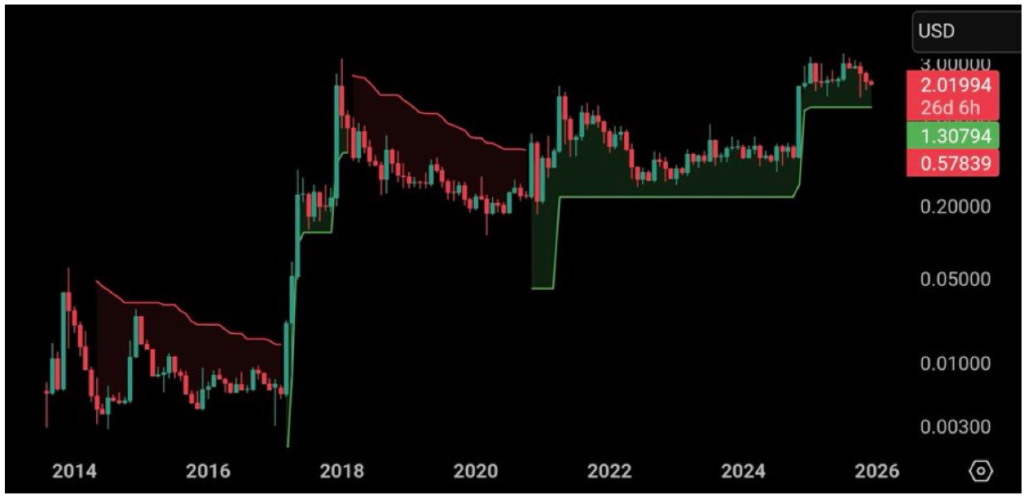
Crypto market analyst ChartNerd has released a fresh technical analysis of XRP, suggesting that the cryptocurrency continues to show strong positive signals. According to him, XRP’s monthly SuperTrend remains firmly bullish. He emphasized that maintaining a price above the green SuperTrend line near $1.30 signals a long-term upward trajectory, with no red trends currently indicating the onset of a bear market.
ChartNerd shared a chart with a SuperTrend overlay where green lines represent bullish conditions and red lines highlight previous bear markets. The current monthly candles for XRP remain well above the green zone, reinforcing the belief that broader market conditions favor an upside. The analyst interprets this as confirmation that XRP’s long-term price trend is still predominantly bullish.
Historical data on the chart also indicate that past declines in XRP coincided with prolonged red SuperTrend phases. This happened before the big 2017 and 2020 breakout, with each recovery triggered once the price moved back above the green SuperTrend line.
Featured image from Unsplash, chart from TradingView
In remarks made on December 4, US Securities and Exchange Commission (SEC) Chair Paul Atkins expressed an optimistic outlook for the cryptocurrency industry. Atkins emphasized the SEC’s intent to modernize its rules to facilitate an on-chain market environment, leveraging distributed ledger technology and the tokenization of financial assets.
SEC Chair Advocates For Crypto Tokenization
Atkins highlighted the transformative potential of these technologies for the capital markets. He stressed that enhancing these markets is essential for US firms and investors to maintain their leadership on a global scale.
The chair underscored that the advancements in blockchain technology could streamline not only trading processes but also the entire issuer-investor relationship, which would enable a more efficient and transparent financial ecosystem.
Tokenization, according to Atkins, goes beyond merely changing the mechanics of trading. He pointed out that it can foster direct connections for various important functions such as proxy voting, dividend payments, and shareholder communications, all while reducing the reliance on multiple intermediaries.
In his address, Atkins acknowledged several innovative models that deserve consideration. He noted that some companies are directly issuing equity on public distributed ledgers in the form of programmable assets.
These assets can integrate compliance features, voting rights, and governance capabilities, allowing investors to hold securities in a digital format that promotes transparency and reduces the number of intermediaries involved.
Additionally, he mentioned that third parties are engaging in the tokenization of equities by generating on-chain security entitlements that represent ownership stakes in traditional equities.
The emergence of synthetic exposures—tokenized products designed to reflect the performance of public equities—was also highlighted. While many of these offerings are currently being developed offshore, they showcase the international interest in US market exposure supported by distributed ledger technology.
Atkins Critiques Past SEC Strategies
However, Atkins cautioned that transitioning to on-chain capital markets entails more than just issuance. He stated that it is essential to address various stages of the securities transaction lifecycle effectively.
For instance, if tokenized shares cannot be traded competitively in liquid on-chain environments, they risk becoming little more than conceptual assets without practical utility.
The chair also criticized the previous SEC’s approach toward the crypto industry under the agency’s former chair Gary Gensler, which attempted to adapt to on-chain markets through an expansive redefinition of “exchange.”
This earlier strategy enforced a broad regulatory framework that ultimately created uncertainty and stifled innovation, Atkins stated. He said that it is vital to avoid repeating such mistakes in order to stimulate innovation, investment, and job creation in the United States.
To foster a conducive environment for growth, Atkins called for compliant pathways that can enable market participants to capitalize on the unique benefits of new technologies like crypto.
In light of this conviction, he has instructed SEC staff to explore recommendations for utilizing the agency’s exemptive authorities, permitting on-chain innovations while the Commission works toward developing long-term, effective crypto regulatory frameworks.
Featured image from DALL-E, chart from TradingView.com
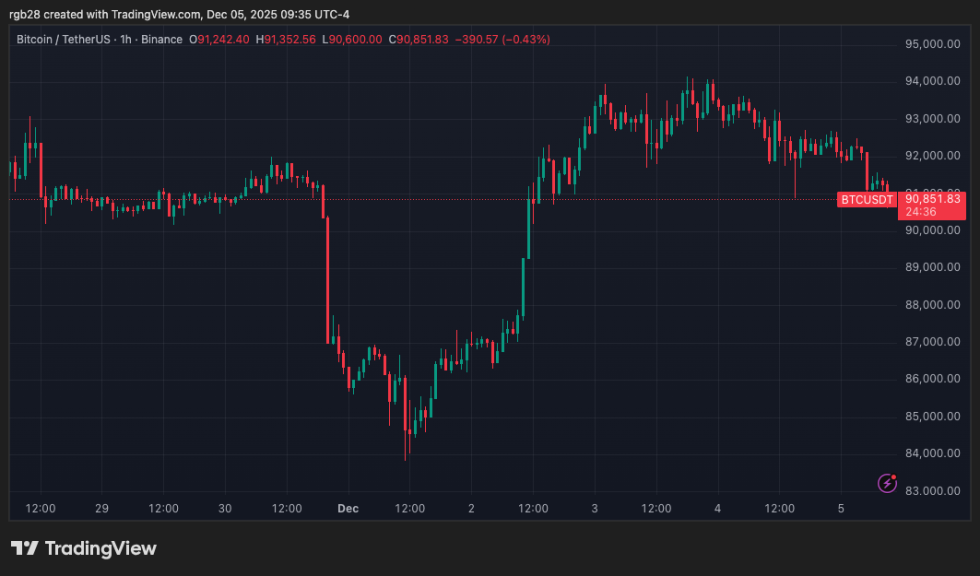
The cryptocurrency market experienced another wave of liquidations on Friday, with Bitcoin (BTC) prices dipping below the critical support level of $90,000. This decline followed a brief rally that had seen its price rise approximately $3,000 above this threshold earlier in the week.
Crypto Market Faces $430 Million In Liquidations
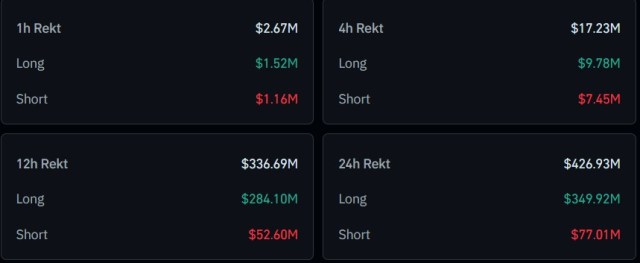
Data from CoinGlass reveals that nearly $430 million in liquidations occurred across the crypto market over the past 24 hours, predominantly affecting leveraged long positions, which accounted for about $350 million.
During this period, Bitcoin underwent a 3.5% retracement, with its price settling at just above $89,120—a stark 29% below its all-time high of over $126,000 reached in October.
Market expert OxNobler recently highlighted the role of both retail and institutional investors in this downturn. In a post on social media platform X, OxNobler detailed the reason behind Bitcoin’s decline: significant sell-offs by major players.
According to the analyst, the world’s largest cryptocurrency exchange, Binance, sold 4,000 BTC; U.S.-based Coinbase (COIN) liquidated 5,675 BTC; and traditional finance giant Fidelity sold 3,288 BTC. Additionally, market maker Wintermute offloaded 1,793 BTC.
Notably, the analyst pointed out that Strategy, formerly MicroStrategy, which is the largest public company holder of Bitcoin with over 650,000 coins, has also sold over 3,820 coins in this same time frame.
The firm’s sell-off comes on the heels of speculation regarding Strategy’s potential to liquidate some of its holdings due to the substantial losses affecting its financial performance amid declining Bitcoin prices.
When Strategy CEO Phong Le was questioned about the possibility of selling off Bitcoin, he acknowledged that while the firm’s former CEO, Michael Saylor, has consistently opposed selling, circumstances may change if the company’s stock trades below the net value of its Bitcoin holdings, which aligns with the recent actions taken by the firm.
Coinbase Analysts Predict December Recovery
Interestingly, while these institutional sell-offs have contributed to the current market dip, Coinbase’s institutional division has projected a potential recovery for the crypto market in December, citing improving liquidity, a 92% probability of the Federal Reserve (Fed) cutting rates, and supportive macroeconomic conditions.
Analysts have pointed out several reasons for optimism, including the recovery of liquidity, the resilience of the “AI bubble,” and the attractiveness of short US dollar trades at current levels.
However, OxNobler warned that the situation may not be so straightforward. Alongside the activities of major institutions, he noted that BlackRock, the world’s largest asset manager, had recently sold $130 million worth of Bitcoin and Ethereum (ETH).
Furthermore, Vitalik Buterin, one of Ethereum’s co-founders, seems to have resumed selling Ethereum, with millions of ETH being moved from the foundation’s wallet through Gnosis Safe.
Ultimately, OxNobler asserts that these institutional activities may have a hand in manipulating crypto prices and preventing them from climbing to higher levels and key resistance points.
Featured image from DALL-E, chart from TradingView.com
Reports have disclosed that some extremely wealthy family offices are adding XRP to their holdings, a move that market watchers say could influence demand for the token.
According to Jake Claver, CEO of Digital Ascension Group, a close contact overheard members of an affluent family tied to a major US food brand discussing sizable XRP positions while being driven from Disney World to their hotel in Orlando. Claver also said he has spoken with several large family offices that are making allocations into XRP.
Billionaire Interest And Anecdotal Claims
Claver said many of these investors are not looking for quick gains but for ways to preserve capital over the long run. He said only 38% of global family offices are even considering crypto exposure today, and that some of the families he has spoken with are now exploring XRP as part of a hedge.
Claver emphasized a mindset common among long-term investors: “You should only have to get rich once,” he said, describing how some families build a steady core position surrounded by diversification.
ETF Inflows And Market Numbers
Based on reports, the new XRP exchange-traded funds have pulled substantial supply from exchanges and OTC desks since launch. Over 400 million XRP have been taken up by ETFs, and inflows have topped $887 million with total assets above $906 million as of Wednesday.
Some sources count these moves within nine days of launch; others reference a 15-day window, which suggests reporting on timing has varied. Price action has stayed fairly steady near $2, but many traders are watching whether ETF demand eventually pressures that level.
Record-Breaking XRP Velocity: A Surge in On-Chain Activity
“Such a surge typically signifies high liquidity and substantial involvement from traders or significant movements by whales.” – By @CryptoOnchain
Blockchain data shows there are roughly 7 million XRP wallets, and about half of those hold fewer than one hundred XRP. That concentration of ownership is being pointed to by some as a factor that could magnify price moves if larger buyers step in.
On December 2, the XRP Ledger’s velocity metric jumped to 0.0324, a yearly high according to CryptoQuant, driven by large transfers and heightened on-ledger circulation. Reports noted that several whales moved XRP at levels not seen earlier this year, a sign some big players may be repositioning.
What Investors And Observers Are Watching
Observers say the key things to monitor are ETF flows, on-chain metrics like velocity, and whether large family offices publicly disclose allocations. Ripple’s existing ties with certain banks and projects are often cited as part of the story for institutional adoption, though other platforms also aim at broad use by banks.
For now, the picture mixes solid market activity — including ETF inflows and a jump in velocity — with ongoing chatter about billionaire buying. The market signals suggest growing institutional interest, while the family-office stories add another layer to how people are interpreting the trend.
Featured image from Unsplash, chart from TradingView
Today we will be discussing…Jake Claver discusses how billionaires are strategically investing in XRP as a hedge against potential financial instability, als...
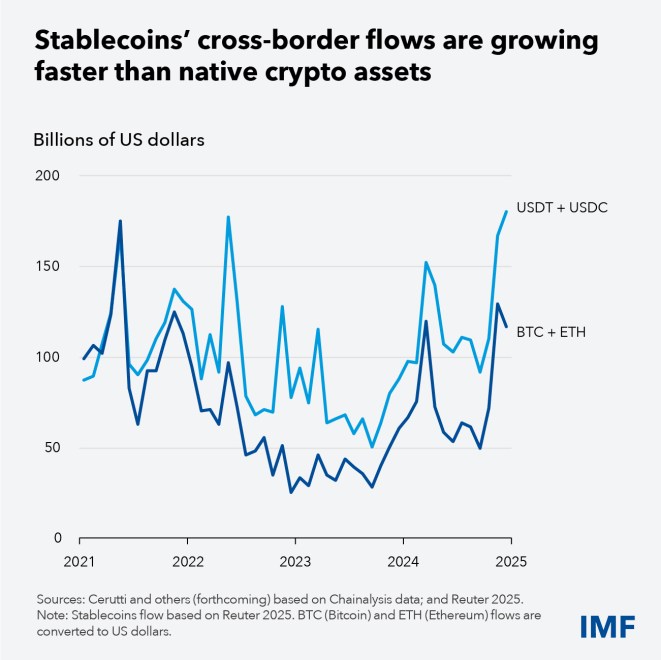
As stablecoins continue to gain worldwide momentum, the International Monetary Fund (IMF) has called for global cooperation to avert potential macro financial stability risks related to the rapidly growing sector and to turn the industry “into a force for good.”
Stablecoins To Foster Innovation, Financial Inclusion
On Thursday, the IMF released a 56-page report discussing the growing influence of stablecoins, their potential use cases in mainstream financial markets, and the risks associated with the sector’s varying oversight.
Amid the sector’s rapid growth, the organization highlighted that the two largest stablecoins, USDT and USDC, have tripled their market capitalization since 2023, reaching a combined $260 billion. Meanwhile, their trading volume has increased by around 90% to $23 trillion in 2024, with Asia surpassing North America in stablecoin activity volume.
The IMF noted two major potential benefits from stablecoins. First, they could enable faster and cheaper cross-border payments, especially for remittances, which can cost 20% of the amount being sent and face some delays.
However, “being a single source of information, blockchains can greatly simplify the processes linked with cross-border payments and reduce costs,” the Fund’s economists explained in a blog post.
Second, stablecoins could expand financial access, driving innovation by increasing competition with established payment service providers, therefore, making retail digital payments more accessible to underserved customers.
They could facilitate digital payments in areas where it is costly or not profitable for banks to serve customers. Many developing countries are already leapfrogging traditional banking with the expansion of mobile phones and different forms of digital and tokenized money.
Notably, competition with already established providers could lower costs and lead to enhanced product diversity, “leveraging synergies between digital payments and other digital services.”
IMF Warns Of Fragmented Oversight
Despite their potential benefits, stablecoins also carry significant risks, the IMF explained, including de-pegging and collapsing if the underlying assets lose value or if users lose confidence in the ability to cash out. Per the report, this could also trigger fire sales of the reserve assets and disrupt financial markets.
Stablecoins could also accelerate a “currency substitution” dynamic, where individuals and companies abandon their national currency in favor of a foreign one, like US dollars or euros, due to instability or high inflation.
The organization noted that the dynamic decreases a country’s central bank’s ability to control its monetary policy and serve as the lender of last resort, damaging the financial sovereignty of affected nations.
In addition, the potential to reduce cross-border frictions and make faster and cheaper transactions could be undermined by a lack of interoperability if various networks are unable to connect or are restricted by different regulations and other hurdles.
“Stablecoin regulation is in its infancy, so the ability to mitigate these risks remains uneven across countries,” the organization affirmed, noting that “the IMF and the Financial Stability Board have issued recommendations to safeguard against currency substitution, maintain capital flow controls, address fiscal risks, ensure clear legal treatment and robust regulation, implement financial integrity standards, and strengthen global cooperation.”
As reported by Bitcoinist, the FSB vowed in October to address the evolving threats from private finance and the growing use of stablecoins, promising to increase the global watchdog’s policy response and overhaul its surveillance system to make it more flexible and quicker.
Nonetheless, major jurisdictions have taken different stances in key areas, as the IMF detailed, which could result in the exploitation of gaps between jurisdictions and issuers to locate where oversight is weaker.
All this underscores the need for strong international cooperation to mitigate macrofinancial and spillover risks (…). Tokenization and stablecoins are here to stay. But their future adoption and the outlook for this technology are still mostly unknown.
The organization concluded that “improving the existing global financial infrastructure might be easier than replacing it. Achieving the best possible balance will require close cooperation among policymakers, regulators, and the private sector.”
Coinbase (COIN), the largest cryptocurrency exchange in the US, has experienced a significant decline in its stock valuation, dropping nearly 40% from its peak of $444 in July to its current trading level of around $271 per share. This, amid market fluctuations and heightened volatility in the broader crypto market, impacting the exchange’s stock performance.
Bernstein Forecasts New Bullish Phase For Coinbase
Despite these challenges, analysts at Bernstein hold an optimistic outlook on Coinbase’s stock price, suggesting a potential new bullish phase that could propel COIN to surpass previous all-time highs and reach levels above $500.
Bernstein maintains a price target of $510 on Coinbase, underlining the exchange’s shift from a trading-centric platform to what analysts dub an emerging “everything exchange.”
Analysts led by Gautam Chhugani highlighted the delicate market conditions, citing crypto price fluctuations influencing listed crypto-exposed equities.
However, Bernstein distinguishes the current market environment from past crypto downturns, noting that speculative excess primarily affects what they refer to as “MSTR copycats,” referencing Strategy’s (previously MicroStrategy) stock performance.
Central to Bernstein’s bullish thesis is Coinbase’s strategic diversification away from volatile spot trading revenue. They assert that exchange is evolving into a comprehensive financial platform.
The analysts emphasize that clearer regulatory guidelines in the US could drive a revaluation of these business lines, bridging the gap with offshore competitors benefiting from faster token listings and fundraising fees.
Coinbase’s foray into token issuance through a launchpad-style model, exemplified by Monad’s (MON) recent listing, demonstrates growing market interest. Bernstein notes that these launches, directly influencing trading activity, can stimulate a cycle of issuance, listing, and heightened trading volume.
Confident Ratings For COIN
Looking ahead, one of the exchange’s most notable catalysts is the upcoming product showcase on December 17, anticipated to unveil developments in tokenized equities, prediction markets, and other tools expanding the exchange’s offerings beyond spot crypto trading.
The integration with Deribit is also expected to further bolster Coinbase’s derivatives expansion, positioning the exchange closer to platforms like Robinhood as both entities diversify their product offerings.
On the consumer front, the exchange’s Base app, focusing on wallet services, payments, and social features, acts as a centralized access point for the broader token markets, reaffirming the analysts’ bullish predictions.
Bernstein’s reaffirmed “Buy” rating on Coinbase with a massive $510 price target underscores the firm’s confidence in COIN’s growth trajectory. Monness Crespi’s recent upgrade from “Neutral” to “Buy” with a $375 target further adds to the bullish sentiment surrounding the stock’s valuation amid falling prices.
Featured image from DALL-E, chart from TradingView.com
Many in the crypto space have echoed a familiar sentiment over recent months: “The four-year crypto market cycle is dead.” Experts from the Bull Theory assert that while the four-year cycle may have come to an end, the Bitcoin bull run itself is merely delayed and could stretch until 2027.
Why The Four-Year Cycle May Be Ending
In a recent post on social media platform X, formerly known as Twitter, the Bull Theory analysts noted that the concept of Bitcoin adhering to a neat four-year cycle is weakening.
They highlighted that significant price movements over the last decade weren’t solely driven by Halving events; rather, they were influenced by shifts in global liquidity.
The analysts pointed to the current landscape of stablecoin liquidity, which remains high despite recent downturns, indicating that larger investors are still engaged in the market, poised to invest when appropriate macroeconomic conditions arise.
In the US, Treasury policies are emerging as pivotal catalysts. The recent buybacks are notable, but the analysts emphasize that the larger narrative lies in the Treasury General Account (TGA) balance, which is currently around $940 billion—almost $90 billion above its normal range.
This surplus cash is likely to flow back into the financial system, enhancing financing conditions and adding liquidity that typically gravitates toward risk assets.
Globally, the trends appear even more promising. China has been injecting liquidity for several months, while Japan recently announced a stimulus package worth approximately $135 billion, alongside efforts to simplify cryptocurrency regulations.
Canada is also moving toward easing its monetary policy, and the US Federal Reserve (Fed) has officially halted its quantitative tightening (QT) measures—a historical precursor to some form of liquidity expansion.
Political And Monetary Factors Align To Create Bullish Condition
The analysts explained that when major economies adopt expansive monetary policies simultaneously, risk assets like Bitcoin tend to respond more rapidly than traditional stocks or broader markets.
Additionally, potential policy tools, such as the Supplementary Leverage Ratio (SLR) exemption—implemented in 2020 to allow banks more flexibility in expanding their balance sheets—could return, resulting in increased credit creation and overall market liquidity.
There is also a political dimension to consider. President Trump has discussed potential tax reforms, including abolishing income tax and distributing $2,000 tariff dividends.
Furthermore, the likelihood of a new Federal Reserve chair who supports liquidity assistance and is constructive toward cryptocurrency could bolster conditions for economic growth.
Extended Bitcoin Uptrend
Historically, whenever the Institute for Supply Management’s Purchasing Managers’ Index (ISM PMI) surpasses 55, it has been followed by periods of altcoin season. The probability of this occurring in 2026 appears high, according to the Bull Theory.
The convergence of rising stablecoin liquidity, the Treasury’s injection of cash back into markets, global quantitative easing, the cessation of QT in the US, potential bank-lending relief, pro-market policy shifts in 2026, and major players entering the crypto sector suggests a very different scenario than the old four-year halving model.
The analysts concluded that if liquidity expands concurrently across the US, Japan, China, Canada, and other significant economies, Bitcoin is unlikely to move counter to that trend.
Therefore, rather than experiencing a sharp rally followed by a prolonged bear market, the current environment indicates a more extended and broader uptrend that could span through 2026 and into 2027.
Featured image from DALL-E, chart from TradingView.com
Do Kwon, the troubled co-founder of Terraform Labs based in Singapore, is facing a possible 12-year prison sentence in the United States due to his role in the collapse of the TerraUSD stablecoin, which resulted in significant losses within the cryptocurrency market.
Do Kwon Seeks Reduced Sentence Of Five Years
Bloomberg reported that in a court filing late Thursday, US prosecutors described the Terraform Labs co-founder’s fraudulent actions as “colossal in scope.”
They emphasized that his “misleading statements to customers” triggered a domino effect of crises across the crypto landscape, culminating in the downfall of notable entities such as Sam Bankman-Fried’s FTX.
This comes amid a regulatory environment that has grown increasingly lenient under the Trump administration. In late October, President Trump pardoned Binance founder Changpeng Zhao (CZ), who had been convicted for failing to uphold proper anti-money laundering measures.
In a recent court filing, Terraform Labs co-founder expressed a desire for a reduced sentence of five years. His legal team asserted that he has already “suffered substantially” for his actions, noting that he has spent nearly three years in detention conditions described as “brutal” in Montenegro.
Kwon’s lawyers argued that a five-year prison term would be sufficient and that the prosecutors’ recommendation of 12 years is “far greater than necessary” for justice to be served.
Potential For Sentence Transfer For Terraform Labs Co-Founder
Initially, Kwon pleaded not guilty in January to a nine-count indictment that charged him with securities fraud, wire fraud, commodities fraud, and conspiracy to commit money laundering. However, he changed his plea in August to guilty for conspiracy to defraud and wire fraud.
During this change, Terraform Labs’ leader acknowledged that his actions included making “false and misleading statements” regarding the restoration of TerraUSD’s peg in 2021, admitting, “What I did was wrong.”
As part of his plea agreement, Kwon has consented to forfeit $19.3 million and some properties. Prosecutors have chosen not to demand restitution for the millions of investors who collectively lost $40 billion, citing that calculating individual losses would be too complicated.
Kwon faces charges in both the US and his native South Korea, where prosecutors are also pursuing a lengthy prison sentence potentially reaching up to 40 years.
He was arrested in Montenegro in 2023 while using a fake passport, and following a protracted legal battle, he was extradited to the United States in January after spending nearly two years in a Balkan jail.
US prosecutors have indicated they would support Kwon’s opportunity to serve the second half of his sentence in South Korea, provided he adheres to the terms of his plea deal and qualifies for a transfer program. Kwon is scheduled for sentencing by US District Judge Paul Engelmayer on December 11.
When writing, Terraform Labs’ native token Luna Classic (LUNC) saw a 75% increase in response to Do Kwon’s probable sentence, trading at $0.000050 and placing it at the helm of the market’s top performers on Friday.
Featured image from DALL-E, chart from TradingView.com
The anticipated crypto market structure bill, or namely the CLARITY Act, designed to provide essential regulatory clarity for digital assets in the United States, is approaching critical dates in the Senate. However, it faces significant complexities related to stablecoin yield, conflicts of interest, and decentralized finance (DeFi).
Senate Divided On Crypto Market Structure Bill
Legal expert and Chief Legal Officer of Variant Jake Chervinsky, reports that the Senate is divided into two committees: Banking, which is handling the securities law aspect, and Agriculture, responsible for the commodities law portion.
Both committees have published drafts of their work this fall, with the next step being markup, a process where hearings will be held to vote on amendments before sending the bill to the Senate floor for a full vote.
However, both committees are cautious and are unlikely to proceed with markup until they resolve ongoing disputes. Among these, three significant issues stand out.
The first major concern involves stablecoin yield. In the GENIUS Act, banks lobbied for a prohibition on interest payments, meaning stablecoin issuers cannot offer holders any form of interest or yield.
While the current prohibition prevents direct yield payments to holders, it does not address non-yield rewards or yield provided by third parties. Banks consider this gap a “loophole” and are advocating for broader restrictions to be included in the market structure bill.
Conflicts Of Interest And DeFi Regulations Stall Progress
The second issue revolves around conflicts of interest. Some Democratic senators have indicated they would not support the market structure legislation unless it includes provisions that restrict the President’s family from conducting business in the crypto space.
The third and perhaps most crucial issue pertains to DeFi. It is important to note that market structure legislation primarily addresses centralized platforms that exercise custody over user funds and transactions.
Chervinsky believes the bill should primarily focus on protecting DeFi, but traditional finance (TradFi) stakeholders have been pushing Congress to categorize virtually all entities in the crypto sector—developers, validators, and others—as intermediaries.
The expert emphasized that the success of any market structure bill hinges on ensuring robust protections for developers since the viability of the crypto industry relies on their contributions.
Given the intricate nature of these issues and the swiftly approaching holiday break, Chervinsky noted that it is possible that discussions about market structure could extend into January.
Senate Markup Set For December 17-18
Market analyst MartyParty provided another update on December 4, indicating that the bipartisan Digital Asset Market Structure Bill is gaining significant momentum in Congress, with a markup session in the Senate Banking Committee tentatively scheduled for December 17-18, just before the holiday recess
If successfully passed, he states that the bill could establish clearer pathways for tokenized real-world assets (RWAs) and mitigate “debanking” risks, paving the way for compliant exchanges and potentially stimulating market volumes following the Commodity Futures Trading Commission (CFTC) approvals for spot crypto trading.
This “regulatory convergence” is seen as a catalyst that could drive liquidity and energize the next bull market, reinforcing President Trump’s vision for the US to emerge as the “crypto capital of the world.”
Featured image from DALL-E, chart from TradingView.com
Despite the Bitcoin price recovery above the crucial $90,000 threshold—a level that has historically served as a supportive floor for the cryptocurrency—the market is exhibiting signs that a further correction may be imminent.
Bitcoin Price Recovery At Risk?
Market expert Rekt Fencer recently shared insights on social media platform X, formerly known as Twitter, suggesting that the Bitcoin price might be forming what he calls a “massive bull trap.”
This term refers to a deceptive bullish signal in which the price briefly surpasses a resistance level, in this case, the $90,000 mark, only to reverse into a decline. Such movements can entrap investors who bought in during the peak, leading to significant losses.
Fencer pointed out a troubling pattern reminiscent of early 2022 when Bitcoin reclaimed its 50-week moving average (MA)—currently positioned above $102,300—before experiencing a severe decline of roughly 60%, plummeting below $20,000 by June of that year.
He indicated that the recent price recovery following major drops to $84,000 should not be interpreted as a signal of near-term success, especially since the Bitcoin price is currently trading under the 50-week MA.
If historical trends repeat, this could mean that Bitcoin might see a significant drop, potentially reaching around $36,200, which could potentially represent the low point of the bearish cycle for the cryptocurrency. On the other hand, there are analysts who retain a bullish outlook.
BTC Bottom In Sight?
Market researcher and analyst Miles Deutscher expressed a confident sentiment, stating he believes there is a 91.5% likelihood that the Bitcoin price has hit its bottom, based on his analysis of key developments.
He noted that recent weeks have been dominated by negative news stories, including concerns surrounding Tether (USDT) and the implications of China’s actions on crypto, which he asserts often mark local price bottoms.
Moreover, Deutscher pointed out a shift in market flows from predominantly bearish to bullish. He explained that the trading environment has recently seen a resurgence in buying momentum, with large investors, or “OG whales,” ceasing their selling. This change has been reflected in the order books, indicating a possible stabilization in market sentiment.
Additionally, the liquidity landscape appears to be shifting, with market conditions tightening in recent months. The potential appointment of a new Federal Reserve chair known for dovish policies, coupled with the official end of quantitative tightening (QT), could further influence market dynamics in favor of buyers.
Deutscher concluded by emphasizing that given the extreme levels of fear, uncertainty, and doubt (FUD) in the market, combined with improvements in trading flows, he believes that the odds favor the notion that the Bitcoin price has indeed reached its bottom.
Featured image from DALL-E, chart from TradingView.com
Meta Platforms Inc. shares climbed after reports that the company is weighing deep reductions to the budget behind its metaverse projects. Investors pushed the stock higher as traders reacted to the possibility that one of the company’s most costly bets could be scaled back.
Metaverse Budget Faces A Major Trim
Based on reports from Bloomberg and Reuters, Meta is considering cuts of up to 30% to the unit that builds its virtual reality and metaverse products, a move tied to planning for the company’s 2026 budget. The change would mainly affect Reality Labs, the division that makes Quest headsets and Horizon virtual spaces.
Reality Labs Has Been Losing Billions
Reality Labs has posted heavy losses since 2020. Reports put the total at more than $60 billion and, by some counts, closer to $70 billion in cumulative losses over recent years. Those sums have kept pressure on management to rethink where the company puts its money.
Investors Reward A Smaller Bet
The market response was swift. Meta’s share price jumped roughly 4%, and some outlets calculated that the move added about $69 billion to the company’s market value as traders reacted positively to a pullback from costly metaverse spending. That reaction signals investors prefer money steered toward projects with clearer near-term returns.
Layoffs Could Follow Early Next Year
Reports have warned that the cuts could bring staff reductions inside Reality Labs, with layoffs possibly starting as early as January 2026. Company leaders reportedly discussed budget scenarios during recent planning meetings. Any job cuts would mark a sharp change after years of heavy investment in virtual reality and related software.
A Bigger Push Toward AI And Wearables
At the same time, Meta has been moving money into artificial intelligence and related hardware. The company finalized a multibillion-dollar deal this year to take a large stake in Scale AI — a pact reported at roughly $14 billion for a near-half ownership — and then hired talent from that startup to help run a new AI effort. That tradeoff shows where Meta’s priorities now lie.
What This Means For Users And Competitors
For people who own or use Meta’s VR gear, this does not mean every project will end. But several initiatives could see slower progress and smaller teams. For rivals and suppliers in the AR/VR space, the cut may reshape who wins short-term device and platform business.
Analysts say the move narrows one major uncertainty for Meta while opening another: how well the company can compete in AI after so many dollars flowed into virtual worlds.
Featured image from Unsplash, chart from TradingView
Crypto research firm Delphi Digital argues that global dollar liquidity has quietly flipped from a structural headwind to a marginal tailwind for risk assets for the first time since early 2022 – with 2026 emerging as the key inflection point for digital assets.
In a macro thread on X, Delphi says “the Fed’s rate path heading into next year is the clearest it’s been in years.” Futures imply another 25-basis-point cut by December 2025, taking the federal funds rate to roughly 3.5–3.75%. “The forward curve prices at least 3 more cuts through 2026, putting us in the low 3s by year-end if the path holds,” the firm notes.
Short-term benchmarks have already adjusted. According to Delphi, “SOFR and fed funds have drifted toward the high 3% range. Real rates have rolled over from their 2023–2024 peaks. But nothing has collapsed. This is a controlled descent rather than a pivot.” The characterization is important: this is not a return to zero rates, but a gradual easing that removes pressure on duration and high-beta assets.
The more consequential shift is in the liquidity plumbing. “QT ends on December 1. The TGA is set to draw down rather than refill. The RRP has been fully depleted,” Delphi writes. “Together, these create the first net positive liquidity environment since early 2022.”
Crypto Bulls Can Rejoice As The Macro Regime Is Shifting
In a follow-up post, the firm is explicit: “The Fed’s liquidity buffer is gone. Reverse Repo Balances collapsed from over $2 trillion at the peak to practically zero.” In 2023, a swollen RRP allowed the Treasury to refill its General Account without directly draining bank reserves, because money-market funds could absorb issuance out of the RRP. “With the RRP now at the floor, that buffer no longer exists,” Delphi warns.
From here, “any future Treasury issuance or TGA rebuild has to come directly out of bank reserves.” That forces a policy choice. As Delphi puts it, “The Fed is left with two options: let reserves drift lower and risk another repo spike or expand the balance sheet to provide liquidity directly. Given how badly 2019 went, the second path is far more likely.”
In that scenario, the central bank would shift from shrinking its balance sheet to adding reserves, reversing a core dynamic of the past two years. “Combined with QT ending and the TGA set to draw down, marginal liquidity is turning net positive for the first time since early 2022,” Delphi concludes. “A key headwind for crypto could be fading.”
For the crypto market, the firm frames 2026 as the pivotal year: “2026 is the year policy stops being a headwind and becomes a mild tailwind. The kind that favors duration, large caps, gold, and digital assets with structural demand behind them.”
Rather than calling for an immediate price spike, Delphi’s thesis is that the macro regime is shifting toward a more supportive, liquidity-positive backdrop for Bitcoin and larger crypto assets as policy eases and the era of aggressive balance-sheet contraction comes to an end.
At press time, the total crypto market cap was at $3.1 trillion.
Bitcoin’s settlement layer remains dominant, but slow throughput, high fees, and limited programmability leave a gap for scalable, low‑cost transactional use cases.
Users increasingly want $BTC to do more than sit in cold storage, demanding native access to DeFi, payments, and gaming without fully leaving Bitcoin’s security model.
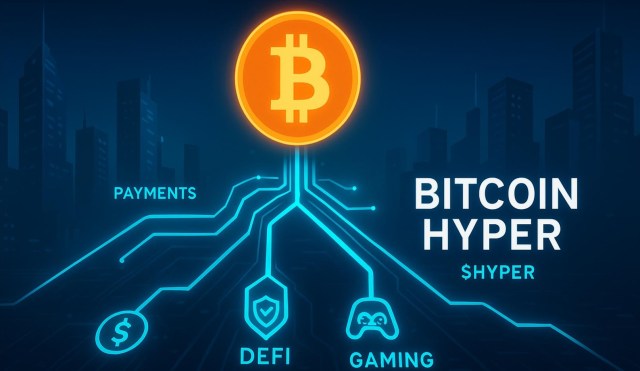
Bitcoin Hyper introduces a Bitcoin Layer 2 with SVM integration, targeting Solana‑level performance and bringing fast smart contracts and low‑fee wrapped $BTC payments.
The $HYPER presale raised over $29M so far and targets a 2026 price point of $0.20 for an ROI of 1,395%.
Bitcoin’s dominance narrative has shifted in 2025. You still have the most battle-tested asset in the market, but native yield, DeFi, and gaming are happening elsewhere, mostly on Solana and Ethereum rollups.
That leaves a huge gap between Bitcoin’s trillion‑dollar base and what you can actually do with your $BTC day to day.
At the same time, Bitcoin Layer 2 experiments are accelerating. From ordinals to various sidechains, everyone is trying to bolt programmability and low fees onto Bitcoin’s settlement layer. The problem: most solutions either compromise on speed, fragment liquidity, or feel like foreign chains with a Bitcoin logo glued on top.
This is the gap Bitcoin Hyper ($HYPER) is aiming at. The project pitches a Bitcoin-native Layer 2 that integrates the Solana Virtual Machine (SVM), bringing Solana-style throughput and sub-cent fees to $BTC holders.
Instead of watching other ecosystems farm yields and play on-chain games, you get a way to put your Bitcoin to work without abandoning its security umbrella.
That pitch is clearly resonating.
The Bitcoin Hyper presale has already pulled in over $29M, with tokens priced at $0.013375 and a lot of long-term potential.
Bitcoin Hyper Brings SVM Speed To Bitcoin’s Capital Base
Bitcoin Hyper ($HYPER) positions itself as a Bitcoin Layer 2 engineered for one thing: turning idle BTC into a productive asset across payments, DeFi, NFTs, and gaming. By integrating SVM, it aims to deliver Solana‑style high‑throughput smart contracts directly on a Layer 2 anchored to Bitcoin’s settlement layer.
In practice, that means you could send wrapped $BTC payments with near‑instant confirmation and low fees, use $BTC as collateral in lending and staking protocols, or play high‑frequency on‑chain games without touching a separate EVM ecosystem.
In other words, you’re getting a faster, cheaper, and more scalable Bitcoin ecosystem with more appeal to institutional and retail investors.
For developers, Bitcoin Hyper ($HYPER) offers an SVM‑compatible environment with Rust‑based SDKs and APIs, plus support for modified SPL‑style tokens on the Layer 2. That gives you familiar Solana tooling while tapping into Bitcoin’s liquidity and brand trust.
The presale’s $29M haul suggests builders and users see serious demand for a Bitcoin‑secured, high‑performance execution layer.
As Bitcoin’s monetary narrative collides with users’ desire for real on‑chain utility, projects that bridge the gap between security and speed stand out.
Bitcoin Hyper is positioning itself as that bridge, aiming to channel Bitcoin’s capital into high‑throughput payments, DeFi, NFTs, and gaming without forcing you to abandon $BTC as your base asset.
If Bitcoin Hyper ($HYPER) captures 5% of the Bitcoin DeFi and utility market, $HYPER could see a strong post-launch pump.
A realistic price prediction for $HYPER considers a potential 2026 price point of $0.20 and an ROI of 1,395% if the market remains positive. Long-term, $HYPER could push to $1.50 by 2030 or higher, delivering a five-year return of 11,115%.
For you as a $BTC holder, the opportunity is straightforward: a chance to plug into a Bitcoin‑secured Layer 2 that actually feels fast enough for modern DeFi and gaming use cases.
As more apps launch on SVM and wrapped $BTC liquidity deepens, early exposure to $HYPER could be a leveraged bet on Bitcoin’s long‑awaited utility phase.
The presale is now at over $29M and targets a release window between Q4 2025 and Q1 2026, so time isn’t your best friend; if you want in, the earlier, the better.
If you believe the next cycle rewards Bitcoin utility rather than just passive holding, it may be worth watching how this Layer 2 evolves as the presale finishes and mainnet activity begins.
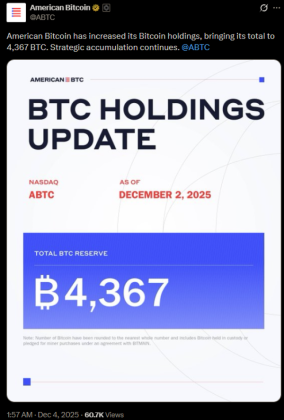
Trump Jr.’s American Bitcoin buys 363 $BTC, increasing its reserves to 4,367 Bitcoins, while in the middle of a full bear market.
Large players like American Bitcoin stacking hundreds of $BTC despite volatility reinforce Bitcoin as long‑term collateral and encourage multi‑year investment horizons.
PEPENODE ($PEPENODE) uses a Virtual Mining System to turn complex, hardware‑heavy mining into a gamified, meme‑native experience with stronger early incentives.
The $PEPENODE presale has reached over $2.2M so far and shows potential for an end-2026 ROI of 511%.
American Bitcoin, the mining firm backed by Donald Trump Jr., just added another 363 $BTC to its treasury, even as its stock whipsaws on public markets.
That is not a casual bet. At current prices, it represents millions of dollars in fresh exposure and a clear vote for long‑term Bitcoin accumulation.
For you as a retail investor, this kind of high‑conviction stacking matters because it signals how serious players are positioning for the next phase of the cycle. Instead of trading every headline, they are quietly building reserves and the infrastructure that will survive multiple halvings and macro shocks.
That infrastructure trend does not stop at miners and ETFs. It flows into on‑chain rails where users actually interact with crypto – from DeFi to gaming to the next generation of meme coins. If miners are locking in supply, on‑chain projects are where speculative upside and user growth can still compound.
This is exactly where PEPENODE ($PEPENODE), a ‘mine‑to‑earn’ meme coin on Ethereum, comes in. As capital rotates from pure Bitcoin beta into higher‑upside plays, projects that feel fun but still plug into on‑chain infrastructure narratives are getting more attention.
In this context, on‑chain ecosystems that capture user engagement early could end up as leveraged beneficiaries alongside the blue‑chip coins.
PEPENODE’s virtual mining model aims to catch that rotation with a lower‑friction way to ‘mine’ meme coins.
Every time a publicly visible player like American Bitcoin absorbs another 363 $BTC, it tightens the available float and reinforces the idea that $BTC is long‑term strategic collateral, not just a trade.
That mindset encourages other investors to think in multi‑year cycles instead of chasing intraday volatility.
When investors internalize that longer timeline, they tend to split their exposure. One bucket is ‘hard money’ like Bitcoin, often parked in ETFs or custodial products. The other bucket seeks higher upside: altcoins, infrastructure tokens and experimental sectors like mine‑to‑earn gaming or narrative‑driven meme coins.
The mine‑to‑earn niche is still early and relatively uncongested. Several projects are experimenting with simulated hashing, NFT miners or game‑based rewards, but most either copy old proof‑of‑work metaphors or bury users in complexity.
PEPENODE ($PEPENODE) is positioning itself as one option that wraps the idea in a straight‑up meme coin format while keeping the economic incentives front and center.
How PEPENODE Turns Mining Into a Meme-Native Game
What makes PEPENODE ($PEPENODE) stand out is its status as the first mine‑to‑earn memecoin, built as an ERC‑20 on Ethereum.
Instead of requiring hardware, hash rate or serious electricity bills, it uses a Virtual Mining System where you buy and customize Miner Nodes that simulate production and feed rewards back into the ecosystem.
That addresses three long‑standing pain points: boring mining models that feel like background infrastructure, weak early incentives, and the technical barrier of real rigs.
Here, early adopters can grab more powerful nodes with higher in‑game returns, turning ‘being early’ into a visible, gamified advantage on the dashboard once post‑TGE gameplay activates.
The presale has already raised over $2.27M, with $PEPENODE sitting at $0.0011778 at the time of writing, suggesting there is appetite for an approachable mining‑style meme narrative.
Based on the presale performance, $PEPENODE shows great post-launch potential.
Our price prediction for $PEPENODE sets a potential end-2026 target of $0.0072, for an ROI of 511%. By 2030, the coin could reach $0.0244, delivering a return rate of 1,971% to early adopters.
If you believe the big money stacking Bitcoin today is a prelude to a broader on‑chain expansion, mine‑to‑earn meme coins like $PEPENODE offer a way to express that thesis at the edge of the risk curve, where user behavior and meme coins can still rewrite the rules.
Stay Ahead with Our Timely Insights of Today’s Next Crypto to Explode
Check out our Live Next Crypto to Explode Updates for December 5, 2025!
Crypto is so unthinkably huge at the moment, a nearly $4 trillion industry that’s aiming for world domination.
Recent headlines talk of Circle and Mastercard planning to add USDC to global payment systems, Ethereum and Bitcoin treasuries in the billions of dollars, and Google building its own blockchain.
Bitcoin has an all-time growth of over 180,000,000%, Dogecoin over 43,000%, and some of the newest presale coins often pump 10x, 100x, or even 1,000x on rare occasions.
Explosive potential is probably the single best description for what we’re seeing today in crypto.
If you’re looking for the most recent insights on the next crypto to explode, stay tuned. We update this page frequently throughout the day, as we get the latest and greatest insider insights for chart sniffers and traders looking for the next coin to explode.
Disclaimer: Crypto is a high-risk investment, and you may lose your capital. Our content is informational only, and it does not constitute financial advice. We may earn affiliate commissions at no extra cost to you.
Strategy’s Relentless Bitcoin Hoard Turns Bitcoin Hyper Into the Next Crypto to Explode
December 5, 2025 • 10:00 UTC
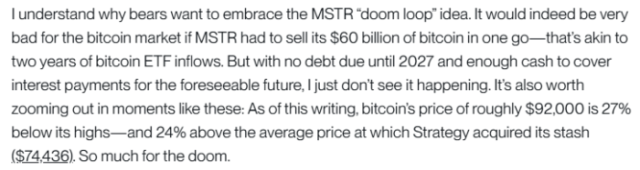
Strategy just reminded everyone how sticky corporate $BTC can be. The firm holds roughly $60B in $BTC, has $1.4B in cash, and no debt maturing until 2027, so it’s not being forced to dump coins after a 24.7% stock slide.
That’s what Matt Hougan, Bitwise’s CIO is saying, at least.
With $BTC trading around $92k, still about 24% above Strategy’s $74,4k cost basis, that stash behaves more like a long-term reserve than hot speculative supply.
When big treasuries treat $BTC as untouchable collateral, upside liquidity shifts to the surrounding ecosystem where throughput and fees actually matter.
Bitcoin Hyper ($HYPER) leans into that gap as a Bitcoin Layer-2 built on the Solana Virtual Machine, using a bridge so you can lock native $BTC and interact with DeFi and NFTs in seconds. Its native token $HYPER powers fees and staking, with optional burn mechanics that let holders tighten supply.
With $29M already raised at $0.013375 per token, you’re stepping into a network that’s past the untested-idea stage but still early in its lifecycle.
As Twenty One Capital Hits the NYSE, Bitcoin Hyper Lines Up as the Next Crypto to Explode
December 5, 2025 • 10:00 UTC
On December 9, 2025, Twenty One Capital starts trading on the NYSE under ticker XXI as the exchange’s largest dedicated Bitcoin treasury firm.
The company is merging with Cantor Equity Partners and debuting with more than 43k $BTC on its balance sheet, roughly $4B at current prices, which makes it the third-largest public Bitcoin holder behind Marathon’s 52k $BTC and Strategy’s 650k-coin stack. This pushes Bitcoin deeper into traditional equity portfolios rather than just ETF wrappers.
When balance-sheet $BTC moves onto Wall Street, on-chain demand tends to lag unless there is infrastructure that turns idle coins into productive liquidity. Bitcoin Hyper ($HYPER) targets that niche as the first Bitcoin Layer-2 built on the Solana Virtual Machine, with a bridge that wraps your $BTC for DeFi, NFTs, and payments.
Transaction fees are paid in $HYPER, and staking lets you share in network activity while burns can shrink circulating supply. With $29M already raised at a presale price of $0.013375, your risk is now mostly about adoption.
Twenty One Capital waits for its NYSE debut on December 9, with a $BTC treasury of 43.5K tokens, which ranks it third on the list of the largest Bitcoin treasuries, after Strategy and MARA.
Twenty One Capital’s NYSE debut underscores institutional Bitcoin demand, increasing the strategic relevance of scalable $BTC infrastructure like Bitcoin Hyper.
Bitcoin Hyper ($HYPER) will use a modular Bitcoin Layer-1 + SVM Layer-2 design to bring sub‑second, low‑fee smart contracts to the Bitcoin ecosystem.
PEPENODE’s ($PEPENODE) mine‑to‑earn structure turns meme coin speculation into a gamified virtual mining experience with tiered node rewards.
Twenty One Capital’s NYSE debut, with more than 43.5K $BTC on its balance sheet, is a watershed moment for institutional Bitcoin exposure.
Once it hits the public sphere, Twenty One Capital will be the largest Bitcoin holder listed on the NYSE. Twenty One capital is the third-largest public $BTC treasury company globally, after MARA and Strategy, which are both listed on the Nasdaq.
The takeaway is clear: if regulated equity vehicles are racing to accumulate $BTC, the infrastructure that can actually make Bitcoin capital productive is where the asymmetric upside sits. Layer-2 scaling, yield infrastructure, and stable settlement rails suddenly matter a lot more.
Here are three assets that sit neatly in that flow of capital: Bitcoin Hyper ($HYPER) as a hyper‑performance Bitcoin Layer-2; PEPENODE ($PEPENODE) as a speculative mine‑to‑earn meme coin riding the risk curve; and USDC ($USDC) as the settlement backbone tying it all together.
1. Bitcoin Hyper ($HYPER) – First Bitcoin Layer-2 With SVM
If listed treasuries are hoarding $BTC, the obvious next question is how to make that Bitcoin programmable. Bitcoin Hyper ($HYPER) positions itself as one of the fastest Bitcoin Layer-2s with Solana Virtual Machine (SVM) integration, aiming to deliver execution that outperforms Solana while anchoring security to the Bitcoin Layer-1.
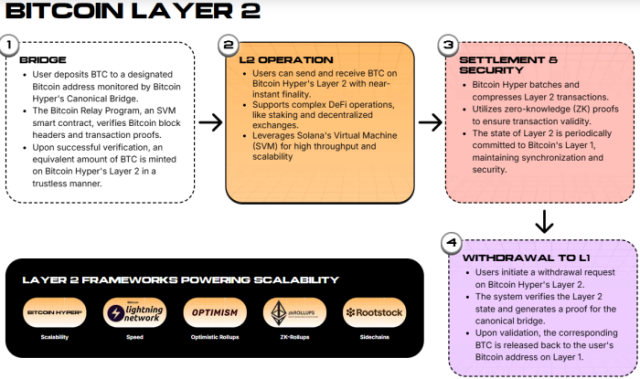
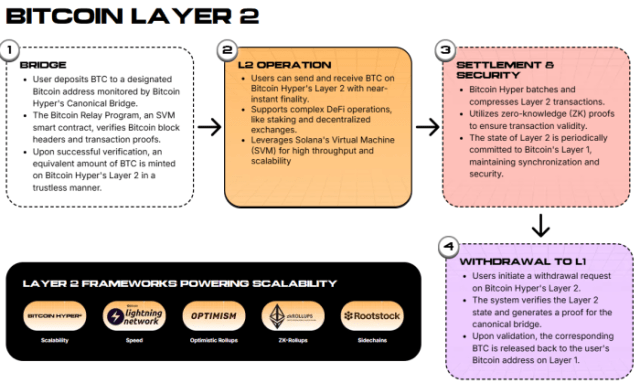
Instead of trying to jam smart contracts into Bitcoin’s base layer, Bitcoin Hyper will use a modular design: the Bitcoin Layer-1 will handle settlement and finality, while a real‑time SVM‑powered Layer-2 executes transactions at extremely low latency and low cost.
That opens the door to sub‑second confirmation times and fee levels closer to Solana‑style micro‑payments rather than congested Layer-1 Bitcoin fees.
On the programmability side, SVM compatibility means developers can deploy Rust‑based smart contracts, supporting SPL‑style tokens modified for this Layer-2. That makes it far easier for existing Solana‑native teams to port DeFi primitives, NFT collections, or gaming dApps into the Bitcoin ecosystem without rewriting their entire stack.
The Canonical Bridge is in charge of creating the wrapped Bitcoins, once the Bitcoin Relay Program confirms incoming transactions in record time.
The live presale has already passed the $29M milestone, an indication that $HYPER is clearly drawing institutional‑style speculation ahead of launch.
Right now, $HYPER costs $0.013375 per token, with staking at 40% APY. The project targets a release window between Q4 2025 and Q1 2026, so if you want to join the presale, read our guide to buying $HYPER before the clock runs out.
Based on the investor interest during the presale and the project’s utility proposition, we expect the token to experience a considerable post-launch surge once the initial dump settles.
Our price prediction for $HYPER puts the token at a potential $0.20 in 2026 for an ROI of 1,395%. 2030 could push it to $1.50 once the project starts seeing mainstream support with return rates of $11,115%.
If these predictions check, $HYPER could become one of the best crypto to buy in 2026 and beyond.
While Bitcoin Hyper targets infrastructure, PEPENODE ($PEPENODE) leans into speculation and gamification as the self‑proclaimed world’s first mine‑to‑earn memecoin.
Instead of traditional staking or liquidity mining, users participate in a virtual mining system where node ownership and activity determine reward tiers.
This ‘tiered node rewards’ model turns what would usually be passive holding into an interactive experience. Users scale up their node exposure to climb the rewards ladder, while a gamified dashboard visualizes mining progress, earnings, and competition with other participants.
It’s a meme coin, but with a pseudo‑operational layer of simulated infrastructure underneath.
From a capital‑flow perspective, PEPENODE offers a higher‑beta play that can benefit when Bitcoin strength and institutional headlines pull liquidity further out the risk curve.
The presale has already raised over $2.2M, leaving room for upside if the mine‑to‑earn mechanic gains traction with retail.
Currently at $0.0011778, the PEPENODE presale offers a dynamic staking APY of 570%. Our guide to buying $PEPENODE explains how to join the presale.
If the marriage between the coin’s meme value and its on-chain utility works, we could see it pump post launch. A fair price prediction for $PEPENODE hints at a potential target of $0.0072 in 2026. Make that $0.0244 by 2030, once the mainstream market starts taking notice.
In terms of profit, think ROIs of 511% and 1,971% respectively.
If you believe speculative capital will chase novel tokenomics as Bitcoin grinds higher on institutional demand, PEPENODE is a structured way to express that view.
If Twenty One Capital’s listing represents regulated $BTC exposure, USDC ($USDC) is the complementary rail for dollar liquidity. $USDC is a fully collateralized, US dollar‑pegged stablecoin designed to enable fast, transparent, and low‑cost digital dollar transactions across borders and platforms.
Each $USDC is backed by cash and short‑dated US.
Treasuries held in segregated accounts, making it a favorite among institutions and DeFi protocols that need predictable redemption and regulatory clarity. Crucially, $USDC is now available natively on more than 16 blockchains and supports Circle’s Cross‑Chain Transfer Protocol (CCTP), enabling seamless movement of liquidity between ecosystems without centralized exchange hops.
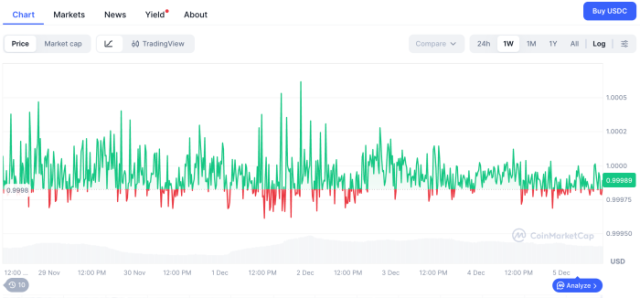
That multi‑chain footprint and composability have helped push $USDC’s market cap above $78B as of December 2025, cementing its position as the world’s second‑largest stablecoin by circulation.
It functions as base collateral in DeFi, settlement currency on major exchanges, and a bridge between banks, fintechs, and crypto‑native rails.
In a world where publicly listed firms are turning to Bitcoin and regulators scrutinize stablecoins, $USDC offers a relatively conservative way to sit in on‑chain dollars while moving quickly between trades.
If you’re rotating between $BTC, altcoin bets like $HYPER and $PEPENODE, and cash, $USDC is the liquidity layer that makes the strategy actually executable.
Recap: As Twenty One Capital’s NYSE debut channels more TradFi money into Bitcoin, Bitcoin Hyper ($HYPER), PEPENODE ($PEPENODE), and USDC ($USDC) map out a coherent stack: programmable $BTC yield, speculative upside, and stable settlement.
Disclaimer: This isn’t financial advice. DYOR before investing.
Kraken and Deutsche Börse has announced a strategic partnership that will integrate crypto with traditional market infrastructure.
Kraken And Deutsche Börse Have Partnered Up
As announced in a press release, US-based digital asset exchange Kraken has teamed up with Deutsche Börse Group to bridge crypto and traditional finance and deliver institutional investors access across asset classes.
Headquartered in Frankfurt, Deutsche Börse Group is one of the biggest financial market infrastructure providers in the world. It operates the Frankfurt Stock Exchange, which ranks the 12th largest in market cap globally.
In the first phase of the partnership, Kraken will integrate directly with 360T, a subsidiary of the German multinational corporation that provides foreign-exchange trading services. This integration will provide Kraken clients access to the latter’s foreign-exchange liquidity.
The partnership will go the other way, as well. Via Crypto Finance, another Deutsche Börse subsidiary, and Kraken, Deutsche Börse Group clients will be able to trade cryptocurrencies and derivatives.
The two firms also plan to leverage Kraken Embed, the crypto trading infrastructure solution created by Kraken, to provide institutions in Deutsche Börse Group’s network with digital asset access.
The press release noted:
Together, the companies will develop advanced white-label solutions enabling banks, fintechs, and other financial institutions to offer secure, compliant crypto trading and custody services to clients across Europe and the U.S.
Another thing Kraken and Deutsche Börse Group are collaborating on is integration of xStocks in the ecosystem of 360X, Deutsche Börse’s tokenized trading venue. xStocks is a stock tokenization standard that has been gaining adoption. Kraken announced the acquisition of Backed, the company behind xStocks, just this Tuesday.
Arjun Sethi, Kraken Co-CEO, said:
By linking traditional and digital markets across a wide range of asset classes, we’re building a holistic foundation for the next generation of financial innovation: defined by efficiency, openness, and client access.
The companies are also looking to make derivatives listed on Deutsche Börse Group’s Eurex, the largest futures and options marketplace in Europe, available on Kraken, if regulators provide the nod.
Stephan Leithner, Deutsche Börse CEO, noted:
This collaboration with Kraken is a great strategic fit for Deutsche Börse Group. It underscores our ongoing commitment to shaping the future of financial markets by combining the trust and resilience of our regulated infrastructure with the innovation of the digital asset ecosystem.
Back in October, the German organization also announced another crypto partnership, this one with USDC issuer Circle. The collaboration aimed to integrate the latter’s USD and EUR stablecoins in the former’s infrastructure to boost stablecoin adoption in Europe.
Bitcoin Price
At the time of writing, Bitcoin is trading around $92,500, up 1% over the last week.
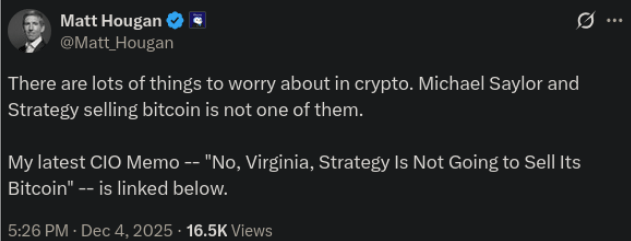
Bitwise CIO Matt Hougan doesn’t believe that Strategy will sell any of its Bitcoins, saying that the company has ‘enough cash to cover interest payments for the foreseeable future.’
This reinforces the digital gold thesis and supports a longer-term, institution-led $BTC accumulation narrative.
Bitcoin Hyper ($HYPER) aims to fuse Bitcoin settlement with SVM-based execution, targeting sub-second, low-fee smart contracts to overcome BTC’s speed, cost, and programmability limits
$HYPER just reached $29M in presale and targets a potential 1,395% post-launch ROI in 2026.
Institutional conviction in Bitcoin just got a fresh boost.
Bitwise CIO Matt Hougan has indicated that Strategy has no plans to dump its massive Bitcoin position, easing fears of a forced sell-off and reinforcing the idea that large, regulated players are thinking in halving cycles, not headlines.
For you as a Bitcoin holder, that matters. When big allocators telegraph ‘we’re not selling,’ it stabilizes expectations around future supply and dampens the tail risk of sudden institutional liquidation.
That macro backdrop is exactly why high-upside Bitcoin-adjacent plays are back in focus.
If core $BTC exposure is the conservative base layer, then infrastructure tied to Bitcoin’s success – especially Layer 2 networks – becomes the speculative frontier where upside can be multiples higher if adoption hits.
Positioned as ‘the fastest Bitcoin Layer 2 with SVM integration,’ $HYPER is pitching itself as a way to turn Bitcoin’s settlement layer into a high-throughput smart contract environment, effectively grafting Solana-grade performance onto BTC’s security model.
Why Institutions Are Forcing a Rethink of Bitcoin Infrastructure
Strategy’s public stance underscores a wider trend: institutional allocators are treating Bitcoin more like digital gold and less like a trade.
Long-term balance sheet positioning, ETF flows, and strategy mandates are tightening the ‘float,’ which is great for price stability but leaves a big question unanswered – what about utility and throughput?
Bitcoin’s base layer still clears roughly single-digit transactions per second, with on-chain fees spiking into tens of dollars during congestion. Lightning helps for simple payments, but it does not solve generalized programmability or DeFi-native use cases.
That gap is why you’re seeing a race among Layer 2 designs targeting Bitcoin: rollups, sidechains, and virtual machine bridges all battling for mindshare.
Projects like Stacks, Rootstock, and various rollup experiments each approach the problem differently, from separate smart contract layers anchored to $BTC to EVM-compatible sidechains.
As markets digest that the ‘digital gold’ thesis is intact, attention naturally shifts to which infrastructure can unlock yield, DeFi, and dApps on top of it – and that’s where Bitcoin Hyper ($HYPER) is starting to enter the conversation alongside more established names.
Bitcoin Hyper’s SVM Layer 2 Pitch to Bitcoin Holders
Where Bitcoin Hyper ($HYPER) differentiates itself is in its technical bet: integrating the Solana Virtual Machine (SVM) directly into a Bitcoin Layer 2.
Instead of reinventing the wheel, the project leans on an execution environment already proven to handle thousands of transactions per second with sub-second finality, aiming to exceed Solana’s own performance by optimizing specifically for L2.
The architecture is modular: Bitcoin Layer 1 handles settlement and security, while a real-time SVM Layer 2 processes execution.
A single trusted sequencer batches transactions and periodically anchors state to Bitcoin, while SPL-compatible tokens are adapted for the L2. The Canonical Bridge handles the wrapped $BTC, lowering confirmation times to seconds and improving the network’s scalability dramatically.
Investor interest is already material.
The Bitcoin Hyper presale has jumped over $29M recently, with the token priced at $0.013375, signaling that the market is willing to fund a serious attempt at Bitcoin-native high throughput.
Long-term, $HYPER positions itself as a potential slam dunk. Our price prediction for $HYPER, based on the project’s utility and investor support during the presale, hints at a 2026 target of $0.20. 2030 could push that number to $1.50 once the project breaches into the mainstream.
In terms of raw profit, think ROIs of 1,395% and 11,115% respectively.
For $BTC holders looking to stay within the Bitcoin orbit but earn on a more dynamic asset, that combination of yield, infrastructure exposure, and long-term profit-hunting potential could be compelling.
$HYPER is making an aggressive case that a Solana-grade execution environment, plugged into Bitcoin finality, is one of the more asymmetric ways to express that view. If that sounds appealing, read our guide on how to buy $HYPER today.
More importantly, do it soon, because Bitcoin Hyper has a targeted release window between Q4 2025, which is nearly over, and Q1 2026: time is not your friend.
A new player has emerged in the world of cryptocurrency banking, with a team of former executives from the collapsed Signature Bank at the helm. The establishment of N3XT comes nearly three years after Signature Bank’s downfall in March 2023, which significantly impacted the crypto industry.
Former Signature Bank Leaders Establish N3XT
According to a report by Reuters, the newly founded blockchain-based bank aims to facilitate instant US dollar payments around the clock, led by Scott Shay, who served as the founder and chairman of the Signature Bank. Jeffrey Wallis, the former director of digital assets at Signature, will take on the role of CEO at N3XT.
Per the report, N3XT will operate under a special-purpose bank charter in Wyoming and has decided to avoid typical lending activities, which were at the heart of the collapsed Signature Bank.
“Every dollar of deposits will be backed by cash or short-term U.S. Treasuries,” Wallis explained, noting that the bank will publish its reserve holdings daily.
This sets N3XT apart from its predecessor, Signature Bank, especially given that its reserves will be held with custodial partners, though Wallis did not disclose their names.
Importantly, N3XT will not be insured by the Federal Deposit Insurance Corporation (FDIC) since Wyoming special-purpose banks are not required to obtain such insurance.
The collapse of Signature Bank, along with the failures of Silvergate Bank and Silicon Valley Bank, pointed to a troubling trend among banks with significant uninsured deposits and ties to the cryptocurrency sector. Rising interest rates and a loss of depositor confidence culminated in bank runs that led to their downfall.
Solutions For Crypto Clients
Addressing concerns about the safety of client assets, Wallis reassured potential customers in the crypto industry, stating, “We do not lend against our balance sheet, so clients always have confidence that their capital is available to them and is never at risk.”
He emphasized that the newly established bank is designed to offer a new and “unique banking structure,” ensuring that clients’ liquidity is readily accessible according to their economic needs.
Wallis further distinguished N3XT’s approach to risk management from that of Signature Bank, which was criticized for “poor management” and a focus on “rapid, unrestrained growth” with little attention to risk.
“We are not making any lending decisions with the balance sheet,” Wallis reiterated. “We are keeping our clients’ assets in full liquid form.” N3XT will reportedly focus on catering to crypto clients, many of whom Wallis mentioned are already in the onboarding process.
As of this writing, Bitcoin (BTC), the market’s leading crypto, is trading at $92,834. It has consolidated above the key $90,000 support level for the past few days, sparking new hopes for a potential recovery above $100,000 by the end of the year.
Featured image from DALL-E, chart from TradingView.com
Amberdata says nearly $4B in Oct–Nov U.S. spot BTC ETF outflows mainly reflect basis-trade unwinds, not long-term investor capitulation.
ETF holdings remain around 1.43M $BTC and redemptions were concentrated in a few issuers, so the broader macro bull case for bitcoin stays intact.
Bitcoin Hyper brings SVM-style, low-latency smart-contract execution to Bitcoin, targeting DeFi, gaming, and payments on top of BTC settlement security.
PEPENODE launches a ‘mine-to-earn’ memecoin model where users run virtual nodes, progress through tiers, and earn gamified token rewards.
US spot Bitcoin ($BTC) ETFs just saw roughly $4B in outflows since it reached an ATH in October.
However, research suggests most of that was basis trades unwinding, not real capitulation. These were crowded arbitrage and carry trades shutting down as funding flipped, not long-term allocators fleeing Bitcoin for good.
That distinction matters. If institutions aren’t dumping spot exposure en masse, the core bull thesis around Bitcoin as a macro asset remains intact.
Structural demand from ETFs, corporates, and high-net-worth investors still underpins the market, even as leverage and short-term positioning reset in the background.
For you, that backdrop favors asymmetric upside rather than chasing large-cap beta. The ETF bid can support Bitcoin, while the most explosive gains tend to come from early-stage infrastructure, AI, and high-throughput plays quietly building into the next cycle.
Crypto presales are exactly where that risk/reward skew can be most extreme if you’re selective.
Below are three presales positioned at key narratives: Bitcoin Hyper ($HYPER) for Bitcoin scalability, PEPENODE ($PEPENODE) for mine-to-earn memes, and Ionix Chain ($IONX) for AI-powered blockchains.
They stand out in the current market as some of the best crypto presales to watch, alongside other leading early-stage plays.
1. Bitcoin Hyper ($HYPER) – First SVM-Powered Bitcoin Layer 2
Bitcoin Hyper ($HYPER) positions itself as the first true Bitcoin Layer 2 integrating the Solana Virtual Machine (SVM), aiming to deliver execution that’s even faster than Solana while anchoring settlement to Bitcoin.
The modular design separates Bitcoin L1 for security and finality from a real-time SVM Layer 2 for high-throughput execution.
On the technical side, Bitcoin Hyper uses a single trusted sequencer that batches and orders transactions, then periodically anchors state commitments back to Bitcoin.
The core pitch is simple: bring fast, scalable smart contracts to Bitcoin without sacrificing its brand and security. That unlocks high-speed payments in wrapped $BTC with low fees, DeFi protocols for swaps, lending, and staking, plus NFT and gaming dApps.
Our ‘What is Bitcoin Hyper?’ guide covers everything you need to know about the project, from its tokenomics to community sentiment.
The market has responded positively to the project. The Bitcoin Hyper presale has already raised $29M, with tokens priced at $0.013375.
Whales are also scrambling to get their slice of the pie, including one that bought over $500K of tokens. That kind of early conviction can signal confidence in the tech and tokenomics.
Staking is a major part of the value proposition. You can stake yours immediately after purchasing so you can enjoy rewards that are currently at 40% APY.
2. PEPENODE ($PEPENODE) – First Mine-to-Earn Memecoin Infrastructure
If Bitcoin Hyper is a pure infrastructure bet, PEPENODE ($PEPENODE) leans into the speculative energy of memes, but with a twist. It brands itself as the world’s first ‘mine-to-earn’ memecoin, combining viral culture with a virtual mining and node system that gamifies participation.
Instead of relying solely on hype and social media, PEPENODE introduces a Virtual Mining System where you can deploy and upgrade nodes to earn token rewards.
A tiered node structure sets different earning bands, effectively creating a gamified yield ladder. A dedicated dashboard wraps all of this in a simple interface designed that’s easy to understand even if you’re a complete beginner.
This model turns what’s usually passive memecoin holding into something more interactive. If the narrative catches on, miners and speculators are incentivized to keep the system spinning.
On the numbers, the PEPENODE presale has raised over $2.2M so far, with tokens priced at $0.0011778. That leaves plenty of room for upside if the mine-to-earn meme gains traction across other traders.
You can also stake tokens to get dynamic rewards that are currently at a whopping 570% APY.
The project’s medium-term prospects look bright, as long as it ticks off all the items in its roadmap and attracts more participants. When that happens, the token’s value could reach a high of $0.0072 by the end of 2026, or a 511% increase from the current price.
Rounding out the list is Ionix Chain, an AI-powered Layer 1 targeting the intersection of high-performance smart contracts and machine learning.
It uses a hybrid Proof-of-Stake engine with Directed Acyclic Graph architecture combined with what it calls Quantum AI Consensus, designed to self-optimize throughput, latency, and security parameters in real time.
Ionix Chain’s performance targets are aggressive. The team claims up to 500K transactions per second with sub-second finality, positioning it squarely against high-throughput leaders rather than legacy L1s.
Its adaptive smart contracts use AI to optimize gas usage, routing, and resource allocation, aiming to help dApps scale predictably as volumes spike.
Cross-chain support is another core pillar. Ionix is building interoperability with Ethereum, Solana, and BNB Chain, giving developers a way to bridge assets and deploy applications that can tap liquidity across multiple ecosystems.
That’s particularly relevant if multi-chain liquidity routing becomes standard for DeFi and AI-driven protocols.
At the moment, Ionix Chain is running a multi-stage token presale that has raised over $6.3M so far. Another stage is coming in about four days, which will increase the price up another notch, so it’s always best to get in early.
Early exchange partners have also been teased, positioning IONX as a notable AI-blockchain contender rather than a niche experiment. If you’re an investor betting on AI as a core crypto theme next cycle, Ionix offers direct infrastructure exposure.
With ETF outflows driven by basis trade unwinds rather than true capitulation, the broader Bitcoin bull case still stands.
Recap: Bitcoin Hyper, PEPENODE, and Ionix Chain each target major narratives: Bitcoin scalability, gamified memes, and AI L1s. If you’re looking for alternative bets in the current market atmosphere, the three are worth a look.
Disclaimer: This article is for informational purposes only and does not constitute financial, investment, or trading advice; always do your own research.

 Login
Login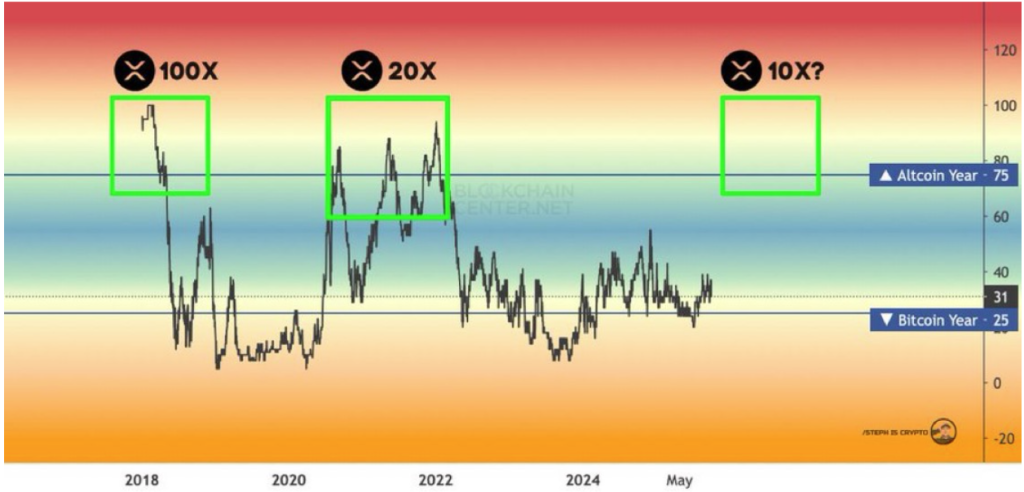












 Bitcoin’s settlement layer remains dominant, but slow throughput, high fees, and limited programmability leave a gap for scalable, low‑cost transactional use cases.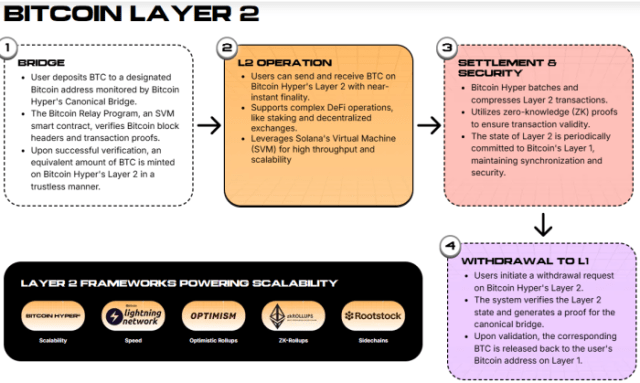









 It functions as base collateral in DeFi, settlement currency on major exchanges, and a bridge between banks, fintechs, and crypto‑native rails.



 That distinction matters. If institutions aren’t dumping spot exposure en masse, the core bull thesis around Bitcoin as a macro asset remains intact.

 Our
Our  This model turns what’s usually passive memecoin holding into something more interactive. If the narrative catches on, miners and speculators are incentivized to keep the system spinning.
 We’ll show you how to purchase $PEPENODE in our
 At the moment, Ionix Chain is running a multi-stage token presale that has raised over $6.3M so far. Another stage is coming in about four days, which will increase the price up another notch, so it’s always best to get in early.

