Reading view

There are new articles available, click to refresh the page.

Otto, led by former Expedia exec, rolls out AI agent for business travelers that mimics an executive assistant

Examples of interactions with Otto the Agent, an AI-powered business travel assistant. (Otto Images)

Seattle-based startup Otto announced the wide release Thursday of its AI-powered travel assistant — Otto the Agent — in a bid to bring a concierge-level experience and personalization to business travelers.

The platform has been in closed beta for nine months. GeekWire first reported about its stealthy operations in August 2024.

Founded by longtime travel industry veterans, Otto was incubated and spun out of Seattle-based Madrona Venture Labs, the former startup studio associated with Madrona.

“The goal here is to mimic or create as good or better an experience than the best ever executive assistant, to help you book your business travel,” said founder and CEO Michael Gulmann, who spent nearly a decade at Expedia Group in various leadership roles, and also worked at business travel management giant Egencia.

Michael Gulmann, founder and CEO of Otto. (Otto Photo)

Steve Singh, managing director at Madrona who co-founded business expense software giant Concur, is executive chairman of Otto.

Otto is built to learn and understand an individual’s travel habits — airline and hotel preferences, seat choices, loyalty programs, and even nuanced needs like finding rooms that avoid train noise or finding hotels with rooftop bars. Gulmann said Otto uses that knowledge to instantly surface the best flights and hotels without the the typical endless-scroll experience.

And unlike general-purpose AI tools that send users to external booking sites, Otto handles the entire transaction end-to-end, from booking to cancellations to rebooking and credit management, all within the same interface.

Otto can also connect to a traveler’s calendar and proactively detect upcoming trips and suggest itineraries before the traveler asks.

Barney Harford, former CEO of Orbitz Worldwide and former COO of Uber, called Otto “a glimpse into the future,” saying that after using it for several months it knows his business travel preferences “and has simplified the shop and book process down to just a couple of minutes.” Harford is an investor in Otto.

Beyond flights and hotels, a clear next step in Otto’s development will be the addition of car rentals and dinner reservations — things an executive assistant “back home would be helping with when you’re on the road,” Gulmann said.

“The reality is, most people don’t have an EA,” he added. “A little bit of the genesis of the company was, I was fortunate enough to have an EA at Expedia for a long time, once I got to a certain level, and it was amazing.”

Otto is available for free to individual business travelers as well as small and mid-sized businesses for the next 12 months. The startup makes money on commissions. Through a partnership with travel management company Direct Travel, Otto is also launching upcoming pilot programs with two companies Gulmann could not yet name.

The company is competing with other startups, as well as incumbents that are developing their own AI-fueled tools.

Direct Travel, which was acquired by Madrona and others in April 2024, invested in Otto’s seed round.

Singh is also executive chairman at Direct Travel. Since departing Concur a few years after its $8.3 billion acquisition to SAP in 2014, Singh became executive chairman at Spotnana, a travel-as-a-service technology platform; at Center, a corporate card and expense management platform; and Troop, a group meetings and events company.

Gulmann said innovating around travel again was the “last thing he thought he’d get back into” but a lot has changed since Expedia and others came along to displace human travel agents in the 1990s. Otto is like going back to the personalization aspect of travel agents but with the tech twist added in.

“It’s insanely faster to develop and to build the product,” he said. “We’re doing it with, including myself, a 10-person team. So, not tiny, but nowhere near the developer and engineer horsepower that Expedia or Booking.com have. But yet, I think we’re going a lot faster than they are now.”

Related:

Expedia watching government shutdown ‘very closely’ as shares surge after Q3 earnings top estimates

(GeekWire File Photo)

Expedia is monitoring potential disruptions from the ongoing U.S. government shutdown and related FAA-ordered flight cancellations.

The Seattle-based company is “watching the government shutdown very closely,” said Scott Schenkel, chief financial officer, speaking on Expedia’s earnings call Thursday.

Schenkel said Expedia routinely factors in such uncertainties when setting forecasts, especially in volatile conditions.

Air travel is a relatively small part of the company’s business — about $101 million in revenue last quarter.

Expedia shares rose nearly 20% on Friday after the company topped expectations for its third quarter, reporting revenue growth of 9% to $4.41 billion, and adjusted earnings per share of $7.57. The company raised its full-year guidance.

“The market was healthy in the quarter with an acceleration in the U.S. and continued strength in the rest of the world,” Expedia CEO Ariane Gorin said on the earnings call. “We saw longer lengths of stay and longer booking windows, both signs of a stronger consumer.”

Gorin, who is in her first year leading Expedia, called out an “exceptional quarter” for the company’s B2B business.

She also noted that “AI-driven search is transforming the way travelers discover and plan their trips,” and cited partnerships with Google, OpenAI, and Perplexity.

“We’re moving fast and deliberately to ensure our brands show up wherever travelers are,” she said.

Schenkel said AI is also helping internally: “Our virtual agents resolve over 50% of traveler queries. And when human support is needed, it delivers concise summaries to the agent, reducing our service cost per transaction,” he said.

Gorin said the company remains confident heading into the final quarter of the year. “While we saw continued momentum in October, we’re keeping a close eye on economic indicators and remaining focused and agile amidst a dynamic macro environment,” she said.

X’mas tales with some Scottish Tablet

By: Rapti B
Top post on IndiBlogger, the biggest community of Indian Bloggers

Jingle bells, jingle bells, la la la la la… Merry Christmas everyone!

The colours, lights, sparkle and shine, smiling faces and that feeling of well-being – I love festival times. And the last week-long celebration of the year is beautiful – the celebration of a birth and a beginning. This is the season for comfy snuggles, hot and gooey treats, glitter and drama, parties, conversations and resolutions to keep New Year resolutions.

And gifts – the ones under the Christmas tree or those exchanged when you visit/host friends and family.

Rem shares the same sentiments but unfortunately, it was rather late in the day when she realised that with a packed schedule until Sunday night, she was facing the issue of “What do I gift my friends?” while the elder sister was looking for something to make “with a handful of ingredients”.

#fromthecornertable, from the corner table, fromthecornertable, food blog, travel tuck-in talk,christmas food, christmas gifts, homemade, merry christmas, scotland desserts, scottish sweets, scottish tablet,

My answer to both these lovelies is the Scotland Tablet also called the Scottish Tablet and Butter Tablet.

I discovered this tooth-numbing sweet but oh-so-creamy marvel during a trip to the Scottish Highlands when my tour driver-cum-guide dropped us off at Pitlochry for a comfort break. He also recommended those with a sweet tooth try the tablets at the Scotch Corner. “They are the best I have tasted so far.” The way he raved on about the ‘tablet’ got me curious so I joined the queue at the store for some whisky ice-cream and few tablets. And oh my god! The explosion of grainy sweetness in my mouth blew my mind.

Similar to fudge but more crumbly in texture, a tablet has three main ingredients – sugar, butter and condensed milk. There are options of flavouring it with vanilla or whisky and adding nuts.

The internet is flooded with recipes for the Scottish Tablet and studying all of them, I’ve realised that it is absolutely fine if the colour and texture are a bit different from the one I ate in Pitlochry. Maa says a lot depends on the milk and the sugar used.

So go ahead and enjoy making this lovely confectionery, a perfect gift and treat for this season.

WARNING: The Scottish Tablet is high on calorie count and excessively high in sugar so an absolute NO for those with diabetes and high cholesterol levels.

Scottish Tablets

A lusciously sweet confection typical to Scotland. 

  • 5 cups Caster sugar
  • 9 tablespoons Unsalted butter
  • 250 milliliter Full fat milk
  • 350 milliliter Condensed milk
  • 1/2 teaspoon Salt
  • 1/2 teaspoon Vanilla extract
  1. Drag out the deepest heavy-bottom pan in your kitchen, place it on low flame, plop in the butter and let it melt. Add the sugar, salt, milk and stir until sugar dissolves completely. This is very important. The sugar has to dissolve completely for the tablet to set.
  2. Bring to a boil and simmer on high heat for around 6-8 minutes. Meanwhile, layer a tray with baking parchment and keep aside.
  3. Keep stirring but don’t scrape the sides of your pan. I did both and ended up with little burnt caramel-y brown bits in my tablet.
  4. Turn the heat down, add the condensed milk and stir. Allow the mix to simmer for about 15 minutes while stirring occasionally.
  5. This is about the time when you need to start checking if the mixture will set.
  6. Experts suggest using a thermometer to check whether the mixture is done. I don’t have one. So I used the method suggested by Maa. Drizzle a few drops on a cold surface, give it a few minutes. If it sets and comes off with a push then the mixture is done.
  7. Remove from the heat, add the vanilla and beat vigorously for around 10 minutes. The mixture needs to be thick but pour-able.
  8. Once it has reached the desired consistency, pour it into the tray. Allow it to set for 20 minutes before scoring squares – or other shapes. Leave it out to dry for a few hours. And then gobble away.
  • If using salted butter, skip the salt.
  • Adding vanilla is optional.
  • If you don’t have caster sugar, replace with coarsely ground granulated sugar; the result is much better.

Dessert, Sweet

Scotland

confection

photos: Vaibhav Tanna

Breaking Windows and Linux Customizations

I like small laptops. Years ago I got a 10-inch Asus EeePC with an Atom processor. It wasn't very powerful, but it ran Linux. Well, mostly. The audio drivers sometimes had problems and I never got Bluetooth to work. Battery storage capacity degrades over time. The EeePC battery originally lasted over 12 hours per charge, but after nearly a decade, it would get about 2 hours. I couldn't find a replacement battery, so five years ago I decided to get a new laptop.

The replacement laptop was a little larger (13-inch), but all of the components were supposed to be compatible with Linux. It also came with Windows 10 installed. I always intended to put Linux on it, but never got around to it. Since I only used it for web browsing and remote logins (using PuTTy), upgrading was never an urgency and Win10 was good enough.

However, over the years the laptop began to develop problems:
  • The network sometimes wouldn't auto-connect after waking from suspend mode. I'd have to toggle the network on and off a few times before it would work. Other people had similar problems with Win10. Their solutions didn't work for me, but it wasn't annoying enough to replace the operating system.

  • The mousepad's button began losing sensitivity. Just as I had worn through the keyboard on my desktop computer, I was wearing out the trackpad's button. But it wasn't bad enough to replace the entire laptop.

  • With Win10 heading toward end-of-support (EoS is October 14, 2025), I knew I needed to upgrade the operating system sooner than later.
The final straw was the most recent Patch Tuesday. The laptop downloaded the updates, rebooted, and just sat at "Restarting". I couldn't figure out how to get past this. I'm sure there are instructions online somewhere, but I decided that it would be easier to install Linux.

(While I couldn't get back into the Windows system, I wasn't worried about backing up any files. This laptop is only used for remote access to the web and servers, and for giving presentations. All personal files already existed on my other systems.)

Intentional Procrastination

There's one reason I kept putting off installing Linux. It's not as simple as downloading the OS and installing it. (If that's all it took, I'd have done it years ago.) Rather, it usually takes a few days to customize it just the way I like it.

This time, I installed Ubuntu 24.04.2 (Noble Numbat). The hardest part was figuring out how to unlock the drive (UEFI secure boot). Otherwise, the installation was painless.

On the up side:
  • The laptop is noticeably faster. (I had forgotten how much of a resource hog Win10 is.)

  • The hard drive has a lot more room. (Win10 is a serious disk hog.)

  • The network wakes up immediately from suspend. That was a Windows bug, and Linux handles it correctly.

  • This is an older laptop. The battery originally lasted 8-9 hours under Windows, but had aged to lasting 4-6 hours from a full charge. With Linux, the same laptop and same old battery is getting closer to 10-12 hours, and that's while doing heavy computations and compiling code.

  • Unexpected: The trackpad's buttons work fine under Linux. I thought I had worn out the physical contacts. Turns out, it was Win10.
On the downside, it's yet another Linux desktop, and that means learning new ways to customize it. (Linux is made by developers for developers, so the UI really lacks usability.)

Disabling Updates

My first customization was to disable updates. I know, this sounds completely backwards. However, I use my laptop when I'm traveling or giving presentations. I do not want anything updating on the laptop while I'm out of the office. I want the laptop to be as absolutely stable and reliable as possible. (I've seen way too many conference presentations that begin with the speaker apologizing for his computer deciding to update or failing to boot due to an auto-update.)

In the old days, there was just one process for doing updates. But today? There are lots of them, including apt, snap, and individual browsers.
  • Snap: Snap accesses a remote repository and updates at least four times a day. (Seriously!) On my desktop computers, I've changed snap to update weekly. On my production servers and laptops, I completely disabled snap updates. Here are the commands to check and alter snap updates:

    • To see when it last ran and will next run: snap refresh --time --abs-time

    • To disable snap auto-updates: sudo snap refresh --hold

    • To restart auto-updating: sudo snap refresh --unhold

    • To manually check for updates: sudo snap refresh

    Now the laptop only updates snap applications when I want to do the update.

  • Apt: In older versions of Linux, apt used cron to update. Today, it uses system timers. To see the current timers, use:
    systemctl list-timers --all
    Leave the housekeeping timers (anacron, e2scrub, etc.), but remove the auto-update timers. This requires using 'stop' to stop the current timer, 'disable' to prevent it from starting after the next boot, and optionally 'mask' to prevent anything else from turning it back on. For example:
    # Turn off apt's daily update.
    sudo systemctl stop apt-daily-upgrade.timer
    sudo systemctl disable apt-daily-upgrade.timer
    sudo systemctl stop apt-daily.timer
    sudo systemctl disable apt-daily.timer

    # turn off motd; I don't use it.
    sudo systemctl stop motd-news.timer
    sudo systemctl disable motd-news.timer
    But wait! There's more! You also need to disable and remove some packages and settings:

    • Remove unintended upgrades: sudo apt remove unattended-upgrades

    • Edit /etc/apt/apt.conf.d/20auto-upgrades and set APT::Periodic::Update-Package-Lists and APT::Periodic::Unattended-Upgrade to "0".

    • And be sure to really disable it: sudo systemctl disable --now unattended-upgrades

    If you don't do all of these steps, then the system will still try to update daily.

  • Ubuntu Advantage: Brian Krebs has his "3 Basic Rules for Online Safety". His third rule is "If you no longer need it, remove it." I have a more generalized corollary: "If you don't use it, remove it." (This is why I always try to remove bloatware from my devices.) Canonical provides Ubuntu Advantage as their commercial support, but I never use it. Following this rule for online safety, I disabled and removed it:
    sudo systemctl stop ua-messaging.timer
    sudo systemctl stop ua-messaging.service
    sudo systemctl stop ua-timer.timer
    sudo systemctl mask ua-messaging.timer
    sudo systemctl mask ua-messaging.service
    sudo systemctl mask ua-timer.timer
    sudo rm /etc/apt/apt.conf.d/20apt-esm-hook.conf
    sudo apt remove ubuntu-advantage-tools
    sudo apt autoremove

  • Browsers: I use both Firefox and Chrome (Chromium). The problem is, both browsers often check for updates and install them immediately. Again, if I'm traveling or giving a presentation, then I do not want any updates.

    • I installed Chrome using snap. Disabling snap's auto-update fixed that problem. Now Chrome updates when I refresh snap.

    • Firefox was installed using apt. Disabling the browser's auto-update requires going into about:config. Search for "app.update.auto" and set it to "false". At any time, I can go to the browser's menu bar and select Help->About to manually trigger an update check.
While I turned off auto-updates, I set a calendar event to periodically remind me to manually perform updates on all of my computers. (I may not have the latest patch within hours of it being posted, but I do update more often than Window's monthly Patch Tuesday.) To update the system, either when the calendar reminds me or before going on a trip, I use:
sudo apt update ; sudo apt upgrade ; sudo snap refresh

Phone Home

I've configured my laptop, cellphone, and every other remote device to "phone home" each time they go online, change network addresses, or have a status update. One of my servers has a simple web service that listens for status updates and records them. This way, I know which device checked in, when, and from where (IP address). I also have the option to send back remote commands to the device. (Like "Beep like crazy because I misplaced you!") It's basically the poor-man's version of Apple's "Find My" service.

Figuring out where to put the phone-home script was the hard part. With Ubuntu 24.04, it goes in: /etc/network/if-up.d/phonehome. My basic script looks like this:
#!/bin/sh
curl 'https://myserver/my_url?status=Online' >/dev/null 2>&1

(Make sure to make it executable.) This way, whenever the laptop goes online, it pings my server. (My actual script is a little more complicated, because it also runs commands depending on the server's response.)

Desktop Background

I like a simple desktop. Few or no icons, a small task bar, and a plain dark-colored background. Unfortunately, Ubuntu has migrated away from having solid color backgrounds. Instead, Ubuntu 24.04 only has an option to use a picture. Fortunately, there are two commands that can disable the background picture and specify a solid color. (I like a dark blue.)
gsettings set org.gnome.desktop.background picture-uri none
gsettings set org.gnome.desktop.background primary-color '#236'

These changes take effect immediately.

Terminal Colors

With such as small laptop screen, I don't want large title bars or borders around windows. However, the Ubuntu developers seem to have taken this to an extreme. I spend a lot of time using the command-line with lots of terminal windows open. The default terminal has a dark purple background (a good, solid color) and no visible border around the window. But that's a problem: If I have three terminal windows open, then there is almost no visual cue about where one terminal window ends and the next begins.


I quickly found myself constantly fiddling with title bars to figure out which terminal window was on top and wiggling the window's position to figure out where the borders were located. Even with tabbed terminal windows, there is very little visual distinction telling me which tab is active or letting me know when I've switched tabs.

After a few days of this, I came up with a workaround: I give every terminal window a different background color. Now there's a clear visual cue telling me which window and tab is active.


The default shell uses bash, which means it runs $HOME/.bash_aliases each time a new window is opened. Here's the code I added to the end of my .bash_aliases file:
##### Set terminal background color based on terminal number
# get terminal name, like: /dev/pts/0
termnum=$(tty)
# reduce the name to the number: /dev/pts/1 become 1
termnum=${termnum##*/}
# I have 10 unique colors; if more than 10 terminals, then repeat colors
((termnum=$termnum % 10))
# set the color based on the terminal number, using escape codes.
case $termnum in
0) echo -n -e "\e]11;#002\e\\" ;;
1) echo -n -e "\e]11;#010\e\\" ;;
2) echo -n -e "\e]11;#200\e\\" ;;
3) echo -n -e "\e]11;#202\e\\" ;;
4) echo -n -e "\e]11;#111\e\\" ;;
5) echo -n -e "\e]11;#220\e\\" ;;
7) echo -n -e "\e]11;#321\e\\" ;;
8) echo -n -e "\e]11;#231\e\\" ;;
9) echo -n -e "\e]11;#123\e\\" ;;
esac

Now I can have five open terminals, each with a different background color. Each terminal is easy to distinguish from any adjacent or overlapping windows.

Almost Done

It took about two hours to install the laptop. (That includes downloading Ubuntu, copying it to a thumb drive, and installing it on the laptop.) Many of my customizations, such as setting up my remote server access and setting my preferred shell preferences, were straightforward.

Switching from Windows to Ubuntu gave this older laptop a lot of new life. But with any new system, there are always little things that can be improved based on your own preferences. Each time I use the laptop, I watch for the next annoyance and try to address it. I suspect that I'll stop fiddling with configurations after a month. Until then, this is a great exercise for real-time problem solving, while forcing me to dive deeper into this new Ubuntu version.

Where Time Sleeps: A Slow Journey Through Nagaland

By: pawansoni

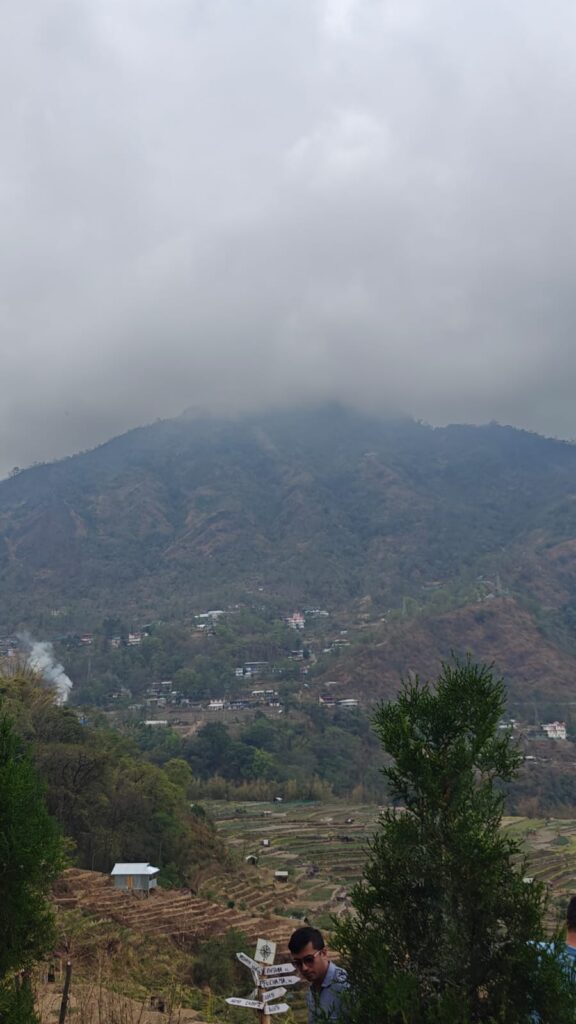
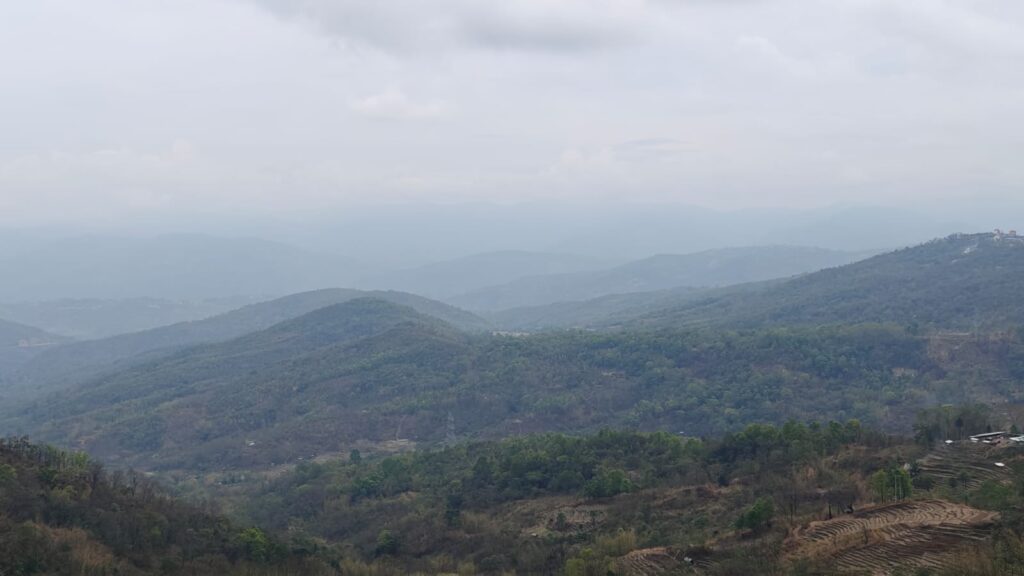
If you’re weary of Insta-itineraries and whirlwind checklists, perhaps it’s time to let Nagaland happen to you—slowly, deliberately, and with the grace of a place untouched by frenzy. This Northeastern gem invites not a race, but a pause. Here, you don’t “do” a holiday; you dwell in it.

Landing Lightly: Dimapur to Kohima

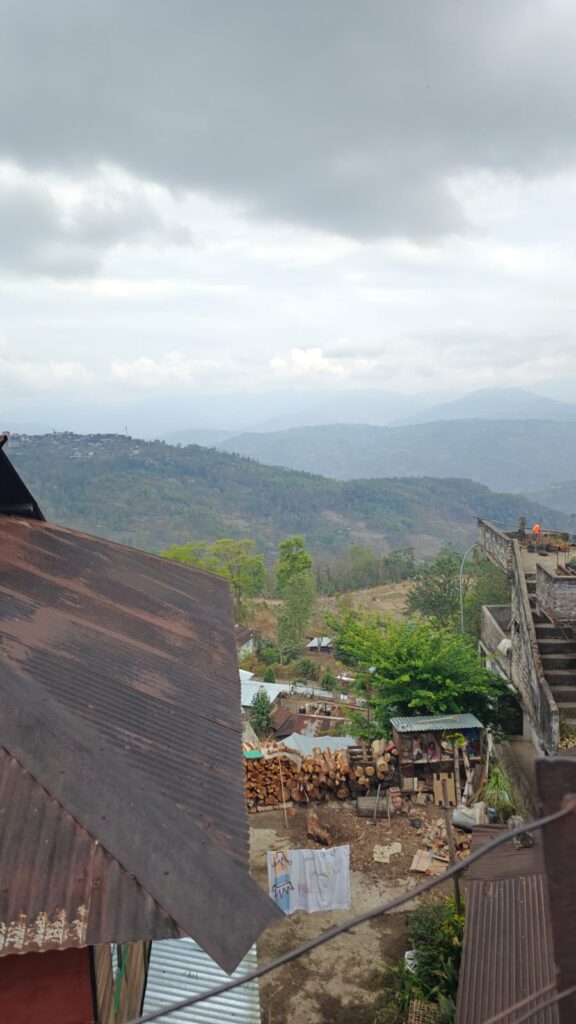
The gateway to Nagaland is surprisingly accessible—courtesy a direct flight from Delhi to Dimapur. No layovers, no fuss. From Dimapur, it’s a picturesque 90-minute drive to Kohima, the state’s capital, where the hills roll in like a lullaby and time decides to take the long road. For those who prefer to stay in Dimapur, you’re still in the heart of it all—with the added advantage of being just 20 minutes from Khatkhati in Assam, where the spirit flows a little more freely (more on that in a bit).

A Walk Through History

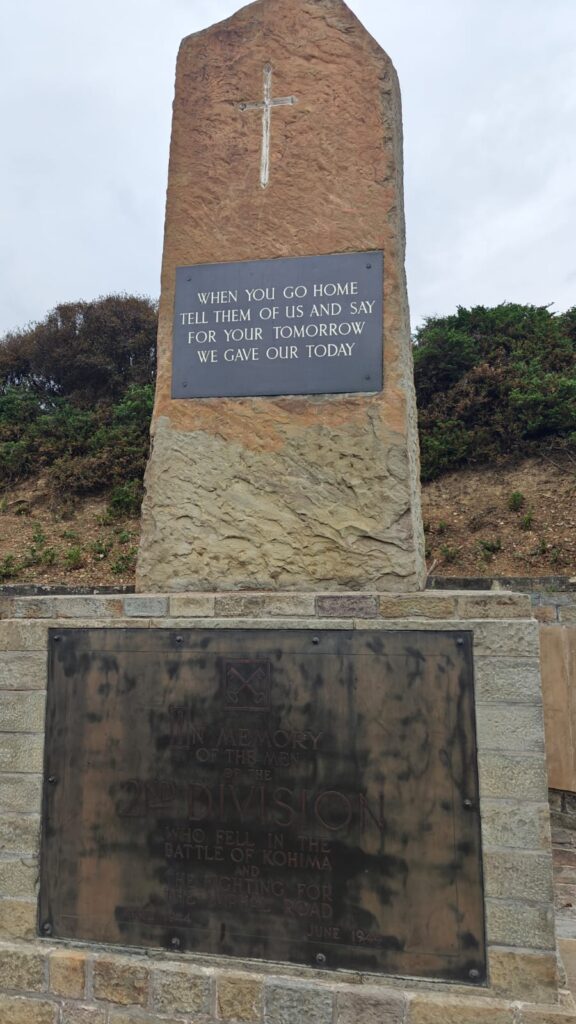
Kohima holds within it the whispers of the past. The Kohima War Cemetery, perched gracefully over green slopes, honours the brave who fought in one of World War II’s fiercest battles. It’s not just a site; it’s a silenced storyteller. The epitaph that reads “When you go home, tell them of us…” is reason enough to spend a moment longer in reflection.

Where Culture Lives On: Hornbill Village and the 16 Tribes of Nagaland

Nagaland is home to over a hundred tribes, each with its own dialect, traditions, and legacy. Among these, 16 are officially recognised as major tribes, and their presence is vividly brought to life in the Hornbill Village—a living museum where tradition stands tall.

Here, tribal architecture tells you as much as the elders do. You can walk through authentically built morungs (dormitories), see traditional weaponry once used in headhunting days, and witness daily practices that have survived centuries. The Hornbill Festival in December showcases all this and more—dance, folklore, crafts, and cuisines that are as layered as the land.

Food for the Soul—and the Stomach

Now, here’s the delightful surprise: while Nagaland’s indigenous cuisine is a delight of lightly spiced, easy-to-digest dishes—think bamboo shoot pork, fresh river fish, sticky rice—there’s no dearth of North Indian comfort food either. Craving choley bhature, jalebi, or a good old paratha? You’ll find it in Kohima’s modest eateries and hotels, served with the warmth of familiarity and a view to match.

The Other Side of the Border: Khatkhati and Dark Knight Distillery

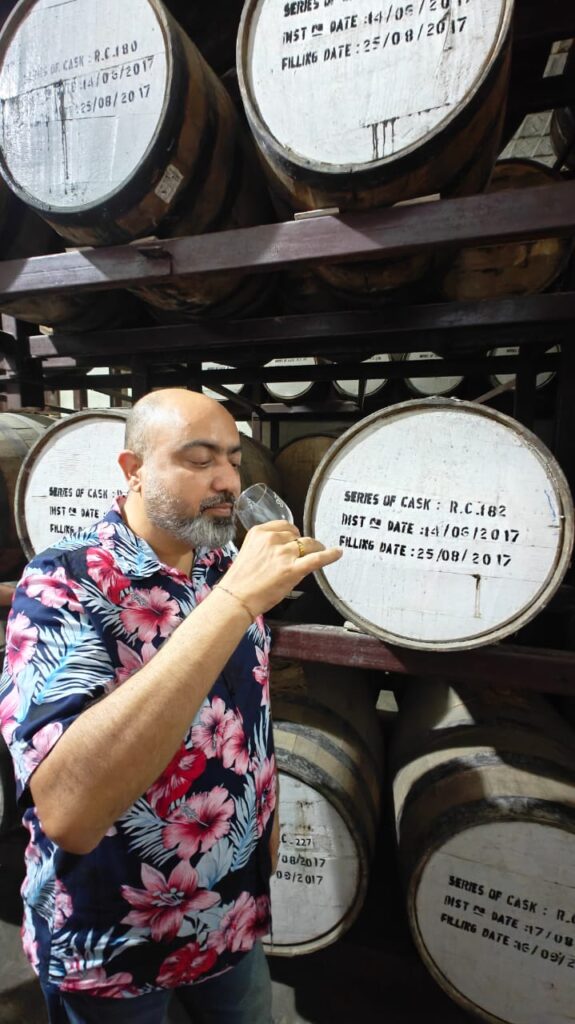
Nagaland may be officially dry, but that doesn’t mean you’re cut off from your evening pour. A short ride to Khatkhati, across the Assam border, brings you to a clutch of bars and the emerging jewel of the local spirits scene—Dark Knight Distillery.

Here, I had the pleasure of sampling their range, including Infamous, a premium small-batch whisky with a smooth finish and surprisingly nuanced profile, and bought Lost Treasure, a cold brew coffee rum for home as a souvenir.

Vicky Chand, the affable founder of Dark Knight, told me over a dram, “The response to Infamous has been overwhelming. We’re still keeping it small-batch to retain quality, but expansion plans are definitely brewing.”

The distillery’s use of fresh, mineral-rich river water and the region’s pristine weather offer the perfect canvas for whisky aging. “We may be off the radar for now,” Chand adds, “but it won’t be long before Northeast whiskies hold their own in the Indian and even international markets.”

Souvenirs That Tell a Story

  • Don’t leave without picking up a bottle of Infamous—its bold character and striking design make it a gift worthy of your shelf.
  • Handwoven Naga shawls, each tribe with its distinct pattern, ideal as a wrap or a wall accent.
  • Tribal jewelry made from beads, bones, and brass—rustic, sustainable, and deeply symbolic.
  • Bamboo and cane artifacts, from baskets to lampshades, crafted by local artisans.
  • Smoked pork or dried bamboo shoot, vacuum-packed and available at select markets in Kohima.
  • Locally grown wild Naga chillies, both fresh and in pickled form, for those who like their food fiery.

Why Go Slow?

Because Nagaland isn’t about sightseeing—it’s about seeing, feeling, and connecting. It’s about learning to savour again—whether it’s a bite of Naga stew, a verse of war history, or a sip of whisky with stories steeped in rainwater and rebellion.

So, take that flight. Take your time. Let Nagaland linger.

The post Where Time Sleeps: A Slow Journey Through Nagaland appeared first on Indian Food Freak.

Naukuchiyatal’s New Gem: IHCL’s Naukuchia House Reimagines Hillside Luxury

By: pawansoni

Tucked away in the lush folds of the Kumaon hills lies a lake of nine corners—Naukuchiyatal—an emerald secret that still shimmers in its serenity, away from the better-trodden paths of Nainital and Bhimtal. And now, it has a luxurious new address: Naukuchia House, a recently renovated 42-room property by the Indian Hotels Company Limited (IHCL), the custodians of the iconic Taj brand.

Standing elegantly by the lake, Naukuchia House is not just a hotel—it’s a sanctuary. Designed with understated charm and heritage echoes, the property offers panoramic lake views, with a private entry that takes you straight to the shimmering waters. Step out of your room, and you can hop directly onto a boat. I did. A slow ride in the morning mist, a fishing line tossed casually into the glassy lake surface—this isn’t just vacationing; it’s soul-deep unwinding.

For those chasing rejuvenation rather than adventure, I recommend their signature full-body spa therapy. My masseur was a magician with years of training in her fingertips, and the steam bath that followed was the kind of cleansing city souls long for.

But Naukuchia House doesn’t stop there. On one of the afternoons, the hotel arranged a guided walk into the forest, leading to an enchanting village clearing where warm tea and quiet conversations replaced WiFi signals and screens.

And then there’s Kainchi Dham—just a scenic 30-minute drive away. This modest ashram has turned into a magnetic spiritual hub, drawing global figures like Mark Zuckerberg, Julia Roberts, and closer home, Virat Kohli and Anushka Sharma. Whether you’re a believer or a curious wanderer, the calm of Shri Neeb Karori Baba’s temple will linger long after you leave.

Back at the hotel, there’s plenty to indulge in. The temperature-controlled pool makes a dip possible even when the air gets crisp. And the food? Their Asian fare is well-balanced, and the Indian kebabs—succulent, smoky, and served with Himalayan charm—are memorable. A chef’s nod to modern tastes without losing sight of tradition at Ija, their all day dining restaurant that means ‘Mother’ in Kumaoni is worth a praise.

Naukuchiyatal is just 5.5 hours by road from Delhi, making it ideal for a 2-3 night escape. Unlike its over-touristed cousins, it offers silence, stars, and stories. And with Naukuchia House now writing its own, there’s never been a better time to visit.

Pack a book, leave your rush behind, and let the lake do the talking.

The post Naukuchiyatal’s New Gem: IHCL’s Naukuchia House Reimagines Hillside Luxury appeared first on Indian Food Freak.

Spanish Tortilla De Patata | The Tapas Stories - 1

By: Bong Mom
SPANISH TORTILLA DE PATATASpanish omelette or Spanish tortilla is a traditional dish from Spain. Celebrated as a national dish by Spaniards, it is an essential part of the Spanish cuisine. It is an omelette made with eggs and a stuffing of potatoes and onion. It is often served at room temperature as a tapa.It's going to be almost a year since my Spain trip but I haven't shared any photos or

Terry’s Inspired Chocolate Orange Eggless Cake … a celebration of flavours

Terry's Inspired Orange Chocolate Eggless Layer Cake

Terry's Inspired Eggless Cake with orange, chocolate, strawberries & cream ... a celebration of flavours to begin the year and possibly one of my most delicious eggless layer cakes to date. Winter is a charm for baking a layer cake since everything sets well, holds up beautifully and behaves as expected. This orange cake was nothing short of amazing, every layer in perfect harmony.

The post Terry’s Inspired Chocolate Orange Eggless Cake … a celebration of flavours appeared first on Passionate About Baking.

❌