
Reading view

There are new articles available, click to refresh the page.

New Legislation Bans Hemp-Derived THC

President Donald Trump signed a spending measure Nov. 12, funding federal operations through January and ending the longest government shutdown in US history after 43 days. The Senate had approved the measure the previous day, with seven Democrats crossing party lines to reach the needed 60-vote majority. They were won over by a Republican pledge to revisit the question of subsidies for Obamacare in December.

However, a sideshow to the fight over the Affordable Care Act is causing outrage in the hemp industry—and among farmers in hemp-producing states like Kentucky. A last-minute provision added to the spending bill will effectively ban all hemp-derived THC products.  


The Dreaded ‘Loophole’

This concerns what has been derided as a “loophole” in the 2018 Farm Bill that legalized the production of industrial hemp in the United States. The Farm Bill kept the federal ban on cannabis and cannabis products with more than 0.3% Delta-9 THC—and on Delta-9 THC itself, whether derived from hemp or “marijuana.” However, in a measure intended to legalize the CBD market, it allowed extraction and sale of cannabinoids other than Delta-9 THC, if derived from hemp. 

This had an unanticipated effect. In the wake of the 2018 law, an industry suddenly boomed around hemp-derived cannabinoid products—and not just CBD but psychoactive THC. Particularly at issue was Delta-8 THC, an isomer of Delta-9, which behaves much the same way in the human organism. Products containing Delta-8 were suddenly available in convenience stores, gas stations and truck stops coast to coast.  

A backlash also quickly emerged. Critics argued that because the industry was essentially using a subterfuge to skirt the law, these new products were basically unregulated

The new law contains a provision added to Agriculture Department funding that restricts hemp and hemp-derived products to those containing low concentrations of all THC—not just Delta-9 THC. It is to take effect on Nov. 12, 2026, one year from the date of signing. 

The new provision “prevents the unregulated sale of intoxicating hemp-based or hemp-derived products, including Delta-8, from being sold online, in gas stations, and corner stores, while preserving non-intoxicating CBD and industrial hemp products,” reads a Senate Appropriations Committee summary.  

Media reports warn of an “extinction-level event” for the hemp industry when the provision kicks in. 


Bluegrass Senators at Odds

Kentucky’s Republican Sen. Rand Paul pushed an amendment to strip the provision from the bill, but this failed in a 76-24 vote. And his principal opponent was fellow Bluegrass State GOP senator, Mitch McConnell—who had championed the 2018 Farm Bill as then-majority leader of the Senate. 

The Louisville Courier-Journal quoted Kentucky farmers fearing that the new law could be a “death sentence.” 

The move is also meeting with pushback in Texas, where the GOP-dominated political establishment is divided over an effort to ban Delta-8 at the state level. Officials with the Texas chapter of the Veterans of Foreign Wars told Waco’s KWTX that many vets use hemp-derived THC products to treat PTSD and other ailments related to their service. 

“What in the world just happened last night?” Thus responded Mitch Fuller, legislative chair for Texas VFW, after the Congressional logjam broke. Fuller had successfully lobbied Gov. Greg Abbott to veto the Delta-8 ban in the statehouse earlier this year.  

Abbott’s big rival on the question in his own administration was Lt. Gov. Dan Patrick, who had pushed for the state ban and enthused in a tweet about the federal one after it passed: “As part of the resolution, consumable, highly intoxicating hemp-derived THC is essentially banned in America. Farmers are protected to produce industrial products. CBD and CBG are still legal. However, Delta-8, Delta-10, and candies, snacks, and gummies with high dosages of intoxicating THC are all banned. Hemp-derived Delta-9 will only be allowed to be sold in very low, non-intoxicating dosages.” (This is a reference to the 0.3% cap, well below the threshold for any psychoactive effect.)

Mitch Fuller retorted: “Of course, safety is important, of course children not having access to this is important. But let’s not use a chain-saw approach to this, let’s use a scalpel approach to it, and regulate it.”

The VFW chapter said they will use the year before the ban takes effect to organize pressure to have it reversed.

Industry Voices Sound Alarm 

The hemp and cannabis industries are, predictably, distressed over the new measure. Adam Stettner, CEO of financial lender FundCanna, said in a statement: “Banning intoxicating hemp through a government funding bill isn’t policymaking; it’s panic disguised as progress. You can’t erase a $28 billion market or the millions of consumers who already exist. You can only decide whether those dollars flow through legal, regulated channels or into the shadows. You’re kidding yourself if you think consumers will stop buying hemp beverages, gummies or wellness products because Congress flipped a switch.” 


Stettner raised the specter of backsliding toward prohibition: “Dismantling compliant supply chains won’t make these products disappear; it will make them untraceable, untaxed and unsafe. What we need isn’t a ban, it’s balance and logic. If lawmakers want safer products and clearer rules, they need to regulate, not eradicate. The responsible path forward is to regulate hemp like we do alcohol or caffeine at the federal level, with age limits, testing and labeling. Inserting a blanket prohibition by sneaking it into a budget deal won’t work; prohibition never works.”

Thomas Winstanley, executive vice president of infused products purveyor Edibles.com, emphasized the ironic role of the former Senate majority leader, who has announced that he will retire next year.

“Mitch McConnell has once again proven himself the architect of the law of unintended consequences,” Winstanley said. “When he introduced the 2018 Farm Bill, it was celebrated as a lifeline for America’s farmers—a rare bipartisan achievement that gave rural communities a new cash crop and built a thriving, homegrown industry. What no one expected was that it would also ignite a $28 billion consumer market, create over 300,000 American jobs, and form a domestic supply chain rooted in U.S. agriculture and innovation. That was the first unintended consequence, a positive one. Today, history repeats itself, but this time, the fallout will be devastating. By attaching a sweeping hemp restriction to the government spending bill, McConnell has chosen to end his career by crippling the very industry he created.”

He too pledged to use the one-year grace period to organize resistance: “Farmers, brands, and consumers, once fragmented, are now mobilizing together to defend what they’ve built and to finally push for the federal framework the hemp industry has long demanded.”

The post New Legislation Bans Hemp-Derived THC appeared first on Cannabis Now.
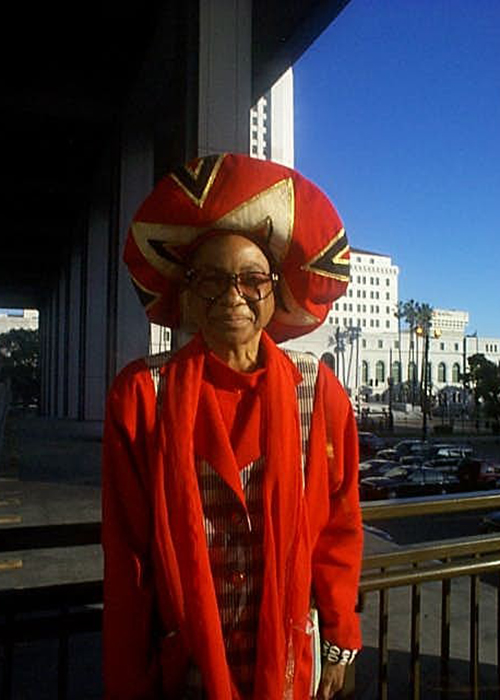
Sister Somayah Kambui: An Early Visionary of Cannabis Equity

Today, “equity” is a watchword in the cannabis legalization movement, as state and local governments try to craft models for an adult-use market designed to correct the social harms of prohibition and the War on Drugs. But this public consciousness is due to the work of many who pushed the issue long before doing so was entirely socially acceptable.

Sister Somayah Kambui, a veteran Black Panther turned cannabis advocate, was one of those who brought issues of racial justice to the forefront of the cannabis movement. And before her untimely death, she won a groundbreaking “jury nullification” victory, upholding her right to provide cannabis to treat sickle-cell anemia.

Sister Somayah, as she was ubiquitously known (she was born Renee Moore), used cannabis to treat sickle-cell anemia, under the terms of California’s Proposition 215 medical marijuana measure after its passage in 1996. But her vocal advocacy made her a target of the authorities — resulting in her unprecedented legal victory. 

Sickle-cell anemia is a genetic blood anomaly that occurs in one in every 70,000 Americans, particularly those of African descent. It can cause debilitating pain, fatigue and swelling of the hands and feet. It took Kambui a while to figure out that cannabis was the most effective treatment for her.

Kambui was a veteran of the U.S. Air Force, where she served several years during the Vietnam era. At VA and public hospitals, she was given morphine for her pain from the disease. 

“I couldn’t do anything on the morph,” she told High Times reporter Peter Gorman. “And neither can a million other people. That’s why you see so many middle aged and older black folk sitting on stoops looking like junkies. They are junkies. They’re U.S. government junkies.”

After finding that cannabis helped, and after the passage of Prop 215, she founded the Crescent Alliance Self Help for Sickle Cell collective, or “buyers’ club.” With a doctor’s recommendation, she began cultivating in her South Los Angeles backyard.

But the police raided her garden in October 2001 and confiscated, by their estimate, 200 pounds of cannabis plants. 

The LAPD brought in a helicopter for the raid, menacing the block of single-family homes.

“I was sitting having a cup of coffee with a little hemp oil when they broke down the door,” Kambui told the Los Angeles Times. “I said, ‘I’m legal, I have a doctor’s note and I’m compliant with the law.'”

She said the officers told her she had too much for her personal use. “I said ‘OK, why don’t you take what you think I don’t need and leave me the rest?'” she recalled to the LA Times. “They took it all.” 

She also disputed the police estimate of the haul. “That is 200 pounds wet, with dirt and stalks,” she said.

Kambui was arrested, spent 60 days in jail and was charged with multiple felonies including cultivation, sale and shipping marijuana out of state. Worse still, she was facing a life prison term under California’s “Three Strikes” law. Her two prior convictions, involving illegal firearms possession and explosives, stemmed from her work with the Black Panthers in the early 1970s. During her time as a legendary Panther, she was known as “Peaches,” and was a leader of the Southern California Chapter of the Black Panther Party, alongside Geronimo Pratt.

When she went before the judge at Los Angeles County Court in January 2002, Kambui said the cannabis was not for her use alone, but was to be shared with some dozen sickle-cell sufferers in her club. “They’re all mine,” she said, taking full responsibility for all the uprooted plants. She also admitted shipping to sufferers who were too far away to come see her. 

And she asserted that her advocacy had made her a target, noting that she’d been similarly raided in 1998 — although the charges were dropped after she spent two weeks in jail.  

Making a medical necessity defense, Kambui spoke to the court of the long centuries of medicinal cannabis use in African traditional healing. Using her own idiosyncratic lingo, she referred to the African continent as “Nigretia,” and to her cannabis as “Nigretian Kif.”  

Sister Somayah Kambui

The trial ended in an outcome that The Leaf Online website hailed as a “jury revolt or jury nullification,” in which a defendant is acquitted on moral or ethical grounds, in spite of uncontested evidence that she or he acted as charged. On March 18, 2002, Sister Somayah Kambui was found “not guilty” of all charges.

In addition to being a rare victory for the doctrine of nullification, Kambui’s legal battle also anticipated a change in California law. It was the following year that the “medical marijuana collective defense” was enshrined in the Medical Marijuana Program Act, the notorious Senate Bill 420. 

Pushing Racial Justice in the Cannabis Community 

By the time of her court case, Kambui was already a leading figure in Southern California’s cannabis activist scene. She was the key mover behind the first Los Angeles Global Marijuana March in 1999, and all the subsequent ones until her death. And she was particularly aggressive in calling out the cannabis community one what she saw as its internal racism — for instance, in failing to emphasize sickle-cell anemia in medical marijuana advocacy, and failing to make the link between prohibition and militarized policing of black and brown communities.

But she bridged a cultural divide in 1997, when she teamed up with B.E. Smith, a brazen and police-defying cannabis grower of white redneck roots in the backwoods of Northern California’s Trinity Alps. Smith became “designated caregiver” for Kambui, among a handful of other medical users around the state. Alas, she never got to use B.E.’s bud, as his cultivation site was raided by federal agents that harvest season—resulting in his own landmark legal battle. Smith died earlier this year.

Unfortunately, Kambui’s run-ins with the law were not over after her court victory. In October 2003, her garden was again raided — this time by the DEA. A dozen plants were uprooted, although no charges were filed. 

California NORML coordinator Dale Gieringer decried the raid as a “mean-spirited, gratuitous attack on a seriously ill woman who has been judged guiltless by her peers under California law. Like other victims of DEA’s medical marijuana raids, Somayah was targeted because she was a vocal, legal patient activist who was a thorn in the side of the law enforcement establishment.” 

Like many front-line activists who put a commitment to community ahead of personal gain, Kambui received little material reward for her efforts. When she died on Thanksgiving 2008, at the age of 57, the website Time4Hemp wrote that economic hard times likely contributed to her demise: “Many close to her believe she died of a broken heart based on lack of financial support. All those dispensaries in Los Angeles and not one would help her save her home from foreclosure.” 

Twelve years after her passing, Sister Somayah Kambui reminds us of the need to preserve the memory of those who sacrificed for such freedom and consciousness as we have now achieved. And more poignantly, of the need to honor and support our freedom fighters while they still walk among us. 

TELL US, what did you learn from Sister Somayah?

The post Sister Somayah Kambui: An Early Visionary of Cannabis Equity appeared first on Cannabis Now.

Tod Mikuriya: Grandfather of Medical Marijuana

Dr. Tod Mikuriya was a critical force in the successful and ground-breaking effort to legalize medical marijuana in California in the 1990s. Now his papers are available to researchers through a newly archived collection at the National Library of Medicine.

The Berkeley psychiatrist, who died in 2007, was hailed as the grandfather of the medical marijuana movement, backing up the activists with unimpeachable scholarly chops to the rage of the Drug War establishment. It was hard to assail his credibility, as he had actually headed up the National Institute of Health’s cannabis research program in the 1960s before defecting to the side of the people being studied, so to speak. 

An ‘Inappropriate Attack of Curiosity’ 

Mikuriya was born in a rural part of Pennsylvania’s Bucks County in 1933, to mixed German and Japanese immigrant stock. This obviously made him the target of prejudice during his childhood in World War II, an experience to which he would later attribute his rebellious streak. 

Mikuriya received his bachelor’s degree in psychology from Reed College in Oregon in 1956, before serving a medic in the Army. He then went to medical school at Philadelphia’s Temple University, where the turning point in his life occurred. 

As he would years later relate to video-journalist Ruby Dunes on the sidelines of a cannabis conference in Santa Barbara, in 1959 Mikuriya was “struck by an inappropriate attack of curiosity” after reading an unassigned chapter in a pharmacology textbook that mentioned the widespread medicinal use of cannabis in the United States before it was outlawed in 1937.

He was sufficiently intrigued that on summer break between semesters that year, he overcame his ingrained fear and traveled to Mexico to seek the stuff out, buying a small quantity from a street-dealer. Nothing would ever be the same for him.  

In 1966, Mikuriya began directing the drug addiction treatment center of the New Jersey Neuropsychiatric Institute, at Princeton. That same year, he travelled to Morocco’s hashish heartland of the Rif Mountains, where he smoked kif with Berber tribesman who had resisted French colonial efforts to stamp out cannabis smoking.  

It was also during this period that he discovered and immersed himself in the works of Sir William Brooke O’Shaughnessy, the Irish physician who researched the long tradition of medicinal use of cannabis in India in the 19th century. Mikuriya came to view O’Shaugnessy as a “personal hero.” 

Mikuriya was also among the first scholars to re-explore the findings of the Indian Hemp Drugs Commission Report, the 1894 study ordered by British colonial authorities to examine the supposed cannabis problem in the subcontinent, which instead determined that use is “either harmless or even beneficial.” 

In 1967, Mikuriya became a researcher at the Center for Narcotics & Drug Abuse Studies of the National Institute of Mental Health (NIMH), itself a division of the National Institutes of Health. This agency was the predecessor of today’s National Institute on Drug Abuse (NIDA). There, he headed up what he would later call the government’s “first overground cannabis research program.” (He would learn there was a “concurrent secret study” going on at Edgewood Arsenal in Maryland, linked to the CIA’s search for truth serums and psychotropic warfare agents.) 

He was dispatched to California for the study, to observe the habits of the hippies who were then bursting upon the scene. But as Martin Lee writes in his book “Smoke Signals: A Social History of Marijuana,” “Mikuriya realized that as far as cannabis was concerned he had more in common with the reefer rebels he visited in Northern California than with the ‘repressed bureaucrats’ who debriefed him when he returned from the West Coast.”

In 1968, Mikuriya stepped down from his NIMH position and moved to Berkeley, where he took up a private psychiatric practice. The most important work of his life was about to begin.

Intellectual Force Behind Medical Marijuana Push 

In 1972, Mikuriya published the Marijuana Medical Papers: 1869-1972, a germinal work that was instrumental in launching the modern movement for medical marijuana.  

As this movement began to take off in California amid the AIDS crisis of the 1980s, Mikuriya came to be seen as the intellectual prowess behind the activist efforts.

San Francisco’s cannabis crusader Dennis Peron was viewed as the key architect of Proposition 215, the 1996 ballot measure that made medical marijuana legal in California, but it was Mikuriya who helped draft the text. If Peron was the father of the medical marijuana movement, Mikuriya was its grandfather, providing guidance behind the scenes. 

After the passage of 215, he founded Mikuriya Medical Practice, which lives on today and touts itself as “California’s original medical marijuana consultation service.” During this period, he was writing numerous medical marijuana recommendations for patients every day. He was fondly known to his following as “Dr. Tod.” 

In the following years, he would found the California Cannabis Research Medical Group and its latter offshoot, the Society of Cannabis Clinicians.

But his open stance also attracted unwelcome if inevitable attention from the authorities. President Bill Clinton’s hardline drug czar, Gen. Barry McCaffrey, publicly derided Mikuriya’s medical practice and advocacy as “the Cheech and Chong show.” 

Finally, in 2000, the Medical Board of California accused Mikuriya of unprofessional conduct for allegedly failing to conduct proper physical examinations on 16 patients for whom he had recommended cannabis. The case was based on the testimony of undercover agents, including police. He would tell the medical board at his disciplinary hearing, “Never before had a fake witness infiltrated my practice and created a fraudulent medical record. It’s most upsetting.” 

None of his legitimate patients complained about his conduct — on the contrary, several testified to the Medical Board in his defense. 

In 2004, the Medical Board gave Mikuriya five years’ probation and a $75,000 fine. He appealed the ruling, and was allowed to continue practicing under the supervision of the state-appointed monitor. 

‘First-line Medication’ 

Mikuriya died of cancer in May 2007. His obituary in the New York Times noted that he was reported to have recommended cannabis for nearly 9,000 patients. 

And he was quite out of the closet about his own use. As the Los Angeles Times reported in 2004, “He willingly acknowledges, unlike most of his peers in cannabis consulting, that he does indeed smoke pot, mostly in the morning with his coffee.” 

As Mikuriya told Ruby Dunes in the interview the year before he died, “Cannabis is far less dangers than most any other medication you can think of, especially when dealing with chronic conditions. Cannabis should be looked on as a first-line medication, instead of it being something that you try when you give up on all the conventional treatments.” 

TELL US, do you consider cannabis a first-line medication?

The post Tod Mikuriya: Grandfather of Medical Marijuana appeared first on Cannabis Now.

❌