The U.S. State Department has approved a possible $301 million Foreign Military Sale to Italy for advanced long-range cruise missiles and associated support, according to a release from the Defense Security Cooperation Agency (DSCA). Italy has requested to purchase 100 AGM-158B/B-2 Joint Air-to-Surface Standoff Missiles with Extended Range (JASSM-ER), along with encryption equipment, software, spare […]
According to a press release from Consob on December 4, 2025, Italy’s securities regulator told crypto and virtual asset service providers (VASPs) that they must secure authorization under the EU’s Markets in Crypto-Assets regime (MiCA) by December 30, 2025, or stop serving Italian clients.
The notice warns operators that those who do not file for a MiCA-compliant license must close out services and return customer funds by the year-end.
Consob’s Deadline And What It Means For Firms
Based on reports, companies that submit an authorization application by the cutoff may keep operating while the application is under review. But that temporary permission will not last beyond June 30, 2026, regulators say. That window gives providers some breathing room, but it also sets a hard date for final approvals.
The regulator singled out platforms that until now have worked under Italy’s lighter national registry system (OAM). Those businesses now face a choice: apply to become fully authorized crypto-asset service providers (CASPs) under MiCA or plan an orderly exit. Operators who plan to leave must notify users clearly and return assets in a safe, verifiable way.
Italy Opens A Broader Risk Review
According to a Reuters report, Italy’s Economy Ministry has also ordered an in-depth review of crypto risks, bringing together the Bank of Italy, Consob and other agencies to check whether current protections are strong enough for investors and the wider financial system. The move came during a committee meeting that flagged rising exposure and the need to monitor spillovers into traditional finance.
What Investors Should Watch For Next
Customers in Italy should confirm whether their chosen platform has lodged a MiCA application or has made clear plans for compliance or exit. If an operator fails to apply by December 30, users could face service interruptions and will need to follow the provider’s instructions for fund returns. Regulators say transparency from firms will be key in the weeks ahead.
Smaller local platforms may find the compliance burden steep. Some operators could seek licenses in other EU states and use passporting rules to serve Italian clients, while others may shut down or merge.
The provisional operating window stretches into mid-2026, but the final shape of the market will depend on how quickly firms meet the tougher requirements and how long authorizations take to process.
Consob’s notice is meant to cut through uncertainty and force a choice before year-end. The combination of a firm deadline, mandatory filings and a parallel review marks a stricter approach to crypto oversight in Italy.
Featured image from Unsplash, chart from TradingView
Italy’s Consob says VASPs must obtain MiCA-compliant CASP authorization by Dec. 30, 2025, or cease Italian operations, return client assets, and clearly communicate exit or compliance plans. Italy’s financial market regulator has directed cryptocurrency providers to secure authorization under Europe’s…
Consob has urged VASPs to secure CASP approval or shut down by December 30, 2025.
This comes as the deadline for transitioning to new MiCAR policies approaches.
Unauthorised operators will halt their services and return user assets.
Italy’s financial regulator Consob has issued an urgent call to digital assets investors and operators as the nation moves closer to adopting MiCAR policies.
According to the late yesterday press release, Consob emphasised December 30, 2025, as the last day VASPs (Virtual Asset Service Providers) operating under the existing regime will be able to serve without full approval.
Consob has warned that operators who fail to follow this transition risk a ban.
Thus, any VASP operating in Italy should adhere to the EU’s Markets in Crypto-Assets Regulation or exit the marketplace.
30 December 2025 is the last day on which Virtual Asset Service Providers (VASPs, operators currently offering virtual asset services, such as cryptocurrency exchanges) registered with the OAM (the Organismo Agenti e Mediatori, or Agents and Brokers Organisation) can continue to operate.
MiCAR resets Italy’s regulatory rulebook
Italian regulators have only wanted VASPs to secure the OAM (Organismo Agenti e Mediatori) certificate to operate seamlessly over the years.
Meanwhile, MiCAR brings tougher rules, with only fully licensed Crypto-Asset Service Providers (CASPs) permitted to serve the European Union.
Meanwhile, the authorisation procedure involves operational checks, client protection requirements, supervisory controls, and existing monitoring. That’s far stricter than the previous model.
Consob stressed that VASPs will only operate if they apply for CASP certification in Italy or any other European Union Member State by December 30.
Operators who submit applications by this deadline can keep offering services until the final decision, but all entities should adhere to MiCAR by June 30, 2026.
What’s next for investors?
Consob has warned both operators and day-to-day cryptocurrency users.
Investors should promptly confirm whether their desired service provider plans to adhere to the new policies and requirements.
Here, they can monitor two crucial things.
First and foremost, investors should check whether the operator has published its MiCAR transition plans.
Secondly, investors should verify the provider’s regulatory status after the deadline.
VASPs that don’t apply or fail to secure approval will not operate in Italy after December 30, and customers can request a return of their assets upon such developments.
Meanwhile, Consob confirmed warning operators multiple times during the transition phase, highlighting updates in September last year, July 2025, and the October 31 notice to companies still holding only the OAM certificate.
While some operators view MiCAR as the pathway for regulated, international operations, others consider the new regulation as the end of the road.
Meanwhile, digital assets investors should stay alert, check the provider’s regulatory status, and act before the new MiCAR regulations lock them out or pressure them with last-minute withdrawals.
Italy’s market watchdog has told crypto providers to either secure authorization under Europe’s new MiCAR regime by Dec. 30 or shut down their local business, stepping up pressure on exchanges and brokers serving local users.
Consob, the country’s securities regulator, urged both investors and operators to pay “maximum attention” as the transition period for the EU’s Markets in Crypto-Assets regulation nears its end.
The rules will reshape how virtual asset service providers operate across the bloc and how they market trading, custody and other services to retail clients.
Under the Italian framework, firms currently acting as Virtual Asset Service Providers, or VASPs, can continue to operate only until Dec. 30, 2025, while they are registered with the OAM, the national agents and brokers registry.
Italy’s financial regulator Consob has warned investors and Virtual Asset Service Providers (VASPs) that the MiCAR transition period will end on December 30, 2025. VASPs that do not apply for authorization as Crypto-Asset Service Providers (CASPs) by the deadline must cease…
After that, they must have taken concrete steps toward becoming MiCAR-compliant crypto-asset service providers, or CASPs, if they want to stay in business.
VASPs that file an authorization application by Dec. 30, either in Italy or in another EU member state, will be allowed to keep serving customers while supervisors process their files. That temporary window will close once the application is approved or rejected, and in any case no later than June 30, 2026.
The current regime in Italy only requires VASPs to register with the OAM. Under MiCAR, CASPs will need prior authorization from their supervisory authority and will then come under ongoing supervision, aligning Italy with the wider European push for stricter oversight after a series of global exchange failures and token collapses.
To support an orderly and transparent transition, Consob issued a detailed notice that mirrors guidance published the same day by the European Securities and Markets Authority. The document spells out what retail users should do as the deadline approaches and what operators must put in place if they plan either to seek a license or wind down.
Regulator Warns Users To Verify VASP Status Before Year-End Cutoff
For investors, the regulator stressed that some VASPs currently operating may no longer be allowed to do so after December 30. It said clients should check whether they have received clear information from their provider on its plans, and if not, ask for an explanation of how it intends to comply with the new framework.
Consob also told users to verify that a firm is legitimately allowed to operate in Italy after the deadline, either by checking the OAM list of VASPs or the ESMA register of authorized CASPs. If a provider is not legitimate, it cannot continue to offer crypto-asset services to the public and customers have the right to ask for the return of their funds or tokens.
On the operator side, Consob recalled that it has already shared guidance through meetings and public communications, including a notice in Sept. 2024 with initial instructions for firms and another in July 2025 when the national transition period was extended to June 30, 2026. It also sent a specific warning on October 31, 2025 to VASPs on the OAM list that still lack MiCAR authorization.
The regulator said VASPs that choose not to seek authorization as CASPs must stop their activities in Italy by December 30, 2025 and close existing contracts. They must return crypto-assets and related funds to customers in line with client instructions and end all services, including custody and administration.
VASPs that remain on the OAM register are required to post clear information on their websites and provide direct notice to clients on the steps they plan to take, whether that is applying for a MiCAR license or exiting the market in an orderly way.
Italy’s Economy Ministry has ordered a detailed review of current protections against crypto risks, officials said on Thursday.
The review will focus on safeguards for both direct and indirect investments in crypto-assets by retail investors, regulators added.
The decision came during a meeting of the Committee for Macroprudential Policies. The committee includes the heads of the Bank of Italy, market watchdog Consob, insurance and pension regulators, and the Treasury’s director general, according to Reuters reporting.
Committee members warned that risks from crypto-assets could rise. Growing connections between crypto and the wider financial system, along with inconsistent international regulations, could heighten vulnerabilities, they said.
The committee said Italy’s economic and financial conditions remain generally stable. At the same time, global uncertainty continues to pose challenges for financial stability.
The review will examine how existing rules protect investors and the financial system. Officials said they aim to identify gaps and recommend measures to strengthen safeguards, per Reuters.
Italy has increasingly monitored digital assets in recent years. Authorities have raised concerns over investor protection, market integrity, and potential spillovers into the broader financial system. The new review signals a more cautious approach to crypto adoption in the country.
Italy’s cold-shoulder to crypto
Last year, Italy proposed a steep tax hike on crypto trades, aiming to raise the rate on digital asset gains from 26% to 42% as part of its October budget plan.
The measure was designed to boost public finances but quickly drew criticism from the crypto industry, which warned that such an aggressive increase would damage the country’s competitiveness — especially with the EU preparing to roll out its Markets in Crypto-Assets (MiCA) framework later this year.
The government backed down from its proposal after sharp criticism from Italy’s crypto industry. Under the revised budget plan, the capital-gains tax on digital asset trades is now expected to rise to 33% starting in the 2026 financial year, per reports.
Last week, Bitizenship launchedBTC Italia and The Bitcoin Dolce Visa, a Bitcoin-aligned pathway for obtaining Italy’s Investor Visa through a €250,000 startup investment.
The Milan-based venture operates as an “Innovative Startup” focused on Bitcoin Layer-2 yield generation and treasury management, giving applicants exposure to a Bitcoin-native business while staying within Italy’s regulatory framework.
The initiative comes as Italy posts strong economic performance, including record exports, a €46 billion trade surplus, stabilizing public debt, and a stock market that has doubled since 2020. With capital-market reforms on the horizon and competitive tax incentives, the country has become an increasingly attractive destination for foreign investors.
Under the program, applicants receive visa approval before committing funds. BTC Italia maintains its treasury in Bitcoin, uses non-custodial Layer-2 staking for operations, and offers redemption windows every 24 months.
Japan, the United Kingdom and Italy moved one step closer to a major milestone in their joint next-generation fighter program this week, as the three defense ministers met by video conference to advance the Global Combat Air Program (GCAP). The Japanese Ministry of Defense said the meeting took place on Nov. 25 from 5:00 p.m. […]
Ssamjang pasta, unique Korean-Italian fusion recipe made with the condiment Ssamjang. The pasta gets a very unique umami taste from the fermented bean paste, which pairs beautiful pasta creating a thick creamy sauce with the garlic, parmesan and milk. Ssamjang Pasta Recipe Korean seasoned bean paste pasta is truly addictive. The kind of dish...
Red sauce pasta is a delicious pasta dish made with tomatoes, garlic, dried herbs and seasoning. Making Italian style red sauce is easy and quick for weeknight dinners just like my white sauce pasta . In this blog post, I have shared a basic red sauce recipe and made few variations like creamy red sauce...
MiCA currently lets companies gain cross-border access via a single national licence.
National regulators and firms fear a loss of control and added bureaucracy.
France, Austria and Italy have backed ESMA’s expanded role for large firms.
The European Commission is preparing to give the European Securities and Markets Authority sweeping powers over the crypto sector.
If approved, ESMA would become the sole body responsible for supervising all crypto asset service providers in the European Union, reported Bloomberg.
The proposal marks a significant change to how the bloc regulates digital assets, placing oversight in the hands of a central authority rather than relying on 27 national regulators.
This draft plan, expected to be announced next month, comes just months before the full implementation of the Markets in Cryptoassets Regulation.
MiCA, passed in 2023, is set to become the EU’s flagship framework for crypto regulation.
Under MiCA, companies currently only need a licence in one member state to operate across the bloc.
This structure has been the result of years of work by both regulators and firms.
MiCA faces uncertainty
MiCA was designed to provide legal clarity and consistency across the EU.
It allows firms to gain authorisation in a single country and use that to offer services in other EU states. This system is known as passporting.
The goal was to reduce fragmentation and streamline operations for businesses.
But the Commission’s new plan would override this process by giving ESMA direct responsibility for approving and monitoring all providers, regardless of where they are based.
The draft proposal suggests ESMA could delegate tasks back to national authorities when needed.
However, the central point of contact would still be ESMA. This change has raised concerns from those involved in the rollout of MiCA.
With the implementation window closing in 2024, firms and local regulators worry that shifting the framework now could cause delays and confusion.
Critics argue that restarting the discussion around MiCA could undermine legal certainty.
Others say that moving responsibilities to ESMA without enough resources could weaken enforcement.
The proposal still needs support from both the European Parliament and the Council of the EU before it becomes law.
Pushback from regulators
The Commission’s move has not gone unnoticed by crypto industry bodies. Many believe that local regulators are better equipped for day-to-day engagement with firms.
Blockchain for Europe, an industry group, has warned that centralising control at this stage would divert attention from the task of getting MiCA running smoothly.
Some consultants have also pointed out that ESMA would require more staff and funding to take on such a role.
National authorities have already invested heavily in building teams and expertise to meet MiCA’s demands.
Replacing that with a central process could result in delays in licensing and supervision.
ESMA chair Verena Ross said earlier this year that the current structure, with 27 separate supervisors preparing for the same task, may not be the most efficient model.
France backs centralised model
France, along with EU institutions, has pushed hardest for expanding ESMA’s powers.
In September, regulators from France, Austria and Italy called for ESMA to supervise major crypto firms directly, while smaller companies could remain under national watch.
This idea would create a two-tier system and offer a compromise between full centralisation and local control.
The proposal is part of a wider trend in the EU to centralise financial oversight.
Brussels has also suggested giving ESMA control over clearing houses, trading venues, and depositories.
However, some countries have resisted, arguing that giving up national control could create unnecessary bureaucracy and reduce flexibility.
The urgency of reform increased in July when ESMA raised concerns about Malta’s crypto licensing practices.
The Maltese regulator had issued MiCA approvals to several firms, prompting questions about consistency and due diligence across the EU.
This incident added weight to the argument for a more unified supervisory model.
As the Commission finalises its proposal, the crypto sector remains on edge.
Businesses are waiting to see whether their licensing and regulatory future will remain at the national level or shift entirely to an EU-wide body.
Kaspersky researchers uncovered Operation ForumTroll, an attack campaign utilising the new 'Dante' spyware developed by Memento Labs, the rebranded Hacking Team. The attacks used a Chrome zero-day vulnerability (CVE-2025-2783) and COM hijacking for persistence, confirming the continued deployment of advanced surveillance tools by the controversial Italian firm.
Spinach mushroom lasagna is also known as vegetarian lasagna with spinach and mushrooms or creamy spinach and mushroom pasta bake. It is a rich and comforting italian inspired dish which is layered with tender lasagna sheets, creamy mushroom spinach filling and a gooey melted cheese. Spinach & Mushroom Lasagna Lasagna is one of the most...

 Login
Login The U.S. State Department has approved a possible $301 million Foreign Military Sale to Italy for advanced long-range cruise missiles and associated support, according to a release from the Defense Security Cooperation Agency (DSCA). Italy has requested to purchase 100 AGM-158B/B-2 Joint Air-to-Surface Standoff Missiles with Extended Range (JASSM-ER), along with encryption equipment, software, spare […]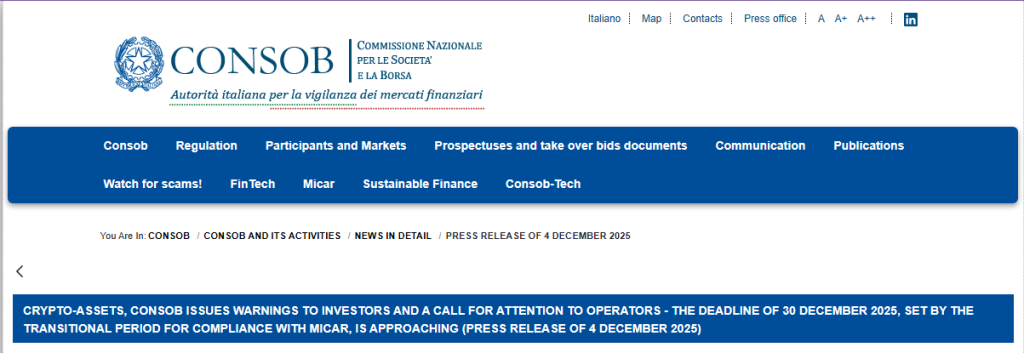





 Japan, the United Kingdom and Italy moved one step closer to a major milestone in their joint next-generation fighter program this week, as the three defense ministers met by video conference to advance the Global Combat Air Program (GCAP). The Japanese Ministry of Defense said the meeting took place on Nov. 25 from 5:00 p.m. […]
