Reading view

There are new articles available, click to refresh the page.

NASA Glenn Teams Win 2025 R&D 100 Awards 
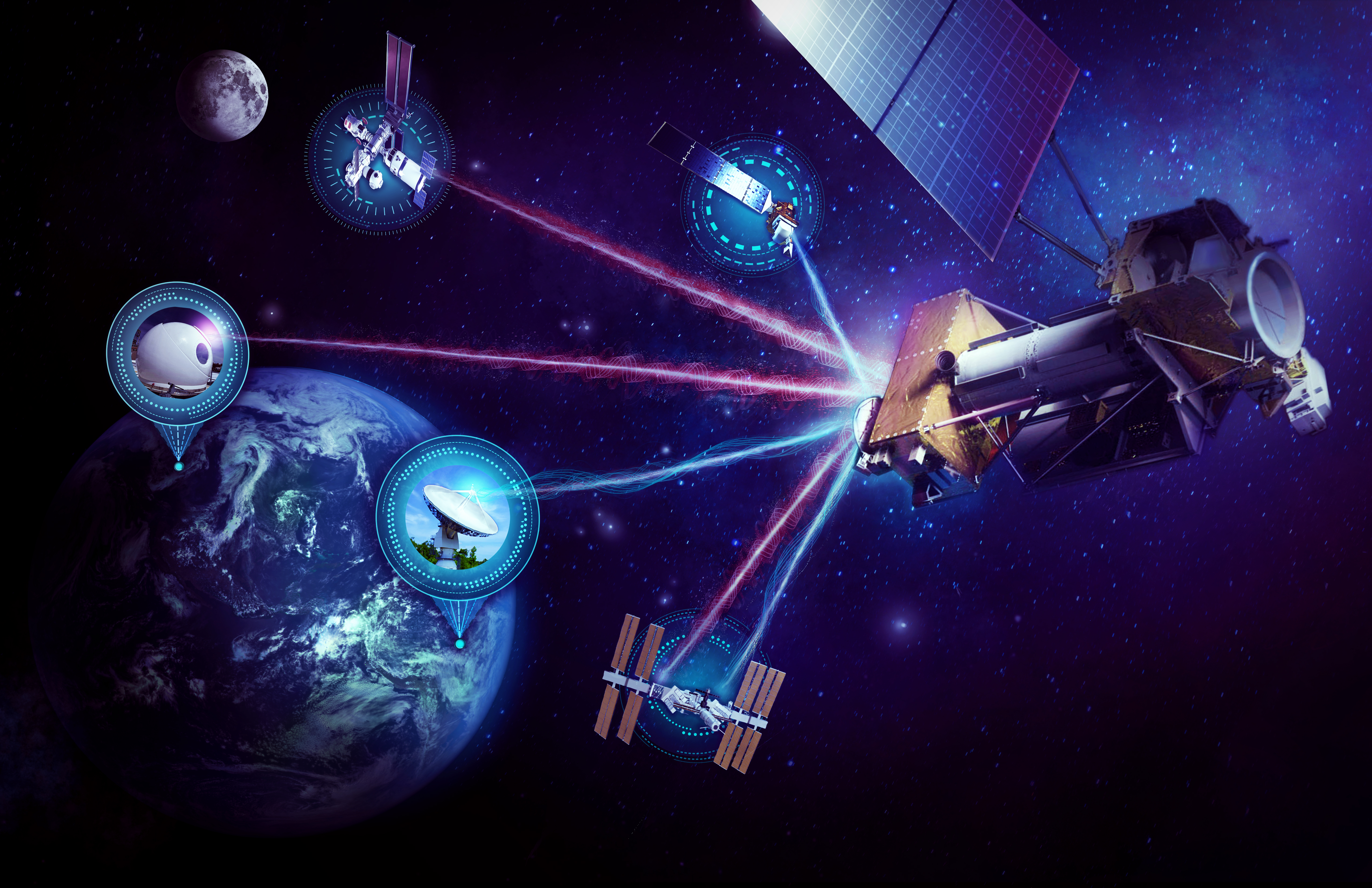
Graphic drawing showing the Earth and the Moon with satellites in space linked by lasers to circles showing planetary habitats, satellite dishes, and the space station.
Artistic rendering of the High-Rate Delay Tolerant Networking protocol being used on the Laser Communications Relay Demonstration to transfer radio and optical communications between Earth and space.
Credit: NASA 

NASA’s Glenn Research Center in Cleveland has earned 2025 R&D 100 Awards for developing a system that delivers high-speed internet for space and co-inventing technology for a new class of soft magnetic nanocrystalline materials designed to operate at extreme temperatures. This brings NASA Glenn’s total to 130 R&D 100 Awards. 

High-Rate Delay Tolerant Networking  

NASA Glenn’s Daniel Raible and Rachel Dudukovich led their team of engineers to create High-Rate Delay Tolerant Networking  (HDTN), a cutting-edge software solution designed to revolutionize data streaming and communication in space. HDTN enables reliable, high-speed transmission of data between space and Earth — even under the extreme conditions of space — minimizing loss and system delay. 
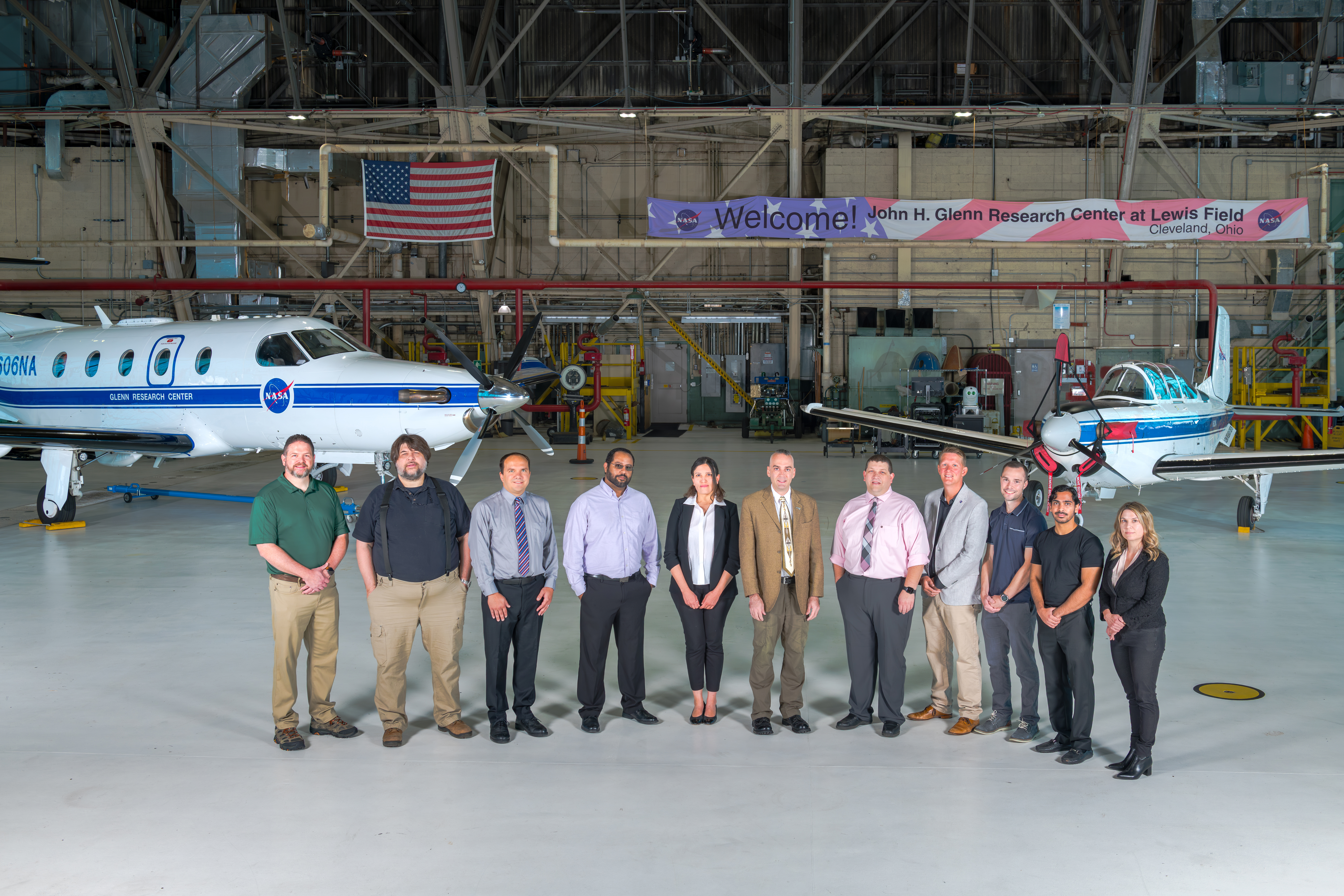
Eleven people stand next to one another inside an airplane hangar. Two small planes sit behind them. An American flag and a banner reading “Welcome! John H. Glenn Research Center at Lewis Field, Cleveland, Ohio” are visible behind the group.
High-Rate Delay Tolerant Networking team photo, left to right: Tad Kollar, Eric Brace, Brian Tomko, José Lombay-González, Nadia Kortas, Daniel Raible, John Nowakowski, Shaun McKeehan, Ethan Schweinsberg, Prash Choksi, and Rachel Dudukovich.
Credit: NASA/Jef Janis 

“The HDTN software protocol allows faster, automated, and seamless data transfer between spacecraft, even across communication systems operating on different link speeds,” Raible said. “It’s up to 10 times faster than current delay-tolerant networking (DTN).” 

This advanced technology has far-reaching implications beyond NASA. With its open-source code, HDTN paves the way for collaboration, innovation, and adoption across the rapidly expanding commercial space industry, offering near real-time communication capabilities. 

Looking ahead, HDTN could form the foundation of a solar system-wide internet, supporting data exchange between Earth, spacecraft, and even future missions involving human travel to the Moon and Mars. 

VulcanAlloy 

In a project led by the University of Pittsburgh, researchers at NASA Glenn, including Nick Bruno, Grant Feichter, Vladimir Keylin, Alex Leary, and Ron Noebe, partnered with CorePower Magnetics to develop VulcanAlloy — a breakthrough soft magnetic nanocrystalline material. 
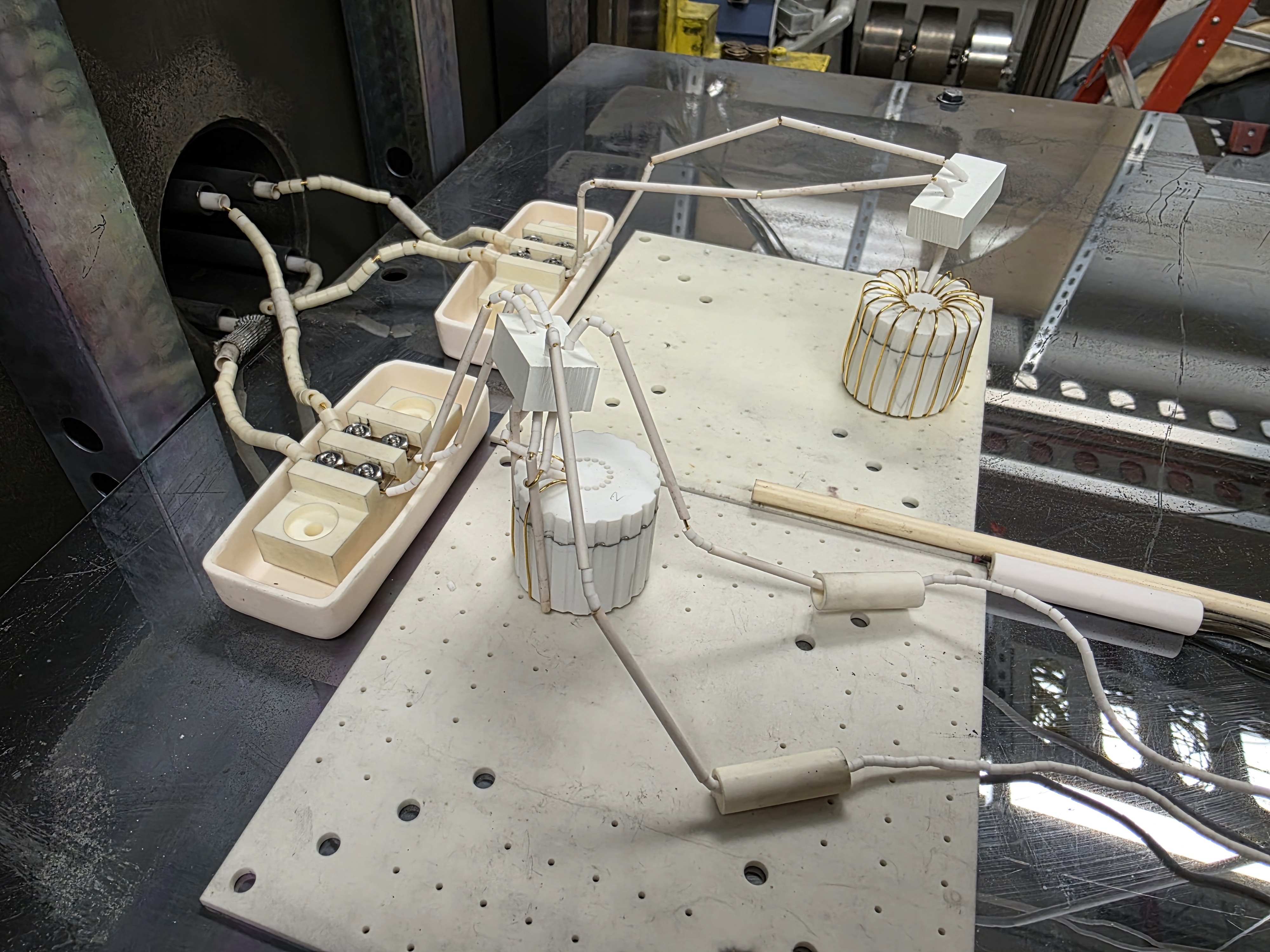
Two packaged inductors with electrical windings sit on a large plate with wiring attached to the inductors and to the Glenn Extreme Environments Rig.
NASA’s Glenn Research Center in Cleveland tested high-temperature inductors using VulcanAlloy technology in the NASA Glenn Extreme Environments Rig, which simulates the conditions on Venus’ surface, on May 13, 2025.
Credit: NASA 

VulcanAlloy, developed under NASA’s High Operating Temperature Technology Program using processing capability established by the Advanced Air Transport Technology project, operates above 500°C, far beyond the limits of conventional soft magnetic materials. Its nano-engineered structure maintains efficiency at high temperatures and frequencies. 

With adjustable magnetic properties, it can replace multiple materials in components like inductors, transformers, motors, and sensors while reducing the need for bulky cooling systems — ideal for extreme environments. 

Raytheon has tested VulcanAlloy cores, highlighting their potential in electrified aircraft, defense, and aerospace systems. 

This innovation also promises major impact in electric vehicles, data centers, microgrids, and energy systems, where smaller, lighter, and more efficient components are key to advancing next-generation power electronics. 

The R&D 100 Awards, a worldwide science and innovation competition, received entries from organizations around the world. Now in its 63rd year, this year’s judging panel included industry professionals from across the globe who evaluated breakthrough innovations in technology and science. 
NASA Glenn Reinforces Role in Aerospace Innovation During Ohio Space Week  

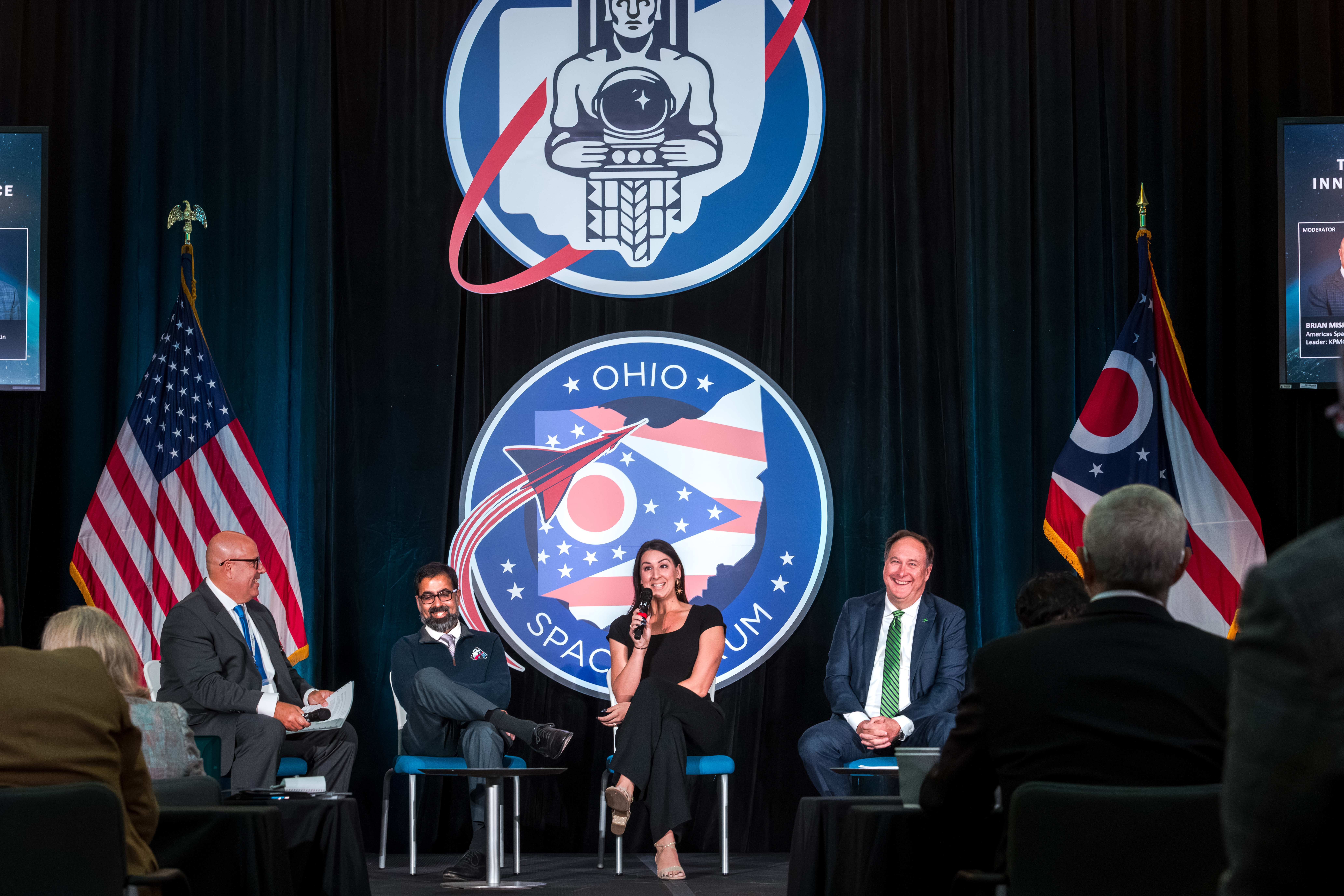
Four panelists sit next to one another on a stage with a dark-blue curtains, an American flag, and an Ohio flag behind them. Circular emblems of an Ohio Space Forum and a pilar from the Hope Memorial Bridge in Cleveland hang behind them.
Left to right: Moderator Brian Miske, Americas Space Leader, KPMG radio, with panelists Amit Kshatriya, NASA associate administrator; Jacki Cortese, senior director, Civil Space: Blue Origin; and Robert Lightfoot, president, Lockheed Martin Space (former NASA associate administrator) discuss balancing innovation, risk, and readiness in space during the Ohio Space Forum. 
Credit: NASA/Jef Janis

Ohio Space Week, Sept. 8–13, highlighted the state’s aerospace legacy and the role NASA’s Glenn Research Center has in advancing space technology. 

The week kicked off with the American Astronautical Society’s Glenn Space Technology Symposium, Sept. 8–10, hosted by Case Western Reserve University. Experts, students, and industry leaders gathered to discuss emerging space technologies. NASA Glenn Director Dr. Jimmy Kenyon delivered opening remarks, and astronaut Doug “Wheels” Wheelock gave a keynote on his spaceflight experience. 

On Sept. 11, Team NEO hosted the Sixth Annual Ohio Space Forum at NASA Glenn, bringing together leaders from aerospace, government, academia, and research. The forum spotlighted Ohio’s leadership in space innovation, including advances in nuclear electric and nuclear thermal propulsion. Key participants included NASA Associate Administrator Amit Kshatriya, astronaut Sunita “Suni” Williams, several local and state officials, and other community partners. 3News Chief Meteorologist Betsy Kling emceed the event.  

The City Club of Cleveland welcomed astronauts Williams and Wheelock for a presentation to the local community, Sept. 11, and Cleveland Guardians fans cheered as Williams threw out the first pitch during the game at Progressive Field later that day.  

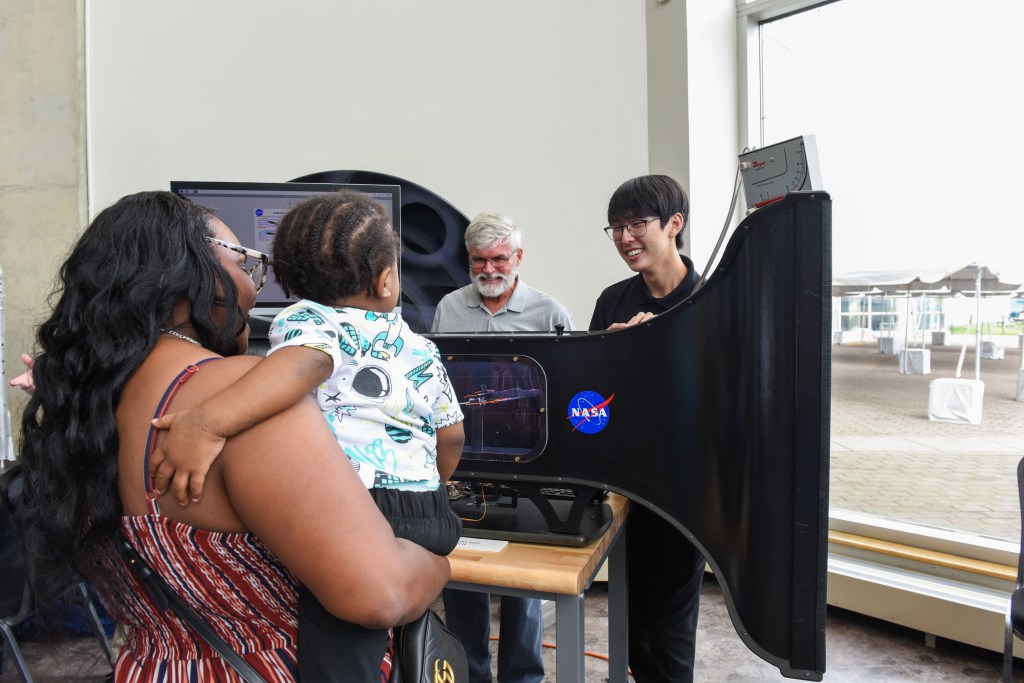
A mother and child in her arms look at a window that shows activity inside a portable wind tunnel. Two staff members on the other side of the tunnel set the controls to make it work.
NASA Glenn experts conduct a wind tunnel demonstration using a portable wind tunnel for visitors during Discovery Days at Great Lakes Science Center in Cleveland on Friday, Sept. 12, 2025.
Credit: NASA/Lily Hammel 
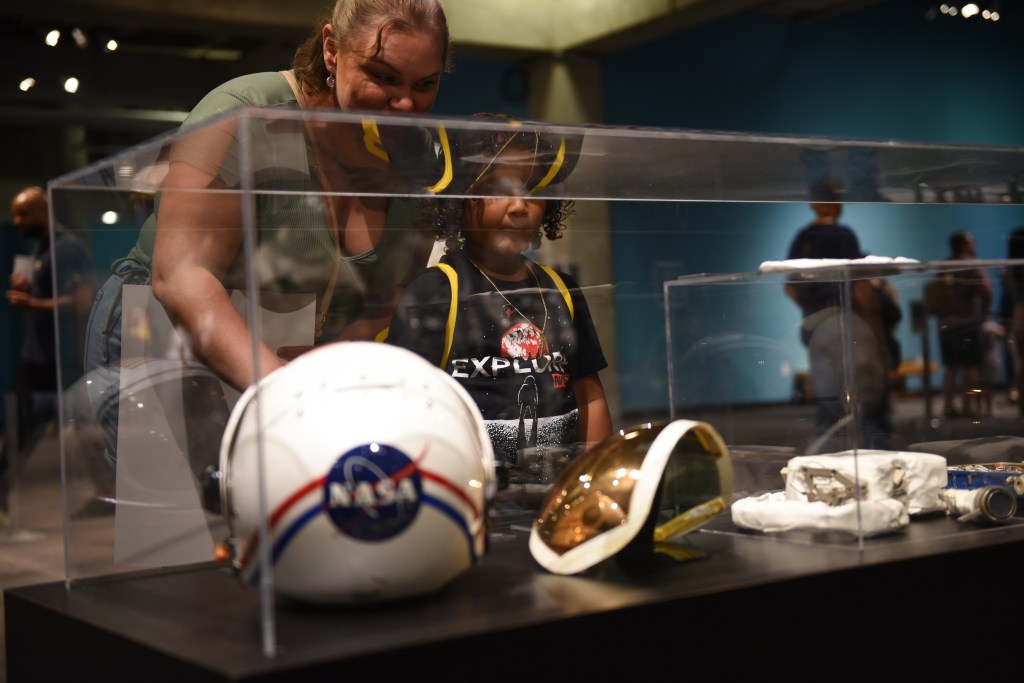
A mother and daughter look inside a clear case that contains a space helmet and other items used by astronauts through the years.
Visitors view items that are part of the “Evolution of the Spacesuit” exhibit during Discovery Days at Great Lakes Science Center in Cleveland on Friday, Sept. 12, 2025.
Credit: NASA/Lily Hammel 
An astronaut holds a bat and looks at the camera on the sidelines of a baseball stadium.
Astronaut Sunita Williams has fun on the sidelines before she throws out the first pitch prior to a Guardians game at Progressive Field in Cleveland on Thursday, Sept. 11, 2025.
Credit: NASA/Lily Hammel 
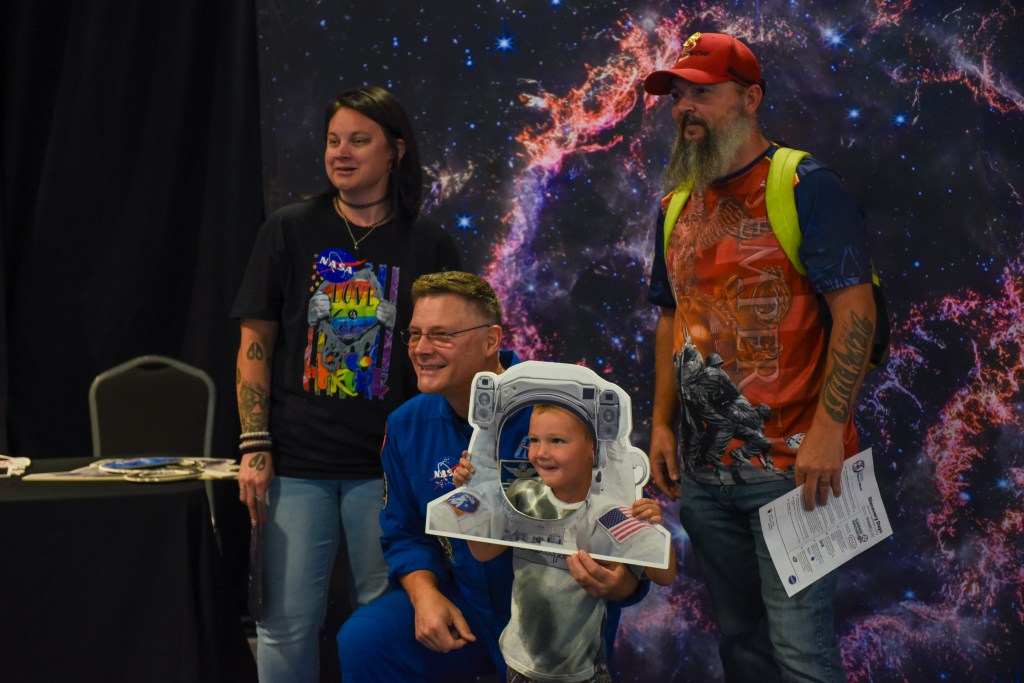
An astronaut crouches beside a young boy wearing a cut-out astronaut helmet. His parents stand beside them and in front of a cosmic backdrop and pose for a photograph.
A family takes a photo with Astronaut Doug Wheelock during Discovery Days at Great Lakes Science Center in Cleveland on Friday, Sept. 12, 2025.
Credit: NASA/Lily Hammel 
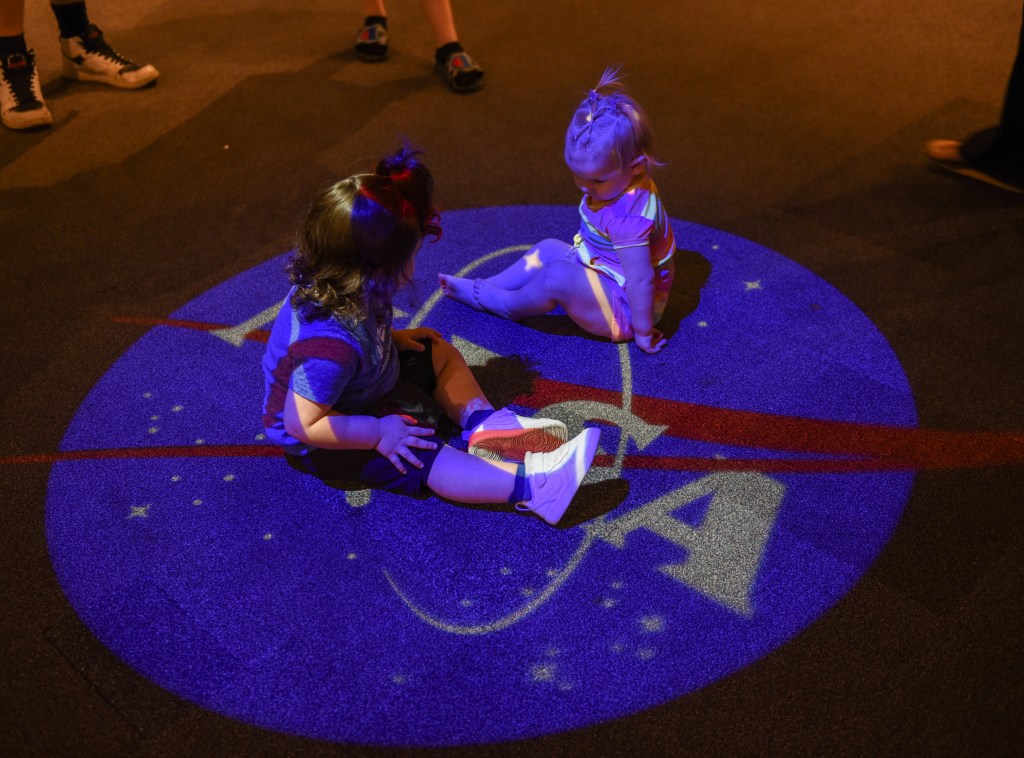
Two toddlers sit on the ground inside a projected image of the NASA insignia and observe parts of the insignia covering their bodies.
Two young visitors at Discovery Days at Great Lakes Science Center in Cleveland on Friday, Sept. 12, 2025, share the NASA spotlight.
Credit: NASA/Lily Hammel 
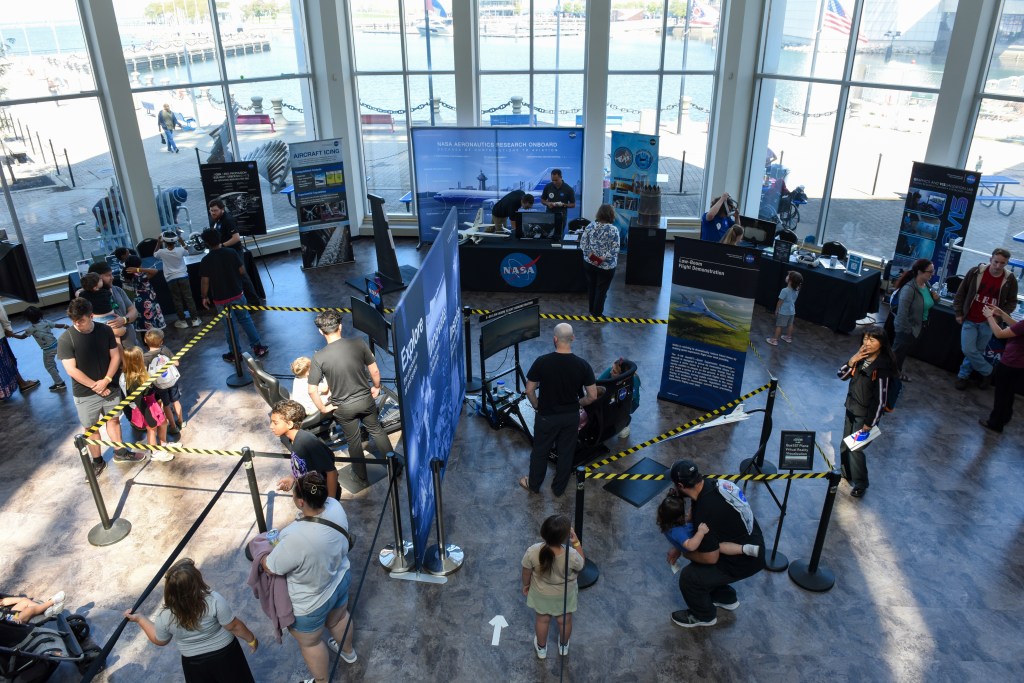
Several hands-on aeronautic-focused activities are set up in a large open area with large glass windows and a view of the lake.
Guests interact with several aeronautics-focused exhibits in the Great Lakes Science Center promenade area on Friday, Sept. 12, 2025, during Discovery Days.
Credit: NASA/Lily Hammel 
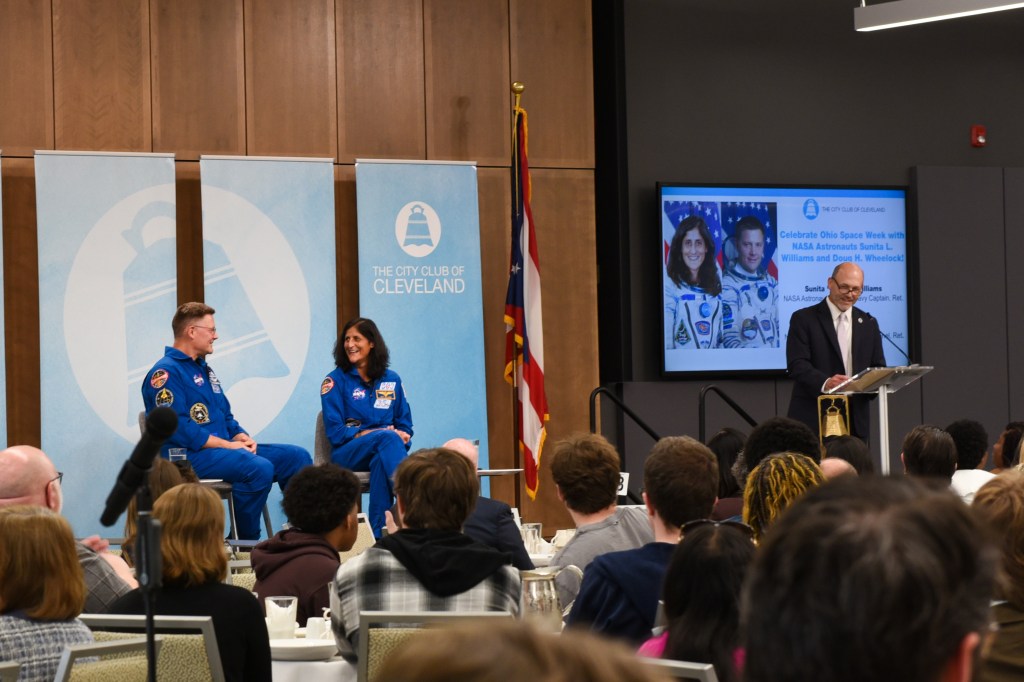
Two astronauts sit on stage in front of a backdrop that reads “The City Club of Cleveland.” To their right, the NASA Glenn center director stands at a podium and addresses the audience. Behind him is a screen with the astronauts’ photos and addresses the audience.
NASA Astronauts Doug Wheelock, left, and Sunita Willams at The City Club of Cleveland luncheon on Thursday, Sept. 11, 2025. NASA Glenn Center Director Dr. Jimmy Kenyon stands at the podium and addresses the audience.
Credit: NASA/Lily Hammel 
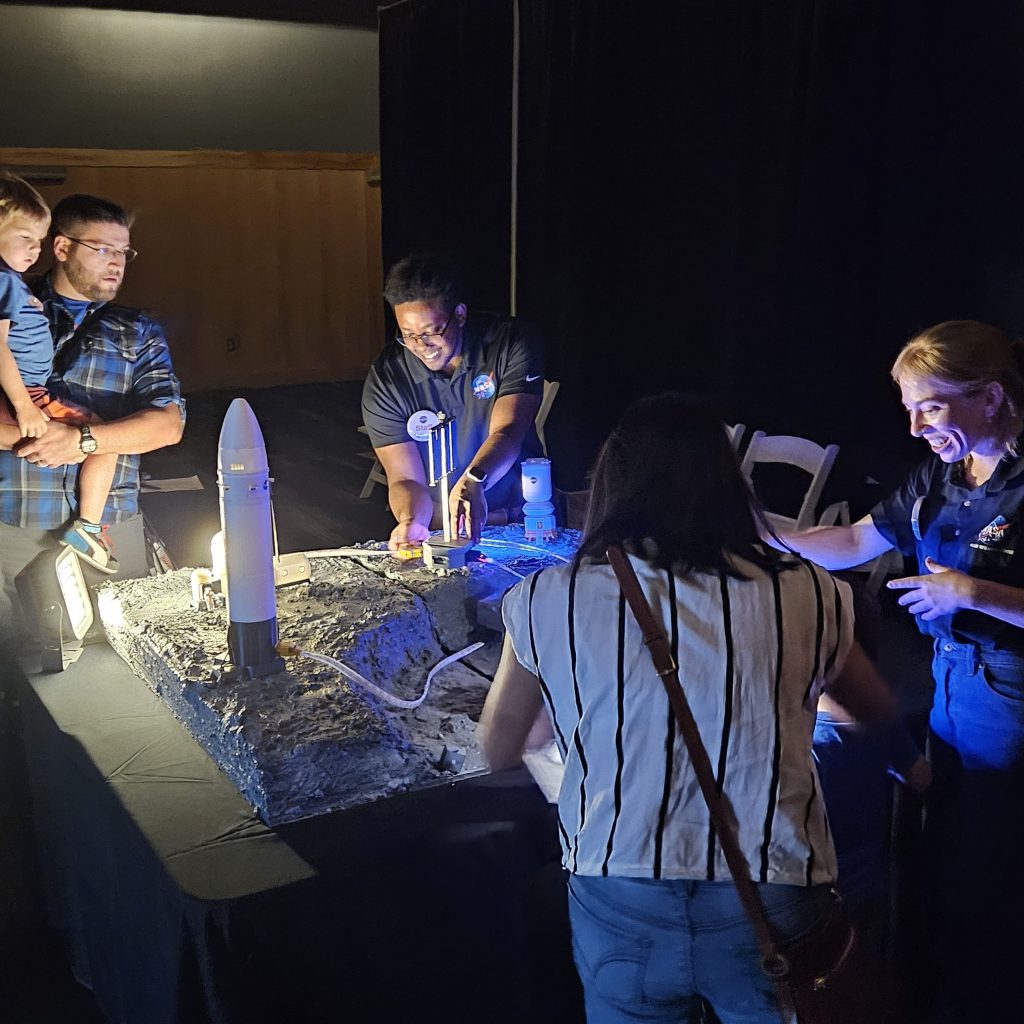
A NASA Glenn staff member connects lighted tubes to a tower on a grid that contains a rocket on a Moon-like surface. Guests and another staff member stand around the grid.
Using the Lunar Habitat Power Grid model, NASA Glenn Research Center experts demonstrate how payloads will need power to achieve a viable human presence on the Moon during Discovery Days at Great Lakes Science Center in Cleveland on Friday, Sept. 12, 2025.
Credit: NASA/Lily Hammel 
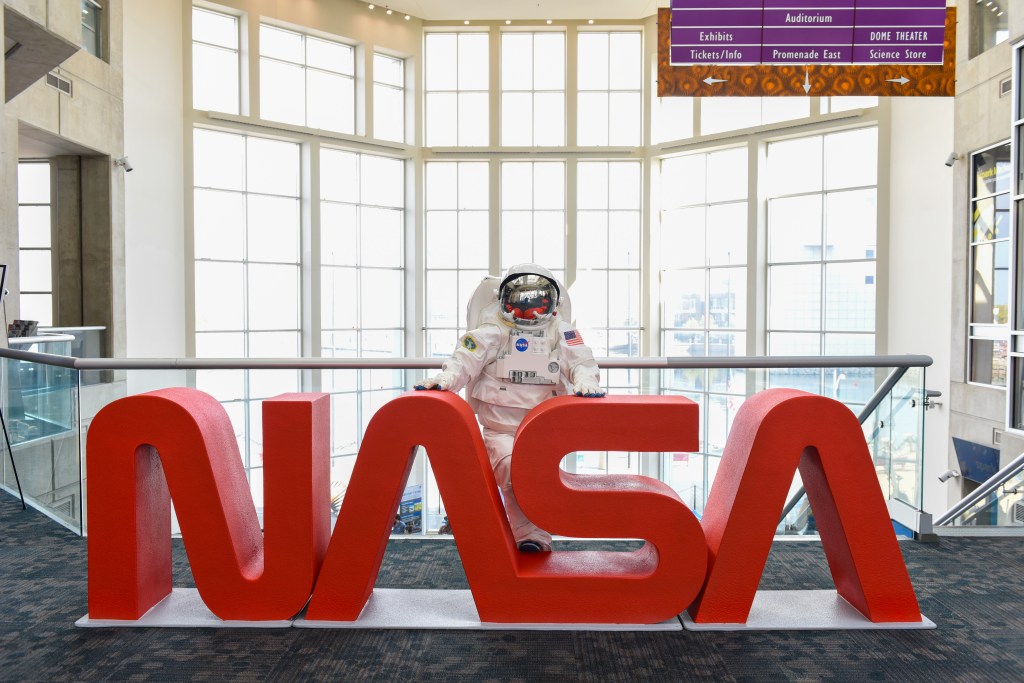
An astronaut mascot stands behind large red letters spelling out “NASA.”
NASA Glenn Research Center’s astronaut mascot stands behind the NASA worm logo during Discovery Days at Great Lakes Science Center in Cleveland on Friday, Sept. 12, 2025.
Credit: NASA/Lily Hammel 
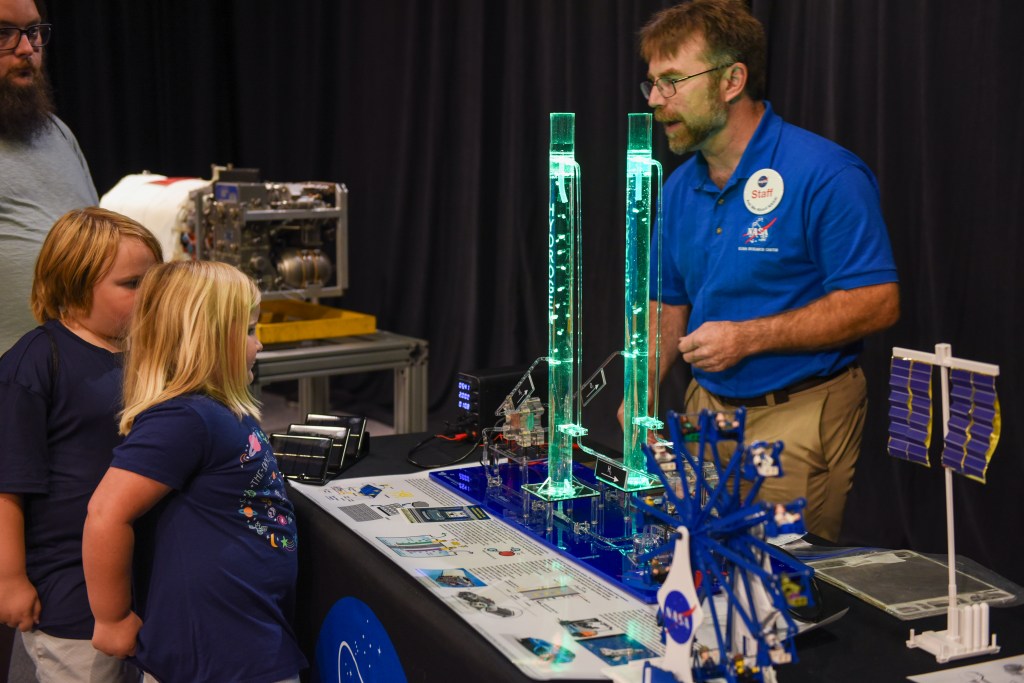
A NASA staff member stands behind a table containing two green tubes of liquid with bubbles while talking with two young visitors and their father.
During Discovery Days at Great Lakes Science Center in Cleveland on Friday, Sept. 12, NASA Glenn Research Center experts share with visitors about primary fuel cells, which convert propellants into electricity, and regenerative fuel cells, which store electrical energy like rechargeable batteries.
Credit: NASA/Lily Hammel 
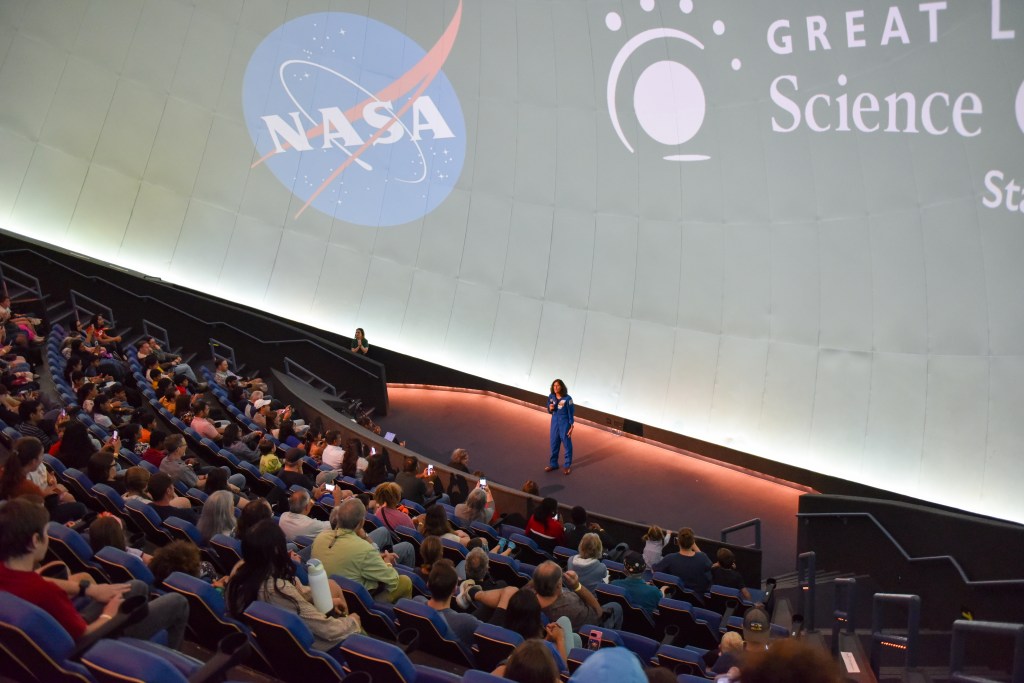
An astronaut stands at the bottom of a domed theater and waves at a crowd of seated students.
Astronaut Sunita Williams talks with students in Great Lakes Science Center’s DOME Theater during Discovery Days in Cleveland on Friday, Sept. 12, 2025.
Credit: NASA/Lily Hammel 
Four panelists sit next to one another on a stage with a dark-blue curtains, an American flag, and an Ohio flag behind them. Circular emblems of an Ohio Space Forum and a pilar from the Hope Memorial Bridge in Cleveland hang behind them.
Left to right: Moderator Brian Miske, Americas Space Leader, KPMG radio, with panelists Amit Kshatriya, NASA associate administrator; Jacki Cortese, senior director, Civil Space: Blue Origin; and Robert Lightfoot, president, Lockheed Martin Space (former NASA associate administrator) discuss balancing innovation, risk, and readiness in space during the Ohio Space Forum. 
Credit: NASA/Jef Janis

Discovery Days, the capstone of Ohio Space Week, welcomed nearly 5,000 visitors to Cleveland’s Great Lakes Science Center — home of the NASA Glenn Visitor Center — on Sept. 12–13. This immersive event brought NASA beyond its gates and into the community, offering the public a firsthand look at major missions and cutting-edge technology. 

Visitors explored interactive demonstrations and exhibits led by NASA Glenn experts, highlighting innovations that support NASA’s Artemis missions and future exploration of Mars and beyond, including developments in power, propulsion, and communications. 

The astronauts were on hand during Discovery Days to talk with students and guests – inspiring the next generation of explorers through direct engagement and storytelling.  

From the Wright brothers’ first flight to pioneering advancements in space exploration, Ohio has been at the forefront of aerospace innovation for generations. Ohio Space Week celebrated these deep-rooted contributions to the aeronautics and space industries, highlighting the people, institutions, and businesses that continue to shape the future of flight and exploration.  

NASA Glenn’s AeroSpace Frontiers Newsletter Takes a Bow

The AeroSpace Frontiers graphic logo is shown in black and red text on a white background

3 min read

Preparations for Next Moonwalk Simulations Underway (and Underwater)

Since April 1999, the AeroSpace Frontiers (AF) newsletter has shared information monthly on NASA Glenn Research Center’s people, projects, and progress. If you were looking for news on any of these topics, there was a good chance you could read all about them in AF each month. 

The newsletter has evolved in the last 26 years, changing with the times, to improve how and when we communicate with our audiences. From updating the hard copy layout to offering the issue online, we adjusted and enhanced AF to meet our customers’ needs.  

As methods of sharing news and information are now available that allow us to reach you sooner, we are shifting our focus to these platforms and discontinuing our monthly newsletter. This September issue will be our last.  

We hope you’ll stay connected with us through our official website and social media channels: Facebook, X, Instagram, LinkedIn, and YouTube. We thank you for your readership!  

Before closing, we want to celebrate and reflect on the newsletter’s remarkable tenure (and interesting names) over the years. 

Credit: NASA

The Story Behind the Name: A Look Back 

While the center published a newsletter continually (with a brief pause in the early 1960s) since its opening in 1942, its name, layout, and content evolved over the decades. It began in 1942 as Wing Tips, an internal biweekly newsletter, and was later renamed Orbit in October 1958 as the National Advisory Committee for Aeronautics transitioned to NASA. In 1961, the center paused the newsletter’s publication to focus its resources on the early space program. 

The publication reemerged in 1964 as Lewis News and expanded to a larger newsletter format in 1969, in conjunction with the Apollo 11 Moon landing. This format continued until 1995, when Lewis News moved to a monthly schedule with expanded, but physically smaller, issues as part of an overall effort to reduce spending.  

Then, in 1999 – prior to the center being renamed NASA’s John H. Glenn Research Center – employees and center management were surveyed for a new newsletter title that would not be tied to future changes in research activities or center names. The group selected AeroSpace Frontiers to represent the modernization of the newsletter’s appearance and its expanded subject matter. It was now a monthly news magazine that included a variety of graphics and photographs, as well as additional content that addressed audiences beyond the center.  

About Our Amazing Editor

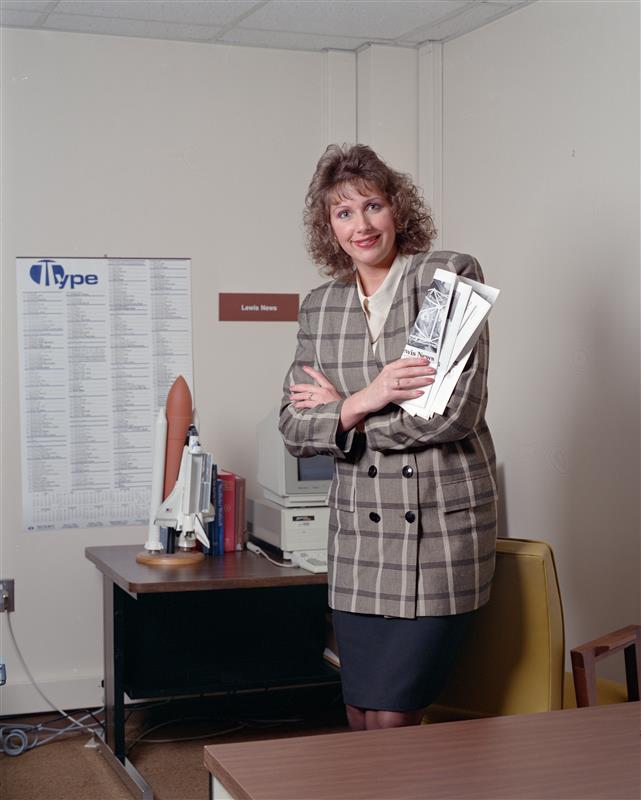
A woman wearing a plaid suit and navy skirt crosses her arms, smiles, and stands as she poses inside a small office. In one hand, she holds a paper copy of a newsletter. Behind her on a desk is a model of the space shuttle and a computer. A brown sign on the wall in the background reads “Lewis News.” Another poster is visible beside the sign.
Portrait of editor Doreen Zudell, taken in 1990 at NASA’s Glenn Research Center in Cleveland. At that time, the center newsletter was known as Lewis News.
Credit: NASA 

Doreen Zudell has served as the editor of AeroSpace Frontiers (AF) since the first issue in 1999 and has been a driving force behind the publication ever since. In addition to writing and editing stories each month, she also has navigated many format changes over the years.  

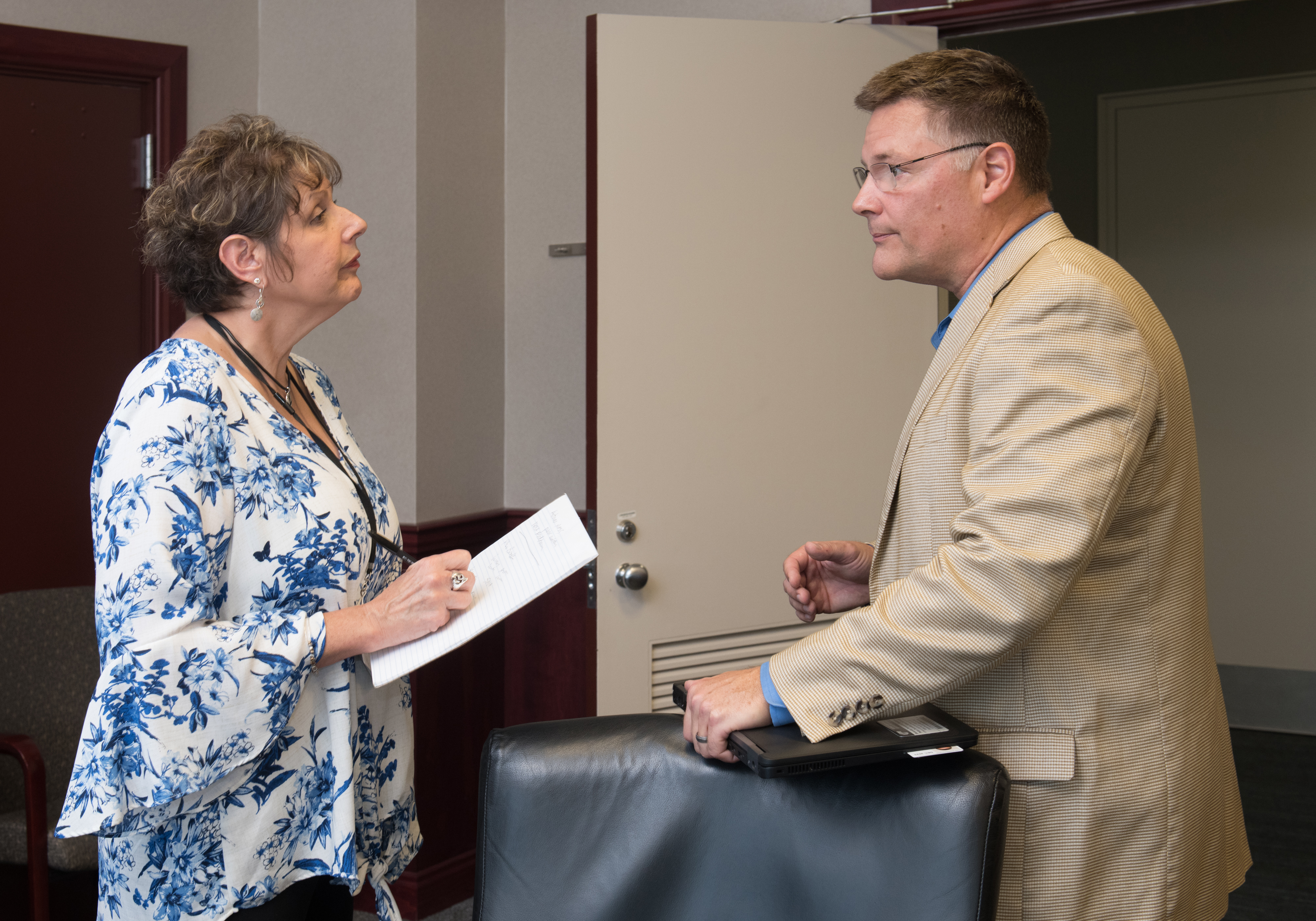
A woman takes notes on a large pad of paper as she faces a man wearing glasses and a tan suit. They stand in an indoor office space, and the man clutches a laptop in his left hand.
Editor Doreen Zudell interviews NASA astronaut Doug Wheelock at NASA’s Glenn Research Center in Cleveland in 2019.
Credit: NASA/Marvin Smith

“We appreciate Doreen’s knowledge, experience, and passion for sharing Glenn’s news and accomplishments with AF readers,” said NASA Glenn Office of Communications Director Kristen Parker. “Her compassion, journalistic flair, and dedication to putting employees’ needs first is evident in everything she does.”  

Glenn Highlights Space Exploration at Minnesota State Fair 

1 min read

Preparations for Next Moonwalk Simulations Underway (and Underwater)

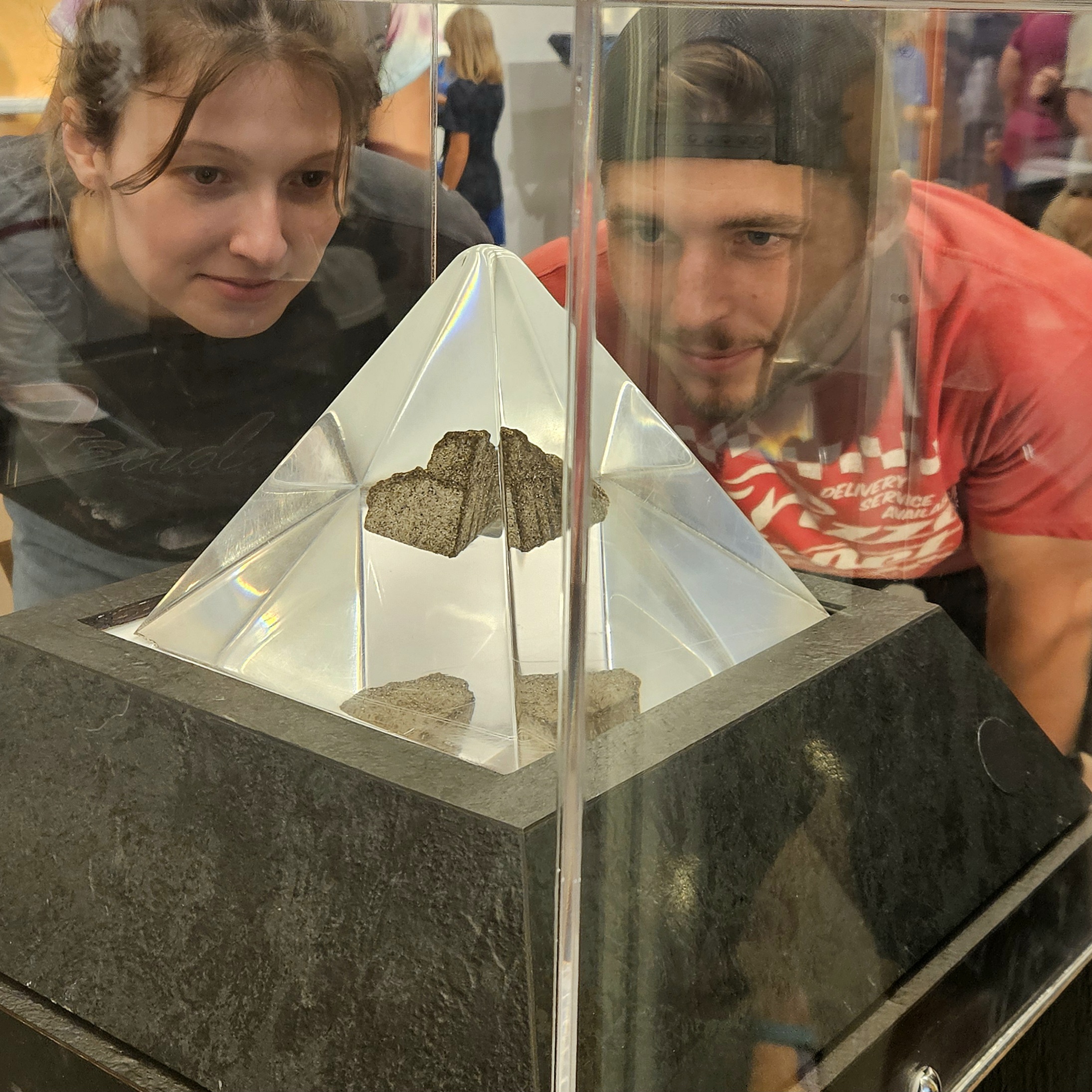
Two people crouch down to stare into an enclosed clear, polyethylene case containing a piece of a Moon rock.
Visitors at the Minnesota State Fair get an up-close look at a Moon rock on Friday, Aug. 22, 2025.
Credit: NASA/Christopher Richards 

NASA brought the excitement of space exploration to the Minnesota State Fair from Aug. 21–24, offering exhibits and interactive experiences for the whole family. Led by NASA’s Glenn Research Center in Cleveland, the agency showcased the future of space exploration and the technologies making it possible — from next-generation spacesuits to the Artemis missions that will return humans to the Moon. 

A major attraction was Glenn’s “Suits and Boots” exhibit, along with an Apollo 15 Moon rock, which drew large crowds to the North End Event Center. Glenn staff, joined by Mike Lammers, deputy chief of the Flight Director’s Office at NASA’s Johnson Space Center in Houston, engaged with both media and fairgoers to highlight spacesuit advancements, Glenn’s unique role as the only NASA center in the Midwest, and upcoming plans for returning to the Moon and journeying to Mars through Artemis

Mike Lammers, Minnesota native and deputy chief of the Flight Director’s Office at NASA’s Johnson Space Center in Houston, talks with visitors at the Minnesota State Fair on Friday, Aug. 22, 2025.
Credit: NASA/Christopher Richards 

The team reached an estimated 57,000 people directly, with additional exposure through traditional and social media efforts. 

NASA Names Glenn’s Steven Sinacore to Lead Fission Surface Power 

Portrait of Steven Sinacore posing in front of the american flag.
Steven Sinacore
Credit: NASA 

NASA leadership has named NASA Glenn Research Center’s Steven A. Sinacore as the agency’s program executive for Fission Surface Power with Lindsay Kaldon as deputy program executive. 

Sinacore will lead a team within the Exploration Systems Development Mission Directorate dedicated to advancing fission surface power technology in support of lunar exploration, providing high power energy generation on Mars, and strengthening national security.   

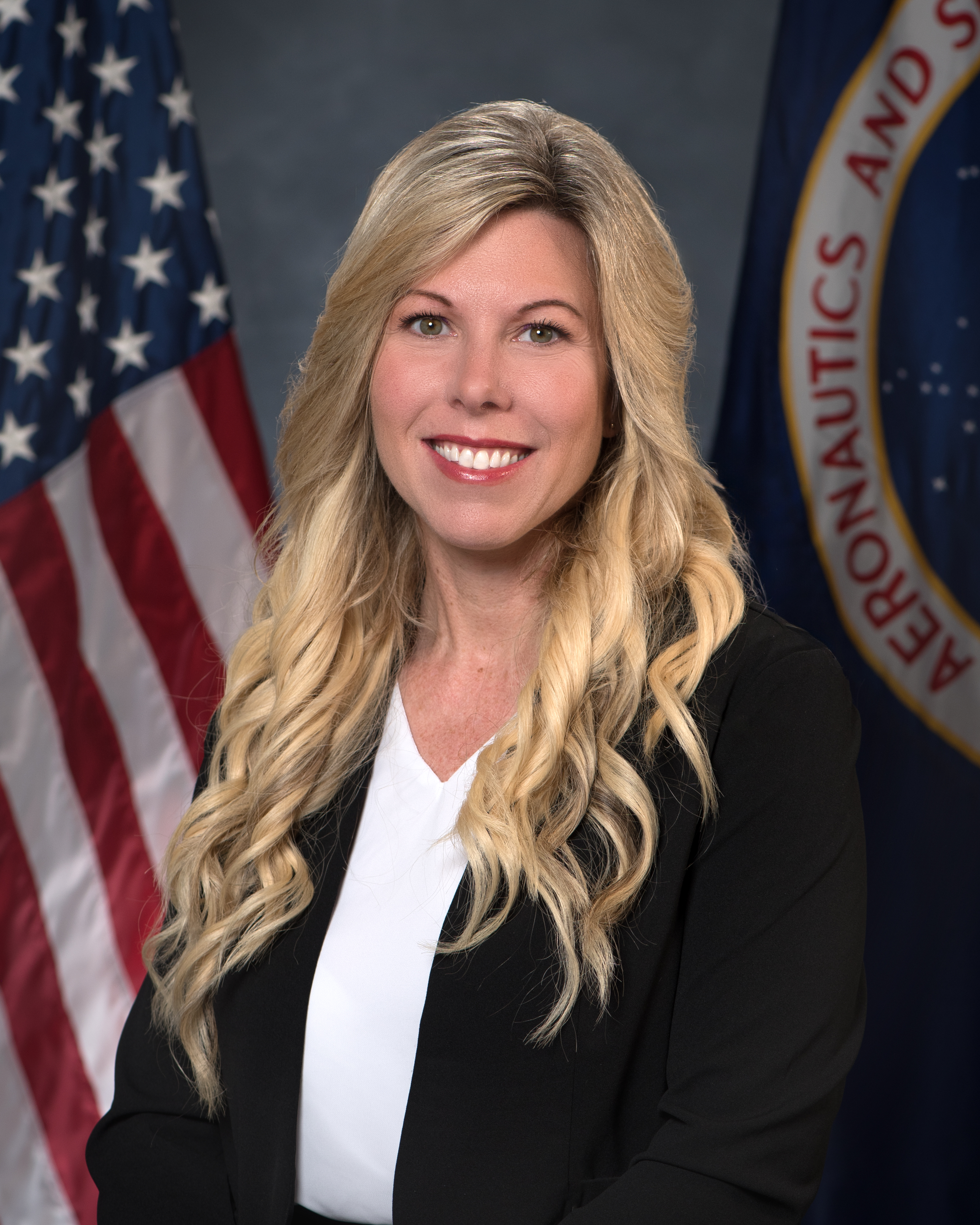
Portrait of Lindsay Kaldon with American and NASA flags behind her.
Lindsay Kaldon
Credit: NASA 

Sinacore has more than 20 years of leadership and project management experience. Most recently, he served as director of Aeronautics at NASA Glenn in Cleveland. Prior to that, he was deputy project manager of the Gateway Power and Propulsion Element. After joining NASA Glenn in 2005, Sinacore held numerous systems engineering, project management, and mission operations positions, and he has been instrumental in developing and executing intergovernmental partnerships.  

His strong background leading cross-agency teams, combined with NASA Glenn’s longstanding expertise in space power technology development, will equip the agency to further advance U.S. competition and lunar surface leadership under the Artemis campaign. 

Last month, NASA declared its intent to put a system that would provide at least 100 kilowatts of electrical power on the Moon by fiscal year 2030. NASA then surveyed industry for their interest and feedback on an announcement for partnership proposals. 

This new effort builds on previous Glenn-led work to advance fission surface power technology development and concept designs.  

❌