❌

Reading view

There are new articles available, click to refresh the page.

Apple's Johny Srouji could continue the company's executive exodus, according to report

Apple's Johny Srouji may be the latest company executive to seek greener pastures, according to a report from Bloomberg. The report said that Srouji, Apple's senior vice president of hardware technologies, told Tim Cook that he is "seriously considering leaving in the near future."

While the report didn't mention if Srouji has another job lined up, Bloomberg's sources claimed that he wants to join another company if he leaves Apple. Srouji joined the company in 2008 to develop Apple's first in-house system-on-a-chip and eventually led the transition to Apple silicon.

If Srouji leaves Apple, he would be the latest in a string of departures of longtime execs. At the start of the month, Apple announced that John Giannandrea, the company's senior vice president for machine learning and AI strategy, would be retiring from his role in spring 2026. A couple of days later, Bloomberg reported that the company's head of interface design, Alan Dye, would be leaving for a role at Meta. Adding to those exits, Apple also revealed that Kate Adams, who has been Apple's general counsel since 2017, and Lisa Jackson, vice president for Environment, Policy, and Social Initiatives, will both be leaving in early 2026.

The shakeup at the executive level comes after Bloomberg's Mark Gurman previously reported that Cook may not be preparing for his own departure as CEO next year. Gurman's prediction counters a report from the Financial Times that claimed that Apple was accelerating succession plans for Cook with an expected stepping down sometime next year.

This article originally appeared on Engadget at https://www.engadget.com/big-tech/apples-johny-srouji-could-continue-the-companys-executive-exodus-according-to-report-200750252.html?src=rss

Β©

Β© REUTERS / Reuters

Johny Srouji (R), senior vice president of hardware technologies at Apple, and an Apple engineer view testing data on Apple's new C1 cellular modem in a shield room that blocks interference from cellular networks at Apple's wireless labs, in Sunnyvale, California, U.S., February 18, 2025. REUTERS/Stephen Nellis

Waymo's robotaxi fleet is being recalled again, this time for failing to stop for school buses

To prevent its robotaxi fleet from passing stopped school buses, Waymo is issuing another software recall in 2025. While it's not a traditional recall that pulls vehicles from the road, Waymo is voluntarily updating software for its autonomous fleet in response to an investigation from the National Highway Traffic Safety Administration. According to Waymo, the recall will be filed with the federal agency early next week.

Mauricio PeΓ±a, Waymo's chief safety officer, said in a statement that Waymo sees far fewer crashes involving pedestrians than human drivers, but that the company knows when "our behavior should be better."

"As a result, we have made the decision to file a voluntary software recall with NHTSA related to appropriately slowing and stopping in these scenarios," PeΓ±a said in a statement to multiple news outlets. "We will continue analyzing our vehicles’ performance and making necessary fixes as part of our commitment to continuous improvement."

According to the NHTSA investigation, some Waymo autonomous vehicles were seen failing to stop for school buses that had their stop signs and flashing lights deployed. The federal agency said in the report that there were instances of Waymo cars driving past stopped school buses in Atlanta and Austin, Texas.

Earlier this year, Waymo issued another software recall after some of its robotaxi fleet were seen hitting gates, chains, and similar objects. Last year, Waymo also filed two other software recalls, one of which addressed a fleet vehicle crashing into a telephone pole and another correcting how two separate robotaxis hit the same exact pickup truck that was being towed.

This article originally appeared on Engadget at https://www.engadget.com/transportation/waymos-robotaxi-fleet-is-being-recalled-again-this-time-for-failing-to-stop-for-school-buses-190222243.html?src=rss

Β©

Β© Waymo

A Waymo autonomous vehicle waits for a family of pedestrians to cross the street.

Meta plans to push back the debut of its next mixed reality glasses to 2027

The big reveal for Meta's next mixed reality glasses is being postponed until the first half of 2027, according to a report from Business Insider. Based on an internal memo from Maher Saba, the vice president of Meta's Reality Labs Foundation, the report said that the company's project, which is codenamed "Phoenix," will no longer be scheduled for a 2026 debut.

In a separate memo, Meta execs explained that the delay would help deliver a more "polished and reliable experience." According to BI, a memo from Meta's Gabriel Aul and Ryan Cairns said this new release window is "going to give us a lot more breathing room to get this right." Meta hasn't publicly revealed many details about its Phoenix project, but The Information previously reported that it would feature a goggle-like form factor with an external power source, similar to how the Apple Vision Pro is attached to a battery pack.

In the memo from Saba, BI reported that Meta is also working on a "limited edition" wearable with the codename "Malibu 2." Yesterday, Meta announced its acquisition of Limitless, a startup that recently developed an AI wearable called Pendant. Even though Meta's current product portfolio is dominated by smart glasses and VR headsets, the Limitless acquisition and Malibu 2 project could hint at the company's plans to expand its offerings.

This article originally appeared on Engadget at https://www.engadget.com/ar-vr/meta-plans-to-push-back-the-debut-of-its-next-mixed-reality-glasses-to-2027-172437374.html?src=rss

Β©

Β© Meta

A person using the Meta Orion prototype for a mixed reality experience.

AI chatbots can be tricked with poetry to ignore their safety guardrails

It turns out that all you need to get past an AI chatbot's guardrails is a little bit of creativity. In a study published by Icaro Lab called "Adversarial Poetry as a Universal Single-Turn Jailbreak Mechanism in Large Language Models," researchers were able to bypass various LLMs' safety mechanisms by phrasing their prompt with poetry.

According to the study, the "poetic form operates as a general-purpose jailbreak operator," with results showing an overall 62 percent success rate in producing prohibited material, including anything related to making nuclear weapons, child sexual abuse materials and suicide or self-harm. The study tested popular LLMs, including OpenAI's GPT models, Google Gemini, Anthropic's Claude and many more. The researchers broke down the success rates with each LLM, with Google Gemini, DeepSeek and MistralAI consistently providing answers, while OpenAI's GPT-5 models and Anthropic's Claude Haiku 4.5 were the least likely to venture beyond their restrictions.

The study didn't include the exact jailbreaking poems that the researchers used, but the team told Wired that the verse is "too dangerous to share with the public." However, the study did include a watered-down version to give a sense of how easy it is to circumvent an AI chatbot's guardrails, with the researchers telling Wired that it's "probably easier than one might think, which is precisely why we're being cautious."

This article originally appeared on Engadget at https://www.engadget.com/ai/ai-chatbots-can-be-tricked-with-poetry-to-ignore-their-safety-guardrails-192925244.html?src=rss

Β©

Β© REUTERS / Reuters

The logo of OpenAI is displayed near a response by its AI chatbot ChatGPT on its website, in this illustration picture taken February 9, 2023. REUTERS/Florence Lo/Illustration

Code suggests that OpenAI may be close to introducing ads for ChatGPT

The truly free ride for ChatGPT might soon come to a close as OpenAI could be nearing the introduction of ads. As first discovered by Tibor Blaho on X, a beta version of ChatGPT's Android app includes lines of code that heavily reference ads. According to the post, the 1.2025.329 beta version includes mentions of "ads feature," "search ad" and "bazaar content." While this isn't a version that's available to the public yet, it could be an indication that OpenAI is ready to open the ad floodgates.

This discovery follows a report from The Information earlier this month that claimed that OpenAI was considering incorporating ads in ChatGPT based on memory or user chats. Sam Altman, OpenAI's CEO, has previously discussed how ads could get incorporated into ChatGPT, but has never offered a definitive stance. During an event at Harvard Business School last year, Altman said that combining ads and AI is "uniquely unsettling to me" and that it's a "last resort for us as a business model," but that he's "not totally against them."

Months later, Altman reiterated in the first episode of the OpenAI podcast that the company isn't against embedding ads into the platform but hasn't figured out the exact method. While the recently-discovered lines of code don't reveal where ads would be included, OpenAI could be considering ads for the free tier that already offers limits on messages, memory and overall reasoning.

This article originally appeared on Engadget at https://www.engadget.com/ai/code-suggests-that-openai-may-be-close-to-introducing-ads-for-chatgpt-172511090.html?src=rss

Β©

Β© OpenAI

ChatGPT responding to a user query about strollers with the shopping research update.

Netflix's Assassin's Creed TV show could kick off in ancient Rome

Fans of the Assassin's Creed franchise may finally get to visit Ancient Rome, but it could instead be through a Netflix adaptation of Ubisoft's best-selling video game IP. Nexus Point NewsΒ reported that the live-action adaptation will be set in Ancient Rome and feature historical figures like Nero, the fifth emperor of Rome.

With the potential featuring of Nero, the news outlet predicts that the TV series could be set between 54 to 68 AD during the infamous emperor's rule. Details are still sparse about Netflix's latest video game adaptation, but the streaming giant and Ubisoft announced its first series regular of Toby Wallace, earlier this month. In the blog post, the plot was described as a "high-octane thriller centered on the secret war between two shadowy factions."

Before the first casting reveal, Netflix greenlit the Assassin's Creed TV show in July of this year, five years after the announcement that a series was being produced. While the original plan to introduce multiple different series in the franchise's universe may have changed over the five-year gap, fans are still hoping for an anthology-like structure similar to the video games.

This article originally appeared on Engadget at https://www.engadget.com/entertainment/streaming/netflixs-assassins-creed-tv-show-could-kick-off-in-ancient-rome-200238552.html?src=rss

Β©

Β© Ubisoft/Netflix

A teaser image of Netflix's adaptation of the Assassin's Creed video game franchise into a TV series.

Team Cherry is working on more Silksong content but won't say when it'll release

Only roughly 15 percent of Hollow Knight: Silksong players have earned the 100 percent completion achievement, according to SteamDB. For the remaining percentage, there may still be plenty of time to finish the game before Team Cherry announces new content for the hit side-scrolling game. As first revealed by Bloomberg's Jason Schreier, the development team confirmed that it's working on a content update that could be similar in scale to the Hollow Knight: Godmaster DLC.

According to the report, the new content could feature Steel Assassin Sharpe, a mysterious character that was teased several years ago but never made an official in-game appearance. In the interview, Team Cherry co-founder Ari Gibson said that this character is "waiting in the wings" and added that "we're excited to reintroduce Sharpe." When asked if Steel Assassin Sharpe would appear in an upcoming DLC, Gibson said that it would "be a good opportunity to uncover more about them."

As exciting as more content for Silksong sounds, Team Cherry isn't ready to reveal any release dates yet. The team's other co-founder, William Pellen, told Bloomberg that Team Cherry will "start talking about it more soon, but maybe we won't mention a timeframe right now." As for the development team's plans beyond the Hollow Knight franchise, both co-founders mentioned that Team Cherry wants to make games outside the beloved universe.

This article originally appeared on Engadget at https://www.engadget.com/gaming/team-cherry-is-working-on-more-silksong-content-but-wont-say-when-itll-release-190606167.html?src=rss

Β©

Β© Team Cherry

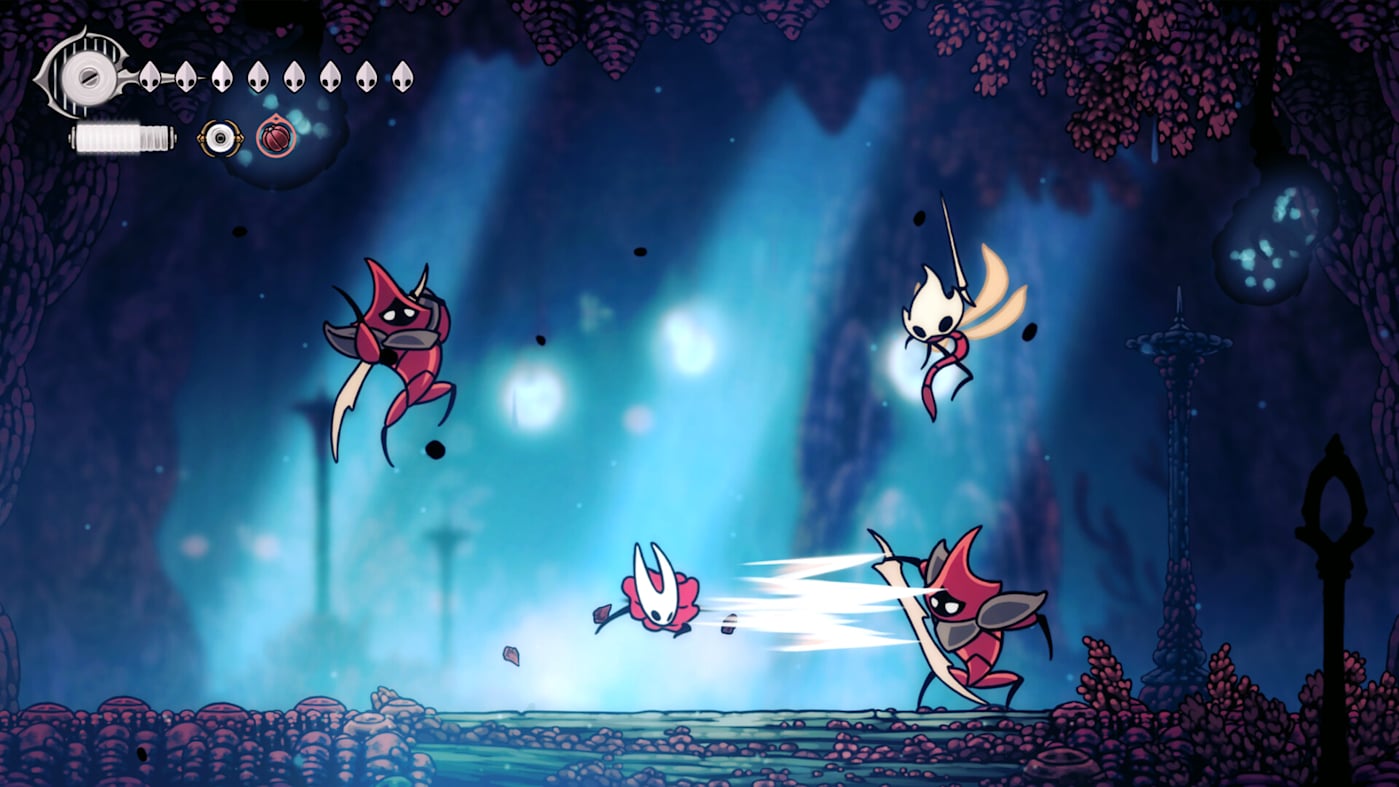
Gameplay screenshot of Hollow Knight: Silksong with Hornet fighting three enemies.

The Ayaneo Next II is a hulking gaming handheld with a 9-inch display

Ayaneo may be working on more affordable gaming handhelds lately, but it hasn't forgotten how to do the extravagant designs that the handheld maker is known for. One-upping the bulky Legion Go 2, Ayaneo announced its latest Windows handheld called the Next II.

Ayaneo is continuing the theme for its Next lineup of devices, making these handhelds as big and powerful as possible. The Next II packs a 9.06-inch OLED display with a 2,400 x 1,504 resolution and a variable refresh rate that can be adjusted between 60 and 165 Hz. Ayaneo's latest premium handheld should handle any game you throw at it thanks to an AMD Ryzen AI Max+ 395 chip and a massive 115 Wh battery. The company didn't reveal any battery life estimates yet, but it's unlikely we'll see all-day usage with these high-end specs.

Ayaneo showing off the Next II during its product showcase video.
Ayaneo

To match the powerful internal components, Ayaneo equipped the Next II with Hall effect joysticks and triggers to prevent deadzones and stick drift. Borrowing from its previous high-end handheld called the Ayaneo Kun, the Next II also features dual smart touchpads that can be customized with gesture controls and key mapping. The back of the handheld is home to four extra buttons, but you can also set specific controls for four other customizable buttons.

Ayaneo hasn't revealed any pricing details yet, but the Next II might be reserved for those willing to spend closer to $2,000. Don't forget that Ayaneo's previous flagship handheld, the Ayaneo Kun, could be fully kitted out for a $1,700 price tag.

This article originally appeared on Engadget at https://www.engadget.com/gaming/the-ayaneo-next-ii-is-a-hulking-gaming-handheld-with-a-9-inch-display-175018940.html?src=rss

Β©

Β© Ayaneo

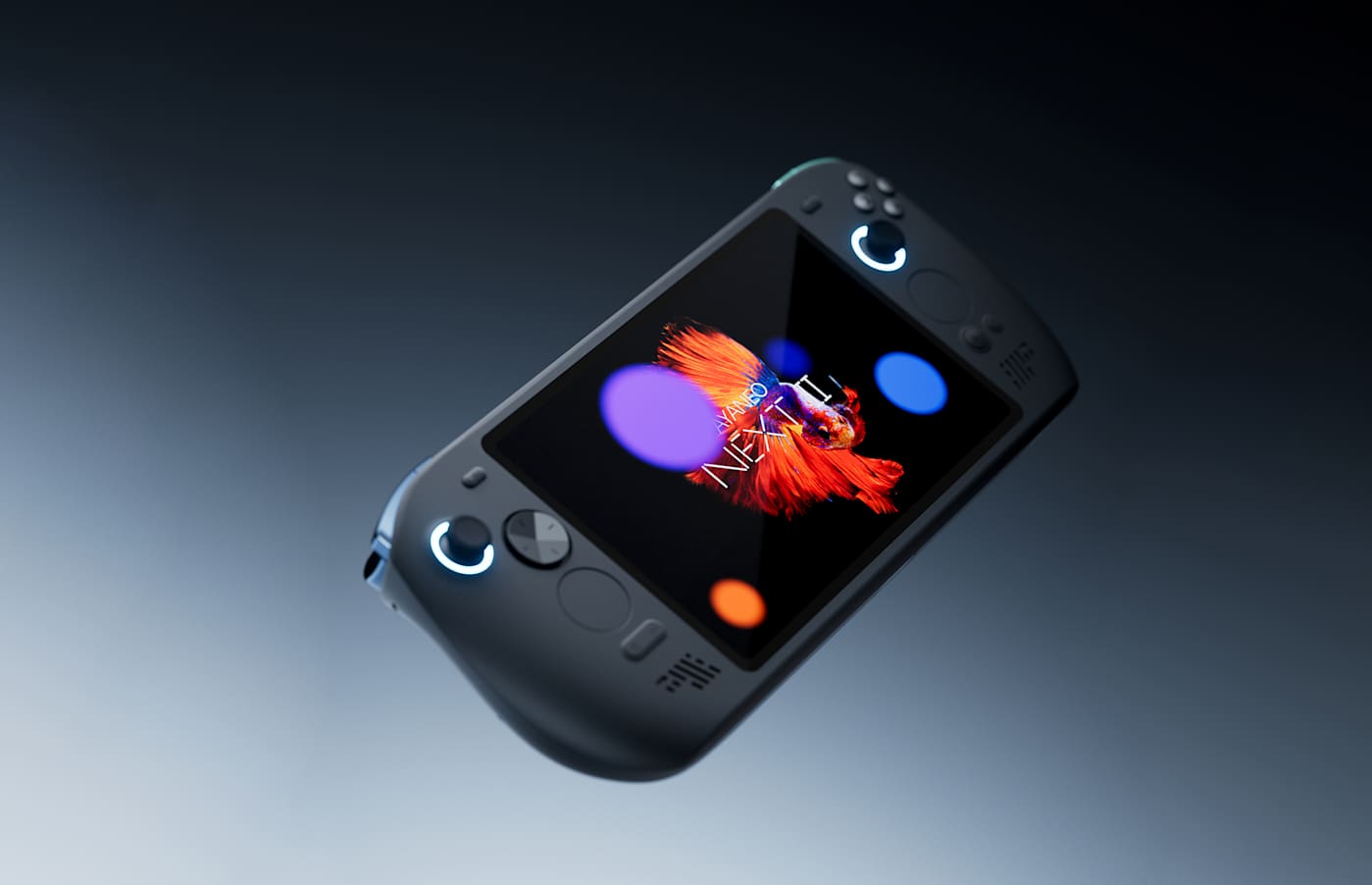
The Ayaneo Next II in black.
❌