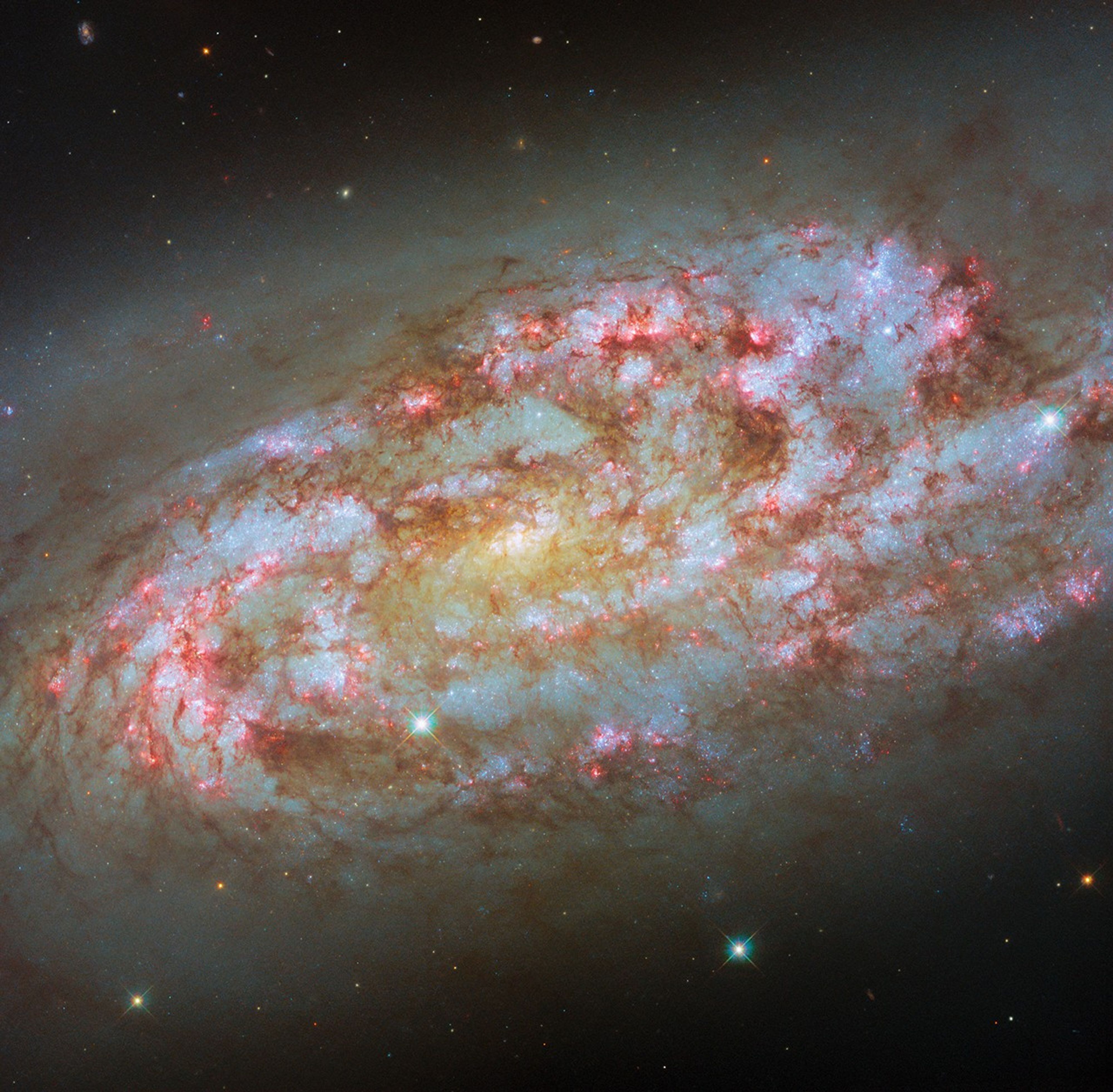
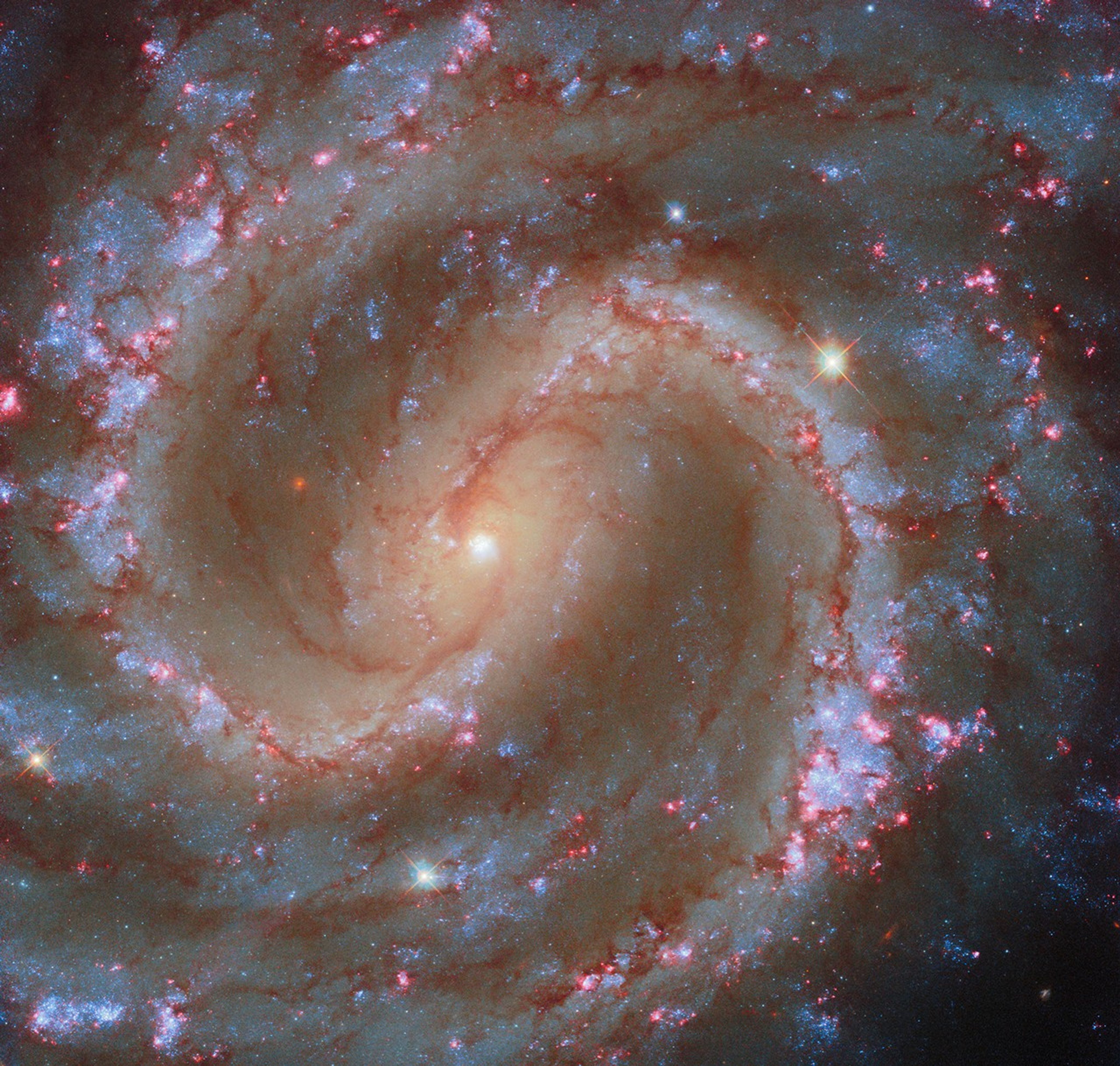
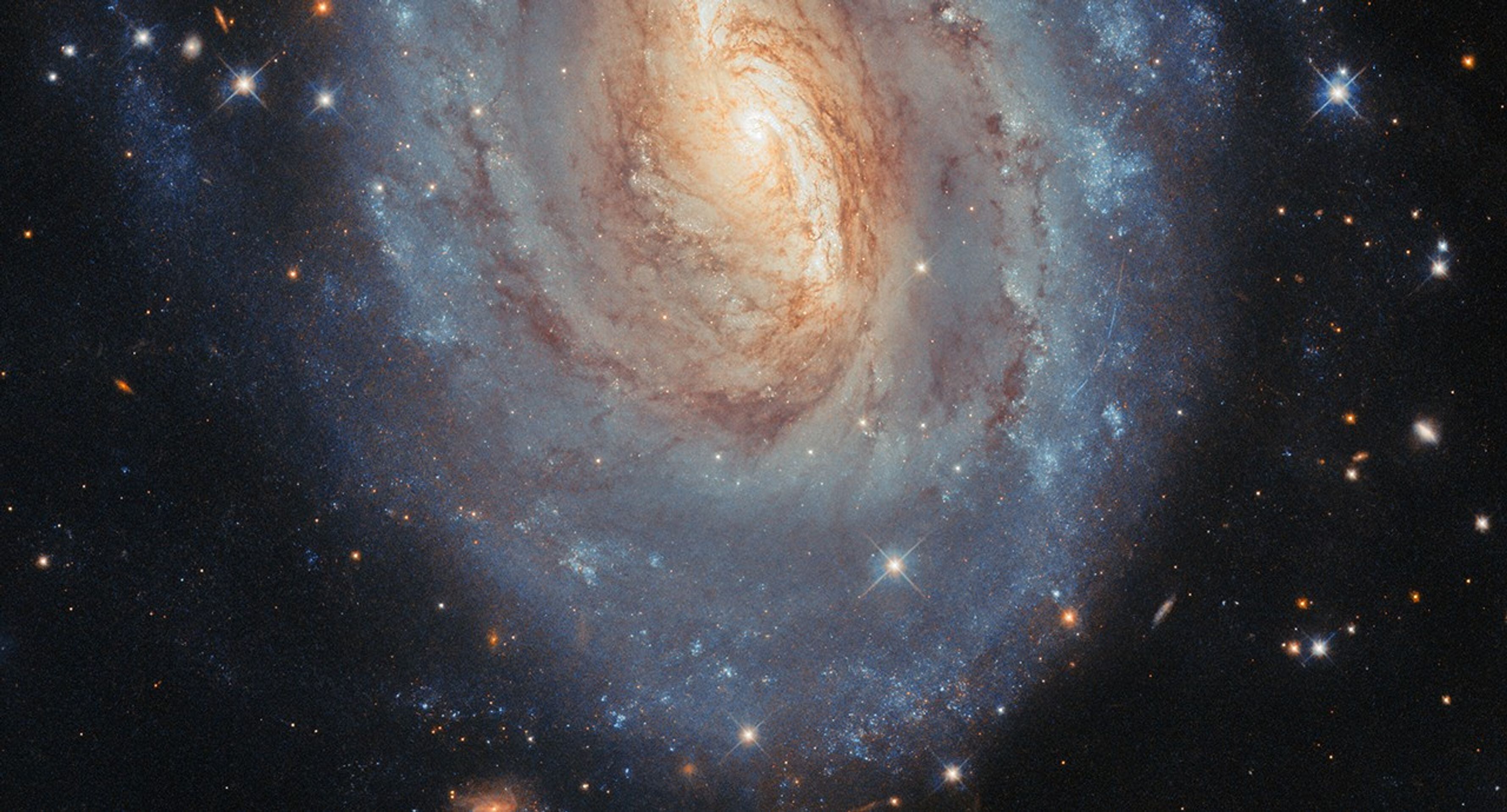
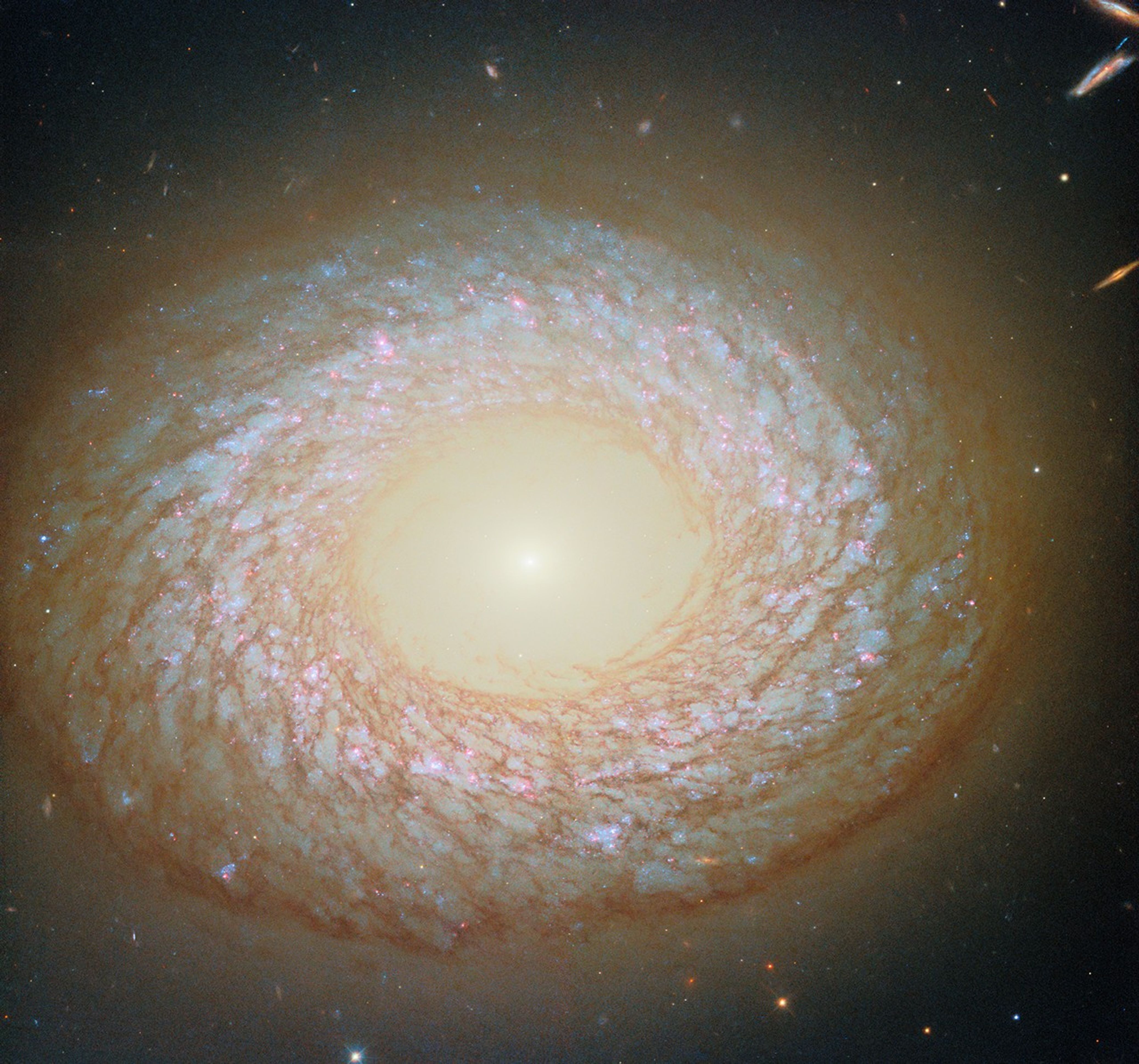
This NASA/ESA Hubble Space Telescope image features the spiral galaxy named NGC 1792.
ESA/Hubble & NASA, D. Thilker, F. Belfiore, J. Lee and the PHANGS-HST Team
This NASA/ESA Hubble Space Telescope image features a stormy and highly active spiral galaxy named NGC 1792. Located over 50 million light-years from Earth in the constellation Columba (the Dove), the bright glow of the galaxy’s center is offset by the flocculent and sparkling spiral arms swirling around it.
NGC 1792 is just as fascinating to astronomers as its chaotic look might imply. Classified as a starburst galaxy, it is a powerhouse of star formation, with spiral arms rich in star-forming regions. In fact, it is surprisingly luminous for its mass. The galaxy is close to a larger neighbor, NGC 1808, and astronomers think the strong gravitational interaction between the two stirred up the reserves of gas in this galaxy. The result is a torrent of star formation, concentrated on the side closest to its neighbor, where gravity has a stronger effect. NGC 1792 is a perfect target for astronomers seeking to understand the complex interactions between gas, star clusters, and supernovae in galaxies.
Hubble studied this galaxy before. This new image includes additional data collected throughout 2025, providing a deeper view of the tumultuous activity taking place in the galaxy. Blossoming red lights in the galaxy’s arms mark Hydrogen-alpha (H-alpha) emission from dense clouds of hydrogen molecules. The newly forming stars within these clouds shine powerfully with ultraviolet radiation. This intense radiation ionizes the hydrogen gas, stripping away electrons which causes the gas to emit H-alpha light. H-alpha is a very particular red wavelength of light and a tell-tale sign of new stars.
NASA-JAXA XRISM Finds Elemental Bounty in Supernova Remnant
For the first time, scientists have made a clear X-ray detection of chlorine and potassium in the wreckage of a star using data from the Japan-led XRISM (X-ray Imaging and Spectroscopy Mission) spacecraft.
The Resolve instrument aboard XRISM, pronounced “crism,” discovered these elements in a supernova remnant called Cassiopeia A or Cas A, for short. The expanding cloud of debris is located about 11,000 light-years away in the northern constellation Cassiopeia.
“This discovery helps illustrate how the deaths of stars and life on Earth are fundamentally linked,” said Toshiki Sato, an astrophysicist at Meiji University in Tokyo. “Stars appear to shimmer quietly in the night sky, but they actively forge materials that form planets and enable life as we know it. Now, thanks to XRISM, we have a better idea of when and how stars might make crucial, yet harder-to-find, elements.”
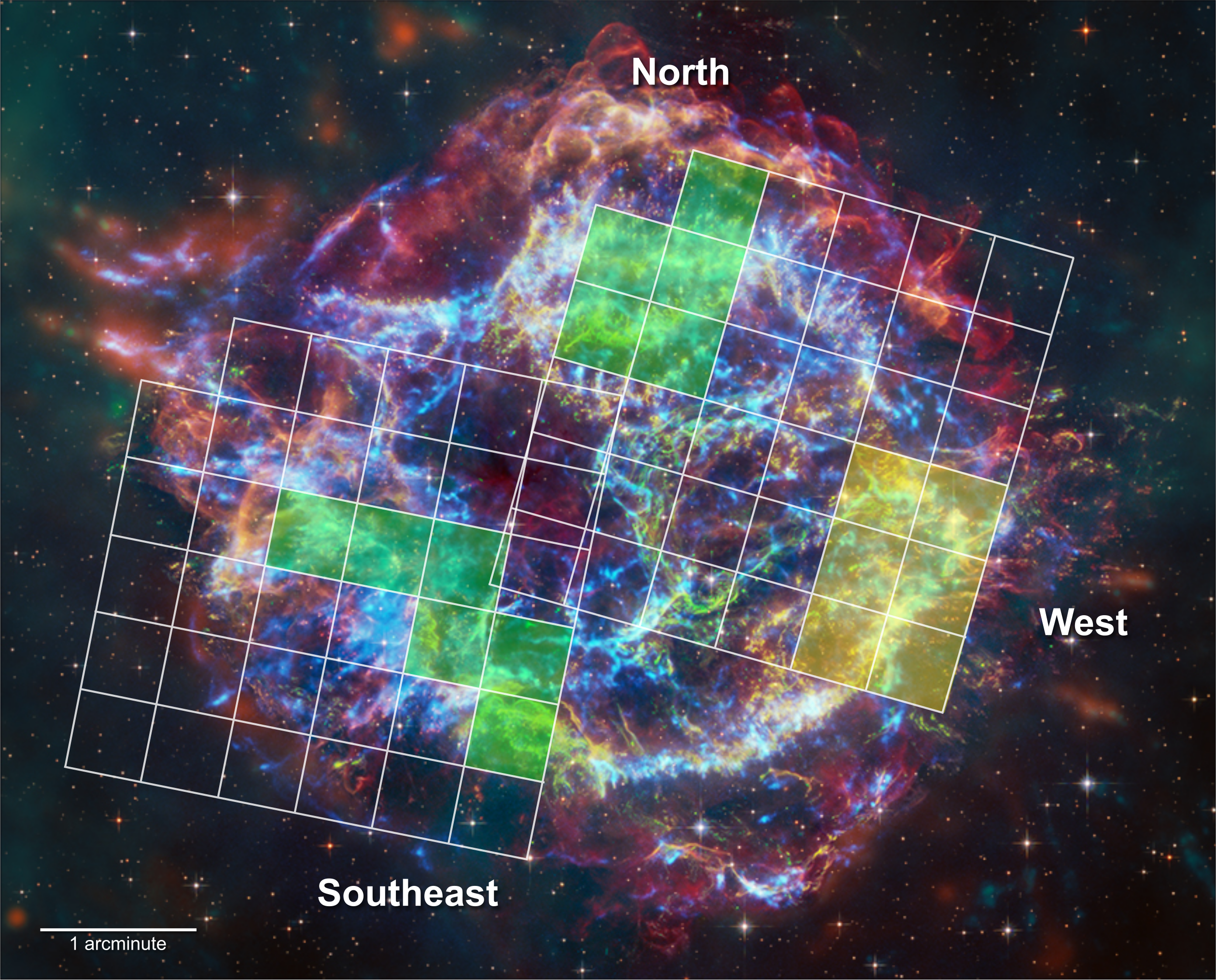
Observations of the Cassiopeia A supernova remnant by the Resolve instrument aboard the NASA-JAXA XRISM (X-ray Imaging and Spectroscopy Mission) spacecraft revealed strong evidence for potassium (green squares) in the southeast and northern parts of the remnant. Grids superposed on a multiwavelength image of the remnant represent the fields of view of two Resolve measurements made in December 2023. Each square represents one pixel of Resolve’s detector. Weaker evidence of potassium (yellow squares) in the west suggests that the original star may have had underlying asymmetries before it exploded.
NASA’s Goddard Space Flight Center; X-ray: NASA/CXC/SAO; Optical: NASA/ESA/STScI; IR: NASA/ESA/CSA/STScI/Milisavljevic et al., NASA/JPL/CalTech; Image Processing: NASA/CXC/SAO/J. Schmidt and K. Arcand
Stars produce almost all the elements in the universe heavier than hydrogen and helium through nuclear reactions. Heat and pressure fuse lighter ones, like carbon, into progressively heavier ones, like neon, creating onion-like layers of materials in stellar interiors.
Nuclear reactions also take place during explosive events like supernovae, which occur when stars run out of fuel, collapse, and explode. Elemental abundances and locations in the wreckage can, respectively, tell scientists about the star and its explosion, even after hundreds or thousands of years.
Some elements — like oxygen, carbon, and neon — are more common than others and are easier to detect and trace back to a particular part of the star’s life.
Other elements — like chlorine and potassium — are more elusive. Since scientists have less data about them, it’s more difficult to model where in the star they formed. These rarer elements still play important roles in life on Earth. Potassium, for example, helps the cells and muscles in our bodies function, so astronomers are interested in tracing its cosmic origins.
The roughly circular Cas A supernova remnant spans about 10 light-years, is over 340 years old, and has a superdense neutron star at its center — the remains of the original star’s core. Scientists using NASA’s Chandra X-ray Observatory had previously identified signatures of iron, silicon, sulfur, and other elements within Cas A.
In the hunt for other elements, the team used the Resolve instrument aboard XRISM to look at the remnant twice in December 2023. The researchers were able to pick out the signatures for chlorine and potassium, determining that the remnant contains ratios much higher than expected. Resolve also detected a possible indication of phosphorous, which was previously discovered in Cas A by infrared missions.
Watch to learn more about how the Resolve instrument aboard XRISM captures extraordinary data on the make-up of galaxy clusters, exploded stars, and more using only 36 pixels. Credit: NASA’s Goddard Space Flight Center
“Resolve’s high resolution and sensitivity make these kinds of measurements possible,” said Brian Williams, the XRISM project scientist at NASA’s Goddard Space Flight Center in Greenbelt, Maryland. “Combining XRISM’s capabilities with those of other missions allows scientists to detect and measure these rare elements that are so critical to the formation of life in the universe.”
The astronomers think stellar activity could have disrupted the layers of nuclear fusion inside the star before it exploded. That kind of upheaval might have led to persistent, large-scale churning of material inside the star that created conditions where chlorine and potassium formed in abundance.
The scientists also mapped the Resolve observations onto an image of Cas A captured by Chandra and showed that the elements were concentrated in the southeast and northern parts of the remnant.
This lopsided distribution may mean that the star itself had underlying asymmetries before it exploded, which Chandra data indicated earlier this year in a study Sato led.
“Being able to make measurements with good statistical precision of these rarer elements really helps us understand the nuclear fusion that goes on in stars before and during supernovae,” said co-author Paul Plucinsky, an astrophysicist at the Center for Astrophysics | Harvard & Smithsonian in Cambridge, Massachusetts. “We suspected a key part might be asymmetry, and now we have more evidence that’s the case. But there’s still a lot we just don’t understand about how stars explode and distribute all these elements across the cosmos.”
Over the course of several hours, technicians meticulously connected the inner and outer segments of NASA’s Nancy Grace Roman Space Telescope.
NASA/Jolearra Tshiteya
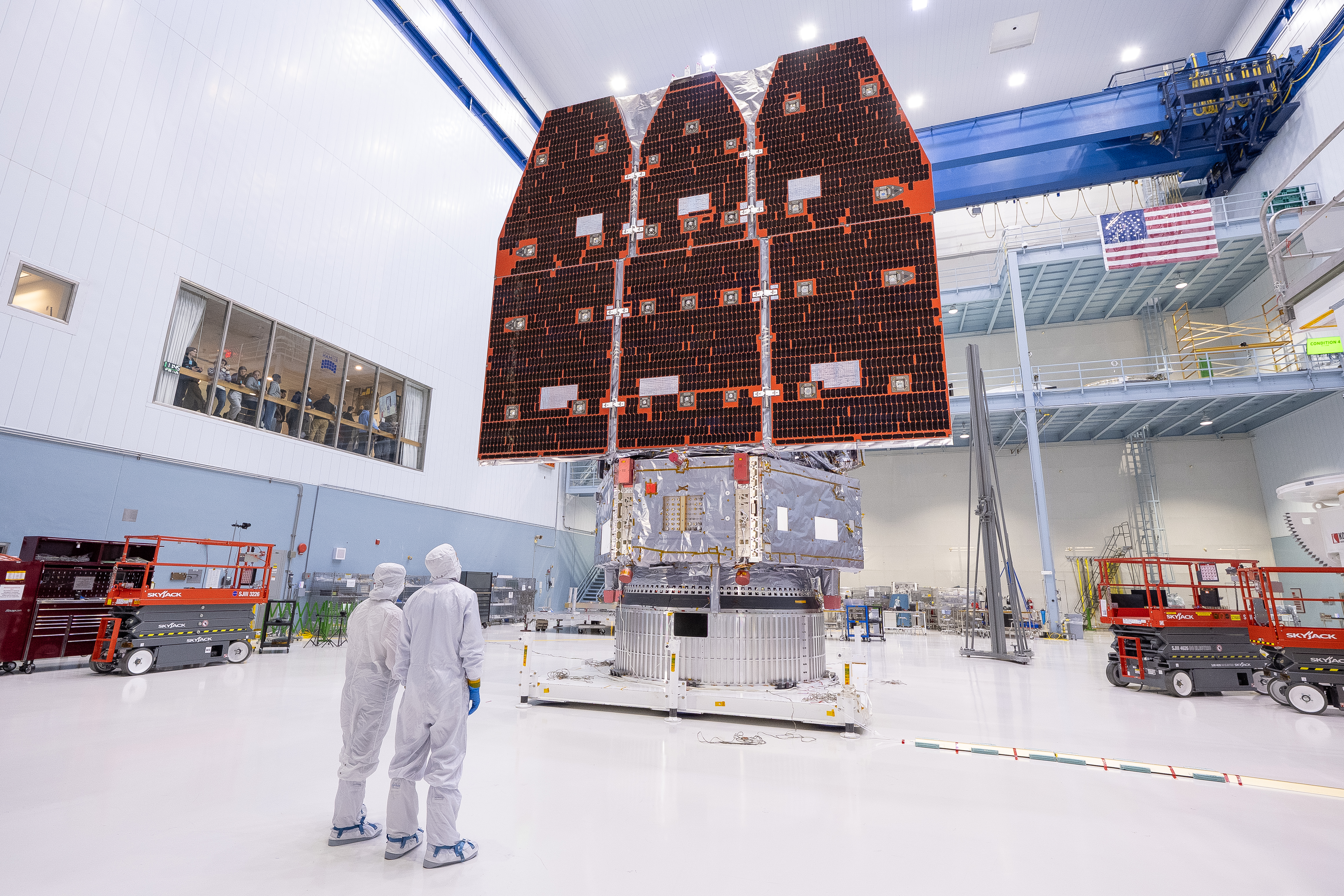
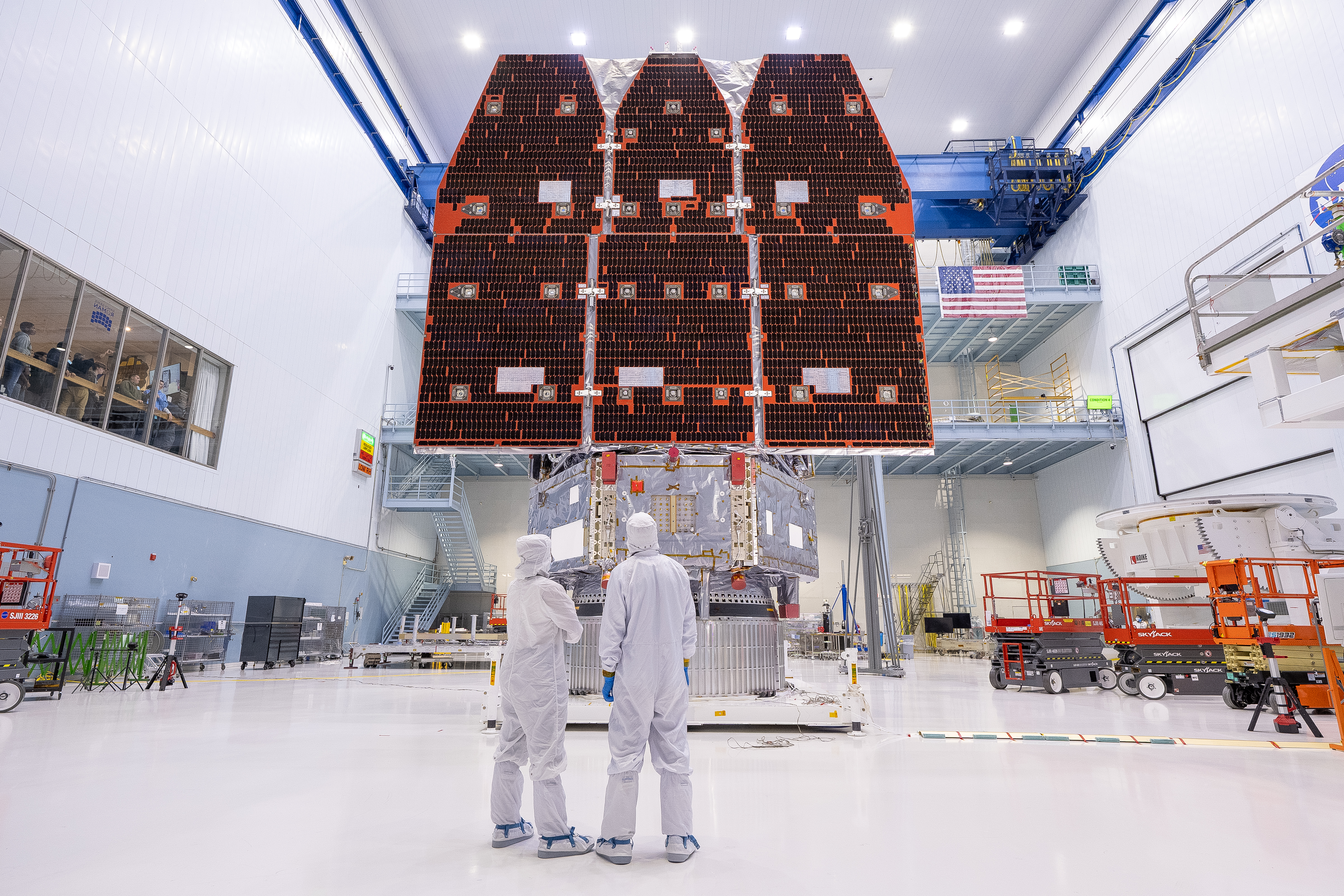
Two technicians look up at NASA’s Nancy Grace Roman Space Telescope after its inner and outer segments were connected at the agency’s Goddard Space Flight Center in Greenbelt, Maryland on Nov. 25, 2025. This marked the end of Roman’s construction. After final testing, the telescope will move to the launch site at NASA’s Kennedy Space Center in Florida for launch preparations in summer 2026. Roman — named after Dr. Nancy Grace Roman, NASA’s first chief astronomer — is slated to launch by May 2027, but the team is on track for launch as early as fall 2026.
NASA’s next big eye on the cosmos is now fully assembled. On Nov. 25, technicians joined the inner and outer portions of the Nancy Grace Roman Space Telescope in the largest clean room at the agency’s Goddard Space Flight Center in Greenbelt, Maryland.
NASA’s Nancy Grace Roman Space Telescope is now fully assembled following the integration of its two major segments on Nov. 25 at the agency’s Goddard Space Flight Center in Greenbelt, Md. The mission is slated to launch by May 2027, but the team is on track for launch as early as fall 2026.
Credit: NASA/Jolearra Tshiteya
“Completing the Roman observatory brings us to a defining moment for the agency,” said NASA Associate Administrator Amit Kshatriya. “Transformative science depends on disciplined engineering, and this team has delivered—piece by piece, test by test—an observatory that will expand our understanding of the universe. As Roman moves into its final stage of testing following integration, we are focused on executing with precision and preparing for a successful launch on behalf of the global scientific community.”
After final testing, Roman will move to the launch site at NASA’s Kennedy Space Center in Florida for launch preparations in summer 2026. Roman is slated to launch by May 2027, but the team is on track for launch as early as fall 2026. A SpaceX Falcon Heavy rocket will send the observatory to its final destination a million miles from Earth.
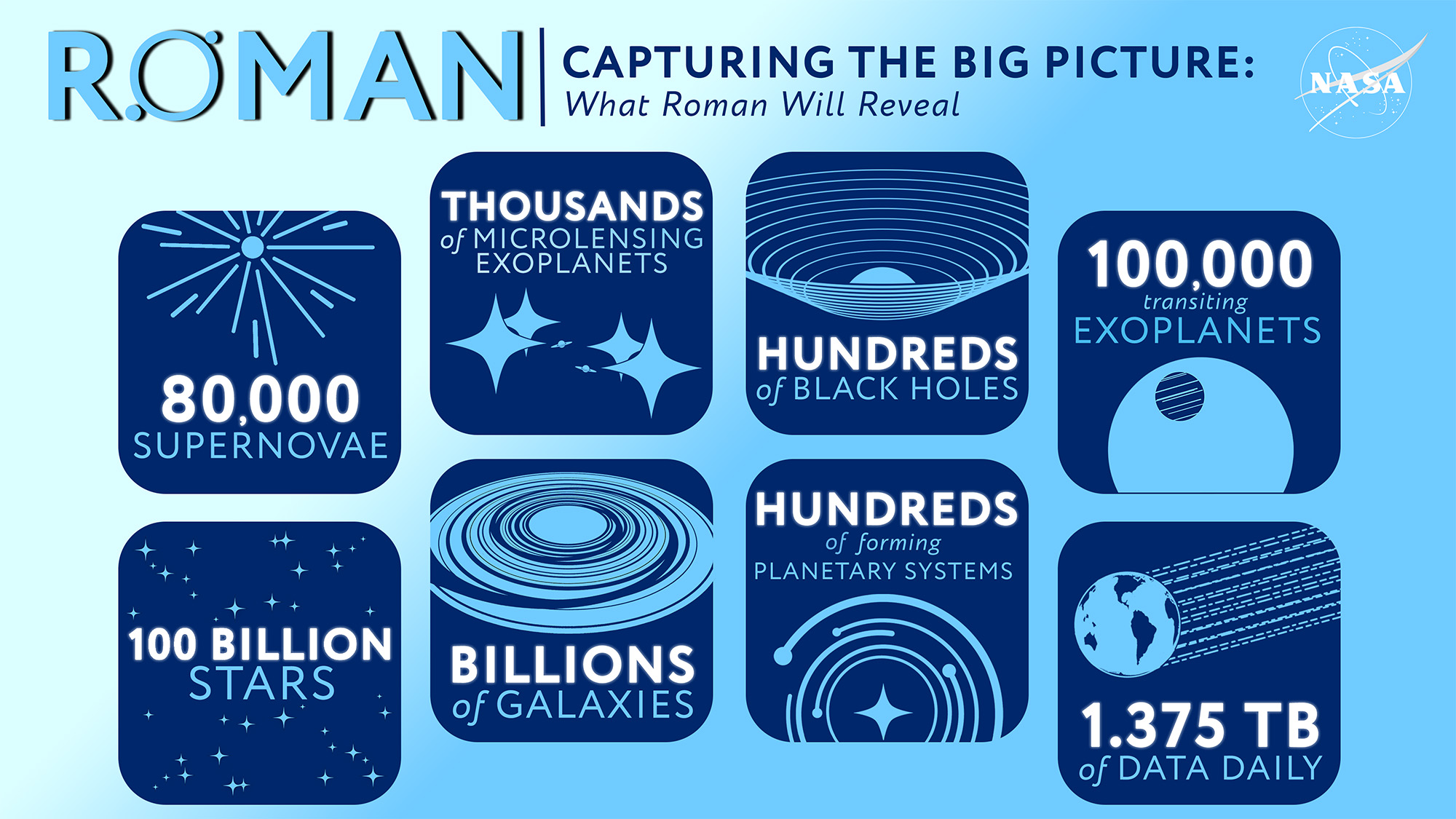
“With Roman’s construction complete, we are poised at the brink of unfathomable scientific discovery,” said Julie McEnery, Roman’s senior project scientist at NASA Goddard. “In the mission’s first five years, it’s expected to unveil more than 100,000 distant worlds, hundreds of millions of stars, and billions of galaxies. We stand to learn a tremendous amount of new information about the universe very rapidly after Roman launches.”
NASA’s Nancy Grace Roman Space Telescope will survey vast swaths of sky during its five-year primary mission. During that time, scientists expect it to see an incredible number of new objects, including stars, galaxies, black holes and planets outside our solar system, known as exoplanets. This infographic previews some of the discoveries scientists anticipate from Roman’s data deluge.
Credit: NASA’s Goddard Space Flight Center
Observing from space will make Roman very sensitive to infrared light — light with a longer wavelength than our eyes can see — from far across the cosmos. Pairing its crisp infrared vision with a sweeping view of space will allow astronomers to explore myriad cosmic topics, from dark matter and dark energy to distant worlds and solitary black holes, and conduct research that would take hundreds of years using other telescopes.
“Within our lifetimes, a great mystery has arisen about the cosmos: why the expansion of the universe seems to be accelerating. There is something fundamental about space and time we don’t yet understand, and Roman was built to discover what it is,” said Nicky Fox, associate administrator, Science Mission Directorate, NASA Headquarters in Washington. “With Roman now standing as a complete observatory, which keeps the mission on track for a potentially early launch, we are a major step closer to understanding the universe as never before. I couldn’t be prouder of the teams that have gotten us to this point.”
The coronagraph will demonstrate new technologies for directly imaging planets around other stars. It will block the glare from distant stars and make it easier for scientists to see the faint light from planets in orbit around them. The Coronagraph aims to photograph worlds and dusty disks around nearby stars in visible light to help us see giant worlds that are older, colder, and in closer orbits than the hot, young super-Jupiters direct imaging has mainly revealed so far.
“The question of ‘Are we alone?’ is a big one, and it’s an equally big task to build tools that can help us answer it,” said Feng Zhao, the Roman Coronagraph Instrument manager at NASA’s Jet Propulsion Laboratory in Southern California. “The Roman Coronagraph is going to bring us one step closer to that goal. It’s incredible that we have the opportunity to test this hardware in space on such a powerful observatory as Roman.”
The coronagraph team will conduct a series of pre-planned observations for three months spread across the mission’s first year-and-a-half of operations, after which the mission may conduct additional observations based on scientific community input.
The Wide Field Instrument is a 288-megapixel camera that will unveil the cosmos all the way from our solar system to near the edge of the observable universe. Using this instrument, each Roman image will capture a patch of the sky bigger than the apparent size of a full moon. The mission will gather data hundreds of times faster than NASA’s Hubble Space Telescope, adding up to 20,000 terabytes (20 petabytes) over the course of its five-year primary mission.
“The sheer volume of the data Roman will return is mind-boggling and key to a host of exciting investigations,” said Dominic Benford, Roman’s program scientist at NASA Headquarters.
Over the course of several hours, technicians meticulously connected the inner and outer segments of NASA’s Nancy Grace Roman Space Telescope, as shown in this time-lapse. Next, Roman will undergo final testing prior to moving to the launch site at NASA’s Kennedy Space Center in Florida for launch preparations in summer 2026.
Credit: NASA/Sophia Roberts
Survey trifecta
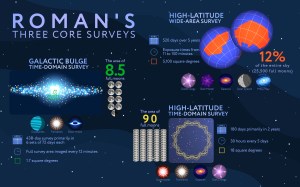
Using the Wide Field Instrument, Roman will conduct three core surveys which will account for 75% of the primary mission. The High-Latitude Wide-Area Survey will combine the powers of imaging and spectroscopy to unveil more than a billion galaxies strewn across a wide swath of space and time. Astronomers will trace the evolution of the universe to probe dark matter — invisible matter detectable only by how its gravity affects things we can see — and trace the formation of galaxies and galaxy clusters over time.
The High-Latitude Time-Domain Survey will probe our dynamic universe by observing the same region of the cosmos repeatedly. Stitching these observations together to create movies will allow scientists to study how celestial objects and phenomena change over time periods of days to years. That will help astronomers study dark energy — the mysterious cosmic pressure thought to accelerate the universe’s expansion — and could even uncover entirely new phenomena that we don’t yet know to look for.
Roman’s Galactic Bulge Time-Domain Survey will look inward to provide one of the deepest views ever of the heart of our Milky Way galaxy. Astronomers will watch hundreds of millions of stars in search of microlensing signals — gravitational boosts of a background star’s light caused by the gravity of an intervening object. While astronomers have mainly discovered star-hugging worlds, Roman’s microlensing observations can find planets in the habitable zone of their star and farther out, including worlds like every planet in our solar system except Mercury. Microlensing will also reveal rogue planets—worlds that roam the galaxy untethered to a star — and isolated black holes. The same dataset will reveal 100,000 worlds that transit, or pass in front of, their host stars.
The remaining 25% of Roman’s five-year primary mission will be dedicated to other observations that will be determined with input from the broader scientific community. The first such program, called the Galactic Plane Survey, has already been selected.
Because Roman’s observations will enable such a wide range of science, the mission will have a General Investigator Program designed to support astronomers to reveal scientific discoveries using Roman data. As part of NASA’s commitment to Gold Standard Science, NASA will make all of Roman’s data publicly available with no exclusive use period. This ensures multiple scientists and teams can use data at the same time, which is important since every Roman observation will address a wealth of science cases.
NASA’s freshly assembled Nancy Grace Roman Space Telescope will revolutionize our understanding of the universe with its deep, crisp, sweeping infrared views of space. The mission will transform virtually every branch of astronomy and bring us closer to understanding the mysteries of dark energy, dark matter, and how common planets like Earth are throughout our galaxy. Roman is on track for launch by May 2027, with teams working toward a launch as early as fall 2026. Credit: NASA’s Goddard Space Flight Center
Roman’s namesake — Dr. Nancy Grace Roman, NASA’s first chief astronomer — made it her personal mission to make cosmic vistas readily accessible to all by paving the way for telescopes based in space.
“The mission will acquire enormous quantities of astronomical imagery that will permit scientists to make groundbreaking discoveries for decades to come, honoring Dr. Roman’s legacy in promoting scientific tools for the broader community,” said Jackie Townsend, Roman’s deputy project manager at NASA Goddard. “I like to think Dr. Roman would be extremely proud of her namesake telescope and thrilled to see what mysteries it will uncover in the coming years.”
The Nancy Grace Roman Space Telescope is managed at NASA’s Goddard Space Flight Center in Greenbelt, Maryland, with participation by NASA’s Jet Propulsion Laboratory in Southern California; Caltech/IPAC in Pasadena, California; the Space Telescope Science Institute in Baltimore; and a science team comprising scientists from various research institutions. The primary industrial partners are BAE Systems Inc. in Boulder, Colorado; L3Harris Technologies in Rochester, New York; and Teledyne Scientific & Imaging in Thousand Oaks, California.
NASA and industry partners will fly and operate a commercial robotic arm in low Earth orbit through the Fly Foundational Robots mission set to launch in late 2027. This mission aims to revolutionize in-space operations, a critical capability for sustainably living and working on other planets. By enabling this technology demonstration, NASA is fostering the in-space robotics industry to unlock valuable tools for future scientific discovery and exploration missions.
“Today it’s a robotic arm demonstration, but one day these same technologies could be assembling solar arrays, refueling satellites, constructing lunar habitats, or manufacturing products that benefit life on Earth,” said Bo Naasz, senior technical lead for In-space Servicing, Assembly, and Manufacturing (ISAM) in the Space Technology Mission Directorate at NASA Headquarters in Washington. “This is how we build a dominant space economy and sustained human presence on the Moon and Mars.”
Artist concept of the FFR Mission’s robotic system payload atop the Astro Digital spacecraft. The robotic arm, provided by Motiv Space Systems, will perform robotic demonstrations in orbit.
Motiv Space Systems
The Fly Foundational Robots (FFR) mission will leverage a robotic arm from small business Motiv Space Systems capable of dexterous manipulation, autonomous tool use, and walking across spacecraft structures in zero or partial gravity. This mission could enable ways to repair and refuel spacecraft, construct habitats and infrastructure in space, maintain life support systems on lunar and Martian surfaces, and serve as robotic assistants to astronauts during extended missions. Advancing robotic systems in space could also enhance our understanding of similar technologies on Earth across industries including construction, medicine, and transportation.
To demonstrate FFR’s commercial robotic arm in space, NASA’s Space Technology Mission Directorate is contracting with Astro Digital to provide a hosted orbital test through the agency’s Flight Opportunities program.
Guest roboticists will have the opportunity to contribute to the FFR mission, and participation will allow them to use Motiv’s robotic platform as a testbed and perform unique tasks. NASA will serve as the inaugural guest operator and is currently seeking other interested U.S. partners to participate.
The future of in-space robotics relies on testing robotic operations in space prior to launching more complex and extensive servicing and refueling missions. Through FFR, the demonstration of Motiv’s robotic arm operations in space will begin to push open the door to endless possibilities.
NASA’s Fly Foundational Robots demonstration is funded through the NASA Space Technology Mission Directorate’s ISAM portfolio and managed by NASA’s Goddard Space Flight Center in Greenbelt, Maryland. Motiv Space Systems of Pasadena, California, will supply the mission’s robotic arm system through a NASA Small Business Innovation Research Phase III award. Astro Digital of Littleton, Colorado, will flight test Motiv’s robotic payload through NASA’s Flight Opportunities program managed by NASA’s Armstrong Flight Research Center in Edwards, California.
The asteroid Bennu continues to provide new clues to scientists’ biggest questions about the formation of the early solar system and the origins of life. As part of the ongoing study of pristine samples delivered to Earth by NASA’s OSIRIS-REx (Origins, Spectral Interpretation, Resource Identification, and Security-Regolith Explorer) spacecraft, three new papers published Tuesday by the journals Nature Geosciences and Nature Astronomy present remarkable discoveries: sugars essential for biology, a gum-like substance not seen before in astromaterials, and an unexpectedly high abundance of dust produced by supernova explosions.
Sugars essential to life
Scientists led by Yoshihiro Furukawa of Tohoku University in Japan found sugars essential for biology on Earth in the Bennu samples, detailing their findings in the journal Nature Geoscience. The five-carbon sugar ribose and, for the first time in an extraterrestrial sample, six-carbon glucose were found. Although these sugars are not evidence of life, their detection, along with previous detections of amino acids, nucleobases, and carboxylic acids in Bennu samples, show building blocks of biological molecules were widespread throughout the solar system.
For life on Earth, the sugars deoxyribose and ribose are key building blocks of DNA and RNA, respectively. DNA is the primary carrier of genetic information in cells. RNA performs numerous functions, and life as we know it could not exist without it. Ribose in RNA is used in the molecule’s sugar-phosphate “backbone” that connects a string of information-carrying nucleobases.
“All five nucleobases used to construct both DNA and RNA, along with phosphates, have already been found in the Bennu samples brought to Earth by OSIRIS-REx,” said Furukawa. “The new discovery of ribose means that all of the components to form the molecule RNA are present in Bennu.”
The discovery of ribose in asteroid samples is not a complete surprise. Ribose has previously been found in two meteorites recovered on Earth. What is important about the Bennu samples is that researchers did not find deoxyribose. If Bennu is any indication, this means ribose may have been more common than deoxyribose in environments of the early solar system.
Researchers think the presence of ribose and lack of deoxyribose supports the “RNA world” hypothesis, where the first forms of life relied on RNA as the primary molecule to store information and to drive chemical reactions necessary for survival.
A team of Japanese and US scientists have discovered the bio-essential sugars ribose and glucose in samples of asteroid Bennu that were collected by NASA’s OSIRIS-REx mission. This finding builds on the earlier discovery of nucleobases (the genetic components of DNA and RNA), phosphate, and amino acids (the building blocks of proteins) in the Bennu samples, showing that the molecular ingredients of life could have been delivered to early Earth by meteorites. Download this graphic from NASA’s Scientific Visualization Studio website: https://svs.gsfc.nasa.gov/14932
NASA/Goddard/University of Arizona/Dan Gallagher
“Present day life is based on a complex system organized primarily by three types of functional biopolymers: DNA, RNA, and proteins,” explains Furukawa. “However, early life may have been simpler. RNA is the leading candidate for the first functional biopolymer because it can store genetic information and catalyze many biological reactions.”
The Bennu samples also contained one of the most common forms of “food” (or energy) used by life on Earth, the sugar glucose, which is the first evidence that an important energy source for life as we know it was also present in the early solar system.
Mysterious, ancient ‘gum’
A second paper, in the journal Nature Astronomy led by Scott Sandford at NASA’s Ames Research Center in California’s Silicon Valley and Zack Gainsforth of the University of California, Berkeley, reveals a gum-like material in the Bennu samples never seen before in space rocks – something that could have helped set the stage on Earth for the ingredients of life to emerge. The surprising substance was likely formed in the early days of the solar system, as Bennu’s young parent asteroid warmed.
Once soft and flexible, but since hardened, this ancient “space gum” consists of polymer-like materials extremely rich in nitrogen and oxygen. Such complex molecules could have provided some of the chemical precursors that helped trigger life on Earth, and finding them in the pristine samples from Bennu is important for scientists studying how life began and whether it exists beyond our planet.
On this primitive asteroid that formed in the early days of the solar system, we’re looking at events near the beginning of the beginning.
Scott SandFord
Astrophysicist, NASA's Ames Research Center
Bennu’s ancestral asteroid formed from materials in the solar nebula – the rotating cloud of gas and dust that gave rise to the solar system – and contained a variety of minerals and ices. As the asteroid began to warm, due to natural radiation, a compound called carbamate formed through a process involving ammonia and carbon dioxide. Carbamate is water soluble, but it survived long enough to polymerize, reacting with itself and other molecules to form larger and more complex chains impervious to water. This suggests that it formed before the parent body warmed enough to become a watery environment.
“With this strange substance, we’re looking at, quite possibly, one of the earliest alterations of materials that occurred in this rock,” said Sandford. “On this primitive asteroid that formed in the early days of the solar system, we’re looking at events near the beginning of the beginning.”
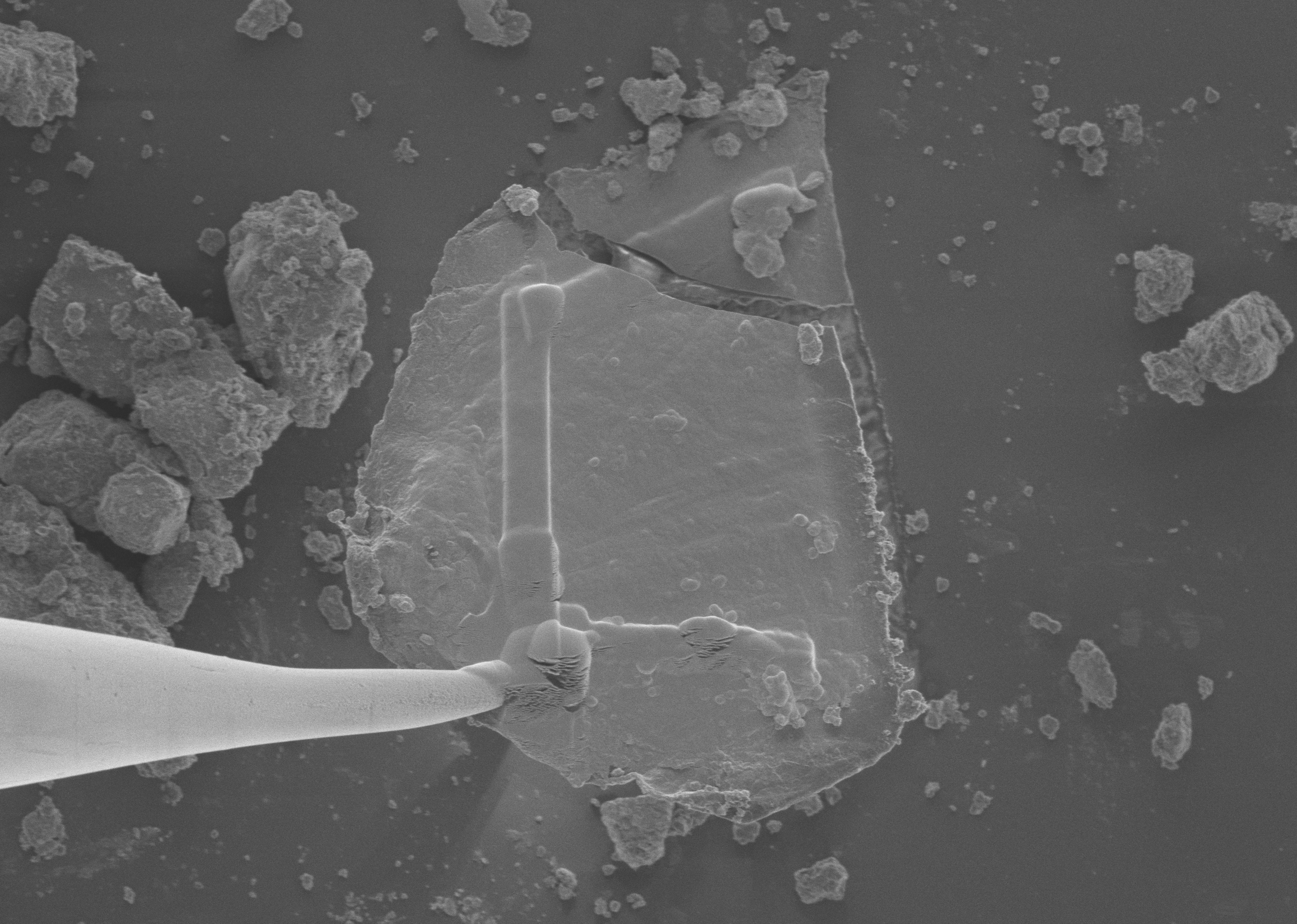
Using an infrared microscope, Sandford’s team selected unusual, carbon-rich grains containing abundant nitrogen and oxygen. They then began what Sandford calls “blacksmithing at the molecular level,” using the Molecular Foundry at Lawrence Berkeley National Laboratory (Berkeley Lab) in Berkeley, California. Applying ultra-thin layers of platinum, they reinforced a particle, welded on a tungsten needle to lift the tiny grain, and shaved the fragment down using a focused beam of charged particles.
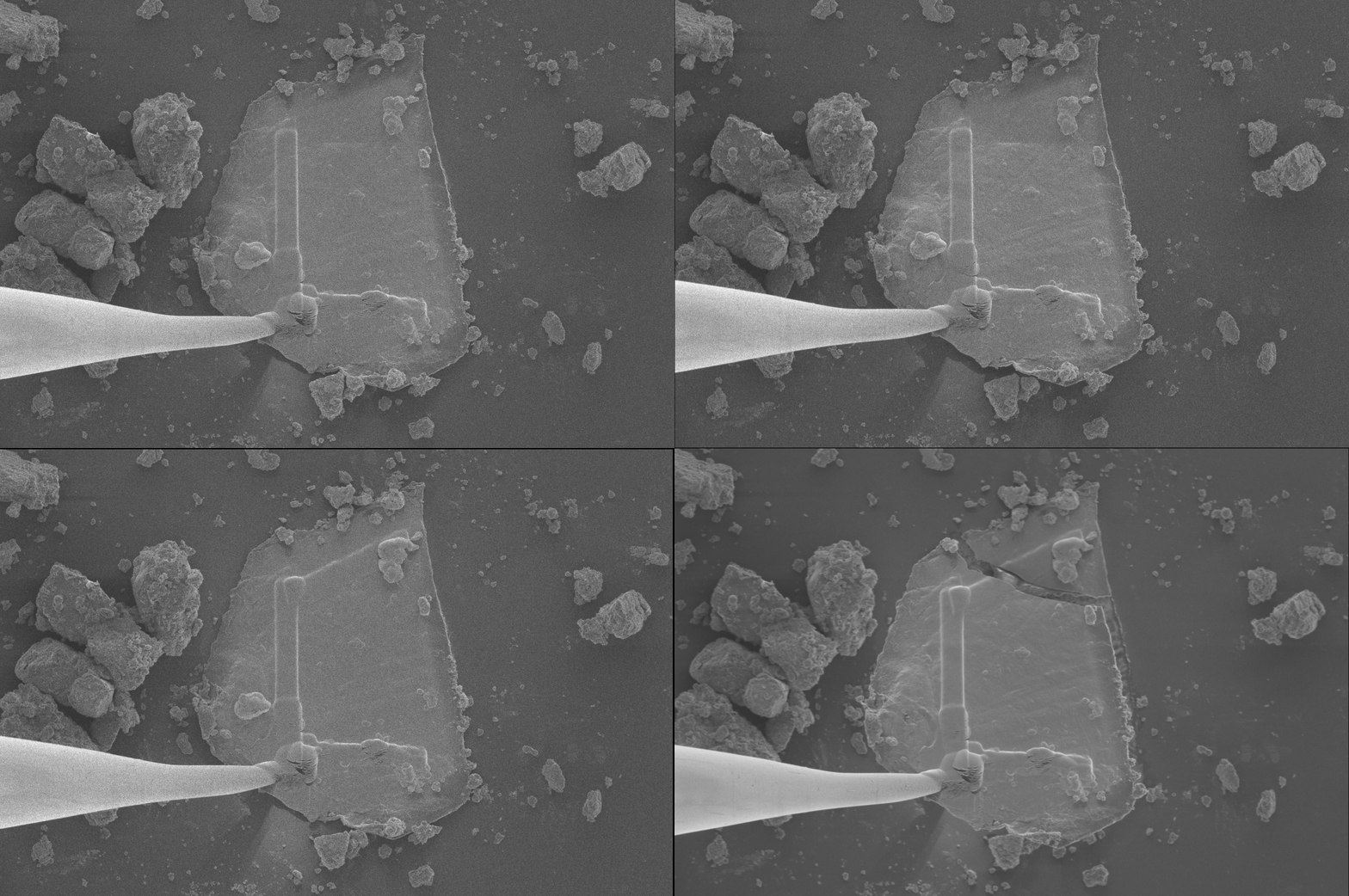
A microscopic particle of asteroid Bennu, brought to Earth by NASA’s OSIRIS-REx mission, is manipulated under a transmission electron microscope. In order to move the fragment for further analysis, researchers first reinforced it with thin strips of platinum (the “L” shape on the particle’s surface) then welded a tungsten microneedle to it. The asteroid fragment measures 30 micrometers (about one-one thousandth of an inch) across.
NASA/University of California, Berkeley
When the particle was a thousand times thinner than a human hair, they analyzed its composition via electron microscopy at the Molecular Foundry and X-ray spectroscopy at Berkeley Lab’s Advanced Light Source. The ALS’s high spatial resolution and sensitive X-ray beams enabled unprecedented chemical analysis.
“We knew we had something remarkable the instant the images started to appear on the monitor,” said Gainsforth. “It was like nothing we had ever seen, and for months we were consumed by data and theories as we attempted to understand just what it was and how it could have come into existence.”
The team conducted a slew of experiments to examine the material’s characteristics. As the details emerged, the evidence suggested the strange substance had been deposited in layers on grains of ice and minerals present in the asteroid.
It was also flexible – a pliable material, similar to used gum or even a soft plastic. Indeed, during their work with the samples, researchers noticed the strange material was bendy and dimpled when pressure was applied. The stuff was translucent, and exposure to radiation made it brittle, like a lawn chair left too many seasons in the sun.
“Looking at its chemical makeup, we see the same kinds of chemical groups that occur in polyurethane on Earth,” said Sandford, “making this material from Bennu something akin to a ‘space plastic.’”
The ancient asteroid stuff isn’t simply polyurethane, though, which is an orderly polymer. This one has more “random, hodgepodge connections and a composition of elements that differs from particle to particle,” said Sandford. But the comparison underscores the surprising nature of the organic material discovered in NASA’s asteroid samples, and the research team aims to study more of it.
By pursuing clues about what went on long ago, deep inside an asteroid, scientists can better understand the young solar system – revealing the precursors to and ingredients of life it already contained, and how far those raw materials may have been scattered, thanks to asteroids much like Bennu.
Abundant supernova dust
Another paper in the journal Nature Astronomy, led by Ann Nguyen of NASA’s Johnson Space Center in Houston, analyzed presolar grains – dust from stars predating our solar system – found in two different rock types in the Bennu samples to learn more about where its parent body formed and how it was altered by geologic processes. It is believed that presolar dust was generally well-mixed as our solar system formed. The samples had six-times the amount of supernova dust than any other studied astromaterial, suggesting the asteroid’s parent body formed in a region of the protoplanetary disk enriched in the dust of dying stars.
The study also reveals that, while Bennu’s parent asteroid experienced extensive alteration by fluids, there are still pockets of less-altered materials within the samples that offer insights into its origin.
An artistic visualization of the OSIRIS-REx spacecraft descending towards asteroid Bennu to collect a sample.
NASA/Goddard/University of Arizona
“These fragments retain a higher abundance of organic matter and presolar silicate grains, which are known to be easily destroyed by aqueous alteration in asteroids,” said Nguyen. “Their preservation in the Bennu samples was a surprise and illustrates that some material escaped alteration in the parent body. Our study reveals the diversity of presolar materials that the parent accreted as it was forming.”
NASA’s Goddard Space Flight Center provided overall mission management, systems engineering, and the safety and mission assurance for OSIRIS-REx. Dante Lauretta of the University of Arizona, Tucson, is the principal investigator. The university leads the science team and the mission’s science observation planning and data processing. Lockheed Martin Space in Littleton, Colorado, built the spacecraft and provided flight operations. Goddard and KinetX Aerospace were responsible for navigating the OSIRIS-REx spacecraft. Curation for OSIRIS-REx takes place at NASA’s Johnson Space Center in Houston. International partnerships on this mission include the OSIRIS-REx Laser Altimeter instrument from CSA (Canadian Space Agency) and asteroid sample science collaboration with JAXA’s (Japan Aerospace Exploration Agency’s) Hayabusa2 mission. OSIRIS-REx is the third mission in NASA’s New Frontiers Program, managed by NASA’s Marshall Space Flight Center in Huntsville, Alabama, for the agency’s Science Mission Directorate in Washington.
For more information on the OSIRIS-REx mission, visit:
How did the molecular building blocks of life arrive at early Earth? To find out, NASA sent a spacecraft called OSIRIS-REx to collect samples from the carbon...
NASA’s nearly complete Nancy Grace Roman Space Telescope has made another set of critical strides toward launch. This fall, the outer portion passed two tests — a shake test and an intense sound blast — to ensure its successful launch. The inner portion of the observatory underwent a major 65-day thermal vacuum test, showing that it will function properly in space. As NASA’s next flagship space telescope, Roman will address essential questions in the areas of dark energy, planets outside our solar system, and astrophysics.
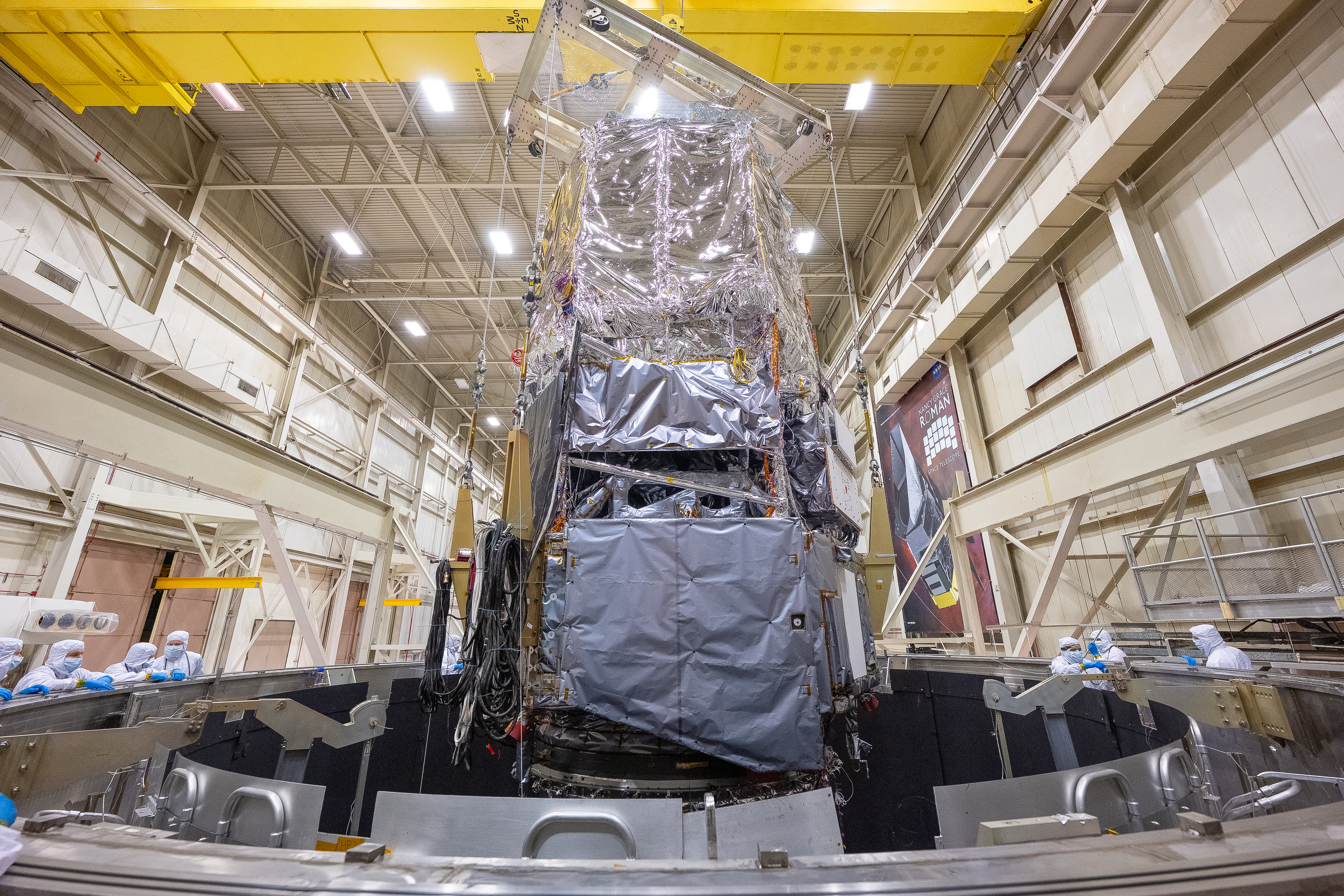
The inner portion of NASA’s Nancy Grace Roman Space Telescope (which consists of the telescope, instrument carrier, two instruments, and spacecraft) recently passed thermal vacuum testing. In this photo, the assembly is being lifted out of the Space Environment Simulator after completing 65 days of assessments.
Credit: NASA/Jolearra Tshiteya
“We want to make sure Roman will withstand our harshest environments,” said Rebecca Espina, a deputy test director at NASA’s Goddard Space Flight Center in Greenbelt, Maryland. “From a mechanical standpoint, our heaviest loads and stresses come from launch, so we use testing to mimic the launch environment.”
The vibration and acoustic testing were the final round of launch simulations for the outer portion of the Roman observatory, which consists of the outer barrel assembly, deployable aperture cover, and recently installed flight solar panels.
During acoustic testing, a large chamber with gigantic horns emulated the launch’s thunderous sounds, which cause high-frequency vibrations. Test operators outfitted the chamber and assembly with various sensors to monitor the hardware’s response to the sound, which gradually ramped up to a full minute at 138 decibels — louder than a jet plane’s takeoff at close range!
After moving to a massive shaker table, Roman’s outer assembly went through testing to replicate the rocket launch’s lower-frequency vibrations. Each individual test lasts only about a minute, sweeping from 5 to 50 hertz (the lowest note on a grand piano vibrates at 27.5 hertz), but NASA engineers tested three axes of movement over several weeks, breaking up the tests with on-the-spot data analysis.
Like in acoustic testing, the team installed sensors to capture the assembly’s response to the shaking. Structural analysts and test operators use this information not only to evaluate success but also to improve models and subsequent assessments.
“There’s a real sense of accomplishment when you get a piece of hardware this large through this test program,” said Shelly Conkey, lead structural analyst for this assembly at NASA Goddard. “I am proud of the work that our team of people has done.”
The outer portion of NASA’s Nancy Grace Roman Space Telescope (which consists of the outer barrel assembly, deployable aperture cover, and solar panels) recently passed vibration and acoustic testing. The structure is shown here in the acoustic testing chamber at NASA’s Goddard Space Flight Center in Greenbelt, Md., where it was blasted with intense sound to simulate launch conditions.
Credit: NASA/Jolearra Tshiteya
The core portion of the observatory (the telescope, instrument carrier, two instruments, and spacecraft bus) moved into the Space Environment Simulator test chamber at NASA Goddard in August. There, it was subjected to extreme temperatures to mimic the chill of space and heat from the Sun. A team of more than 200 people ran simulations continuously for more than two months straight, assessing the telescope’s optics and the assembly’s overall mission readiness.
“The thermal vacuum test marked the first time the telescope and instruments were used together,” said Dominic Benford, Roman’s program scientist at NASA Headquarters in Washington. “The next time we turn everything on will be when the observatory is in space!”
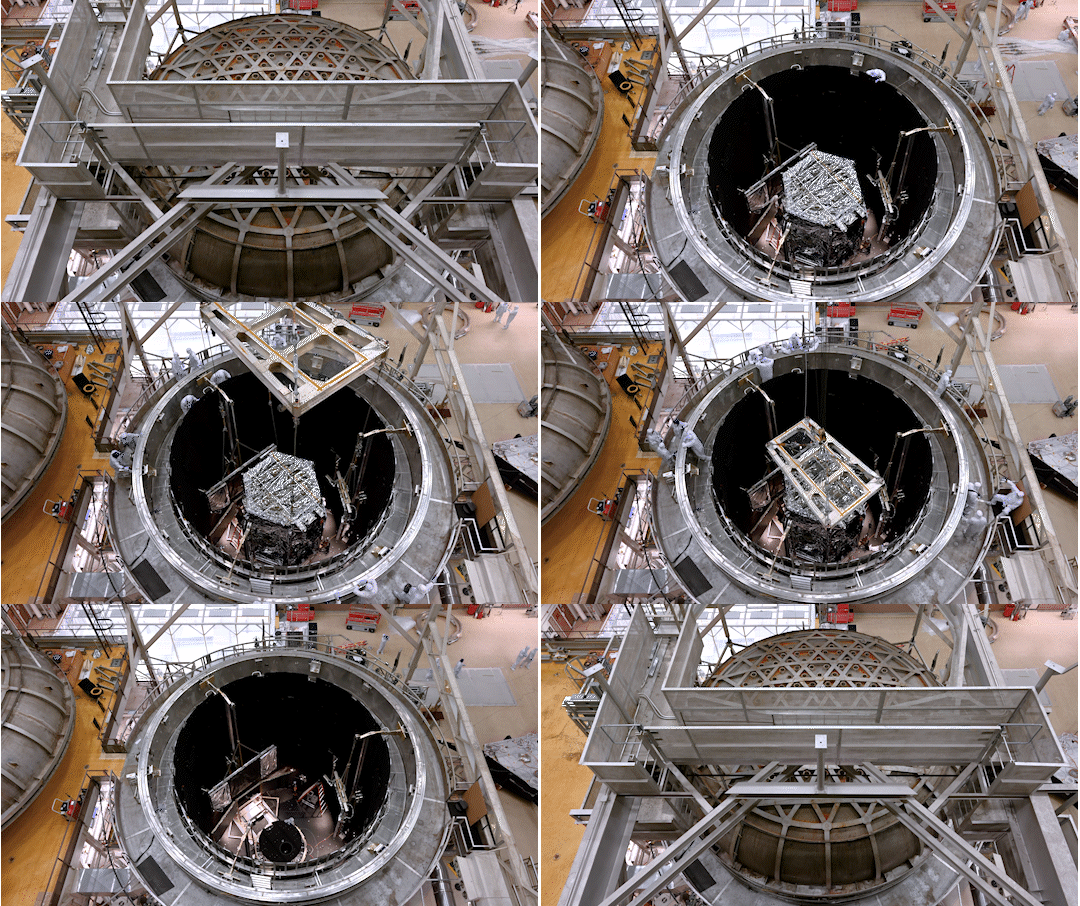
Following extensive assessments, the core portion of NASA’s Nancy Grace Roman Space Telescope was removed from the test chamber (as shown in this gif) and returned to the largest clean room at NASA’s Goddard Space Flight Center in Greenbelt, Md. Next, it will be prepped for final integration.
Credit: NASA/Sophia Roberts
The team expects to connect Roman’s two major parts in November, resulting in a complete observatory by the end of the year. Following final tests, Roman will move to the launch site at NASA’s Kennedy Space Center in Florida for launch preparations in summer 2026. Roman remains on schedule for launch by May 2027, with the team aiming for as early as fall 2026.
The Nancy Grace Roman Space Telescope is managed at NASA’s Goddard Space Flight Center in Greenbelt, Maryland, with participation by NASA’s Jet Propulsion Laboratory in Southern California; Caltech/IPAC in Pasadena, California; the Space Telescope Science Institute in Baltimore; and a science team comprising scientists from various research institutions. The primary industrial partners are BAE Systems Inc. in Boulder, Colorado; L3Harris Technologies in Rochester, New York; and Teledyne Scientific & Imaging in Thousand Oaks, California.
For more information about the Roman Space Telescope, visit:
NASA, NOAA Rank 2025 Ozone Hole as 5th Smallest Since 1992
While continental in scale, the ozone hole over the Antarctic was small in 2025 compared to previous years and remains on track to recover later this century, NASA and the National Oceanic and Atmospheric Administration (NOAA) reported. The hole this year was the fifth smallest since 1992, the year a landmark international agreement to phase out ozone-depleting chemicals began to take effect.
At the height of this year’s depletion season from Sept. 7 through Oct. 13, the average extent of the ozone hole was about 7.23 million square miles (18.71 million square kilometers) — that’s twice the area of the contiguous United States. The 2025 ozone hole is already breaking up, nearly three weeks earlier than usual during the past decade.
This map shows the size and shape of the ozone hole over the South Pole on the day of its 2025 maximum extent. Moderate ozone losses (orange) are visible amid areas of more potent ozone losses (red). Scientists describe the ozone “hole” as the area in which ozone concentrations drop below the historical threshold of 220 Dobson units.
NASA Earth Observatory image by Lauren Dauphin, using data courtesy of NASA Ozone Watch and GEOS-5 data from the Global Modeling and Assimilation Office at NASA GSFC
The hole reached its greatest one-day extent for the year on Sept. 9 at 8.83 million square miles (22.86 million square kilometers). It was about 30% smaller than the largest hole ever observed, which occurred in 2006, and had an average area of 10.27 million square miles (26.60 million square kilometers).
“As predicted, we’re seeing ozone holes trending smaller in area than they were in the early 2000s,” said Paul Newman, a senior scientist with the University of Maryland, Baltimore County, and leader of the ozone research team at NASA’s Goddard Space Flight Center in Greenbelt, Maryland. “They’re forming later in the season and breaking up earlier. But we still have a long way to go before it recovers to 1980s levels.”
NASA and NOAA scientists say this year’s monitoring showed that controls on ozone-depleting chemical compounds established by the Montreal Protocol and subsequent amendments are driving the gradual recovery of the ozone layer in the stratosphere, which remains on track to recover fully later this century.
The ozone-rich layer acts as a planetary sunscreen that helps shield life from harmful ultraviolet (UV) radiation from the Sun. It is located in the stratosphere, which is found between 7 and 31 miles above the Earth’s surface. Reduced ozone allows more UV rays to reach the surface, resulting in crop damage as well as increased cases of skin cancer and cataracts, among other adverse health impacts.
The ozone depletion process starts when human-made compounds containing chlorine and bromine rise high into the stratosphere miles above Earth’s surface. Freed from their molecular bonds by the more intense UV radiation, the chlorine and bromine-containing molecules then participate in reactions that destroy ozone molecules. Chlorofluorocarbons and other ozone-depleting compounds were once widely used in aerosol sprays, foams, air conditioners, and refrigerators. The chlorine and bromine from these compounds can linger in the atmosphere for decades to centuries.
“Since peaking around the year 2000, levels of ozone-depleting substances in the Antarctic stratosphere have declined by about a third, relative to pre-ozone-hole levels,” said Stephen Montzka, a senior scientist with NOAA’s Global Monitoring Laboratory.
As part of the 1987 Montreal Protocol, countries agreed to replace ozone-depleting substances with less harmful alternatives.
“This year’s hole would have been more than one million square miles larger if there was still as much chlorine in the stratosphere as there was 25 years ago,” Newman said.
Still, the now-banned chemicals persist in old products like building insulation and in landfills. As emissions from those legacy uses taper off over time, projections show the ozone hole over the Antarctic recovering around the late 2060s.
NASA and NOAA previously ranked ozone hole severity using a time frame dating back to 1979, when scientists began tracking Antarctic ozone levels with satellites. Using that longer record, this year’s hole area ranked 14th smallest over 46 years of observations.
Factors like temperature, weather, and the strength of the wind encircling Antarctica known as the polar vortex also influence ozone levels from year to year. A weaker-than-normal polar vortex this August helped keep temperatures above average and likely contributed to a smaller ozone hole, said Laura Ciasto, a meteorologist with NOAA’s Climate Prediction Center.
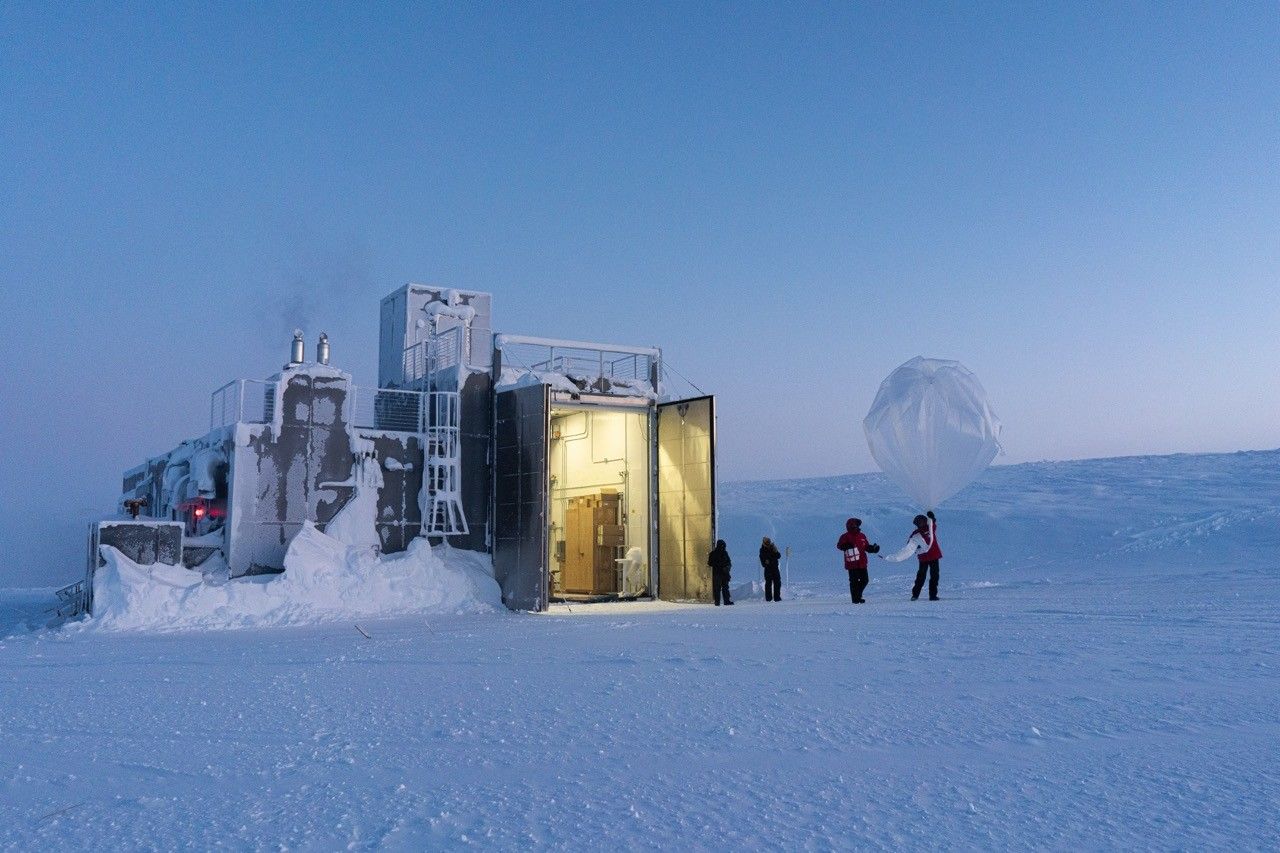
NOAA scientists also use instruments carried on weather balloons and upward-looking surface-based instruments to measure stratospheric ozone directly above the South Pole Atmospheric Baseline Observatory. Balloon data showed that the ozone concentration reached its lowest value of 147 Dobson Units this year on Oct. 6. The lowest value ever recorded over the South Pole was 92 Dobson Units in October 2006.
NOAA scientists launch a weather balloon carrying an ozonesonde near the South Pole in September 2025.
Simeon Bash/IceCube – courtesy of NOAA
The Dobson Unit is a measurement that indicates the total number of ozone molecules present throughout the atmosphere above a certain location. A measurement of 100 Dobson Units corresponds to a layer of pure ozone 1 millimeter thick — about as thick as a dime — at standard temperature and pressure conditions.
View the latest status of the ozone layer over the Antarctic with NASA’s ozone watch.
This NASA/ESA Hubble Space Telescope image features the spiral galaxy NGC 4535.
ESA/Hubble & NASA, F. Belfiore, J. Lee and the PHANGS-HST Team
Today’s NASA/ESA Hubble Space Telescope image features the spiral galaxy NGC 4535, which is situated about 50 million light-years away in the constellation Virgo (the Maiden). Through a small telescope, this galaxy appears extremely faint, giving it the nickname ‘Lost Galaxy’. With a mirror spanning nearly eight feet (2.4 meters) across and its location above Earth’s light-obscuring atmosphere, Hubble can easily observe dim galaxies like NGC 4535 and pick out features like its massive spiral arms and central bar of stars.
This image features NGC 4535’s young star clusters, which dot the galaxy’s spiral arms. Glowing-pink clouds surround many of these bright-blue star groupings. These clouds, called H II (‘H-two’) regions, are a sign that the galaxy is home to especially young, hot, and massive stars that blaze with high-energy radiation. Such massive stars shake up their surroundings by heating their birth clouds with powerful stellar winds, eventually exploding as supernovae.
The image incorporates data from an observing program designed to catalog roughly 50,000 H II regions in nearby star-forming galaxies like NGC 4535. Hubble released a previous image of NGC 4535 in 2021. Both the 2021 image and this new image incorporate observations from the PHANGS observing program, which seeks to understand the connections between young stars and cold gas. Today’s image adds a new dimension to our understanding of NGC 4535 by capturing the brilliant red glow of the nebulae that encircle massive stars in their first few million years of life.
NASA’s TESS Spacecraft Triples Size of Pleiades Star Cluster
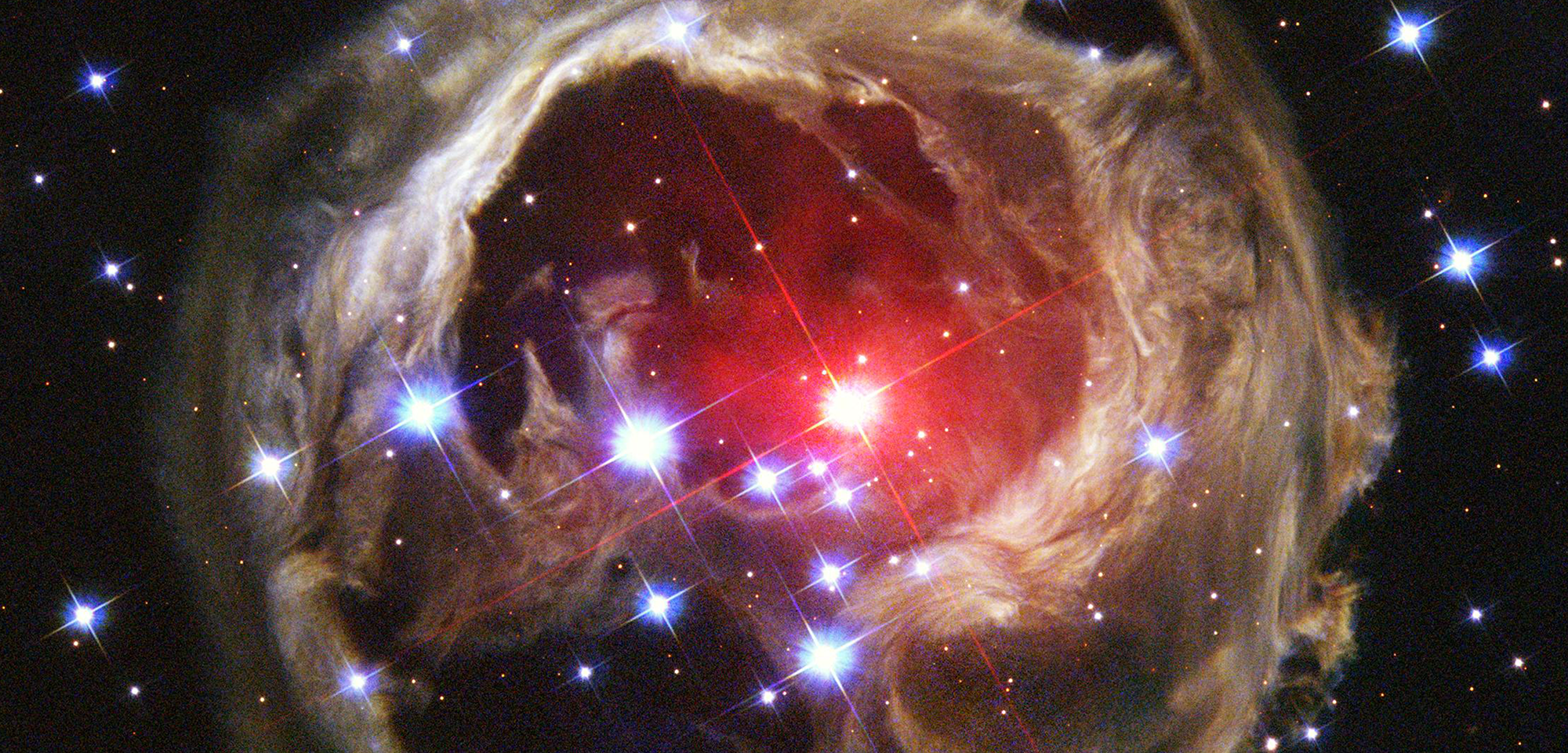
These young, hot blue stars are members of the Pleiades open star cluster and resides about 430 light-years away in the northern constellation Taurus. The brightest stars are visible to the unaided eye during evenings from October to April. A new study finds the cluster to be triple the size previously thought — and shows that its stars are scattered across the night sky. The Schmidt telescope at the Palomar Observatory in California captured this color-composite image.
NASA, ESA and AURA/Caltech
Astronomers have revolutionized our understanding of a collection of stars in the northern sky called the Pleiades. They used data from NASA’s TESS (Transiting Exoplanet Survey Satellite) and other observatories as NASA explores the secrets of the universe for the benefit of all, from the Moon to Mars and beyond.
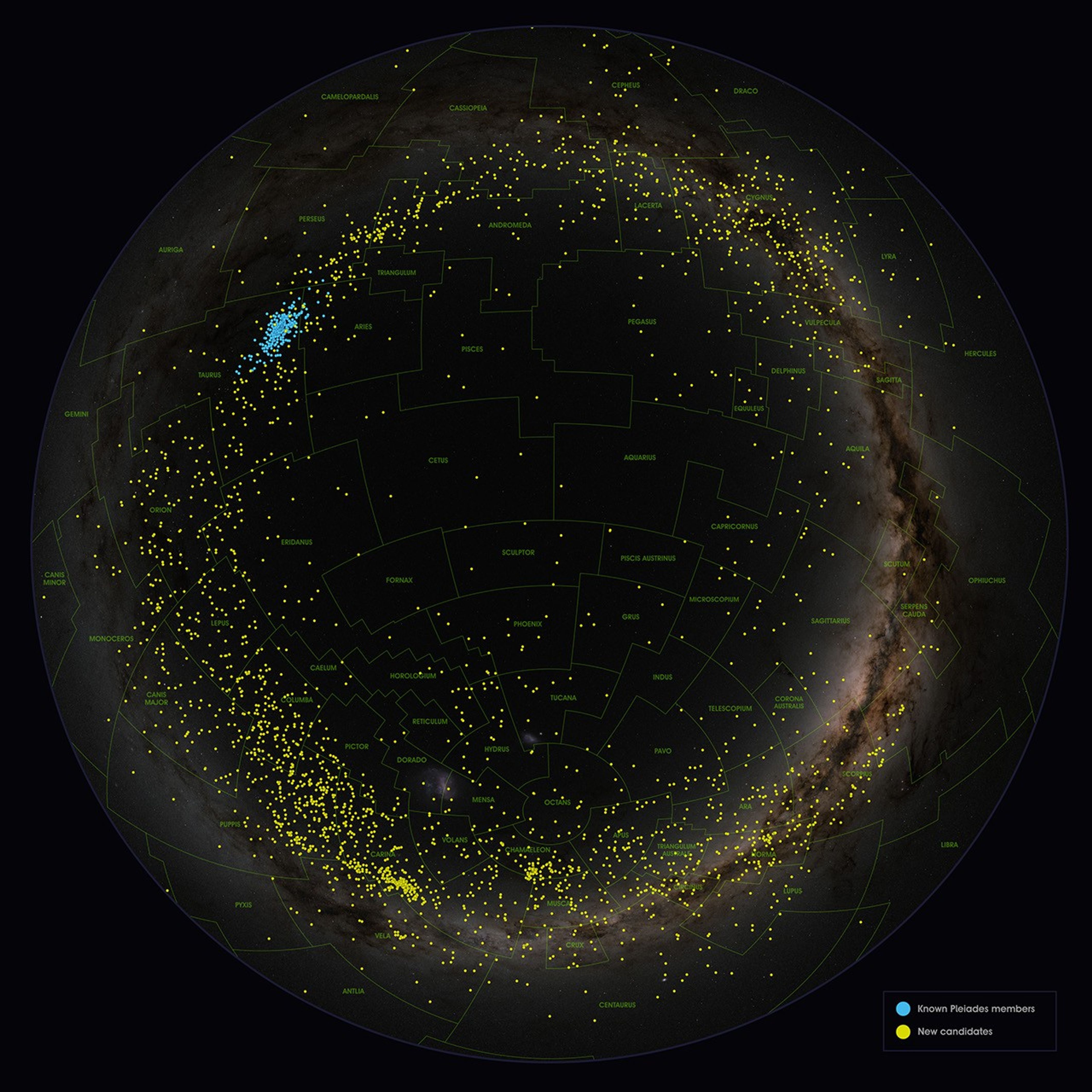
By examining the rotation, chemistry, and orbit around the Milky Way of members of several different nearby stellar groups, the scientists identified a continuum of more than 3,000 stars arcing across 1,900 light-years. This Greater Pleiades Complex triples the number of stars associated with the Pleiades and opens new approaches for discovering similar dispersed star clusters in the future.
“The Pleiades are very well studied — we often use them as a benchmark in astronomical observations,” said Andrew Boyle, a graduate student at the University of North Carolina at Chapel Hill. “When I started this research, I didn’t expect the cluster to balloon to the size that it did. It really touches on a human note. In the Northern Hemisphere, we’ve been looking up at the Pleiades and telling stories about them for thousands of years, but there’s so much more to them than we knew.”
A paper about the result, led by Boyle, published Wednesday, Nov. 12, in the Astrophysical Journal.
This image shows two-thirds of the night sky, illustrating the vast extent of the Greater Pleiades Complex. Original stellar members of the Pleiades, sometimes called Messier 45, appear as blue dots. Newly identified members are in yellow. The constellations are outlined and labeled in green.
The Pleiades is a bright cluster of stars, also known as Messier 45. This loose grouping of about 1,000 members was born roughly 100 million years ago from the same molecular cloud, a cold dense patch of gas and dust.
About six of the stars in the cluster are visible to the unaided eye during evenings from October to April in the northern constellation Taurus. This collection has also been known since antiquity as the Seven Sisters, although the seventh star is no longer visible.
Boyle and his team initially identified over 10,000 stars that could be related to the Pleiades. These stars were orbiting at a similar rate around our Milky Way galaxy according to data from ESA’s (European Space Agency) Gaia satellite.
They narrowed down that collection using stellar rotation data from TESS.
Watch how a star’s rotation slows with age in this artist’s concept of a Sun-like star. The number of star spots also decreases with age.
NASA’s Goddard Space Flight Center
NASA’s TESS mission scans a wide swath of the sky for about a month at a time, looking for variations in the light from stars to spot orbiting planets. This technique also allows TESS to identify and monitor asteroids out to large distances, determining their spin and refining their shape. Such observations improve our understanding of asteroids in our solar system, which can aid in planetary defense.
Scientists can also use TESS data to determine how fast the stars are rotating by looking at regular fluctuations in their light caused when dark surface features called star spots come in and out of view. Because stellar rotation slows as stars age, the researchers were able to pick out the stars that were about the same age as the Pleiades.
The team also looked at the chemical abundances in potential members using data from ground-based missions like the Sloan Digital Sky Survey, which is led by a consortium of institutions.
“The core of the Pleiades is chemically distinct from the average star in a few elements like magnesium and silicon,” said Luke Bouma, a co-author and fellow at the Carnegie Science Observatories in Pasadena, California. “The other stars that we propose are part of the Greater Pleiades are chemically distinct in the same way. The combination of these three major lines of evidence — Milky Way orbits, ages, and chemistry — tells me that we’re on the right path when making these connections.”
The team members think that all the stars in the Greater Pleiades Complex formed in a tighter collection, like the stars in the young Orion cluster, about 100 million years ago. Over time, the cluster dispersed due to the explosive forces of internal supernovae and from the tidal forces of our galaxy’s gravity.
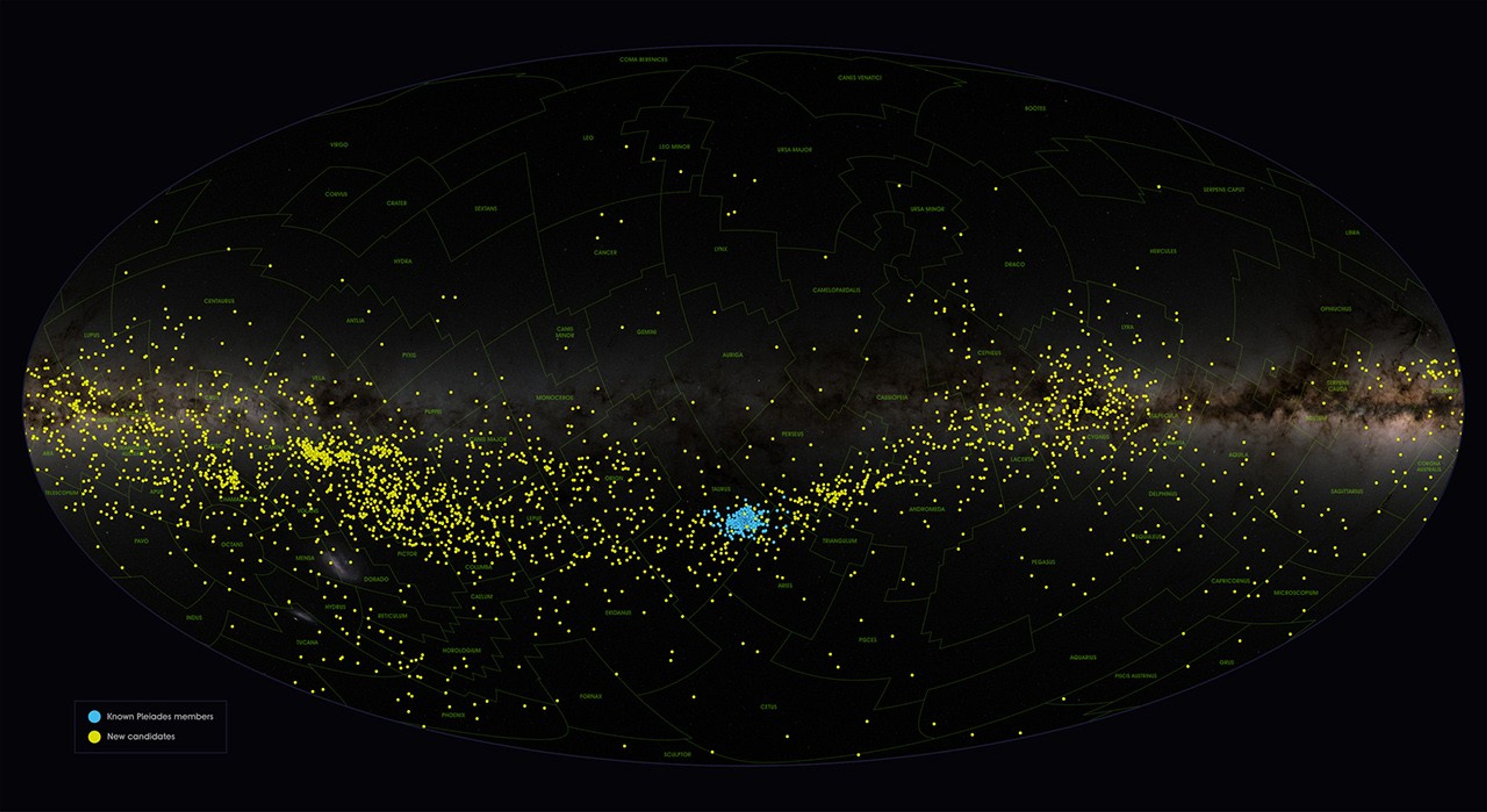
The result is a stream of stars arcing across the sky from horizon to horizon.
This image shows an all-sky view of the Greater Pleiades Complex with the plane of our Milky Way running through the middle. Members of the original open cluster are in blue, and new members are in yellow. The constellations are outlined and labeled in green.
Boyle and Bouma are now working on what they call the TESS All-Sky Rotation Survey. This database will allow researchers to access the rotation information for over 8 million stars to discover even more hidden stellar connections like the Greater Pleiades Complex.
“Thanks to TESS, this team was able to shed new light on a fixture of astronomy,” said Allison Youngblood, the TESS project scientist at NASA’s Goddard Space Flight Center in Greenbelt, Maryland. “From distant stars and planets to asteroids in our solar system and machine learning models here on Earth, TESS continues to push the boundaries of what we can accomplish with large datasets that capture just a part of the complexity of our universe.”
This NASA/ESA Hubble Space Telescope image features the spiral galaxy called NGC 6000.
ESA/Hubble & NASA, A. Filippenko; Acknowledgment: M. H. Özsaraç
Stars of all ages are on display in this NASA/ESA Hubble Space Telescope image of the sparkling spiral galaxy called NGC 6000, located 102 million light-years away in the constellation Scorpius.
NGC 6000 has a glowing yellow center and glittering blue outskirts. These colors reflect differences in the average ages, masses, and temperatures of the galaxy’s stars. At the heart of the galaxy, the stars tend to be older and smaller. Less massive stars are cooler than more massive stars, and somewhat counterintuitively, cooler stars are redder, while hotter stars are bluer. Farther out along NGC 6000’s spiral arms, brilliant star clusters host young, massive stars that appear distinctly blue.
Hubble collected the data for this image while surveying the sites of recent supernova explosions in nearby galaxies. NGC 6000 hosted two recent supernovae: SN 2007ch in 2007 and SN 2010as in 2010. Using Hubble’s sensitive detectors, researchers can discern the faint glow of supernovae years after the initial explosion. These observations help constrain the masses of supernovae progenitor stars and can indicate if they had any stellar companions.
By zooming in to the right side of the galaxy’s disk in this image, you can see a set of four thin yellow and blue lines. These lines are an asteroid in our solar system that was drifting across Hubble’s field of view as it gazed at NGC 6000. The four lines are due to four different exposures recorded one after another with slight pauses in between. Image processors combined these four exposures to create the final image. The lines appear dashed with alternating colors because each exposure used a filter to collect very specific wavelengths of light, in this case around red and blue. Having these separate exposures of particular wavelengths is important to study and compare stars by their colors — but it also makes asteroid interlopers very obvious!
NASA’s Webb Telescope Studies Moon-Forming Disk Around Massive Planet
An artistic rendering of a dust and gas disk encircling the young exoplanet, CT Cha b, 625 light-years from Earth. Full image, annotation, and caption shown below.
Credits: Illustration: NASA, ESA, CSA, STScI, Gabriele Cugno (University of Zürich, NCCR PlanetS), Sierra Grant (Carnegie Institution for Science), Joseph Olmsted (STScI), Leah Hustak (STScI)
NASA’s James Webb Space Telescope has provided the first direct measurements of the chemical and physical properties of a potential moon-forming disk encircling a large exoplanet. The carbon-rich disk surrounding the world called CT Cha b, which is located 625 light-years away from Earth, is a possible construction yard for moons, although no moons are detected in the Webb data.
The young star the planet orbits is only 2 million years old and still accreting circumstellar material. However, the circumplanetary disk discovered by Webb is not part of the larger accretion disk around the central star. The two objects are 46 billion miles apart.
Observing planet and moon formation is fundamental to understanding the evolution of planetary systems across our galaxy. Moons likely outnumber planets, and some might be habitats for life as we know it. But we are only now entering an era where we can witness their formation.
This discovery fosters a better understanding of planet and moon formation, say researchers. Webb’s data is invaluable for making comparisons to our solar system’s birth over 4 billion years ago.
“We can see evidence of the disk around the companion, and we can study the chemistry for the first time. We’re not just witnessing moon formation — we’re also witnessing this planet’s formation,” said co-lead author Sierra Grant of the Carnegie Institution for Science in Washington.
“We are seeing what material is accreting to build the planet and moons,” added main lead author Gabriele Cugno of the University of Zürich and member of the National Center of Competence in Research PlanetS.
Image A: Circumplanetary Disk (Artist’s Concept)
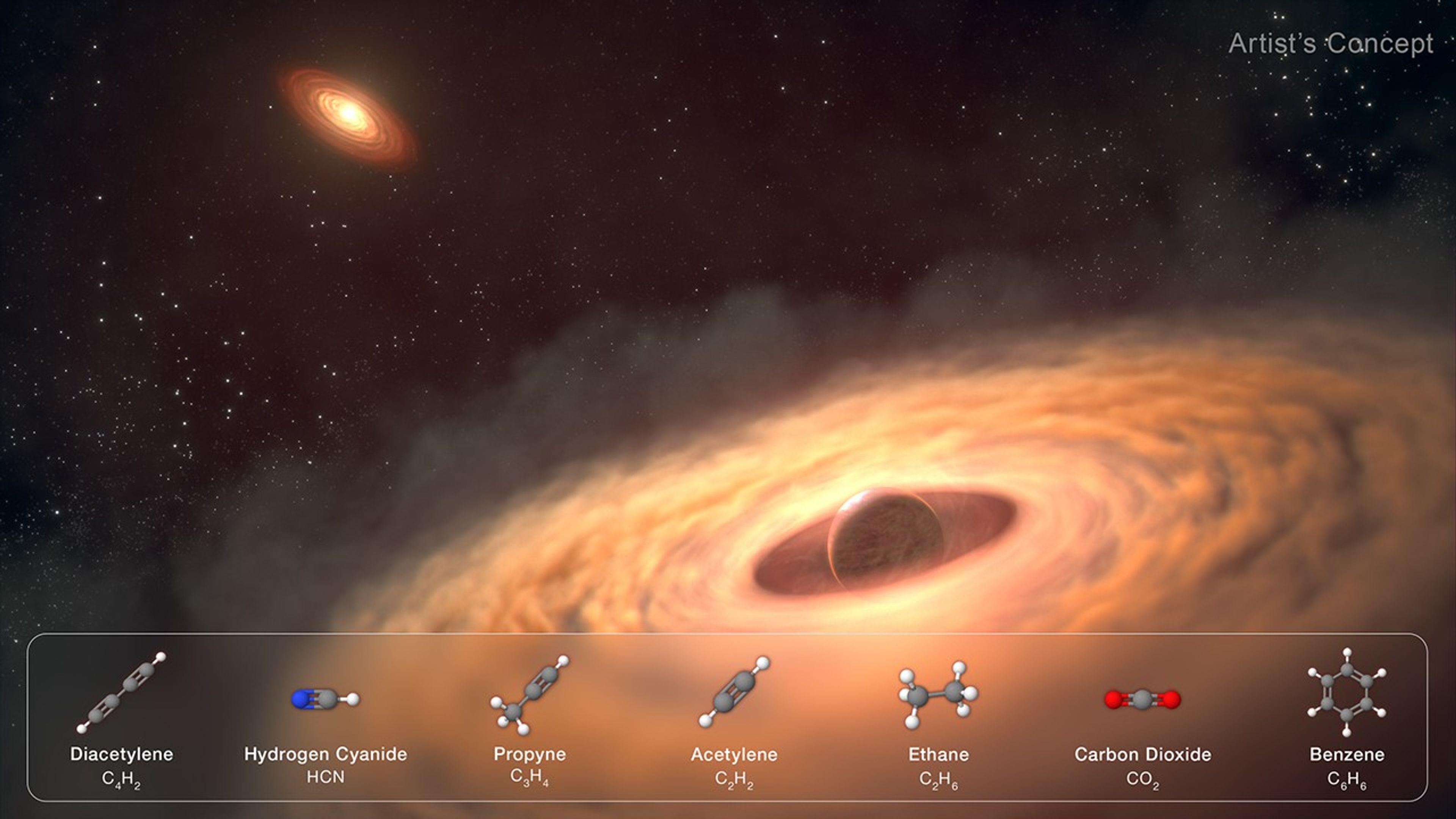
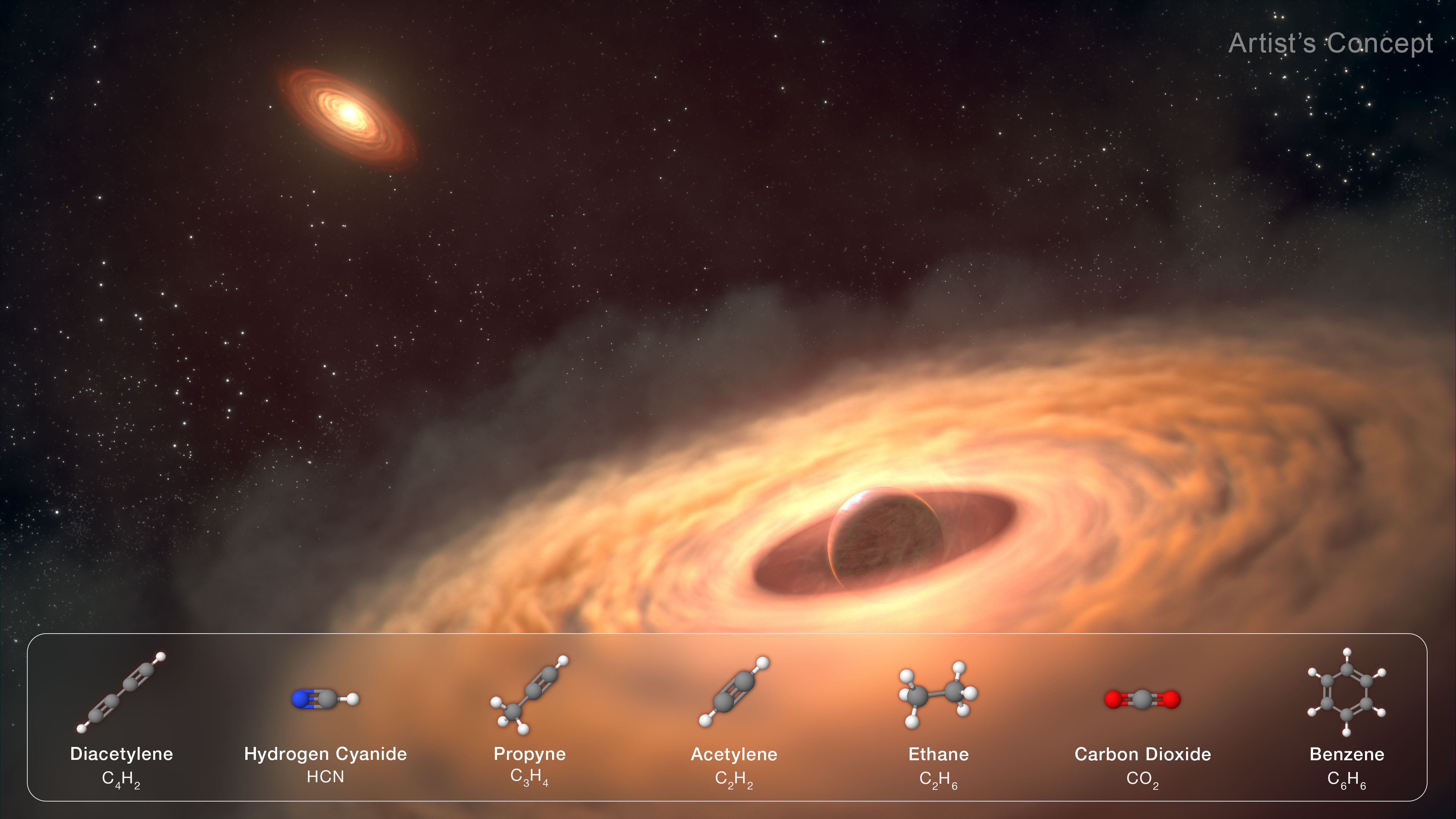
An artistic rendering of a dust and gas disk encircling the young exoplanet, CT Cha b, 625 light-years from Earth. Spectroscopic data from NASA’s James Webb Space Telescope suggests the disk contains the raw materials for moon formation: diacetylene, hydrogen cyanide, propyne, acetylene, ethane, carbon dioxide, and benzene. The planet appears at lower right, while its host star and surrounding circumstellar disk are visible in the background.
Illustration: NASA, ESA, CSA, STScI, Gabriele Cugno (University of Zu00fcrich, NCCR PlanetS), Sierra Grant (Carnegie Institution for Science), Joseph Olmsted (STScI), Leah Hustak (STScI)
Dissecting starlight
Infrared observations of CT Cha b were made with Webb’s MIRI (Mid-Infrared Instrument) using its medium resolution spectrograph. An initial look into Webb’s archival data revealed signs of molecules within the circumplanetary disk, which motivated a deeper dive into the data. Because the planet’s faint signal is buried in the glare of the host star, the researchers had to disentangle the light of the star from the planet using high-contrast methods.
“We saw molecules at the location of the planet, and so we knew that there was stuff in there worth digging for and spending a year trying to tease out of the data. It really took a lot of perseverance,” said Grant.
Ultimately, the team discovered seven carbon-bearing molecules within the planet’s disk, including acetylene (C2H2) and benzene (C6H6). This carbon-rich chemistry is in stark contrast to the chemistry seen in the disk around the host star, where the researchers found water but no carbon. The difference between the two disks offers evidence for their rapid chemical evolution over only 2 million years.
Genesis of moons
A circumplanetary disk has long been hypothesized as the birthplace of Jupiter’s four major moons. These Galilean satellites must have condensed out of such a flattened disk billions of years ago, as evident in their co-planar orbits about Jupiter. The two outermost Galilean moons, Ganymede and Callisto, are 50% water ice. But they presumably have rocky cores, perhaps either of carbon or silicon.
“We want to learn more about how our solar system formed moons. This means that we need to look at other systems that are still under construction. We’re trying to understand how it all works,” said Cugno. “How do these moons come to be? What are their ingredients? What physical processes are at play, and over what timescales? Webb allows us to witness the drama of moon formation and investigate these questions observationally for the first time.”
In the coming year, the team will use Webb to perform a comprehensive survey of similar objects, to better understand the diversity of physical and chemical properties in the disks around young planets.
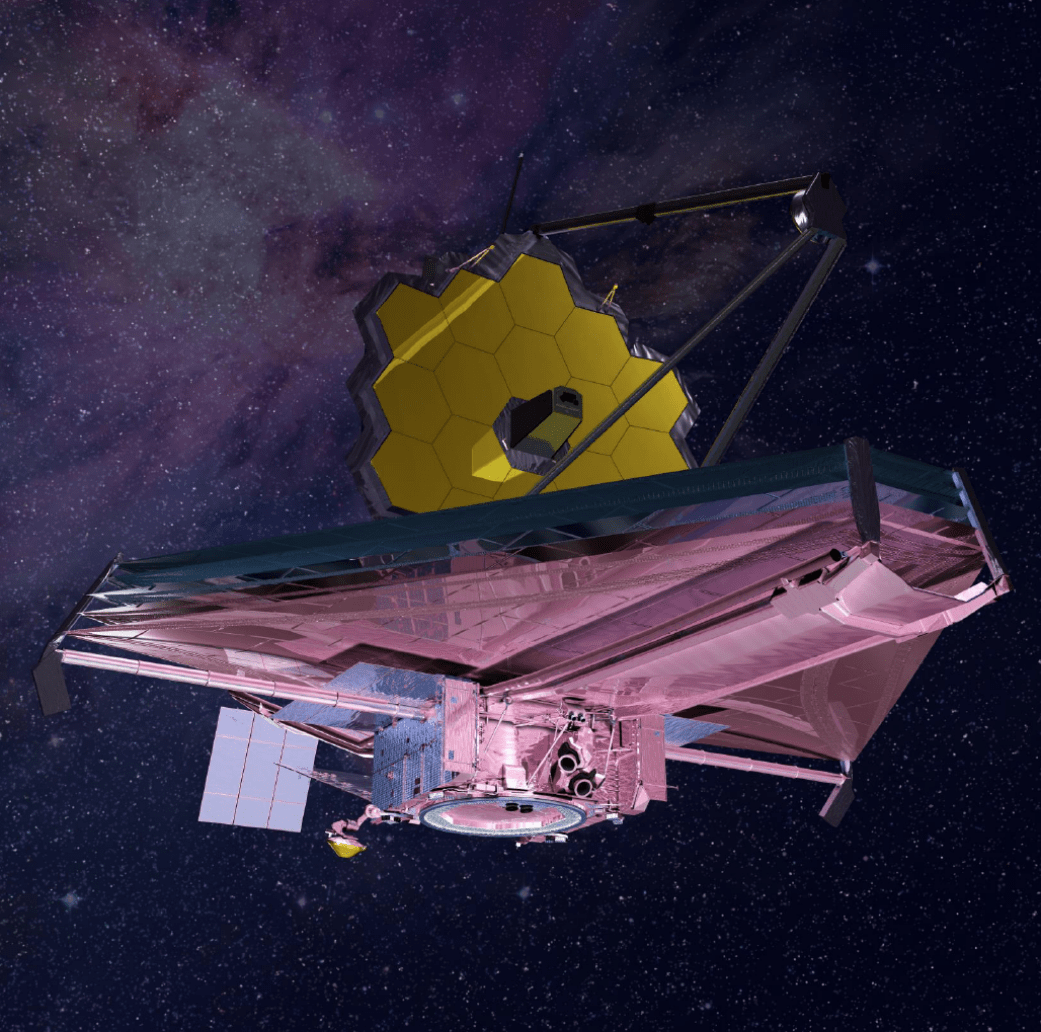
The James Webb Space Telescope is the world’s premier space science observatory. Webb is solving mysteries in our solar system, looking beyond to distant worlds around other stars, and probing the mysterious structures and origins of our universe and our place in it. Webb is an international program led by NASA with its partners, ESA (European Space Agency) and CSA (Canadian Space Agency).
An artistic rendering of a dust and gas disk encircling the young exoplanet (lower right), CT Cha b, 625 light-years from Earth. Spectroscopic data from Webb suggests the disk contains the raw materials for moon formation.
NASA’s Webb Telescope Studies Moon-Forming Disk Around Massive Planet
An artistic rendering of a dust and gas disk encircling the young exoplanet, CT Cha b, 625 light-years from Earth. Full image, annotation, and caption shown below.
Credits: Illustration: NASA, ESA, CSA, STScI, Gabriele Cugno (University of Zürich, NCCR PlanetS), Sierra Grant (Carnegie Institution for Science), Joseph Olmsted (STScI), Leah Hustak (STScI)
NASA’s James Webb Space Telescope has provided the first direct measurements of the chemical and physical properties of a potential moon-forming disk encircling a large exoplanet. The carbon-rich disk surrounding the world called CT Cha b, which is located 625 light-years away from Earth, is a possible construction yard for moons, although no moons are detected in the Webb data.
The young star the planet orbits is only 2 million years old and still accreting circumstellar material. However, the circumplanetary disk discovered by Webb is not part of the larger accretion disk around the central star. The two objects are 46 billion miles apart.
Observing planet and moon formation is fundamental to understanding the evolution of planetary systems across our galaxy. Moons likely outnumber planets, and some might be habitats for life as we know it. But we are only now entering an era where we can witness their formation.
This discovery fosters a better understanding of planet and moon formation, say researchers. Webb’s data is invaluable for making comparisons to our solar system’s birth over 4 billion years ago.
“We can see evidence of the disk around the companion, and we can study the chemistry for the first time. We’re not just witnessing moon formation — we’re also witnessing this planet’s formation,” said co-lead author Sierra Grant of the Carnegie Institution for Science in Washington.
“We are seeing what material is accreting to build the planet and moons,” added main lead author Gabriele Cugno of the University of Zürich and member of the National Center of Competence in Research PlanetS.
Image A: Circumplanetary Disk (Artist’s Concept)
An artistic rendering of a dust and gas disk encircling the young exoplanet, CT Cha b, 625 light-years from Earth. Spectroscopic data from NASA’s James Webb Space Telescope suggests the disk contains the raw materials for moon formation: diacetylene, hydrogen cyanide, propyne, acetylene, ethane, carbon dioxide, and benzene. The planet appears at lower right, while its host star and surrounding circumstellar disk are visible in the background.
Illustration: NASA, ESA, CSA, STScI, Gabriele Cugno (University of Zürich, NCCR PlanetS), Sierra Grant (Carnegie Institution for Science), Joseph Olmsted (STScI), Leah Hustak (STScI)
Dissecting starlight
Infrared observations of CT Cha b were made with Webb’s MIRI (Mid-Infrared Instrument) using its medium resolution spectrograph. An initial look into Webb’s archival data revealed signs of molecules within the circumplanetary disk, which motivated a deeper dive into the data. Because the planet’s faint signal is buried in the glare of the host star, the researchers had to disentangle the light of the star from the planet using high-contrast methods.
“We saw molecules at the location of the planet, and so we knew that there was stuff in there worth digging for and spending a year trying to tease out of the data. It really took a lot of perseverance,” said Grant.
Ultimately, the team discovered seven carbon-bearing molecules within the planet’s disk, including acetylene (C2H2) and benzene (C6H6). This carbon-rich chemistry is in stark contrast to the chemistry seen in the disk around the host star, where the researchers found water but no carbon. The difference between the two disks offers evidence for their rapid chemical evolution over only than 2 million years.
Genesis of moons
A circumplanetary disk has long been hypothesized as the birthplace of Jupiter’s four major moons. These Galilean satellites must have condensed out of such a flattened disk billions of years ago, as evident in their co-planar orbits about Jupiter. The two outermost Galilean moons, Ganymede and Callisto, are 50% water ice. But they presumably have rocky cores, perhaps either of carbon or silicon.
“We want to learn more about how our solar system formed moons. This means that we need to look at other systems that are still under construction. We’re trying to understand how it all works,” said Cugno. “How do these moons come to be? What are their ingredients? What physical processes are at play, and over what timescales? Webb allows us to witness the drama of moon formation and investigate these questions observationally for the first time.”
In the coming year, the team will use Webb to perform a comprehensive survey of similar objects, to better understand the diversity of physical and chemical properties in the disks around young planets.
The James Webb Space Telescope is the world’s premier space science observatory. Webb is solving mysteries in our solar system, looking beyond to distant worlds around other stars, and probing the mysterious structures and origins of our universe and our place in it. Webb is an international program led by NASA with its partners, ESA (European Space Agency) and CSA (Canadian Space Agency).
NASA has selected Melwood Horticultural Training Center Inc. of Upper Marlboro, Maryland, to provide custodial, janitorial, landscaping, and recycling services for the agency’s Goddard Space Flight Center in Greenbelt, Maryland.
The Facilities Custodial and Landscaping award is a firm-fixed-price hybrid completion and indefinite-delivery/indefinite-quantity contract. The contract includes one 12-month base period and up to four 12-month options with a potential contract value of approximately $36 million if all options are exercised. The basic period of performance begins Wednesday, Oct. 1, 2025, and ends Sept. 30, 2026. The four option periods, if exercised, would extend the contract through Sept. 30, 2030.
For information about NASA and agency programs, visit:
This NASA/ESA Hubble Space Telescope image features the galaxy NGC 2775.
ESA/Hubble & NASA, F. Belfiore, J. Lee and the PHANGS-HST Team
This NASA/ESA Hubble Space Telescope image features a galaxy that’s hard to categorize. The galaxy in question is NGC 2775, which lies 67 million light-years away in the constellation Cancer (the Crab). NGC 2775 sports a smooth, featureless center that is devoid of gas, resembling an elliptical galaxy. It also has a dusty ring with patchy star clusters, like a spiral galaxy. Which is it: spiral or elliptical — or neither?
Because we can only view NGC 2775 from one angle, it’s difficult to say for sure. Some researchers classify NGC 2775 as a spiral galaxy because of its feathery ring of stars and dust, while others classify it as a lenticular galaxy. Lenticular galaxies have features common to both spiral and elliptical galaxies.
Astronomers aren’t certain of exactly how lenticular galaxies come to be, and they might form in a variety of ways. Lenticular galaxies might be spiral galaxies that merged with other galaxies, or that have mostly run out of star-forming gas and lost their prominent spiral arms. They also might have started out more like elliptical galaxies, then collected gas into a disk around them.
Some evidence suggests that NGC 2775 merged with other galaxies in the past. Invisible in this Hubble image, NGC 2775 has a tail of hydrogen gas that stretches almost 100,000 light-years around the galaxy. This faint tail could be the remnant of one or more galaxies that wandered too close to NGC 2775 before being stretched apart and absorbed. If NGC 2775 merged with other galaxies in the past, it could explain the galaxy’s strange appearance today.
Most astronomers classify NGC 2775 as a flocculent spiral galaxy. Flocculent spirals have poorly defined, discontinuous arms that are often described as “feathery” or as “tufts” of stars that loosely form spiral arms.
Hubble previously released an image of NGC 2775 in 2020. This new version adds observations of a specific wavelength of red light emitted by clouds of hydrogen gas surrounding massive young stars, visible as bright, pinkish clumps in the image. This additional wavelength of light helps astronomers better define where new stars are forming in the galaxy.
Preparations for Next Moonwalk Simulations Underway (and Underwater)
Recent airborne science flights to Greenland are improving NASA’s understanding of space weather by measuring radiation exposure to air travelers and validating global radiation maps used in flight path planning. This unique data also has value beyond the Earth as a celestial roadmap for using the same instrumentation to monitor radiation levels for travelers entering Mars’ atmosphere and for upcoming lunar exploration.
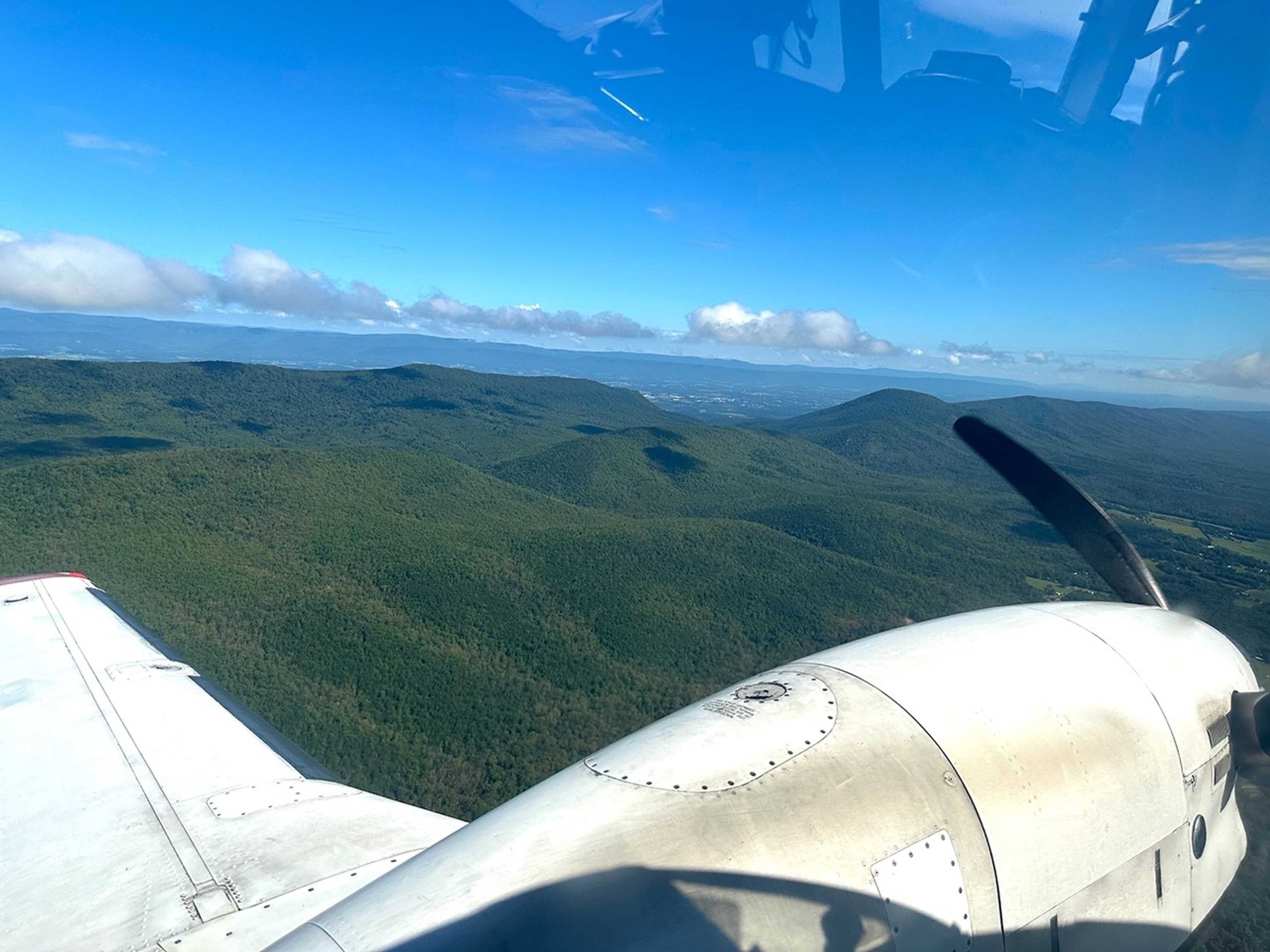
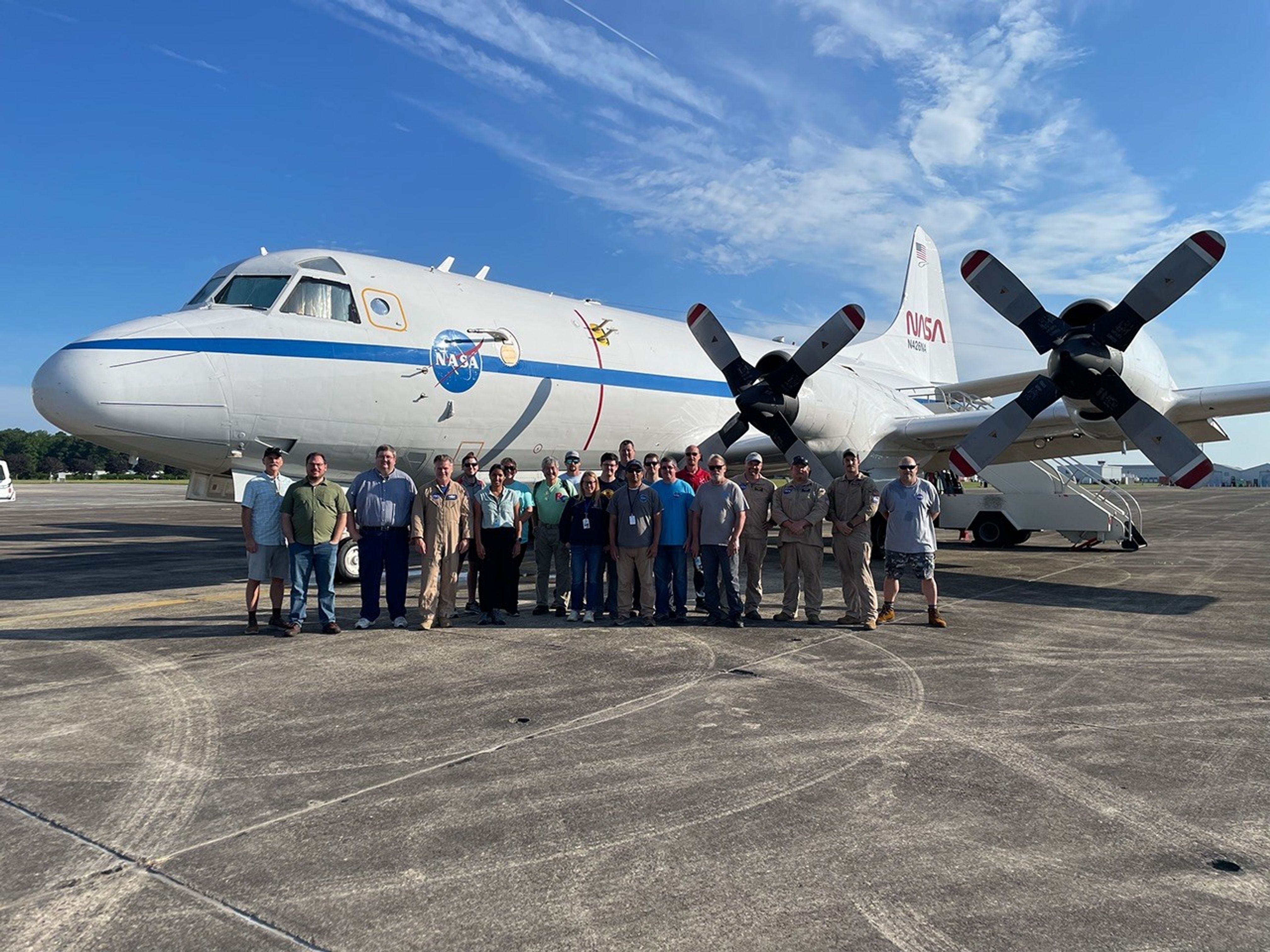
NASA’s Space Weather Aviation Radiation (SWXRAD) aircraft flight campaign took place August 25-28 and conducted two five-hour flights in Nuuk, Greenland. Based out of NASA’s Langley Research Center in Hampton, Virginia, the mission gathered dosimetry measurements, or the radiation dose level, to air travelers from cosmic radiation. Cosmic radiation is caused by high-energy particles from outer space that originate from our Sun during eruptive events like solar flares and from events farther away, like supernovae in our Milky Way galaxy and beyond.
Science team partners from Honeywell reviewing dosimeter data on board NASA’s B200 King Air during a flight over Nuuk, Greenland.
NASA/Guillaume Gronoff
“With NASA spacecraft and astronauts exploring the Moon, Mars, and beyond, we support critical research to understand – and ultimately predict – the impacts of space weather across the solar system,” said Jamie Favors, director of NASA’s Space Weather Program at NASA Headquarters in Washington. “Though this project is focused on aviation applications on Earth, NAIRAS could be part of the next generation of tools supporting Artemis missions to the Moon and eventually human missions to Mars.”
Jamie Favors, NASA Space Weather Program director, and Chris Mertens, SWXRAD principal investigator, discussing a dosimeter at NASA’s Langley Research Center as specialized instruments are integrated onto NASA’s B200 King Air aircraft before deploying to Greenland.
NASA/Mark Knopp
NASA’s Nowcast of Aerospace Ionizing Radiation System, or NAIRAS, is the modeling system being enhanced by the SWXRAD airborne science flights. The model features real-time global maps of the hazardous radiation in the atmosphere and creates exposure predictions for aircraft and spacecraft.
NASA’s B200 King Air on the runway in Goose Bay, Canada, a stop during the flight to Nuuk, Greenland.
NASA/Guillaume Gronoff
“The radiation exposure is maximum at the poles and minimum at the equator because of the effect of Earth’s magnetic field. In the polar regions, the magnetic field lines are directed into or out of the Earth, so there’s no deflection or shielding by the fields of the radiation environment that you see everywhere else.” explained Chris Mertens, principal investigator of SWXRAD at NASA Langley. “Greenland is a region where the shielding of cosmic radiation by Earth’s magnetic field is zero.”
That means flight crews and travelers on polar flights from the U.S. to Asia or from the U.S. to Europe are exposed to higher levels of radiation.
Frozen and rocky terrain in the Polar region observed from above Nuuk, Greenland during NASA’s SWXRAD science flights.
NASA/Guillaume Gronoff
The data gathered in Greenland will be compared to the NAIRAS modeling, which bases its computation on sources around the globe that include neutron monitors and instruments that measure solar wind parameters and the magnetic field along with spaceborne data from instruments like the NOAA GOES series of satellites.
“If the new data doesn’t agree, we have to go back and look at why that is,” said Mertens. “In the radiation environment, one of the biggest uncertainties is the effect of Earth’s magnetic field. So, this mission eliminates that variable in the model and enables us to concentrate on other areas, like characterizing the particles that are coming in from space into the atmosphere, and then the transport and interactions with the atmosphere.”
An aerial view of Nuuk, Greenland.
NASA/Guillaume Gronoff
The SWXRAD science team flew aboard NASA’s B200 King Air with five researchers and crew members. In the coming months, the team will focus on measurement data quality checks, quantitative modeling comparisons, and a validation study between current NAIRAS data and the new aircraft dosimeter measurements.
All of this information is endeavoring to protect pilots and passengers on Earth from the health risks associated with radiation exposure while using NASA’s existing science capabilities to safely bring astronauts to the Moon and Mars.
Northern Lights, or auroras, seen over the city of Nuuk, Greenland. Auroras are considered space weather and are easily visible effects of activity from the Sun interacting with the magnetosphere and Earth’s atmosphere.
NASA/Guillaume Gronoff
“Once you get to Mars and even the transit out to Mars, there would be times where we don’t have any data sets to really understand what the environment is out there,” said Favors. “So we’re starting to think about not only how do we get ready for those humans on Mars, but also what data do we need to bring with them? So we’re feeding this data into models exactly like NAIRAS. This model is thinking about Mars in the same way it’s thinking about Earth.”
The SWXRAD flight mission is funded through NASA’s Science Mission Directorate Heliophysics Division. NASA’s Space Weather Program Office is hosted at NASA Langley and facilitates researchers in the creation of new tools to predict space weather and to understand space weather effects on Earth’s infrastructure, technology, and society.
For more information on NASA Heliophysics and NAIRAS modeling visit:
Captured on Aug. 21, this image from NISAR’s L-band radar shows Maine’s Mount Desert Island. Green indicates forest; magenta represents hard or regular surfaces, like bare ground and buildings. The magenta area on the island’s northeast end is the town of Bar Harbor.
Credit: NASA/JPL-Caltech
The NISAR (NASA-ISRO Synthetic Aperture Radar) Earth-observing radar satellite’s first images of our planet’s surface are in, and they offer a glimpse of things to come as the joint mission between NASA and ISRO (Indian Space Research Organisation) approaches full science operations later this year.
“Launched under President Trump in conjunction with India, NISAR’s first images are a testament to what can be achieved when we unite around a shared vision of innovation and discovery,” said acting NASA Administrator Sean Duffy. “This is only the beginning. NASA will continue to build upon the incredible scientific advancements of the past and present as we pursue our goal to maintain our nation’s space dominance through Gold Standard Science.”
Images from the spacecraft, which was launched by ISRO on July 30, display the level of detail with which NISAR scans Earth to provide unique, actionable information to decision-makers in a diverse range of areas, including disaster response, infrastructure monitoring, and agricultural management.
“By understanding how our home planet works, we can produce models and analysis of how other planets in our solar system and beyond work as we prepare to send humanity on an epic journey back to the Moon and onward to Mars,” said NASA Associate Administrator Amit Kshatriya. “The successful capture of these first images from NISAR is a remarkable example of how partnership and collaboration between two nations, on opposite sides of the world, can achieve great things together for the benefit of all.”
On Aug. 21, the satellite’s L-band synthetic aperture radar (SAR) system, which was provided by NASA’s Jet Propulsion Laboratory in Southern California, captured Mount Desert Island on the Maine coast. Dark areas represent water, while green areas are forest, and magenta areas are hard or regular surfaces, such as bare ground and buildings. The L-band radar system can resolve objects as small as 15 feet (5 meters), enabling the image to display narrow waterways cutting across the island, as well as the islets dotting the waters around it.
Then, on Aug. 23, the L-band SAR captured data of a portion of northeastern North Dakota straddling Grand Forks and Walsh counties. The image shows forests and wetlands on the banks of the Forest River passing through the center of the frame from west to east and farmland to the north and south. The dark agricultural plots show fallow fields, while the lighter colors represent the presence of pasture or crops, such as soybean and corn. Circular patterns indicate the use of center-pivot irrigation.
On Aug. 23, NISAR imaged land adjacent to northeastern North Dakota’s Forest River. Light-colored wetlands and forests line the river’s banks, while circular and rectangular plots throughout the image appear in shades that indicate the land may be pasture or cropland with corn or soy.
Credit: NASA/JPL-Caltech
The images demonstrate how the L-band SAR can discern what type of land cover — low-lying vegetation, trees, and human structures — is present in each area. This capability is vital both for monitoring the gain and loss of forest and wetland ecosystems, as well as for tracking the progress of crops through growing seasons around the world.
“These initial images are just a preview of the hard-hitting science that NISAR will produce — data and insights that will enable scientists to study Earth’s changing land and ice surfaces in unprecedented detail while equipping decision-makers to respond to natural disasters and other challenges,” said Nicky Fox, associate administrator, Science Mission Directorate at NASA Headquarters in Washington. “They are also a testament to the years of hard work of hundreds of scientists and engineers from both sides of the world to build an observatory with the most advanced radar system ever launched by NASA and ISRO.”
The L-band system uses a 10-inch (25-centimeter) wavelength that enables its signal to penetrate forest canopies and measure soil moisture and motion of ice surfaces and land down to fractions of an inch, which is a key measurement in understanding how the land surface moves before, during, and after earthquakes, volcanic eruptions, and landslides.
The preliminary L-band images are an example of what the mission team will be able to produce when the science phase begins in November. The satellite was raised into its operational 464-mile (747-kilometer) orbit in mid-September.
The NISAR mission also includes an S-band radar, provided by ISRO’s Space Applications Centre, that uses a 4-inch (10-centimeter) microwave signal that is more sensitive to small vegetation, making it effective at monitoring certain types of agriculture and grassland ecosystems.
The spacecraft is the first to carry both L- and S-band radars. The satellite will monitor Earth’s land and ice surfaces twice every 12 days, collecting data using the spacecraft’s drum-shaped antenna reflector, which measures 39 feet (12 meters) wide — the largest NASA has ever sent into space.
The NISAR mission is a partnership between NASA and ISRO spanning years of technical and programmatic collaboration. The successful launch and deployment of NISAR builds on a strong heritage of cooperation between the United States and India in space.
The Space Applications Centre provided the mission’s S-band SAR. The U R Rao Satellite Centre provided the spacecraft bus. The launch vehicle was provided by Vikram Sarabhai Space Centre, and launch services were through Satish Dhawan Space Centre. Key operations, including boom and radar antenna reflector deployment, are now being executed and monitored by the ISRO Telemetry, Tracking and Command Network’s global system of ground stations.
Managed by Caltech in Pasadena, NASA JPL leads the U.S. component of the project. In addition to the L-band SAR, reflector, and boom, JPL also provided the high-rate communication subsystem for science data, a solid-state data recorder, and payload data subsystem. NASA’s Goddard Space Flight Center in Greenbelt, Maryland, manages the Near Space Network, which receives NISAR’s L-band data.
NASA has selected Science and Technology Corp. of Columbia, Maryland, to support atmospheric science research and development at the agency’s Goddard Space Flight Center in Greenbelt, Maryland.
The Atmosphere Support is a cost-plus-fixed-fee, single-award indefinite-delivery/indefinite-quantity contract with a maximum ordering value of $163.1 million. The contract will have an effective date of Monday, Nov. 3, 2025, for a period of five years.
Under the contract, the awardee will assist NASA Goddard’s Earth Science Division with all atmospheric science research and development and will conduct a comprehensive atmospheric science research and technology development program directed toward observing, monitoring, characterizing, modeling, understanding, and advancing knowledge of the Earth’s atmosphere.
For information about NASA and agency programs, visit:
NASA’s Neil Gehrels Swift Observatory, shown in this artist’s concept, orbits Earth as it studies the ever-changing universe.
Credit: NASA’s Goddard Space Flight Center Conceptual Image Lab
Driving rapid innovation in the American space industry, NASA has awarded Katalyst Space Technologies of Flagstaff, Arizona, a contract to raise a spacecraft’s orbit. Katalyst’s robotic servicing spacecraft will rendezvous with NASA’s Neil Gehrels Swift Observatory and raise it to a higher altitude, demonstrating a key capability for the future of space exploration and extending the Swift mission’s science lifetime.
NASA’s Swift launched in 2004 to explore the universe’s most powerful explosions, called gamma-ray bursts. The spacecraft’s low Earth orbit has been decaying gradually, which happens to satellites over time. However, because of recent increases in the Sun’s activity, Swift is experiencing more atmospheric drag than anticipated, speeding up its orbital decay. While NASA could have allowed the observatory to reenter Earth’s atmosphere, as many missions do at the end of their lifetimes, Swift’s lowering orbit presents an opportunity to advance American spacecraft servicing technology.
“This industry collaboration to boost Swift’s orbit is just one of many ways NASA works for the nation every day,” said Nicky Fox, associate administrator, Science Mission Directorate, NASA Headquarters in Washington. “By moving quickly to pursue innovative commercial solutions, we’re further developing the space industry and strengthening American space leadership. This daring mission also will demonstrate our ability to go from concept to implementation in less than a year — a rapid-response capability important for our future in space as we send humans back to the Moon under the Artemis campaign, to Mars, and beyond.”
The orbit boost is targeted for spring 2026, though NASA will continue to monitor any changes in solar activity that may impact this target timeframe. A successful Swift boost would be the first time a commercial robotic spacecraft captures a government satellite that is uncrewed, or not originally designed to be serviced in space.
“Given how quickly Swift’s orbit is decaying, we are in a race against the clock, but by leveraging commercial technologies that are already in development, we are meeting this challenge head-on,” said Shawn Domagal-Goldman, acting director, Astrophysics Division, NASA Headquarters. “This is a forward-leaning, risk-tolerant approach for NASA. But attempting an orbit boost is both more affordable than replacing Swift’s capabilities with a new mission, and beneficial to the nation — expanding the use of satellite servicing to a new and broader class of spacecraft.”
Swift leads NASA’s fleet of space telescopes in studying changes in the high-energy universe. When a rapid, sudden event takes place in the cosmos, Swift serves as a “dispatcher,” providing critical information that allows other “first responder” missions to follow up to learn more about how the universe works. For more than two decades, Swift has led NASA’s missions in providing new insights on these events, together broadening our understanding of everything from exploding stars, stellar flares, and eruptions in active galaxies, to comets and asteroids in our own solar system and high-energy lightning events on Earth.
NASA has awarded Katalyst $30 million to move forward with implementation under a Phase III award as an existing participant in NASA’s Small Business Innovation Research (SBIR) Program, managed by the agency’s Space Technology Mission Directorate. This approach allowed NASA to pursue an orbit boost for Swift on a shorter development timeline than would otherwise be possible, given the rapid rate at which Swift’s orbit is decaying.
“America’s space economy is brimming with cutting-edge solutions, and opportunities like this allow NASA to tap into them for real-world challenges,” said Clayton Turner, associate administrator, NASA’s Space Technology Mission Directorate, NASA Headquarters. “Orbital decay is a common, natural occurrence for satellites, and this collaboration may open the door to extending the life of more spacecraft in the future. By working with industry, NASA fosters rapid, agile technology development, advancing capabilities to benefit the missions of today and unlock the discoveries of tomorrow.”
The NASA SBIR program is part of America’s Seed Fund, the nation’s largest source of early-stage, non-dilutive funding for innovative technologies. Through this program, entrepreneurs, startups, and small businesses with less than 500 employees can receive funding and non-monetary support to build, mature, and commercialize their technologies, advancing NASA missions and helping solve important challenges facing our country.
NASA’s Goddard Space Flight Center in Greenbelt, Maryland, manages the Swift mission in collaboration with Penn State, the Los Alamos National Laboratory in New Mexico, and Northrop Grumman Space Systems in Dulles, Virginia. Other partners include the UK Space Agency, University of Leicester and Mullard Space Science Laboratory in the United Kingdom, Brera Observatory in Italy, and the Italian Space Agency.
NASA Aircraft Coordinate Science Flights to Measure Air Quality
NASA Goddard’s G-LiHT flying on the A90 flies over Shenandoah Valley in the US East Coast during the week of August 11-15.
Credit: NASA/Shawn Serbin
Magic is in the air. No wait… MAGEQ is in the air, featuring scientists from NASA centers across the country who teamed up with the National Oceanic and Atmospheric Administration (NOAA), the University of Maryland Baltimore County, and several other university and government partners and collaborators.
This summer, six planes collectively flew more than 400 hours over the mid-Atlantic United States with a goal of gathering data on a range of objectives, including air quality, forestry, and fire management.
This was part of an effort called MAGEQ, short for Mid-Atlantic Gas Emissions Quantification. Rather than one mission, MAGEQ consists of several individual missions across more than a dozen organizations and agencies, along with university students. Over the course of around six weeks, aircraft flew over cities, wetlands, farms, and coal mining areas.
NASA Goddard’s G-LiHT flying on the A90 flies over the Chesapeake Bay near the Big Annemessex River.
Credit: NASA/Shawn Serbin
“Each aircraft team is comprised of highly skilled and motivated people who understand how to fly their particular plane to achieve the science they want,” said Glenn Wolfe, research scientist at NASA’s Goddard Space Flight Center in Greenbelt, Maryland, and project lead for MAGEQ. “The complexity comes in identifying how each platform can complement or supplement the others.”
Coordinating flights required both advanced planning and flexibility to get the best outcome. Weather proved to be a primary challenge for the team, as members worked around cloudy days, wind, and storms to ensure safe flights.
The six aircraft had different objectives and requirements. For example, some carried instruments that needed to fly high to simulate a satellite’s view of the atmosphere and the Earth’s surface and could not measure through clouds. Others were equipped with instruments that directly measured the air particles and could work under the clouds, provided there was no rain.
Despite weather challenges, flight teams worked together to coordinate as many multi-aircraft flight days as possible, meeting the overall objective of the MAGEQ campaign.
The MAGEQ team members pose in front of the P-3 aircraft at NASA’s Wallops Flight Facility in Virginia.
Credit: NASA/Roy Johnson
“It’s been inspiring to see how everybody worked together,” said Lesley Ott, research meteorologist and lead carbon cycle modeler for NASA’s Global Modeling and Assimilation Office at NASA Goddard. “By collecting data together, not only can we do a better job as scientists in having more complete understanding, we can also do a better job making usable data sets that meets the needs of different stakeholders.”
State resource managers in North Carolina and Virginia, for example, could benefit from this data as they monitor the health of wetlands, which provide resilience to storms, absorb carbon from the atmosphere and support local tourist industries. The data could also help operators at energy-producing facilities detect methane leaks or equipment failures quickly. Faster detection could speed up intervention and minimize waste, as well as lessen environmental impacts. Stakeholders were an integral part of the planning process, Ott said. They made suggestions about measurement sites and data needs that informed the flight planning.
Scientists will also use the measurements to verify satellite data from both public and commercial data providers. Satellites like the Tropospheric Emissions: Monitoring of Pollution (TEMPO) instrument collect similar data. Scientists can compare the airborne and satellite data to get a more complete picture of the atmosphere. They also will use MAGEQ data to evaluate atmospheric chemistry modeling from the Goddard Earth Observing System (GEOS) model, which connects atmospheric, oceanic, and land data to help create a more comprehensive picture of Earth science.
The MAGEQ team members from NOAA and NASA pose in front of the Twin Otter aircraft.
Credit: NOAA/Steve Brown
“Every aircraft does something different and contributes a different type of data,” said Steve Brown, leader of the tropospheric chemistry and atmospheric remote sensing programs at the NOAA Chemical Sciences Laboratory in Boulder, Colorado. “We’re going to have a lot of work to do at the end of this to put all these data sets together, but we will make the best use of all these measurements.”

 Login
Login