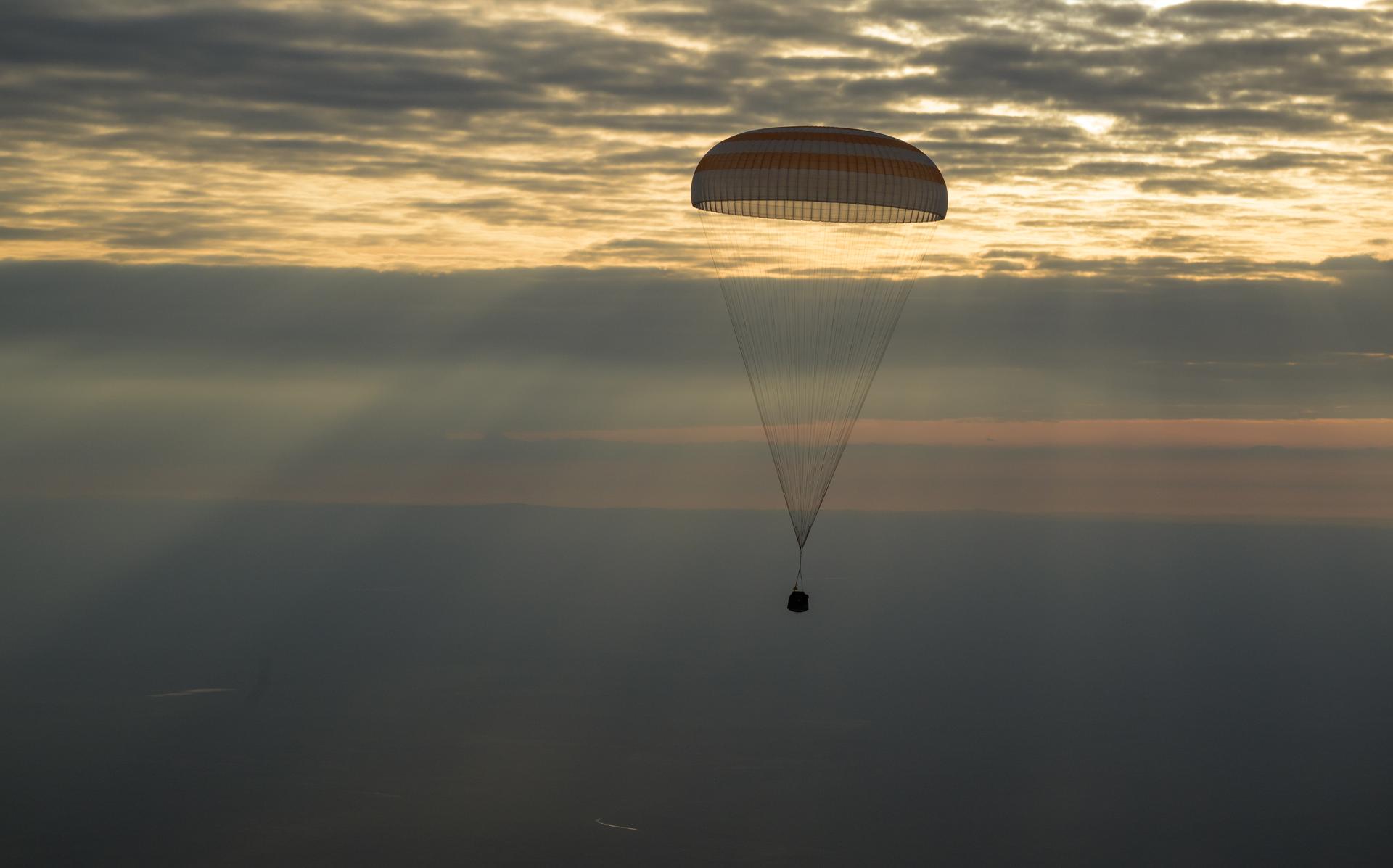
The Soyuz MS-26 spacecraft is seen as it lands on April 20, 2025 (April 19 Eastern time) in a remote area near the town of Zhezkazgan, Kazakhstan, with the Expedition 71/72 crew aboard.
NASA/Bill Ingalls
NASA astronaut Jonny Kim, accompanied by Roscosmos cosmonauts Sergey Ryzhikov and Alexey Zubritsky, is preparing to depart the International Space Station aboard the Soyuz MS-27 spacecraft and return to Earth.
Kim, Ryzhikov, and Zubritsky will undock from the station’s Prichal module at 8:41 p.m. EST on Monday, Dec. 8, headed for a parachute-assisted landing at 12:04 a.m. on Tuesday, Dec. 9 (10:04 a.m. local time in Kazakhstan), on the steppe of Kazakhstan, southeast of the city of Dzhezkazgan.
Watch NASA’s live coverage of the crew’s return on NASA+, Amazon Prime, and the agency’s YouTube channel. Learn how to stream NASA content through a variety of online platforms, including social media.
The space station change of command ceremony will begin at 10:30 a.m. Sunday, Dec. 7, on NASA+ and the agency’s YouTube channel. Rzyhikov will hand over station command to NASA astronaut Mike Fincke for Expedition 74, which begins at the time of Soyuz MS-27 undocking.
Kim and his crewmates are completing a 245-day mission aboard the station. At the conclusion of their mission, they will have orbited Earth 3,920 times and traveled nearly 104 million miles. This was the first flight for Kim and Zubritsky to the orbiting laboratory, while Ryzhikov is ending his third trip to space.
After landing, the three crew members will fly by helicopter to Karaganda, Kazakhstan, where recovery teams are based. Kim will board a NASA aircraft and return to Houston, while Ryzhikov and Zubritsky will depart for their training base in Star City, Russia.
NASA’s coverage is as follows (all times Eastern and subject to change based on real-time operations):
Sunday, Dec. 7:
10:30 a.m. – Expedition 73/74 change of command ceremony begins on NASA+Amazon Prime, and YouTube.
For more than 25 years, people have lived and worked continuously aboard the International Space Station, advancing scientific knowledge and making research breakthroughs that are not possible on Earth. The station is a critical testbed for NASA to understand and overcome the challenges of long-duration spaceflight and to expand commercial opportunities in low Earth orbit. As commercial companies concentrate on providing human space transportation services and destinations as part of a robust low Earth orbit economy, NASA is focusing its resources on deep space missions to the Moon as part of the Artemis campaign in preparation for future human missions to Mars.
Learn more about International Space Station research and operations at:
Preparations for Next Moonwalk Simulations Underway (and Underwater)
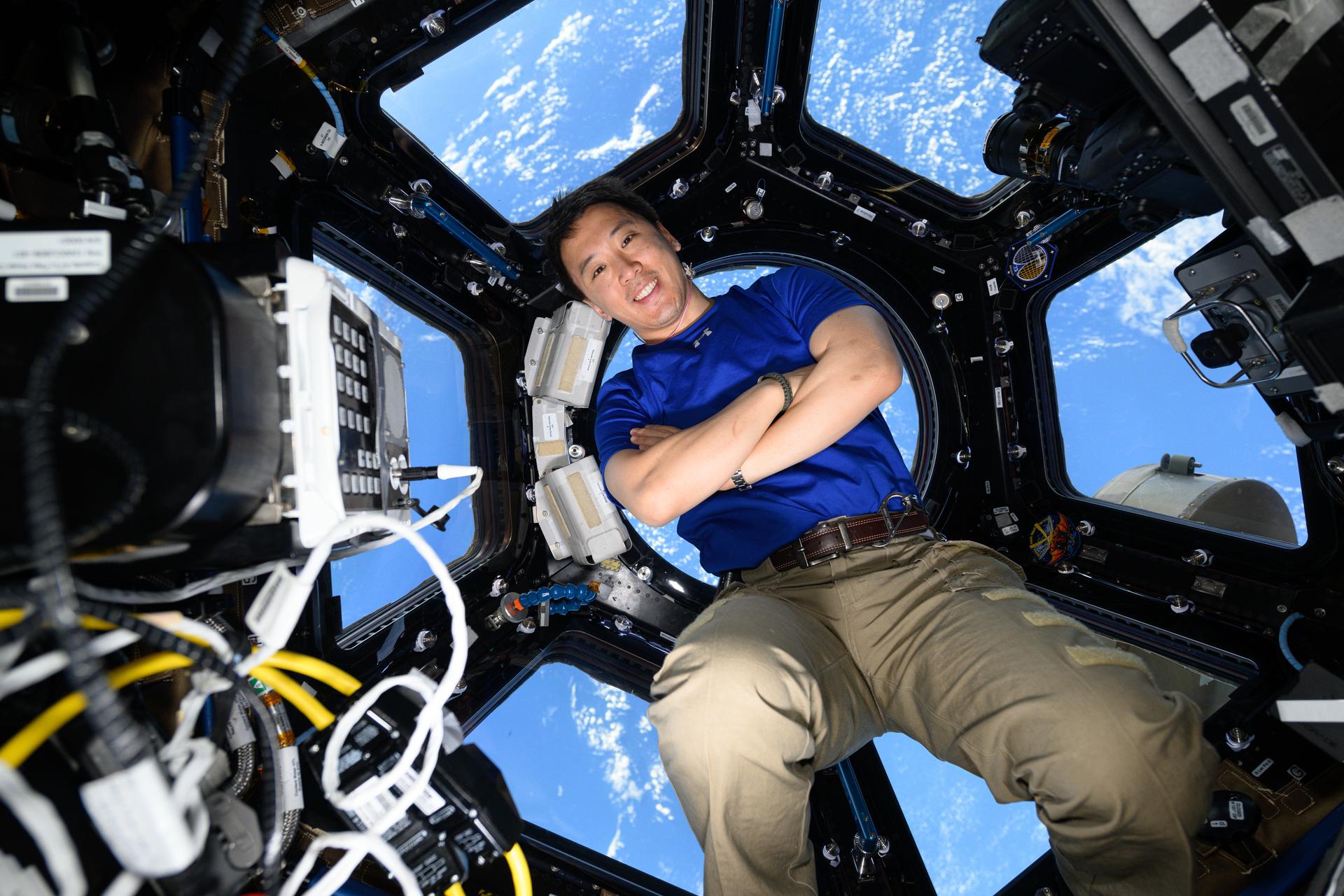
NASA astronaut Jonny Kim floats inside the Cupola of the International Space Station.
NASA
NASA astronaut Jonny Kim is wrapping up his first mission aboard the International Space Station in early December. During his stay, Kim conducted scientific experiments and technology demonstrations to benefit humanity on Earth and advance NASA’s Artemis campaign in preparation for future human missions to Mars.
Here is a look at some of the science Kim completed during his mission:
Medical check-ups in microgravity
NASA
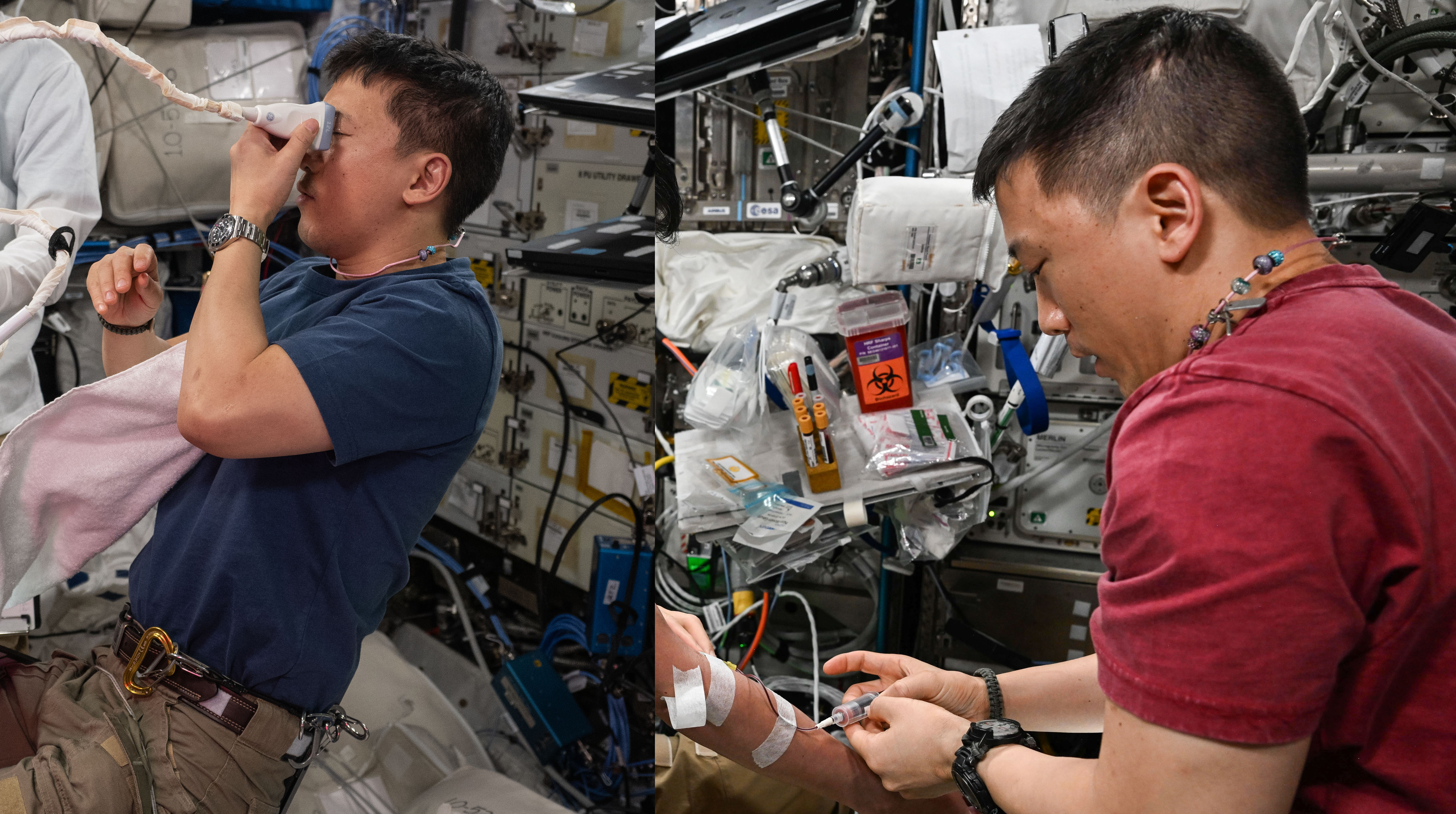
NASA astronaut Jonny Kim, a medical doctor, completed several routine medical exams while aboard the International Space Station. NASA flight surgeons and researchers monitor crew health using a variety of tools, including blood tests, eye exams, and ultrasounds.
Kim conducts an ultrasound of his eye in the left image. Eye exams are essential as long-duration spaceflight may cause changes to the eye’s structure and affect vision, a condition known as spaceflight associated neuro-ocular syndrome, or SANS. In the right image, Kim draws blood from a fellow crew member. These blood sample collections provide important insights into crew cartilage and bone health, cardiovascular function, inflammation, stress, immune function, and nutritional status.
NASA astronauts complete regular medical exams before, during, and after spaceflight to monitor astronaut health and develop better tools and measures for future human exploration missions to the Moon and Mars.
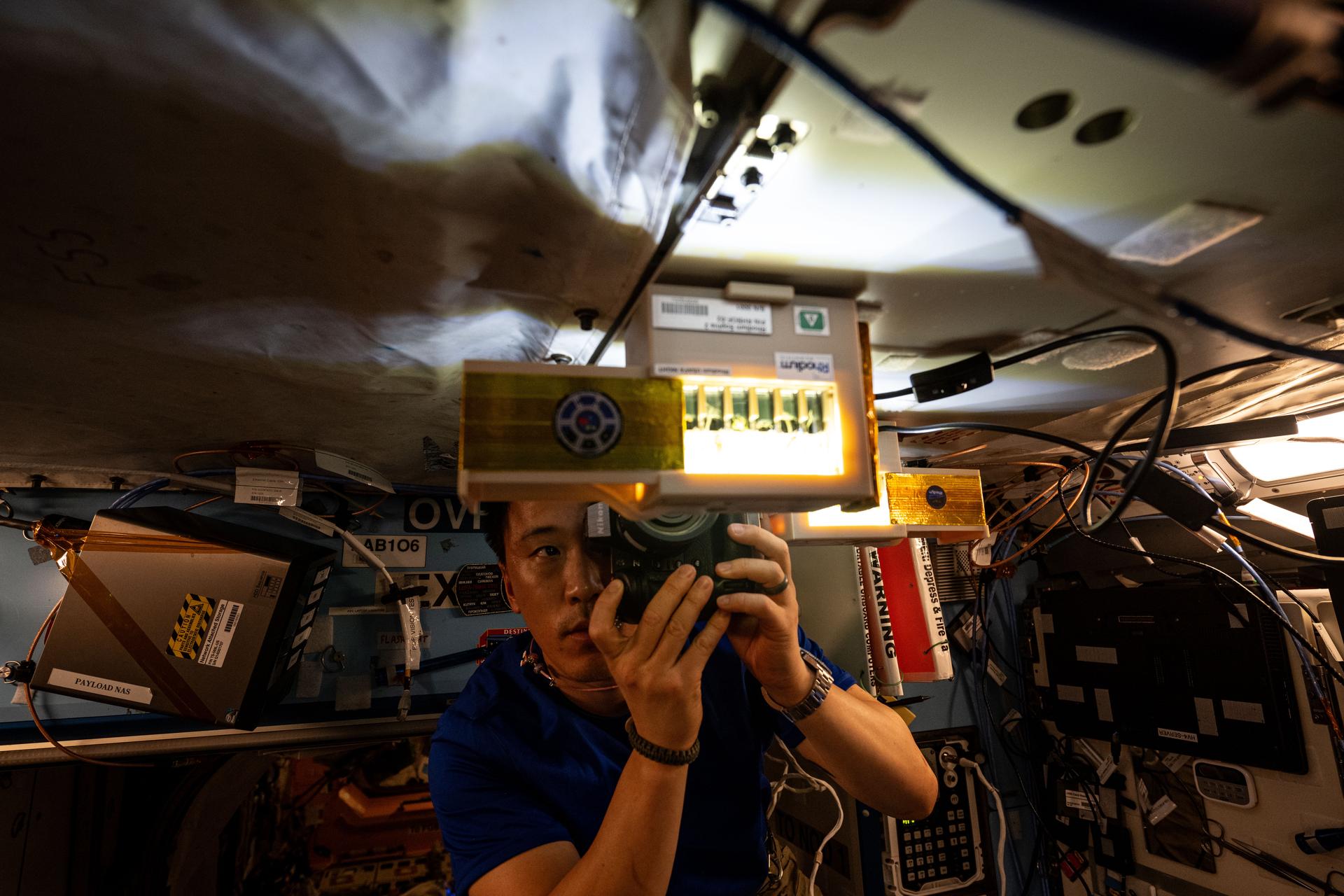
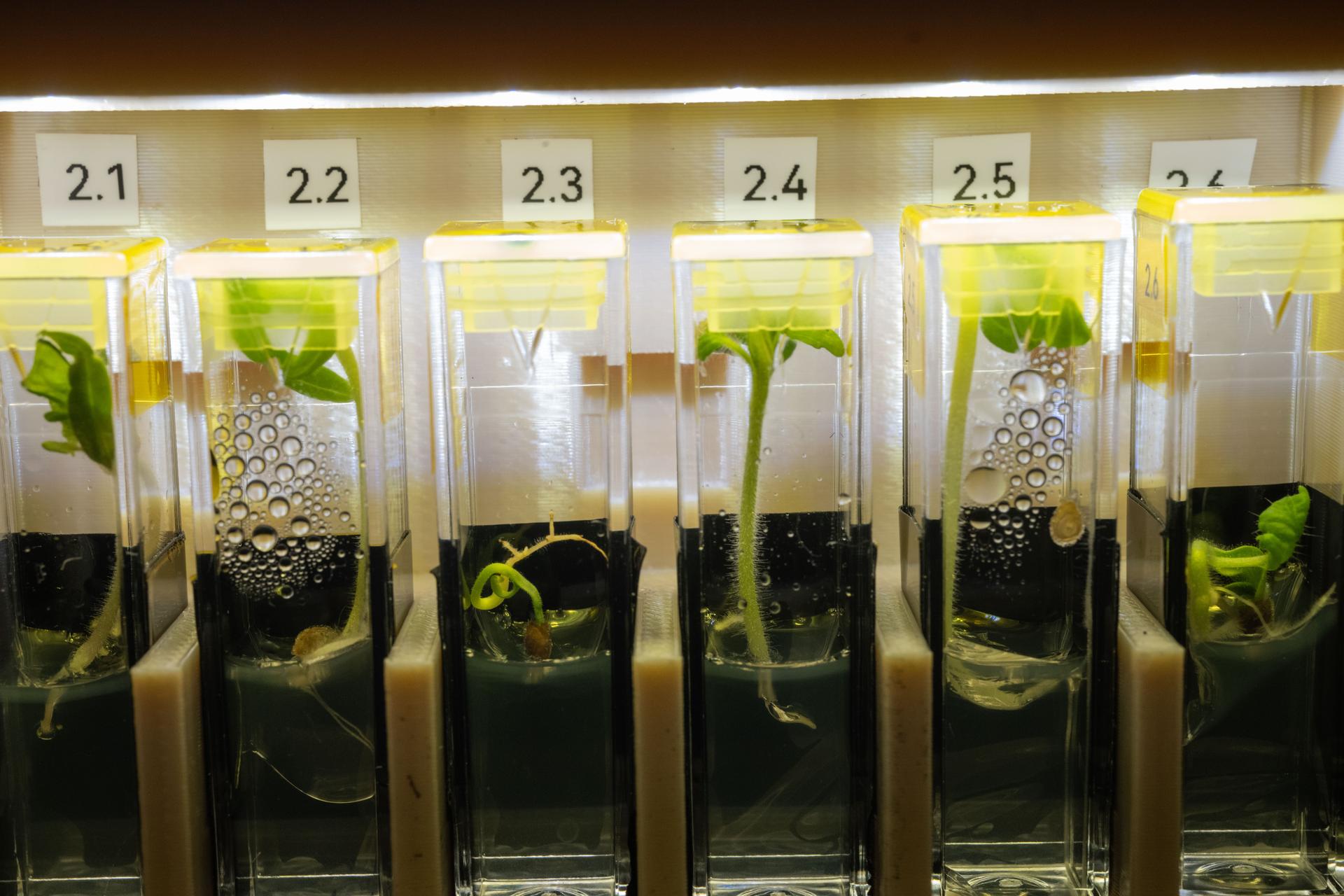
NASA astronaut Jonny Kim photographs dwarf tomato sprouts grown using a nutrient supplement instead of photosynthesis as part of a study on plant development and gene expression. The plants are given an acetate supplement as a secondary nutrition source, which could increase growth and result in better yields, all while using less power and fewer resources aboard the space station and future spacecraft.
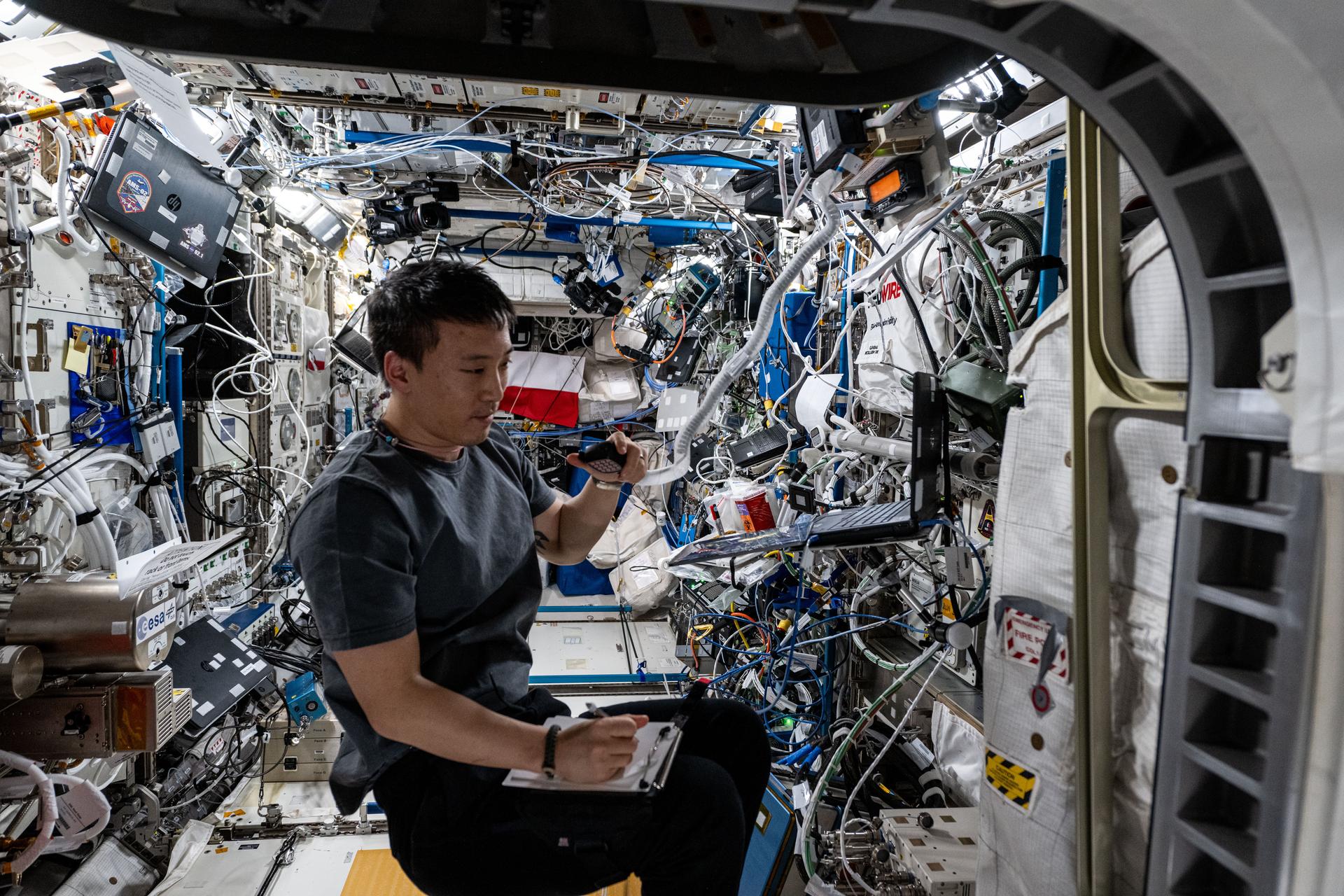
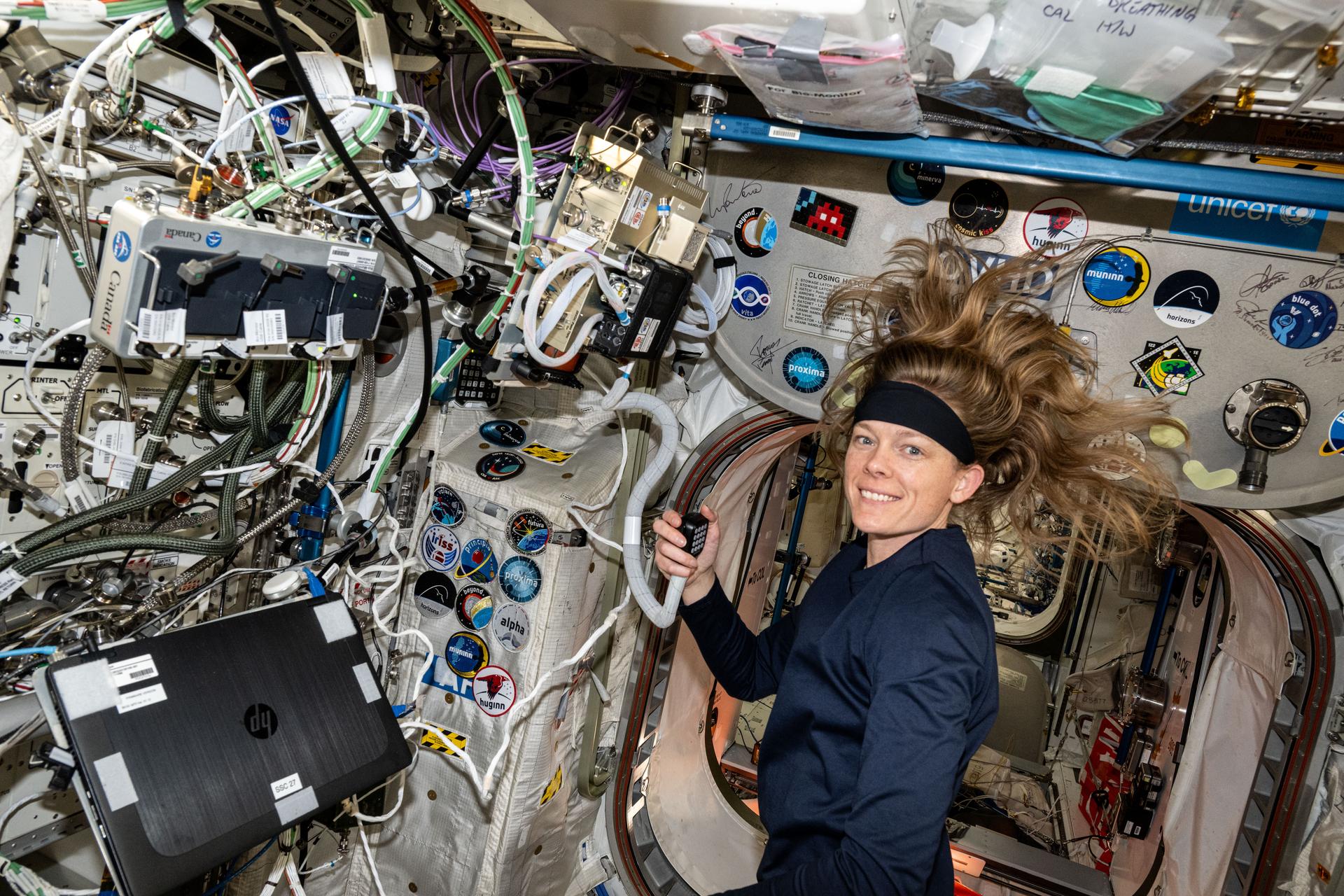
NASA astronaut Jonny Kim uses a ham radio to speak with students on Earth via an educational program connecting students worldwide with astronauts aboard the International Space Station. Students can ask about life aboard the orbiting laboratory and the many experiments conducted in microgravity. This program encourages an interest in STEM (science, technology, engineering, and mathematics) and inspires the next generation of space explorers.
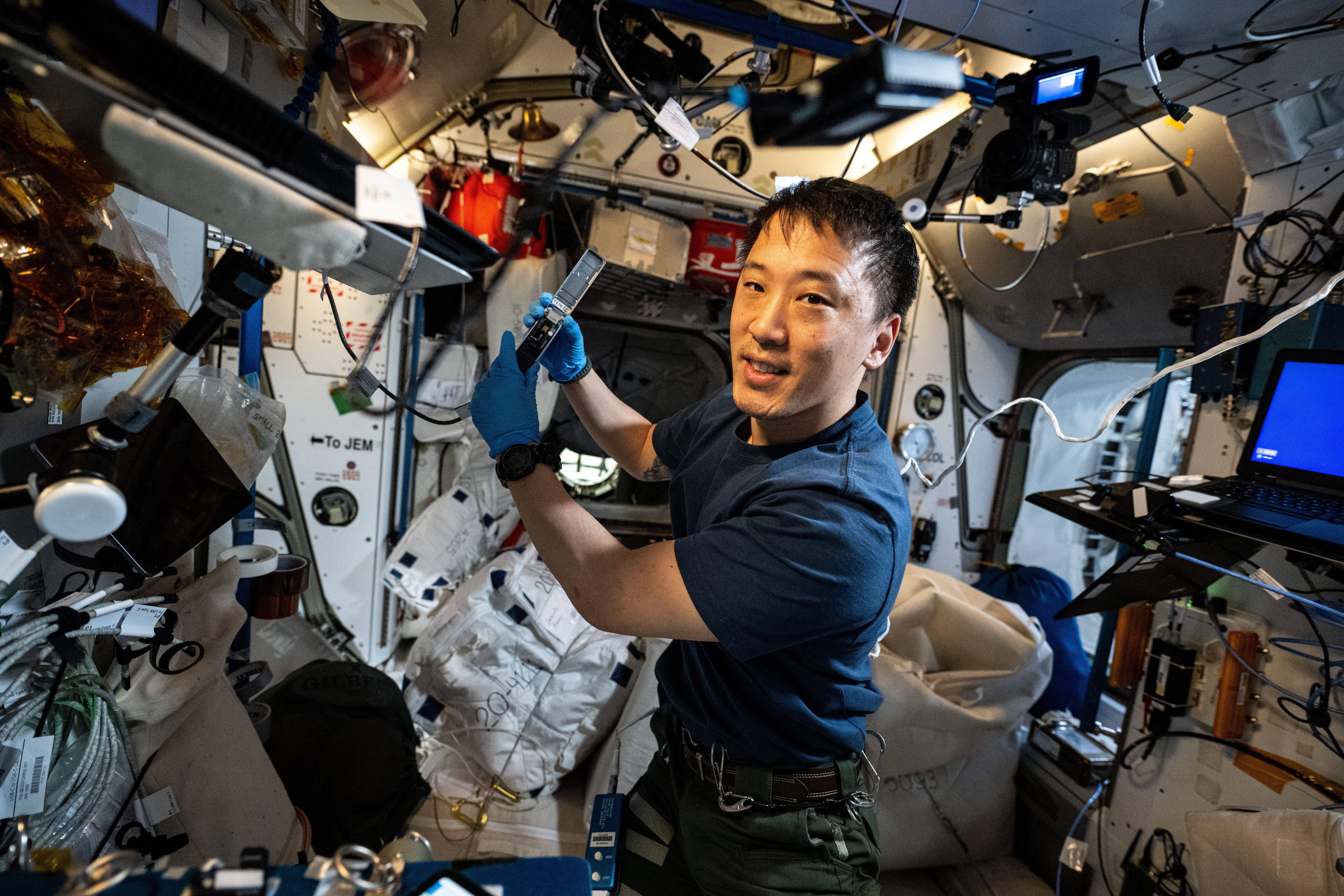
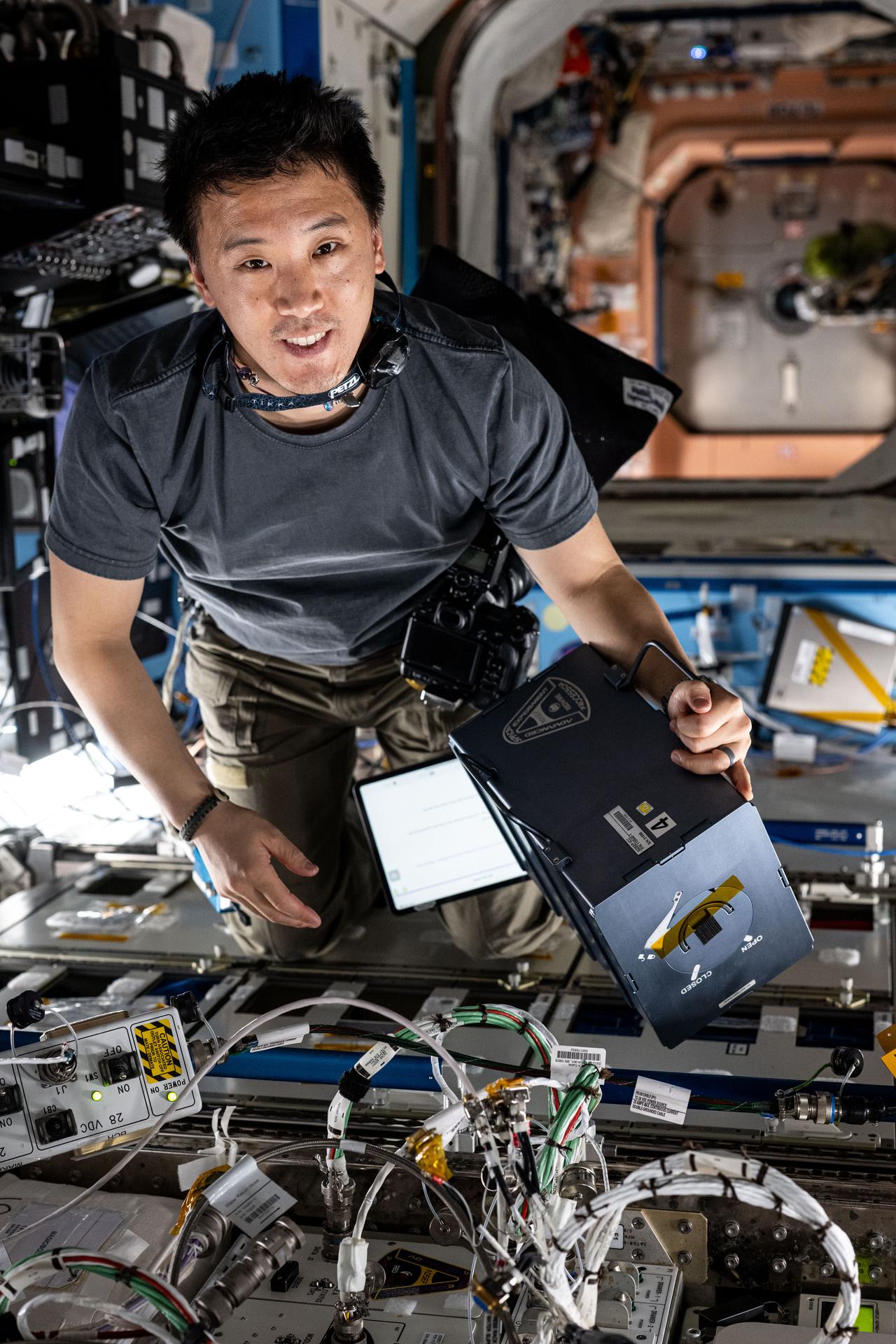
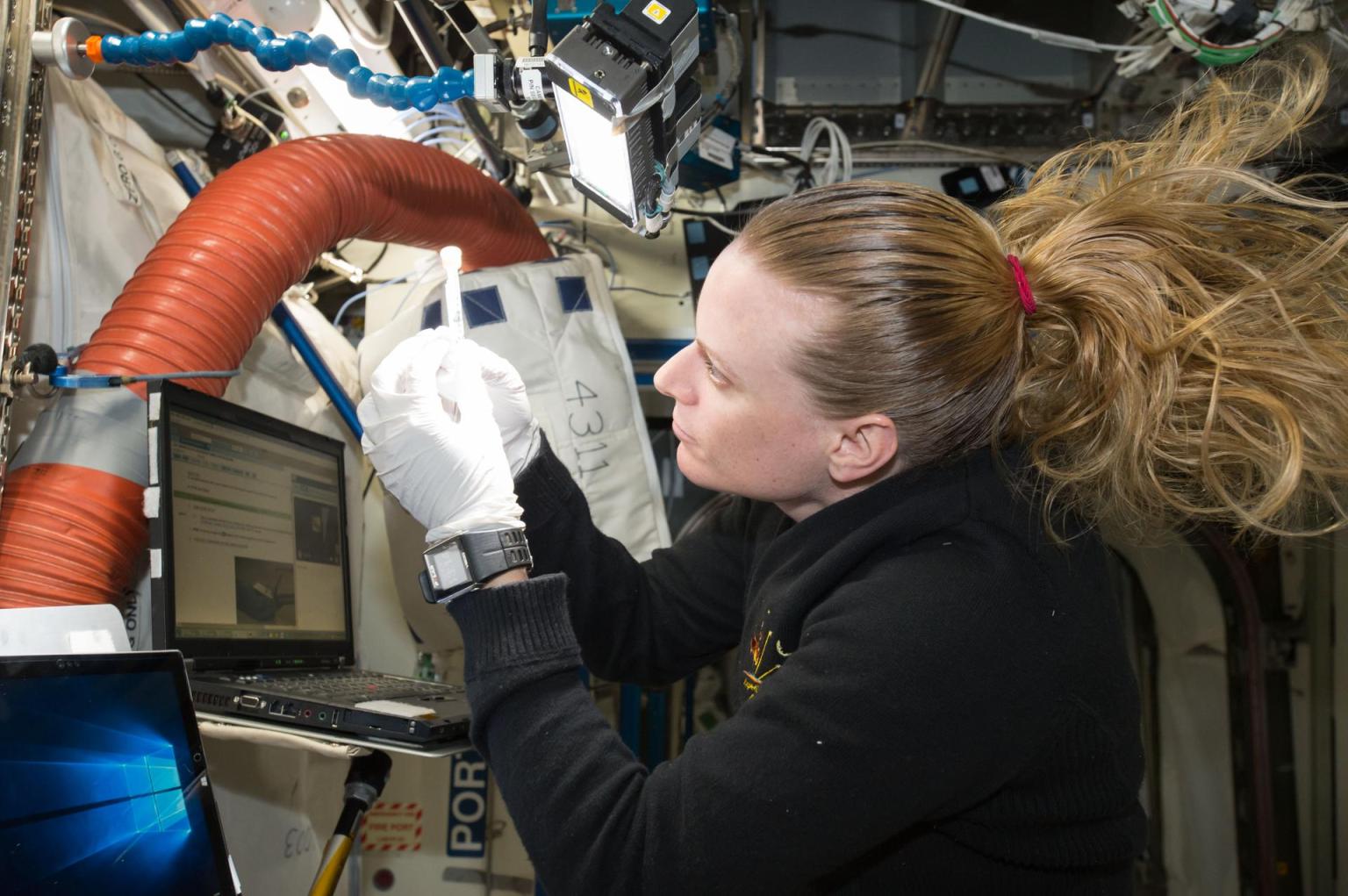
Secure and reliable data storage and transmission are essential to maintain the protection, accuracy, and accessibility of information. In this photo, NASA astronaut Jonny Kim displays research hardware that tests the viability of encoding, transmitting, and decoding encrypted information via DNA sequences. As part of this experiment, DNA with encrypted information is sequenced aboard the space station to determine the impact of the space environment on its stability. Using DNA to store and transmit data could reduce the weight and energy requirements compared to traditional methods used for long-duration space missions and Earth-based industries.
Future deep space exploration could rely on robotics remotely operated by humans. NASA astronaut Jonny Kim tests a technology demonstration that allows astronauts to remotely control robots on Earth from the International Space Station. Findings from this investigation could help fine-tune user-robot operating dynamics during future missions to the Moon, Mars, and beyond.
NASA astronaut Jonny Kim conducts an investigation to assess the effects of microgravity on bone marrow stem cells, including their ability to secrete proteins that form and dissolve bone. Bone loss, an age-related factor on Earth, is aggravated by weightlessness and is a health concern for astronauts. Researchers are evaluating whether blocking signals that cause loss could protect astronauts during long-duration spaceflights. The findings could also lead to preventative measures and treatments for bone loss caused by aging or disease on Earth.
NASA astronaut Jonny Kim tests new hardware installed to an existing crystallization facility that enables increased production of crystals and other commercially relevant materials, like golden nanospheres. These tiny, spherical gold particles have optical and electronic applications, and are biocompatible, making them useful for medication delivery and diagnostics. As part of this experiment aboard the space station, Kim attempted to process larger, more uniform golden nanospheres than those produced on the ground.
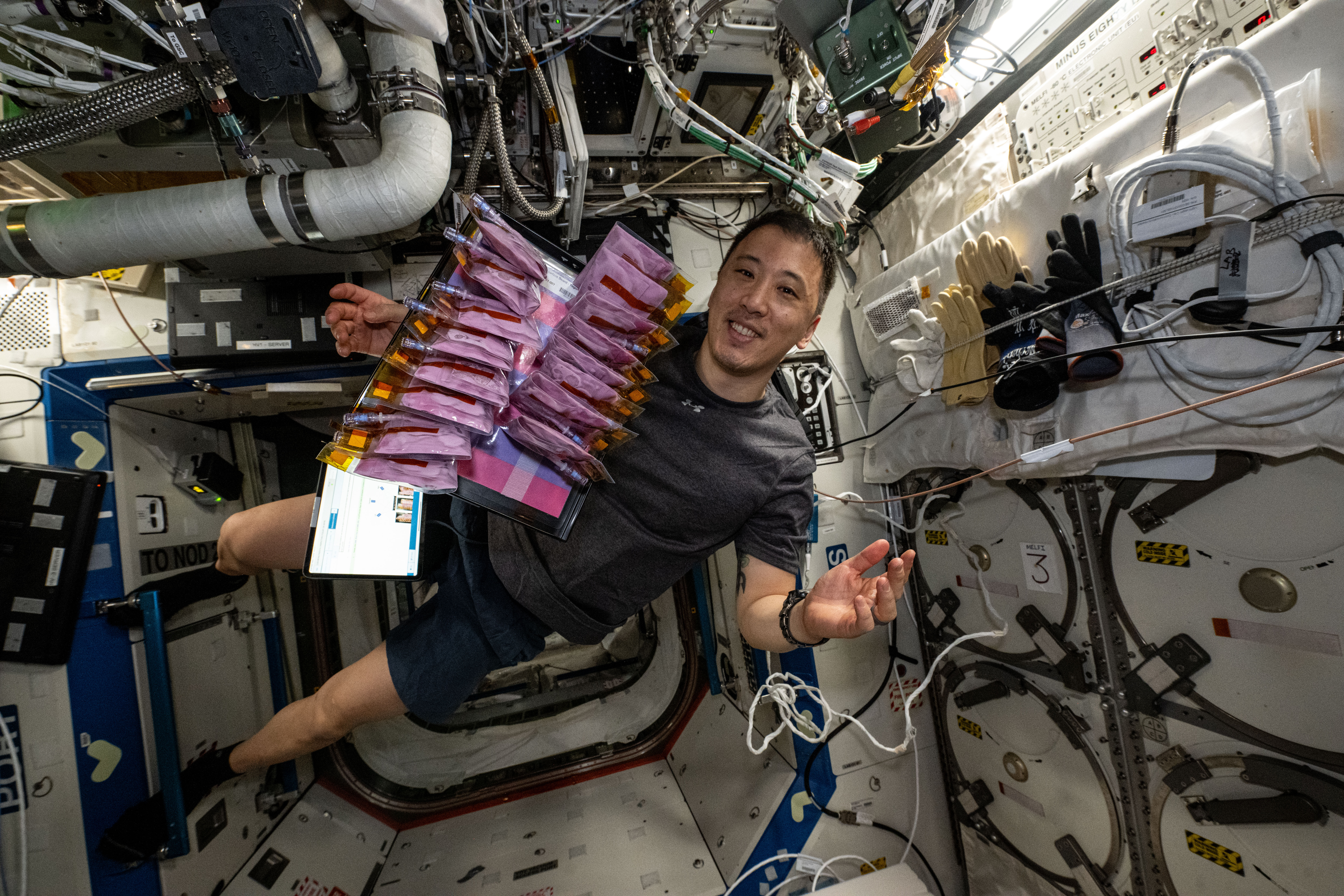
Some vitamins and nutrients in foods and supplements lose their potency during long-term storage, and insufficient intake of even a single nutrient can lead to diseases and other health issues. NASA astronaut Jonny Kim displays purple-pink production bags for an investigation aimed at producing nutrient-rich yogurt and kefir using bioengineered yeasts and probiotics. The unique color comes from a food-grade pH indicator that allows astronauts to visually monitor the fermentation process.
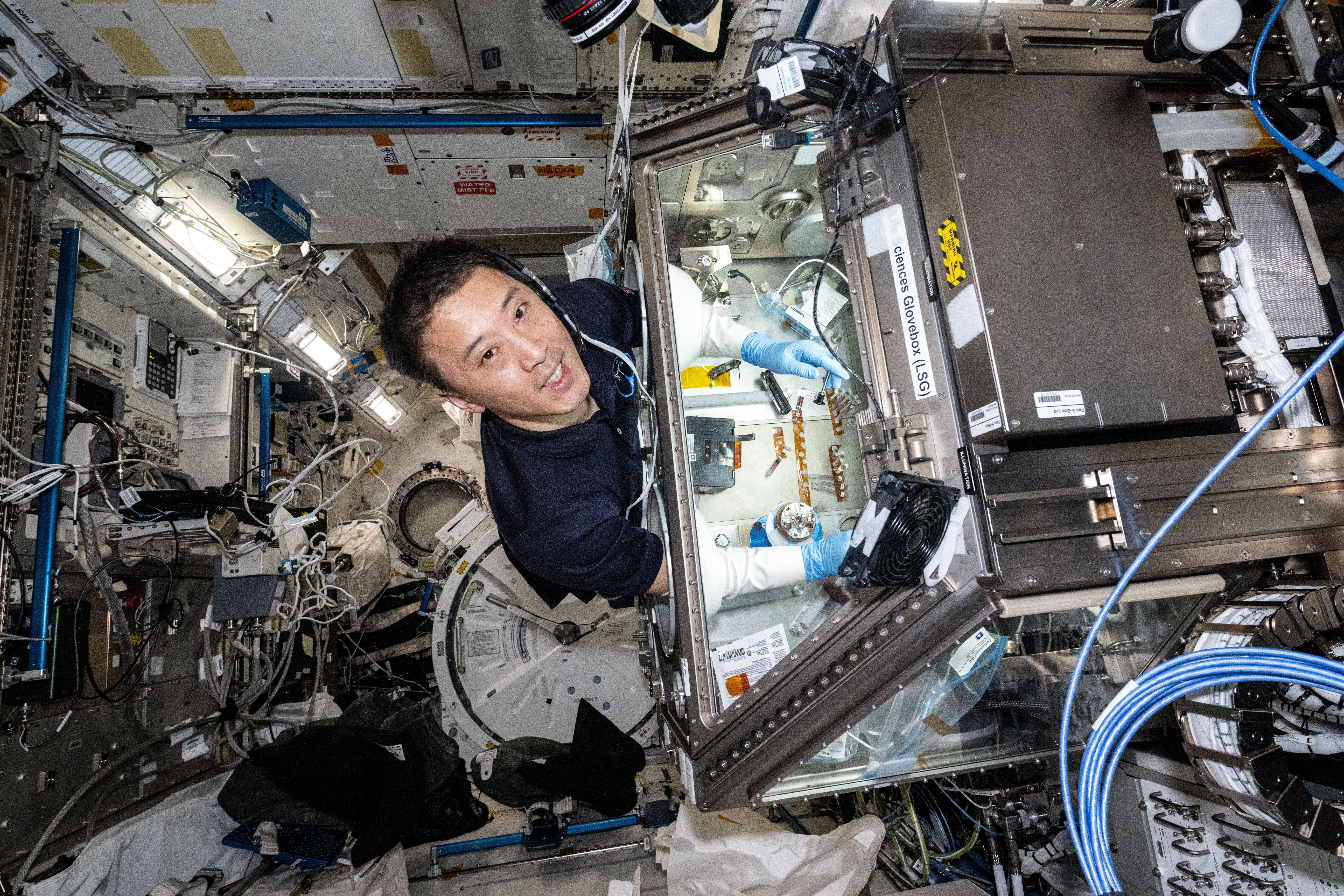
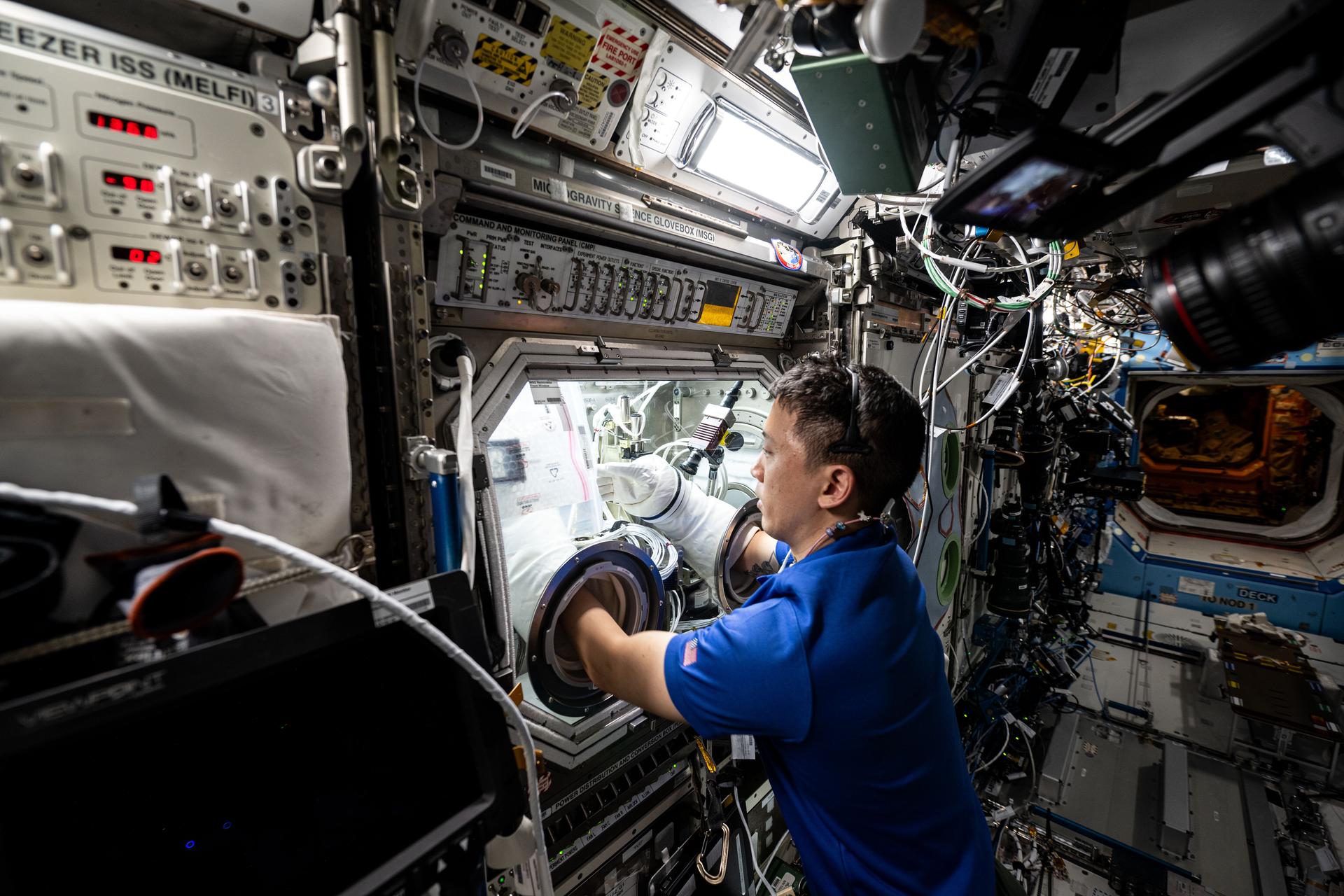
NASA astronaut Jonny Kim uses the Microgravity Science Glovebox to study how high-concentration protein fluids behave in microgravity. This study helps researchers develop more accurate models to predict the behavior of these complex fluids in various scenarios, which advances manufacturing processes in space and on Earth. It also can enable the development of next-generation medicines for treating cancers and other diseases.
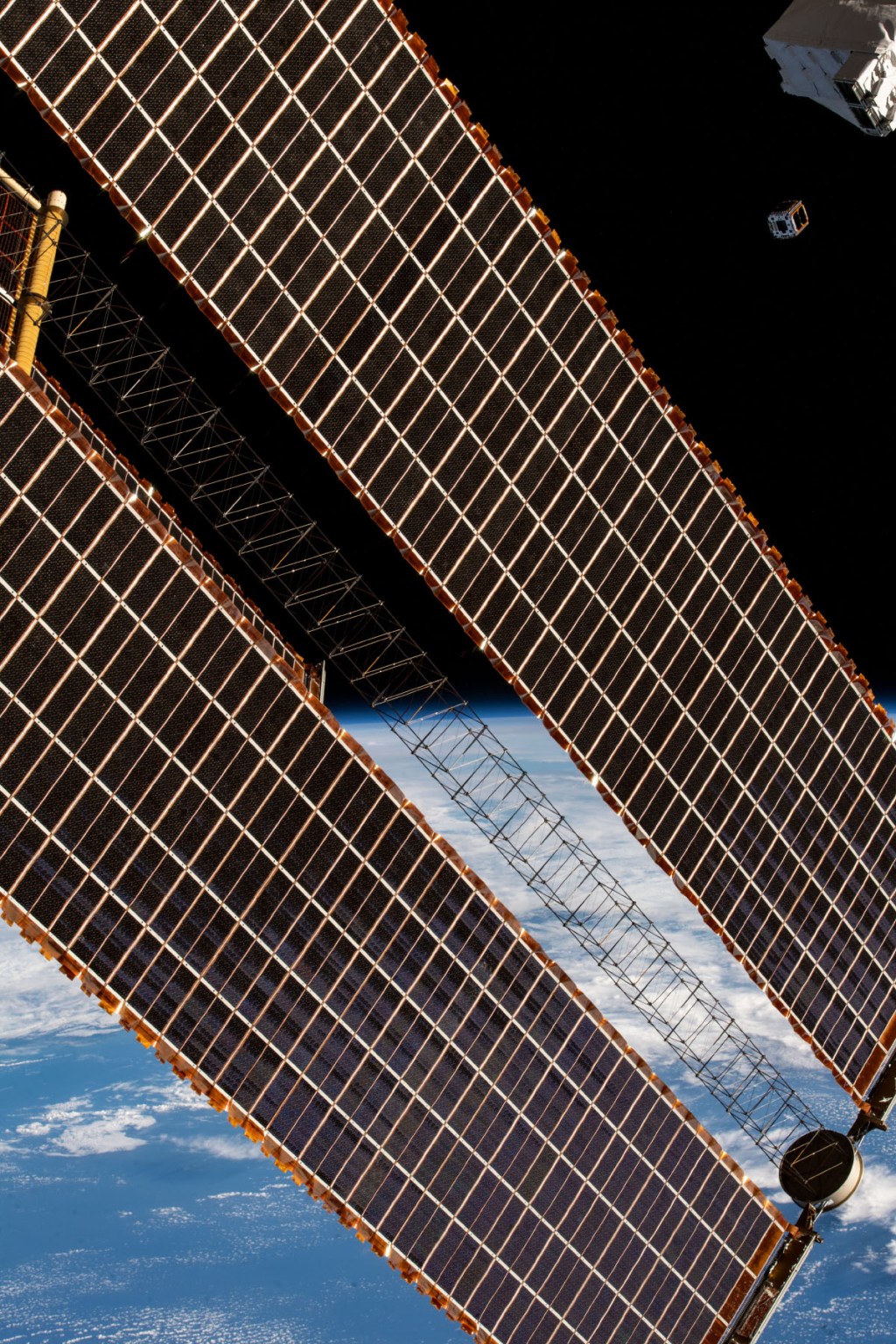
On Sept. 28, 2025, NASA astronaut Jonny Kim photographed Hurricane Humberto from the International Space Station. Located at 250 miles above Earth, the orbiting laboratory’s unique orbit allows crew members to photograph the planet’s surface including hurricanes, dust storms, and fires. These images are used to document disasters and support first responders on the ground.
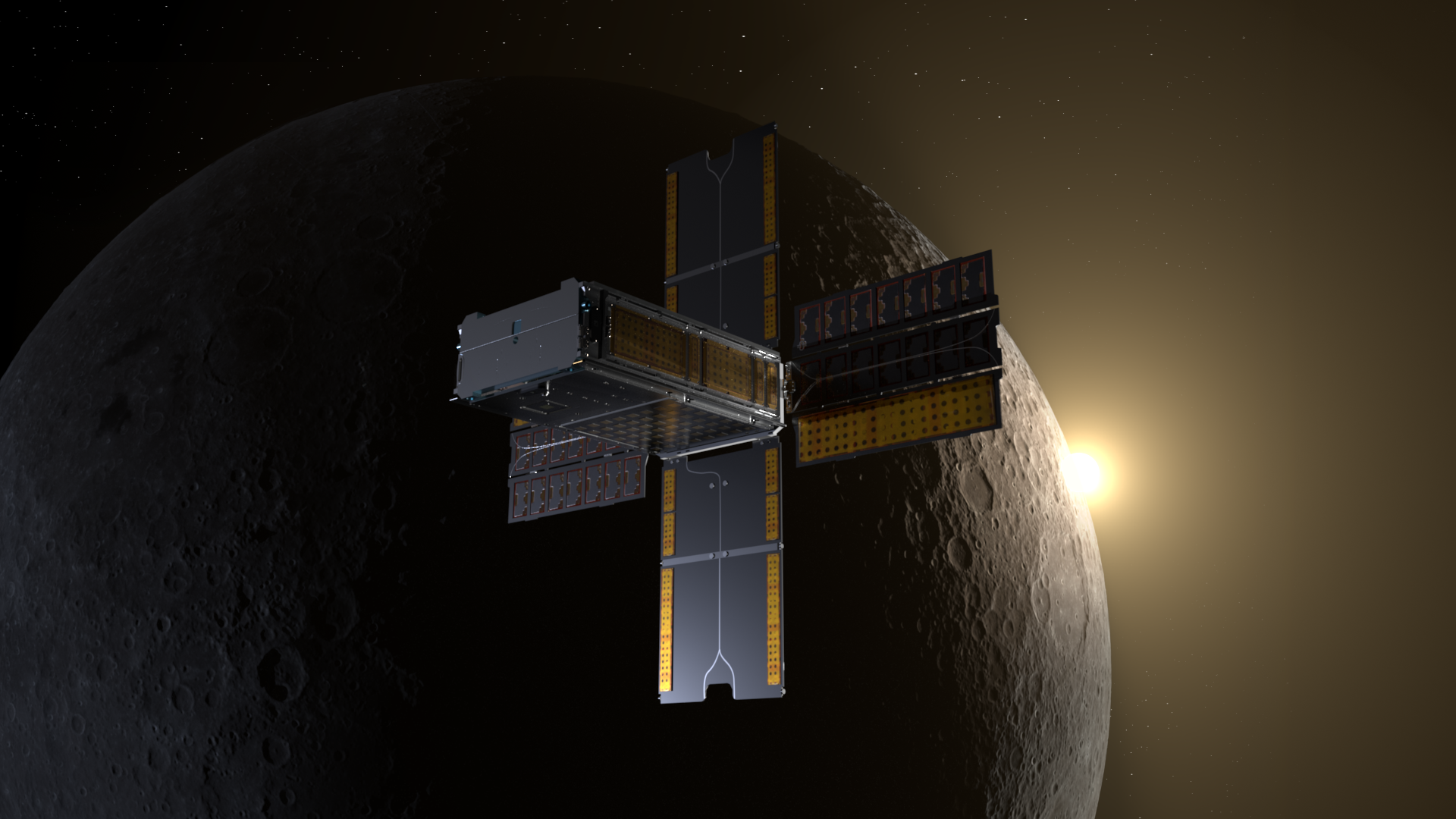
llustration of BioSentinel’s spacecraft flying past the Moon.
NASA/Daniel Rutter
Editor’s Note: This article was updated Nov. 21, 2025 shortly after BioSentinel’s mission marked three years of operation in deep space.
Astronauts live in a pretty extreme environment aboard the International Space Station. Orbiting about 250 miles above the Earth in the weightlessness of microgravity, they rely on commercial cargo missions about every two months to deliver new supplies and experiments. And yet, this place is relatively protected in terms of space radiation. The Earth’s magnetic field shields space station crew from much of the radiation that can damage the DNA in our cells and lead to serious health problems. When future astronauts set off on long journeys deeper into space, they will be venturing into more perilous radiation environments and will need substantial protection. With the help of a biology experiment within a small satellite called BioSentinel, scientists at NASA’s Ames Research Center, in California’s Silicon Valley, are taking an early step toward finding solutions.
To learn the basics of what happens to life in space, researchers often use “model organisms” that we understand relatively well. This helps show the differences between what happens in space and on Earth more clearly. For BioSentinel, NASA is using yeast – the very same yeast that makes bread rise and beer brew. In both our cells and yeast cells, the type of high-energy radiation encountered in deep space can cause breaks in the two entwined strands of DNA that carry genetic information. Often, DNA damage can be repaired by cells in a process that is very similar between yeast and humans.
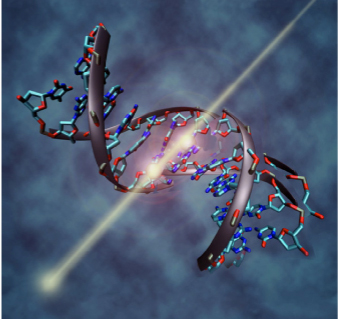
Conceptual graphic of a radiation particle causing a double-stranded DNA break.
BioSentinel set out to be the first long-duration biology experiment to take place beyond where the space station orbits near Earth. BioSentinel’s spacecraft is one of 10 CubeSats that launched aboard Artemis I, the first flight of the Artemis program’s Space Launch System, NASA’s powerful new rocket. The cereal box-sized satellite traveled to deep space on the rocket then flew past the Moon in a direction to orbit the Sun. Once the satellite was in position beyond our planet’s protective magnetic field, the BioSentinel team triggered a series of experiments remotely, activating two strains of the yeast Saccharomyces cerevisiae to grow in the presence of space radiation. Samples of yeast were activated at different time points throughout the six- to twelve-month mission.
One strain is the yeast commonly found in nature, while the other was selected because it has trouble repairing its DNA. By comparing how the two strains respond to the deep space radiation environment, researchers will learn more about the health risks posed to humans during long-term exploration and be able to develop informed strategies for reducing potential damage.
During the initial phase of the mission, which began in December 2022 and completed in April 2023, the BioSentinel team successfully operated BioSentinel’s BioSensor hardware – a miniature biotechnology laboratory designed to measure how living yeast cells respond to long-term exposure to space radiation – in deep space. The team completed four experiments lasting two-weeks each but did not observe any yeast cell growth. They determined that deep space radiation was not the cause of the inactive yeast cells, but that their lack of growth was likely due to the yeast expiring after extended storage time of the spacecraft ahead of launch.
Although the yeast did not activate as intended to gather observations on the impact of radiation on living yeast cells, BioSentinel’s onboard radiation detector – that measures the type and dose of radiation hitting the spacecraft – continues to collect data in deep space.
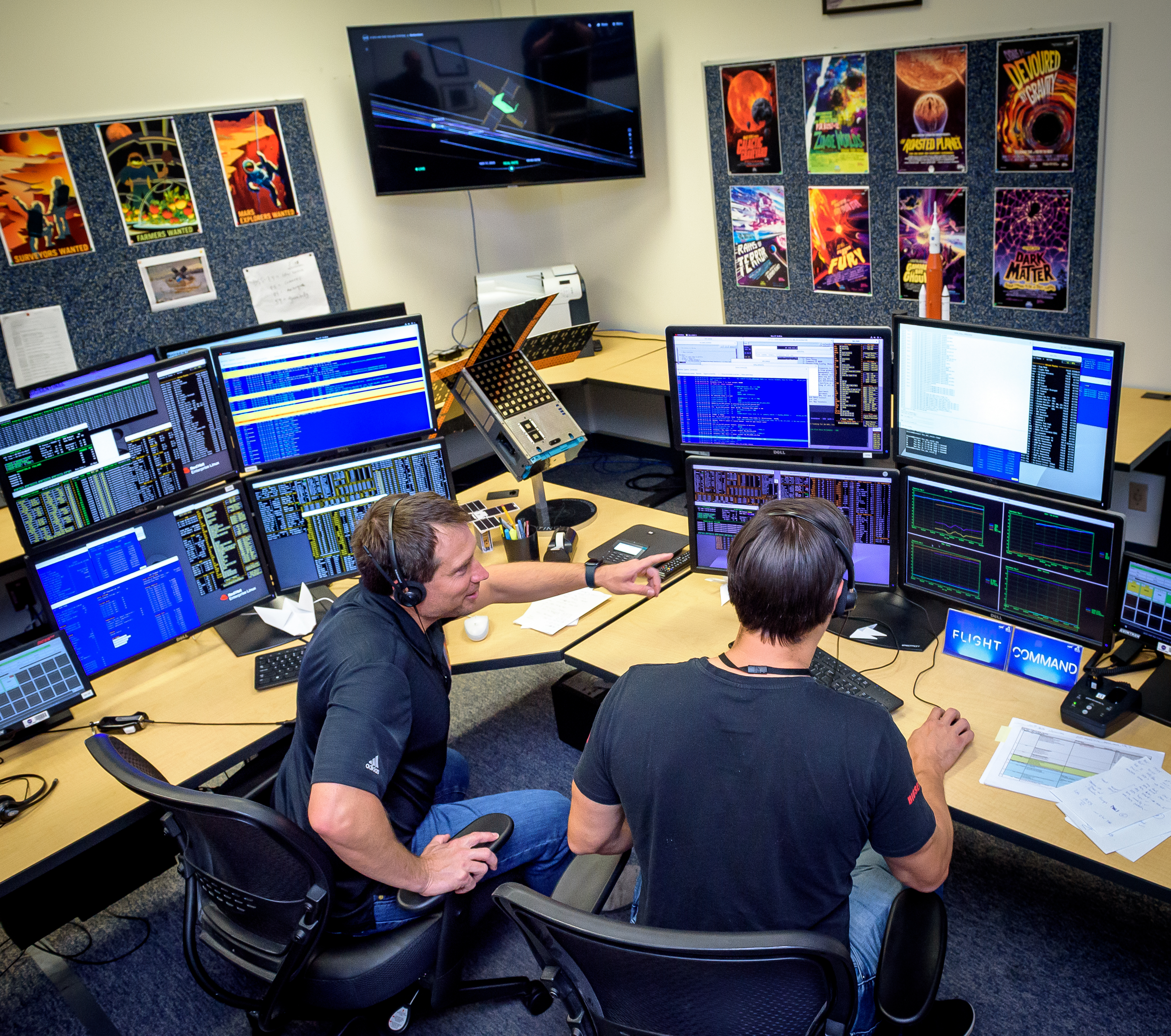
Jesse Fusco, left, and James Milsk, right, at the BioSentinel command console at the Multi-Mission Operations Center at NASA’s Ames Research Center in Silicon Valley. The team is receiving spacecraft telemetry at the three-year timepoint since the mission launched on Artemis I. BioSentinel continues to fly in its heliocentric orbit, now more than 48 million miles from Earth.
NASA/Don Richey
NASA has extended BioSentinel’s mission to continue collecting valuable deep space radiation data in the unique, high-radiation environment beyond low Earth orbit.
The Sun has an 11-year cycle, in which solar activity rises and falls in the form of powerful solar flares and giant eruptions called coronal mass ejections. As the solar cycle progresses from maximum to a declining phase, scientists expect strong solar activity to continue through 2026, with some of the strongest storms seen during this declining phase. These events send powerful bursts of energy, magnetic fields, and plasma into space which causes the aurora and can interfere with satellite signals. Solar radiation events from particles accelerated to high speeds can also pose a threat to astronauts in space.
Built on a history of small-satellite biology
The BioSentinel project builds on Ames’ history of carrying out biology studies in space using CubeSats – small satellites built from individual units each about four inches cubed. BioSentinel is a six-unit spacecraft weighing about 30 pounds. It houses the yeast cells in tiny compartments inside microfluidic cards – custom hardware that allows for the controlled flow of extremely small volumes of liquids that will activate and sustain the yeast. Data about radiation levels and the yeast’s growth and metabolism will be collected and stored aboard the spacecraft and then transmitted to the science team back on Earth.
A reserve set of microfluidic cards containing yeast samples will be activated if the satellite encounters a solar particle event, a radiation storm coming from the Sun that is a particularly severe health risk for future deep space explorers.
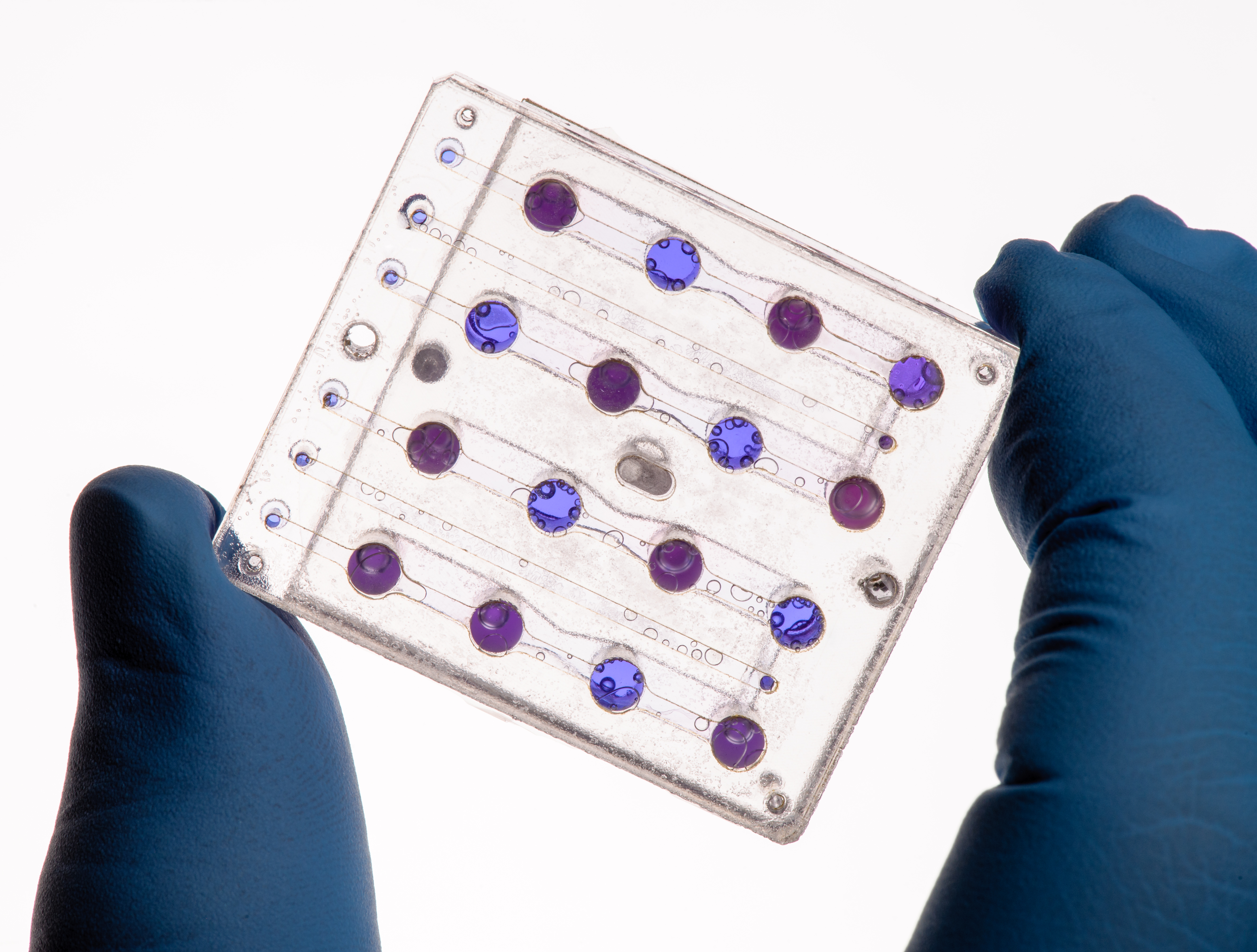
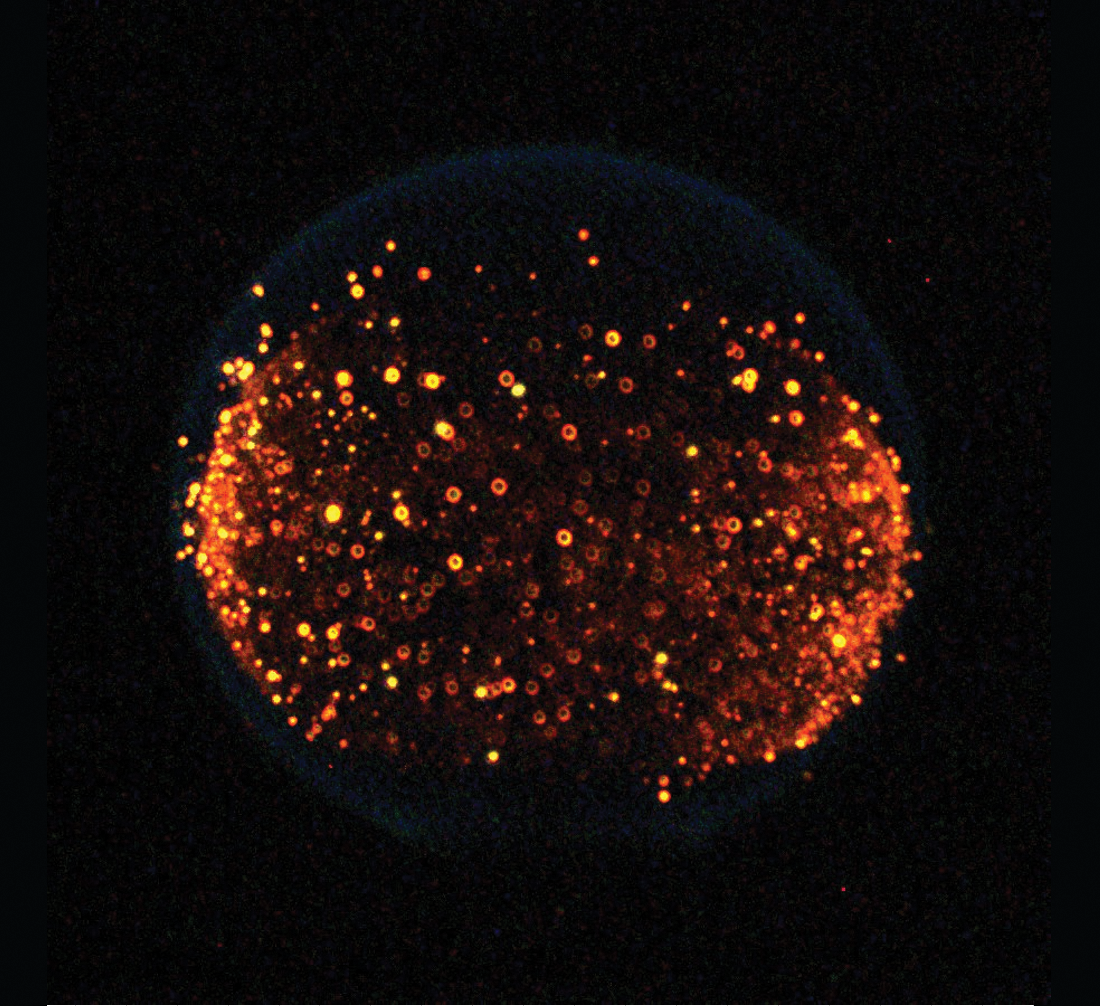
BioSentinel’s microfluidics card, designed at NASA’s Ames Research Center in Silicon Valley, California, will be used to study the impact of interplanetary space radiation on yeast. Once in orbit, the growth and metabolic activity of the yeast will be measured using a three-color LED detection system and a dye that provides a readout of yeast cell activity. Here, pink wells contain actively growing yeast cells that have turned the dye from blue to pink color.
NASA/Dominic Hart
Multiple BioSentinels will compare various gravity and radiation environments
In addition to the pioneering BioSentinel mission that will traverse the deep space environment, identical experiments take place under different radiation and gravity conditions. One ran on the space station, in microgravity that is similar to deep space, but with comparatively less radiation. Other experiments took place on the ground, for comparison with Earth’s gravity and radiation levels. These additional versions show scientists how to compare Earth and space station-based science experiments – which can be conducted much more readily – to the fierce radiation that future astronauts will encounter in space.
Taken together, the BioSentinel data will be critical for interpreting the effects of space radiation exposure, reducing the risks associated with long-term human exploration, and confirming existing models of the effects of space radiation on living organisms.
Milestones
December 2021: The BioSentinel ISS Control experiment launched to the International Space Station aboard SpaceX’s 24th commercial resupply services mission.
January 2022: The BioSentinel ISS Control experiment began science operations aboard the International Space Station.
February 2022: The BioSentinel ISS Control experiment began ground control science operations at NASA Ames.
June 2022: The BioSentinel ISS Control experiment completed science operations. The hardware was returned to Earth in August aboard SpaceX’s CRS-25 Dragon.
October 2022: The BioSentinel ISS Control experiment completed ground control science operations at NASA Ames.
Nov. 16, 2022: BioSentinel launched to deep space aboard Artemis I.
Dec. 5, 2022: BioSentinel began science operations in deep space.
Dec. 19, 2022: BioSentinel began ground control science operations at NASA Ames.
Nov. 16, 2024: BioSentinel marks two years of continuous radiation observations in deep space, now more than 30 million miles from Earth.
Nov. 16, 2025: BioSentinel marks three years of continuous radiation observations in deep space, now more than 48 million miles from Earth.
Partners:
NASA Ames leads the science, hardware design and development of the BioSentinel mission.
Partner organizations include NASA’s Johnson Space Center in Houston and NASA’s Jet Propulsion Laboratory in Southern California.
BioSentinel is funded by the Mars Campaign Development (MCO) Division within the Exploration Systems Development Mission Directorate at NASA headquarters in Washington.
BioSentinel’s extended mission is supported by the Heliophysics Division of NASA’s Science Mission Directorate at NASA headquarters in Washington, the MCO, and the NASA Electronic Parts and Packaging Program within NASA’s Space Technology Mission Directorate at NASA Headquarters in Washington.
25 Years of Scientific Discovery Aboard the International Space Station
November marks 25 years of human presence aboard the International Space Station, a testament to international collaboration and human ingenuity. Since the first crew arrived on Nov. 2, 2000, NASA and its partners have conducted thousands of research investigations and technology demonstrations to advance exploration of the Moon and Mars and benefit life on Earth.
Researchers have taken advantage of the unique microgravity environment to conduct experiments impossible to replicate on Earth, transforming research across disciplines. More than 4,000 experiments have pushed the boundaries of science, sparked discoveries, and driven scientific breakthroughs.
“25 years ago, Expedition 1 became the first crew to call the International Space Station home, beginning a period of continuous human presence in space that still continues to this day,” said NASA acting administrator Sean Duffy. “This historic milestone would not have been possible without NASA and its partners, as well as every astronaut and engineer who works to keep the lights on in low Earth orbit.”
To celebrate a quarter century of innovation in microgravity, NASA is highlighting 25 scientific breakthroughs that exemplify the station’s enduring impact on science, technology, and exploration.
Building the road to the Moon and Mars
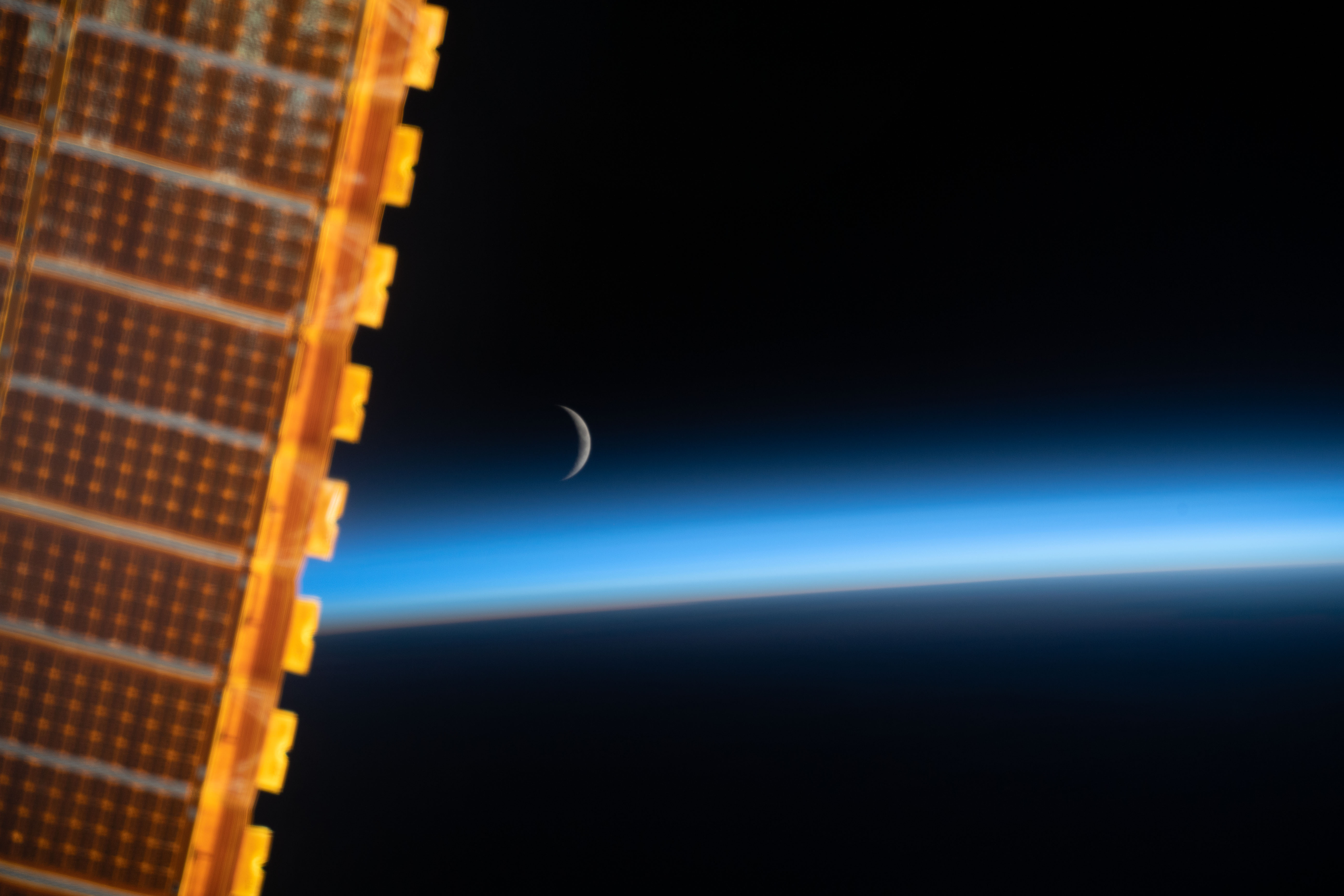
The waxing crescent moon appears just above the Earth’s atmosphere as the International Space Station orbits the Earth.
Navigation, communication, and radiation shielding technologies proven aboard the space station are being integrated into spacecraft and missions to reach the Moon and Mars.
Robotic systems, for example a robotic surgeon and autonomous assistants, will expand available medical procedures and allow astronauts to dedicate time to more crucial tasks during missions far from Earth.
Astronauts have used recycled plastic and stainless steel to 3D print tools and parts. The ability to 3D print in space lays the groundwork for on-demand repair and fabrication during future deep space missions where resupply isn’t readily available.
Humanity’s push to the Moon and Mars begins with discoveries in low Earth orbit. From demonstrating how astronauts can live, work, and repair equipment off Earth to testing life-support systems and advanced materials, every innovation aboard the station helps to advance NASA’s Artemis and other exploration initiatives and brings humanity closer to thriving beyond our planet.
Sustaining life beyond Earth
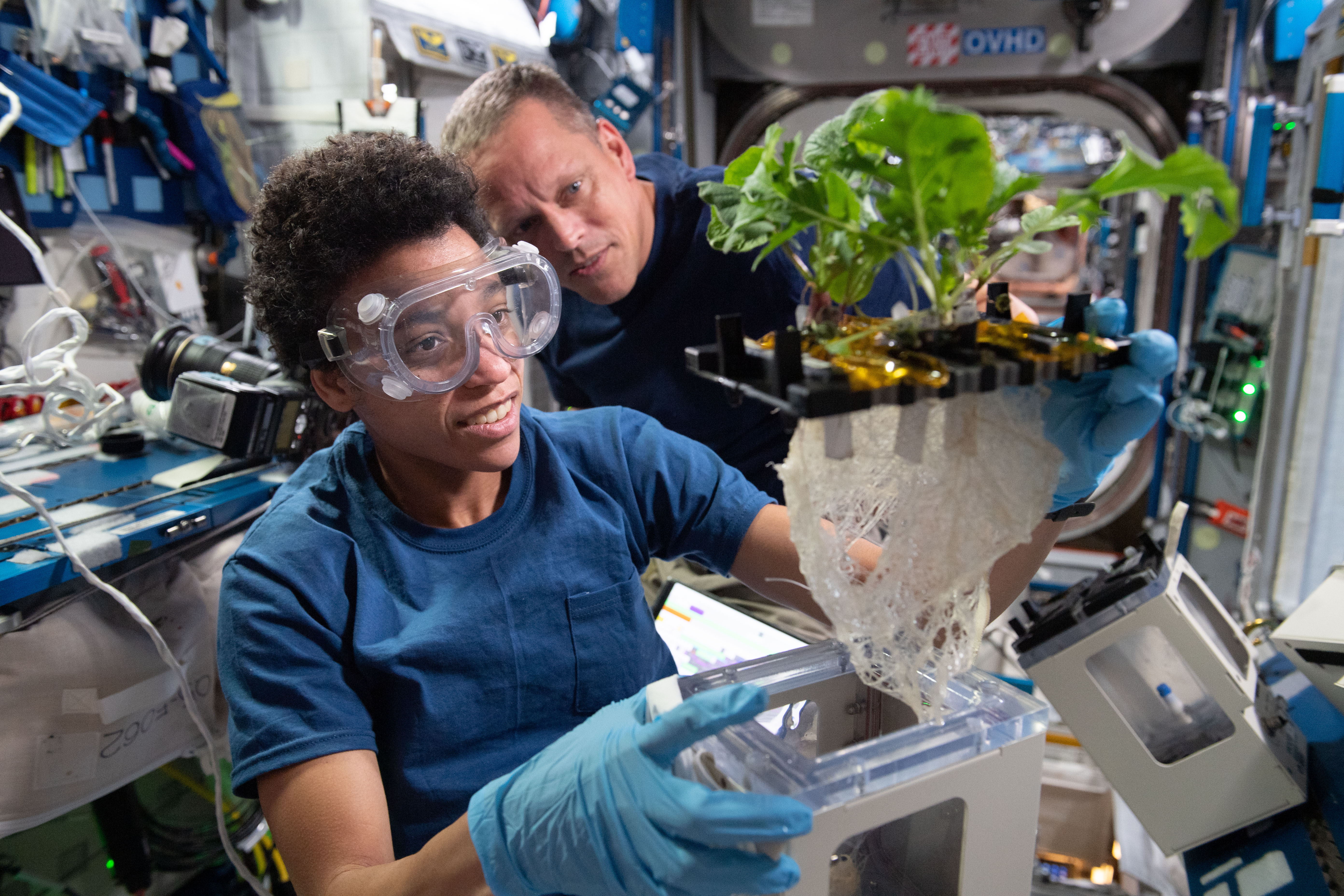
NASA astronauts Jessica Watkins, front, and Bob Hines, back, work on XROOTS aboard the International Space Station. This experiment used the station’s Veggie facility to test soilless hydroponic and aeroponic plant growth.
NASA
As NASA prepares to return humans to the Moon through the Artemis program and push onward to Mars, sustaining life beyond Earth is more critical than ever.
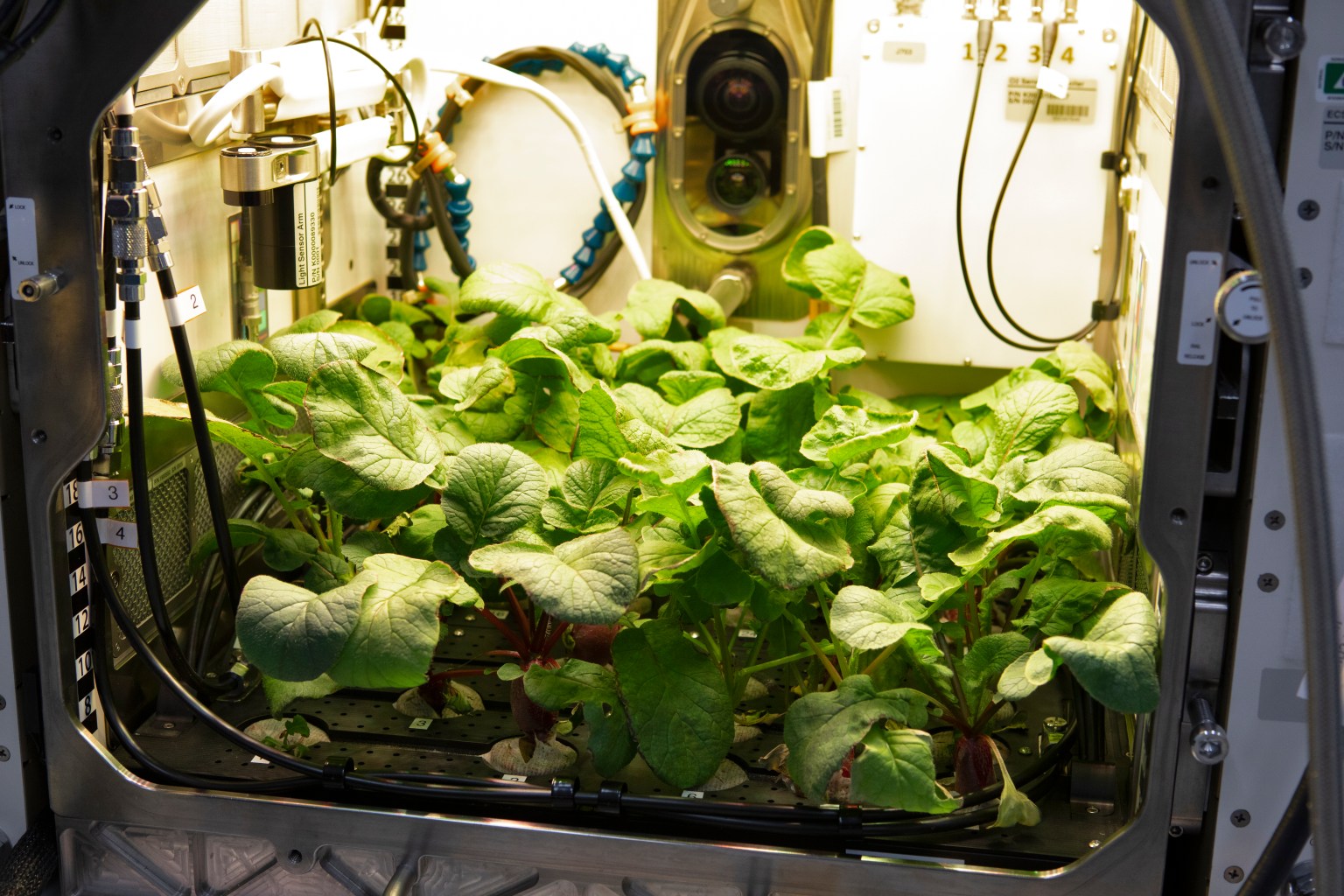
Astronauts have grown more than 50 species of plants in space, including tomatoes, bok choi, romaine lettuce, and chili peppers.
Advanced life support systems are capable of recycling up to 98% of water in the U.S. segment aboard the space station, the ideal level needed for exploration missions.
Researchers have sequenced DNA in orbit and are advancing techniques to enable real-time assessment of microbial life in space, which is essential to maintaining astronaut health.
Why this matters:
By growing food, recycling water, and improving medical care in space, NASA is paving the way for future long-duration missions to the Moon and Mars while revolutionizing agriculture and medicine back home.
Helping humanity on Earth
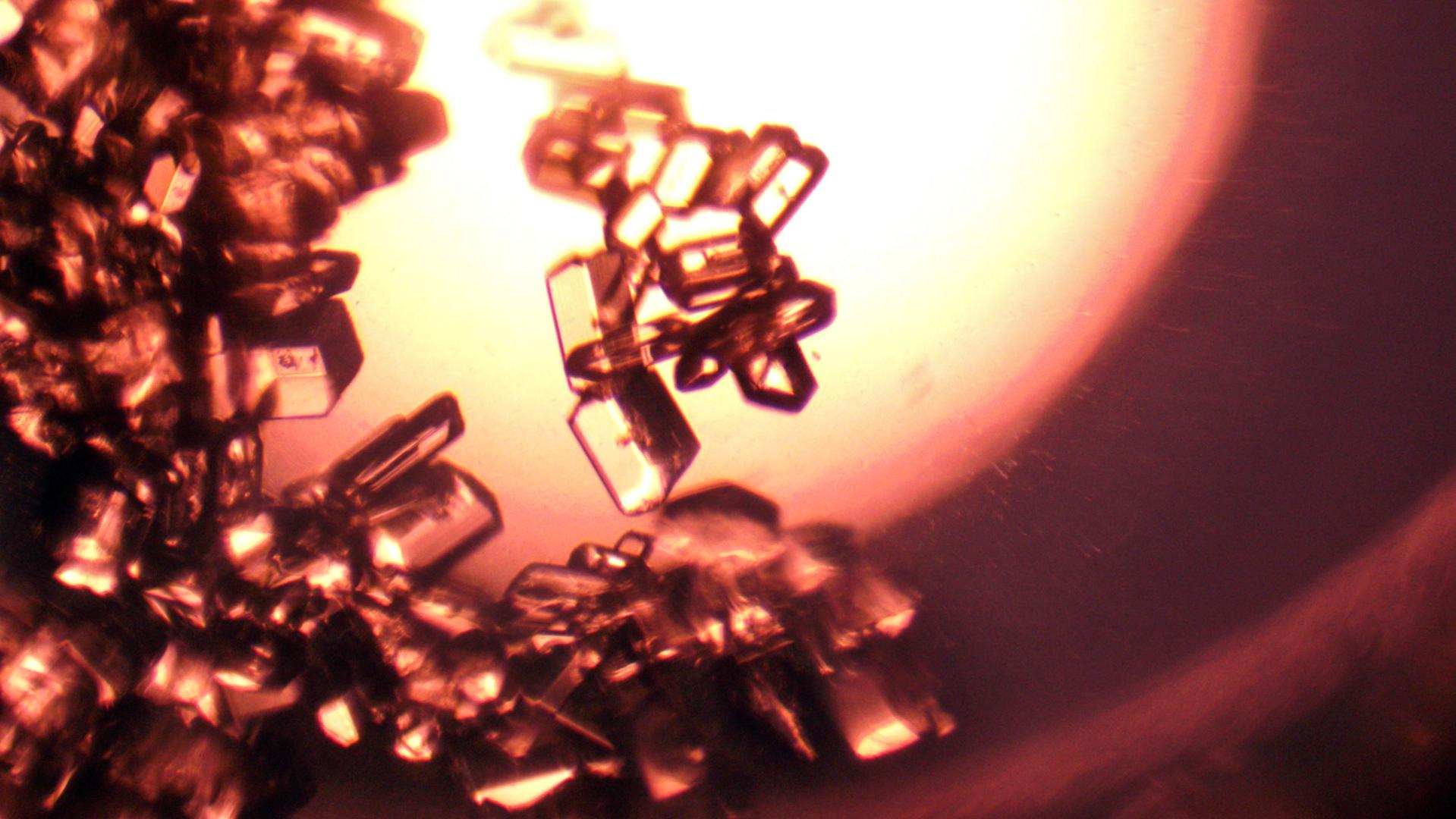
Pharmaceutical crystals grown aboard the International Space Station are shown after returning to Earth.
Redwire
Research aboard the orbiting laboratory not only pushes humanity farther into the cosmos but can help address complex human health issues on the ground. By providing a platform for long-term microgravity research, the space station fosters breakthroughs that yield direct benefits to people on Earth.
Research aboard the space station provides new insights to develop treatments for diseases like cancer, Alzheimer’s, Parkinson’s, and heart disease by revealing how microgravity alters cellular functions.
New developments in medicine for cancer, muscular dystrophy, and neurodegenerative diseases have come from growing protein crystals in microgravity with larger, more organized structures.
High quality stem cells can be grown in greater quantities in space, helping to develop new regenerative therapies for neurological, cardiovascular, and immunological conditions.
Pioneering efforts in 3D bioprinting, which uses cells, proteins, and nutrients as source material, have produced human tissue structures such as a knee meniscus and heart tissue, a major step toward manufacturing organs in space for transplant patients on Earth.
Researchers are using miniaturized tissue models to observe how space affects tissues and organ systems, offering new ways to develop and test medicines to protect astronauts on future missions and improve treatments on Earth.
Photos taken by astronauts have supported emergency response to natural disasters, such as hurricanes, with targeted views from space.
Instruments mounted on the space station protect critical space infrastructure and provide data on the planet’s natural patterns by measuring Earth’s resources and space weather.
Why this matters:
Microgravity research is moving us closer to manufacturing human organs in space for transplant and revealing new ways to fight cancer, heart disease, osteoporosis, neurodegenerative disease, and other serious illnesses that affect millions of people worldwide. The station also serves as an observation platform to monitor natural disasters, weather patterns, and Earth’s resources.
Understanding our universe
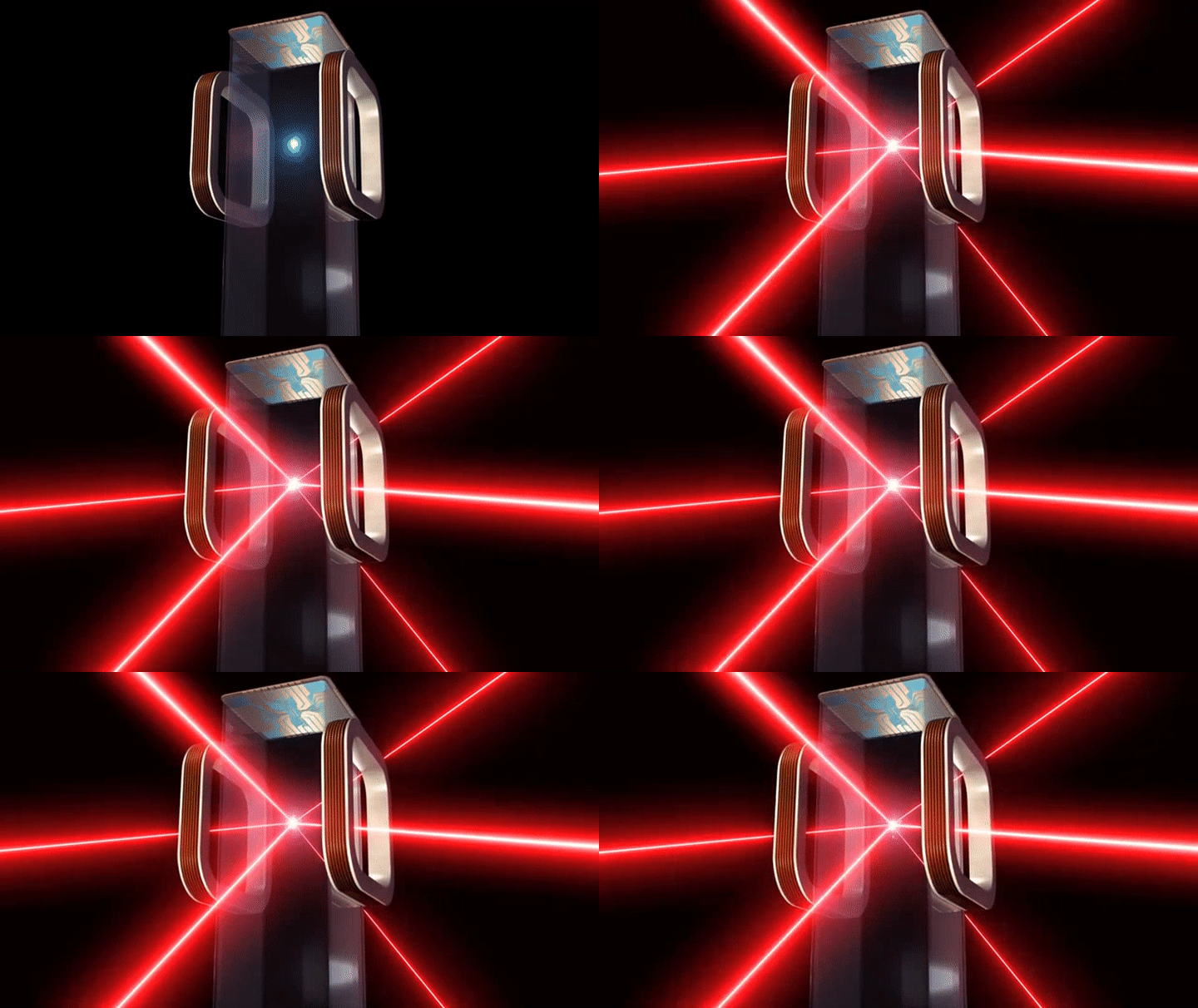
Artist concept of operations inside NASA’s Cold Atom Laboratory aboard the International Space Station.
NASA
The space station offers scientists an unparalleled vantage point to learn about the fundamental behavior of the universe. By studying cosmic phenomena typically blocked or absorbed by Earth’s atmosphere and observing physics at an atomic level, researchers can probe mysteries impossible to study from Earth.
Researchers have recorded billions of cosmic events, helping scientists search for antimatter and dark matter signatures in space.
Scientists have created and studied the fifth state of matter on the space station, allowing researchers to use quantum science to advance technology like space navigation, satellite operations, and GPS systems on Earth.
Why this matters:
Research aboard the space station is helping us unravel the deepest mysteries of our universe, from the smallest quantum particles to the most powerful cosmic explosions. Observations of collapsing stars and black holes could inspire new navigation tools using cosmic signals and expand our grasp of space-time. Studies of antimatter and dark matter bring us closer to understanding the 95% of the universe invisible to the human eye. Creating the fifth state of matter in space unlocks new quantum pathways that could transform technology on Earth and in space.
Learning new physics
This image shows a flame ignited as part of the Flame Design investigation on the International Space Station.
NASA
Physical processes behave differently in microgravity, offering scientists a new lens for discovery.
Engineers can design more efficient fuel and life support systems for future spacecraft thanks to studies of fluid boiling, containment, and flow.
Analyzing gels and liquids mixed with tiny particles in space helps researchers fine-tune material compositions and has led to new patents for consumer products.
Breakthroughs in fundamental physics aboard the space station drive innovation on Earth and advance spacecraft fuel, thermal control, plant watering, and water purification systems. Research in soft materials is improving products in medicine, household products, and renewable energy, while cool flames studies may lead to cleaner, more efficient engines.
Enabling global access to space
NASA astronaut Nichole Ayers talks on a ham radio with students from Lakeside Junior High School in Springdale, Arkansas. Ayers answered questions from the students about her experience living and working aboard the International Space Station.
NASA
Since 2000, the space station has opened doors for private companies, researchers, students, and astronauts around the world to participate in exploration and help propel humanity forward to the Moon and Mars.
The space station is a launchpad for the commercial space economy, enabling private astronaut missions and hosting hundreds of experiments from commercial companies, giving them the chance to strengthen their technologies through in-orbit research, manufacturing demonstrations, and innovation.
CubeSats deployed from the space station enable students and innovators around the world to test radio antennas, small telescopes, and other scientific demonstrations in space.
More than one million students have engaged with astronauts via ham radio events, inspiring the next generation to participate in science, technology, engineering, and mathematics.
The space station has enabled the space economy, where commercial research, manufacturing, and technology demonstrations are shaping a new global marketplace. NASA and its international partners have established a leadership position in low Earth orbit, creating new opportunities for industry and paving the way for exploration missions to the Moon, Mars, and beyond.
Learn more about the research aboard the International Space Station at:
International Space Station: Launching NASA and Humanity into Deep Space
Curiosity and the desire to explore are traits deeply rooted in human nature. Space exploration is no exception; it reflects humanity’s timeless drive to seek new horizons, challenge our limits, and understand our universe.
The advancements of modern civilization—from the electricity that powers our homes to basic hygienic breakthroughs that ensure our health— happened thanks to humanity’s dedication to expanding our knowledge and transforming our world. Similarly, before we can venture into deep space, we must expand our knowledge to understand life beyond Earth. The International Space Station provides the platform for sharpening the skills, technology, and understanding that has springboarded humanity forward, leading us back to the Moon, Mars, and beyond.
In November 2025, NASA and its international partners will surpass 25 years of continuous human presence aboard the International Space Station. As NASA prepares for Artemis missions to the Moon and sets sights on Mars, the space station continues to enable groundbreaking research not possible on Earth, making significant strides in our journey farther into the final frontier.
Step 1: Mastering a New Environment
NASA astronauts Raja Chari, Tom Marshburn, and Kayla Barron demonstrate the unique physical environment aboard the space station.
NASA
Space presents an entirely new physical environment with a unique set of challenges. Without Earth’s gravity, researchers first needed to master techniques for basic tasks like drinking water, sleeping, exercising, and handling various materials. Fundamental research in the early days of the space station helped us address these basic challenges and move forward to more advanced physics, building multiple space-based research facilities, developing life support systems, and even improving consumer products for life on Earth.
The human body experiences challenges in space like adapting to different gravitational fields and living for long periods in a closed environment. For example, fluid shifts in the body due to microgravity can cause changes with the eyes, brain, bones, muscles, and cardiovascular system. Being able to see, breathe, and function optimally are critical to living and working in space. Research aboard the space station is producing solutions to these challenges and equipping humans for deep space exploration though research like simulating moon landings to clarify how gravitational transitions affect piloting capabilities and decision-making.
Step 2: Creating Self Sufficiency in Space
In 2021, astronauts aboard the International Space Station harvested chile peppers for the first time, and taste-tested the fruits of their labor.
NASA
As missions venture farther from Earth, reliable technologies and self-sustaining ecosystems become essential. The space station provides a testbed to refine these systems before human’s travel to distant destinations.
Food, water, and air are among the basic needs for human survival. Thanks to testing aboard the space station, we have developed state-of-the-art life support systems that could be used on future commercial space stations and the Artemis missions. The space station also has enabled testing of evolving technologies to recycle air, water, and waste. In the U.S. segment of space station, NASA achieved 98% water recovery, the ideal level needed for missions beyond low Earth orbit.
Deep space missions could last several years, and astronauts will need enough food to sustain them the entire time. Packaged food can degrade and lose nutrients and vitamins over time, and a deficiency in vitamins can cause health issues. Growing and producing fresh foods and nutrients will be vital during these missions. Over 50 species of plants have been grown aboard the space station, including a variety of vegetables, leafy greens, grains, and legumes. Scientists are testing different systems for scalable crop growth, including aeroponic and hydroponic systems. Research is also being conducted to produce vital nutrients in orbit using microbes.
Researchers have also advanced 3D printing in space, enabling astronauts to make tools and parts on-demand. This ability is especially important in planning for missions to the Moon and Mars because additional supplies cannot quickly be sent from Earth and cargo capacity is limited. Experiments on the space station have made it possible to 3D print plastic parts and tools, and test ways to reuse waste like plastic bags and packing foam as material for 3D printers. In 2024, ESA (European Space Agency) successfully 3D printed the first metal part aboard space station, a step towards more diverse manufacturing during future missions.
Step 3: Preparing for Lunar and Martian Exploration
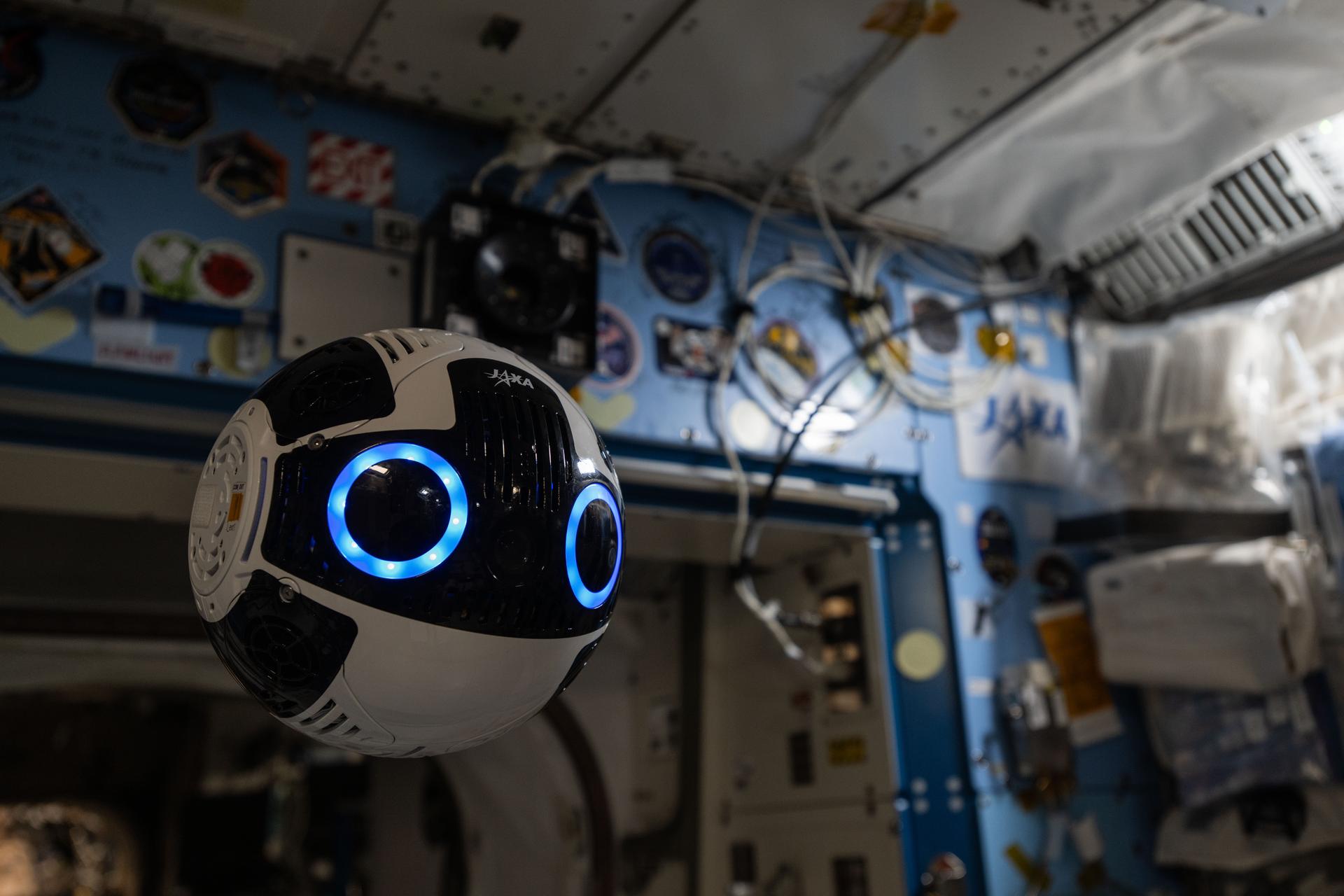
The Internal Ball Camera 2 tests automatically capturing imagery of crew activities aboard the International Space Station.
JAXA/Takuya Onishi
Before astronauts explore new terrains, we first must collect data and imagery to better characterize the surface of these cosmic destinations. Astronauts aboard the space station have collected photographs to document Earth’s surface through Crew Earth Observations. Now, those same techniques are being adapted for Artemis II , where astronauts will use handheld cameras to capture images of the Moon’s surface—including the largely unexplored far side. These observations will increase our understanding of the lunar environment and help prepare for exploration missions.
When they land, astronauts will need shelter from radiation, debris, and contaminants. Technology demonstrations aboard the space station tested the packing techniques, protection capabilities, and venting systems of lightweight inflatable habitats. For more permanent structures, space station experiments have studied how concrete hardens in reduced gravity and tested 3D printing nozzles designed to use regolith – the dust present on the Moon and Mars- as material for constructing habitats on-site.
Robotic experiments aboard the space station are demonstrating tasks like moving objects, early detection of equipment issues, 3D sensing, and mapping. Robots could support astronauts during deep space missions by performing routine tasks, responding to hazards, and reducing the need for risky spacewalks.
Analyzing samples though DNA sequencing has historically been expensive and time intensive, limiting its use in space. Advancements have led to DNA processing aboard the space station and refined sequencing techniques. Not only can this ability potentially identify DNA-based life off Earth, but it is necessary for microbial monitoring to keep crews safe and healthy.
Communications is another important component of space exploration. NASA used the space station to demonstrate laser communications capabilities, enabling transmission of more data at faster rates. This communication could serve as a critical two-way link to keep astronauts connected to Earth as they explore deep space.
Step 4: Testing Beyond Low Earth Orbit
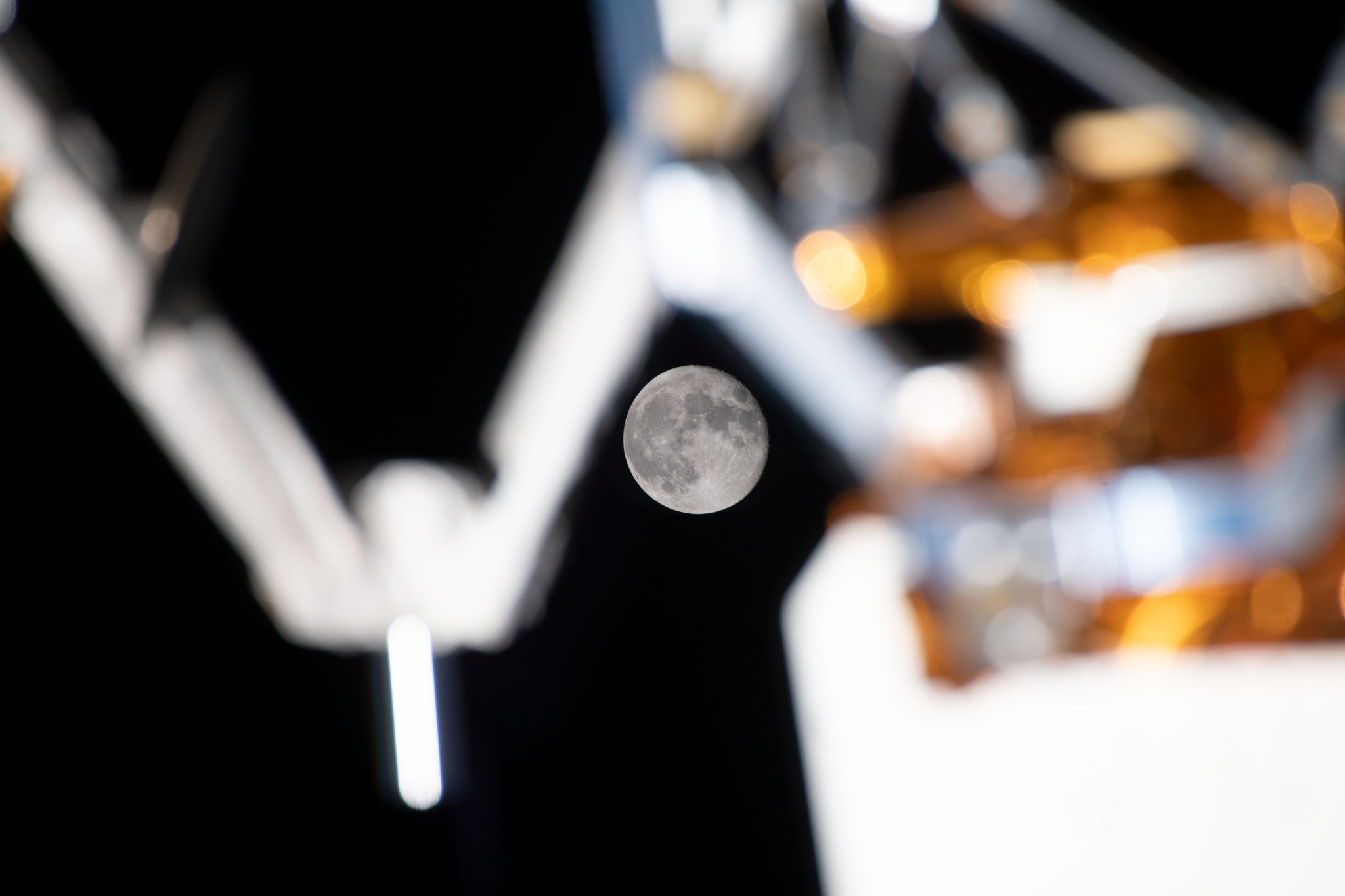
September’s full Moon, the Harvest Moon, is photographed from the International Space Station, perfectly placed in between exterior station hardware.
NASA
Experiments and technologies first tested aboard the space station made their way around the Moon in an uncrewed Orion vehicle during the Artemis I mission. Radiation technology verified on station confirmed that the Orion spacecraft’s design protects against harmful exposure. An identical BioSentinel experiment on both space station and Artemis I studied how yeast cells respond to different levels of space radiation.
Additionally, Moon Imagery research calibrated cameras for Orion’s navigation systems using photos of the Moon taken from space station, ensuring accurate guidance even if communication with Earth is lost.
Three experiments that landed on the Moon during Firefly Aerospace’s Blue Ghost Mission-1 were made possible by earlier research on the space station. These studies help improve space weather monitoring, tested computer recovery from radiation damage, and advanced lunar navigation systems.
Methods used to conduct research on the space station are making their way aboard Artemis II, a mission to place four astronauts in orbit around the Moon. Adapted from human health measurements conducted during space station missions, measurements taken on Artemis II crew will expand a repository of human health data to provide a snapshot of how spaceflight affects the human body beyond low Earth orbit. NASA researchers hope to use this data repository to develop protocols aimed at keeping astronauts healthy on missions to the Moon, Mars, and beyond. Small devices called tissue or organ chips, used for several experiments aboard space station, will continue their scientific journey in the lunar environment. Organ-chip research could improve crew prevention measures and create personalized medical treatments for humans, on Earth and in space.
The International Space Station remains a vital scientific platform, providing the foundation needed to survive and thrive as humanity ventures into the unexplored territories of our universe.
NASA astronaut Chris Williams poses for an official portrait at the agency’s Johnson Space Center in Houston.
Credit: NASA
NASA will host a news conference at 2 p.m. EDT Wednesday, Oct. 1, from the agency’s Johnson Space Center in Houston to highlight the upcoming mission of astronaut Chris Williams to the International Space Station.
The news conference will stream live on NASA’s website and YouTube channel. Learn how to watch NASA content through a variety of platforms, including social media.
The Soyuz MS-28 spacecraft, targeted to launch Nov. 27 from the Baikonur Cosmodrome in Kazakhstan, will carry Williams on his first flight, as well as Sergey Kud-Sverchkov and Sergey Mikaev of Roscosmos, to the space station for an eight-month mission as part of Expeditions 73/74.
Media interested in participating must contact the newsroom at NASA Johnson no later than 5 p.m., Monday, Sept. 29, at 281-483-5111 or jsccommu@mail.nasa.gov. A copy of NASA’s media accreditation policy is online. Media interested in participating by phone must contact the Johnson newsroom by 10 a.m. the day of the event.
Selected as a candidate in 2021, Williams graduated with the 23rd astronaut class in 2024. He began training for his first space station flight assignment immediately after completing initial astronaut candidate training.
Williams was born in New York City, and considers Potomac, Maryland, his hometown. He holds a bachelor’s degree in physics from Stanford University in California and a doctorate in physics from the Massachusetts Institute of Technology in Cambridge, where his research focused on astrophysics. Williams completed medical physics residency training at Harvard Medical School in Boston. He was working as a clinical physicist and researcher at the Brigham and Women’s Hospital in Boston when he was selected as an astronaut candidate.
The International Space Station is a convergence of science, technology, and human innovation enabling research not possible on Earth. For nearly 25 years, NASA has supported a continuous U.S. human presence aboard the orbiting laboratory, where astronauts have learned to live and work in space for extended periods of time. The space station is a springboard for developing a low Earth economy and NASA’s next great leaps in human exploration at the Moon under the Artemis campaign and Mars.
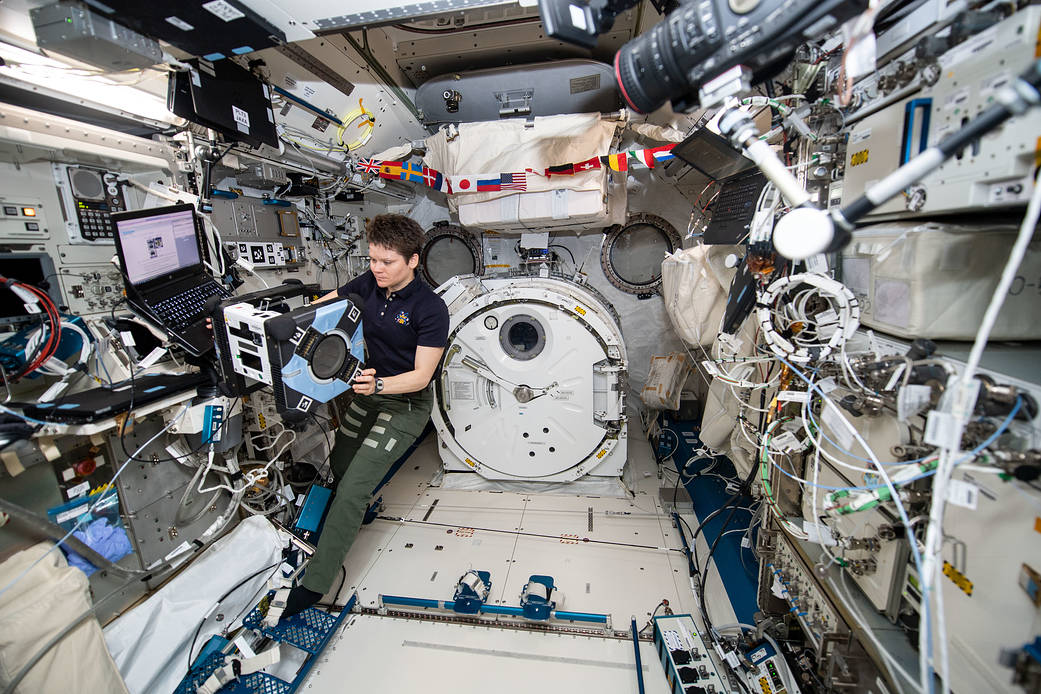
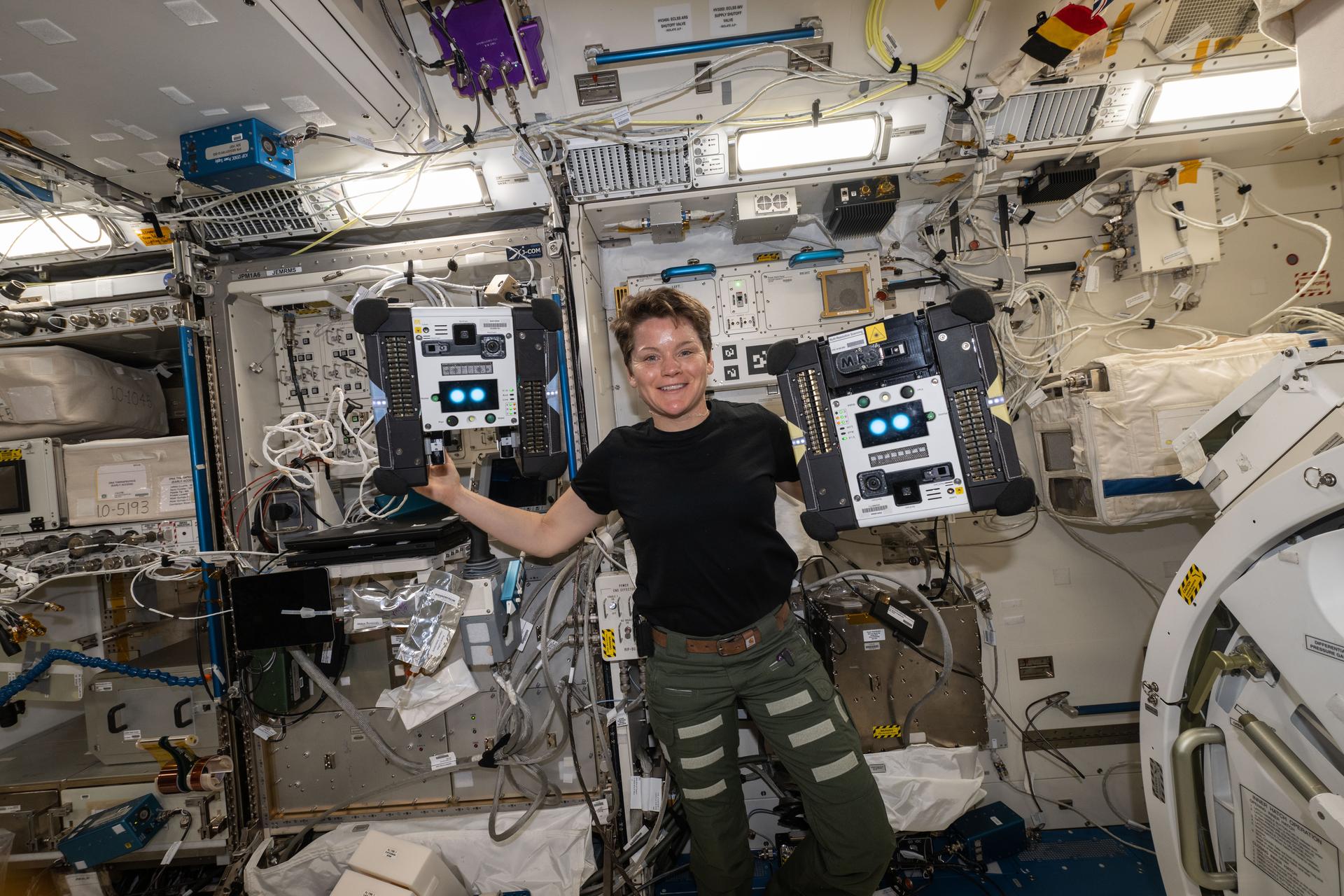
(Top) NASA astronaut Anne McClain performs the first series of tests of an Astrobee robot, Bumble, during a hardware checkout in May, 2019. (Bottom) NASA astronaut McClain poses with Astrobee robots Bumble (left) and Honey during their latest on orbit activity in May, 2025.
NASA
NASA is continuing the Astrobee mission through a collaboration with Arkisys, Inc., of Los Alamitos, California, who was awarded a reimbursable Space Act Agreement to sustain and maintain the robotic platform aboard the International Space Station. As the agency returns astronauts to the Moon, robotic helpers like Astrobee could one day take over routine maintenance tasks and support future spacecraft at the Moon and Mars without relying on humans for continuous operation.
In March, the agency issued a call for partnership proposals to support its ongoing space research initiatives. Arkisys was selected to maintain the platform and continue enabling partners to use the Astrobee system as a means to experiment with new technologies in the microgravity environment of the space station.
NASA launched the Astrobee mission to the space station in 2018. Since then, the free-flying robots have marked multiple first-in-space milestones for robots working alongside astronauts to accomplish spacecraft monitoring, alert simulations, and more in partnership with researchers from industry and academia.
The Astrobee system includes three colorful, cube-shaped robots – named “Bumble,” “Honey,” and “Queen” – along with software and a docking station for recharging. The mission has advanced NASA’s goal of developing robotic systems and technologies that can perform tasks and support exploration, maintenance, and monitoring as humans venture further into space for longer durations.
The International Space Station is a convergence of science, technology, and human innovation enabling research not possible on Earth. For nearly 25 years, NASA has supported a continuous U.S. human presence aboard the orbiting laboratory, where astronauts have learned to live and work in space for extended periods of time. The space station is a springboard for developing a low Earth economy and NASA’s next great leaps in human exploration at the Moon and Mars.
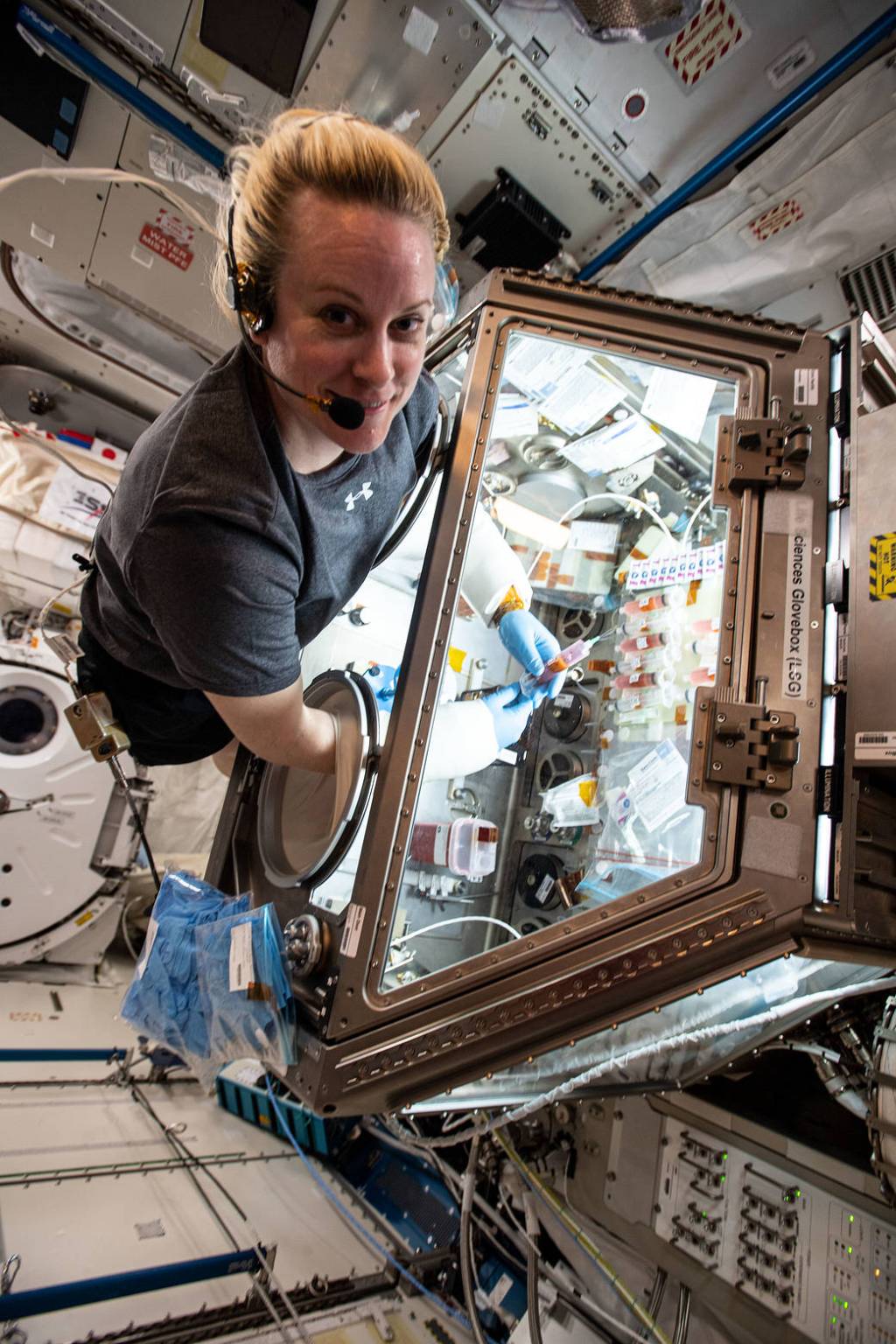
NASA astronaut Zena Cardman processes bone cell samples inside the Kibo laboratory module’s Life Science Glovebox on Aug. 28, 2025, as part of an experiment that tests how microgravity affects bone-forming and bone-degrading cells and explore potential ways to prevent bone loss. This research could help protect astronauts on future long-duration missions to the Moon and Mars, while also advancing treatments for millions of people on Earth who suffer from osteoporosis.

 Login
Login