Reading view

There are new articles available, click to refresh the page.

Polymarket to Launch In-House Trading Desk That Bets Against Users: Report

Polymarket is recruiting staff for an internal market-making team that would trade against its own customers, mirroring a controversial feature already used by rival Kalshi that has drawn criticism and legal challenges.

According to Bloomberg, the New York-based prediction market startup has approached traders, including sports bettors, to join the new unit, people familiar with the matter said, requesting anonymity because the plans remain private.

Polymarket declined to comment on the recruitment effort.

The move comes as the platform prepares its full U.S. relaunch after securing regulatory clearance from the Commodity Futures Trading Commission, having paid a $1.4 million penalty in 2022 for operating an unregistered derivatives exchange.

Kalshi’s Market-Making Unit Faces Legal Scrutiny

Kalshi already operates an in-house trading arm, Kalshi Trading, which places bids on the exchange and effectively takes opposing positions to customers’ bets.

Company executives have defended the unit as necessary to create liquidity and improve the user experience.

Still, critics argue it creates inherent conflicts of interest and makes Kalshi resemble a traditional sportsbook rather than a neutral peer-to-peer platform.

Some are now claiming that the company is a gambling company and not a prediction company.

“Let’s just call a spade a spade, it’s gambling, lots of things are gambling,” a X user said.

😂😂😂😂
it has been decided by the courts
🤣🤣🤣🤣 https://t.co/lU0S6XWrkA

— Martin Shkreli (@MartinShkreli) December 5, 2025

A proposed class action lawsuit filed last month alleges that Kalshi Trading sets betting lines that disadvantage customers, claiming “consumers place bets on Kalshi, they face off against money provided by a sophisticated market maker on the other side of the ledger.

Kalshi co-founder Luana Lopes Lara dismissed the lawsuit as a “pure smear campaign” on social media.

She stated that Kalshi Trading operates unprofitably and receives “no preferential access or treatment.

However, the legal challenge shows mounting concerns about whether prediction markets function as advertised, neutral platforms where users with differing opinions trade directly with each other.

1. Rebrand gambling as asset allocation
2. Rebrand sportsbook as truth engine
3. Rebrand bets as predictions
4. Spin up in-house market maker to c̶o̶m̶p̶e̶t̶e̶ collaborate with c̶u̶s̶t̶o̶m̶e̶r̶s̶ fellow investors for the greater good

It's really noble if you think about it. https://t.co/UQx67fg3DI

— Harry Crane (@HarryDCrane) December 5, 2025

Push for Market-Making Comes Amid Rapid U.S. Expansion

Polymarket’s decision to build an internal trading desk arrives as the company executes its return to American markets following years offshore.

In December, the CFTC issued a no-action letter covering QCX LLC and QC Clearing LLC, two entities Polymarket acquired earlier in 2025 for $112 million to gain licensed designated contract market status and regulated clearing capabilities.

The agency granted temporary relief from certain swap data reporting requirements, allowing the platform to operate within the same framework governing federally supervised U.S. trading venues.

🇺🇸 Prediction market platform Polymarket says it has received an Amended Order of Designation from the CFTC.#Crypto #CFTChttps://t.co/H44tIIxPaz

— Cryptonews.com (@cryptonews) November 25, 2025

Founder and CEO Shayne Coplan confirmed receiving “the green light to go live in the USA” and credited CFTC staff for completing the process in record time.

The regulatory clearance caps a lengthy journey that intensified in November 2024 when the FBI raided Coplan’s Manhattan residence and seized electronic devices as part of an investigation into whether Americans continued accessing the site through VPNs despite the 2022 ban.

Despite being barred from U.S. operations since 2022, Polymarket expanded aggressively overseas, recording roughly $6 billion in wagers during the first half of 2025 alone.

The platform gained global attention during the 2024 presidential election cycle, as its markets closely tracked Donald Trump’s odds of winning.

Market Makers and Growing Institutional Interest

Prediction markets rely heavily on market makers willing to take less popular trades, as the platforms match buyers with sellers on binary yes-or-no contracts.

Both Polymarket and Kalshi have offered incentives rewarding heavy users who provide liquidity, while a small number of traditional financial trading firms, including Susquehanna International Group and Jump Trading, have begun serving as external market makers on Kalshi.

🔮 @GalaxyDigital is in talks to provide liquidity on Polymarket and Kalshi, reflecting the growing momentum of prediction markets among retail traders and Wall Street.#PredictionMarkets #Galaxy https://t.co/2wgytQSkZ4

— Cryptonews.com (@cryptonews) November 25, 2025

Mike Novogratz’s Galaxy Digital is currently in talks with both platforms to become a liquidity provider, with Novogratz telling Bloomberg that the firm is “doing some small-scale experimenting with market-making on prediction markets.

The broader debate centers on whether prediction markets genuinely differ from traditional gambling operations.

During a public appearance last month, Coplan called conventional sportsbooks a “scam” that “rip off the consumer,” positioning Polymarket as a transparent alternative where users trade against each other rather than facing house odds designed to extract profits.

The post Polymarket to Launch In-House Trading Desk That Bets Against Users: Report appeared first on Cryptonews.

Why This Santa Claus Rally Setup Leaves Bitcoin One Shock Away From Support Retest

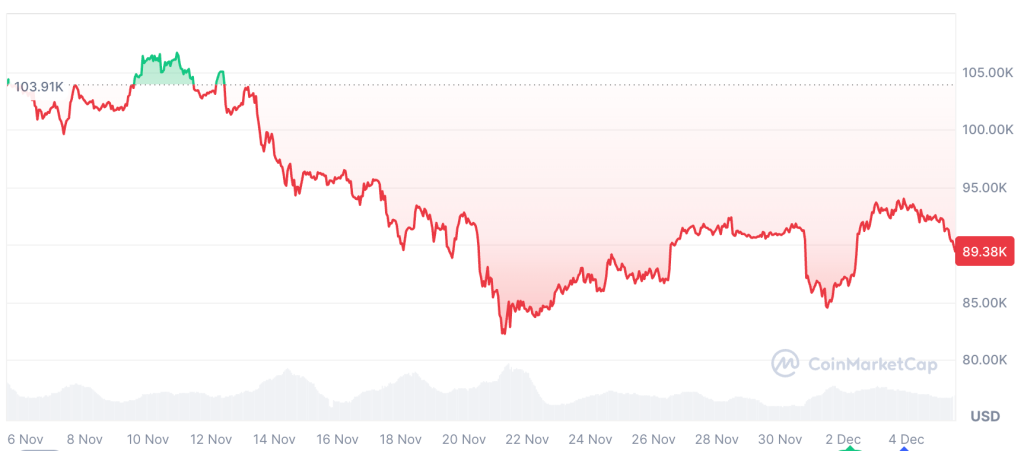
Bitcoin is now trading near $89,000 after slipping under $90,000 again, and most large-cap tokens are lower on the day, which keeps the Crypto Fear & Greed Index around 25 and indicates that anxiety has eased only slightly from last week while conviction remains thin and easily shaken by routine headlines.

The seasonal “Santa Claus rally” enters the conversation each December because equity desks track a tendency for late-month strength, yet for digital assets, the calendar effect only matters when liquidity and positioning are prepared to carry bids across sessions rather than fade into the close, which is not the profile this market has shown in recent days.

Bitcoin Price (Source: CoinMarketCap)

Seasonality Needs More Than A Calendar

If a holiday lift is going to matter for crypto, order-book depth on the largest spot pairs needs to rebuild into and after the United States session so that routine headline flurries do not push price through thin ladders, and spreads need to remain tight during moderate selling so execution costs do not sap appetite for adding risk late in the day.

Derivatives should confirm the shift with funding that moderates without relying on squeeze-driven bursts and with a futures basis that settles toward neutral rather than flipping repeatedly, because those signs show that leverage is resetting in a controlled way.

Flows then complete the picture when creations for spot Bitcoin products appear in a steady run instead of one-off prints and when net stablecoin issuance turns higher for more than a session or two, since those patterns show new dollars entering rather than the same capital recycling through a narrower set of venues.

Strategy Wrapped pic.twitter.com/wcIucX0RpT

— Strategy (@Strategy) December 5, 2025

Triggers That Could Decide December

Macro drivers still shape the path into year-end because a firm dollar and higher yields have repeatedly leaned on risk assets, meaning that softer rate expectations would remove a headwind, while any renewed hawkish tone would keep bids cautious and push market makers to carry less inventory through event windows.

Rotation beyond Bitcoin usually follows improved depth in the leader rather than leading it, so a healthier backdrop would show advances broadening from Bitcoin into larger caps only after order books thicken and funding calms.

For desks that watch sentiment, the index near 25 says fear dominates, yet not at the extreme levels seen earlier, which can allow short-lived rebounds on quiet days.

But a durable turn requires evidence that arrives together rather than piecemeal, including deeper books through the U.S. close, steadier funding and basis across multiple sessions, a visible run of ETF creations, and a rise in net stablecoin supply that survives beyond a single headline cycle.

If those pieces align, the case for a December lift improves, and the seasonal story becomes a tailwind rather than a distraction, while in their absence, the market remains one adverse policy remark or liquidity wobble away from another test of support.

The post Why This Santa Claus Rally Setup Leaves Bitcoin One Shock Away From Support Retest appeared first on Cryptonews.

ZachXBT: British Hacker Linked to $243M Genesis Theft Likely Nabbed in Dubai

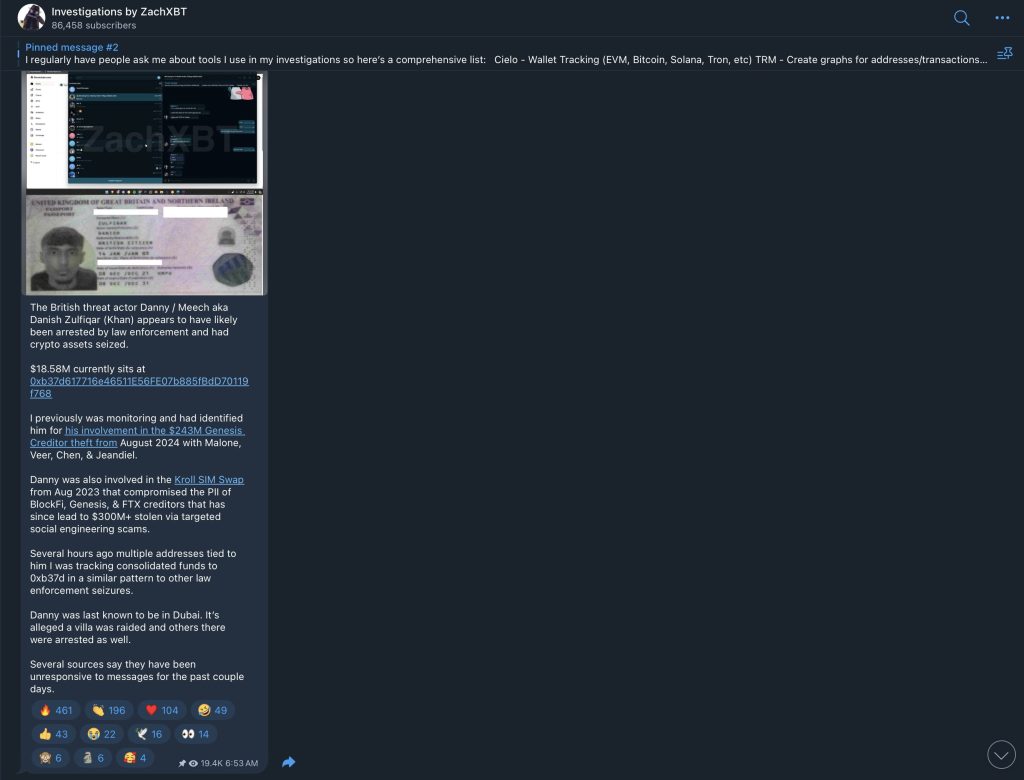
A suspected British hacker linked to one of the largest single Bitcoin thefts ever recorded may have been detained in Dubai, according to claims made Friday by on-chain investigator ZachXBT.

In a post shared on his Telegram channel on December 5, ZachXBT said a man known online as “Danny” or “Meech,” identified as Danish Zulfiqar, appears to have been taken into custody by authorities, with a portion of the stolen crypto allegedly seized.

Source: ZachXBT

He pointed to roughly $18.58 million in digital assets now held in a single Ethereum wallet that he says is connected to the suspect.

ZachXBT noted that several wallets previously tied to the alleged hacker had funneled funds into the same address in a pattern commonly seen during law enforcement seizures.

He also claimed Zulfiqar was last known to be in Dubai, where a villa was reportedly raided.

Authorities Silent as Reports Surface of Possible Arrest in $243M Bitcoin Hack

According to the investigator, others linked to the suspect have also gone silent in recent days.

So far, there has been no official confirmation from Dubai Police or UAE authorities regarding any arrest, asset seizure, or raid connected to the case.

Local media outlets in the region have also not verified the claims.

The possible arrest follows months of investigation into the August 19, 2024, theft of 4,064 Bitcoin, worth about $243 million at the time. The funds were taken from a single Genesis creditor who accessed assets through Gemini.

ZachXBT made the case public in September, alleging the theft was carried out through a coordinated social engineering attack.

According to his findings, the attackers posed as Google support staff and convinced the victim to reset two-factor authentication.

They then used remote access software to take control of the account. After extracting the private keys, the attackers drained the wallet and moved the Bitcoin through a web of exchanges and swap services in an attempt to launder the funds.

ZachXBT initially tied the attack to three online aliases, “Greavys,” “Wiz,” and “Box”, later naming Malone Lam, Veer Chetal, and Jeandiel Serrano as the people behind those accounts.

He said his findings were shared with law enforcement authorities.

U.S. Charges, UK Guilty Plea, Thailand Arrest Mark New Phase of Crypto Crime Probes

U.S. prosecutors later filed criminal cases connected to related activity. In September 2024, the Department of Justice charged two suspects in a $230 million crypto fraud scheme.

Broader racketeering charges later described an operation totaling more than $263 million, including the Genesis-linked Bitcoin theft. Court documents outlined a mix of SIM swaps, social engineering tactics, and even physical burglaries.

Prosecutors said the stolen funds were spent on high-end cars, travel, and nightlife. One of the defendants, Veer Chetal, was later accused of carrying out another $2 million crypto theft while out on bond.

ZachXBT has also connected Zulfiqar to the August 2023 Kroll SIM swap incident, which exposed the personal data of creditors tied to BlockFi, Genesis, and FTX.

That breach later played a role in more than $300 million worth of crypto thefts through follow-up phishing and impersonation schemes.

The reported Dubai development comes as crypto-related law enforcement activity continues to pick up worldwide.

In October, Thai authorities arrested Liang Ai-Bing in Bangkok over an alleged $31 million crypto Ponzi scheme that ZachXBT had previously exposed.

🇹🇭 Thai police arrest alleged FINTOCH mastermind behind $31 million crypto Ponzi scheme that defrauded investors across multiple Asian countries.#Thailand #Policehttps://t.co/Mccq2KpZfb

— Cryptonews.com (@cryptonews) October 30, 2025

In the UK, authorities recently secured a guilty plea from Zhimin Qian in a case tied to what officials described as the largest crypto seizure in history, involving more than $6.7 billion in Bitcoin.

Outside of investigations, ZachXBT has also remained active in public disputes.

In November, he clashed with UFC fighter Conor McGregor over comments about Khabib Nurmagomedov’s NFT project, redirecting attention to McGregor’s own failed meme coin venture earlier this year.

The post ZachXBT: British Hacker Linked to $243M Genesis Theft Likely Nabbed in Dubai appeared first on Cryptonews.

Crypto Interest Fades Among US Investors as Risk Tolerance Declines: FINRA Study

Interest in crypto among US investors has cooled significantly, with fewer considering new purchases despite maintained ownership levels, according to a comprehensive study released by the FINRA Investor Education Foundation.

The findings reveal a broader retreat from high-risk investment behaviors as market conditions and investor attitudes shift dramatically from the pandemic-era surge.

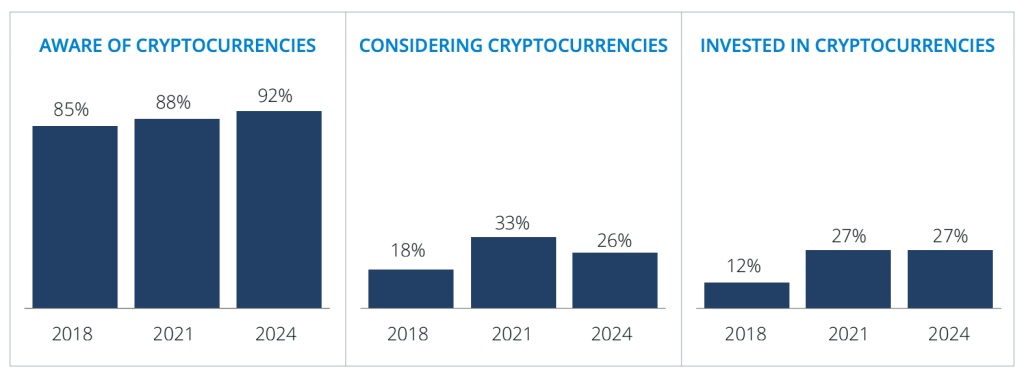
The Financial Industry Regulatory Authority study, based on survey data from 2,861 US investors with non-retirement investment accounts, found that while 27% still hold cryptocurrency, unchanged from 2021, only 26% are now considering purchasing digital assets, down sharply from 33% three years earlier.

Crypto US Investors FINRA Study - Awareness of crypto
Source: FINRA

New Investors Retreat as Market Enthusiasm Wanes

The pace of Americans entering the investment market has slowed dramatically since the cryptocurrency boom years.

Only 8% of current investors began investing within the past two years, a steep drop from 21% who started during the two years preceding the 2021 study.

The shift suggests the tide of pandemic-era market participation has entirely ebbed, with younger adults particularly affected by the reversal.

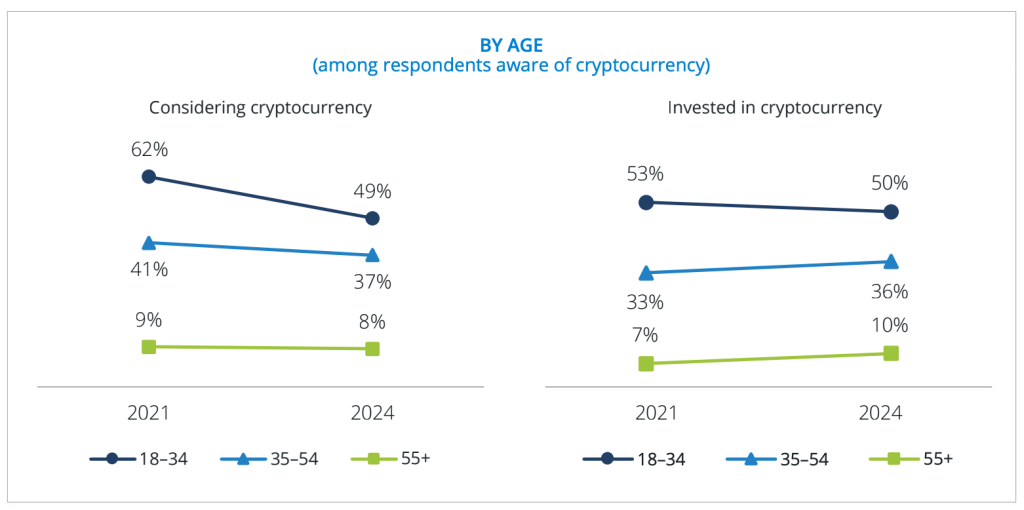
Young investors under 35 saw their participation rate fall from 32% in 2021 to 26% in 2024, erasing gains made during the market surge.

Crypto US Investors FINRA Study - Investment by age
Source: FINRA

Similarly, investment rates declined among people of color and men, reversing increases observed just three years earlier.

The median age of investors who entered the market around 2019-2021 rose from 31 to 38, indicating many younger participants left the market entirely.

Beyond slower entry rates, investors pulled back from various high-risk positions. Cryptocurrency is now viewed as extremely or very risky by 66% of those aware of digital assets, up from 58% in 2021.

The percentage holding penny stocks, REITs, private placements, and structured notes all declined to 2018 levels after brief increases.

Risk Appetite Shrinks Across Demographics

Investors’ willingness to embrace substantial portfolio risk dropped to just 8% in 2024 from 12% in 2021, with the decline most pronounced among younger market participants.

Among investors under 35, those willing to take substantial risks fell from 24% to 15%, creating a notable contradiction; 62% of this age group still believe they need big risks to reach financial goals.

The latest FINRA Foundation research on investors provides rich insights into how market conditions, technology and generational shifts are changing the profile of investing and reshaping investor behaviors and attitudes,” said Jonathan Sokobin, FINRA Foundation Chair and Chief Economist.

Despite reduced risk appetite, younger investors continue to engage in behaviors that carry greater potential losses.

43% of those under 35 trade options, compared to 10% of investors 55 and older, while 22% make margin purchases, versus just 4% of older participants.

Meanwhile, 13% of all investors report buying meme stocks or viral investments, including 29% of those under 35.

The crypto decline appears most dramatic among new investors. Those with less than 2 years’ experience who are considering digital assets dropped from 61% in 2021 to 48% in 2024, while consideration among experienced investors fell less sharply.

Among investors under 35 specifically, cryptocurrency consideration plummeted from 62% to 49%, compared to smaller declines in older age groups.

Social Media Influence Grows Despite Market Caution

The study found social media “Finfluencers” now guide investment decisions for 26% of investors, rising to 61% among those under 35.

YouTube remains the dominant platform for investment information, with 30% overall usage, rising to 61% among younger investors.

Word of mouth from friends and family emerged as the top information source for 85% of investors under 35, surpassing recommendations from financial professionals at 67%.

Concern over investment fraud has risen somewhat, with 37% of investors worried about losing money to scams, up from 31% in 2021.

However, the vast majority, 89%, do not believe they have been targeted in investment fraud.

When presented with a fraudulent offer promising “guaranteed, risk-free 25% annual returns,” half of investors said they would invest, revealing significant gaps in fraud awareness.

FINRA Foundation President Gerri Walsh emphasized the continuing importance of investor education.

They still struggle with gaps in investing knowledge and risk assessment, which can leave them vulnerable to costly missteps,” Walsh said. “Investor education efforts remain critically important.

Notably, the findings oppose broader market trends showing that crypto adoption continues to grow, with separate surveys indicating that over 50 million American adults now own digital assets.

Another also links declining homeownership affordability to increased crypto speculation among younger generations seeking alternative wealth-building strategies.

The post Crypto Interest Fades Among US Investors as Risk Tolerance Declines: FINRA Study appeared first on Cryptonews.

Italy Orders Crypto Providers To Obtain MiCAR Authorization By Dec 30 Or Exit Market

Italy’s market watchdog has told crypto providers to either secure authorization under Europe’s new MiCAR regime by Dec. 30 or shut down their local business, stepping up pressure on exchanges and brokers serving local users.

Consob, the country’s securities regulator, urged both investors and operators to pay “maximum attention” as the transition period for the EU’s Markets in Crypto-Assets regulation nears its end.

The rules will reshape how virtual asset service providers operate across the bloc and how they market trading, custody and other services to retail clients.

Under the Italian framework, firms currently acting as Virtual Asset Service Providers, or VASPs, can continue to operate only until Dec. 30, 2025, while they are registered with the OAM, the national agents and brokers registry.

Italy’s financial regulator Consob has warned investors and Virtual Asset Service Providers (VASPs) that the MiCAR transition period will end on December 30, 2025. VASPs that do not apply for authorization as Crypto-Asset Service Providers (CASPs) by the deadline must cease…

— Wu Blockchain (@WuBlockchain) December 5, 2025

After that, they must have taken concrete steps toward becoming MiCAR-compliant crypto-asset service providers, or CASPs, if they want to stay in business.

Regulatory Shift Moves Italy Toward Europe’s Unified Crypto Rulebook

VASPs that file an authorization application by Dec. 30, either in Italy or in another EU member state, will be allowed to keep serving customers while supervisors process their files. That temporary window will close once the application is approved or rejected, and in any case no later than June 30, 2026.

The current regime in Italy only requires VASPs to register with the OAM. Under MiCAR, CASPs will need prior authorization from their supervisory authority and will then come under ongoing supervision, aligning Italy with the wider European push for stricter oversight after a series of global exchange failures and token collapses.

To support an orderly and transparent transition, Consob issued a detailed notice that mirrors guidance published the same day by the European Securities and Markets Authority. The document spells out what retail users should do as the deadline approaches and what operators must put in place if they plan either to seek a license or wind down.

Regulator Warns Users To Verify VASP Status Before Year-End Cutoff

For investors, the regulator stressed that some VASPs currently operating may no longer be allowed to do so after December 30. It said clients should check whether they have received clear information from their provider on its plans, and if not, ask for an explanation of how it intends to comply with the new framework.

Consob also told users to verify that a firm is legitimately allowed to operate in Italy after the deadline, either by checking the OAM list of VASPs or the ESMA register of authorized CASPs. If a provider is not legitimate, it cannot continue to offer crypto-asset services to the public and customers have the right to ask for the return of their funds or tokens.

On the operator side, Consob recalled that it has already shared guidance through meetings and public communications, including a notice in Sept. 2024 with initial instructions for firms and another in July 2025 when the national transition period was extended to June 30, 2026. It also sent a specific warning on October 31, 2025 to VASPs on the OAM list that still lack MiCAR authorization.

The regulator said VASPs that choose not to seek authorization as CASPs must stop their activities in Italy by December 30, 2025 and close existing contracts. They must return crypto-assets and related funds to customers in line with client instructions and end all services, including custody and administration.

VASPs that remain on the OAM register are required to post clear information on their websites and provide direct notice to clients on the steps they plan to take, whether that is applying for a MiCAR license or exiting the market in an orderly way.

The post Italy Orders Crypto Providers To Obtain MiCAR Authorization By Dec 30 Or Exit Market appeared first on Cryptonews.

CZ Pushes to Make America a Global Crypto Capital as Binance Eyes US Expansion

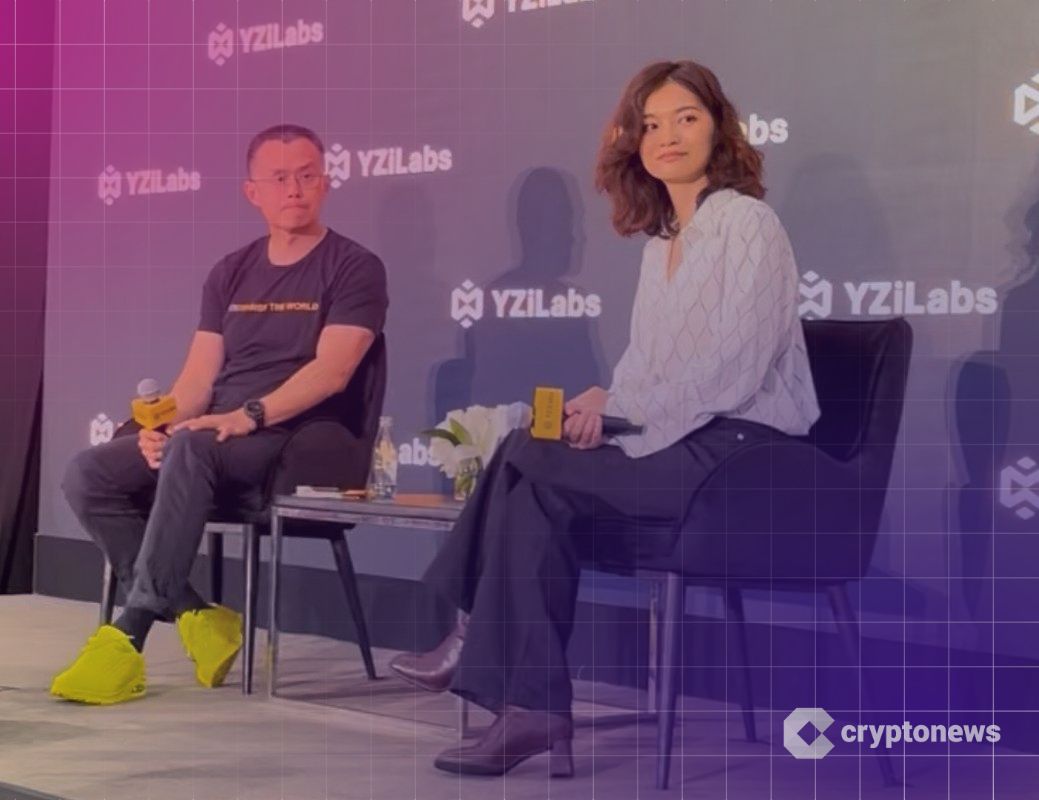
Changpeng Zhao (CZ), founder of the world’s largest cryptocurrency exchange Binance, announced plans to help make America a global crypto hub. CZ shared his thoughts on the United States market during a private press conference at Binance Blockchain Week, which took place at the Coca Cola Arena in Dubai Dec. 3-4.

When asked by a member of the media about his involvement in the US following President Trump’s pardon, CZ explained that he is “very appreciative of the pardon from Trump,” noting that this allows Binance to conduct business more “freely” in every part of the world – America included.

“It’s my full intention to help make America the capital of crypto,” CZ stated. “Also, America is an emerging land for Binance. For the last few years we have been dealing with the Biden administration so much that we have tried to withdraw from the US as much as possible. We didn’t invest in the US and we tried to pull out. But now I fully intend to help crypto businesses in the US.”

You heard it here first: ⁦@cz_binance⁩ of ⁦@binance⁩ says he has nothing to do with the Trump family. CZ also has plans to help blockchain & crypto companies innovate in the United States, 🇺🇸 such an insightful and inspiring fireside chat at #binanceblockchainweek pic.twitter.com/J4dFAJYtiZ

— Rachel Wolfson (@Rachelwolf00) December 4, 2025

The United States Becomes Strategic Market For Binance

CZ added that Binance US – which was launched in September 2019 to legally service US residents – still exists, yet it remains a small business.

He explained that in 2023 the SEC sued Binance US, causing the business to lose all banking access and a few state licenses. However, CZ now views the US as “a very important market” and a leading region in terms of tech talent. However, he believes that leaders in the blockchain industry still reside outside of the United States.

“Large businesses like Binance and a few other large players are not technically in the US, so I do want to help bring many of those businesses back into the region,” he said “Also, many institutional investors do not have access or exposure to BNB, so we want to help with that.”

CZ speaks at private press conference alongside Nina Rong, BNB Director of Growth. Source: Rachel Wolfson, Cryptonews Reporter

CZ Says US Has Clear Crypto Regulations

Cryptonews further asked CZ about challenges holding back crypto adoption globally and how Binance aims to combat this moving forward.

CZ mentioned that first and foremost regulatory frameworks have to become clarified in many parts of the world. To enable this, he explained his involvement with more than a dozen different countries on ways to develop and implement regulations.

CZ added that currently only a handful of countries have clear regulations around digital assets, yet pointed out that the US is leading the way.

“Now the US is leading – which is good, but the US is only just starting. Trump has only been in power for a year,” he stated.

CZ further remarked that progress has been made with the recent passing of the GENIUS Act, which establishes clear rules around stablecoins. He added that the CLARITY Act, which aims to define digital assets, remains a work in progress.

“Also the first draft of regulations will not be perfect – it takes time to evolve. After this, the banks will need to work closely with crypto businesses. We need to integrate with existing financial systems to enable mainstream adoption, as that’s the best way for growth,” CZ remarked.

CZ Speaks Out About Prison Time

In addition to sharing his thoughts on the importance of the US market for crypto expansion, CZ described his time in prison. The executive was sentenced to four months in a US prison in April 2024 after pleading guilty to violating US money laundering laws.

You heard it here first: ⁦@cz_binance⁩ founder of ⁦@binance⁩ reflects on time in US prison, noting that he went through a lot of challenges but thankfully no one got hurt 💯
Thank you CZ for all that you do for the crypto ecosystem #binanceblockchainweek #binance pic.twitter.com/SwMKuSW8ok

— Rachel Wolfson (@Rachelwolf00) December 5, 2025

“I went through a lot of challenges – I went to jail, etc. but I know that no one got hurt,” CZ stated. “There was no fraud, there were no users that got hurt because of my actions, so when I sleep at night I sleep very well because I know I am helping a lot of people.”

The post CZ Pushes to Make America a Global Crypto Capital as Binance Eyes US Expansion appeared first on Cryptonews.

Asia Market Open: Bitcoin Holds Near $92k, Equities Slip On Fresh Economic Signals

Bitcoin held just under $92,000 on Friday as traders weighed a heavy mix of labour data, central bank bets and choppy equity markets in Asia, Europe and the US.

Akshat Siddhant, lead quant analyst at Mudrex, said the crypto market continues to display strong resilience.

“Renewed whale accumulation is supporting the trend, as ETH whales have added over 450,000 ETH since mid-November, with BTC whales showing similar activity.”

“Even with the US labour market displaying solid strength, the odds for a rate cut this month stand at 93%, contributing to the buying pressure. A clear move above $96,000 could accelerate BTC’s momentum toward $100,000, opening the path for fresh highs,” he added.

Market snapshot

  • Bitcoin: $92,387, down 1.2%
  • Ether: $3,174, down 1.1%
  • XRP: $2.09, down 4.6%
  • Total crypto market cap: $3.22 trillion, down 1.3%

Japan’s Weak Spending Figures Drag Regional Equities Lower

In Asia, Japan’s Nikkei 225 fell about 1.5%, wiping out this week’s gains in a session that otherwise stayed subdued. MSCI’s broad index of Asia Pacific shares outside Japan slipped roughly 0.1%, although it remained on track for a modest gain of about 0.5% for the week.

Fresh data from Tokyo showed household spending in Japan fell at the fastest pace in nearly two years in October as inflation squeezed budgets. The yield on 10-year Japanese government bonds touched 1.94% early in the session, the highest since mid-2007, and was set for a rise of about 13.5 basis points for the week.

Recent auctions drew solid demand, suggesting investors are taking advantage of cheaper bond prices.

Chinese markets painted a mixed picture. The Shanghai Composite hovered near 3,875, down 0.02%, while the SZSE Component in Shenzhen added about 0.17%.

The China A50 index slipped 0.17%, DJ Shanghai edged up 0.12% and Hong Kong’s Hang Seng lost about 0.40%.

Europe Finds Support While US Traders Weigh Conflicting Data

Across Europe, futures pointed to a slightly firmer tone. DAX futures traded near 23,880, up about 0.79%, FTSE 100 futures gained 0.19%, CAC 40 futures rose 0.43% and Euro Stoxx 50 futures added roughly 0.41%.

US stock futures were mixed after Wall Street cash indices finished Thursday close to flat. Dow futures hovered around 47,850, down 0.07%, while S&P 500 futures inched up 0.11% and Nasdaq futures rose 0.22%.

Traders continued to chew over a series of US data releases. A Labor Department report showed initial jobless claims dropped to their lowest level in more than three years, although analysts said the Thanksgiving holiday may have distorted the figures.

A separate estimate from the Chicago Fed suggested the unemployment rate held near 4.4% in November.

Factory Orders Lag Forecasts As Traders Brace For Key Fed Decision

A delayed report from the Commerce Department showed factory orders rose 0.2%, missing expectations for a 0.5% increase, after an upward move in August was revised down to 1.3% as tariffs weighed on manufacturers.

The closely watched non-farm payrolls report will not arrive on Friday, with the November figures scheduled for after the Federal Reserve’s December meeting because of an extended government shutdown. Investors have turned to secondary indicators, even as the backlog of official data clears only slowly.

Fed funds futures now imply nearly a 90% chance of a 25-basis point rate cut next Wednesday, up sharply from pricing a month ago, and analysts describe the gathering as one of the most finely balanced meetings in years, with several policymakers having spoken publicly against further easing.

The post Asia Market Open: Bitcoin Holds Near $92k, Equities Slip On Fresh Economic Signals appeared first on Cryptonews.

Stablecoin Adoption and Tokenized Settlement Take Center Stage at Binance Blockchain Week

During a panel session moderated by CryptoNews during Binance Blockchain Week, panelists examined the accelerating evolution of stablecoins, from retail adoption and cross-border payments to tokenized settlement and institutional frameworks. Speakers included Sam Elfarra (Tron DAO), Marcelo Sacomori (Braza Bank), and Daniel Lee (Banking Circle).

A clear exploration of how stablecoins are evolving into a global financial utility and the infrastructure required to keep them secure, liquid, and accessible.

Moderated by @Tanzeel_Akhtar

Speakers:
🔸Sam Elfarra | Community Spokesperson | Tron DAO
🔸Daniel Lee | Head of Web3… pic.twitter.com/rhdqs3wr4D

— Binance (@binance) December 4, 2025

Stablecoins: The Fastest-Growing Segment of Digital Assets

Opening the discussion, the moderator positioned stablecoins as the fastest-growing category in digital assets, citing issuance and wallet counts rising by around 50% and daily trading volumes now surpassing Visa. The conversation focused on usability, reliability during volatility, the emergence of bank-issued tokens, and the infrastructure required to support tokenized settlement.

Brazil’s Regulatory Trust Advantage

Marcelo Sacomori, representing Brazil’s largest stablecoin dealer, detailed Braza Bank’s issuance of BRL- and USD-linked tokens driven by FX demand and corporate payments. He stressed transparent reserves, independent verification, and liquidity as pillars of trust. Brazil’s regulatory clarity, he said, has accelerated institutional uptake and consumer confidence.

“Once you use stablecoins for payments, you’ll never want to go back to traditional ways. I think, in two years, stablecoins will no longer be a niche product,” said Sacomori.

Tokenized Settlement and the Institutional Shift

Banking Circle’s Daniel Lee explained that tokenized real-world assets cannot scale without a tokenized settlement capable of atomic, near-instant transfer. He outlined the distinction between tokenized deposits and bearer stablecoins, adding that EU e-money token frameworks create regulated, bankruptcy-remote structures suitable for institutions.

Emerging Markets Driving Volume and Use Cases

Speaking for Tron DAO, Sam Elfarra described strong momentum across LATAM, Africa, Southeast Asia, and the Middle East, where users seek affordability, reliability, and dollar stability. Tron’s uptime and operational resilience, he noted, have supported high transaction throughput even during periods of market volatility.

Closing the session, it was concluded that stablecoins are no longer a niche experiment but are rapidly becoming the backbone of global value exchange—reshaping how money moves, is stored, and, in the near future, how tokenized assets will settle.

The post Stablecoin Adoption and Tokenized Settlement Take Center Stage at Binance Blockchain Week appeared first on Cryptonews.

CZ and Peter Schiff Face Off at Binance Blockchain Week 2025: Bitcoin or Tokenized Gold?

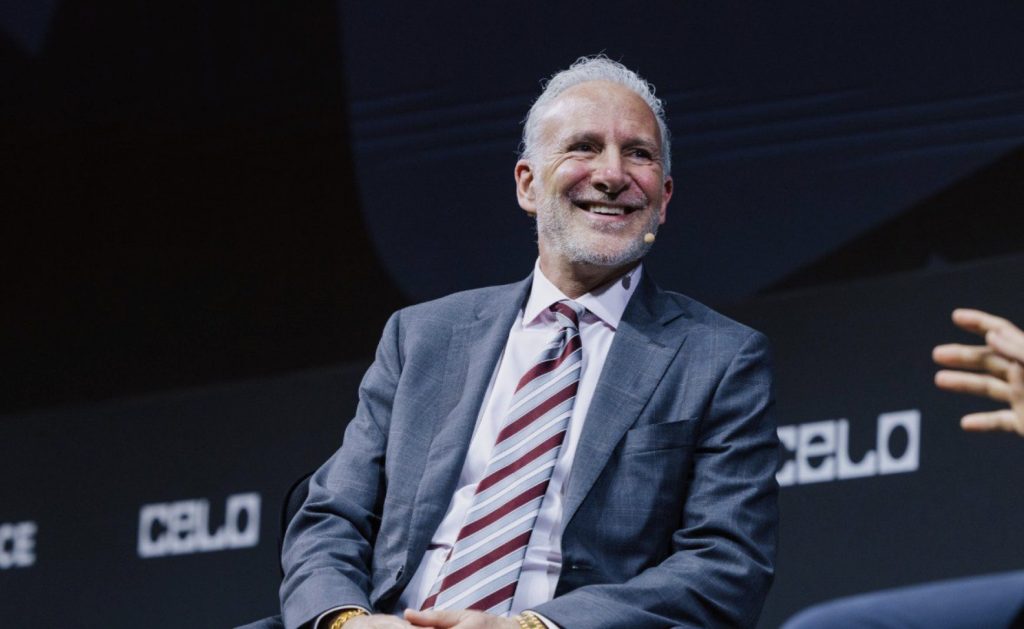
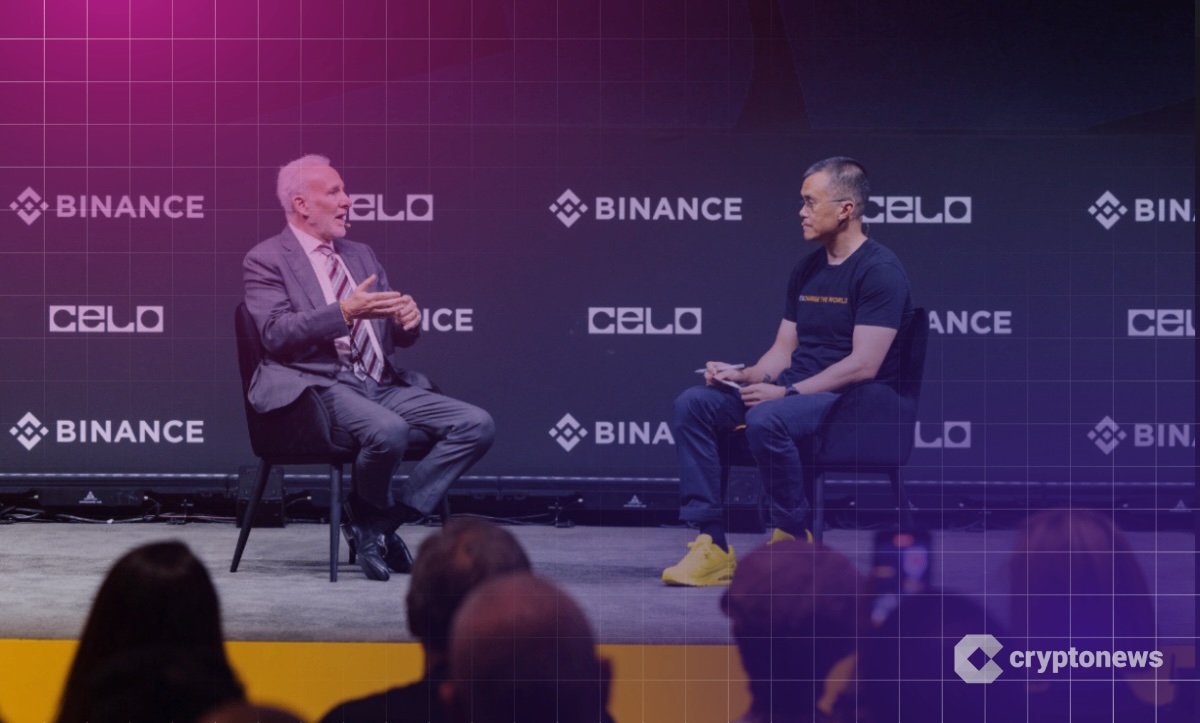
Binance Blockchain Week 2025 delivered one of its most anticipated moments when Changpeng Zhao (CZ), founder of Binance and Giggle Academy, took the stage opposite Peter Schiff, senior economist and founder of Euro Pacific Asset Management and Schiff Gold.

We are LIVE now from the #BinanceBlockchainWeek Main Stage!

The much-anticipated big debate is kicking off, don’t miss a moment!

Watch it live 👉 https://t.co/4ED3HwmOj9 pic.twitter.com/BaC6S7QN58

— Binance (@binance) December 4, 2025

The debate tackled a defining question for the global financial environment: Is the future of sound money rooted in Bitcoin or will tokenized gold ultimately prevail? The atmosphere was charged with investors, developers, policymakers, and institutional delegates filling the main hall for what quickly became a clash of ideology, economics, and technology.

Schiff: Tokenized Gold Enhances What Already Works

Peter Schiff framed tokenized gold not as competition to Bitcoin but as the modernization of a centuries-tested store of value. “Tokenized gold improves all the monetary properties of gold while it remains a store of value. The token is simply the evidence that you own the gold in the vault.”

He argued that technology solves the core logistical weakness of gold—portability—without undermining its intrinsic qualities. “For money purposes, tokenized gold is better than physical gold. Ownership can change hands while the gold never leaves the vault.”

Schiff reminded the audience that gold’s value is anchored in utility, rarity, and historical trust. “What gives gold value is not that you can touch it, but that it has real utility as a metal. There are industries that need gold and things only gold can do.”

For Schiff, tokenization is evolutionary, not revolutionary—retaining the asset while removing friction.

CZ: Digital Value Needs No Physical Form

CZ countered with the argument that Bitcoin is native to the internet economy and benefits from being purely digital. “If I give you Bitcoin right now, we can verify it in several ways that you received it. It settles instantly and transparently on-chain.”

He positioned Bitcoin as more than a currency—it’s a global decentralized ecosystem. “Bitcoin is more than a transaction network. It is an entire industry with many use cases and a very large, global community behind it.”

CZ dismissed the notion that money requires physical backing to be credible, comparing Bitcoin’s value to that of tech platforms. “The internet is virtual. There is nothing physical about Google or X, but they clearly have value. Many virtual things have value; that value is not tied to physical properties.”

Two Philosophies, One Converging Future

The debate pointed out a broader shift: traditional assets are being digitized, while native digital assets continue to mature. Tokenized gold caters to those who value tangible backing and historical stability; Bitcoin speaks to a generation aligned with decentralization and borderless liquidity.

If Binance Blockchain Week made one thing clear, it’s that the future of money may not be defined by one asset—but by how well traditional and digital systems coexist, compete, and inevitably converge.

The post CZ and Peter Schiff Face Off at Binance Blockchain Week 2025: Bitcoin or Tokenized Gold? appeared first on Cryptonews.

Fed Rate Cuts Could Turn 2026 Into Crypto’s First Tailwind Year: Delphi Digital

The Federal Reserve is poised to deliver another 25-basis-point cut at its December meeting, which would reduce the federal funds rate to approximately 3.50-3.75%, while forward markets price at least three additional cuts through 2026 that could push rates into the low-3% range by year-end.

Delphi Digital noted that with quantitative tightening ending December 1, a Treasury General Account drawdown ahead, and the Reverse Repo Program fully depleted, “this is the first net-positive liquidity backdrop since early 2022—turning policy in 2026 from a headwind to a mild tailwind.

Fed Rate Cuts 2026 - Delphi Digital
Source: X/@Delphi_Digital

The research firm emphasized that 2026 represents “the year policy stops being a headwind and becomes a mild tailwind,” favoring duration, large caps, gold, and digital assets with structural demand, like Bitcoin.

Fed Forced to Cut Despite Inflation Pressures

Markets widely anticipated the December cut, with CME FedWatch pricing 88% probability ahead of the Federal Open Market Committee meeting.

The decision came despite limited economic data; October’s inflation and employment figures weren’t released due to the government shutdown, forcing policymakers to rely on alternative indicators showing mixed signals.

The Kobeissi Letter starkly framed the Fed’s dilemma, noting that “even as inflation hits 3%, the Fed MUST cut rates to ‘save’ US consumers.

The analysis highlighted a K-shaped economy in which “consumers are struggling while large cap tech stocks are soaring,” forcing the Fed to cut rates “into one of the hottest stock markets in history.

The Fed has no option:

Even as inflation hits 3%, the Fed MUST cut rates to "save" US consumers.

Consumers are struggling while large cap tech stocks are soaring.

More rate CUTS are coming into one of the hottest stock markets in history.

Own assets or be left behind. pic.twitter.com/fp9Gg0QqUP

— The Kobeissi Letter (@KobeissiLetter) December 3, 2025

With retail sales rising only 0.3% in September and the S&P 500 up 17.8% year-to-date through December, the wealth gap widens as “Americans need the support as a labor market deteriorates.

Goldman Sachs chief economist Jan Hatzius projects the Fed will pause in January before delivering cuts in March and June, pushing rates to a terminal level of 3-3.25%.

In fact, according to Reuters, Bank of America shifted its December forecast from hold to cut, stating that “by cutting rates next week, we think the Fed would increase the risk of pushing policy into accommodative territory, just as fiscal stimulus kicks in.

The backdrop extends beyond rate cuts. Quantitative tightening’s end removes roughly $60 billion in monthly balance sheet reductions that drained liquidity throughout 2023 and 2024.

Divided Committee Shows Market Volatility

Growing divisions within the Federal Open Market Committee complicate the outlook.

October’s meeting produced unusual dissent, with members voting both for no cut and for a more aggressive 50-basis-point reduction, a rare occurrence in Fed history with only 28 prior instances of opposing dissents.

According to Forbes, Minutes revealed sharp disagreements, stating: “Many participants were in favor of lowering the target range for the federal funds rate at this meeting, some supported such a decision but could have also supported maintaining the level of the target range, and several were against lowering the target range.

Political factors add pressure. Reports emerged that the Trump administration canceled interviews for Fed chair finalists, fueling expectations that Kevin Hassett might replace Jerome Powell next May.

Bank of America cited leadership change as the primary driver of its forecast for two additional 2026 cuts in June and July, noting that its “forecast of additional cuts next year is due to the change in leadership, not our read on the economy.

Keith Buchanan, senior portfolio manager at Globalt Investments, observed that markets are betting “the Federal Reserve will have ammo to lay off the hawkish tone that we saw a couple of weeks ago and perhaps lean more dovish into what looks to be disappointing and weakening labor data.

Asian Currencies Positioned for Easing Benefits

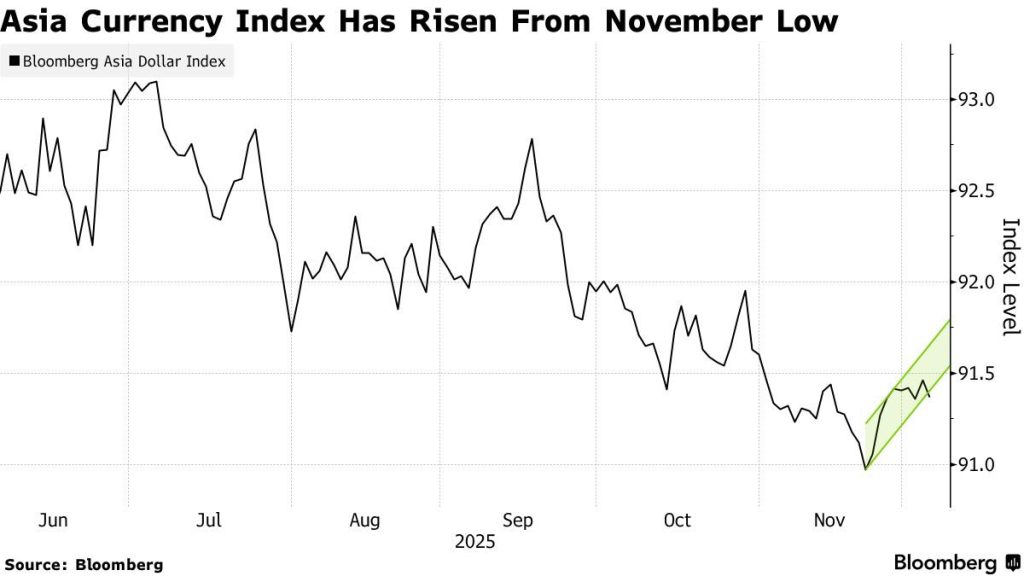
Asian currencies stand to benefit from December’s cut and potential 2026 easing, according to Reuters.

India’s rupee, which breached 90 per dollar for the first time, faces relief from reduced pressure, while Indonesia’s rupiah, South Korea’s won, and the Philippine peso, all down over 4% this quarter, could stabilize as Fed policy turns accommodative.

Fed Rate Cuts 2026 - Asia Currency Index

Source: Bloomberg.

As per Bloomberg, traders now price over 90% probability for the quarter-point December cut based on swaps data.

Wee Khoon Chong, senior Asia Pacific market strategist at BNY, expects that “further Fed easing is likely to be supportive for Asia FX in general.

The post Fed Rate Cuts Could Turn 2026 Into Crypto’s First Tailwind Year: Delphi Digital appeared first on Cryptonews.

Solana Mobile to Launch SKR Native Token in January

Solana Mobile confirmed it will launch SKR, a governance token for its Seeker smartphone ecosystem, in January 2026, with a total supply of 10 billion tokens distributed across airdrops, partnerships, and community initiatives.

The company positioned the token as a mechanism to decentralize platform ownership and align incentives across device holders, developers, and network validators known as Guardians.

The announcement comes amid a hardware security controversy, as Ledger researchers disclosed an unfixable vulnerability in the MediaTek Dimensity 7300 chip used in Seeker devices that could enable a complete device takeover and private key theft through physical access.

Seek and you will find.

SKR is coming in January 2026 🧵 pic.twitter.com/cwtlp8G8Zf

— Seeker | Solana Mobile (@solanamobile) December 3, 2025

Token Distribution Targets Early Adopters

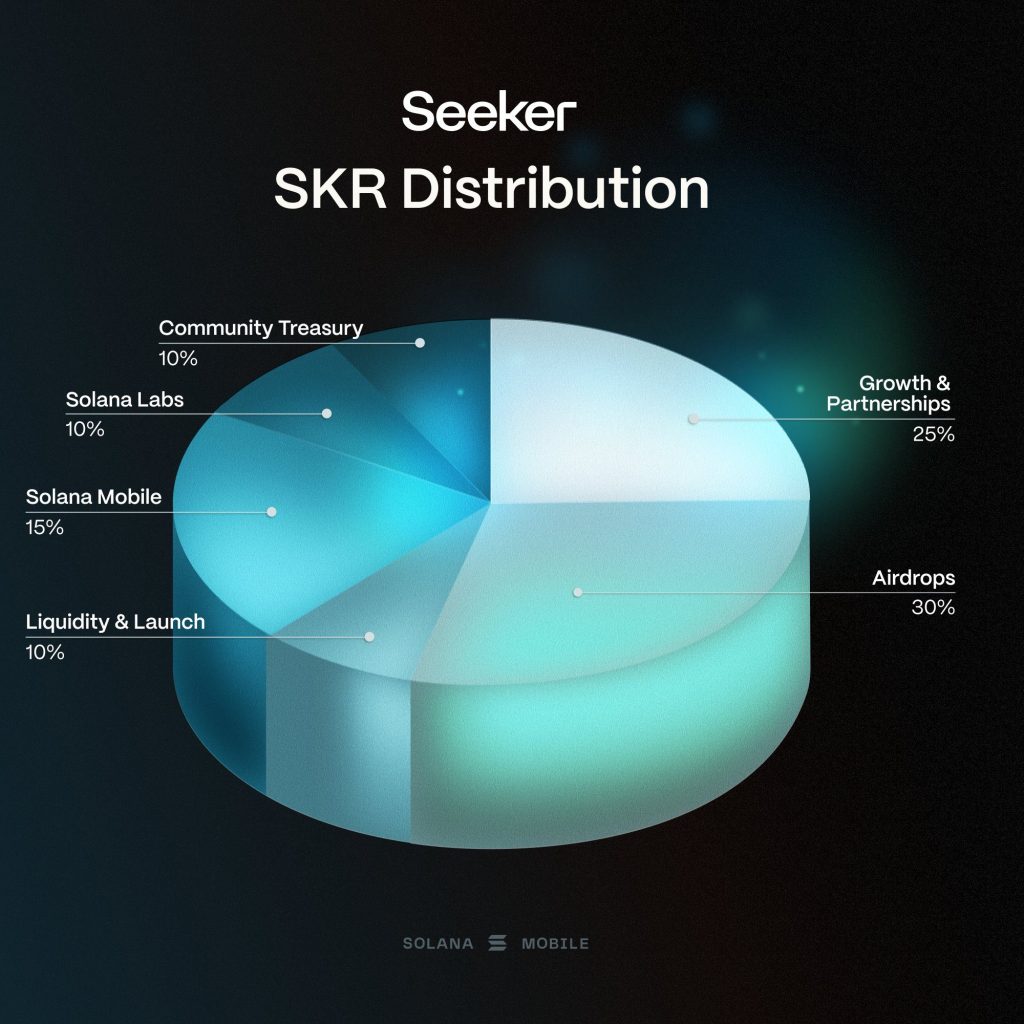
SKR’s 10 billion token supply allocates 30% to airdrops targeting Seeker and original Saga phone holders, while 25% supports growth initiatives and partnerships with ecosystem participants.

Another 10% funds are used for initial liquidity and launch operations, with an additional 10% reserved for community treasury governance.

Solana Mobile receives 15% of the supply, and Solana Labs holds the remaining 10%.

The token employs linear inflation, starting at 10% in year one and declining by 25% annually until stabilizing at a 2% terminal rate.

Source: X/@solanamobile

Solana Mobile said this structure incentivizes early participants who stake tokens to secure the network and support platform development during critical growth phases.

Guardians, who are validators responsible for device authentication, dApp review, and community standards enforcement, will include Solana Mobile at launch, with committed partners Helius, DoubleZero, Triton, Jito, and Anza joining throughout 2026.

Users can stake SKR to Guardians, back builders, secure devices, and curate the dApp Store, with ecosystem value flowing back to active participants.

Security Flaw Shadows Launch Momentum

Hours before the token announcement, Ledger disclosed a critical hardware vulnerability in the MediaTek Dimensity 7300 chip powering Seeker devices and other smartphones across multiple manufacturers.

Security researchers Charles Christen and Léo Benito successfully executed electromagnetic fault injection attacks during the chip’s boot phase, gaining what they described as “full and absolute control” of compromised handsets.

The attack bypasses memory protections and overwrites security controls embedded in the system-on-chip, enabling the extraction of cryptographic keys and sensitive data.

📱 Ledger found an unfixable flaw in the MediaTek Dimensity 7300 chip that can lead to full device takeover and private key theft.#Ledger #Solanahttps://t.co/F58gTKaxzi

— Cryptonews.com (@cryptonews) December 4, 2025

While individual attack success rates range from 0.1% to 1%, Ledger estimates that repeated attempts can compromise a device within minutes for attackers with physical device access.

Ledger disclosed the flaw to MediaTek in early May after beginning tests in February, prompting the chipmaker to notify affected device vendors.

MediaTek responded that the Dimensity 7300 was designed for consumer smartphones rather than secure financial infrastructure, stating that manufacturers handling sensitive cryptographic material should implement specific physical attack protections.

The company added that the vulnerability falls outside the chip’s original design scope, leaving affected devices permanently exposed since no software patch can resolve hardware-level flaws.

Mixed Sentiment on Token Utility

Social media commentary revealed divided perspectives on SKR’s value proposition and long-term viability.

Critics questioned the token’s fundamental utility, noting the lack of clarity regarding revenue sharing or governance rights beyond platform coordination.

One observer described the launch as “backwards,” arguing that without defined revenue entitlements, SKR functions essentially as a meme coin rather than a legitimate governance infrastructure.

This is so backwards from how you should announce a token.

There’s all this information about how this token will be used to pay for things, but nothing explaining why the token has any actual value (i.e. what revenue am I entitled to as a token holder?)

Hot take: If you don’t… https://t.co/XCoYZ4twMG

— Johnny The Hutt (@johnny_the_hutt) December 4, 2025

Others outlined airdrop farming strategies, recommending daily device usage, wallet swaps, validator staking, dApp interactions, and the deployment of the DePIN application to maximize allocation from the 30% airdrop pool.

Tech creator Ashen noted the 10 billion supply represents unusually “high inflation” compared to standard 1 billion token launches. “Solana REALLY loves inflation lmfaoo,” he said.

However, he expressed cautious optimism given the Solana team’s backing and the substantial 30% airdrop allocation for approximately 100,000 Seeker holders.

Market observers also cited Solana’s broader ecosystem momentum, including recent partnerships like the KRW-pegged stablecoin collaboration with Korean infrastructure firm Wavebridge, and institutional validation evidenced by continued ETF inflows despite recent market volatility.

Solana Foundation President Lily Liu recently emphasized at Binance Blockchain Week that stablecoin market capitalization has surged 50% this year, and positioned the blockchain as infrastructure for global improvements in capital efficiency.

The post Solana Mobile to Launch SKR Native Token in January appeared first on Cryptonews.

Bitget and Chorus One expand Monad staking access in emerging markets

  • The collaboration follows the launch of the Monad mainnet in November 2025.
  • Chorus One secures more than $3.5 billion across 30 blockchains.
  • More than $6 million was staked during the first week of the programme.

Chorus One has partnered with cryptocurrency exchange Bitget to expand access to Monad staking at a global scale.

The collaboration focuses on simplifying how users interact with the Monad network, which launched its mainnet in November 2025.

The move places emphasis on infrastructure growth, user access, and the broader shift toward staking services.

Both companies confirmed that Bitget’s more than 120 million users will be able to access staking tools through Chorus One’s platform, creating new pathways for participation in the growing staking economy.

Validator expansion

The Monad network is a layer one blockchain that emphasises high throughput.

It supports Ethereum contracts without requiring any code changes, according to its technical documentation.

The focus of the integration between Bitget and Chorus One is to support a validator environment that can grow with decentralisation, geographic diversity, and long-term stability.

Chorus One already secures assets across more than 30 blockchains and reports securing over $3.5 billion in staked assets.

The platform also holds ISO 27001 certification, which is a standard used to assess security practices.

This places the partnership inside a broader trend where staking providers with stronger compliance frameworks are becoming central to blockchain infrastructure.

User access

Monad allows users to unstake assets in around 5.5 hours. Chorus One’s staking model supports flexible terms, which means both institutional and retail users on Bitget can stake or restake Monad tokens based on their preferences.

The partnership creates a direct path for Bitget users to enter the Monad ecosystem.

Within the first week of the staking programme launch, Chorus One released figures showing that more than $6 million worth of assets had been staked on the network.

The rapid participation signals interest in Monad’s performance-focused design and the integration with a major exchange ecosystem, reflecting a wider demand for accessible staking opportunities worldwide.

Market expansion

Bitget operates in several regions, including the Asia Pacific and African markets.

The platform’s presence in these regions gives the new staking programme a wider reach, especially in places where digital asset demand is growing.

Chorus One has already worked with the Avalanche Foundation to expand validator infrastructure across Africa, which positions the company to contribute to similar regional development for the Monad network.

The companies stated that the partnership aims to support cryptocurrency adoption in emerging markets by providing tools that reduce entry barriers and increase access to blockchain-based services.

With the expansion of new networks such as Monad, staking options are becoming a way for users in developing regions to take part in blockchain activity without needing a complex technical setup or advanced hardware.

The post Bitget and Chorus One expand Monad staking access in emerging markets appeared first on CoinJournal.

Ex-Citadel Engineers Raise $17M for Stablecoin Payments Startup Fin

Former Citadel employees Ian Krotinsky and Aashiq Dheeraj have secured $17 million in funding for Fin, a stablecoin-powered payments app designed to enable instant cross-border money transfers without the complexity of traditional crypto platforms.

According to a Fortune report, Pantera Capital led the round, with participation from Sequoia and Samsung Next, as the startup prepares to pilot with import-export businesses next month.

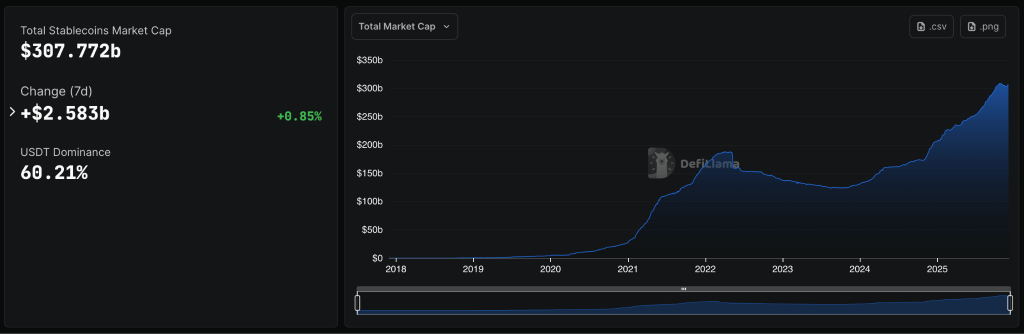
The funding arrives amid explosive growth in the stablecoin sector, which now exceeds $300 billion in total market capitalization.

Stablecoin Total market cap
Source: DefiLlama

Krotinsky and Dheeraj discovered the friction in international payments while building side projects at Citadel, when they attempted to pay $50 to users who reached the front page of a Reddit-like platform they created.

Building Payment Infrastructure for Large Transfers

Fin targets a gap in existing payment systems by focusing on large-value transactions in the hundreds of thousands or millions of dollars.

The app allows users to send money to other Fin users, bank accounts, or crypto wallets, leveraging stablecoin rails to reduce transfer fees compared to traditional banking channels dramatically.

Krotinsky described the platform as “built as the payments app of the future,” emphasizing that it leverages the benefits of stablecoins “without all the complexity” and will work anywhere in the world.

The startup shared an exclusive walkthrough with Fortune, revealing a simple yet elegant design prioritizing user-friendliness over technical jargon.

Traditional wire transfers through commercial banks can take several days and incur substantial fees, particularly for international transactions between countries with different financial systems.

Fin aims to disrupt this model by offering near-instant settlement for scenarios such as Swiss watch dealers selling to US customers or domestic transfers exceeding the limits imposed by Venmo and Zelle, which cannot process payments of $100,000 instantly due to delays or verification holds.

Stablecoin Payments Startup Fin co-founders
Co-founders of Fin, Ian Krotinsky and Aashiq Dheeraj. | Source: Fortune

Revenue Model and Competitive Positioning

The company plans to generate revenue through transaction fees, though these will remain cheaper than alternatives, plus interest earned on stablecoins held in Fin wallets.

While the app has not launched publicly, the pilot program with businesses in the import-export space represents the first step toward broader commercial availability.

Krotinsky positioned his startup against major commercial banks like JPMorgan Chase and Barclays rather than crypto-native competitors.

He argued that large financial institutions have built payment products incorrectly for decades and will struggle to migrate existing systems onto stablecoin rails.

I think we have the opportunity of being the next largest payments app in the world,” Krotinsky said. “People are going to be surprised at how quickly we move to get there.

Stablecoin Sector Attracts Traditional Finance Giants

Fin’s funding follows major institutional moves into stablecoin infrastructure.

Citadel Securities, the market maker founded by Ken Griffin, invested $200 million in crypto exchange Kraken at a $20 billion valuation in November, deepening Wall Street’s commitment to digital assets after years of hesitation over regulatory uncertainty.

The firm also participated in Ripple’s $500 million funding round alongside Fortress Investment Group, which shows traditional finance is showing interest in established crypto platforms as regulatory clarity improves under the Trump administration.

Most recently, ten major European banks formed a consortium to launch a euro-backed stablecoin by mid-2026, addressing concerns about overwhelming reliance on dollar-denominated tokens, which currently account for 99.58% of the global stablecoin market.

🏦 Sony Bank plans to roll out its 1:1 USD-pegged stablecoin for payments and settlement within its gaming and anime business.#SonyBank #SonyStablecoin $USDStablecoinhttps://t.co/8wVvOWo89Z

— Cryptonews.com (@cryptonews) December 1, 2025

Sony Bank is also reportedly preparing to issue a GENIUS-regulated US dollar stablecoin for American customers as early as fiscal 2026, aiming to reduce payment fees across its gaming and anime businesses.

While there is a massive ongoing innovation in stablecoins with big firms positioning themselves for what they see as the next wave of financial revolution, Standard Chartered recently warned that over $1 trillion could flow from emerging-market banks into stablecoins by 2028 as global adoption accelerates.

In fact, Federal regulators are also advancing implementation of the GENIUS Act, with the FDIC expected to publish its first stablecoin rule framework later this month.

Acting FDIC Chair Travis Hill confirmed the agency is drafting rules for how stablecoin issuers will apply for approval, with separate prudential standards planned for early next year.

The post Ex-Citadel Engineers Raise $17M for Stablecoin Payments Startup Fin appeared first on Cryptonews.

21-Year-Old Burned Alive in Austria Over Crypto Assets

A 21-year-old Ukrainian student was tortured and burned alive in Vienna after attackers forced him to reveal passwords to his crypto wallets, emptying his digital accounts before setting him on fire in his father’s Mercedes.

According to local reports, two suspects, a fellow student aged 19 and a 45-year-old Ukrainian national, fled to their home country with large amounts of cash but were arrested days later by Ukrainian authorities.

The victim, Danylo K., was the son of Kharkiv’s deputy mayor. His body was discovered on November 26 in a burned-out vehicle on Marlen-Haushofer-Weg in Vienna’s Donaustadt district after fire alarms alerted residents to the blaze around 12:30 a.m.

The charred remains were found in the back seat of a Mercedes S 350D bearing Ukrainian license plates beneath the Ostbahn railway line.

21-Year-Old Burned Alive in Austria Over Crypto Assets - the Mercedes Car
Source: oe24

Torture Began in Hotel Garage, Ended in Flames

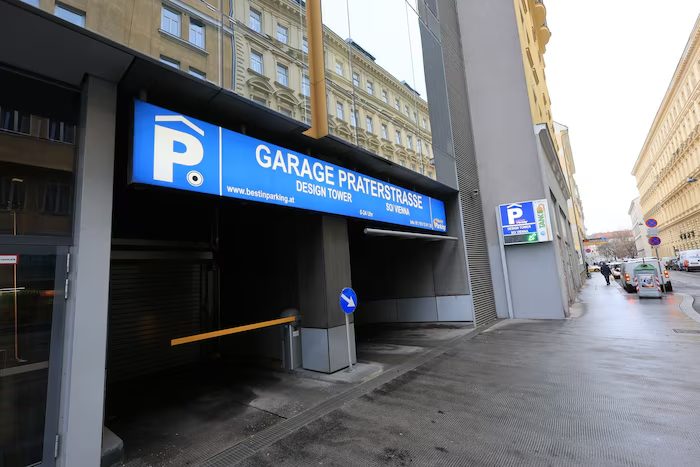
The attack started hours earlier in the underground parking garage of the Sofitel “SO/Vienna” hotel on Praterstraße, where the 19-year-old suspect ambushed his fellow student following a loud confrontation.

A hotel guest alerted reception after hearing the altercation, prompting police to be notified.

Passersby later noticed a large pool of blood in the stairwell leading to the parking area.

21-Year-Old Burned Alive in Austria Over Crypto Assets - The Parking Garage
Source: Krone

Investigators say Danylo was beaten severely in the garage before being forced into his father’s black Mercedes.

The assailants drove him to the Donaustadt location while subjecting him to extended torture to extract his crypto wallet passwords.

His teeth were knocked out during the assault as the violence escalated over several hours.

After gaining access to two crypto accounts, the attackers doused Danylo with gasoline purchased earlier from a Wagramer Strasse station.

21-Year-Old Burned Alive in Austria Over Crypto Assets - The gasoline station
Source: Krone

He was set ablaze while crouched in the back seat, suffocating on his own blood and dying from head injuries and burns that consumed 80 percent of his body.

Colonel Gerhard Winkler of the State Criminal Police Office confirmed the autopsy findings indicated suffocation or heatstroke as the decisive factors. Forensic teams recovered a melted gasoline canister from the vehicle.

International Manhunt Tracked Suspects to Ukraine

Vienna police identified both suspects through surveillance footage captured at the hotel garage and the gas station where they purchased fuel canisters.

The pair crossed into Ukraine at precisely 9:07 a.m. the morning after the murder, triggering an international manhunt.

Ukrainian authorities arrested the suspects on November 29 after finding them in possession of enormous amounts of U.S. dollar bills.

Investigators believe the crypto was rapidly converted to cash following the robbery.

Austrian officials have transferred the case to Ukrainian jurisdiction, as extradition is not possible under existing agreements between the countries.

Police confirmed that Danylo’s crypto accounts were completely emptied after his murder, though authorities declined to specify the total sum stolen.

His family in Ukraine had reported him missing on November 25 after losing contact with him and discovering his digital wallets had been drained.

The wealthy student, who had been living temporarily in a luxurious apartment in Vienna’s Triiiple Tower on Landstrasse’s Danube Canal, was residing with his partner and their child at the time of his death.

Kharkiv Mayor Igor Terekhov declined to offer a detailed comment but acknowledged the tragedy, saying, “This is a human tragedy,” while noting the loss remained a family matter for his deputy.

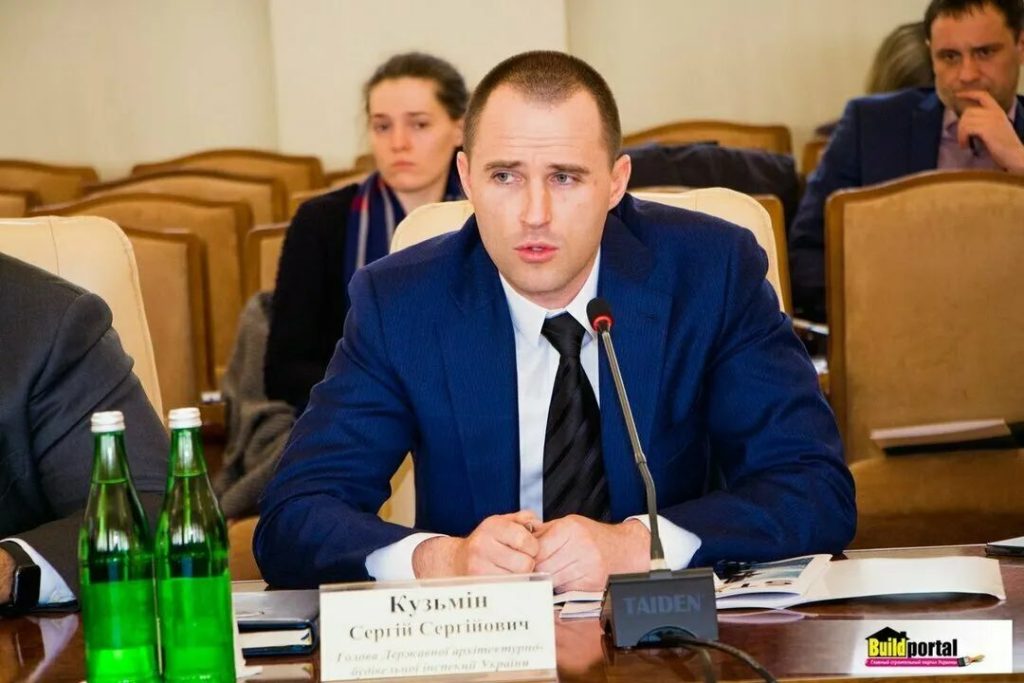
21-Year-Old Burned Alive in Austria Over Crypto Assets - Deputy Mayor of Kharkiv
Deputy Mayor of Kharkiv. | UANews

Physical Crypto Crimes on The Rise

The murder marks Austria’s entry into a fast-escalating pattern of violent attacks targeting cryptocurrency holders worldwide.

Security researcher Jameson Lopp has documented over 60 such “wrench attacks” in 2025, representing a 169% surge since February and a 33% increase over all of 2024.

France leads global incidents with 14 confirmed cases, while violent robberies have been reported across Canada, the United States, and the United Kingdom this year.

🚨 A Canadian family endured 13.5 hours of torture in a $1.6M #Bitcoin wrench attack; one attacker sentenced to 7 years;

#CryptoCrime #WrenchAttackhttps://t.co/W3OLBTuACr

— Cryptonews.com (@cryptonews) November 25, 2025

Last week, a British Columbia court detailed a 2024 home invasion where attackers tortured a family and stole $1.6 million in crypto after demanding 200 Bitcoin.

Similar patterns emerged in an Oxford robbery where masked assailants forced victims to transfer £1.1 million in crypto during a car ambush.

Analysts attribute the surge to rising crypto values, which have made holders high-value targets for criminals.

The post 21-Year-Old Burned Alive in Austria Over Crypto Assets appeared first on Cryptonews.

Uniswap Founder Blasts Citadel for Urging SEC to Treat DeFi Like Wall Street

Uniswap founder Hayden Adams has accused Citadel Securities of trying to pull decentralized finance into the same regulatory box as Wall Street, after the market maker urged the US SEC to treat DeFi protocols and their developers as traditional intermediaries.

Adams fired off a post on X that quickly made the rounds in crypto circles.

“First Ken Griffin screwed over Constitution DAO,” he wrote, before adding, “Now he’s coming for DeFi, asking the SEC to treat software developers of decentralized protocols like centralized intermediaries.”

He linked directly to Citadel’s submission to the SEC and added, “Bet Citadel has been lobbying behind closed doors on this for years.”

First Ken Griffin screwed over Constitution DAO

Now he's coming for DeFi, asking the SEC to treat software developers of decentralized protocols like centralized intermediaries

Bet Citadel has been lobbying behind closed doors on this for years

Okay thats all pretty bad, but… pic.twitter.com/ExoNhbhadu

— Hayden Adams 🦄 (@haydenzadams) December 4, 2025

Adams Ridicules Citadel’s Claim That DeFi Lacks Fair Access

He saved his sharpest line for a specific passage in the filing.

Adams pointed to Citadel’s claim that DeFi cannot provide “fair access” to markets and responded, “Okay thats all pretty bad, but the actual nerve for one of their arguments to be that there is no way for DeFi protocols to provide ‘fair access’ of all things lmao.”

He then wrote, “Makes sense the king of shady tradfi market makers doesn’t like open source, peer-to-peer tech that can lower the barrier to liquidity creation.”

The clash stems from a lengthy letter Citadel Securities sent to the SEC on tokenized equities and DeFi trading venues. In that document, the firm tells regulators that many so-called decentralized systems bring together buyers and sellers in a coordinated way and therefore fit existing legal definitions of exchanges and broker dealers.

It argues that activities in DeFi should not receive lighter treatment simply because they are implemented in code on a blockchain.

Firm Rejects Idea That Open Protocols Should Avoid Intermediary Rules

Citadel goes further and lists a wide range of players in the DeFi stack, from trading interfaces and smart contract developers to validators and liquidity providers. According to the filing, many of these actors take transaction-based fees or influence how orders are routed, which, in Citadel’s view, often makes them functionally similar to regulated financial intermediaries.

The firm urges the SEC to apply a technology-neutral approach so that the same activity attracts the same rules regardless of whether it runs through a matching engine or a smart contract.

A central concern in the letter is tokenized stocks. Citadel warns that allowing tokenized shares of US companies to trade freely on DeFi protocols would create what it describes as a shadow equity market outside the national market system. It says such a structure could fragment liquidity and bypass the reporting, surveillance and investor protection framework that currently governs equities.

The firm also resists calls from some crypto industry groups for broad exemptions. Several DeFi advocates have asked the SEC to recognise that open source protocols and validator sets do not operate like traditional intermediaries and should not have to register as exchanges or broker dealers.

Crypto Devs Fear Wall Street Rules Would Stifle Permissionless Innovation

Citadel counters that the agency lacks authority to carve out a separate regime for tokenized equities and argues that any fundamental change to how US stocks trade belongs with Congress.

If regulators accept Citadel’s framing, protocol teams, front-end operators, routing wallets, market makers and possibly even DAO participants could face registration, capital rules and best execution duties that were designed for broker-dealers.

Many in crypto see that outcome as incompatible with global, permissionless software that can be deployed by small teams and maintained by distributed communities.

Adams framed the episode as part of a longer story. In his post, he reminded followers that Citadel founder Ken Griffin outbid ConstitutionDAO at a Sotheby’s auction in 2021, thwarting the crypto collective’s attempt to buy a rare copy of the US Constitution.

By opening his thread with “First Ken Griffin screwed over Constitution DAO,” then pivoting straight into the SEC fight, he linked that high-profile clash with Citadel’s latest move in Washington.

The post Uniswap Founder Blasts Citadel for Urging SEC to Treat DeFi Like Wall Street appeared first on Cryptonews.

Binance Takes Family-Centric Approach to Crypto with Junior Wallet

Cryptocurrency is no longer just for adults. While traditional financial assets like stocks and bonds are often gifted to children by parents who open custodial accounts, crypto exchange Binance aims to help families build wealth through crypto assets.

Announced on Wednesday during Binance Blockchain Week, the crypto exchange explained that “Binance Junior” is the first standalone mobile app that is controlled entirely by parents for children.

Introducing Binance Junior, a parent-controlled app and sub-account for kids and teens.

Build family-focused crypto savings and prepare your child for a future empowered by crypto.

Try it now 👉 https://t.co/q4Y50PvApy pic.twitter.com/O1R2yZ4vVE

— Binance (@binance) December 3, 2025

The app allows adults with a Binance account to deposit crypto into a savings account for kids and teenagers between the ages of 6 to 17. The tool also allows parents to set spending and transfer limits, while enabling earn products for kids dependent on local regulations.

The Importance of Crypto Adoption at Young Ages

Binance’s newly appointed co-founder Yi He explained the importance behind Binance Junior at Binance Blockchain Week.

“We not only nurture children in their early development, but also with long-term growth, responsibility and wisdom,” the executive stated. “Helping children face real life challenges independently means that financial health and literacy are key to preparing them for the future, especially as money is evolving.”

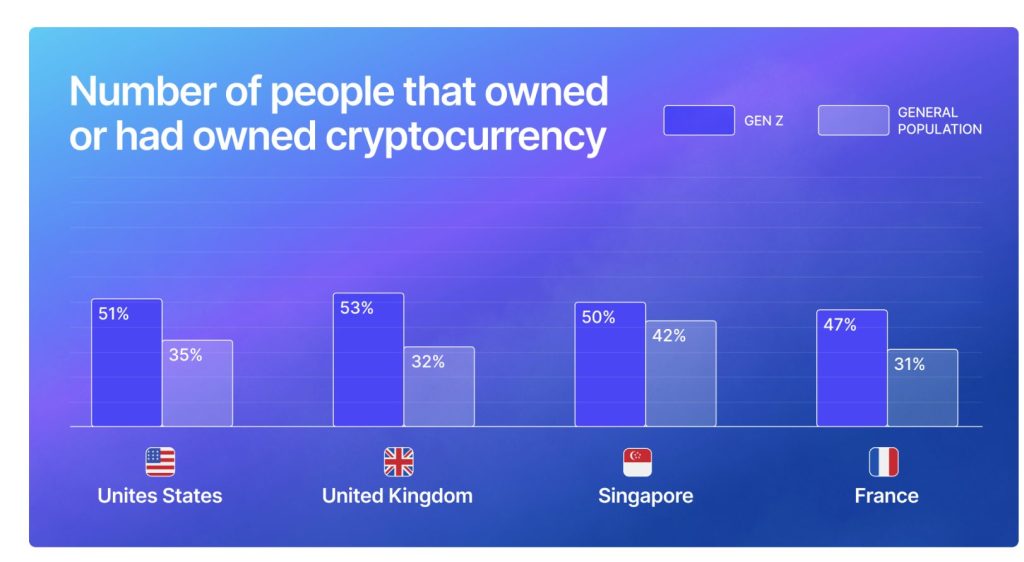
While the notion of educating children on the importance of cryptocurrency may be controversial, findings from a recent survey conducted by Gemini show that more than half (51%) of global Gen Z respondents currently own cryptocurrency or have owned it in the past. The report also notes that over half of Gen Z respondents located in the US owned or had owned cryptocurrency (51%), compared to 49% of Millennials (people born 1981-1994).

Source: Gemini

This demonstrates the growing appeal for crypto adoption amongst younger generations. Binance Junior aims to further facilitate this by allowing children 13 years and up to initiate transfers independently within the app, as long as local regulations are met and daily limits are applied.

Teaching Children About Crypto: Beneficial or Concerning?

While some users on the social media platform X expressed concerns around Binance Junior, the new app aims to align with a growing trend of teaching children about the importance of cryptocurrency at early ages.

Henri Arslanian, co-founder of Nine Blocks Capital and a best-selling author, told Cryptonews that it shouldn’t come as a surprise that Binance has launched Binance Junior.

“Children used to have penny banks to keep fiat in, but now we have hard assets like Bitcoin and there is a huge learning element there that becomes critical,” he said.

Arslanian added that Binance Junior aligns with children’s books and toys centered around cryptocurrency. In September last year, Arslanian published Decoding Crypto, a best-selling children’s book that explains digital assets in simple terms.

Here’s why you should check out my latest kids book, Decoding Crypto, for your kids.

Grab your copy of Amazon’s number 1 new release kids book, Decoding Crypto with @henriandhodler https://t.co/n2hYqlc7bW pic.twitter.com/W7CSmvIsOP

— Henri Arslanian (@HenriArslanian) February 11, 2025

Other books including B is for Bitcoin by Graeme Moore – which is an A-to-Z style alphabet book where each letter links to a crypto term – also aim to make crypto learning fun for children. Goodnight Crypto by Scott Blair is a book that is even suitable for toddlers. Included in the story are 42 collectible non-fungible tokens (NFTs) that can be minted and added to a crypto wallet.

In addition, Binance released a self-published book entitled ABC’s of Crypto that breaks down fundamental terms including security and blockchain technology, to different types of crypto coins.

Cautiously Preparing the Next Generation for Crypto Adoption

While it’s notable that initiatives are being taken to teach young children about digital assets, caution should be exercised.

Parents and teachers explaining cryptocurrency to younger generations may wish to point out the volatile nature of digital assets. Focusing on concepts like savings, diversification, long-term thinking, and risk versus reward rather than price speculation may also be helpful.

The post Binance Takes Family-Centric Approach to Crypto with Junior Wallet appeared first on Cryptonews.

Kalshi, Robinhood, Crypto.com Hit With Connecticut Stop Order for Gambling Violations

Connecticut’s Department of Consumer Protection on Wednesday ordered Kalshi, Robinhood and Crypto.com to halt what it calls unlicensed online gambling in the state, targeting sports-style “prediction” products that regulators say are really illegal wagers.

The agency’s Gaming Division issued cease-and-desist letters to KalshiEX LLC, Robinhood Derivatives LLC and Crypto.com, accusing all three of offering sports wagers in Connecticut without a license and in violation of state gaming law.

The order covers so-called “sports event contracts” and any other form of online gambling the platforms make available to residents.

Officials Argue Prediction Markets Are Being Marketed As Investments

“Only licensed entities may offer sports wagering in the state of Connecticut,” Consumer Protection Commissioner Bryan T. Cafferelli said.

None of the three firms hold such a license in the state, he added, and even if they did, the contracts they offer would still run afoul of rules that ban wagers for anyone under 21.

📢 Today, DCP's Gaming Division issued Cease and Desist orders to three platforms conducting unlicensed sports wagering.
Learn why Prediction Market Platforms offering "Sports Events" Contracts are illegal:https://t.co/LXLK1tRR0w

— Connecticut Department of Consumer Protection (@CTDCP) December 3, 2025

Gaming Director Kris Gilman said the firms are “deceptively advertising that their services are legal,” arguing that they operate outside the state’s regulatory perimeter and pose “a serious risk to consumers” who may not realise they have no formal protections.

“A prediction market wager is not an investment,” she said, drawing a line between trading and betting.

State Warns That Unvetted House Rules Can Lead To Unfair Payout Practices

Regulators say the products raise a series of integrity and consumer protection issues. Because the platforms are not licensed, they are not required to meet Connecticut’s technical standards for wagering systems, leaving financial and personal data more exposed in the event of failures or abuse.

The state also says there are no mandated integrity controls, such as systems to block insiders from betting on events where they have advance knowledge or influence over outcomes. By contrast, licensed operators must use controls to bar known insiders and monitor and report suspicious betting patterns.

Any regulator does not vet house rules that govern how wagers pay out, the department warned, which means customers may have little recourse if bets are settled in unexpected ways or winnings are withheld. If disputes arise, the agency says it has no clear path to recover funds for users of these unlicensed platforms.

State Says Platforms Listed Events Vulnerable To Insider Knowledge

Connecticut officials also object to the types of events the platforms list. They say some wagers cover outcomes known to or heavily influenced by a relatively small group of insiders, such as award shows, professional team trades and similar events. State law prohibits betting on events where the outcome is known in advance because it is inherently unfair to ordinary bettors.

The department alleges the firms advertised and offered wagers to people on the state’s Voluntary Self-Exclusion List and to individuals under 21, and even promoted services on college campuses, all of which it says are illegal under Connecticut law.

Under the cease-and-desist orders, Kalshi, Robinhood and Crypto.com must immediately stop advertising, offering, promoting or otherwise making sports event contracts or any other unlicensed online gambling products to Connecticut residents. They must also allow residents to withdraw any funds currently held on their platforms.

Failure to comply could trigger civil penalties under the Connecticut Unfair Trade Practices Act and potential criminal action for breaches of the state’s gaming statutes.

For now, the state reminded residents that only three operators are authorised to take sports bets, namely DraftKings through Foxwoods, FanDuel through Mohegan Sun and Fanatics through the Connecticut Lottery, with a minimum age of 21 for sports wagering and 18 for fantasy contests.

The post Kalshi, Robinhood, Crypto.com Hit With Connecticut Stop Order for Gambling Violations appeared first on Cryptonews.

Asia Market Open: Bitcoin Steadies Around $93K, Stocks Drift After Weak US Prints Reinforce Fed Cut Outlook

Bitcoin held near $93,000 in Asian trading on Thursday, while regional stocks made a lacklustre start as soft US data reinforced expectations that the Federal Reserve will cut interest rates next week.

Nic Puckrin, investment analyst and co-founder of The Coin Bureau, said Bitcoin has staged a “remarkable recovery” over the past day as a “perfect storm of good news” swung momentum back toward the bulls.

He pointed to Vanguard lifting its long-standing ban on Bitcoin ETFs, Bank of America recommending a 1% to 4% crypto allocation that could channel as much as $700b into the asset class, and growing confidence that crypto-friendly Kevin Hassett will become the next Fed chair.

🏛 Kevin Hassett, director of the National Economic Council, has emerged as Trump’s top Fed chair contender, putting a crypto-linked ally within reach of leading the central bank.#KevinHassett #FedChair https://t.co/Oa59lRry11

— Cryptonews.com (@cryptonews) November 26, 2025

“With a rate cut on December 10th largely priced in, all eyes are now on 2026 monetary policy expectations, and so Hassett would be a welcome appointment for markets,” Puckrin said.

Market snapshot

  • Bitcoin: $93,609, up 0.9%
  • Ether: $3,215, up 5.9%
  • XRP: $2.20, up 0.7%
  • Total crypto market cap: $3.27 trillion, up 1.8%

Bitcoin Eyes Breakout As Traders Track Key US Jobless Data

Akshat Siddhant, lead quant analyst at Mudrex, said a decisive breakout above current levels could clear the path to the $103,000 supply zone.

He added that traders are watching US weekly jobless claims later on Thursday, which could help support Bitcoin’s upward trajectory if they reinforce the case for easier policy.

Across equities, Asia traded mixed. Japan’s Nikkei 225 rose about 0.8%, while MSCI’s broad index of Asia Pacific shares outside Japan slipped around 0.1%, weighed by declines in Korea and New Zealand.

Mainland China benchmarks were little changed to slightly higher and Hong Kong’s Hang Seng index inched up, underscoring a cautious tone.

Rate Cut Probability Climbs As US Data Softens

US index futures were steady after Wednesday’s gains, with contracts on the Dow Jones Industrial Average, S&P 500 and Nasdaq all modestly higher. European futures were flat to slightly weaker, with DAX and FTSE 100 edging down and CAC 40 a touch stronger.

Overnight on Wall Street, small caps led the advance. The Russell 2000 jumped about 1.9% and the S&P 500 notched a second straight rise after US private payrolls posted their biggest drop in more than two and a half years.

An Institute for Supply Management survey showed services employment contracting in November and the prices paid subindex falling to a seven-month low, even as overall services activity held near 52.6.

The run of softer numbers has strengthened the case for a near-term cut. Fed funds futures now imply roughly an 89% chance of a 25-basis-point reduction at the meeting next week, up from about 83% a week earlier, according to CME’s FedWatch tool.

Greenback Hits Five-Week Low, Investors Track Signals On Future Fed Moves

The dollar index slipped around 0.4% to 98.878, touching a five-week low and extending its losing streak to a ninth session. The yield on the 10-year US Treasury was steady near 4.07% after a Financial Times report said bond investors have expressed concern to the Treasury that Hassett could push for aggressive rate cuts aligned with President Donald Trump’s preferences.

Investors are also dealing with a backlog of US data after a record 43-day government shutdown earlier in the year disrupted the flow of official releases.

As delayed reports filter out, traders are placing more weight than usual on private sector surveys and high frequency indicators to gauge the Fed’s path.

The next major macro test comes on Friday with the release of the personal consumption expenditures index, the Fed’s preferred inflation gauge.

Until then, markets are trading on the assumption that a December cut is virtually locked in and that 2025 and 2026 policy will hinge on how quickly growth and employment cool from here.

The post Asia Market Open: Bitcoin Steadies Around $93K, Stocks Drift After Weak US Prints Reinforce Fed Cut Outlook appeared first on Cryptonews.

MetaMask Launches ‘Transaction Shield’ Subscription With $10K Loss Guarantee

MetaMask rolled out a paid security subscription called ‘Transaction Shield’ this Tuesday that promises to refund users if its threat detection tools fail. The service costs $9.99 per month and offers up to $10,000 in coverage for transactions the wallet incorrectly flags as “safe.”

The feature targets the anxiety of signing malicious contracts—a vector that can drain millions from users, as seen in the case of this victim, who lost over $3 million in August 2025. The way the new “Transaction Shield” works is simple: if the system gives a transaction the green light but funds are stolen, MetaMask pays.

Source: MetaMask

The Fine Print – What Is Not Covered by the MetaMask Transaction Shield?

The coverage is specific. It applies to assets lost during the interaction itself—such as a drainer contract masking as a mint. It does not cover:

  • Compromised Keys: If a user loses their seed phrase or falls for a phishing site that steals credentials, the payout is zero.
  • Protocol Hacks: If Aave or Uniswap get exploited after the deposit, MetaMask is not liable.
  • Market Volatility: Slippage and price crashes are on the user.

Coverage is capped at $10,000 monthly across 100 eligible transactions. Claims must be filed within 21 days, with payouts settled in mUSD within roughly 15 business days.

Market Context

The service supports major EVM chains including Ethereum, Arbitrum, Polygon, BNB Chain, and Base. It is currently available only on the browser extension, with mobile support pending.

This move signals a pivot for wallet providers from passive tools to active, paid guardians. By monetizing security, MetaMask creates a recurring revenue stream while addressing the primary barrier to entry for retail capital: fear of the “Sign” button.

The post MetaMask Launches ‘Transaction Shield’ Subscription With $10K Loss Guarantee appeared first on Cryptonews.

Ripple, Solana and Binance Execs Break Down Market Shifts at Binance Blockchain Week 2025

A high-profile panel at Binance Blockchain Week in Dubai brought together Brad Garlinghouse of Ripple, Lily Liu of the Solana Foundation, and Binance’s Richard Teng to dissect the latest trends shaping digital asset markets.

Moderated by CNBC’s Dan Murphy, the conversation spanned Bitcoin’s recent volatility, the rapid rise of stablecoins, and institutional adoption driven by regulatory clarity.

Bitcoin’s Rebound and the Leverage Flush-Out

Murphy opened the session by recapping Bitcoin’s turbulent performance. The asset has climbed 8% over the past week to reclaim nearly $90,000, despite still sitting roughly 30% below its October peak.

The surge comes on the heels of a dramatic market reset that saw $20 billion in leverage positions wiped out across exchanges, alongside negative funding rates in Bitcoin perpetuals.

While some view this as a sign of cooling sentiment, the panel stressed that liquidity stress and rapid corrections remain natural features of the crypto cycle.

Lily Liu noted that the selloff was amplified by an “irrational liquidity window,” adding that volatility should be embraced rather than feared. “When I reread the original Bitcoin forums, I’m struck by how much clarity there was—speed, cost, programmability, and liquidity have been the themes since 2015,” she said. These fundamentals, she argued, remain the north star for long-term development.

ETFs, Institutions, and the Stablecoin Economy

Despite short-term turbulence, institutional appetite remains strong. Murphy pointed out continued inflows into Bitcoin and Solana ETFs, which have helped offset the leverage wipeout. The panel agreed that the broader macro narrative is now being shaped by regulation and corporate adoption, not retail speculation.

📉 Solana ETFs hit an $8.1M outflow after 21 days of inflows, and investors are speculating whether this marks a shift or a temporary reset.#SOL #ETFhttps://t.co/02BVtx6yIx

— Cryptonews.com (@cryptonews) November 27, 2025

Richard Teng stresses the surge in stablecoin usage as one of the year’s defining trends. He noted that stablecoin market capitalization has risen 50%, with wallet numbers climbing by the same margin.

“I think stablecoins massively improve capital efficiency—they’re cheaper, faster, and I expect a lot of institutions to rely on them,” Teng said.

Brad Garlinghouse also pointed to regulatory clarity in the U.S.—particularly around the Gensler Act—as a turning point for institutional engagement.

“People are starting to recognize that stablecoins really are stable and much easier to manage and move, especially in this region,” he said. Ripple’s recent acquisition of G Treasury, he added, has sparked “remarkable interest from corporate customers” exploring stablecoin-based payment rails.

Solana’s Long-Term Vision and Market Infrastructure

Liu expanded on Solana’s ambition to build what she described as the “TCP/IP for money,” a unified financial layer supporting global, instantaneous capital flows. She emphasized that the next wave of adoption will depend on speed, cost efficiency, liquidity, and utility—not speculation.

Daily inflows into the Solana ETF, she said, demonstrate growing institutional validation. Liu also noted Solana’s goal of expanding financial inclusion across emerging markets, arguing that crypto’s role in digitizing global capital markets is only beginning to unfold.

Regulation, Market Maturation, and Industry Outlook

Regulatory clarity was a recurring theme throughout the discussion. Teng pointed to developments in Abu Dhabi and Dubai, where policymakers have approved regulated stablecoins, as evidence that governments now see digital assets as part of national financial strategy.

Garlinghouse was cautiously optimistic about progress in Washington. The Clarity Act, he said, is gaining momentum and could mark a decisive shift in the U.S. regulatory environment. Collaboration between regulators and industry leaders, he argued, is essential “to unlock the next chapter of institutional adoption.”

The post Ripple, Solana and Binance Execs Break Down Market Shifts at Binance Blockchain Week 2025 appeared first on Cryptonews.

❌